Union: A Journey of Light within We Design Beirut
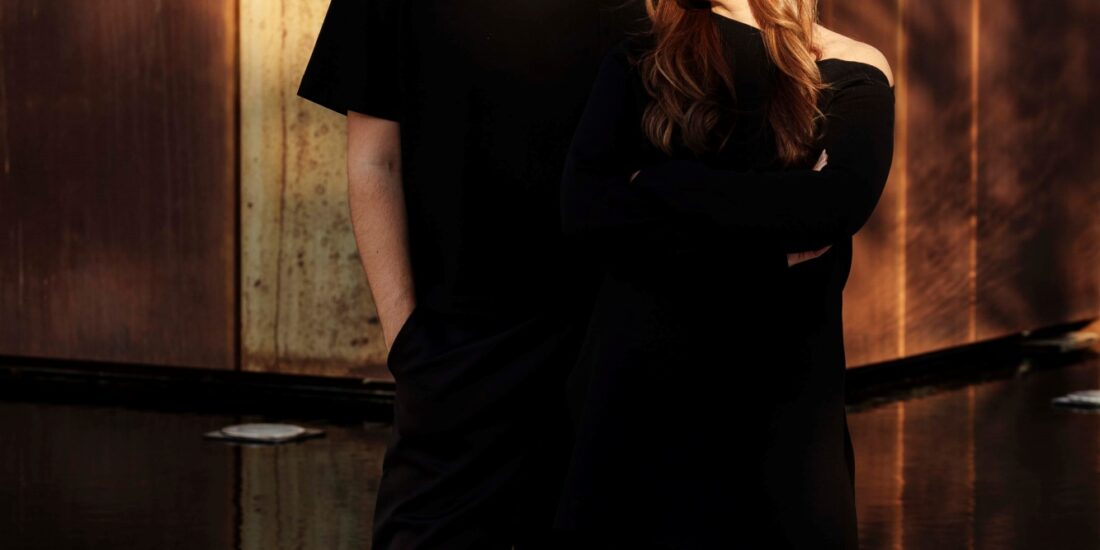
Architect Karim Nader, Atelier33, and Lebanese designers celebrated the city and Immeuble de l’Union, along with the new generation of Lebanese design voices at We Design Beirut.
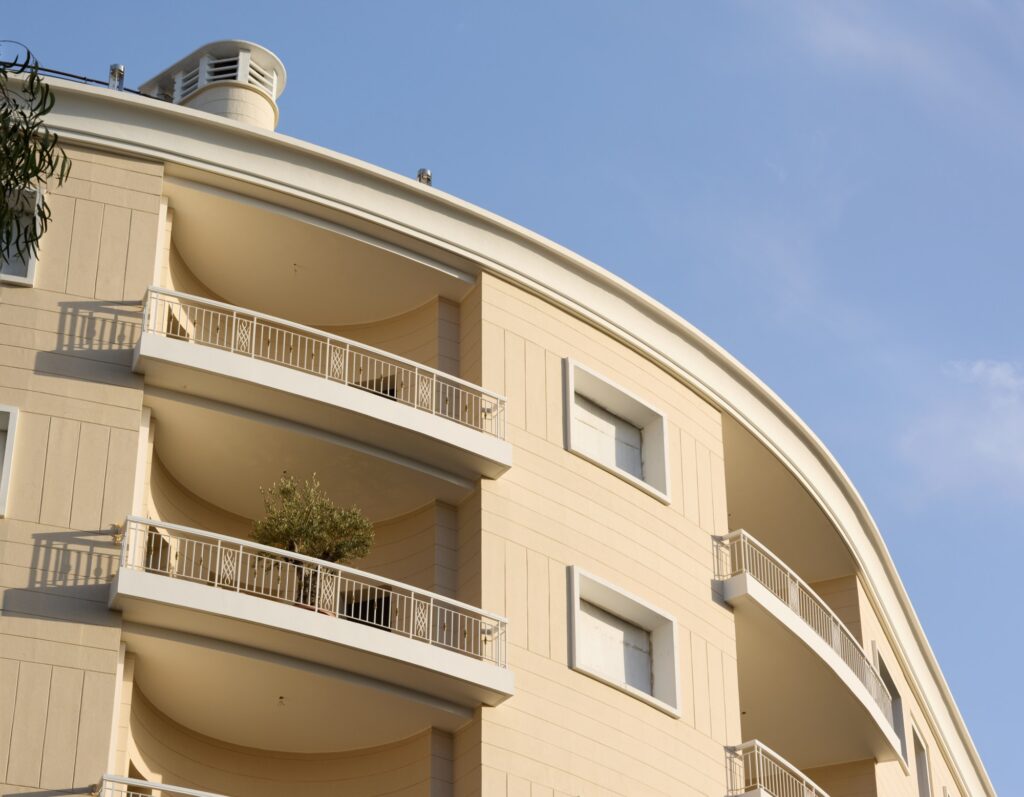
Union Building © Marwan Harmouche
We Design Beirut is much more than a design festival, it is the story of courage, of survival and about making an attempt to bring back the city to its earlier glory, through design. It is a city-scale gesture, one that treats Beirut itself as material and memory.

Karim Nader
Karim Nader describes We Design Beirut in his poetic panache: “We Design Beirut is a truly unique celebration of public space, art, design, and architecture, one that unfolds at the scale of the city itself.”
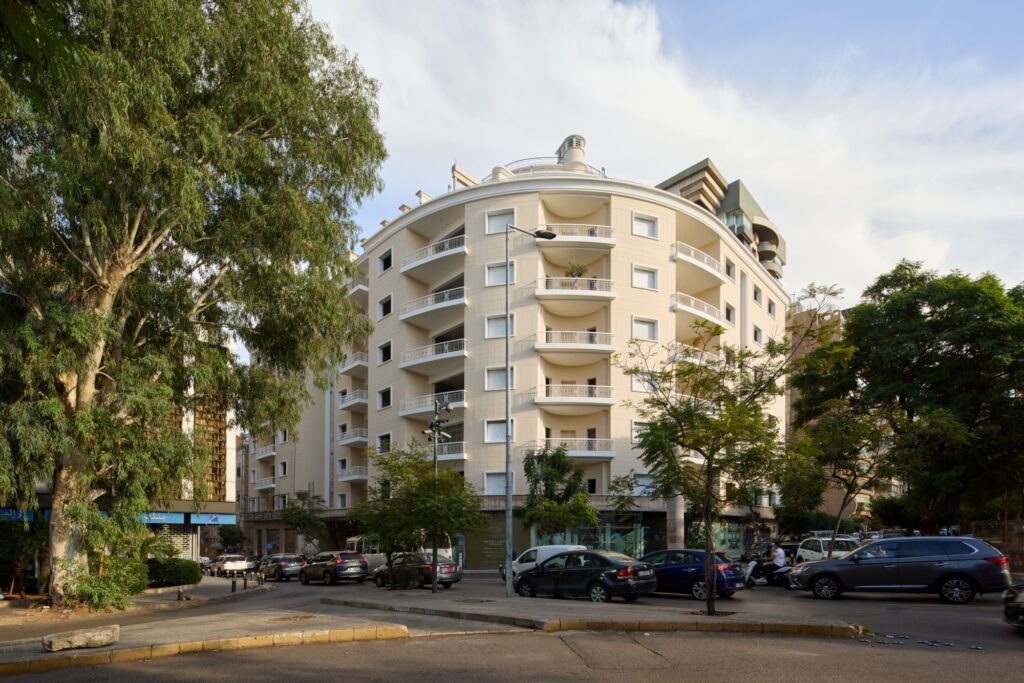
Union Building, karimnaderstudio ©marwanharmouche
In its second edition, this ethos crystallises powerfully at the Immeuble de l’Union, where Union: A Journey of Light by Karim Nader and Atelier33 transformed an unfinished building into a living narrative of transition. It unfolded as a poetic site visit. Karim Nader and Atelier 33 invited visitors to step into the Immeuble de l’Union, which is suspended in a rare state of becoming: shimmering with possibility. From façade to roof terrace, the journey revealed the building under a new light, exposing its scars yet with a firm reawakening of spirit.
A Building Suspended in Becoming
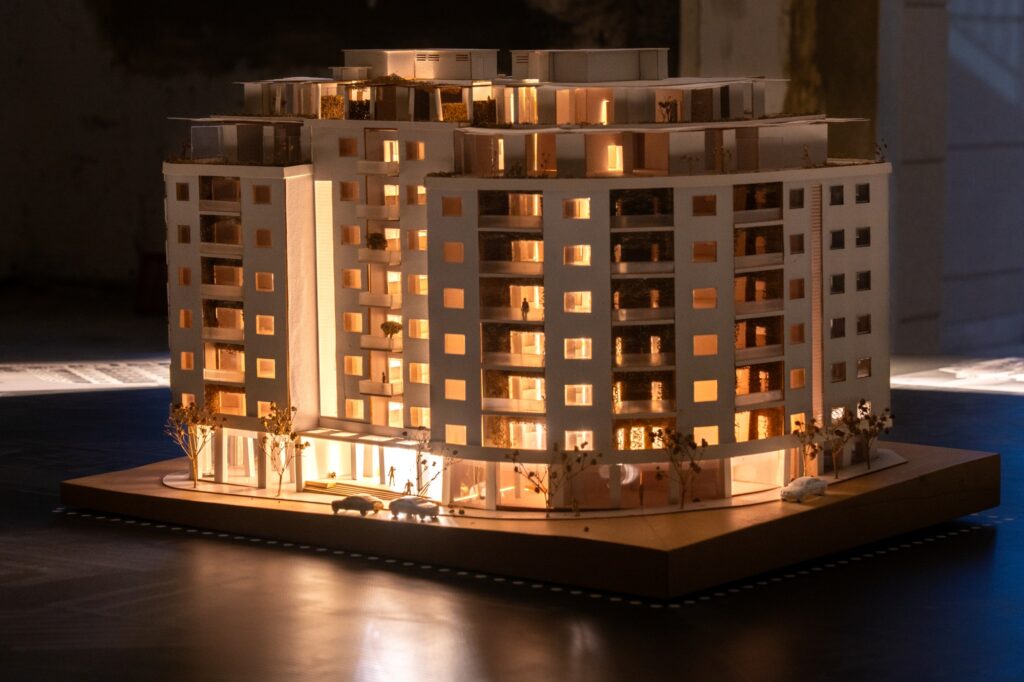
Light and Shadow at Union; AMBER SUN © Youssef Itani
Union: A Journey of Light reveals the Immeuble de l’Union not as a restored object, but as a paused moment in time. Neither a ruin nor a completed building, Union remains as is, its exposed concrete, scars, shafts, and voids left intact. Within this fragile state of becoming, light becomes the principal medium of narration.

The model within the building. AMBER SUN © Youssef Itani
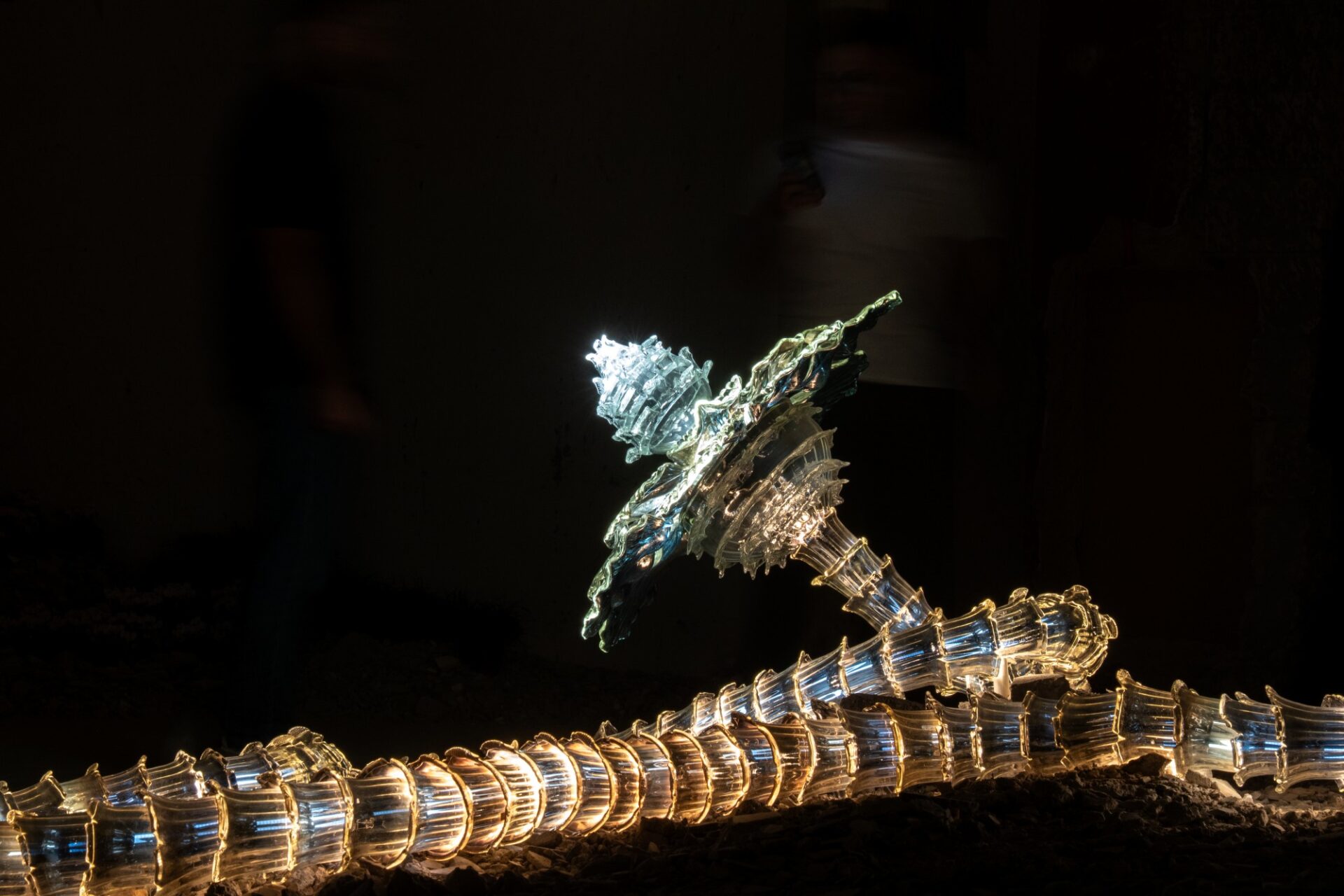
For Karim Nader and Atelier33, light is not used as spectacle. “It is quiet, attentive, and deeply ethical. Moving from the basement to the roof terrace, it follows the building’s logic rather than imposing, slipping into cracks, tracing edges, lingering on wound.”
“This was about bringing light back into a construction site,” Karim explains. “There is a striking contrast between the refined, bespoke fixtures created for the event and the raw, almost untouched state of the building itself.”
The collaboration between light company Atelier33 and Karim Nader Studio operates instinctively, and as Karim says, “Our synergy transcends words, we think alike, and we both believe that sometimes the most powerful statement lies in silence. For Immeuble de l’Union, our focus was on bringing light back to a construction site: a striking contrast between refined, bespoke fixtures created for the event and the raw, almost untouched state of the building itself.”
“Each floor unfolds as a chapter, marked by subtle chromatic transitions, from deep reds in the basement, heavy with memory, to pale blues and whites that open toward the sky. Stairs ripple with rhythm, corridors breathe, and vertical shafts pull light downward like connective tissue between past and future. Interventions by local and international artists remain restrained, each uncovering a fragment rather than asserting dominance.”
This is not restoration. It is not nostalgia. It is, as the curatorial statement insists, a form of resurrection, where what is cracked may root, and what is broken might still bloom.
Beirut: Ruin and Renewal
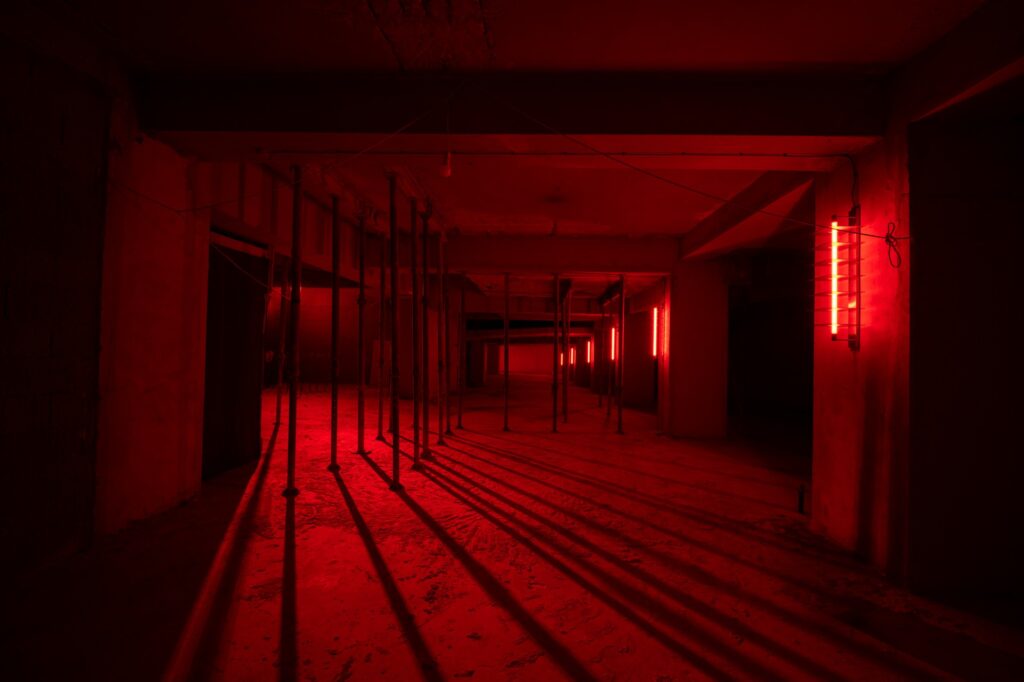
Chapter 1: Fracture © Youssef Itani
The emotional core of Union is inseparable from Beirut itself. For Karim, the city’s cyclical relationship with destruction and rebirth is not emblematic, it is lived reality. “Destruction rests at the bottom of the cycle, but it is also the seed of renewal,” he says. “Beirut is a city of accelerated time, enduring these cycles with unmatched intensity.”
“I have often spoken of an ‘emanation of energy’ arising from places of ruin. I’ve always been drawn to tombs, cemeteries, and archaeological remains, to the beauty of what has been eroded by time,” he says.
It is within this tension that Union finds itself. When asked to define it in a single phrase, Karim responds simply, “A wound breathes, and new life awakens.”
Light, in this context, becomes an act of care. It honours what has been held together, what has survived, and what still insists on becoming.
Rising with Purpose: A New Generation Step Forward

Karel Kargodorian
Running within this building is Rising with Purpose, a showcase of designers under 30 led by design leads Karel Kargodorian, Marc-Antoine Frahi, and Miriam Abi Tarabay. Installed within the same architectural framework, the exhibition signals a generational shift, not by distancing itself from context, but by engaging it directly.

Marc-Antione Frahi
For the Design Leads, purpose stems from a perceived disconnect between design education and local reality. “We were trained as industrial designers, yet the role of the designer in Lebanon is often misunderstood,” they explain, “In response, this generation is redefining practice through functionality, adaptability, and problem-solving, qualities shaped by navigating instability on a daily basis.”

Miriam Abi Tarabay.
They also believed that there is a notable transparency in how this generation works. Process is shared openly, failures included. “Sharing the behind-the-scenes, the failures, and the learning curves is part of what defines this new wave. It’s a more honest approach,” they note, “one that reflects both the complexities of our environment and our determination to create meaningful work within it.”

Union Building © Youssef Itani
“We believe the new generation of Lebanese designers is moving toward creating objects with a functional dimension and a contextual, problem-solving approach, one that reflects the broader reality of the adaptable Lebanese individual, constantly navigating and responding to everyday challenges. There’s also a noticeable shift in mindset: young designers are more willing to take risks, challenge norms, and experiment.”
The response to the open call, over 100 applications in a short time, underscored how overdue such a platform was. Twenty-three designers were selected, with an emphasis on object-based thinking and the ability to translate ideas into tangible products, even when coming from architecture or fashion backgrounds.
Global Reach and Local Grounding
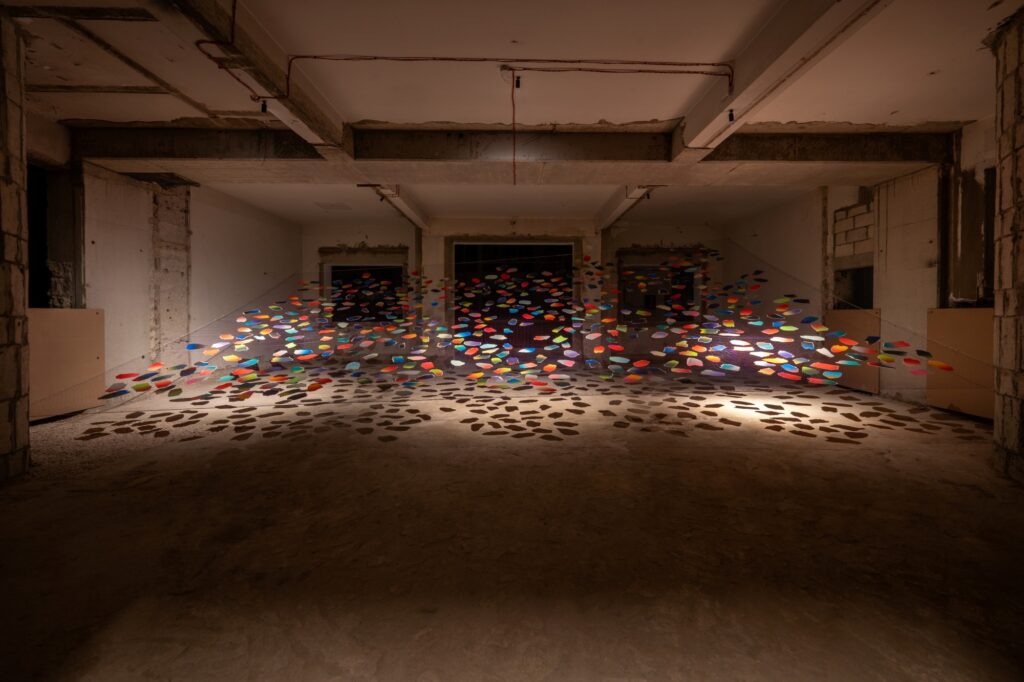
Much Peace, Love and Joy by SPREAD © Youssef Itani
Lebanese designers inevitably operate between global exposure and local constraint. Rather than weakening identity, this duality sharpens it. Limited resources, reliance on local manufacturing, and collaboration with artisans become strengths rather than obstacles.

Beads by Roodi Mallouhi
“These conditions create a kind of unintentional training ground,” the Design Leads observe, one that produces designers who are contextually aware, user-focused, and highly adaptable. The works in “Rising with Purpose” reflect this, engaging everyday life through culturally resonant narratives while remaining globally legible.

Tile It by Lea Accari
Projects such as Tile It by Lea Accari, magnetised tiles developed in collaboration with a traditional Beirut factory, or Beads by Roodi Mallouhi, a modular furniture system handcrafted through intergenerational collaboration, exemplify this balance. Both projects demonstrate how innovation can emerge from deep respect for craft, process, and continuity.
We Design Beirut as Collective Momentum
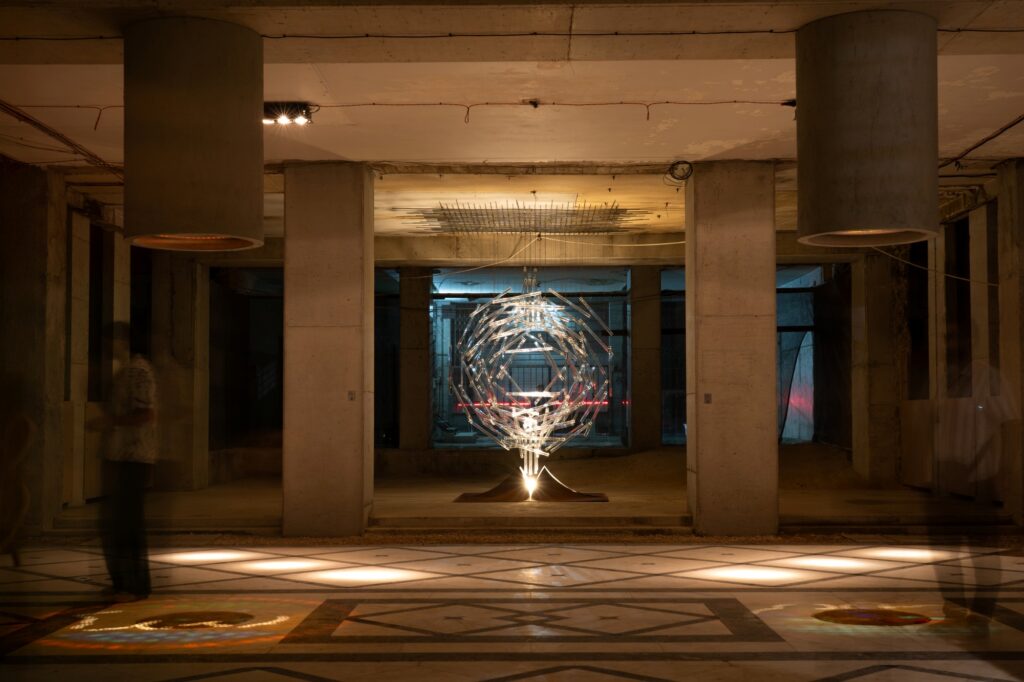
Radiant Absence by Moataz Nasr and Ascension by Preciosa © Youssef Itani
In a city marked by exhaustion, uncertainty, and repeated rebuilding, both material and emotional, We Design Beirut becomes more than a cultural event. Karim notes that this year’s edition drew an unusually diverse and engaged public, as though Beirut had been waiting for design to return as a shared experience.
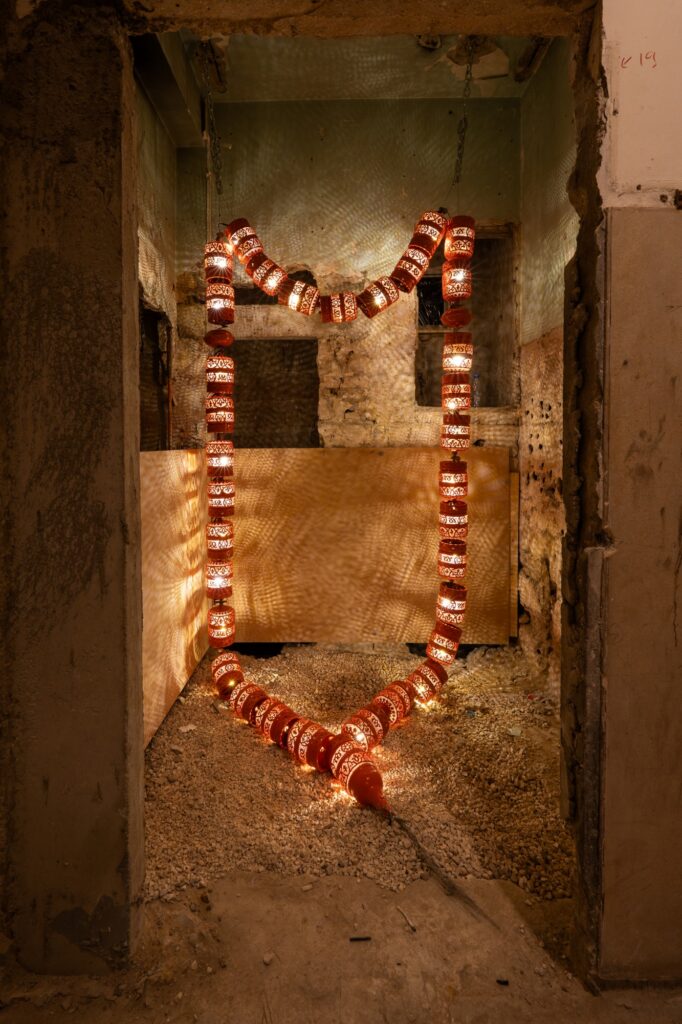
Petro Beads by Moataz Nasr © Youssef Itani
For the Design Leads, being entrusted to lead Rising with Purpose carries similar weight. “For the first time, it feels like opportunities are emerging,” they reflect. After years shaped by pandemic, financial collapse, and conflict, the exhibition offered not just visibility, but connection, between generations, disciplines, and futures.
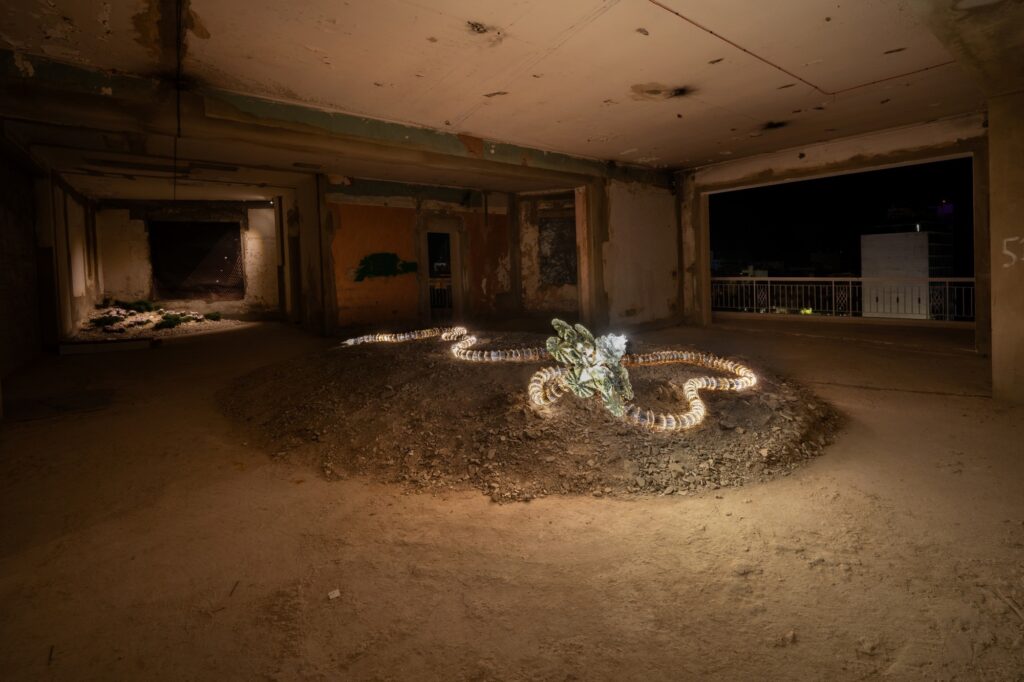
Christian Pellizzari’s ‘Cyclamen’ © Youssef Itani
Together, Union: A Journey of Light and Rising with Purpose articulate a shared belief: that design, architecture, and light are not remedies, but companions and allow growth without denial.
At the Immeuble de l’Union, Beirut does not pretend to be whole. Instead, it breathes through its fractures, letting light mark the quiet threshold where transformation begins. From basement to sky, from scar to rhythm, We Design Beirut once again reminds us that renewal is not an endpoint, but a continuous act of care.
The Designs of the New Generation
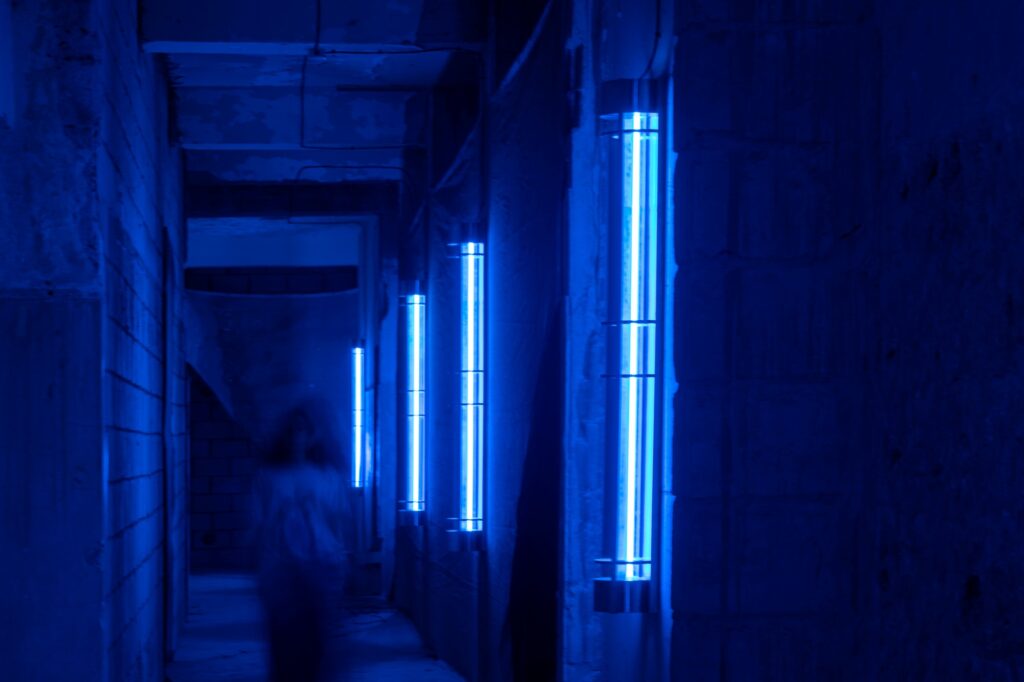
Celeste Wall fixtures were designed and executed by Atelier33 © Youssef Itani
These designers approach design as an act of negotiation: between limited resources and ambitious ideas, between inherited craft and contemporary need, between global references and local realities. Many works respond directly to the Lebanese context, addressing portability, modularity, repair, and adaptability as essential qualities rather than optional features.
Many of the showcased works rely on local manufacturing methods and collaborations with artisans whose knowledge has been passed down through generations. Rather than romanticising craft, designers engage it pragmatically, working within what is accessible, feasible, and sustainable.
The result is design that is both deeply rooted and outward-looking: pieces shaped by Lebanon’s instability yet equipped to function on the international stage. It is this dual awareness, local in making, global in relevance, that defines the identity emerging from Rising with Purpose.

REBIRTH, Light fixture designed and executed by Atelier33 © Youssef Itani
Through objects that respond to real needs and lived constraints, Rising with Purpose asserts that Lebanese design is not waiting to be rescued, but actively shaping its own future.
All Pictures Courtesy We Design Beirut