New Airport in Lishui by MAD, Global Honour for Ma Yansong
Located in the mountainous landscape of southwestern Zhejiang, China, Lishui Airport is designed by MAD under the leadership of Ma Yansong, Dang Qun, and Yosuke Hayano and marks a significant infrastructural and spatial milestone for the region.
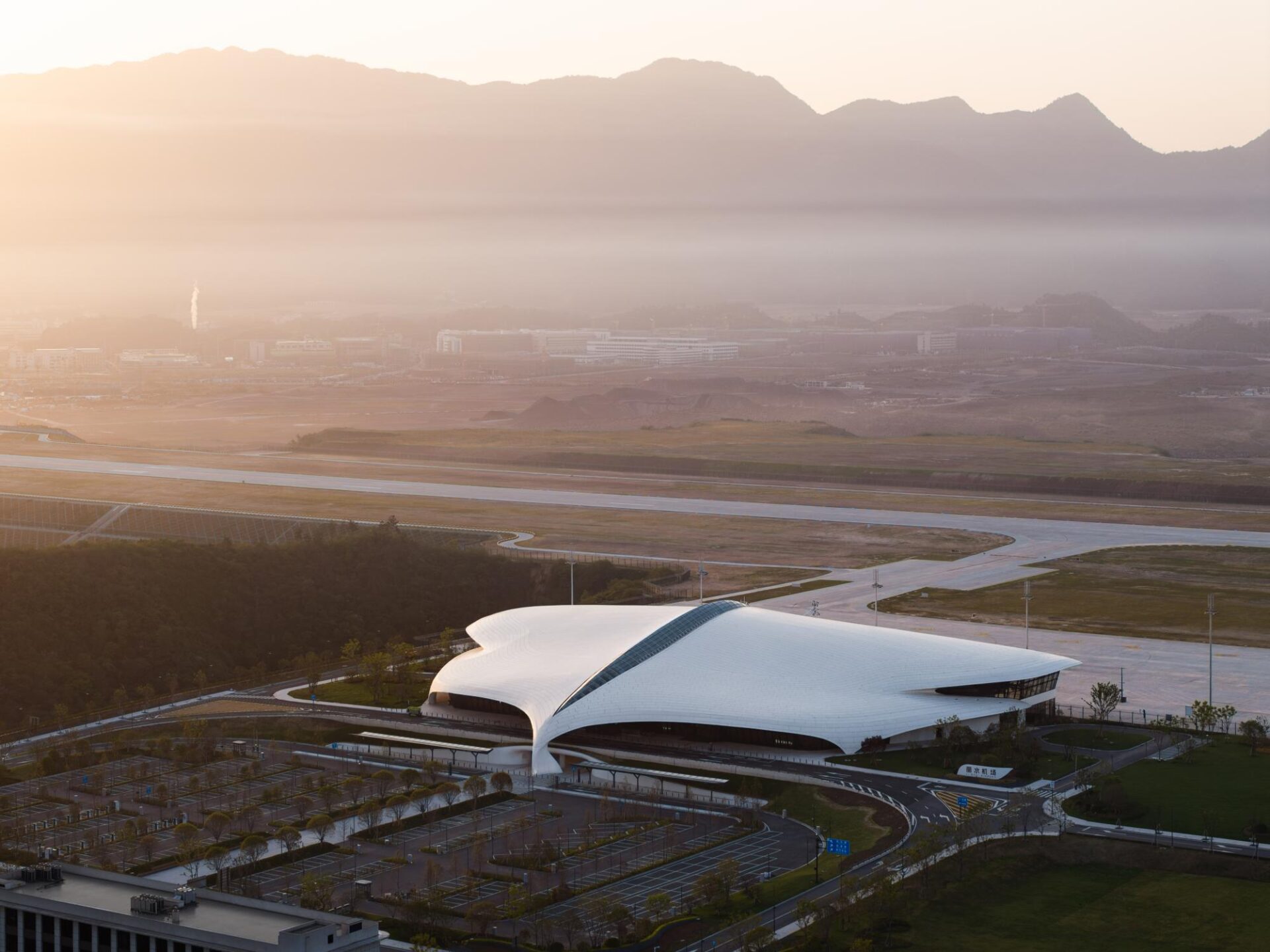
Lishui Airport
Initiated in 2008 and constructed between 2018 and 2025, the project establishes the city’s first direct connection to China’s national aviation network. Spread across a 2,267-hectare site, the airport includes a 12,100 sqm terminal building, 23.95 meters high, designed to accommodate 1,000,000 passengers annually in its initial phase, alongside a cargo capacity of 4,000 tons.

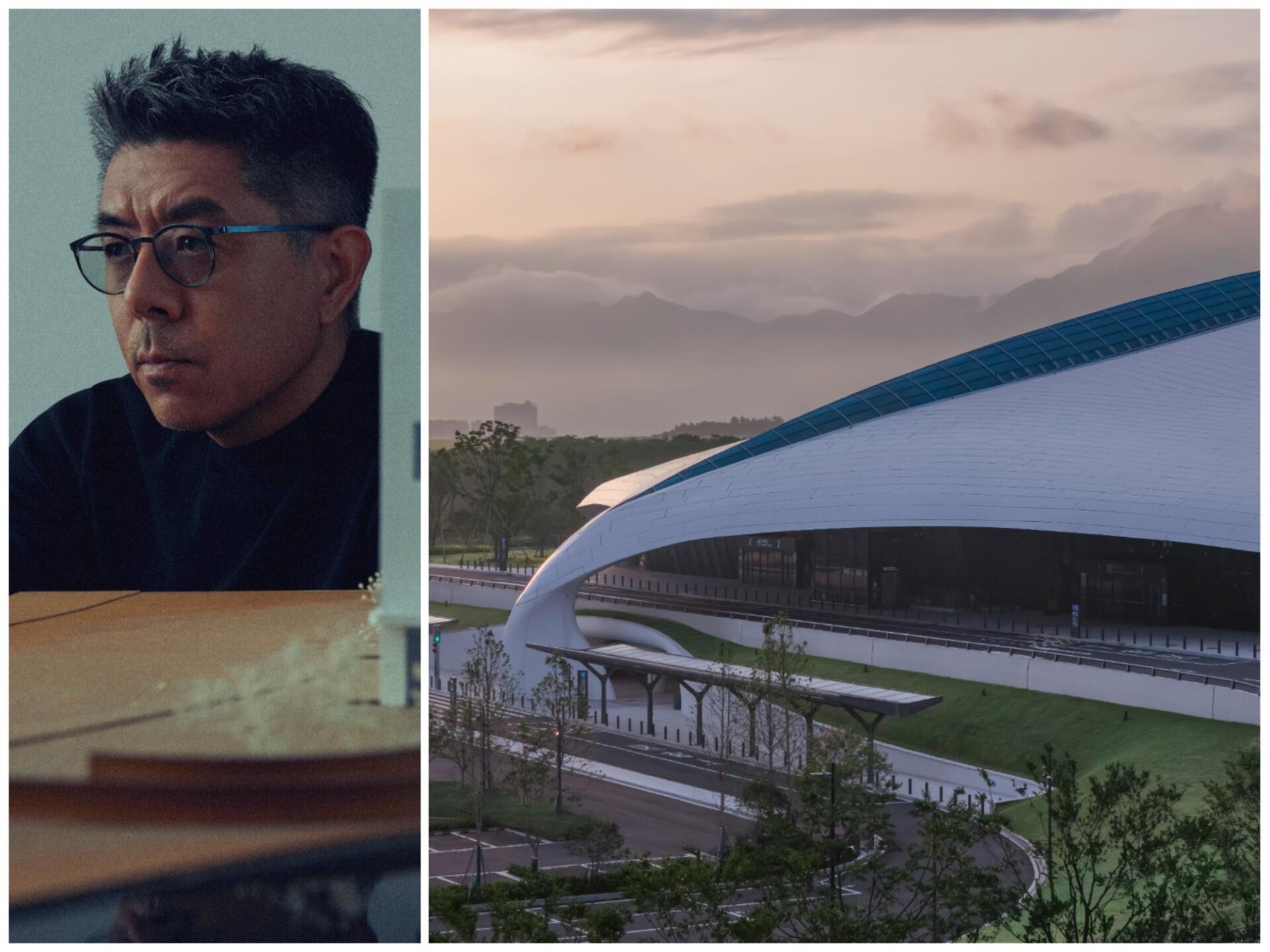
Ma Yansong, Photography @Li Xiao
The completion of Lishui Airport coincides with international recognition for Ma Yansong, the principal architect and founder of MAD Architects, who has been named an Honorary Fellow of the American Institute of Architects (Hon. FAIA).
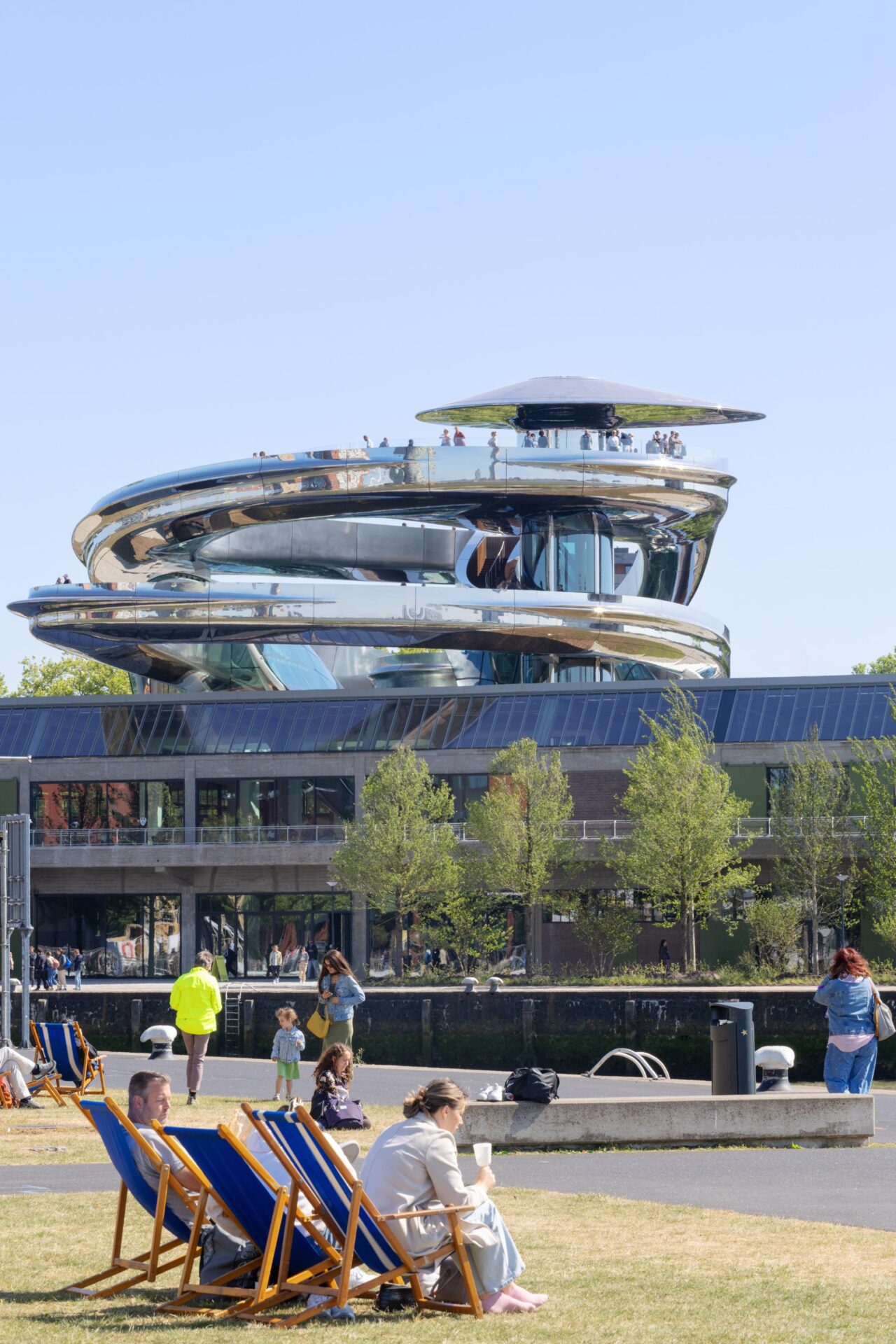
Fenix Museum in Rotterdam, designed by MAD Architects.
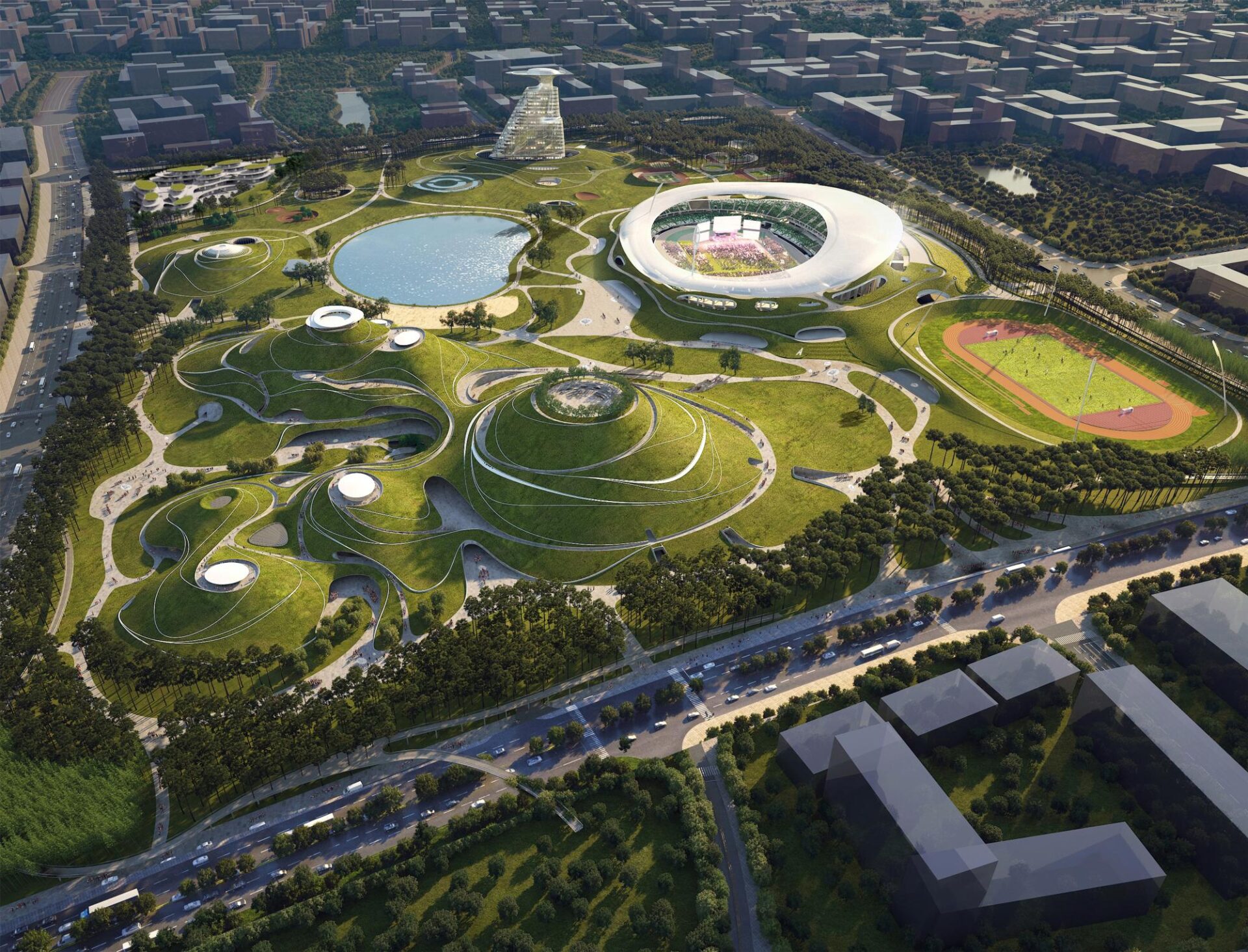
Quzhou Sports Campus Masterplan by MAD Architects
This distinction, held by fewer than 3% of AIA members, recognises architects whose work has significantly contributed to architecture and society on a global scale. The fellowship will be formally conferred at the AIA Conference on Architecture and Design in June 2026.
Ma’s work integrates creativity, functionality, sustainability, and cultural sensitivity, positioning architecture as both a technical and cultural practice. His projects, including the Lucas Museum of Narrative Art in the United States, Fenix Museum in Rotterdam, Tunnel of Light in Japan, and Shenzhen Bay Cultural Park and Quzhou Sports Park in China, consistently explore new relationships between people, environment, and built form.
Alongside Ma’s practice, his engagement with cultural discourse spans exhibitions and curatorial work, including Blueprint Beijing at the 2023 Beijing Art Biennale and the China Pavilion at the 2025 Venice Architecture Biennale.
In 2025, he was named one of TIME magazine’s 100 Most Influential People. The completion of Lishui airport is another feather in his firm’s work, while reflecting a broader trajectory within MAD Architect’s work, one that resists the conventional separation between infrastructure and experience.
Rethinking the Airport as Civic Space

Airports have long been understood as purely functional environments as spaces of transit, efficiency, and detachment. Lishui Airport proposes an alternative. Here, infrastructure expands into the realm of civic life, operating simultaneously as a transportation hub, an ecological landmark, and a space of psychological transition.
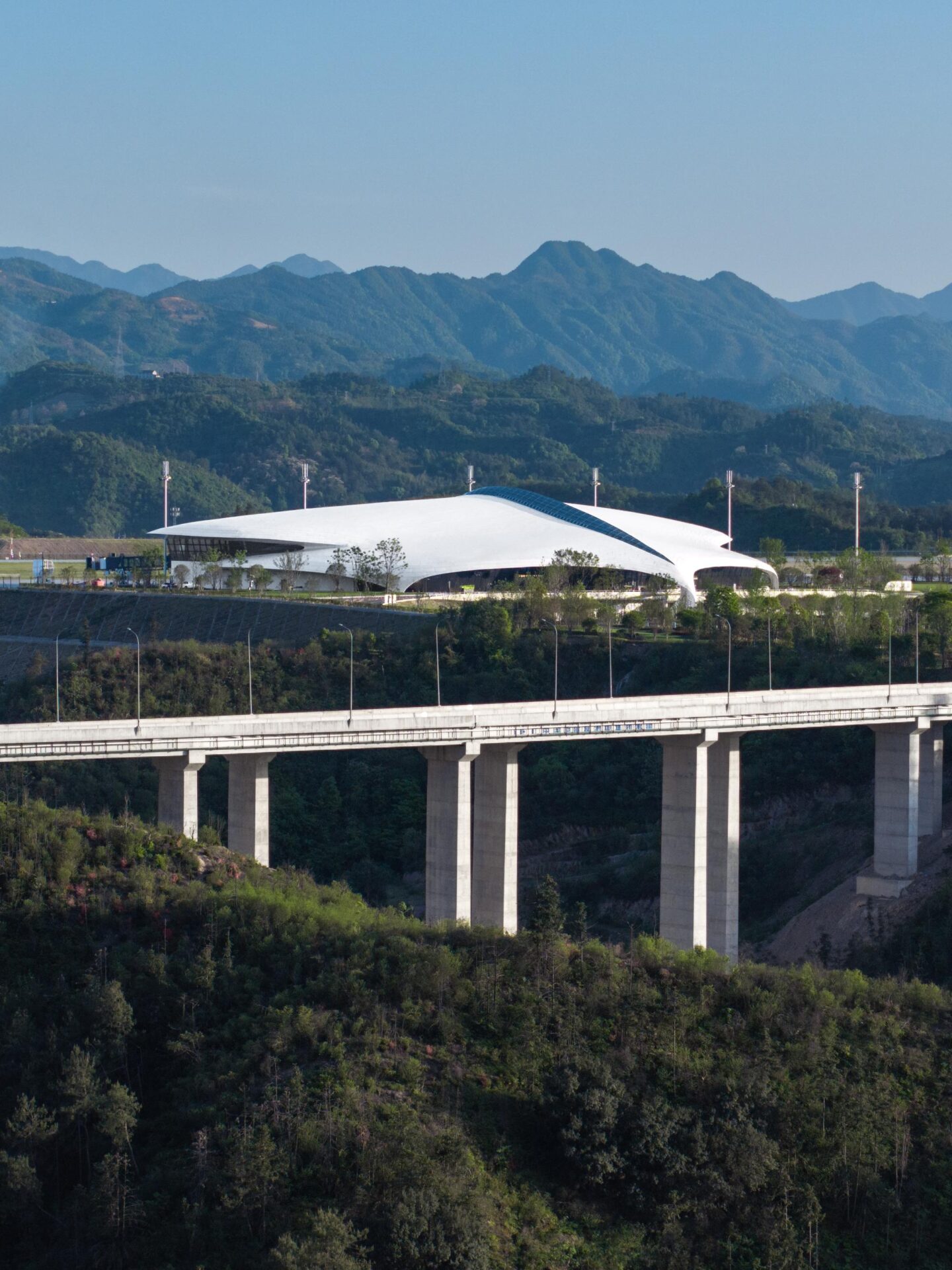 Positioned approximately 15 kilometres southwest of Lishui’s city centre, the airport sits in a low mountain and foothill valley shaped by extensive land reclamation. The construction demanded significant earthworks, with cut-and-fill differences reaching nearly 100 meters in certain areas, placing it among the most topographically complex airport projects in East China. Rather than flattening the landscape into submission, the design negotiates with it, and the scale of intervention is substantial, yet the architectural response remains measured.
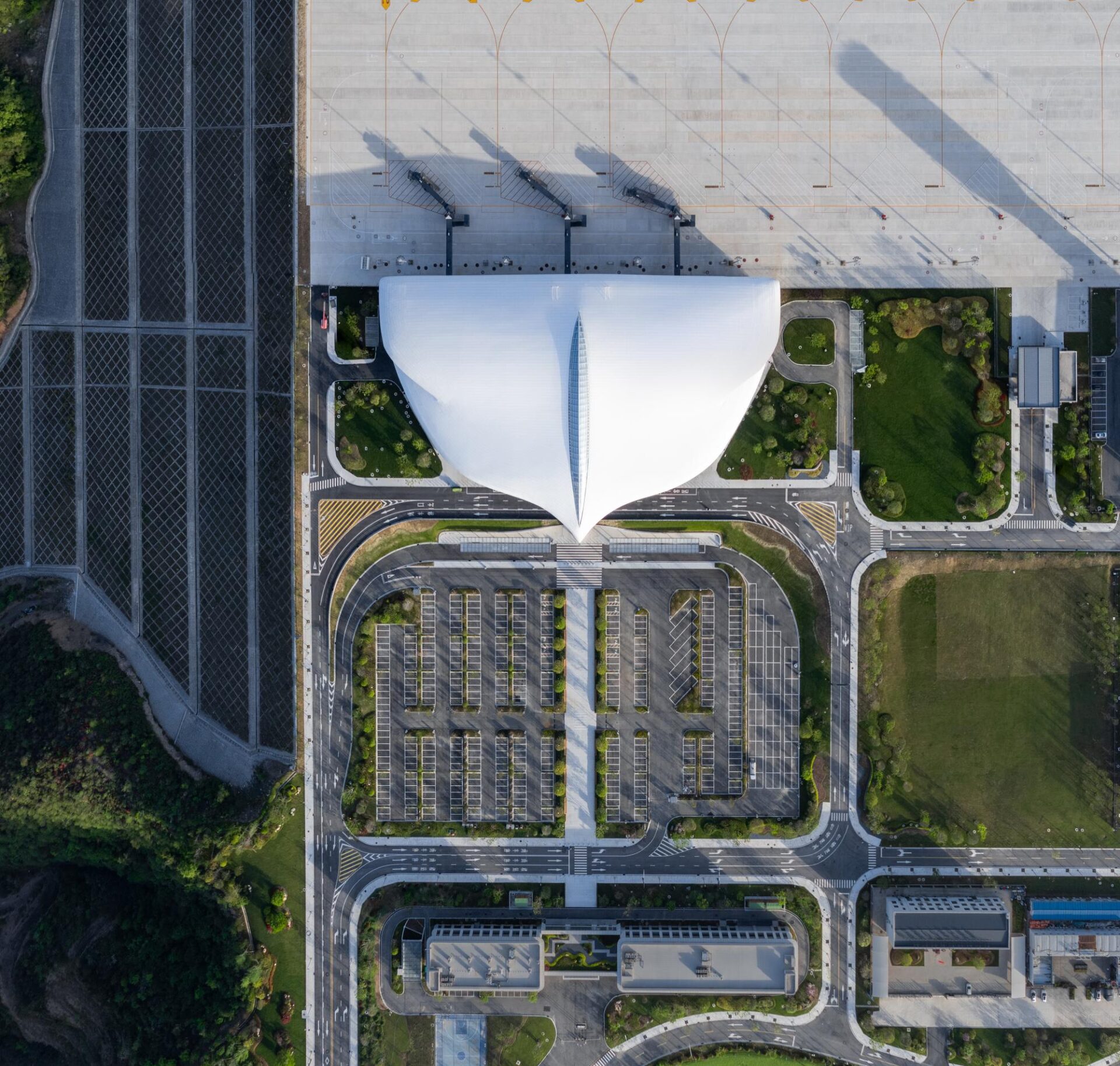
The terminal follows the natural contours of the site, its gently sloping form merging with the surrounding terrain. Soft, continuous volumes lend the building a sense of stillness, evoking the image of a white bird resting quietly among mountains and forests.
Form, Light, and Material
A defining feature of the project is its double-layered roof, clad in silver-white aluminium panels. The roofline responds subtly to changing light and weather, recalling mist-covered hills and birds in flight. This shifting visual identity allows the building to register as both presence and atmosphere.
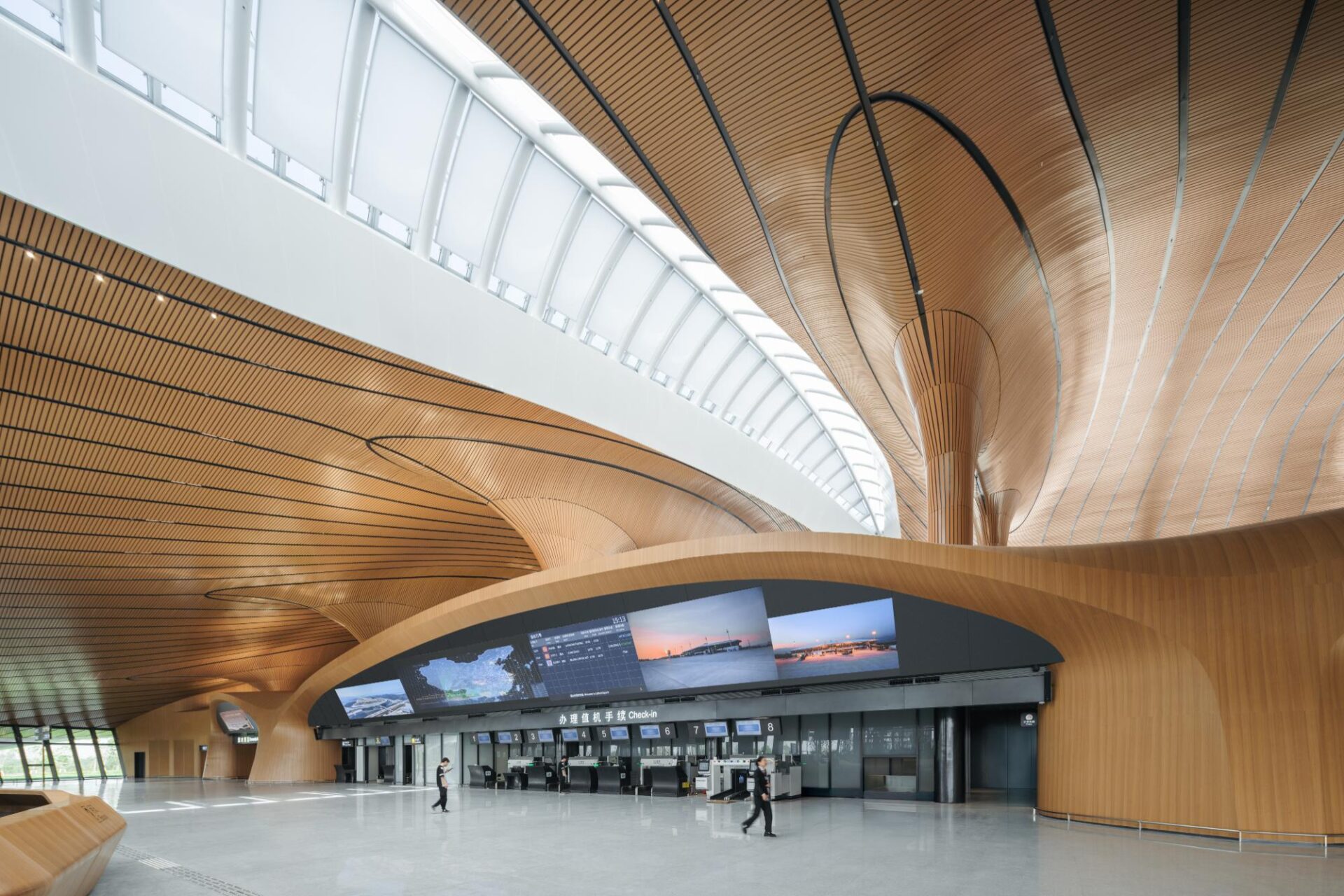
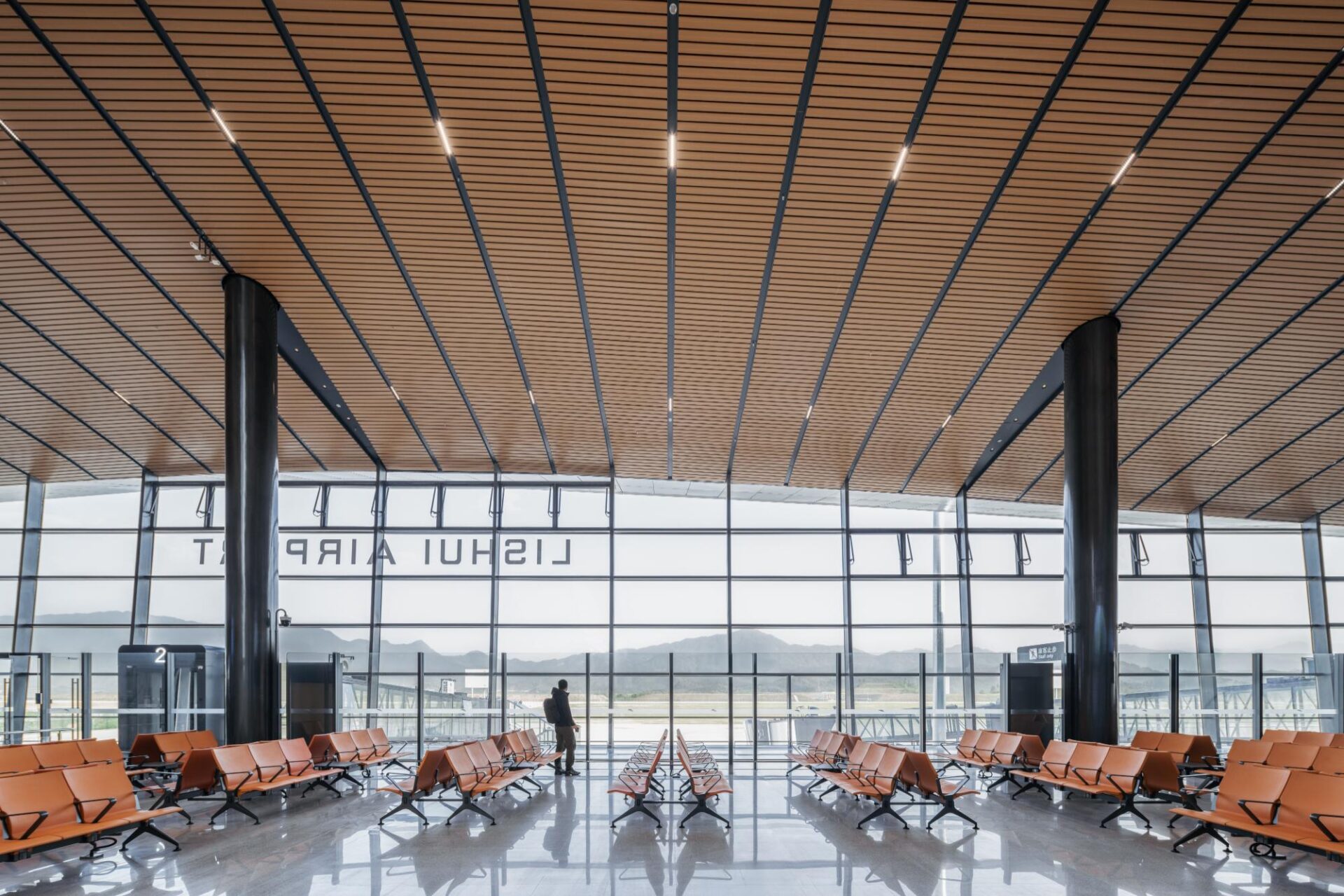 Inside, fourteen umbrella-shaped structural columns support the lightweight roof, while wood-toned interior grilles introduce warmth and texture. A spindle-shaped skylight at the apex draws daylight deep into the terminal, activating the interior throughout the day.
As Ma Yansong, MAD Architects explains, “We used materials with warm tones and natural textures to create a bright and airy interior. By adopting a one and a half story layout, the airport remains compact, while supporting daily comfort and engaging in a dialogue with nature.”
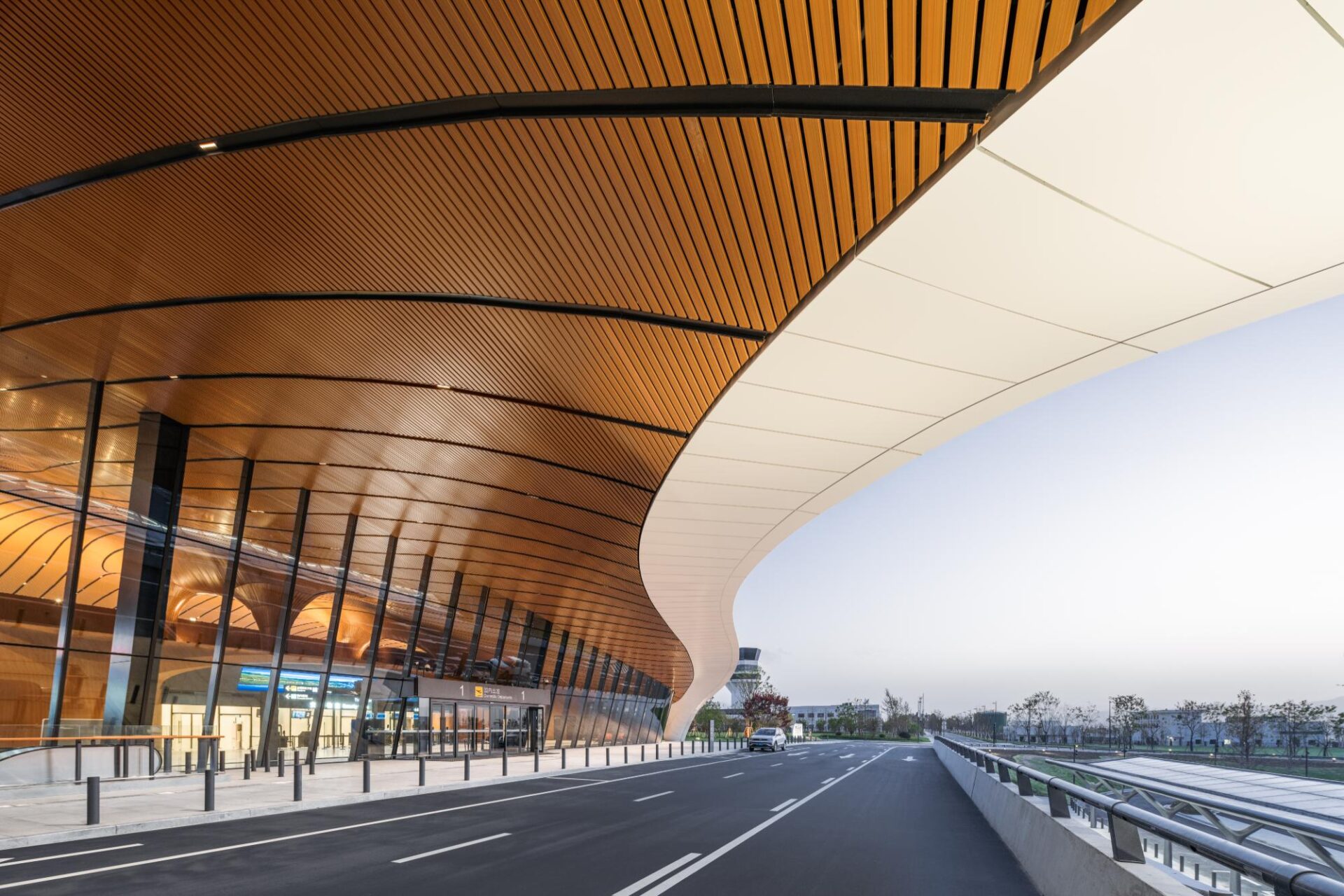
Transparent curtain walls dissolve boundaries between inside and outside, framing expansive views of the surrounding mountains. The first-floor lobby varies in height from 4.5 to 13 meters, avoiding the excess scale typical of large terminals while maintaining spatial richness. Integrated acoustic slots further refine the experience, absorbing noise and creating a calmer waiting environment.
Circulation and Spatial Strategy
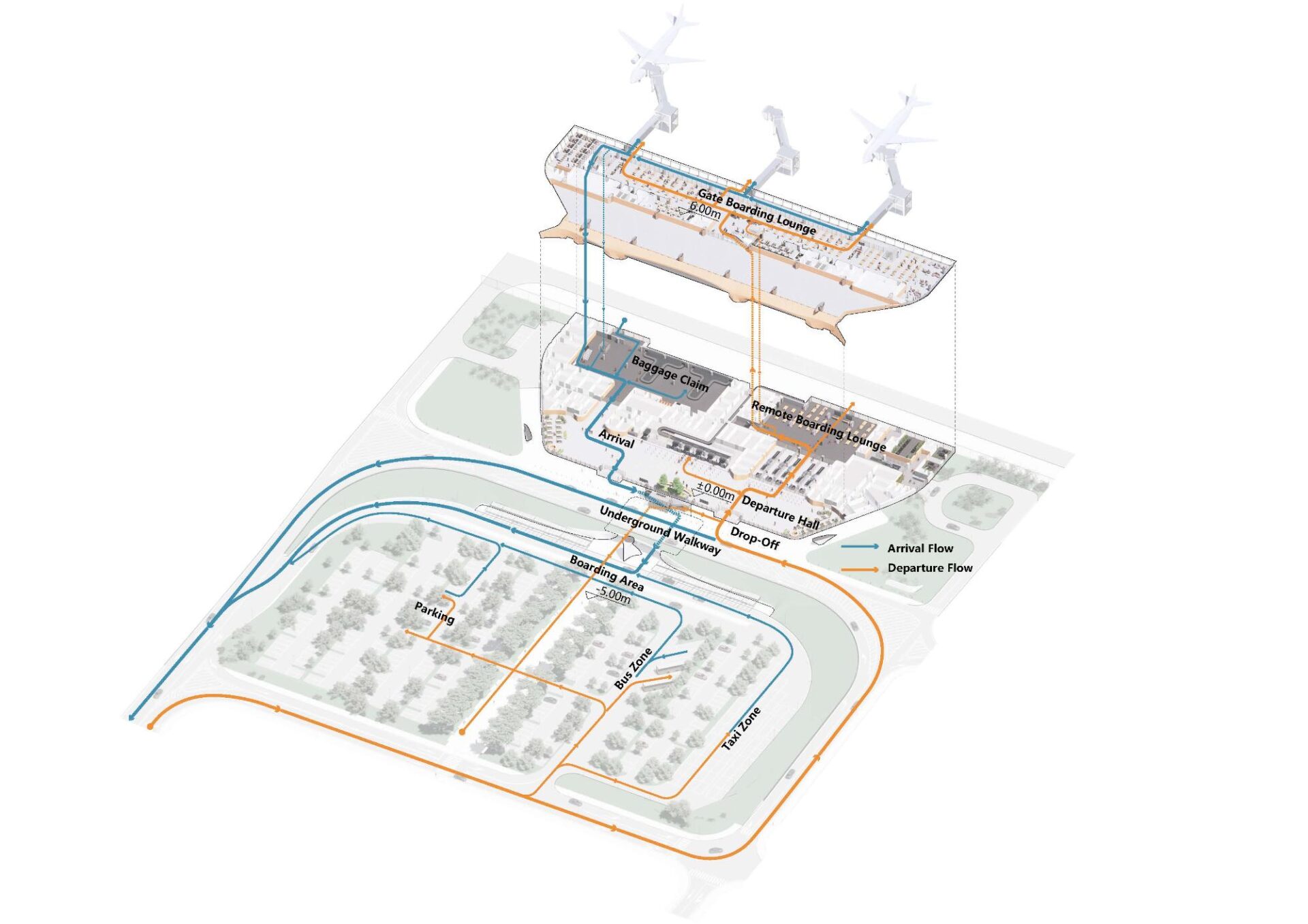
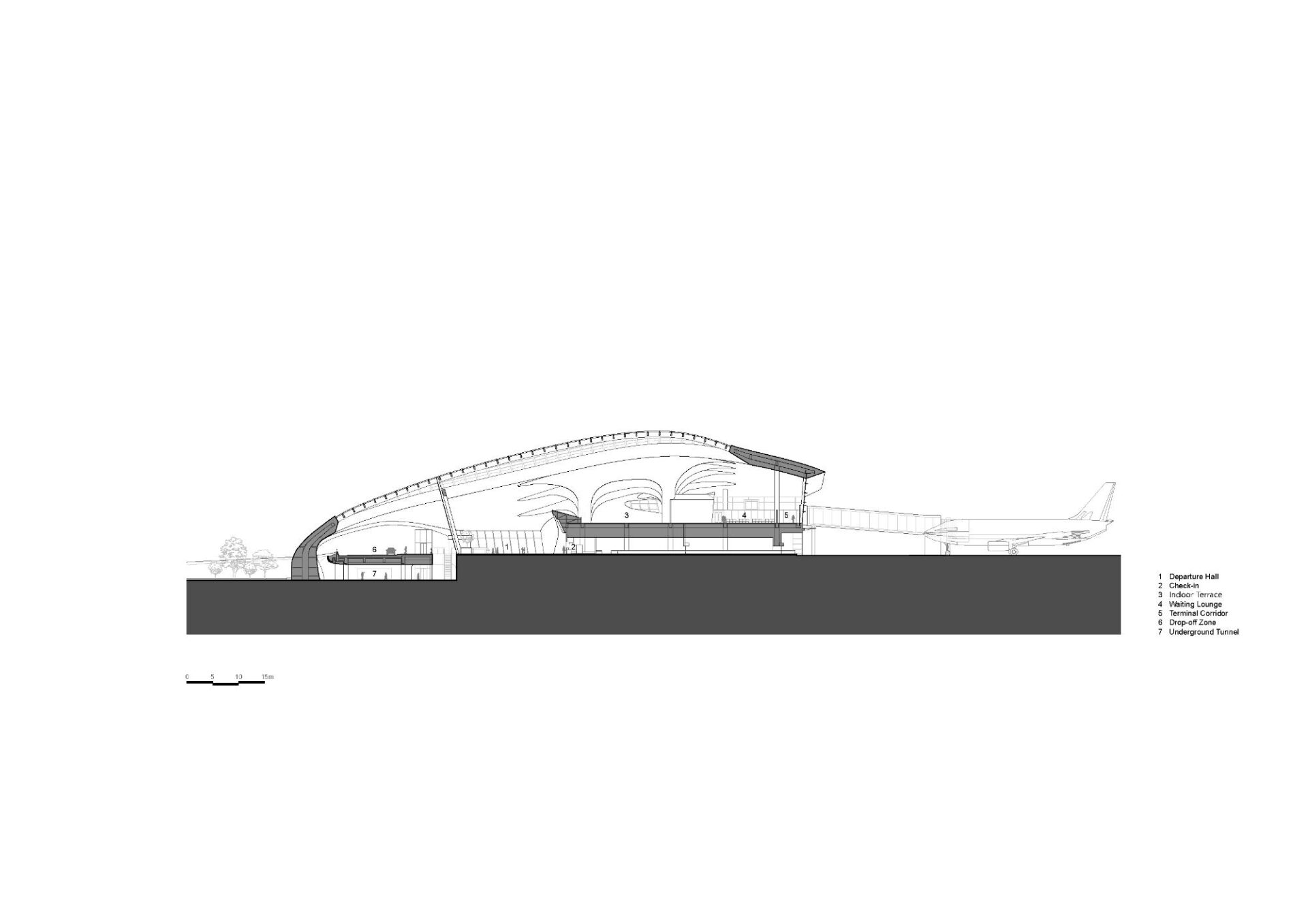
The terminal is organised using a one-and-a-half-story sectional strategy, anchored by a double-height entrance hall. This space connects ground-level arrivals with the upper departure lounge, ensuring clear and efficient movement while maintaining visual continuity.
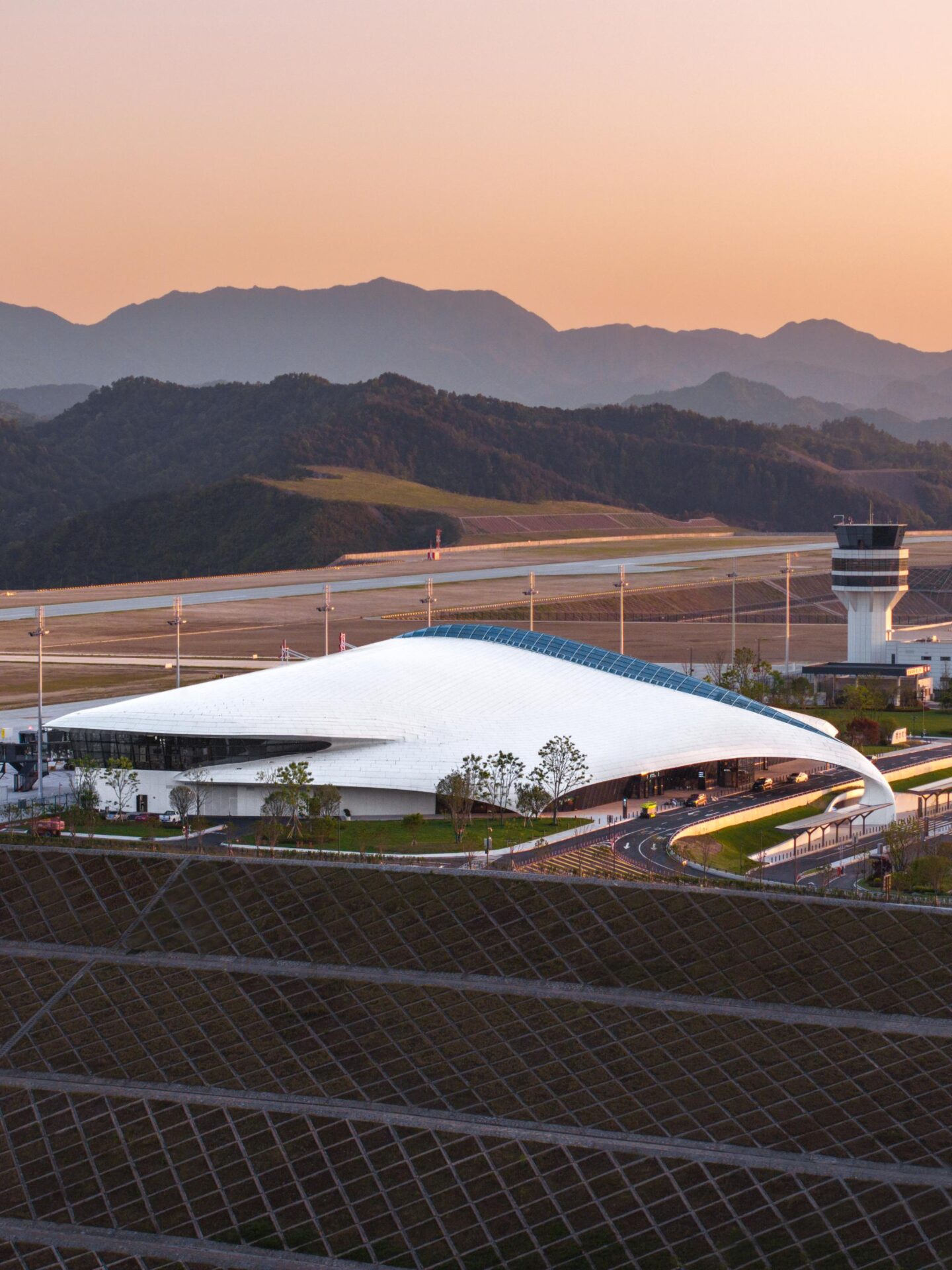 Below, a sunken parking structure follows the terrain. A landscaped central promenade runs beneath the building, guiding passengers intuitively toward the terminal. Rather than separating infrastructure into discrete layers, the design creates continuity across movement, landscape, and architecture.
While the airport currently supports one million passengers annually, future projections anticipate growth to 1.8 million by 2030 and up to 5 million by 2050, including the addition of an international terminal. By the end of 2025, the airport will connect Lishui to major economic centres and tourist destinations, positioning it as both a gateway and a threshold, according to MAD Architects.
 Project Details:
Site Area: 2,267 hectares
Building Area: 12,100 sqm
Building Height: 23.95 m
Principal Partners in Charge: MAD Architects: Ma Yansong, Dang Qun, Yosuke Hayano
Associate Partners in Charge: Liu Huiying, Kin Li
Design Team: Sun Shouquan, Zhang Xiaomei, Peng Kaiyu, Lei Lei, Yang Xuebing, Sun Mingze, Luo Yiyun, Yin Jianfeng, Punnin Sukkasem, Zhu Yuhao, Yao Ran
Client: Lishui Airport Construction Headquarters