Sheikha Al Mayassa Opens Qatar’s Pavilion at Venice Biennale
At the 61st International Art Exhibition—La Biennale di Venezia, Qatar marked a defining cultural moment with the opening of its National Pavilion in the Giardini della Biennale, by HE Sheikha Al Mayassa, signalling not only the country’s first official participation in the Art Biennale, but also the beginning of a permanent architectural and cultural presence in Venice.
Her Excellency Sheikha Al Mayassa bint Hamad bin Khalifa Al Thani, Commissioner of the National Pavilion of Qatar and Chairperson of Qatar Museums, officially opened ‘untitled 2026 (a gathering of remarkable people)’; Rirkrit Tiravanija, Sopha Al-Maria, Tarek Atoui, Alia Faris, Fadi Kattan. This is Qatar’s official contribution to the 61st International Art Exhibition—La Biennale Di Venezia, presented on the site of the future permanent Qatar Pavilion in the Giardini della Biennale.
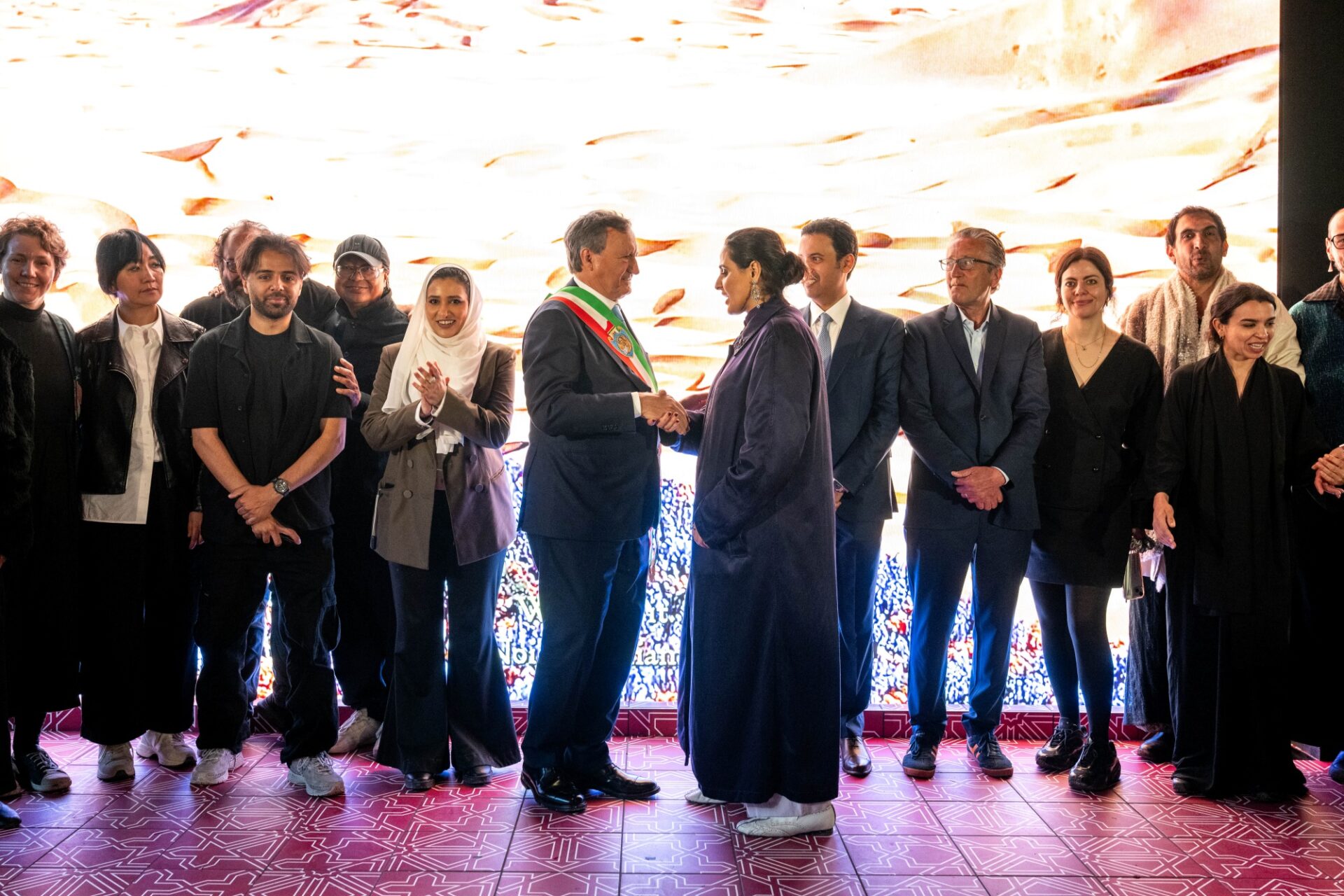
Her Excellency Sheikha Al Mayassa bint Hamad bin Khalifa Al Thani, Chairperson, Qatar Museums, and Mayor Luigi Brugnaro at the unveiling of untitled 2026 (a gathering of remarkable people); Rirkrit Tiravanija, Sophia Al-Maria, Tarek Atoui, Alia Farid, Fadi Kattan at 61st International Art Exhibition – La Biennale di Venezia. Photo: Ammar Abd Rabbo
The exhibition is organised by Qatar Museums and presented by Rubaiya Qatar, a nationwide multidisciplinary contemporary art quadrennial debuting this November. The exhibition positions art, hospitality, food, music, and gathering as tools for dialogue during a time of increasing global instability.
Culture Connects What Conflict Breaks
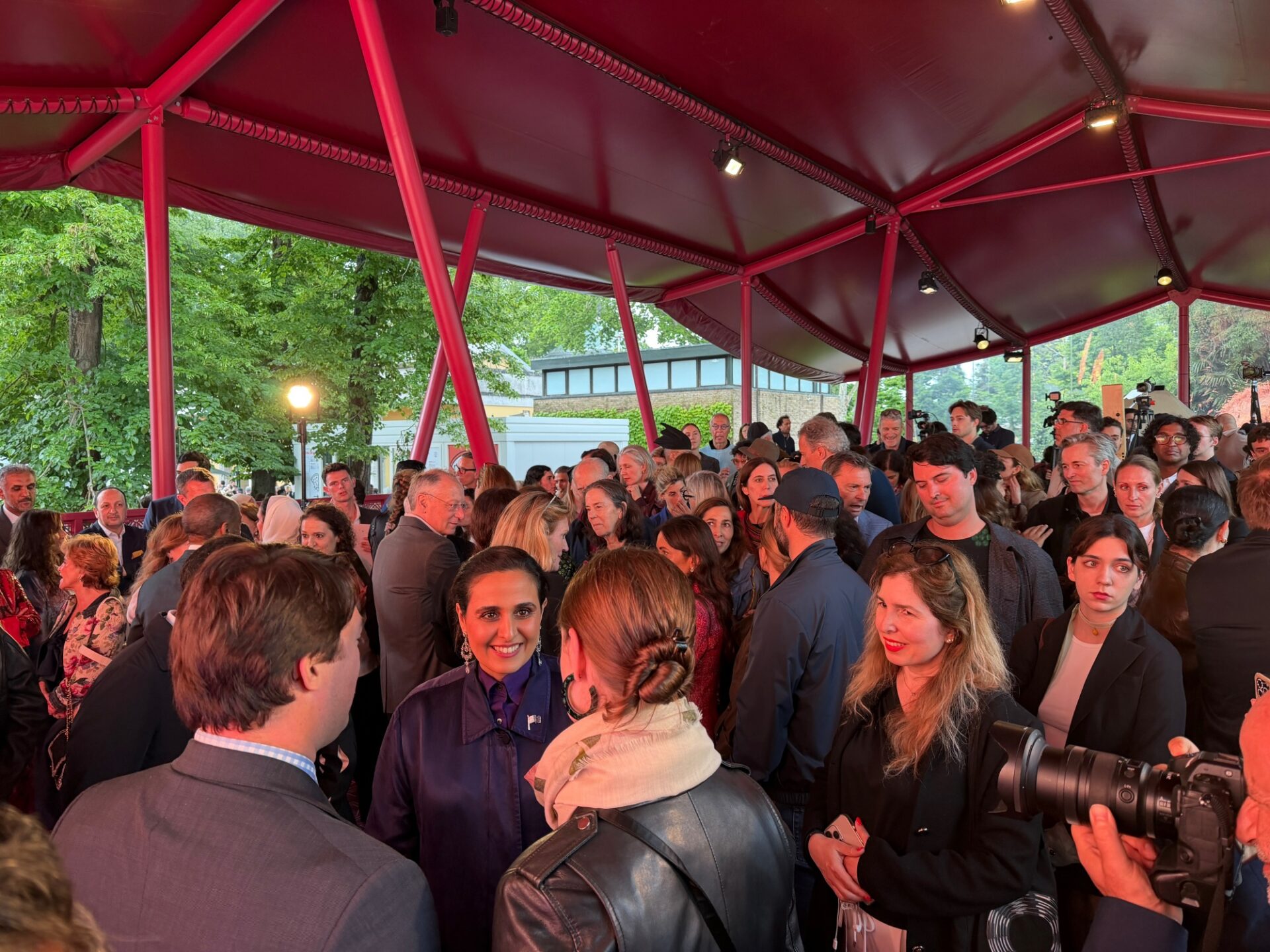
Her Excellency Sheikha Al Mayassa bint Hamad bin Khalifa Al Thani, Chairperson, Qatar Museums at the unveiling of untitled 2026 (a gathering of remarkable people); Rirkrit Tiravanija, Sophia Al-Maria, Tarek Atoui, Alia Farid, Fadi Kattan at 61st International Art Exhibition – La Biennale di Venezia. Photo: Qatar Museums
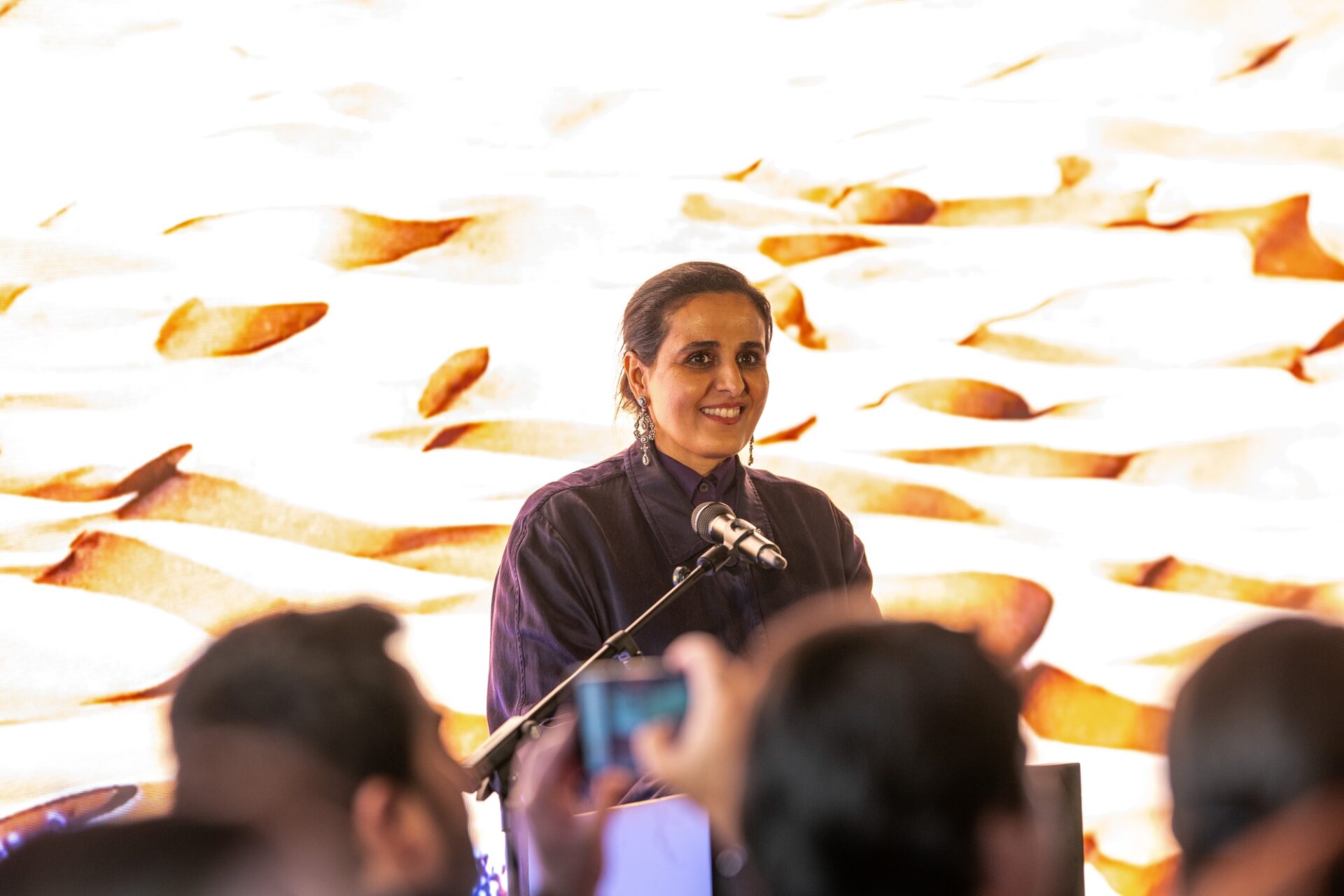
Welcoming an international audience of museum directors, architects, artists, and cultural leaders, Sheikha Al Mayassa framed Qatar’s participation as part of a larger cultural vision initiated under the leadership of His Highness Sheikh Tamim bin Hamad Al Thani. Speaking at the opening, she reflected on the role of culture in moments of conflict and displacement, emphasising the ability of artistic exchange to restore connection and shared humanity.
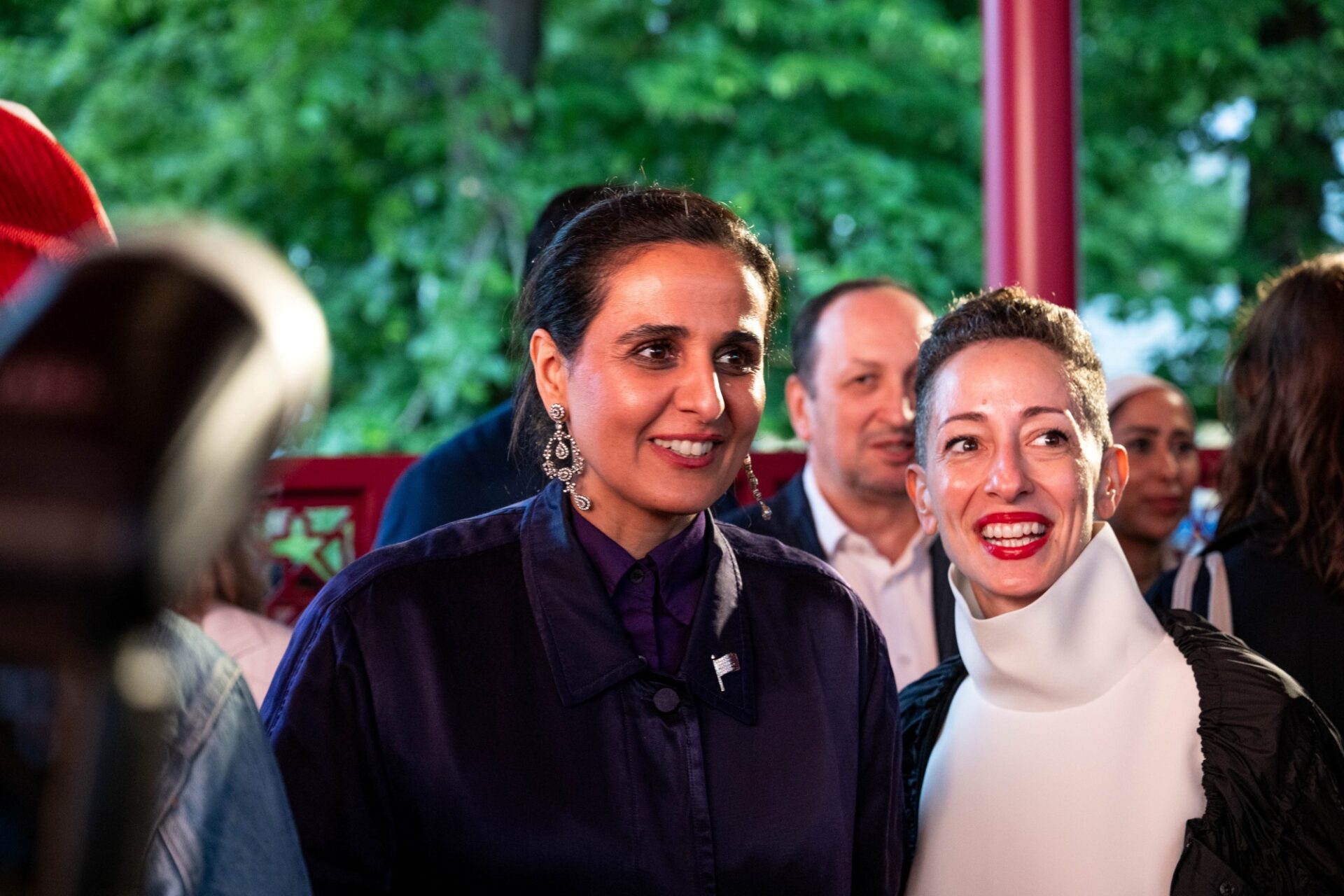
Her Excellency Sheikha Al Mayassa bint Hamad bin Khalifa Al Thani, Chairperson, Qatar Museums, and Lina Ghotmeh at the unveiling of untitled 2026 (a gathering of remarkable people).
“Our participation in La Biennale di Venezia started with the vision of our leadership, the Amir, His Highness Sheikh Tamim bin Hamad Al-Thani, to encourage dialogue and share the talent of Qatar and the region with the world,” said Her Excellency Sheikha Al Mayassa bint Hamad bin Khalifa Al Thani. “We are meeting in a difficult hour, when displacement, destruction, and destabilisation are daily words across our region and beyond. Culture connects what conflict tries to break apart and honours the humanity in each of us.”
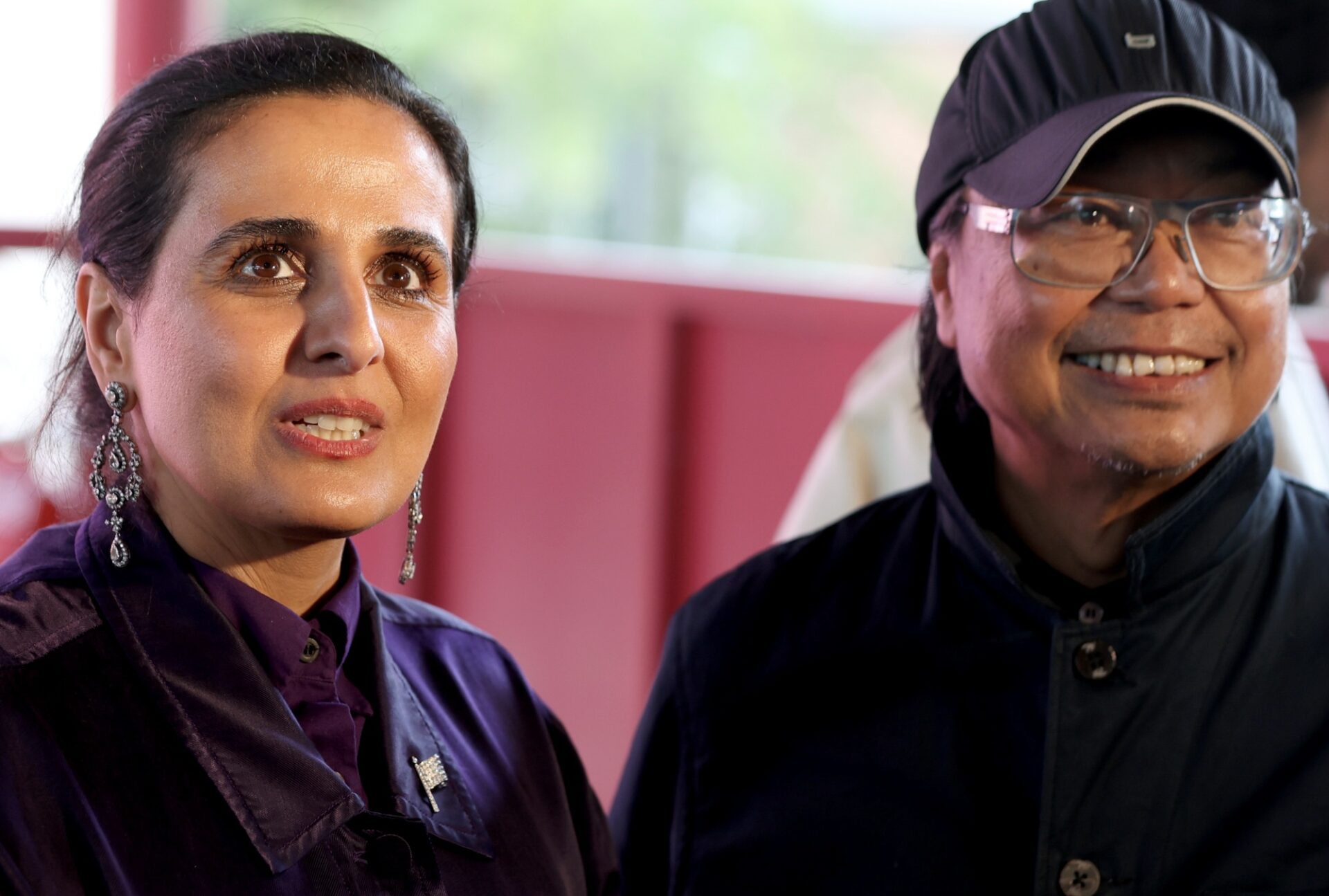
Her Excellency Sheikha Al Mayassa bintHamad bin Khalifa Al Thani, Chairperson, Qatar Museums, and Rirkrit Tiravanija at the unveiling of untitled 2026.
“That is why, for this first contribution by Qatar to Venice’s Art Biennale, we invited Rirkrit Tiravanija — a master of communal, interactive experiences — to imagine this exhibition. Under its tent, our community of artists will form, in the oldest and most generous meaning of the word, a tribe: a circle bound by hospitality, by craft, and by the simple conviction that to share a meal, a song, or a story is already to begin to understand one another,” said HE Sheikha Al Mayassa.
The Design

Exterior view of untitled 2026 (a gathering of remarkable people) at the 61st International Art Exhibition – La Biennale di Venezia.
The Qatar Pavilion is designed by Rirkrit Tiravanija as a place for cultural exchange that supports different forms of participation and artistic intervention. Modelled after Qatari gathering spaces, Tiravanija’s maroon-coloured temporary structure features a “scrambled” mashrabiya pattern, a traditional Islamic architectural element.
The pavilion itself was conceived as a temporary structure inspired by Qatari gathering spaces. Clad in a deep maroon tone and layered with a fragmented mashrabiya pattern, the architecture becomes both shelter and social platform, a space intended for participation, exchange, and collective experience.

Interior view of untitled 2026 (a gathering of remarkable people). Photo_ Giuseppe Miotto_Marco Cappelletti Studio
Among the guests present were Luigi Brugnaro, Mayor of Venice; Khalid bin Youssef Al Sada, Ambassador of the State of Qatar to Italy; Mohammed Saad Al Rumaihi, CEO of Qatar Museums; Sheikha Reem Al-Thani, Deputy CEO of ALRIWAQ, Public Art, and Rubaiya Qatar; alongside internationally recognised figures including Wael Shawky, Maurizio Cattelan, Frida Escobedo, Lina Ghotmeh, India Mahdavi and Glenn Lowry.
The Artists
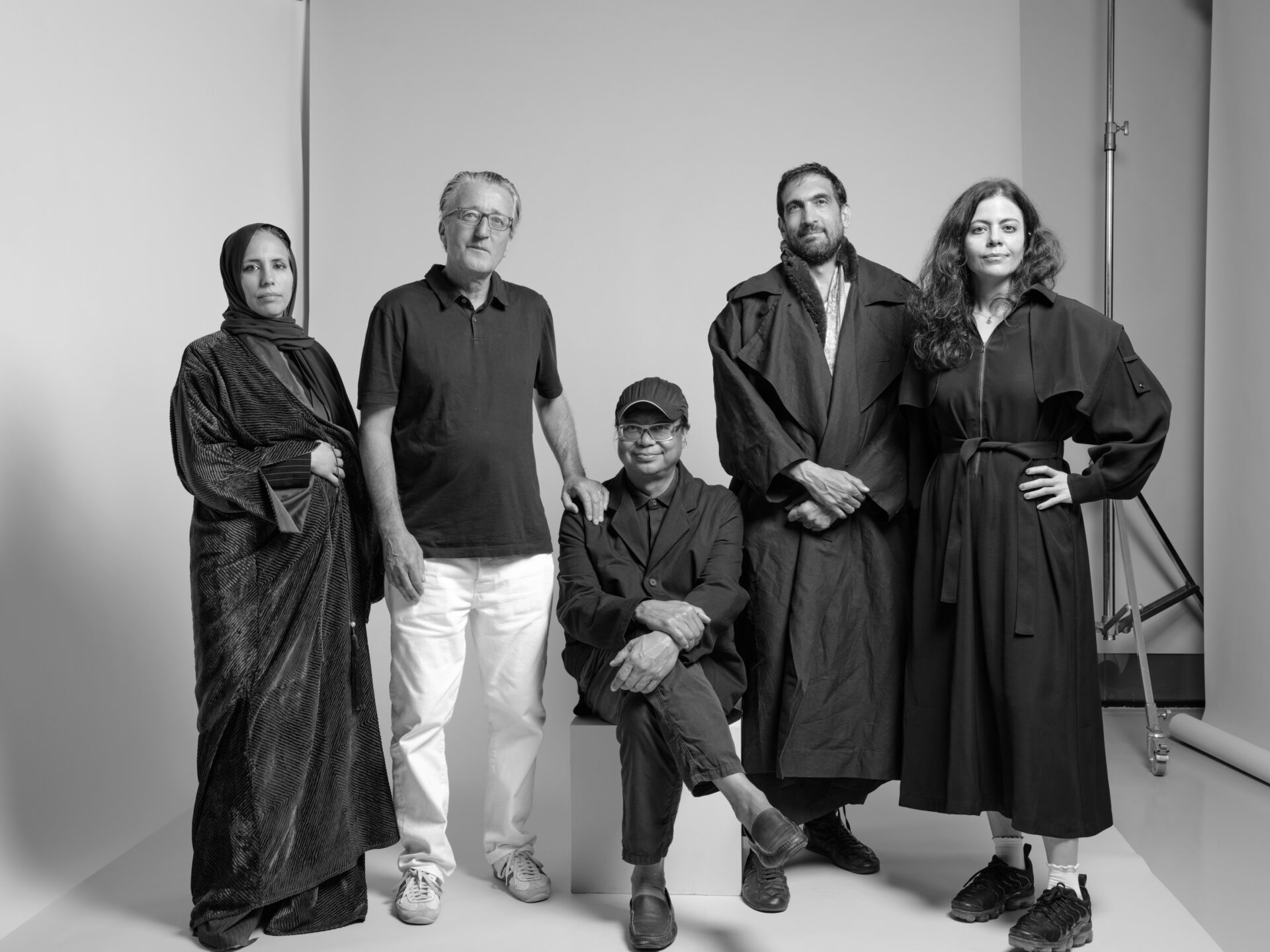
Sophia Al-Maria, Tom Eccles, Rirkrit Tiravanija, Tarek Atoui, Ruba Katrib (© Brigitte Lacombe)
The exhibition brings together an interdisciplinary group of artists and practitioners, including Sophia Al-Maria, Alia Farid, Tarek Atoui and Palestinian chef Fadi Kattan.
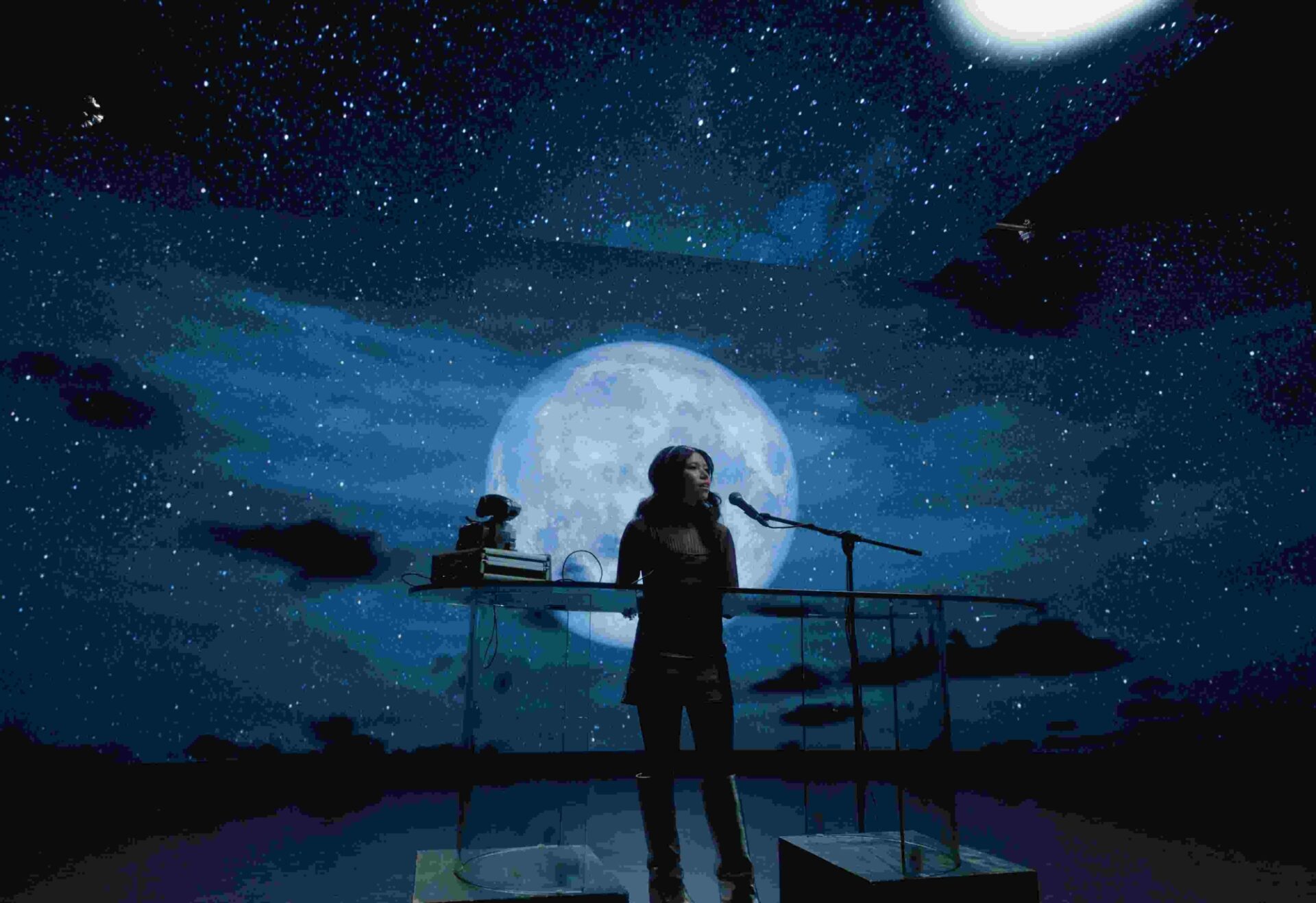
Still from DAMAR TV by Sophia Al Maria at the National Pavilion of Qatar
Qatari-American artist Sophia Al-Maria presents DAMAR TV (2026), an experimental narrative film, while Kuwaiti-Puerto Rican artist Alia Farid’s Jerrican (2022–2026) anchors the space as a large-scale sculptural intervention.
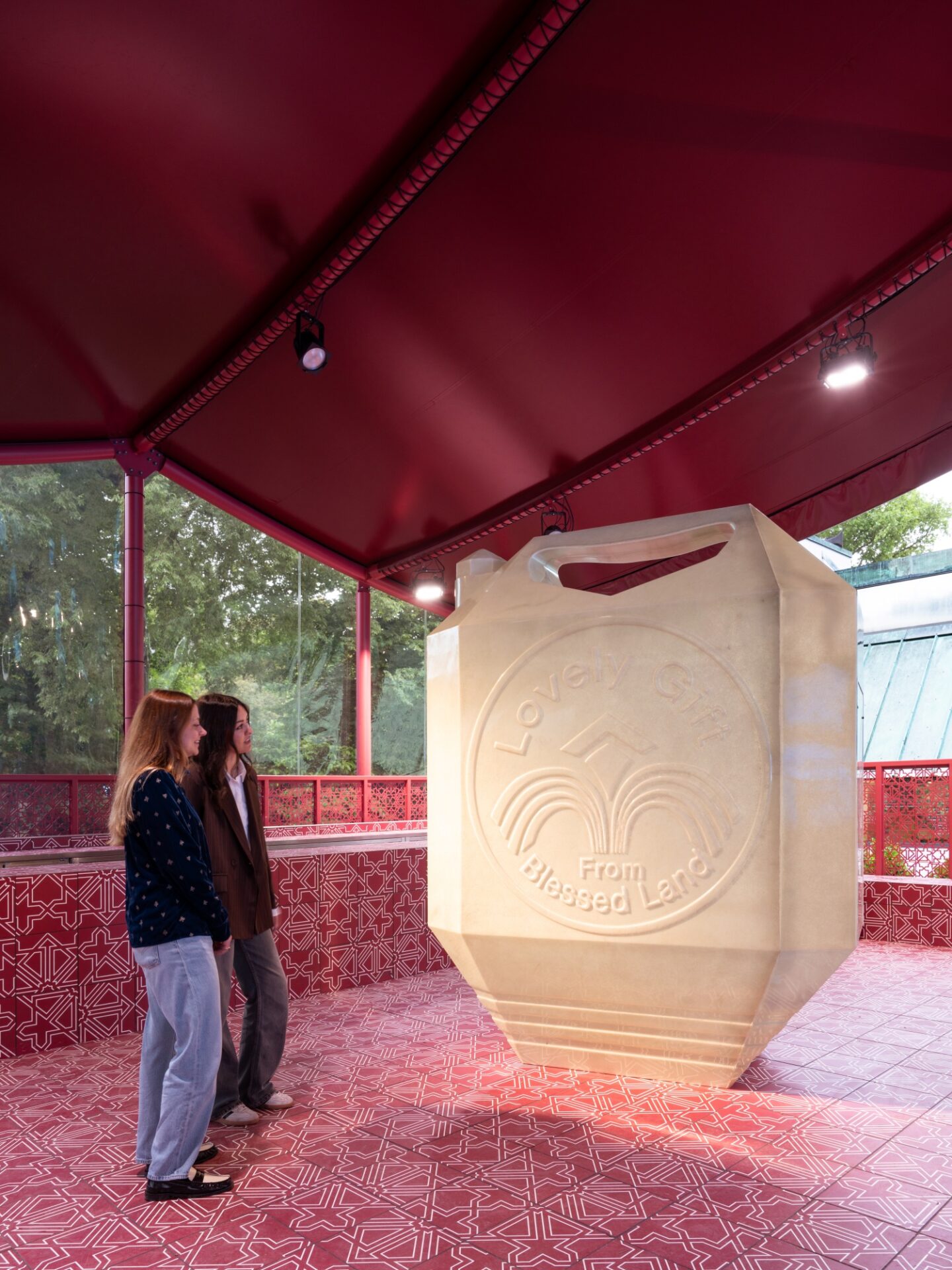
Installation of Jerrican (2026) by Alia Farid within untitled 2026 (a gathering of remarkable people). Photo: Giuseppe Miotto / Marco Cappelletti Studio
A culinary programme of Middle Eastern cuisine was designed by Palestinian chef Fadi Kattan.
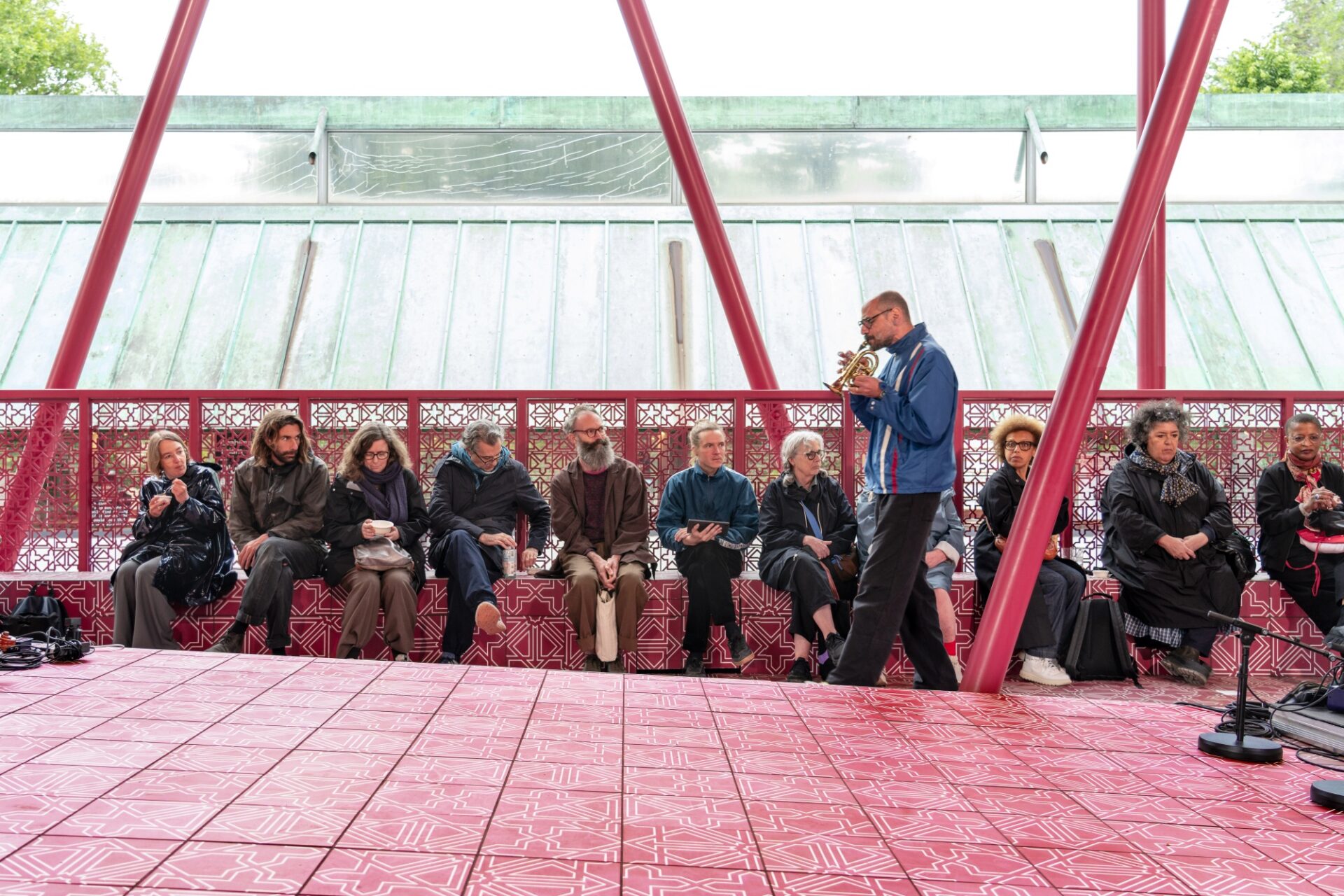
Mazen Kerbaj performing inside of untitled 2026 (a gathering of remarkable people). Photo: Giuseppe Miotto / Marco Cappelletti Studio
The exhibition opened with live music arranged by Tarek Atoui, inspired by the structures of the takht (classical Arabic orchestra) and the wasla (musical suite), and featuring more than half a dozen musicians and singers representing seven nations.

Interior view of untitled 2026 (a gathering of remarkable people). Culinary activations curated by Fadi Kattan sits at the intersection of preservation and innovation, with menus often centred on a single ingredient to trace the cross-cultural impact of migration and trade. Photo: Giuseppe Miotto / Marco Cappelletti Studio
The performances were accompanied by culinary offerings prepared by Kattan along with chefs and authors Noof Al Marri of the Desert Rose Café at the National Museum of Qatar (Qatar), Noor Murad (Bahrain), and Majed Ali Almatrooshi (United Arab Emirates), and mixologists Anna Patrowicz (Poland/UK) and Vesta Kontrimaviciene (Lithuania) of akub London.

(L-R) Thomas Gouband, Mazen Kerbaj, Gobi Drab, Naghib Shanbehzadeh, and Sarah Ourahman perform at the National Pavilion of Qatar for the 61st International Art Exhibition at La Biennale di Venezia on May 06, 2026, in Venice, Italy. (Photo by Simone Padovani/Getty Images for National Pavilion of Qatar at La Biennale di Venezia)
Music and food were integral to the opening programme. Tarek Atoui organised live performances drawing from the structures of the takht and the wasla, bringing together musicians and singers from seven countries. The culinary programme curated by Fadi Kattan extended this sense of gathering through regional cuisines prepared alongside chefs Noof Al Marri, Noor Murad, and Majed Ali Almatrooshi, with mixology contributions by Anna Patrowicz and Vesta Kontrimaviciene of akub London.
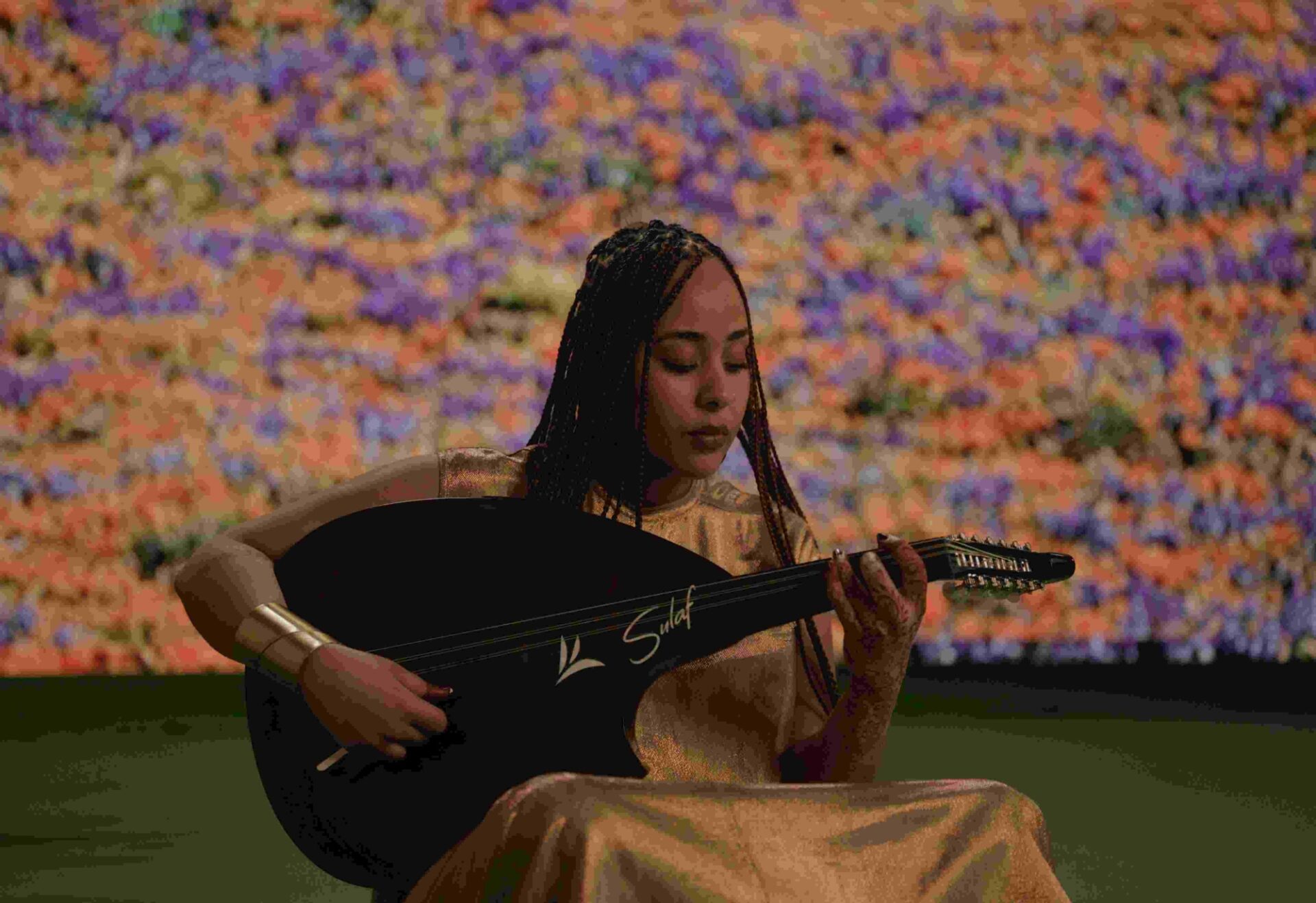
Still from DAMAR TV by Sophia Al Maria at the National Pavilion of Qatar
Co-curated by Tom Eccles and Ruba Katrib, the exhibition also serves as a preview of Rubaiya Qatar, the country’s new multidisciplinary contemporary art quadrennial set to launch in November 2026. Developed under the leadership of Sheikha Al Mayassa, Rubaiya Qatar aims to establish a long-term platform for exhibitions, commissions, public art, residencies, and cultural discourse across multiple sites in Qatar.
As Qatar Museums marks its 20th anniversary, Qatar’s presence at Venice reflects the institution’s larger ambition of positioning the country as a global cultural centre, one that invests not only in museums and architecture, but in sustained cultural dialogue between regions, disciplines and communities backed by the sound leadership of Sheikha Al Mayassa.