Aslihan Demirtaş on I. M. Pei & the Architecture of MIA
Aslihan Demirtaş was a young architect fresh out of MIT when she walked into I. M. Pei’s path, and stayed for nine years. As Chief Designer on his last two projects, including the Museum of Islamic Art (MIA) in Qatar, she helped shape some of the building’s most defining elements: the dome, the chandelier, the majlis room, and the central courtyard. Yet the story of how those spaces came to be, from the doubts, the risks taken, the humming that meant go back to the drawing board, has rarely been told. In this conversation with Mary Joseph, Aslihan speaks about the deeply human architecture of collaboration, what it meant to be the only woman in the room, and why, nearly two decades later, the MIA feels more at home in Doha than ever.
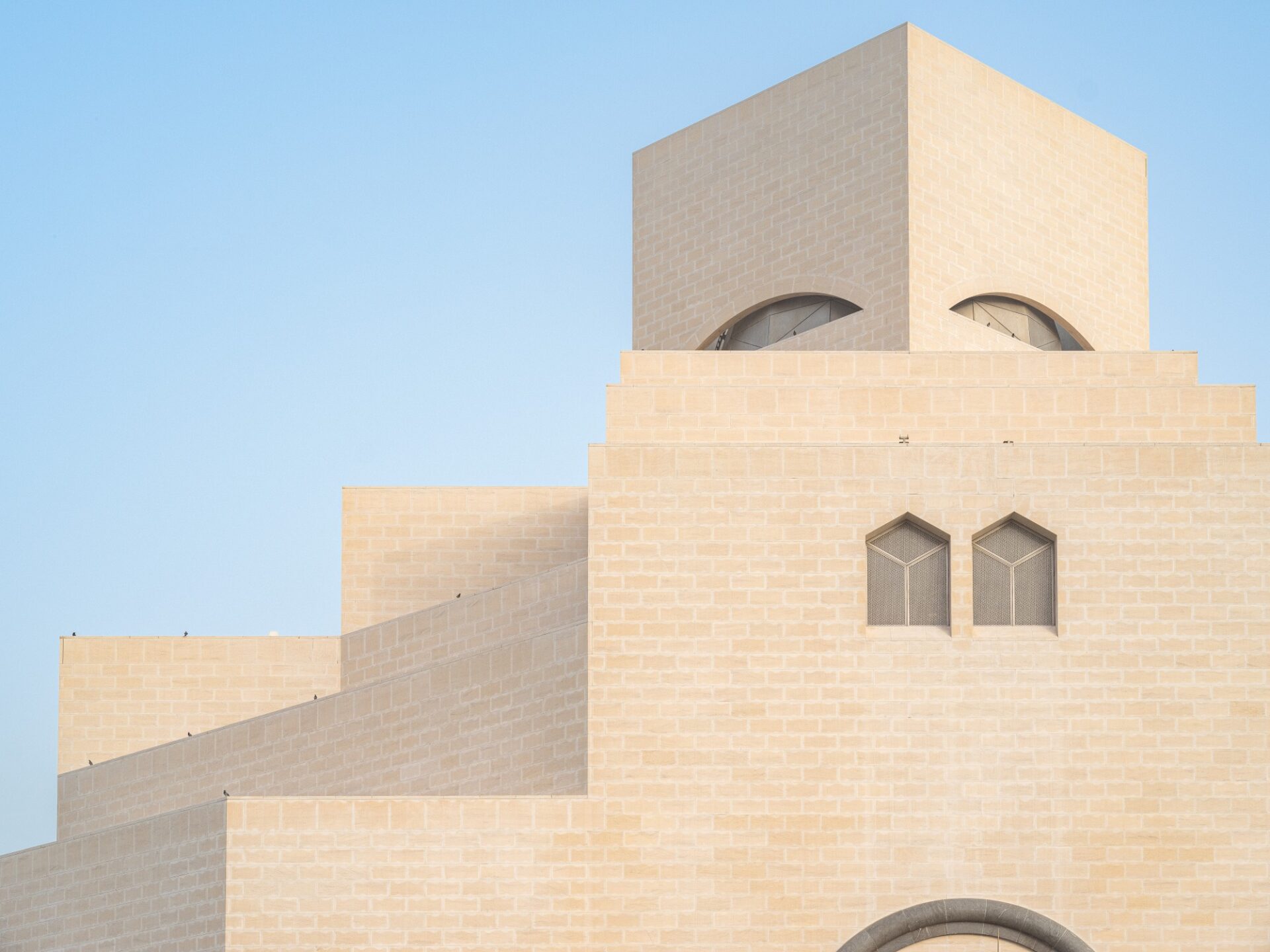
The Museum of Islamic Arts, the building that represents the country. According to Aslihan, the building not only placed Doha in a historical continuity with references to a past but also included the future aspirations of its inhabitants, suspending it between the past and the future.
Much has been published about the Museum of Islamic Art in Doha, and its architect, I. M. Pei. Recently, Qatar Museums, in collaboration with M+, organised a stunning, first-of-a-kind retrospective on I.M. Pei’s life and works that included exhibitions, a panel discussion and talks.
Very little, though, has been written about the underlying human aspects that went on during the design and construction of the building; the interactions and relationships, the doubts and challenges, the compromises and adjustments that came with such a history-making project. Yet, these are the things that architecture enthusiasts would want to know.
For instance, what was it like for a young architect to be selected to join I.M. Pei’s team? How did those initial brainstorming sessions go?
What was it like being the only woman on the core team? What moments stand out? And when the project is over, how does such a person remember I.M. Pei and the MIA?
Aslihan Demirtaş, who was the Chief Designer for the MIA project, talks about just that in this conversation.
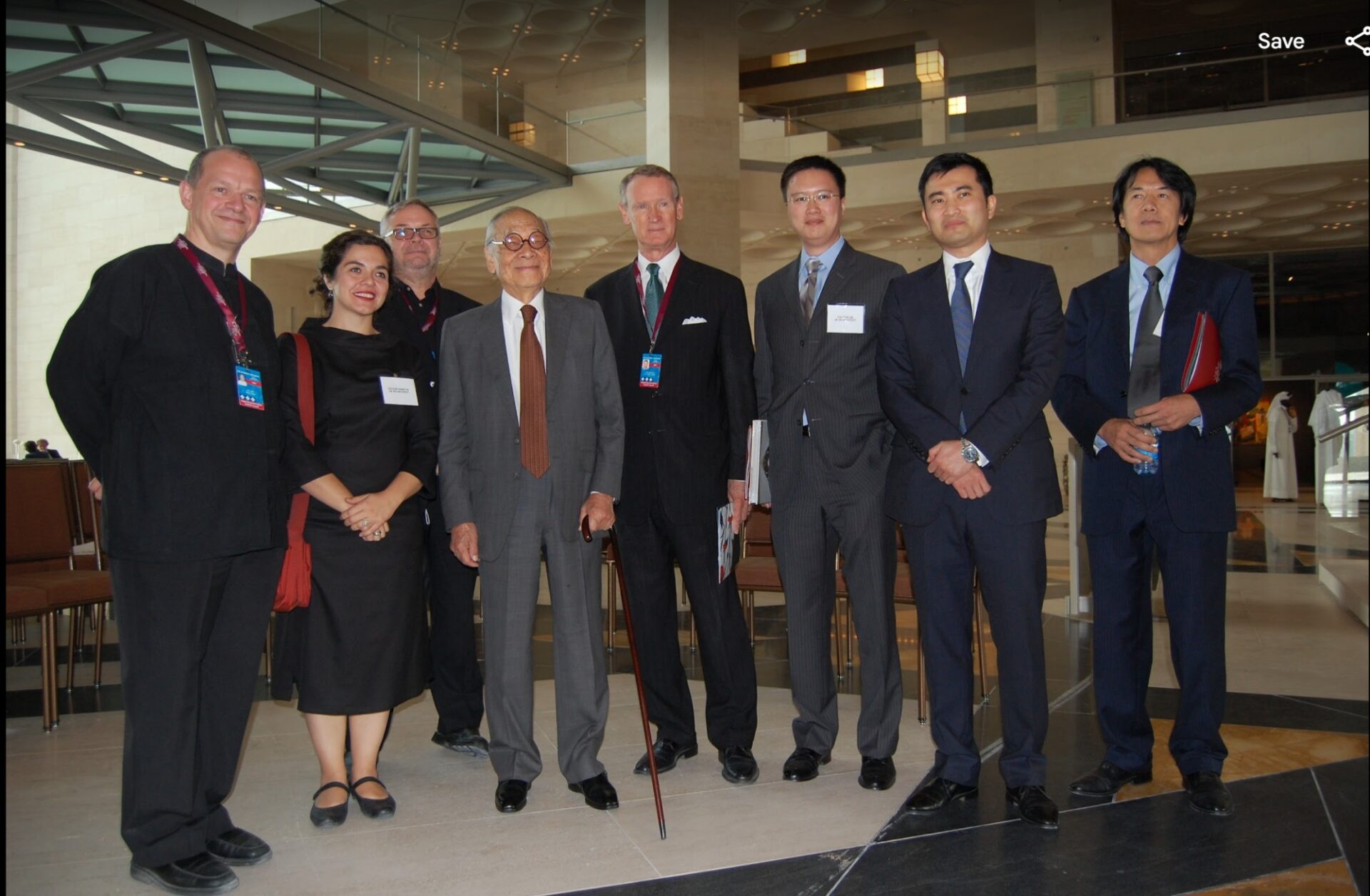
Aslihan Demirtaş (second from left) with I. M. Pei (fourth from left) and other senior project members at the MIA.
THE START
Mary: Working with someone such as I. M. Pei is a dream for most young architects. You must have been thrilled when you got the first call for an interview soon after graduating from the Massachusetts Institute of Technology (MIT). Can you share what the hiring experience was like?
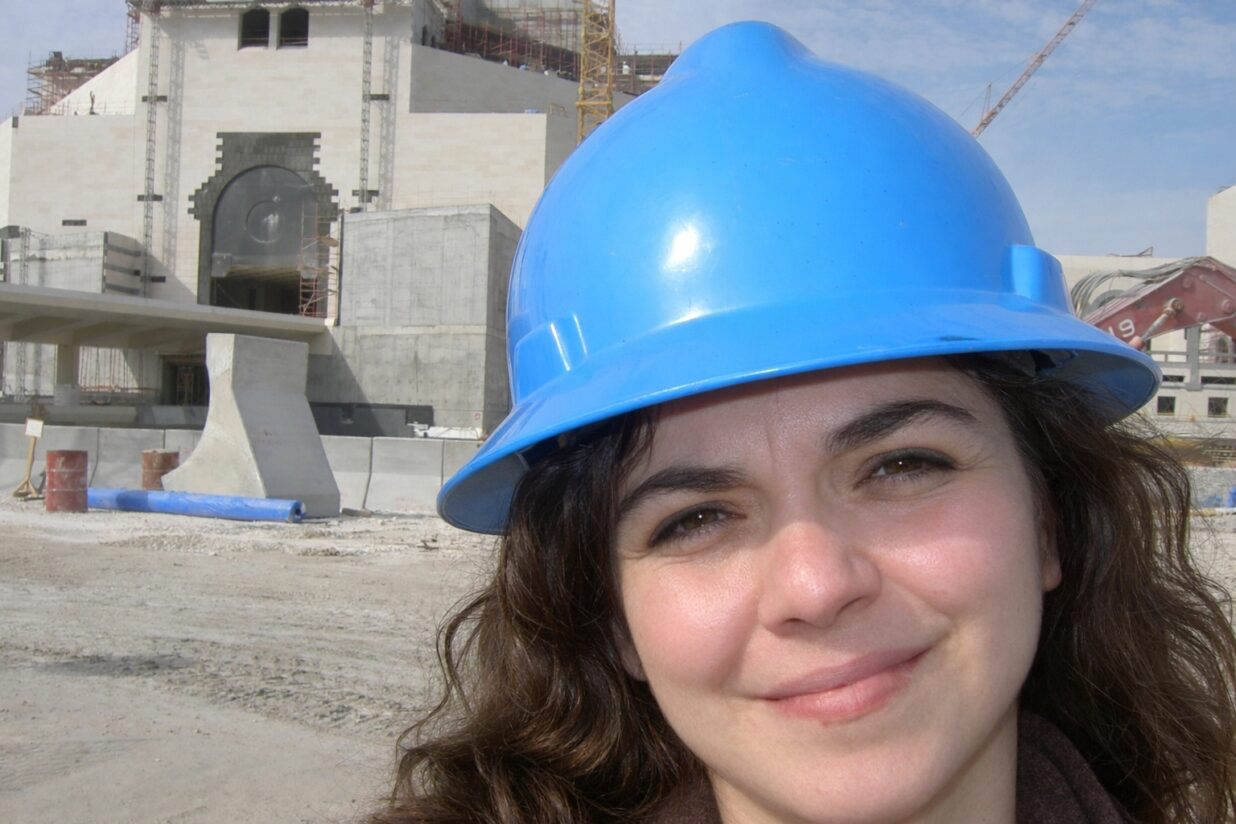
Aslihan captured on site of the MIA, which is under construction.
Aslihan: I graduated with a master’s degree from the Aga Khan Program of Islamic Architecture at MIT in 2000 and moved from Boston to New York. New York was very international but proved to be exclusive when it came to small or medium-scale architectural practices, which, at the time, was what I preferred. Even with an MIT degree, breaking into the network of these practices in New York was not easy. It was a principal architect at one of the smaller firms in New York who advised me to send my portfolio to a short list of architecture firms, which included Pei Cobb Freed (PCF).
Much to my pleasant surprise, I got a phone call just two hours after dropping my portfolio, asking me in for an interview. I was told that the interview was not for a project at PCF itself, but for one with I. M. Pei. Mr Pei had come out of retirement to take on a new project as I. M. Pei Architect. The project was confidential as the contract was yet to be finalised.
My first interview was with Kellogg Wong, who had hired almost everyone at PCF. I remember our interaction vividly. Wong, having read my credentials and work experience, and studied my skills, felt I was being “too modest”. He said that he also came from a culture where modesty was a sign of strength, but pointed out that in New York, this wouldn’t work in my favour. He stuck Post-it notes on my portfolio and sent me to Perry Chin, who had been working for I. M. Pei for decades, advising that I needed to tell my next set of interviewers where my strengths lay and what my skills were, especially when it came to design. Chin, then unknown to me, was the project manager and ironically someone who valued modesty! There are many different worlds in New York.
After my interview with him, Chin asked me to help with a project for a day. I now know that the one-day trial was more about assessing whether I was socially compatible with the team’s culture than about testing my drafting skills. This is a fundamentally important and overlooked parameter: the process and the outcome of architecture are so much more than its final form. A dynamic fabric of people and relationships makes and eventually inhabits architecture, successfully or not.
Soon, I was happy to learn that Mr Pei wanted to meet me. I remember our first encounter vividly; it was the most cheerful and lively of interviews I experienced since my arrival in New York. And I had attended many. Once our conversation was over, Mr Pei invited me to work on the project. I accepted. That moment led to a collaboration that would last over nine years, with my role evolving to be the chief designer for his last two projects: the Museum of Islamic Art in Qatar (2008) and the Miho Chapel in Japan (2012).
Mary: On the point of your studies at MIT, and you being hired to work on the project, was your master’s thesis closely related to Islamic Architecture?
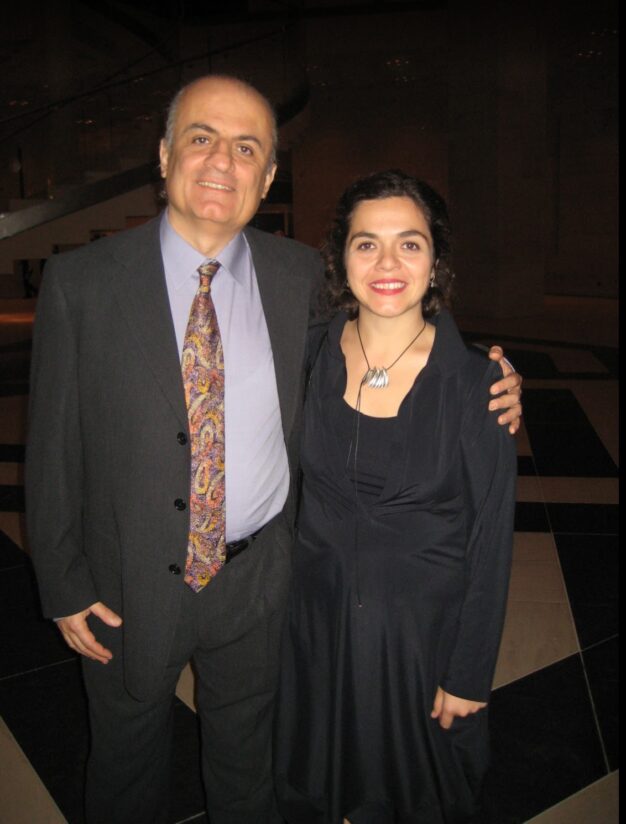
Aslihan Demirtaş, pictured here with Prof. Nasser Rabbat, currently the Aga Khan Professor and Director of the Aga Khan Program for Islamic Architecture at MIT, completed her graduate studies at I. M. Pei’s alma mater, MIT. (Image courtesy – Aslıhan Demirtaş)
Aslihan: Interestingly, no!
After working for 10 years as an architect in Ankara, Turkey, I wanted to take a break from practice and pursue higher studies. MIT and the Aga Khan Program on Islamic Architecture seemed perfect for my intentions since it is a post-professional degree and an ideal springboard for architects who are looking for new directions and a course change.
My thesis subject fit in the region of interest defined by the programme, but was not necessarily on ‘Islamic Architecture’ as far as popular understanding goes. I worked with Sibel Bozdoğan on my graduate thesis on modern hydraulic infrastructures built between the early modern and the 1980s in Turkey. I was, and still am, quite interested in modernism’s relationship with nature. It continues to be central to my current practice, because only with a fundamental understanding of the way we inhabit, extract and build in the world is it possible to adapt our profession to a world in a climate crisis.
The programme’s flexibility allowed me to expand my architectural skills and explore different geographies, histories and subjects. I got to better understand the architectural practice and culture in the geography where I used to practice and its neighbouring regions. It still amuses me to this day that I visited Cairo, Egypt, for the first time during my first year at MIT with a mesmerising study trip led by Prof. Nasser Rabat. I had to move across the Atlantic to cross the Mediterranean!
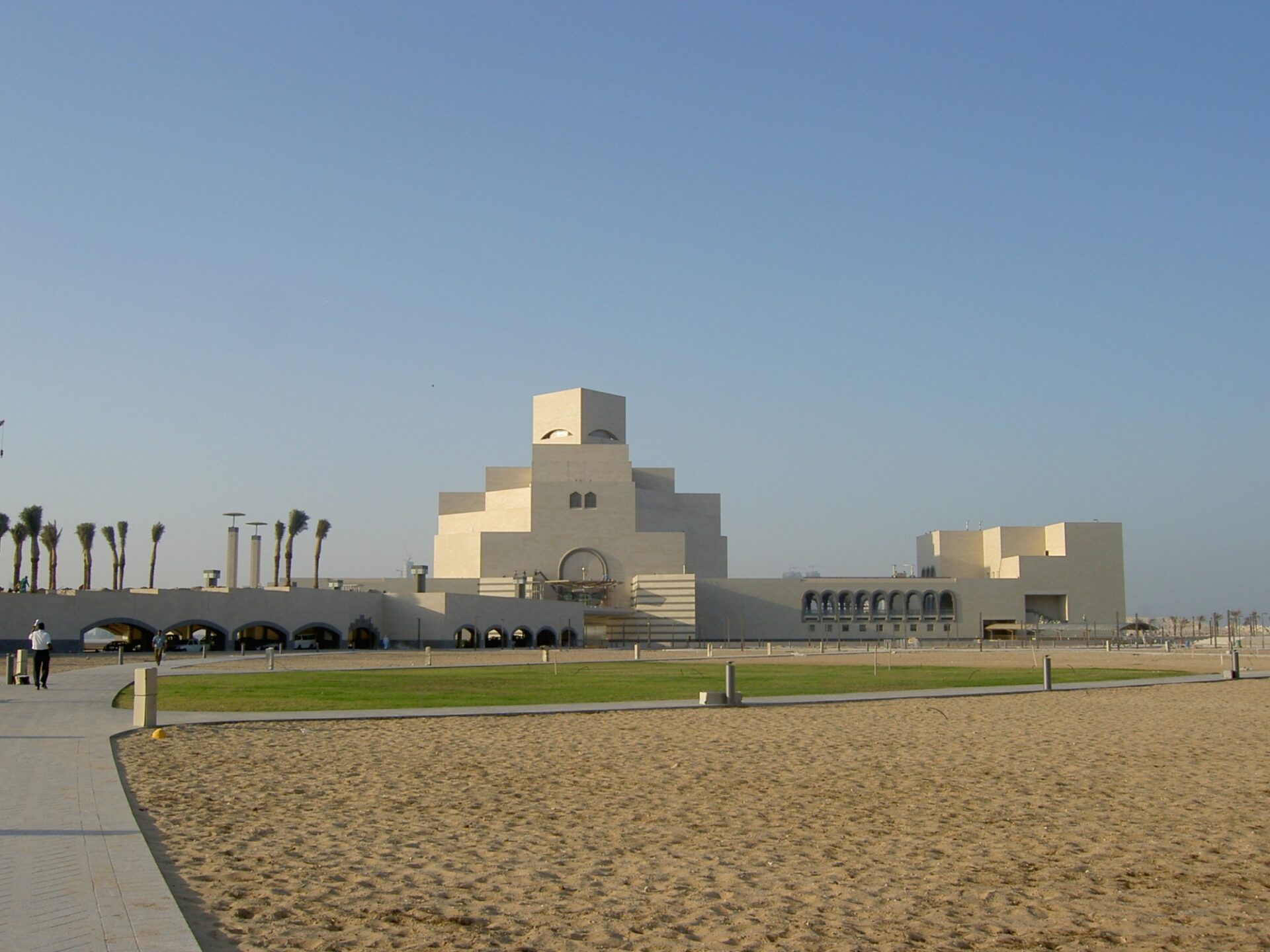
The Museum of Islamic Art in a photograph close to its opening.
Mary: I couldn’t help noticing that you used Islamic Architecture in quotation marks. Additionally, in the panel discussion at the MIA, you mentioned that when you joined the team, you resisted the Western definition of Islamic Architecture. Could you elaborate on that?
Aslihan: Yes, I had my reasons. I did push back on the notion of Islamic Architecture as an invention of the Western lens. Categorisations and definitions are products of world views, identity politics and ideologies. When one uses the term Middle East, it implies a centre from which the world is viewed. Islamic Architecture is a category not defined from within the cultures it points to, but one which flattens many geographical, cultural and historical complexities and articulations. I was not comfortable with that notion. So, when Mr Pei asked “What is the essence of Islamic Architecture?”, I gave very long answers with specific architectural examples. These answers helped channel conversations towards exploring Ottoman, the Abbasid, the Mughal, the Safavid or the Umayyad cultural productions, to name just a few that would otherwise have lost their articulation if we had tried to fit them under an oversized category.
Here, it’s important to point out that architecture itself transcends these simplifying definitions. To give an example, take the poetic structural and geometrical logic and profess found in the Turba Zumurrud Khatun, it is so much more profound to discuss and ponder on its distinctive characteristics as architects rather than classifying it as Islamic. This tomb was one of the architectural references I had given as an answer to what Islamic architecture is, and eventually, the reference also guided me to designing the dome of the museum with a similar poetic geometrical logic.
I know that a lot of architects and designers would agree with me when I say that this resistance also stems from the perennial difference in how architecture is practised and how architecture is interpreted, theorised, and historicised. It is not often possible to strike a balance, and that is one of the reasons why today I try to strongly root my practice as an expanded architecture sustained by research, art and ecology.
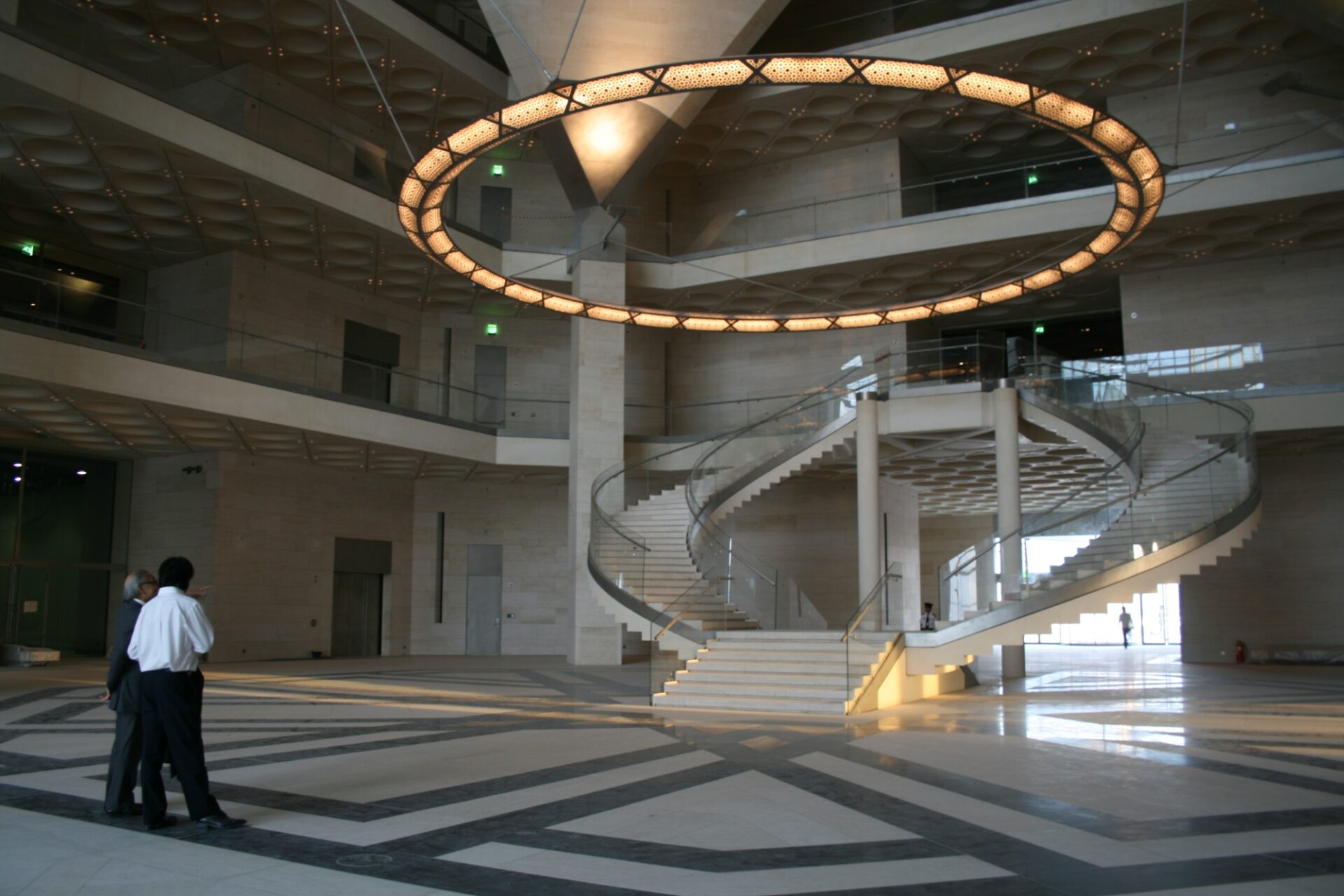
First-time and frequent visitors to the MIA are drawn to the eye-catching chandelier, yet another feature conceived and detailed by Aslihan.
Mary: And how did you all come to a consensus and work around the ambiguity?
Aslihan: How Mr Pei negotiates ambiguity is a lesson in itself. Ambiguity can be the key to clarity, and consensus is a process rather than a state involving many parties, including the client. In this case, we were conscious that we were tasked with designing a monumental building housing a rich collection, a building that had no comparable predecessors in Doha. There was a need to anchor the design not only in the overall concept but also in detailing. Our discussions over examples opened paths of exploration for us regarding materials, tectonics and ways of making. Each building we studied was an expression of a highly developed culture, a cosmology if you will, consisting of an understanding of geometry, mathematics, philosophy and engineering. For instance, the often-misrepresented Islamic patterns and ornamentations actually serve a purpose; they are articulations of structural logic, translations of the world into geometry. I was very sensitive to this, and the final design, as it stands as a building now, is one devoid of heavy ornamentation or ornamental forms, but instead is aligned with the logic of the culture it embodies.
THE RESPONSIBILITIES
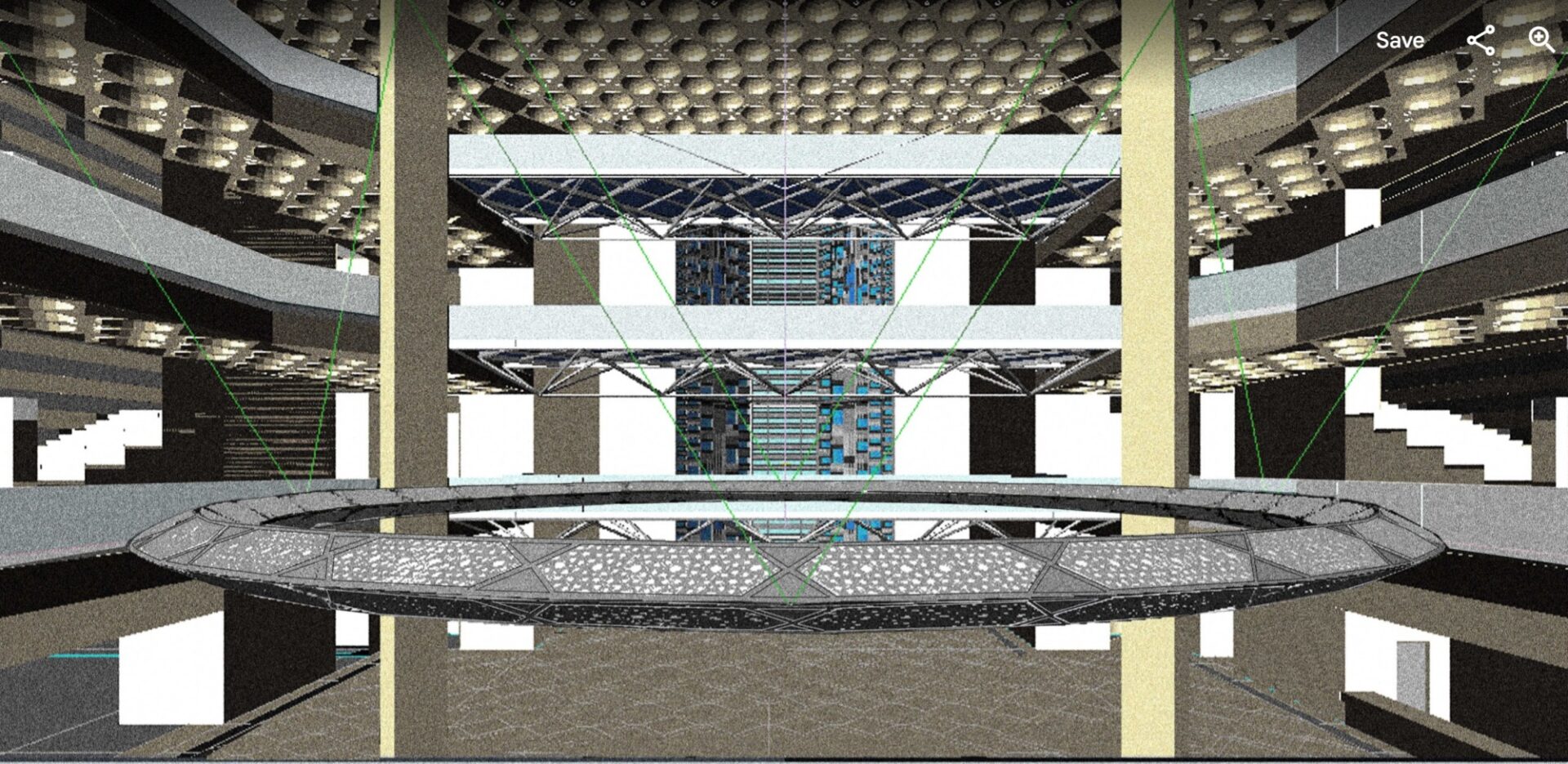
The working drawings of the spectacular chandelier inside the MIA that Aslihan designed and worked on.
Mary: You were fresh out of graduate school when you joined a team that was to create history. What was your involvement in the project like? What elements or sections of the museum did you specifically work on?Aslihan: I was not hired as chief designer. It’s a role I evolved into. Design was my forte, as Mr Wong would prefer me to say without modesty, and this enabled me to work at ease and closely with Mr Pei. I was bold enough to often insist on what I believed in, but I also quickly learned from Mr Pei how to navigate tensions with persistence rather than conflict. Mr Pei and Perry Chin provided the grounds for creativity, setting me on the path to being chief designer on his last two projects.
For Mr Pei, architecture had to stand the test of time. That was his ethos for any work of architecture, regardless of the time it was built in. The Abbasid era architecture had this quality; his primary point of reference was the Ibn Tulun Mosque, its central ablution fountain to be precise, built in 9th century Cairo. I was always mindful of this. As I worked on the various facets of the museum, this reference inspired me to design with restraint. I wanted to stay clear of the formalistic appropriations that we see in many buildings in the region and instead sought alignments in principle rather than mimicry.
I worked on the overall design and some specific elements in more detail. The dome, the chandelier, the majlis room, the central courtyard, the mist garden, and the interior fountain are some features that I personally designed and detailed, among others. I also coordinated the educational wing, including the library and the offices, as well as the conservation studios. That said, just like a space is a sum of its parts and every detail and feature works towards the making of that space, I was also part of a larger team of architects and consultants participating in the making. Architecture, despite the way it is conventionally recognised as a singular author’s work, is very much a collaboration.
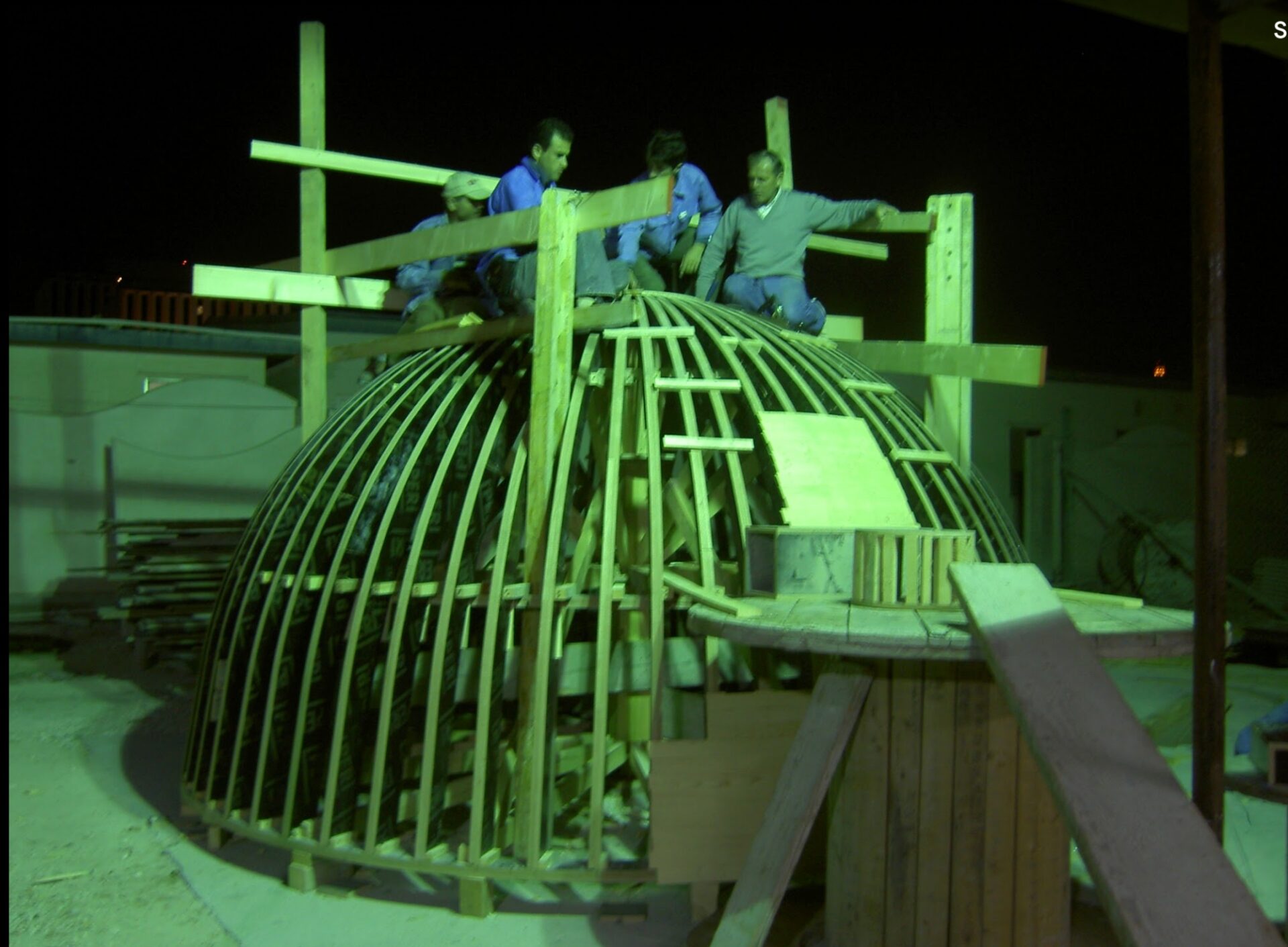
The shuttering process for the dome, the most fascinating feature of the MIA. From Aslihan’s private collection.
Mary: Do you recall any interesting incidents or challenges from those initial days of design development?
Aslihan: Never a dull moment in the initial days! But I can share one anecdote.
As you know, the museum sits out across an expanse of water. We had a model made for a presentation and had it photographed so that the images could reflect the interplay between the faceting of the volumes and sunlight. When the photographs arrived, Mr Pei was distressed. He said the images looked more like a building on the Bosporus in the morning mist of Istanbul, rather than a building that leveraged the strong contrast of sunlight in Doha. That was how specific he was. He would have the inventory of the light and climate of specific cities in mind and was very sensitive about its representation. I promised him that I would edit the images so that the building sat on the Corniche of Doha in a way that bright sunlight shone on the stone facetings of the museum that were intentionally designed to receive it.
WORKING WITH I. M. PEI
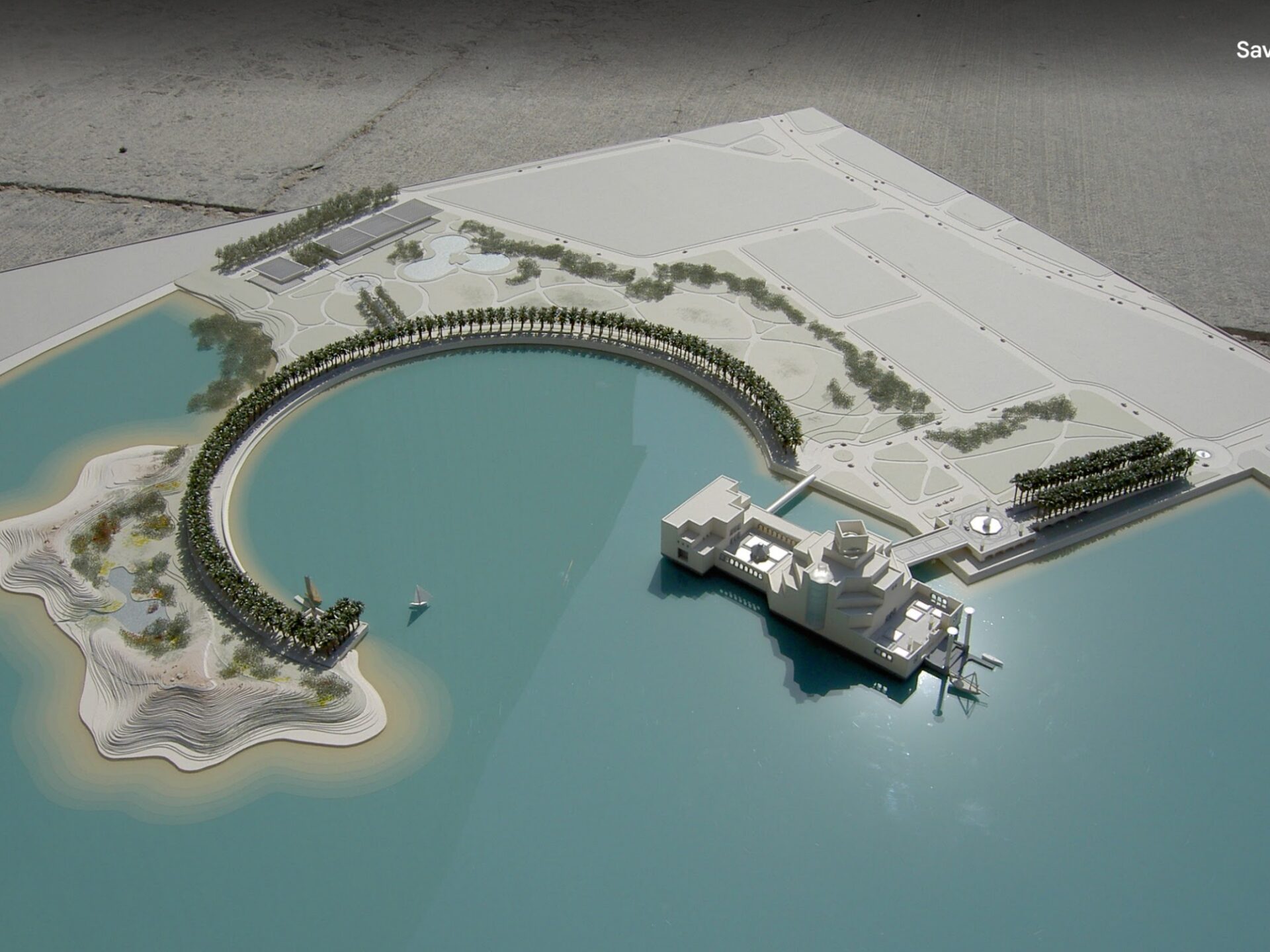
From a tabletop model to a building that would come to symbolise Doha, the successful completion of the MIA, according to Aslihan, was a result of the contributions of many disciplines.
Mary: Speaking of the experience, what were the team dynamics like?
Aslihan: Very competitive! When I started, our core team was small, just four people in fact. In addition to Mr Pei, there were Perry Chin, Toh Tsun Lim, and I. Perry Chin, our project manager, had worked for Mr Pei for many years. Toh Tsun Lim had been part of Pei Partnership Architects before this project, but it was his first assignment with Mr Pei. For me, it was many ‘firsts’ at the same time.
It was a lot of heavy lifting in those initial days, but as things got underway, we expanded the team slightly. For instance, as we progressed from the schematic design phase to the construction documents phase, we had to produce a massive number of detailed drawings and coordination. At that point, we were around 16 architects at our peak. On that note, the MIA wouldn’t be what it is today without the input and seamless collaboration between our consultants: structural, mechanical and acoustic engineers, lighting and interior designers, landscape specialists and the individual contractor of many scales. For instance, the dome sits on a volume that rests on four columns. These four columns bring down the weight of a large stone-clad vertical shaft crowned by the dome via triangular tilted surfaces we called the petals – all that coming down to four points. It was a structural challenge that was solved only because we had immensely creative engineers and specialists working with us. This space also doubles as the smoke exhaust chimney for fire safety measures.
Often, it is the name of the architect or the architectural studio that remains on everyone’s lips after the dust has settled, when in reality, innumerable committed people are working to bring a project to life. When it comes to a project of this scale and complexity, I would like to remind readers of the contributions of many disciplines.
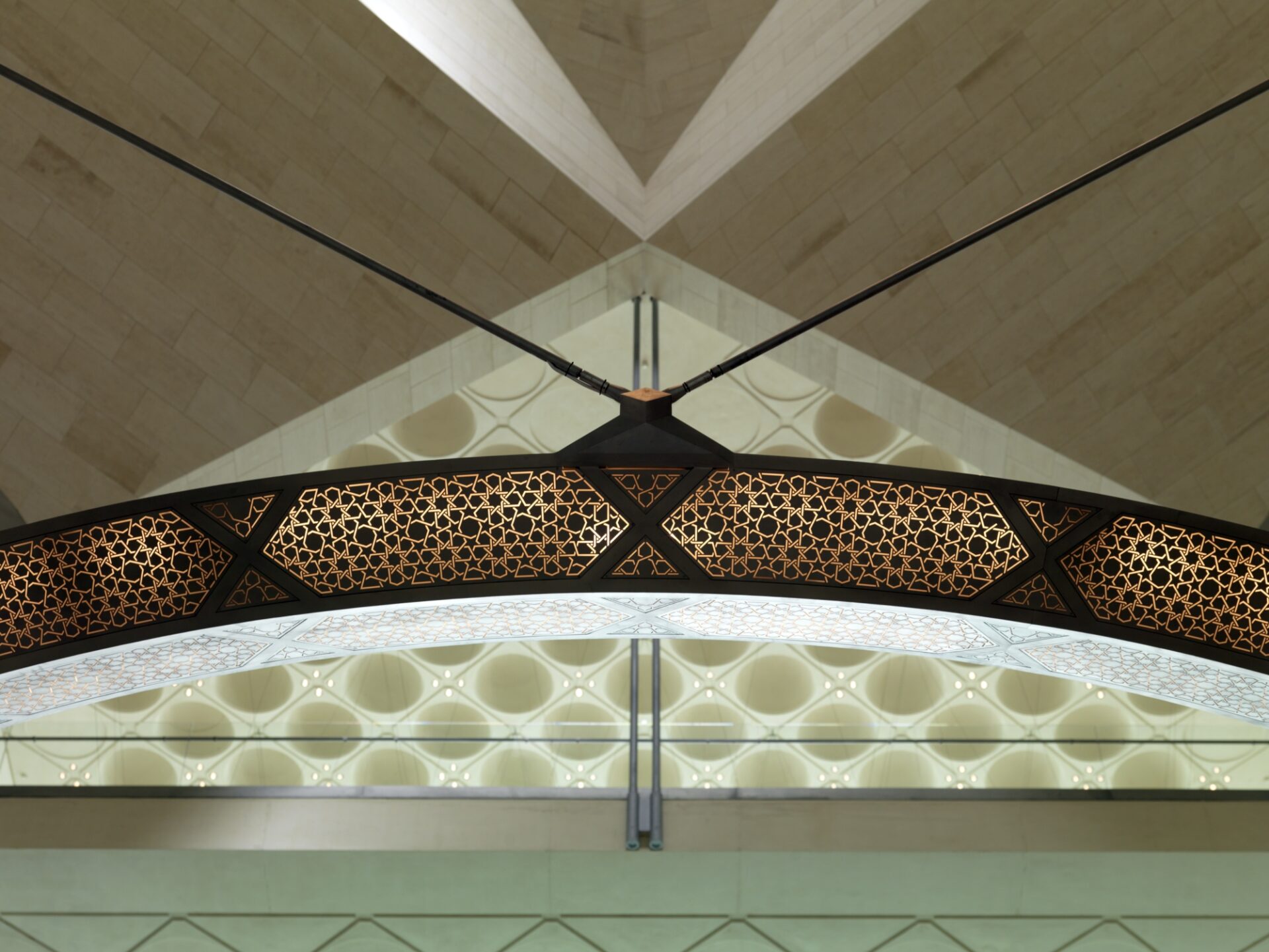
Details of the chandelier within the MIA, a feature that draws the visitors’ eyes to the architecture of the interior dome.
Mary: At the personal level, what was it like working with someone who is a rockstar in his field? I. M. Pei? How did he communicate when he disapproved of a design, process or strategy?
Aslihan: A very elegant rock star indeed! We worked on numerous iterations and alternatives in detail. Working in a small team meant we interacted closely with him, and therefore, I had the privilege of having conversations on architecture and life, both of which he took very seriously. He was always elegant but firm, his non-verbal interactions smooth and polished. He was patient and when there were disagreements, he would let it pass and as he would say, he ‘would come back to it another day’.
Living proof of this are the palm trees that currently line the driveway up to the front entrance of the museum. At some point, we were told that palm trees were not preferred and that they should be removed from the design. We relayed the message to Mr Pei. Today, date palms line the ramp on both sides. This says a lot about Mr I. M. Pei’s overarching vision and his power of persuasion.
When he disapproved, he would hum a song! I vividly remember the first time I observed this. He would hum and say, “We’re not there yet”. That was it, nothing more but a tense smile. The moment we heard the hum, it meant you were going back to the drawing board. And when he wanted a certain design in a specific way, he would ask the question in different formats repeatedly until he got a yes for an answer. At times, this would mean changing everything around it! It took me a while to get used to this, and today, I do the same.
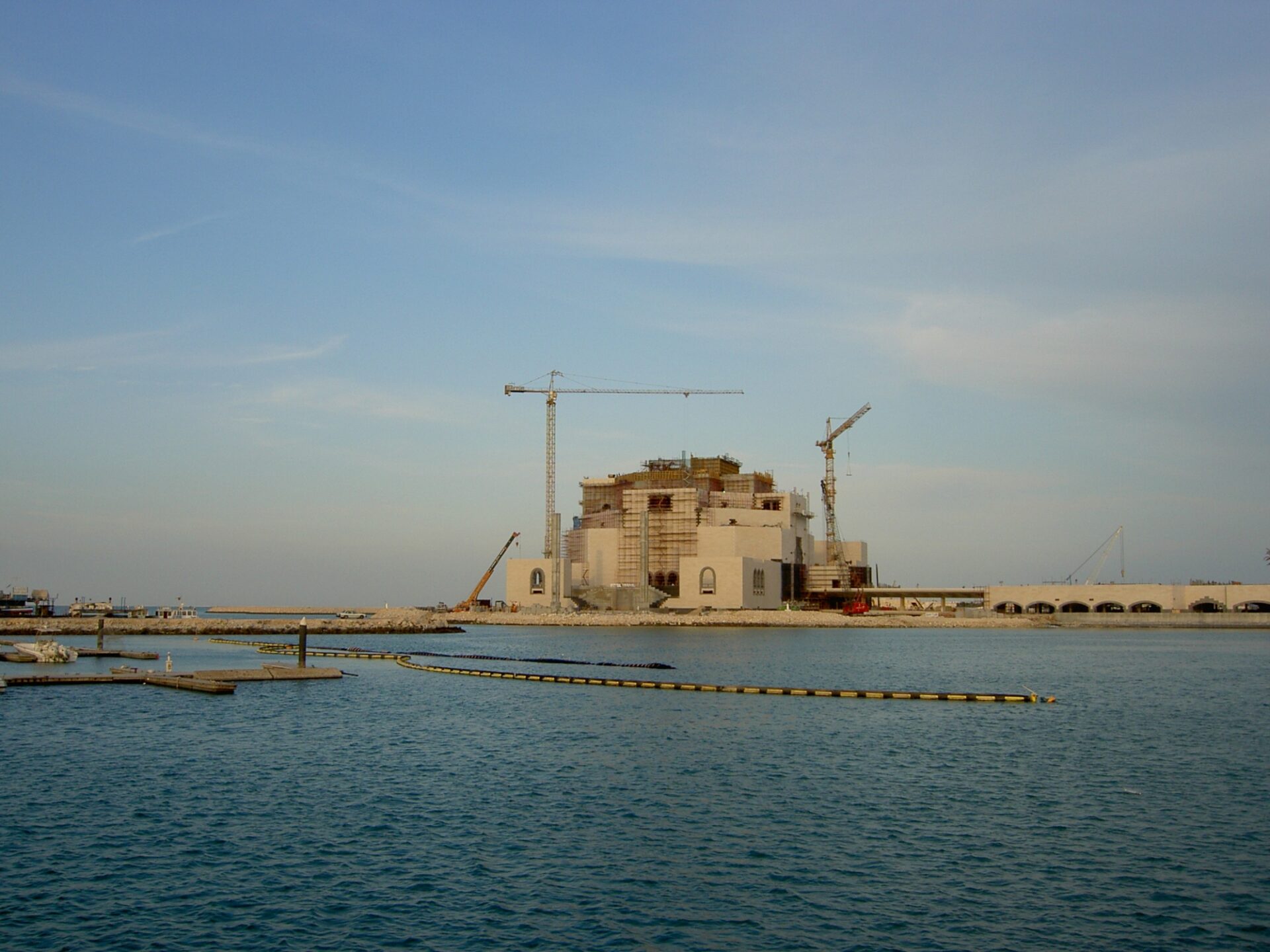
Construction images of the MIA from Aslihan’s personal collection.
Mary: Do you recall any scenarios with I. M. Pei, regarding your role as chief designer? Something that defined your place in the team or growth as an architect?
Aslihan Demirtaş: There is a special one for me. It relates to how my design for the dome was accepted by Mr Pei. As was the routine, we worked on design directions as and when Mr Pei guided us; we went with his recommendations and approvals. When I joined, there was a working culture where any new ideas were met with the question, “Did I.M. Pei ask for this?”.
This was mostly out of deep respect for I.M. Pei’s experience and his own way of conducting his projects.
For the design of the dome, Mr Pei asked me to work on alternatives for patterns on a perfect half sphere, but as I was designing it, I was not convinced about the approach.
I was the only person from the Mediterranean region in the entire office; I certainly had warmer blood than anyone else on the team. And we Mediterraneans don’t shy away from doing what we think is right. So as crazy as it was, I designed and modelled a tessellated half sphere with triangular faceting. It was my first attempt, an elongated version of what we see today.
I remember exactly when Perry Chin and Toh Tsun saw the model. Toh Tsun said, “Did I. M. ask for this?” Perry, especially, was deeply respectful of Mr Pei and never wanted to impose a design he did not ask for upon him. And I had made something which he had not specifically asked for! But sensing my enthusiasm and predicting that Mr Pei would appreciate it, he devised a way forward: during the team meeting that afternoon, I was to place the model at the end of the table where it might catch Mr Pei’s attention. If he asked to see it or enquired about it, then I could introduce my concept and design.
That afternoon, the moment Mr Pei entered the meeting room, he caught sight of the model placed at the far end of the table. He immediately asked, “What is that?” to which Chin said, “Aslihan has worked on an alternative design for the dome”. There was absolutely no hesitation in Mr Pei’s next response: “Can we make the facets larger and fewer in number?” He had started mentally working on it the moment he saw it. I was very excited.
This was a turning point for me in the project. I started to take more initiative in proposing designs that stayed within the building’s fundamental principles and qualities. That point would be an unforgettable moment in my emotional growth as an architect as well. That day I learned that collaboration requires kindness, tolerance, respect and gentle negotiation of boundaries. I went against the traditions of the workplace only to raise the quality of the project. How Perry Chin handled the interpersonal relationships was as elegant and intelligent as Mr Pei’s confident reception of the design. Human relationships are a major component in the process of making architecture.
LOOKING BACK
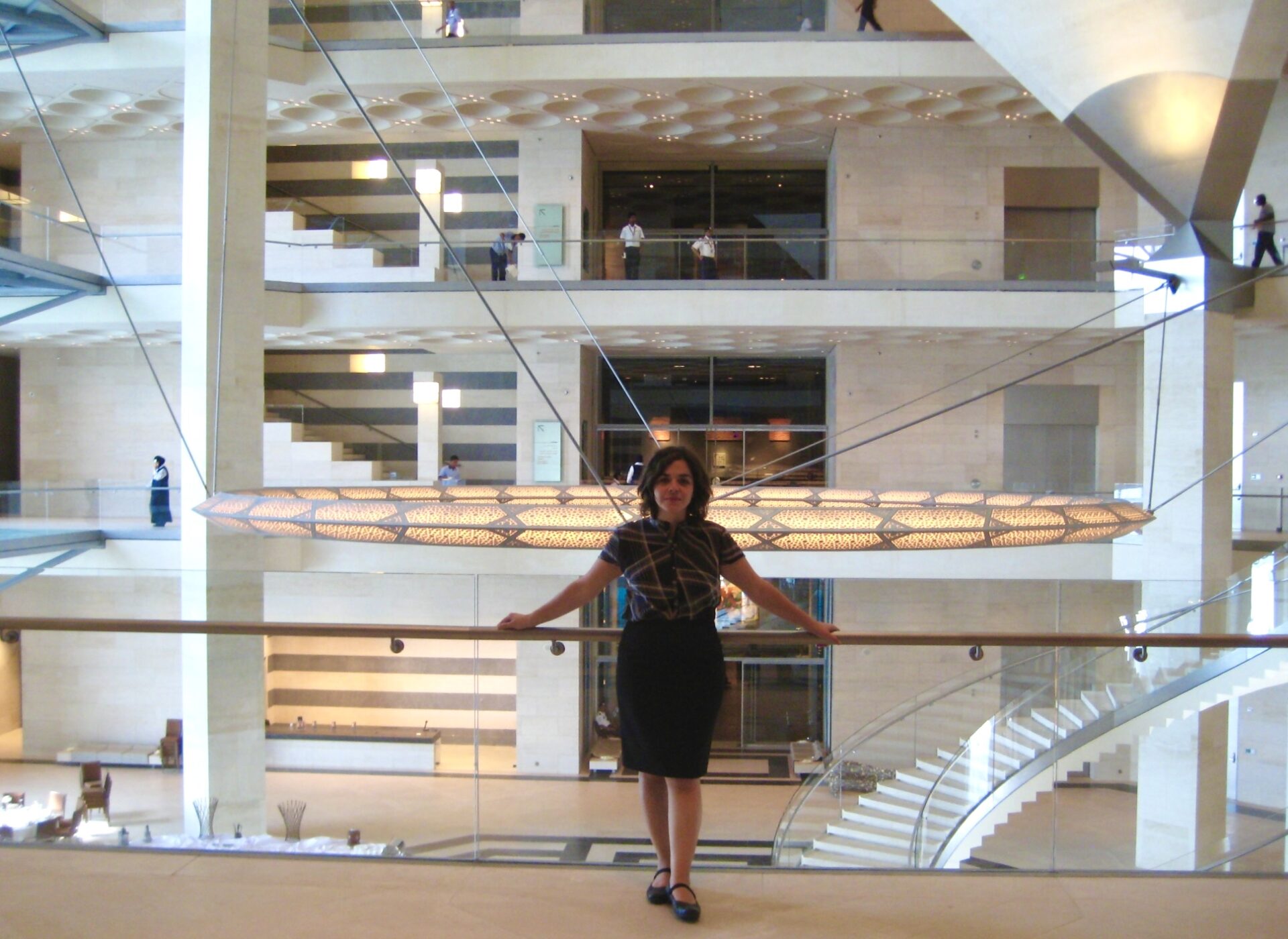
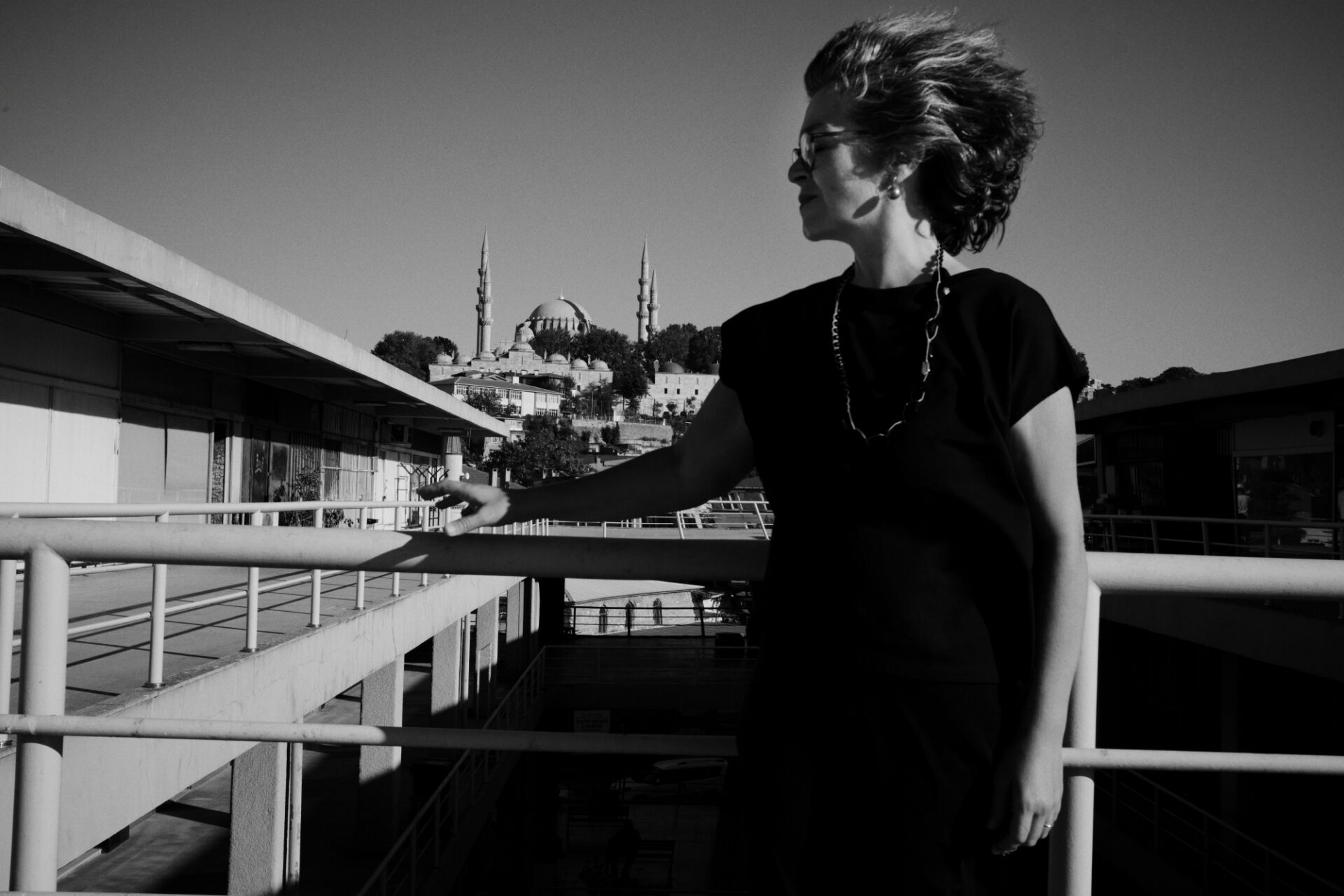
After working on the MIA and Miho Chapel projects, Aslihan Demirtaş (above) is currently the principal architect and the founder of the interdisciplinary studio Architecture, Design & Research Studio: KHORA. Based in Istanbul, KHORA has a branch in New York as well.
Mary: How do you feel the MIA enhanced Doha’s image, and what was the most significant reason for the success of the undertaking?
Aslihan: I visited Doha after two decades in October 2025. I had not seen MIA after the opening celebrations in 2008. Back then, I remember feeling that the building was perhaps too monumental or too large. The Doha we see now didn’t exist. This time around, the building felt perfect, in scale and at home. This made me realise something interesting: that the building was built for what Doha was desiring to become.
Ever since the Museum was built, the city grew and matched the ambitions which MIA had set for it. So the building not only placed Doha in a historical continuity with references to a past but also included the future aspirations of its inhabitants, suspending it between the past and the future. During my stay, I talked to many people who grew up in Doha after the Museum was opened. They all have a deep sense of belonging. The building has come to represent Doha, and in Mr Pei’s own evaluation criteria, it was timeless and able to retain its spirituality.
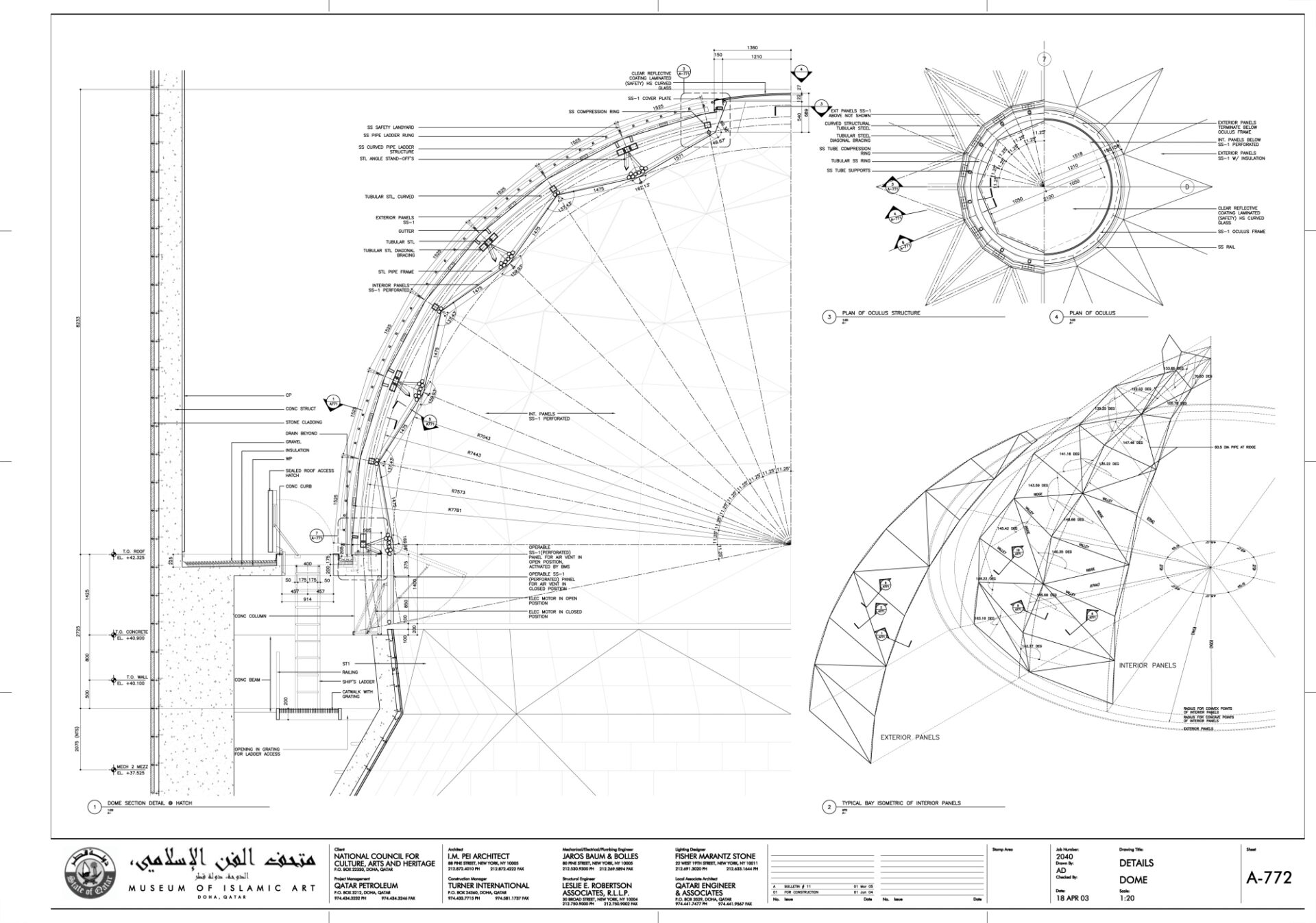
Aslihan Demirtaş designed specific elements of the MIA, including the building’s unique dome.
Mary: Were there any personal challenges that you’d like to share, especially for young architects?
Aslihan Demirtaş: My years working for I. M. Pei were challenging as well as formative. Architecture and its construction were, and still are, male-dominated. In the practice of architecture, these structures of power and hierarchy affect women even though this is challenged increasingly, and in many ways. The small size of our team meant that such hierarchies were possibly negotiable. Yet there I was, a woman from the Mediterranean region, from the ‘Middle East’ region and from a Muslim country, the only one not just in the core project team but in the entire office. And this was at a time when 9/11 had just taken place. It’s safe to say I challenged quite a few stereotypes in the process.
Mary: Having worked so closely with I. M. Pei, his legacy must be both personal and professional.
Aslihan Demirtaş: Indeed, it is.
When we started to work together, he was an established Pritzker Prize-winning architect in his 80s, and I was in my 30s, a person who had moved to a new continent and now to a new city. New York has a way of bringing people together in ways no one can imagine. And Mr Pei had a quality that brought out the best in people. Though he had decades of experience under his belt, he was genuine and grounded, approaching each creative project with curiosity and enthusiasm, as if that project was the most interesting one that had come his way. I feel that was because he was a man of the world. His understanding and knowledge of different cultures were admirable, which really came out when you talked to him. He belonged to many different cultures, Chinese, American, and Latin, as he would say, instead of European.
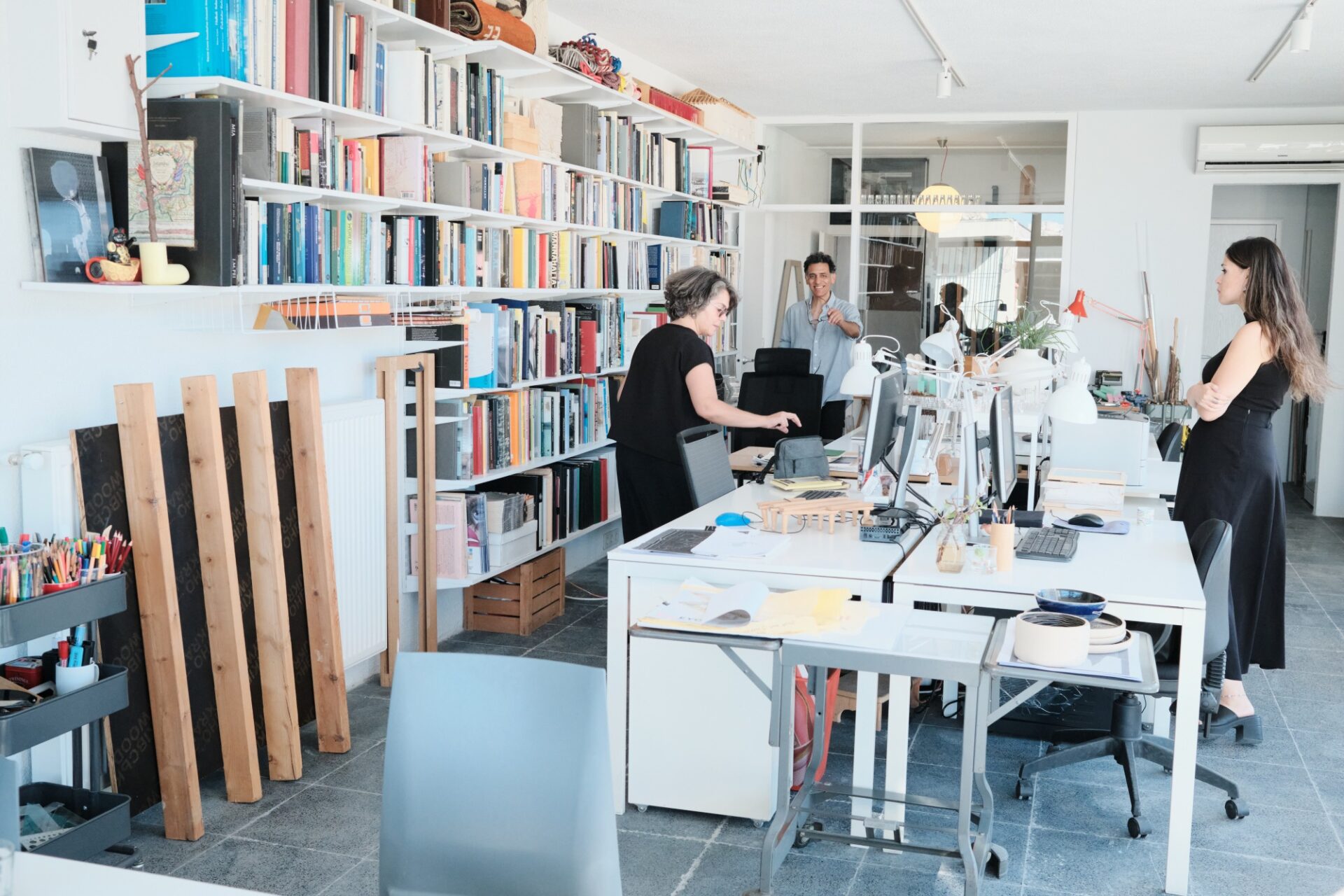
Currently, Aslihan Demirtaş, co-founder Ali Cindoruk (centre), and the rest of the KHORA team work on regional and international projects. They also take on adaptive reuse projects that see them researching and using alternative materials and methods. Image courtesy: Cihan Öncü
Mary: You’re currently the principal architect and the founder of the interdisciplinary studio Architecture, Design & Research Studio: KHORA. You have offices both in Istanbul and New York. How did your experience working with IM Pei inspire you to do what you do today?
Aslihan: After the completion of MIA, Mr Pei invited me to collaborate on his last project, the Miho Chapel. In our first meeting for this project, he told me, “I would never have thought of you for a project in Japan, but I need you to solve this geometry for me”. He had worked on the form by making a model himself, and in that meeting, it was decided that I would join the project for two months to rationalise the form into a definable, buildable volume and travel with him to present it to the client for the first time in Kyoto.
At that time, I was looking for commissions on my own and did not want to commit to another long-term project. But as I mentioned before, Mr Pei’s power of persuasion is immense. Needless to say, I stayed on the project for another two years until it reached the construction drawing phase. Looking back, I realise I learned so much from that project, especially about what I wanted to focus on as an architect. Miho Chapel is at a much smaller scale than MIA, and the experience of working at that scale was very rewarding.
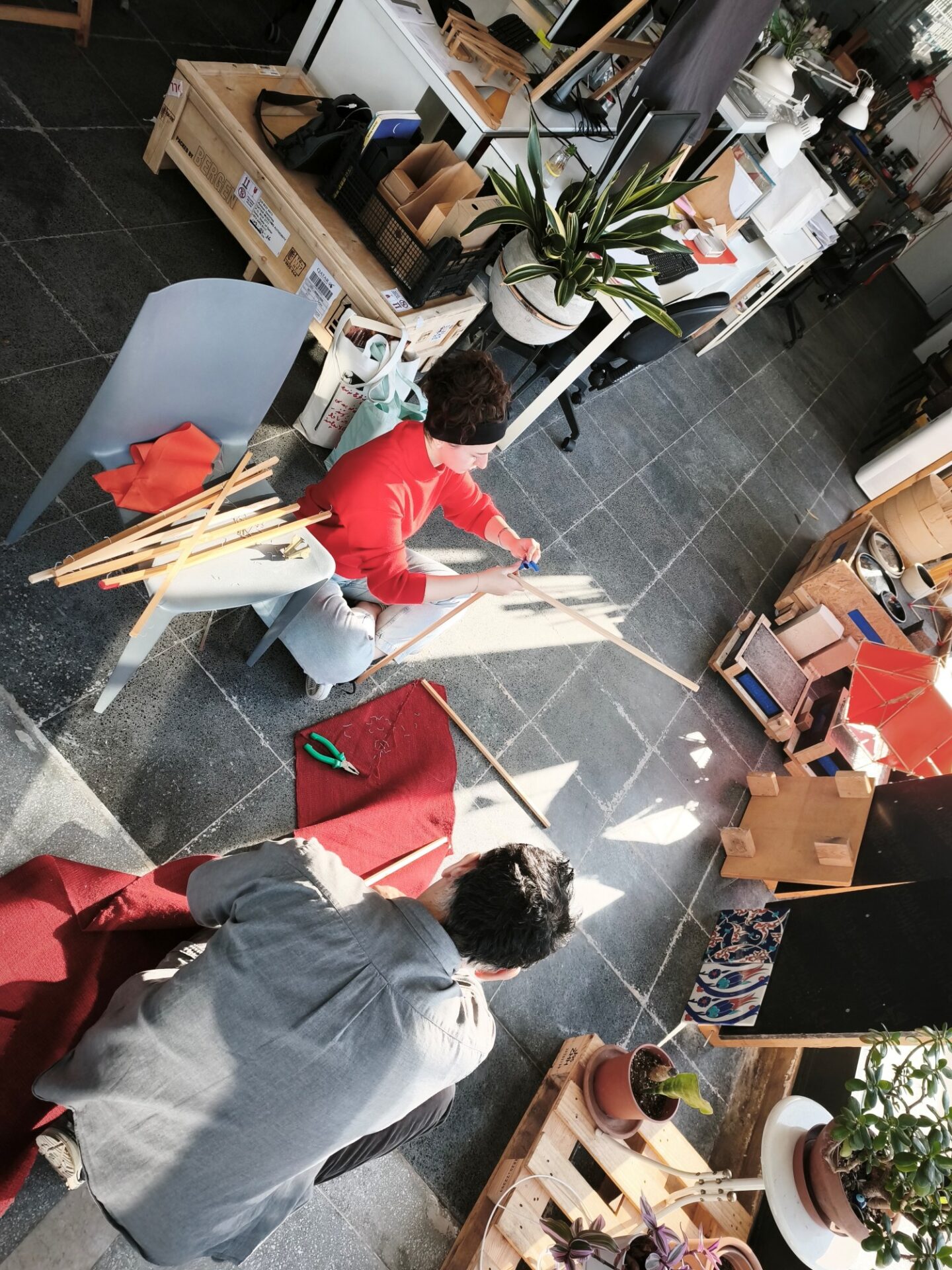
Currently, Aslihan’s practice explores how architecture can positively impact and repair the life of the planet, while binding its inhabitants. Image courtesy: Cihan Öncü
Today, I have a practice which I first established in New York after completing the Miho Chapel. We are now based in Istanbul, Turkey, an incredibly inspiring city. We are located on the terrace of a 1970s modern building in a valley between hills topped by Ottoman and Byzantine landmarks dating back to the 12th century. The building complex was commissioned as a manufacturing space, and this quality remains. Our location gives us plenty of opportunities to build ties with the local craftspeople and the community. We also work on local and international projects of different scales and scopes. In the past, working on two projects in Doha and Kyoto while living in New York, endowed me for international collaborations and the flexibility it requires.
Even though the nature of my practice and interests is different to Mr Pei’s, we converge on a specific assumption about architecture that I learnt from him: that “quality is important, not quantity’’. Quantity is easy to grasp, but what constitutes quality is one’s own mark of architecture.
You see, Mr Pei’s practice evolved in a world where resources were thought to be infinite and technology an optimistic key to progress. The world I am currently practising in, and most importantly, what the younger generation has inherited, is less on excitement for progress and more on anxiety for climate change. This shift is a driving force for me and many contemporary practices today as well. In my practice, which I co-direct with my partner Ali Cindoruk, we take on adaptive reuse projects when we can explore and research alternative materials and methods. We build bonds with like-minded organisations and institutions. We explore how architecture can positively impact and repair the life of the planet, while binding its inhabitants without exception.
All Images are courtesy of Aslihan Demirtaş.