
India Returns to Venice Biennale with Geographies of Distance
At the 61st International Art Exhibition of La Biennale di Venezia 2026, the Indian Pavilion re-emerges after a long absence with a seminal exhibition that explores home not as a fixed place, but as an emotional and fragile condition shaped by migration and memory, with works that reveal the cultural depth of a nation in the throes of economic boom with a vibrant global diaspora.

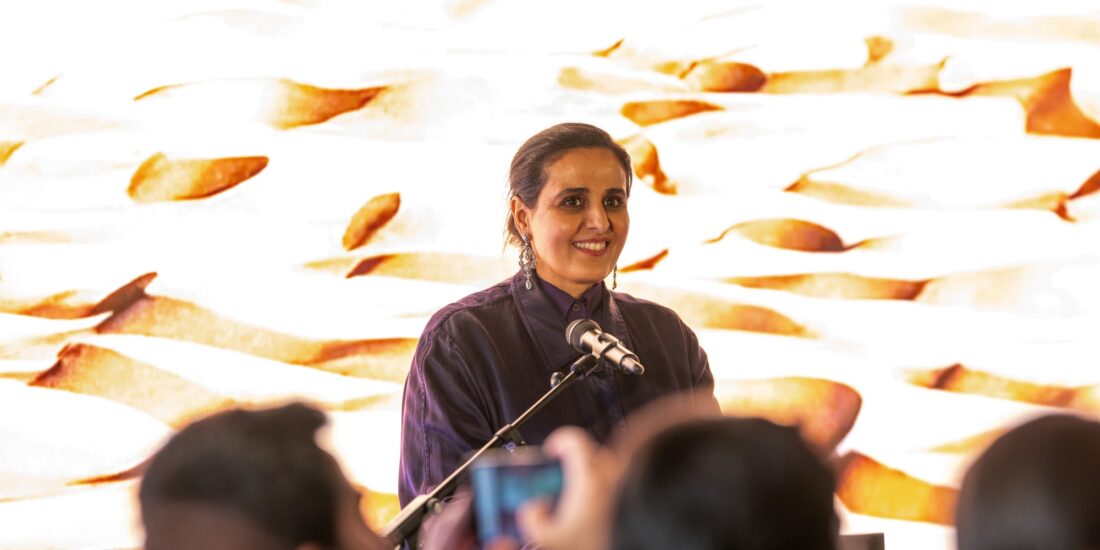
From L to R: Shefali Munjal, Co-Founder and Patron, Serendipity Arts, Sunil Kant, Munjal Founder-Patron, Serendipity Arts, Dr Amin Jaffer, Curator of India Pavilion, Gajendra Singh, Union Minister of Culture and Tourism of India, with Isha Ambani.
At the 61st International Art Exhibition of La Biennale di Venezia 2026, India returns to the global stage with Geographies of Distance: remembering home, a pavilion that reflects on belonging, memory, migration and transformation through deeply material and emotional works. The exhibition marks India’s first participation at the Biennale Arte since 2019. Curated by Amin Jaffer, the pavilion opened on May 6, 2026, at the Arsenale in Venice.
The Indian Pavilion is presented by the Ministry of Culture, Government of India, in partnership with the Nita Mukesh Ambani Cultural Centre (NMACC) and Serendipity Arts Foundation.
The Pavilion was inaugurated with a ceremony led by Gajendra Singh Shekhawat, Union Minister of Culture and Tourism of India, and Vivek Aggarwal, Secretary, Ministry of Culture. Also in attendance was H.E. Vani Rao, Ambassador of India to Italy, along with Isha Ambani from the Nita Mukesh Ambani Cultural Centre.
Installed within the historic Isolotto warehouse at the Arsenale, the exhibition responds to the Biennale’s overarching theme In Minor Keys, conceived by the late curator Koyo Kouoh. Rather than relying on spectacle, the pavilion unfolds through clay, bamboo, thread, paper mâché, memory and architecture.
Curating Beyond a Singular Indian Narrative
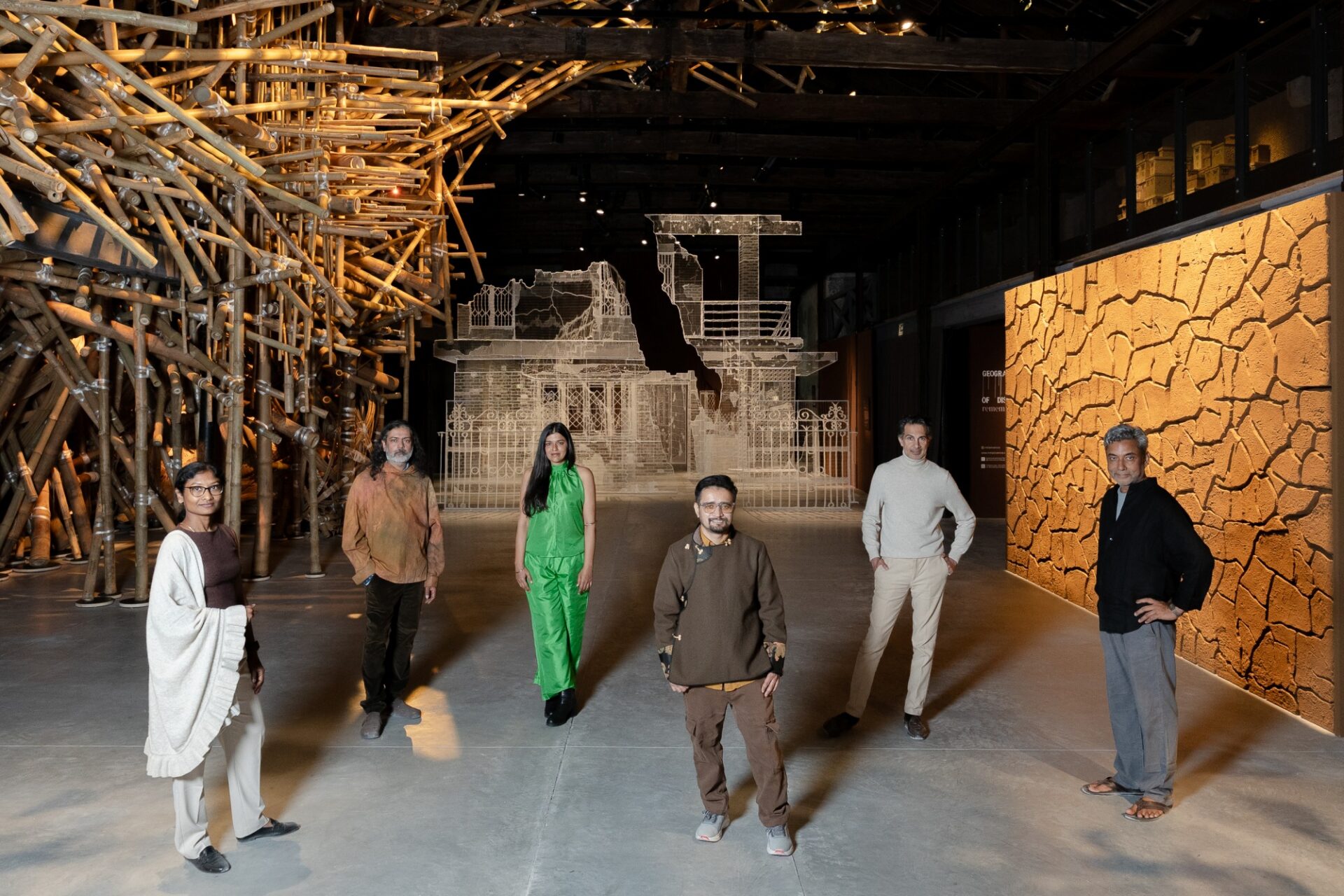
(L – R) Ranjani Shettar, Asim Waqif, Sumakshi Singh, Skarma Sonam Tashi, Dr Amin Jaffer (curator) and Bala. (c) Joe Habben
The exhibition brings together works by Alwar Balasubramaniam, Ranjani Shettar, Sumakshi Singh, Asim Waqif and Skarma Sonam Tashi, artists whose practices emerge from different geographies and material traditions across India, yet remain connected through a shared exploration of home as a shifting emotional condition.
Speaking to SCALE about his curatorial approach, Dr Amin Jaffer reflected on how his role as Director of The Al Thani Collection shaped the pavilion. “As Director of The Al Thani Collection, I have the privilege of working with exceptional works of art that span from the Neolithic Period to the present day,” he says. “My experience of curating objects from across civilisations and geographies in settings as diverse as the Grand Palais and the Metropolitan Museum of Art, to the Forbidden City and the Hermitage, has deeply enriched my vision of how to inspire and interest the public through displays of objects.”
For Dr Amin Jaffer, India’s return to Venice after seven years was also an opportunity to shift perceptions around Indian contemporary art. Rather than attempting to define a singular national identity, he chose to foreground artists whose practices remain materially grounded and emotionally intimate.

Dr Amin Jaffer, pictured with Ranjani Shettar’s Under the Same Sky. © Andrea Avezzù
“Drawing on the overall theme In Minor Keys, I wished to showcase artists who work with organic materials, transformed by their own hands,” he explains. “I deliberately decided to focus on artists whose work would not be familiar to habitual visitors to the Biennale, inviting them to experience the pavilion without preconceived ideas of what they would see. The theme of home resonates across all humanity, but the Pavilion shows an Indian perspective both in materiality, technique and approach.”
Five Artists, Five Interpretations of Home

The artists.
Across the Pavilion, home appears fractured, suspended, scaffolded, and reimagined. The works reflect a shared condition of change, and together the artists form a collective voice that is both deeply rooted in Indian identity and globally resonant.

Sumakshi Singh with Permanent Address (c) Joe Habben
Among the most evocative works in the pavilion is Permanent Address by Sumakshi Singh, a life-sized reconstruction of her demolished family home in New Delhi rendered entirely in embroidered thread. Suspended within space like a fading memory, the installation transforms architecture into an act of remembrance.
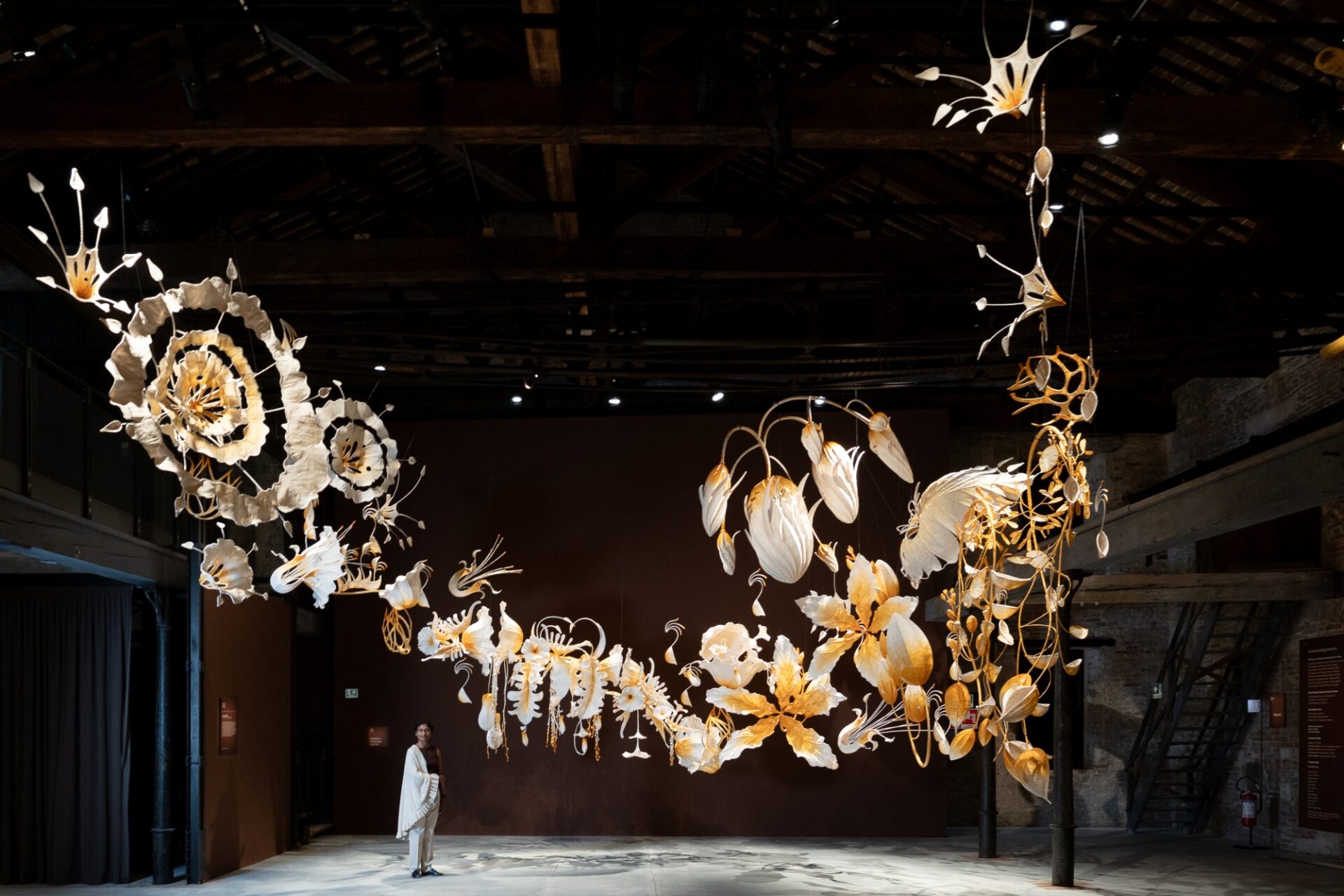
Ranjani Shettar with Under the same sky (c) Joe Habben
Ranjani Shettar’s Under the Same Sky creates an immersive suspended landscape inspired by flowers and organic growth. Crafted entirely by hand using traditional techniques, the installation appears almost weightless, turning the act of making into an emotional and spatial experience.

Bala with Not Just For Us (c) Joe Habben
For Bala, the landscape itself becomes an archive. His sculptural clay panels, made from soil sourced from rural Tamil Nadu, where he lives and works, carry visible cracks and fissures that speak of environmental change, endurance and time.
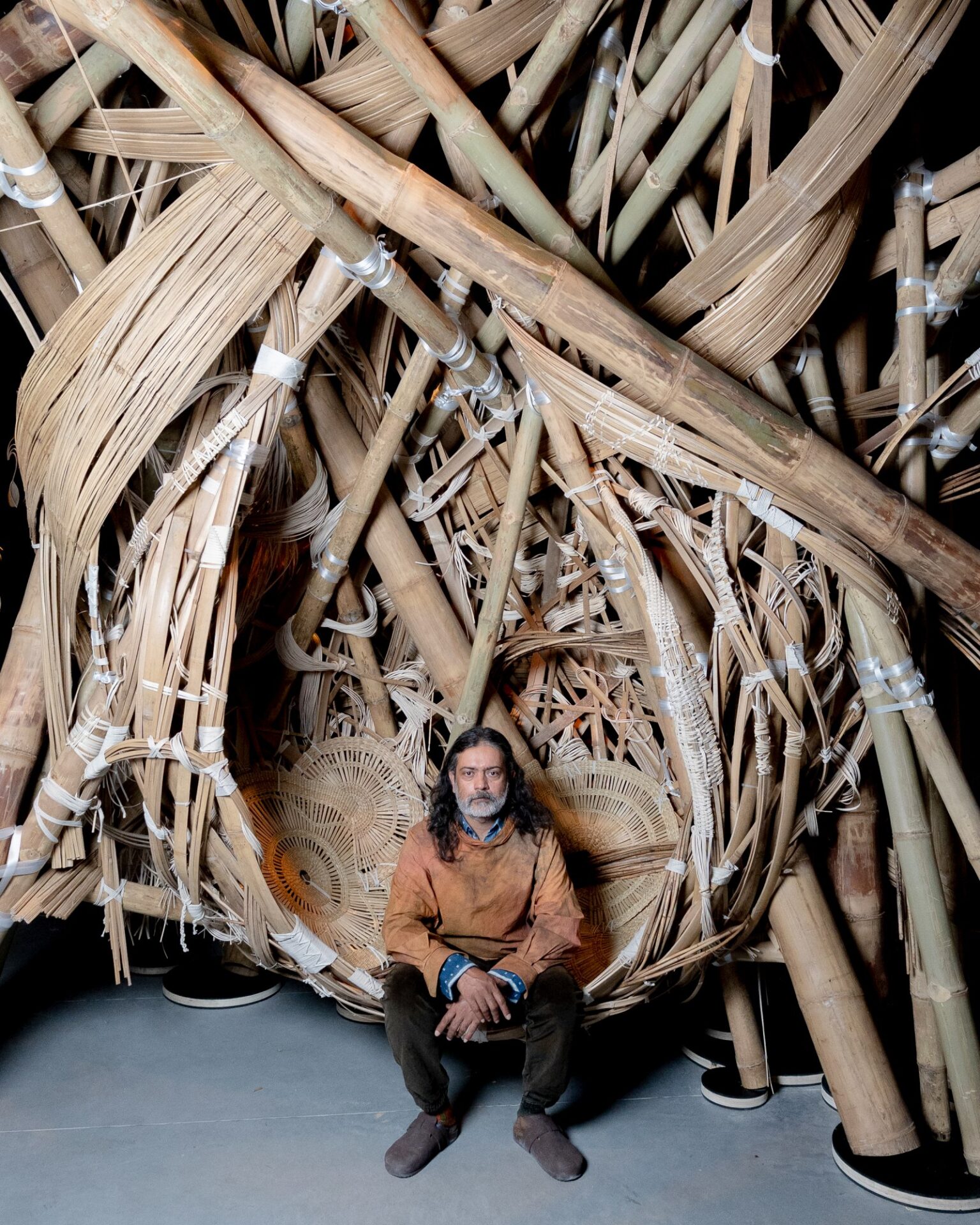
Asim Waqif, Chaal (c) Joe Habben
Meanwhile, Asim Waqif’s large-scale bamboo installation Chaal references the scaffolding systems seen across rapidly expanding Indian cities. The structure appears perpetually unfinished, oscillating between construction and collapse, mirroring the unstable rhythms of urban transformation.
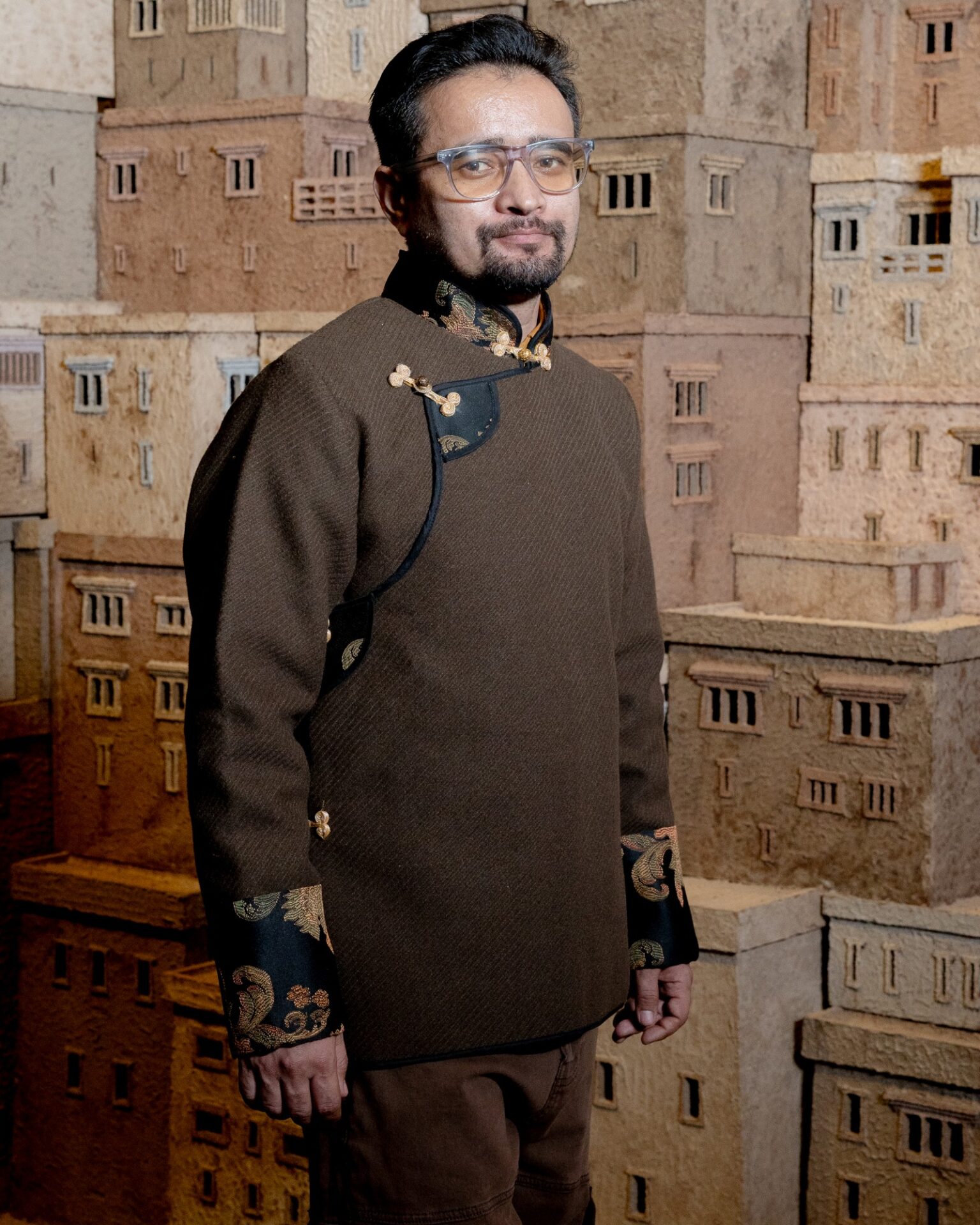
Skarma Sonam Tashi with Echoes of Home (c) Joe Habben
The youngest artist in the pavilion, Skarma Sonam Tashi, reflects on the ecology and architecture of Ladakh through fragile paper mâché forms that question sustainability, memory and disappearing cultural practices.
India’s Growing Presence Within the Global Art Ecosystem
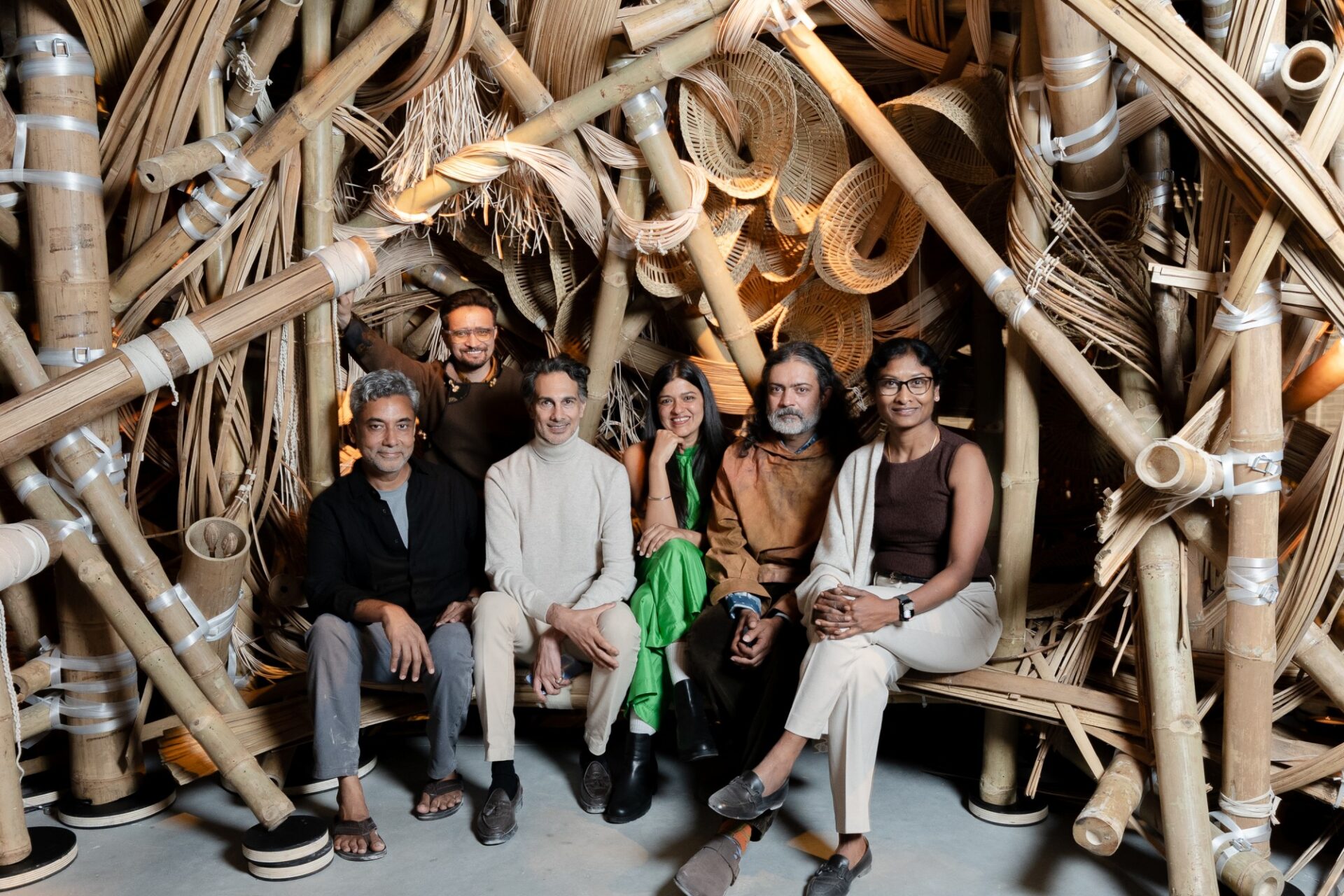
(L – R) Bala, Skarma Sonam Tashi, Dr Amin Jaffer (curator), Sumakshi Singh, Asim Waqif and Ranjani Shettar (c) Joe Habben
The conversation around India’s cultural positioning globally also extends beyond biennales and exhibitions. Responding to questions about the growing visibility of newer cultural hubs such as Doha, particularly following the launch of Art Basel Qatar 2026, Amin Jaffer believes India already possesses strong foundations through its own evolving art ecosystem.

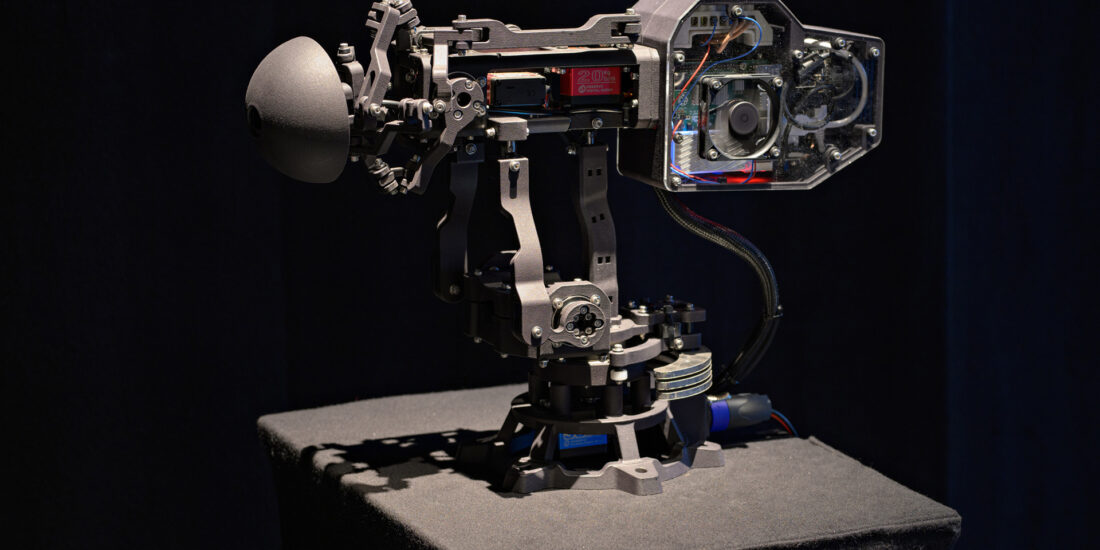
Skarma Sonam Tashi, Echoes of Home (2026). Pavilion of India at the 61st International Art Exhibition, La Biennale di Venezia 2026 © Andrea Avezzù copy
“India already stages two dynamic fairs — the India Art Fair and Art Mumbai — both of which are deeply engaging both commercially and in the realms of public art,” he says. “The fairs have evolved as a natural platform in cities that have a sustained gallery presence, a growing market and increasing institutional engagement. They attract collectors and curators from around the world year after year, revealing their staying power and appeal on a global level.”
Extending the Pavilion into the City of Venice

Ranjani Shettar – Under the same sky. (c) Joe Habben
Beyond the exhibition itself, the India Pavilion extends into Venice through a performance programme curated by Serendipity Arts. Music, movement, poetry and interdisciplinary interventions will take place across the city between May and November 2026, including performances at Mercato di Rialto, Palazzo Diedo and Fondazione dell’Albero d’Oro.
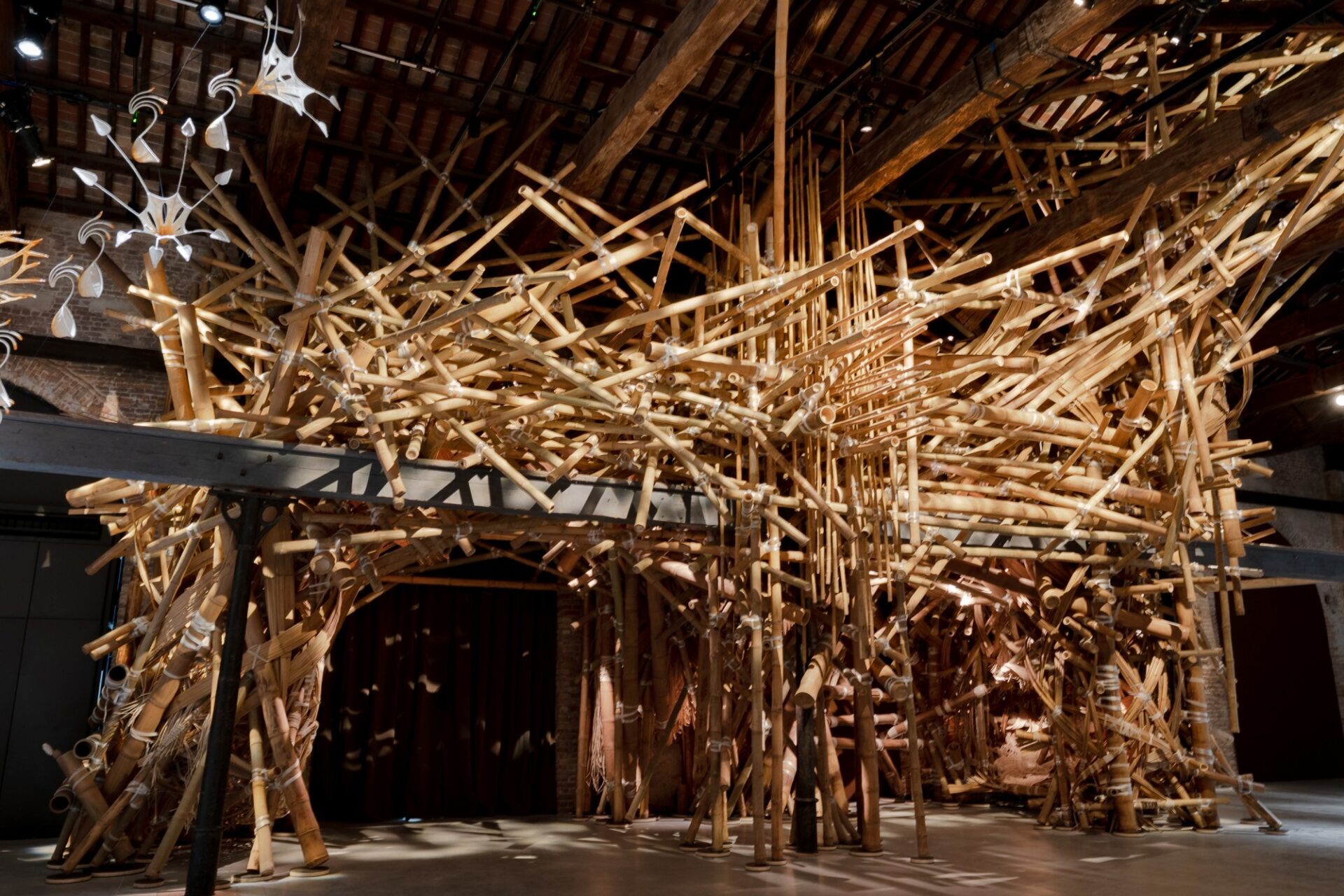
Asim Waqif’s Chaal. (c) Joe Habben
Speaking on the significance of India’s return to Venice, Union Minister of Culture and Tourism of India, Gajendra Singh Shekhawat, noted, “Geographies of Distance: remembering home, presents a contemporary India that is both rooted and forward-looking. As our nation continues to evolve, this Pavilion reflects the strength of our cultural memory and the power of artistic expression to connect India with the world.”

Sumakshi Singh, Permanent Address (c) Joe Habben
For a nation negotiating rapid urbanisation, migration and global visibility, the pavilion does not attempt to define India through a singular narrative. Instead, it embraces fragmentation, displacement and memory, presenting home not as a permanent structure, but as something carried within material, ritual and emotional experience.