
Qatar Museums CEO on Leadership, Legacy, & the Future of Museums
As Qatar Museums celebrates its 20th anniversary, Qatar Museums CEO, Mohammed Saad Al Rumaihi talks exclusively to SCALE on the evolving role of Museums. He says, “Museums today are no longer static spaces. They are living institutions; places of dialogue, learning, and responsibility, deeply connected to society and its future.”

Tourism Innovation Award — Qatar Museums (Institutional)
As Qatar Museums (QM) marks its 20th anniversary, the institution finds itself at a defining moment, one shaped by refined growth, global recognition, and forward-looking ambition. In November 2025, QM was honoured with multiple accolades at the Qatar Tourism Awards, recognising institutions such as the Museum of Islamic Art and the National Museum of Qatar, alongside innovation-led initiatives across its cultural and hospitality ecosystem. The same month also saw Mohammed Saad Al Rumaihi elected President of the International Council of Museums Regional Alliance of Arab Countries (ICOM Arab) for the 2025–2028 term, reaffirming Qatar’s growing leadership in the global museum landscape.

QM CEO at the Qatar Tourism Awards.
These milestones unfold alongside another significant anniversary: 50 years since the founding of the National Museum of Qatar. Together. They underline the evolution of QM from a national institution into a cultural ecosystem, one that places museums at the heart of education, public engagement, international dialogue, and creative production.
In this conversation with SCALE, QM CEO Mohammed Saad Al Rumaihi reflects on the milestones that shaped Qatar Museums over two decades, the responsibility of leading an institution rooted in heritage yet oriented toward the future, and the evolving role of museums in a rapidly changing world.
SCALE: As QM celebrates its 20th anniversary and the National Museum of Qatar its 50th, what are the defining milestones that shaped QM’s institutional identity, and how has the NMoQ’s legacy influenced your vision for the growing network of cultural institutions?
Mohammed Saad Al Rumaihi: The defining milestone for us was the moment we recognised that culture is the heart of the nation, the fundamental engine for its development. Our commitment to identity and history was elevated with the establishment of QM in 2005 under the visionary leadership of Her Excellency Sheikha Al Mayassa bint Hamad Al Thani. One by one, our landmark museums were established, each immediately fostering its own ecosystem of partners, visitors, innovators, and teams.
Our success today lies in this unified ecosystem, one that actively involves existing institutions like the Museum of Islamic Art (MIA), Mathaf, the 3-2-1 Qatar Olympic and Sports Museum (QOSM), and our highly anticipated future museums, whose dedicated programming is already active in creating dialogue between cultures. Anchored by the heritage role of the National Museum of Qatar (NMoQ), this entire journey is currently celebrated through the ‘Evolution Nation’ campaign, a national movement that highlights both our cultural milestones and our soaring aspirations, ultimately fulfilling our role in advancing the Qatar National Vision 2030 and inspiring the next generation.
 SCALE: QM has firmly placed Qatar on the global cultural map. How do you strategically balance showcasing Qatari identity and Arab heritage while curating international dialogues through platforms like Art Basel and the Venice Biennale?
Mohammed Saad Al Rumaihi: We achieve global impact by treating every international platform, from Art Basel to the Venice Biennale, as cultural diplomacy, simultaneously showcasing our rich Qatari and Arab heritage and fostering genuine international dialogue. This powerful, mutual interaction is indispensable for shaping a truly global future. An example of our lasting global commitment to culture is embodied in our permanent pavilion at the Venice Biennale.
We are only the third country in 50 years to achieve this, securing a continuous, unmatched platform for creative talent from Qatar and the broader Middle Eastern, North African and South Asian (MENASA) regions. By intentionally placing our national identity at the heart of the world’s most prestigious cultural forums, we ensure that QM acts as a vital nexus, actively nurturing and empowering the next generation of local and regional talent.
SCALE: You’ve signed major agreements with organizations like Microsoft, the Aga Khan Trust for Culture, and Alwaleed Philanthropies. How do these diverse strategic collaborations and QM’s commitment to sustainability reflect your long-term vision?
Mohammed Saad Al Rumaihi: Our long-term vision to be a global cultural nexus is powered by strong, essential strategic partnerships that ensure our work has generational continuity. We view these collaborations as critical investments rooted in shared values. We secure high-impact agreements with organizations like the Aga Khan Trust for Culture and Alwaleed Philanthropies, alongside global museums such as the Museo de Arte Latinoamericano de Buenos Aires (MALBA), M+ in Hong Kong, and the Kiran Nadar Museum of Art in India, to foster true international exchange and fresh perspectives for our audiences.
We also partner with technological leaders, including Microsoft and Snapchat, to drive our digital future and innovative engagement. This global effort is anchored by strong local partnerships across government, education, and the private sector, all focused on cultivating local talent. By weaving culture and sustainability into every single collaboration, QM strengthens the entire creative ecosystem, ensuring our impact is both strategic and deeply personal to Qatar’s future.
SCALE: Beyond the museum walls, what is QM’s strategy for nurturing and empowering artists and designers, both local and across the Middle East, North Africa and MENASA region, and how do you foster collaborations with independent galleries and regional initiatives to build a sustainable creative economy?
Mohammed Saad Al Rumaihi: QM is more than a cultural patron; we are the strategic architect of a self-sustaining creative economy across Qatar and the wider MENASA region. We achieve this through targeted investment in both infrastructure and high-impact regional platforms.
We’ve established dedicated hubs like M7, the epicentre for entrepreneurship in design and technology, alongside the Fire Station, the Teen Hub, and Liwan Design Studios and Labs, which collectively provide the crucial mentorship, training, and business incubation necessary to empower local artists and designers. Our extensive network of creative hub locations and activations supports Doha’s robust community of artists, designers, entrepreneurs, and tech innovators, empowering them to explore, collaborate, and thrive.

M7 is a design epicentre.
Concurrently, we actively foster regional collaborations through major initiatives that showcase and connect the regional creative community, including the Design Doha Qatar Biennale, the Tasweer Qatar Photo Festival, and the upcoming Rubaiya Qatar, an international visual arts quadrennial. QM is an essential active partner in building a sustainable creative future for the entire region.
SCALE: How has QM’s work transformed cultural awareness and art appreciation among the Qatari community? What new initiatives are being introduced to make museums more engaging, accessible, and integral for schools and the wider public?
Mohammed Saad Al Rumaihi: QM has profoundly transformed cultural awareness by establishing itself as the nation’s core cultural catalyst. We have redefined institutions like the MIA, the NMoQ, and Mathaf by leveraging their world-class collections and historical importance to create dynamic, integrated educational ecosystems. Our mission is to enrich the life of every citizen and resident through a strategic shift that transforms these profound collections into dynamic, hands-on learning experiences, ensuring culture is a lived experience.
This transformative approach focuses on three key objectives: reinforcing national identity through heritage; fostering local creative talent via dedicated business and design hubs; and promoting cultural dialogue through hosting world-class international exhibitions.
Our public art strategy is designed to integrate culture directly into the community. It transforms our public spaces into informal, interactive learning environments, ensuring everyone is surrounded by culturally significant art. This makes engaging in our national aesthetics a constant, effortless part of daily life.
This comprehensive approach enables QM to remain a vital partner in achieving the Qatar National Vision 2030 for human and cultural development.
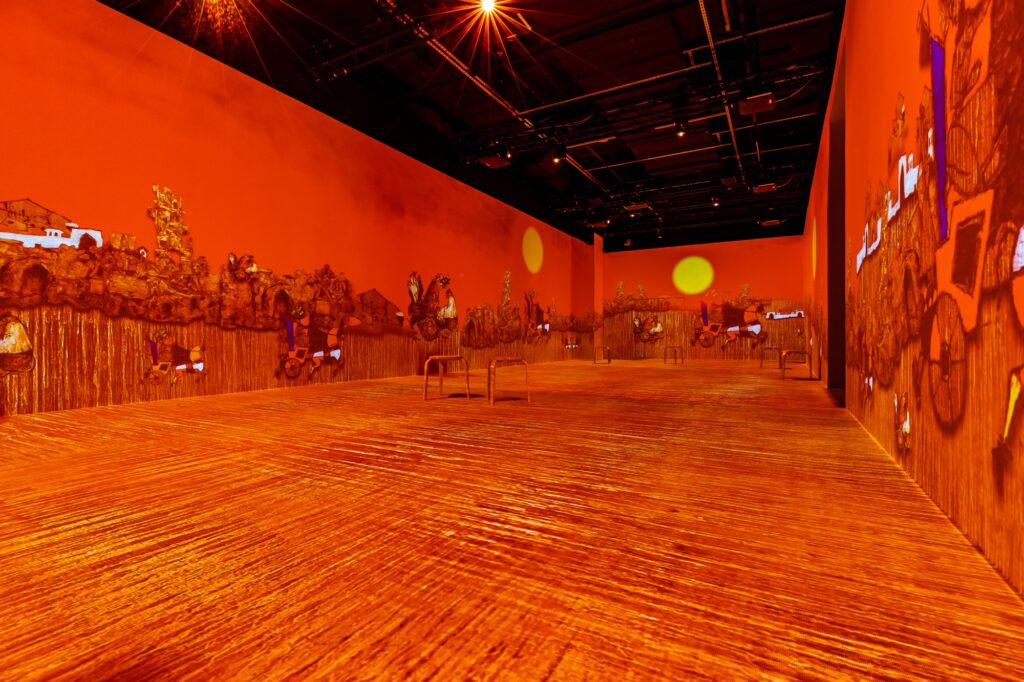
The Rooted-Nomad, MF Husain exhibition at QM Gallery Katara Building 10. The exhibition is ongoing till 7 February 2026. Photo-©-Shaikha-Ahmed-Ali.
SCALE: With rapid advances in AI, digital curation, and immersive technologies competing for attention, how do you envision the museum experience evolving over the next two decades, and how is QM innovating its communication and digital engagement strategies?
Mohammed Saad Al Rumaihi: The future of the museum is fundamentally tied to the evolution of its role: shifting from being a static repository to becoming a dynamic, relevant cultural agent for its audience. In addition to robust programming, we are driving this change by embracing technology to ensure the visitor’s experience secures its relevance for the next generation. Our strategy views our archives as intelligent data streams and our spaces as platforms for interaction, exemplified by our partnerships with Microsoft for AI-driven personalised curation and Snap Inc. for cutting-edge Augmented Reality.
This focus on immersion and personalization is key, as demonstrated by exhibitions such as “The Rooted Nomad: MF Husain” at the Qatar Museums Gallery in Katara. This integration ensures that QM is preserving the past and actively shaping the future, becoming a dynamic, data-rich platform where cultural heritage is interactive, and perpetually alive for every visitor.
SCALE: Looking back, which landmark exhibitions or museum openings over the past two decades do you feel had the greatest cultural impact on Qatar and the region?
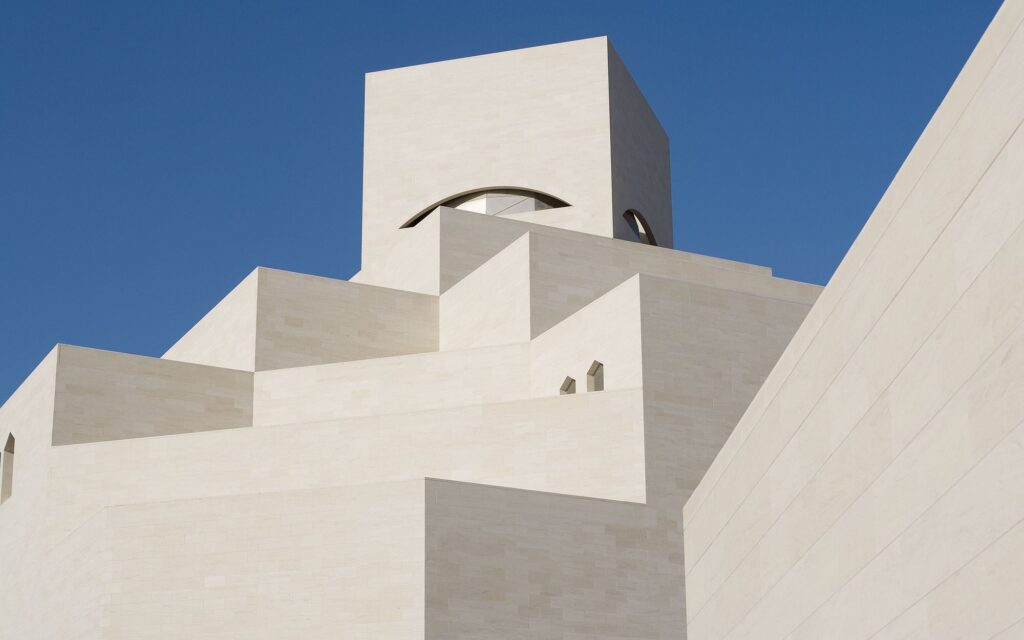
Museum of Islamic Arts.
Mohammed Saad Al Rumaihi: The greatest cultural impact over the past two decades has been the successful realisation of our unified museum network. Each museum is an icon and a result of careful cultural planning that fundamentally shifted our national identity and global role.
Every institution, from the MIA and Mathaf to the NMoQ and the QOSM, was conceived with a distinct, powerful mandate that embodies a pillar of our national vision. This entire framework is woven into Qatar Creates, a national cultural movement designed to position Qatar as a global hub for art, culture, and creativity. It functions as a year-round, unified platform that showcases, promotes, and celebrates the nation’s diverse offerings across disciplines including art, fashion, design, film, and sport.
The cumulative value of this cultural foundation is a powerful, cohesive platform that not only enriches the lives of our people but also fosters the meaningful global dialogue that transcends borders. It has ultimately positioned Qatar as an essential, dynamic global creative hub, where culture is lived and created.
SCALE: With QM’s increasing visibility on international platforms, how do you see the institution’s influence evolving in the coming decades, particularly in terms of cultural diplomacy and bridging East-West understanding?

Vision board for the Art Mill Museum
Mohammed Saad Al Rumaihi: Our influence is rapidly evolving from that of a cultural destination to a global cultural bridge, promoting meaningful exchange and bridging East-West understanding. This transformation is spearheaded by our global expansion, including future institutions like the Qatar Auto Museum, Dadu, and the Art Mill Museum, which actively redefine our international presence and raise Qatar’s cultural profile worldwide.
We amplify this role in cultural diplomacy by strategically leveraging our network. A prime example is Mathaf’s exhibition program, which balances major international collaborations with showcases of local talent, such as the pioneering work of Gulf female artist Wafa al-Hamad. This dual focus is how we reinforce our position as a cultural bridge and achieve our mission of fostering mutual understanding between peoples.
 SCALE: On a personal level, what does the 20th anniversary of QM, and the 50th anniversary of the NMoQ, mean to you?
Mohammed Saad Al Rumaihi: These anniversaries are more than just markers of time; they represent the successful realisation of a visionary, long-term national plan. While it is a source of immense pride to witness the dedication of our teams and the vision of our leadership, these milestones ultimately remind us that this transformation is a shared journey. Our success rests equally on the vibrant engagement of our community.
Our visitors, artists, and partners are essential contributors to our cultural ecosystem. Honouring the 50-year journey of the NMoQ and fulfilling our 20-year commitment to transform Qatar into a truly global creative hub means creating a legacy that honours the commitment of past and present leadership alongside the people we serve.
SCALE: What does transformational leadership mean to you in the context of an institution that carries both heritage and future aspirations, and what legacy would you like to leave behind at the 40th anniversary of QM?
Mohammed Saad Al Rumaihi: Transformational leadership in this context means using heritage as the foundation for the future. It requires a strategic commitment to our dual mandate: celebrating Qatari identity while relentlessly driving innovation and global dialogue.
The legacy I want to leave by the 40th anniversary is that QM is recognised as the engine that successfully embedded creativity into the nation’s DNA, fulfilling the core mandate that culture is the heart of the nation. Our ‘Evolution Nation’ campaign is designed to tell this story and inspire the future generation to carry on and preserve its legacy.