A Museum That Reimagines Jain Heritage for the Modern World
On the banks of the Indrayani River, Abhay Prabhavana, a museum dedicated t Jain Philocombines architecture, technology and storytelling to create an immersive journey through one of India’s oldest philosophies. By Susheela Nair
The world’s largest Jain museum
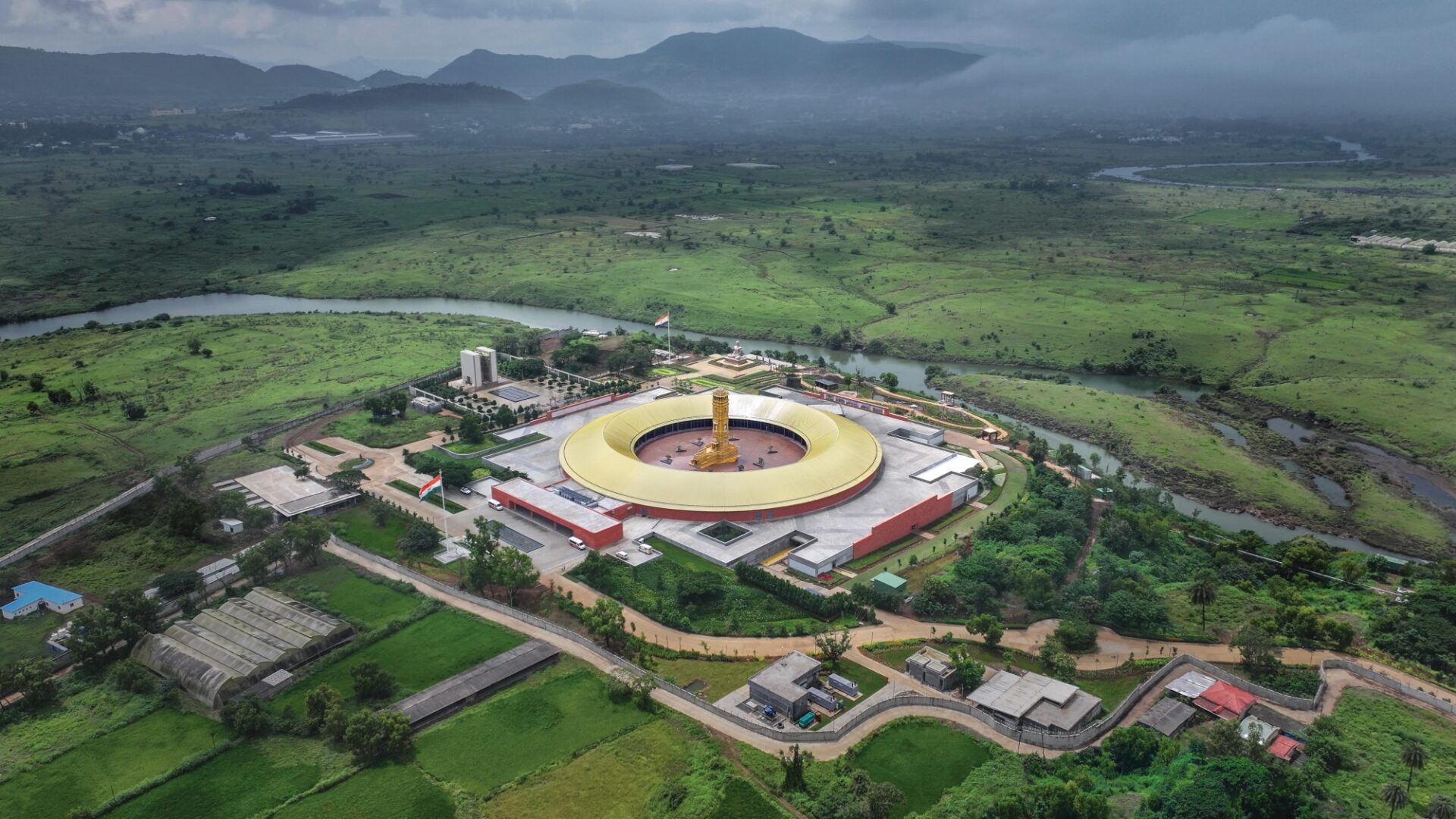
Museums today are expected to do more than preserve history. They are increasingly becoming places where culture is interpreted, questioned and experienced. Few embody this shift as convincingly as Abhay Prabhavana, a sprawling museum dedicated to Jain philosophy and India’s civilisational heritage, located along the banks of the Indrayani River near Pune. Spread across 162 acres with a built-up area of nearly 300,000–500,000 square feet, it is regarded as the world’s largest private Jain museum.
Night view of Abhay Prabhavana
Founded by industrialist Abhay Firodia through the Amar Prerana Trust, the museum is an archive of religious artefacts. It is an ambitious attempt to reinterpret centuries of philosophy through contemporary design.
 It draws visitors into an experience where sculpture, architecture, digital media and immersive installations work together to make ancient ideas relevant for modern audiences.
 The journey begins even before stepping inside. A lotus pond frames the entrance before opening into a vast reception hall overlooking a courtyard. Along its walls, monumental Pichwai paintings act almost as a visual prologue, introducing themes that unfold through the galleries beyond. Rather than decoration, the drawings become an illustrated map of Jain thought, preparing visitors for what follows.
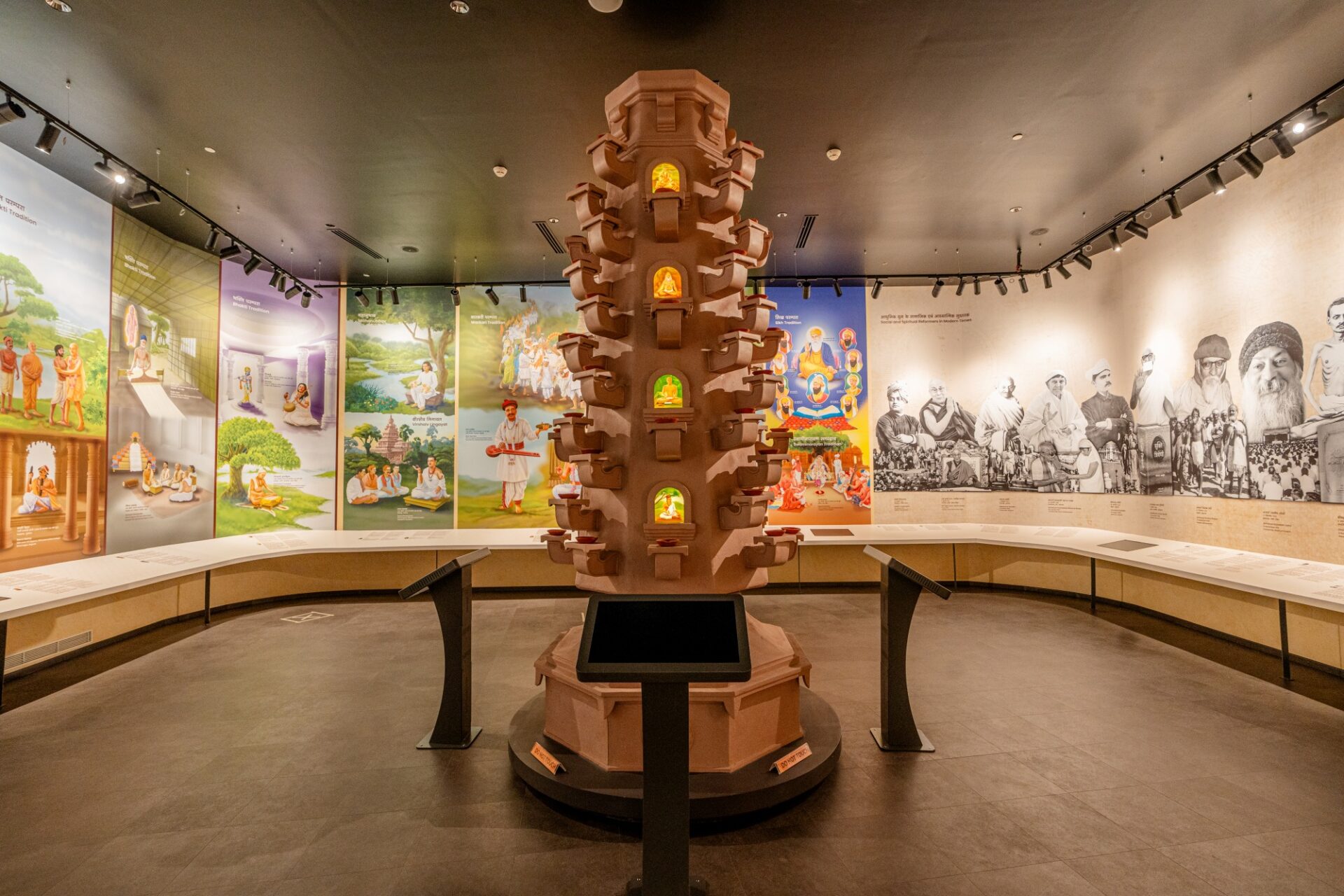
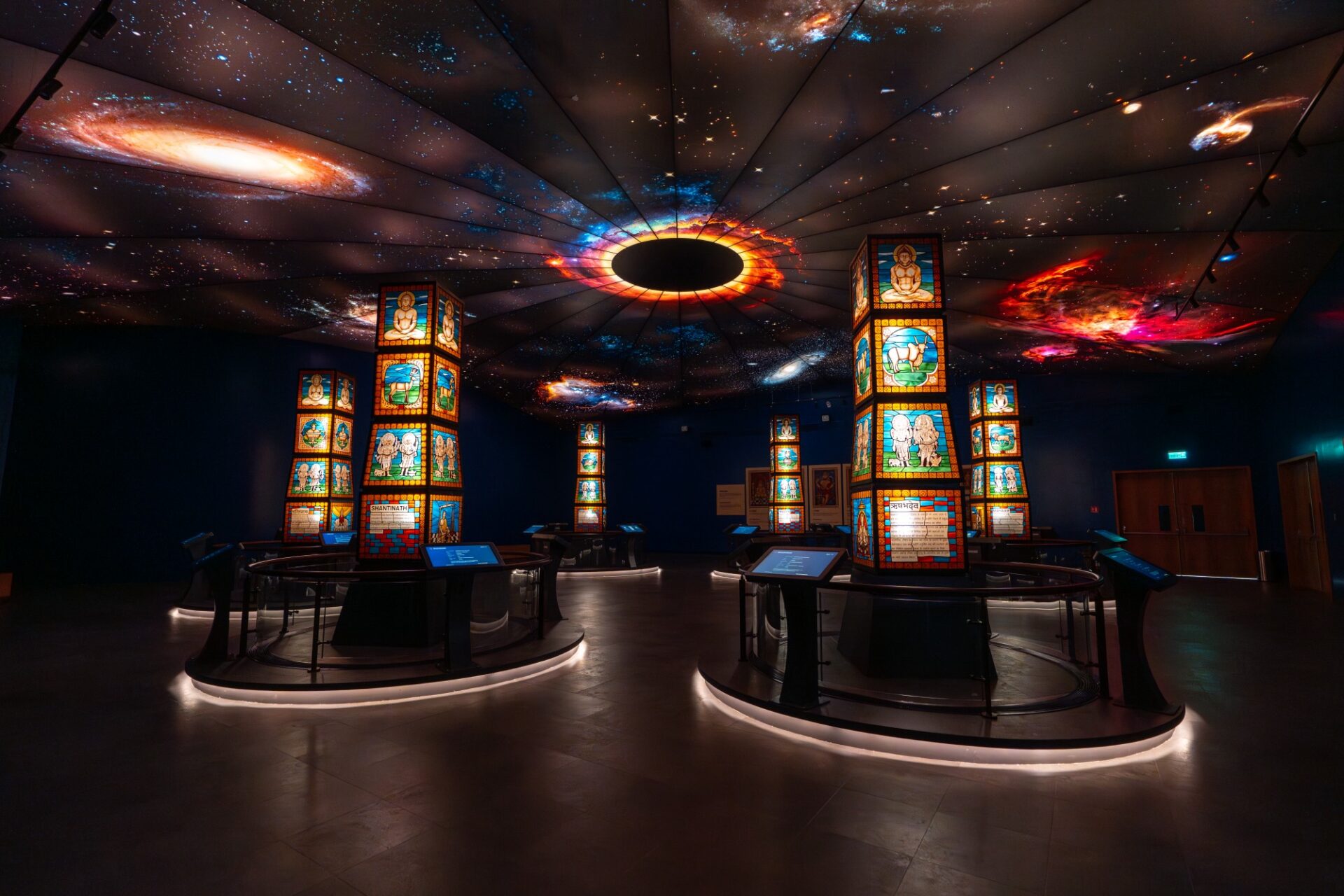 Across more than 30 galleries, the museum departs from the static displays often associated with historical institutions. Animation, mechatronics, immersive projections and audio-visual storytelling bring Jain philosophy to life, presenting ideas through contemporary media rather than traditional interpretation. More than 350 sculptures, replicas, artworks and interactive exhibits create an experience that is engaging as well as educational.
 “What makes this museum unique is its ability to engage the modern visitor,” says Abhay Firodia. “We used modern methods like animation, mechatronics and so on to show these values to today’s generation in an attractive manner.”
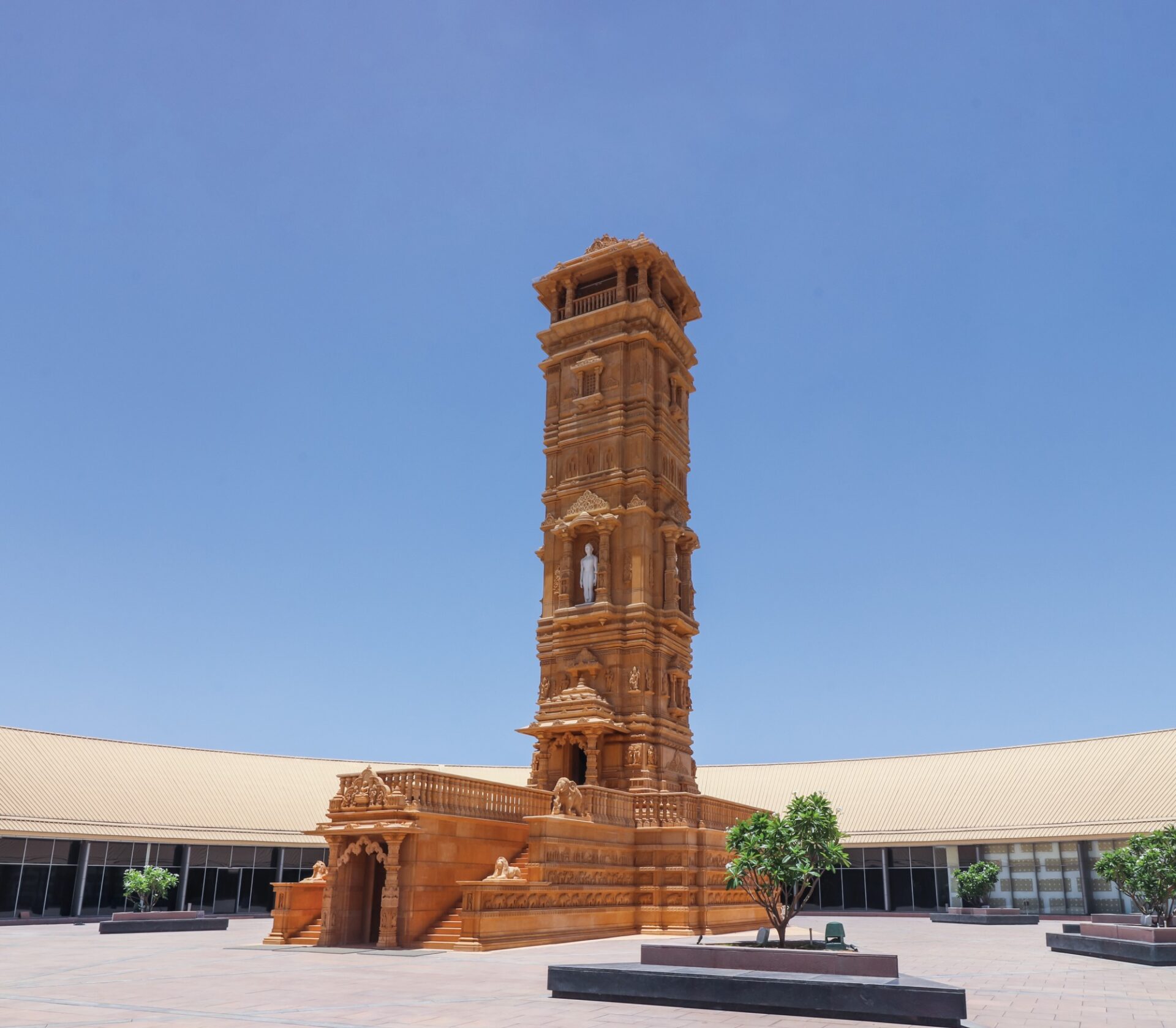
Hoysala pillar
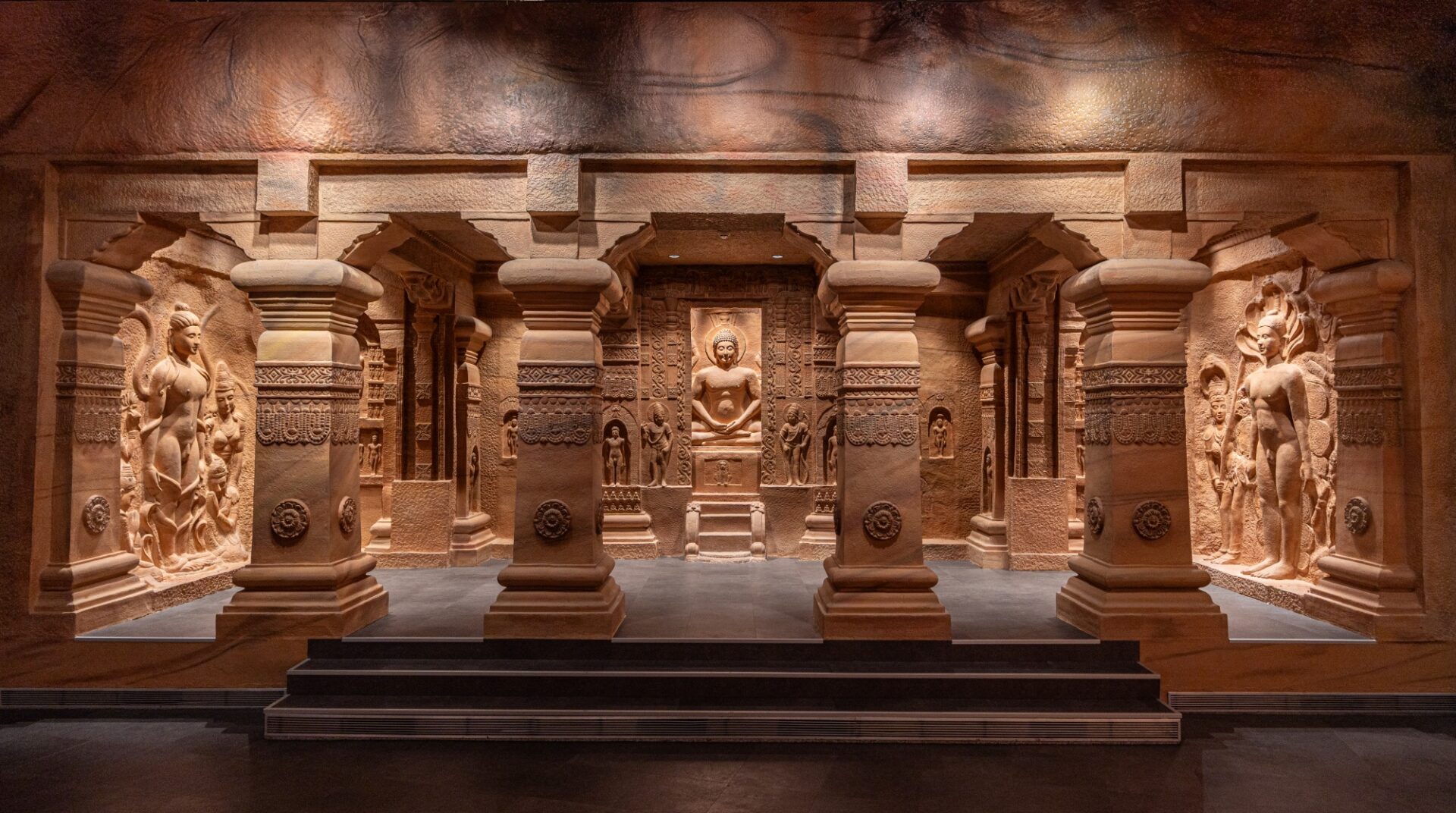
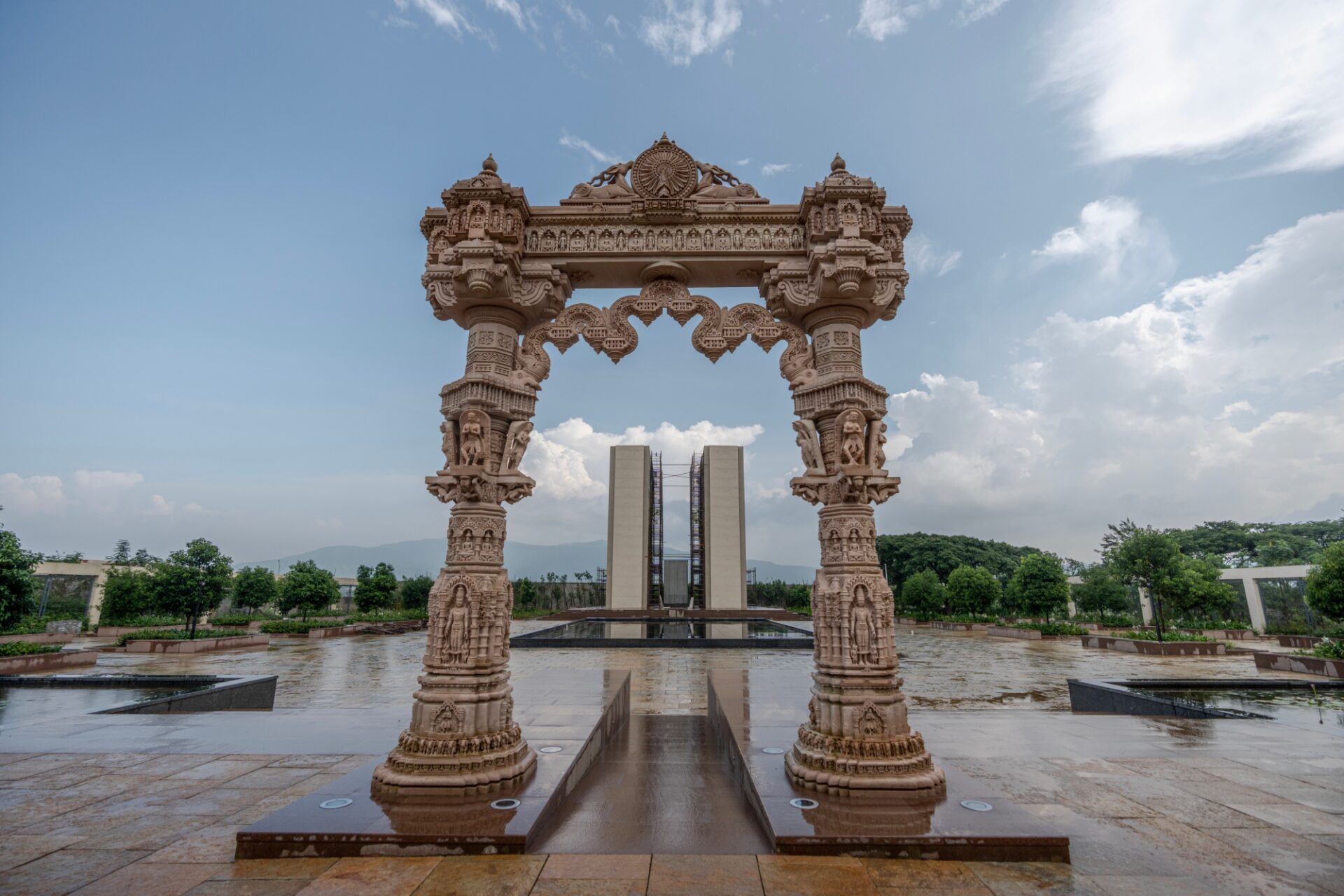
Among the galleries are full-scale recreations of India’s architectural heritage, from the rock-cut caves of Badami to temple pillars inspired by Rajasthan and the monumental Bahubali of Shravanabelagola. A finely crafted Hoysala pillar demonstrates the extraordinary precision of traditional stone craftsmanship, while together these reconstructions reveal the richness and diversity of India’s architectural legacy.
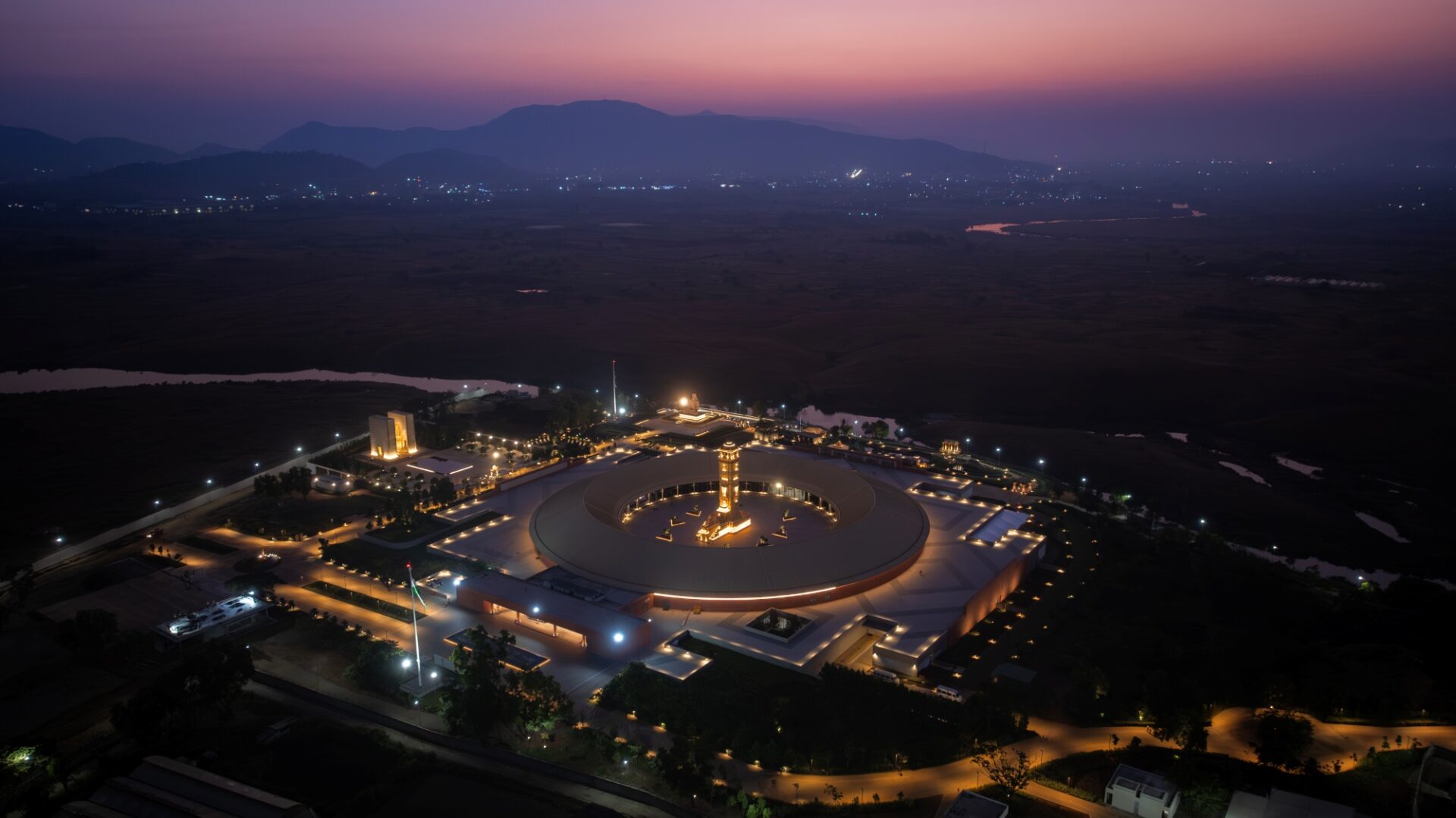
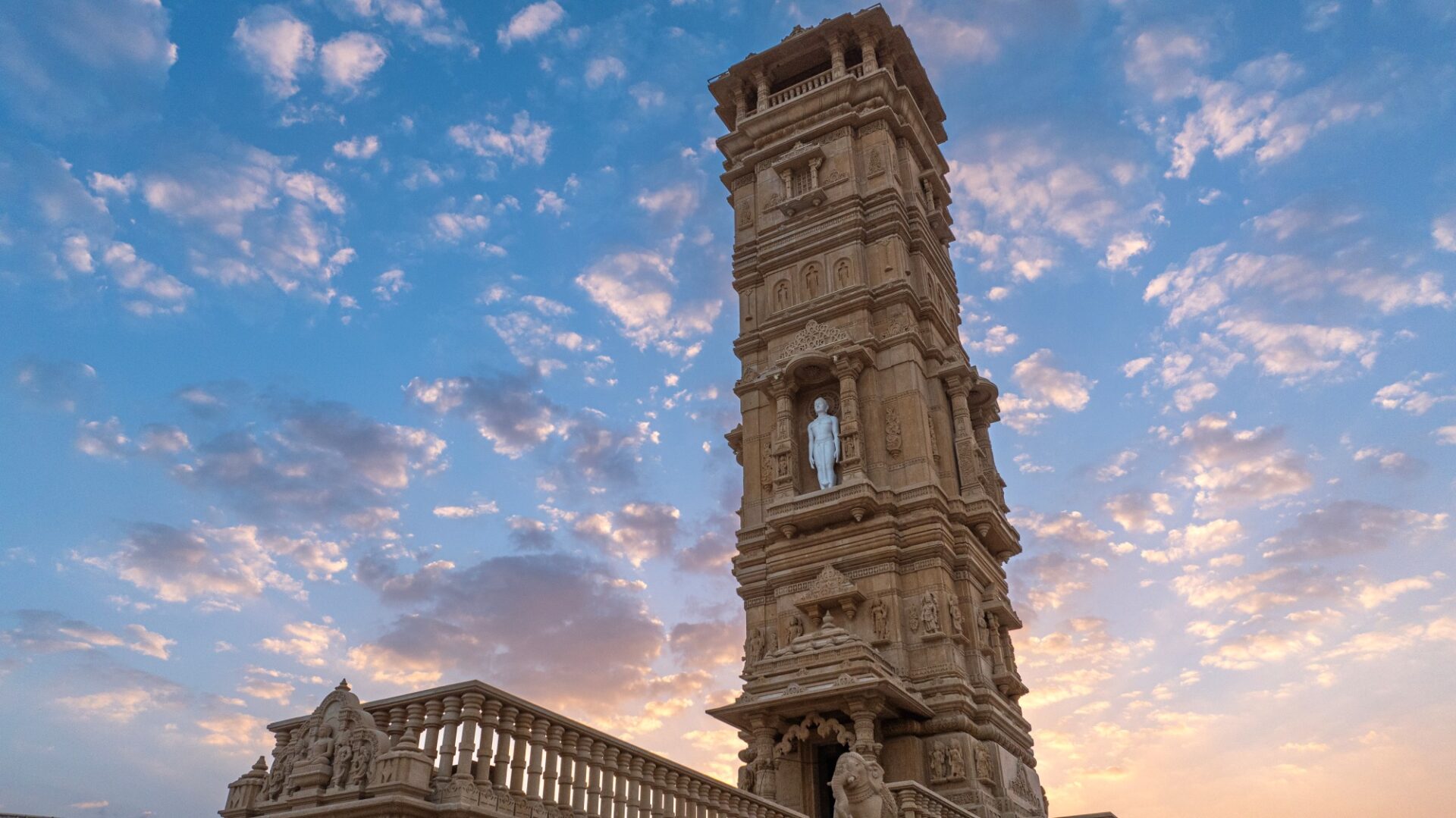
At the centre of the complex rises one of its defining architectural elements, a 100-foot Manstambh assembled from 4,150 individually carved pieces of Jaisalmer stone. More than a monumental marker, the tower represents the stages of spiritual evolution, each intricately carved level narrating a different aspect of the Jain journey towards enlightenment. A viewing gallery at its summit offers visitors an unusual perspective where earth and sky merge into a single frame, transforming architecture into an instrument of contemplation.
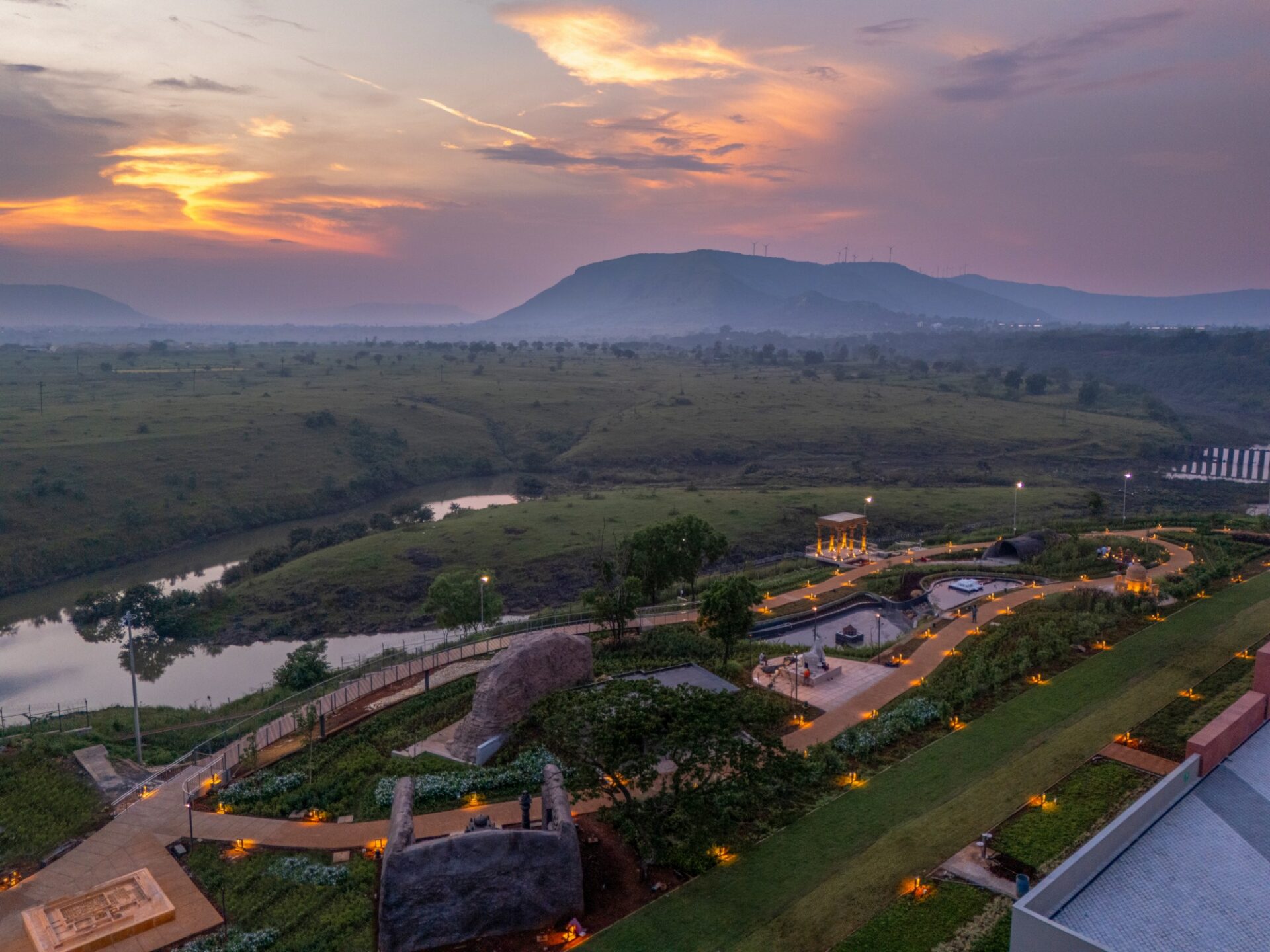
Nature Trial
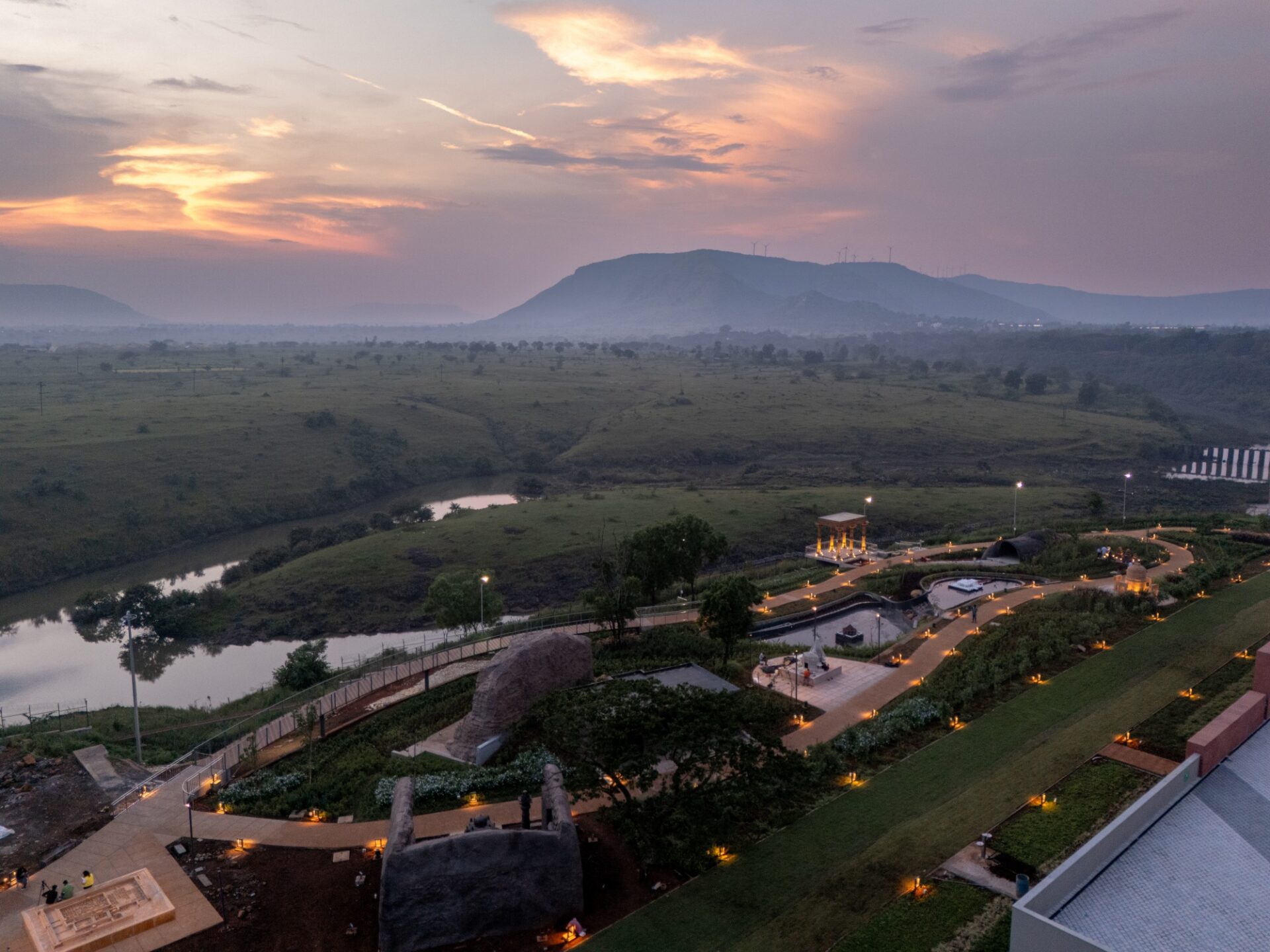
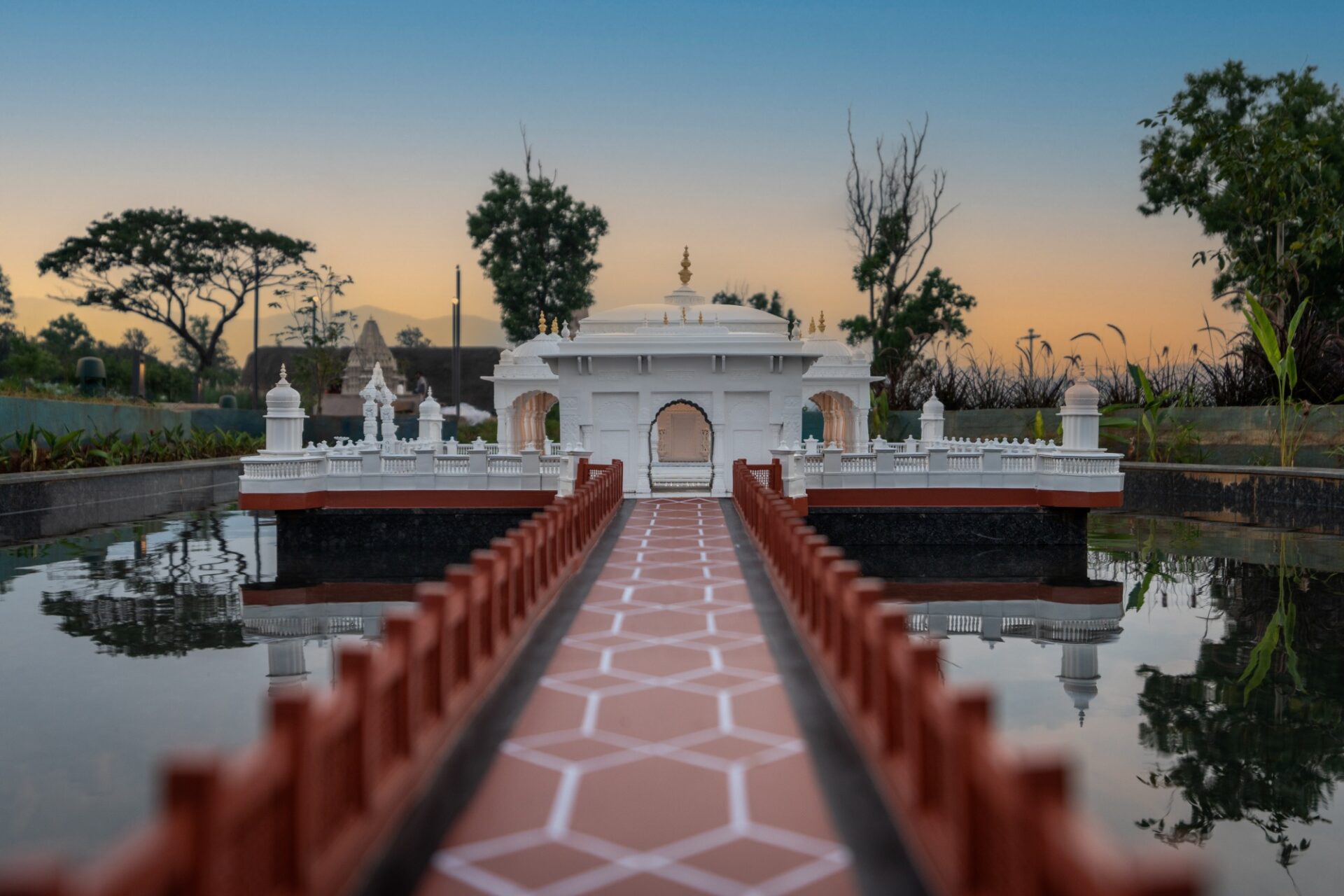
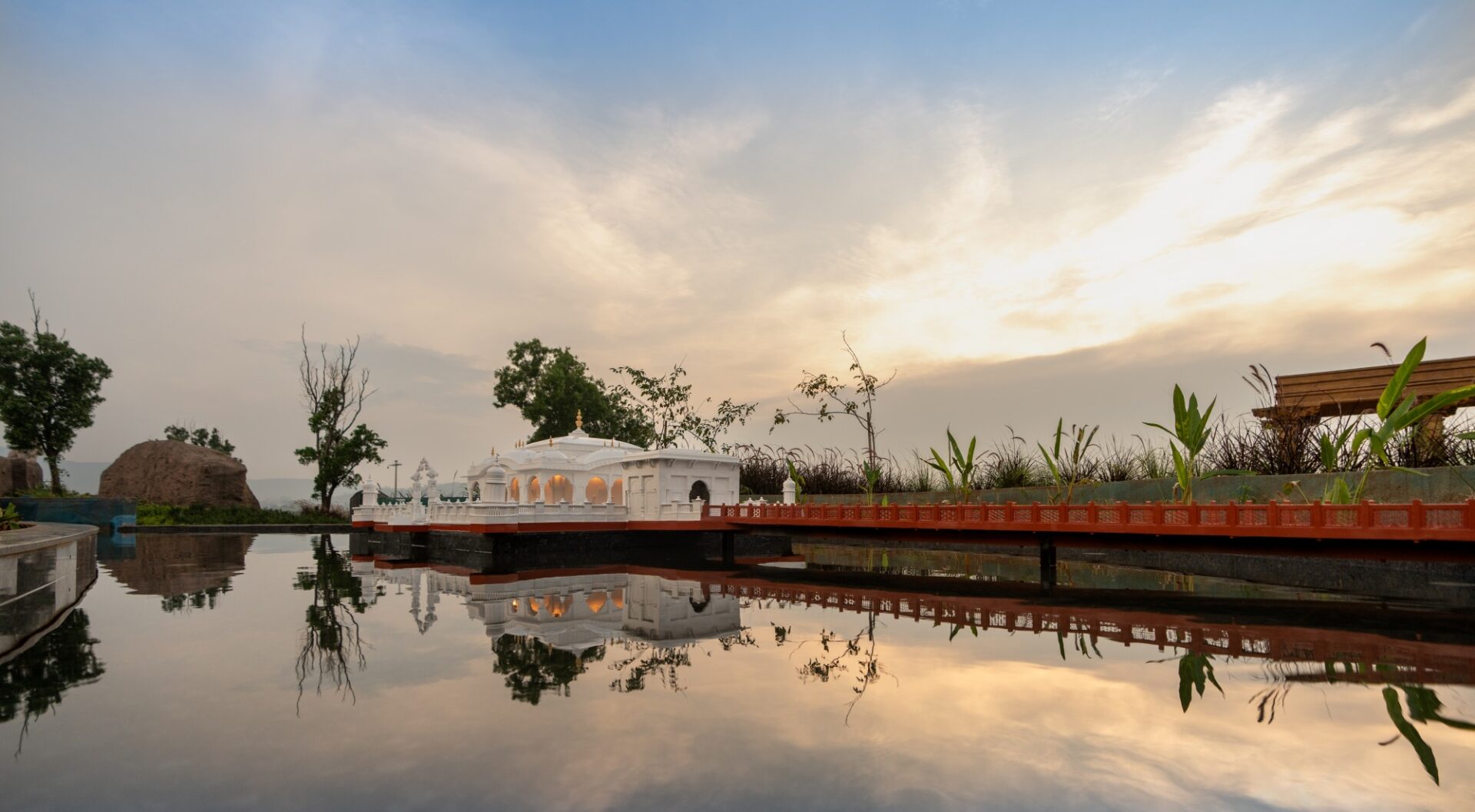
Beyond the galleries, the museum opens into a carefully landscaped cultural landscape. A 320-metre nature trail winds alongside the Indrayani River through recreated Jain monuments and sacred sites from across India.
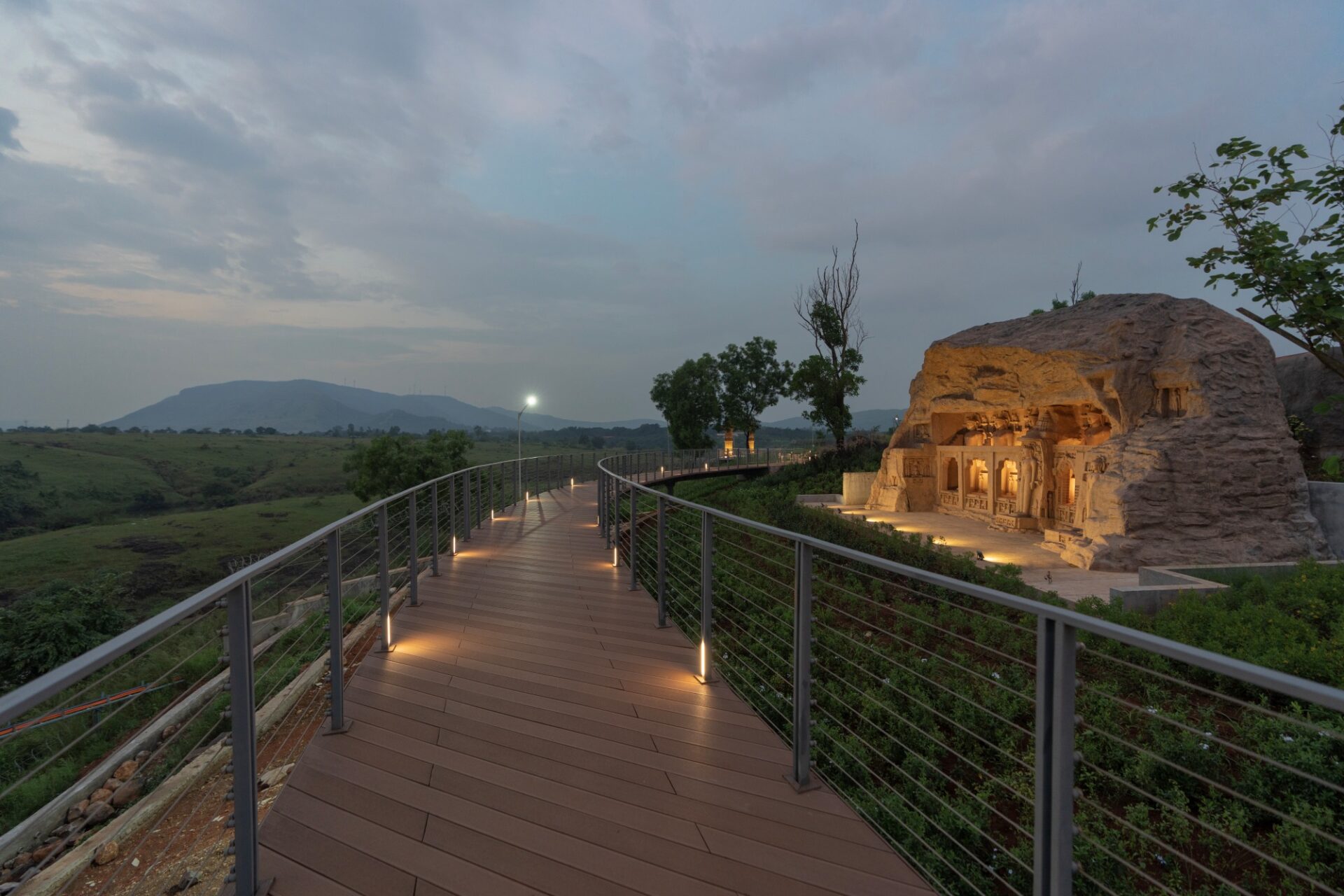 Miniature interpretations of landmarks such as the Jal Mandir at Pavapuri, the Varanga lake temple, the Shantinath Mandap and ancient cave sanctuaries extend the museum experience beyond the building itself, creating an open-air archive of India’s architectural heritage.
Meaningful Encounters within the Museum
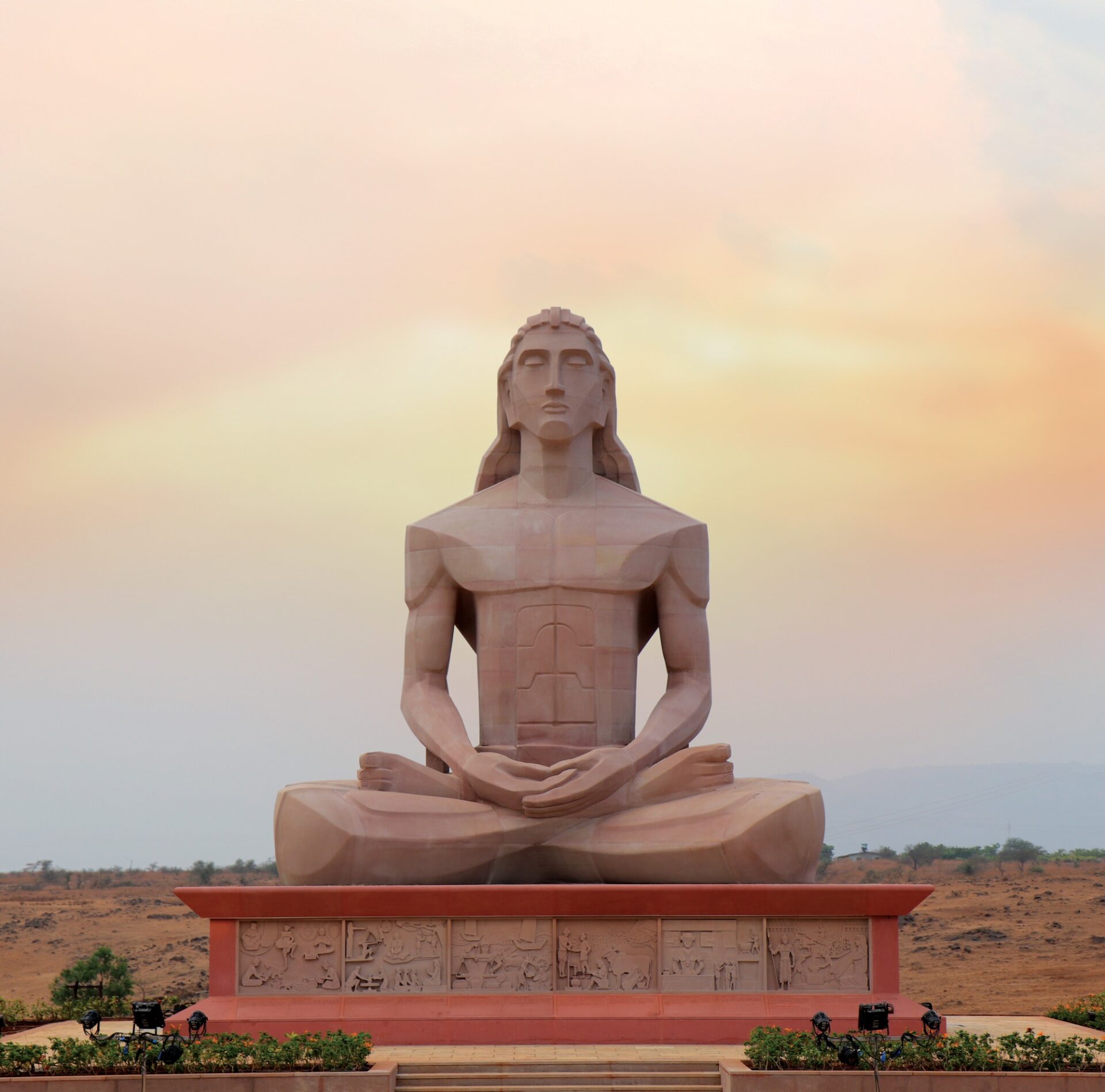
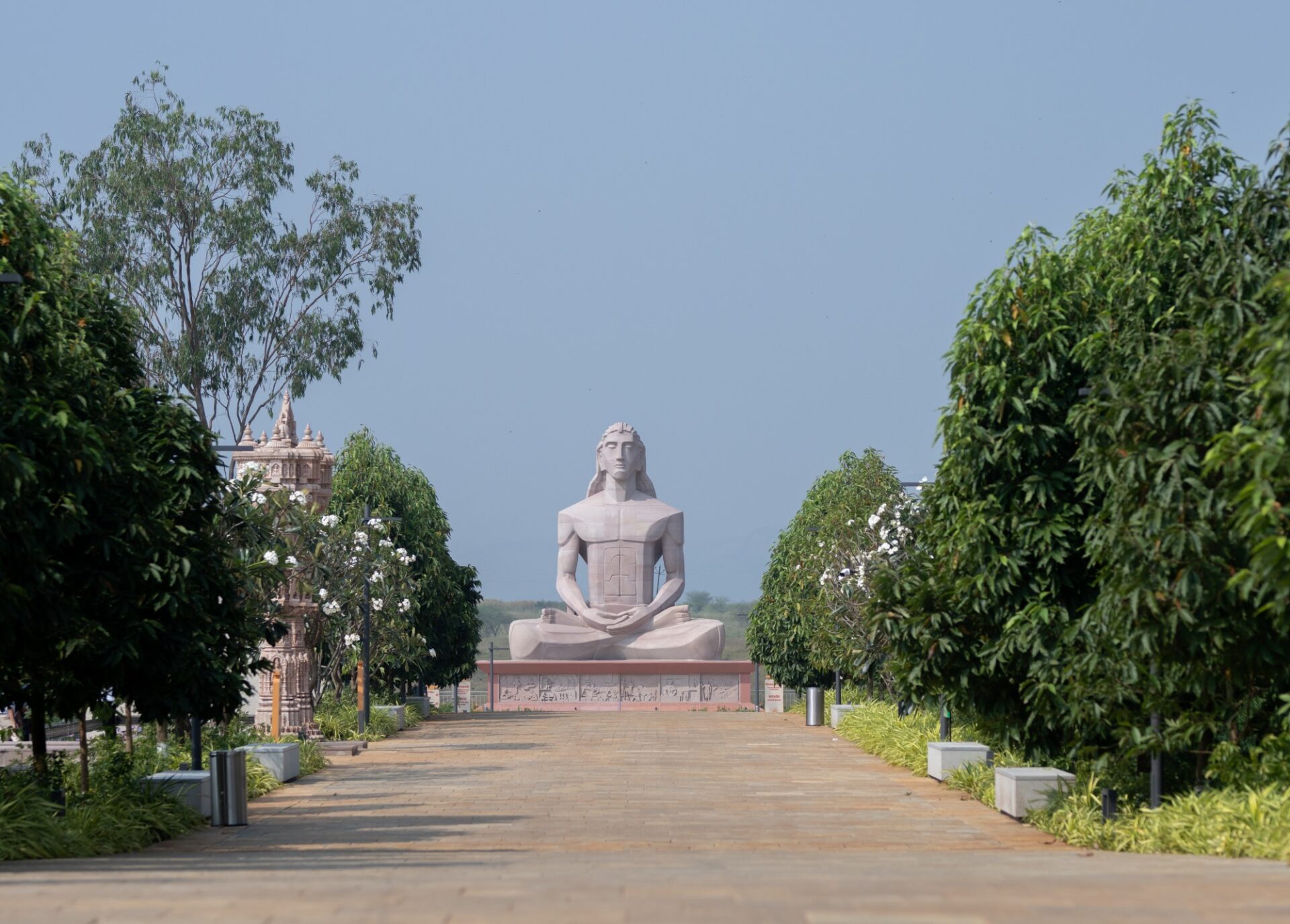 Dominating the landscape is a 43-foot marble statue of Rishabhdev, the first Jain Tirthankara, sculpted in an unexpected Art Deco style. Its clean geometry and restrained detailing reinforce one of the museum’s central ideas, those ancient narratives need not remain visually tied to the past but can be interpreted through contemporary design languages while retaining their philosophical depth.
Perhaps the museum’s most contemplative space is the Plaza of Equanimity. Here, a pristine white Sarvatobhadra statue stands at the centre of a reflective pool, surrounded by temple pillars and flowering trees. Inspired by the traditional Chaturmukh temple yet intentionally free of enclosing walls or sectarian symbolism, the space shifts the emphasis from monumentality to introspection. Architecture quietly encourages visitors to slow down, observe and reflect.
 The museum concludes with an installation titled ‘Letting It Go’. Visitors select emotions or burdens they wish to release on an interactive screen before watching them transform into a colourful virtual boat that slowly drifts away beneath their feet. It is a surprisingly simple ending to a journey filled with monumental architecture, reminding visitors that the museum’s ultimate ambition is not merely to communicate history but to inspire personal reflection.
 Abhay Prabhavana succeeds because it understands that heritage today is not preserved by displaying objects alone. It is sustained by creating meaningful encounters between the past and the present. Through architecture, technology and carefully choreographed storytelling, the museum demonstrates how an ancient philosophy can continue to speak to contemporary audiences without losing its authenticity.