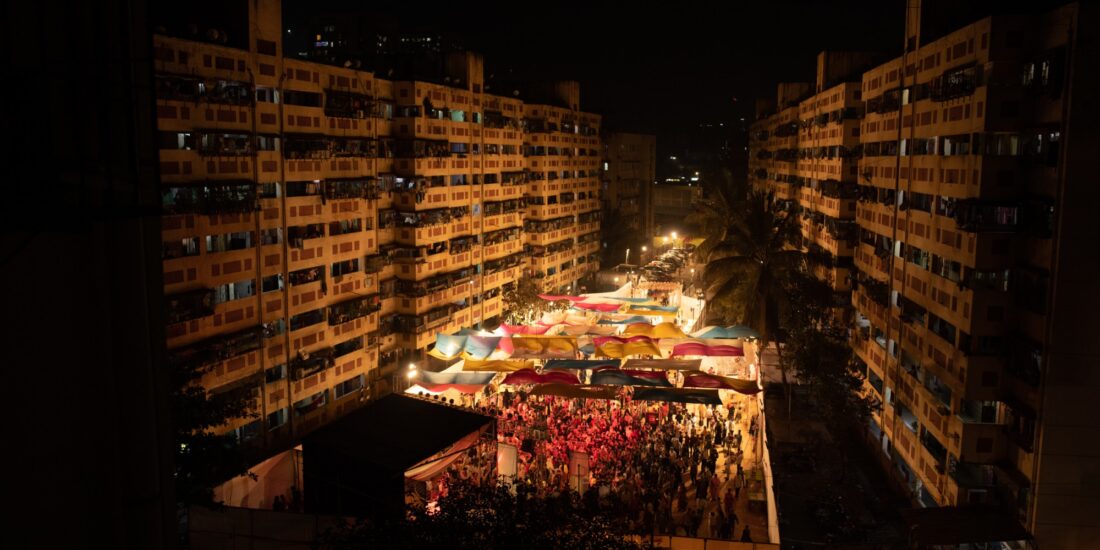

Puran Kumar of Studio PKA on Designing His Own Home in Mumbai
What does it mean to live in a city where space is scarce and population density overwhelming, and the apartment has become a synonym for compromise. In Mumbai, domestic life is shaped by narrow plans, sealed windows and acceptance of generic finishes as the price of urban living. Against this backdrop, the home of the principal architect of Studio PKA, Puran Kumar, in Worli proposes a different possibility. Designed for his family and as an extension of his architectural thinking, 9PM is not a showcase of trends but a lived manifesto shaped by memory, habit and ritual. Perched above trees with a distant view of the Arabian Sea, the apartment occupies a rare threshold between the urban and the intimate, where city rhythms are filtered through foliage, music and evening conversations. By Arya Nair
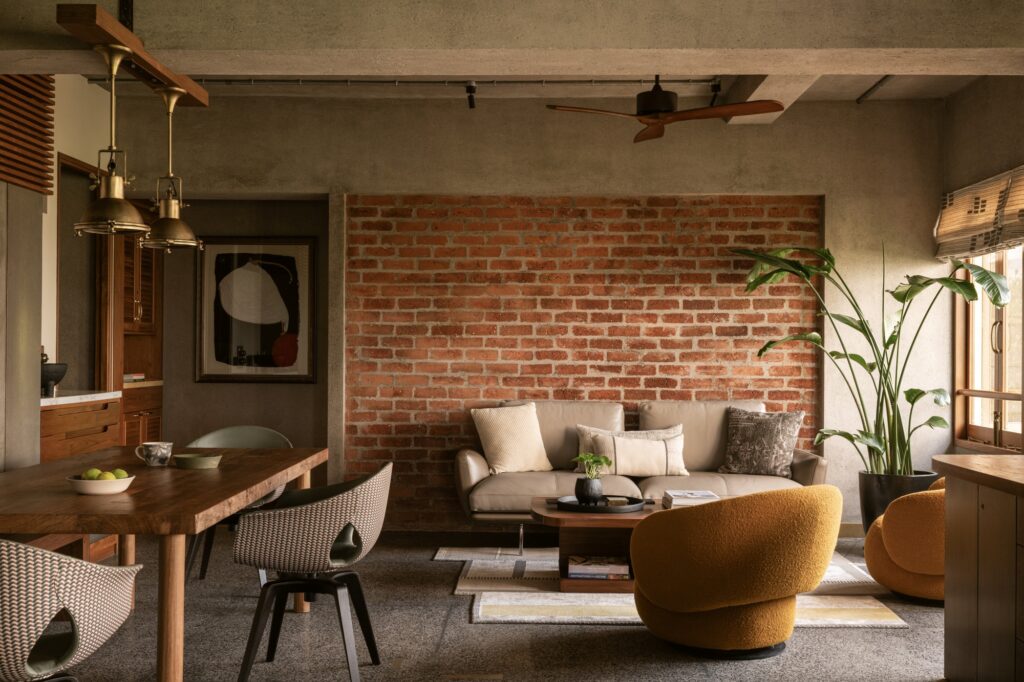 Puran Kumar is the principal architect of Studio PKA, a practice known for its tactile material language and resistance to generic urban finishes. Over the last many years, his work has consistently returned to a core set of values that privilege natural textures, honest construction and spatial experiences over surface driven spectacle. In 9PM, these values find their most personal expression. The house was formed by merging two apartments into a single continuous plan organised around a central living and dining core.
 The name of the house is rooted both in circumstance and in culture. Evenings are when the family gathers, friends arrive and music, conversation and work intermingle across the dining table, the bar and the den. Rather than separating functions into rigid rooms, the house allows life to unfold through a sequence of loosely connected zones, encouraging movement and interaction without hierarchy.
 Designing one’s own home is often described as the most difficult commission an architect can undertake. It demands the reconciliation of professional ideals with domestic realities, and personal vision with collective life. For Kumar, 9PM becomes a rare opportunity to test the balance between experimentation and comfort, between architectural authorship and everyday use.
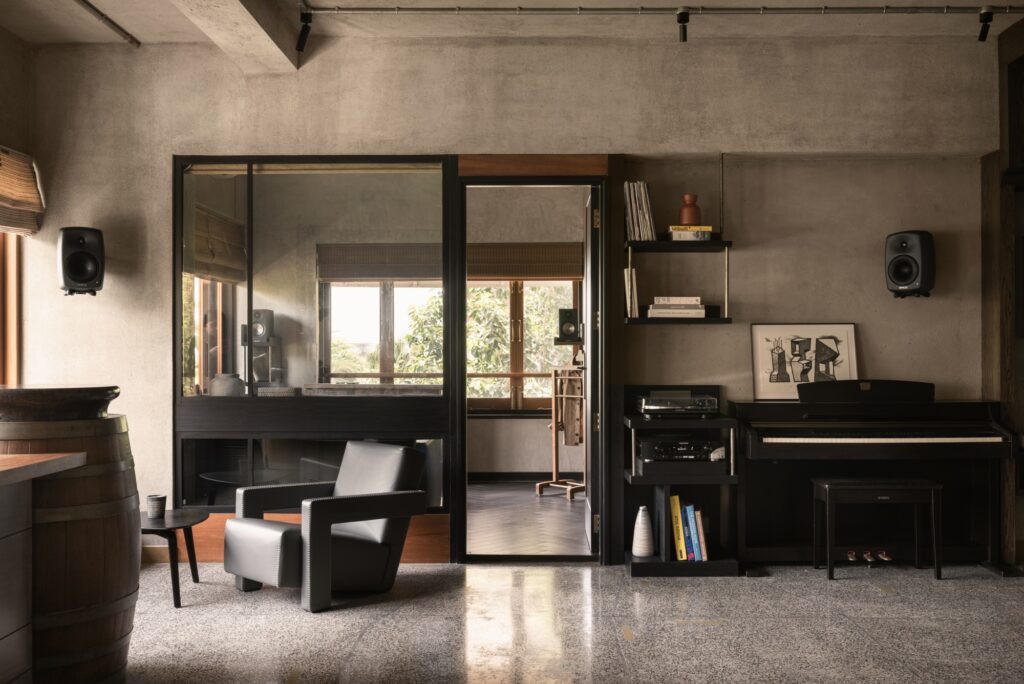 It is a house that does not perform for the camera alone but reveals itself gradually through occupation, through the way a chair turns toward a window or a table gathers people around it after sunset.
 In the following conversation, Puran Kumar reflects on the process of designing for himself and his family, the distinction between day spaces and night spaces, and the values that continue to shape his work. Speaking as both architect and inhabitant, he traces how material, memory and movement come together in a home that is at once deeply personal and quietly instructive.
SCALE: This happens to be your own home. Could you begin by describing its context and setting?
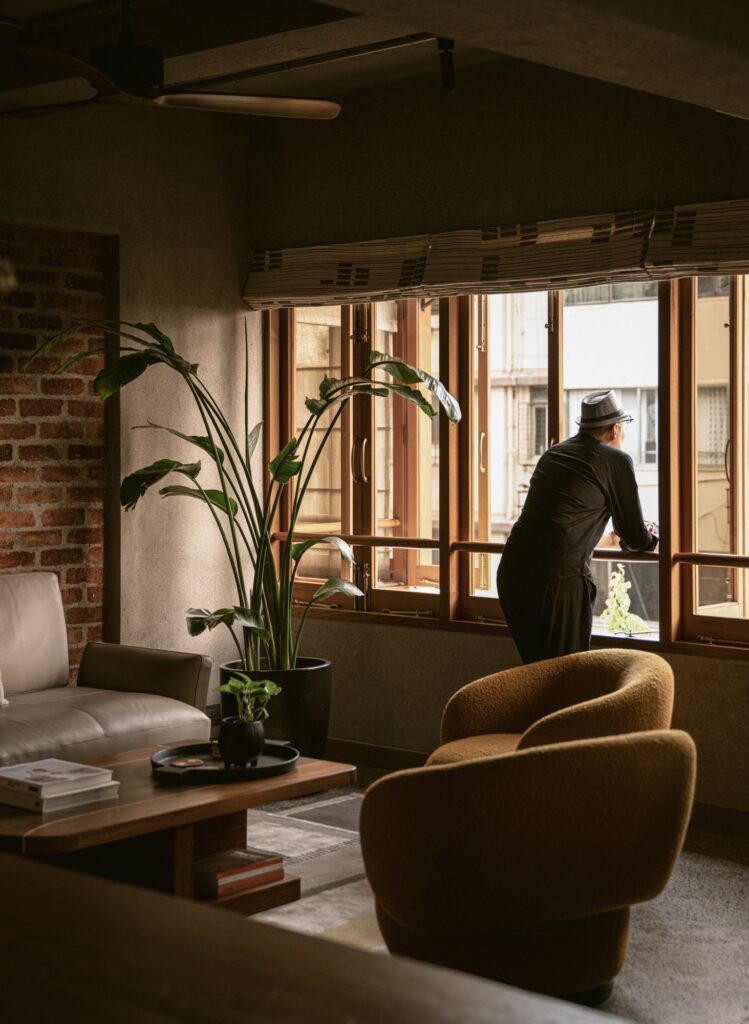
Puran Kumar: This is our own residence in Bombay, located in Worli. It has a sea facing orientation and a beautiful green surround. What makes it special is the tree canopy that wraps around the apartment. Despite being in the middle of the city and surrounded by high rises, it feels like a small cocoon of greenery. The apartment is on the third floor, so you are literally sitting at the level of the trees. You still get a distant view of the sea, although since the coastal road came in, the shoreline has shifted slightly. But the ambient feel remains that of being suspended in a green pocket above the city.
 SCALE: The house was created by merging two apartments. How did that influence the planning?
Puran Kumar: Originally, this was a 1,000 square foot apartment. We acquired the adjacent 1,000 square foot unit a few years later and merged the two. We started from scratch and reimagined it as a four bedroom home. The key idea was to place the living and dining spaces at the core of the house. From this central point, the four quadrants of the home emerge, the main bedroom, two additional bedrooms and the den.
The dining space becomes the epicentre of the plan. All movement converges into the day spaces, the living, bar, music area and dining. It creates a very natural flow where social life happens at the centre and private spaces radiate outward.
 SCALE: The social spaces seem layered with different activities such as bar, music, dining and den. Was that intentional?
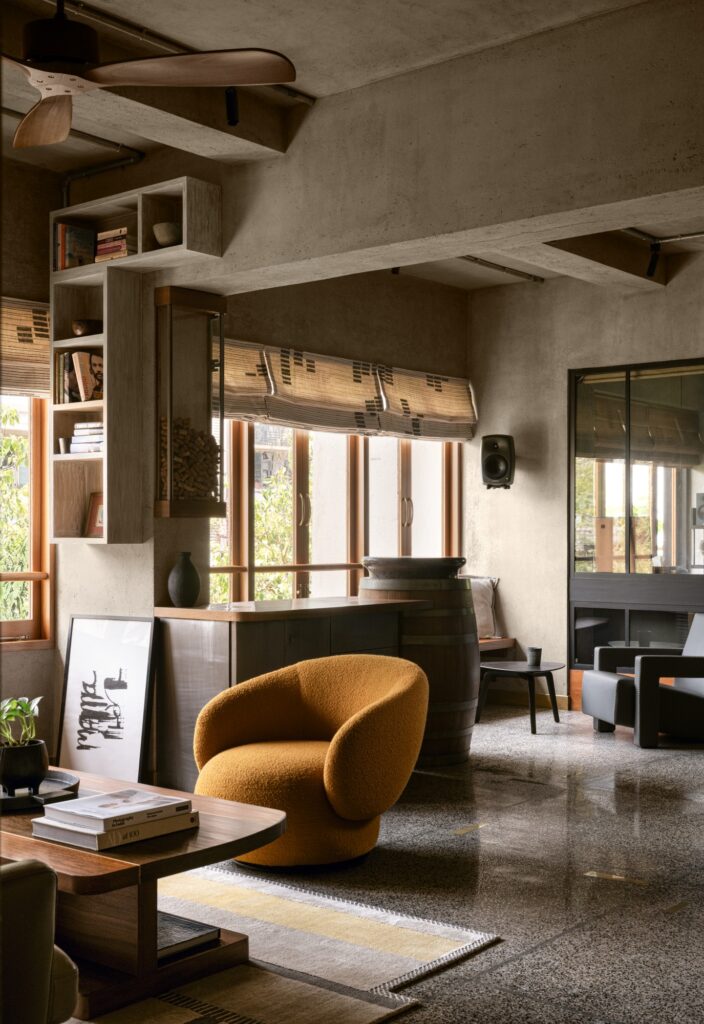
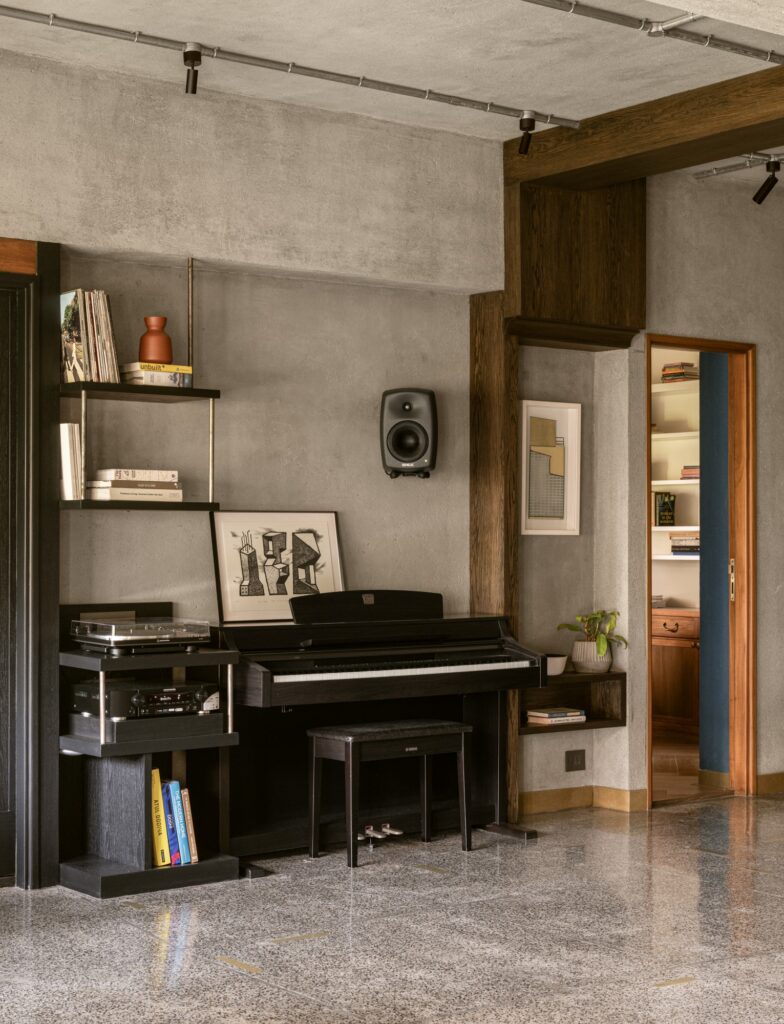
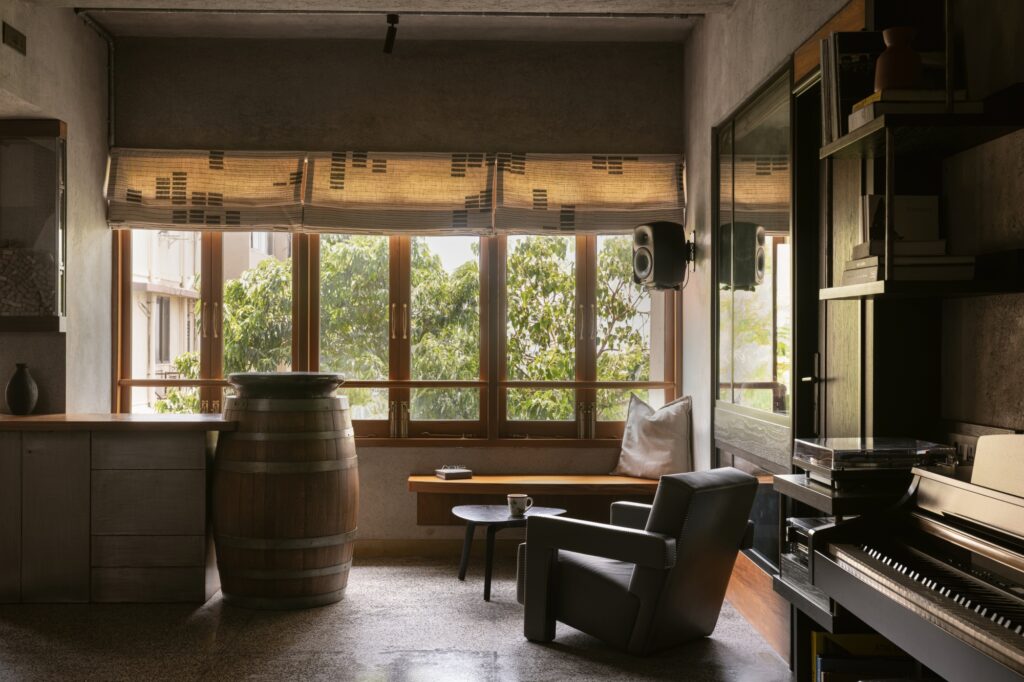
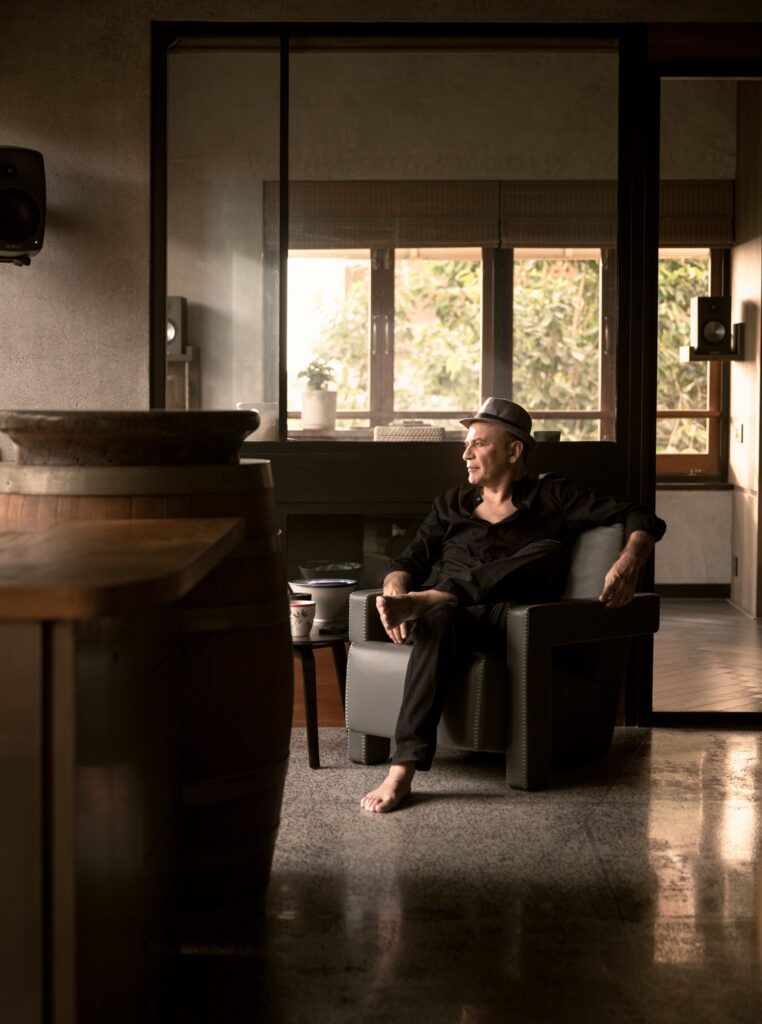
Puran Kumar: Yes, very much so. The day spaces contain the living area, the bar and the music station. The barrel and counter form the bar. The turntable, amplifiers, piano and speakers create a dedicated music corner. When friends come over, this becomes the hangout zone.
The dining table also becomes a community workspace where everyone brings their laptops and gathers together. As a family of four, when we are together, this is where we spend most of our time. After that, everyone retreats to their own personal spaces. The den is more my personal zone, but it also becomes a family television lounge.
 SCALE: One of the most unusual moves is the balcony. Could you talk about that decision?
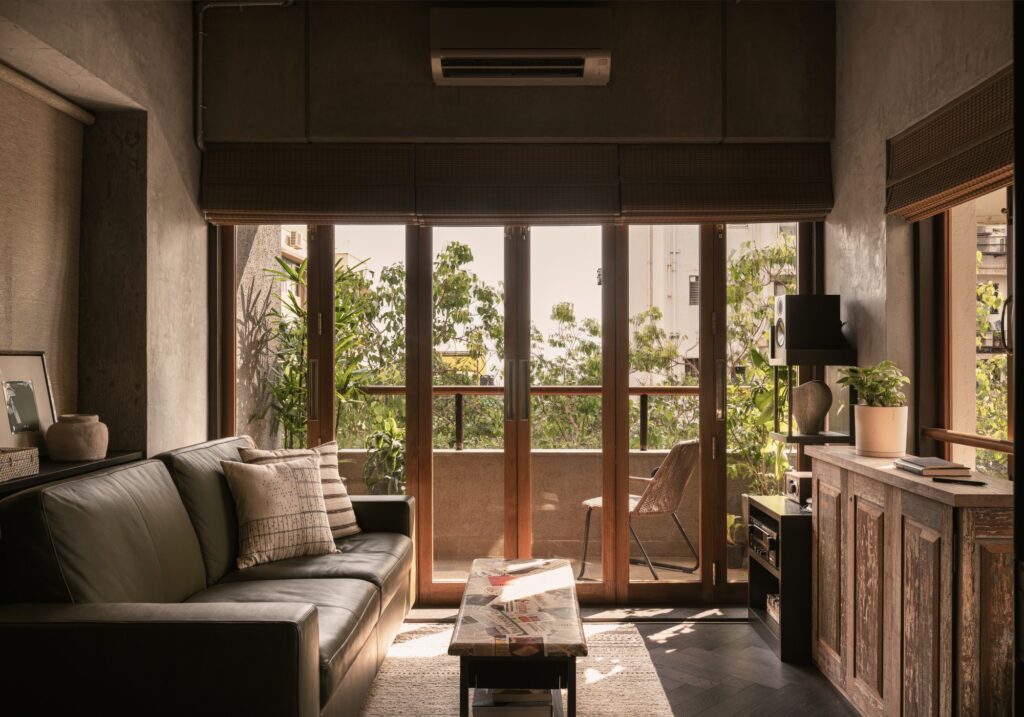
Puran Kumar:The balcony was earlier enclosed within a bedroom. I may be the only foolish architect who decided to give up the enclosed area and reclaim it as a balcony. We pulled it out from the bedroom and turned it into an outdoor space again. It now looks toward the sea and the trees, and in the mornings you hear birds. That outdoor connection is invaluable in a city apartment.
 SCALE: There seems to be a clear contrast between day spaces and night spaces. Was this deliberate?
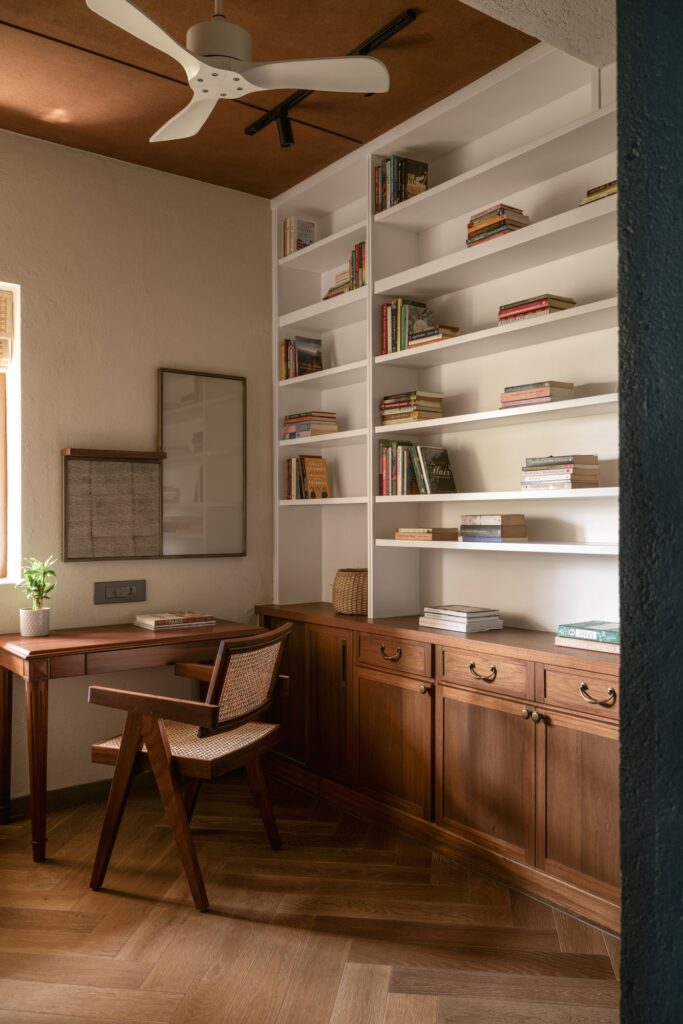
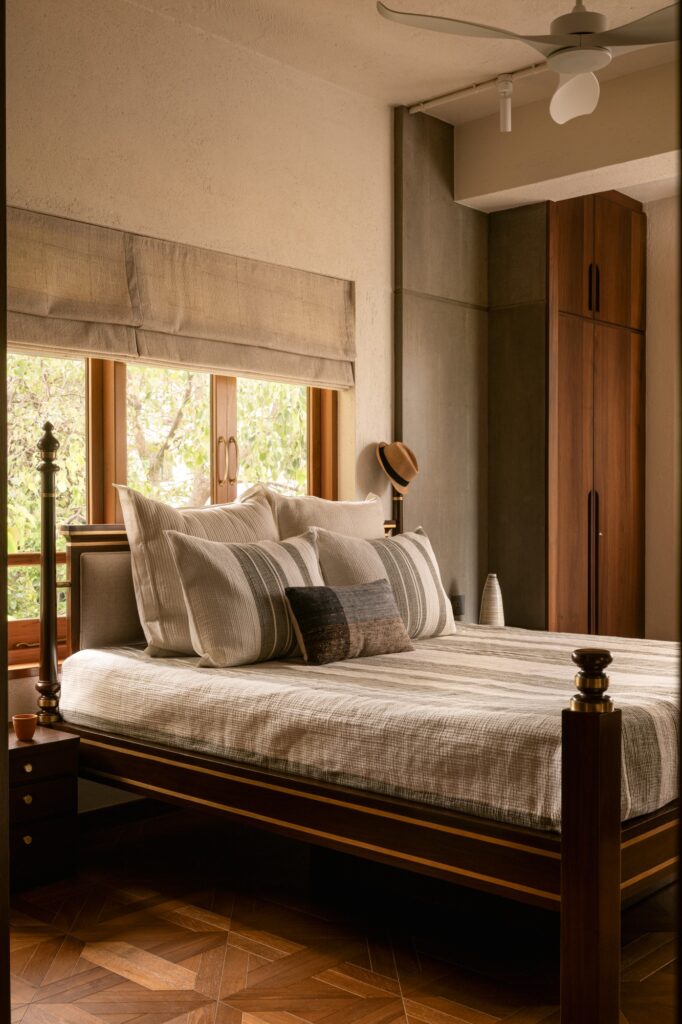
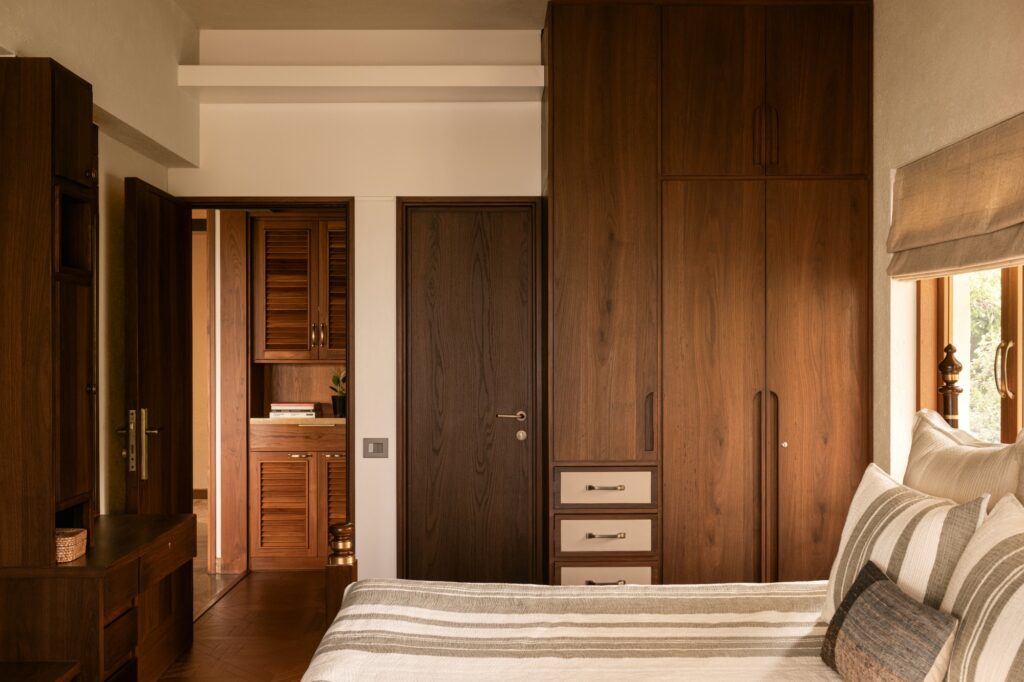
Puran Kumar: Yes, this was completely deliberate. The common areas are more rustic and aligned with my architectural personality. The bedrooms are softer and more traditional.
Private spaces need intimacy and tenderness. They are not meant for guests. The day spaces have more freedom for architectural expression, whereas the night spaces respond more to the family’s personality. So within the house, there are two treatments, one for collective life and one for personal life.
SCALE: Music, books and art seem embedded into the architecture itself. Do you see form and function as inseparable?
Puran Kumar:In an apartment, the form is largely given. The real task is to make its expression follow function.
For instance, there is a motorised television unit that rises only when needed because there is a sea view behind it and we do not want to block that view. Sliding doors, depths of spaces and alignments all emerge from how the house is used.
For me, form follows function completely. The function crafts the space and the form follows naturally.
 SCALE: As an architect with decades of experience, what part of your earlier design thinking is visible here, and what have you consciously rejected?
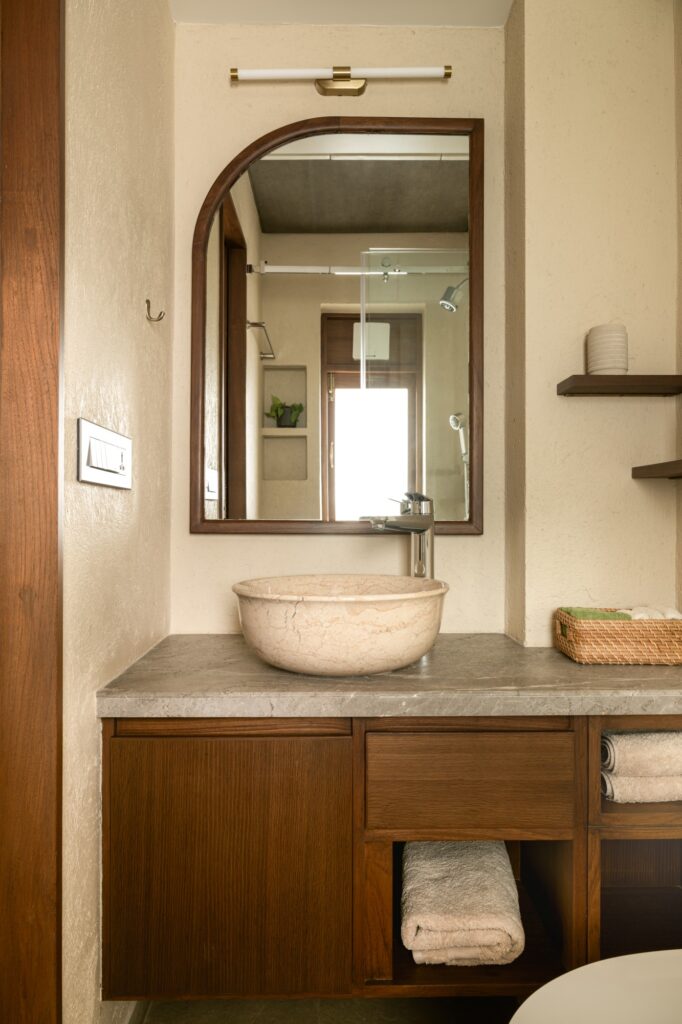
Puran Kumar:I have always respected natural materials and vernacular textures, and that continues here.
What I have rejected is the typical Mumbai apartment language. I do not subscribe to Italian marble floors, painted walls and false ceilings with concealed lighting. You will not find marble or granite here, except for quartz in the kitchen. The windows are wooden, which people rarely use in Bombay anymore. I wanted the tactile experience of opening and closing real windows.
 SCALE: Should an architect’s home represent their best work or their most honest work?
Puran Kumar: It should represent their most honest work. Let us say among the most honest works. There is no pretending here. No faking. It is what it is, in its full expression.
SCALE: Where did you draw the line between experimentation and comfort?
Puran Kumar: Experimentation is everywhere, in the metal sheets, the bar and the cork installation made from wine bottles collected over many years. Those corks carry memories of the house.
At the same time, comfort was never compromised. There are window ledges where you can lie down with a book and music. There are very comfortable chairs where you can sit with a cup of coffee and simply exist in the space.
Experimentation becomes easier when you design for yourself. Clients do not always allow you that freedom.
 SCALE: What is your favourite corner of the house?
Puran Kumar: I have many. The den is one. The balcony is another. The dining area is also special. I keep discovering new corners, so I cannot choose just one.
SCALE: Finally, is black your favourite colour?
Puran Kumar: Just short of that. From the black family, I would say charcoal.
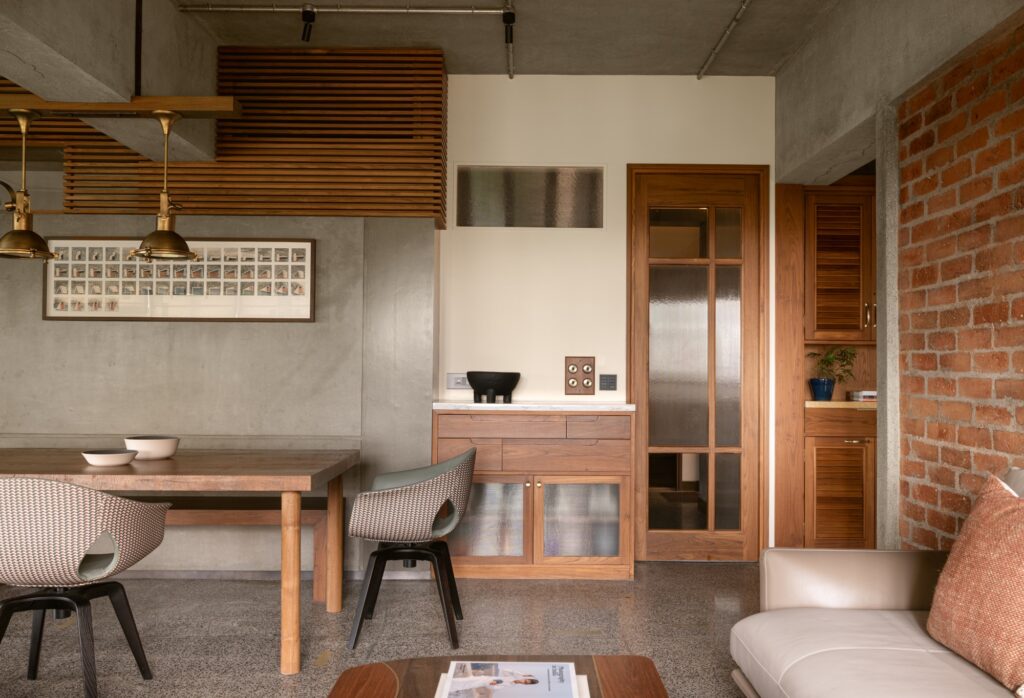 To design one’s own home is to live inside one’s decisions. Every material choice becomes a daily encounter and every spatial idea is tested not by clients or juries but by habit, fatigue, celebration and silence. In 9PM, architecture is no longer a finished object but a continuous negotiation between intention and use. The terrazzo floor is walked across in the morning, the balcony is reclaimed by birds before people, and the dining table becomes an office, stage and gathering ground by night. What might read as resistance to convention on paper becomes, in practice, a form of accountability.
This is perhaps where the project’s real significance lies. Not in its plan or palette alone, but in its refusal to separate architectural thinking from domestic life. Here, authorship is inseparable from inhabitation.
As Puran Kumar reflects, “An architect’s home should represent their most honest work. There is no pretending here. No faking. It is what it is, in its full expression.” In a city where apartments are often shaped by default solutions, 9PM suggests another possibility, that a home can be both a place of living and a site of architectural conscience.
All Images Courtesy PKA