
Art Basel Qatar: Noah Horowitz on Why Doha Matters Now
When Art Basel announced Doha as the newest city in its global network, the move signalled more than expansion. While the decision marked a decisive recognition of the MENASA region as a powerful cultural producer, and not simply a market, the final figures and views from art critics confirmed that the inaugural edition had already begun to reposition Doha as a serious node in the global art circuit.
In this exclusive conversation with SCALE, Art Basel CEO Noah Horowitz reflects on why Qatar became the site of this new chapter, how the Doha edition differs from other fairs, and what long-term role it will play in reshaping the global art ecosystem. By Sindhu Nair
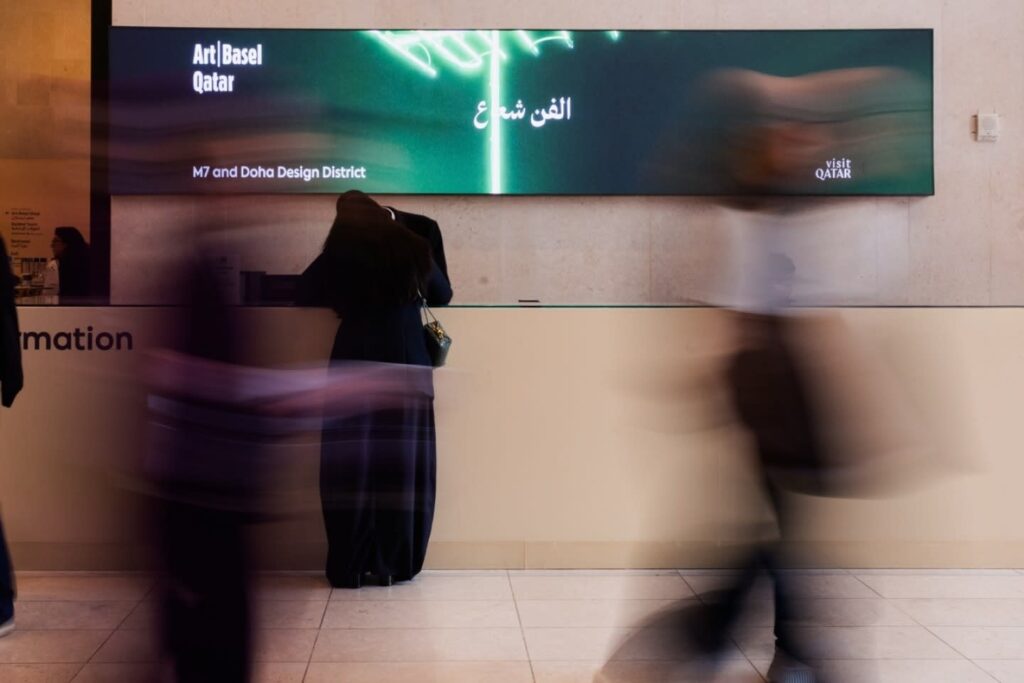
Pic Courtesy @Art Basel
If the curatorial vision emphasised artists, context, and regional narratives, the final figures reveal just how strongly the inaugural edition resonated with the people of the country and the artistic community. Held across M7 and Doha Design District with projects unfolding throughout Msheireb, Art Basel Qatar welcomed over 17,000 visitors across VIP and public days, alongside thousands more who attended Special Projects across the city.
The fair brought together 87 galleries from 31 countries and territories, including 16 first-time Art Basel exhibitors, while nearly half of private collectors and patrons came from the MENASA region. Participation from Europe, Asia, Africa, and the Americas underscored the event’s global reach.
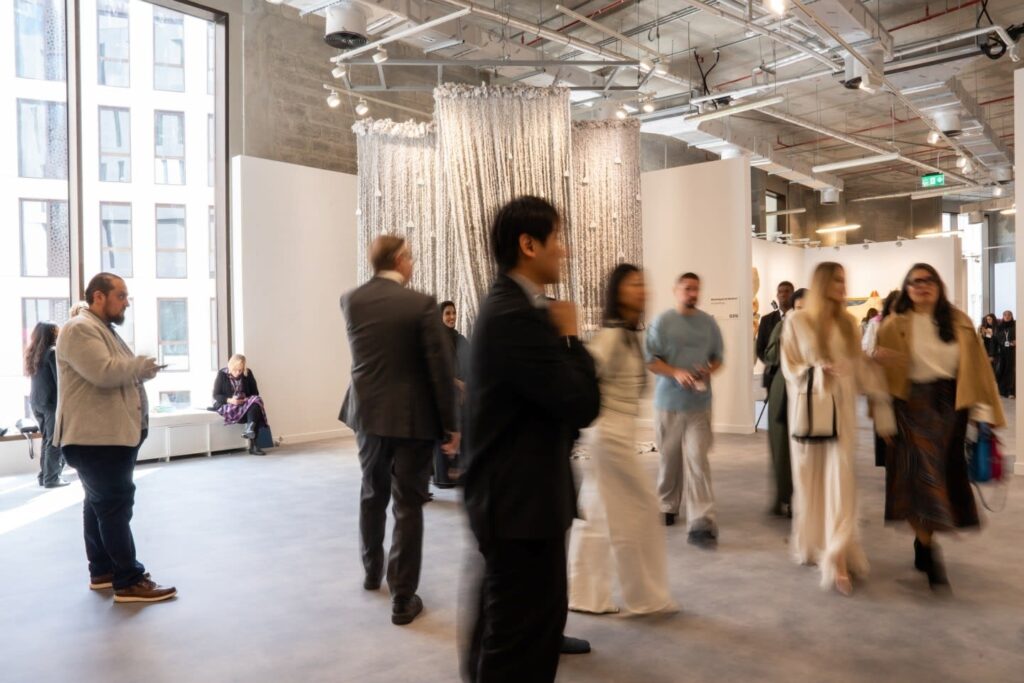
Al Markhiya Gallery. Pic Courtesy Art Basel
Institutional engagement was equally significant: representatives from more than 85 museums and foundations worldwide attended, positioning Doha as a major site for international cultural exchange and discovery.
According to official Art Basel information, demand was particularly pronounced for artists from the Middle East, North Africa, South Asia, and the Global South, with galleries citing focused attention on solo presentations and significant works by both established and emerging voices. The breadth of acquisition interest reflected the strength of the region’s collector base and its active engagement with global artistic practices.
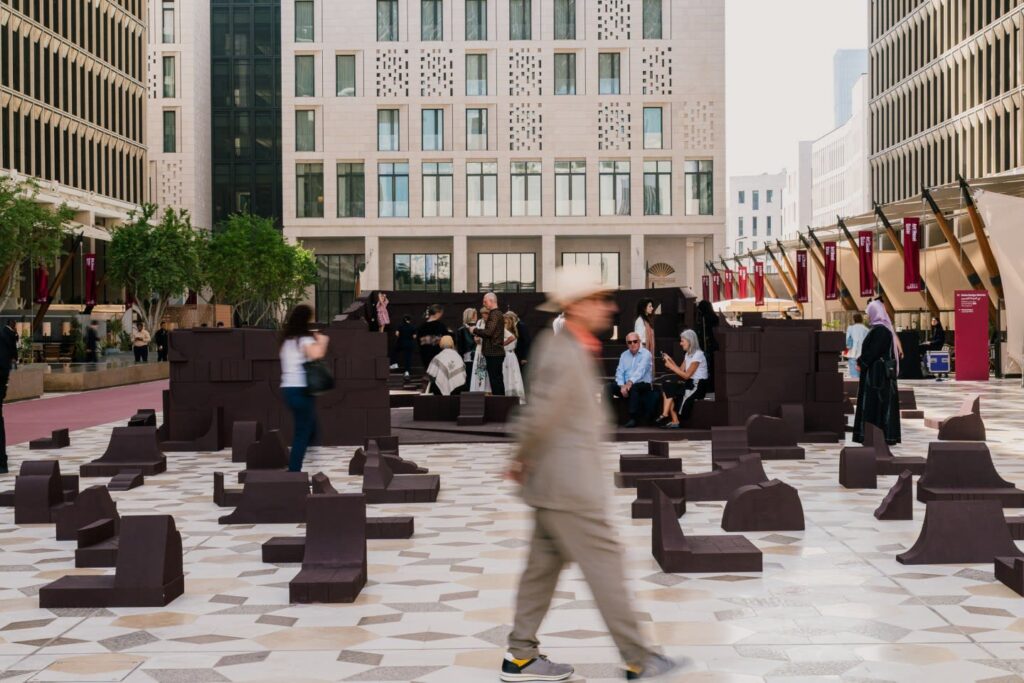
Installations across Msheireb. Pic Courtesy Art Basel
Public programming also drew unprecedented interest. The Conversations series at M7 welcomed nearly 2,500 attendees — the highest average attendance per session in the program’s history.
A New Axis in the Global Art Landscape
Pic Courtesy Art Basel
Taken together, the inaugural edition’s scale, attendance, and institutional participation suggest that Art Basel Qatar is not merely another stop on the fair circuit, but a platform capable of reshaping cultural exchange between regions. Demand for artists from the Middle East, North Africa, South Asia, and the Global South was particularly strong, with galleries reporting sustained engagement from both regional and international collectors.
Rather than replicating the models of Basel, Miami Beach, or Hong Kong, the Doha edition foregrounded context, collaboration, and artist-led narratives, aligning closely with Qatar’s broader cultural ambitions.
If this first edition is any indication, Art Basel Qatar is poised to become a long-term node in the global art ecosystem, one that connects institutions, collectors, artists, and audiences across continents while remaining rooted in the specificities of place.
Against this backdrop, Noah Horowitz’s reflections offer insight into both the strategy behind the fair and its future trajectory.
 Scale: Why was it imperative for Art Basel to establish a presence in Qatar at this moment? In doing so, what gap does this edition fill in the global art ecosystem?
Noah Horowitz: Art Basel Qatar came from a convergence of timing, place, and ambition. We’ve witnessed extraordinary cultural investment in Qatar over the past decade, in institutions and infrastructure and in education, artistic production, and international exchange. At the same time, the global art ecosystem has been evolving rapidly, with artists, galleries, and audiences seeking to make connections through platforms that are genuinely global rather than concentrated in a few traditional centers.
This edition creates a timely new connective platform between the MENASA region and the wider international art world that we hope will help grow the market in Qatar and across the Gulf more widely.
SCALE: How does Art Basel Qatar reframe the Middle East, not just as a market, but as a producer of critical artistic discourse and cultural narratives?
Noah Horowitz: Art Basel always looks to put artists first. Appointing Wael Shawky, an artist, educator our first-ever Artistic Director to work in close partnership with Vincenzo de Bellis, Chief Artistic Officer and Global Director of Art Basel fairs, has given Art Basel Qatar an inherently and intentionally different framing. Wael has spoken about the possibility of an art fair that doesn’t separate the market from education but, rather, understands them as parts of the same ecosystem.
The curated selection of single-artist presentations is an essential expression of this possibility, and more than half of the artists presented this year are from the MENASA region.
SCALE: In terms of curatorial intent and regional engagement, what distinguishes Art Basel Qatar from the ones held in Miami Beach, and Hong Kong?
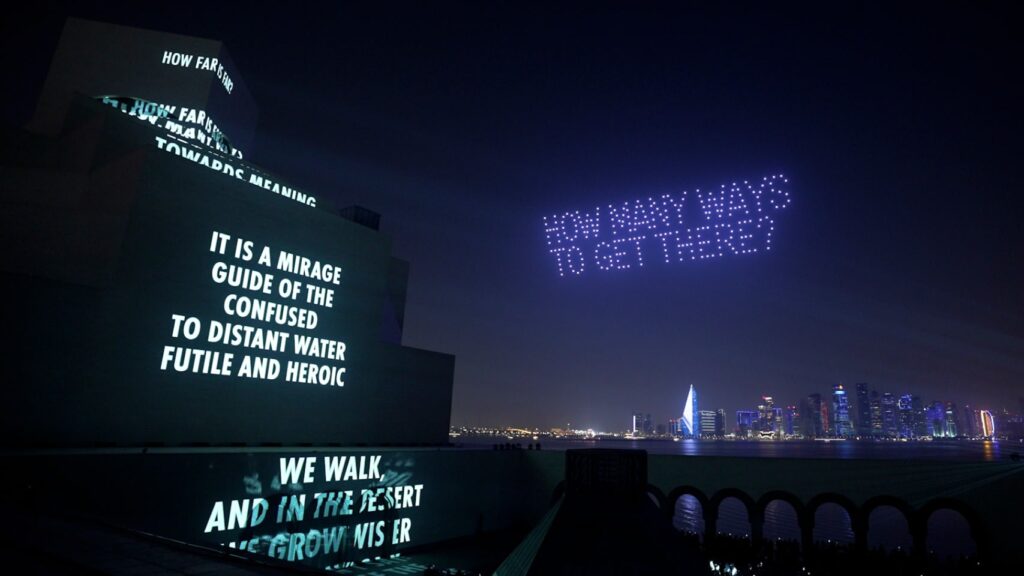
Work of Jenny Holzer at the Museum of Islamic Art. Pic Courtesy Art Basel
Noah Horowitz: Each edition of Art Basel only succeeds if it responds to its specific geographic context, and Art Basel Qatar is no exception. We take a long-term, partnership-based approach and aim to integrate deeply into the local cultural ecosystems in which we are present.
Here in Doha, the fair extends across M7 and Doha Design District, with 10 special projects by artists installed throughout Msheireb and a striking projection work by Jenny Holzer at the Museum of Islamic Art. The focus on solo presentations, and the integration of public and site-specific projects all encourage deeper, more deliberate engagement.
It’s a model that privileges depth over density, and context over speed, a kind of engagement we believe is increasingly essential for meaningful impact.
SCALE: Looking ahead, how do you see Art Basel Qatar shaping long-term artistic infrastructure, patronage, and cultural exchange in the region and beyond?
Pic Courtesy Art Basel
Noah Horowitz: The infrastructure and ecosystem in Doha and across Qatar are already well developed, which is a big part of why we are here. The time was right to bring our global platform into partnership with the artistic production and committed cultural investment we see in Qatar and across the MENASA region.
Over time, our role is to help connect this ecosystem more deeply to international networks of artists, institutions, and collectors, supporting sustainable patronage and long-term cultural exchange.
SCALE: With Wael Shawky appointed as curator, Art Basel Qatar signals a clear shift toward an artist-led curatorial vision. What does this change represent for Art Basel, and why was it important to begin this edition with an artist rather than a market-driven framework?
Noah Horowitz: Appointing Wael Shawky was very intentional, reflecting the esteem in which his creative leadership is held in the region and his practice’s focus on education, history, and context. His perspective has shaped the fair from the very beginning.
We recognize that the strongest, most sustainable markets are built on cultural credibility and artistic integrity, and conceiving the framework for this fair with Wael, Vincenzo de Bellis, and our Selection Committee has set the tone for what Art Basel Qatar is meant to be — thoughtful, rooted, and a model that puts artists and the city at the fore.
SCALE: On that topic, do you see Art Basel Qatar as a testing ground for new curatorial models within Art Basel, ones that may influence how future editions engage with place, context, and local knowledge?
Noah Horowitz: I wouldn’t describe any Art Basel fair as a testing ground, but it is imperative that we continue to innovate wherever we work, always in response to local context.
The model for Art Basel Qatar’s first edition is exactly this, a curated format that we developed collaboratively with our Qatari partners and that allowed us to stage a fair that worked for the city of Doha and the wider MENASA region.
We’re constantly listening, adapting, and recalibrating across all our fairs, and I am certain that the format and scale of Art Basel Qatar will continue to have a strong regional identity as it evolves over coming years.
All Images Courtesy Art Basel