Hokusai’s Great Wave Blooms Across Brussels in 700,000 Flowers
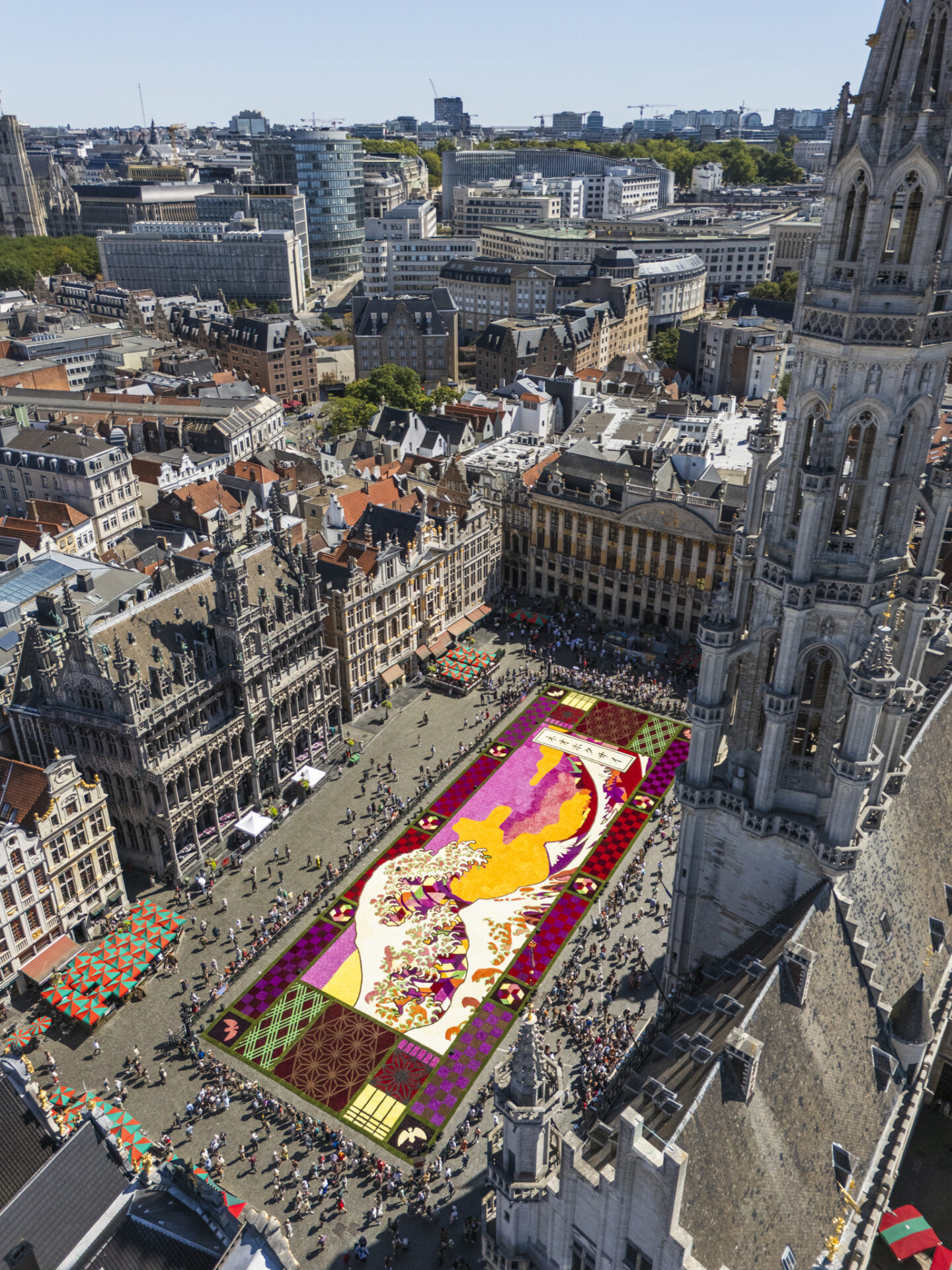
For four fleeting days, ending on August 16, 2026, Brussels’ historic Grand-Place becomes the canvas for an extraordinary burst of flowers in a reinterpretation of Hokusai’s “The Great Wave off Kanagawa”, transformed by Japanese artist Hiro Sugiyama into a 1,680-square-metre carpet of dahlias.
©FlowerCarpet_MasterShoot
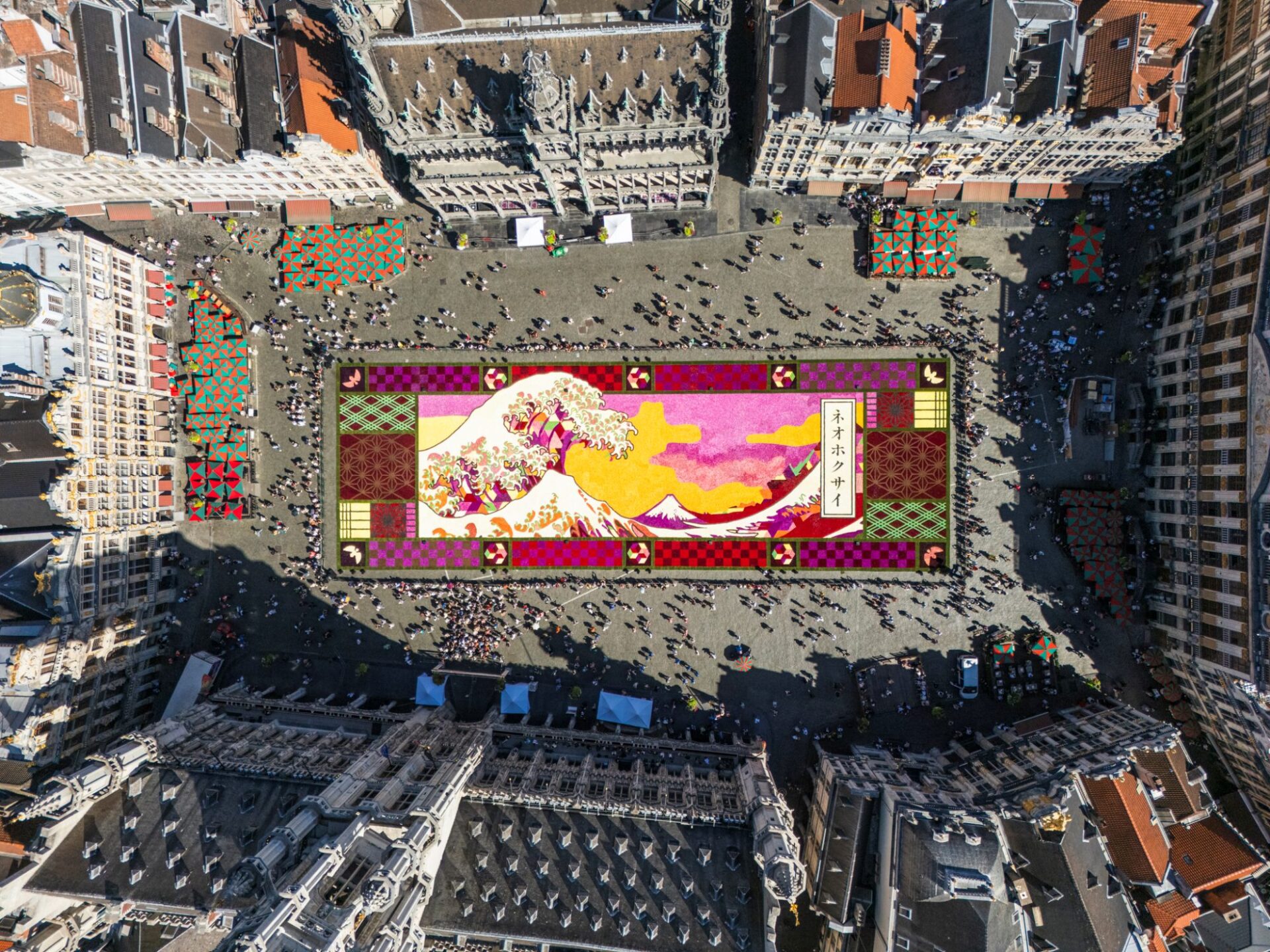
This August, one of the most recognisable images in art history has taken on an entirely new materiality at Brussels’ Grand-Place. Katsushika Hokusai’s “The Great Wave off Kanagawa” has been reimagined by contemporary Japanese artist Hiro Sugiyama as the Brussels Flower Carpet 2026, an enormous composition created from more than 700,000 flowers.
©FlowerCarpet_MasterShoot
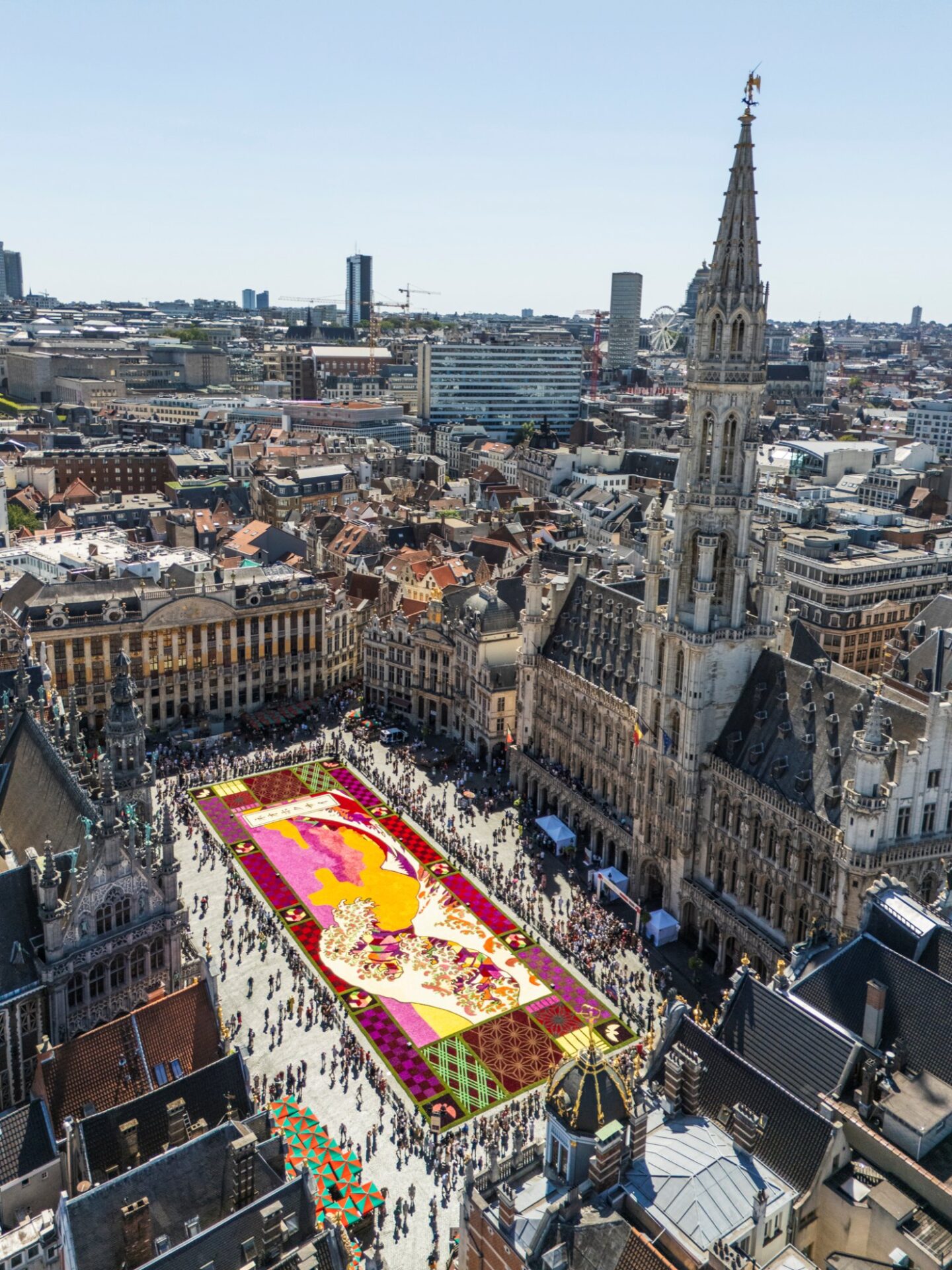
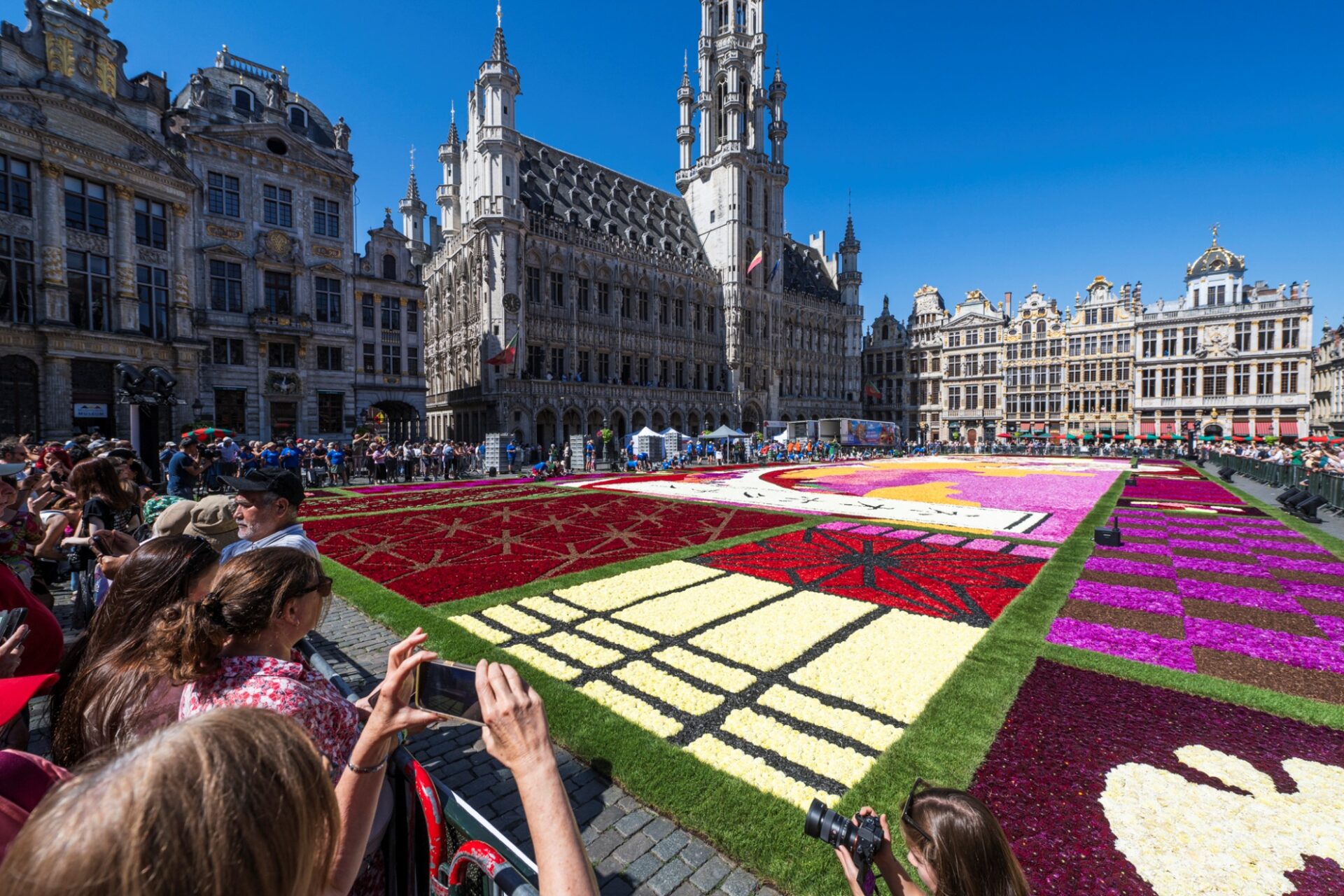
Spread across 1,680 square metres of the UNESCO-listed square, the work turns the ground itself into a canvas. Dahlias grown in Belgium and close to the Dutch border become the paint, while the ornate Gothic and Baroque architecture surrounding the Grand-Place becomes an unexpected frame for an image created nearly two centuries ago.
But this is not simply Hokusai enlarged and recreated in flowers.
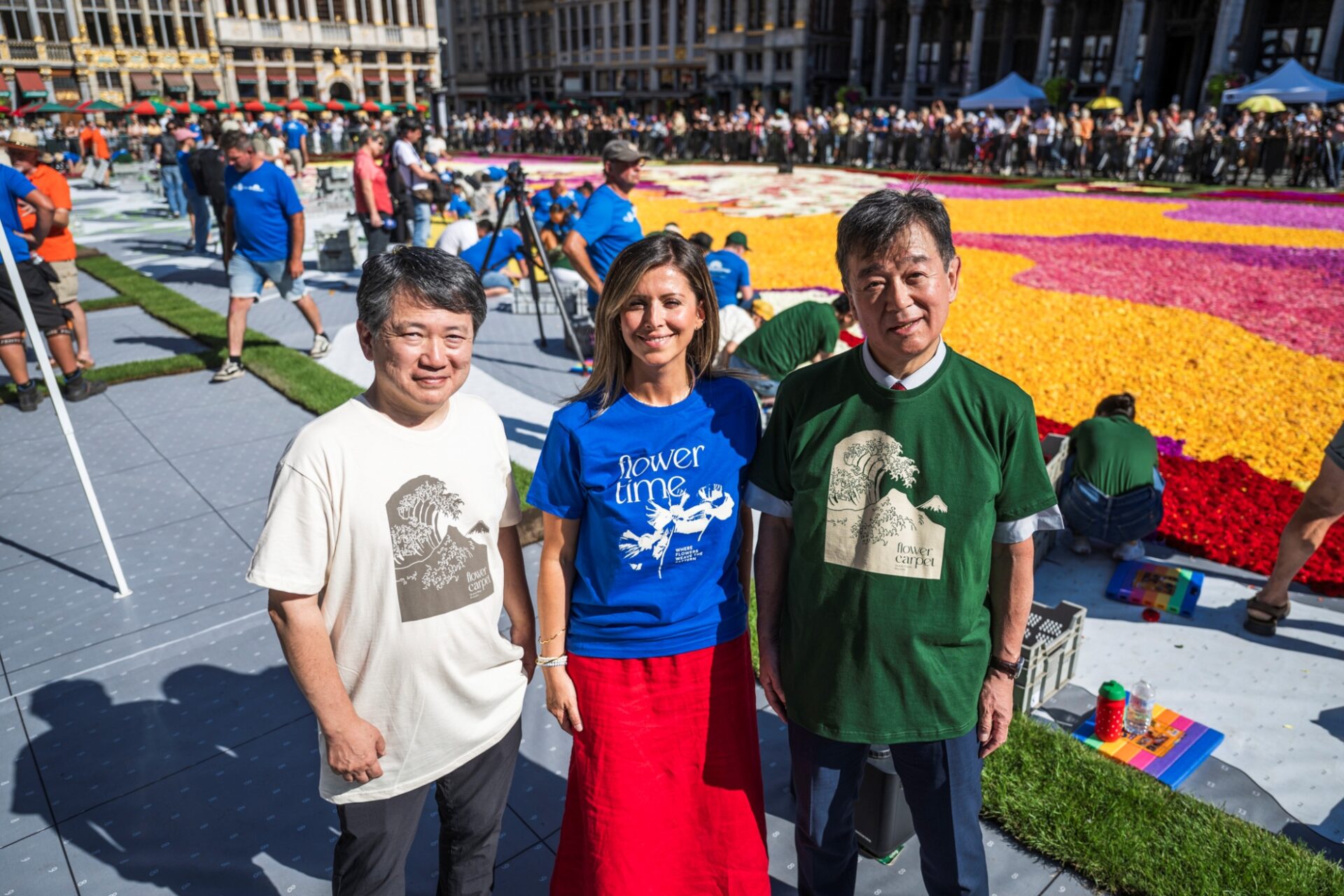
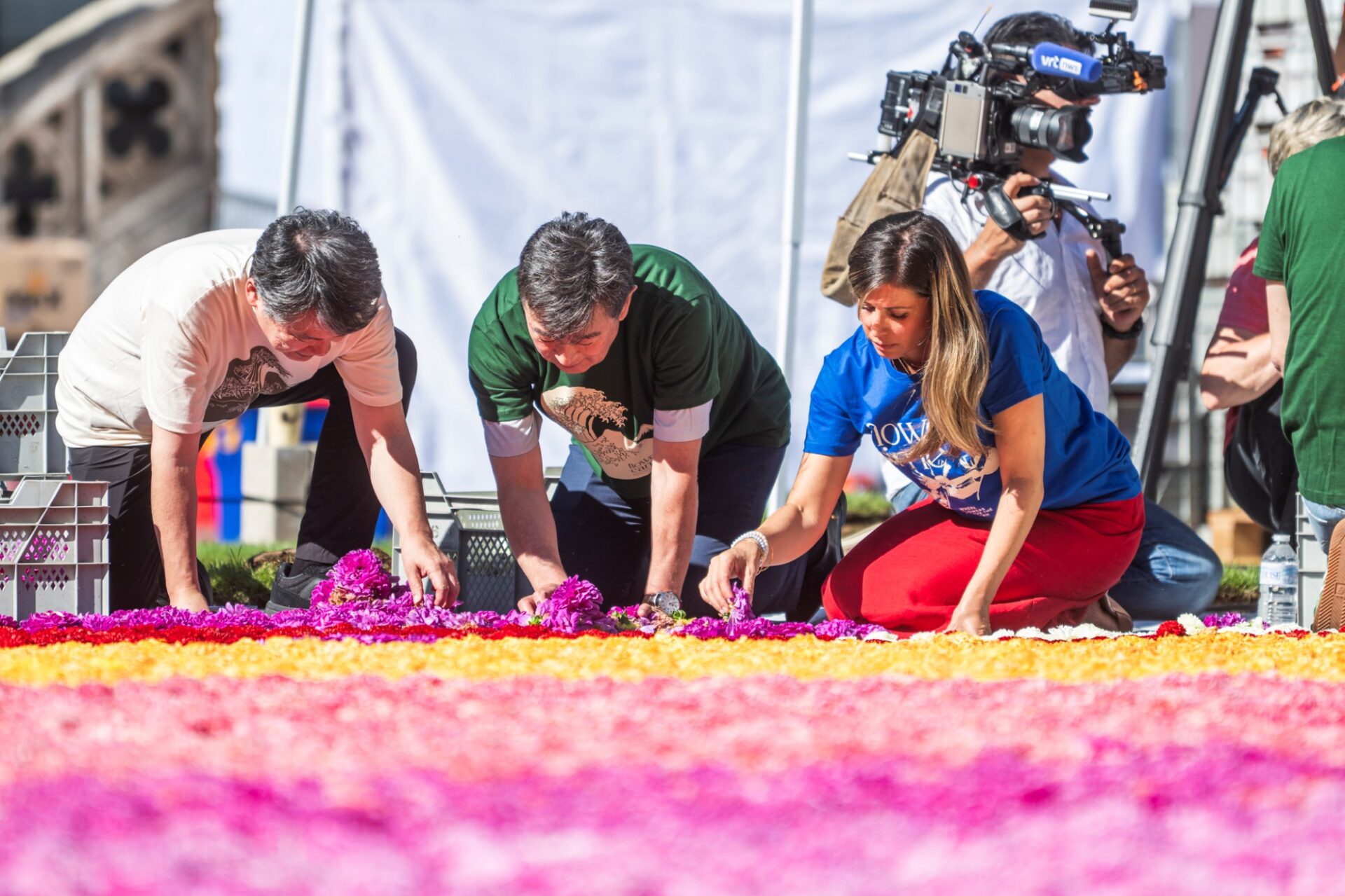
Hiro Sugiyama, artist / Nawal Ben Hamou, alderman / His Excellency Takeshi Osuga / ©FlowerCarpet_MasterShoot
The artist Hiro Sugiyama has taken the familiar vocabulary of The Great Wave, the curling water, Mount Fuji and the extraordinary sense of movement that made the original woodblock print an enduring image and reconstructed it through his own contemporary visual language.
Traditional Japanese motifs are combined with digital techniques, stronger compositions and rhythmic patterns. Sugiyama describes the work as an attempt to connect “the past and the future, the analogue and the digital, Japanese culture and contemporary art.”
It is an appropriate approach for an artist whose own practice has moved between these worlds. Sugiyama, an artist and lecturer at Kyoto University of the Arts, co-founded the creative collective Enlightenment and has worked across analogue painting and digital art before returning his focus to painting in 2010.
A Wave Travels Across Cultures
©FlowerCarpet_MasterShoot
The choice of Hokusai carries another significance.
The 2026 Flower Carpet commemorates “160 years of diplomatic relations and friendship between Belgium and Japan”, bringing Japan back to the Grand-Place ten years after an earlier collaboration. The partnership also draws on a shared tradition of floral art between the two countries.
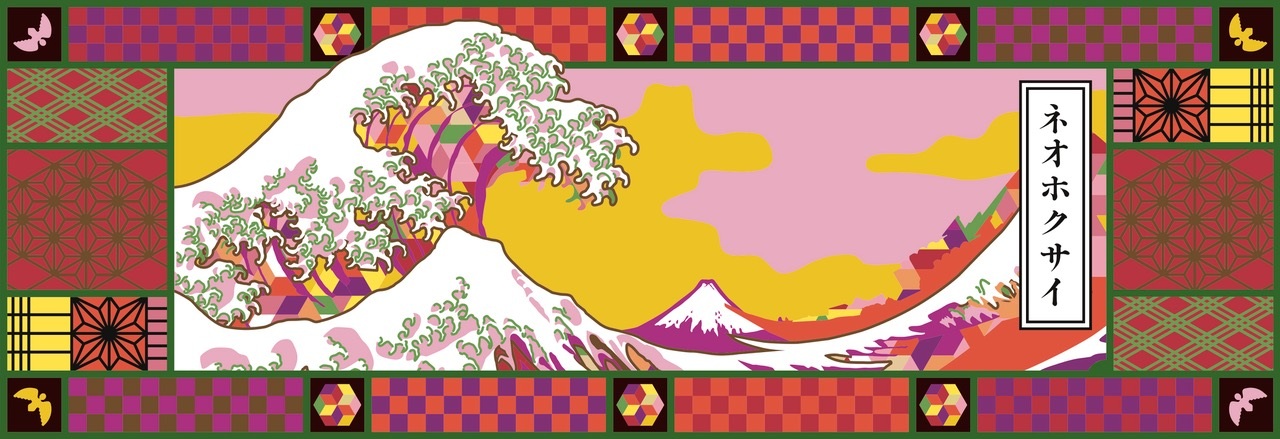
The final design
There is something fitting about choosing “The Great Wave for such an exchange. Created by Hokusai in the early 1830s as part of his celebrated “Thirty-Six Views of Mount Fuji” series, the image travelled far beyond Japan to become one of the most widely recognised works of Japanese art.
Now it travels again, this time not through a woodblock impression, but through flowers.
At Brussels’ Grand-Place, the transformation also changes how the image is experienced. What was originally intimate enough to be held in one’s hands becomes monumental. Instead of looking into Hokusai’s wave, visitors look down upon it from the surrounding buildings and viewpoints, seeing the composition stretch across one of Europe’s most celebrated public squares.
700,000 Flowers, Four Days
©FlowerCarpet_MasterShoot
Perhaps the most compelling part of the Flower Carpet is its impermanence.
The Brussels Flower Carpet takes over the Grand-Place every two years around the weekend of 15 August. However elaborate the preparations and however immense the finished work, the installation exists for just four days.
©FlowerCarpet_MasterShoot
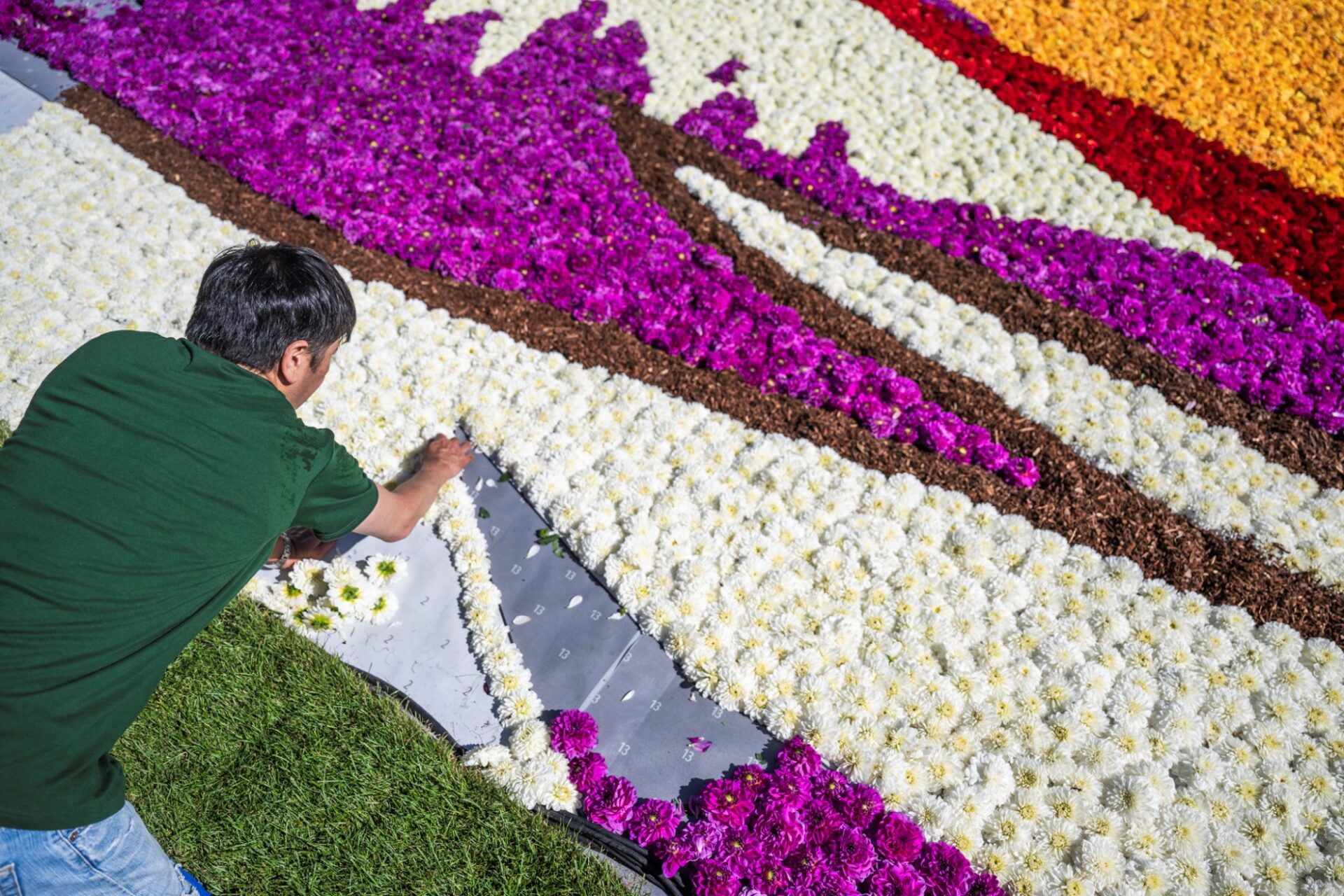
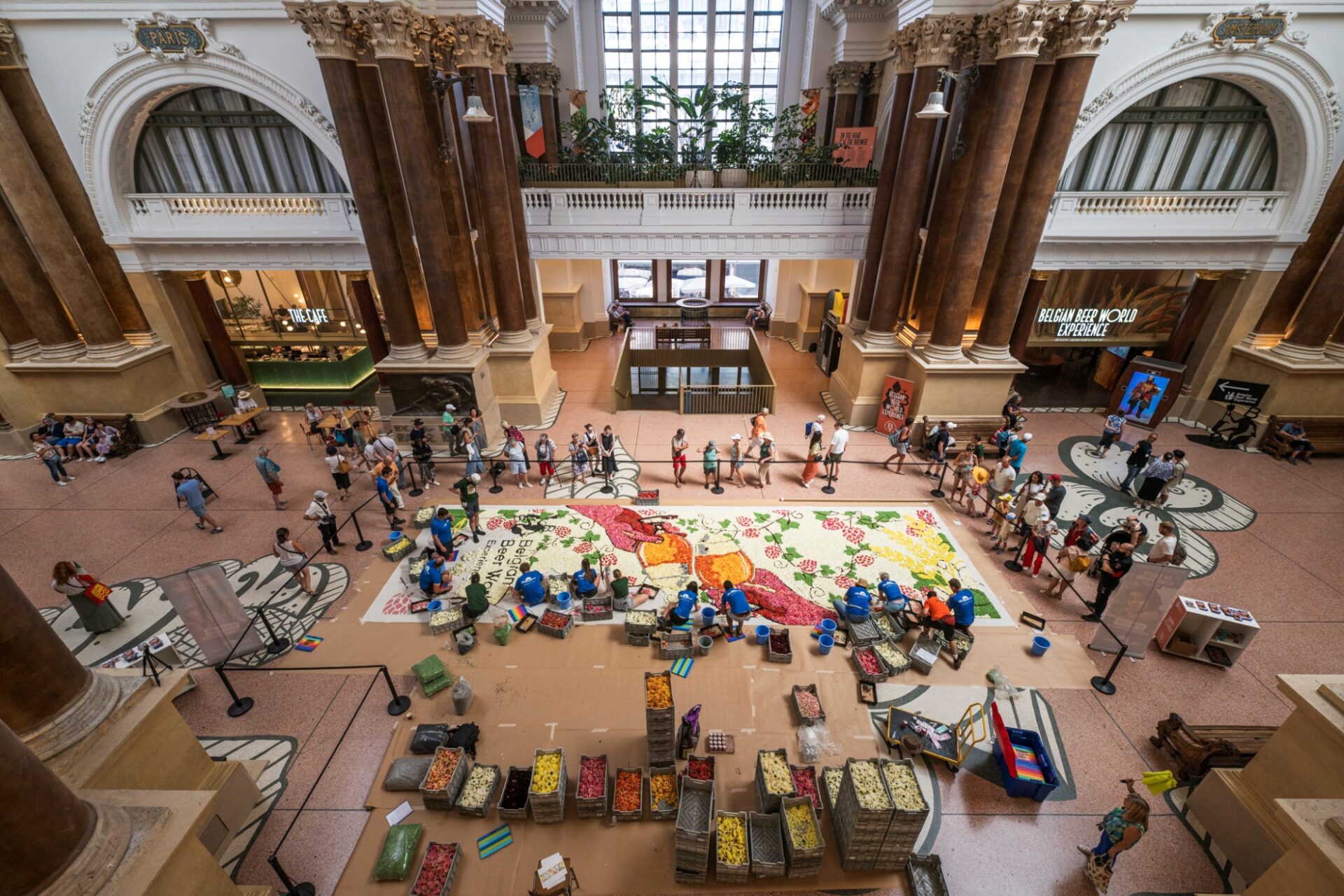
The dahlia remains at the heart of the 2026 edition, with more than 750,000 blooms covering nearly 1,300 square metres, around 80% of the carpet. This year, the floral experience also extends beyond the Grand-Place into the Bourse, where a second carpet inspired by hops and Belgium’s brewing heritage creates a floral carpet.
The flower carpet becomes colour, line, texture and shadow. Seen closely, the monumental image dissolves back into thousands upon thousands of individual blooms.
And then it disappears.
©FlowerCarpet_MasterShoot
That temporality gives the work a quality that a permanent reproduction of Hokusai could never possess.
In an age when images can be reproduced infinitely and experienced endlessly through screens, Brussels’ Flower Carpet offers something distinctly physical and finite: an artwork that demands to be experienced within a particular place and a particular moment.
For four days, Hokusai’s wave has travelled from 19th century Japan to the heart of Brussels, across centuries, cultures and mediums, only to disappear once again.
Perhaps that is exactly what makes it memorable.
Brussels Flower Carpet 2026 was on view at the Grand-Place, Brussels, from 13–16 August 2026.**