
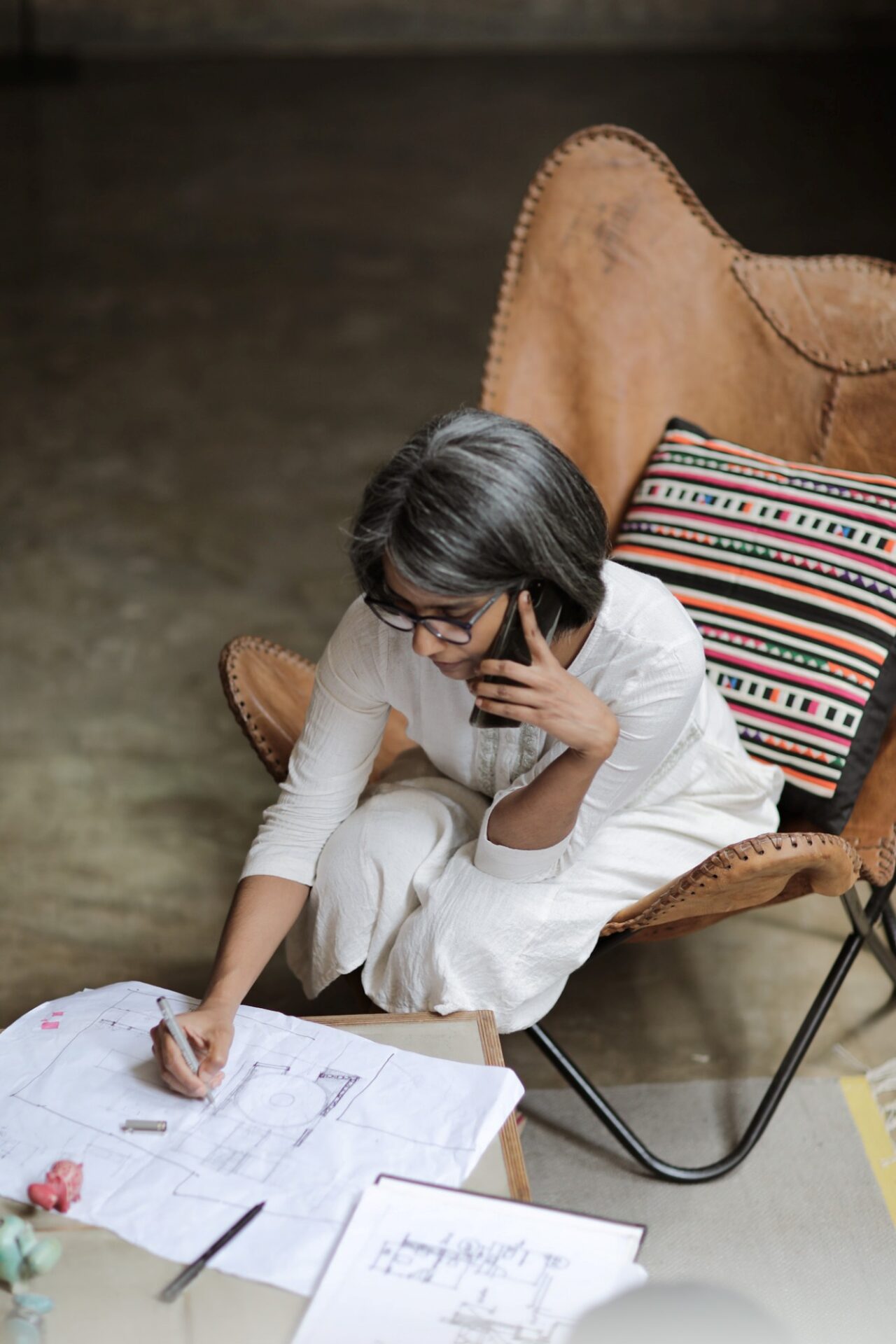
Finding Common Ground: The Architecture of Simi Sreedharan
For architect Simi Sreedharan, the decision to pursue architecture did not emerge from glamour or chance. It was a quiet and certain choice. In an interview with SCALE, she said that even as a teenager, she was fascinated by space and by the way walls and openings could influence how people felt. “It was not a glamorous profession back then,” she recalls. “But I liked both creativity and science, and architecture seemed to balance the two beautifully.” By Arya Nair

Fern Hill residence, one of Common Ground’s latest projects.
Simi Sreedharan’s instincts found a true direction at NIT Calicut. The five years she spent there were formative, not only because of the academic rigour of the program but also because of the dialogue and community that shaped her understanding of design.
“I really enjoyed the course,” she says. “The curriculum, the interactions with peers, and the exposure to new ideas made me love the profession even more.”

Masjid An Noorayn captured the maturity of the practice.
After graduation, she trained under Tony Joseph in Calicut and later worked in Bangalore and Dubai. Those years offered a panoramic view of architecture across different climates, scales and client cultures. “I thoroughly enjoyed being a project architect,” she says. “It was a phase of learning detailing, teamwork and understanding how things come together.”
It was during these years that she began to shape her long-term vision. She wanted a practice of her own that would be grounded in collaboration and integrity. “I always knew I would start something one day,” she says. “But I wanted to work in different contexts first and see how the profession operates in Kerala, in India and abroad. I did not want to jump into it without being ready.”
Founding Common Ground

The clients enjoing Fern Hill.
In 2009, that preparation took form. Along with two friends, Simi founded Common Ground, which was first registered in Dubai and later moved to Kerala. What began as a research collective soon evolved into a full-fledged design studio anchored by a simple but powerful idea: collaboration.
The name Common Ground embodies the firm’s guiding philosophy. “Architecture may seem like a creative field, but it involves many people like clients, vendors, craftsmen,” Simi explains. “To create something meaningful, everyone needs to work together with a shared purpose. Finding common ground in life and in design is crucial.”
Over the years, the name became more than a title. It became a compass for the studio. “Because we named it that, we have had to stay true to it,” she says. “It has shaped how we run our practice, how we collaborate and even how we handle disagreements.”
What Makes Buildings Work

Common Ground creating buildings that work well, not just look good; featuring Fern Hill.
Simi describes Common Ground’s philosophy as creating buildings that work well, not just look good. The phrase may sound simple, but it carries depth.
“Every architect has a philosophy, even if it is not spoken,” she says. “When a project comes to you, you instinctively know if it is right. The client’s intent and your design philosophy must align.”
This sense of alignment goes beyond aesthetics. “The process is as important as the product,” she says. “We have very few disputes and we are friends with most of our clients. That is something I am proud of.”

Fern Hill.
Because the firm’s growth was gradual and organic, built on word of mouth rather than marketing, it never had to compromise its values. Their first project, Three Trees in Calicut, led naturally to others. “People who liked what we did came to us,” she says. “That is how we kept things honest.”
Yet she admits that not every project works out. “There have been rare cases where, even after the initial excitement, we have had to step back,” she says. “When philosophies do not match, it is better to part ways than to compromise.”
The Common Ground Studio: Home Reimagined

Fern Hill.
In 2020, the practice turned inward by designing its own office in Calicut. The Common Ground Studio, located on the ground floor of her parents’ property, became both a workspace and a statement of intent.
“During COVID, we realized we needed a separate office away from home,” Simi recalls. “So we converted the ground floor, which was originally designed for commercial use.” The challenge was not only spatial but emotional. “We wanted it to feel warm and calm, even though it sits next to a busy road. That meant cutting down noise, using natural light and keeping materials tactile.”
The studio went on to win the IIA Kerala Gold Leaf Award, but for Simi, the recognition mattered less than what the project symbolised. “It made us sit down and articulate what we truly believed in,” she says. “The studio became a reflection of our design philosophy.”
Light, Faith and Concrete: Masjid An Noorayn

Masjid An Noorayn
If one project captures the maturity of Common Ground’s design voice, it is Masjid An Noorayn, a mosque in Kerala that has drawn wide attention for its serene minimalism. The structure, built of exposed concrete and bathed in natural light, feels both contemporary and timeless.
“This was a dream project,” Simi says. “We had often discussed how our mosques lack spatial spirituality. You enter directly into the ablution area, and the transition from the outside world to a state of prayer is missing.”
 When a client approached the studio with complete creative freedom, the idea found its moment. That trust made all the difference,” she says. The team imagined the mosque as an emotional journey, using light and shadow as their main tools. “The concrete was not about brutalism. It was about creating a monolithic calm. We wanted a single-tone finish that would not distract from prayer.”
The design drew inspiration from Tadao Ando’s Church of Light. She says. “This was an honest attempt to design a space that felt spiritual through simplicity.”
Urban Communities
 Another defining project, Urban Village , began as an experiment in collective living. Six friends and siblings owned adjacent plots in a dense neighbourhood. Instead of designing six isolated houses, Common Ground proposed removing the front compound walls to create a shared landscape.
 “Just by removing barriers, we created belonging,” Simi says. “The sense of openness completely changed how the residents interacted.”
Fernhill: A Home That Became Poetry

Fern Hill Residence, the house that launched poems.
Among Simi’s most personal works is Fernhill Residence, a modest home built within the rigid framework of developer-imposed regulations that left little room for architectural freedom. Yet, within those constraints, something deeply human unfolded.

Fern Hill, library room.
“Despite the limitations, it became one of our most meaningful projects because of the client,” Simi says. The client, a doctor, began with simple expectations but soon grew emotionally invested in the design journey. “He started writing poems about the experience of building his home,” she recalls. By the time the project was completed, he had published an entire book of poems dedicated to the team. For Simi, that gesture captured what architecture can mean at its most intimate. “It is rare to touch someone’s life through design like that,” she reflects. “He remains a dear friend and has since become a serious writer.”
Craft, Materiality and Climate

Urban Village interiors.
Designing in Kerala requires respect for the land and its moods: tropical heat, monsoon rains and close-knit neighbourhoods. “The first rule is to respond, not impose,” Simi says. “Every site has its own logic.”
Her material palette remains grounded in local wisdom. She favours laterite, concrete, timber and terracotta, chosen not for nostalgia but for performance. “We prefer materials that age gracefully and require minimal maintenance,” she explains. “It is about truthfulness. When materials express themselves honestly, spaces feel grounded.”
Detailing is another form of ethics. “We are obsessed with how things meet,” she says. “But balancing craft with time and budget is always a dance. Good detailing does not have to mean expensive. It means thoughtful.”
Although Simi is a LEED accredited architect, she treats sustainability as a responsibility rather than a label. “Traditional Kerala buildings were all sustainable,” she says. “They responded naturally to the climate. Today, sustainability is often forced or aestheticized. But being responsible is not a choice. It is essential.”
Rapid Fire: Getting to Know Simi
 Morning person or night owl?
“Night owl! I work better late at night. Though if I ever wake up early, I’m more productive, but getting up early is the hard part.”
Favorite building (not designed by her):
“IIM Bangalore by B.V. Doshi. I stayed there for a week during a workshop and used to wake up early just to walk through the campus. The way it interacts with rain and movement, it’s magical.”
A book on her desk:
“Tuesdays with Morrie. I don’t read regularly, but that’s the last book I read.”
A habit that keeps her creative:
“I write a lot. Mostly thoughts, ideas, to-do lists, and sketches. It helps me organize and record ideas.”
If not an architect:
“I honestly can’t imagine anything else, but probably something related to art.”
Simi Sreedharan: Pursuing Restrain and Clarity
More than 15 years after its founding, Common Ground Studio continues to embody the conviction with which it began: that architecture is an act of empathy and a dialogue between people and place.
Through her work, whether a minimalist mosque, a modest home or her own studio, Simi Sreedharan proves that restraint can be radical and that clarity, when pursued with sincerity, becomes a form of beauty.
All Images Courtesy Common Ground Architecture


