Thomas Oommen: Modernity in Post-Independent Kerala
What does it mean to call something modern, and who gets to define it? In this conversation, architectural historian Thomas Oommen turns to the built environment of post-independent Kerala to question some of the most familiar assumptions in architectural history. Rather than treating the region as a late or imperfect follower of canonical modernism, he asks us to look again at the ordinary landscape, the role of media, migration, technical education, and everyday practice. By Arya Nair
In this exclusive conversation with SCALE, Thomas Oommen reflects on how Kerala’s built environment complicates familiar narratives of modern architecture. He argues that looking closely at the ordinary landscape forces us to rethink what we mean by the modern itself.
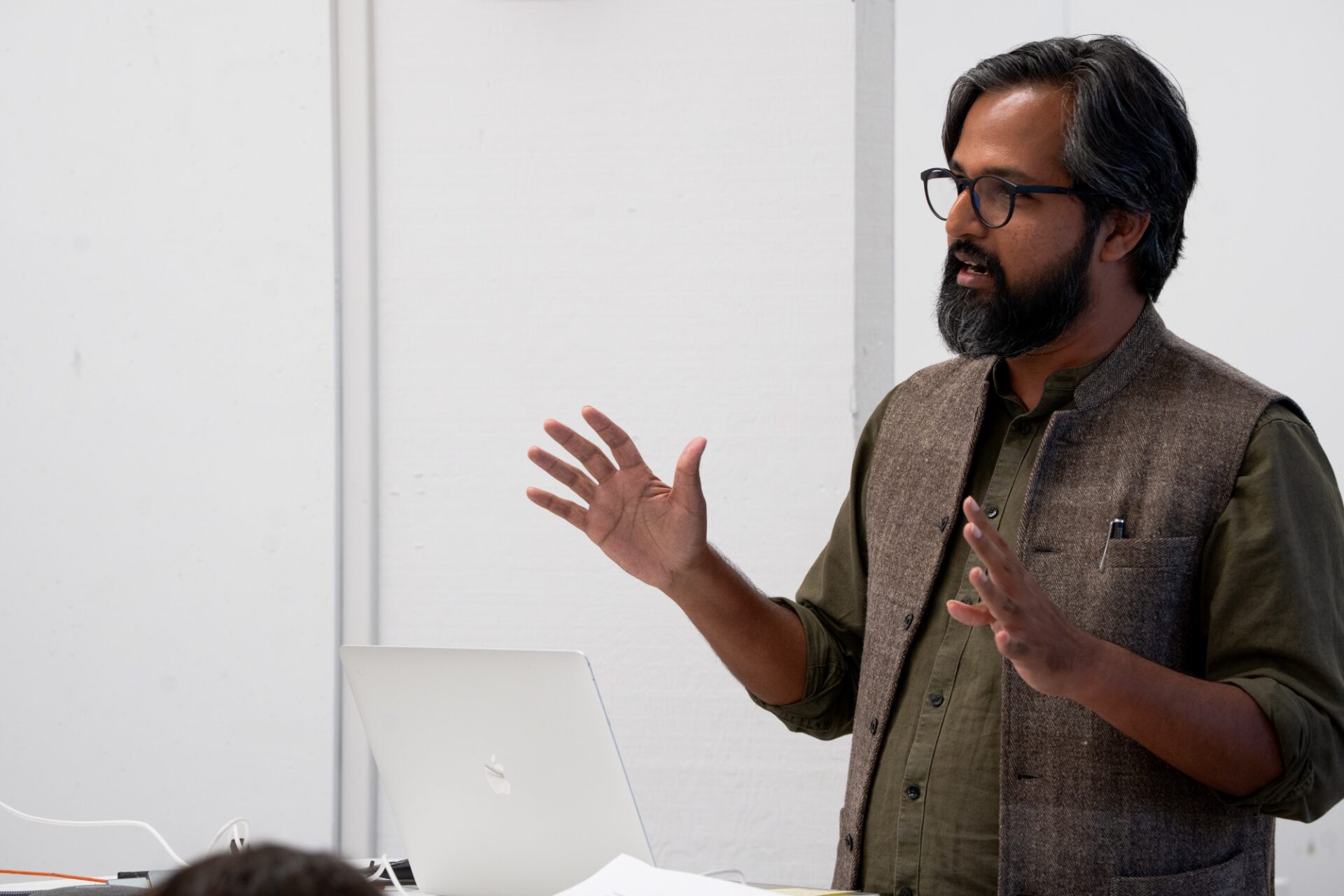
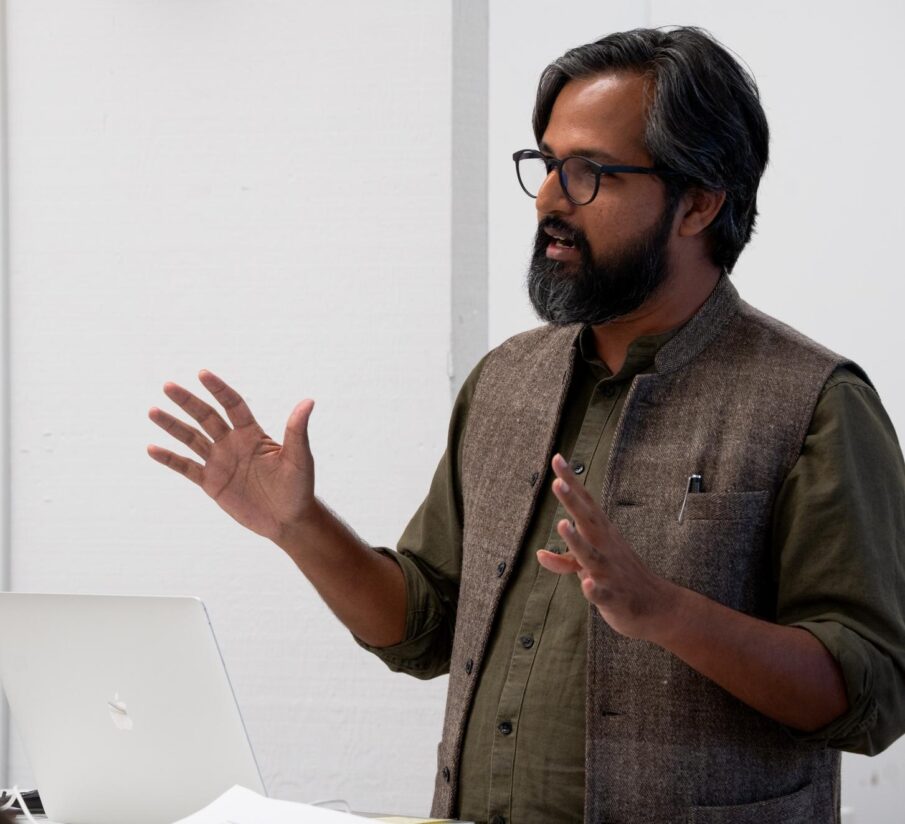
Thomas Oommen. Credits: CED, UC Berkeley
SCALE: Can you introduce yourself to our readers?
Thomas Oommen: I grew up between Trivandrum and Kottayam and completed my architecture degree from NIT Calicut, after which I worked briefly in Trivandrum. I then moved to the United States for graduate school in Texas, where I pursued a Master of Architecture alongside a Master of Urban Planning, driven by a strong interest in urban design.
After graduating in 2011, I worked for a year in the Boston area on ecological planning and urban design before returning to India. I spent about five to six years in Delhi, running an urban design practice with colleagues while also teaching. In 2017, I began my PhD in architectural history and theory at the University of California, Berkeley. I am now an assistant professor in architectural design, history, and theory at the University of Tennessee.
SCALE: How did you choose urban design?
Thomas Oommen: Until the 2000s in Kerala, many of the strongest professors were urban designers. I do not know if that is still the case, but at the time, there was also no clear master’s path focused purely on architectural design in India. In that context, urban design at CEPT or SPA felt like the closest meaningful option within the design domain. For a 17- or 18-year-old seriously interested in architecture, it was naturally very appealing.
After my B.Arch, I felt I had not matured enough in the architectural design process, so I pursued an M.Arch with a strong studio focus. Midway through, however, the pull toward urban design returned. I eventually chose to do both, combining architecture and urban planning with a focus on urban design.
What drew me most to urban design was that it felt less abstract than city planning. It retained a design lens, even when operating at the scale of urban systems, and that stronger connection to design is what I valued.
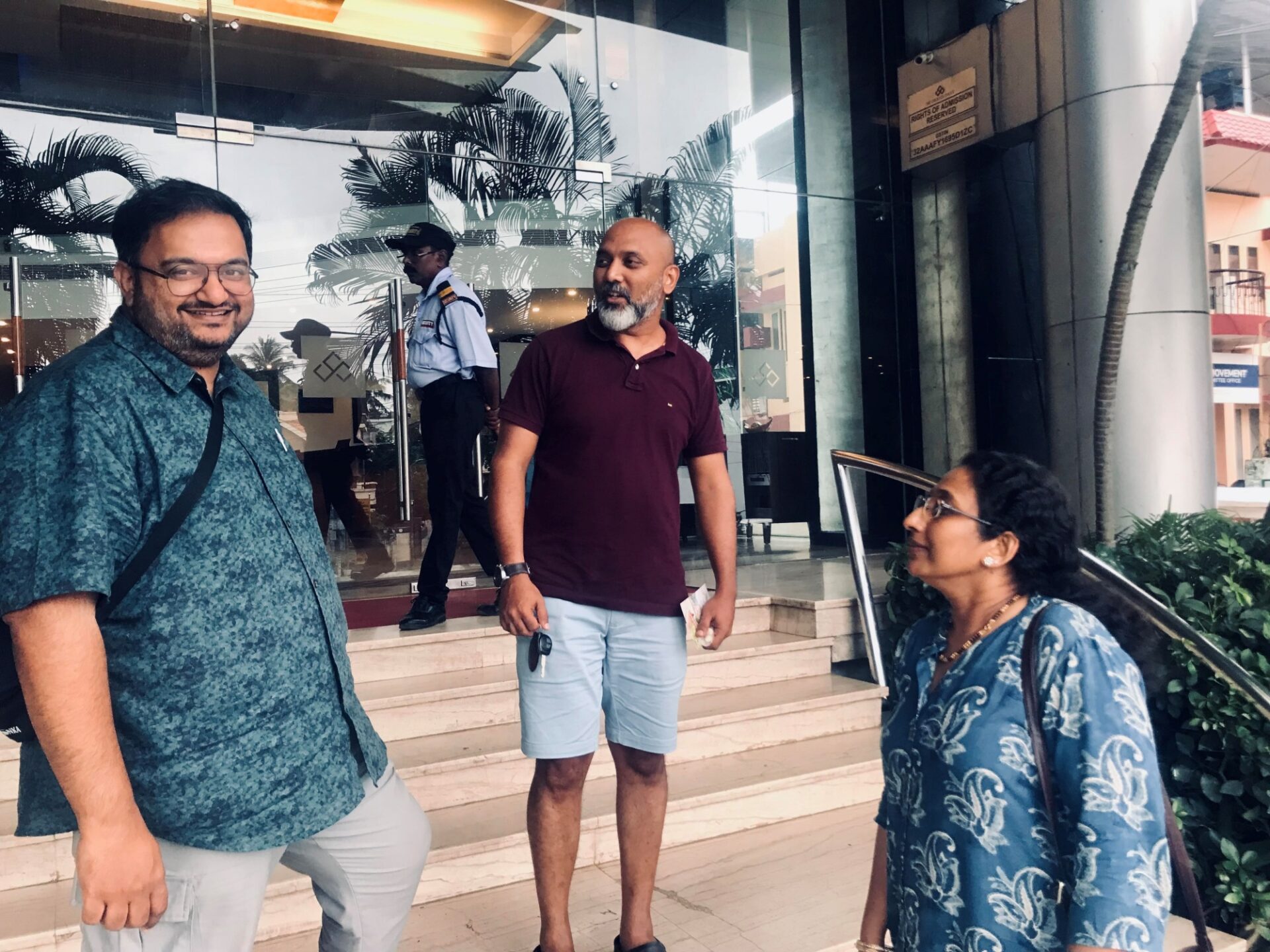
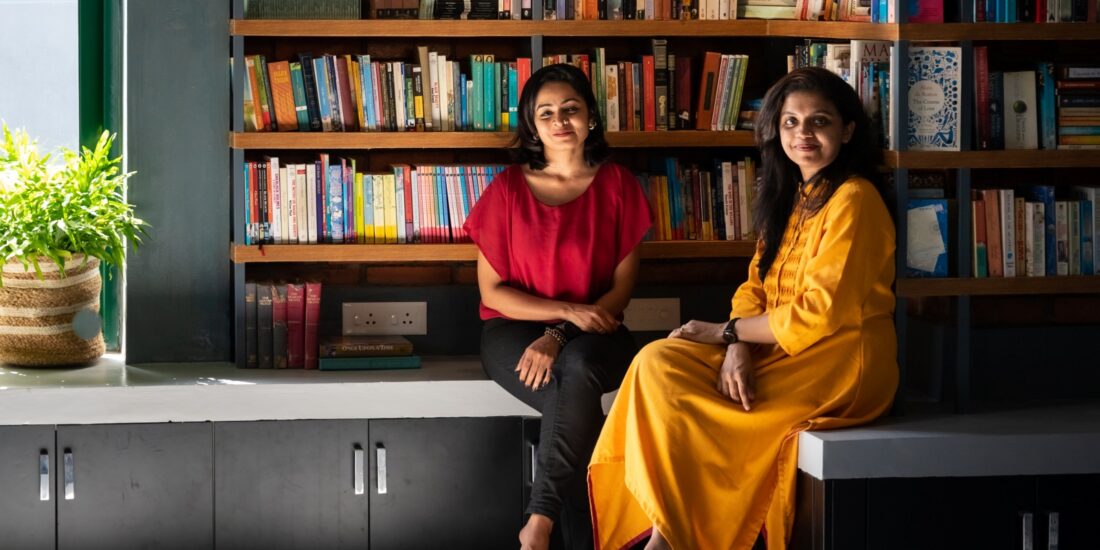
Friends: Prahlad, Jinoj, Rajshree Credits (Thomas Oommen)
SCALE: How did your interest in the architecture of post-independent Kerala begin? Did academic research drive it, or was there a particular moment that sparked it?
Thomas Oommen: It was really by chance. I often joke that it began with spending a lot of time with Rajshree Rajmohan and my friends Prahalad Gopakumar and Jinoj M. At the time, the only real coffee spot in Trivandrum was Cafe Coffee Day, right next to Rajshree’s office. When I returned from Delhi during the summers, I would spend months there, sitting and talking with them.
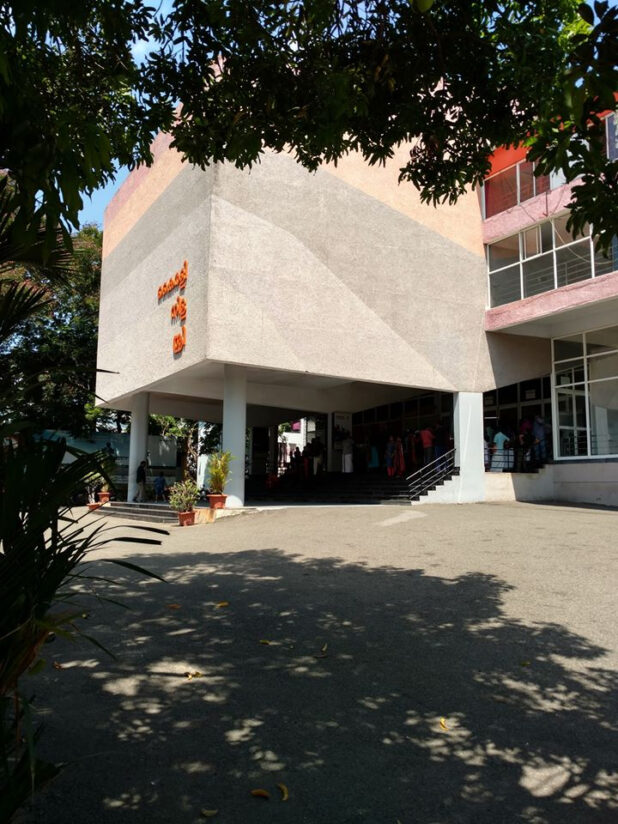
Kairali-Sree Theatre, Trivandrum. Credits: Thomas Oommen
Thomas Oommen: I realised that there was no story about Kerala in the architectural history I studied. The syllabus must have changed now, I am not sure, but when I graduated in 2006, there was virtually no mention of Kerala.
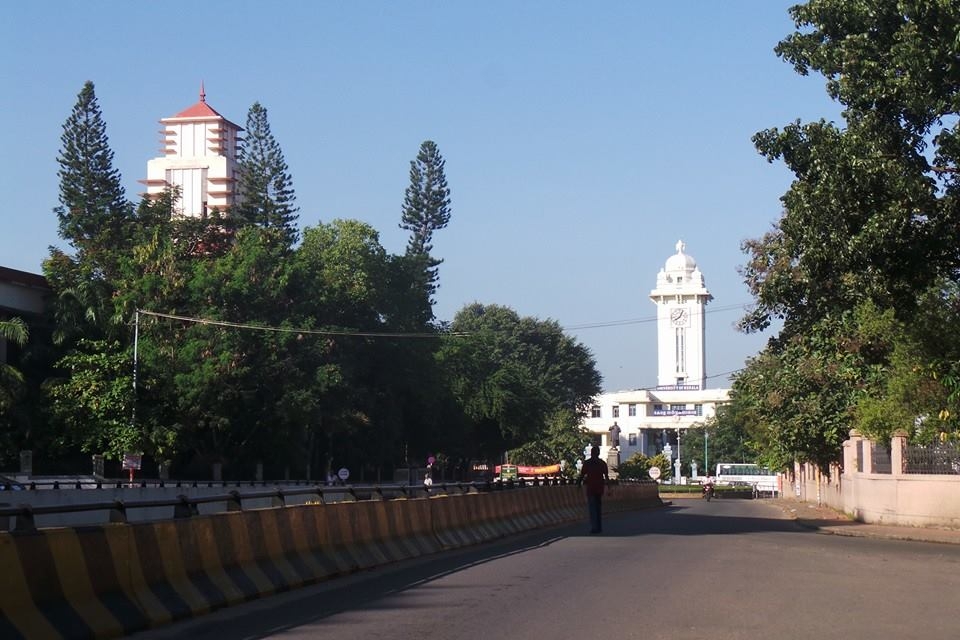
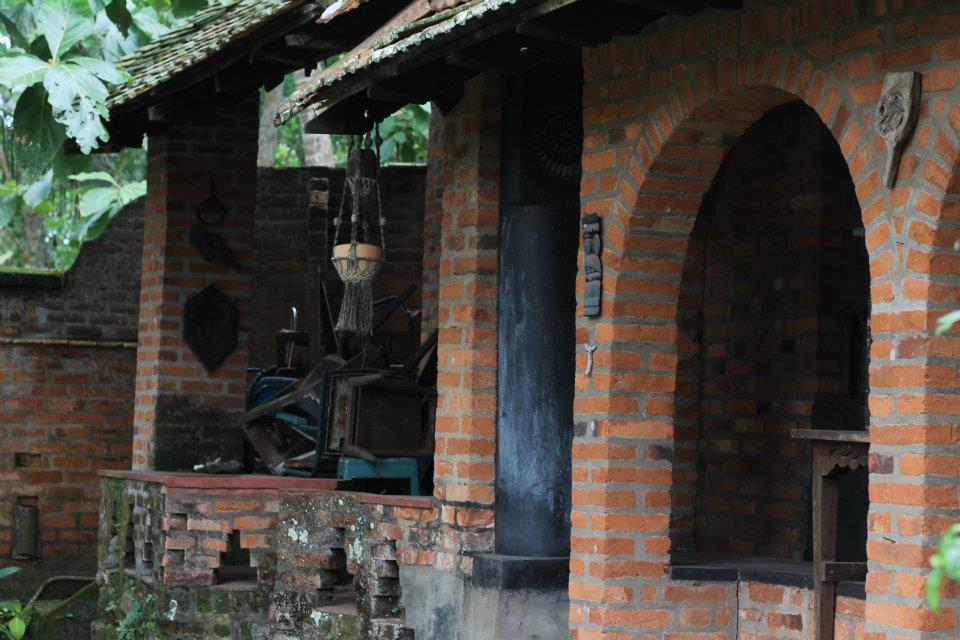
Thomas Oommen: My interest in the ordinary really comes from my training as an urban designer. Most buildings are not iconic, and much of the built environment is not even produced by architects. So you have to begin by appreciating the ordinary landscape.
That perspective shaped my approach to architectural history, even though the discipline usually privileges architect-designed monuments. It is also simply a better fit for studying smaller places. You cannot narrate a place like Kerala in the same way you narrate Chandigarh or New York. It is a different kind of story.
My entry point into this work was also very ordinary and informal. It came from casual conversations and jokes about architecture that I kept hearing, partly in English and partly in Malayalam. For example, this is a joke my father, Prof. Oommen, told me about a Council of Architecture accreditation visit in the 1970s. The CET architecture school began about the same time as CEPT, in 1962/63, but the accreditation team, who were typically from big Northern Indian cities (Delhi, Mumbai, Ahmedabad) seemed to treat institutions in small places like Trivandrum very differently. One typical question they would ask: What was unique/different about CET’s architecture program? Apparently, one faculty, exasperated by this question, quipped, “Ethu lokathu chakka kaykkunna ore oru department aanu.” (The only architecture school that bears jackfruits) I began to think of these jokes and this way of thinking and talking about architecture as a kind of language. Just as you would not say French is better than Spanish or Telugu, each has its own beauty and expresses meanings that only it can. These everyday stories and jokes about architecture became my way in. They suggested that we were dealing with a different narrative and a different mode of meaning-making.
Once you approach it as a PhD project, you also have to step back and ask how histories themselves are written. That opens up another level of inquiry.
SCALE: Many people feel Kerala did not follow modernist trends in housing after independence. What do you think was missing?
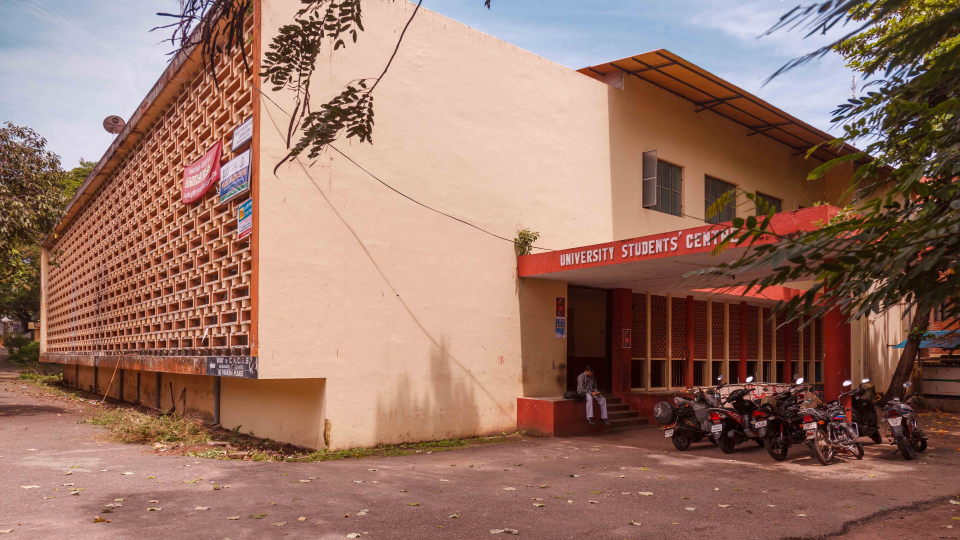
University Students Union Building, Trivandrum Credits: https://otaa.architexturez.net/file/otaa-students-union-exterior-view-prahlad-gopakumar-jpg
Thomas Oommen: I think the key misunderstanding is the assumption that there is one single modern style. That is really a myth.
It is more useful to think in three linked terms: modernisation, modernity, and modernism. Modernisation is the socio-economic process of something new entering society, and that can look very different in places like Paris, Chandigarh, or Kerala. This produces the experience of Modernity, which is how individuals and communities experience and respond to that change, which is always culturally specific.
Modernism is often simply the aesthetic expression of those specific conditions and responses.
Once you see it this way, the idea of a standard model falls apart. But many of us were taught to see Chandigarh, Ahmedabad or Delhi as the benchmark and everything else as a variation. That creates a mental barrier.
When you move past that, the question shifts. Instead of asking whether something looks like Paris or Chandigarh, you begin to ask what is new, why it is new and why it emerged..
Sometimes what may not look modern at first glance could only have emerged through processes of modernisation and modernity. That is the lens I try to use.
SCALE: Talking about culture meetings, there is a saying that wherever you go, you will find a Malayalee. Many people worked in the Gulf and returned home to build. Did this create visible changes in architecture? Where do Gulf remittance houses sit in the story of post-independent Kerala?
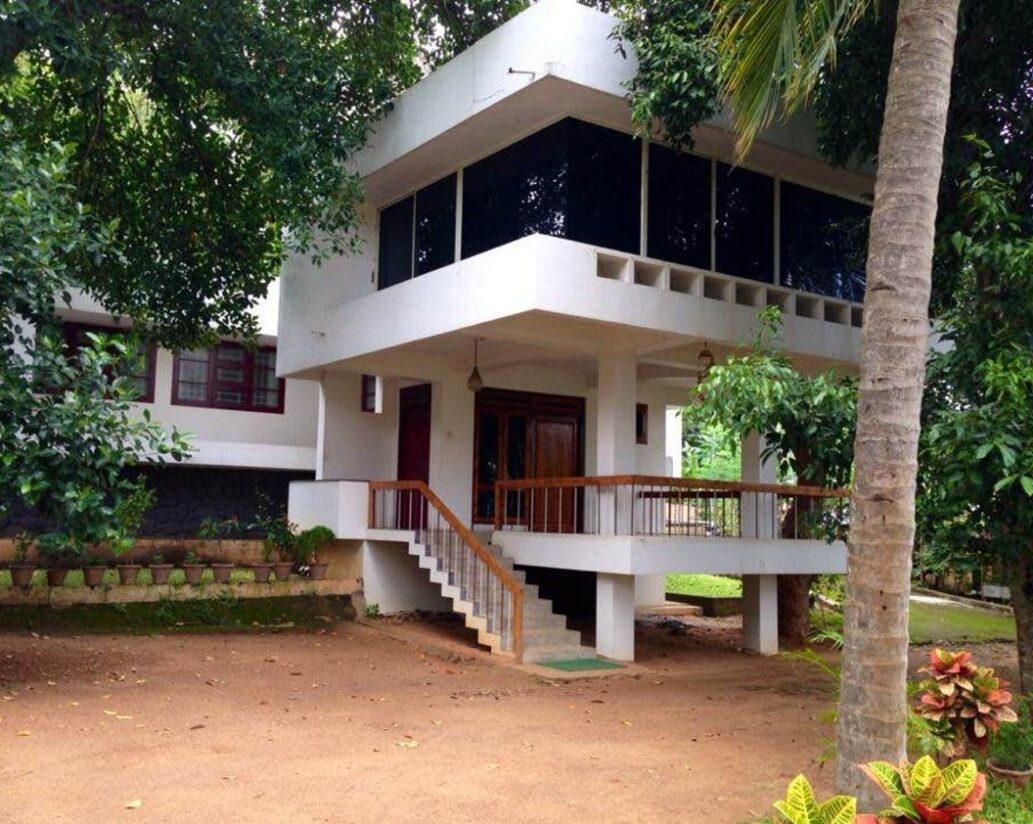
J.C. Alexander Residence, Trivandrum Credits: Thomas Oommen
Thomas Oommen: I think we have to be careful about where we begin the story. The Gulf connection did not start in the 60’s. Kerala has had oceanic trade links for millennia. Romans traded here, and later Middle Eastern networks became central. So Kerala was already a hybrid, outward-looking culture long before independence.
That is why I resist the idea that something suddenly changed in 1947. Of course, independence matters, but there is a much longer cultural and architectural history in the background. In my reading, Gulf migration accelerates in the late sixties and early seventies, but its architectural impact becomes clearly visible only in the eighties, when people had accumulated enough savings to build.
There is a common argument that migrants simply copied Gulf cities. Some of it is certainly true. In my view, by the late 60’s, Kerala was already shifting toward new materials and spatial forms. Magazines like Mathrubhumi show new materials, new household commodities and fixtures, and importantly, engineers actively designing houses even when architects were scarce.
So when Gulf remittances arrived, they met an ongoing transformation. The money added capital and scale, pushing an existing process forward. For me, Gulf money did not begin the change. It accelerated and popularised what was already underway.
SCALE: Traditional Kerala houses are often praised for their climate-responsive design. When post-independence modern housing began to emerge, did you observe a decline in climate responsiveness?
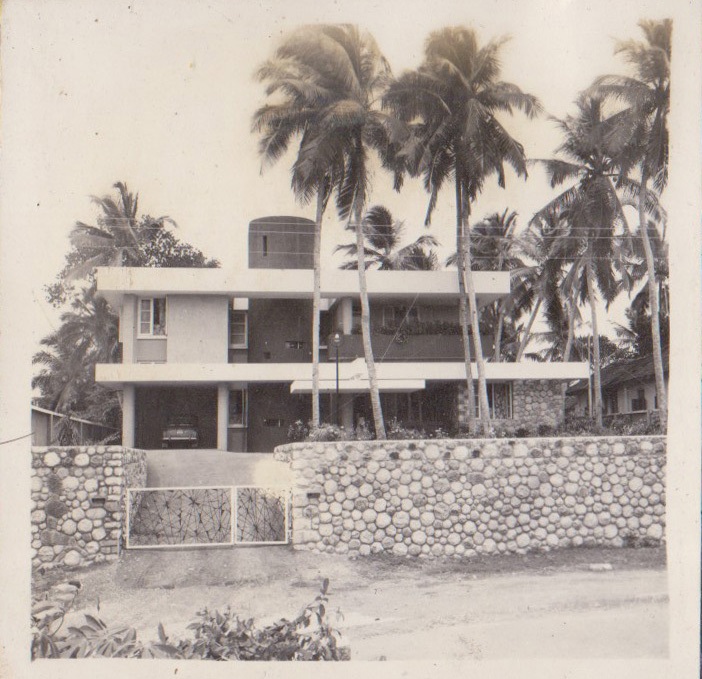
Jacob House. Credit: https://otaa.architexturez.net/file/otaa-students-union-exterior-view-prahlad-gopakumar-jpg
Thomas Oommen: One thing I had to consciously do as a historian was to place myself in the mindset of the middle class in the sixties. At that time, people were not viewing tradition with the kind of nostalgia we often project today.
Kerala in the 50’s was actually called the problem state. After state formation in 1957, there were rice shortages, very high educated unemployment, political unrest, and unstable governments. The overall mood was not about looking back. People were trying to move forward and secure a better life.
When you read popular magazines and watch cinema from that period, nostalgia for older forms as climatically better suited is marginal. You can see this, for example, in Adoor Gopalakrishnan’s first film, Swayamvaram(1972). That does not mean the past was irrelevant, but the dominant impulse was progressive. Technical education, engineering, and modern construction represented something new and promising.
At the same time, Kerala presents an interesting overlap. Formal architectural education in Trivandrum began in the mid-1960s, and around the same period, Laurie Baker arrived (1969). By the late 1960’s and early 70’s, you see two simultaneous or parallel approaches. Architects and engineers trained or well-versed in the Maxwell Fry and Jane Drew lineage practised a more material-intensive and technical climatic response, while Baker’s approach, often described as Gandhian, suggested that sometimes the best climatic response is to intervene less.
These were two very different ways of thinking about climate within the same emerging modern moment.
SCALE: In the post-independent period, how do you read the role of Vastu in Kerala houses today?
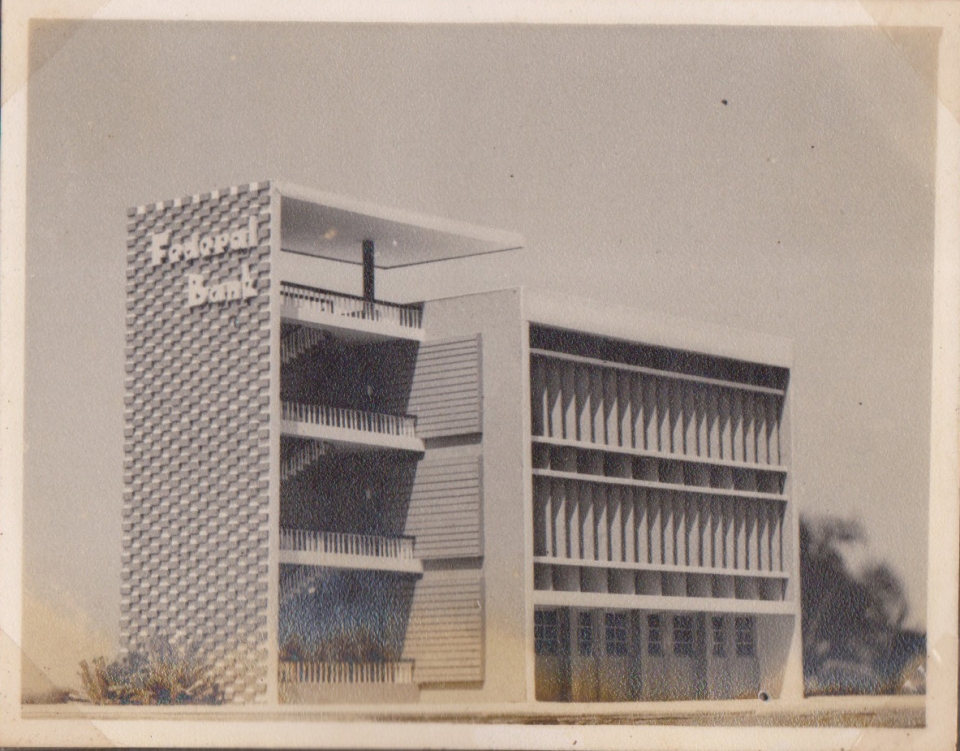
Federal Bank Building. Credits: https://otaa.architexturez.net/file/otaa-students-union-kerala-university-senate-and-library-maya-gomez-jpg
Thomas Oommen: In my current research, I do not see Vastu simply as a religious practice. While it is often framed that way, its religiosity actually shifts across time. In the sixties and seventies, Vastu was present but not given any special emphasis. If an Ashari built a house, it was usually embedded in his calculations. When engineers designed houses, it was often not.
This began to change in the nineties, alongside Gulf emigration, accompanying nostalgia and broader social shifts, when there was a renewed sense that these principles should be consciously followed. In the last ten to fifteen years, that emphasis has intensified quite sharply.
I prefer to understand Vastu as a cultural phenomenon. It reflects not only nostalgia but also modern anxieties and the desire to exercise control over uncertain lives. The religious lens alone is not fully useful in Kerala. In practice, many Christians and Muslims also incorporate Vastu principles, sometimes openly and sometimes quietly. In Malappuram, for instance, I found large Muslim-owned houses where certain Vastu logics were clearly embedded.
So for me, Vastu points to something deeply cultural (culture not in the past tense) whose religious meanings have varied over time, and its influence has, if anything, grown stronger in the contemporary moment.
SCALE: Earlier, you mentioned the focus on the middle class. In shaping post-independence architecture in Kerala, who played the most decisive role: architects, engineers, contractors, or homeowners?
Thomas Oommen: I think it is all of these in part. But when I tell the story as an architectural historian, I often work with specific cases. That means I look closely at architects and engineers because they are easily identifiable and we can trace their work.
However, a very important player is the Public Works Department. This is why I say the post-independence boundary must be treated carefully. One serious implication of independence is the expanded role of the Public Works Department. The Public Works Department becomes important because they build things that people see a lot. In the early 60’s, they built civil lines, district centres, hospitals, high courts, and district courts across Kerala. Many of the buildings we still see today were built mostly in the sixties by the architecture wing that started around 1959.
This had two effects. First, it trained people who were building these structures. Suddenly, masons and carpenters were building walls, pouring concrete, building formwork and doing new kinds of construction. The expertise level increased.
Second, in the 60’s, there were many engineers in Kerala, and many of them were unemployed. Some went abroad, but many began designing houses locally. Even today, civil and mechanical engineers often design houses.
This is why, in everyday language, people still ask, who is the engineer? That mindset has not completely disappeared.
It was only in 90’s that architects became more visible, and the architectural profession had grown enough to claim that architects should design houses. So in my story, there are multiple influences. The Public Works Department, engineers, architects, and popular culture.
Popular culture is especially important in Kerala because of the urban conditions and high literacy. The historian Robin Jeffrey argues that by the 60s, print culture had already become mass culture in Kerala, which is very early in the Indian context. Almost every house had access to a newspaper or a magazine like Mathrubhumi Weekly, either directly or through a neighbour. These magazines carried house-related content.
One of the most interesting examples that I found during my doctoral research is a series from 1969 called Ningalkkum Oru Veedu. It was written by two civil engineers, even before Baker became widely influential. The series is entirely about modern house design. It includes sample plans and detailed guidance.
So think about it. Engineers are writing in Malayalam, in a popular weekly magazine, with drawings, and it ran from 1969 to 1970. This shows how modernity in Kerala appears simultaneously in many places. There are engineers, architects in training, print media, and, later, Gulf money. Laurie Baker is beginning to introduce a new paradigm. All of these are happening together. So the answer is that all these forces are influencing the built environment at the same time. Even the media must be added to your list as a very important player.
SCALE: Today, Kerala is often seen as socially progressive. Earlier, caste had a visible role in shaping houses and spatial practices. How did that shift happen in the post-independence period?
Thomas Oommen: In Kerala, many of the spatial practices tied to caste began to weaken in the post-independence period, especially with land reforms, expansion of education, new construction practices, and the growth of the middle class.
But it is important to understand that architecture does not change overnight. Social and spatial practices often linger even when the formal structures of society begin to shift. So in many houses you will still find traces of older spatial hierarchies, but their meaning is also changing. The back entrance, service areas, and circulation patterns may remain and retain something of the past, but the social logic behind them is slowly eroding.
In my reading, the post-independence period is less about a clean break and more about gradual transformation. The built environment absorbs social change unevenly. Some things change quickly, others persist in altered forms. What is important is to see Kerala not as moving from so-called ‘tradition’ to ‘modernity’ in a straight line, but as constantly negotiating between older social structures and newer aspirations.
SCALE: When did people begin to feel it was time to move away from older social practices and adopt a more modern approach to planning their homes?
Thomas Oommen: I think it is important to say that this is very much a case-by-case question. It is very difficult to generalise.
In my dissertation, I step back and think about modernity as both a culturally and institutionally specific experience and an ongoing process. It is always conflicting. Different things are happening at the same time, and people are constantly working it out. It is not a situation where suddenly you become modern and then you do a fixed set of things.
When people are working it out, you will see different combinations. I sometimes compare it to making a cake. The first one is too sweet. The second one has too much flour. The third one is different again. So you have to see it as a series of experiments. In the case of architectural history, all of them are valid, and there is no norm or ideal. Even within Kerala, there is a lot of internal variation.
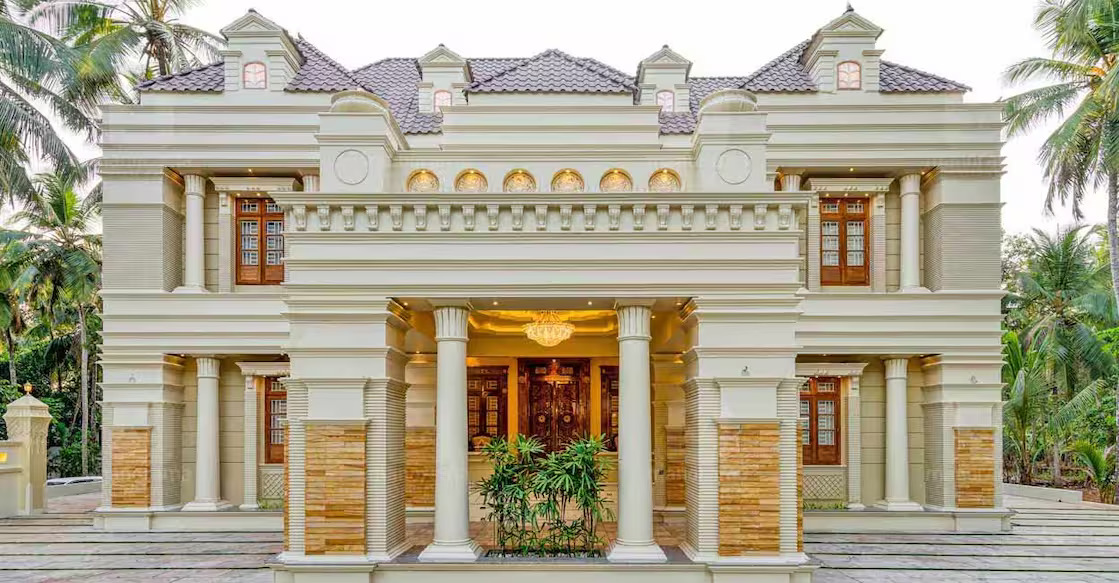
A grand Colonial-type house of an expat-Muslim in Malappuram. Credits: OnManorama
In my doctoral dissertation, I begin with Trivandrum because by 1969, you had the Public Works Department, the architecture school, and Baker all present there. But the technical education professionals and the architects in the Public Works Department are not primarily thinking in terms of caste. It is not the top operational category for them. At the same time, most of their clients are well-to-do people, so privilege still exists in the background.
To understand variation, I also studied Malappuram. It is interesting for two reasons. It is the only Muslim-majority district in southern India and one of the few in the country. It was also created in the late nineteen sixties and was politically controversial. In Malappuram, you find different social groups. There are agrarian Muslims who are not very wealthy, unlike Muslim trader groups on the coast, who had upper caste associations and more resources. When you look closely, you can see how architecture operates differently in this context.
In my dissertation, I do not look only through the lens of caste because caste is only one factor among several. Historians would say the situation is overdetermined, meaning one or even a few factors cannot explain it. It is a product of many factors.
Caste is still important because there is an attempt to rethink the aesthetic ground of domestic architecture. For example, many people look at the large houses in Malappuram and say they look like Gulf buildings and dismiss them. But what I found interesting is this. You cannot expect someone to build a Nair courtyard house if they were never part of that social system. Why would they do that? They would actually be impostors if they tried to reproduce a form that historically excluded them.
So instead, they might build something neo-classical. That is a kind of modern move. They are taking something and doing something new with it. It shocks us. It does not fit our cultural expectations. But those are actually qualities of the modern.
This is why historians often insist on looking at specific cases. If you study central Travancore, caste may operate very differently. In Malappuram, it plays out in another way.
SCALE: What more would you like to emphasise?
Thomas Oommen: I think the one thing I want to highlight right at the beginning is that we need to rethink the categories by which we understand our built-environment
One of the main reasons to be interested in this topic is that it helps us change our idea of what these categories actually are. I started this whole journey by asking what our place is in the story of modernity.
But through the process of being a historian, I realised that we actually have to rethink the conceptual categories themselves. We have to rethink what we mean by modern, by modernity, and even by history. Sometimes, and I do this in my own work, we will need to abandon some of these historical categories and identifiers.
Last Word
If there is one thread that runs consistently through the reflections of Thomas Oommen, it is this: the project is not simply about documenting Kerala’s post-independent architecture. It is about unsettling the way we have been taught to see modernity itself.
What began for him as a regional curiosity gradually revealed a deeper problem. Kerala was not missing from the story merely because of oversight. Rather, the categories through which architectural history is written often leave little room for places that do not fit established templates. By returning to ordinary buildings, popular print culture, migration histories, and local practices, Oommen shows that modernity in Kerala unfolded through multiple, overlapping processes rather than through a single stylistic shift.
The work of Thomas Oommen, therefore, asks for a methodological pause. Instead of measuring Kerala against canonical modernist benchmarks, he invites us to ask what forms of newness were actually being produced on the ground, by whom, and under what conditions. When viewed this way, the so-called deviations from mainstream modernism begin to look less like exceptions and more like evidence of modernity’s uneven, negotiated character.
In the end, the significance of this research lies in its quiet but firm provocation. To study Kerala seriously is to recognise that our inherited categories may be too narrow. And once those categories begin to shift, the story of modern architecture in India and beyond also begins to change.