An Exhibition that Proved Upcycling for Everyday Life is Possible
Turtle stretchers (yes, you read that right) made from ocean plastic, sandals from fruit peels, crockery from grain husks, and upcycled dialysis bags – an exhibition organized by the Royal Thai Embassy at M7 in Msheireb, Doha, provided a convincing argument on why upcycling should be a necessity, not an option, for people and the planet. By Mary Joseph

Image courtesy Royal Thai Embassy, Doha.
The Royal Thai Embassy in Qatar, in collaboration with Qatar Museums, recently presented a week-long exhibition titled “Thailand’s Innovative Upcycling for Everyday Life” at the M7 Gallery.

Exhibition View. Image courtesy Royal Thai Embassy, Doha
The exhibition, which was free to the public, was a snapshot of Thailand’s success in combining science, technology and creativity to offer tangible, scalable products made from natural and man-made waste material.
The display showed that with the right skills, tools, and attitude, people can turn ‘circular economy’ from theory into everyday practice.

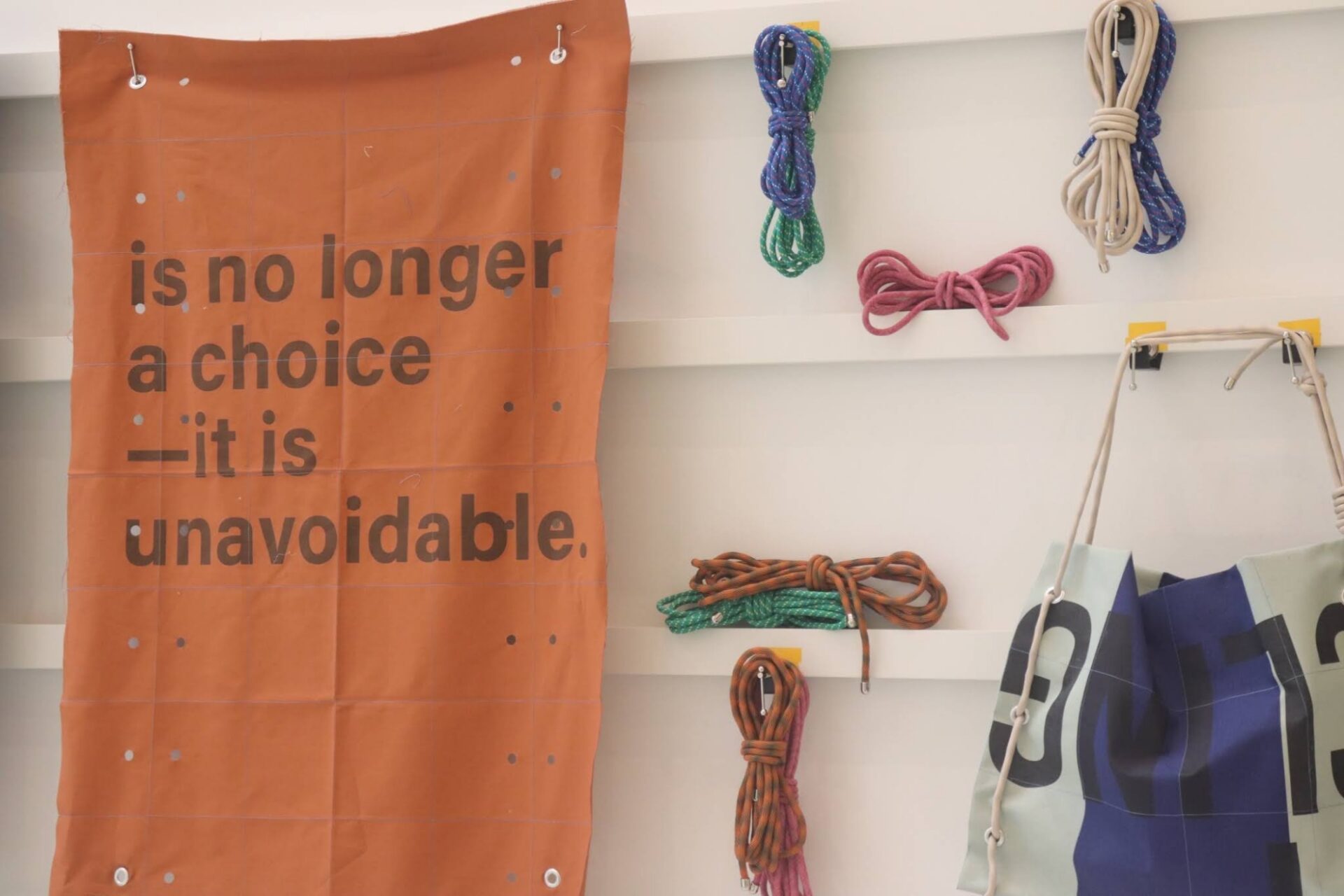
Upcycled bags.
For instance, the items exhibited varied from objects that could find a place in any home, such as sandals made from fruit peel and crockery made from grain husks, to ones designed for more unusual purposes, such as a stretcher to transport rescued turtles to the open sea.
 What made the exhibition persuasive is that it clearly reflected the results of Thailand’s Bio-Circular-Green (BCG) Economy Model, showing how a low-carbon, socially inclusive future, one that is attentive to local contexts and scalable in global conversations on sustainability, is possible.
Each item on display was a convincing demonstration of the country’s efforts in revitalising traditional craftsmanship, heritage, and grassroots creativity while ensuring that the final products are both elegant and deeply rooted in cultural identity.

Jewellery from porcelain waste.
Beyond material upcycling, the exhibition also presented the human stories that drove these innovations, the efforts of people such as scientists, students, designers, volunteers, policy makers and environmentalists who came together to offer solutions that not only address environmental challenges but also sustain livelihoods and transmit local wisdom.

At table made with fabric sourced from food waste.

Colseup of the yarn, made from fruit waste.
The exhibition was inaugurated by His Excellency Mr. Sira Swangsilpa, Ambassador of the Kingdom of Thailand to the State of Qatar, together with His Excellency Ibrahim Fakhro, Director of the Department of Protocol of the Ministry of Foreign Affairs of Qatar, Associate Professor Dr. Singh Intrachooto, Founder of Scrap Lab at Kasetsart University, and distinguished guests including senior Qatari officials, Ambassadors and members of the diplomatic corps, researchers, entrepreneurs, academia, and representatives of the local media.

Colourful yet classy, these plates were made of agricultural waste including grain husks.
In his opening remarks, His Excellency Ambassador Swangsilpa emphasised that the exhibition reflects Thailand’s Bio-Circular-Green (BCG) Economy Model, which extends beyond an economic framework.

Image courtesy Royal Thai Embassy, Doha
“Sustainability is not merely a concept. It is something we can see, touch, and bring into everyday life. It is also a vision we can advance together with Qatar, through creativity, environmental stewardship, and shared values,” he noted.
The exhibition followed in the footsteps of Thailand’s participation at the Earthna Summit 2025 and aligns closely with Qatar National Vision 2030 and the Third National Development Strategy (2024–2030), particularly in advancing environmental stewardship, preserving cultural identity, and fostering a knowledge-based, innovation-driven economy.
All Images Courtesy Royal Thai Embassy, Doha.