Lina Ghotmeh: Designing with Memory and Material
When French-Lebanese architect Lina Ghotmeh visited Doha as part of Qatar Museums’ Architecture and Design Programme, she brought with her a practice shaped by memory, displacement, material intelligence and craft. Born in Beirut and based in Paris, the architect has emerged as one of the most compelling voices of this generation, known for architectural works that are adaptive yet rooted to the place it is in. Ghotmeh’s visit headlines the first edition of Qatar Museums’ Architecture and Design – Turning Vision Into a Universal Dialogue. Developed alongside the I. M. Pei: Life Is Architecture exhibition at Al Riwaq, this ongoing series brings world-class designers and rising voices together to explore the evolving trends of the field through an immersive public programme of lectures and workshops.
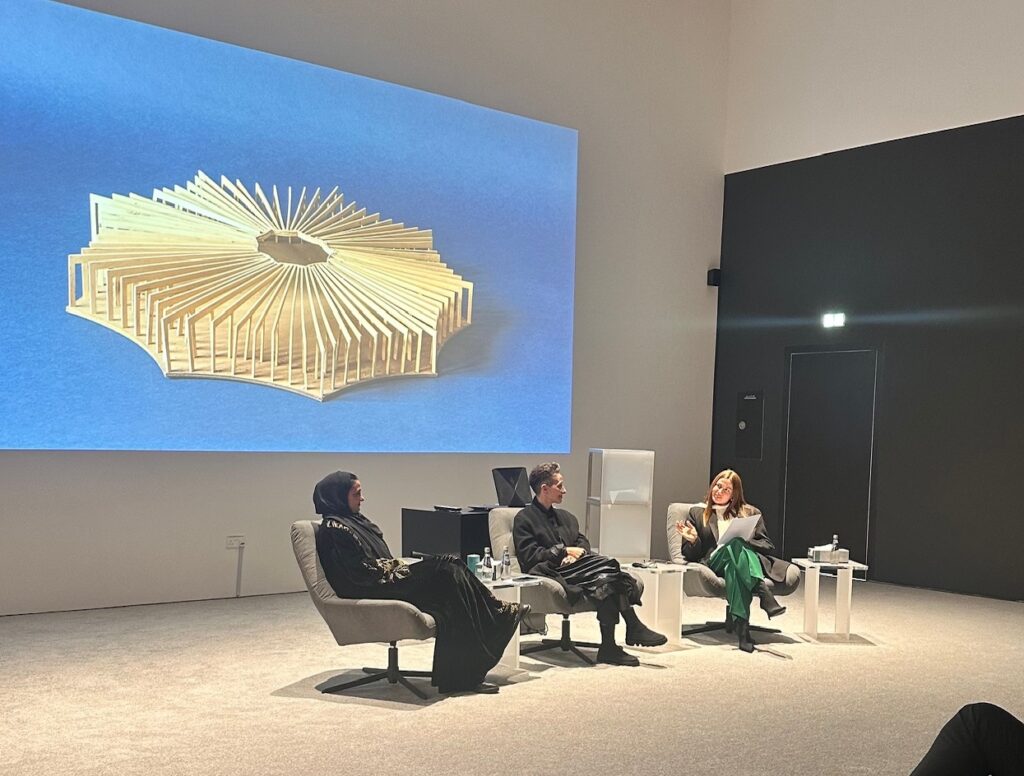
Sheikha Reem Al Thani, Acting Deputy CEO of Exhibitions and Marketing and the Director of Centralised Exhibitions at Qatar Museums (QM), Lina Ghotmeh, Architect Founder of Lina Ghotmeh — Architecture and Katya Kamzolova, Head of Business Development, Programmes & Partnerships, Exhibitions at Qatar Museums at Al Riwaq.
Her projects, from the forthcoming Qatar Pavilion at the Venice Biennale to the acclaimed Serpentine Pavilion in London, reveal a consistent ethos: buildings must grow from context, culture, and time. In this conversation, Ghotmeh reflects on her method, which she describes as “archaeology of the future”, and on designing structures that are either ephemeral or permanent and rooted.
Ghotmeh’s work begins with deep research into place, its history, geology, climate, and social fabric. For her, architecture is a way of uncovering layers rather than creating spectacle.
“My process of work, based on research with what I call archaeology, or the archaeology of the future, drives me every time to really understand the place and anchor every construction in the environment and culture.”
She explains that this method ensures no two buildings resemble one another, even if a poetic sensibility links them.
“Every building is very different from the other one, architecture should echo a specific culture or diversity.”
For Ghotmeh, design becomes a form of cultural translation, an attempt to allow architecture to express the humanity of a place.
Roots, Mobility, and Belonging
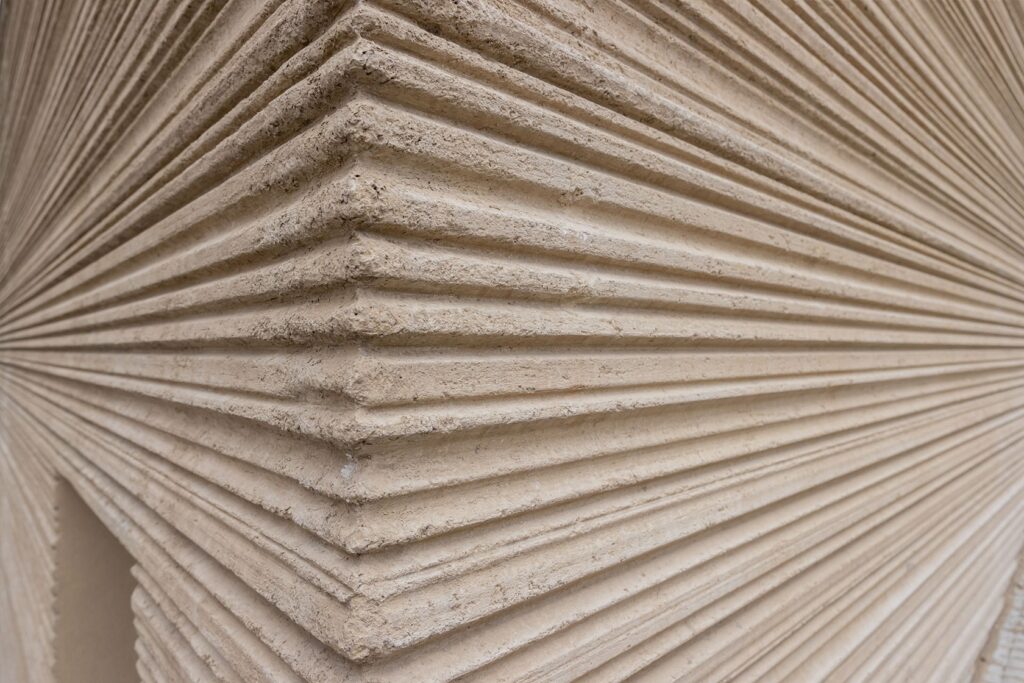
Lina Ghotmeh’s projects speak of place and focus on material: “Stone Garden“, Beirut, Lebanon © Iwan Baan
Her reflections inevitably return to Beirut, the city of her birth, which continues to shape her emotional relationship to architecture. Yet decades in Paris and projects across continents have created what she describes as a layered identity.
“As humans, we’re almost like plants, we’re rooted in a place. We have this feeling that makes us belong to a ground.”
This dual condition, rooted yet mobile, informs her sensitivity to context across cultures. Rather than reproducing a signature style, she seeks resonance with local conditions wherever she works.
The Serpentine Pavilion: Architecture as Adaptable Structure

Lina Ghotmeh outside the Serpentine Pavilion 2023, London, United Kingdom. Designed by Lina Ghotmeh, © Harry Richards
Ghotmeh’s Serpentine Pavilion offered a temporary intervention in London’s Kensington Gardens, a structure designed not only to exist lightly on the site but also to move beyond it.
“Building the Serpentine was about using a lightweight structure… with the possibility of dismantling the whole structure and building it somewhere else.”
Crucially, she envisioned a pavilion capable of adapting to new contexts without losing architectural meaning.
“Even if you move it, it still makes sense and echoes its context differently.”
This approach reflects contemporary concerns about sustainability, reuse, and the life cycle of temporary architecture, themes increasingly central to global cultural institutions.
Designing the Qatar Pavilion in Venice: Permanence and Dialogue

Qatar Pavilion at Venice, designed by Lina Ghotmeh.
In contrast, her design for the Qatar Pavilion at the Venice Biennale in the Giardini is conceived as a permanent national presence, one that must converse with a century of architectural history surrounding it.
“It has to echo its context more locally, have a dialogue with the existing buildings.” Unlike the Serpentine Pavilion, this structure is not meant to travel. “It’s a structure that cannot be moved, it has to sustain time and age gracefully.”
Material choice becomes central to this permanence. Ghotmeh contrasts the aging of wood with that of stone, the latter selected for its durability and ability to develop patina over decades.
Architecture as Cultural Bridge
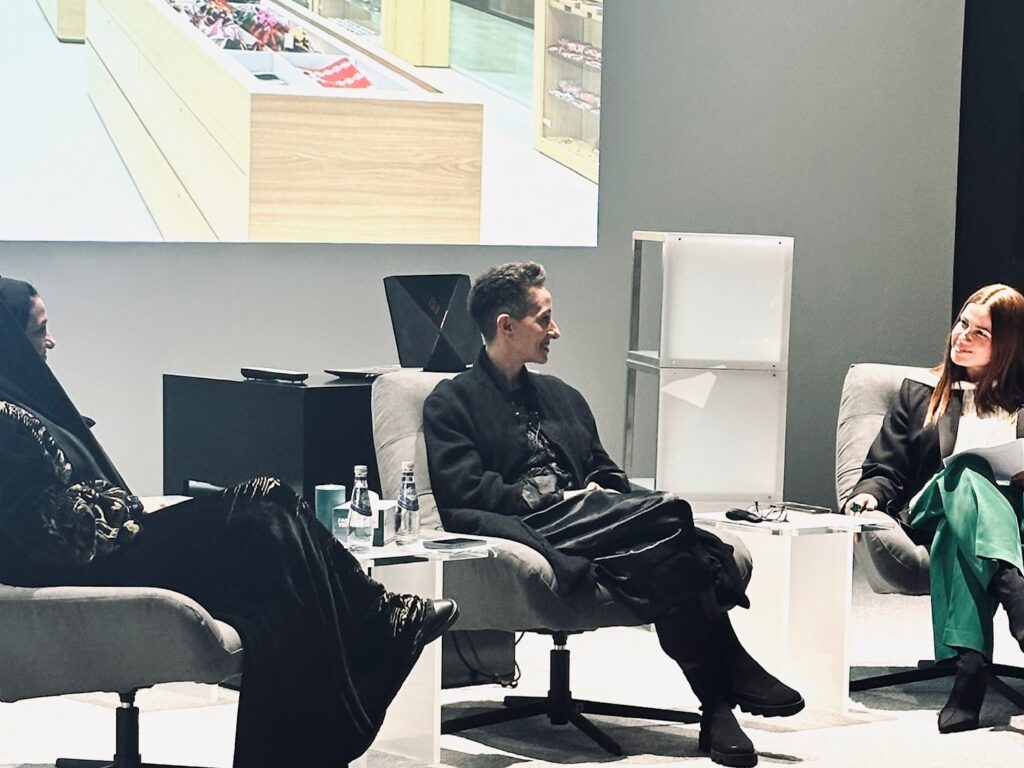
A discussion on “Archaeology of the Future,” Lina Ghotmeh’s architectural practice, presented during her talk at Al Riwaq.
Across both projects, a common philosophy emerges: architecture must be responsive to time, whether fleeting or enduring, and to the cultural landscape it inhabits.
Ghotmeh’s presence in Doha underscores Qatar Museums’ broader ambition to position the country as a hub for architectural discourse, commissioning, and experimentation. For observers of the region’s evolving cultural infrastructure, her work resonates deeply with ongoing conversations about identity, sustainability, and global exchange.
Ultimately, her buildings suggest that architecture is less about form-making and more about belonging: to land, to memory, and to the communities that inhabit them.
Designing in Lebanon carries a deeply personal and emotional resonance, rooted in memory and belonging, while working internationally opens her practice to new forms of connection and cultural dialogue, a duality that shapes her architectural approach.
By contrast, her design for the Qatar Pavilion at the Venice Biennale in the Giardini is conceived as a permanent structure, one that must converse with the historic ensemble of national pavilions.
Stone, she notes, allows the building to weather and develop character over decades, embedding itself into the landscape of Venice.
Across continents, from Lebanon to Europe to Qatar, Ghotmeh’s work reflects a consistent philosophy: architecture must listen before it speaks. Each project becomes a translation of local conditions into spatial form, whether temporary or permanent, intimate or monumental.
Her participation in Qatar Museums’ programme signals the country’s continuing investment in global architectural dialogue and in designers whose work bridges cultures.
For Ghotmeh, the act of building is ultimately an act of belonging, to place, to people, and to time.
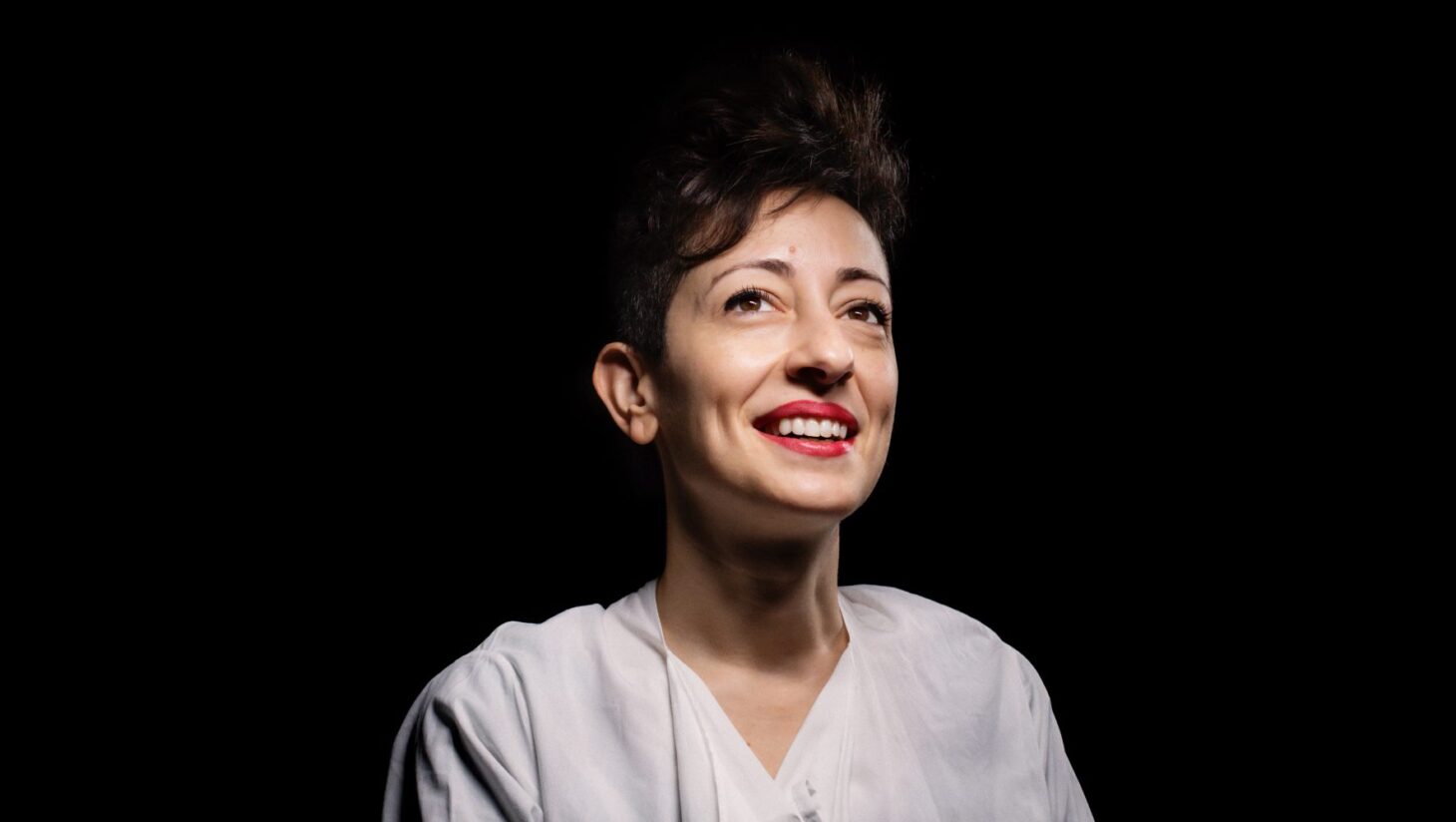
Cover Image, Photography © Gilbert Hage