Jusoor Design Collections Connects Saudi Design to the World
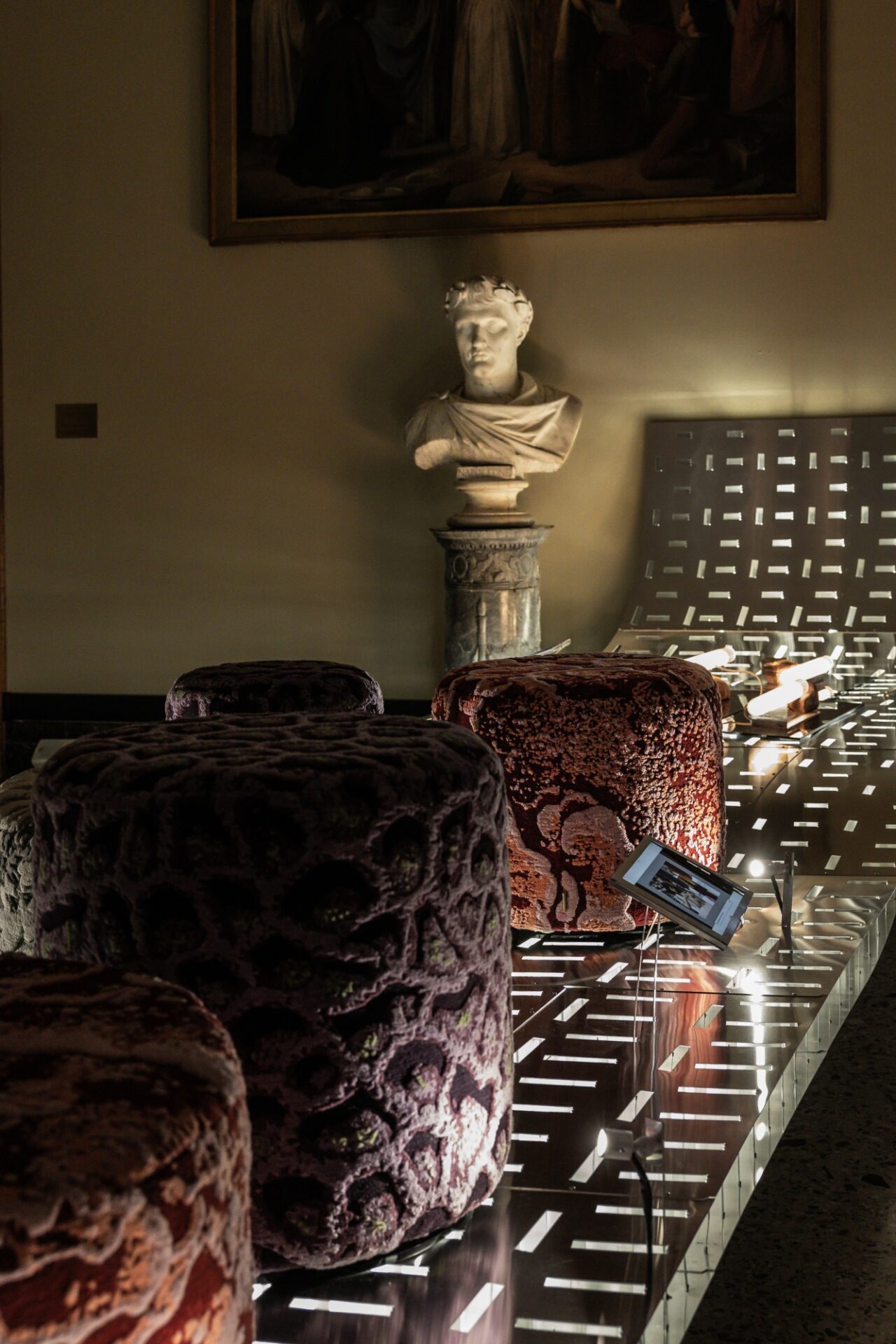
At Milan Design Week 2026, the Saudi Architecture and Design Commission presented Jusoor Design Collections at the historic Pinacoteca di Brera, marking the international debut of a platform that moves beyond exhibition-making into something more structured and long-term.
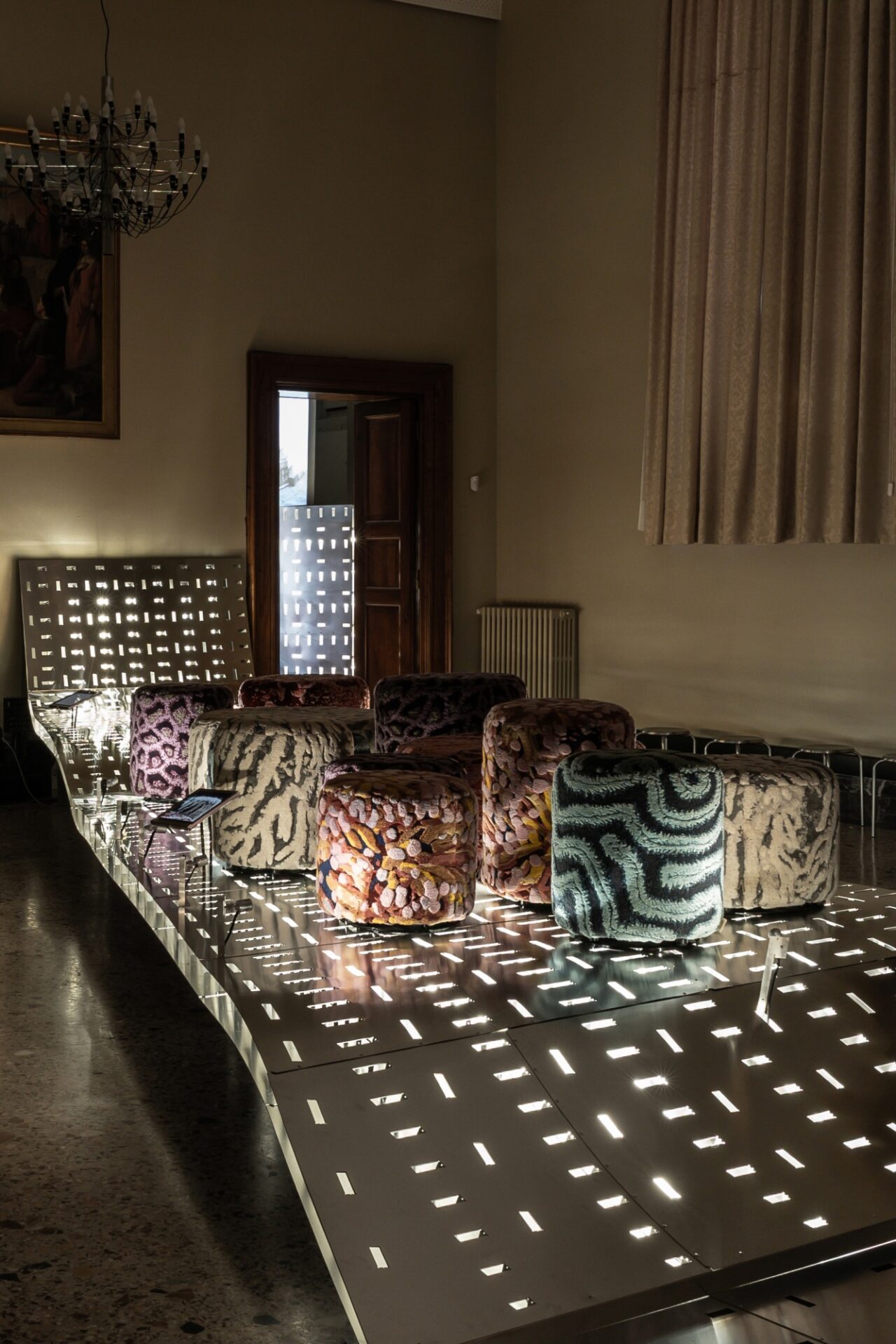
Jusoor Collection at Pinacoteca di Brera.
Jusoor, meaning “bridges” in Arabic, is conceived as a platform for exchange between Saudi designers and international design brands. Developed by Creative Dialogue, a platform focused on cross-cultural design collaborations, and in collaboration with AMSY Lab, a research-driven practice working at the intersection of design, strategy, and innovation, the programme brings together five Saudi designers and studios from India, Nepal, and Spain.
Curated by Samer Yamani, whose work engages with design as a cultural and narrative medium, shaping projects that sit between these disciplines, structuring design as a shared process rooted in dialogue and collective production.
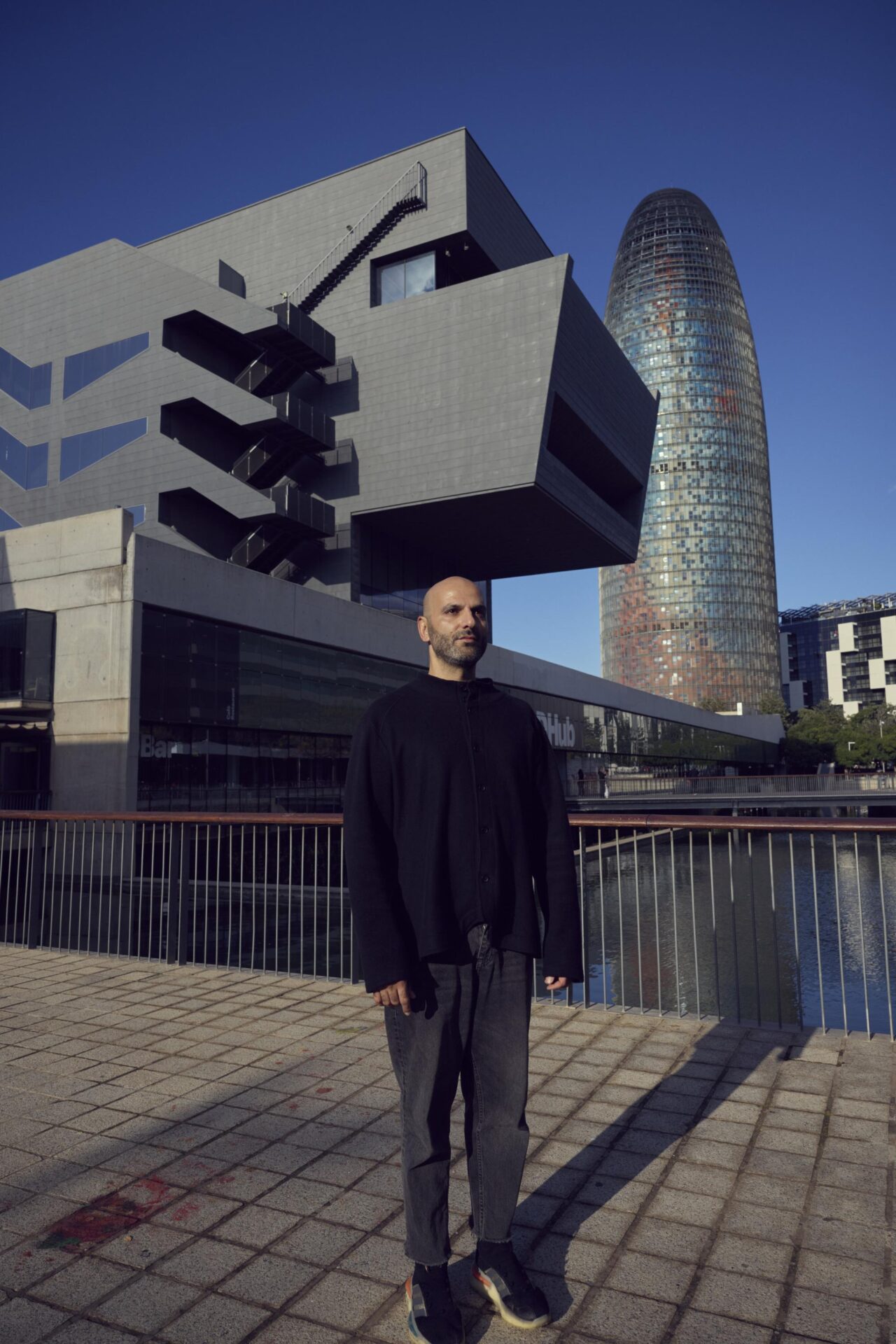
Curator of Jusoor, Samer Yamani.
Jusoor brings together five Saudi designers in collaboration with international design partners, including Klove Studio, Iwan Maktabi, and Lagranja Design. The resulting works are outcomes of exchanges that unfolded across Riyadh, New Delhi, Kathmandu, and Barcelona, where ideas were tested through material, craft, and production.
Beyond Regional Representation
Jusoor Collection at Pinacoteca di Brera.
What emerges is a body of work that signals a shift in how Saudi design is being positioned globally as a participant in a shared design language.
For Samer, this shift is both necessary and overdue. He says that this is the moment when design from the region is no longer approached as a cultural curiosity but increasingly evaluated for its internal rigour, material intelligence, processes, and capacity to innovate.
“We are moving past the era where MENASA design was viewed as a cultural novelty or a cabinet of curiosities,” emphasises Samer.
Jusoor Collection at Pinacoteca di Brera.
“Jusoor is part of this shift by moving beyond the concept of a simple exhibition to build a professional infrastructure. By facilitating direct partnerships between Saudi designers and global industry leaders, we ensure the work is judged by international standards of excellence rather than just its geographic origin,” he says.
“We treat our heritage as a living laboratory for innovation, transforming local elements into a contemporary, universal design language. Ultimately, Jusoor shifts the narrative from “where is this from” to “how does this innovate,” establishing our designers as active partners in the global creative dialogue.
“Innovation, materials, craftsmanship, these are what define the conversation now,” stresses the curator.
By facilitating direct collaborations between Saudi designers and global studios, the platform places the work within a framework where it is measured against international standards, not by geographic identity.
Jusoor Collection at Pinacoteca di Brera.
Heritage, here, is not positioned as something to preserve, but as a working system, “a living laboratory,” as Samer describes it, capable of generating new design languages.
The emphasis shifts from where an object comes from to how it performs and what it contributes.
Design Without Translation
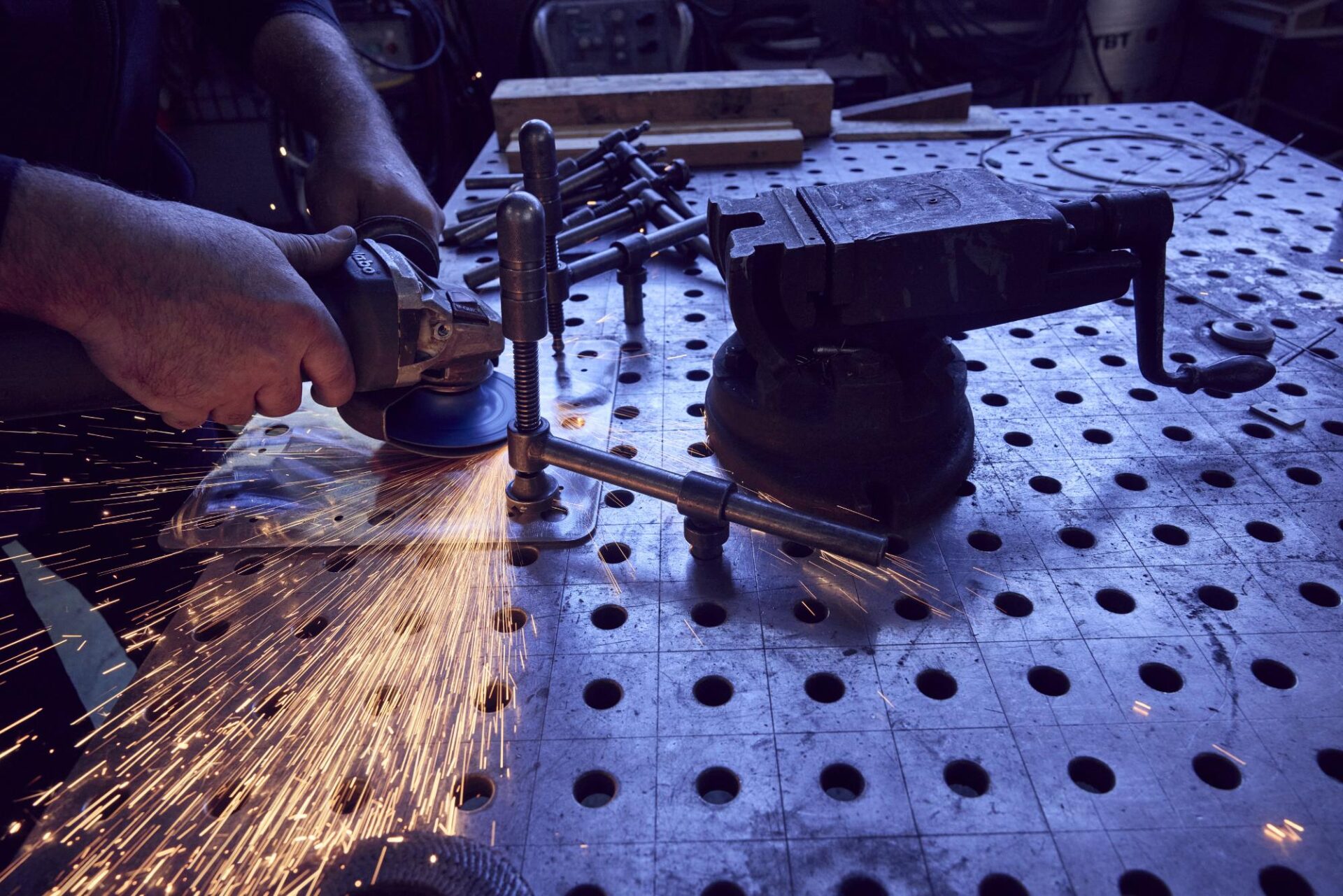
Workshop in Barcelona
This position becomes particularly relevant in Milan, a context that often demands legibility across cultures. Yet, Jusoor resists the idea of translation.
“It’s not about adapting the work to fit expectations,” Samer Yamani says. “It’s about creating resonance.”
The projects retain their material and cultural specificity, but are articulated through a contemporary design vocabulary that is read without mediation. Craft, material, and form become the interface through which the work communicates and is immediately understood.
Within the collection, this approach is evident in how materials and processes are treated. Whether through glass, textile, or metal, the works draw from local references.
“The audience may not know every cultural nuance, but they recognise innovation and craftsmanship immediately. Our approach is to show that Saudi heritage is not a static history to be explained, but a sophisticated design logic that belongs on the global stage. We don’t translate; we invite the audience to meet us where we are,” explains Samer.
Balancing Experimentation and Refinement
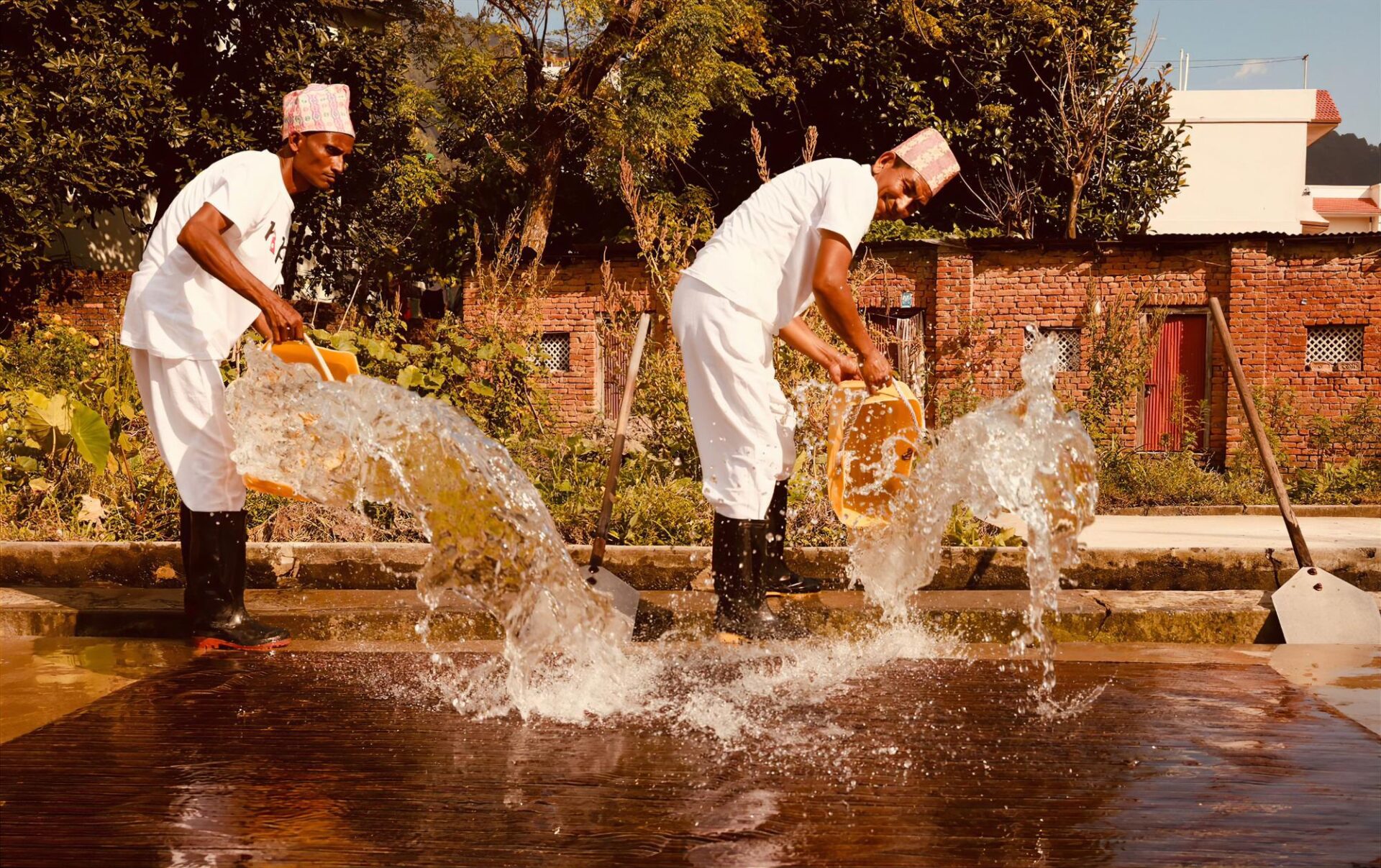
Workers in Nepal.
The structure of Jusoor itself reinforces this forward movement. Emerging designers are placed alongside more established practices, not within a hierarchy, but within a shared framework.
The five participating Saudi designers represent a broad disciplinary spectrum.
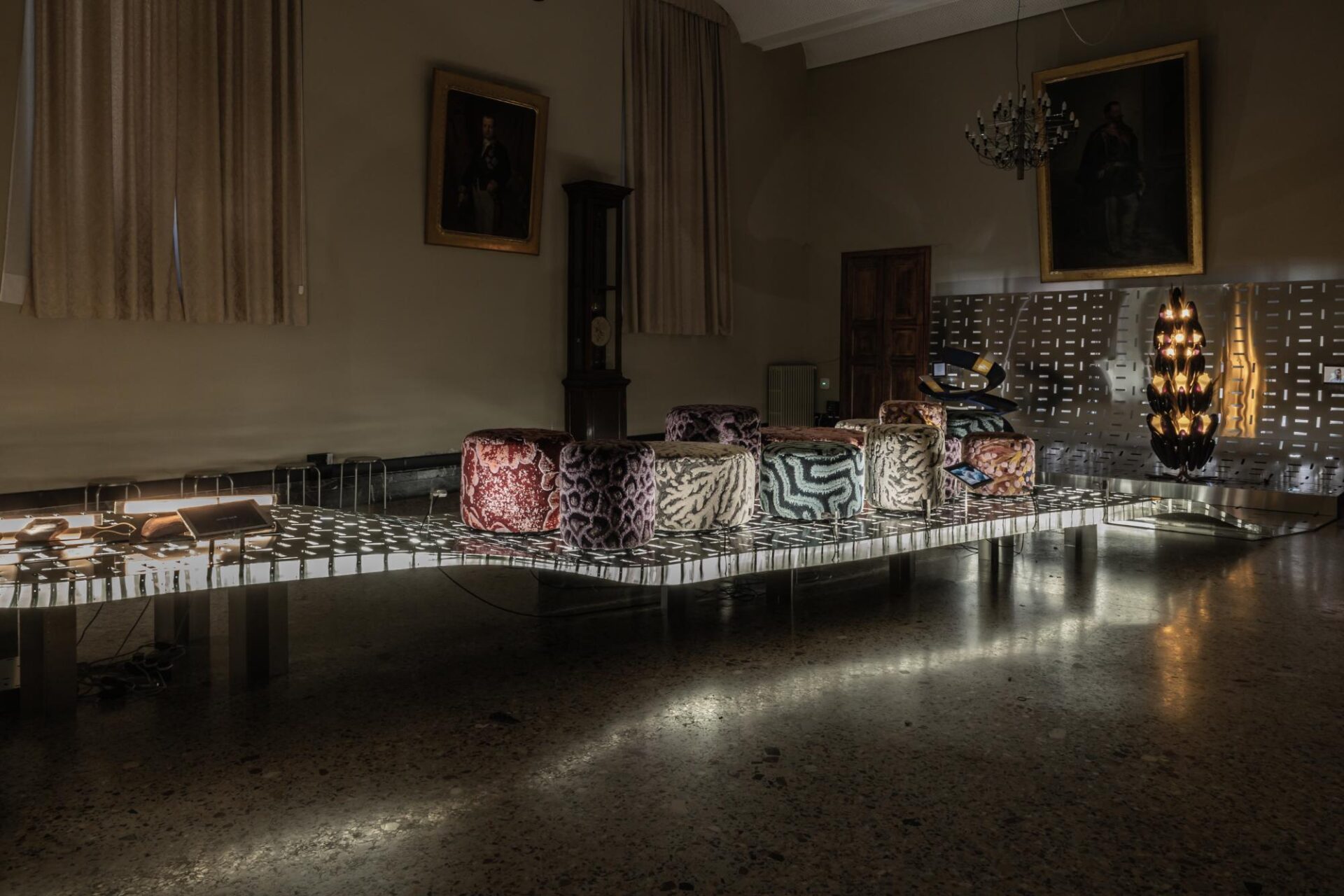
Jusoor Collection at Pinacoteca di Brera.
The first designer, Muotaz Abbas, works with computation and digital fabrication, exploring how emerging technologies can inform design.
Aseel Alamoudi operates between art and architecture, combining digital processes with handcrafted techniques.
Abeer AlRabiah approaches industrial design through narrative-driven objects rooted in heritage, while Albandari Sulaiman focuses on textile and product design, reinterpreting craft traditions through contemporary methods.
Lastly, Saud Alsaleh is a jewellery designer and metalsmith, exploring identity and material culture through sculptural forms.
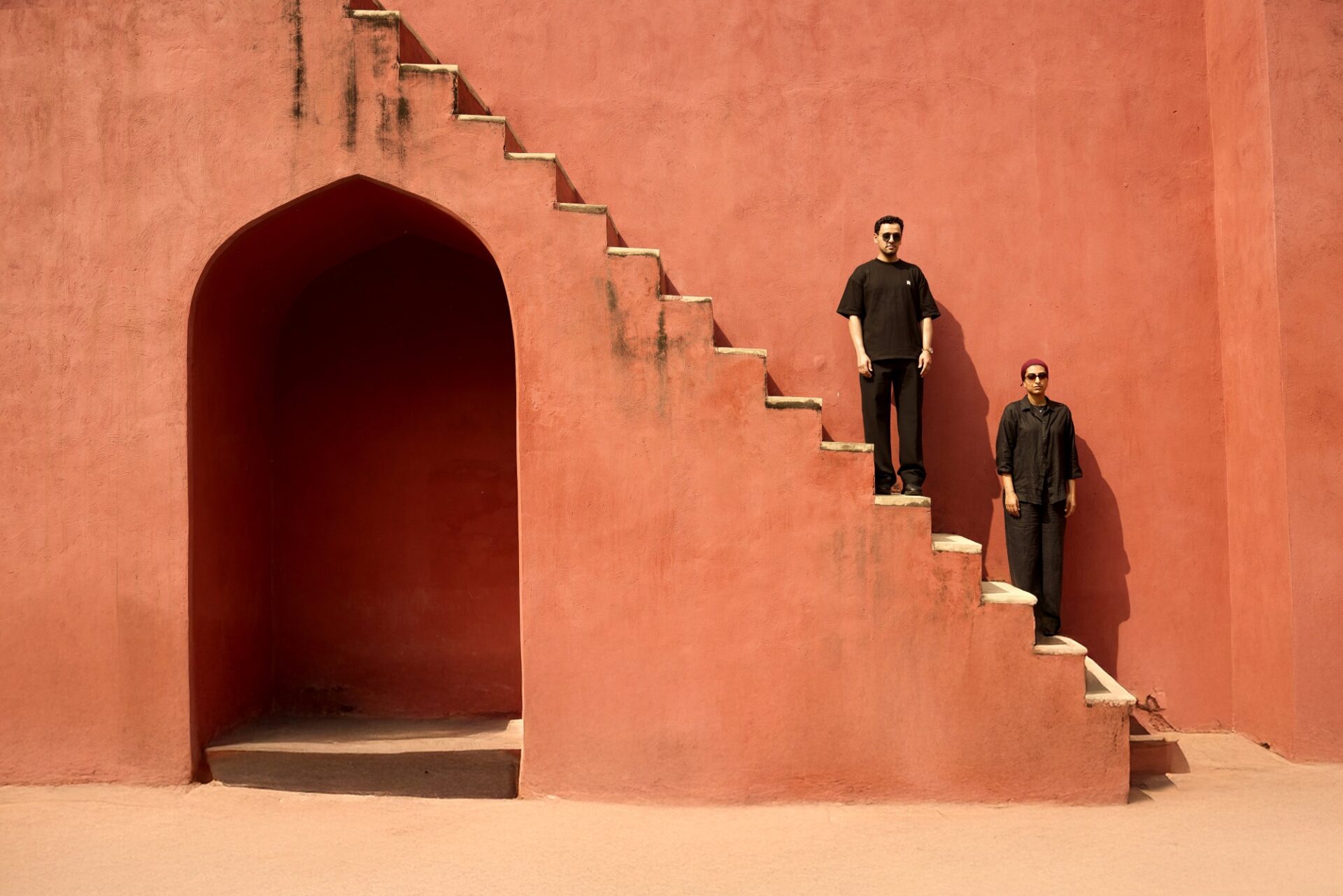
Designers Muotaz Abbas and Aseel Alamoudi collaborated with Klove in India.
These five designers are paired with three international collaborators: Klove Studio from New Delhi, known for its work with glass and lighting, Iwan Maktabi, a design house with a foundation in textile traditions, and Lagranja Design, a Barcelona-based studio working across architecture, interiors, and product design.
On this bold attempt at experimentation, Samer says, “We balance emerging and established designers through collaboration rather than hierarchy. By giving everyone the same professional support, we create a space where they learn from each other.
“The tension between experimentation and refinement is intentional. Emerging designers bring fresh, bold ideas, while established ones provide the experience to make those ideas perfect. This mix allows us to be creative and experimental while ensuring the final work is high-quality and professional.”
A Global Design Dialogue
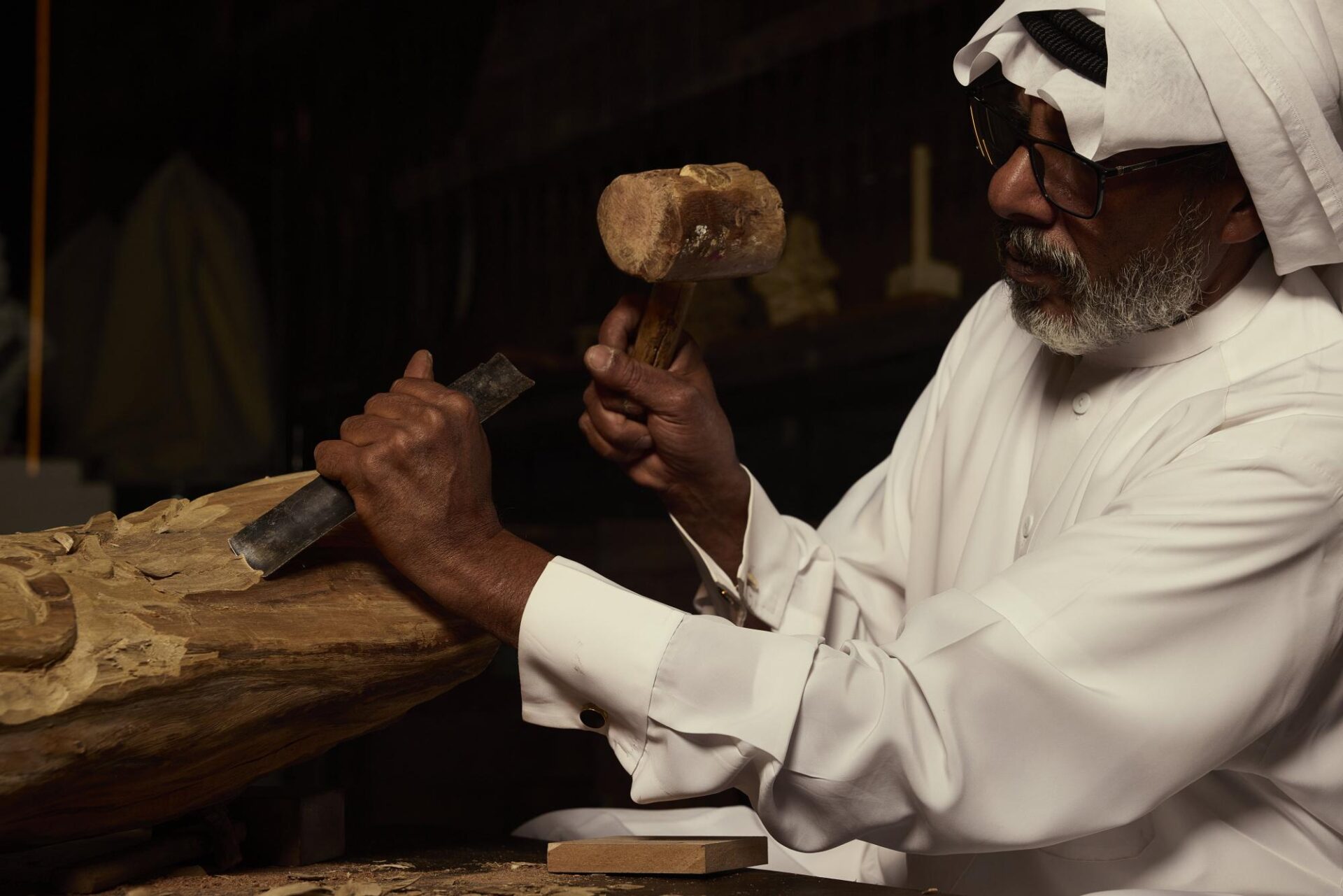
Artisan working in Riyadh
This shift is critical in positioning the work beyond labels. The pieces presented under Jusoor are not framed as “cultural objects,” but as contemporary design.
At Milan, Jusoor does not attempt to explain itself. It presents, it engages, and situates Saudi designers within a network of exchange that is already underway. The bridge it builds is not symbolic; it is operational, linking processes, people, and practices across geographies.
And in doing so, it reframes the question entirely, not where design comes from, but what it is capable of becoming.
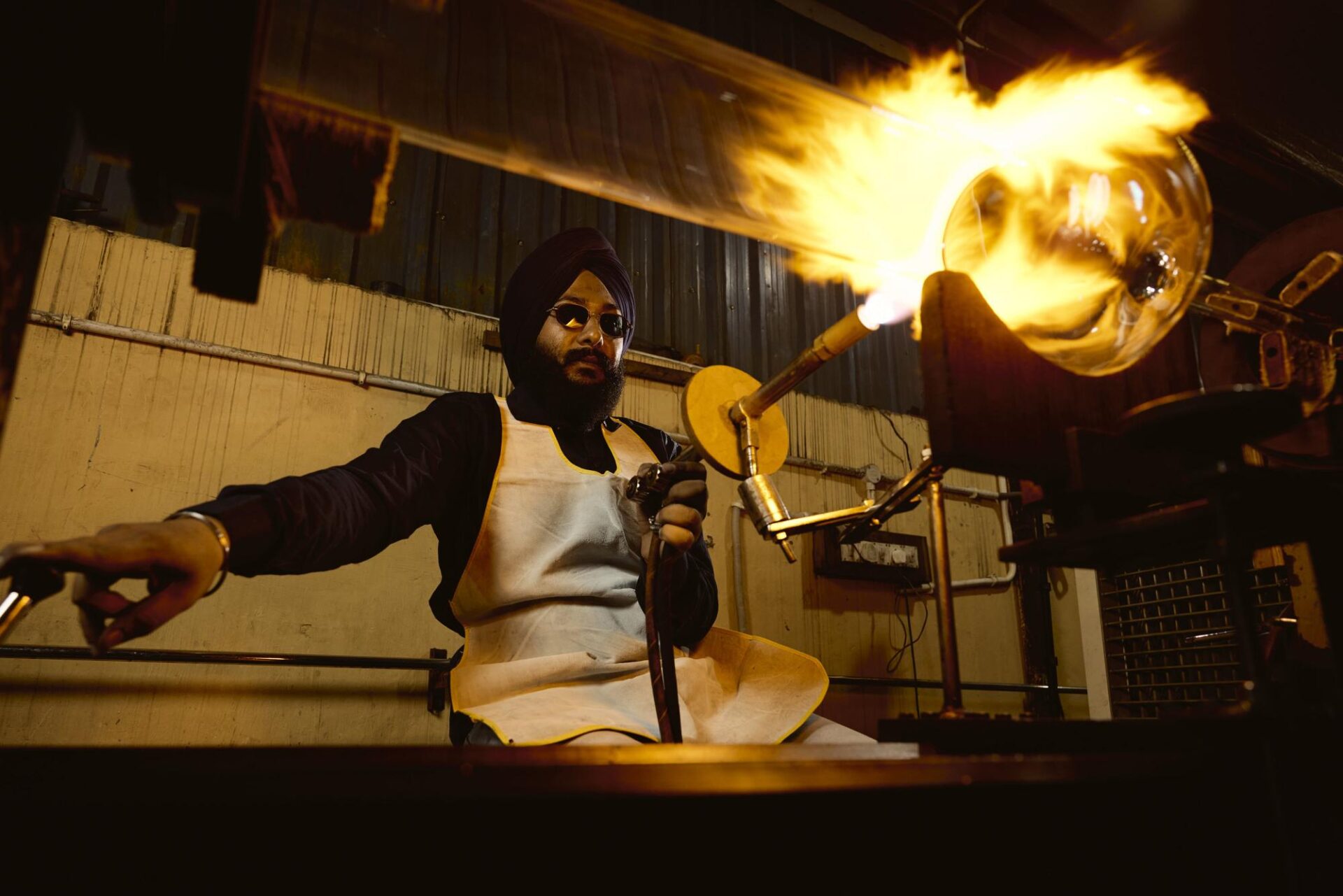
Expert workers in India.
“We are seeing a major shift where tradition is no longer a “museum piece” to be preserved, but a living material to be challenged. Younger designers are moving away from simply repeating traditional patterns. Instead, they are deconstructing the logic behind the craft, questioning the techniques and reworking heritage to solve modern problems. They treat tradition as a starting point for innovation rather than a set of rules to follow. In Jusoor, this is clear: they aren’t just making “cultural” objects; they are creating contemporary pieces that feel fresh, relevant, and global,” says Samer.
Works on View
The exhibition presents four primary works, each developed through these collaborations.
1. Thanoon (Klove Studio with Muotaz Abbas)
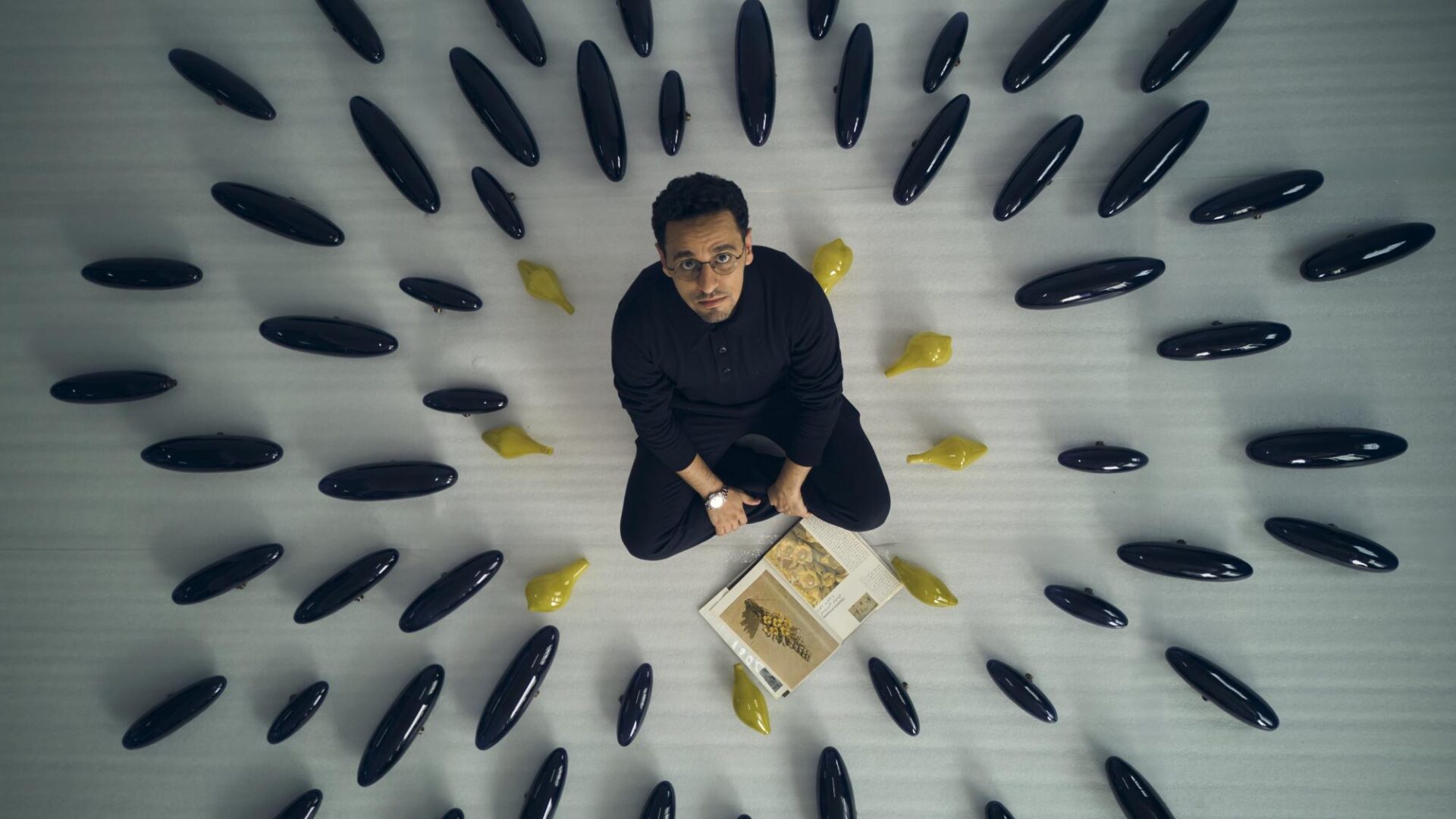
Muotaz Abbas
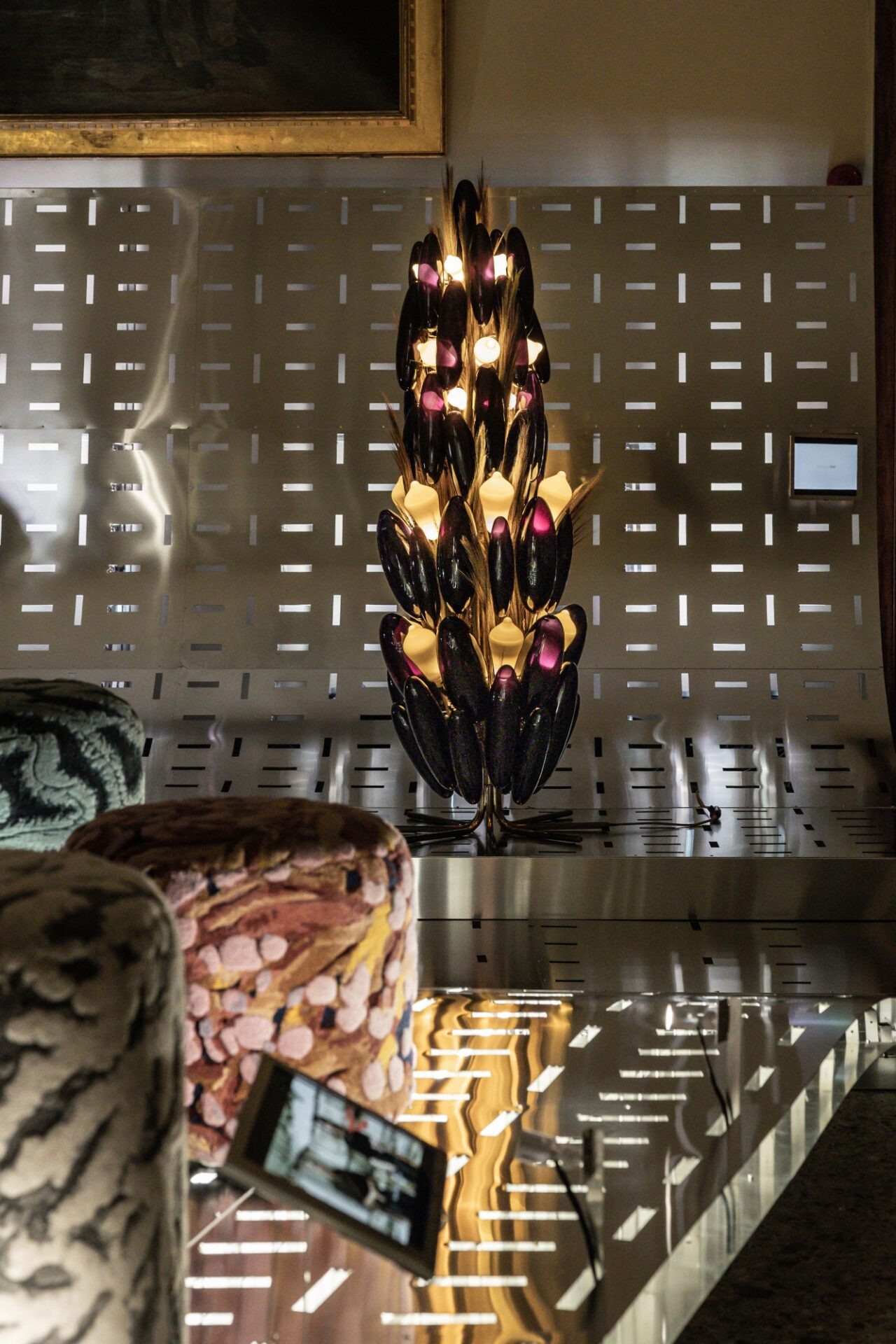
Thanoon is a sculptural floor lamp measuring 170 by 70 cm, drawing on the Cistanche plant found in desert environments and translating its clustered growth into a composition of interconnected geometric elements.
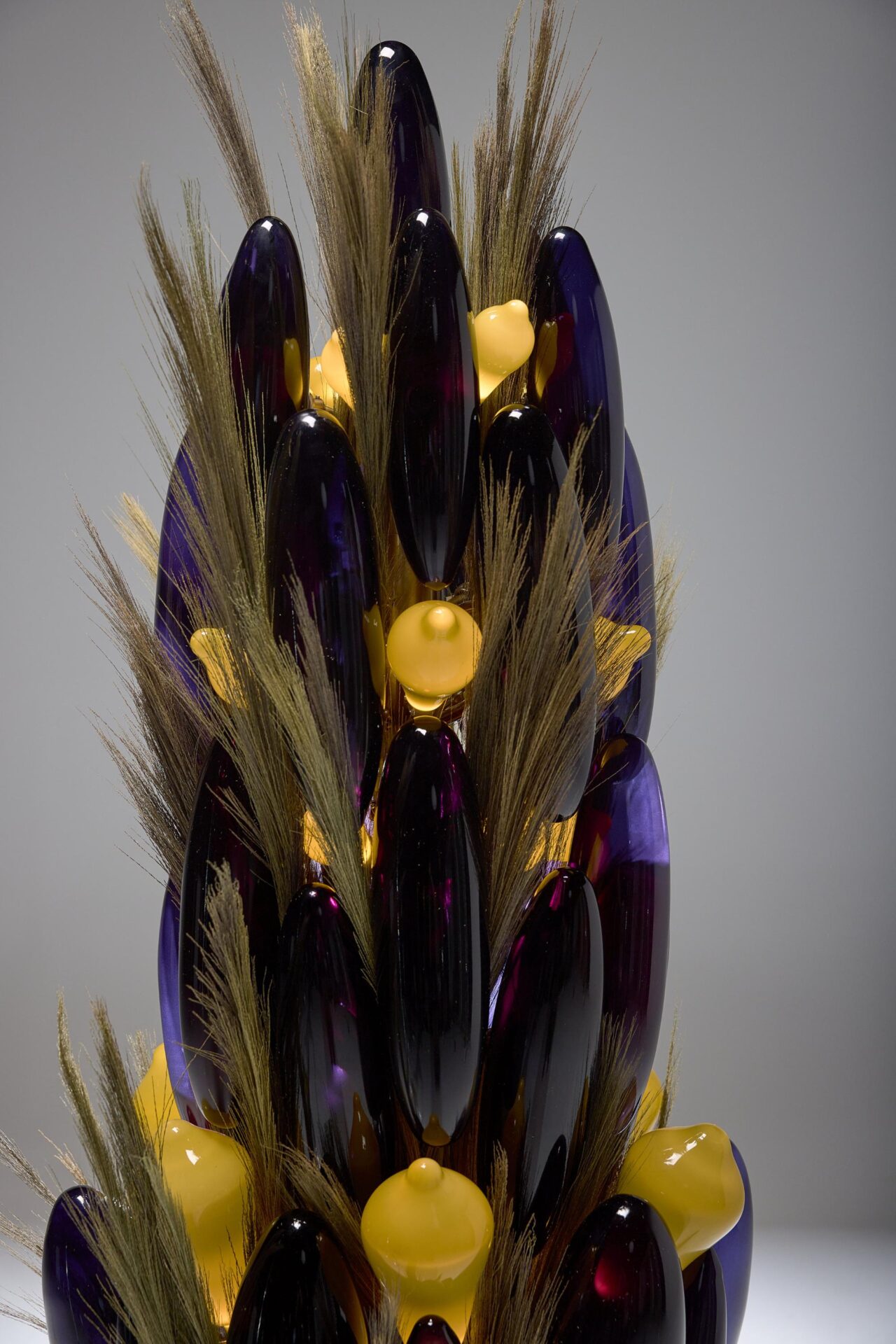
Thanoon.
Designed in glass, metal, and natural fibres, the piece works with a palette of warm ambers balanced by cooler tones, evoking the atmosphere of the desert. Light and shadow become central to the experience, giving the object a sense of depth and movement.
2. Takween (Klove Studio with Aseel Alamoudi)
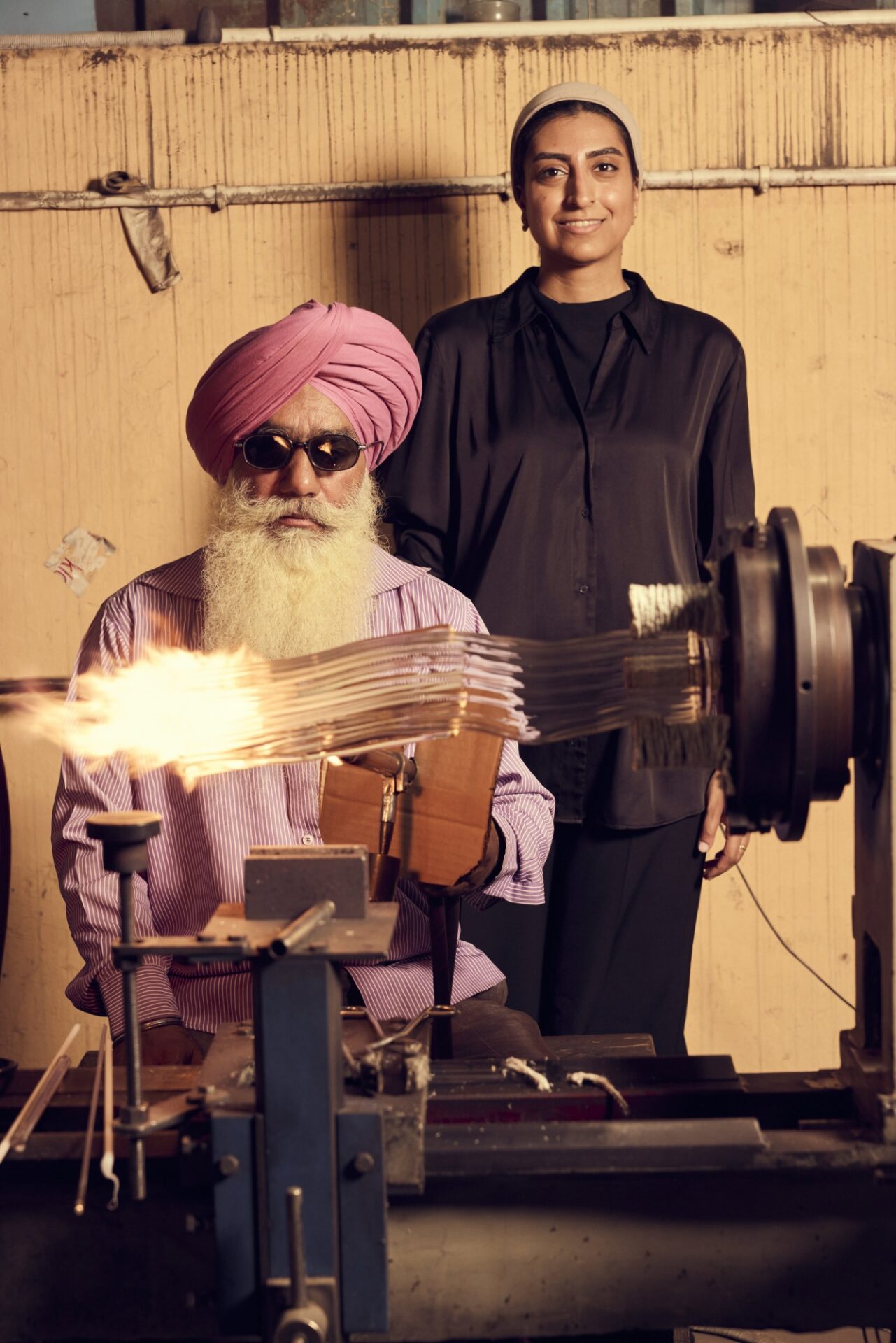
Aseel Alamoudi with an Indian craftsman.
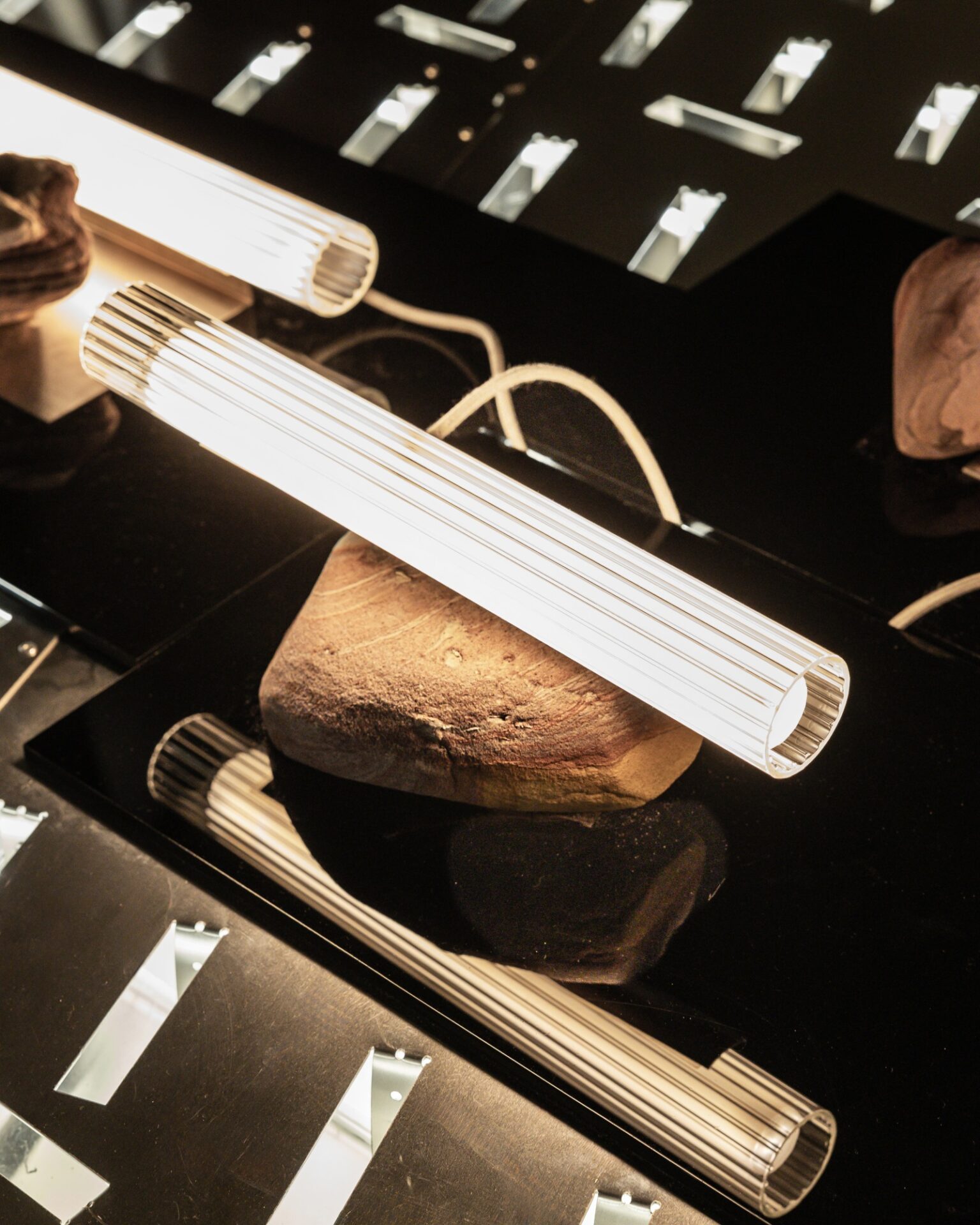
Takween is a series of three table lamps that examine the relationship between natural and industrial materials. Each lamp combines raw sandstone, hand-blown glass, and stainless steel, allowing the materials to retain their distinct qualities, such that light acts as a connective element, revealing variations in texture, colour, and reflection.
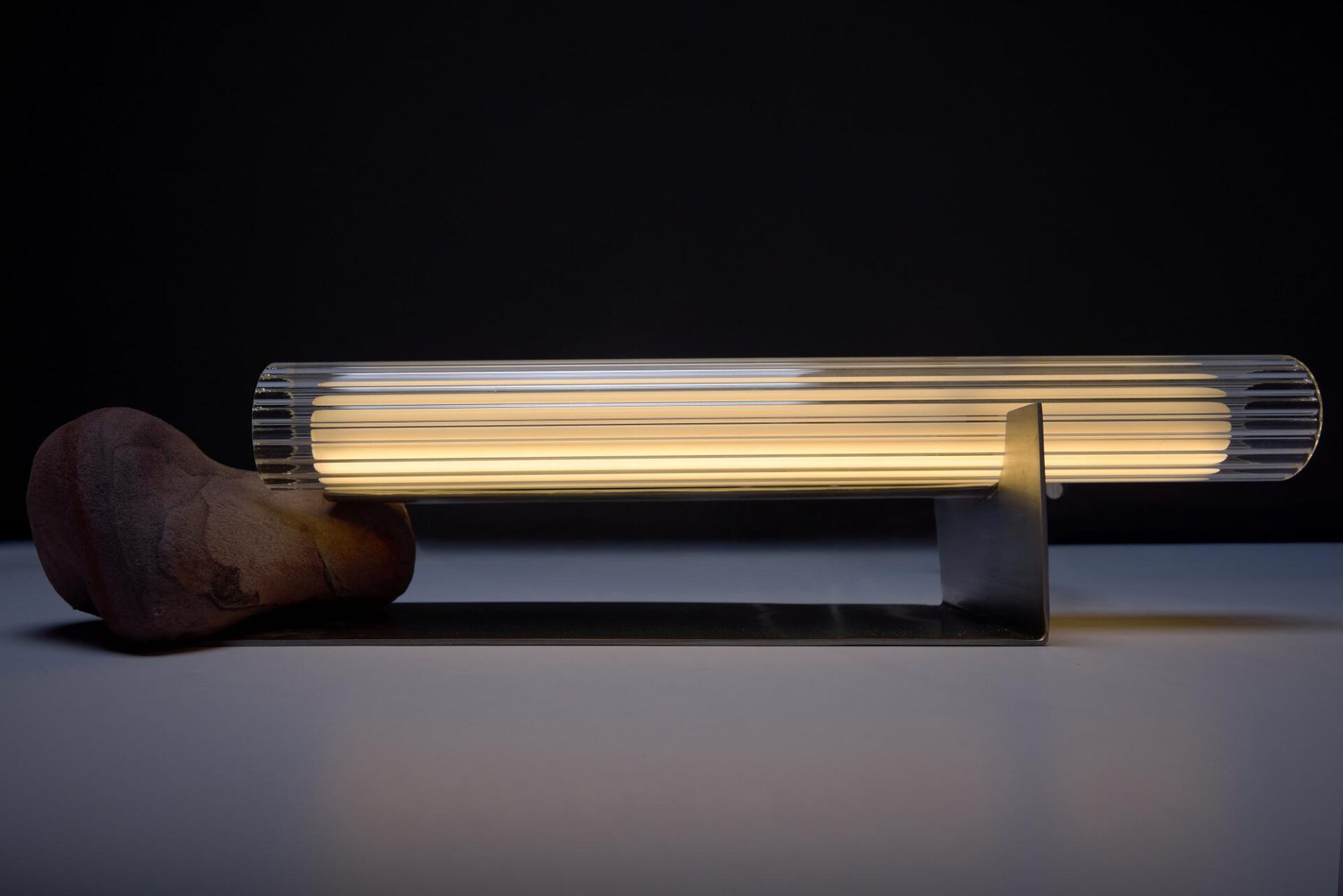
Takween.
The uniqueness of each component ensures that no two pieces are identical, reflecting both material specificity and process.
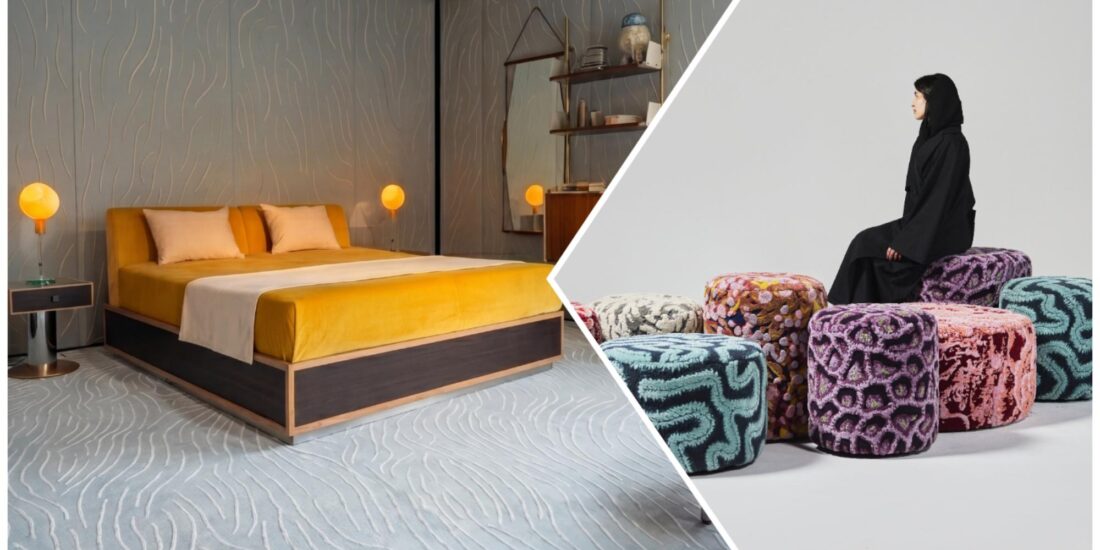
3. CORA Collection (Iwan Maktabi with Abeer AlRabiah and Albandari Sulaiman)
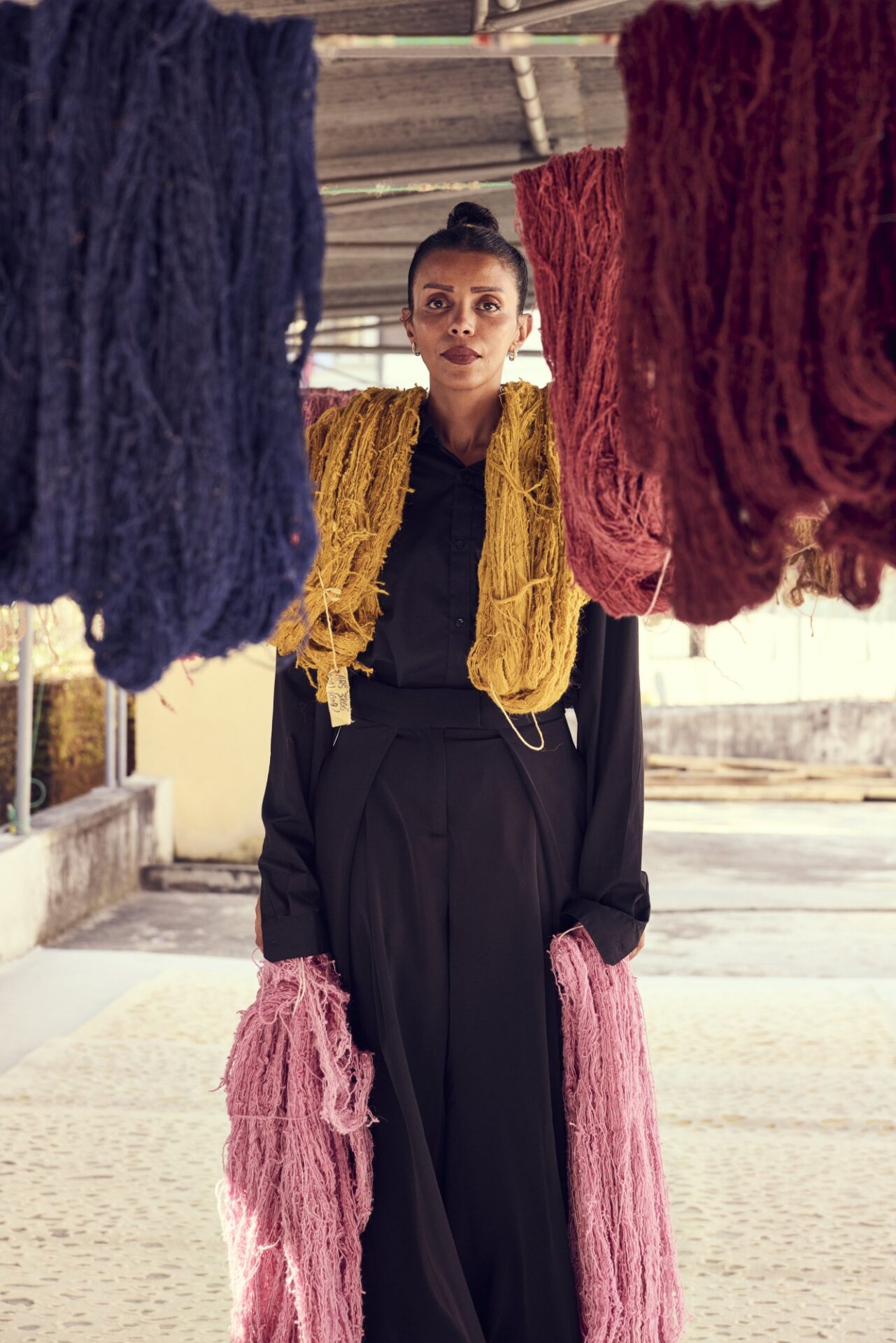
Albandari Sulaiman
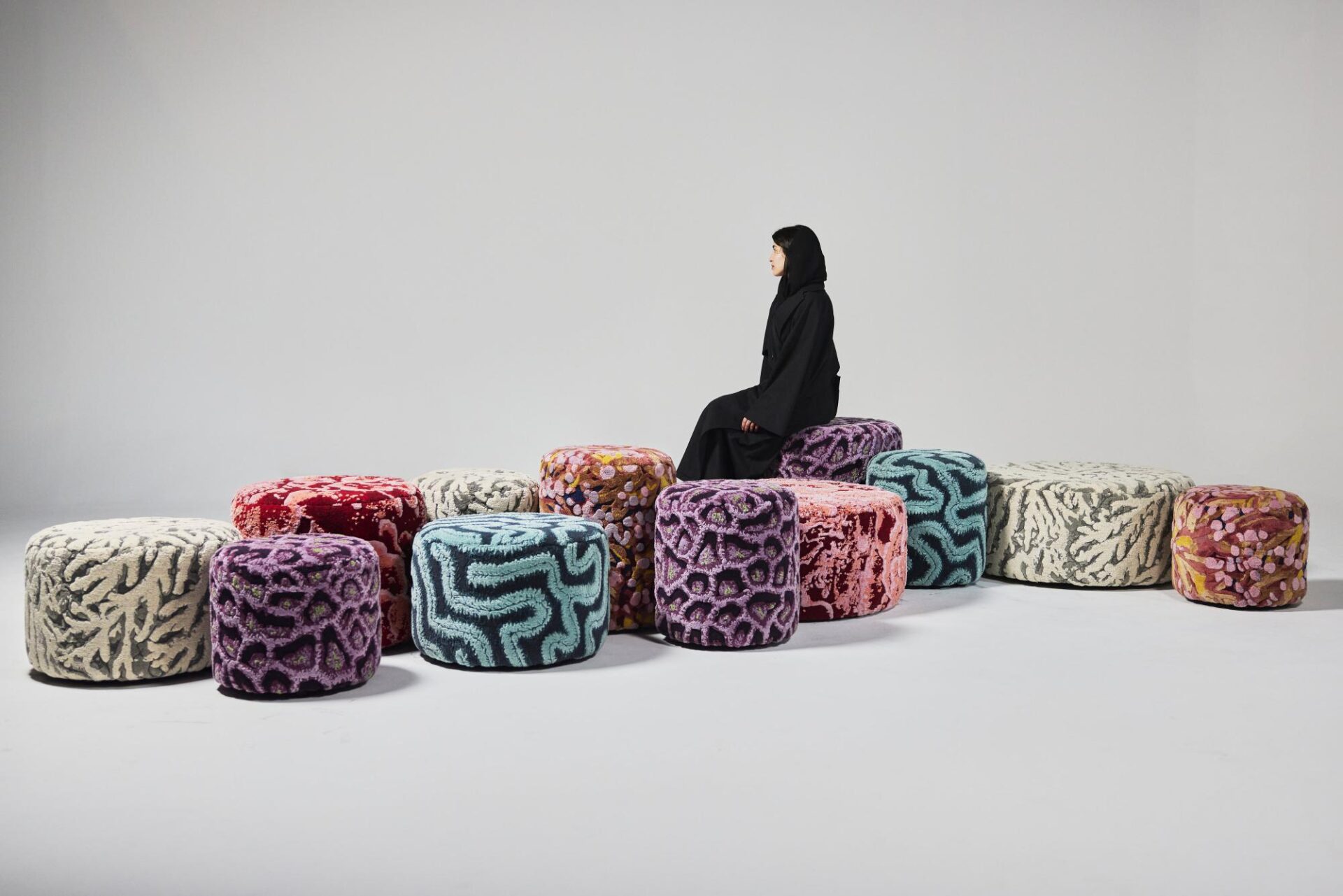
The Cora Collection
CORA Collection consists of 12 seating pieces inspired by five coral species native to Saudi Arabia – Platygyra, Goniastrea, Montipora, Euphyllia, and Acropora. In this collection, handwoven carpets are transformed into three-dimensional stools, shifting textiles from surface application into structural form. The pieces echo the rhythm, resilience, and chromatic richness of coral ecosystems, while three bleached pieces are included to draw attention to the fragility of marine environments, grounding the collection in environmental awareness as much as material exploration.
4. TAH Bookshelf (Lagranja Design with Saud Alsaleh)
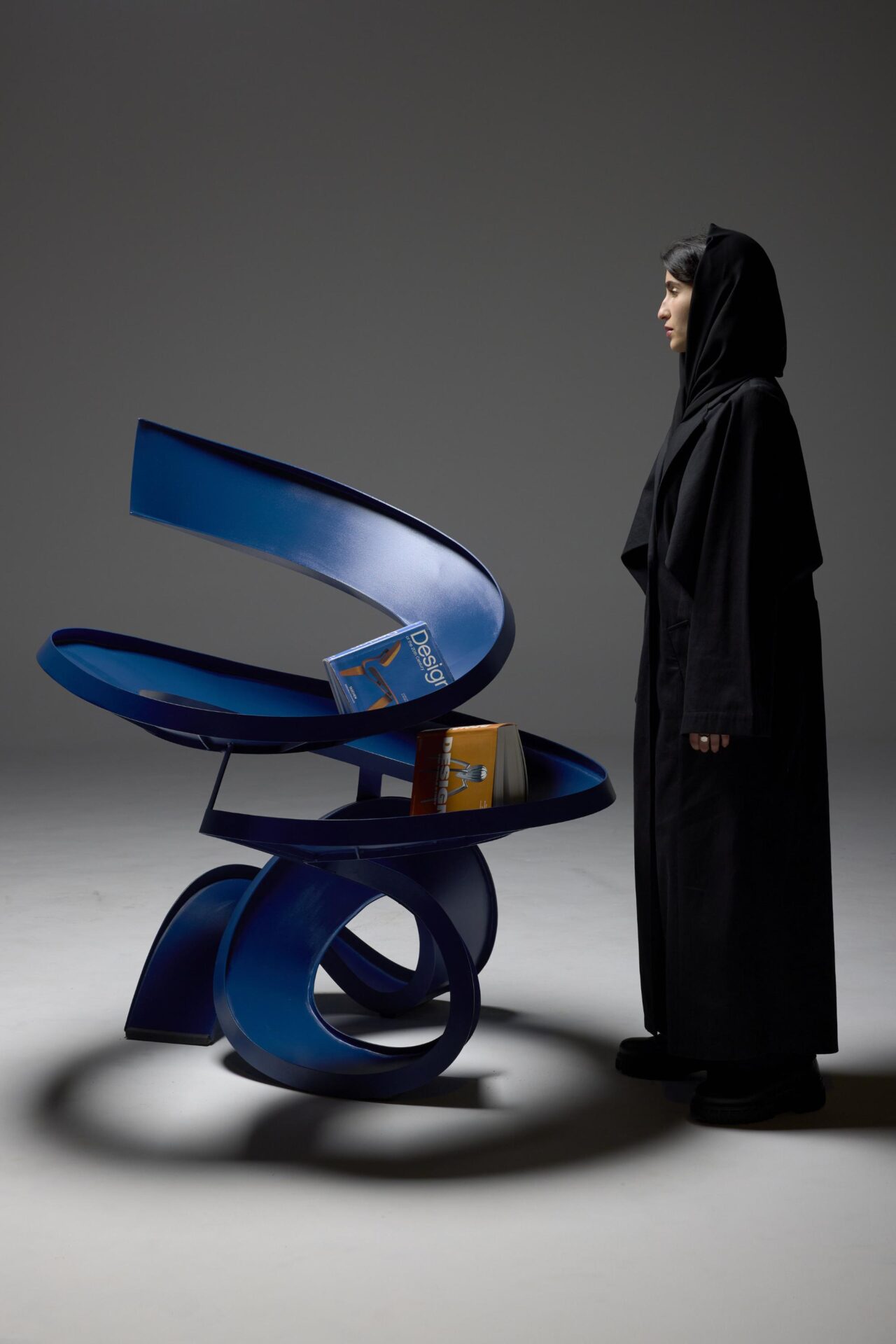
TAH Bookshelf
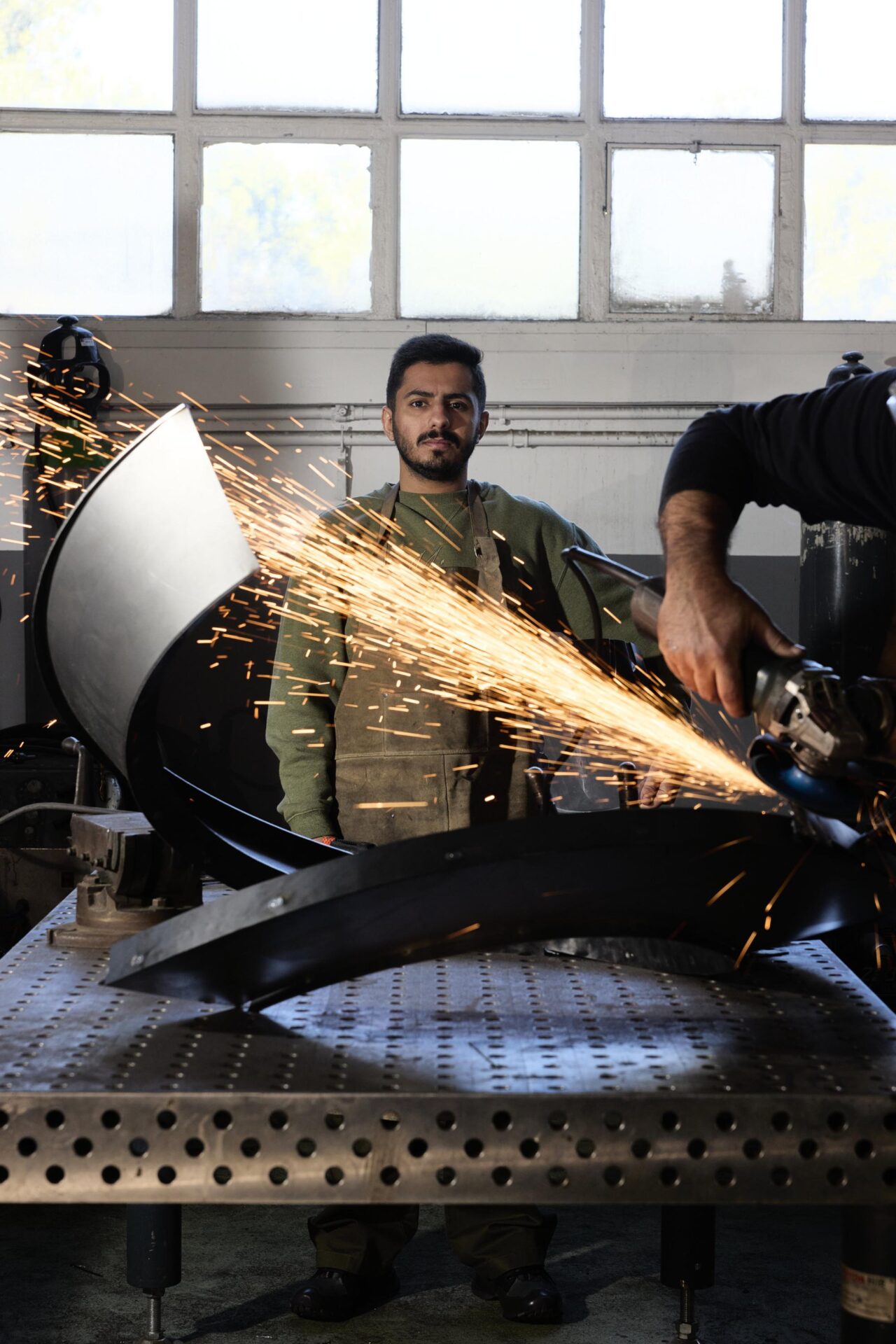
Saud Alsaleh.
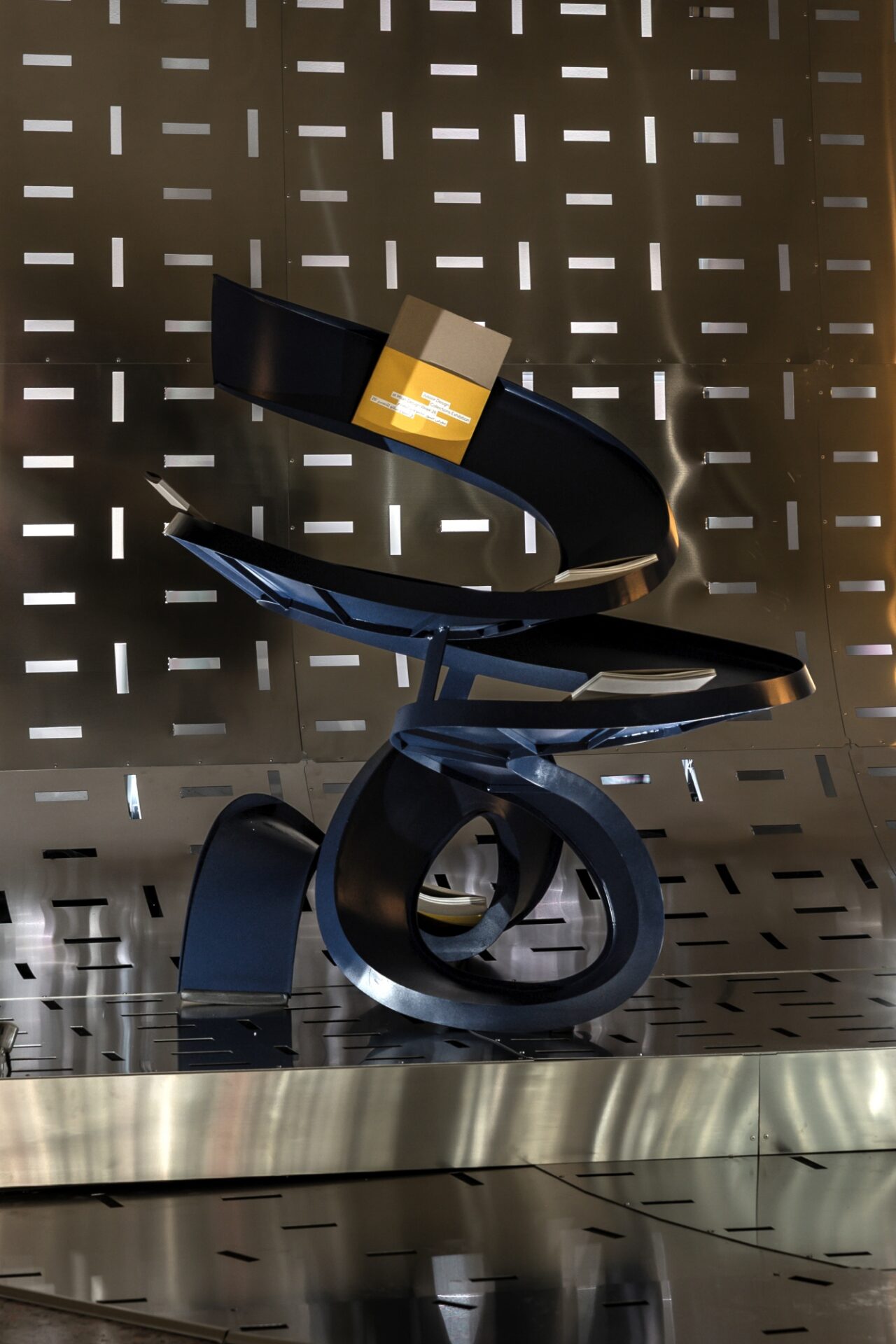
TAH Bookshelf is a metal shelving system shaped as a spiral, measuring 120 by 130 cm. Drawing from Alsaleh’s personal experience with dyslexia, the piece reflects a non-linear approach to reading and knowledge.
The spiral becomes both a formal and conceptual device, suggesting continuity, return, and progression, while functioning as both storage and sculptural object.
A Continuing Process and Production
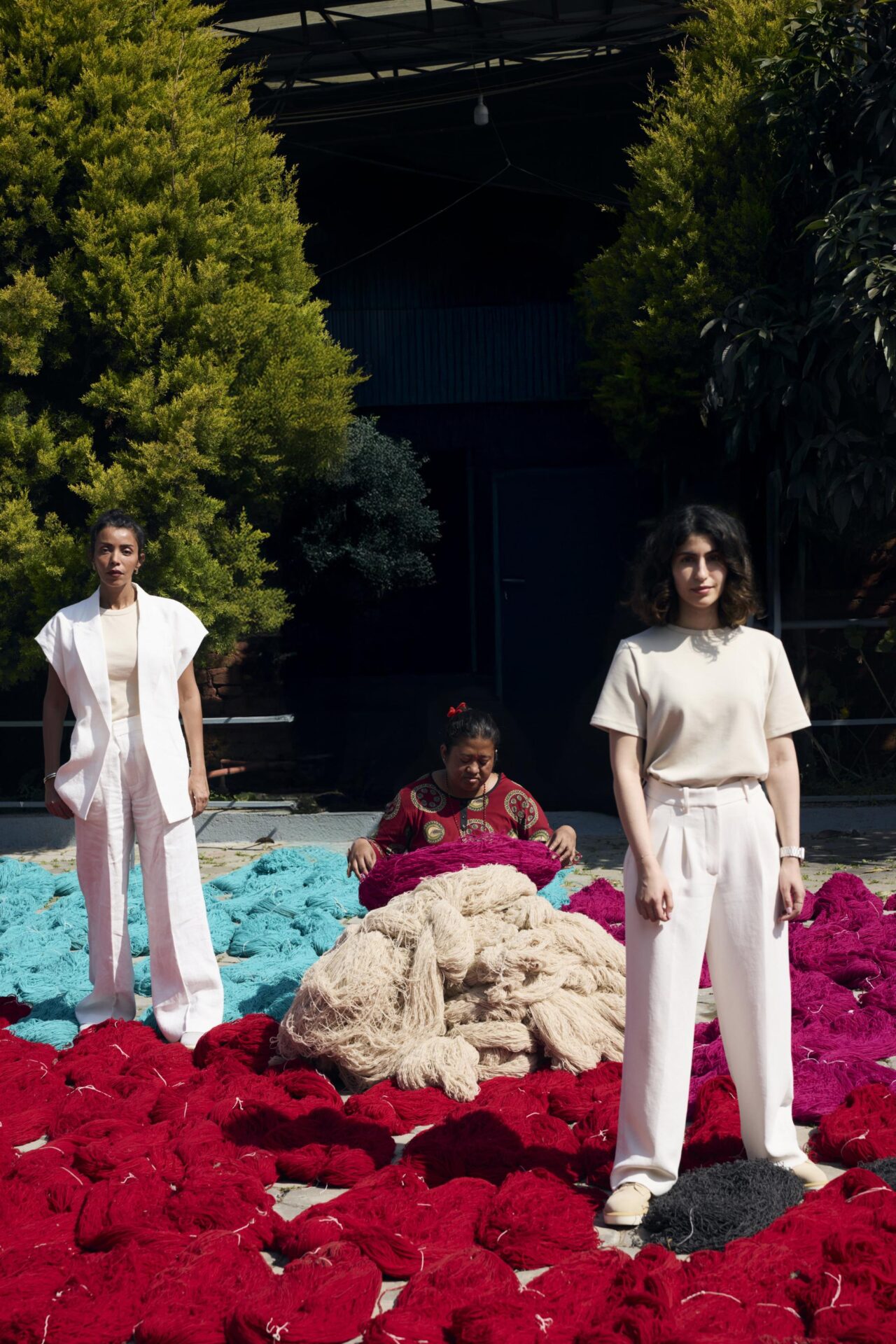
Abeer AlRabiah and Albandari Sulaiman worked with artisans in Nepal.
A defining aspect of Jusoor is its emphasis on process. Each project is developed through direct engagement between designers and makers, with workshops forming a critical part of the programme. These sessions allowed designers to work closely with materials and fabrication techniques, whether in glass studios, textile workshops, or metal fabrication facilities.
“Jusoor is structured as an ongoing programme rather than a one-time exhibition. The Milan Design Week marks the first international chapter of a larger initiative aimed at fostering long-term collaborations between designers, brands, and production networks. By focusing on process as much as outcome, Jusoor establishes a framework where design operates through exchange, while continuing to evolve beyond the exhibition itself,” states Samer.