Qatar’s MOFA Headquarters: Architecture Shaping Civic Identity
Qatar’s new Ministry of Foreign Affairs (MOFA) Headquarters will mark a significant architectural addition to Doha’s Corniche, one that combines civic responsibility, design clarity, and a strong commitment to heritage. The State of Qatar has commissioned Frida Escobedo to design this 70,000 m² complex.
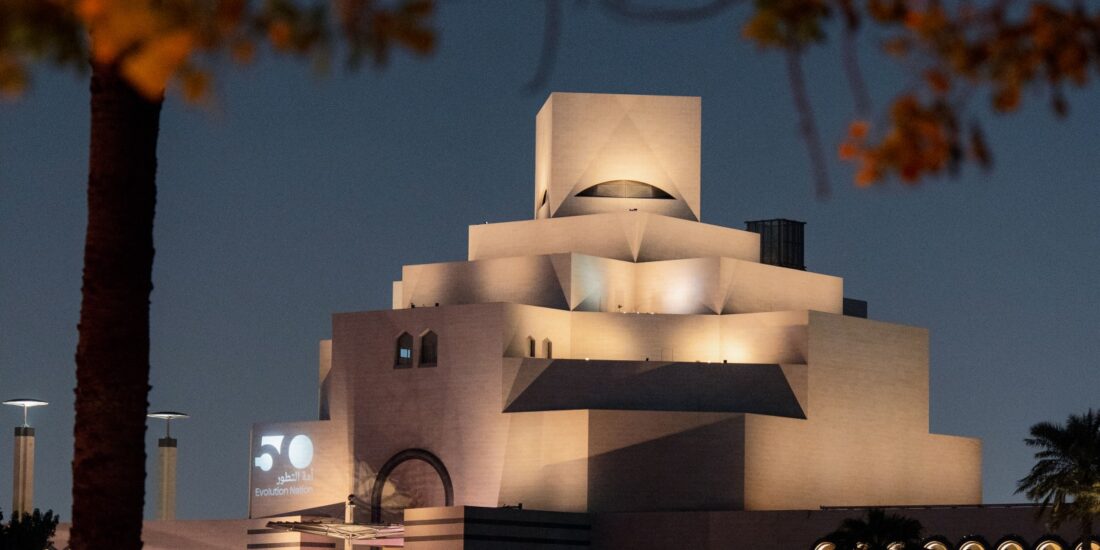
The MOFA HQ that will introduce a contemporary diplomatic landmark while integrating one of the city’s most recognisable modern buildings: the 1985 General Post Office.
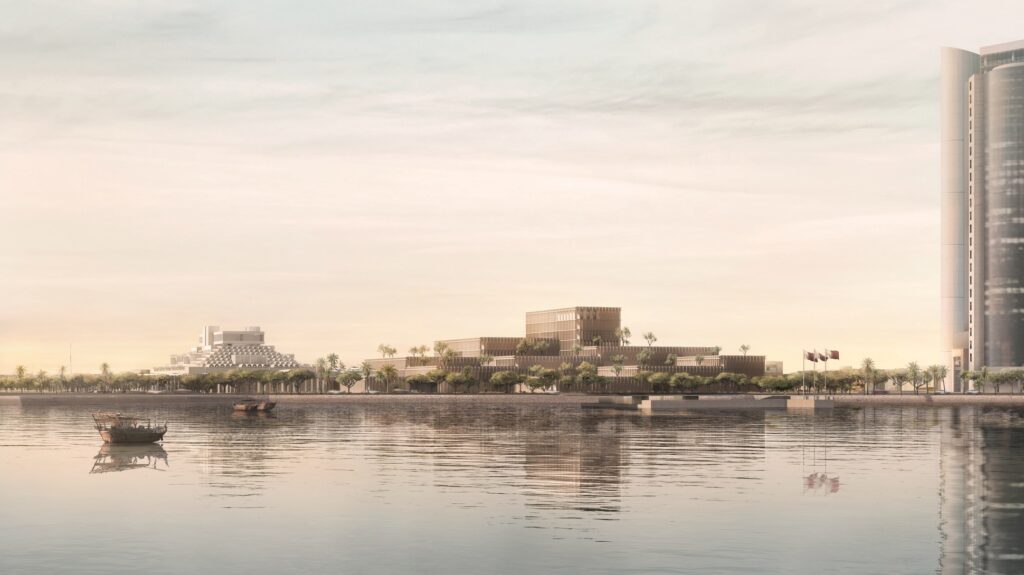 The chosen site along Doha’s waterfront is strategically important—a prominent stretch near the Amiri Diwan and part of the historic civic spine of the city. Frida Escobedo’s design positions the MOFA Headquarters as a clear civic marker, offering both visibility and accessibility to the public. The project includes new construction combined with the adaptive reuse of the General Post Office, a structure known for its distinctive modernist “pigeonhole” façade that has long held architectural significance in Qatar.
Importantly, the decision to retain and transform the Post Office signals an institutional shift toward heritage-sensitive development, aligning with Qatar Blueprint’s broader goals for preservation and adaptive reuse.
Adaptive Reuse as a Diplomatic Gesture
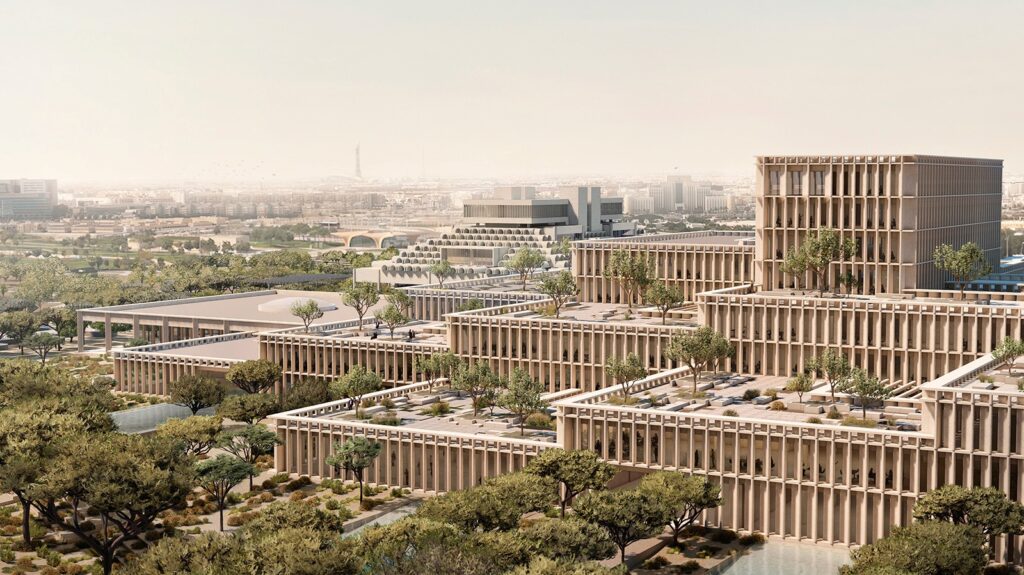 Rather than treat the Post Office as an isolated remnant, Escobedo incorporates it into the new complex as a functional and symbolic anchor. Key features include: Preserved sightlines that respect the original structure’s silhouette from the Corniche; Integration of its geometric language into the new façade system, creating continuity between eras; Transformation of the ground floor into a public exhibition space that opens onto a covered garden.
This adaptive reuse strategy reframes the Post Office as a place for cultural diplomacy—reinforcing MOFA’s wider mission through architecture.
Courtyard-Centered Architecture Rooted in Climate and Culture

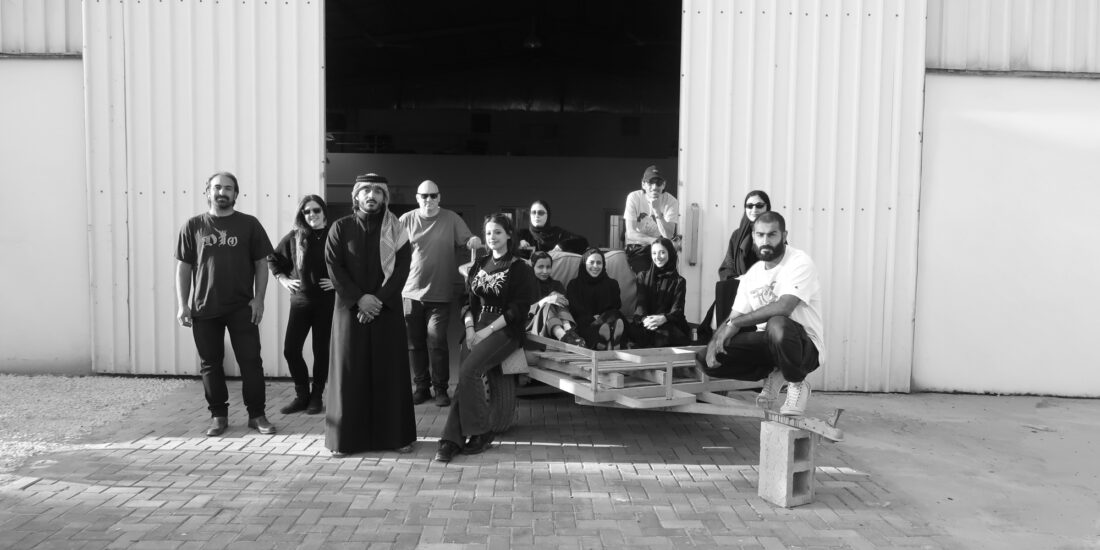
Frida Escobedo, Architektin, im MET Museum
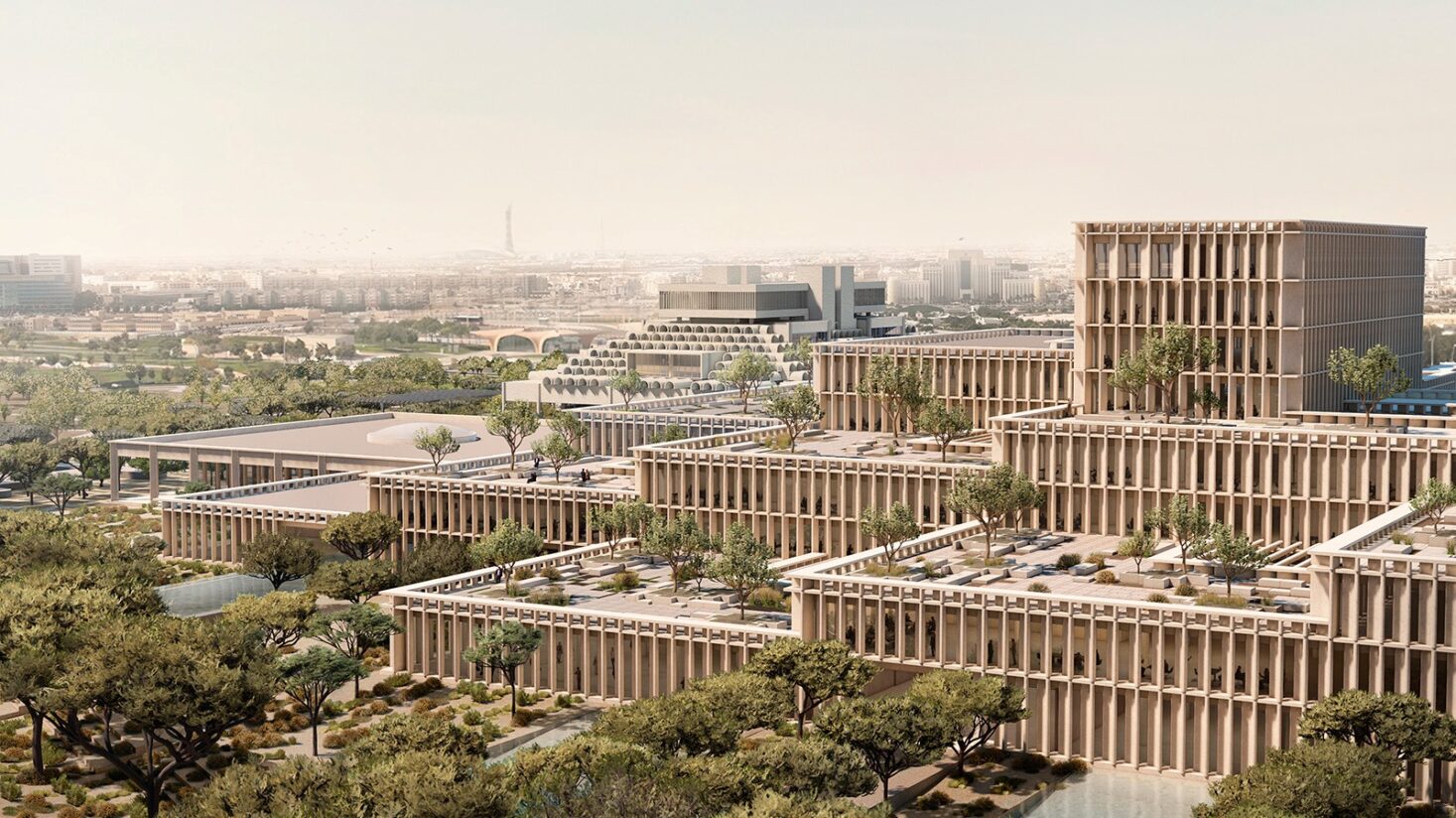
Frida Escobedo’s design is organised around a series of interconnected courtyards, a recognisable architectural typology in both Gulf and Mexican traditions. These patios serve several purposes:
It serves climate responsiveness through shaded, vegetated courtyards improve thermal comfort and energy efficiency. The courtyards have a spatial rhythm as they break down the large program into smaller, human-scaled volumes. It also has diplomatic utility, as the courtyards create informal spaces for conversation, gatherings, and reflection.
The architecture terraces northward, offering nature-filled platforms that overlook Doha Bay while keeping the General Post Office in visual dialogue with the new construction. This sequencing of terraces and courtyards builds a spatial landscape that is both functional and ceremonial.
A Façade That is About Shade, Privacy, and Transparency
The new headquarters is wrapped in a façade of vertical pillars, forming a layered, protective envelope. This approach provides shade for the building’s perimeter, reducing solar gain, controlled transparency, allowing glimpses in while maintaining diplomatic discretion and sets a unified exterior language that binds together new construction with the older Post Office.
The rhythm of these pillars reinforces the building’s civic identity—serious, confident, and recognisably contemporary without being monumental for its own sake.
Landscape Framework Interwoven with Architecture
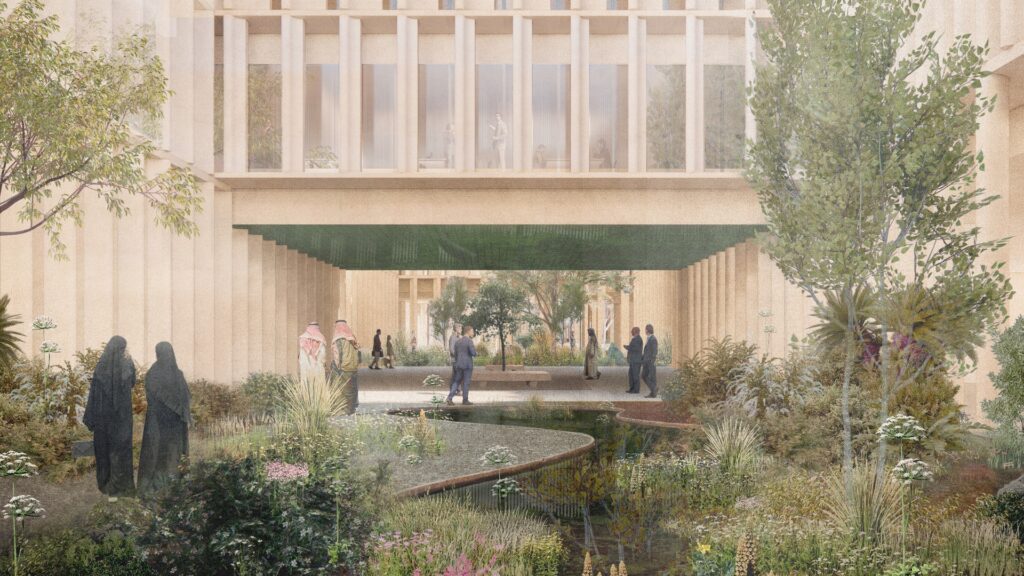 In collaboration with Studio Zewde, the landscape extends the architecture’s intention rather than surrounding it. Gardens, shaded walkways, and planted terraces merge with the internal courtyards to create a continuous indoor-outdoor experience. This landscape strategy supports thermal comfort through shade and planting. There is public engagement in the areas designated for cultural programming and a sense of openness unusual for diplomatic complexes, signalling the Ministry’s outward-facing mandate.
The adaptive reuse of the General Post Office culminates in a covered garden, forming a generous public threshold between the civic realm and the Ministry.
An International Competition Reflecting Global Ambition
Escobedo’s proposal was selected from an international shortlist of seven teams, drawn from 40 invited global practices. This competitive process, organised by Malcolm Reading Consultants, reinforces Qatar’s commitment to architectural excellence and its desire to position the MOFA Headquarters as both a functional institution and a symbolic gateway.
This new headquarters reflects more than administrative needs. It merges heritage preservation, landscape intelligence, and contemporary architectural thinking, producing a complex that is deeply contextual and forward-looking. Escobedo’s design carries the language of diplomacy into built form: calm, open, shaded, layered, and connected.
By integrating a beloved modern structure and introducing a new architectural vocabulary rooted in courtyards and terraced forms, the project positions Qatar not only as a global diplomatic hub but also as a leader in thoughtful, climate-conscious, and heritage-sensitive design.