Back to Matter: Our Picks from SaloneSatellite 2026
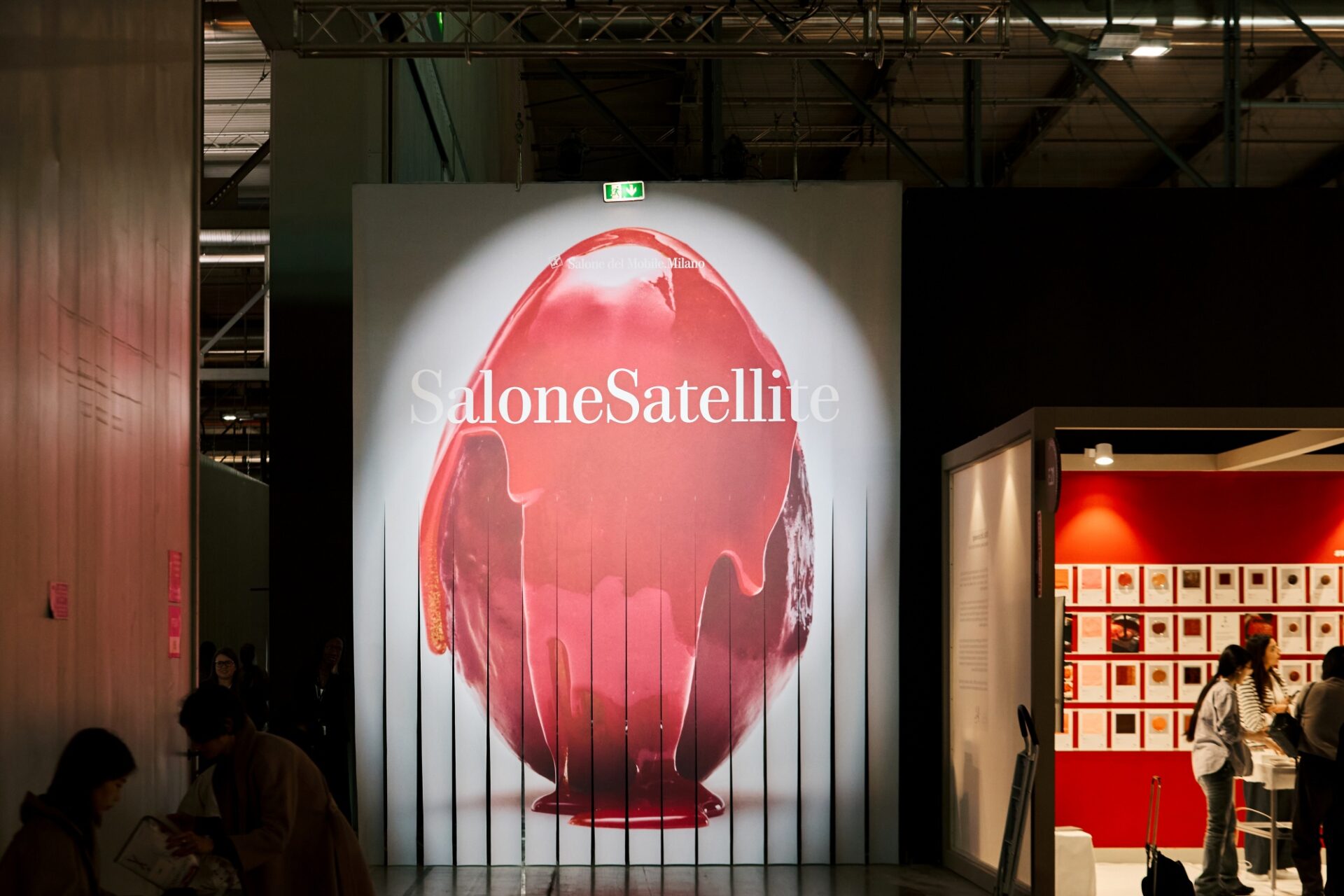
If the main pavilions of the Salone del Mobile are the polished, high-tech engine of the global design industry, then Pavilions 5 and 7 are its beating heart, or perhaps its most restless, creative nervous system. Returning for its 27th edition, SaloneSatellite has once again confirmed its reputation as the launchpad for emerging talent. By Juan Torres
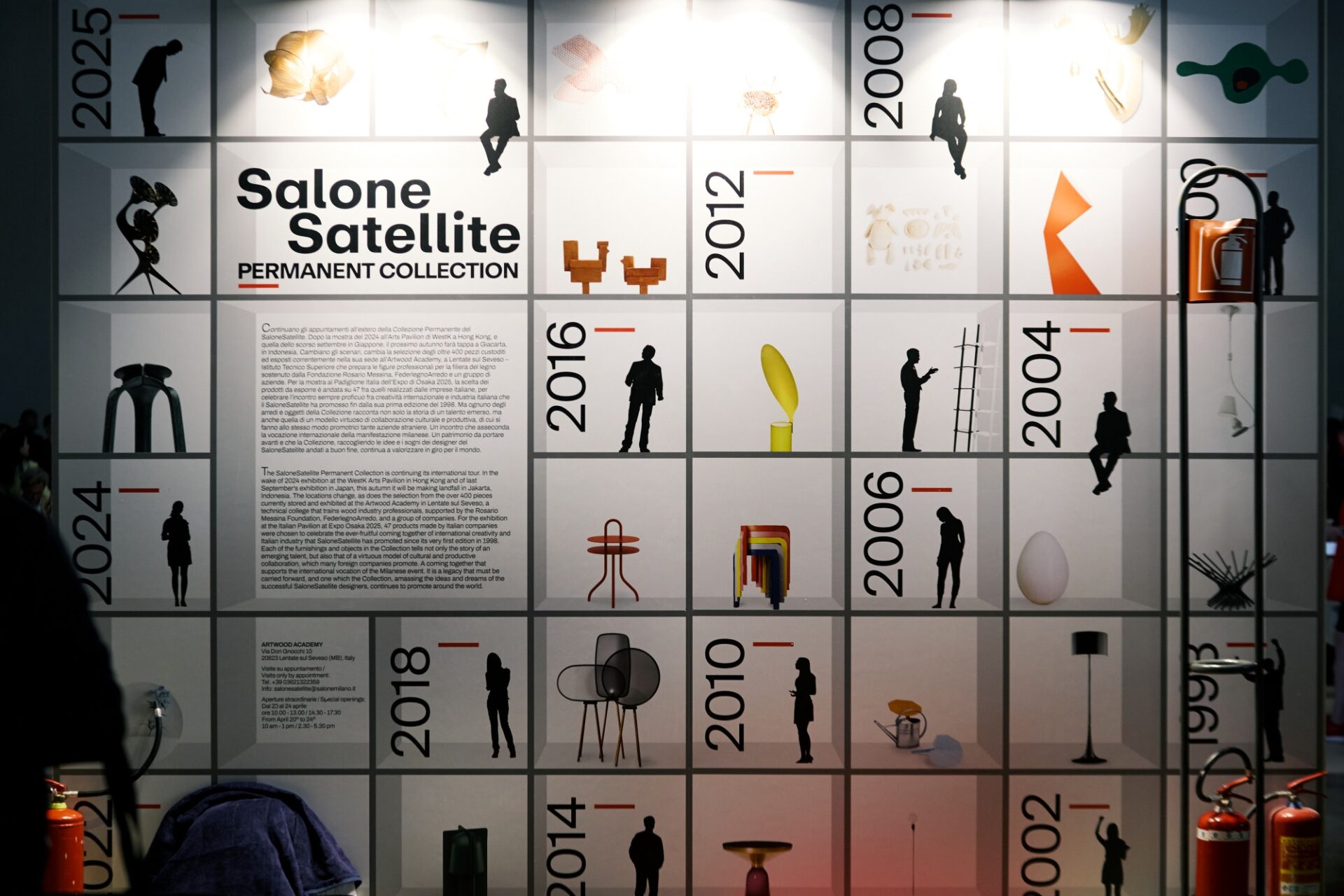 The 2026 iteration of SaloneSatellite, curated by Marva Griffin Wilshire, brought together over 700 designers under 35 from 39 different countries, alongside 22 international design schools and universities. But beyond the numbers, it is a shift in perspective that truly defines this year.
Under the theme “Skilled Craftsmanship + Innovation,” the atmosphere in the halls felt less like a trade show and more like a collective manifesto. After years of chasing the promise of perfectly rendered digital futures, there is a palpable pivot happening here. The generation on display isn’t trying to escape the physical world; they are re-engaging with it, and with real conviction. These are the digital-natives-turned-makers: designers who use AI and algorithmic precision not as a crutch, but as a new set of tools to push the boundaries of materials like wood, stone, and recycled waste.
SCALE team walked through the booths to find what was worth paying attention to, and some of our picks also happened to be recognised by the SaloneSatellite Award, now at its 15th edition. Here is our selection:
Nippon by Russo Betak

Ark collection Photography: Jacob Storm
Based in Copenhagen and founded in 2025 by Stefannia Russo (Brazil) and Søren Betak (Denmark), this studio received the First Prize of the SaloneSatellite Award 2026.

First Prize Winners of Salone Sattelite Awards 2026, RUSSO BETAK
Their practice is a radical departure from conventional 3D printing: rather than letting a machine produce a finished object, they treat the printer as a tool for creating raw material. By developing their own horizontal printing system, Russo and Betak have revived the spirit of modernist moulded plywood, applying it to a future-facing, bio-based medium.

Ark collection Photography: Jacob Storm
Nippon is the centrepiece of the Ark collection (named after the Danish word for “sheet”). The project began with a surprising discovery: restaurant waste, specifically the shells of oysters, mussels, and scallops, contains a crystalline structure that diffuses light with extraordinary warmth. The studio blends these crushed shells with a biopolymer to 3D print flat, flexible sheets. While the material is still warm and fluid, it is hand-rolled and folded into its final shape, capturing what the designers call a “frozen gesture.”
Nippon reimagines the typology of the Japanese paper lamp through a Danish lens: it appears delicate and translucent like paper, but the material is entirely self-structural and rigid. The jury, led by Paola Antonelli, praised the pendant for its “intuition ahead of the market,” noting how the layered sheets filter light with a depth and rhythm that only this specific combination of digital precision and manual sculpting could achieve.
3D Printed Ceramic Tiles by Ious Studio
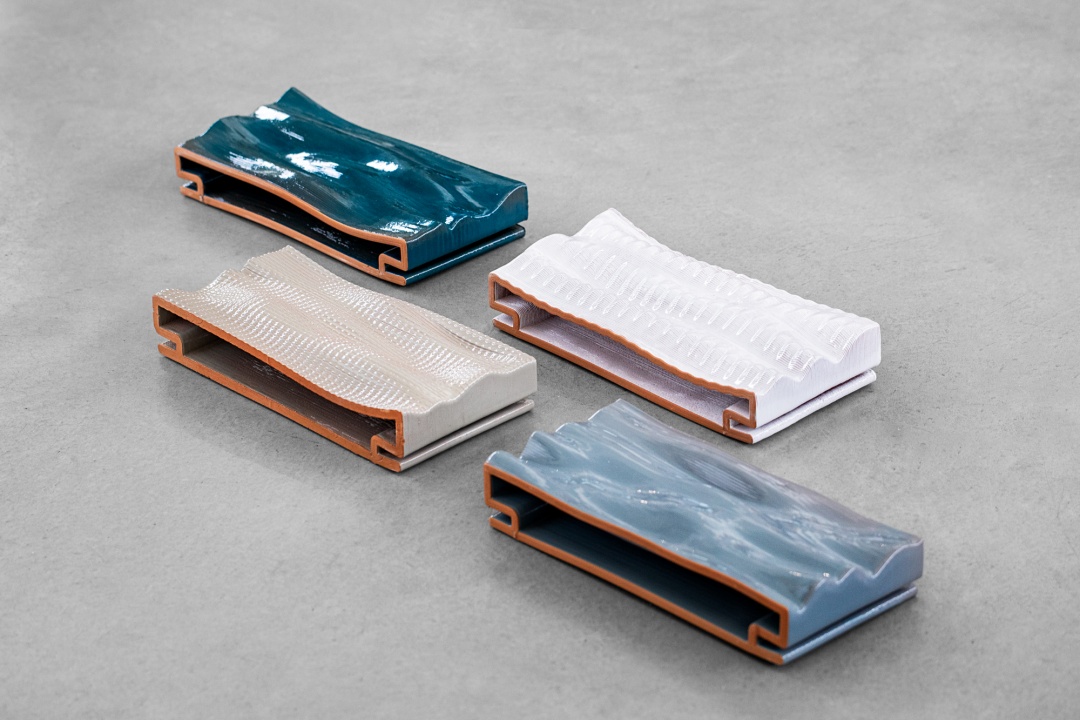
3D printed ceramic tiles
The Argentinian-Dutch IOUS Studio, in collaboration with Barcelona-based LAMÁQUINA, received the Second Prize at the SaloneSatellite Award 2026. Their project, 3DP Ceramic Tiles, is not just a collection of objects but a cladding system that goes well beyond simple repetition.
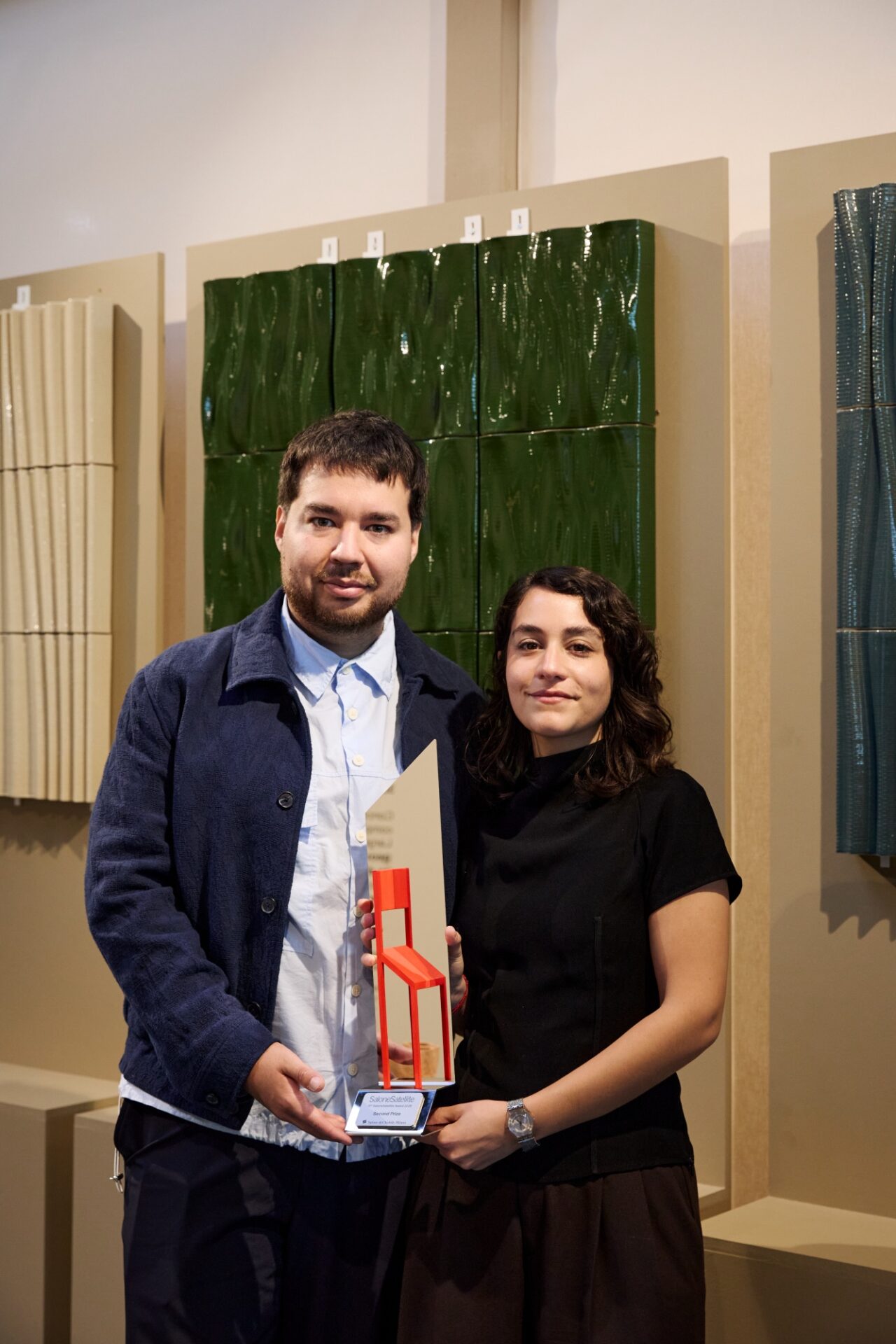
IOUS STUDIO.
By working with large-scale 3D printing in clay, IOUS Studio has transformed a traditional material into an open framework for customisation. Each tile is shaped by digital parameters, density, relief, and orientation, which can be adjusted to meet specific spatial or visual needs. The result is a surface that feels alive, where technological precision meets the natural, tactile variability of ceramics.
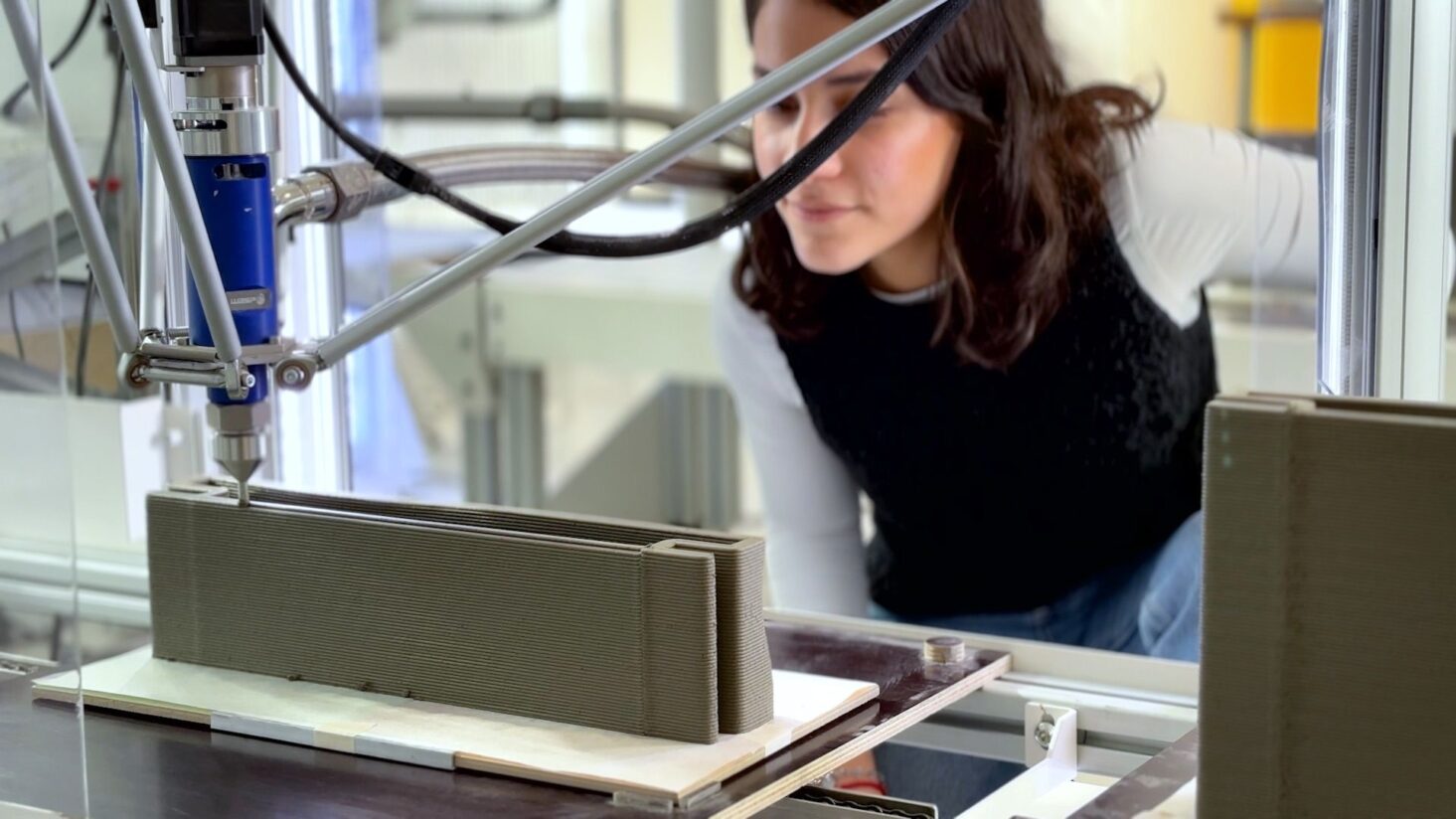
3D printed ceramic tiles
What makes their presence even more significant is the launch of a new 3D printing laboratory in Argentina, developed in collaboration with Grupo MSH, the country’s first large-scale clay printing facility. For us, IOUS Studio represents something worth noting: architects who don’t just design forms but also build the technologies and local infrastructure needed to produce them.
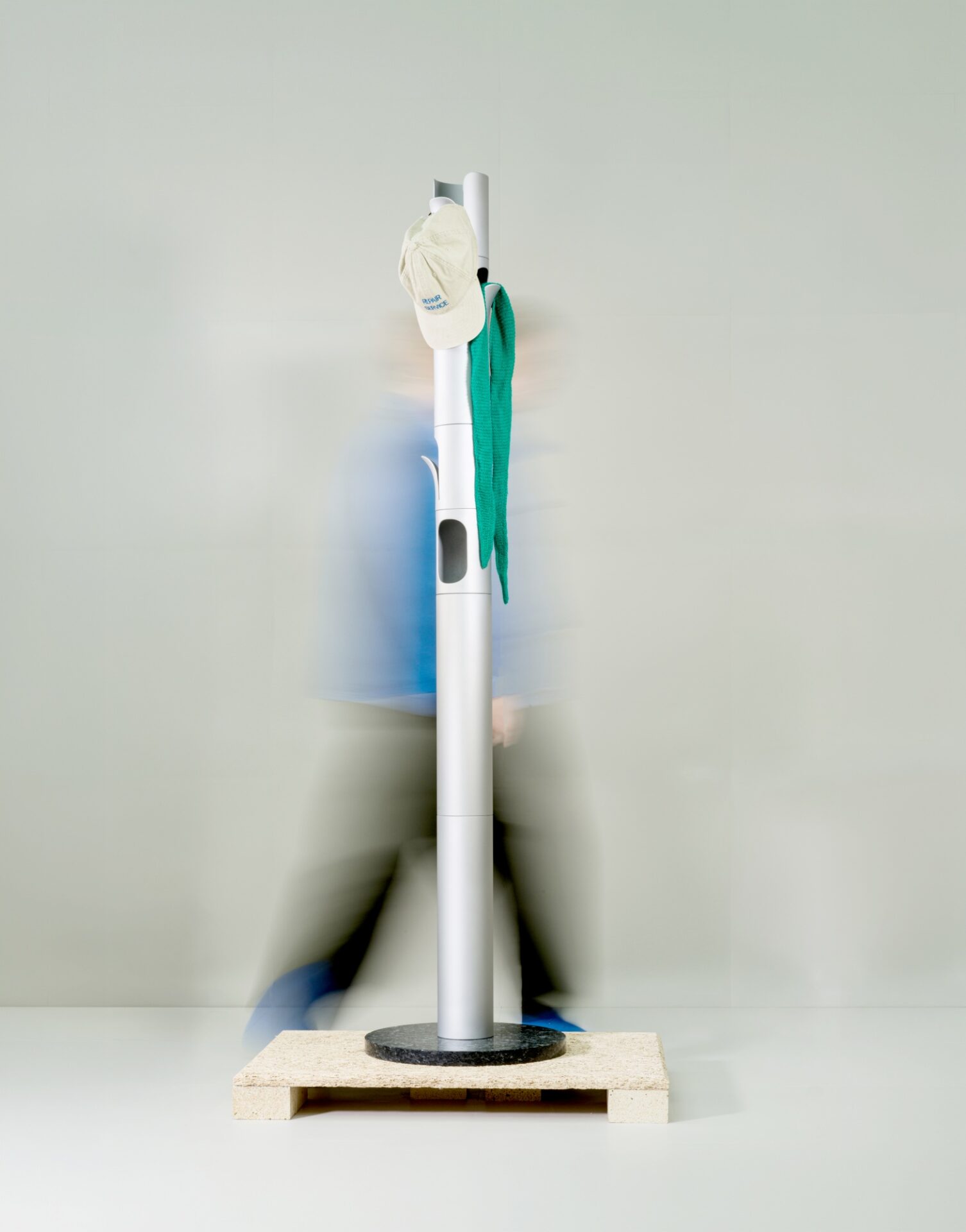
Post, Photography: Per Finne
Post by Taran Necklman
Bergen-based designer Taran Neckelmann brings a sensibility to SaloneSatellite 2026 that is Scandinavian in its restraint, but anything but static. Her practice is built around contrasts, objects that are simultaneously rigid and soft, playful and rigorous.
Her contribution this year is Post, a reimagining of the coat stand. Neckelmann takes the most ordinary of industrial elements, a standard aluminium tube, and expands its footprint, transforming a simple stem into a functional volume for storage.
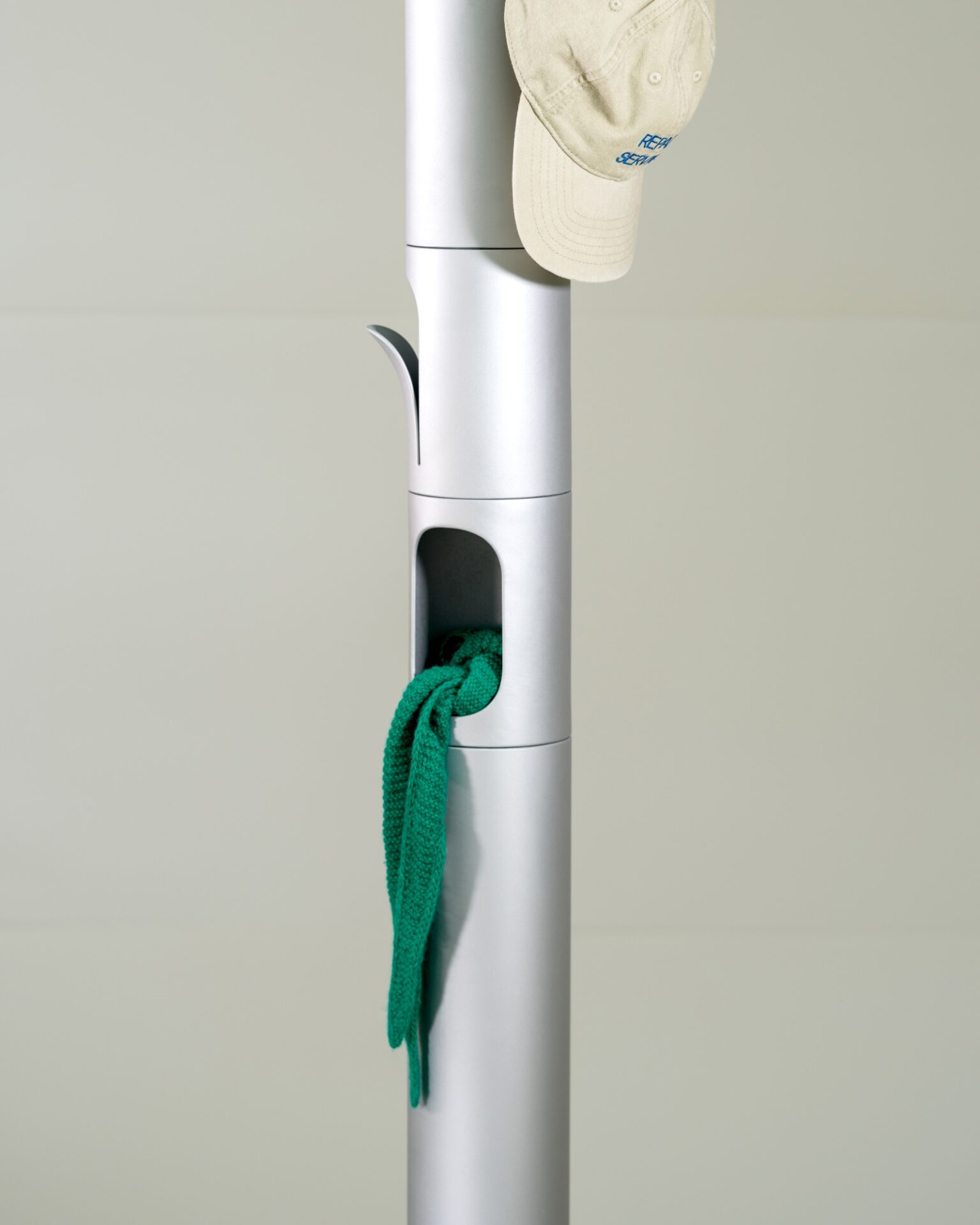
Post, Photography: Per Finne
The system is modular and highly adaptable: it can be assembled in various heights and configurations depending on the space. To ground this industrial lightness, she collaborated with Lundhs Real Stone, using a base carved from their signature Lundhs Blue larvikite. The polished, ancient stone anchors the sleek aluminium, and the balance between the two feels considered rather than decorative.
Squishy Vase Collection by Bryce Lim
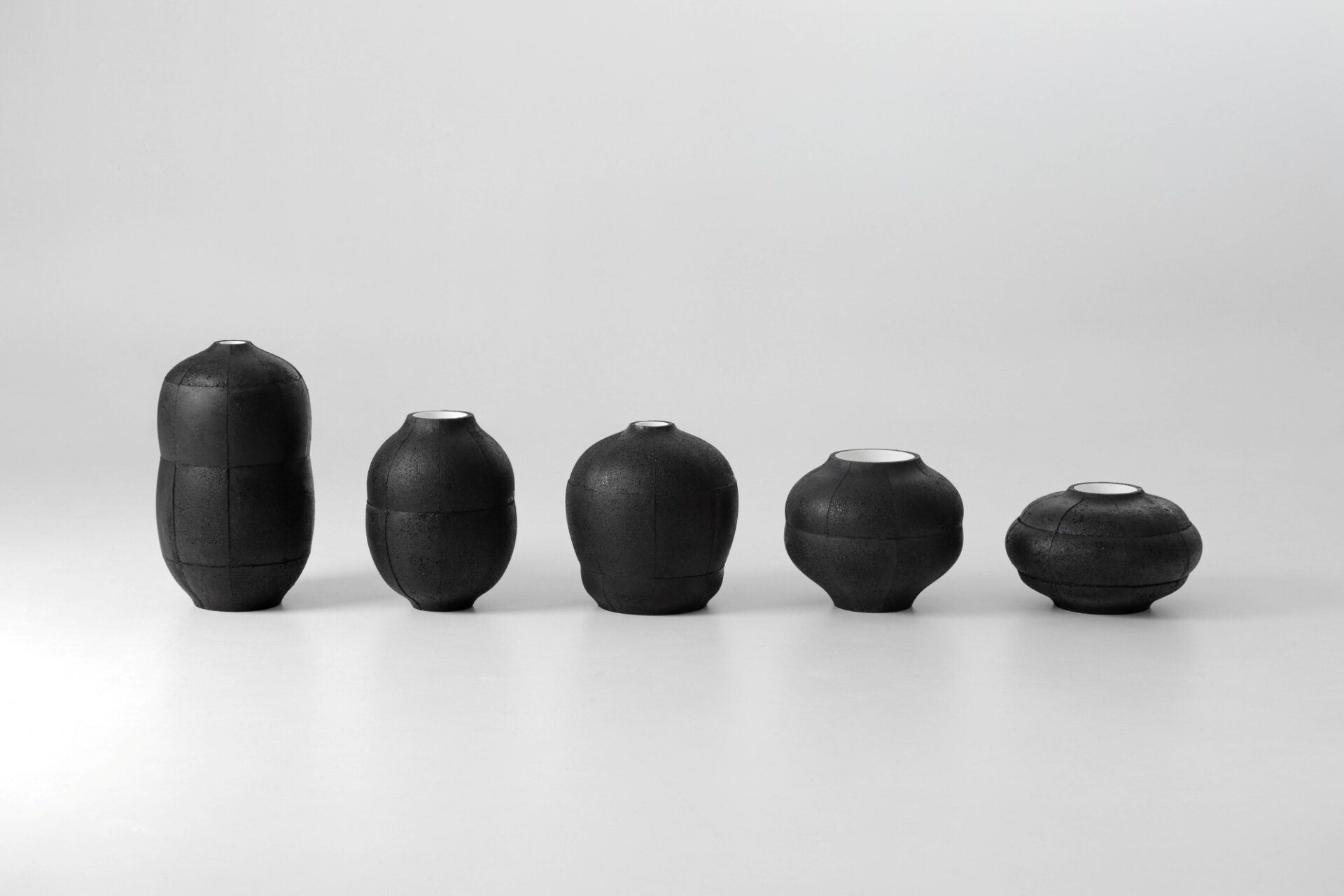
Squishy Vase n°3
Graduated from the National University of Singapore with a specialisation in Product Innovation, Bryce Lim works in that narrow margin between the familiar and the strange, where an object looks like one thing but behaves like another.
At SaloneSatellite, he showcased the Squishy Vase Collection: a series of monolithic, stone-like vessels that subvert every expectation of the material they are made from. The collection is built around Polyurethane (PU) foam, a material typically hidden under upholstery and associated with mass production.

Squishy Vase n°3
Bryce strips away the fabric to reveal the foam as the sole medium. Rendered in a deep, obsidian black with a contrasting white lining, these vessels have a mineral-like skin and a visual weight that suggests ancient basalt. But upon touch, they yield, unexpectedly soft.
The texture is achieved through a specific technical process: using 3D-printed moulds treated with a particular solution, Lim disrupts the foam’s chemical reaction as it expands, forcing it to form a dense, organic crust.
The foam itself comes from off-spec industrial discard, material rejected by factories, redirected through the lens of intentional craft.
Modular Shelving System by M85
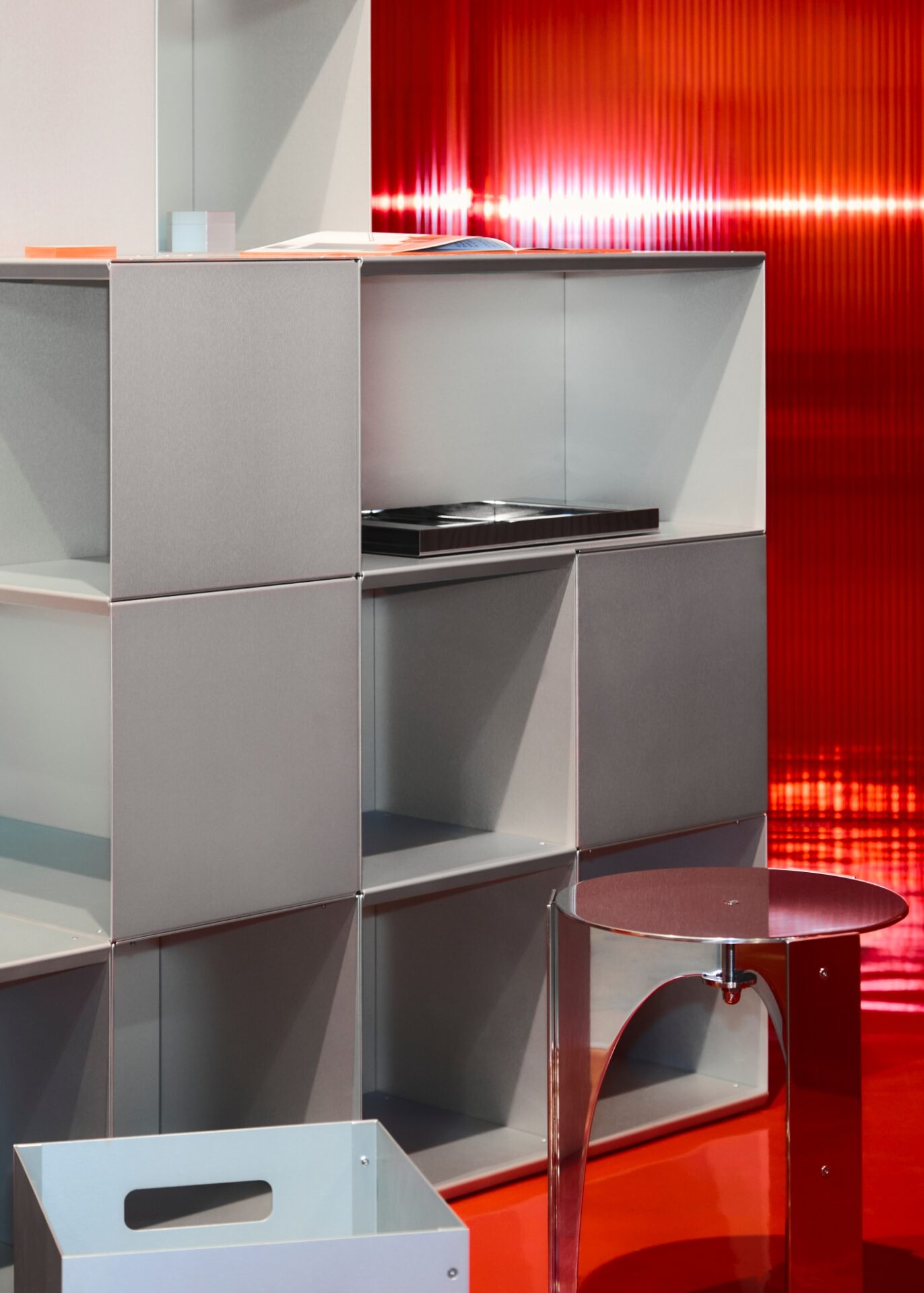
Installation m85 at SaloneSatellite 26
Berlin-based M85 Studio arrives at SaloneSatellite 2026 with a clear idea: furniture that adapts as fast as life changes, without becoming disposable. Founded by Silvia Chenet and Schano Jeong, the studio is built around a rejection of the “fast furniture” cycle, in favour of pieces that can be reconfigured, expanded, or flat-packed in minutes.
At the fair, they brought the Modular Shelving System, using their booth to show the range of configurations the system allows. Crafted from brushed, dark grey anodised aluminium, each module is designed to stack seamlessly, vertically and horizontally, scaling from a simple bedside table to a full library.
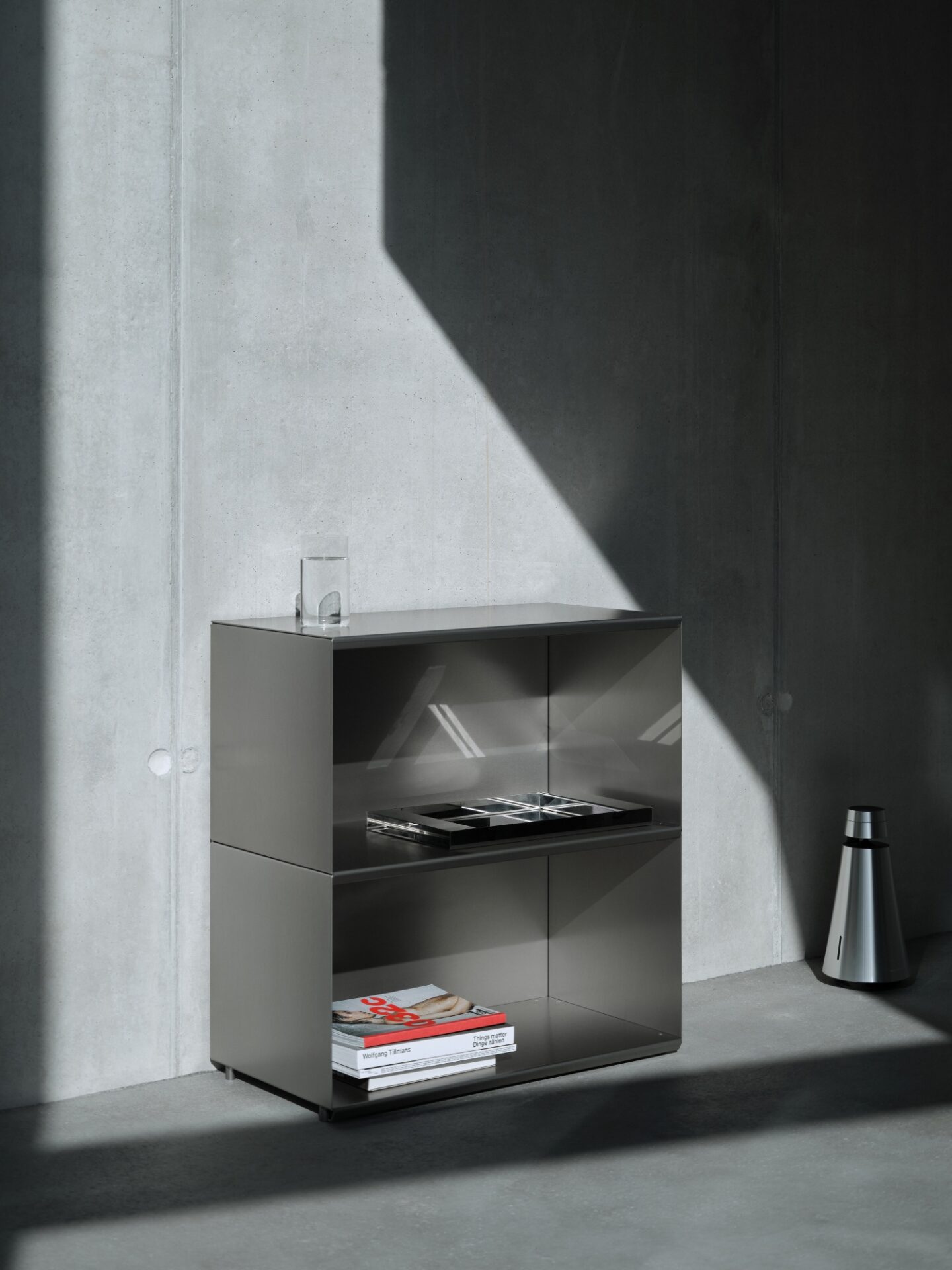
M85 Studio
The assembly uses only mechanical joints in recycled aluminium and stainless steel, with no glue: every piece is 100% recyclable. Produced in the Veneto region of Italy, the collection brings together a Berlin aesthetic and solid Italian manufacturing.
Yusan Stool: Forest, in time by Yusan

Yusan booth at Salone Satellite 2026
Rooted in Tokushima Prefecture, Japan, yusan is a “culture brand” led by designer Miyu Tanaka. Launched in late 2025, the studio is deeply personal: Tanaka comes from a family with generations in the forestry business. Her work is an attempt to re-energise the relationship between people and nature, transforming Japan’s neglected plantation forests, often seen today as an economic liability, into something worth caring about again, through the lens of craftsmanship.

yusan stool
For her debut at SaloneSatellite 2026, Tanaka presents the yusan stool, exploring the concept of “Forest, in time.” The project uses machinery designed for the mass-production of uniform plywood to do the exact opposite, to reveal the singular, unrepeatable life of a single tree.
By slicing logs in cross-section as thin as 0.5mm, like a salami, Tanaka exposes the annual rings that record the history of the mountain. These rings are naturally fragile and prone to cracking, but a Japanese stabilisation technique turns them into a durable, functional surface. Each stool becomes a kind of silent clock: the 50 or 60 rings on the seat invite the user to slow down, bringing the living presence of the forest into the city.
Sisa/Sashi collection by Ishigami Ryoichi

Sashi/ Shisa products
Born in Shizuoka in 1990 and now based in Kyoto, Ryoichi Ishigami is a product designer working at the intersection of traditional craft and industrial production. A lecturer at Kyoto Seika University, his philosophy centres on what he calls “shaping the invisible”, reading the natural environment, the local climate, and the layers of artisanal knowledge embedded in a material.
For SaloneSatellite 2026, Ishigami presented the Shisa collection, a series of pendant lamps and mirrors that work with Japanese Cypress. The collection is defined by the weight of its curved forms and the sharpness of its rims, by modulating thickness and edge definition, Ishigami creates pieces where light and shadow don’t simply hit the surface, but seem to settle within it.

Sashi/ Shisa products
The collection also plays with a technical contrast: the rigid precision of traditional straight joinery against a smoothness so refined it becomes its own form of accuracy. It is quiet work, but it stays with you.
Duocurve Lamp by Studiocorthalsloic

Duocurve Lamp at SaloneSatellite 2026
Belgian designer Loïc Corthals founded his studio in 2025, after years of working with international firms in Brazil and Italy. His background in Industrial Product Design and a Master’s in Furniture Design from Politecnico di Milano gives him a particular fluency in bridging precision engineering and material culture.
He made his debut at SaloneSatellite 2026 with Duocurve, a table lamp that rethinks a basic assumption: instead of concealing the light source behind a shade, Corthals integrates it directly into the design. Through layered elements, light is directed, softened and diffused, not added on top of the form, but built into it.

Duocurve Lamp at SaloneSatellite 2026
What grounds the lamp is leather combined with a precision-machined aluminium base. The leather elements are also the key to the lamp’s modularity: when a colour or texture no longer works, only that part needs to change. Produced in collaboration with a Belgian family company specialising in leather craft, Duocurve is a quiet argument for local production and the value of existing knowledge.
Renewed Hope
What we saw this year at SaloneSatellite is the vision of a next generation of designers who are applying new technologies and materials to product design, but not only that. There is also a return to craft, to the values embedded in each culture, through processes that seemed forgotten but that, with these new generations, are finding their way back.