VCUarts Qatar Research-Led Programs at the Venice Biennale
Aghrab Idrāk: Thresholds of Perception marks VCUarts Qatar’s first participation in the Venice Biennale as an official collateral event. Co-curated by Dr Hesperia Iliadou and Chase Westfall, the exhibition brings together research labs, creative teams, and curatorial perspectives from across the university. Through a multi-sensory exploration of memory, language, technology, ecology, and cultural identity, the exhibition presents research-led creative practices from Qatar on one of the world’s most influential art platforms. SCALE speaks with the curators behind this landmark presentation.
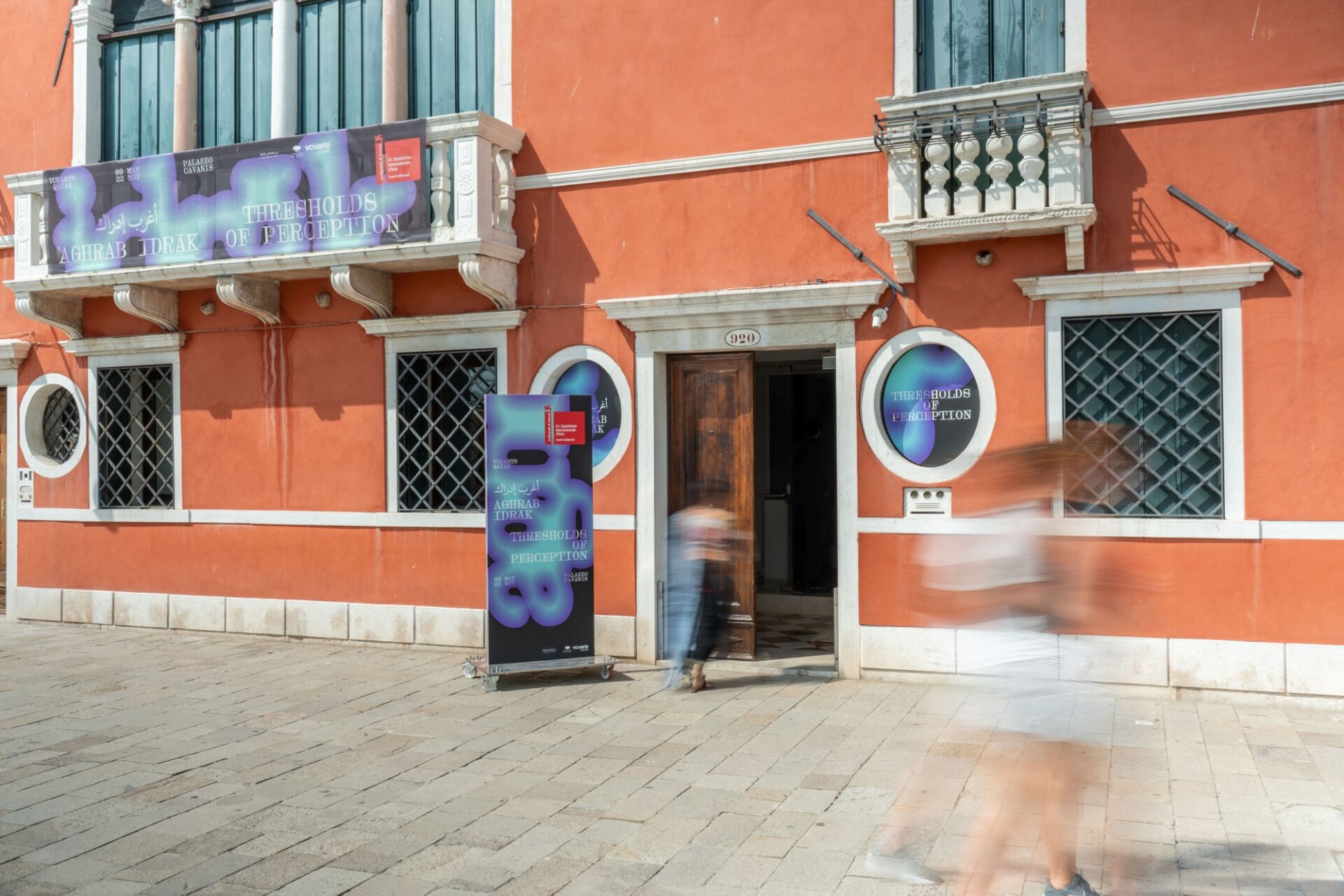
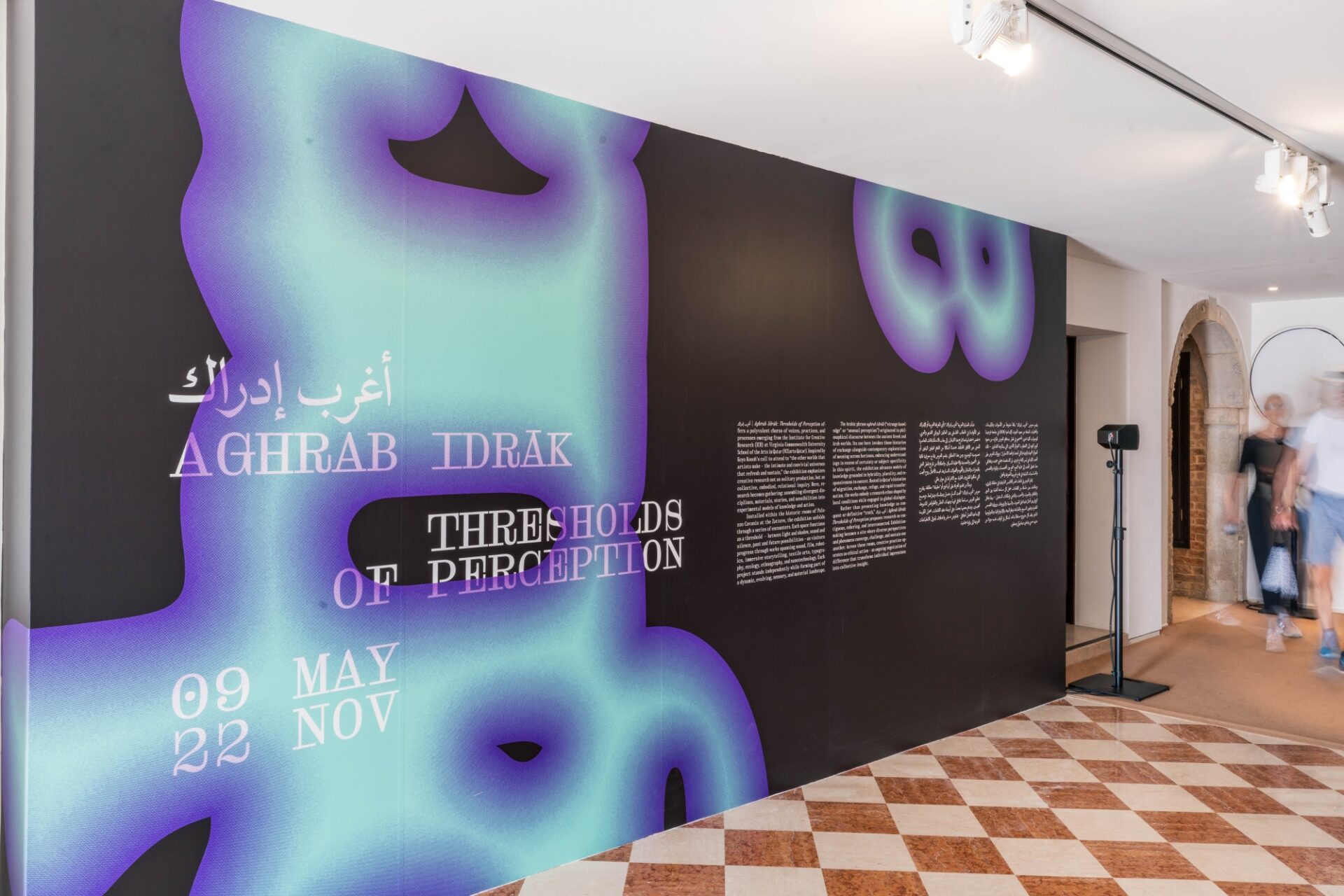 For the first time, Virginia Commonwealth University School of the Arts in Qatar (VCUarts Qatar) is participating in the 2026 Venice Biennale as an official collateral event, marking a significant milestone not only for the institution but also for research-driven creative practice emerging from the region. Titled Aghrab Idrāk: Thresholds of Perception, the exhibition brings together ten interdisciplinary projects developed through unfaltering interest in creative research, exploring memory, migration, language, technology, ecology, sound, and cultural identity.
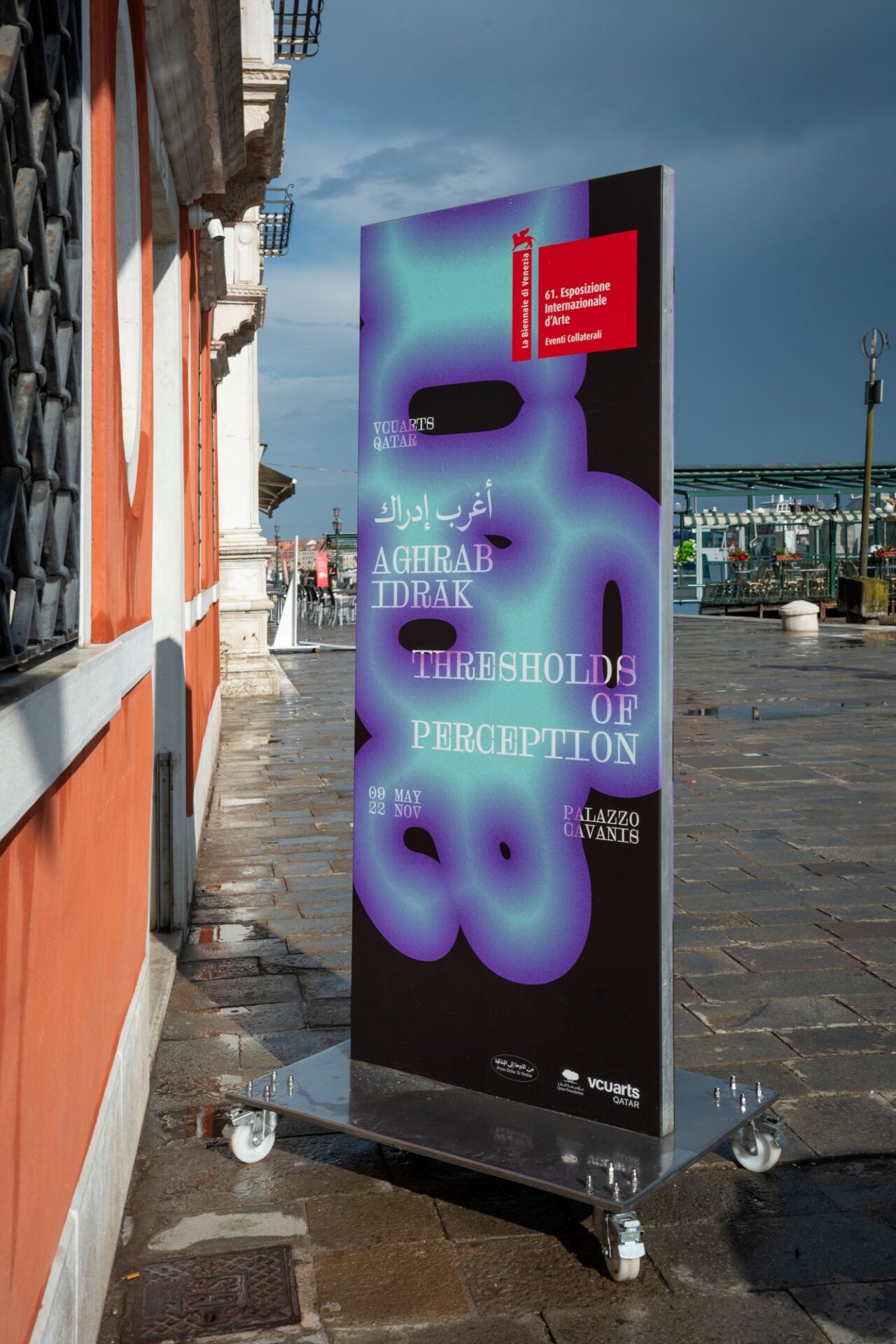
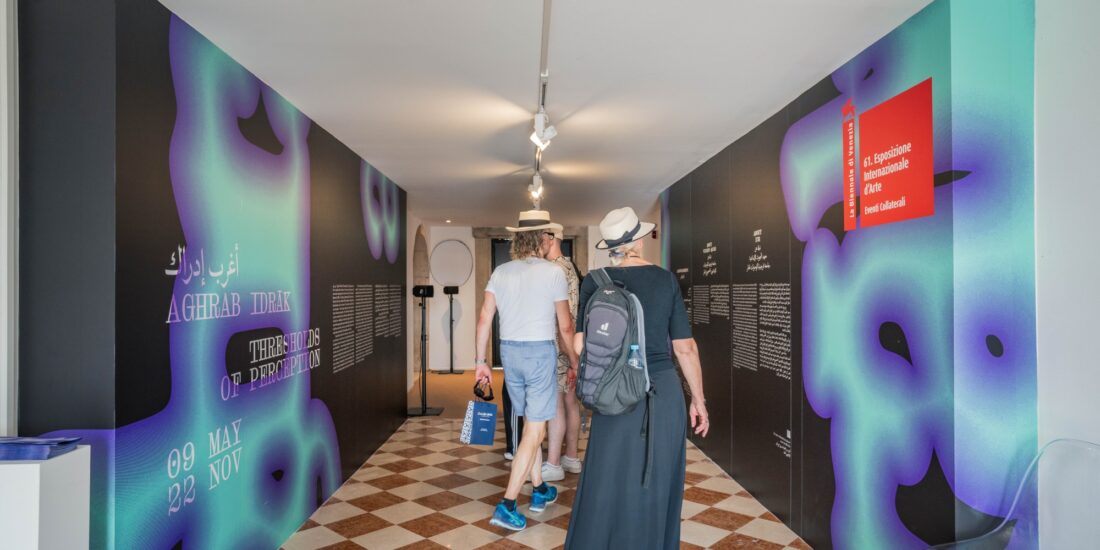
Presented at Palazzo Cavanis on Venice’s Zattere waterfront, the exhibition is co-curated by Hesperia Iliadou and Chase Westfall, who approached the project not as a singular narrative but as a constellation of interconnected investigations into perception and knowledge.
“This marks a significant milestone in VCUarts Qatar’s international engagement and offers an opportunity to situate our work within a truly global conversation,” says Dean Amir Berbić. “Our participation reflects our investment in research-driven creative practice and interdisciplinary collaboration, redefining how universities contribute to global cultural production.”
An Exhibition Rooted in Unfamiliar Ways of Seeing
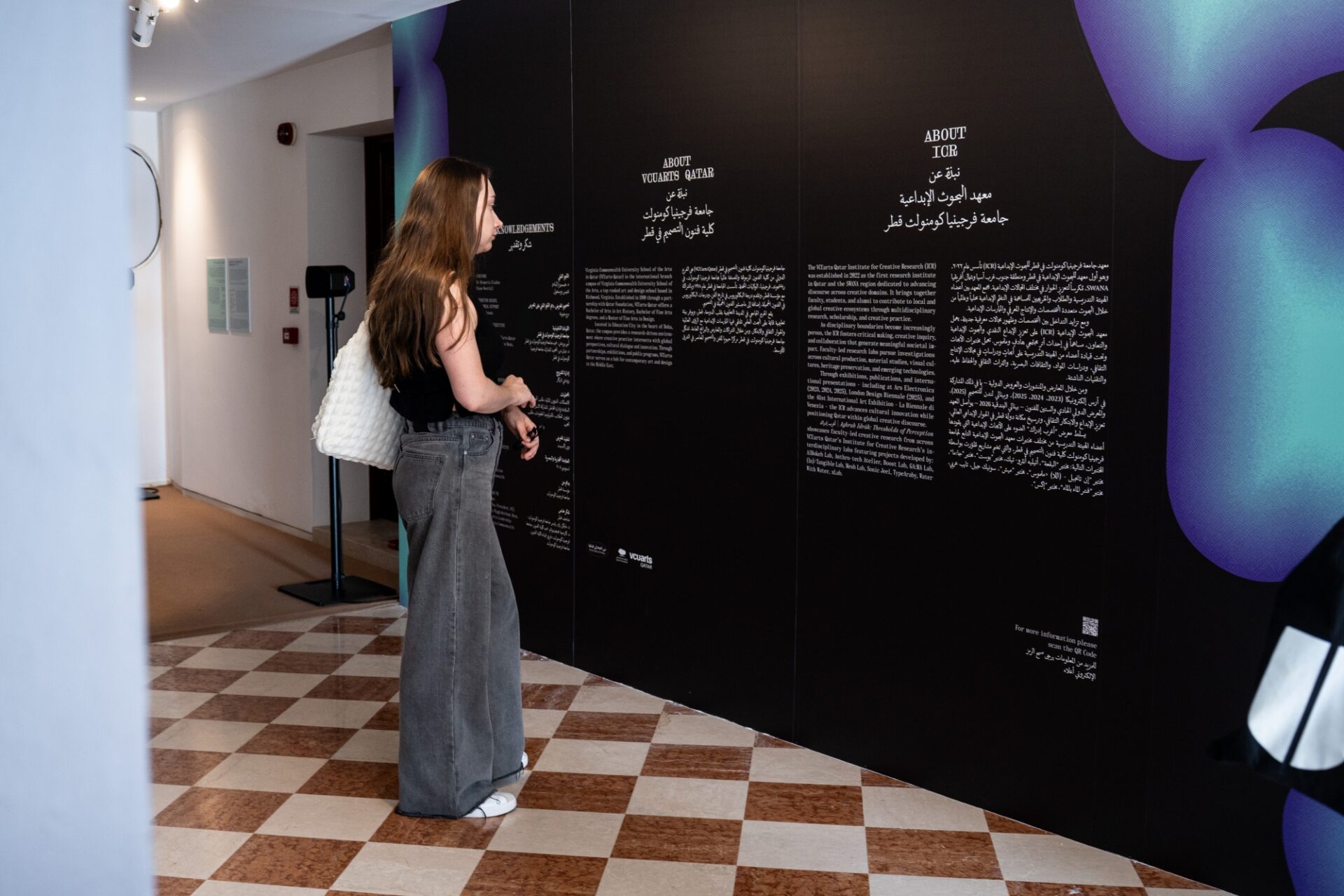 The title Aghrab Idrāk translates loosely as “stranger perception” or “unfamiliar cognition.” For curator Dr Hesperia Iliadou, who is currently working as a lecturer in MA Curatorial Practice-IED Venice and has taken on the mantle of curatorship for various other pavilions and exhibitions, the concept emerged from her long-standing interest in Arab philosophy and its dialogues with ancient Greek thought.
Hesperia also has a long-standing relationship with VCUarts Qatar and understands the creative perspectives that are the foundation of the School’s ethos.
“Aghrab Idrāk was a notion extensively analysed in this comparative literature as a common thread between the schools of thought,” she explains, “The notion touches upon the strange and unfamiliar indeed, but what interested me the most was that it spoke of areas not defined by common perception. Aghrab Idrāk talked about the in-between areas. It absolutely resonated with Koyo Kouoh’s curatorial statement for this year’s Biennale. It felt like a perfect starting point to evolve a curatorial narrative that was not meant to touch upon a single work of art but is the amalgamation of multiple facets of visionary projects born within VCUart Qatar’s Institute for Creative Research.”
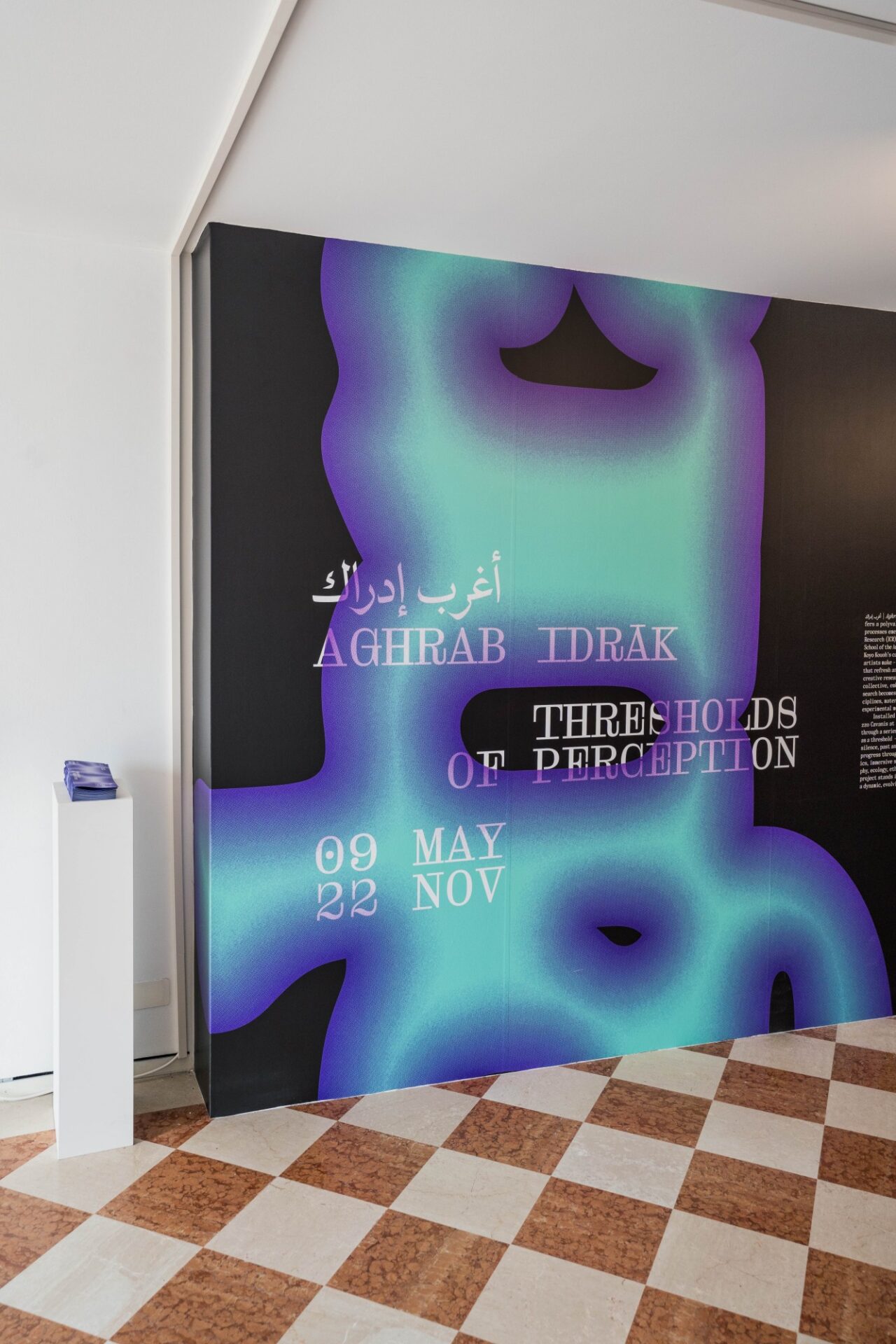 For co-curator Chase Westfall, who is also the Head of Gallery at VCUarts Qatar, the framework offered an opportunity to rethink how audiences engage with exhibitions.
“The framework asks viewers to reconsider the exhibition experience, not necessarily by offering something entirely new, but by offering a new way of understanding that experience,” he says, “That became a meaningful curatorial point of departure because exhibitions are not only about objects or ideas, but about embodied encounters.”
Rather than focusing on a single theme, the exhibition unfolds through diverse projects that investigate how people experience the world through memory, sound, language, movement, and technology.
Research as Cultural Production
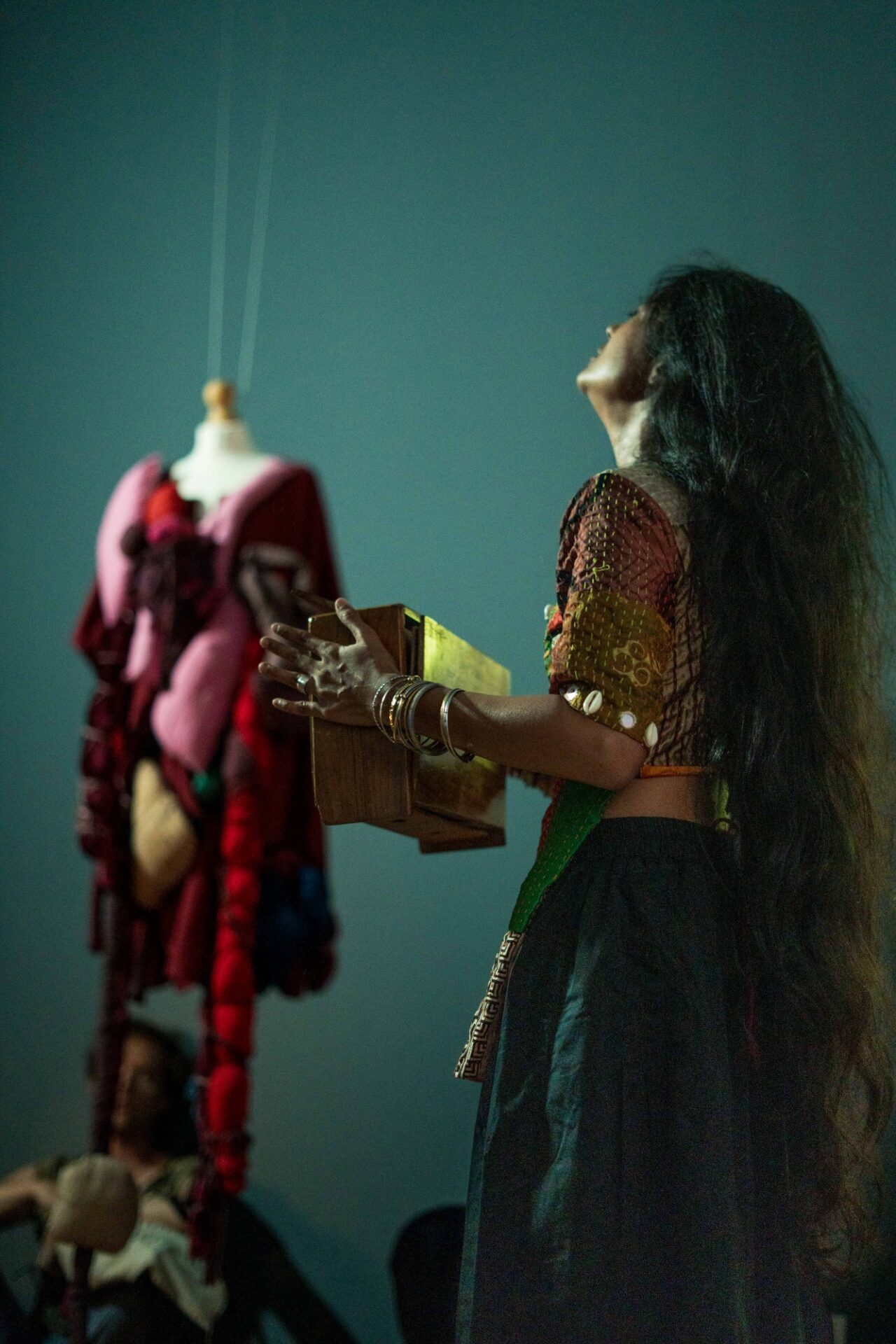
Performance as part of the exhibition.
The exhibition arrives at a moment when universities are beginning to engage with public cultural discourse. Both curators see VCUarts Qatar’s participation as evidence that academic institutions can play a meaningful role within global art platforms.
“I have rarely seen universities being included as official collateral events,” notes Hesperia, “VCUarts Qatar being selected through such a demanding process opens the road for other universities and research institutions to participate, challenging established norms and creating space for visionary projects.”
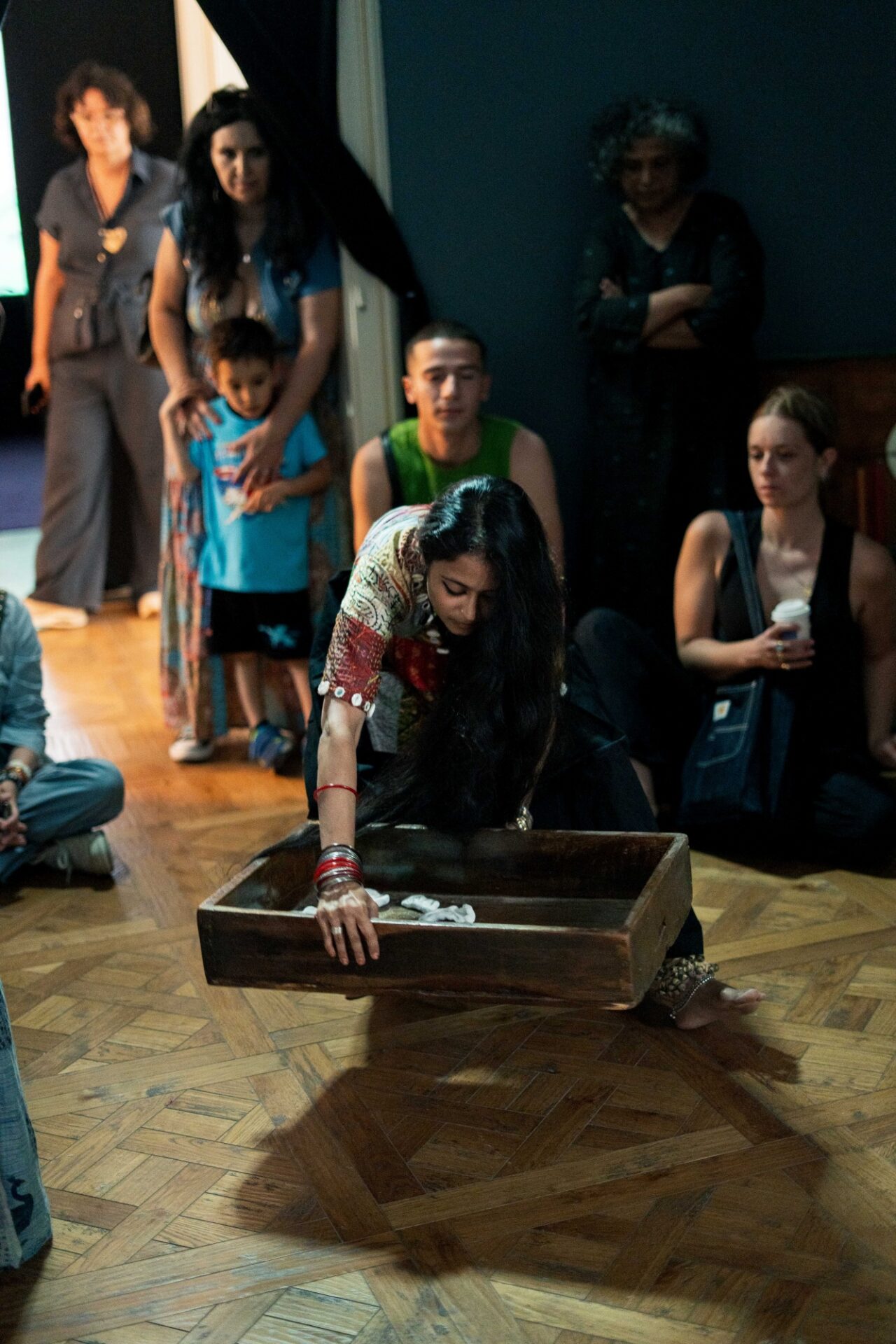
From the performance that was part of the exhibition program.
Chase similarly argues that universities are uniquely positioned to support forms of inquiry that are not entirely shaped by market forces.
“Academic institutions can support forms of research that are not beholden to market pressures, creating space for experimentation and new forms of knowledge production,” he says. “There is a real hunger for new understandings and conversations in settings like the Biennale.”
A Constellation of Projects
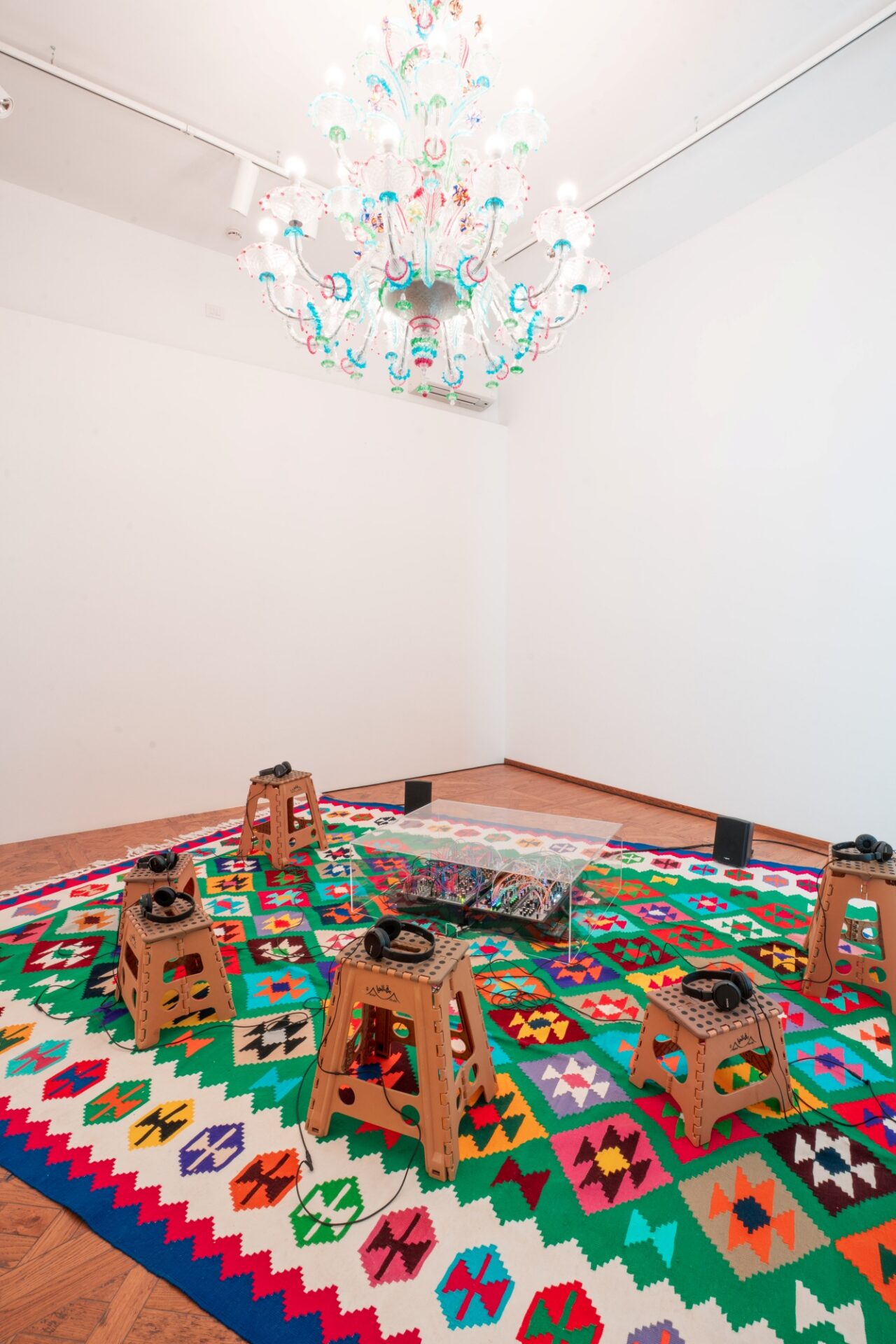
Sonic Fields by Sonic Jeel
The works on view span a remarkable range of disciplines and methodologies.
“Mapping Migration Memories” traces historical movements between desert and sea through oral histories, sound, and light, foregrounding intangible cultural practices and generational knowledge.
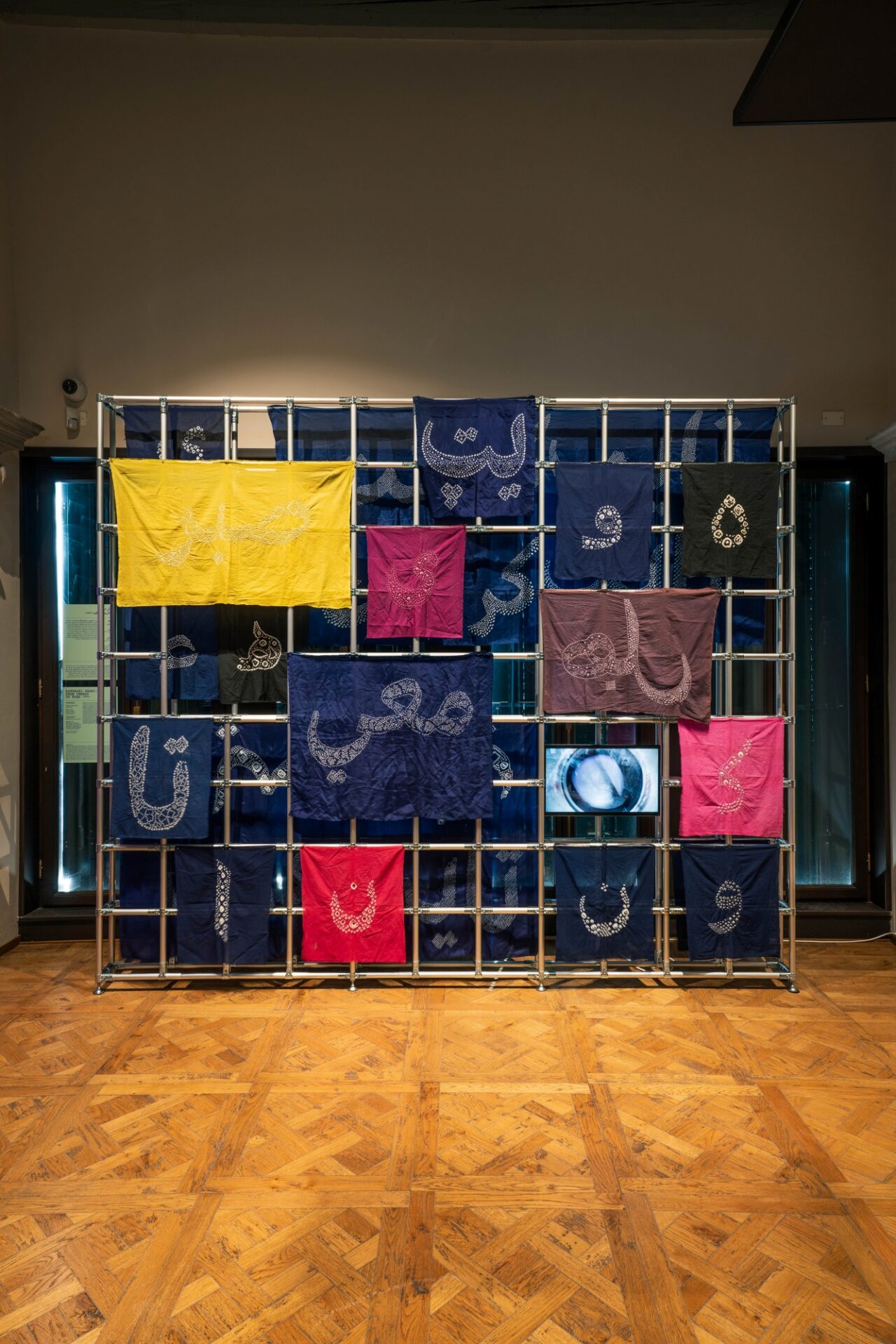
Bandhani Arabi From Thread to Word Type Araby
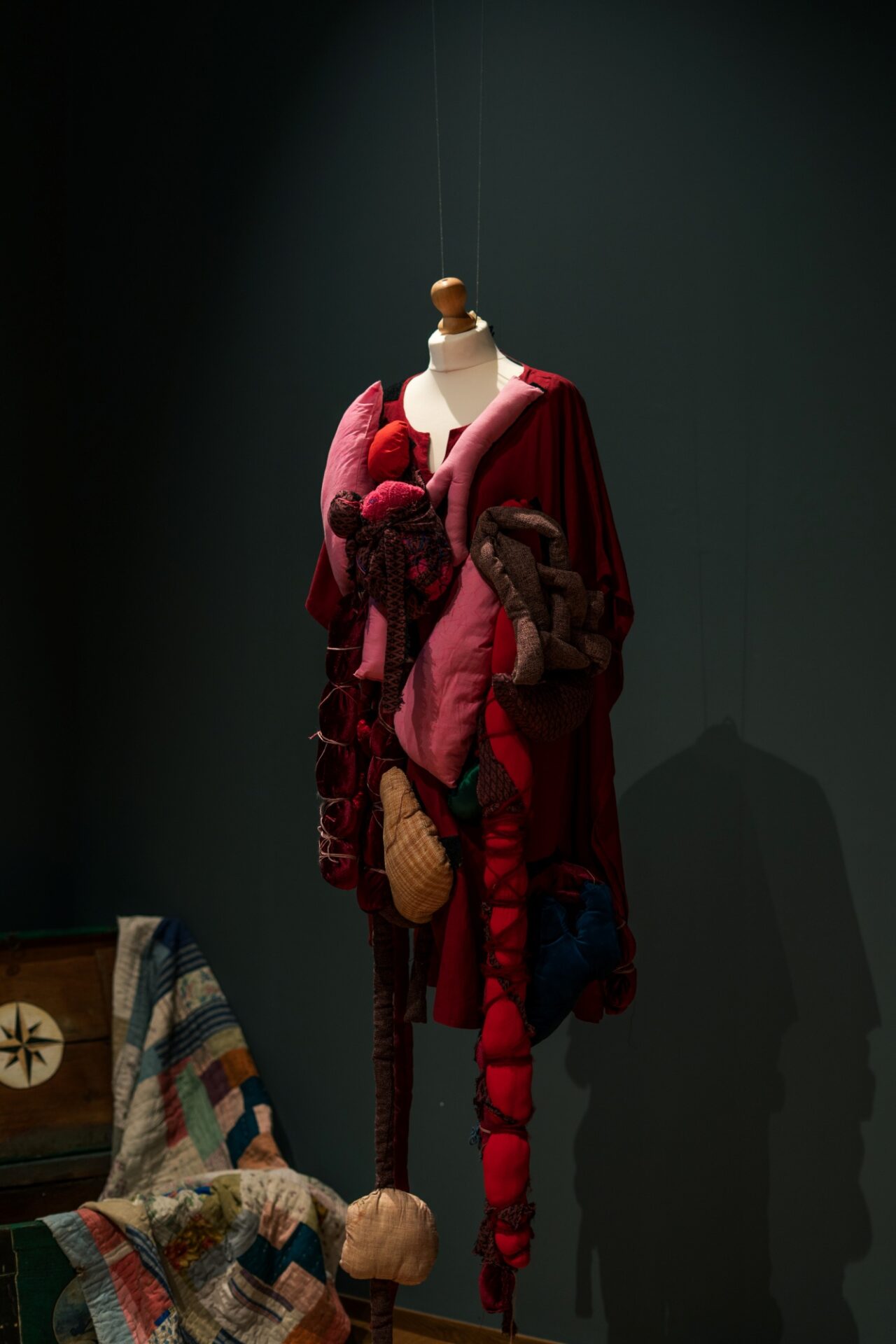
“Bandhani Arabi: From Thread to Word|” explores shared cultural infrastructures between South Asia and the Arab world through textile traditions and Arabic calligraphy.
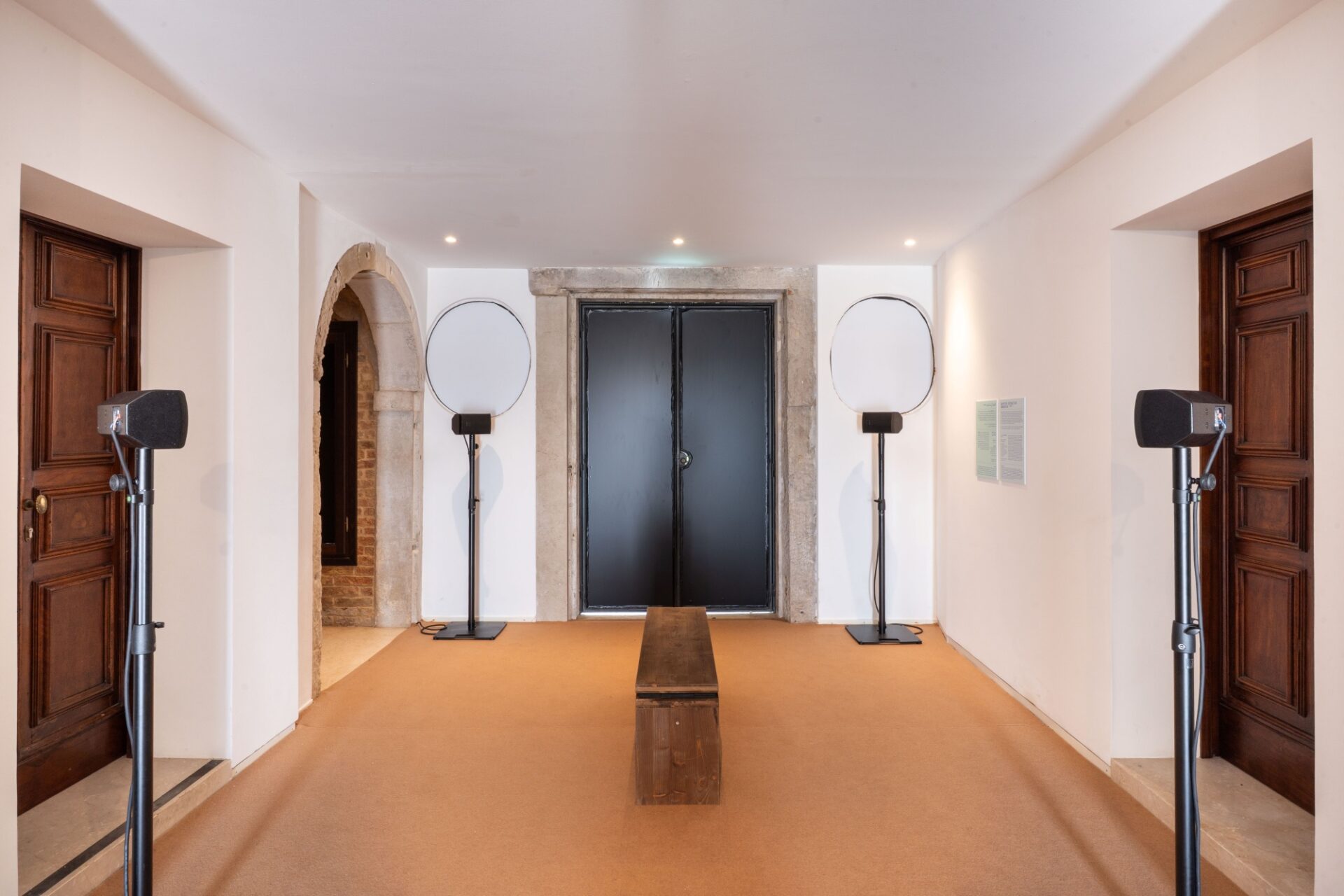
Mapping Migration Memories, Tangible Lab
Meanwhile, “Oceans & Lands: Drifting Senses and Knowledges” brings together historical objects, textile arts, performance, and sound to reimagine connections between Asia and Africa.
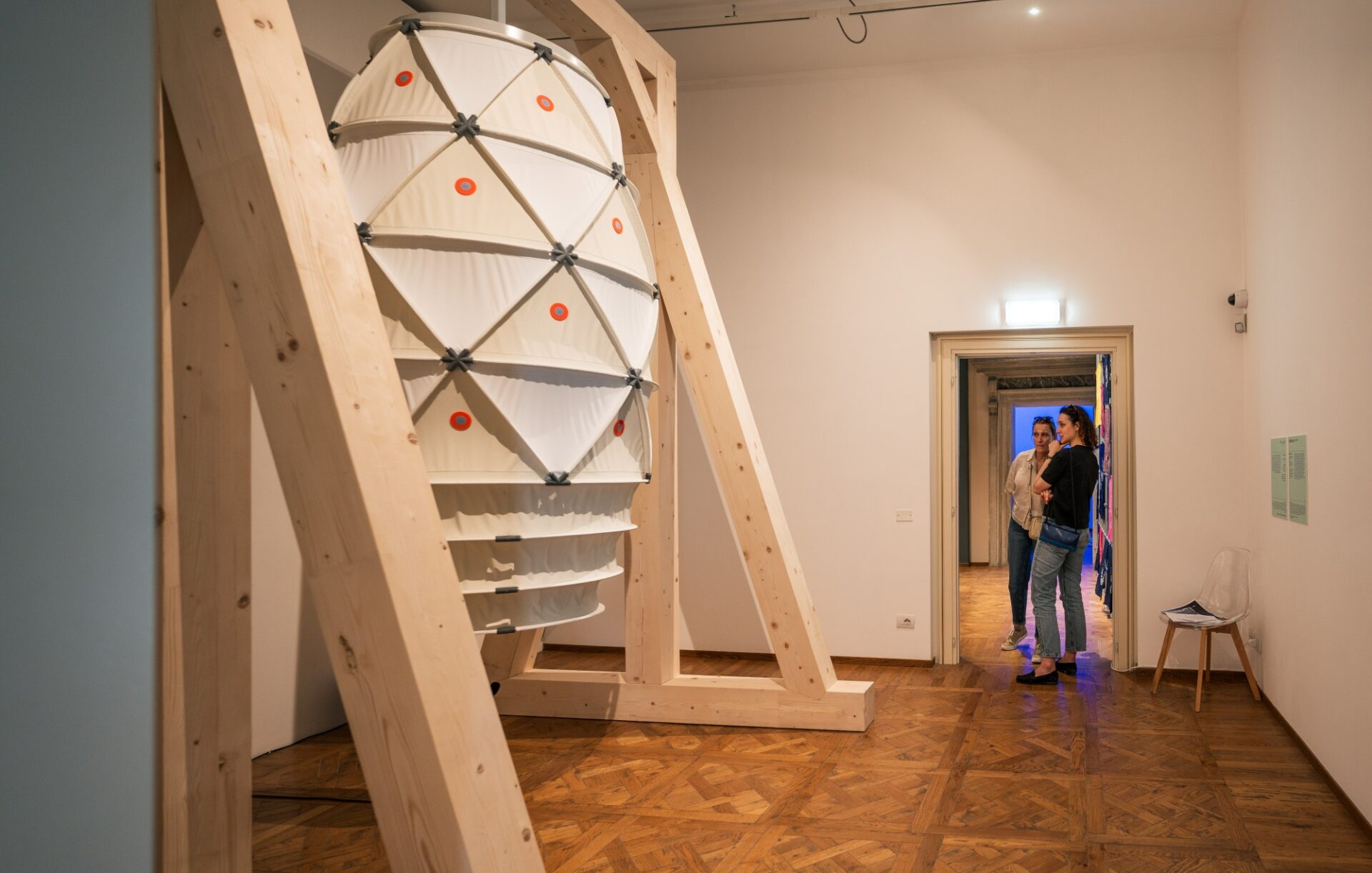
Chrysalis, Boost Lab
Other projects investigate personal histories, language systems, environmental technologies, and artificial intelligence. “Chrysalis” merges environmental function with material experimentation through a kinetic air-cleaning sculpture.
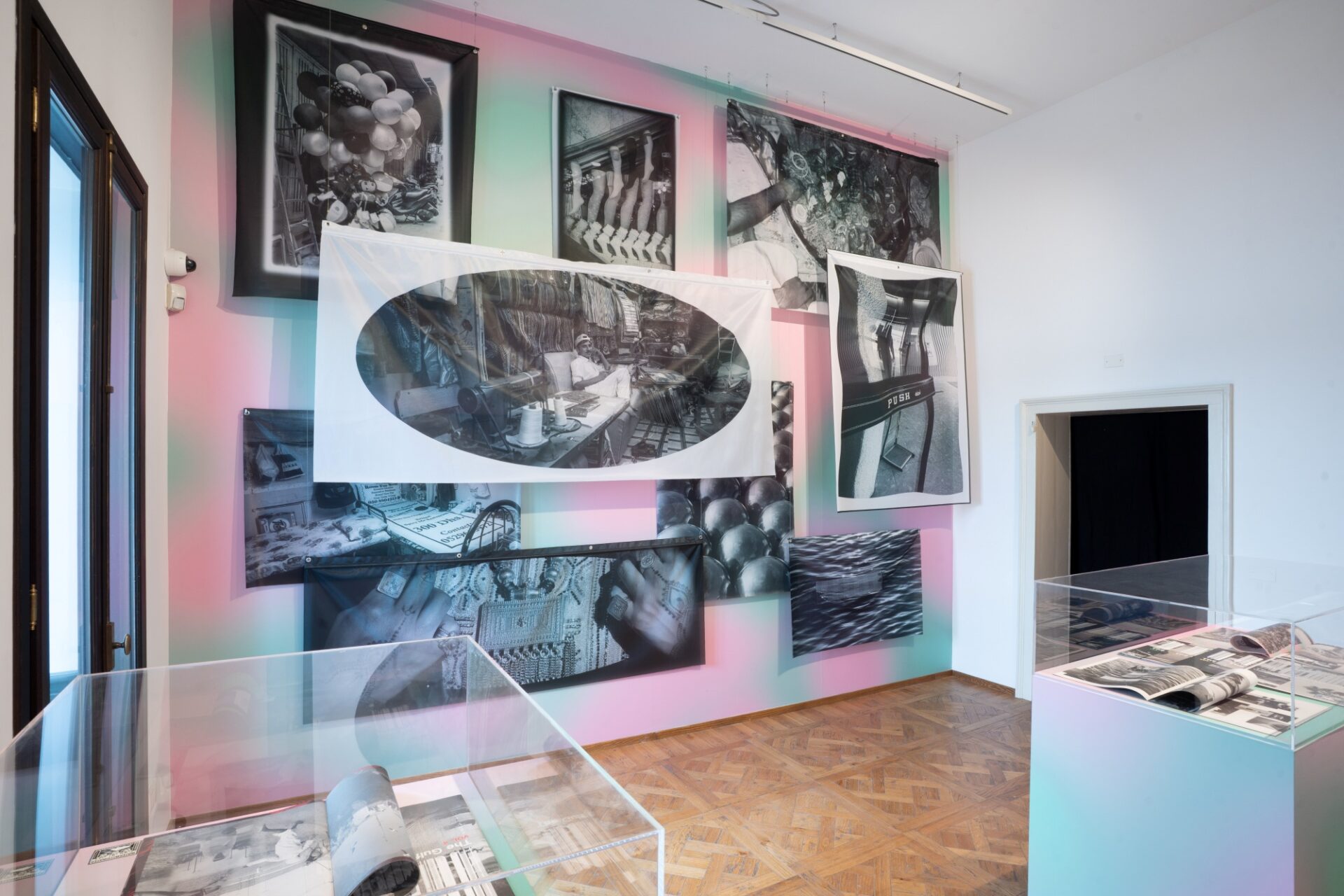
The Gulf Between Us, Water With Water
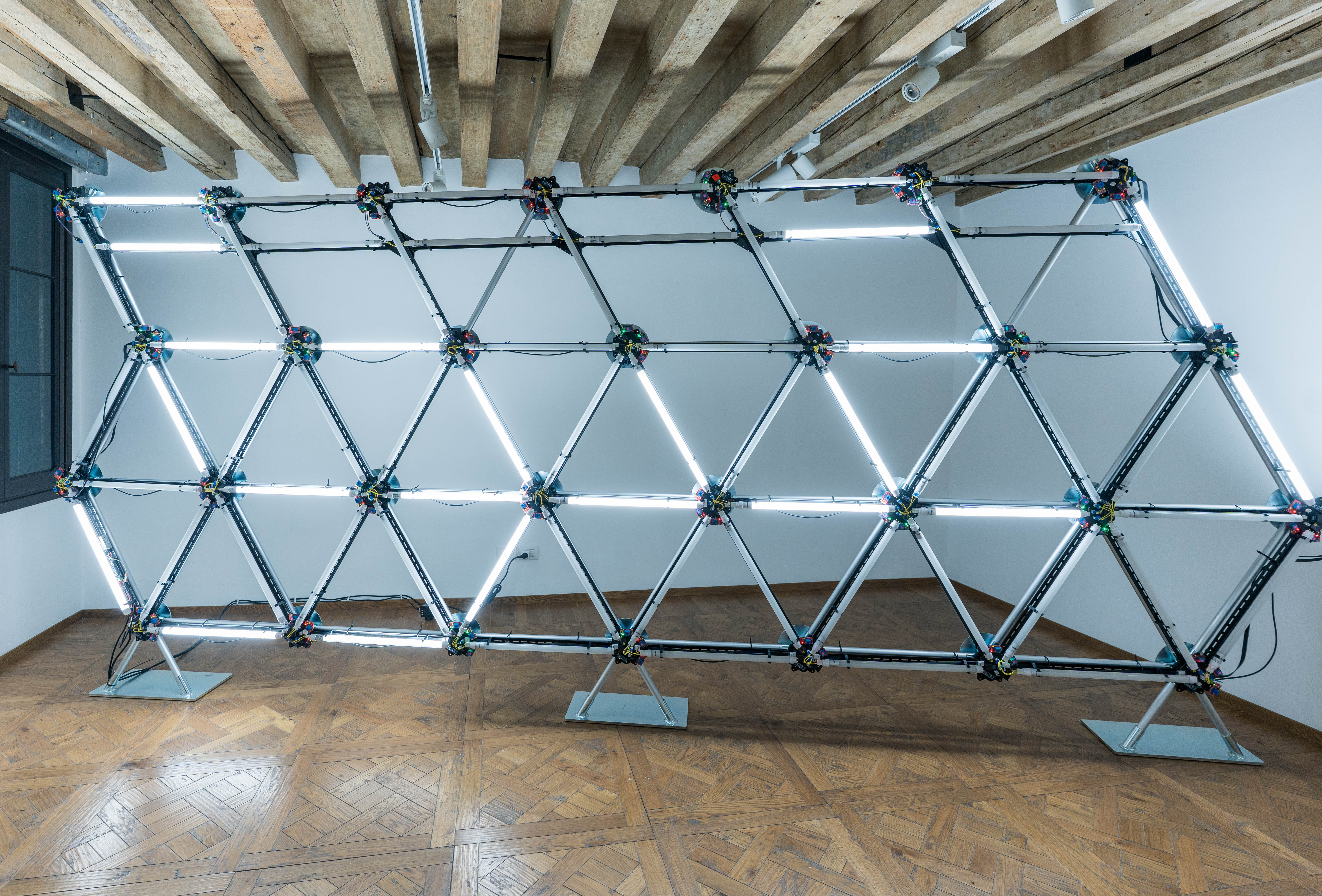
“Preceding Emptiness” examines Arabic as a living and evolving system through a kinetic light installation, while “A Monocular Monologue” introduces an AI-powered robotic entity that questions how humans perceive and relate to machines.
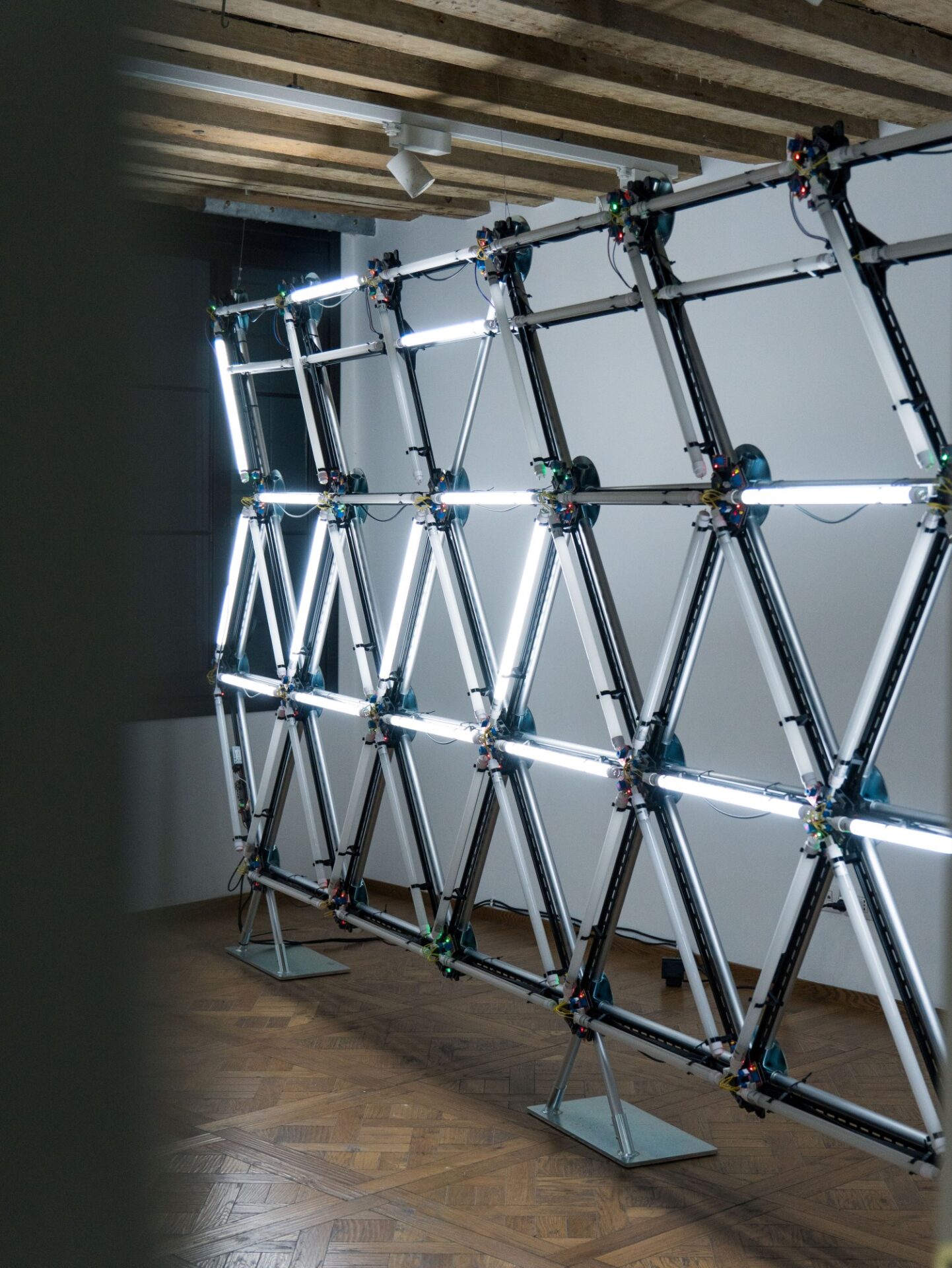
Presiding Emptiness, XLab
Together, these projects draw from the work of research labs under the auspices of the Institute for Creative Research at VCUarts Qatar, including (In)>Tangible Lab, TypeAraby, GA:MA Lab, AlBokeh Lab, xLab, Water With Water, Sonic Jeel, Boost Lab, Mesh Lab, and Anthro-tech Atelier.
Building a Multi-Sensory Experience
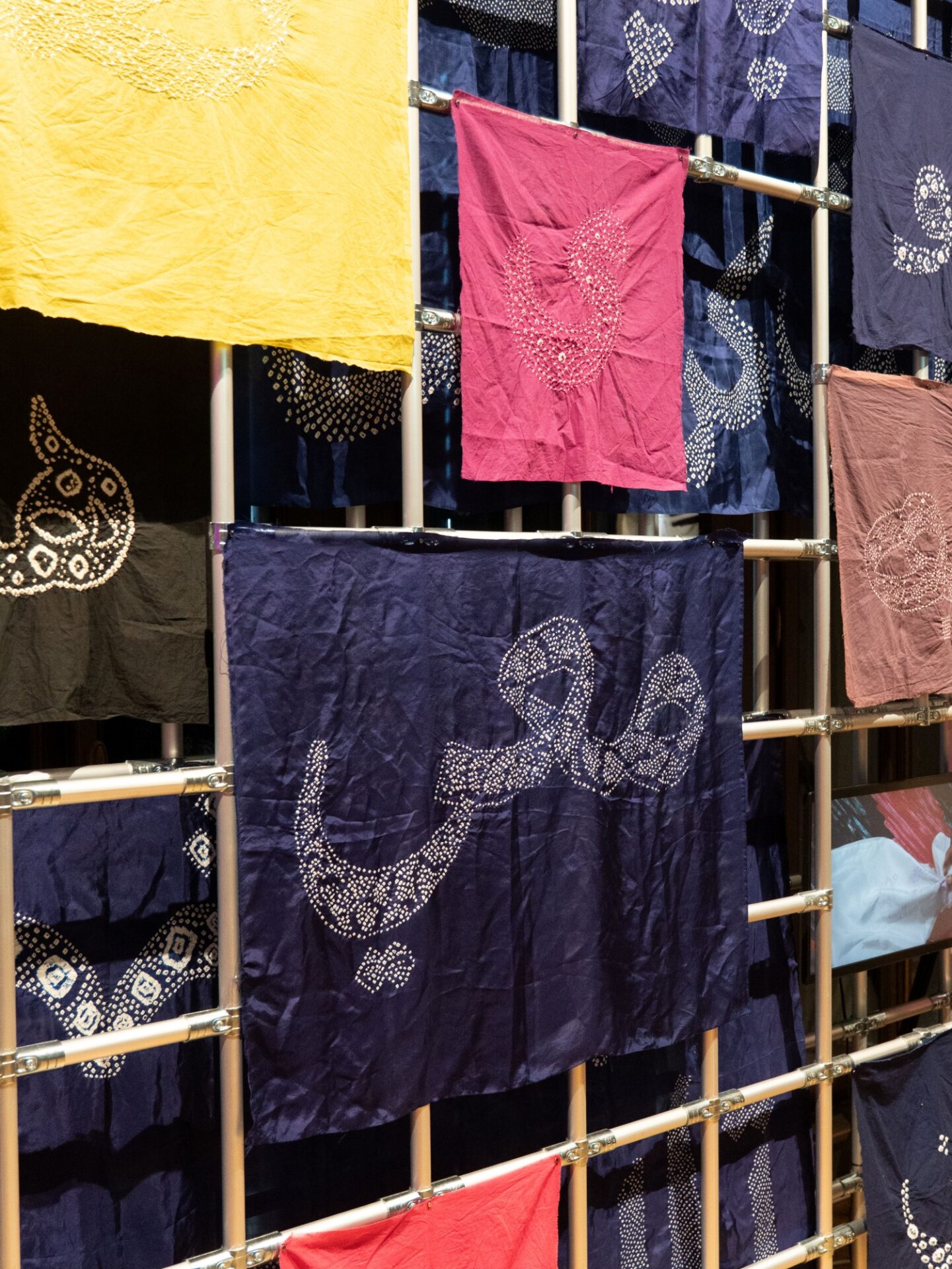
Bandhani Arabi, from Thread to Word.
One of the challenges facing the curators was how to create coherence across projects working with sound, AI, craft, ecology, film, and immersive technologies.
“The fact that the different labs share the same ethos in their creative enquiry helped us find common threads,” says Hesperia. “The narrative developed organically within the exhibition space.”
Chase sees the diversity itself as a strength.
“Rather than forcing cohesion, we allowed difference to function as a strength,” he explains. “The architecture (of the venue) helped, giving each project room for its own identity while creating a shared rhythm through sound, movement, and spatial transitions.”
The exhibition also deliberately moves beyond the visual. Sound, memory, vibration, oral histories, and embodied knowledge become central modes of engagement.
“We wanted to remind viewers that experience is not only visual,” says Chase. “The body encounters the world through many sensory registers, some even more intimate than sight.”
Curatorial Coherence
… and I Was Left Behind – an intimate, large-scale film installation that reanimates personal memories of home, loss, and generational bonds between women.
For both co-curators, one of the most rewarding aspects of the project was the collaborative nature of the curatorial process itself. Rather than a conventional top-down approach, the exhibition evolved through ongoing dialogue between the curators, the research labs, and the creative teams, comprising VCUarts Qatar faculty, students, and alumni, making the process as significant as the outcome.
Hesperia describes the project as a successful case study in participatory curation.
“As a team of two co-curators, we worked in collaboration and constant consultation with the research labs and the creative teams for the duration of the process. As someone who teaches participation in the curatorial process, I would consider this a creative participatory process that was rewarding for all involved and created meaningful dialogue and discussion,” stresses Hesperia.
For Chase, the process began by introducing the Biennale’s overarching themes to the labs and inviting them to identify projects that resonated with those ideas.
“We entered those conversations openly, bringing together multiple perspectives and instincts. Hesperia and I had complementary sensibilities and stylistic preferences, and that negotiation between viewpoints became really enriching,” he adds.
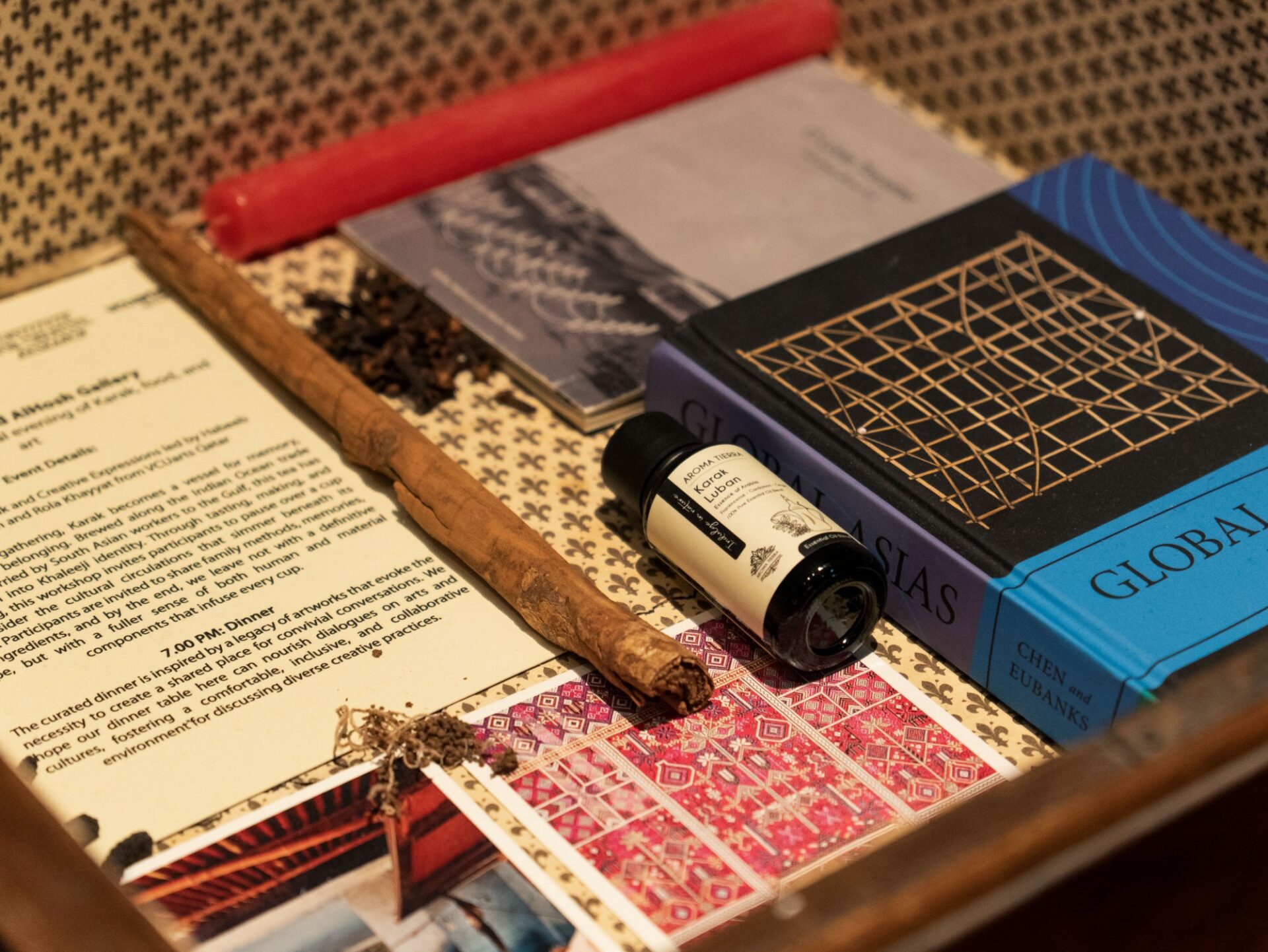
Oceans & Lands_ Drifting Senses and Knowledges_GA_MA Lab: an immersive sound environment that reimagines histories of movement, culture, and connection between Asia and Africa.
The curators also highlight the importance of Hesperia’s presence in Venice. Having previously curated a national pavilion at the Biennale, she brought invaluable local knowledge that helped navigate both the practical realities of mounting an exhibition in the city and the broader cultural context in which it would be received.
“Hesperia brought a deep sensitivity to the unique convergence that defines the Biennale, where the idiosyncratic conditions of Venice meet an intensely cosmopolitan, globally attuned art audience. Her understanding of both the city and the international discourse surrounding the Biennale was incredibly important in shaping how the exhibition could speak meaningfully within that context,” says Chase.
Both curators point to the collaborative nature of the project as one of its greatest strengths. The exhibition emerged from months of conversations among the curators, research labs, and creative teams, allowing projects to evolve in dialogue with the Biennale framework while retaining their individual identities. The result is an exhibition shaped not by a single curatorial voice, but by the collective expertise and perspectives of the communities that produced it.
A Form of Cultural Diplomacy
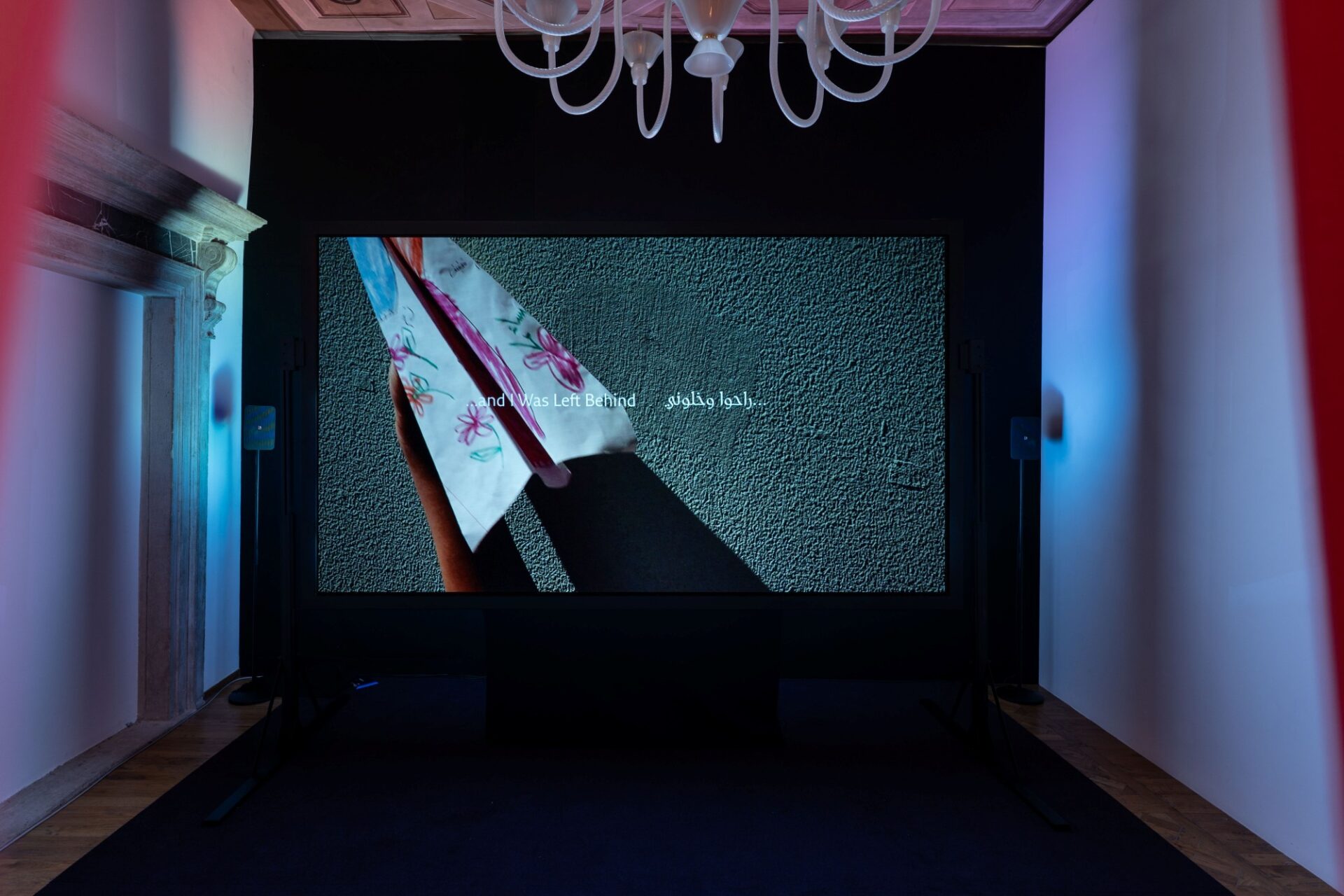
… and I Was Left Behind راحوا و خلوني…– an intimate, large-scale film installation that reanimates personal memories of home, loss, and generational bonds between women.
Coming from a university embedded within Doha’s rapidly evolving creative ecosystem, the exhibition inevitably carries a diplomatic dimension.
“This type of participation represents one of the best tools of cultural diplomacy,” says Hesperia. “It brings forward new generations of creatives engaged in both technological and creative research.”
 Chase Westfall agrees: “In a context where there continue to be misconceptions about Qatar and the Gulf, the exhibition does become a form of cultural diplomacy,” he says. “But it’s a form of diplomacy that is generous and earnest. It is about participating openly in global discourse and showing that this creative community has important ideas and perspectives to contribute.”
Running until November 22, Aghrab Idrāk: Thresholds of Perception places VCUarts Qatar within an international conversation about art, research, and knowledge production. More importantly, it demonstrates how an academic institution from Doha can contribute to the Venice Biennale not simply through representation, but through original research, interdisciplinary experimentation, and new ways of understanding perception itself.