
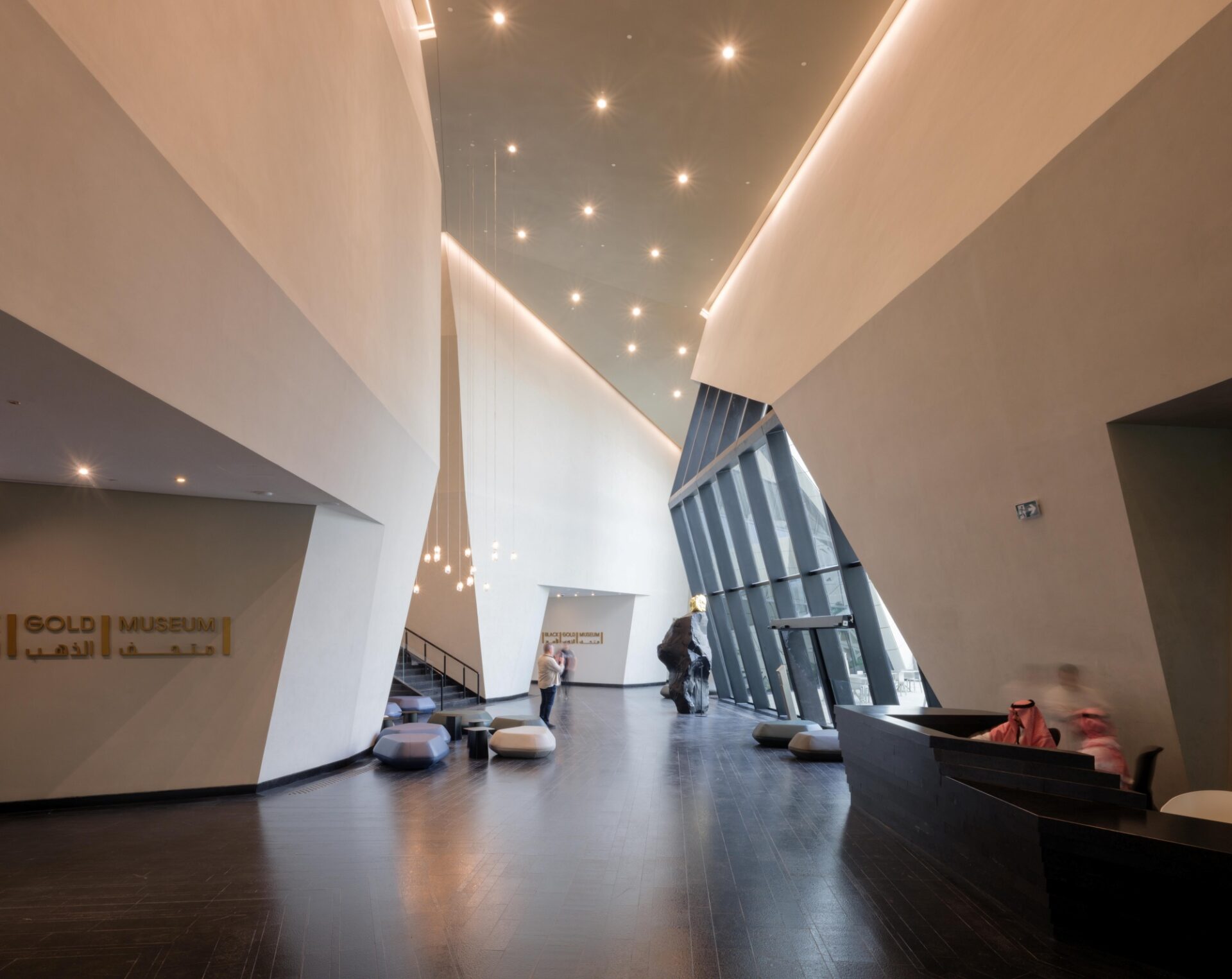
Reimagining a Zaha Hadid Creation as Riyadh’s Black Gold Museum
SCALE engages Architect DaeWha Kang in a conversation on transforming a Zaha Hadid building into Riyadh’s Black Gold Museum.
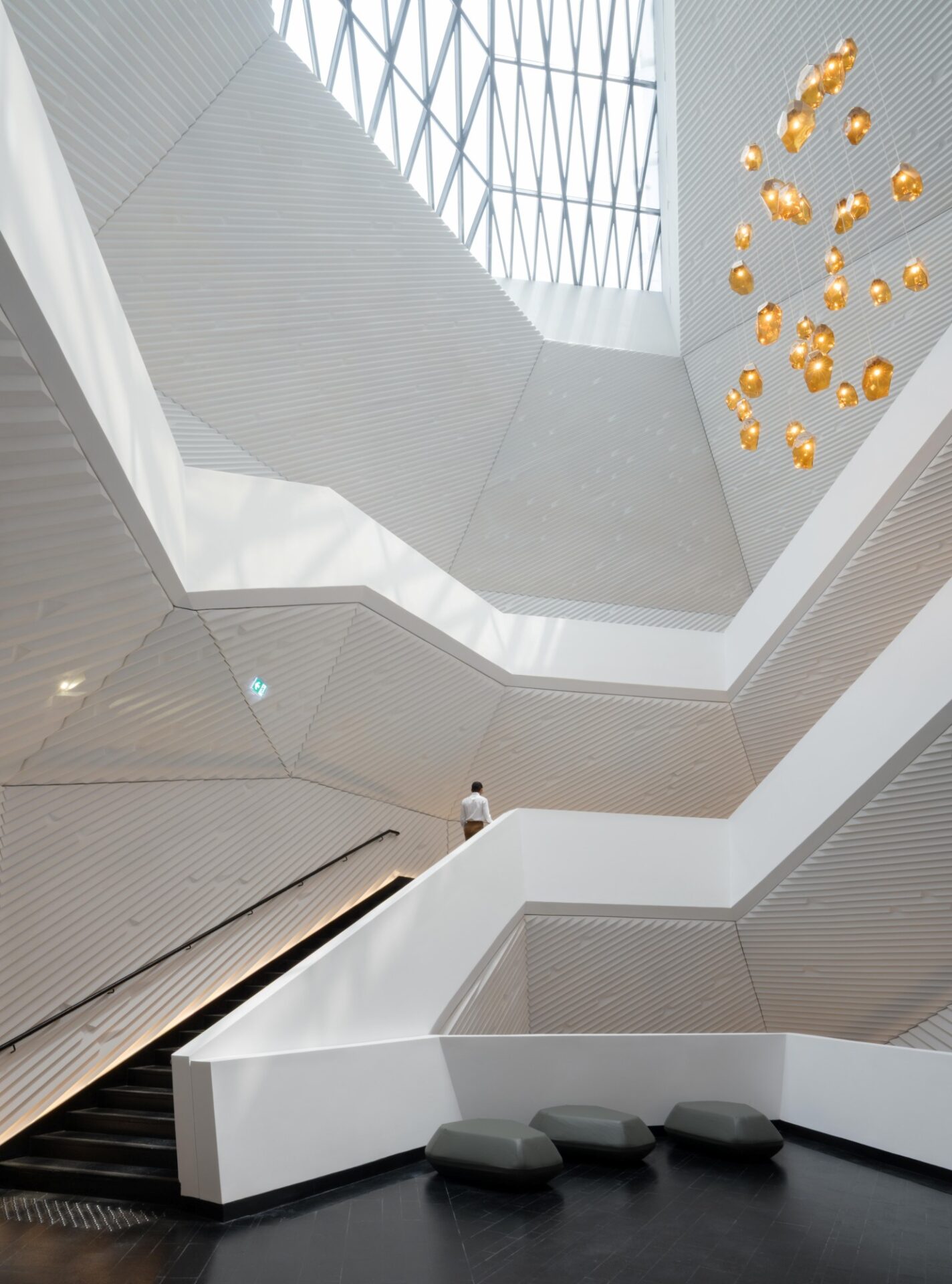
The Grand Spiral, Black Gold Museum, DaeWha Kang Design, Photography Credit: Hassan Al Shatti
When DaeWha Kang Design was appointed to create the interior architecture of the Black Gold Museum on Saudi Arabia’s flagship King Abdullah Petroleum Studies and Research Centre, better known as the KAPSARC campus, the brief was extraordinary: transform a former research library, one originally designed by Zaha Hadid, into a world-class art museum dedicated to the story of oil and its impact on humanity.
What made the commission even more remarkable was that DaeWha Kang himself had served as design director for the KAPSARC project 17 years earlier. SCALE spoke with the founder and director of the London-based studio about adaptive reuse and the art of making architectural design.
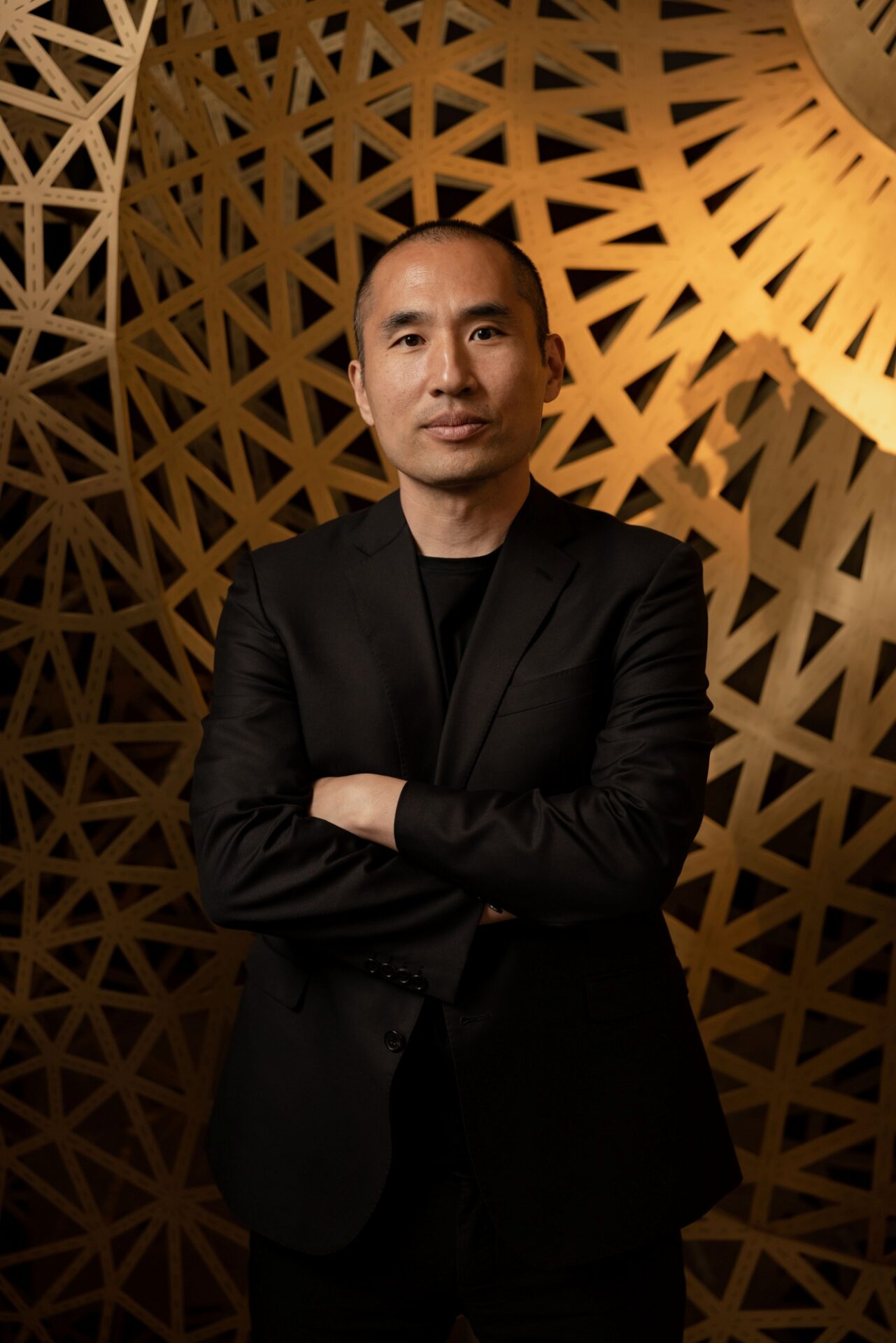
DaeWha Kang. Photo Credit Jermaine Binns
DaeWha has spent the past twenty-five years studying, designing, and building architecture around the world. After working for 10 years with Zaha Hadid Architects (ZHA), he founded his award-winning practice, DaeWha Kang Design, a studio born to improve wellbeing through thoughtful and exceptional design.
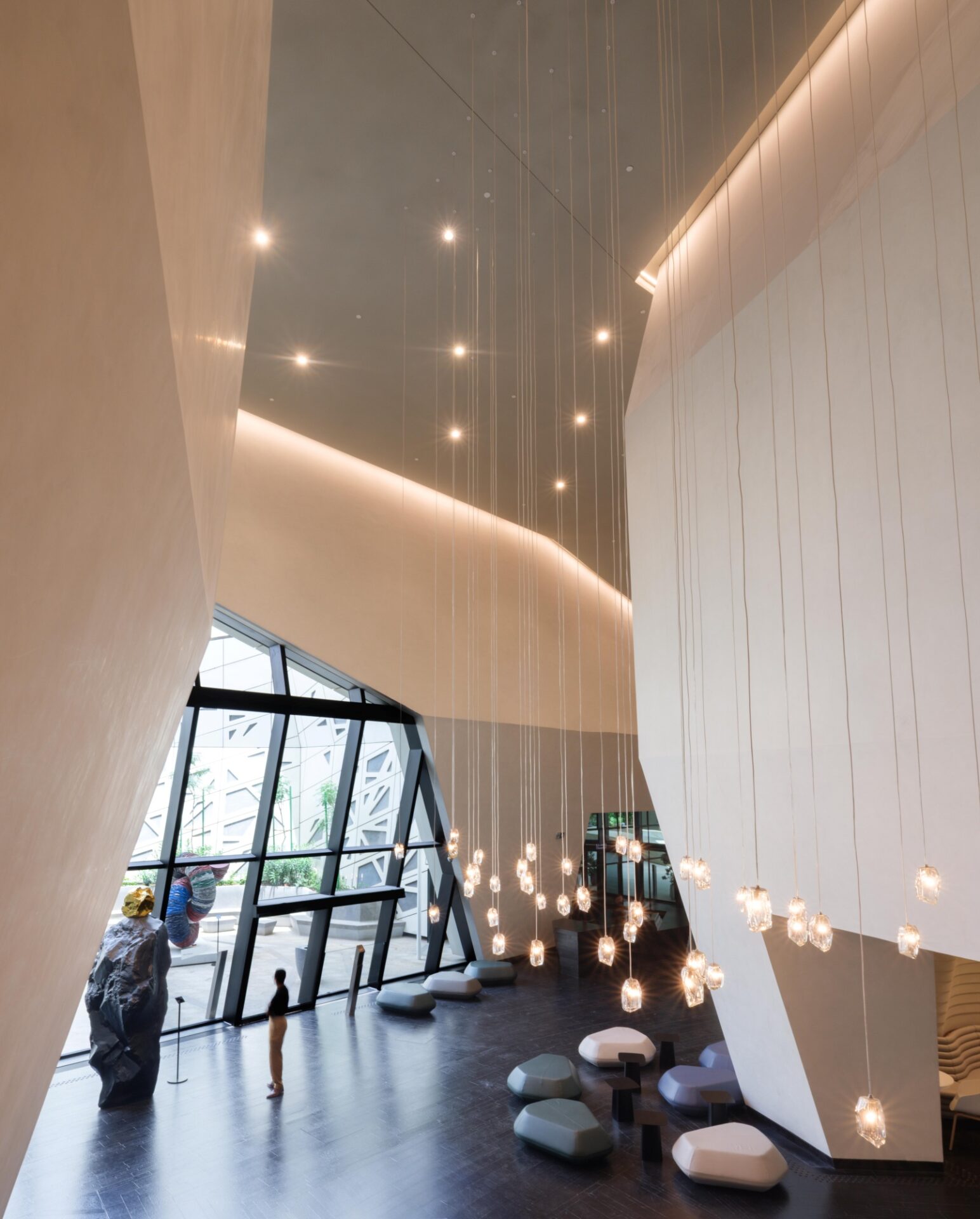
The descent stairs of Black Gold Museum, Daewha Kang Design, Photography Credit Hassan Al Shatti
SCALE: The Black Gold Museum is a significant adaptive reuse project, converting a Zaha Hadid-designed research library into a state-of-the-art museum. What drew you to the challenge, and what were the first complexities you encountered?
DaeWha Kang: As a studio, we always find great inspiration from working within an existing context, both in the conversation it opens with the designers who came before, and in the motivation that comes from working within complex constraints. In the case of the Black Gold Museum, we had both.
But what made this project particularly unusual for me was that it felt like a conversation with myself across time. As the original design director for KAPSARC, 17 years ago, I had conceived the research library that this building once was. Returning to it was an opportunity to bring seventeen more years of experience to the task of reimagining it as a museum.
One of the most beautiful aspects of this project is the striking character of the original KAPSARC design, its honeycomb structure and dynamic form, which provided a remarkable setting for the new museum. Although we dramatically transformed the courtyard into a garden and completely reimagined the main atrium, we were able to retain the skylight and courtyard glazing, building our design on those traces of the previous building. There is a wonderful dialogue, I think, between the entirely new spaces we have made and those inherited elements.
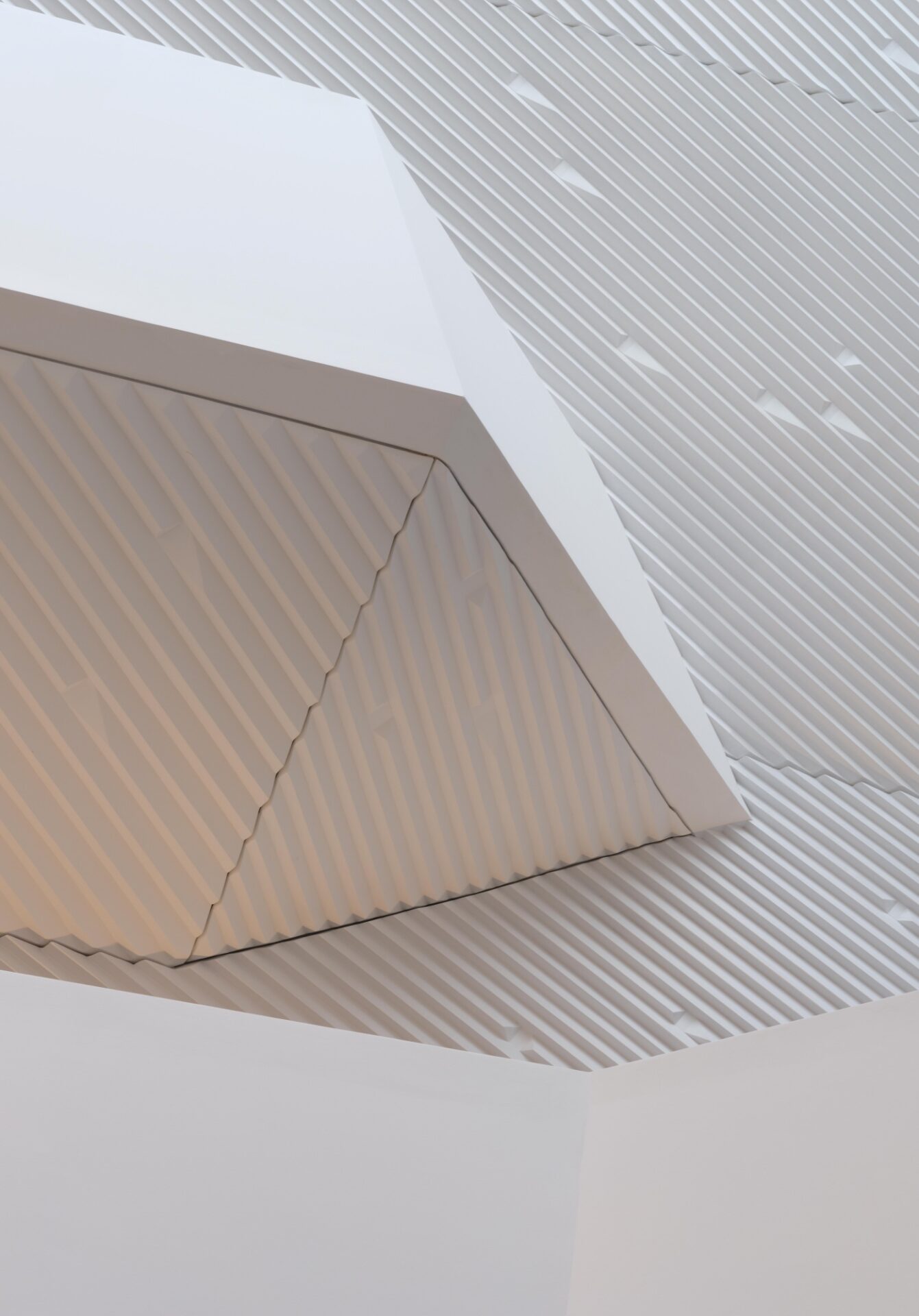
Layers and details, Black Gold Museum, Daewha Kang Design Photography Credit Hassan Al Shatti
What was genuinely challenging was that the entire building had been designed for a structure never intended to house permanent galleries. Visitor flow was an incredibly complex problem to solve: almost all of the building’s main circulation had to be relocated. That meant designing new spiral staircases, new terraces, and adding new areas of slab to create coherent journeys through the permanent galleries, journeys that would not require visitors to double back. None of the walls were vertical either, so finding the right strategy to introduce vertical hanging surfaces while maintaining the dynamism of the original architecture was equally important. We loved working with the complex geometry of the existing building and finding ways to simplify and intensify the emotional quality of the spaces.
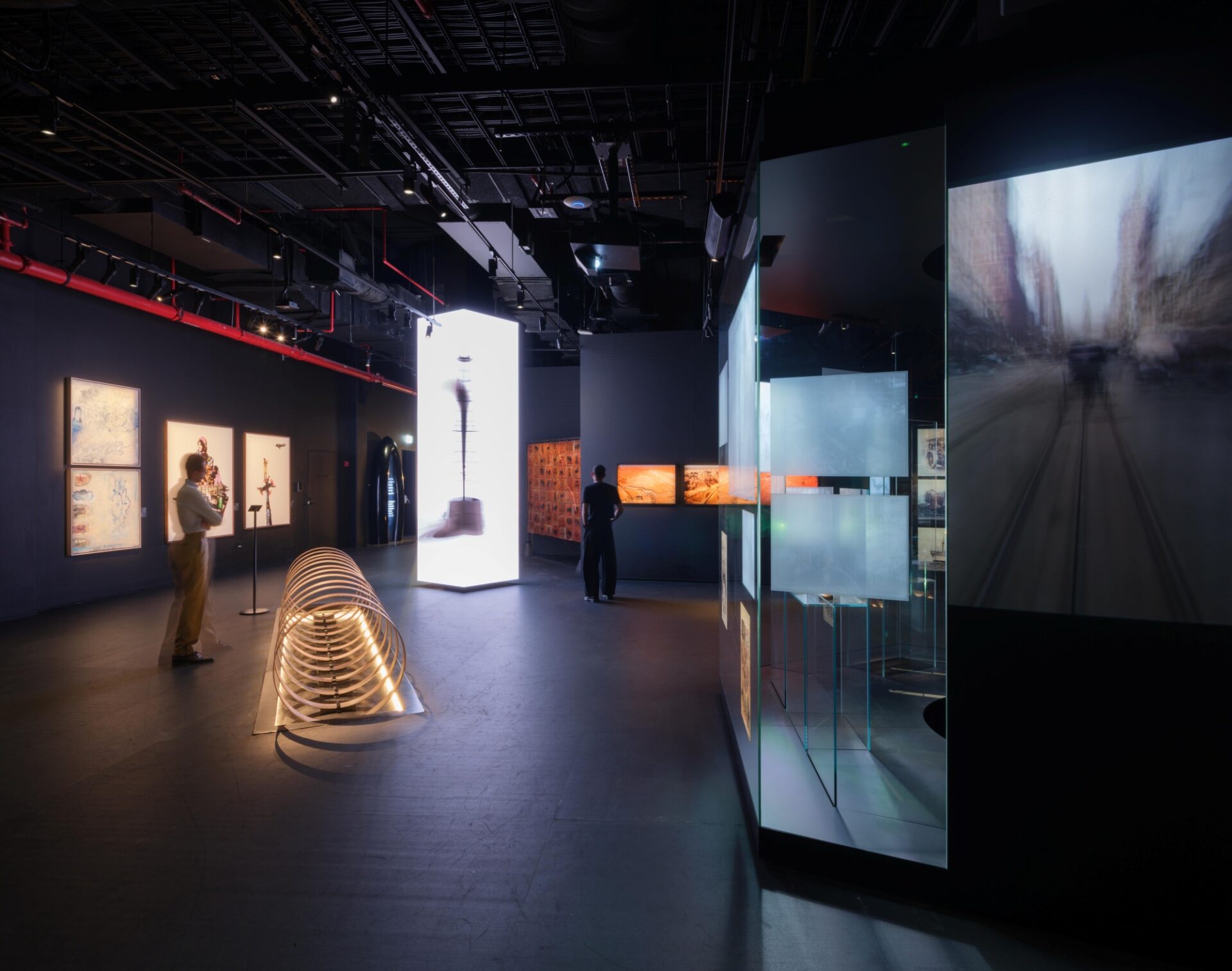
Encounter, Black Gold Museum, Daewha Kang Design, Photography Credit Hassan Al Shatti
SCALE: The museum is organised around four thematic galleries: Encounter, Dreams, Doubts, and Visions. How did the spatial narrative of the building come to mirror that curatorial journey?
DaeWha Kang: The museum takes visitors on a journey through four gallery sections that capture humanity’s relationship with oil, as told by artists of the 20th and 21st centuries.
The opening section, Encounter, brings together works by artists who have engaged with oil as a physical substance, a fitting introduction to locate in the basement. From there, the journey rises level by level. Dreams, on the ground floor, captures humanity’s first love affair with oil: extraordinary designs from the 1960s and 70s, fashion, furniture, artworks, celebrating new colours, new materials, and the possibilities that oil unlocked through scientific advancement. On the first floor, Doubt collects works by artists questioning our relationship with oil and the environment. Finally, the second floor’s Vision gallery gathers contemporary voices, artists exploring the ongoing relationship between humanity, civilisation, and energy, now and into the future.
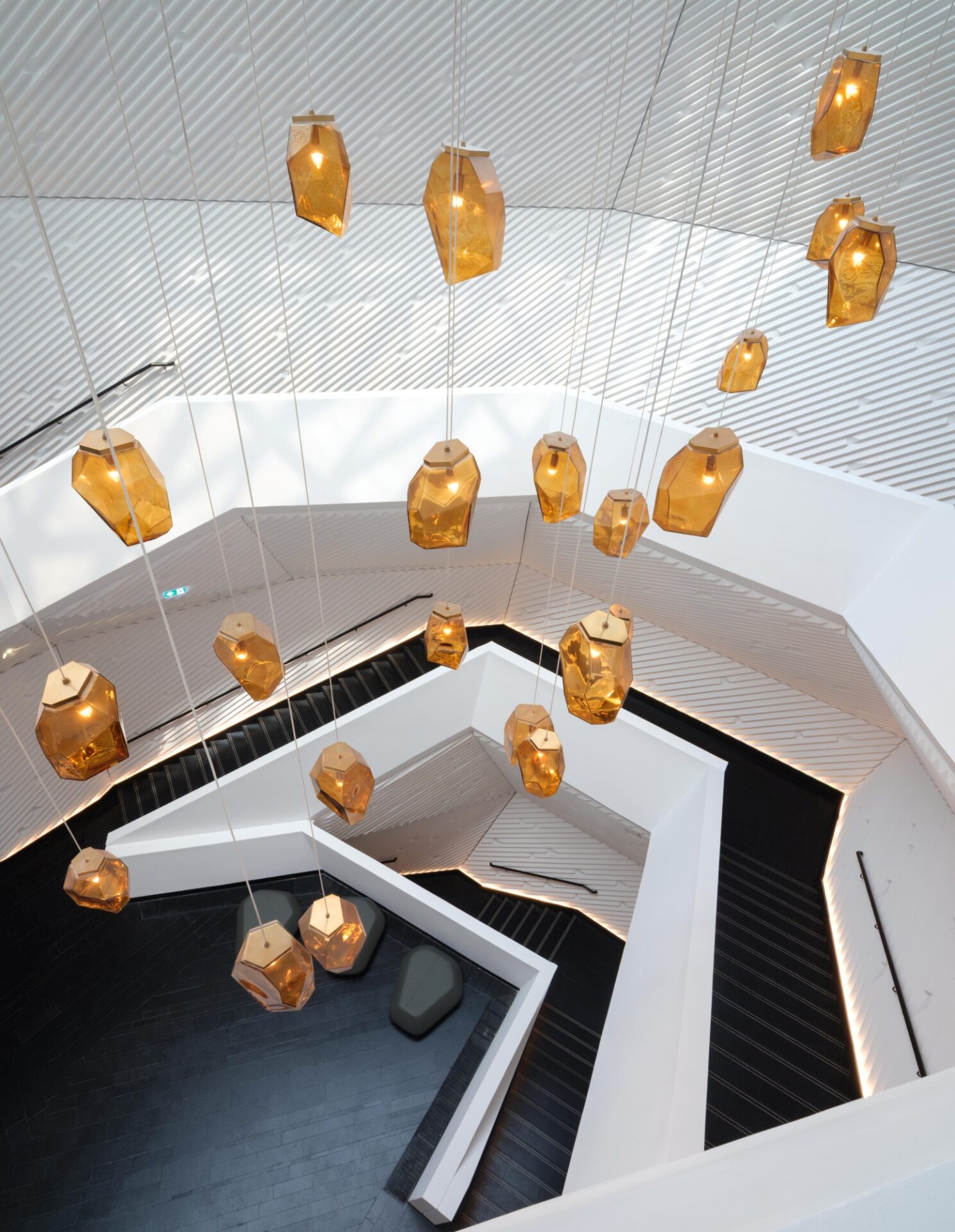
The Drop, Black Gold Museum, Daewha Kang Design, Photography Credit Hassan Al Shatti
The grand spiral staircase forms the vertical spine connecting all of these galleries. It is the anchoring space of the visitor experience. The descent stairs return visitors to where they began without retracing their steps.
Throughout the public spaces and galleries, the design has been developed to evoke a sense of geological time, to create topless, transcendent spaces that allow visitors to feel part of a longer timeframe, and perhaps reflect more deeply on the subject matter and the artists’ voices they encounter.
SCALE: You were working within a building by one of architecture’s most iconic figures. How did you navigate the tension between respecting that legacy and creating something distinctly your own?
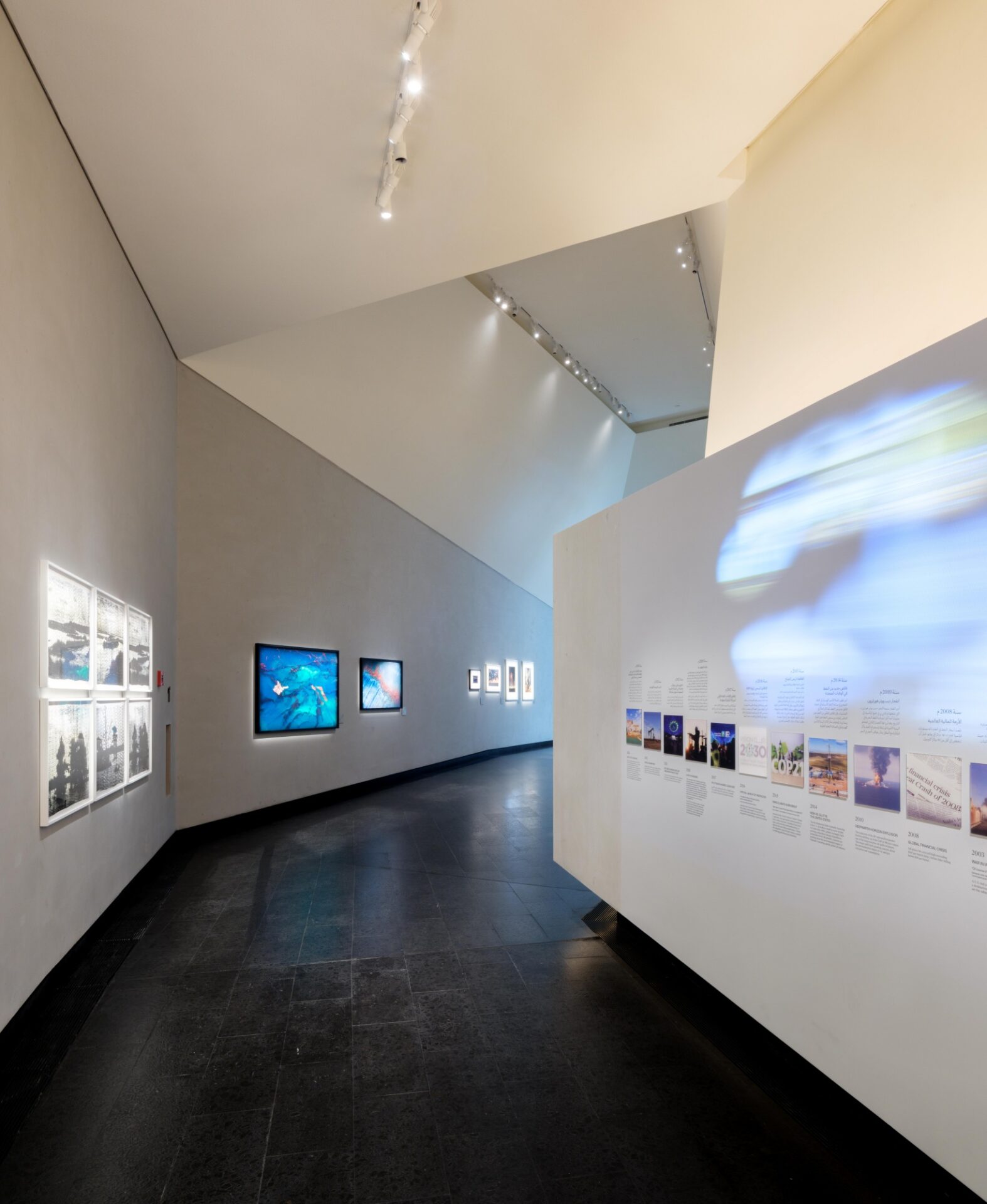
Journey, Black Gold Museum, Daewha Kang Design, Photography Credit Hassan Al Shatti
DaeWha Kang: Working within a building originally designed by Zaha Hadid, it was essential to respect the external envelope. The Black Gold Museum’s exterior is part of a composition that brings together several large buildings unified by a shared design language. For this reason, any interventions we made to the exterior were kept as invisible as possible, so as not to disturb the harmony of the greater whole.
On the interior, we retained as much of the primary structure as possible to reduce our carbon impact — though it was necessary to strip out almost all of the original fit-out. The new work is distinctly our own: earthier materials, rich textured environments, a different sensibility. Yet every effort has been made to connect geometrically to the key features of the original building, the skylights, the courtyards, so that the dialogue between old and new remains present throughout.
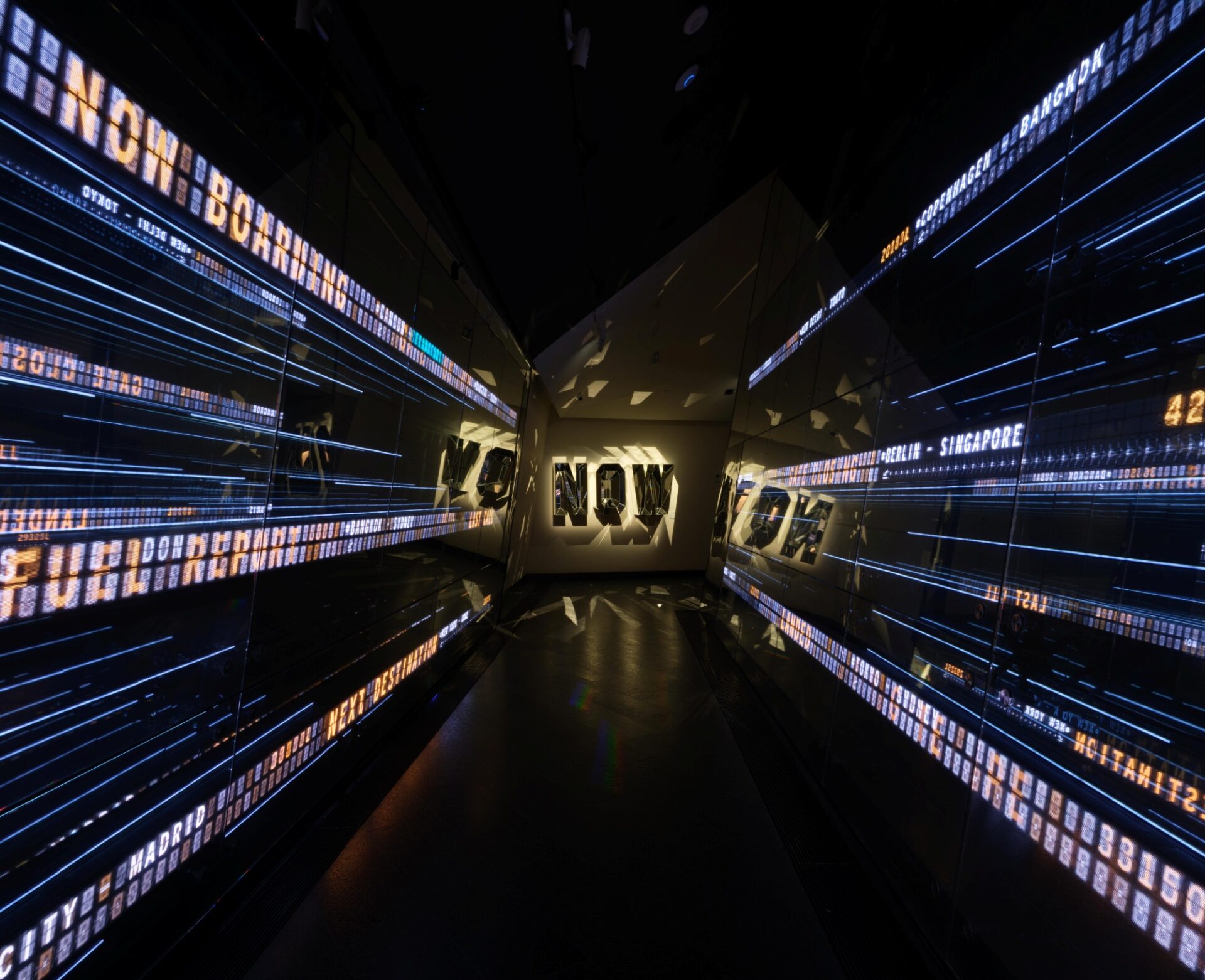
Visions, Black Gold Museum, Daewha Kang Design, Photography Credit Hassan Al Shatti
SCALE: The material palette, wadis, canyons, sedimentary formations, hexagonal geometries draw heavily from Saudi Arabia’s geological identity. Can you describe the thinking behind those choices and how they translate into spatial experience?
DaeWha Kang: The spatial language of the museum is rooted in the hexagonal grid, expressing itself through large, primal volumes that evoke boulders and canyons. There is a constant reference to geology and the land. The hexagonal geometry was already embedded in the KAPSARC architecture, so it was natural for us to develop that language further, to draw it up from the landscape of Saudi Arabia and bring it indoors.
We think about materials as storytellers. Polished plaster boulder walls, deep dark stone terrazzo with a striated pattern that evokes the land, these are choices designed to slow the visitor down, to make them feel the weight of time. The subtle references to hydrocarbon molecular structures that inform some of the patterns and spatial rhythms are not literal; they are felt more than seen, adding a layer of meaning for those who look closely.
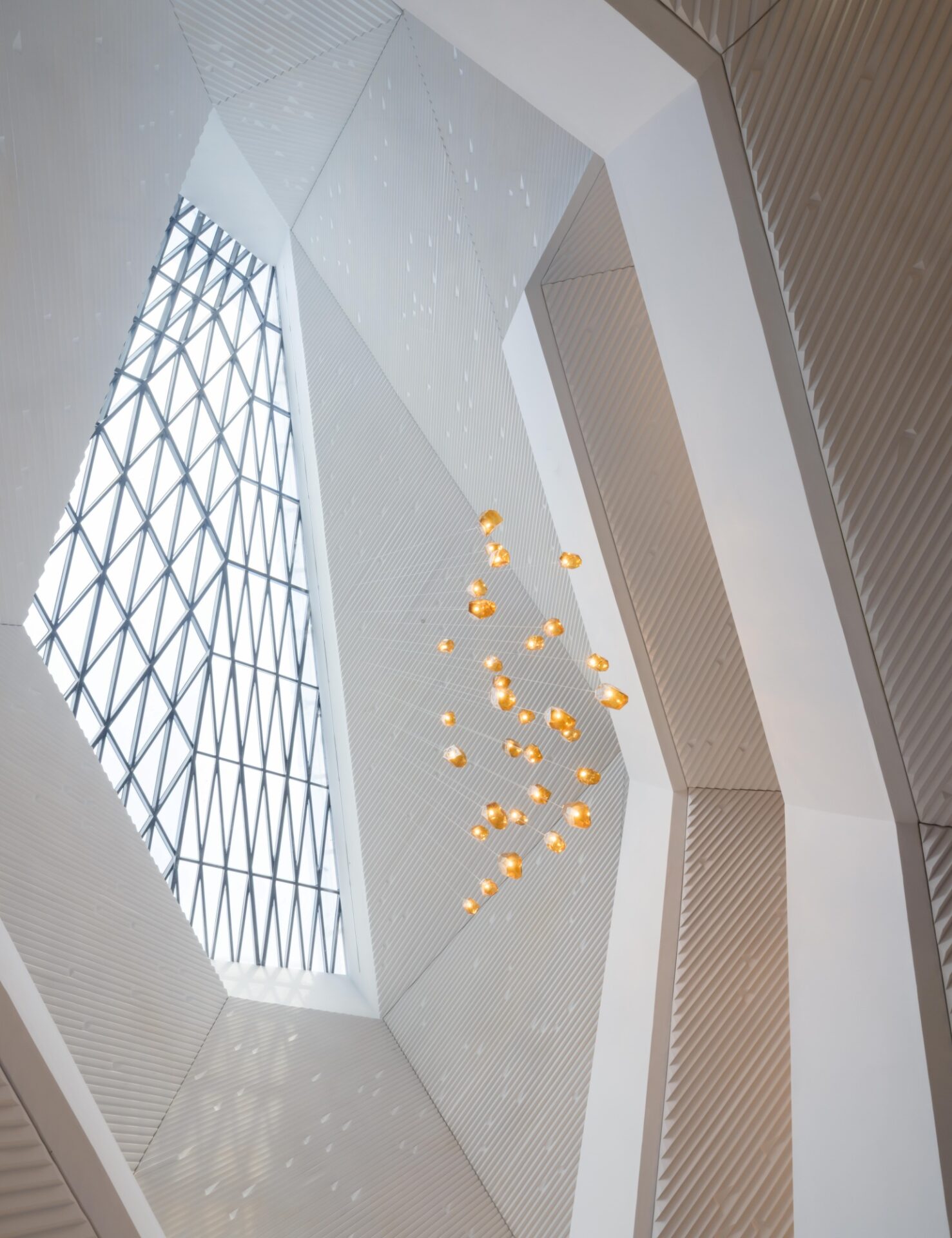
Guidance, Black Gold Museum, Daewha Kang Design, Photography Credit Hassan Al Shatti
Q5 The grand spiral staircase has emerged as the visual centrepiece of the museum. What role does it play architecturally and experientially?
DaeWha Kang: The grand spiral is a tranquil, contemplative space. Daylight streams in from the skylight above, catching the stratified layers of plaster that line its walls, a feeling of moving through sediment, through geological eras. Because the galleries carry such strong individual aesthetics, the deep darkness of Encounter underground, the bright chromatic intensity of Dreams, the grey restraint of Doubt, the calm of the grand spiral punctuates the journey and offers genuine relief.
Throughout the wider architecture, we work in earth tones: polished plaster boulder walls, deep dark stone terrazzo with a striated pattern that evokes the land. The descent staircase winds down from the top of the galleries back to where the visitor first entered. a long, turning path through the building’s large volumes that offers a moment to reflect on everything encountered along the way.
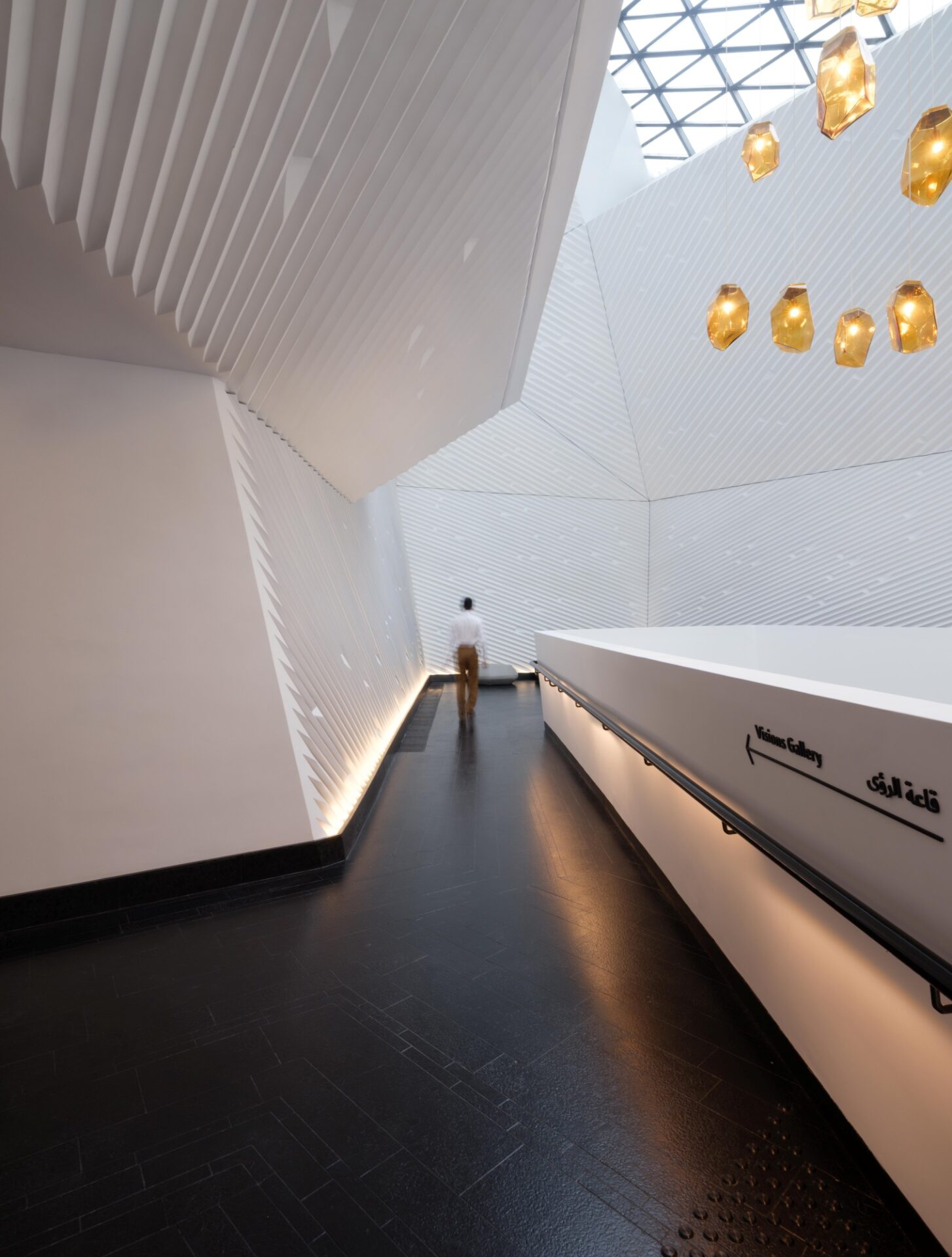
Black Gold Museum Daewha Kang Design, Credit Hassan Al Shatti
What we want to emphasise is the strong contrast between the gallery spaces themselves and the architectural spaces that connect them. The spiral is the breath between chapters.
SCALE: Only six per cent of the total floor area consists of the Black Gold Museum. How did such minimal intervention achieve such a dramatic transformation?
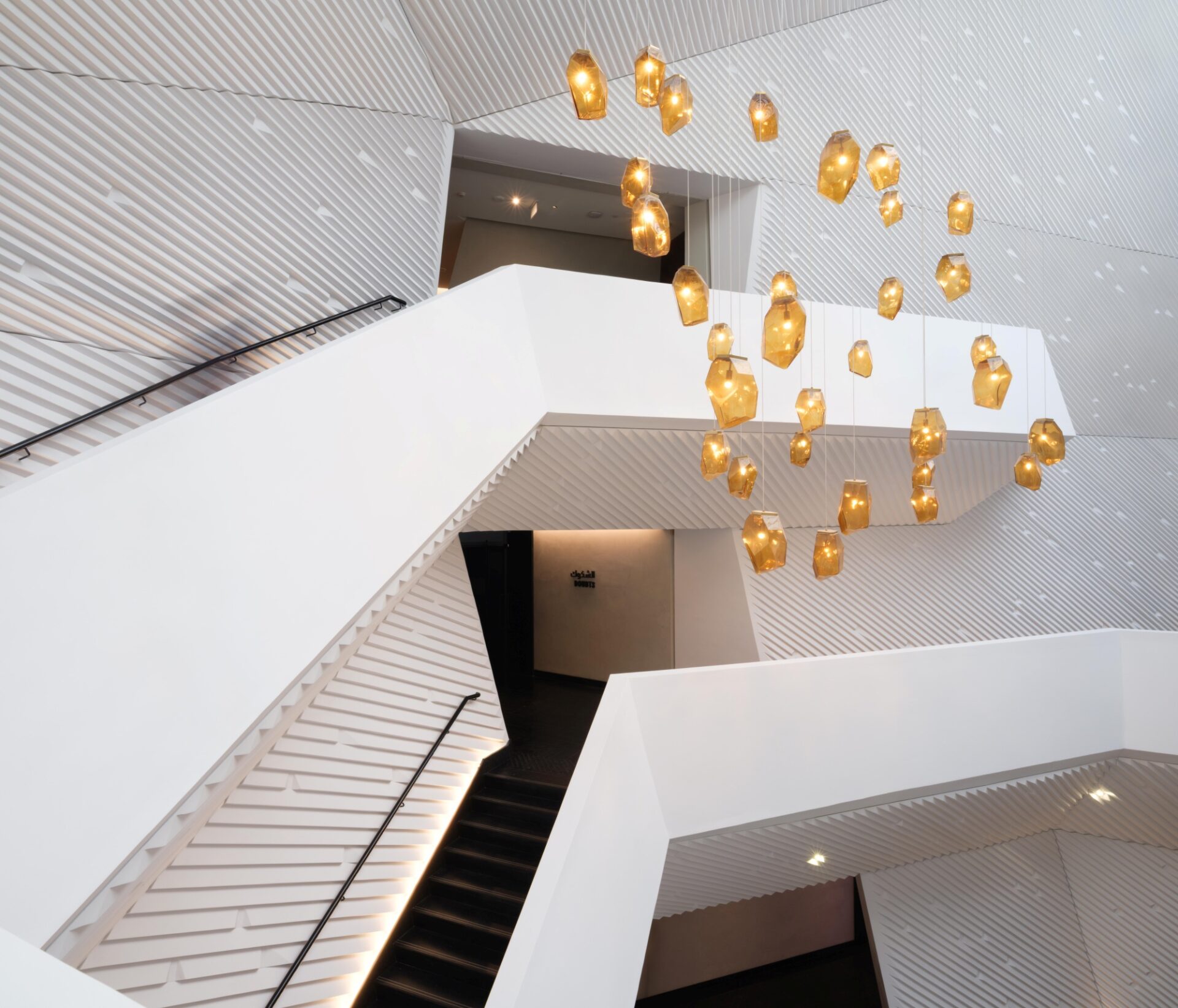
Black Gold Museum, Daewha Kang Design, Photography Credit Hassan Al Shatti
DaeWha Kang: We are very proud of how dramatic a transformation we were able to create while preserving so much of the primary structure of what existed before. Those limited insertions, the new central atrium, the spiral staircases, and the added slabs are precisely targeted. They establish the primary circulation spaces that allow the former library to function as a major art museum: coherent journeys, clear orientation, and a sense of discovery at every level.
We believe that adapting existing buildings is one of the most important ways we can reduce humanity’s negative impact on the environment. Minimal structural intervention here meant significantly reduced embodied carbon, reduced material consumption, and far less construction waste. But beyond the environmental argument, preserving traces of significant buildings that came before adds richness and meaning to the new institutions we create within them.
SCALE: What is the broader lesson of the Black Gold Museum for the region’s cultural ambitions?
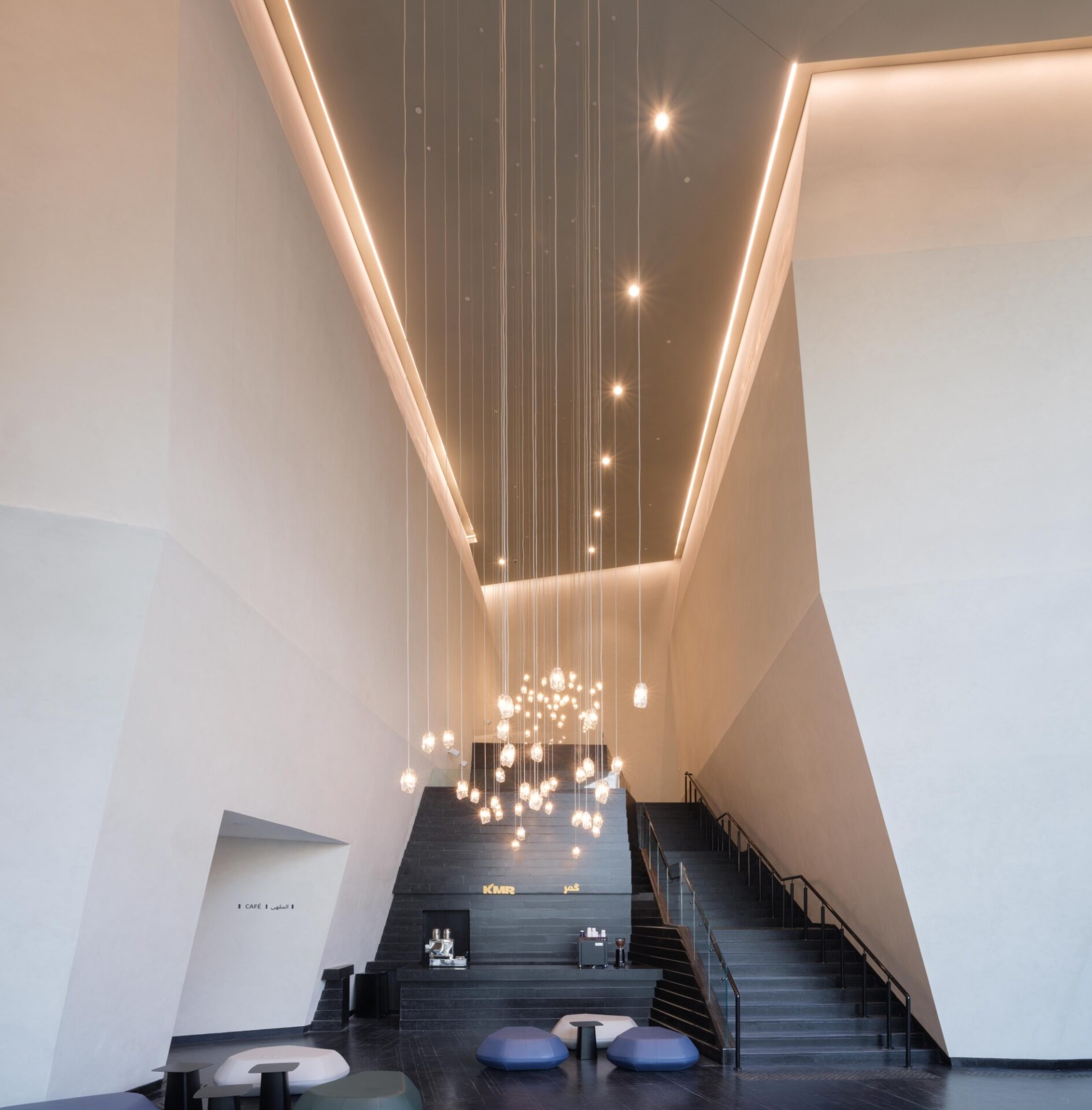
Cafe, Black Gold Museum, Daewha Kang Design, Photography Credit Hassan Al Shatti
DaeWha Kang: Reusing existing buildings can add richness and meaning, give us traces of the past, and make stronger stories for the places we inhabit day to day. It is always a challenge to create memorable spaces when working within existing structures. But when done well, the result can be even more breathtaking than something built entirely from scratch.
Learning to engage with heritage, to celebrate what came before, is one way that countries in the region can strengthen their cultural identity, build the foundations of genuine cultural capital, and share that with the rest of the world. The Black Gold Museum demonstrates how adaptive reuse, innovative interior architecture, and thoughtful operational planning can transform a landmark into a resilient, future-ready cultural institution.
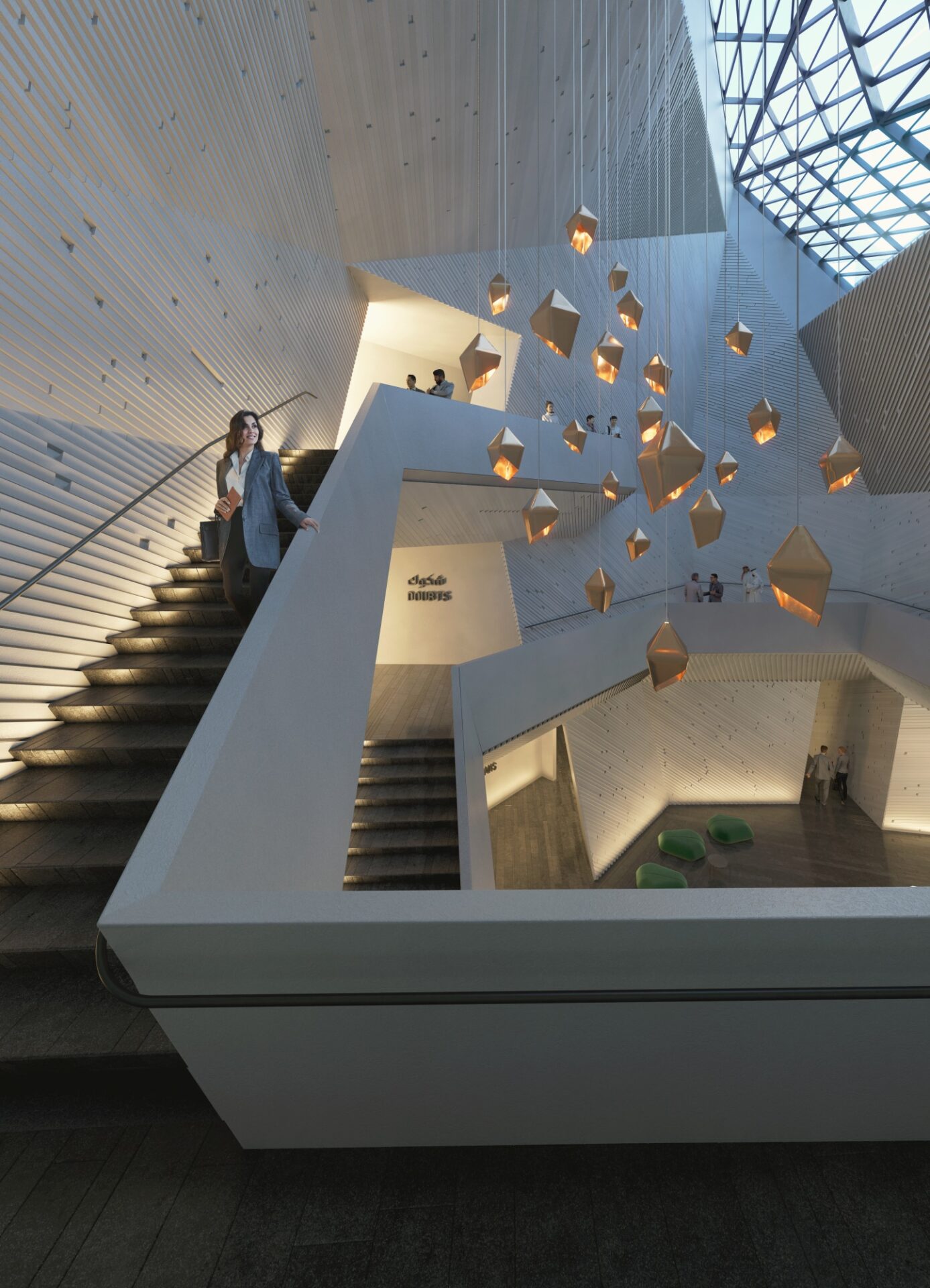
Renders of Black Gold Museum, Daewha Kang Design
SCALE: Finally, what was the single most difficult decision you made on the Black Gold Museum?
DaeWha Kang: The most challenging decision on this project was the realisation that what would truly make it special, what would make it succeed, was achieving a visitor journey so smooth and so intuitive that every step felt completely natural. In some ways, our greatest architectural achievement was to make invisible the most difficult reconfigurations we had undertaken.
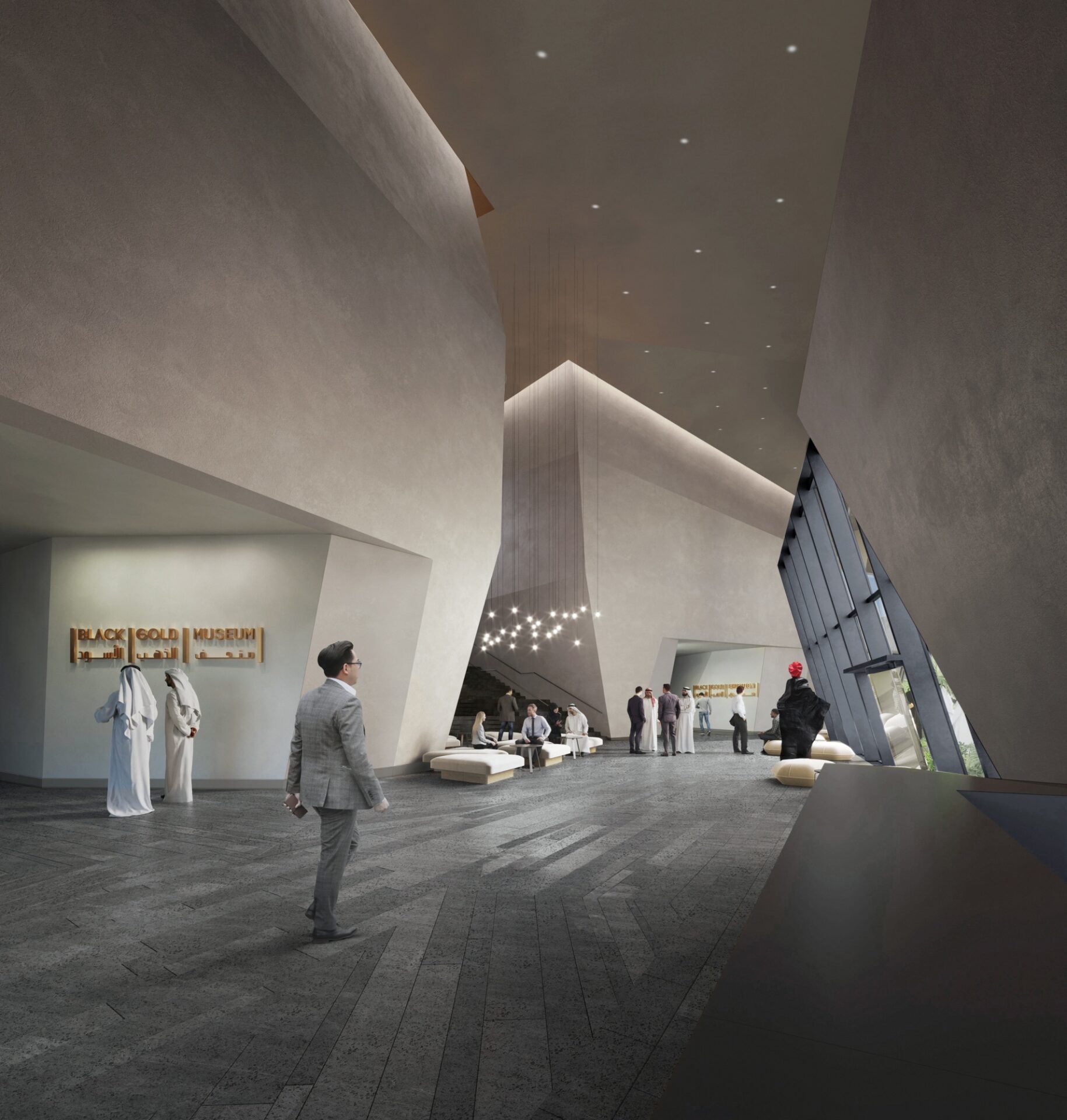
Renders of Black Gold Museum, Daewha Kang Design.
It takes a great deal of confidence to allow a significant part of your work to disappear from view, and to remain certain that the final result will still be breathtaking. That is the paradox at the heart of great spatial design: the better you do it, the less visitors notice. They simply feel it.
All Images Courtesy DaeWha Kang Design