Chamba Rumal Becomes a Living Archive With Bridge Bharat
In April this year, Bridge Bharat, a design platform from Gurgaon, led by Aakanksha Singh, transformed into an immersive exhibition to celebrate textiles, heritage, and storytelling with Fields of Chamba.
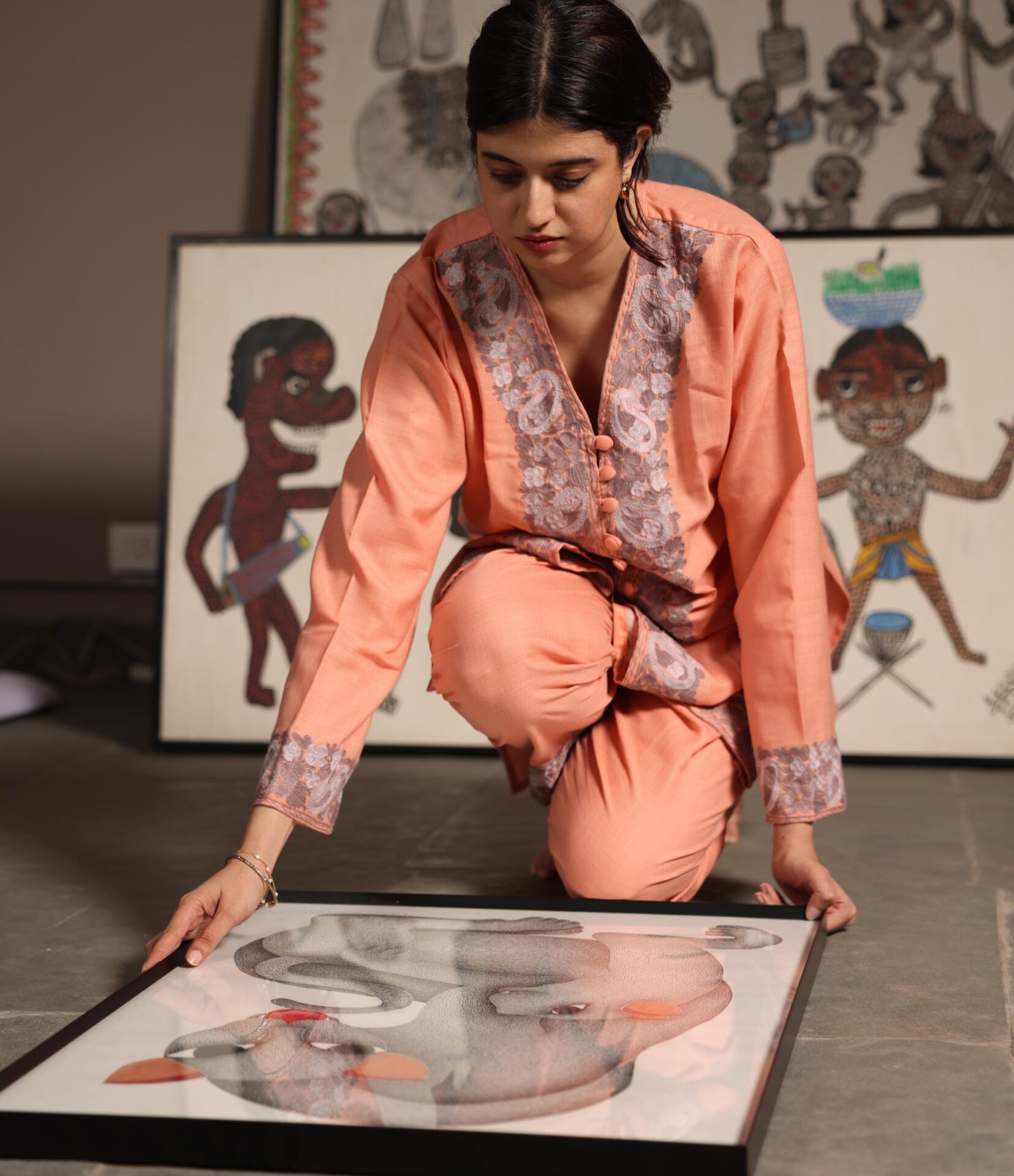
Aakanksha Singh, Founder of Bridge Bharat
The exhibition opened at Bridge Bharat’s studio in DLF Phase 1, Gurgaon, and explored the historic Chamba Rumal as a living and evolving practice shaped through research, collaboration, and contemporary design thinking. Across three weeks of programming, which included intimate dinners, conversations, and exhibition walkthroughs, the project brought together artisans, designers, collectors, and cultural practitioners in an attempt to rethink the place of Indian textile traditions within present-day visual culture.
 At the centre of the exhibition was a collaboration between Bridge Bharat and Padma Shri awardee Lalita Vakil, one of the foremost practitioners of Chamba Rumal embroidery. Founded in 2022, Bridge Bharat has worked with legacy artist communities across India to create contemporary collectible works rooted in traditional techniques. Through Fields of Chamba, the platform extended its long-term interest in design-led craft interventions, while Lalita Vakil and her atelier of women artisans brought generations of technical mastery and lived cultural knowledge into the process.
Reworking a Historic Textile Language
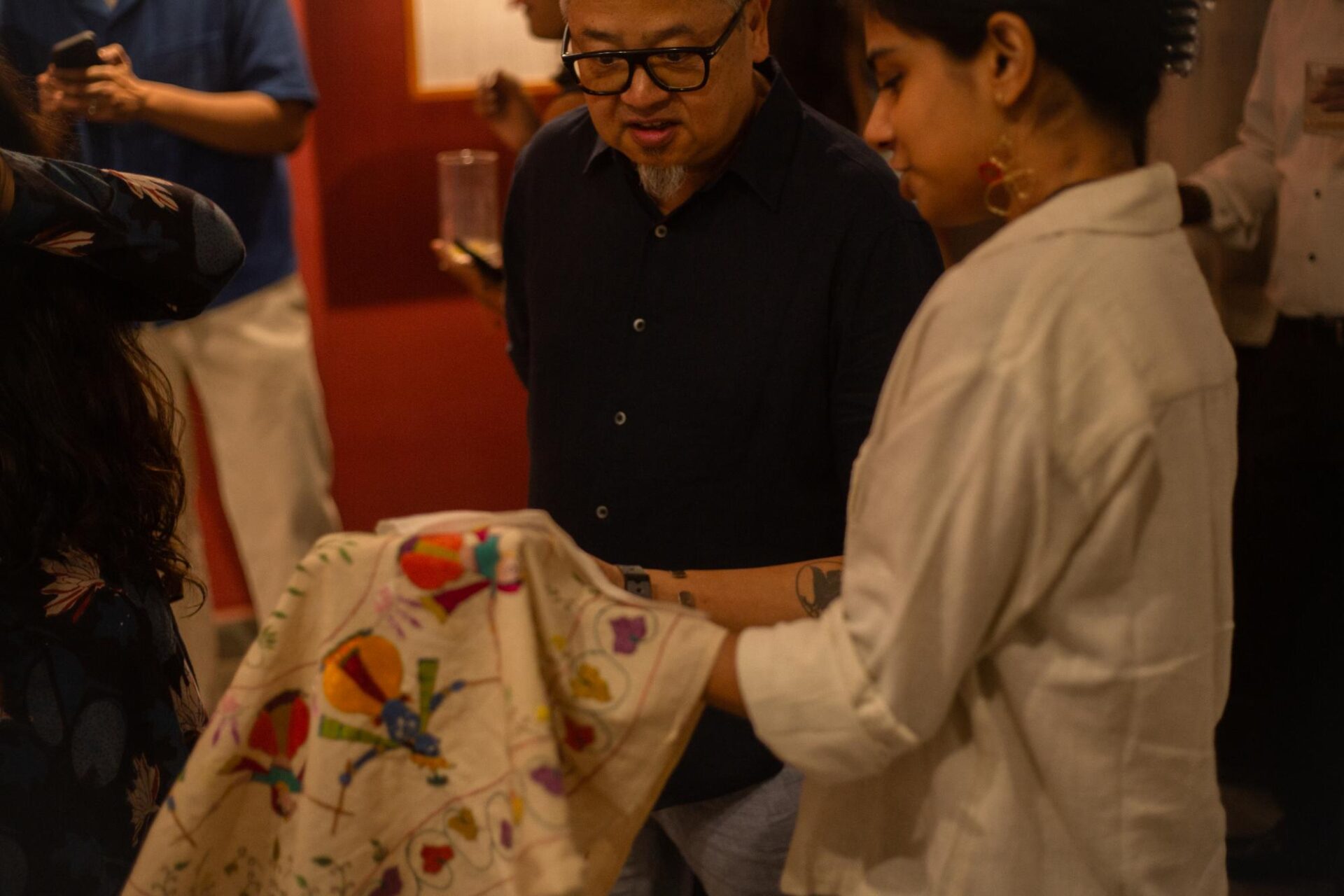 Historically, Chamba Rumals originated in the Pahari regions of Himachal Pradesh as embroidered square textiles depicting mythological scenes, rituals, and everyday moments. Executed using intricate double-sided embroidery, the Rumals are recognised for their precision, symmetry, and narrative richness. Floral borders, peacocks, deer, sacred trees, and scenes from epics often coexisted within a single textile surface, turning embroidery into a form of storytelling.
 Rather than reproducing these traditions unchanged, the curatorial framework of the teams approached the Chamba Rumal as what Bridge Bharat described as a “living archive.”
The exhibition framed tradition as something to be engaged with critically and creatively rather than preserved in isolation. Through new layouts, material experimentation, and reinterpretations of inherited motifs, the collection sought to extend the vocabulary of the Rumal into contemporary contexts while retaining its discipline and integrity.
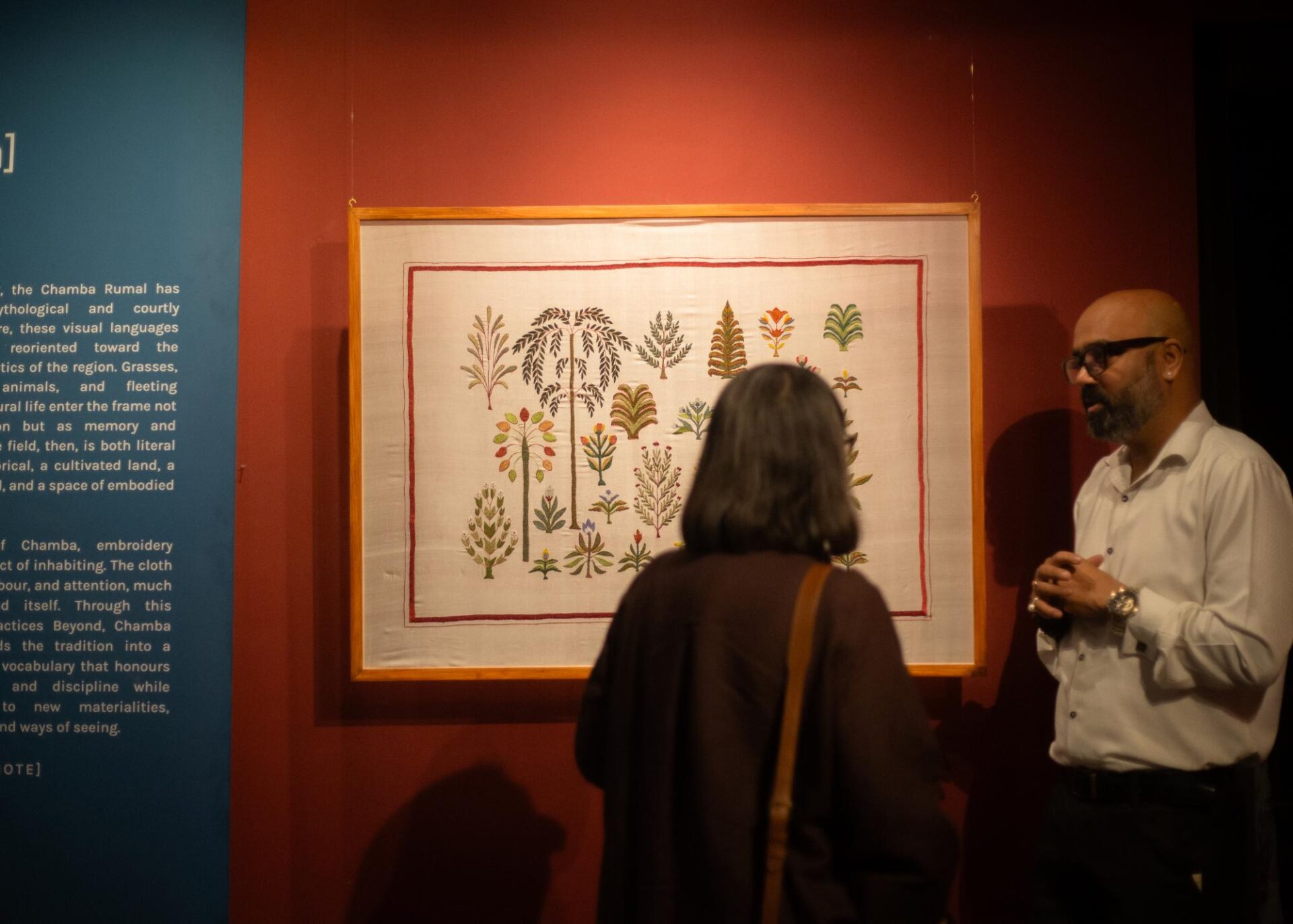
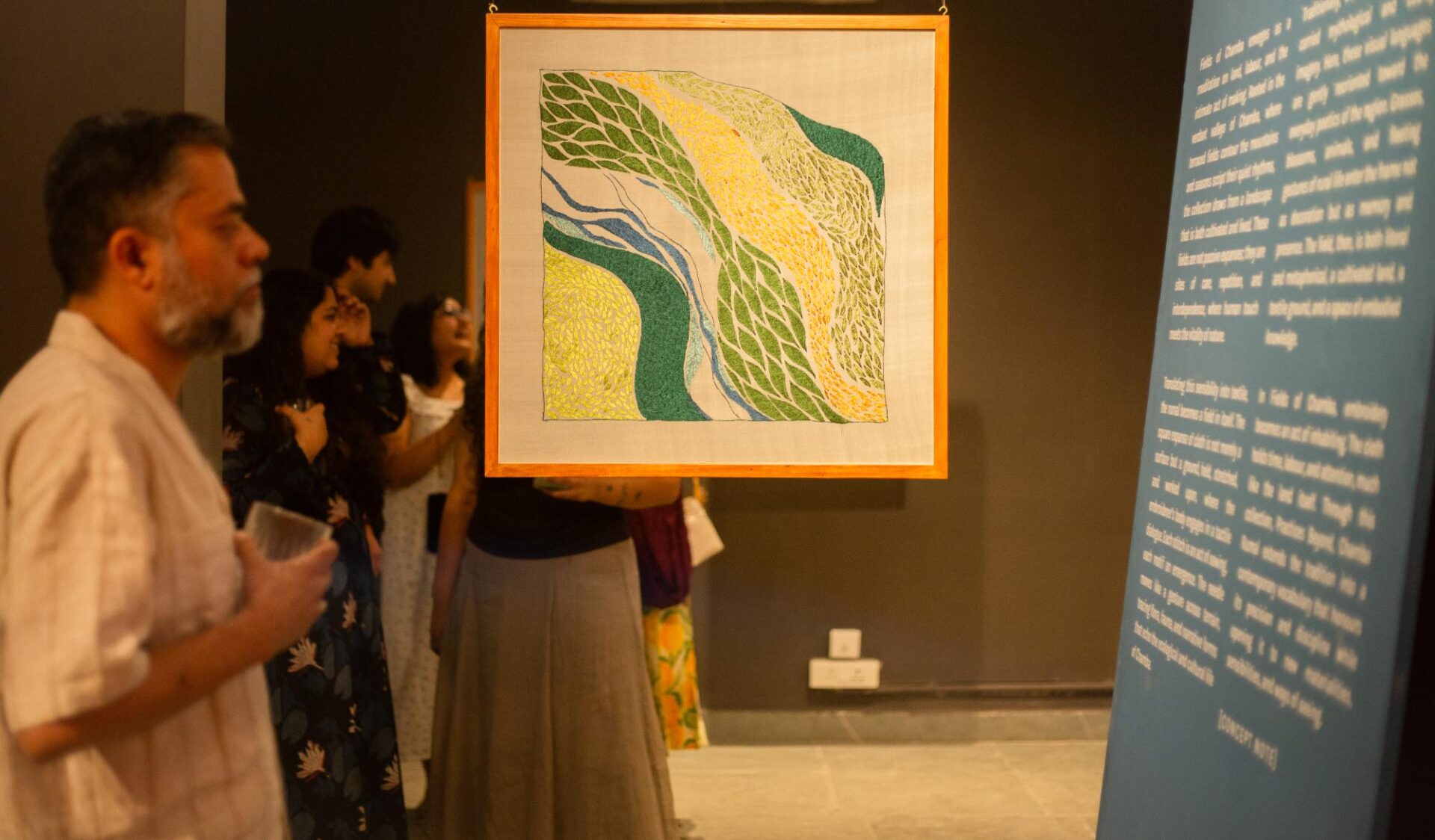
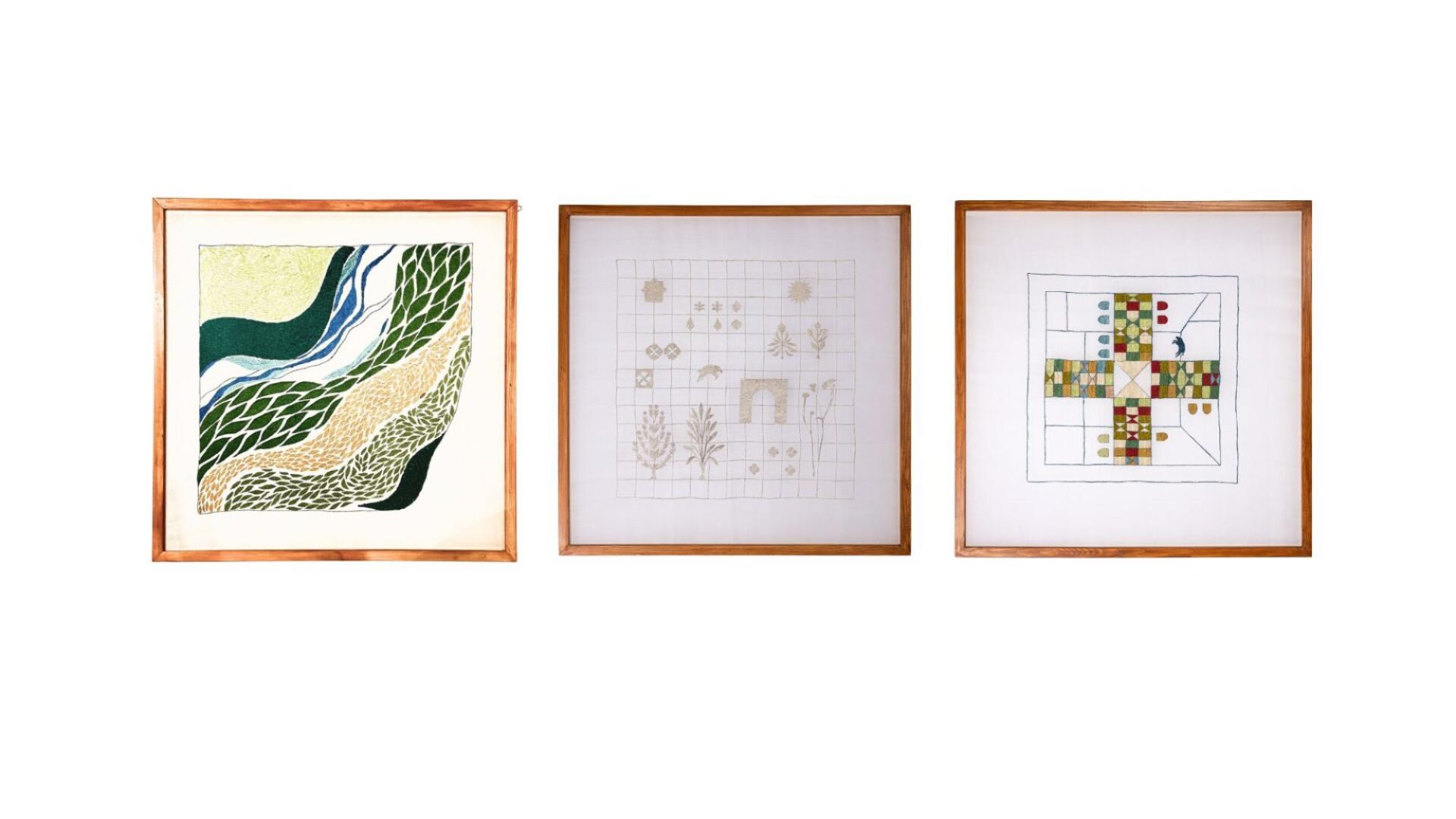
 The resulting body of work comprised twelve original compositions inspired by the Chamba Valley and developed over the course of a year through archival study, botanical research, and studio-led drawing practices. The imagery drew directly from the ecological and cultural landscape of Chamba – its flowering shrubs, sacred trees, seasonal vegetation, and agricultural rhythms. These were not stylised abstractions but carefully studied forms encountered by artisans in their daily environment: along temple pathways, forest edges, and cultivated fields.
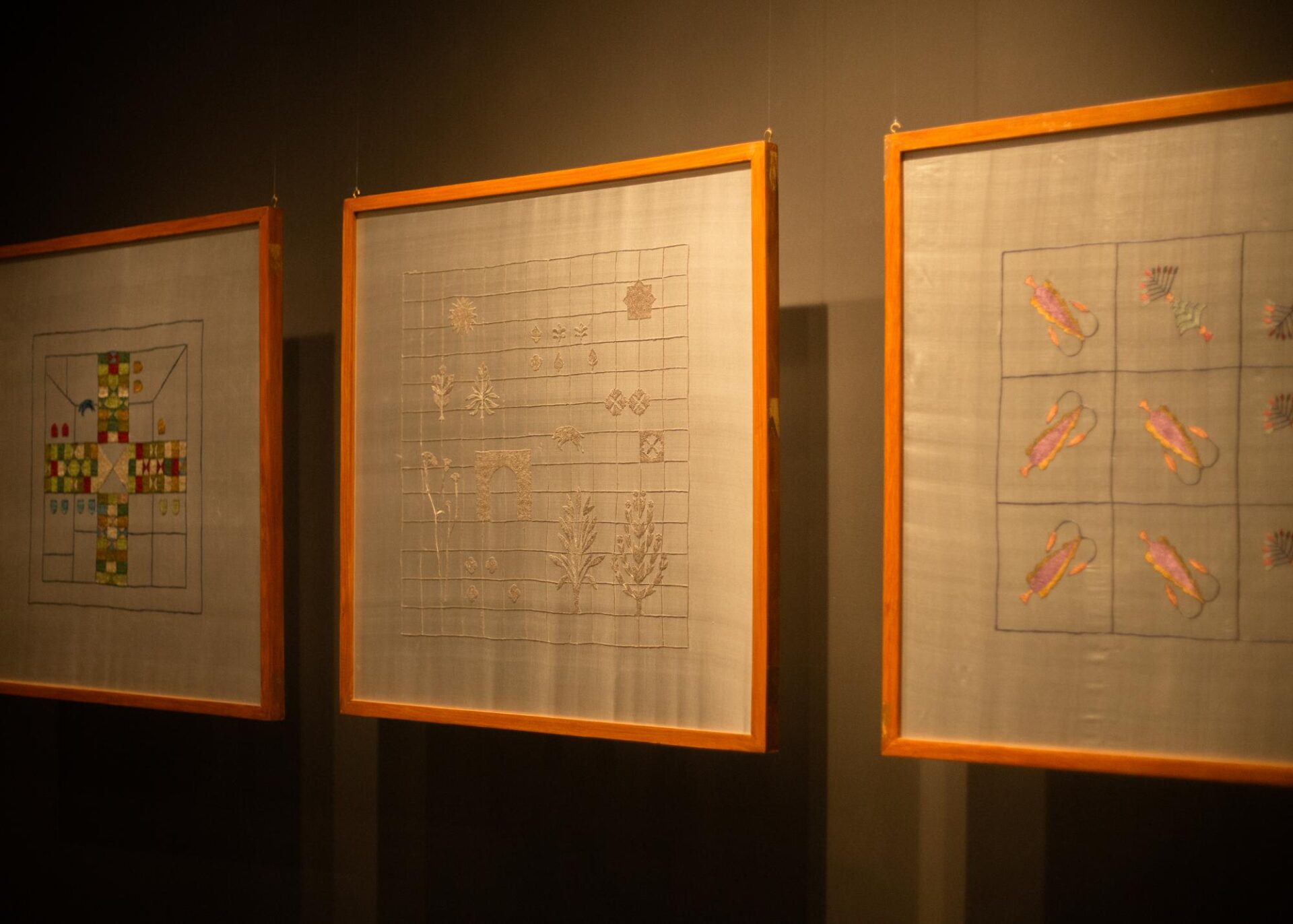
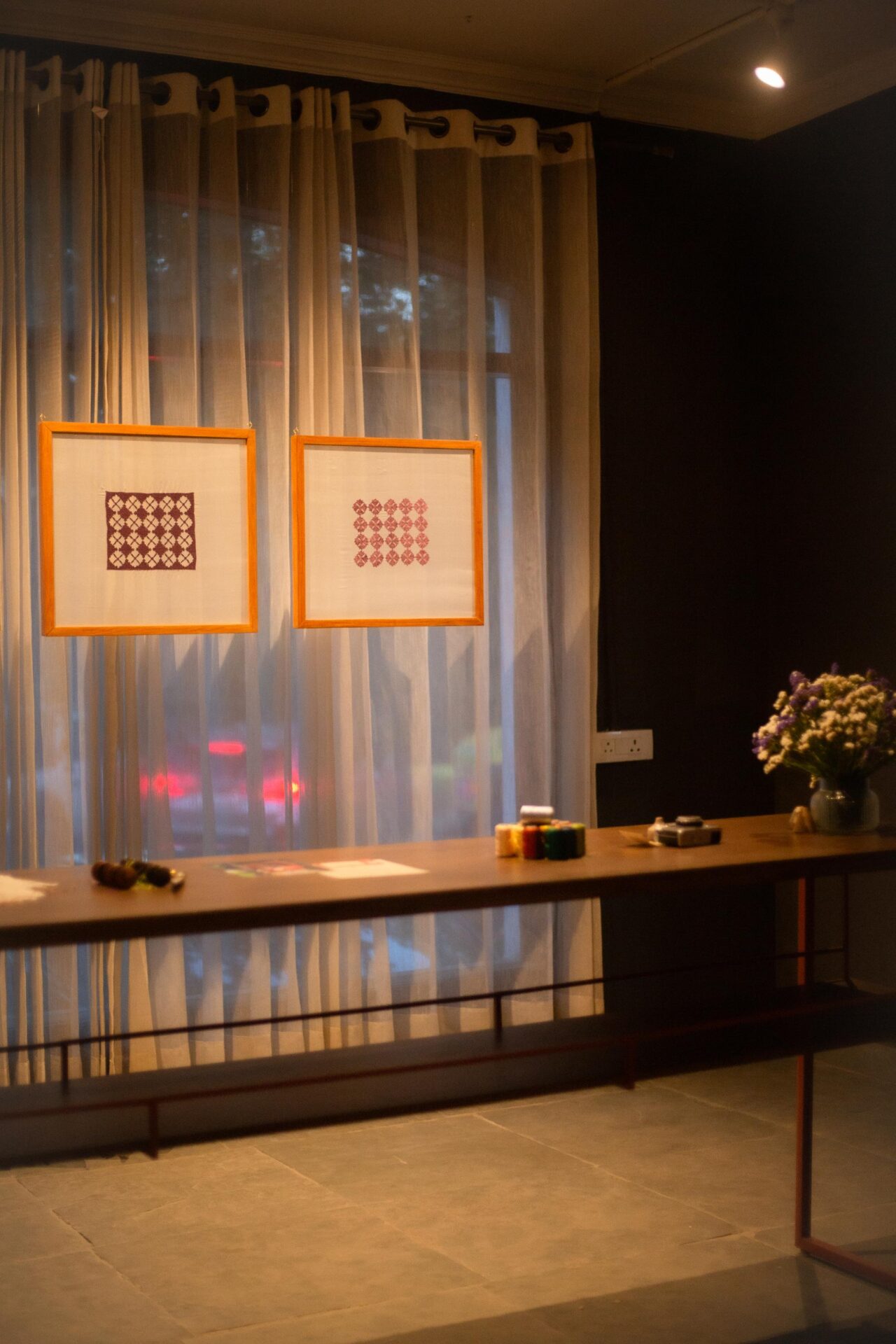
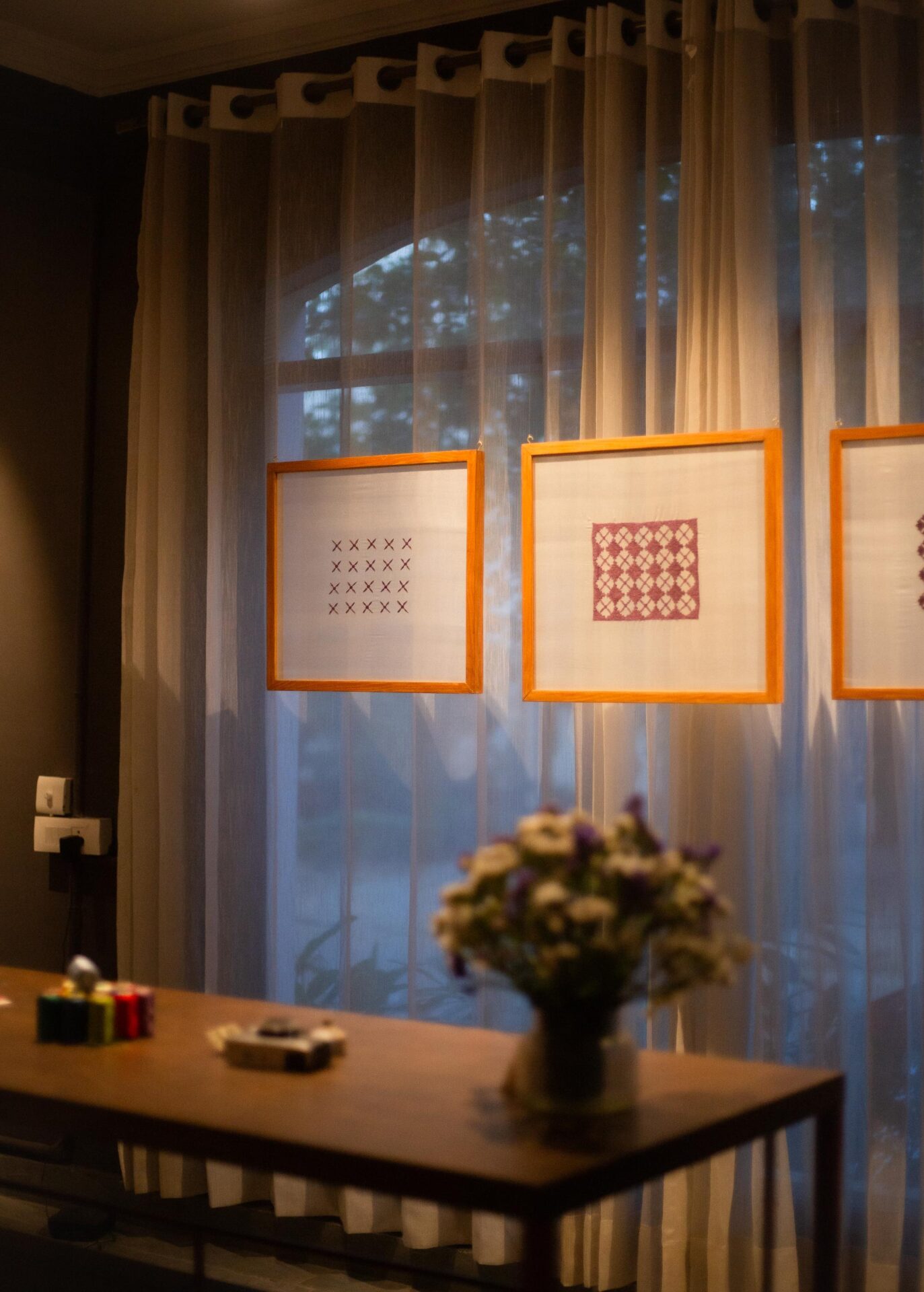
Bridge Bharat’s design team played a significant role in translating these observations into contemporary textile artworks. Conventional motifs such as the chaupad and other compositional structures associated with historical Rumals were retained in fragments and reworked into quieter, more minimal visual arrangements. The intervention remained restrained, allowing continuity to coexist with experimentation rather than replacing one with the other.
Cloth as Landscape and Archive
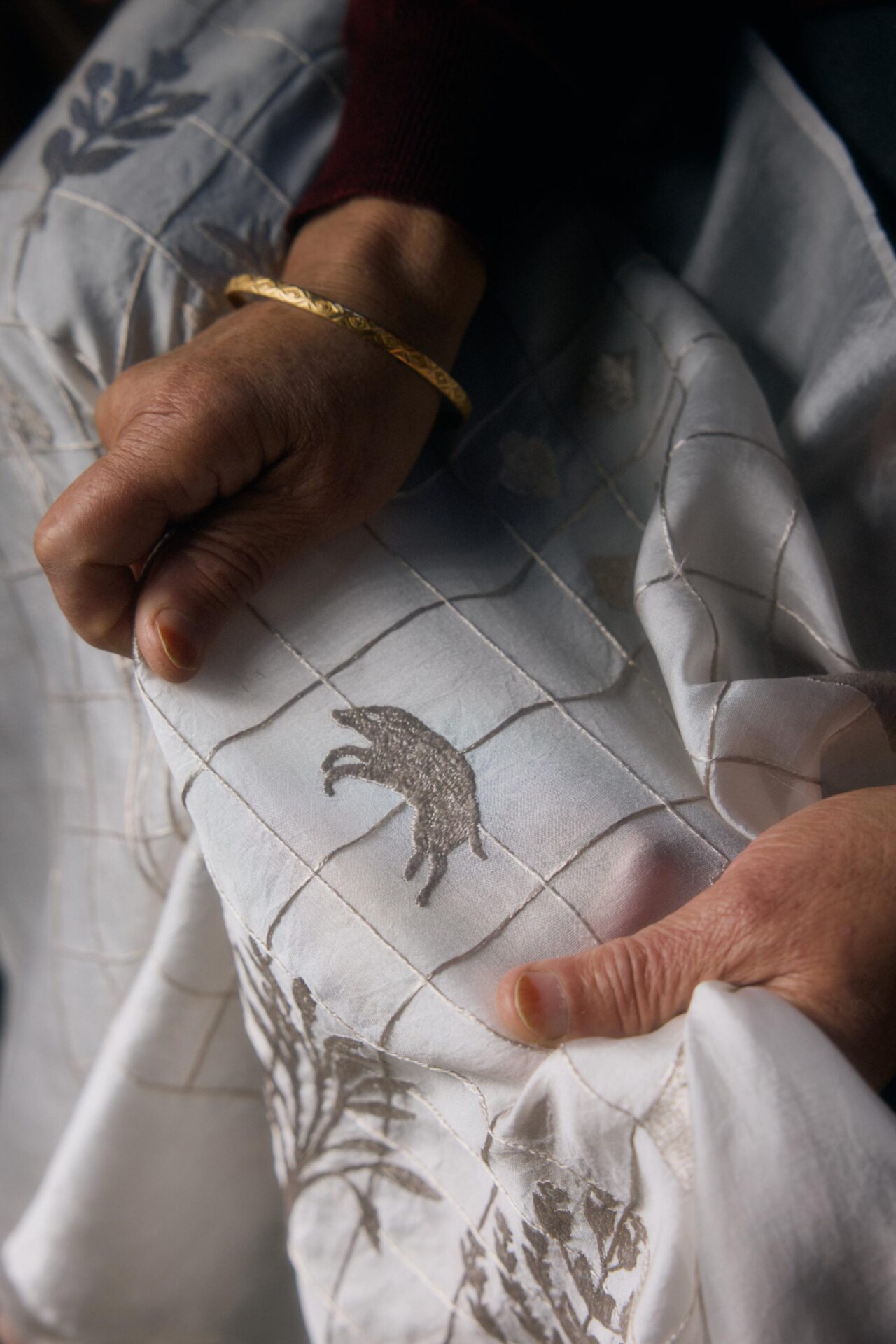
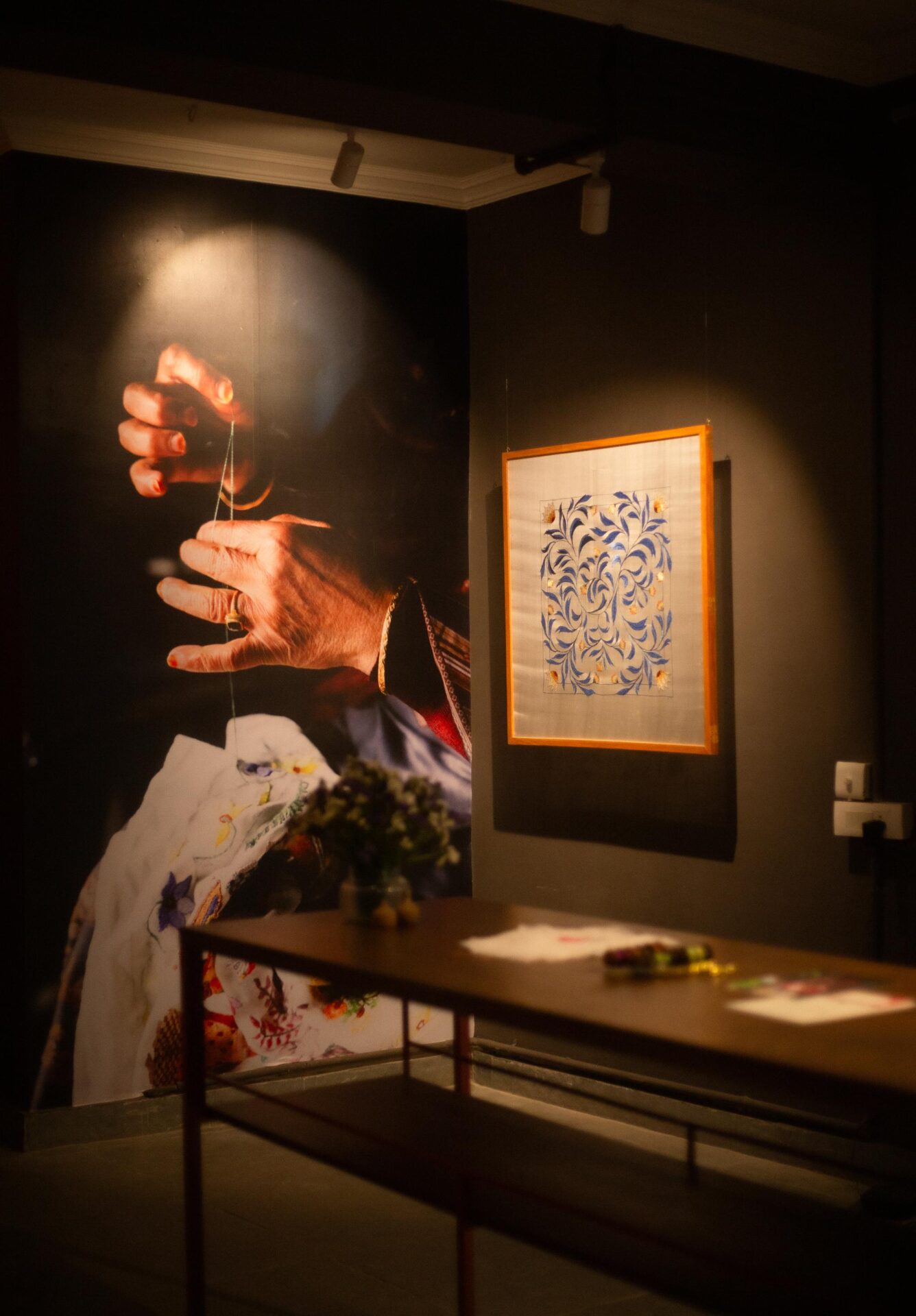
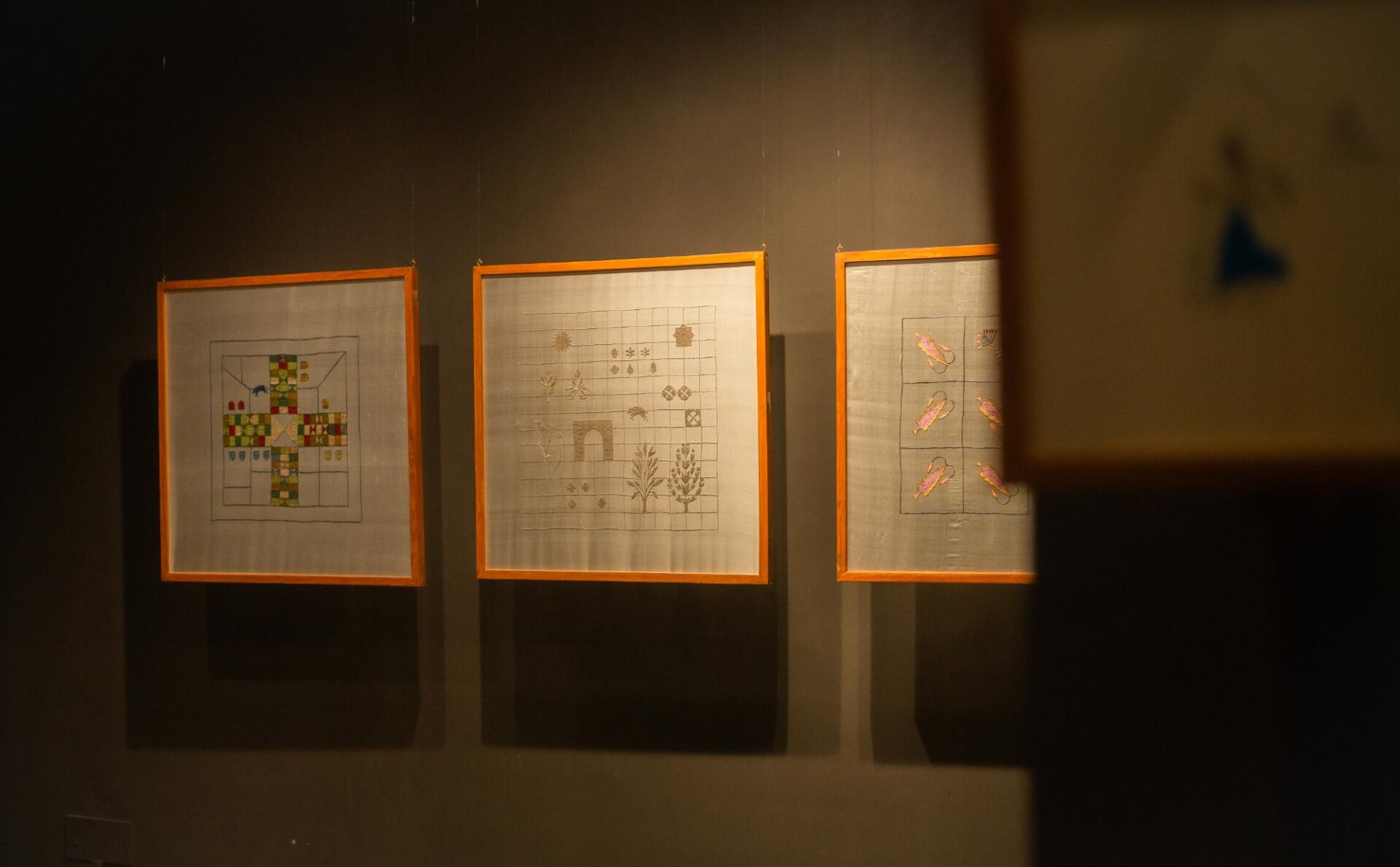 One of the most significant shifts within the “Fields of Chamba” exhibition lay in its material choices. Traditionally executed on cotton cloths, the new collection introduced a fine-count silk-cotton khadi and handwoven Bengal muslin base. The translucency and delicacy of these fabrics altered the visual experience of the embroidery entirely. Thread movements became more visible, demanding extraordinary precision from the artisans, while the finished textiles appeared almost suspended within the cloth itself.
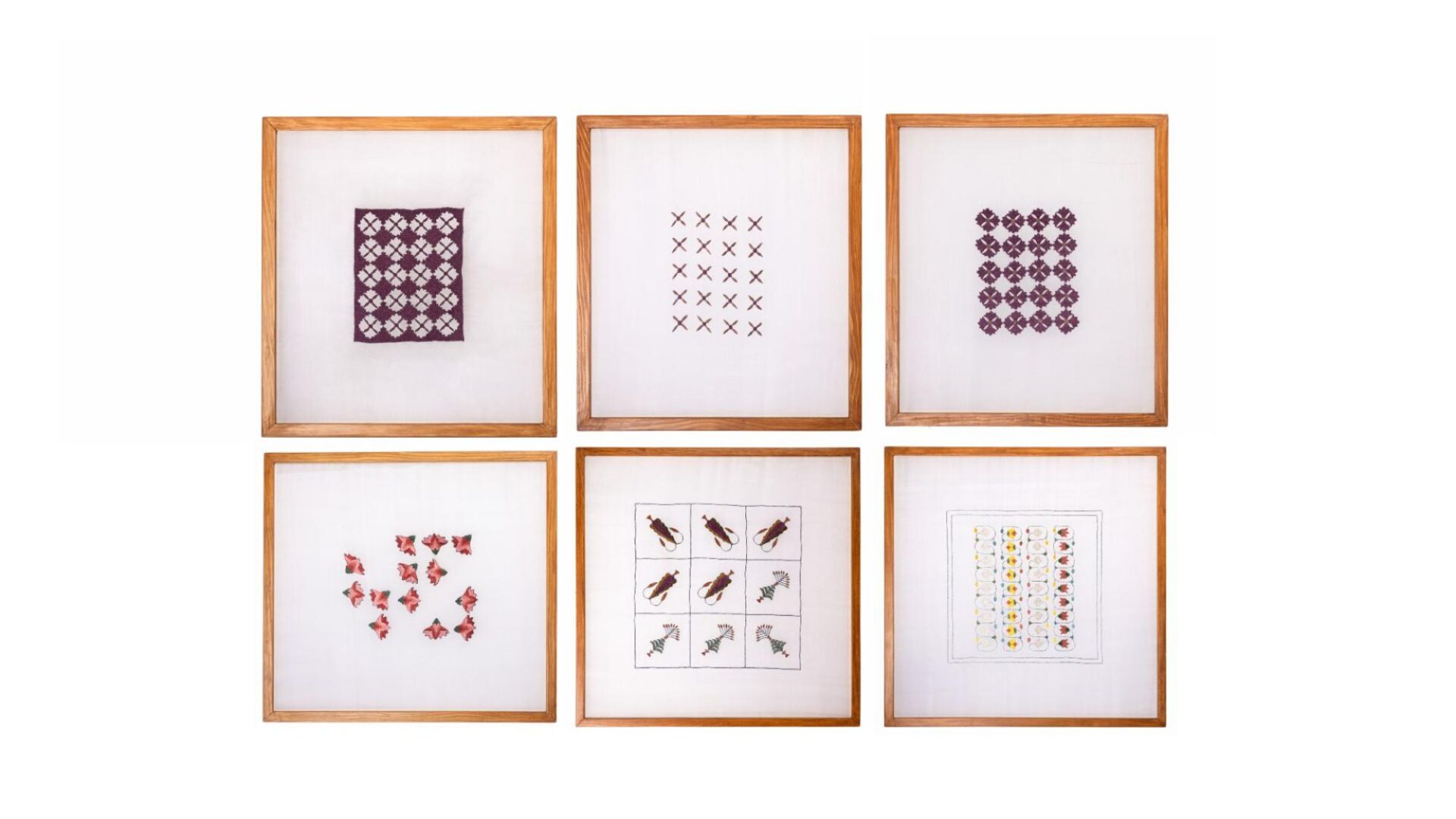 The technical demands of the process were considerable. More than 1,000 hours of embroidery were invested into the collection by 13 women artisans from Lalita Vakil’s atelier, including Ragini Devi, Beena Devi, Rakhi, Pallu Kumari, Shalu Kumari, Isha Devi, Aanchal, and Indra Devi. Executed in silk floss using the traditional double-sided stitch, the works balanced fragility with structural discipline.
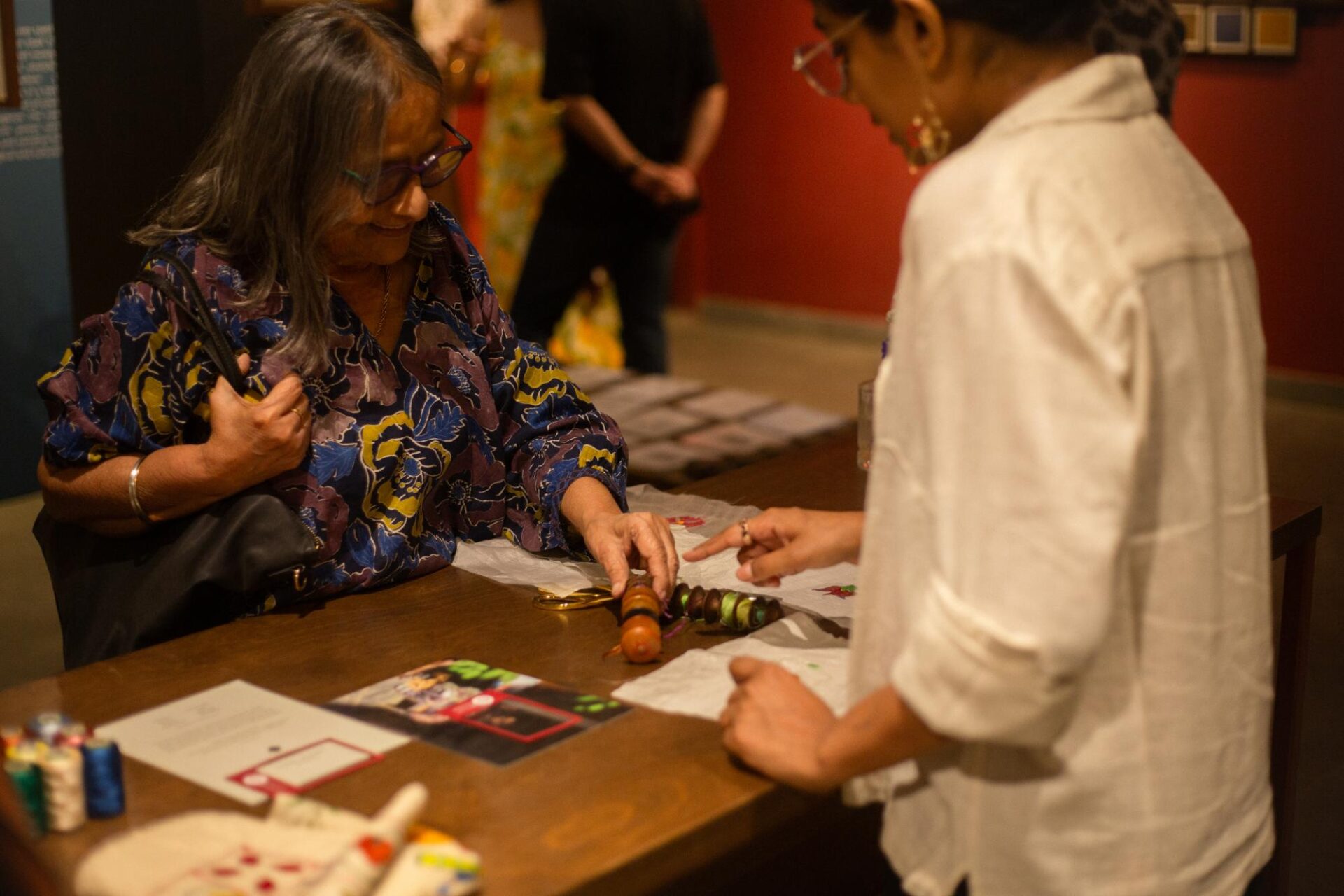
 Within the exhibition, the Rumals were displayed as conceptual textile artworks, as the curatorial approach focused equally on process and storytelling, allowing visitors to understand the labour, precision, and cultural memory embedded within each piece. The works also responded to a wider global conversation around ecological memory and place-based knowledge.
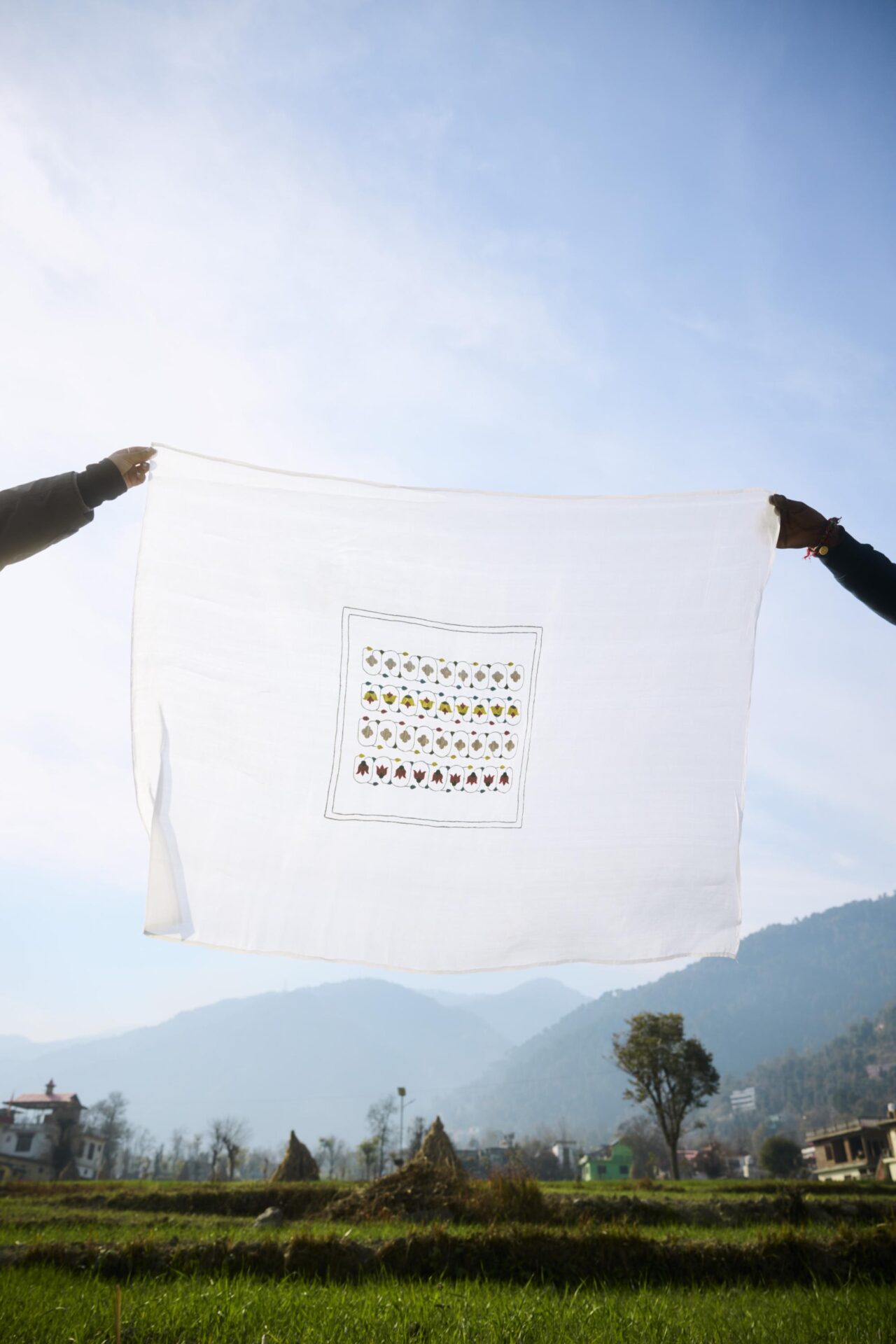 By documenting altitude-specific Himalayan botanicals through embroidery, the textiles became a form of visual ecological archive. They carried with them a sense of geographic provenance while situating Chamba Rumal within contemporary collectible and museum-oriented design discourse.
Conversations Around Craft and Contemporary Practice
 The exhibition unfolded through a series of public programmes that extended these ideas beyond the textile surface. The opening evening on 18 April introduced audiences to the collection through exhibition walkthroughs and informal conversations, accompanied by Cherrapunji Gin, which added a convivial atmosphere to the gathering.
 A week later, on 25 April, the studio hosted an intimate guestlist-only dinner within the exhibition space. Rooted in the cultural context of Himachal Pradesh, the evening featured a Himachali-inspired menu that connected regional cuisine with the narratives embedded within the Rumals. Set amidst the embroidered works, the dinner encouraged slower conversations around craft, heritage, and contemporary design practices.
 The final week culminated in a public conversation featuring entrepreneur and cultural advisor Anchal Jain alongside Aakanksha Singh, Founder and CEO of Bridge Bharat, and Mayukh Hazarika, Founder and CEO of Cherrapunji Eastern Crafted Gin. The discussion explored the process behind the collection – from archival research and design development to artisan collaboration and questions around sustaining traditional practices within evolving markets. Anchal Jain, who serves as Co-Chair of the Creative and Cultural Businesses Programme at IIM Ahmedabad, reflected on the intersections of craft, business, and design-led cultural enterprises in India today.
Continuity Through Collaboration
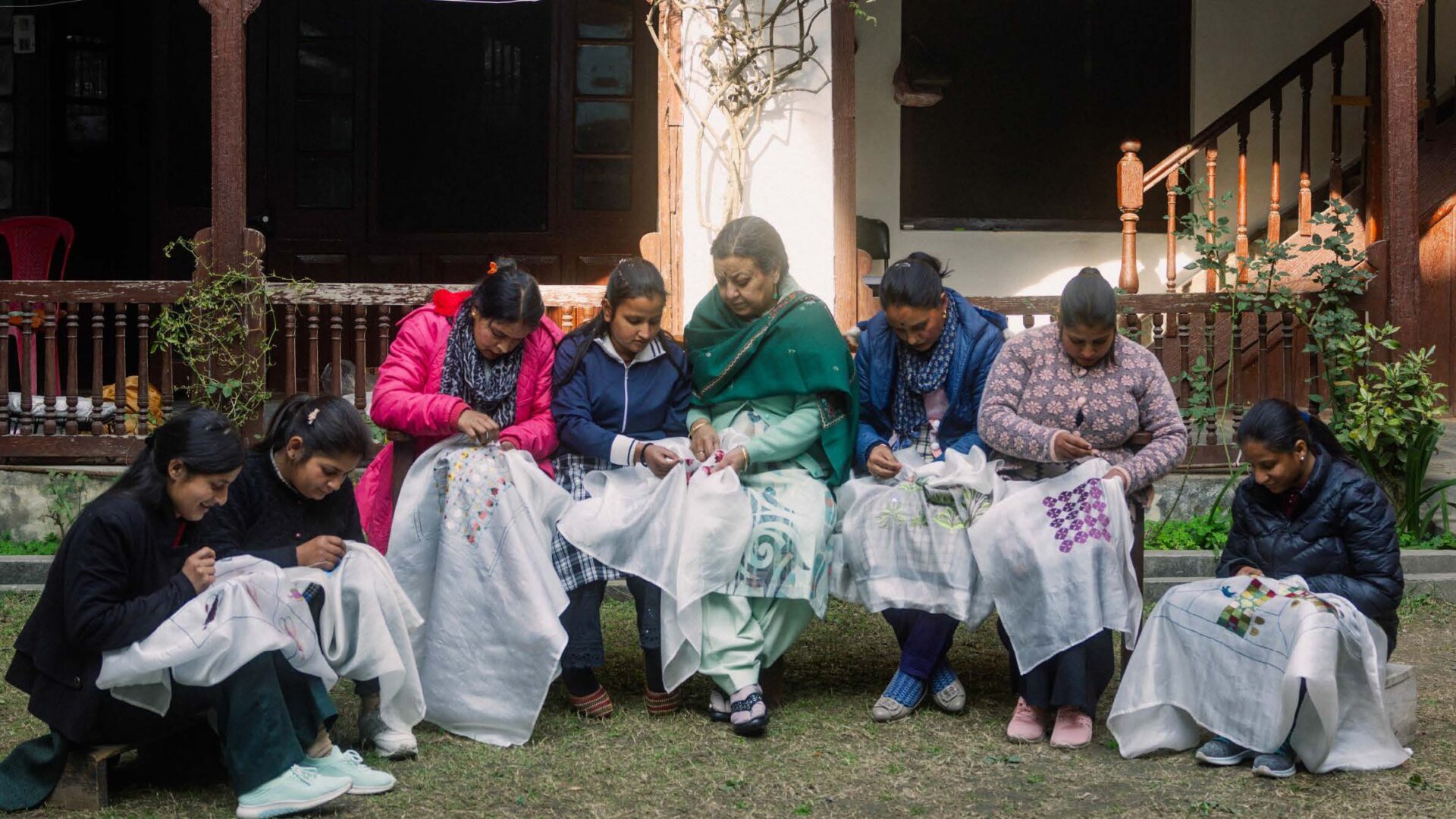 For Lalita Vakil, whose contributions to Chamba Rumal revival earned her the Padma Shri in 2022 and the Nari Shakti Puraskar in 2018, the exhibition represented another chapter in a decades-long commitment to preserving and transmitting the craft.
 Having trained hundreds of women artisans over the years, she has extended her work beyond embroidery into pedagogy and livelihood generation, ensuring that the tradition continues across generations.
The exhibition positioned the Chamba Rumal to acknowledge continuity, labour, ecology, and authorship. By bringing archival research, botanical study, contemporary design intervention, and hereditary skill into dialogue, the exhibition demonstrated how textile traditions can evolve without severing themselves from the landscapes and communities that shaped them.