
The Resilience of Mountain Architecture with NORTH
“The mountains are calling and I must go.” For years, I heard this as a simple call for escape, a peaceful holiday, a break from the world. But after speaking with Rahul Bhushan, founder of NORTH, a practice making waves by returning to the roots of mountain building, these words revealed a deeper truth. By Aishwarya Kulkarni
The mountains don’t just invite you; they demand reverence and understanding. True architecture here is not about imposing on the land but folding gently into its story. It’s a humility of both the structure and its creator. As architects, we become mediators within the ecosystem, not masters. To do this with honesty, one must carry a quiet strength, a calm humility that listens before shaping.
Aishwarya Kulkarni sits down with Rahul Bhushan, founder of NORTH, to explore the manifestation of this humility in architecture and design. The candid conversation touches upon his journey from childhood in Himachal to global architectural influences, and his firm, which is a nuanced blend of tradition, modernity, environmental advocacy, and entrepreneurship.
Naui
SCALE: Can you take us back to the early roots of your journey? What was your childhood like in the mountains, and did you always know you wanted to be an architect?
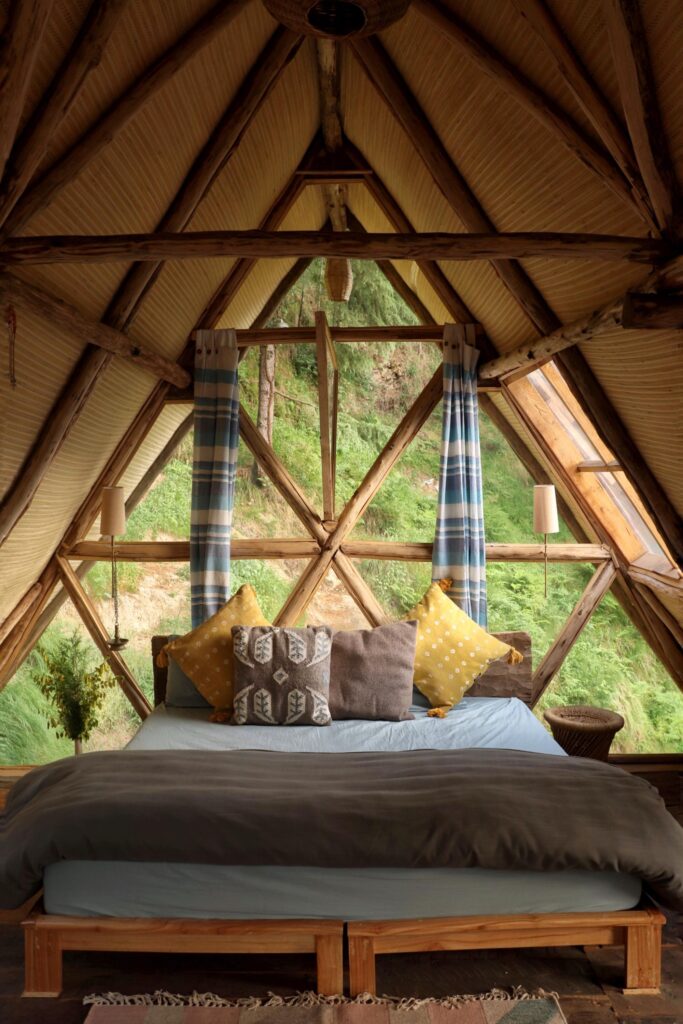
Bedroom of the Dhajji Cabin
Rahul Bhushan: Growing up in Himachal, the mountains weren’t some romantic backdrop, at least, not in the way they’re sometimes portrayed today. They were just home for me. Looking back, I see that all the small stories and introspective moments from my childhood have shaped me. Often, I’d find myself just sitting, looking at the landscape, imagining how things might be done differently or made better, and that sense of introversion gave me a space to think. The mountains offered perspective and, honestly, a bit of escape! It wasn’t destiny or grand plans at play at first, but when I took my first big step, to sit for the architecture entrance exam, it came from gut instinct. I didn’t have full awareness then, just an inclination towards spaces and how people interact with them. But that decision set everything in motion.
SCALE: How did NORTH’s inception happen?
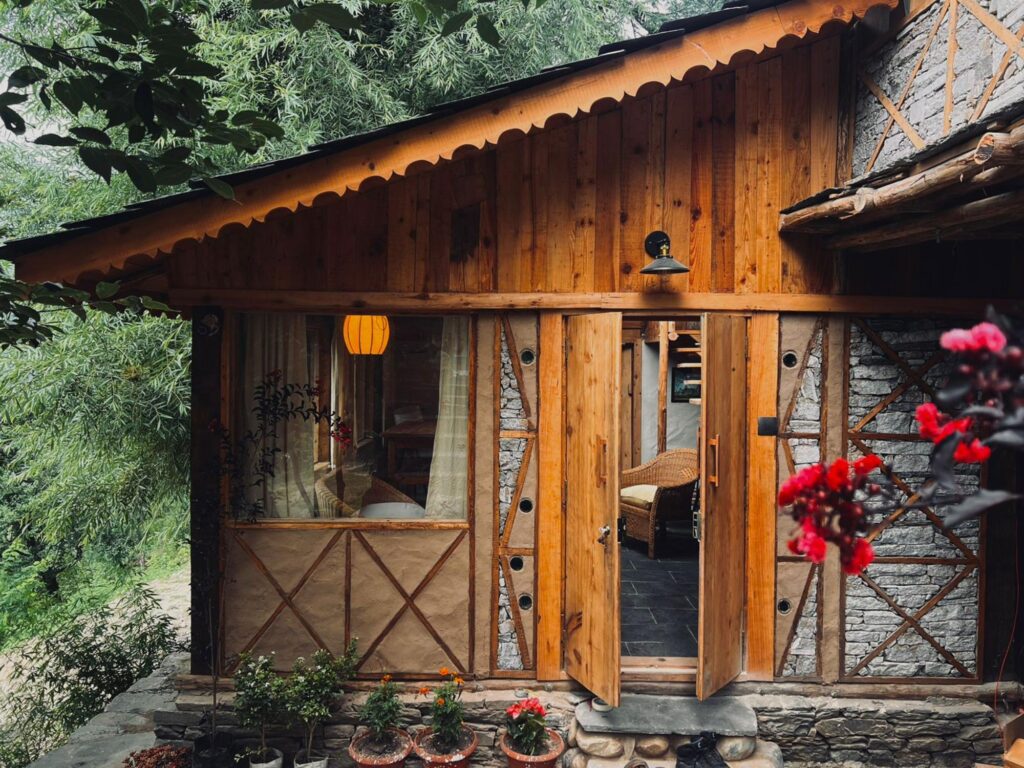
The Wild Apricot
Rahul: I’d say architecture became my way of articulating what I’d always been feeling as a child, how to view not just a building but the ecosystem around it. In college, I explored everything from photography to music, but always circled back to architecture because it allowed me to see and shape larger systems. My fascination with biographies: Richard Branson, Steve Jobs, all those entrepreneurs also fueled that. They taught me that meaningful work only happens when you create value for others. Business, for me, is inseparable from spirituality and responsibility toward people, nature, and place.
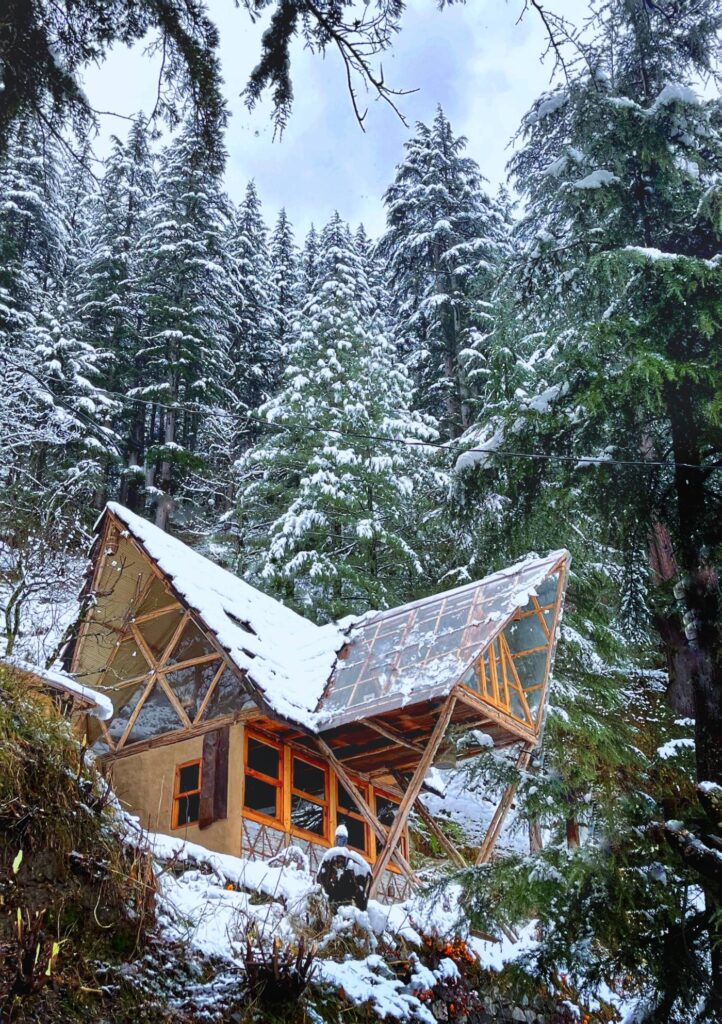
Dhajji House during snow
As I shaped ideas about what I wanted to do, Himachal was always at the center. I understood the context, the people, and the history. It made sense to root my practice here. When I looked at how development was happening, especially in towns like Shimla and Manali, I found myself asking: “How can we build in the mountains without taking away from them?” That became my central question and remains the core around which everything at NORTH revolves.
At NORTH, every project revolves around that foundational question. We see ourselves not as mere builders, but as custodians, intervening lightly, informed by both deep local wisdom and contemporary knowledge. The wisdom found in Himachal is rare. Yet, as we confront the consequences of newer development, urban expansion, environmental loss, and cultural erosion, we realize we’re not alone. The dilemmas here are echoed in mountain regions everywhere, in the Alps, in Italy, in the Andes. Our challenge is global, our solutions contextual.
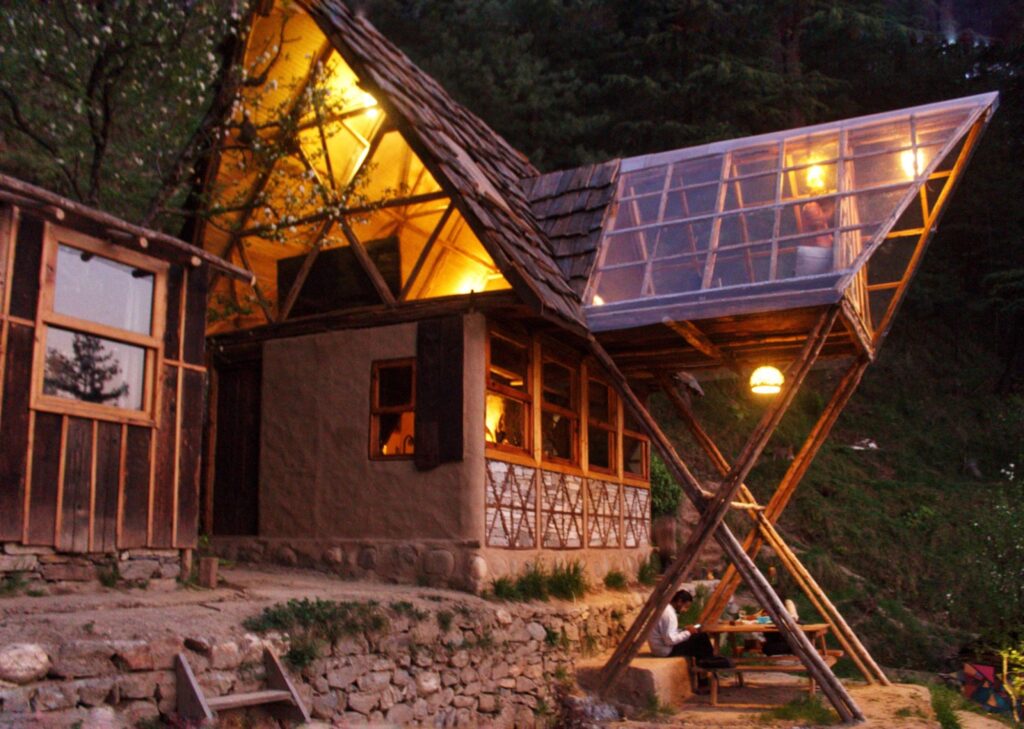
Dhajji Cabin
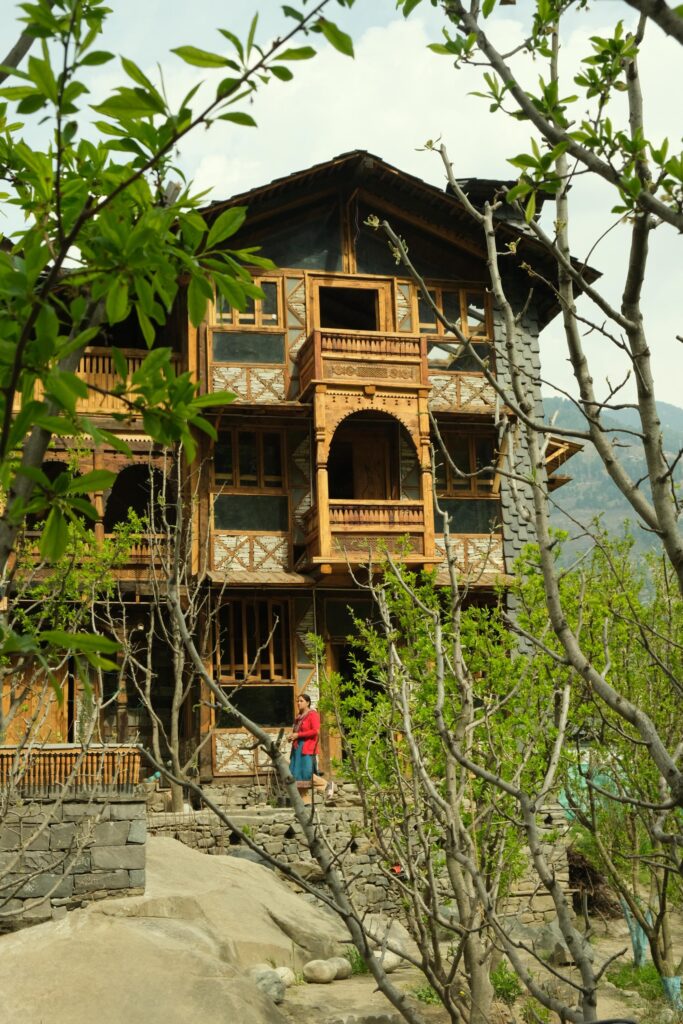
Practically, this means advocating for and, more importantly, preserving and innovating vernacular methods like “Kathkuni” a technique unique to these mountains, using wood and stone in ways that are both time-tested and adaptive. We don’t romanticise the past; instead, we draw from the logic embedded in traditional construction, its seismic resistance, its resource efficiency, and its responsiveness to climate. We work to innovate indigenous ways, keeping the modern-day realities in mind.
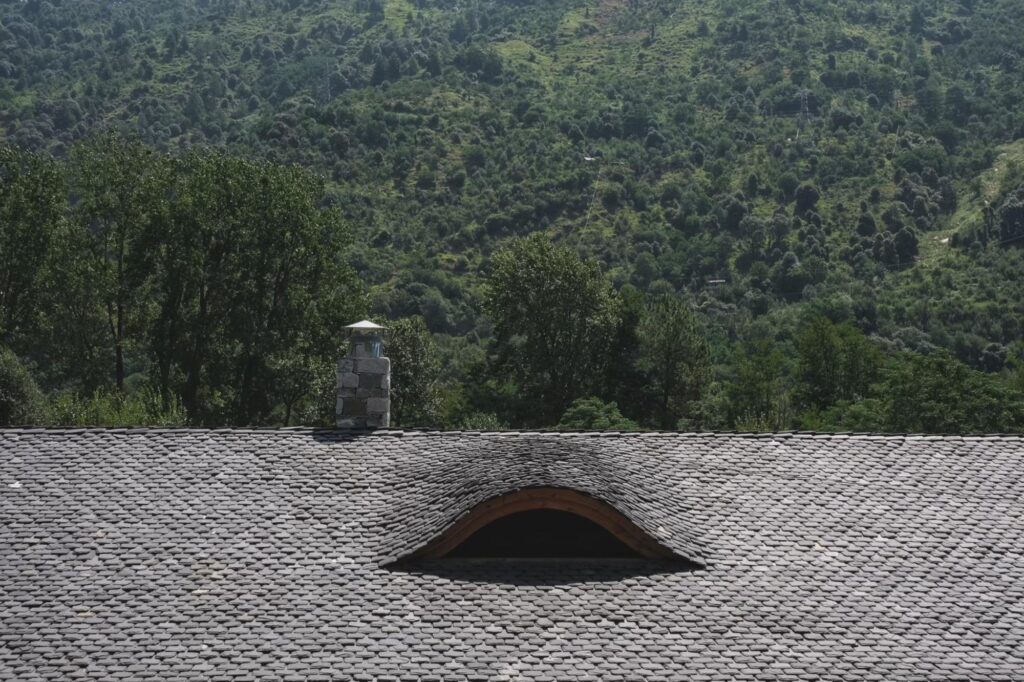
Eyebrow dormer on the roof of RAAS Home
SCALE: The revival and innovation of “Kathkuni” as a practice has become a signature element in recent NORTH projects. Why does it matter, and how do you adapt it for contemporary requirements?
Rahul: Kathkuni is much more than a construction method. It’s a living technology, a product of centuries of contextual learning, designed for seismic safety and climate adversity. But more than that, it’s social. The building system of Kathkuni reflect rituals of community empowerment among villagers, respect for seasonal cycles, and a deep understanding of site and context.
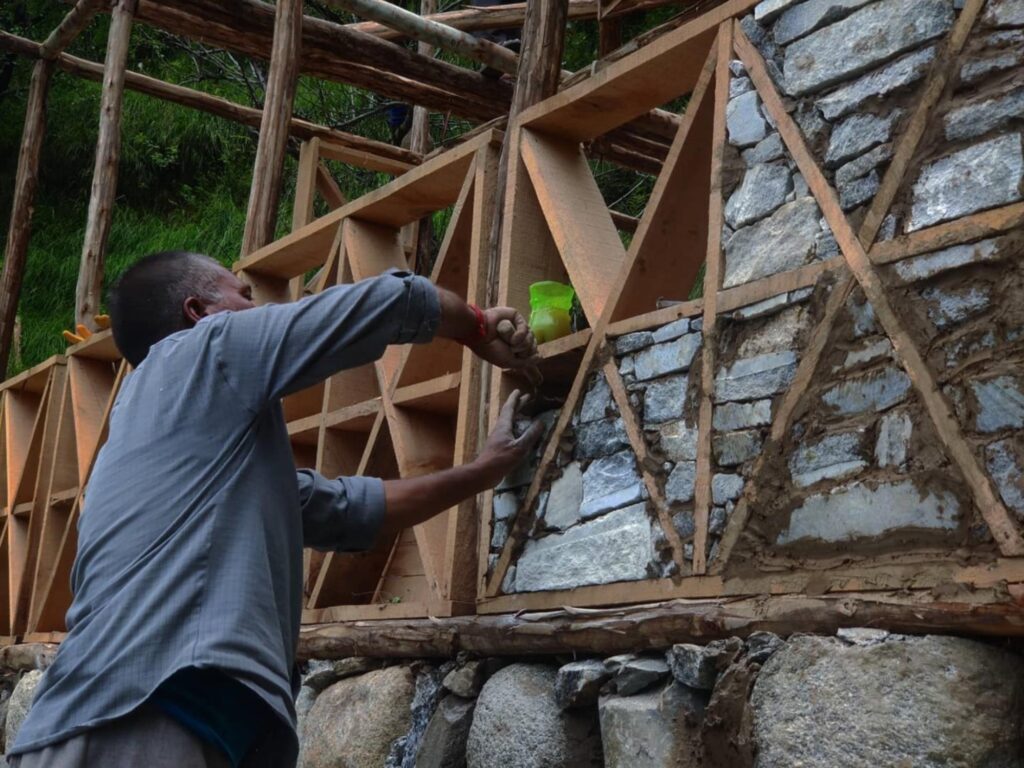
Dhajji wall being constructed
In adapting Kathkuni today, we retain that respect for the system’s inherent logic, but we must also innovate. Often, pure timber isn’t feasible, either due to deforestation pressures or updated building codes. So, we explore alternatives: bamboo, hempcrete, reclaimed wood.
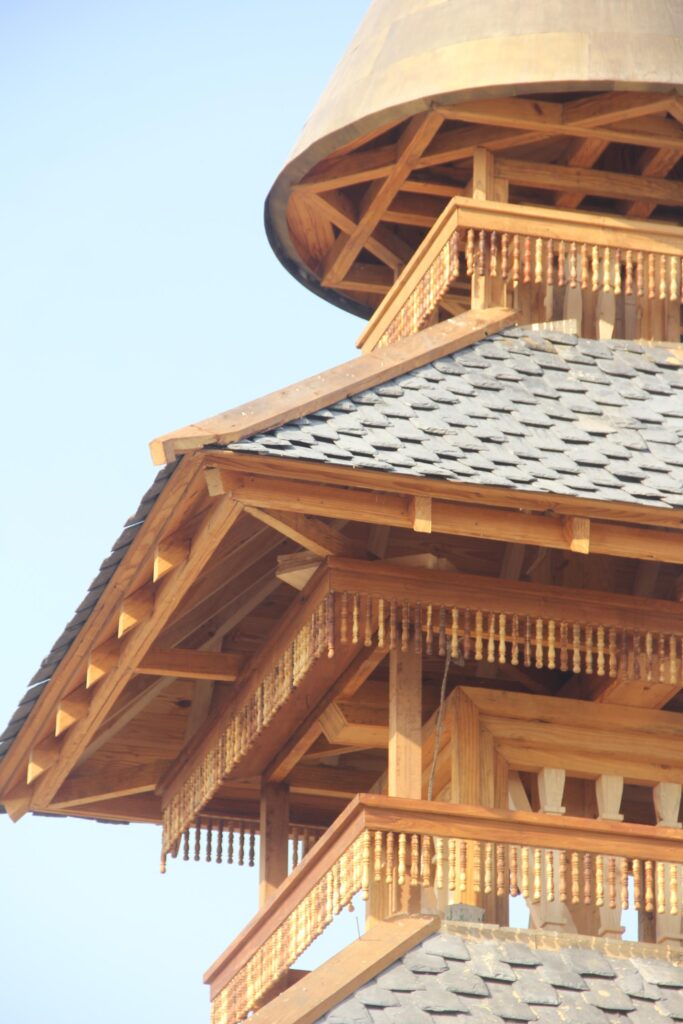
The “Zen Temple” at Ahmedabad, Gujarat
Each has challenges; bamboo, for example, needs treatment and specific joinery skills, while hempcrete has different load behaviors. But we never lose sight of integrity, structural, environmental, and cultural. Each decision is rigorously tested for technical resilience, resource efficiency, and authenticity to the surrounding context.
SCALE: Can you share how NORTH handles the tension between heritage and innovation, especially as clients or tourists seek “modern” designs?
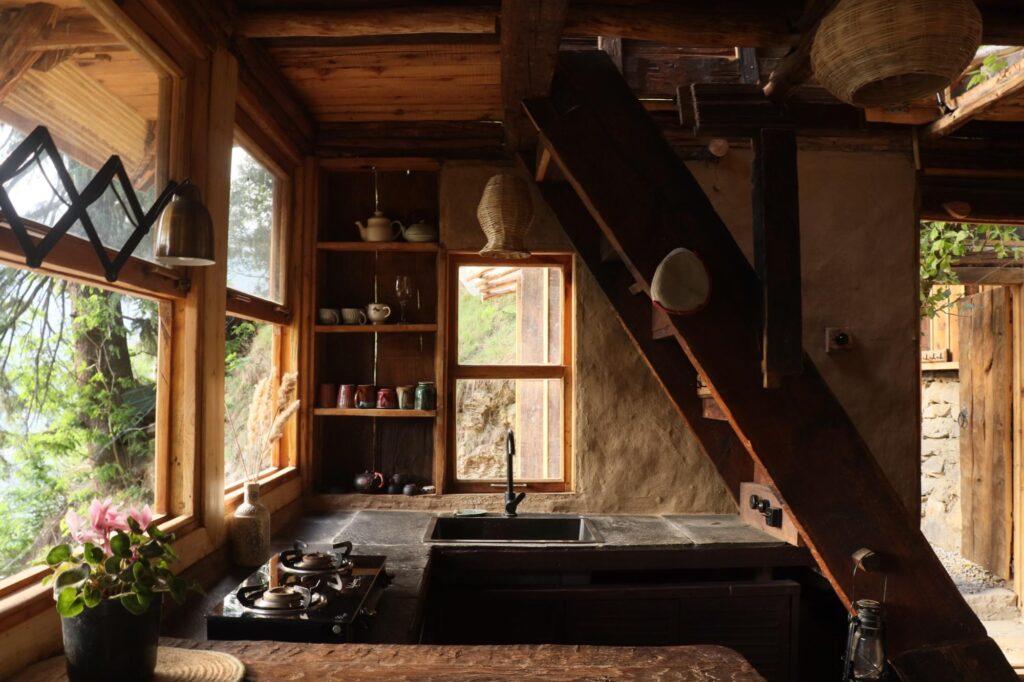
The kitchen space at Dhajji Cabin
Rahul: It’s a delicate dance. Many clients, especially those newer to the region or more globally connected, arrive with aspirations drawn from online sources. They want big windows, open plans, minimalist lines. Yet, what works in Mumbai or Dubai often fails in the mountain context. Our process is educational as much as architectural. We bring clients into the logic of vernacular systems: why deep roofs matter, how courtyards create microclimates, how traditional materials breathe.
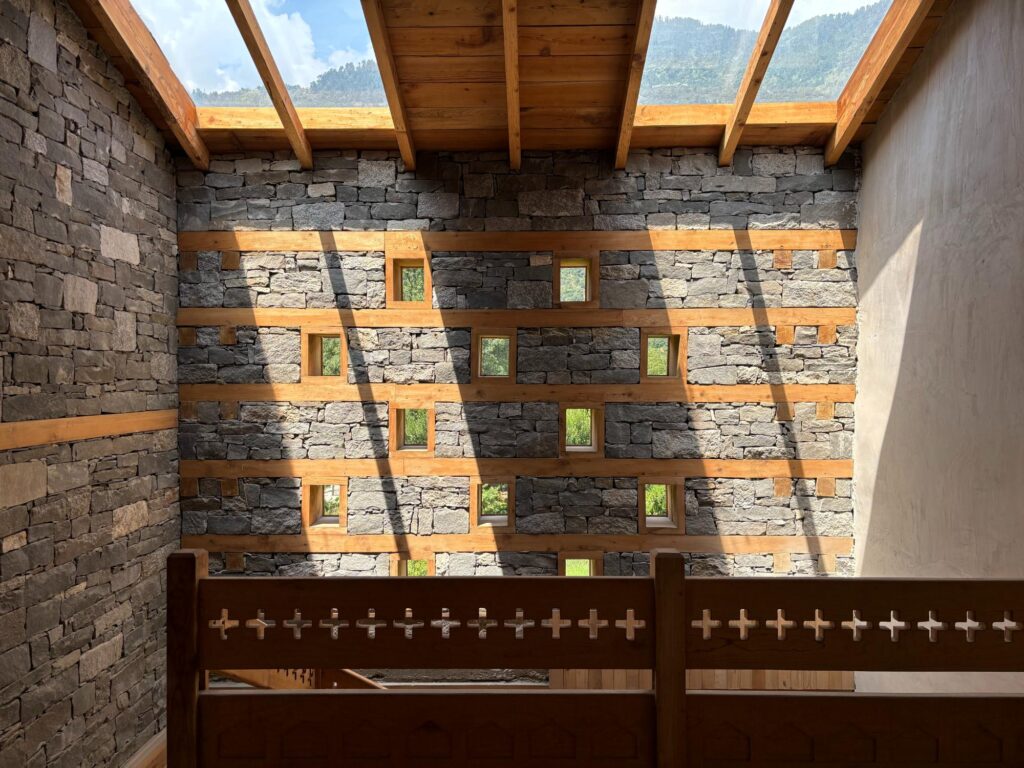
Facade detail of niches on the wall from RAAS Home
At the same time, we acknowledge the desire for comfort and flexibility. We innovate within tradition, experimenting with double glazing for insulation, combining lime plaster with modern damp-proofing, and integrating solar energy. NORTH’s goal is not to fossilize the past, but to reinterpret it in ways that serve present and future inhabitants, both functionally and meaningfully.
SCALE: How do you approach resource management – both material and human?
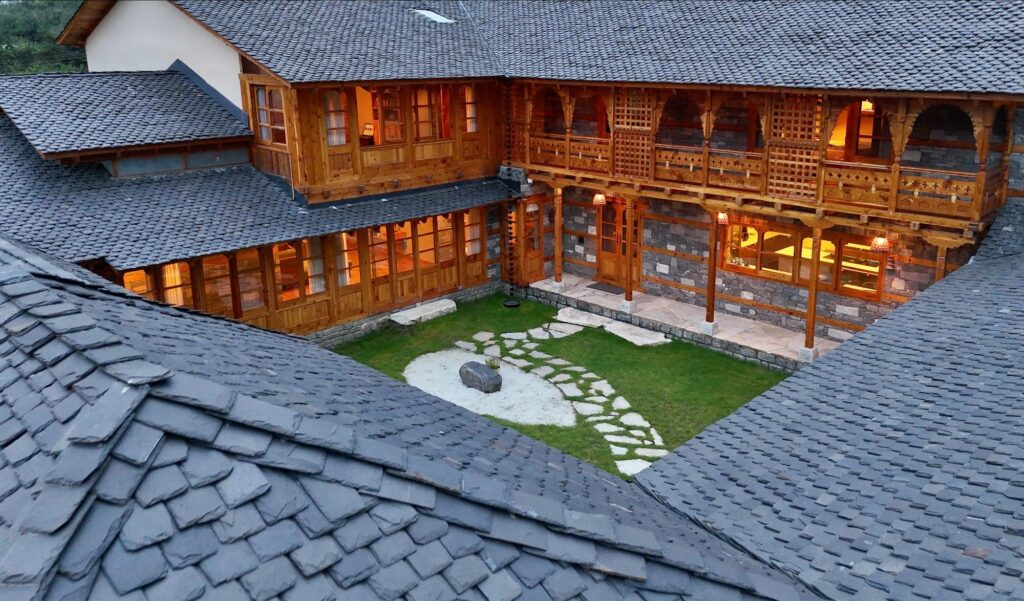
Raas- Home
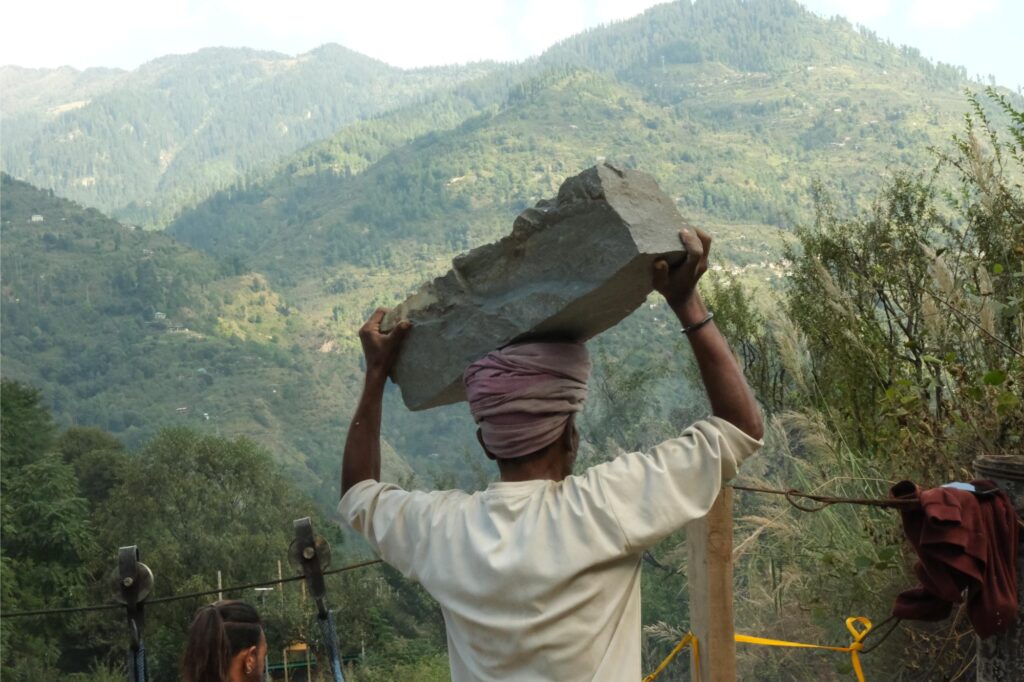
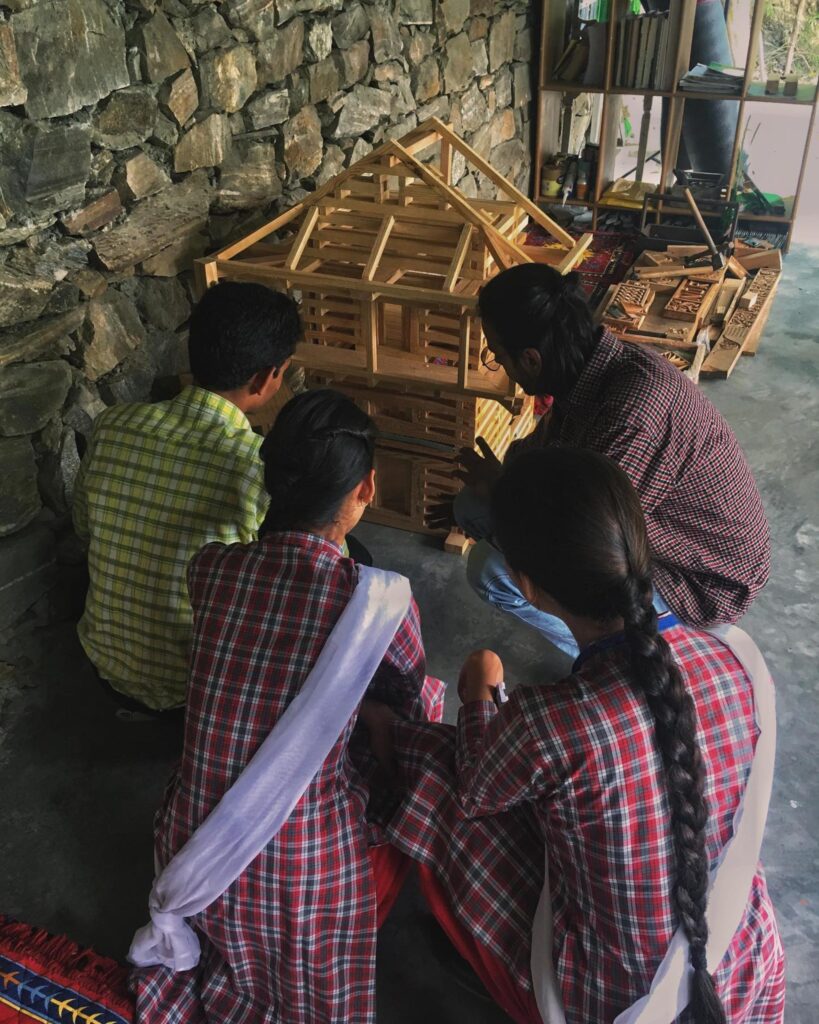
Rahul: Resource management for us is an ethic, not a checklist. We are deeply involved at the site level, establishing clear protocols for waste, sourcing materials as close as possible, and employing local craftspeople. For example, we always track the embodied energy of our choices. Wood, if felled sustainably and used in Kathkuni, can be replenished. Stones are collected, not quarried indiscriminately. Mud and lime are locally managed, and human resources are equally important. At NORTH, we see every project as a collective effort. We invest in training local youth, supporting traditional craft knowledge, and building up a network of specialists, carpenters, masons, even artists and storytellers, who can carry this work forward, adapting with the times. This is slow work, but it builds resilience within communities.
SCALE: NORTH’s recent move into wood sculptures signals a fascinating expansion. What inspired these projects?
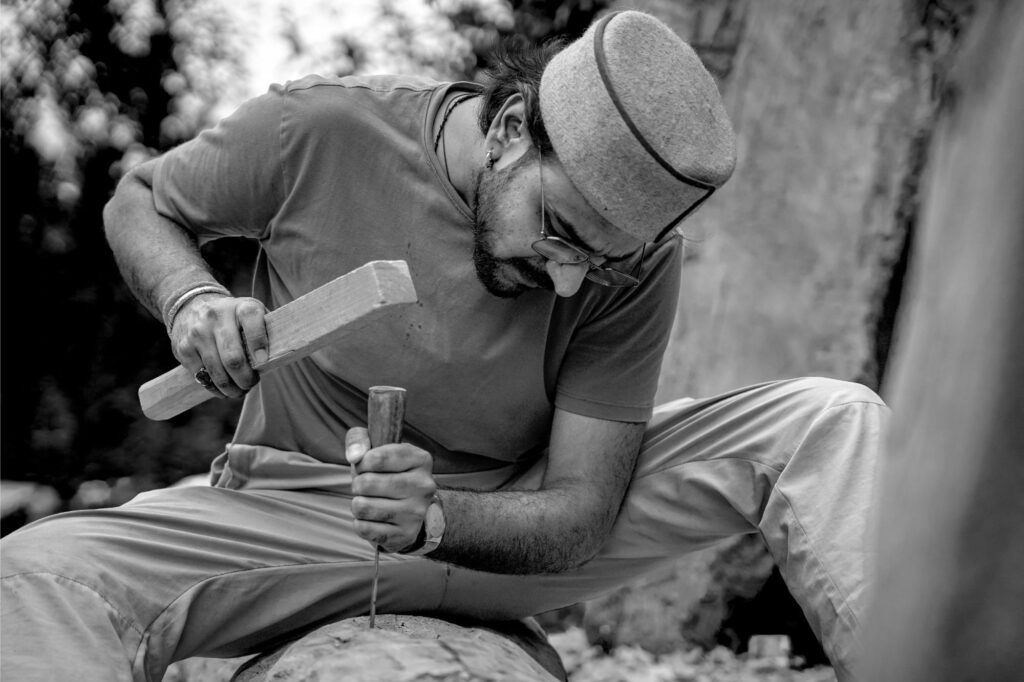
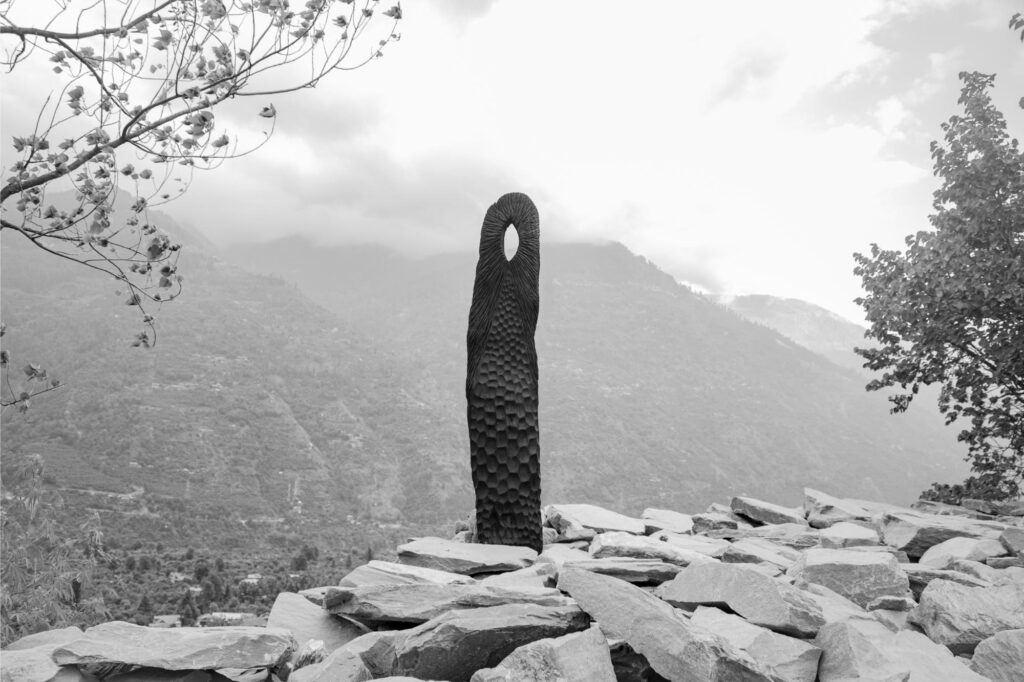 Rahul: The transition into sculpture was an organic one. As we dug deeper into vernacular forms and craftsmanship, especially with timber, we realized the artistic traditions, those that once adorned temples, homes, and public spaces, were fading. Sculpture became another way of preserving and renewing these expressions. Each piece: “Shakti”, “Shiv”, and “Nada” emerges from collaboration with local artisans, drawing not only on technique but also on narrative and spirituality.
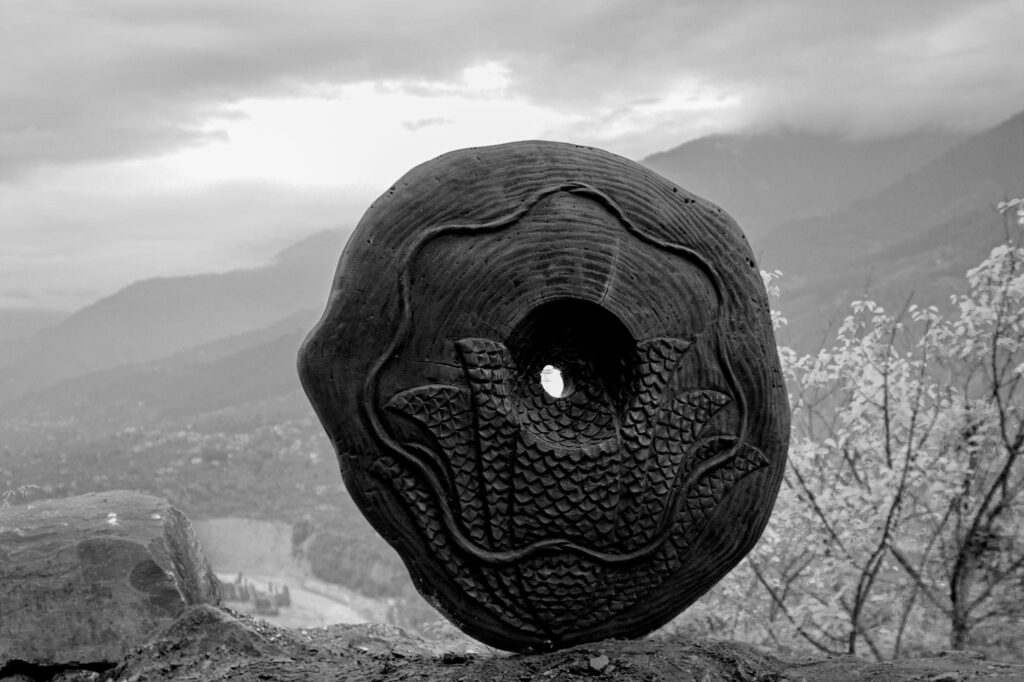 These pieces aren’t just decorative; they’re statements about belonging, vitality, and the continuing relevance of context in the 21st century. They’re also a bridge, inviting a new generation to see the value in handwork, in local stories, in objects that bear the marks of both place and maker.
Scale: With such strong local grounding, does NORTH’s work have relevance for a global audience? Can lessons from Himachal travel elsewhere?
Rahul: Absolutely. The fundamental questions, the tension between development and stewardship, between economic growth and environmental survival, are universal.
Kathkuni, as a specific technology, might not be replicated exactly in, say, the Andes. But the attitude of looking first to what the land offers, how cultures have survived and flourished in given conditions, and adapting intelligently, can be applied anywhere. The Himalayas can, and should, show the world how to build with reverence and imagination.
 SCALE: Your practice is also deeply concerned with policy and the systems shaping the mountain region. How have you engaged with stakeholders for this?
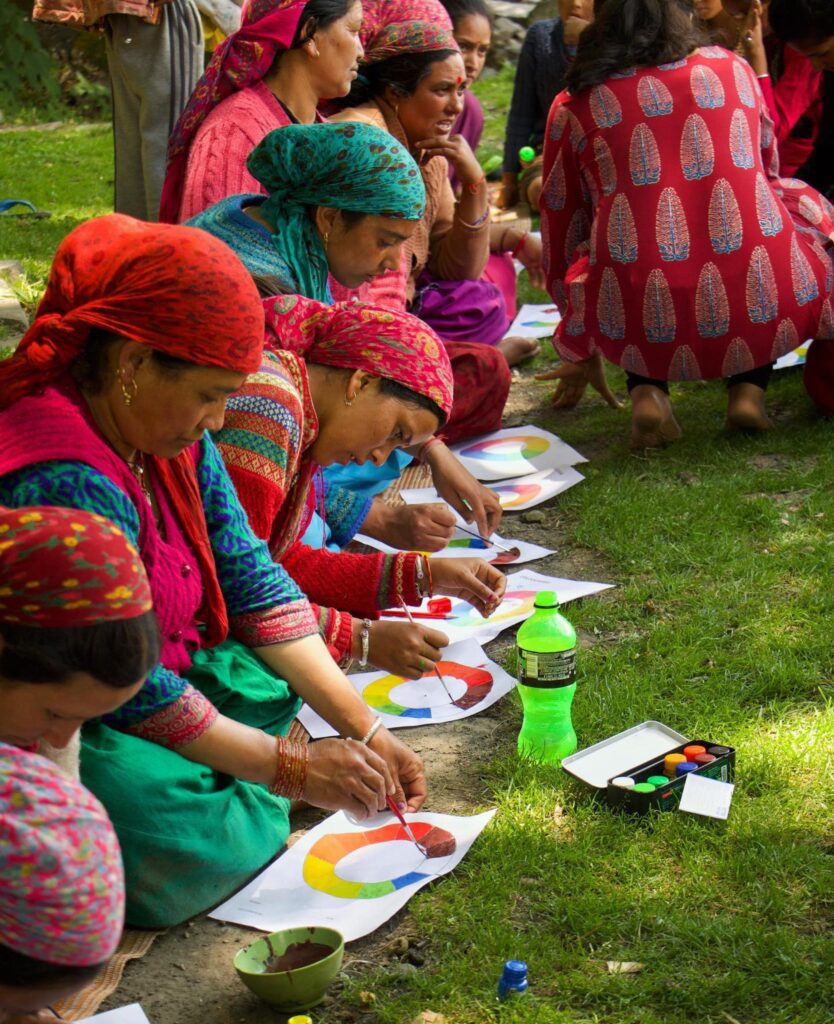
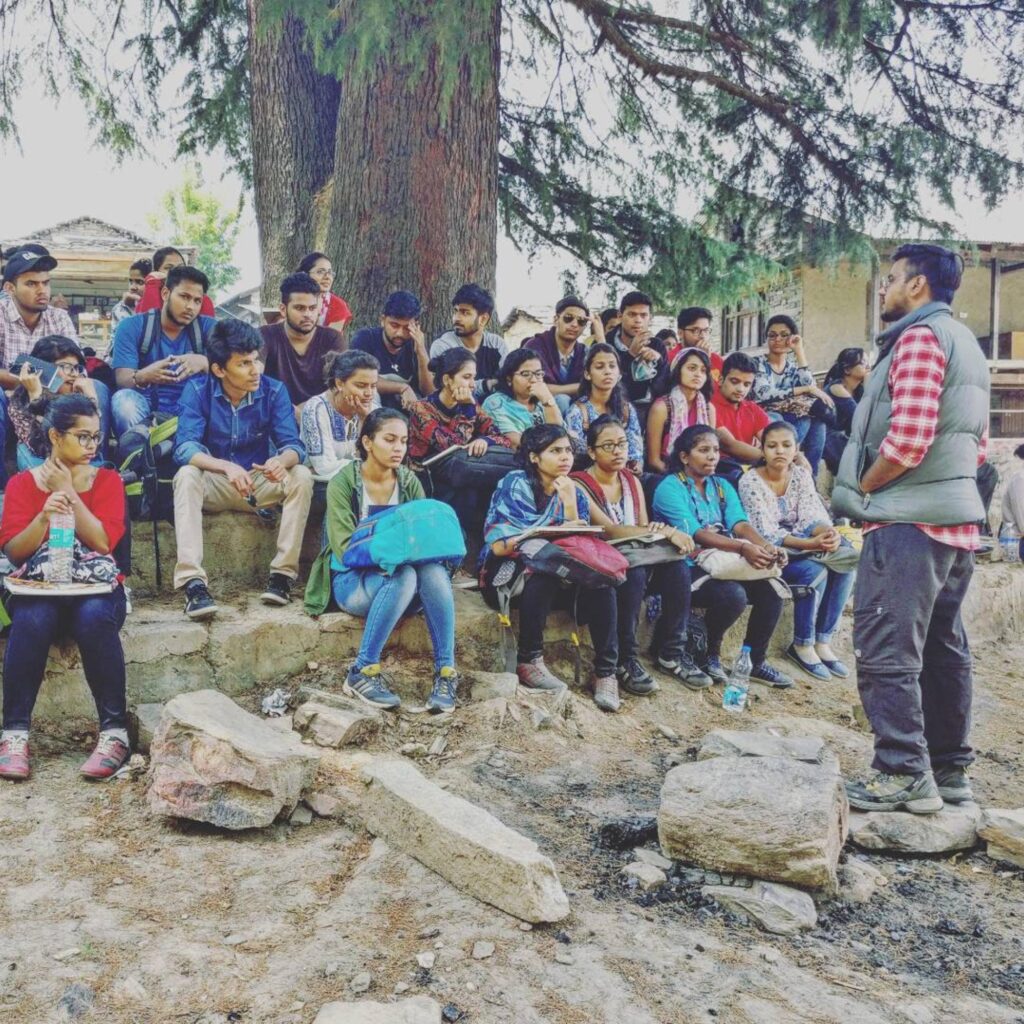 Rahul: Our advocacy happens on multiple fronts. We involve local communities from the earliest stage, whether as labour, co-designers, or cultural keepers.
 With the government, we argue for policies that shift incentives: favoring renovation over demolition, incentivising local materials, and mandating lifecycle analysis. We have also worked with tourism bodies to draft codes for responsible development, ensuring that new destinations don’t simply recreate the mistakes of the past. We see ourselves as part storyteller, part activist, part practitioner.
The key is humility, knowing that our interventions matter, but so does listening and continuously learning from those whose land we share.
SCALE: Looking ahead, what new directions excite you? You’ve mentioned possible collaborations beyond architecture, and even a book.
 Rahul: We’re opening up to new forms like public pavilions that bring together climate, architecture, art, digital technology, and performance. More cross-disciplinary projects are emerging — not just in India but globally.
For instance, we’re currently leading a conservation project in Valencia, Spain, where we’re reviving an old vernacular house built of stone and wood.
It’s not only about preserving the structure but also about understanding how to integrate modern amenities without losing its soul — and most importantly, sending our teams of skilled craftspeople capable of working with such rare materials and techniques to a place where that knowledge has nearly disappeared.
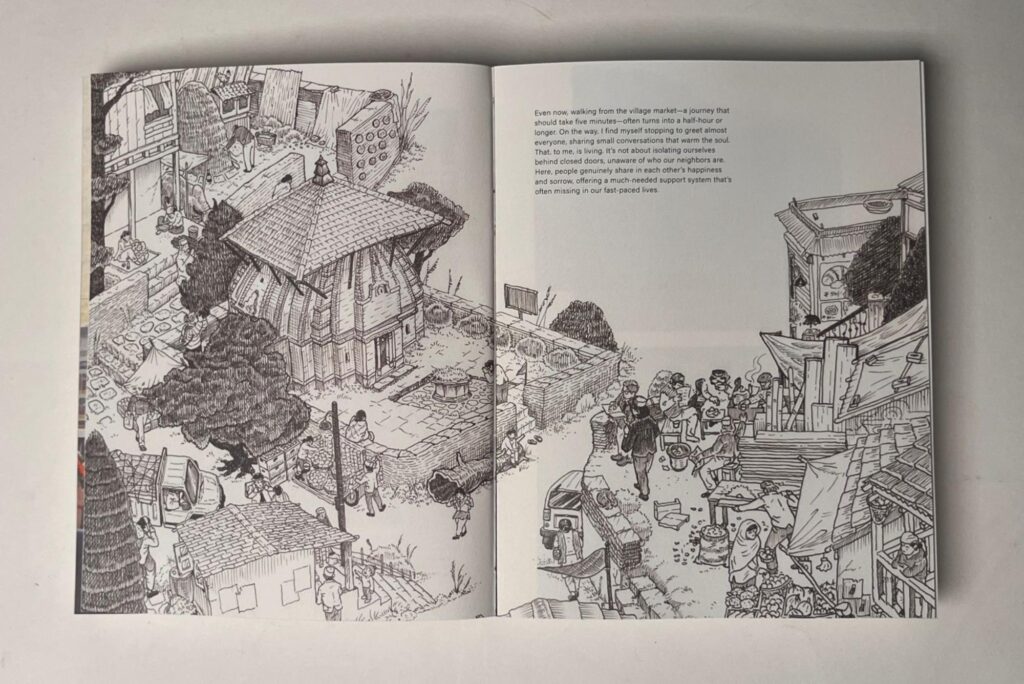
Pages from Rahul’s upcoming book “Where We Belong”
The upcoming book seeks to distill not only our built work but the values and difficult lessons learned along the way. It’s not a monograph; it’s both a reflection and a toolkit for architects, policymakers, and citizens worldwide who see the threats to fragile geographies and want to act.
At the end, our hope is to elevate the conversation: What does it mean to build responsibly? To ground ourselves in heritage, yet invite innovation? To honor ancestors, yet empower youth? The answers are complex, but the journey, especially in the Himalayas, is richer for it.
SCALE: Rahul, if you had to distill everything into one mantra or philosophy guiding your life and work, what would it be?
 Rahul Bhushan: I have learned from the Himalayas that greatness is not in height, but in endurance. To create anything meaningful, you must root yourself deep like the deodar, stand through storms without arrogance, and rise each day in silent service to something greater than yourself.
My life’s work is to build as they do, with patience, with truth, and with strength that does not shout, but lasts. For me, architecture is not about walls or roofs; it is about shaping spaces that remember where we came from, honour the earth that holds us, uplift our quality of life, and inspire those yet to come. If I can leave behind structures, ideas, and communities that breathe hope long after I am gone, then I have lived as the mountains taught me to live.