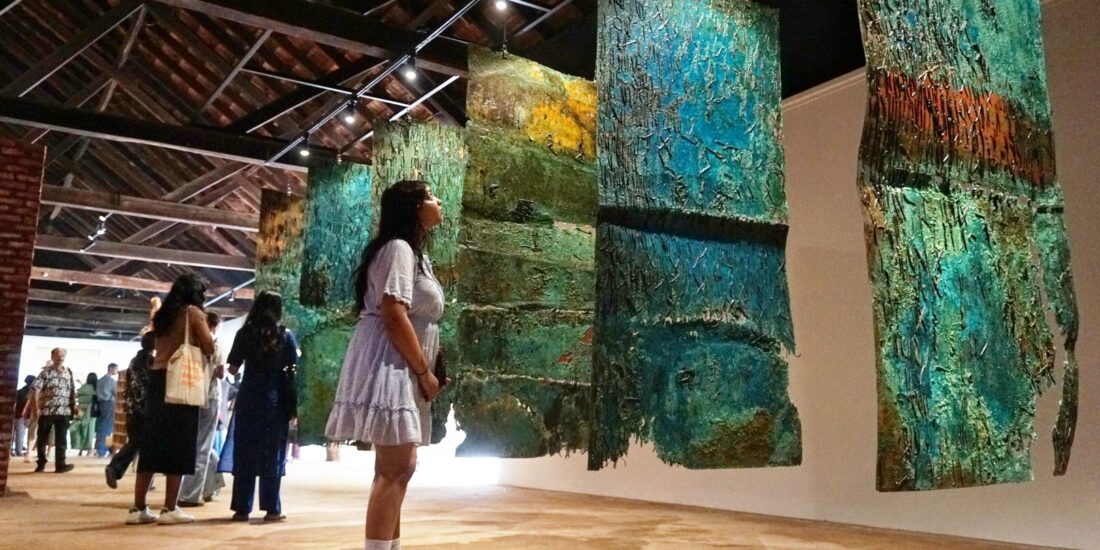
What It Means to Respond: Inside RE-ACT Space at Kochi
RE-ACT Space in Kochi is an experimental art project that brings artists together to respond to today’s social and political realities in their own ways. Founded by artist and curator Nikhil KC, it moves away from the idea that responding to a crisis has to be loud or immediate. Instead, it creates a space where artists can reflect, work, and engage with the world around them without giving up their individual practices. The project was born from a fundamental question: how can a community address the heavy socio-political realities of our time without stripping the artist of their individual identity? By Arya Nair
In a city that has steadily positioned itself as a global node for contemporary art through the Kochi-Muziris Biennale, parallel practices often emerge in experimental forms. Among these, RE-ACT SPACE stands out not as an exhibition but as a space that asks what it means to respond, gather, and make art in a time marked by social anxiety and fragmentation.
The Idea Behind “RE-ACT”
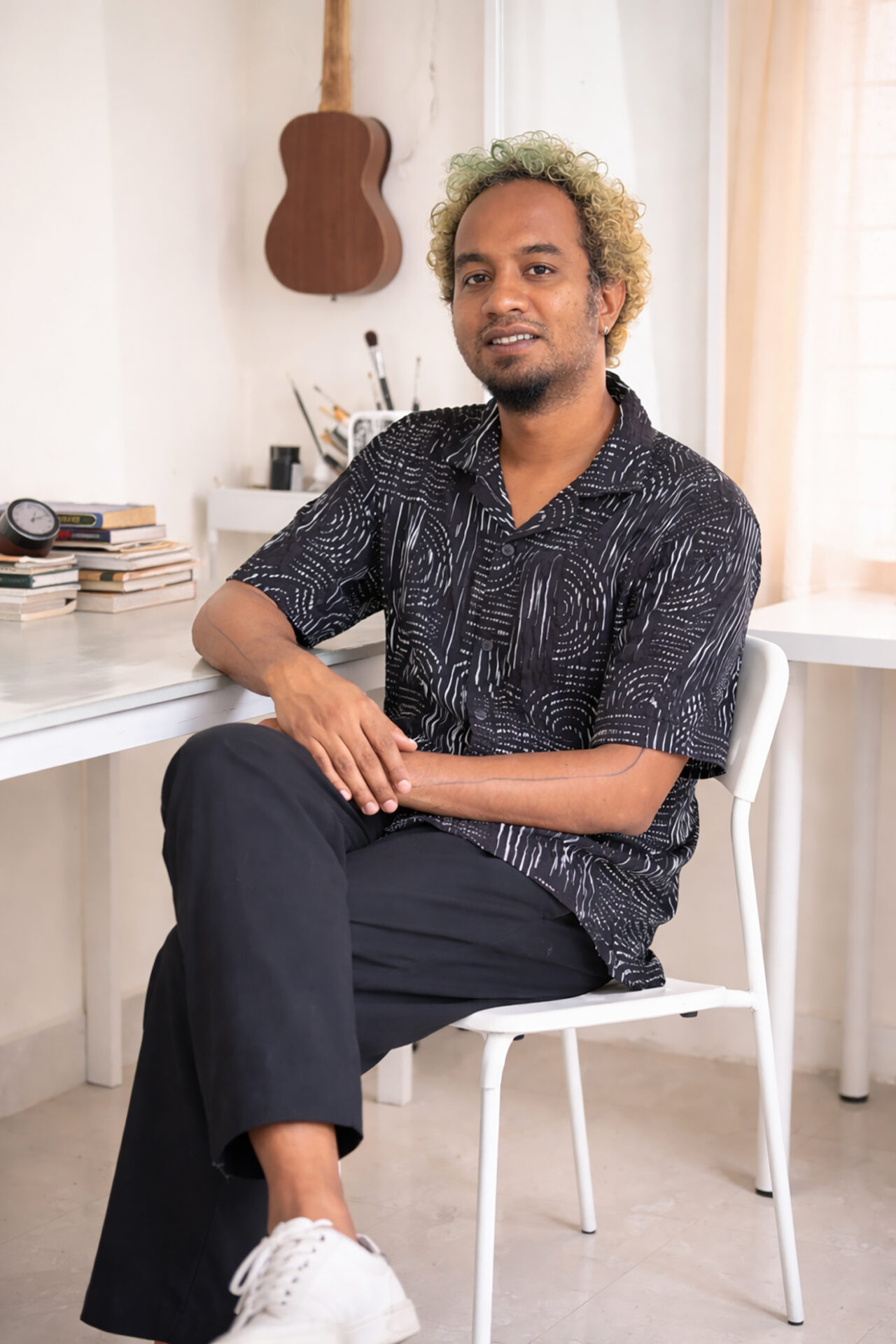
Nikhil KC, Artist & Curator RE-ACT Space.
Founded by artist and curator Nikhil KC, RE-ACT Space began not with a plan, but with a word.
“I felt we needed to react to the socio-political conditions around us,” he recalls. “But when I said react, people understood it as something aggressive. So I split the word. RE-ACT became about thinking, and then acting.”
This shift in language forms the conceptual core of the project. Reaction is no longer an impulse. It becomes a process of reflection, re-imagination, and careful engagement. As articulated in the collective’s curatorial framework, the space is intended to “pause, understand, rethink, and respond to the world we live in, with the intention to coexist by welcoming inclusiveness rather than merging to fit in.”
An Open Approach to Art and Artists
The exhibition titled When Communities Under Threat does not function within the conventions of a singular curatorial voice or a fixed thematic response. Even its title resists grammatical closure, holding itself in a suspended state. Rather than directing artists toward a unified political statement, the project opens a field of possibilities.
“We didn’t ask anyone to respond in a specific way,” Nikhil explains. “Each person can stay within their own practice. If they want to respond, they will find their own way.”
This refusal to impose becomes central to the exhibition’s structure. In Nikhil’s view, nobody should have to change their practice entirely just to meet a moment. True engagement happens when an artist stays within their own method and finds a way to speak to the world from their own unique vantage point. The exhibition unfolded as a collage of practices, where painting, performance, sound, moving image, and text operate without hierarchy. According to the curatorial note, the project “moved beyond singular authorship to shape the conditions through which the work is encountered and interpreted.”
From Online Idea to Physical Gathering
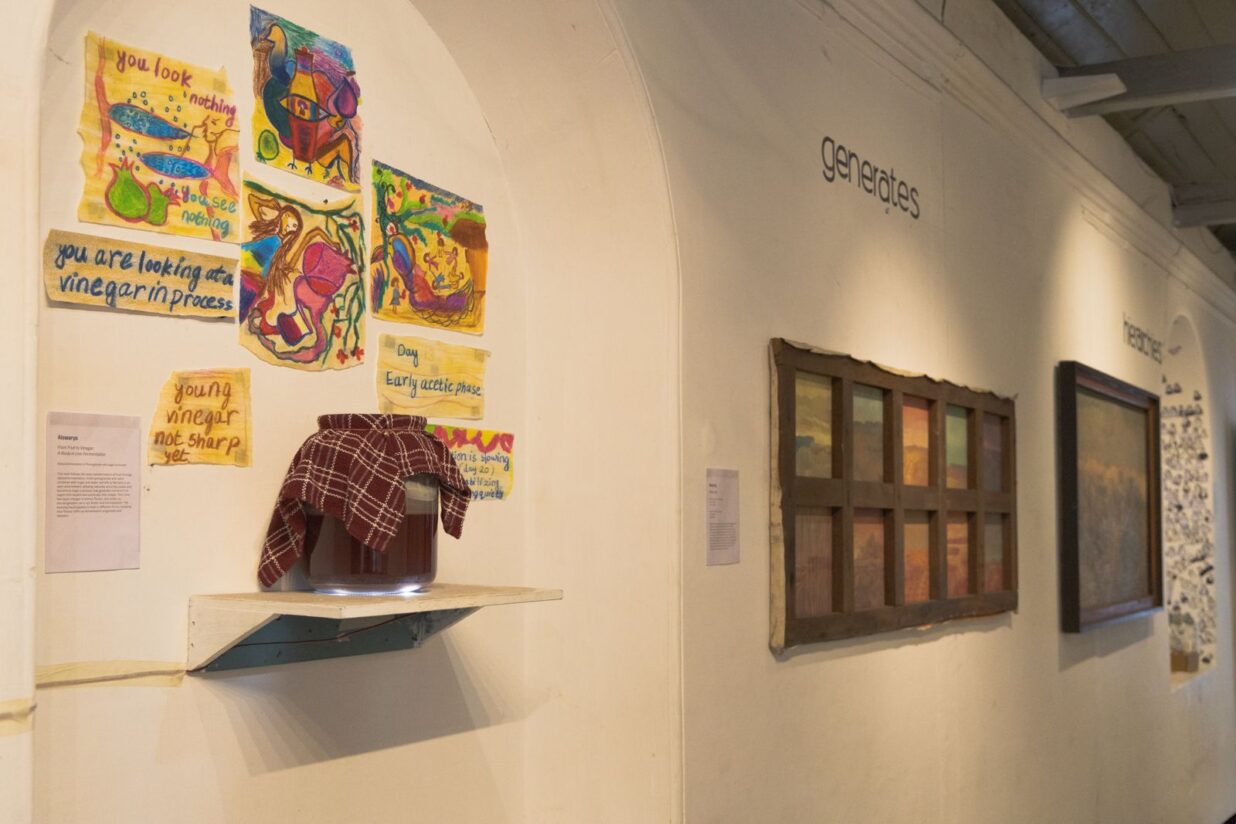
From Fruit to Vinegar: A study in live fermentation by Aishwarya
Interestingly, RE-ACT Space was not originally conceived as a physical event. It began as an idea for an online platform that would support artists through visibility and sustainability. The shift occurred when the collective was invited to join the wider ecosystem surrounding the Kochi Biennale.
“That call changed everything,” Nikhil says. “From there it became a gathering.”
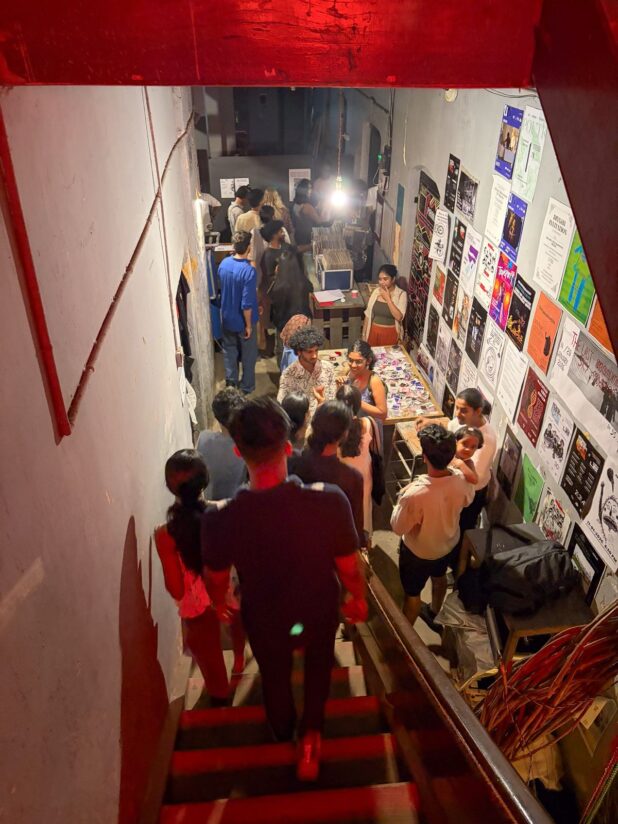
The word gathering is crucial. Over time, the project evolved into a lived space rather than a curated display. Artists did not simply install works and leave. They stayed, worked, argued, cooked, and occupied the space together. For nearly 15 days, the exhibition operated as a temporary community.
Inside the Space
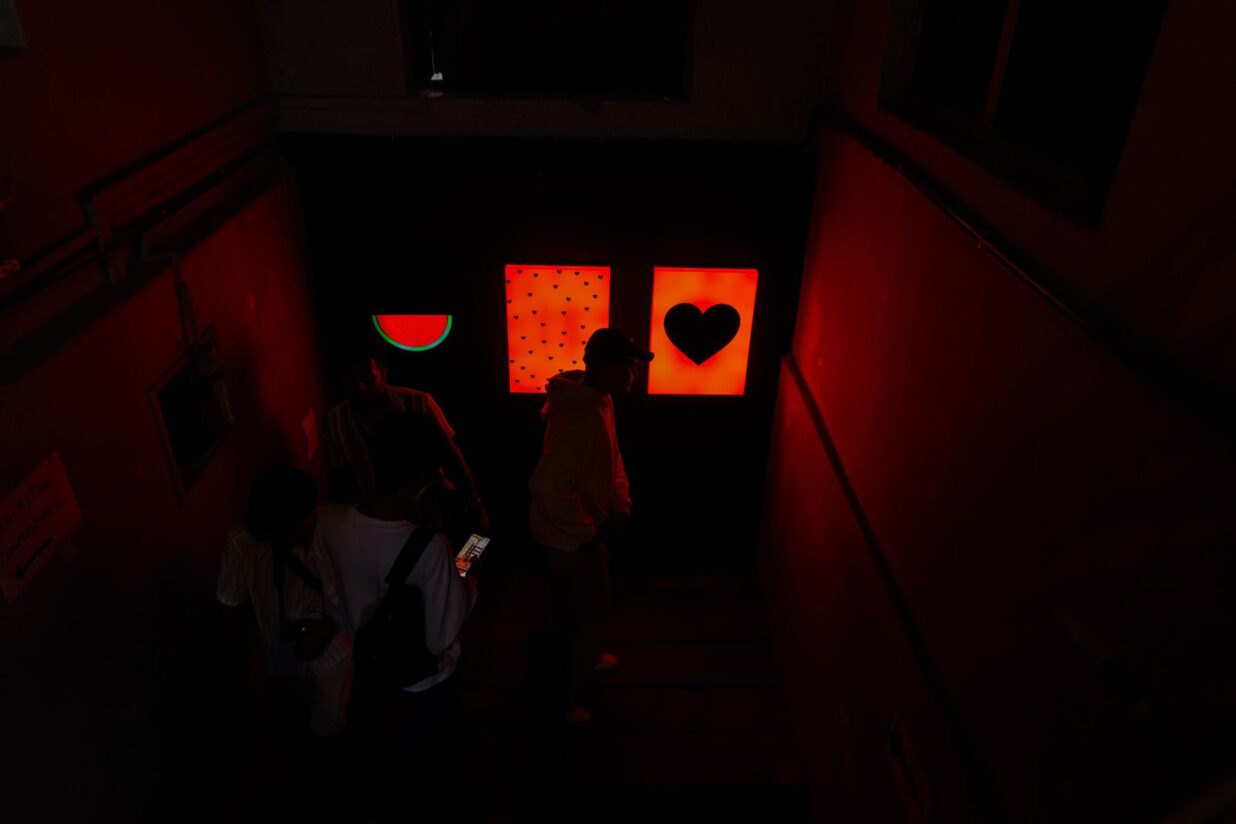
Make love not war by Anas Rashid
What unfolded at Forplay Society in Kochi was less an exhibition and more a shared space in motion. The space was activated across levels, with performances, screenings, installations, workshops, and informal gatherings happening simultaneously.
“We didn’t want it to become a conventional show,” Nikhil explains. “If it becomes that, it becomes something for survival. We were looking for other possibilities.”
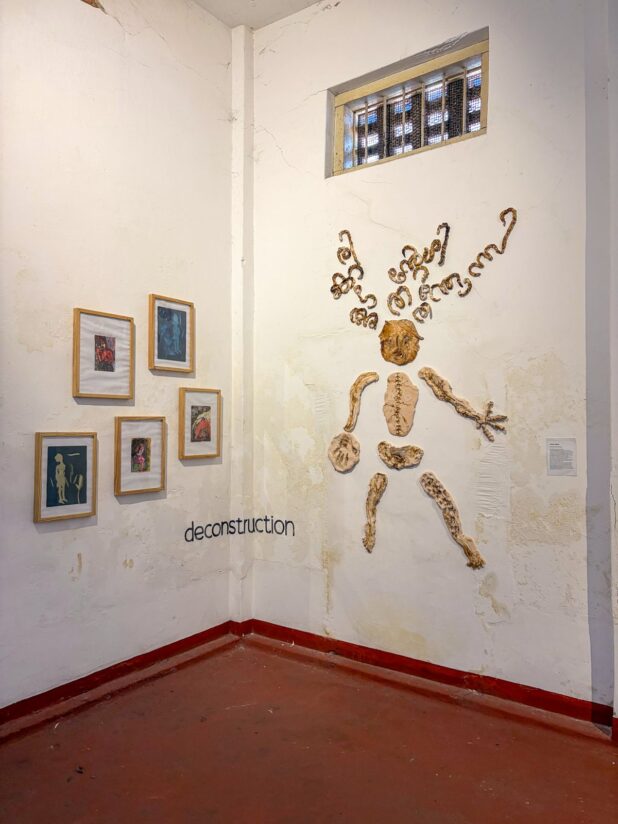
Beyond the surface by Harsha Valsan
The physical site of the exhibition at Forplay Society in Kochi plays a decisive role in shaping this experience. Unlike the controlled “white box” neutrality of a gallery, the building carries a raw, warehouse-like character. Instead of imposing order, the collective chose to activate the entire structure.
The ground floor served as an open space for performances and collective activities, while smaller rooms hosted installations and experimental works. The terrace became another site of engagement. Rather than guiding viewers through a linear display, the space encouraged movement, pause, and encounter.
Making Art More Accessible
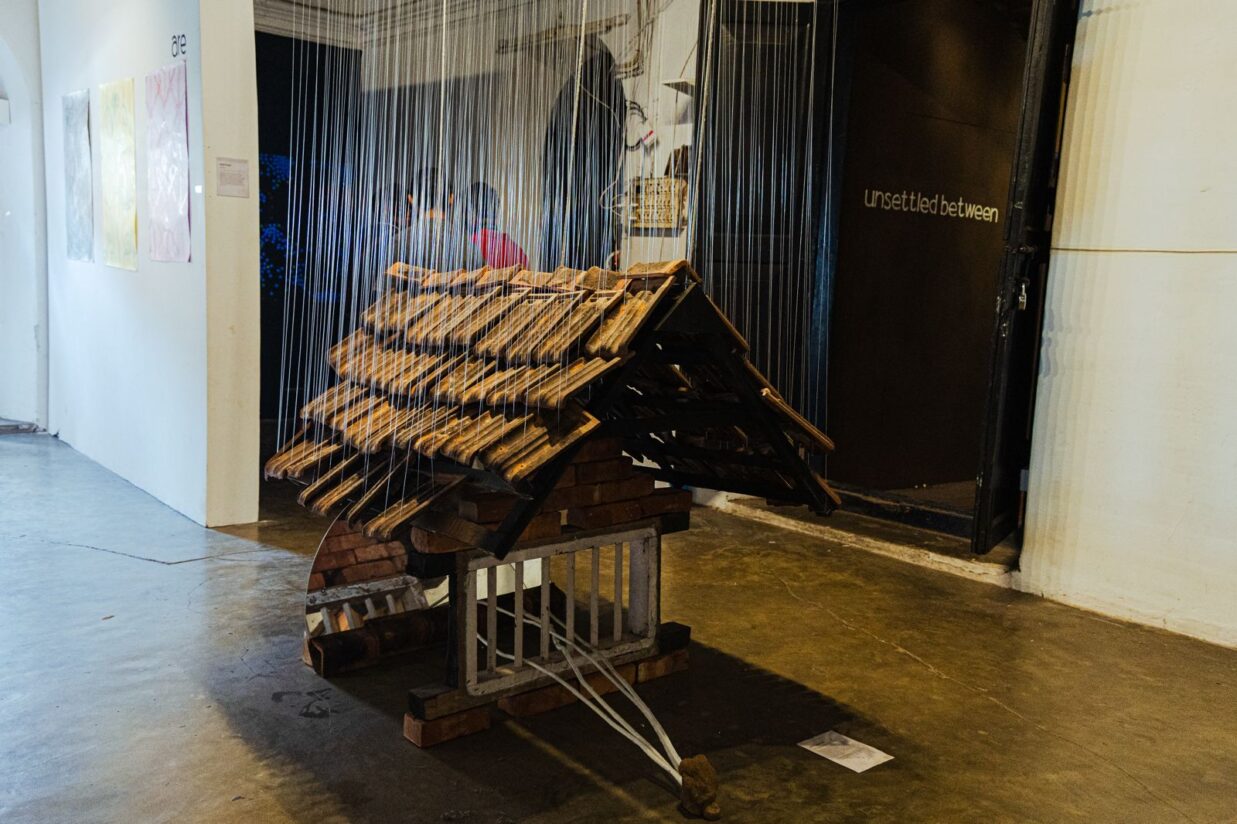
Domestic blueprint of self by Jithin Krishna
One of the most striking aspects of RE-ACT SPACE is its approach to circulation and accessibility. The project actively resists the exclusivity often associated with contemporary art markets. Instead of limiting works to high-value objects, it embraces small-scale, portable formats.
“We thought about how images can travel,” Nikhil says. “Not everyone can buy a painting. But someone can buy a ten-rupee sticker and live with that image.”
This approach extends the artwork’s life beyond the exhibition. Stickers, zines, and printed matter become carriers of ideas, moving through everyday spaces. These forms function both as memorabilia and as tools of dissemination.
A Mix of Practices and Disciplines
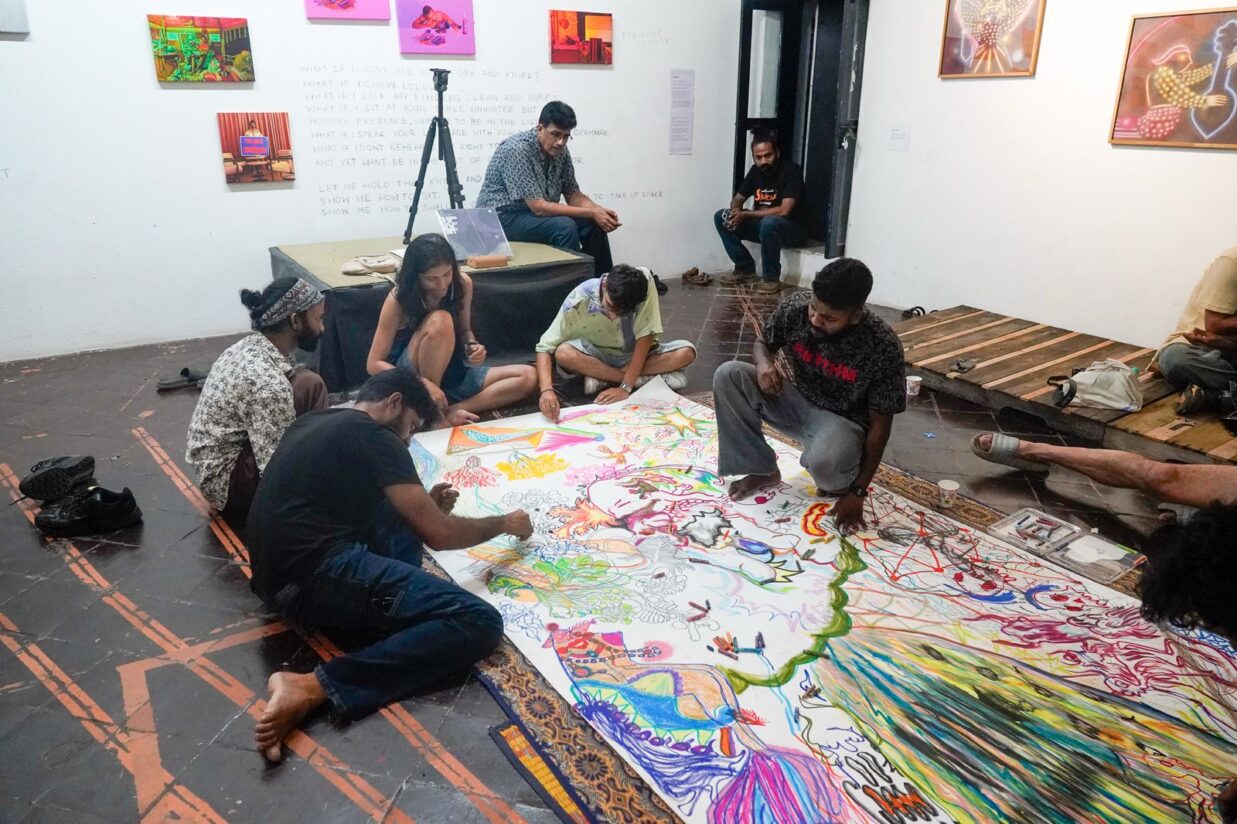
Workshop conducted by JD’s Jukebox
The range of participants further reinforces the project’s refusal of categorisation. Artists, filmmakers, designers, musicians, architects and community practitioners come together within a shared framework that privileges experimentation over discipline. Some works emerged from noise and sound practices. Others from animation, coding, or community engagement. Screenings included experimental films, short animations, and documentary fragments.
Works That Stand Out
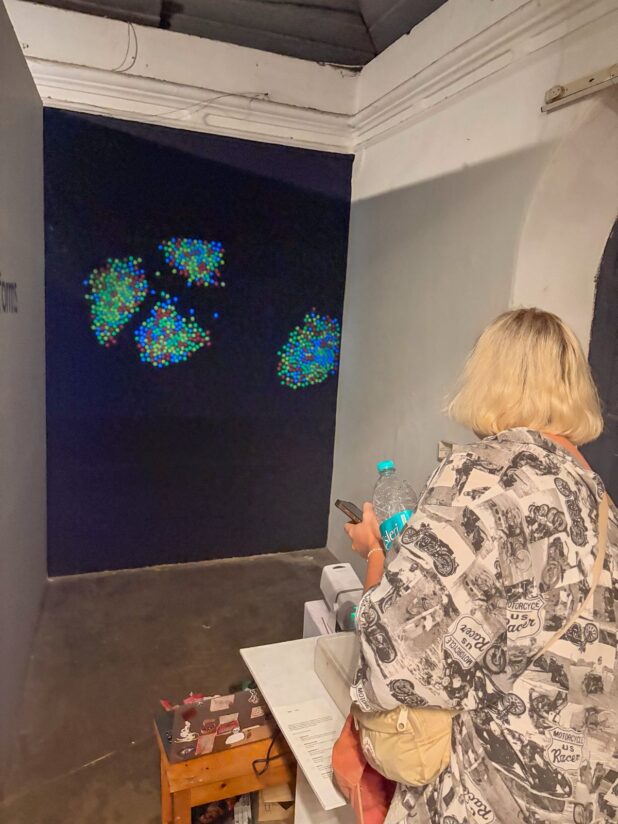
Shift+Ctrl by Visual designer Nashid T
Within this environment, several works stood out for the way they embodied the project’s core tensions.
One such work was an interactive console-based piece developed by Visual designer and animator Nashid T. Built using a coded interface, the work allowed viewers to manipulate variables such as Hate, Violence, Harmony, Disparity, Population and Groups. As these values shifted, the visual environment responded in real time. Increasing “hate” would fill the screen with chaotic, aggressive interactions, while other combinations produced different states of balance or breakdown.
“It was not just something to look at,” Nikhil notes. “You could play with it and see what happens. It becomes about how systems behave.”
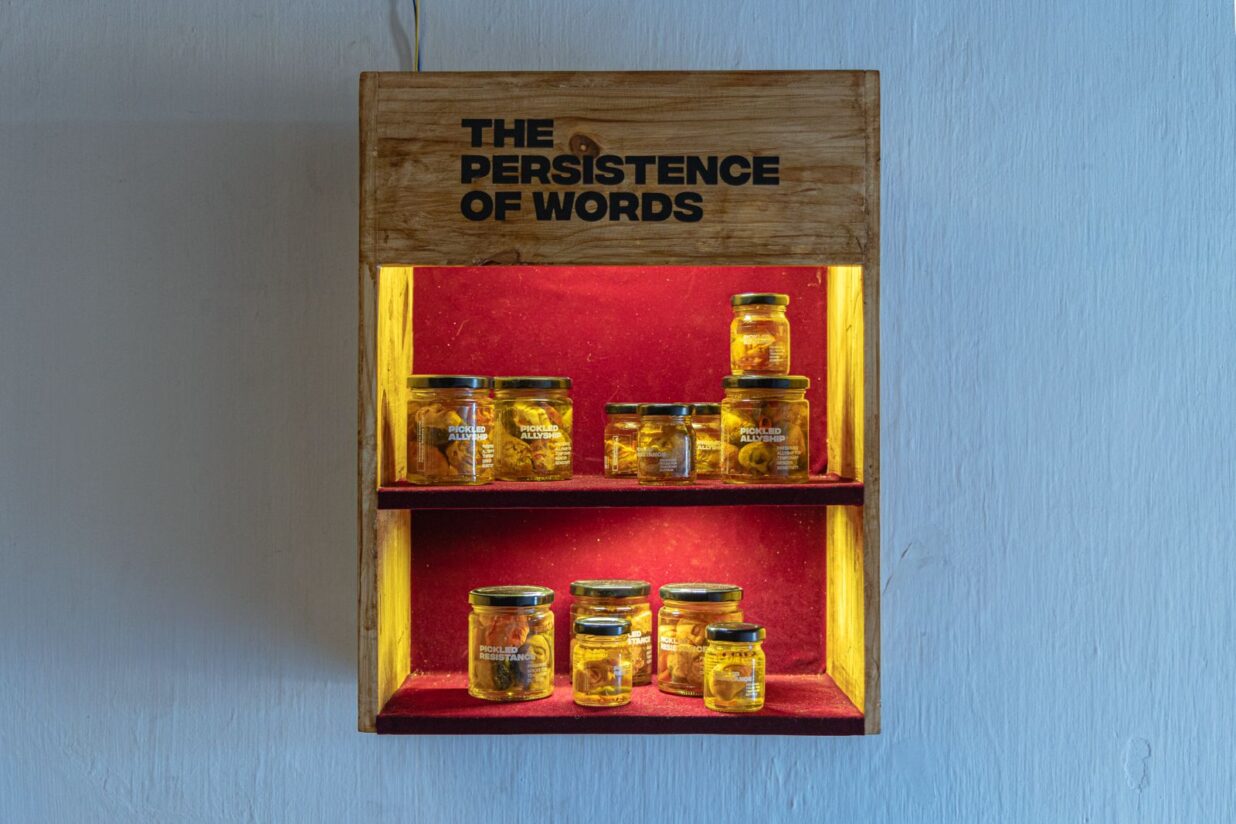
The Persistence of Words by Silpa Sheeja
Another work by artist Silpa S approached the idea of response through satire. An installation centred around the metaphor of a “pickle” examined how political and intellectual ideas are often preserved rather than acted upon. The work reflected a familiar social pattern in which artists, thinkers, and politicians engage in intense discussions about change, only for those ideas to remain stagnant over time.
“We talk a lot,” Nikhil says. “About politics, about supporting people, about change. But many times, it stays as talk. Like a pickle, it just sits and ferments.”
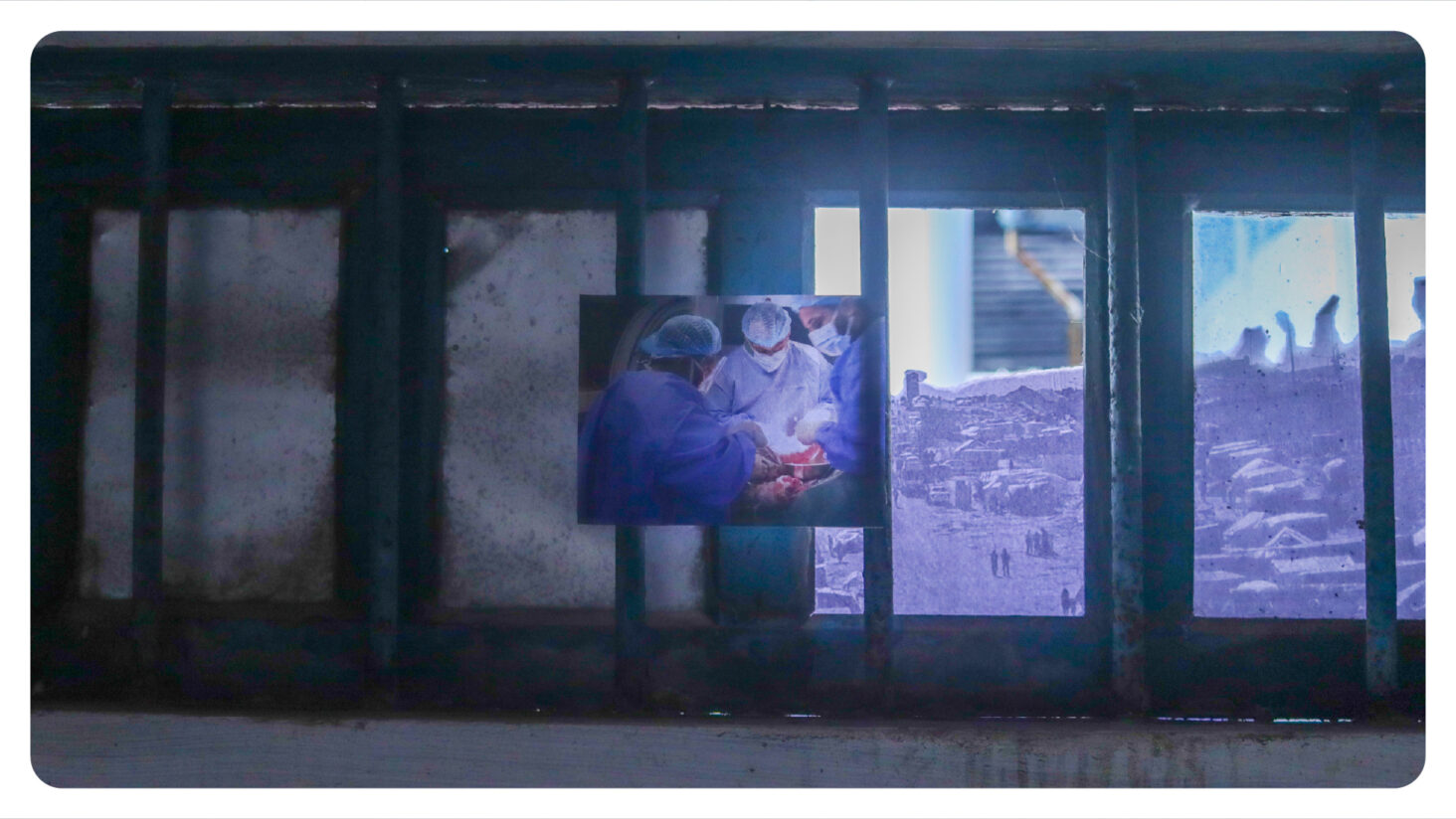
The Last Sky by Dr S S Santhosh
The piece captured this sense of repetition and stagnation, where ideas circulate without transformation. It offered a quiet but pointed critique not only of artistic practice, but of broader cultural discourse.
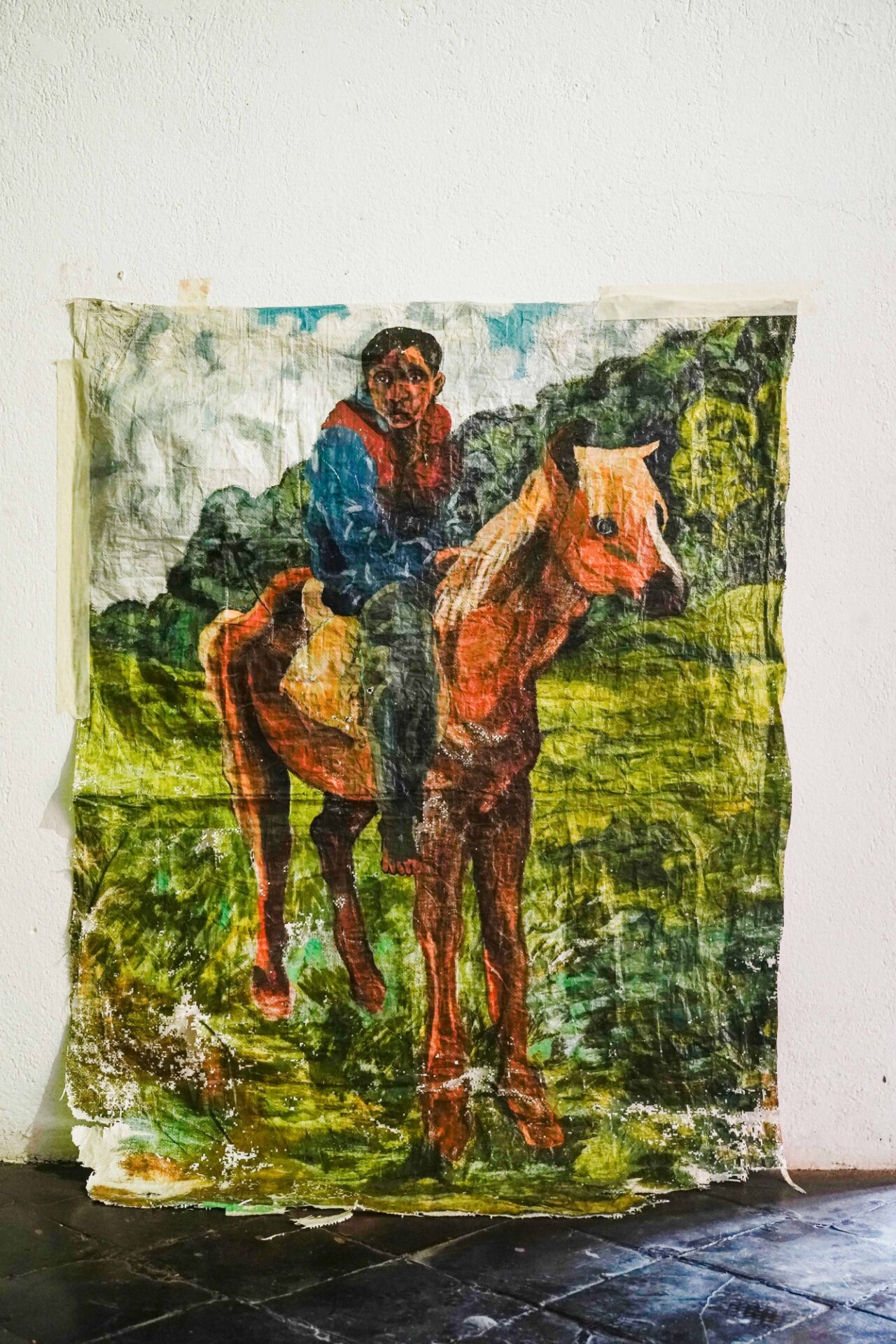
Chemban Kuthira by Jerome K Johnson
Elsewhere, works emerged from fragments of writing, documentation, and lived experience. In one instance, materials from Dr S.S. Santhosh Kumar’s long-term engagement with conflict zones were reassembled across the space rather than confined to a single display. Texts were broken, images dispersed, and meanings allowed to shift depending on where and how they were encountered.
“Our effort was how to place these materials in our own vision,” Nikhil explains. “Not just artistically, but in a way that creates new contexts.”
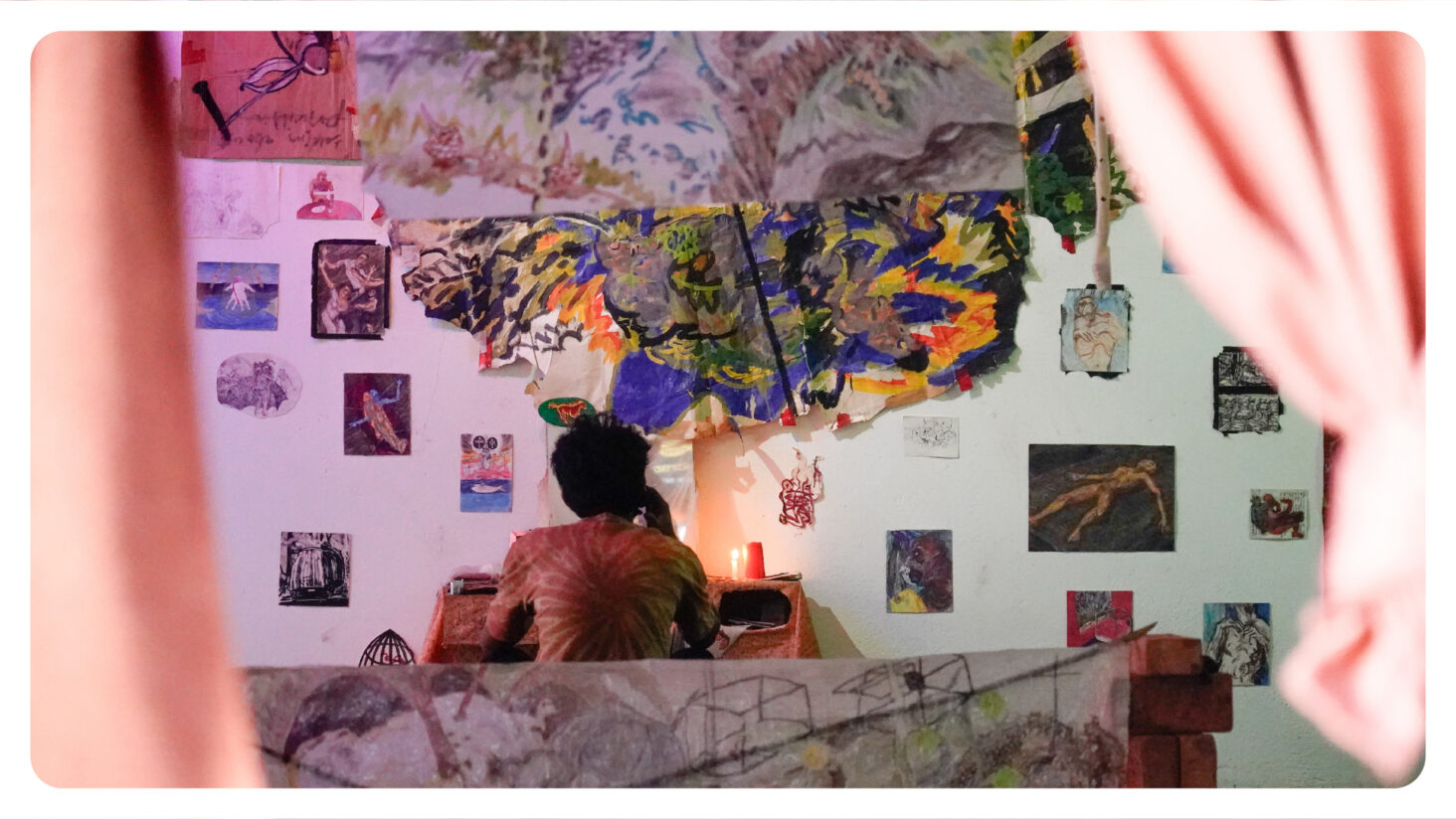
Artist Jerome K Johnson explores everyday life as a space of personal and social questioning
An earlier exhibition organised by the collective in January 2026 offered insight into how these ideas first took shape. Featuring emerging artist Jerome K. Johnson, the show Before The Last Cry Is Muted brought together his project Chemban Kuthira, a body of work that moved between personal reflection and social observation. “His work was expressive, but at the same time socially connected,” Nikhil recalls. “It was not propaganda. It came from everyday life, from how a person lives and struggles within society.” Through a reflective image-making practice, Jerome’s work examined self-identity, art education, and the structures that shape artistic life, while also confronting broader social and religious norms. Positioned between the personal and the collective, the exhibition demonstrated how lived experience can become a site of inquiry, offering a model for how RE-ACT SPACE would continue to engage artistic practice as something embedded within life rather than separate from it.
Beyond One Medium
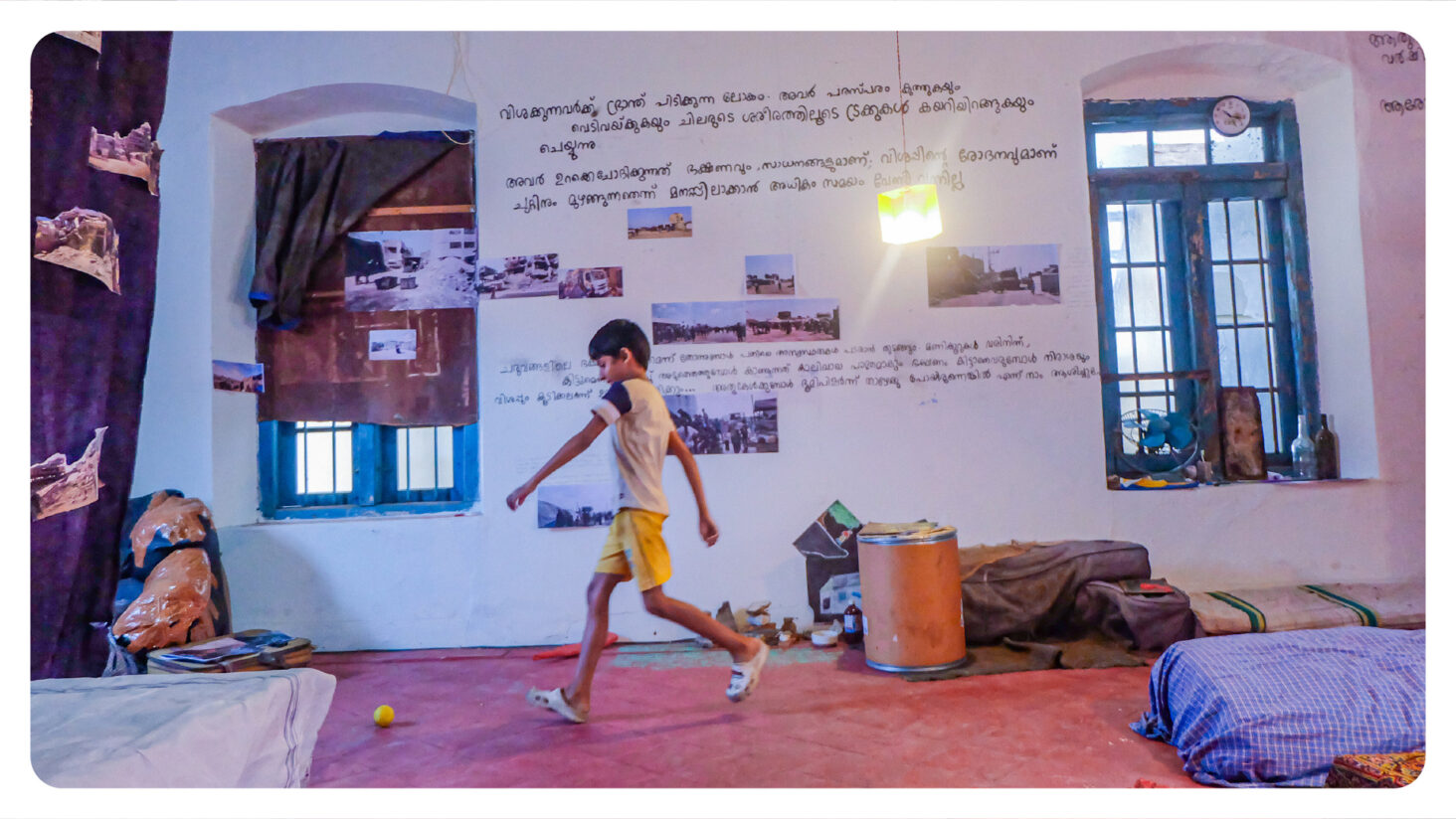
The Last Sky by Dr S S Santhosh Kumar pieces together stories of unrest through scattered moments.
The programming within RE-ACT SPACE extended this openness across forms of practice. Performance moved through noise, body-based, and theatrical approaches, while screenings brought together works from both the collective and wider collaborations. Nikhil’s connection with the Academy of Moving People and Images introduced a cluster of interlinked films, including Conference of the Birds, where he contributed to animation, editing, and sound, and later even participated as an actor. These were shown alongside other moving image works such as Roshan’s stop-motion piece responding to the Ukraine war, creating a layered viewing experience shaped by relationships rather than categories. “It’s not just about painting anymore,” Nikhil says. “Expression is not tied to one medium.”
What emerges is a space where sound, image, and action circulate freely, shifting focus from the art object to the processes that produce it.
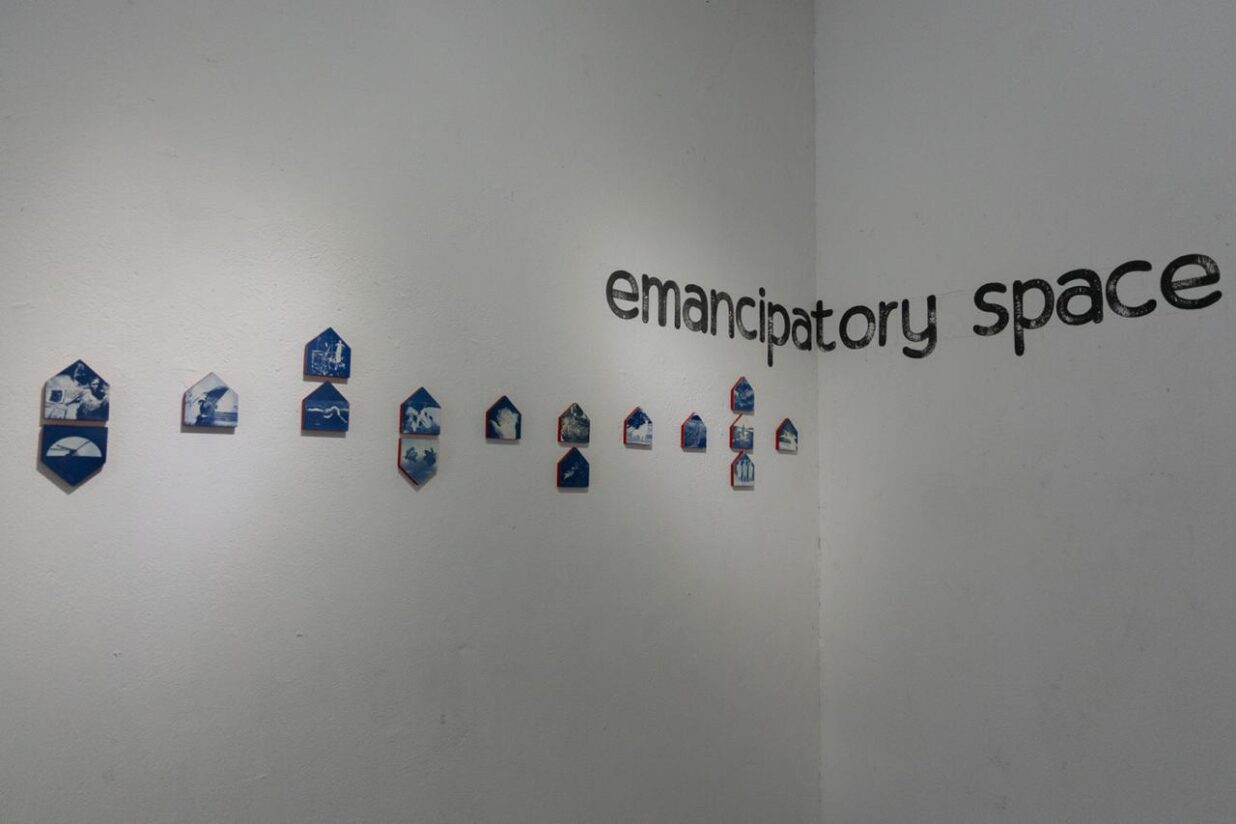
Untitled by Shobaraj
This approach reflects a broader shift in how art is understood today. “Art became a way to express our fears, desires, love, even conflicts,” Nikhil notes. No longer confined to aesthetics or a single medium, expression now moves through words, actions, and the body itself. Theatre, too, enters this expanded field, blurring the boundaries between disciplines. What emerges is an understanding of art as something fluid and immediate, shaped by the multiple ways in which people experience and express life.
A Different Way of Being Political
While the exhibition is deeply rooted in current socio-political realities, it deliberately avoids direct alignment with specific political positions. This is not an absence of politics, but a different mode of engagement.
“We are not pointing at one government or one system,” Nikhil explains. “If we do that, it becomes propaganda. We wanted to keep it open.”
At the same time, the project does not disengage from urgency. The curatorial framework acknowledges ongoing violence and marginalisation, particularly in relation to minority communities in India. The tension between openness and specificity creates a space where political thought emerges through practice rather than declaration.
What Comes Next
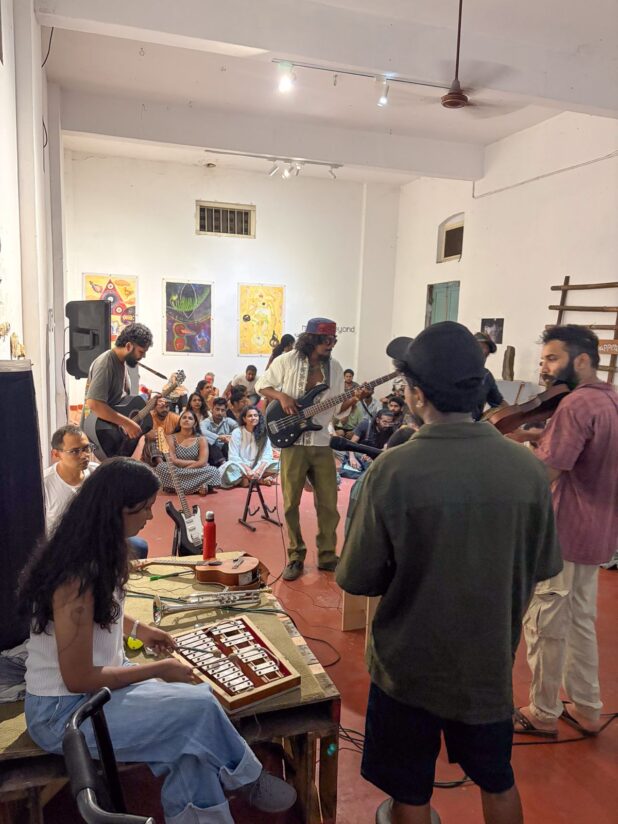
Performance by Floating Folks
Despite its scale and ambition, RE-ACT SPACE operates with minimal resources. The project was largely self-funded, sustained through collective effort and small-scale contributions. “Even with around one lakh, we were able to do so much,” Nikhil reflects. “If it were expanded, it could become something much bigger. But that was not the intention.”
Success, in this context, is measured differently. “Maybe 80% successful,” he says with a smile. The remaining 20% is not failure, but potential.
Looking ahead, the collective plans to extend the project through publications, travelling formats, and possibly a permanent space that functions as a library and community hub. The aim is not to institutionalise the project, but to sustain its openness.
RE-ACT SPACE does not try to resolve anything too quickly. It stays with the discomfort, the questions, and the act of coming together, allowing meaning to take shape slowly through shared presence and practice. There is something deeply human in this refusal to rush, in choosing to respond with care rather than certainty. It reminds us that even the smallest act of engagement carries weight. As Che Guevara once said, “The revolution is not an apple that falls when it is ripe. You have to make it fall.”