Abundance and Absence: Designing a Conversation Around Food Waste
“Abundance and Absence” turns the uncomfortable realities of food waste into an immersive spatial experience. Conceptualised by visual artist Sourabh Chouhan and spatially realised by architect and designer Sumessh Menon, the installation uses design to prompt us to reflect on the contradictions among consumption, excess, and need. Aishwarya Kulkarni finds out more about the idea and ideator behind this experience.
 The most powerful design projects often begin with an uncomfortable question. In the case of “Abundance and Absence”, that question was deceptively simple: what happens after a meal is served? For most of us, the kitchen is a space associated with comfort, celebration, family and abundance. Yet it is also the place where excess quietly accumulates and waste routinely disappears. The contradiction sits at the heart of modern consumption, one that is easy to overlook precisely because it unfolds within the intimacy of everyday life.
Presented at Design POV 2026 at Mumbai’s Jio World Convention Centre, “Abundance and Absence” translated this conversation into an immersive spatial experience. Commissioned by luxury stainless-steel kitchen brand Kuche7, the exhibition was conceptualised by visual artist Sourabh Chouhan and spatially realised by architect and designer Sumessh Menon.
 The timing could not have been more relevant. India wastes an estimated 78 million tonnes of food every year, approximately 55 kilograms per person, while globally, more than one billion meals are discarded daily and over 800 million people continue to sleep without guaranteed access to food.
Developed with research and data support from FAO India, the installation responded directly to Design POV’s 2026 theme, Sense and Sensibility, balancing empirical evidence with emotional engagement and positioning design as a tool for awareness and behavioural change.
 “The kitchen is a space of abundance, but it also produces waste. As a brand working so closely with that space, this felt like a conversation we had to step into,” says Naeem Chouhan, founder of Kuche7.
Founded by Naeem Chouhan in 2015, Kuche7 has become one of India’s leading luxury stainless-steel kitchen brands, with more than 21 experience centres across the country and a growing international presence spanning Dubai, London and Riyadh. For the brand, the exhibition represented a conscious move beyond product design and aesthetics into a broader conversation about sustainability and responsibility. For Sumessh Menon, whose immersive hospitality and luxury residential projects have helped shape contemporary experiential design in India, it offered an opportunity to explore how space can provoke reflection rather than simply admiration.
In this conversation, SCALE speaks with Naeem Chouhan as he reflects on the making of the project, the emotional weight of its subject matter, and why design must increasingly engage with the realities shaping contemporary life.
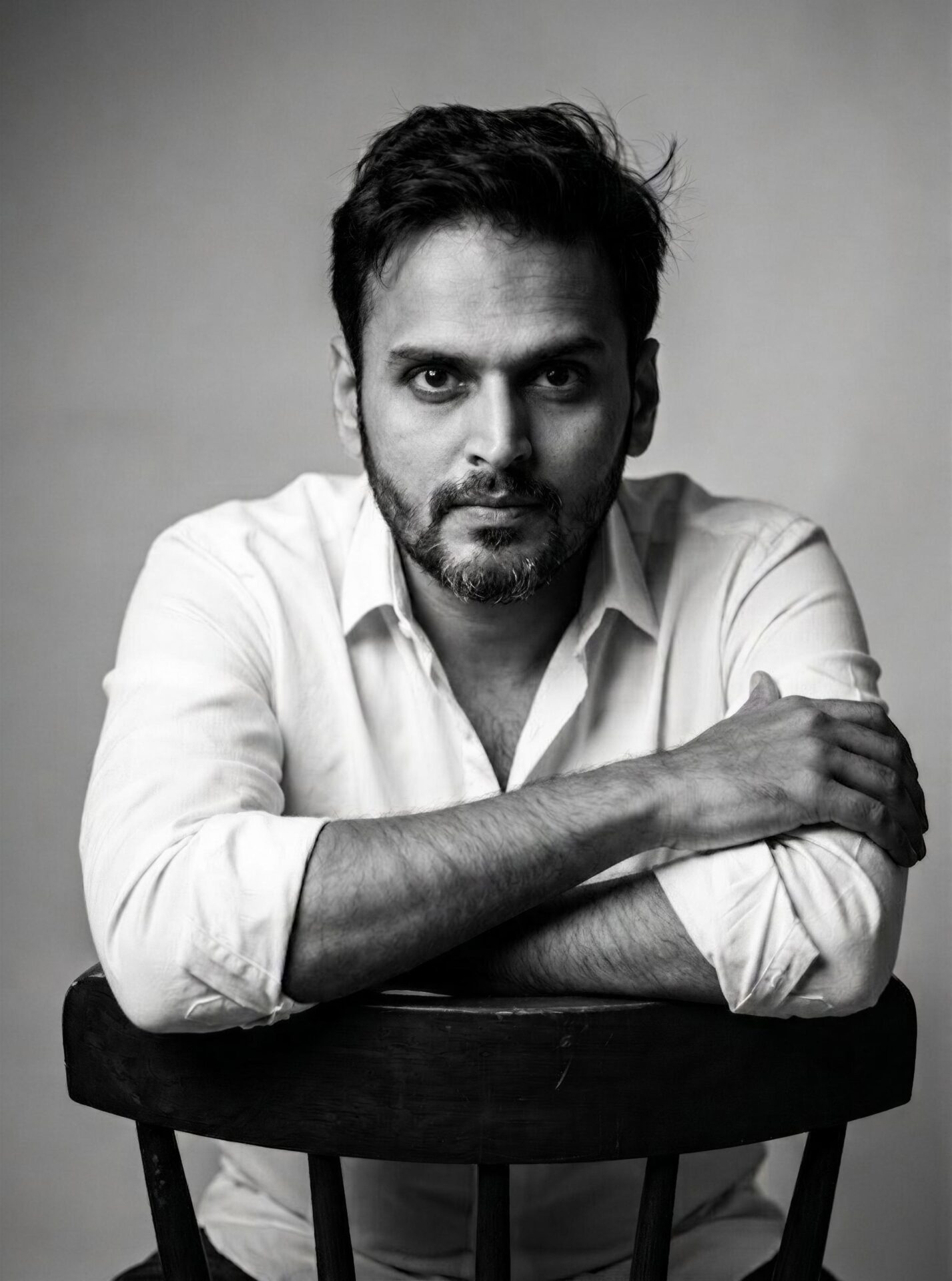
Naeem Chouhan, Co-founder, Kuche7
SCALE: What was the original spark for “Abundance and Absence”, and how did the idea evolve from a critique of food waste into a full spatial exhibition?
Naeem: The original spark came from a very simple observation. We spend so much of our lives around kitchens, yet we rarely think about what happens after a meal is served. Food waste is something all of us participate in, often without realising its scale. As we started researching the subject, we realised the conversation was much bigger than waste itself. It touched consumption, privilege, responsibility, and community, and that’s when we felt the story needed to be experienced rather than explained. A presentation or campaign wouldn’t have been enough. We wanted people to move through the contradiction of “Abundance and Absence” and reflect on their own relationship with food and waste.
SCALE: As a luxury kitchen brand, what motivated Kuche7 to move beyond kitchen aesthetics and enter the territory of social commentary and public responsibility?
Naeem: At Kuche7, we design kitchens, but kitchens are ultimately about people and how they live. If we only talk about finishes, materials and appliances, we’re only telling a very small part of the story. The kitchen is where consumption begins. As a brand, we’ve always believed that sustainability and conscious living should be part of the conversation. This exhibition was an opportunity to take values we’ve practised internally and bring them into the public domain. We wanted to use our platform to start a conversation that mattered, even if it was uncomfortable, and I strongly believe that design has the power to influence behaviour, not just spaces.
Luxury is changing. It’s no longer only about exclusivity or aesthetics. It’s also about awareness, responsibility, longevity and thoughtful living. That is why we were very conscious about not turning the issue into a marketing exercise. The cause had to remain at the centre, and at the same time, we approached the exhibition with the same level of craftsmanship, precision and attention to detail that defines Kuche7. The result felt refined and immersive, but the message was never diluted. If anything, the quality of execution helped people engage with the issue more deeply.
 SCALE: How did the team translate such a layered and emotionally charged issue into spatial form without losing either emotional impact or design clarity?
Naeem: The approach was incredibly sensitive and thoughtful. Rather than telling people what to think, the focus was on creating moments of reflection. The design process thus involved extensive research, conversations, sketching and testing different narratives.
Every installation represented a different aspect of the issue while contributing to a larger journey. What impressed me most was the restraint. Nothing felt overly dramatic or exaggerated, but every element carried meaning. The exhibition invited visitors to think. As we dug deeper into the statistics around food waste and food insecurity, the scale became difficult to ignore.
It forced all of us to confront our own habits and assumptions. I think everyone involved experienced that discomfort at some point. But rather than making the project harder, it made us more committed to telling the story honestly.
 SCALE: The exhibition balances abundance and emptiness, realism and artifice, attraction and discomfort. How did you navigate those tensions?
Naeem Chouhan: Those tensions were really at the heart of the exhibition. We wanted visitors to be drawn in before they started questioning what they were looking at. If the experience became too confrontational, people would disconnect. If it became too beautiful, the message would get lost.
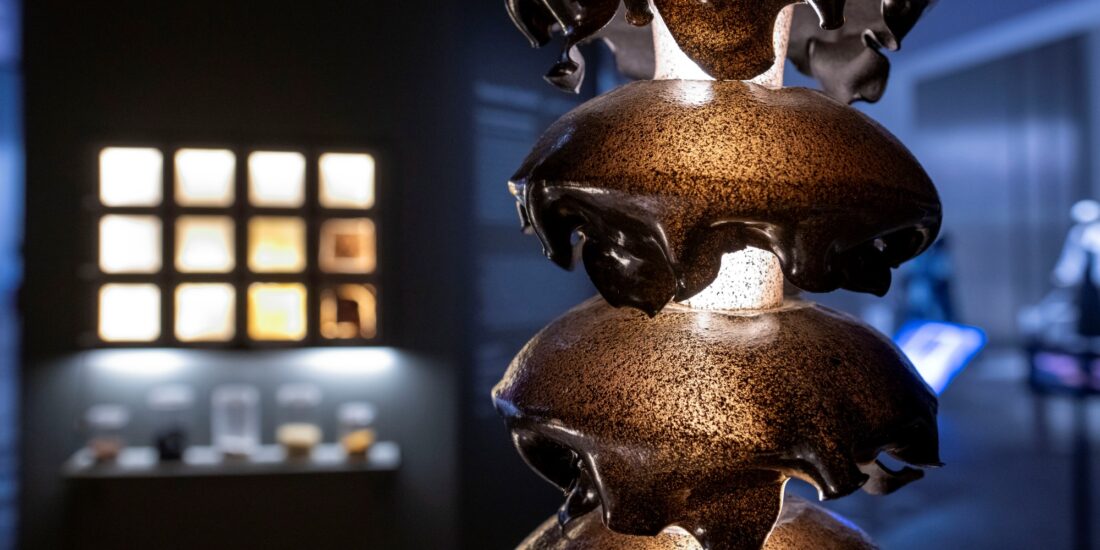
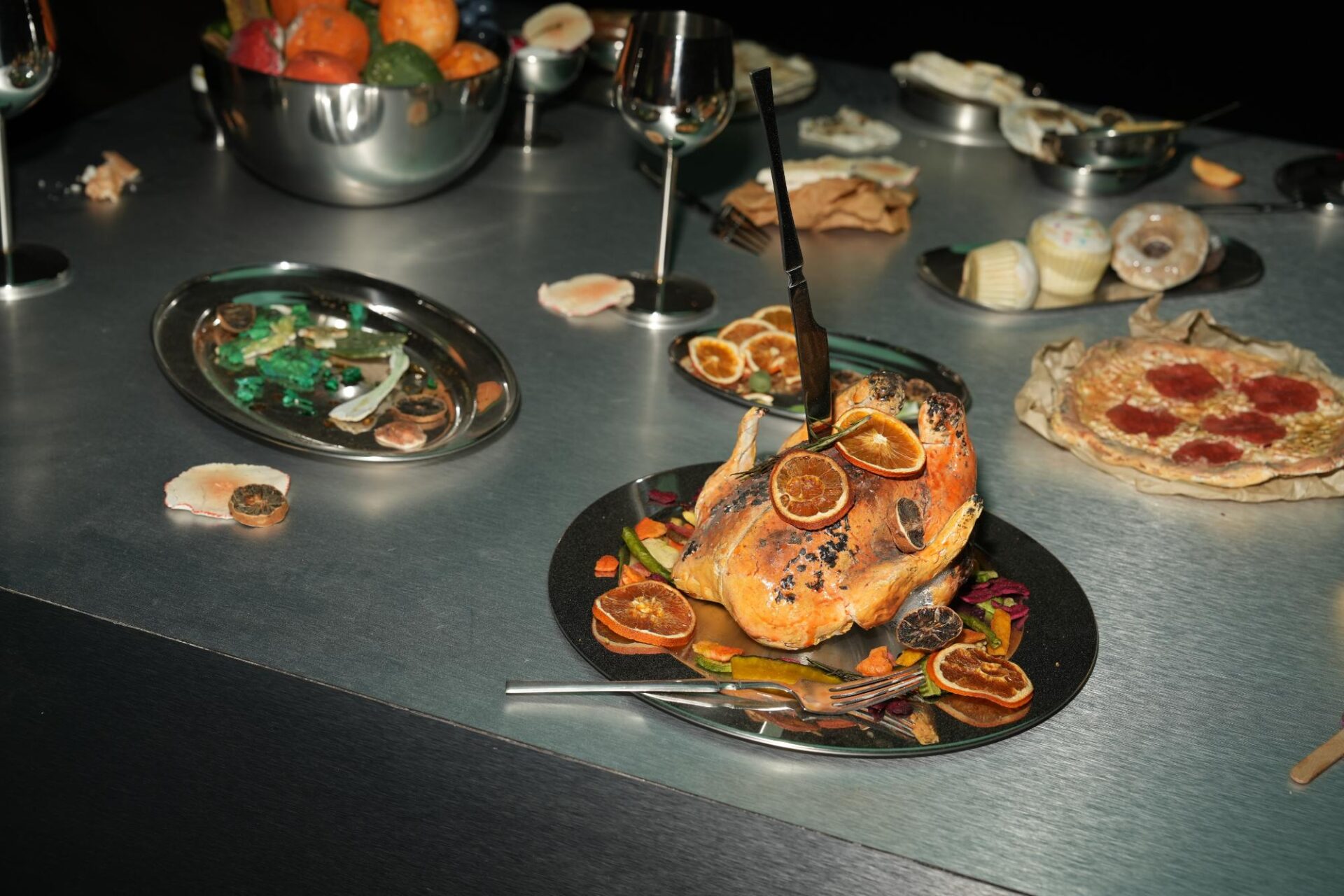
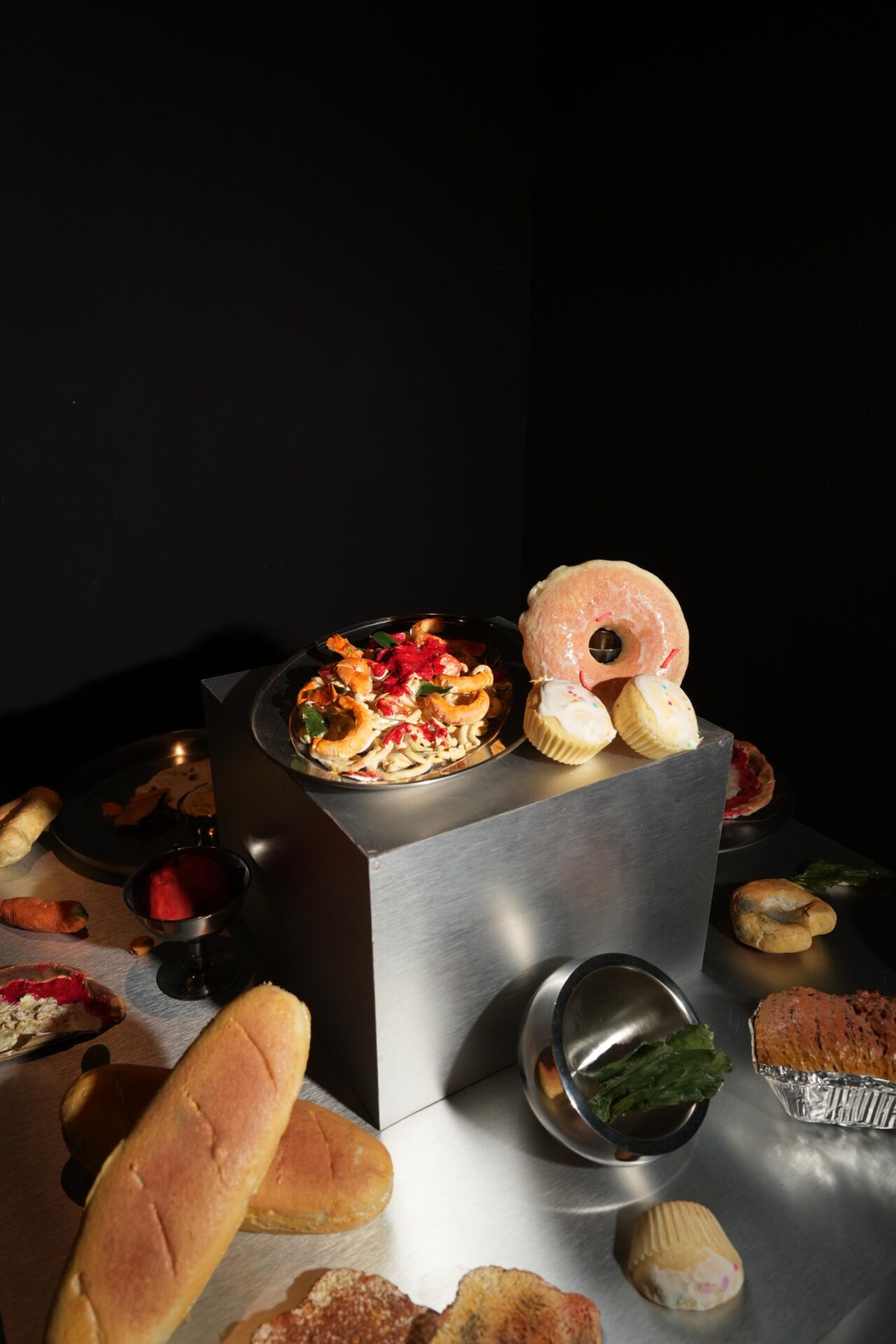
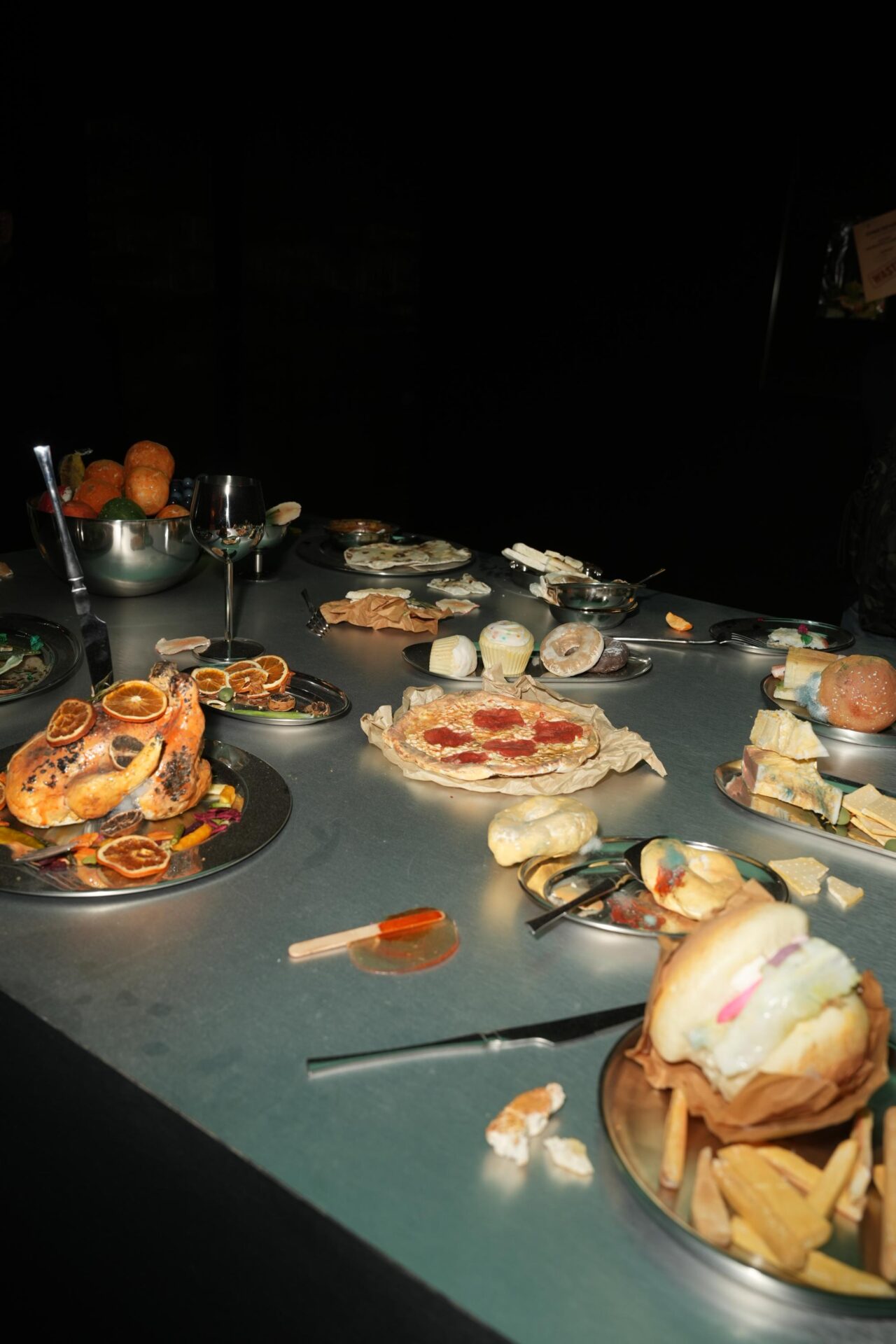
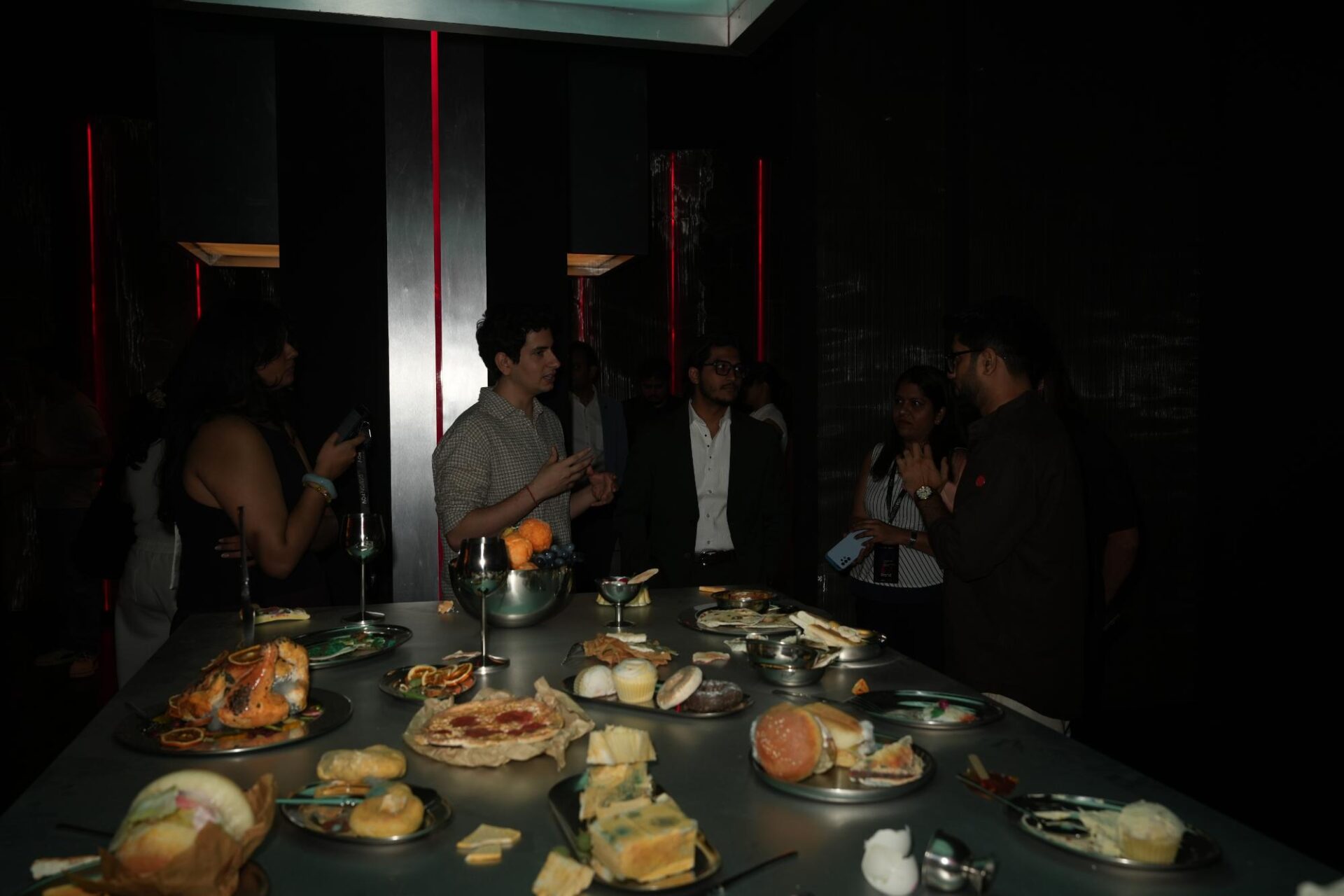
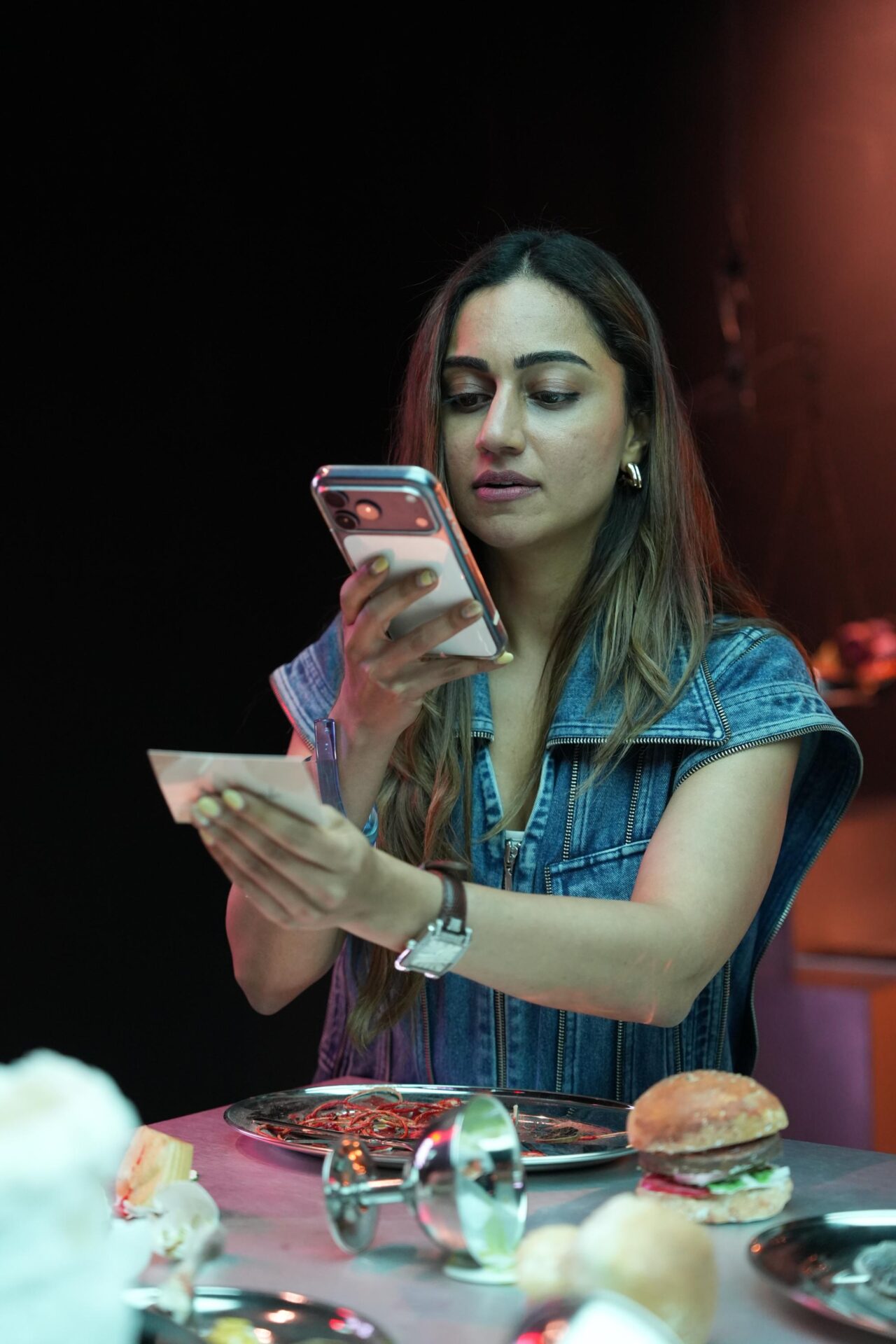
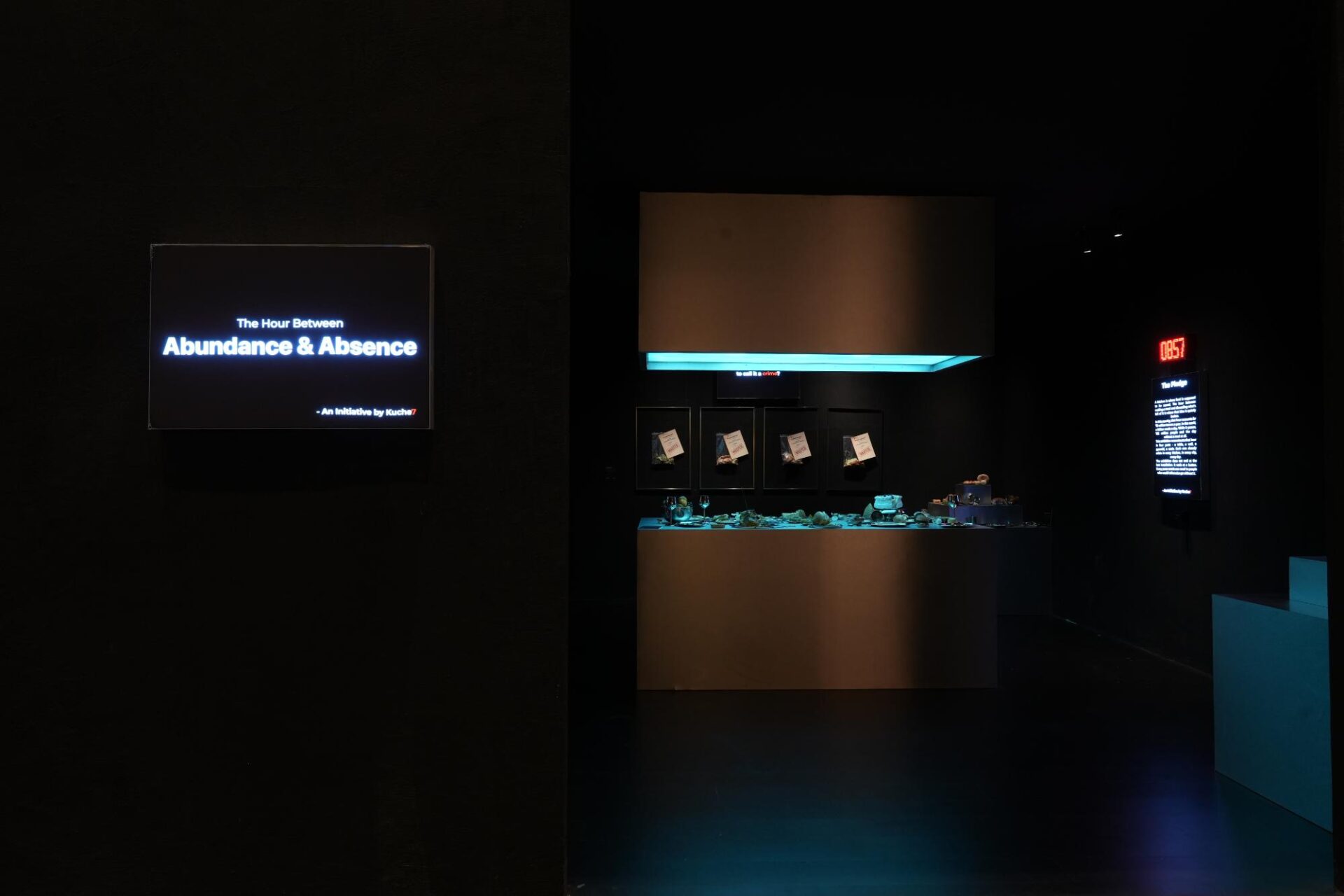
That approach informed each installation. The Tablescape presented an eight-by-four-foot stainless-steel banquet layered with steel tableware and hyper-real partially consumed everyday meals, biryani, dal, roti, mithai, street food and packaged goods captured in varying stages of decay.
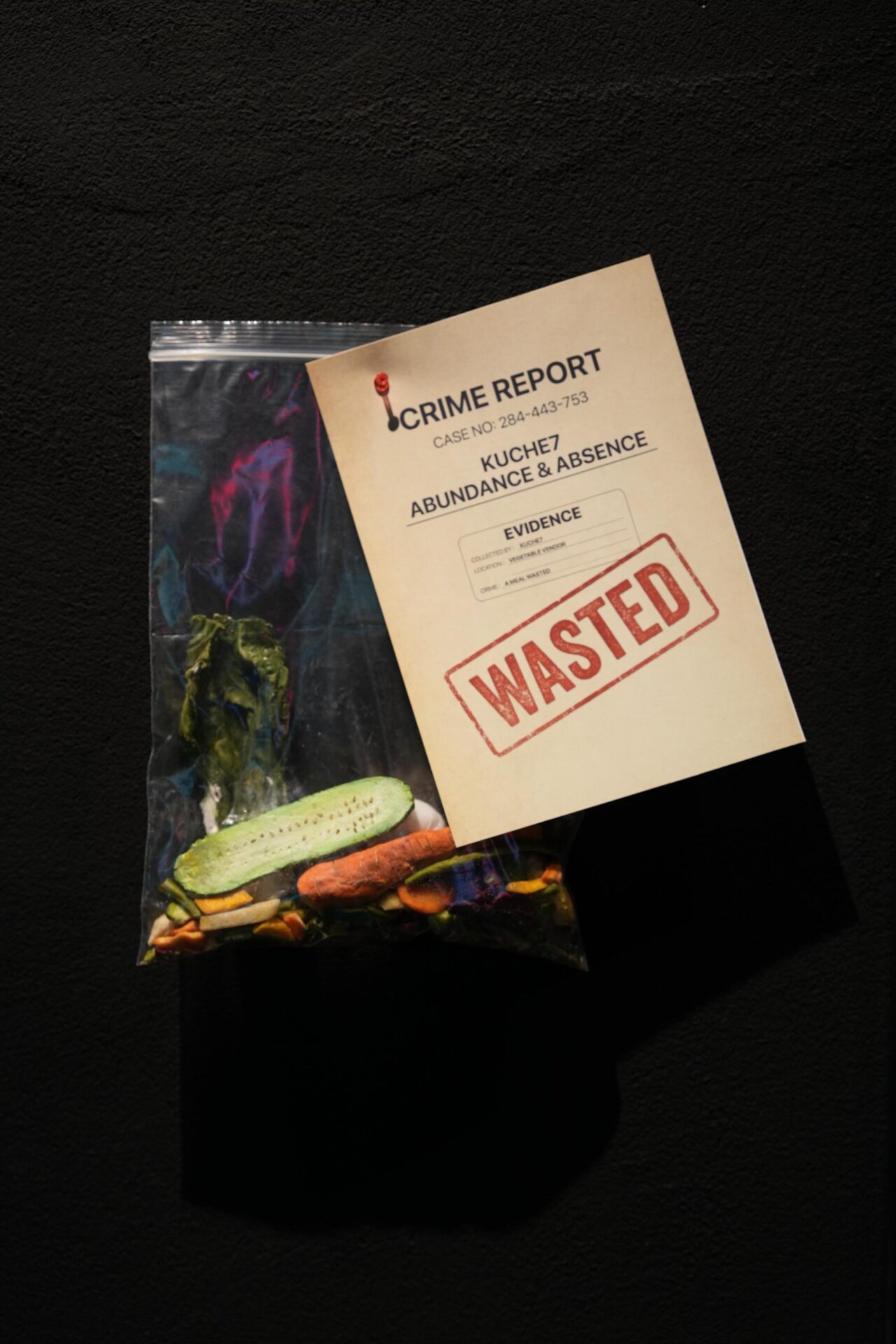 The Crime Wall documented food waste across homes, restaurants, street-food environments and large-scale consumption settings through forensic-style photography. Shot in direct flash and presented as evidence, complete with case numbers and supporting data, the images transformed everyday waste into a visual archive of excess.
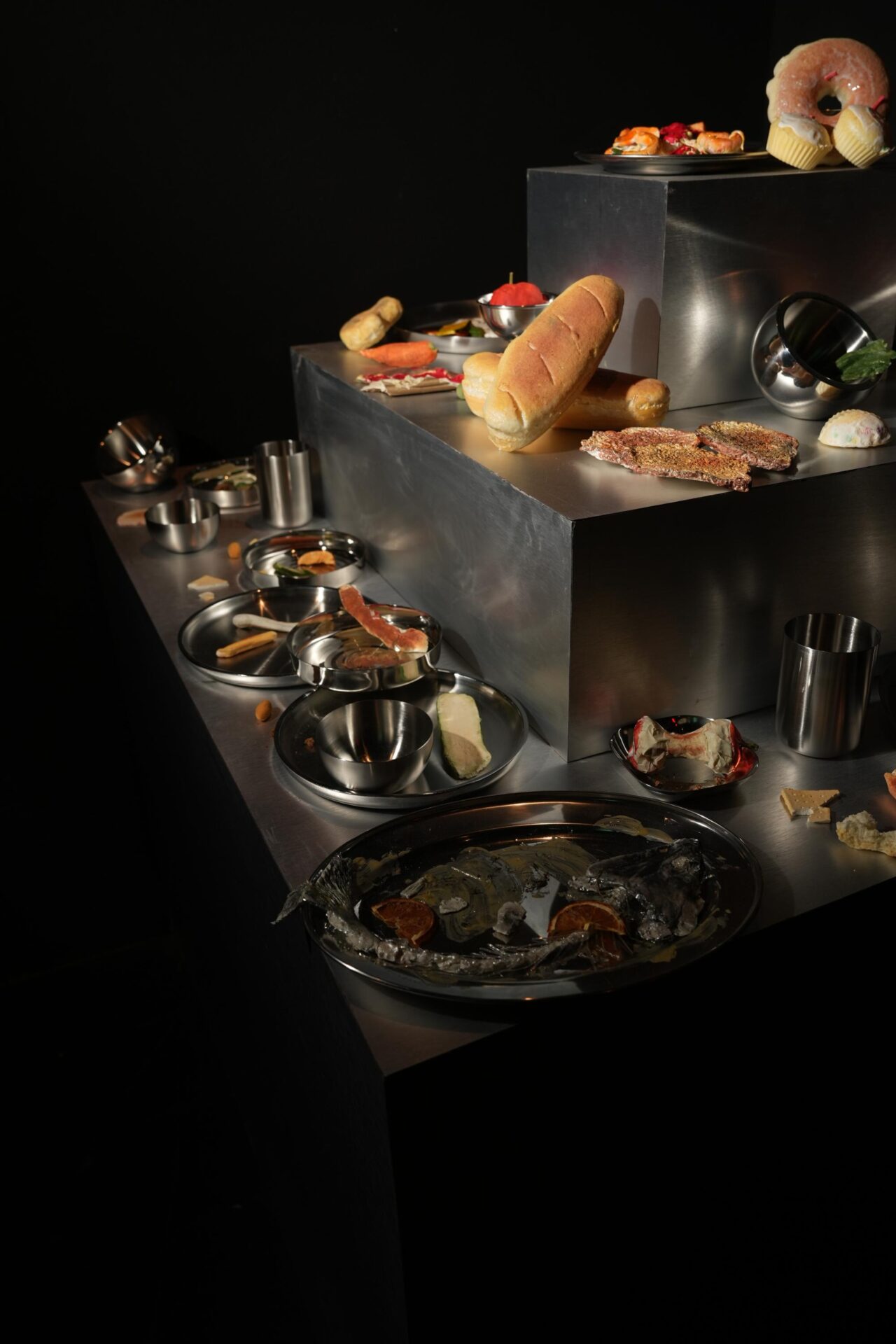
The Pyramid visualised a hierarchy of access, with abundance concentrated at the top and progressively diminishing resources descending towards a base marked only by crumbs and empty plates.
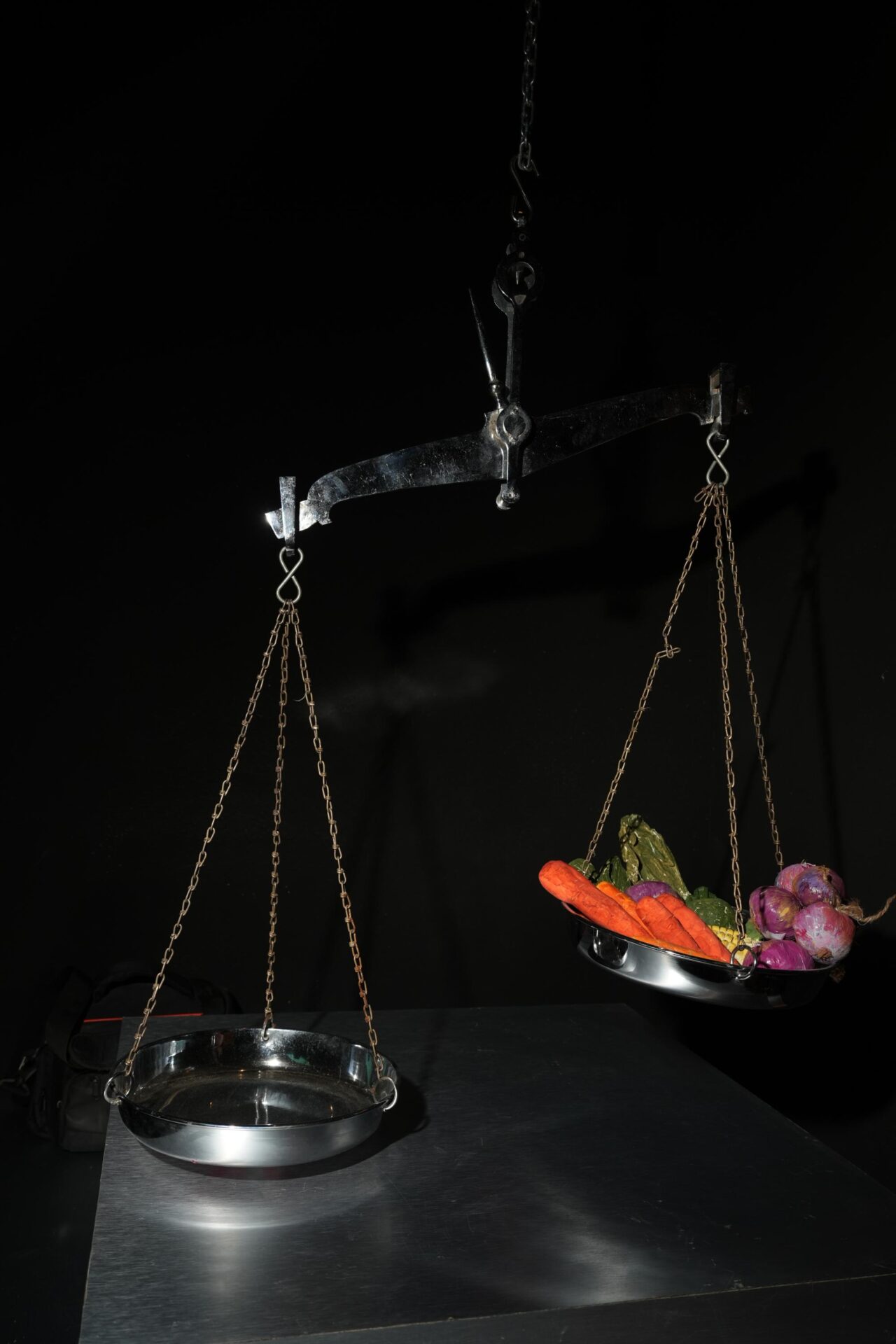 The Weighing Scale juxtaposed discarded fruits and vegetables against an empty counterweight, creating an immediate and unresolved visual imbalance between waste and need.
 SCALE: The hyper-real food sculptures became one of the exhibition’s most memorable elements. What did the Sampuru technique allow you to communicate?
Naeem: The Sampuru technique was fascinating because it allowed us to create permanence from something inherently temporary. Initially, it emerged from a practical challenge because using real food in space wasn’t feasible. But very quickly, it became much more than a solution, as real food decays and disappears, but these sculptures don’t. And that contrast became symbolic in itself.
Created in collaboration with food artist and sculptor Bonani Hazarika of The Jolly Belly, the hyper-real sculptures adapted the traditional Japanese Sampuru technique to recreate unfinished meals, leftovers and discarded food objects, further blurring the line between realism, artifice and consumption.
 SCALE: Design POV’s theme this year was Sense and Sensibility. How did that framework shape the exhibition?
Naeem: The theme aligned naturally with what we wanted to explore. The “sense” came through research, data, facts and evidence. The “sensibility” came through emotion, empathy and personal reflection.
If I had to choose one thing visitors remember, it would be the reflection it triggered. The aesthetics help people enter the conversation, and the discomfort helps them engage with it, but reflection is what stays with them after they leave.
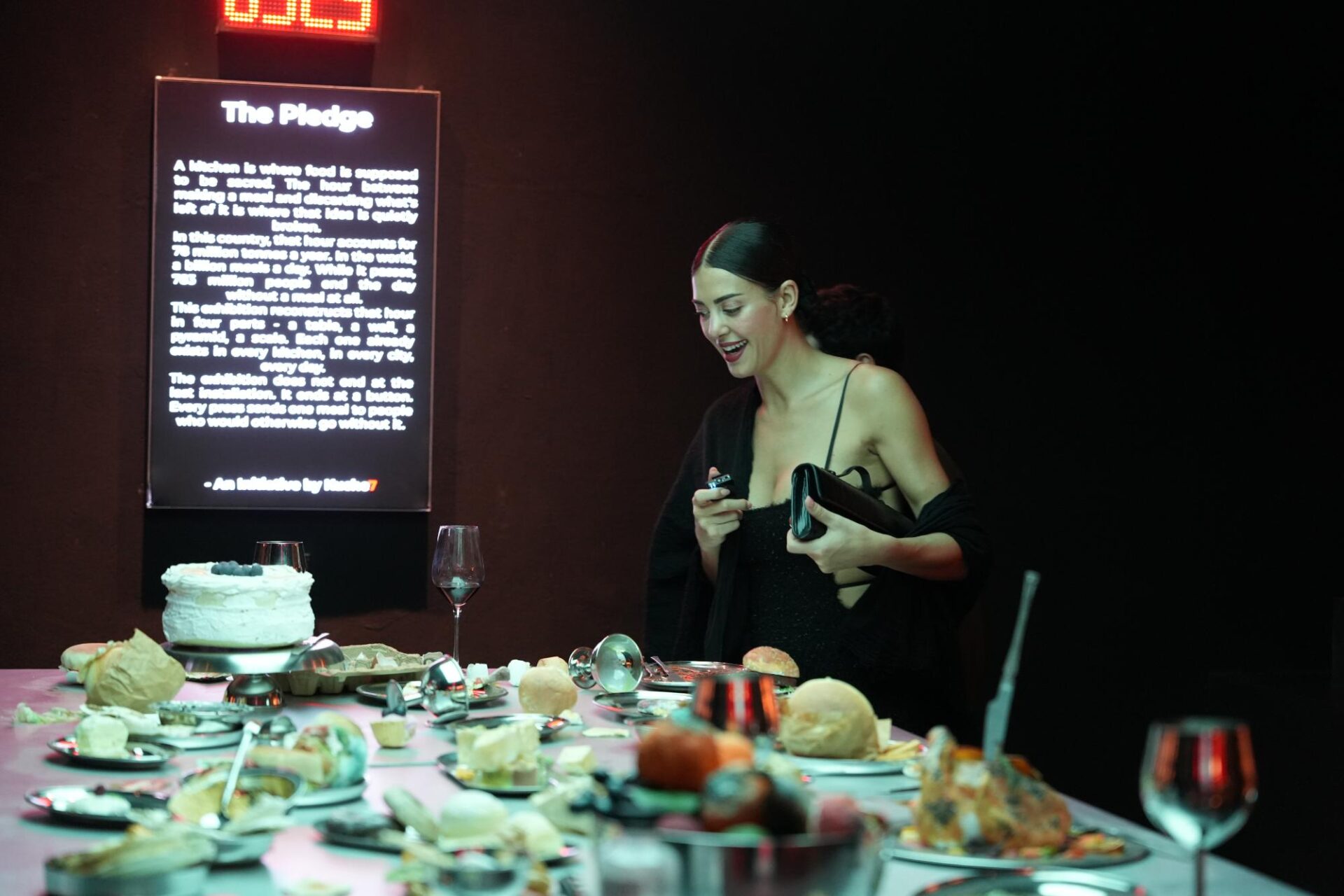
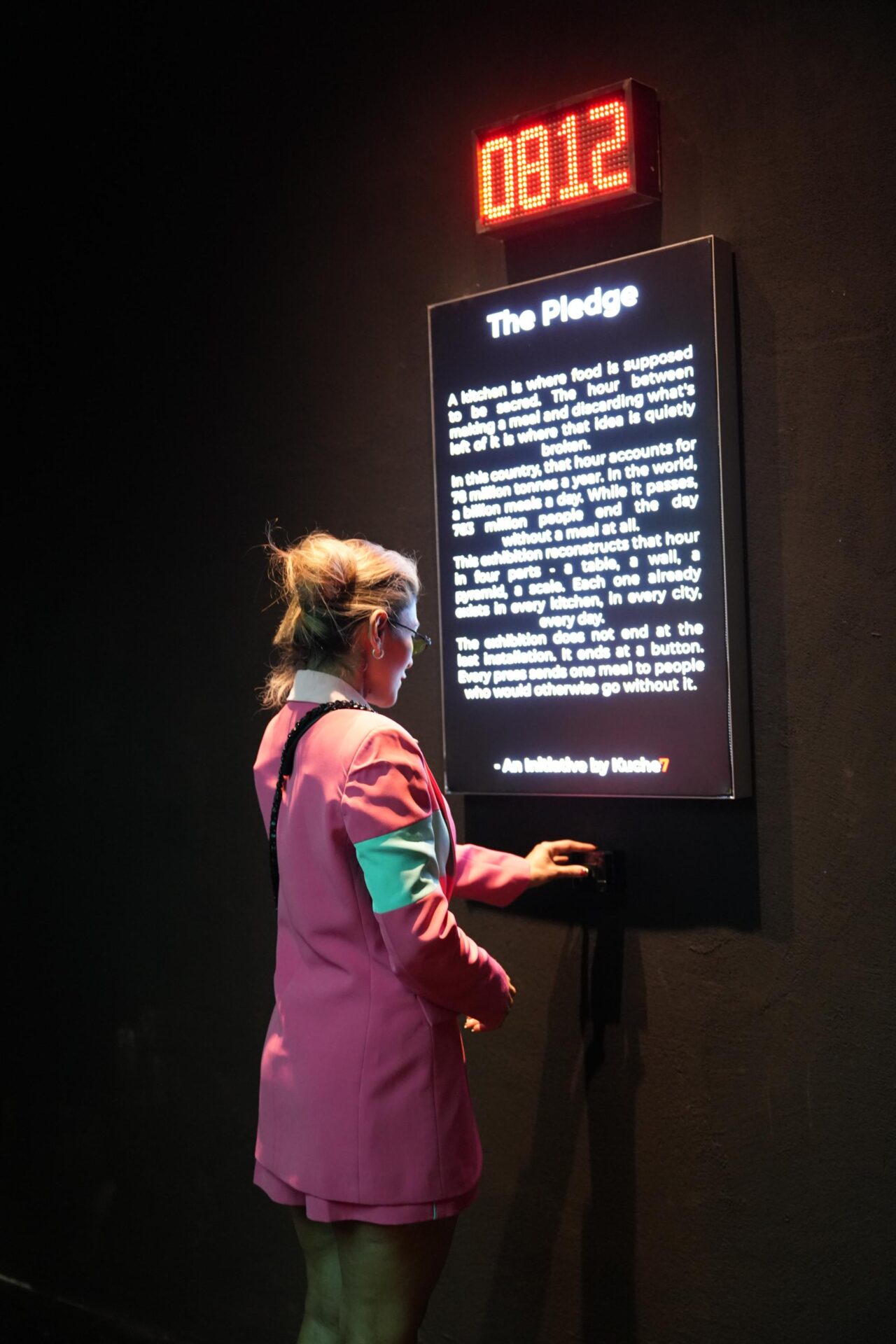 SCALE: The pledge wall transformed visitors from spectators into participants. How important was it that the exhibition created action rather than simply awareness?
Naeem: It was extremely important, as awareness alone doesn’t create change. We wanted visitors to feel that they could contribute, even through a small action. The pledge wall transformed the exhibition from something passive into something participatory.
Developed in partnership with the Robin Hood Army, the interactive pledge wall translated reflection into measurable action. Every visitor interaction triggered the donation of five meals. Over the course of the exhibition, 1,253 visitors participated, resulting in 6,265 meals committed towards distribution. A live counter remained visible throughout the showcase, reinforcing the relationship between individual participation and collective impact.
 SCALE: Beyond the exhibition itself, do you see “Abundance and Absence” as a one-time intervention or the beginning of a longer cultural shift?
Naeem: I sincerely hope it’s the beginning of something larger. The design community has tremendous influence over how people live, consume and interact with their environments. We have an opportunity to move conversations beyond aesthetics and engage with issues that affect society in meaningful ways.
For Kuche7, this exhibition has given us confidence to let our values live beyond our products and showrooms. “Abundance and Absence” may have started as an exhibition, but the questions it raises are ongoing. If it encourages more designers, brands and institutions to use design as a platform for meaningful dialogue and action, then its impact will extend far beyond these three days. That ambition is already continuing beyond the installation itself. Sumessh Menon has brought together a community of architects and designers committed to sustaining the effort through recurring monthly meal-distribution initiatives, ensuring that the conversation extends beyond the exhibition and into long-term collective action.