A Shipping Container Restaurant in Tuticorin by WALLMAKERS
Petti Restaurant in Tuticorin rethinks the use of the shipping container. Instead of treating it as a quick fix, WALLMAKERS works around its thermal limitations with layered construction and orientation, pairing steel with poured earth to make it viable. By Arya Nair
 Petti Restaurant is built from a material that is already overused in architecture but rarely addressed. Shipping containers are frequently used as a quick solution; however, in tropical climates, they often require substantial air conditioning to remain usable. This project by WALLMAKERS takes a different position. The design addresses its thermal and spatial limitations by employing additional layers and reorientation to make the material work. What gives the project weight is not the material itself, but the way its constraints are confronted, especially in the coupling of steel with poured earth.
 In Tuticorin, a port city on the southeastern edge of India, trade is not an abstract system. It is a physical condition. For over two millennia, goods have moved through this coastline, leaving behind not just economic networks but material residue. Among the most visible of these are shipping containers, standardised, stackable, and increasingly abandoned.
 It is within this context that Petti Restaurant, designed by WALLMAKERS and led by Vinu Daniel, along with his wife Oshin Mariam Varughese, takes shape. As principal architect Vinu Daniel explains, the project begins with a question of performance as much as material. Shipping containers, now widely adopted in contemporary architecture, carry a fundamental flaw in tropical climates. Steel, with its high thermal conductivity, absorbs and traps heat, often making air conditioning unavoidable.
“There is more trapped heat inside containers,” he notes, “which leads to this terrible substitution of air conditioning, which becomes mandatory.”
“Petti emerges as a response to this condition. By combining shipping containers with poured earth, the project attempts to recalibrate the thermal behaviour of steel, using earth as a moderating layer that reduces heat gain and improves internal comfort. What results is not just a material experiment, but a spatial one,” he says.
An Archaeology of the Present
 Tuticorin’s identity as a port stretches back over 2000 years, but Petti does not romanticise this history. Instead, it engages with its most contemporary layer, the surplus of logistics infrastructure that trade leaves behind.
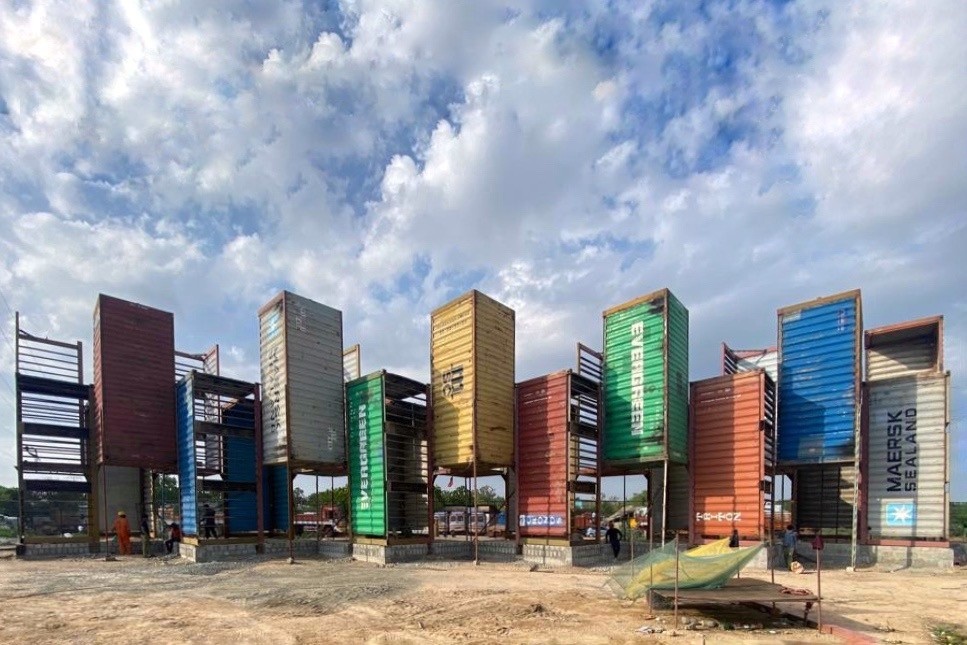
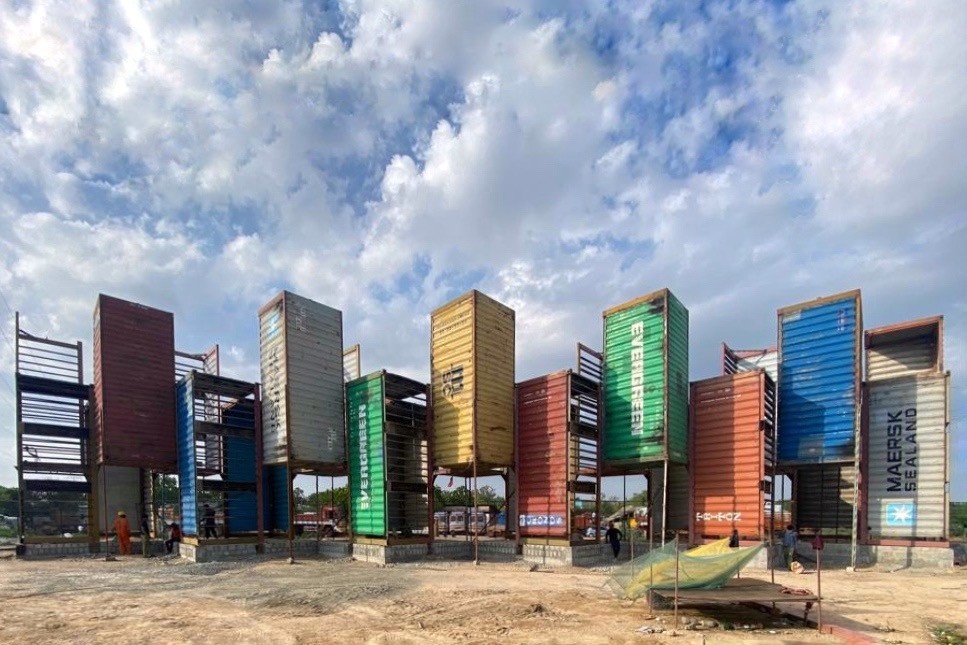
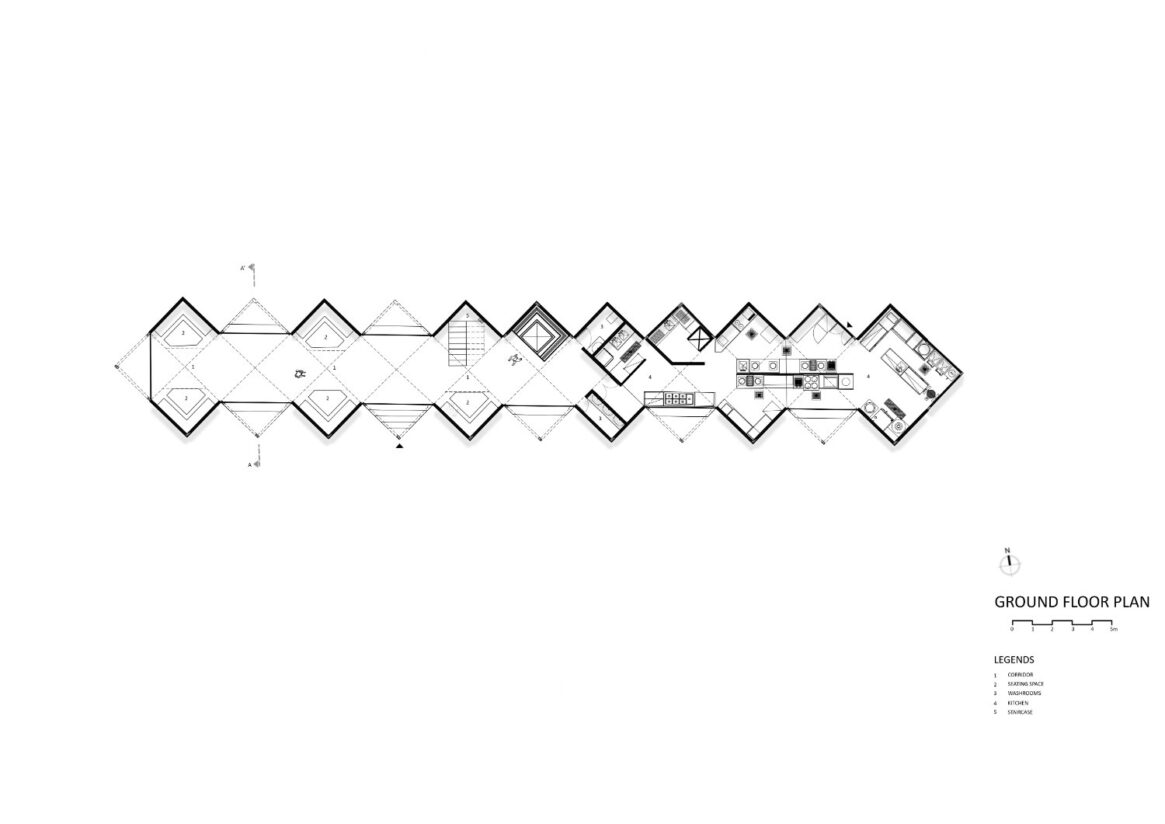
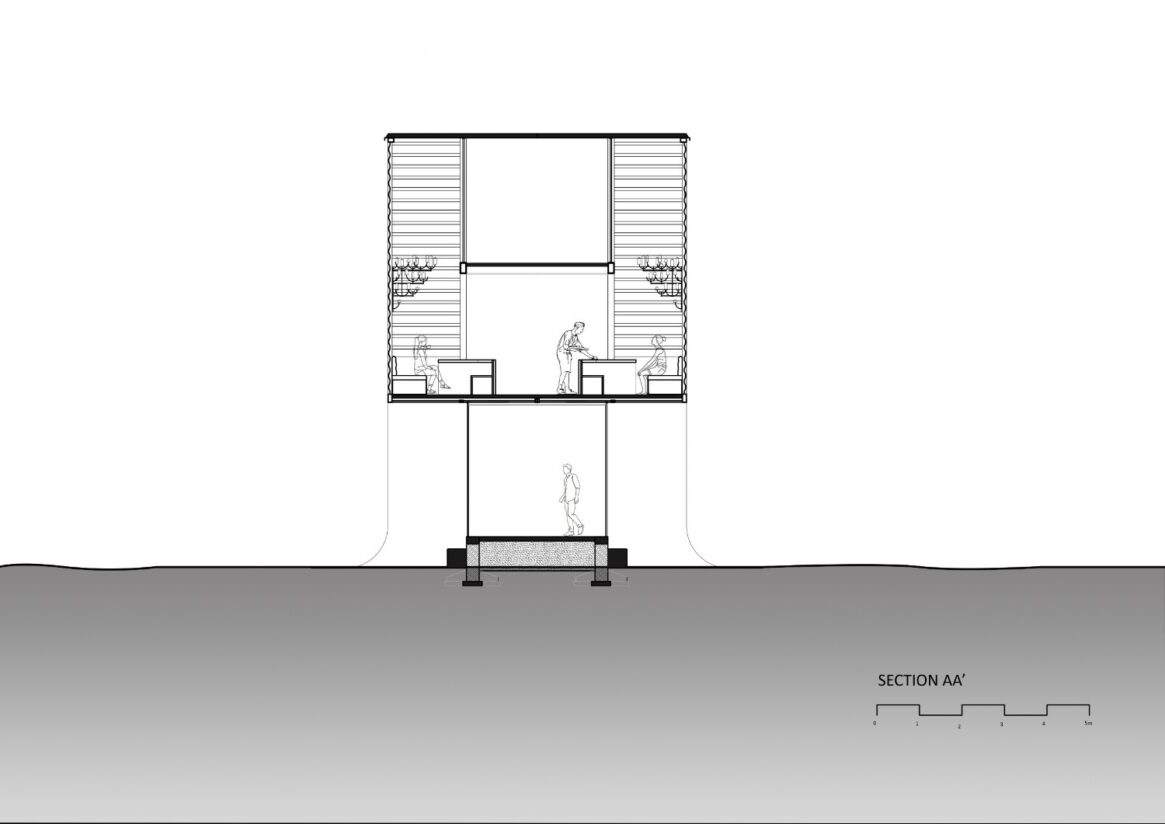
The containers are treated as building components rather than waste. By stacking 12 of them vertically, rather than in their typical horizontal orientation, WALLMAKERS reprogrammes their logic. This allows the project to move beyond the standard 2.4-meter internal height of containers, resulting in taller and more usable interior spaces within a narrow and linear site.
 This decision is primarily practical. Conventional container architecture often accepts dimensional limitations as fixed. By reorienting the containers, the project improves spatial quality without modifying the module itself, according to Vinu Daniel.
Installed within a week using cranes and welded into a unified frame, the containers retain their identity even as they become something else. They are no longer cargo, but they are not fully detached from it either.
From Cargo to Consumption
 There is an inherent irony in the programme, a restaurant, an architecture of consumption, constructed from the very vessels that once enabled consumption on a global scale.
This shift, from cargo to cuisine, is not incidental. It transforms the act of dining into a spatial narrative. Guests occupy niches carved into the container grid, seated within a structure that once transported commodities but now hosts their consumption.
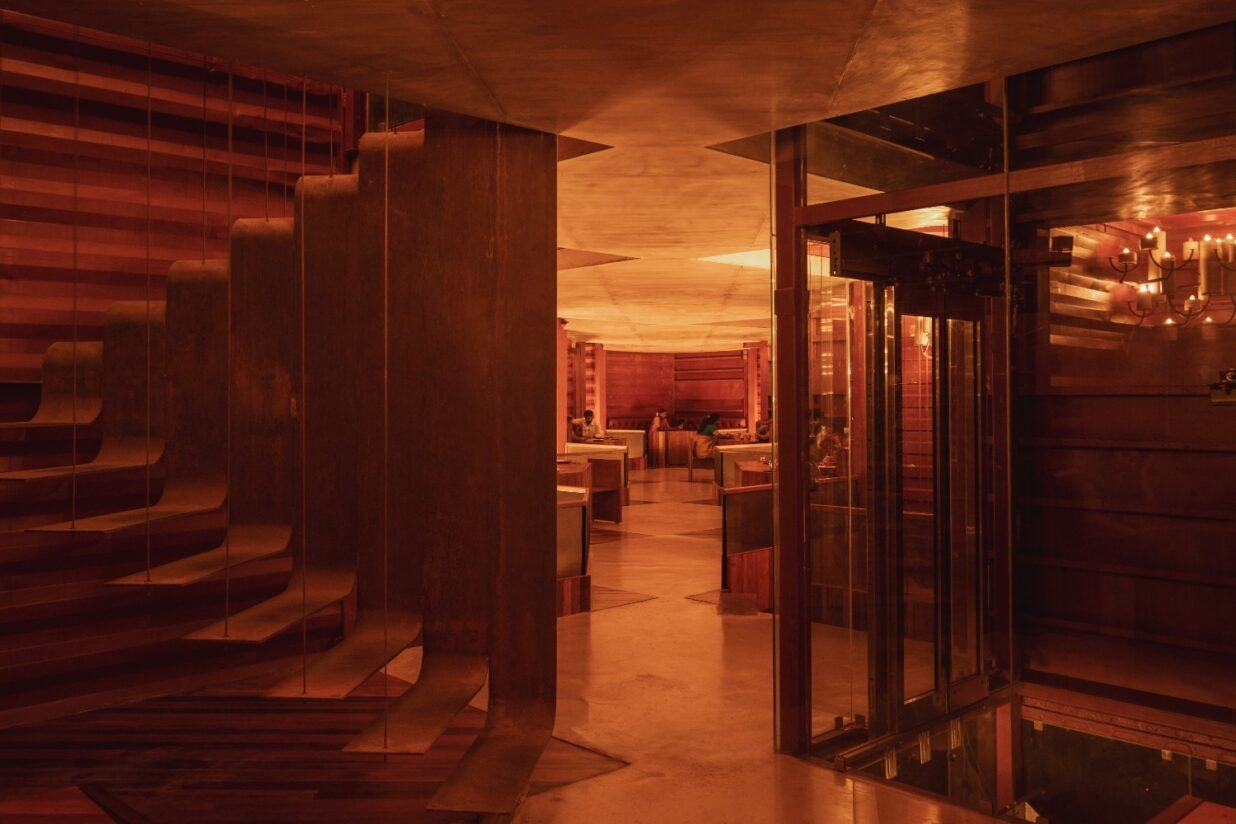
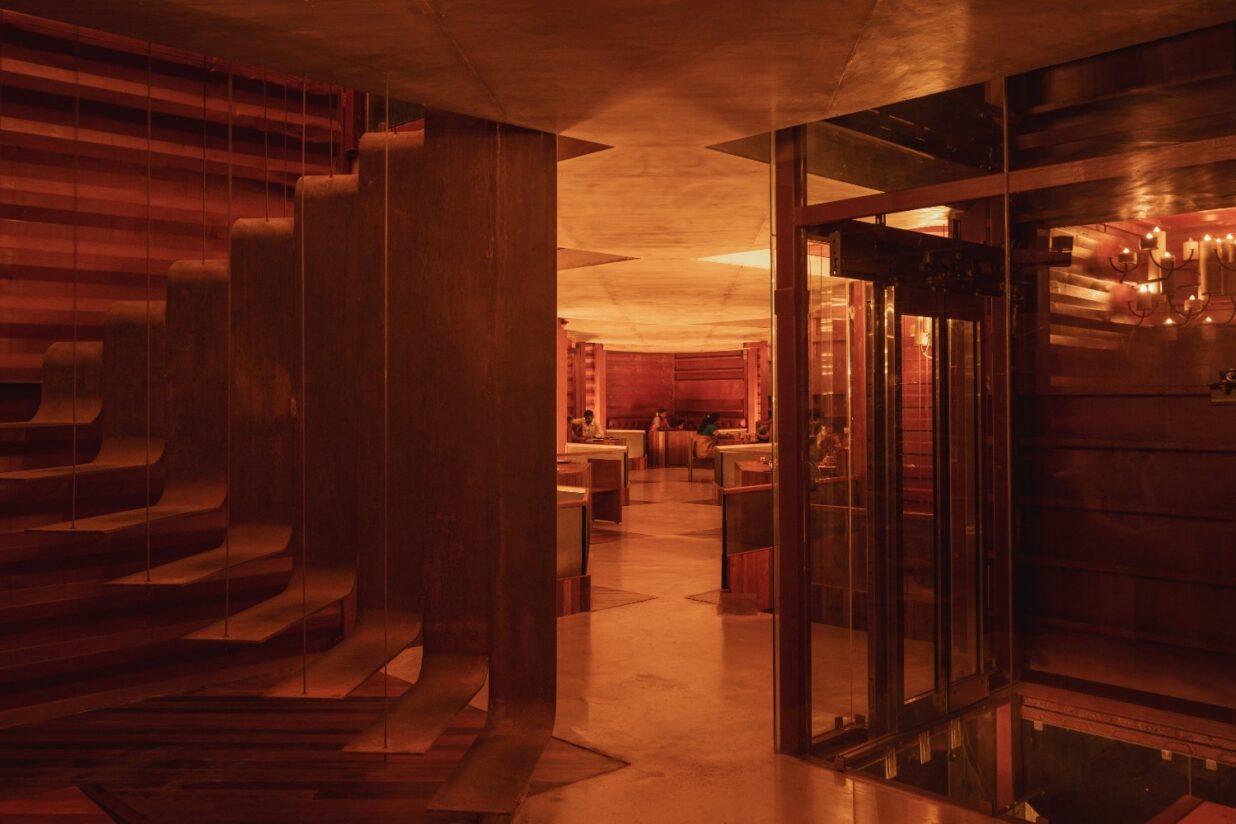 Despite the narrow, linear plot, the interior resists uniformity. Instead of a singular dining hall, the plan fragments into smaller pockets, intimate, almost private enclosures that soften the industrial rigidity of the container framework. Skylights puncture the structure, bringing in daylight, while custom chandeliers assembled from discarded wax and pipes animate the space at night.
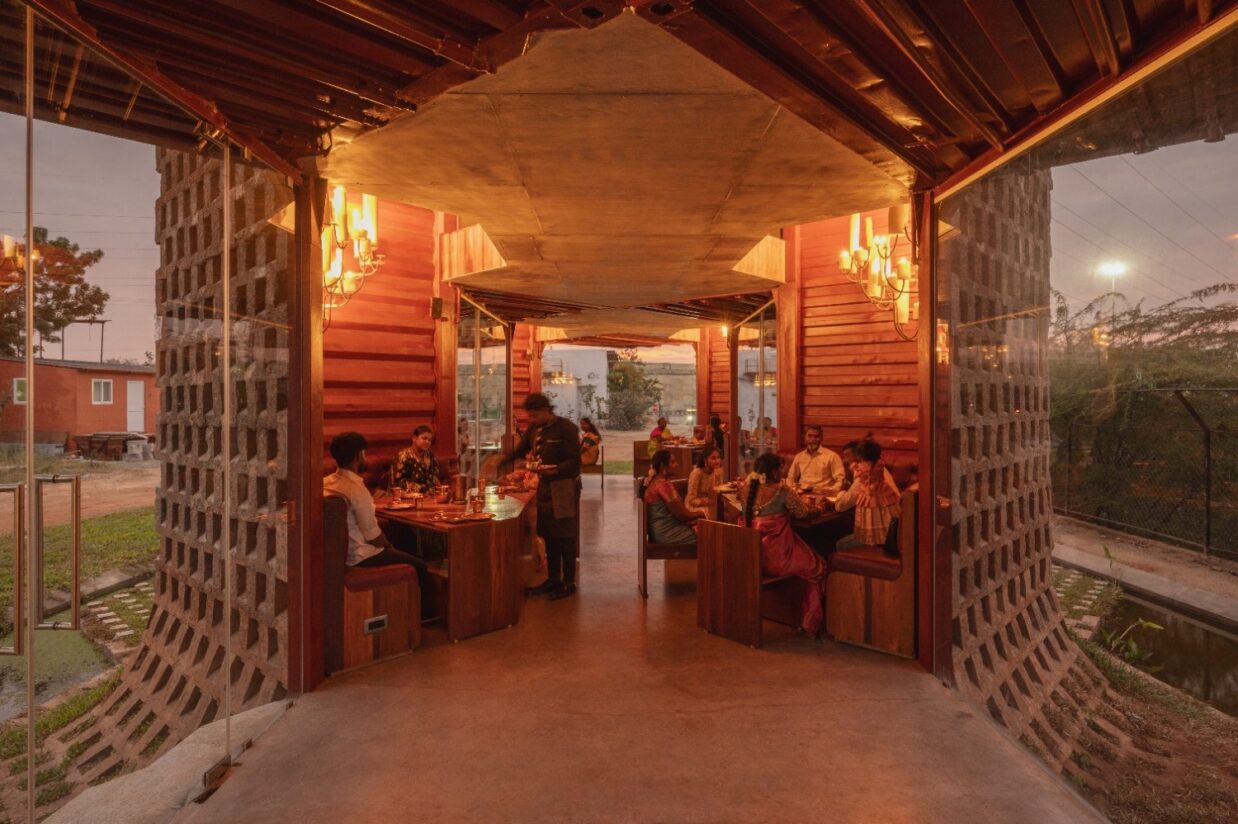 The material palette remains deliberately unresolved. Steel is left exposed. Deck wood is reused for flooring. Oxide surfaces carry a tactile roughness. The project does not attempt to erase its origins. It stages them.
Mud vs Steel Is a False Binary
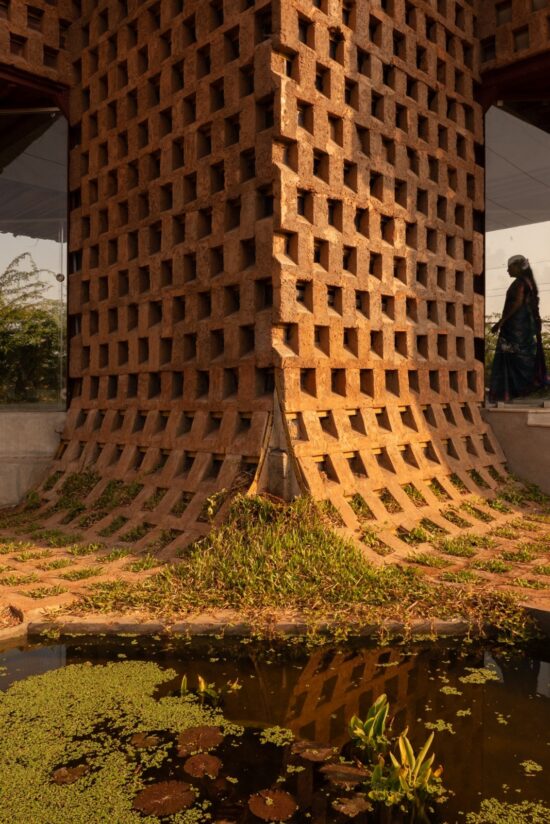
 If the container represents an industrial styled concstruction, the addition of mud might appear, at first glance, as its ideological opposite. But Petti resists this simplistic reading.
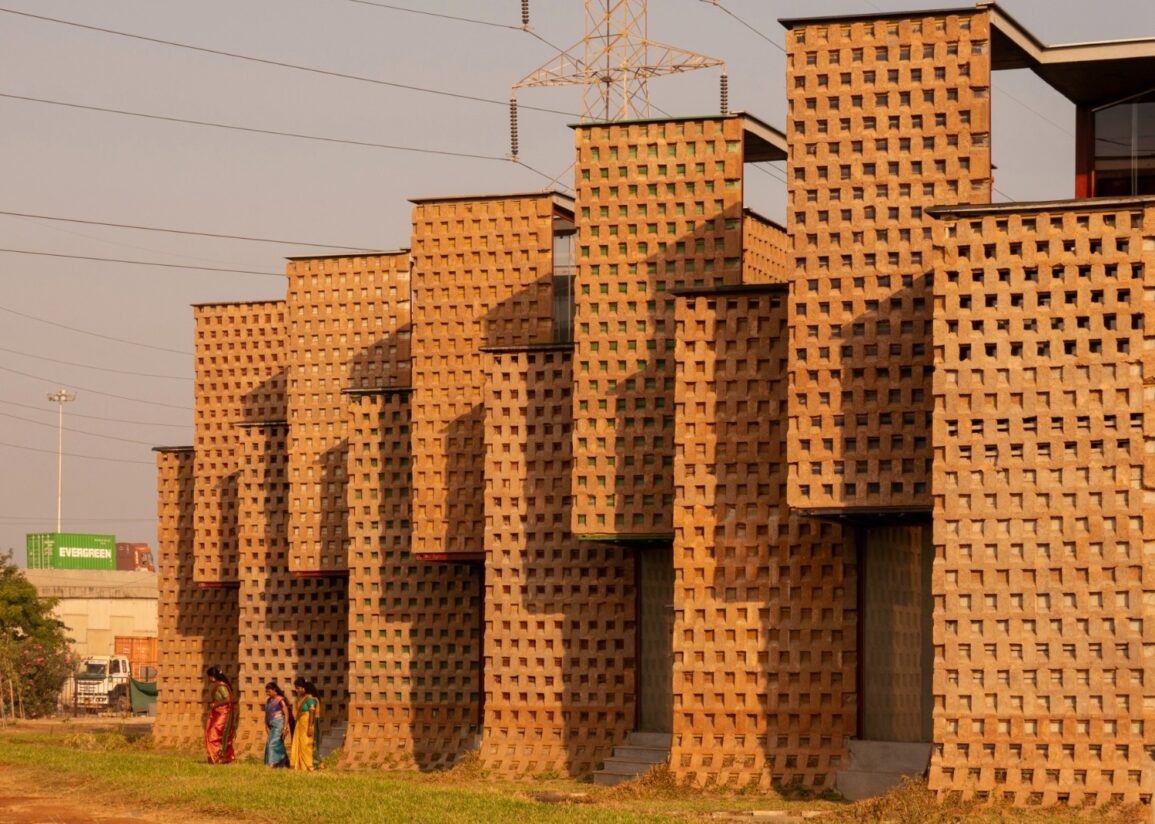
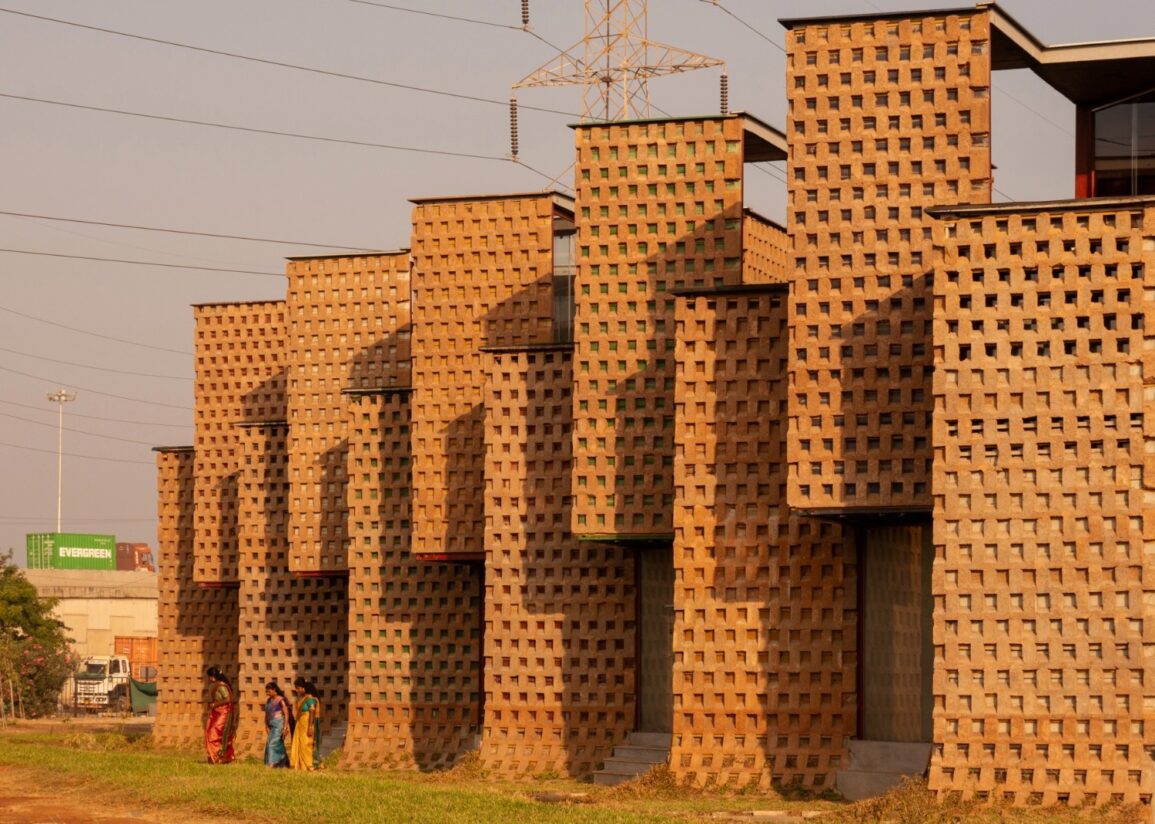
A layer of poured earth envelopes the external surface of the containers, acting as thermal insulation in Tuticorin’s hot climate. The façade is not applied uniformly. It is recessed in alternating patterns, increasing surface depth and improving thermal performance.
“This strategy reduces dependence on air conditioning by approximately 38%, shifting comfort from mechanical systems to material intelligence,” explain the architects.
Here, mud is not nostalgic, nor is steel antagonistic. Both are instrumental. The project refuses to moralise materials, instead asking what each can do within a specific climatic and urban context.
Building Within Constraint
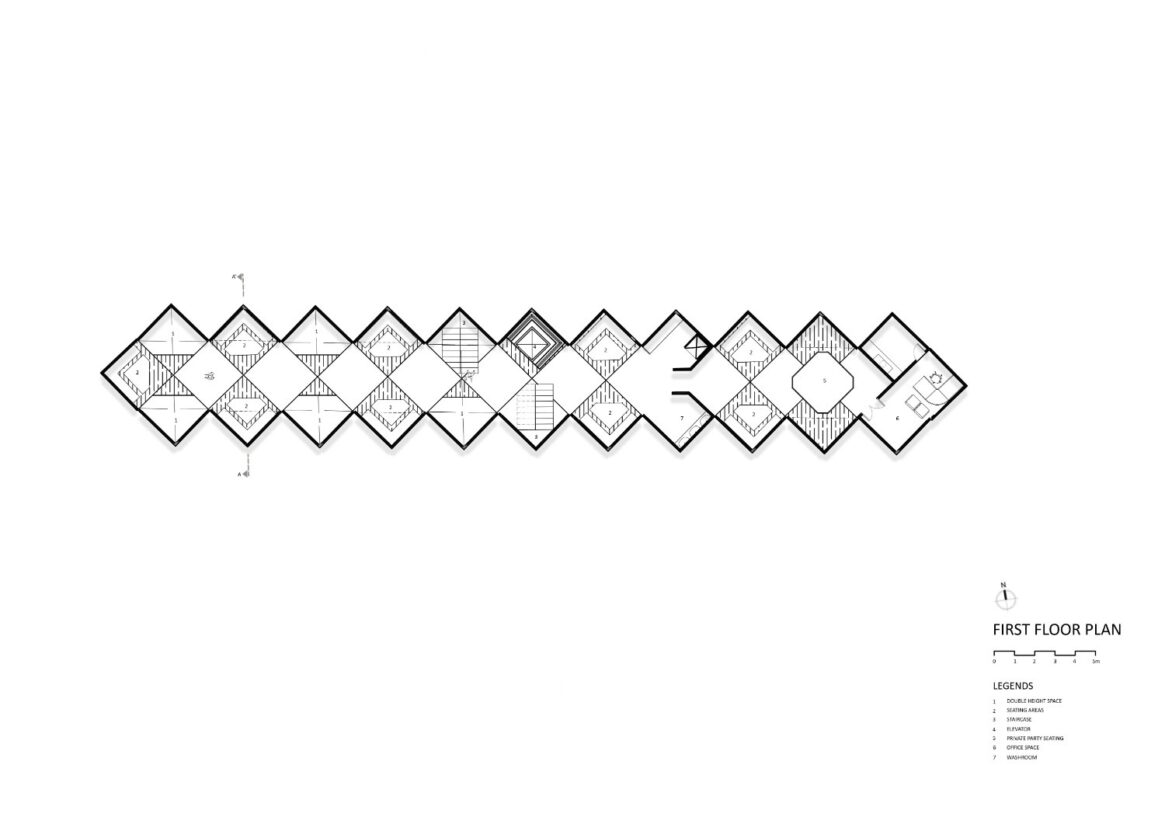
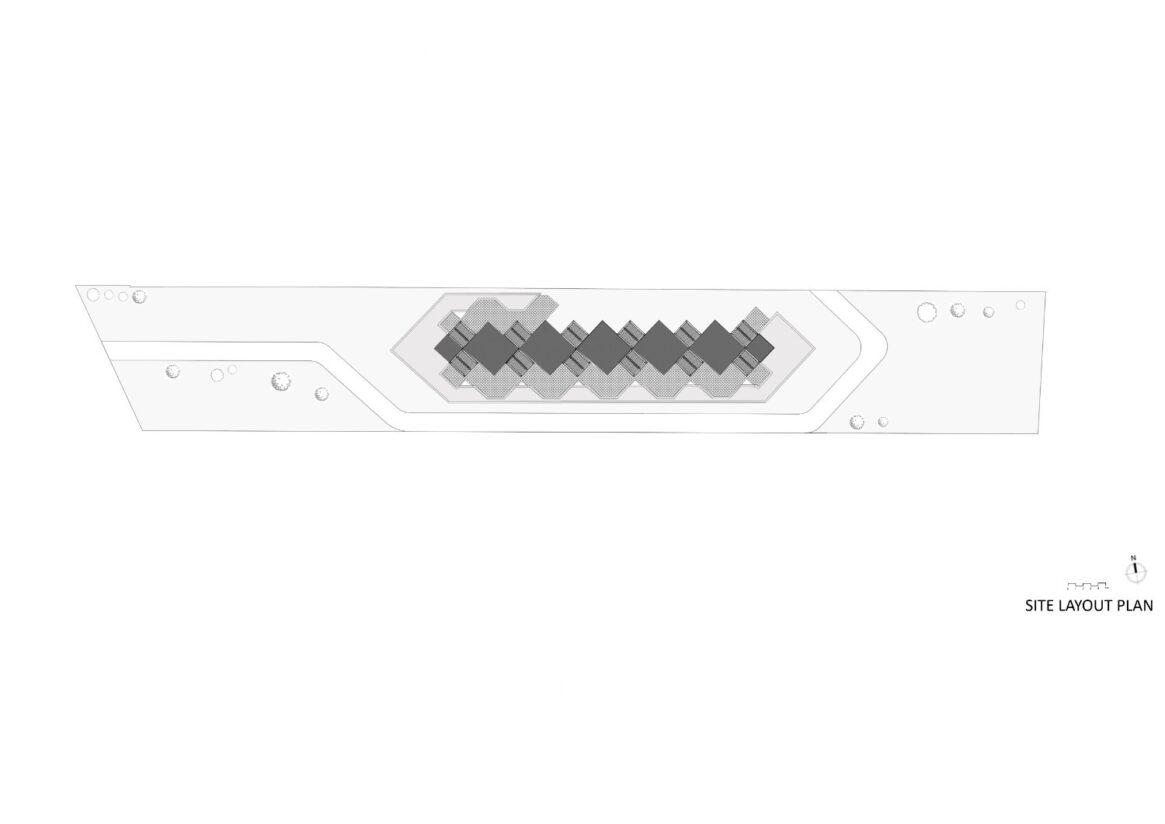
 The site itself imposes a discipline, a narrow, linear plot that could easily have resulted in a monotonous plan. Instead, the project leverages modularity to introduce variation.
Every alternate container is staggered, creating voids that facilitate cross ventilation. The south-facing first floor is intentionally left without wall openings, allowing the shifted volumes to act as conduits for air movement. In a climate where heat is constant, these decisions are not aesthetic. They are performative.
The architecture operates somewhere between precision and improvisation. Containers provide a rigid grid. Their arrangement introduces flexibility. RCC slabs stitch the modules together, but the overall composition retains a sense of assembly rather than completion.
Adaptive reuse projects often neutralise the existing, smoothing out irregularities to produce a consistent finish. In contrast, this project retains the physical traces of the containers. Dents, joints, and surface variations remain legible, making the prior life of the material evident rather than concealed.
Conclusion: On Material Logic and Adaptation
 Petti Restaurant by WALLMAKERS is not just about using shipping containers in a new way. What matters more is how the project deals with its problems, especially heat in a tropical climate. By adding poured earth, the design improves comfort and reduces the need for heavy air conditioning. This makes the idea of reuse more practical, not just visual.
The building does not attempt to resolve the tension between industrial and vernacular materials. Instead, it operates within that tension, allowing each system to compensate for the other. This approach avoids both the fetish of waste and the romanticisation of traditional materials, positioning the project somewhere between pragmatism and speculation. Within the broader discourse on adaptive reuse in India, Petti suggests a direction that is neither purely technological nor purely nostalgic. It shows that reusing materials can be more than just a symbolic “green” idea. When it responds to climate and site conditions, it can actually improve how the building performs in real, measurable ways.
In this sense, the project by WALLMAKERS is not a prototype to be replicated indiscriminately, but a case that underscores the importance of context and place in architecture.
DETAILED PLAN & SECTIONS
All Images and working drawings Courtesy WALLMAKERS.