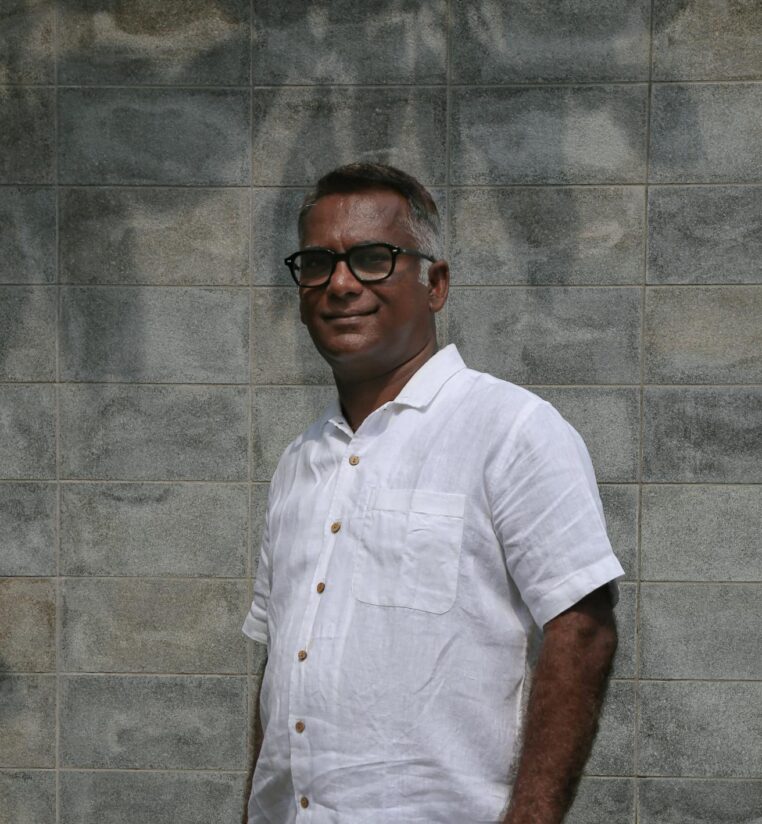
Roy Antony: The Discipline of Architecture Appropriate
Roy Antony offers an honest, no-holds-barred reflection on his practice, process, and the broader role of the architect beyond style. By Arya Nair
Roy Antony’s journey into architecture was not marked by instant recognition or a clear trajectory. Instead, it evolved from small beginnings, periods of uncertainty, and decisive turning points that shaped his thinking. Today, his work is closely associated with what he calls “architecture appropriate”, a position that resists stylistic fixation and instead responds carefully to context, client, and circumstance. In this conversation with SCALE, Roy Antony reflects on early struggles, formative influences, and why the architect must ultimately act as a facilitator rather than a stylist.
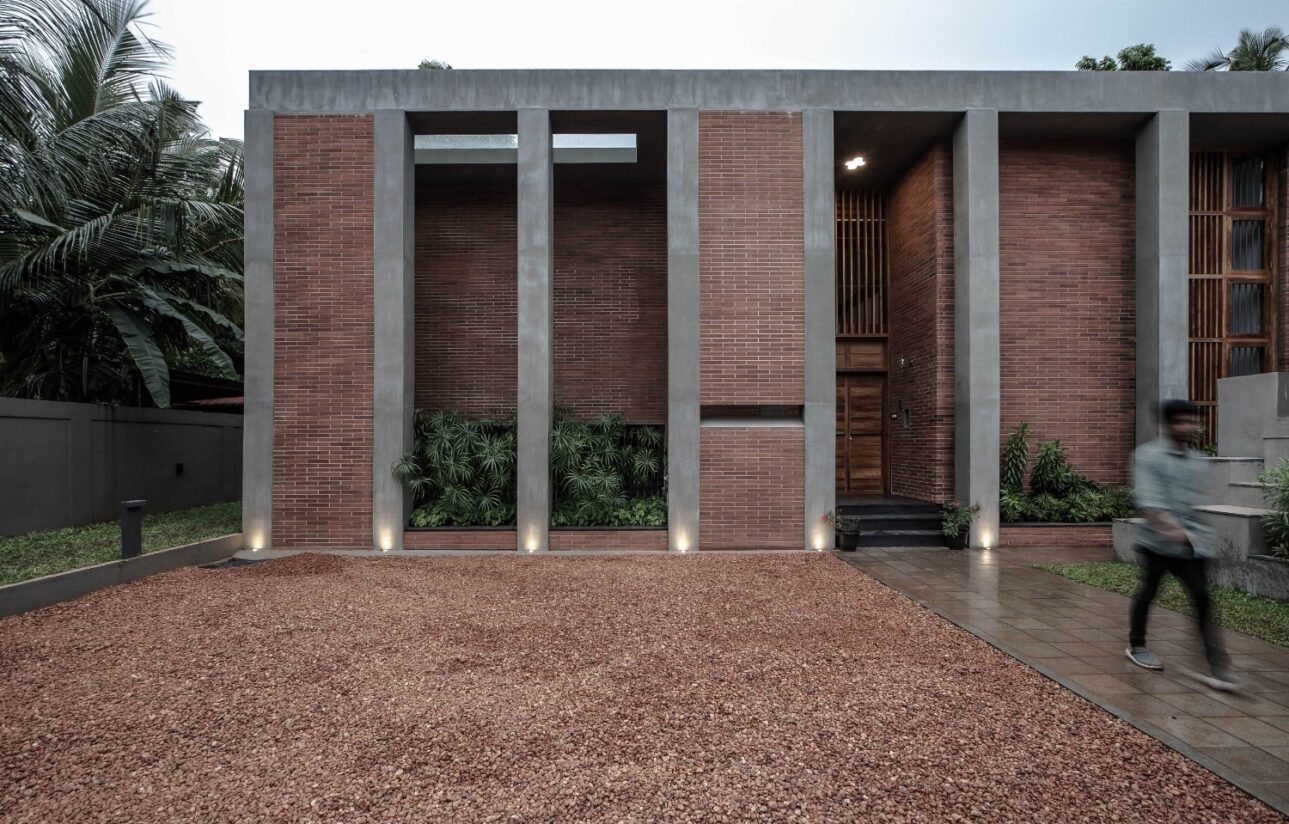
Alankar Residence.
SCALE: Can we begin with your background and early journey into practice?
Roy Antony: I graduated from Trivandrum Engineering College in 1991. Like many young architects at that time, my entry into practice was gradual rather than clearly defined. I began with interior works, model making, and perspective drawings. These were small but formative engagements that helped me understand the craft from the ground up.
A turning point came when I received a commission for a mural at Malabar Palace Hotel in Kozhikode. Along with my friends Sreekumar P and Jacob Joseph, I worked on that project, which opened further opportunities. I later spent time working with Tony Joseph and A. K. Prashant during the phase when Tony and Prashanth were collaborating.
Seeking broader exposure, I moved to Bombay and worked briefly at Hafeez Contractor’s firm, and later to Malaysia. Like many Malayalis of that time, I too had the Gulf dream. When that did not materialise, I returned and started a modest practice in my hometown, Changanassery. In hindsight, those uncertain beginnings shaped my resilience and adaptability as an architect.
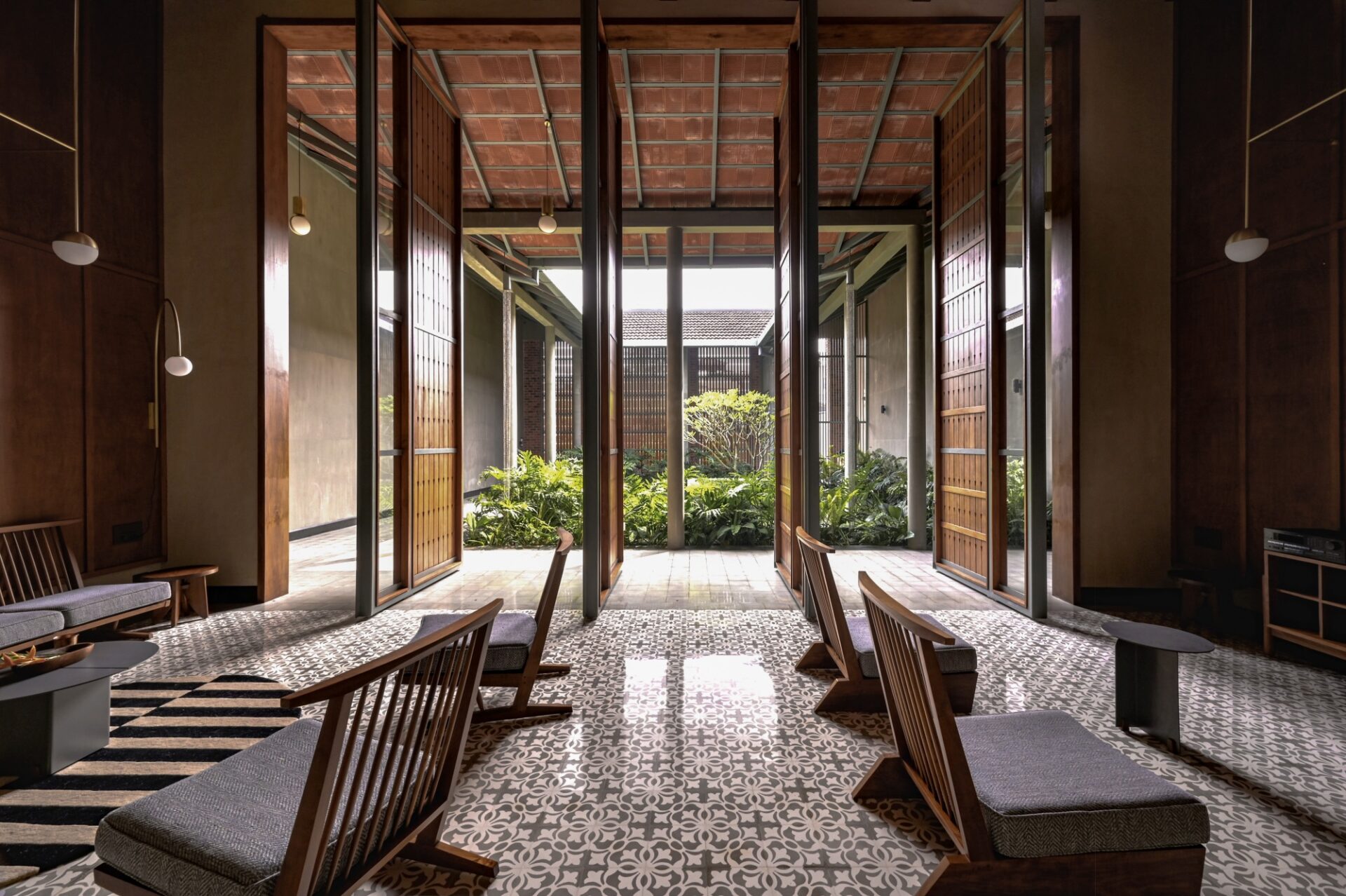
EPJ Residence.
SCALE: Your office was initially called Guild Rationale. How did that come about?
Roy Antony: The name Guild Rationale had stayed in my mind for a long time. During college, I was deeply influenced by Aldo Rossi and the Italian rationalist movement. Rossi was my favourite architect. I was so inspired that I even wrote to the Italian embassy, hoping for a chance to work with him.
However, practice taught me an important lesson. Architecture must respond appropriately to its context, not only in buildings but also in how we position ourselves professionally. Setting up a small firm in a small Kerala town and giving it an abstract name like Guild Rationale twenty-five years ago created a disconnect. People could neither pronounce it nor understand what the office did.
That mismatch between intent and context cost me work. There was even a point when I seriously considered closing down the practice. It was an early but powerful lesson in the importance of appropriateness.
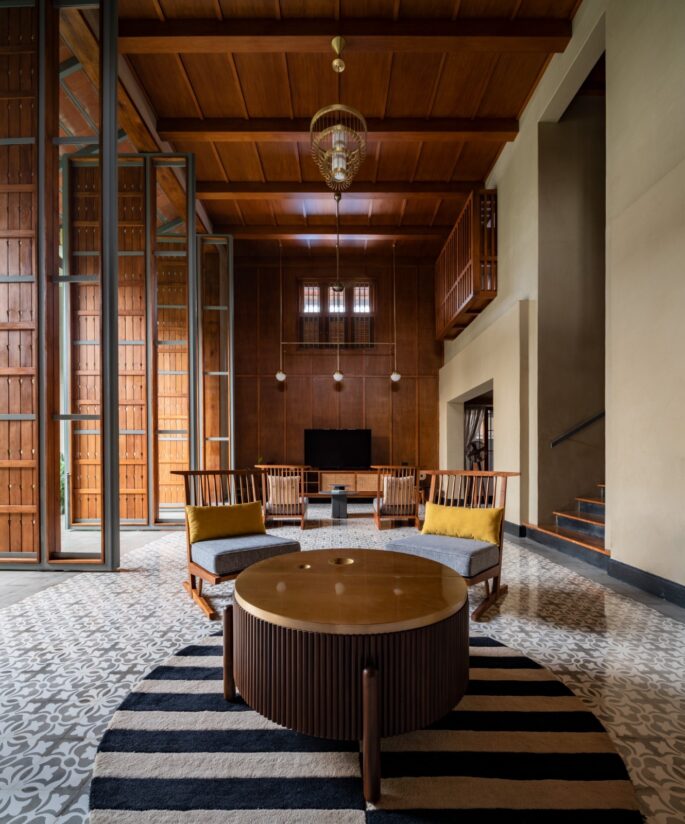
EPJ Residence.
SCALE: What changed that phase for you?
Roy Antony: At that critical moment, Jayachandran and Associates in Thiruvananthapuram invited me to work with them while continuing my own office. That opportunity became a decisive turning point in my career.
There, I worked closely with a senior, AK Jayachandran Sir. Although he was an engineer by profession, his understanding of architecture was remarkably deep. He even taught architecture students. Watching him seamlessly integrate engineering logic with architectural thinking was transformative for me.
Today, I feel many architects are limited because they lack a strong engineering grounding. Architecture sometimes drifts too far into pure art. My time in that office gave me the structural confidence to handle high-rise and large-scale projects. Without that exposure, I might have remained confined to small residential work.
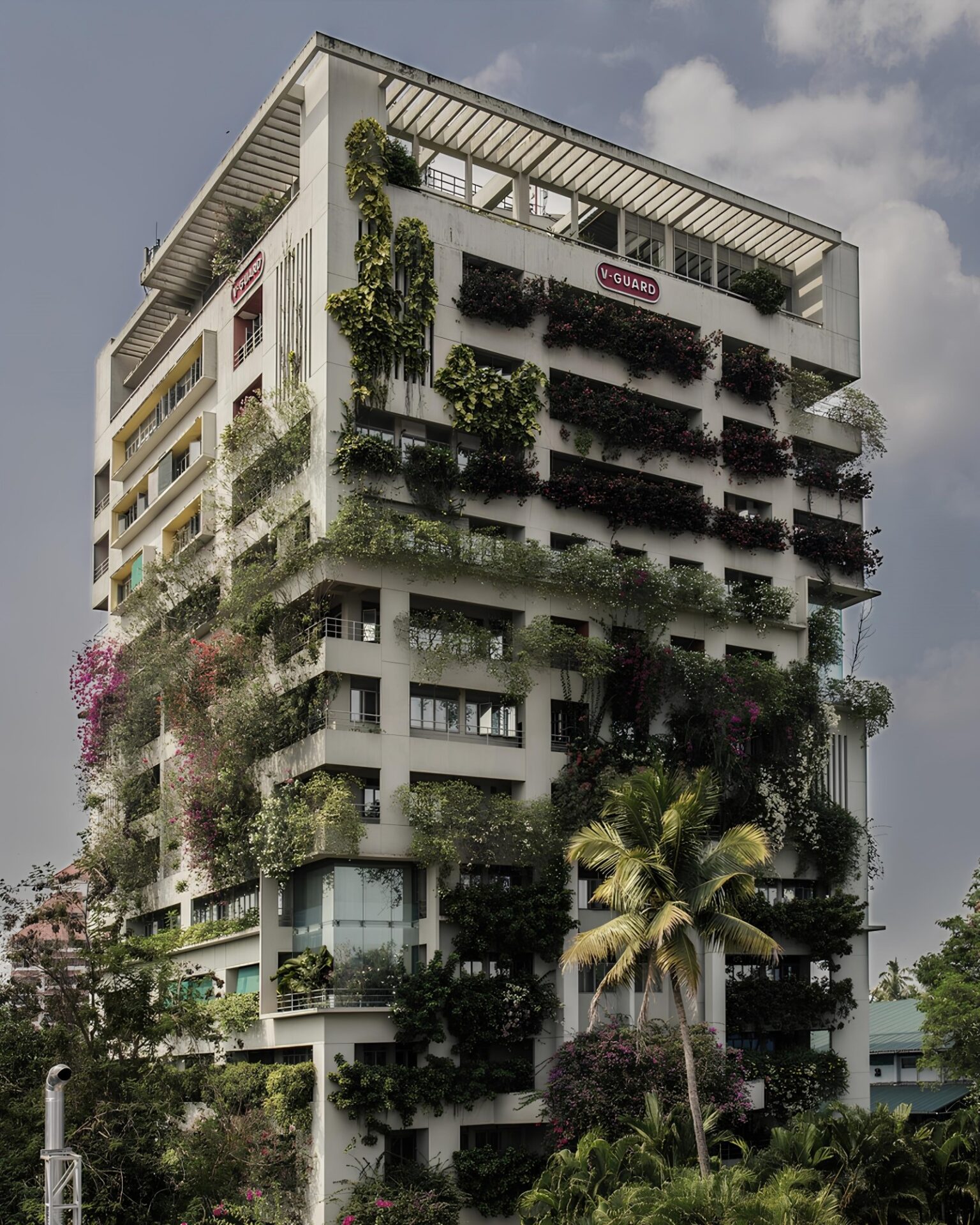
The V-Guard HQ.
SCALE: How did the Ernakulam phase begin?
Roy Antony: After that phase, I moved to Ernakulam. Around the same time, a residence I had designed received an award in Malayala Manorama. Interestingly, that recognition did not immediately translate into work. There was a prolonged period when I was practically unemployed, which was both humbling and uncertain.
Then, unexpectedly, someone who had seen that feature reached out to me for a project for V Guard. Even today, I sometimes wonder how that opportunity came my way. I was a single person working from a small space in my home with just one computer. The shift from that condition to handling a large corporate project was sudden and transformative.
Before this, Riyas Ahmed had entrusted me with my first major apartment project for the ABAD Group. The ABAD project and later V Guard together gave me the confidence to think beyond small-scale work. They marked the moment when my practice began to expand in both ambition and responsibility.
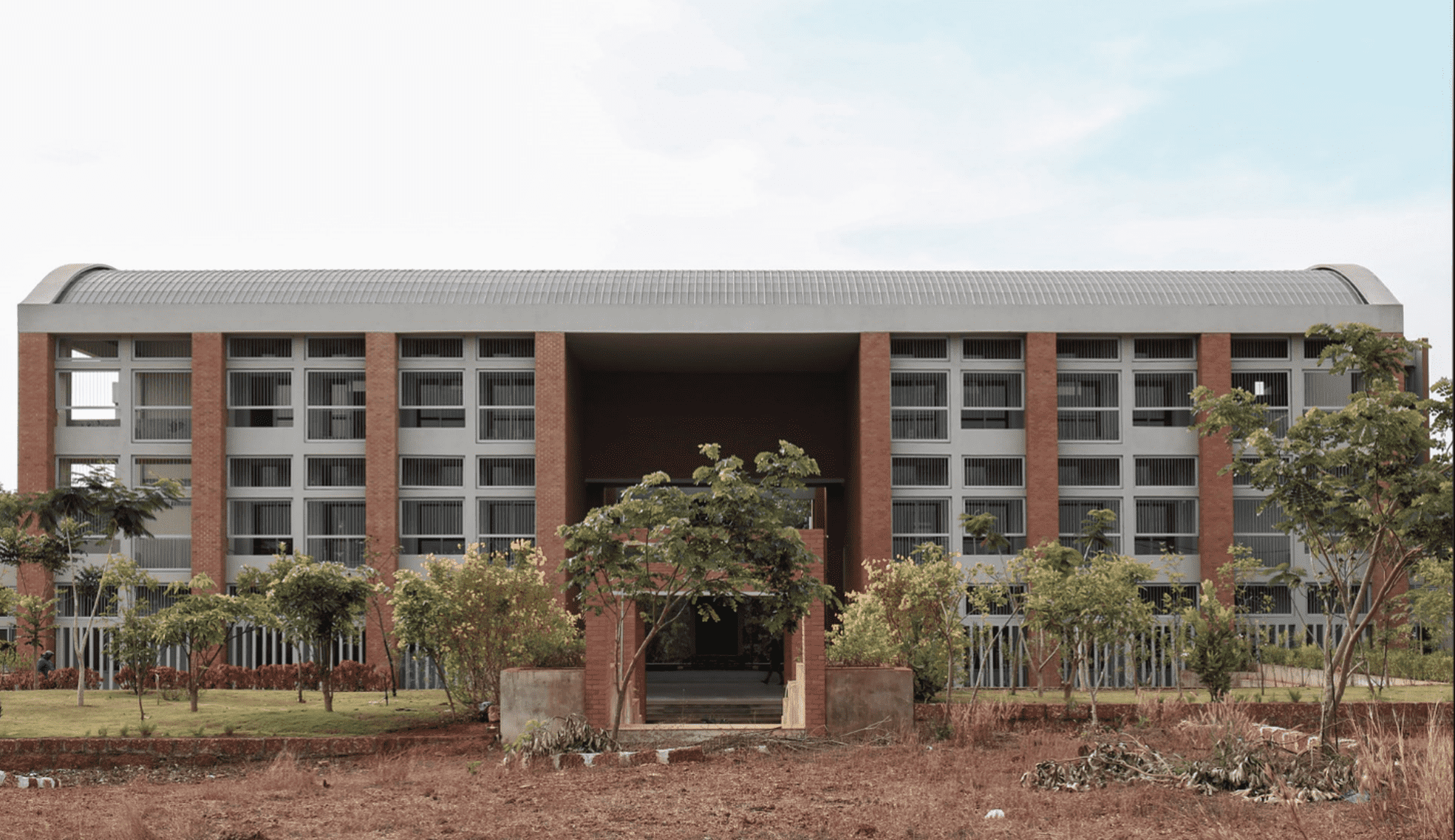
MM Knowledge, MBA College in Kannur
SCALE: The V Guard Corporate Office is still widely associated with your name.
Roy Antony: Yes, even today, many people recognise me through the V Guard Corporate Office. It received the Golden Leaf Award in 2010 from the IIA Kerala Chapter, which was an important moment for the practice.
What made the project especially significant for me was the intent behind it. It was conceived as a fully green office that could function without conventional air conditioning. At that time, this approach required both conviction and careful climatic thinking. The project was less about image and more about performance, comfort, and environmental responsibility, which are concerns that continue to guide my work.

Skyline Oasis, Kottayam.
SCALE: You often speak about architecture appropriate. How did that position evolve?
Roy Antony: The idea of an “Appropriate Architecture” is realised in projects by means of orchestrating the interactions between the diverse factors that define the context of each project. We also work from the conviction that architecture is primarily about making (poeisis in Greek) rather than about designing, drawing or modelling. This leads us to commit to making places that are sensorially resonant and symbolically significant, culturally sensitive and environmentally responsible, thereby acting as settings for life in all its richness to unfold for the clients as well as for the wider community. I see the architect primarily as a facilitator rather than someone who merely produces form. We are interpreting another person’s life, culture, and aspirations, and translating that into space.
One of my recent projects was a modest house for a jawan, Sreenath K. The budget was extremely limited, but he wanted the emotional quality of an old Kerala home. Designing within those constraints and still achieving that feeling gave me great satisfaction. For me, appropriateness carries far more value than spectacle.
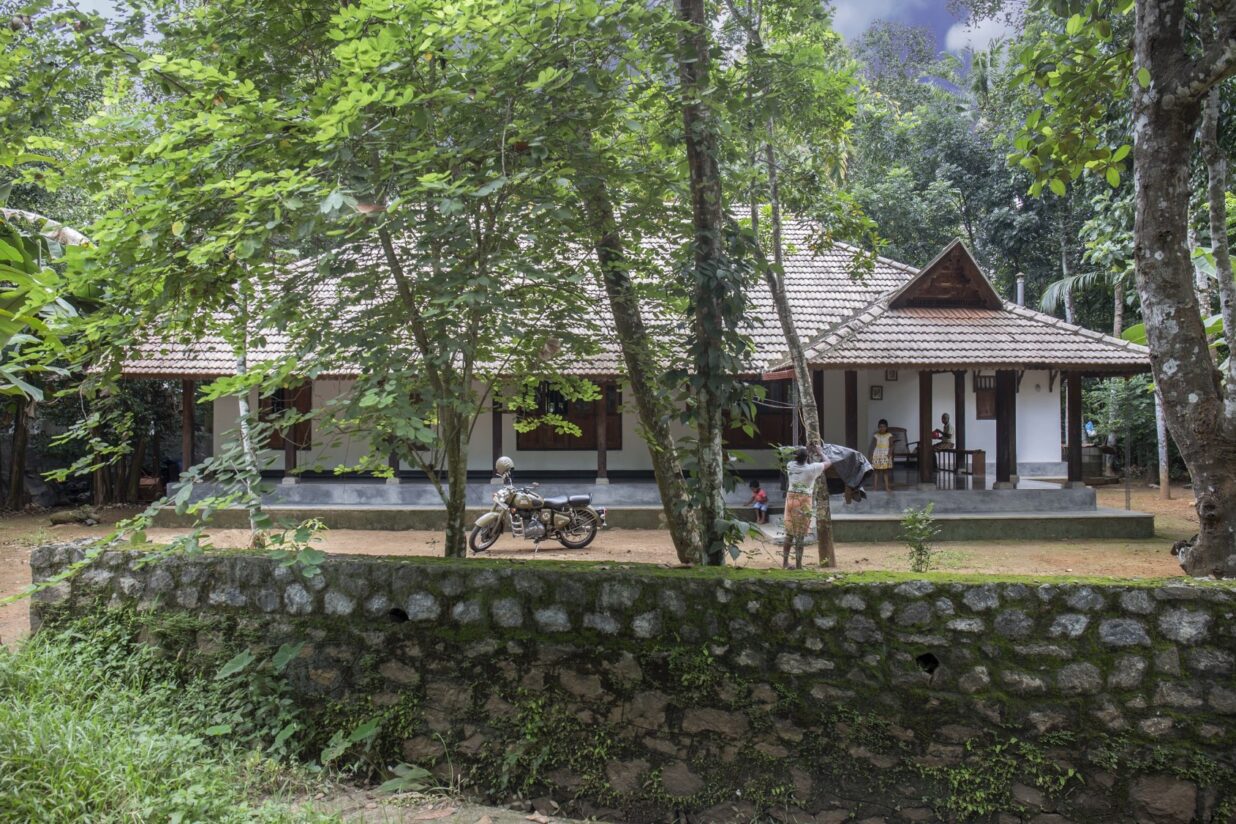
Residence for Sinu and family.
SCALE: How do you balance client expectations and architectural intent?
Roy Antony: The process is always one of careful give and take. On one hand, I see it as my responsibility to guide and educate the client based on my professional understanding of what will work spatially and technically. On the other hand, I make it a point to listen with genuine respect.
Clients sometimes bring perspectives that we as architects may not initially appreciate. Those inputs can be valuable if we remain open. So listening is just as important as advising.
At the same time, every decision we accept must remain architecturally relevant and coherent. Maintaining that balance between openness and discipline is something I consciously work toward in every project.
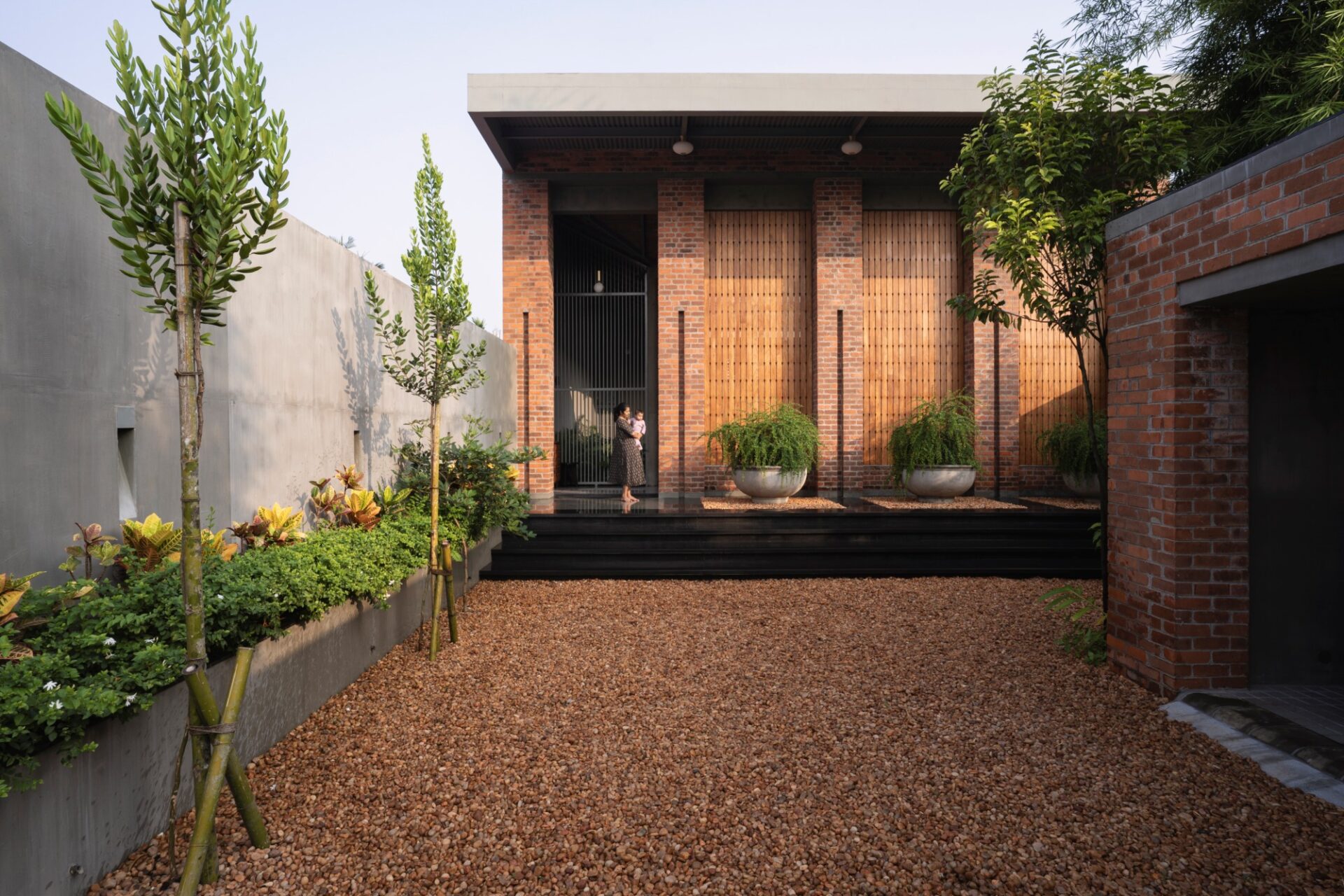
EPJ Residence.
SCALE: Among your projects, which ones are closest to you?
Roy Antony: Certainly, V Guard is very close to me. Along with that, Alankar and the EPJ Residence remain particularly meaningful. The EPJ house evolved very slowly over nearly ten years. I thoroughly enjoyed that extended and patient process. It allowed the architecture to mature gradually, and I sometimes wonder whether I will encounter that level of trust and continuity with a client again.
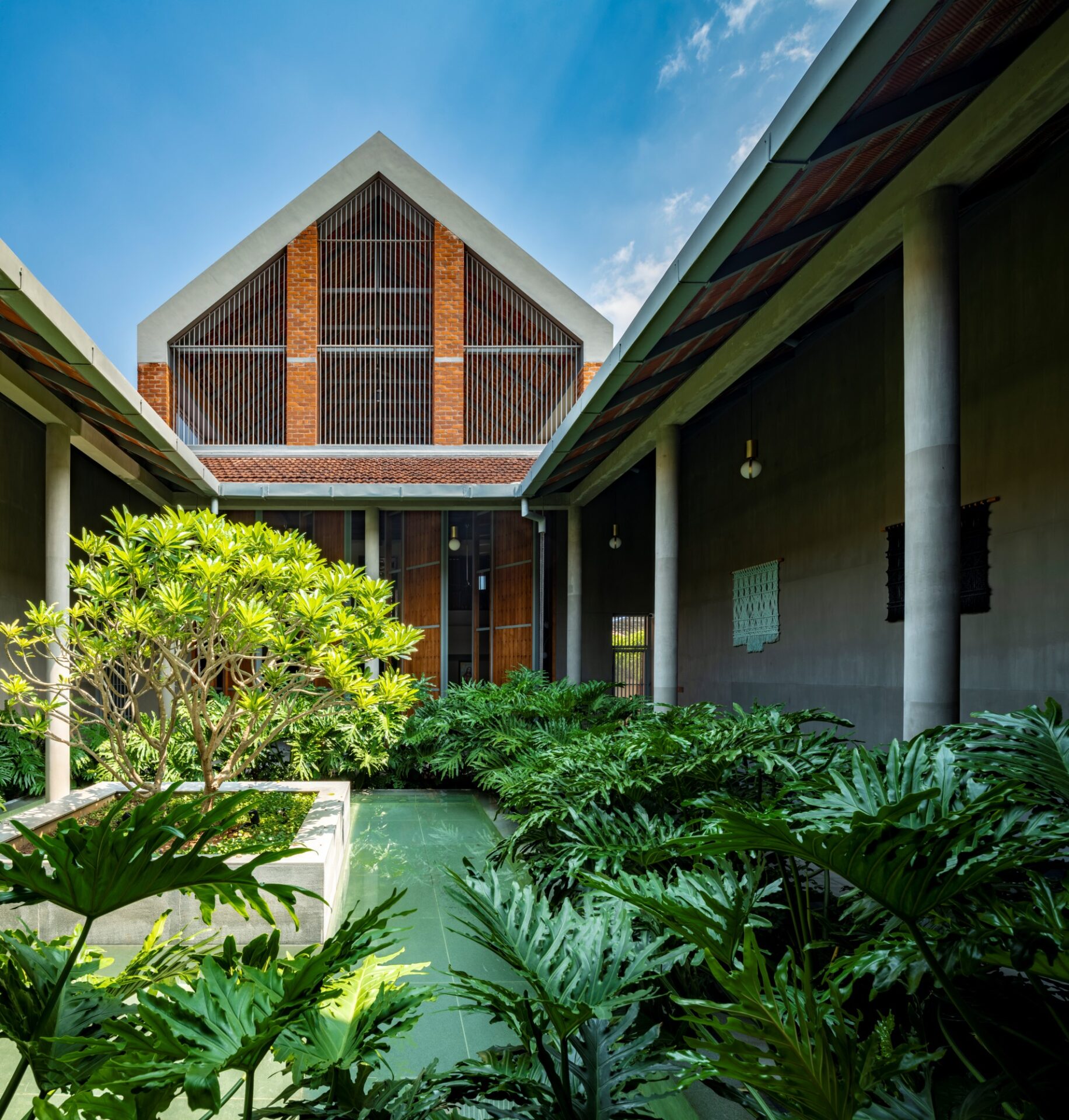
EPJ Residence.
In residential work, I place strong emphasis on the quality of interior space. I try to create environments where one can return home and naturally turn inward. In the EPJ residence, the internal water body and greenery were conceived as part of this quiet inward experience.
I am especially drawn to the image of a still sheet of water reflecting the sky. There is a certain silence and contemplation in that condition. For me, a home is not just a functional enclosure. It is fundamentally a sacred space.

Alankar Residence.
SCALE: Your work often speaks about light and spatial experience…
Roy Antony: I constantly think about the gradation of light within space. The true quality of light can only be perceived in relation to darkness. When a space is uniformly bright, light loses its emotional and spatial value.
What interests me is the measured entry of light. If you visit IIM Ahmedabad, the corridors are never excessively illuminated. Light filters in through thick walls in controlled moments. As you move through those spaces, there is a quietness that slowly unfolds.
That ability of light to guide mood, movement, and silence is very important to me. I try to create environments where light is experienced rather than simply provided.
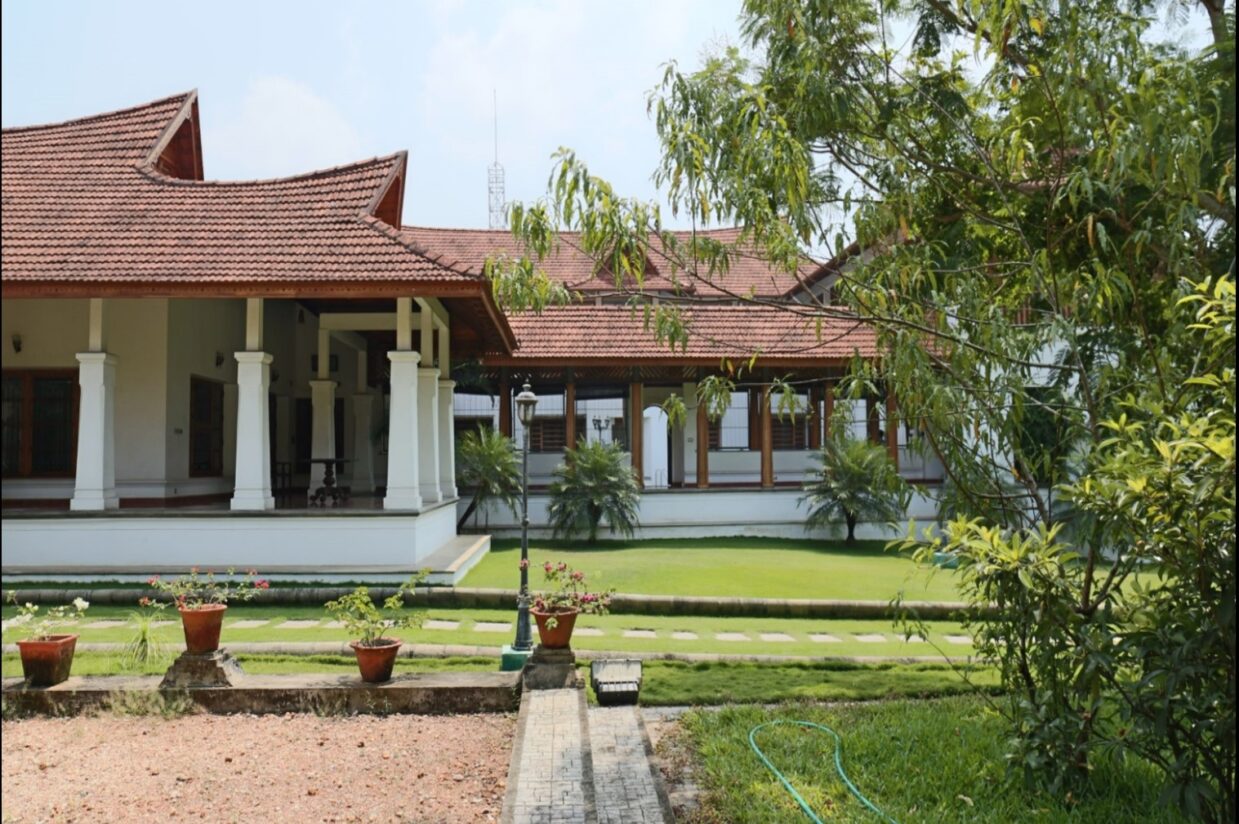
Residence for Shaji and family.
SCALE: Tell us more about your design process.
Roy Antony: My design process is never fixed. It evolves in response to the client, the site, and the specific conditions of each project. In some cases, I arrive at a pragmatic solution that feels appropriate and then develop it gradually. In private homes, especially, the character of the architecture may emerge from core elements observed in homes around us. The process of exploring these generic elements allows each project to find its own internal logic.
I do not consciously try to make something appear contemporary. If a solution feels right in its context, I trust that instinct and pursue it.
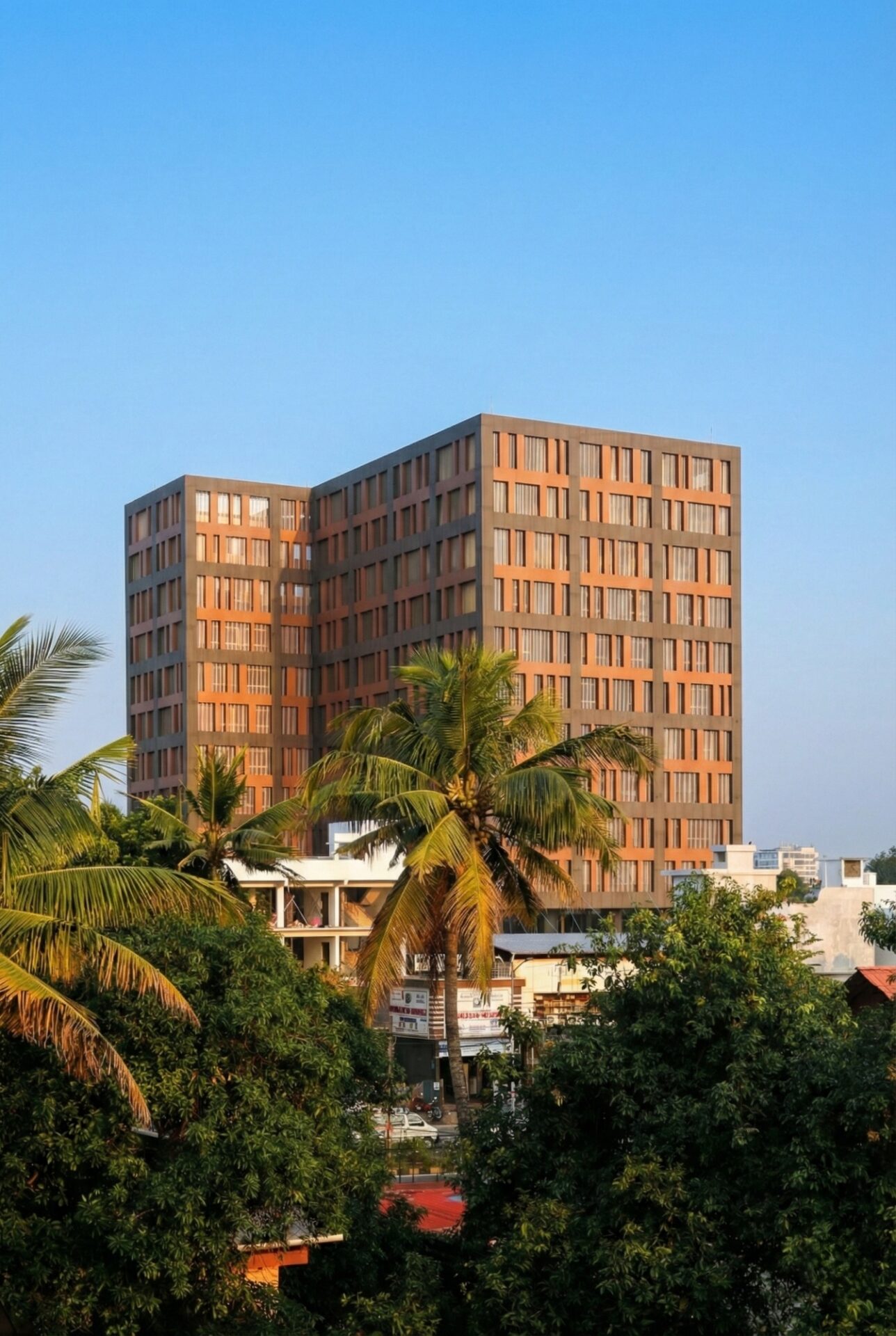
Muthoot Corporation.
SCALE: Today, software skills are heavily emphasised in practice. What is your view?
Roy Antony: I primarily use software for modelling and representation. But the act of design itself does not originate from software. It begins in the mind.
Many architects start immediately with pen and paper. My process is more internal. I first visualise the space and allow the design to evolve mentally. I keep running the project in my head until I reach a certain clarity. Only then do I begin to draw. This has been my habit since my student days. At times, I even lie down and think through the design for long stretches before putting anything on paper.
For me, software is only a tool serving a larger architectural intention. When the tool begins to dominate the thinking process, we risk losing sight of the deeper spatial and experiential questions that architecture must address.
There is no single visual signature that defines Roy Antony’s work. What binds the projects together is a sustained attentiveness to place, people, and circumstance. His position gently shifts the architect away from authorship toward roles of listening, negotiating, and interpreting. In an era often driven by image and speed, his work returns repeatedly to context, restraint, and the measured act of making space for human experience.
All Images Courtesy Roy Antony Architects