Beneath the Porticoes: UNStudio Reimagines Turin Metro
In Turin, a new metro line is being conceived by UNStudio not simply as transport, but as an extension of the city itself, drawing from its porticoes, landscapes, and patterns of movement to shape a contemporary public system.

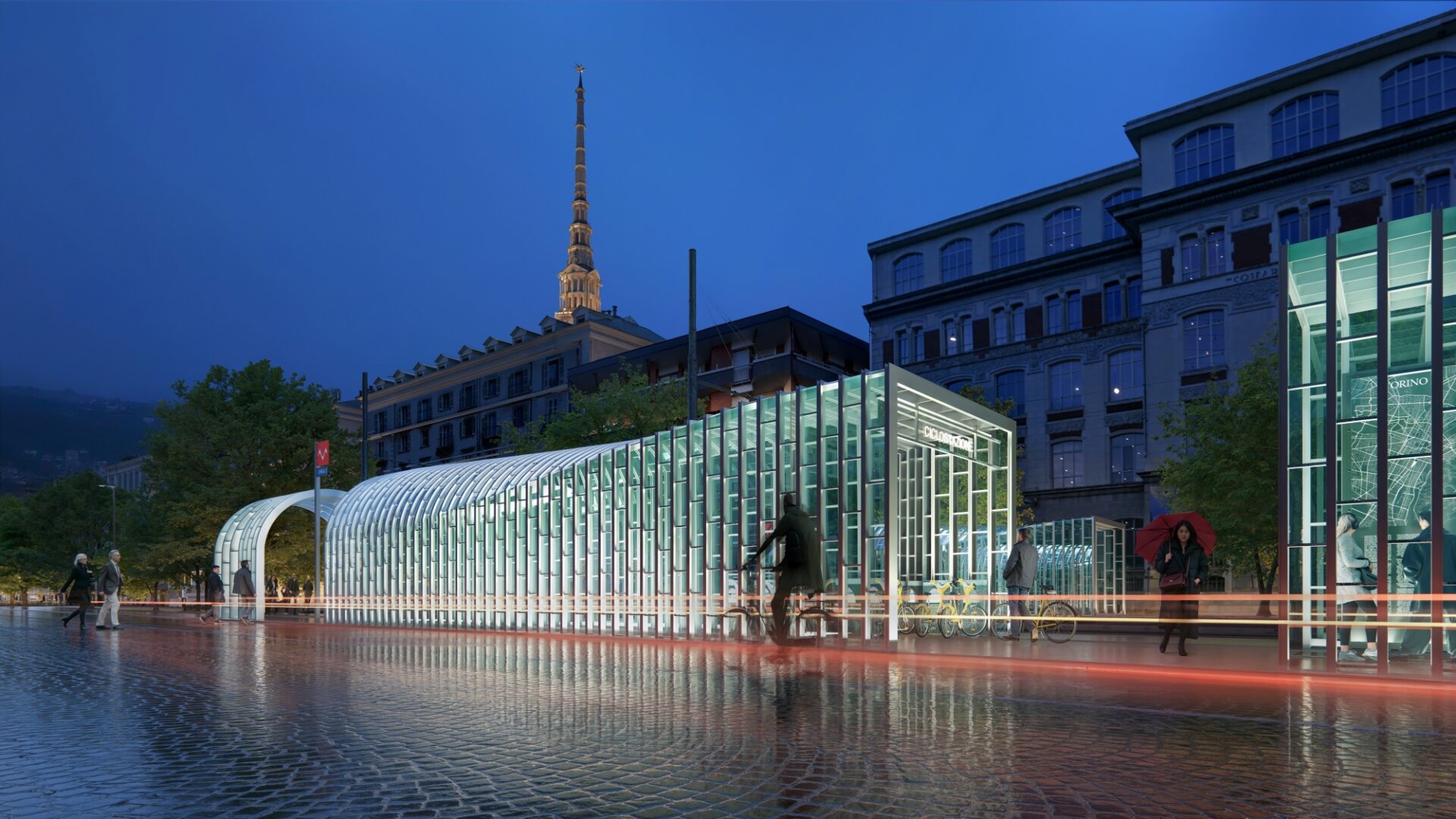
©Extraordinary Commissioner Chiaia, produced by Settanta7, Torino Metro Line2, Carlo Alberto, Exterior
The winning proposal for Turin’s Metro Line 2 by UNStudio positions infrastructure as an act of city-making rather than a purely technical exercise. Developed in collaboration with Settanta7, Mijksenaar, Frigorosso, 3BA and WSP, the project was selected by an international jury chaired by Dominique Perrault for its ability to connect mobility with public life and urban identity.
At its core, the proposal reads Turin through the idea of flow, according to UNStudio. Historically shaped by the Po and Dora rivers and its extensive network of arcaded porticoes, the city becomes the basis for a new interpretation: the metro line as an “urban river.”
The design was recognised for its reimagination of the subway as an act of city-making. The jury emphasised how the design strengthens the link between mobility, public space, and the urban context. They also emphasised how the proposal is set to shape how users move, work, and live through an elegant, carefully considered design that will stand the test of time.
Transparent yet continuous, it connects neighbourhoods and generations while embedding movement into the everyday experience of the city.
Architecture in dialogue with the city
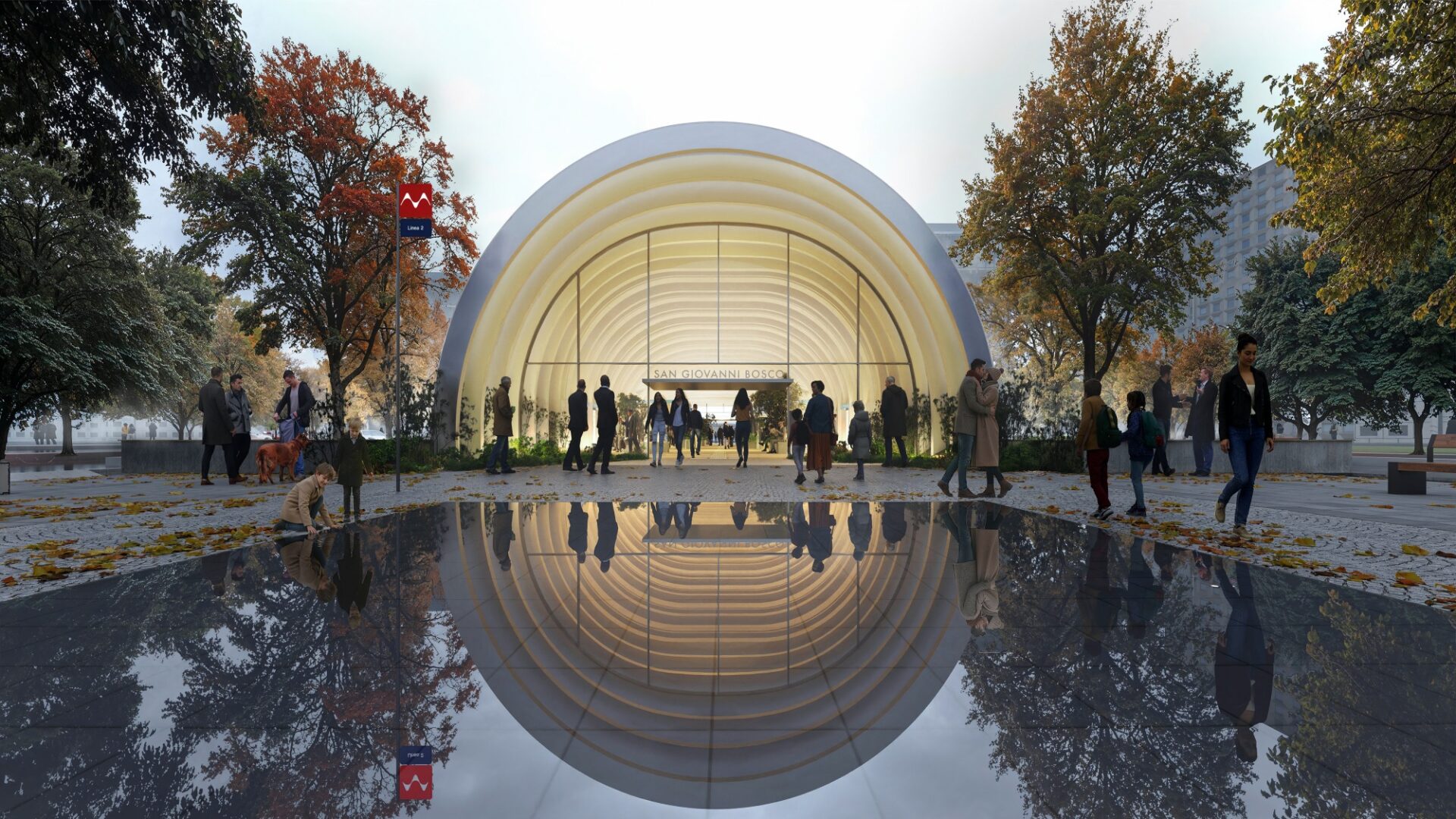
©Extraordinary Commissioner Chiaia , Torino_Metro Line2, San Giovanni Bosco, Exterior
Turin is a city of evolution, shaped as much by atmosphere as by history. The city’s long porticoes, its industrial past, and its more recent shift toward culture, creativity, and gastronomy shaped the project’s main concept: transition.
Metro Line 2 reflects this story; it is a design principle defined by movement from one point to another and translated into a simple architectural language that moves from the arch to the portico, from the curve to the square.
The design approach also responds to Turin’s built environment. The city is defined by its sober facades and clear geometries, while its interiors often reveal a richer, more detailed spatial experience. The new metro line draws on this contrast, moving from a restrained exterior to more welcoming and distinctive interior spaces, so that traditional and contemporary architecture relate clearly to the city’s history.
The project is guided by the idea of transition, moving between arch and portico, curve and square. This is less about formal expression and more about continuity, how architecture mediates between past and present without relying on nostalgia.
UNStudio, Founder and Principal Architect, Ben van Berkel says, “For Turin’s new Metro Line 2, we wanted to create more than a transport system. We wanted to design a new civic connection for the whole city, one that brings Turin’s history and its future into direct conversation. What is especially important is that this metro is truly public in spirit: it feels open, safe, and welcoming, with stations and entrances that extend the public realm so that, in places, the park meets the metro and infrastructure becomes part of the city’s shared social space.”
A system built on flexibility
@Extraordinary Commissioner Chiaia Torino Metro Line2, Mole Giardini Interior
With 32 stations planned, adaptability becomes critical. The first phase, comprising 10 stations, establishes a modular system that can respond to different urban conditions while maintaining a coherent identity across the network.
This flexibility operates across three levels:
- Network Identity, which defines the overall visual and spatial language of the metro
- System Identity, extending the line’s presence into the surrounding neighbourhoods
- Station Identity, allowing each stop to respond to its immediate context through material, art, and landscape
Together, these layers balance consistency with specificity, ensuring that the metro remains legible while still rooted in place.
A flexible design approach was taken for Turin’s new Metro Line 2, ensuring it could work across various conditions along the line. With 32 stations planned in total, the initial design phase encompasses 10 stations and needs to be able to adapt without losing clarity.
In response, a modular architectural language was developed that made it possible to adjust scale, proportion, and programme to the different sites, including the Mole Giardini, San Giovanni Bosco and Carlo Alberto stations, while maintaining a consistent visual and spatial logic across the line.
Infrastructure as public space

©Extraordinary Commissioner Chiaia, produced by UNS Torino_Metro Line2 Mole-Giardini, Interior
What distinguishes the proposal, according to UNStudio, is its insistence on treating infrastructure as part of the public realm. Stations are not isolated entry points but extensions of streets, parks, and urban life. In some cases, the boundary between landscape and transit dissolves, allowing the city to flow directly into the metro system.
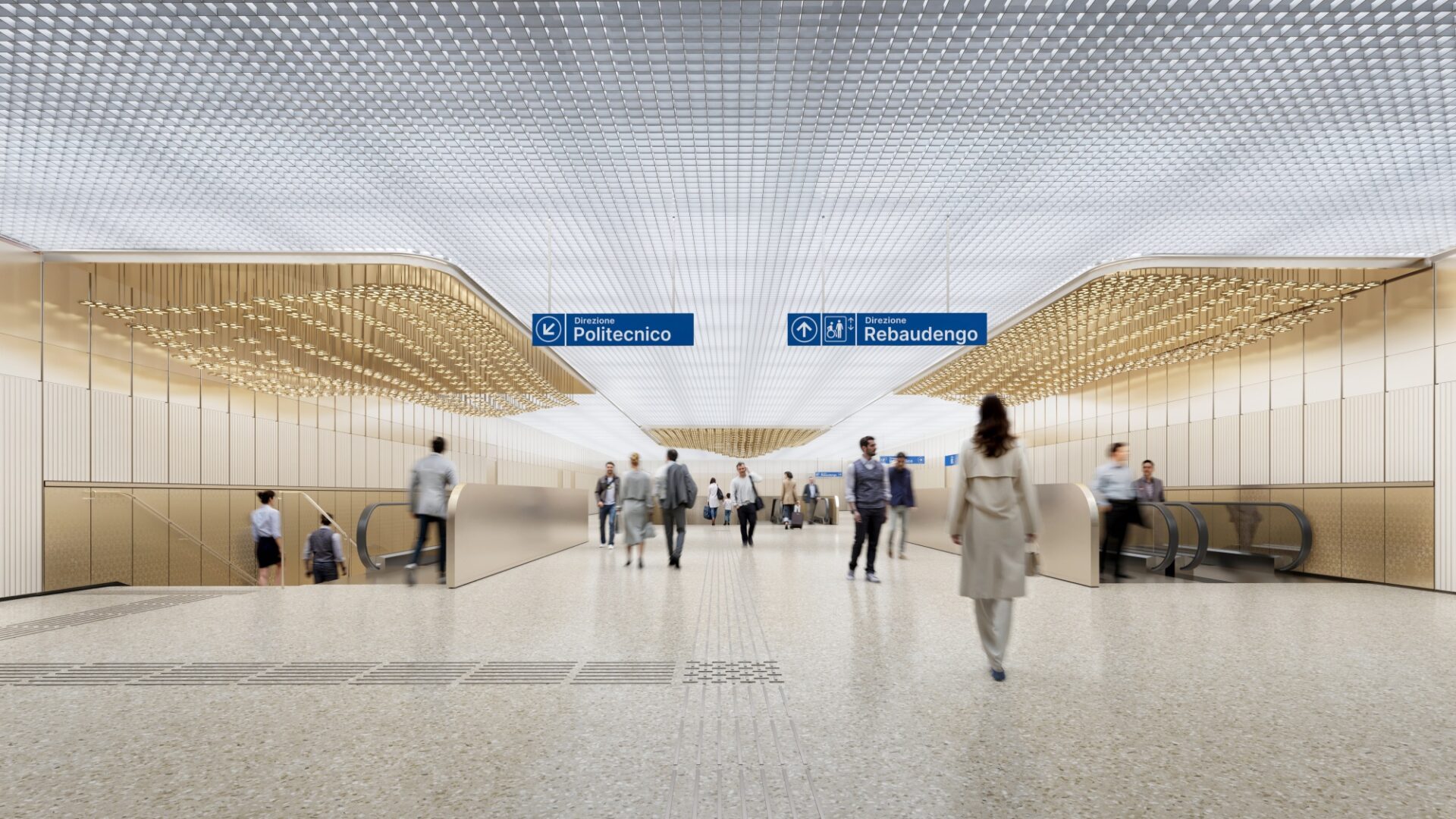
Materials such as aluminium and porcelain stoneware ensure durability, while diffused lighting and terrazzo-inspired flooring contribute to a calmer, more intuitive environment. Wayfinding is integrated into the architecture itself, reducing friction and making movement through the system more legible.
Rethinking the everyday journey

©Extraordinary Commissioner Chiaia , produced by Settanta7, Torino, Metro Line2, Carlo Alberto.
Beyond architecture, the project considers the entire passenger experience, from digital trip planning to navigating platforms. By treating the journey as a sequence of connected moments, the design reduces stress and improves clarity, reinforcing the idea that infrastructure can shape not only movement, but behaviour and perception.
Stations are conceived as contemporary “jewel boxes,” where atmosphere, material, and light elevate what is typically a purely functional environment. The result is a metro that is not just efficient, but also civic in spirit, open, recognisable, and integrated into daily life.
In Turin, Metro Line 2 suggests a shift in how infrastructure is imagined. It moves away from neutrality and invisibility, and instead positions transit as a visible, meaningful layer of the city, one that connects not only destinations, but also histories, identities, and ways of moving through urban space.