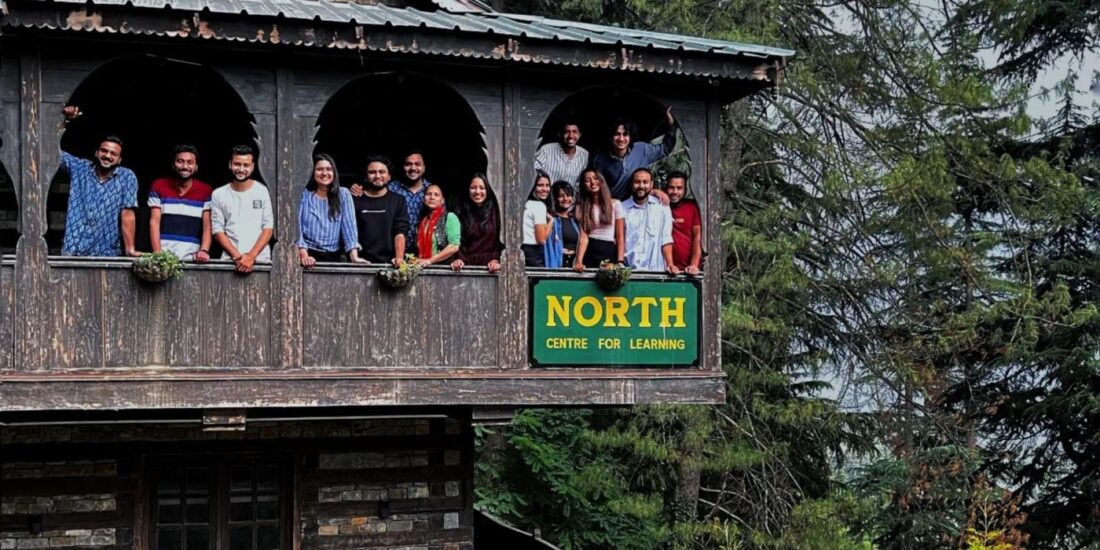

Niranjan Das Sharma: Architecture is a Deeply Human Endeavour
What makes a building great? For architect Niranjan Das Sharma, a great building is one that reflects a pragmatic, cost-effective, and sustainable approach. In a conversation with SCALE, he opens up about his journey, his practice, and his passion for creating buildings that are naturally comfortable and built to last. By Arya Nair
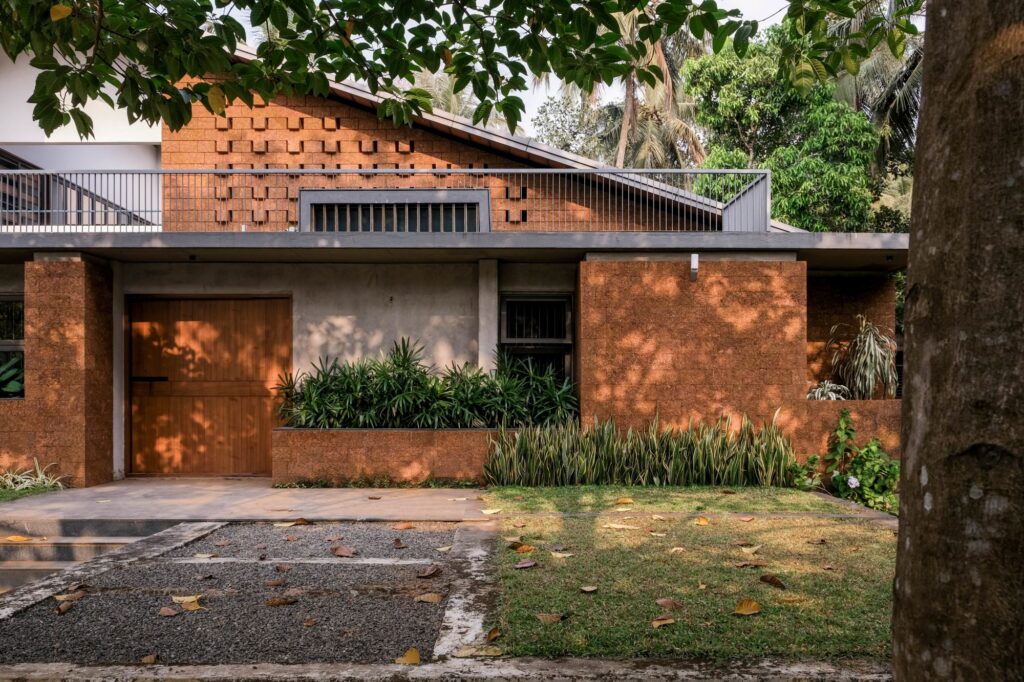
Abdullah residence at Perinthalmana, completed in 2022.
In 1991, when architecture was still an unknown profession in his state, Niranjan Das Sharma began his training. His early philosophy was shaped by the utilitarian and frugal methods of Laurie Baker, a popular architect at the time. This foundation was solidified by influential mentors, including Prof. Eugine Pandala, who instilled a commitment to sustainability and innovation, and Ar. Jacob George, whose focus on perfection and detail greatly influenced Niranjan’s own design principles. He also drew inspiration from teachers like Prof. Jolly John and Prof. Ramaswami, as well as renowned architect Ar. Gerard da Cunha, with whom he interned. Early exposure to fine art and a fascination with building models further cultivated his unique perspective, a blend of artistic sensibility and technical understanding.
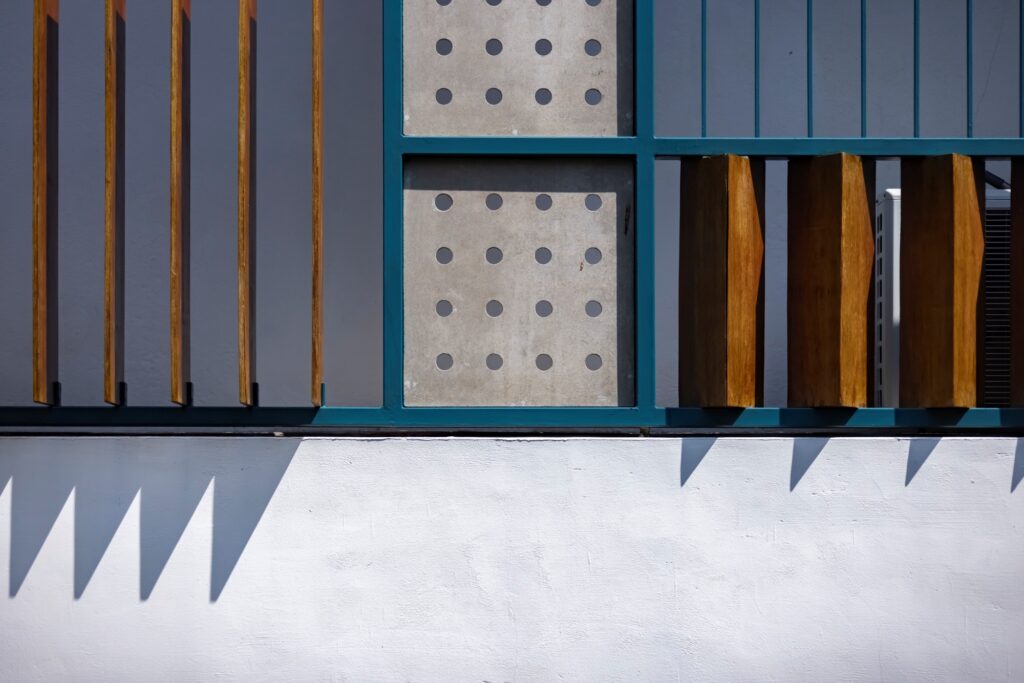
Details of Mukundan House in Kollam, completed by RGB Architecture Studio
His early influences weren’t limited to architecture. A childhood fascination with art, science, and photography helped him develop a unique perspective. He found joy in dismantling toys and building models, a process that trained his mind to understand how things fit together. His love for photography continues today with Photomuse, a group of photo enthusiasts from various fields, which has refined his aesthetic sense and his ability to see space differently.

Vedic Village at Pollachi, Tamil Nadu
After a decade of solo work, his philosophy was pushed to new heights. Upon meeting his future partners Rajasekharan C Menon and Kunjan Garg of his architectural firm RGB Architecture Studio, he was exposed to the “finer nuances of space making.” This collaboration, along with his move to Kochi in 2013 and travels to see the works of masters like Le Corbusier, Tadao Ando, and Geoffrey Bawa, ensures his design approach remains dynamic. He doesn’t adhere to a specific style but aims to create work that is rooted, context-sensitive, innovative, and detail-intensive, continuously evolving with each new project.
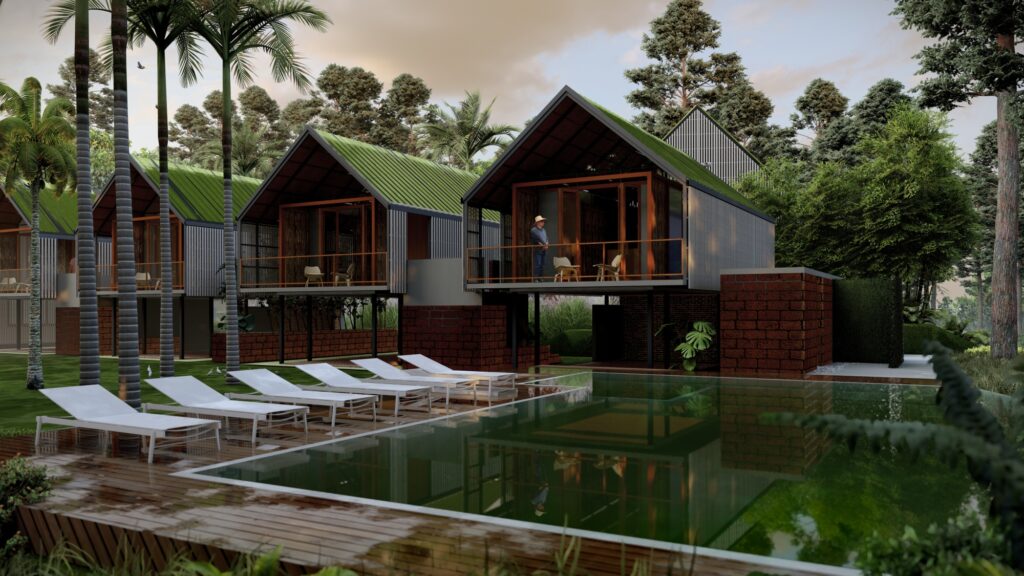
Poetry Cafe, Unbuilt.
SCALE: You’ve worked on a diverse range of projects. Is there a common thread or a set of core principles that you apply to every project, regardless of its scale or typology?
Niranjan Das Sharma: My priority is passive climatic comfort and creating buildings that are less maintenance-intensive. The design and details are always oriented toward achieving this. I also experiment with unconventional materials, structures, and details whenever possible. This is a consistent approach, regardless of architectural priorities like scale or context sensitivity, which are a given.
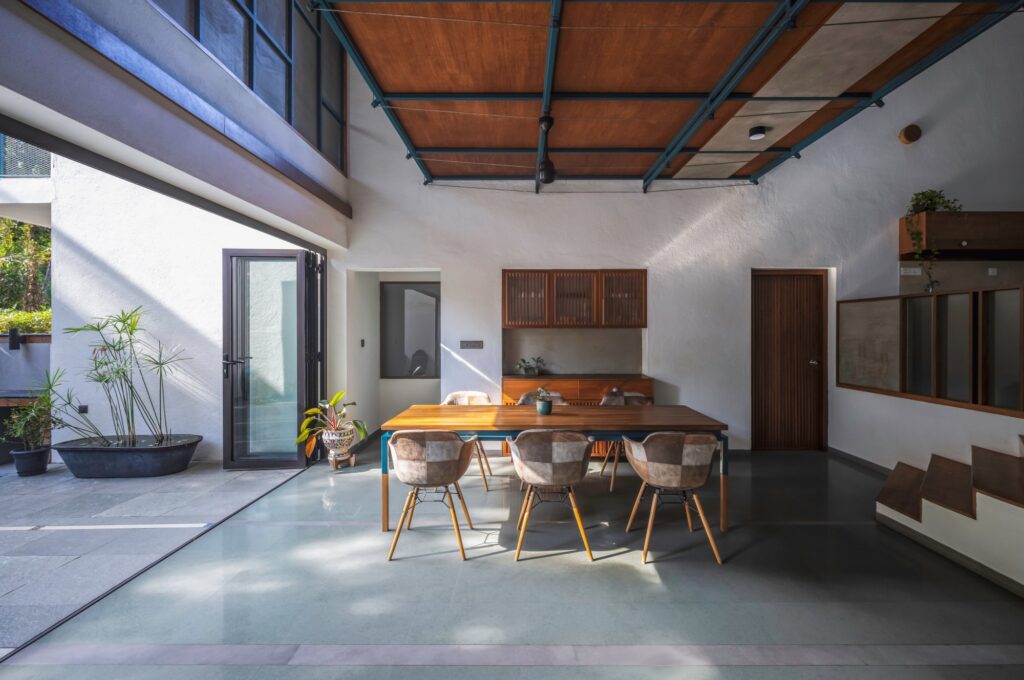
Mukundan House at Kollam.
SCALE: What do you believe is the single most important element in creating a space that resonates with its users?
Niranjan: A client often talks about “plenty of light and ventilation.” We don’t immediately tell them that they don’t really need all that light. What we try to achieve is controlled natural light which lights up spaces in the right quantity and quality. When it’s achieved, people realize that it’s quality and not quantity of light which makes a space better.
SCALE: Could you walk us through a pivotal moment in your career that changed your perspective on architecture?
Niranjan: I can’t really point to any one moment or any dramatic change in perspective. I would rather perceive it as evolving. But my second visit to IIM Bangalore made me kneel down, completely overcome by the atmosphere and the architecture. It was an overwhelming feeling which made me aware of the subtle but powerful quality of architecture. Perhaps it was because of all the wonderful people around me and whom I met and the spaces I experienced through all these years, which tuned my sensitivity to experience this. Another was a book by Beatriz Colomina and Mark Wigley, Are We Human, which explicitly proves the power of design to transform human beings, leading me to worship design and architecture more.
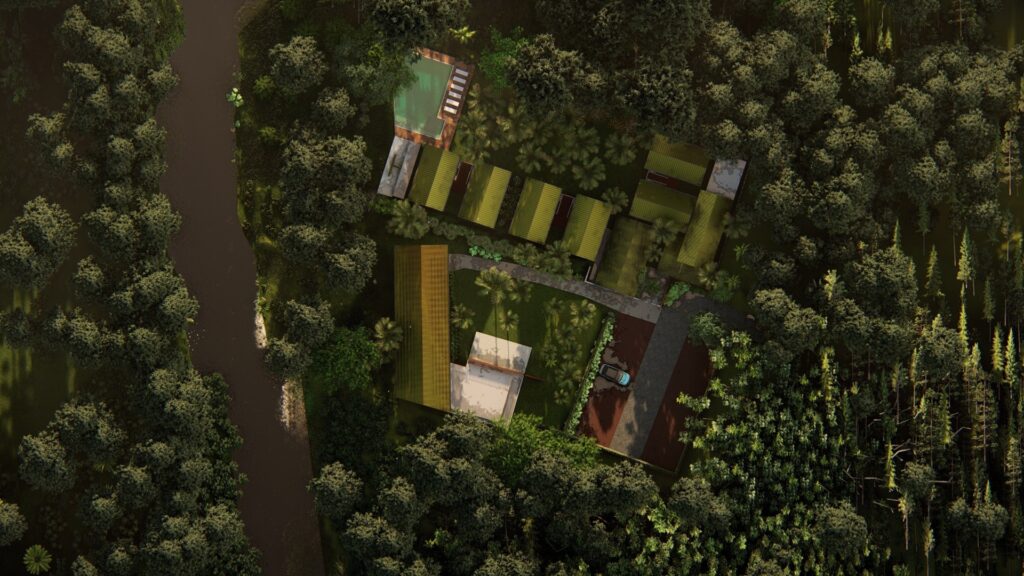
Poetry Cafe, Unbuilt.
SCALE: Given your experience, what advice would you give to a young architect who is just starting to define their own design voice?
Niranjan: Let the ‘own design voice’ evolve rather than force it. Work towards contributing to the evolution of architecture and design. Develop sensitivity to understand the problems around you and learn skills to impart the precise solution. Our context, culture, climate, topography, resources, and politics are all in a constant flux. Be sensitive to all, be empathetic and respond in the most sensible way. Your voice will be heard when it’s relevant. Don’t push for it.
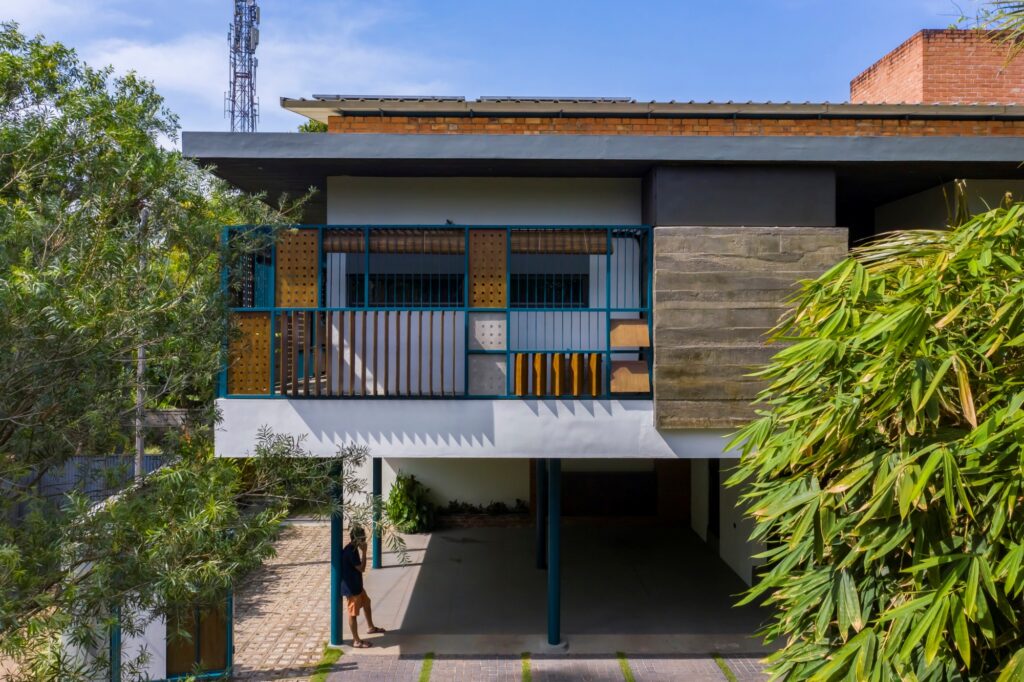
Mukundan’s House Kollam.
SCALE: In an interview with Rajasekharan C Menon, he mentioned that RGB was formed by an “amalgamation of two firms.” How did your individual design identity merge with the collective vision of RGB, and how does this collaborative process enrich the final product?
Niranjan: I met Raj and Kunjan during a voluntary work we were doing for an organization called ‘design and people’. Several such projects kept us busy together. I was extremely happy to meet such genuine, humane individuals and was impressed at their design rigour and knowledge. We started working on a villa project together before RGB was born. Long journeys and conversations, working together, gave the sense that we were doing very similar things. Our ideals were similar. We did have our own strengths and weaknesses and with RGB, we tried to overcome that. Peer review is our strength. Even though projects are handled individually, discussion happens from the early design stage to execution. Overcoming design challenges, cracking details, troubleshooting site situations, and handling the client, we depended on each other.
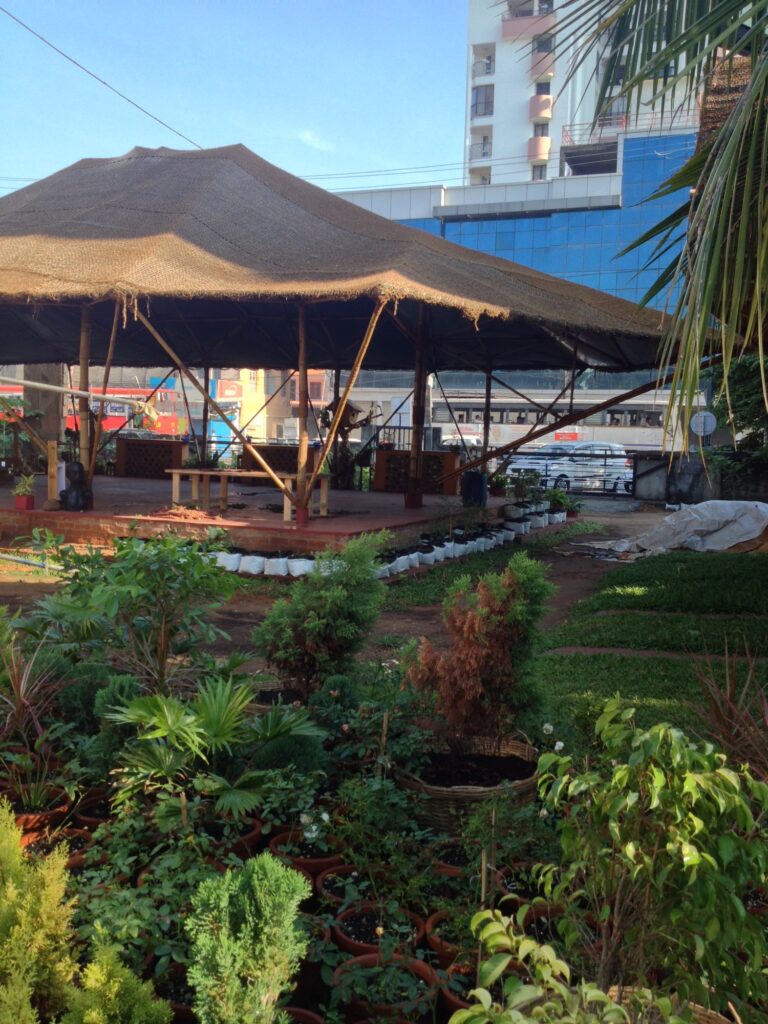
EnteBhoomi project by RGB Architecture Studio.
SCALE: What is the most challenging part of the design and execution process for you, and how do you approach it?
Niranjan: For me, the most crucial part of any project is synthesizing data from the client with my own observations of their needs and the project context. When this foundation is solid, the design process flows smoothly. The real challenge arises when multiple strong design possibilities emerge, and I have to weigh various factors to determine the best path forward.
During the execution phase, the chemistry between the client, contractor, and myself is essential. It’s critical that both the client and the contractor are convinced by the design and fully understand the value of every detail and measurement. A strong synchronisation with the client often leads to the best outcomes.
To ensure clarity and minimise errors, we provide a full suite of visuals beyond standard 2D drawings, including 3D models. Our junior architects and engineers also conduct frequent site visits to resolve issues and address any questions that arise. This collaborative and transparent approach is key to a successful project.

Details EnteBhoomi Cafe.
SCALE: What are your thoughts on the role of technology, from software to sustainable materials in modern architecture, and how do you integrate it into your work?
Niranjan: Technological advancements are essential for tackling new design and execution challenges, whether in structure, materials, or construction methods. We are always updating our knowledge and incorporating new technologies as needed.
Instead of relying on materials labeled as “sustainable,” we prioritise efficiency in design using conventional materials. While I have worked with mud and compressed mud bricks, I believe there’s still much more to explore.
I find bamboo particularly promising as a material for the future. Although it is a primitive building material, advancements in research have made it a viable and versatile option. I’ve already worked on a bamboo structure and am eager to do more. It can be used in various forms, including reconstituted boards and pipes, and it pairs well with other materials like cement and steel. This is a material I would love to work with more, as it has yet to fully capture the public imagination and become a conventional building material.
Software has also become integral to our workflow. I currently use Archicad, a BIM software that gives me greater control over the design process, from tracking changes and generating bills of quantities to creating visualizations and drawings. While we have yet to fully embrace AI, I see its immense potential for future projects.
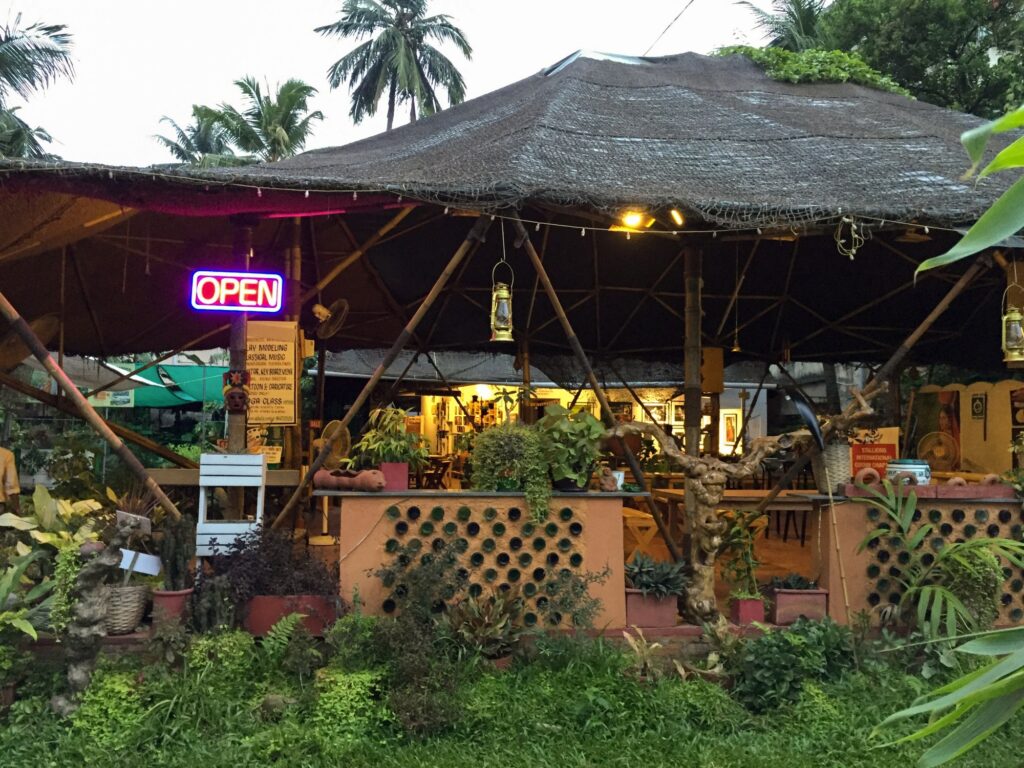
EnteBhoomi Cafe
SCALE: With everyone seeing so much on their phones, how do you think that affects architecture and design?
Niranjan: Bombarding people with beautiful images can be misleading. It can create the misconception that design is solely about aesthetics and creating picturesque spaces, rather than about solving real-world problems. While there’s nothing wrong with appreciating beautiful pictures, they often fail to convey the true design intent behind a project. However, I believe that a seriously trained professional can see beyond the surface and recognize the genuine design principles at play. They know that a project’s true value lies in its functionality, its response to context, and its ability to solve a client’s needs, qualities that a single, stunning image often cannot capture.
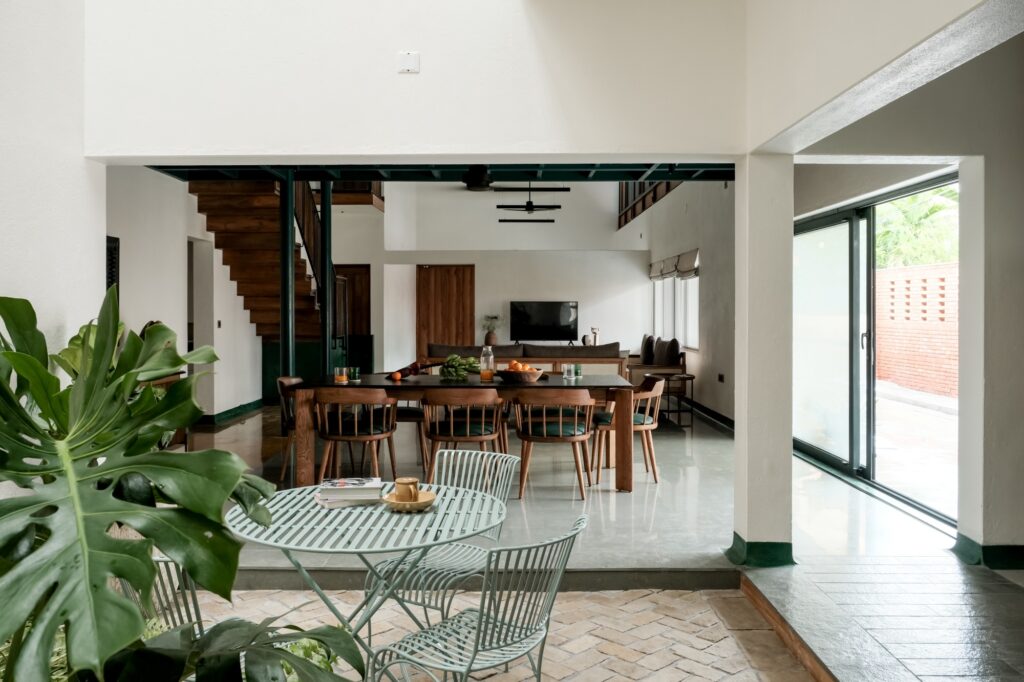
Shahjahan residence.
SCALE: How will AI affect the architect’s role, and will it enhance or diminish the creative human element?
Niranjan: AI has the potential to automate many tasks and generate images from imagination, which could lead to unforeseen possibilities and discoveries in form-making. Data-driven AI tools are already capable of creating floor plans and urban designs based on specific rules, and it’s plausible that they could one day produce complete working drawings for construction.
However, I believe that AI cannot replace human intent. The core of any design is the person who writes the prompt, the creative vision that drives the entire process. To my knowledge, AI has not yet evolved to a point where it can replicate this unique human element. If it were to reach that level, it would present a crisis not just for architecture, but for many other fields as well. The role of the designer remains paramount in shaping the creative direction and purpose behind a project.
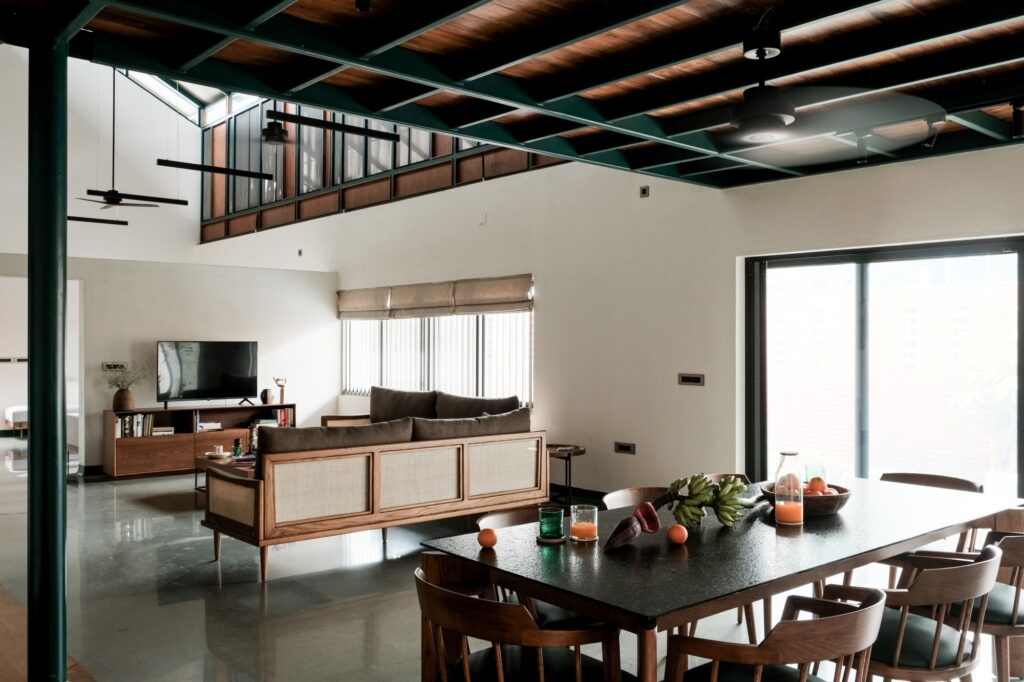
Shahjahan residence.
SCALE: In a world of increasing standardisation, how do you ensure that each project you touch has a unique identity?
Niranjan: Every project has a unique set of constraints, including a different site, a new client, and a specific situation. This is why I don’t impose a specific style on my designs. While I do reuse and refine certain details that have been proven through experience, the unique nature of each project naturally generates a unique design. My goal isn’t to force uniqueness or to avoid repetition; rather, it’s to embrace the singular qualities of each project.
I am also driven by a sense of inquiry and exploration, constantly seeking out new approaches, structures, and materials. For example, in 2013, I designed the Udyan Convention Hall with a very tight budget. I used shade netting as the primary building material. It not only defined the form and replaced traditional walls but also served as a screen, providing ventilation, privacy, and protection from insects. This inexpensive and appropriate solution demonstrated a new possibility for a common material, showcasing how innovation can be born from specific project needs.