Art With Purpose at Art Basel Qatar 2026
For those who seek meaning in art, here are a few installations from Art Basel Qatar that lingered beyond the art fair. By Mary Joseph
Some believe that art can exist purely for its own sake, needing no explanation beyond form, colour, or sensation. And then others seek something more, a story, a provocation, a memory, a political charge, a trace of history, activism, sustainability, or lived experience. They are drawn to works that carry meaning, whether joyful or unsettling, contemplative or confrontational. For those in the latter group, here are a few installations from the recently concluded Art Basel Qatar that left a lasting impression.
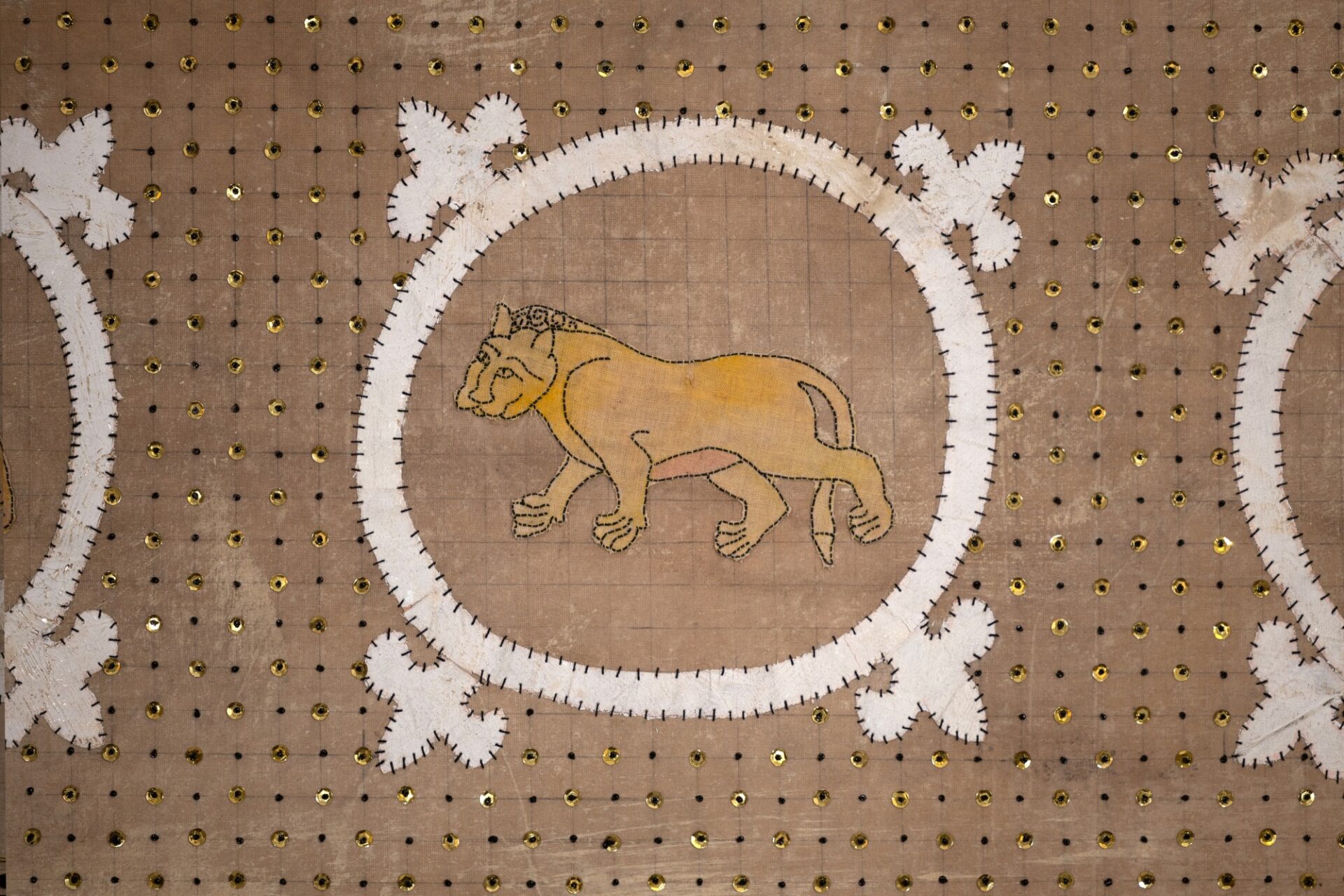
“I, Pet Lion” by Egyptian artist Mohamed Monaiseer
Presented by GYPSUM gallery
Courtesy of the artist and Gypsum Gallery.
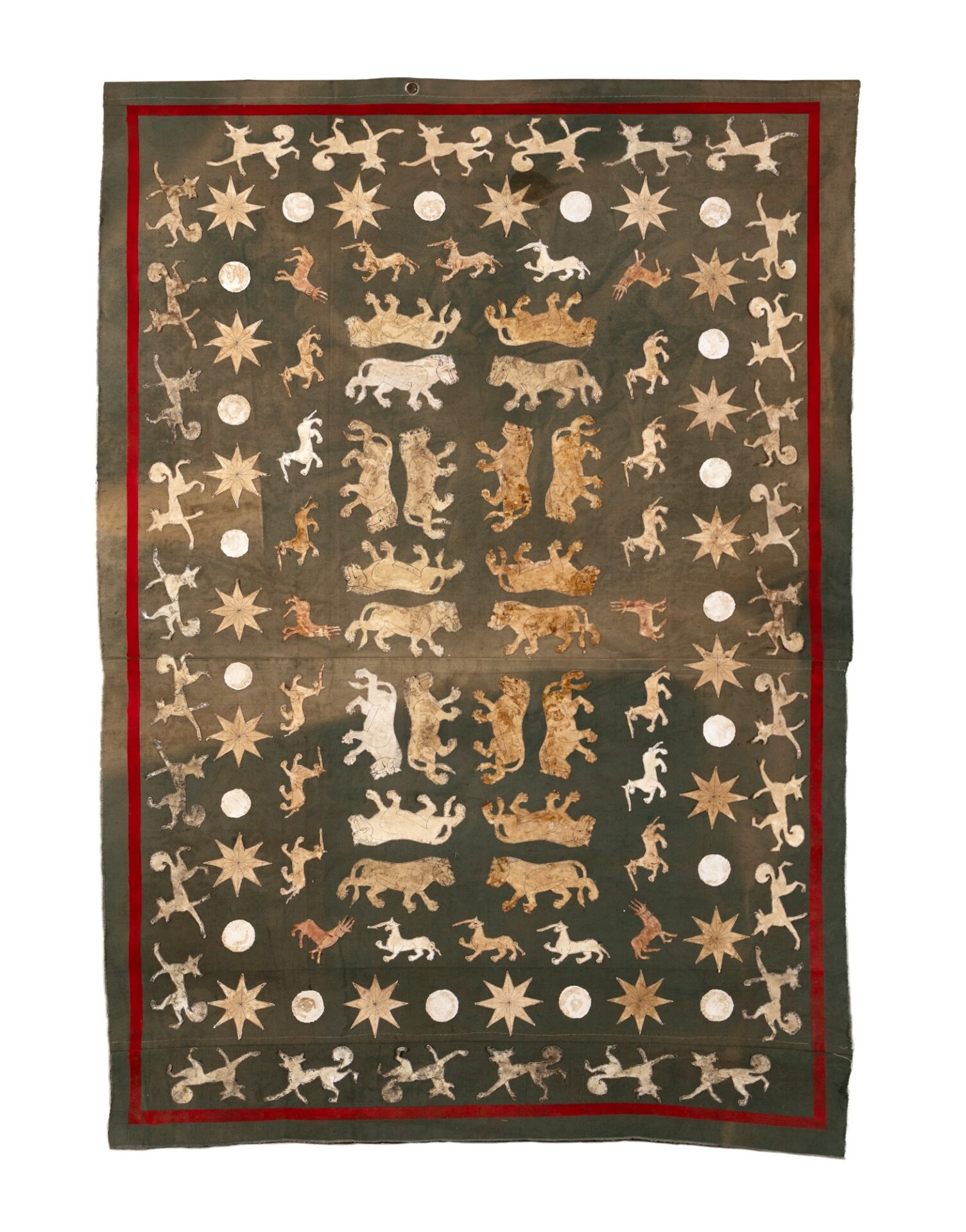
Drawing on games he played in his childhood and youth, Mohamed Monaiseer examines how ideas of control, conquest, and domination are embedded within objects designed for play. For instance, chessboards and vintage Ludo games are structured around capturing territory.
Courtesy of the artist and Gypsum Gallery.
The artist uses painting, hand embroidery, and khayamiya (applique stitching) to highlight repetitive, meditative gestures found in Islamic art while deliberately disrupting its precision. Frayed edges, uneven patterns, and subtle irregularities expose cracks in the systems that are part of our pasts and present. References to the British Crown Jewels are made through beaded embellishments, pointing to how beauty and display are often rooted in histories of looting and violence. Cut-outs of animals such as lions, dragons and medieval creatures are superimposed on shields repurposed from found fabric used to cover military tanks.

Courtesy of the artist and Gypsum Gallery.
The title, I, Pet Lion, shown at Art Basel, indicates the contradiction of a figure being both threatening and protective. By exploring the normalisation and pervasiveness of military symbolism, Monaiseer encourages a closer, more critical look at the visual vocabularies through which power is represented and sustained.
“The Stream” by Turkish artist Kutluğ Ataman
Presented by the Niru Ratnam Gallery
Courtesy of the Artist, Niru Ratnam, London. Photo: Damian Griffiths
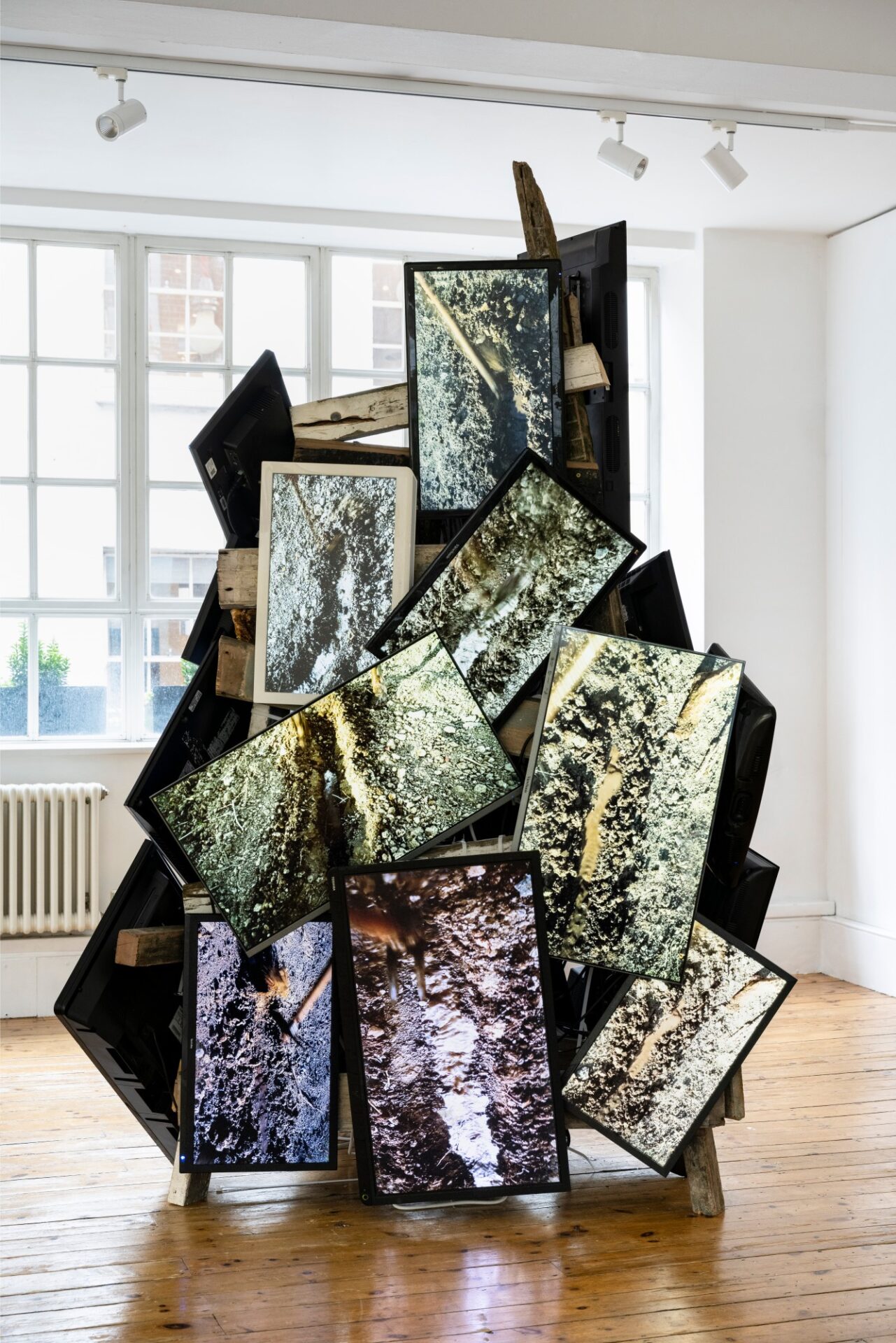
Kutluğ Ataman is renowned for his innovative use of video, photography, and installation to explore identity, memory, and social dynamics. “The Stream” is a 22-screen video installation. Eight films play on screens suspended from a worn wooden structure.
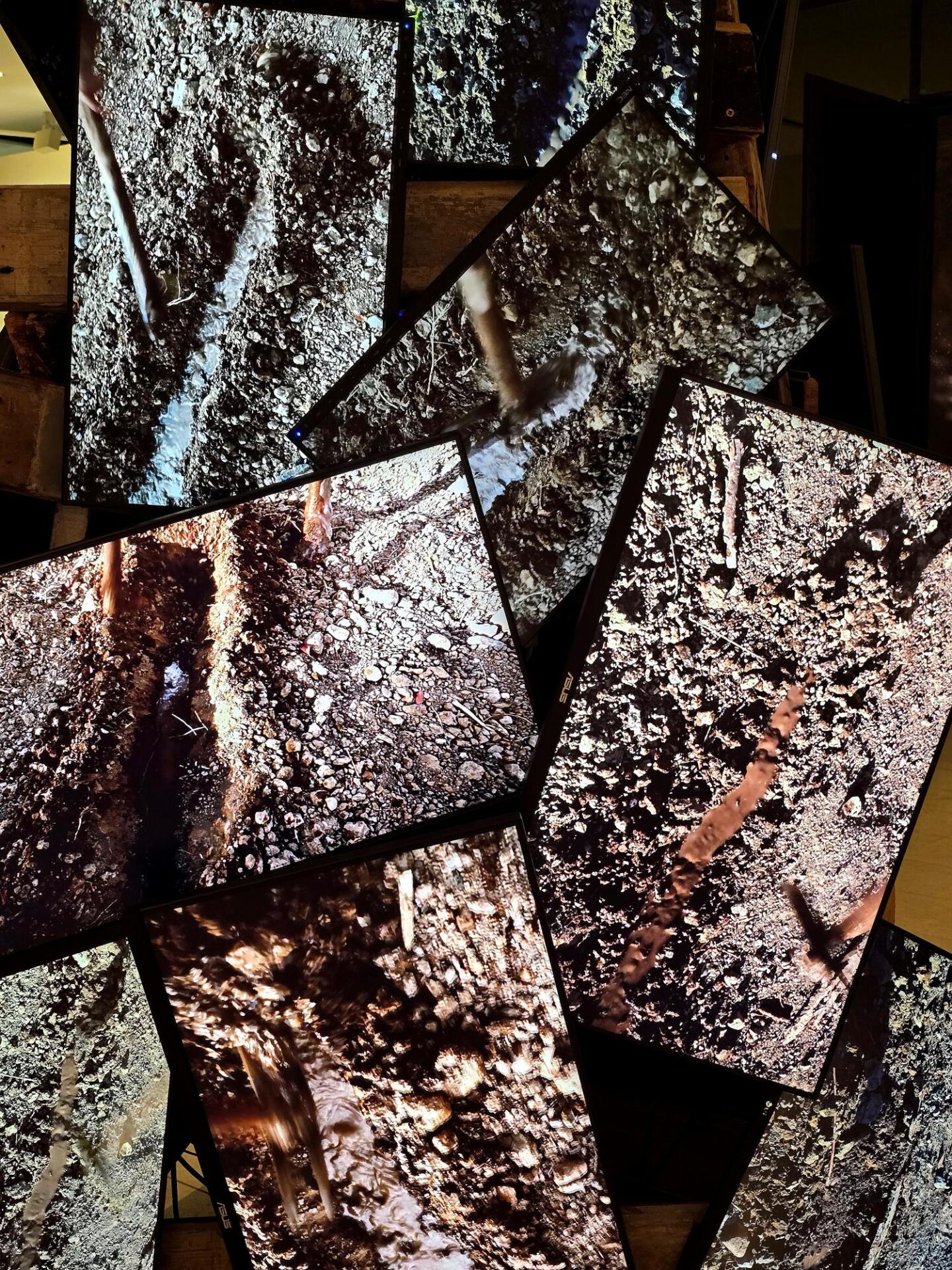
The installation is part of Ataman’s ongoing series titled “Mesopotamian Dramaturgies”, a deep reflection on the geography, history and political realities of eastern Anatolia, exploring the tensions between modernity and civilisation. “The Stream” is a more elemental, powerful turn within the series with visuals focusing on the soil, water and act of digging. Interestingly, the screens are arranged to make the water appear to flow upward, symbolising regeneration and renewal. In the background, we hear Ataman’s breathing and the repeated scraping of the hoe, creating an audio scape that is at once cacophonous yet soothing. The visuals and sounds underscore labour, effort and renewal.
Photography by Mary Joseph
“The Stream” showcased at Art Basel Qatar marks Ataman’s return from a self-imposed hiatus during which he engaged with the soil, the land and the environment, an engagement that was as much intellectual as it was material and lived.
“The Loudest Grain” by Qatar-based artist Yasamin Shaikhi
Presented by Media City Qatar
Photography by Mary Joseph
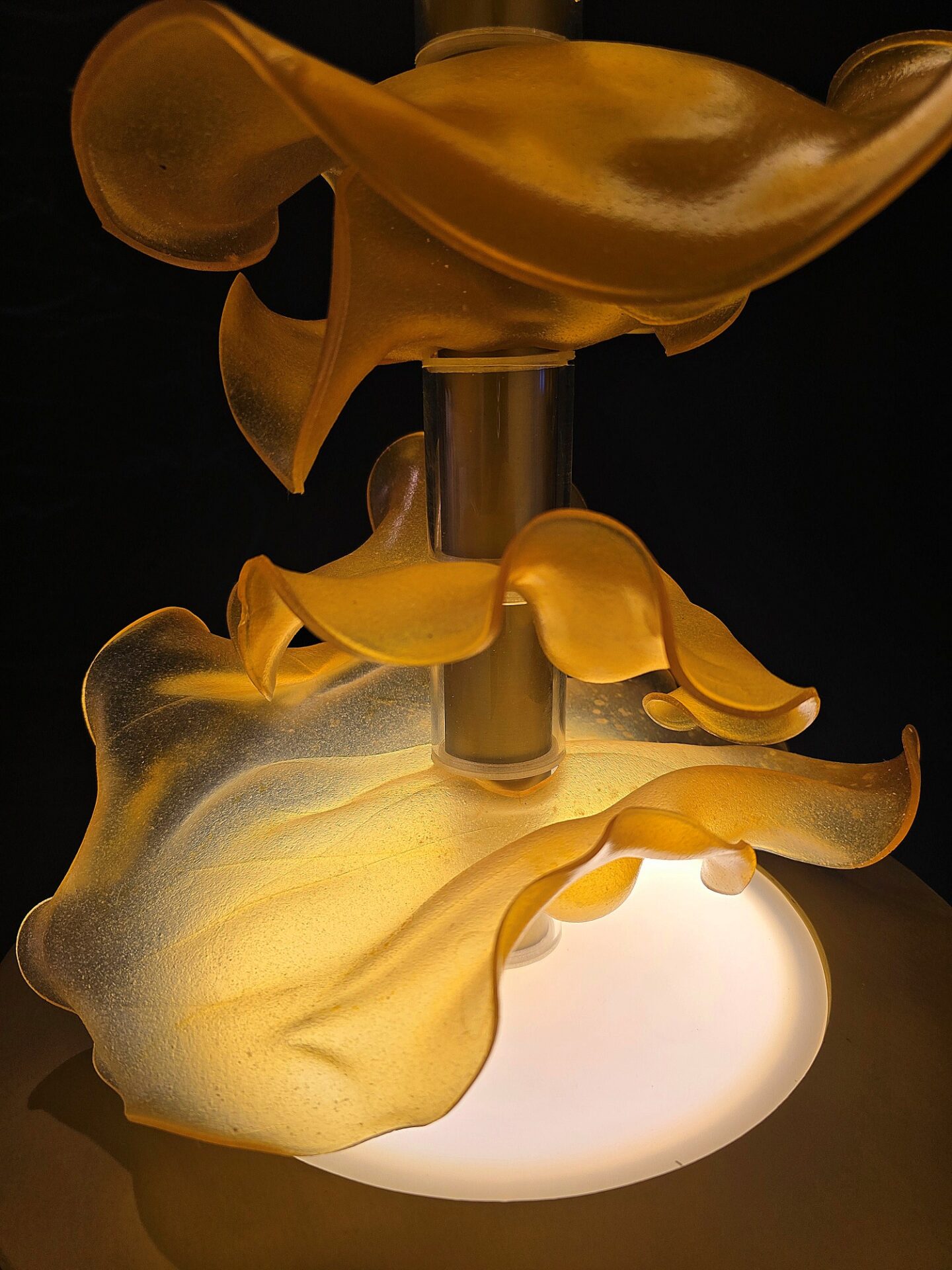
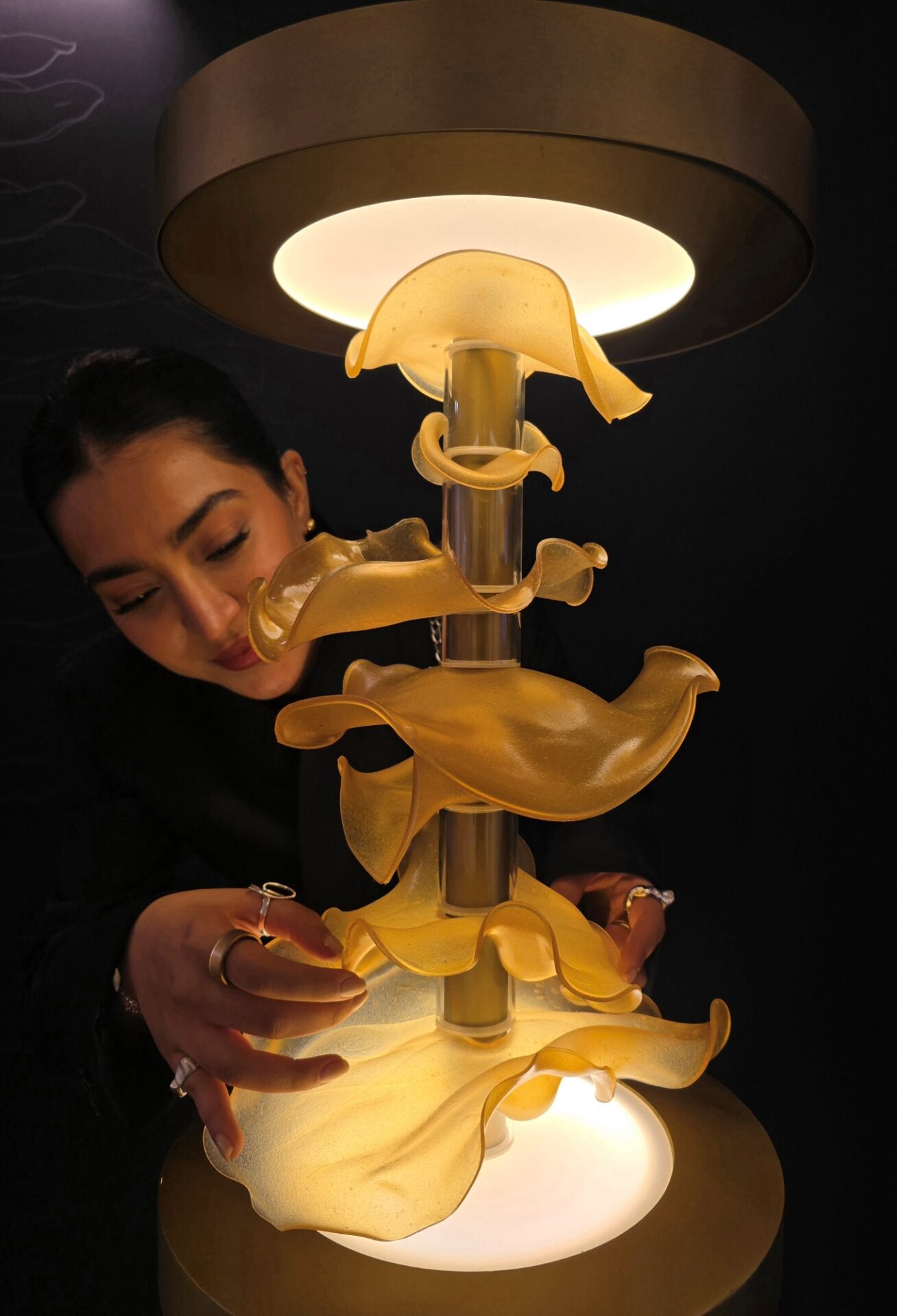
Yasamin Shaikhi’s “The Loudest Grain” shown at Art Basel Qatar begins with a single grain of rice, an everyday material associated with sustenance, repetition, and survival, and uses it as both a literal substance and a conceptual framework. Individually insignificant yet powerful in accumulation, the grain becomes a metaphor for media itself, where meaning is shaped gradually through repetition rather than volume.
Shaikhi’s creative process began with the collection of wasted rice. The rice was dehydrated, milled into a fine powder and combined with rice starch and natural binders to form a biodegradable compound. Cast into thin sheets and dried, the material became a translucent bioplastic. The material’s malleable property allowed Shaikhi to control the thickness. Once cured, the sheets were formed into undulating disks and assembled within a metal framework. The final product possesses an almost gossamer, luminescent quality, with warm, muted light diffusion.
Photography Mary Joseph
“The Loudest Grain” was selected as the inaugural work of ‘Next in Arts’, Media City Qatar’s three-year program exploring the intersection of art and media. Developed in collaboration with Art Basel Qatar, the program is designed as a sustained platform to support emerging creative voices through experimentation, visibility, and international engagement.
“Keep Cool” and “Food for Thought “Fatawa II” by Saudi artist Maha Malluh
Presented by Galerie Krinzinger

(Food for Thought) courtesy Galerie Krinzinger and the artist / Photo 2024 Tamara Rametsteiner
Maha Malluh’s “Keep Cool” is a monumental sculpture that transforms a palm-sized Rubik’s cube into a powerful symbol. Made from first-generation Saudi desert cooler units and painted in desert-inspired hues echoing the original cube, the work evokes Saudi Arabia’s past and present energy challenges. Enlarged, the cube symbolises the scale of the problems to be solved. The inside of the cube is messy, suggesting that the act of merely rotating the panels will not be enough to solve the complex hidden agendas lurking behind the surface of global issues.

Keep Cool courtesy Galerie Krinzinger and the artist / Photo 2025 Maha Malluh
When an object no longer serves a purpose, it can be repurposed, thus preserving its utility. Food, and the crockery or equipment used to serve it, is one of those things that bring people together. In the installation “Food for Thought “Fatawa II”, large trays that once cradled warm, pillowy bread carry passe cassettes. Instead of food, it is the act of listening to these audio cassettes that unites people. The installation speaks to the wider discourse of how ideas can penetrate society and become norms.
Together, the two works form a vision of Malluh’s artistic practice, where the domestic becomes monumental, indicating the scale of the challenges, and the discarded becomes invaluable, challenging our perceptions of what is and isn’t of significance.
Procession (The Wings of Desire), Divinity, Chyfchy (The Infinity Symbol), and Transe Nocturne by Moroccan artist Farid Belkhia
Presented by Le Violon Bleu Gallery

Image courtesy: Galerie Le Violon Bleu, Tunisia, and Sebastiano Pellion
Farid Belkahia’s work, showcased at Art Basel Qatar, explores the intricate relationship between the Arab world and the African continent as a whole. His work envisions a plural, vibrant, and dynamic vision of Africa, an Africa that embraces complexity, hybridity, and renewal.
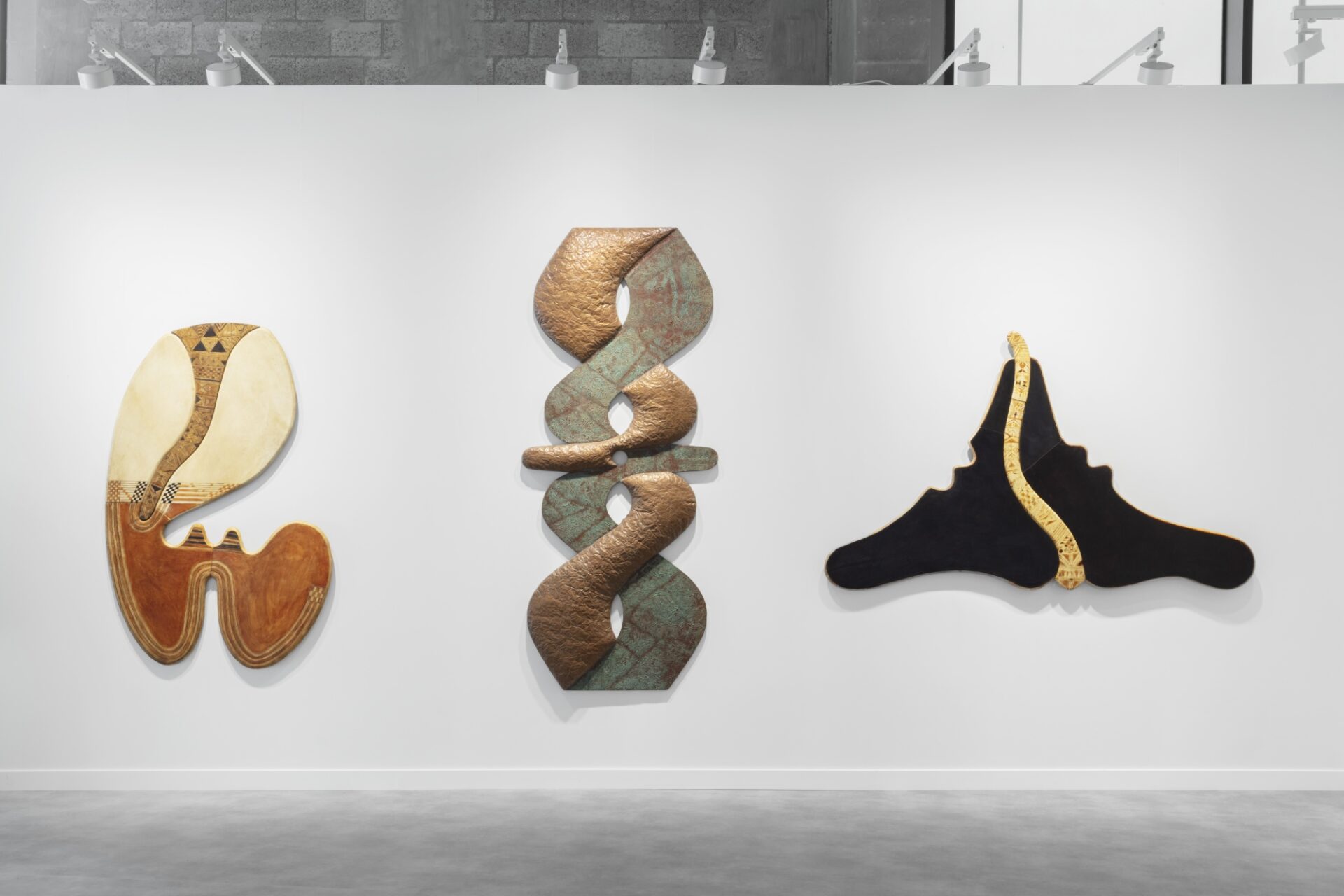
Image courtesy: Galerie Le Violon Bleu, Tunisia, and Sebastiano Pellion
His artistic practice evolved through extensive experimentation with materials such as copper, hammered, burned or oxidised, and later lambskin, whose tactile and symbolic qualities he explored in depth. These materials allowed him to develop a distinctive iconography built around signs, geometric forms and universal symbols influenced by Moroccan rituals, including Gnawa trance ceremonies. This material transition allowed him to explore deeper themes related to identity, spirituality, and the human connection to the earth, all while developing a unique visual vocabulary that defied Western- centric norms.
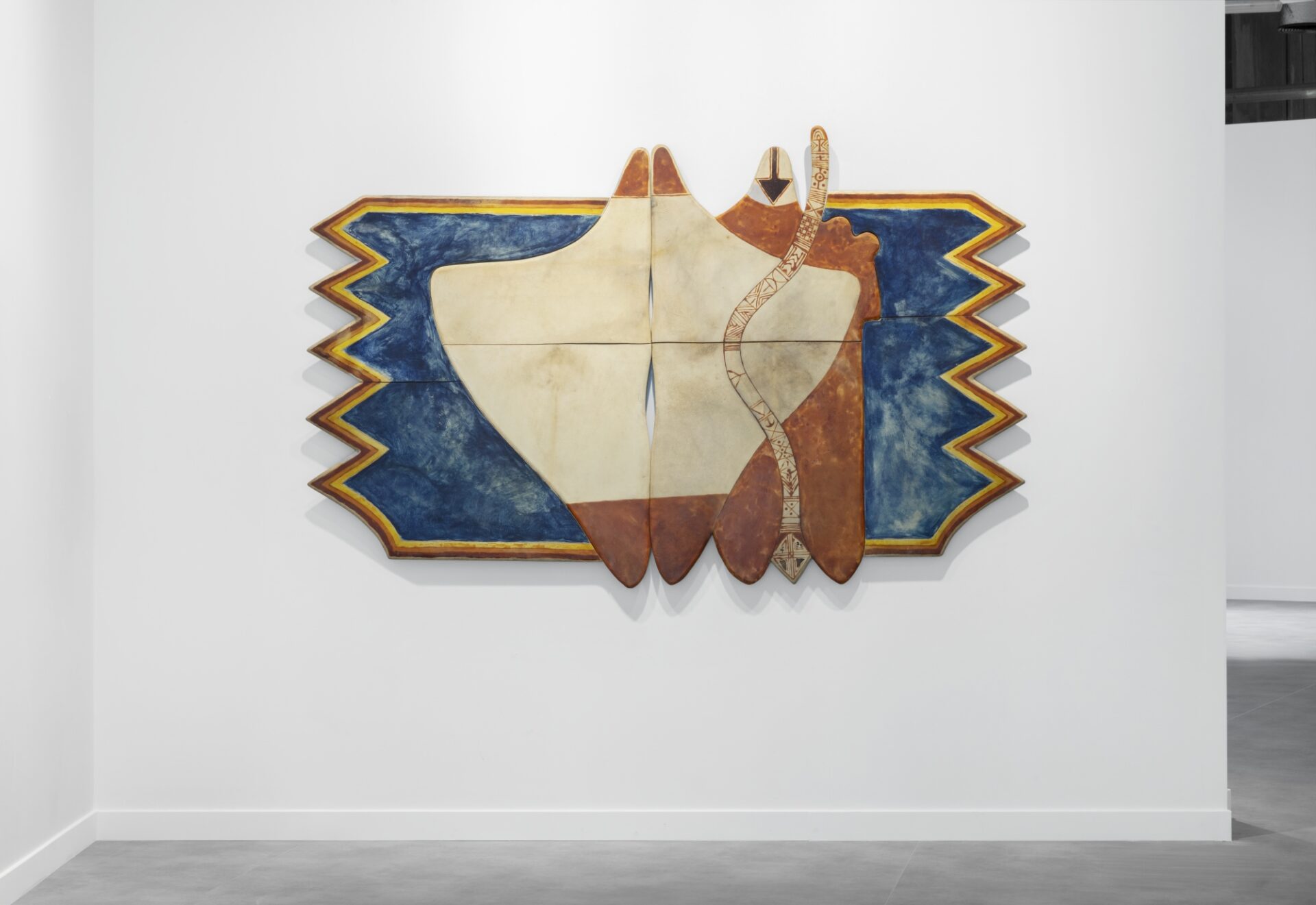
Image courtesy: Galerie Le Violon Bleu, Tunisia, and Sebastiano Pellion
For instance, “Transe”, “Divinity” and “Procession” use pigments and dyes on skin. Transe is inspired by the sacred music of the Gnawa and represents an individual and existential liberation. Procession, for its part, is a collective and ritual act that embeds memory and spirituality.
“Fractured Moment” by Pakistani artist Rashid Rana
Presented by Chemould Gallery
Courtesy Rashid Rana, and Chemould, Prescott Road, Mumbai
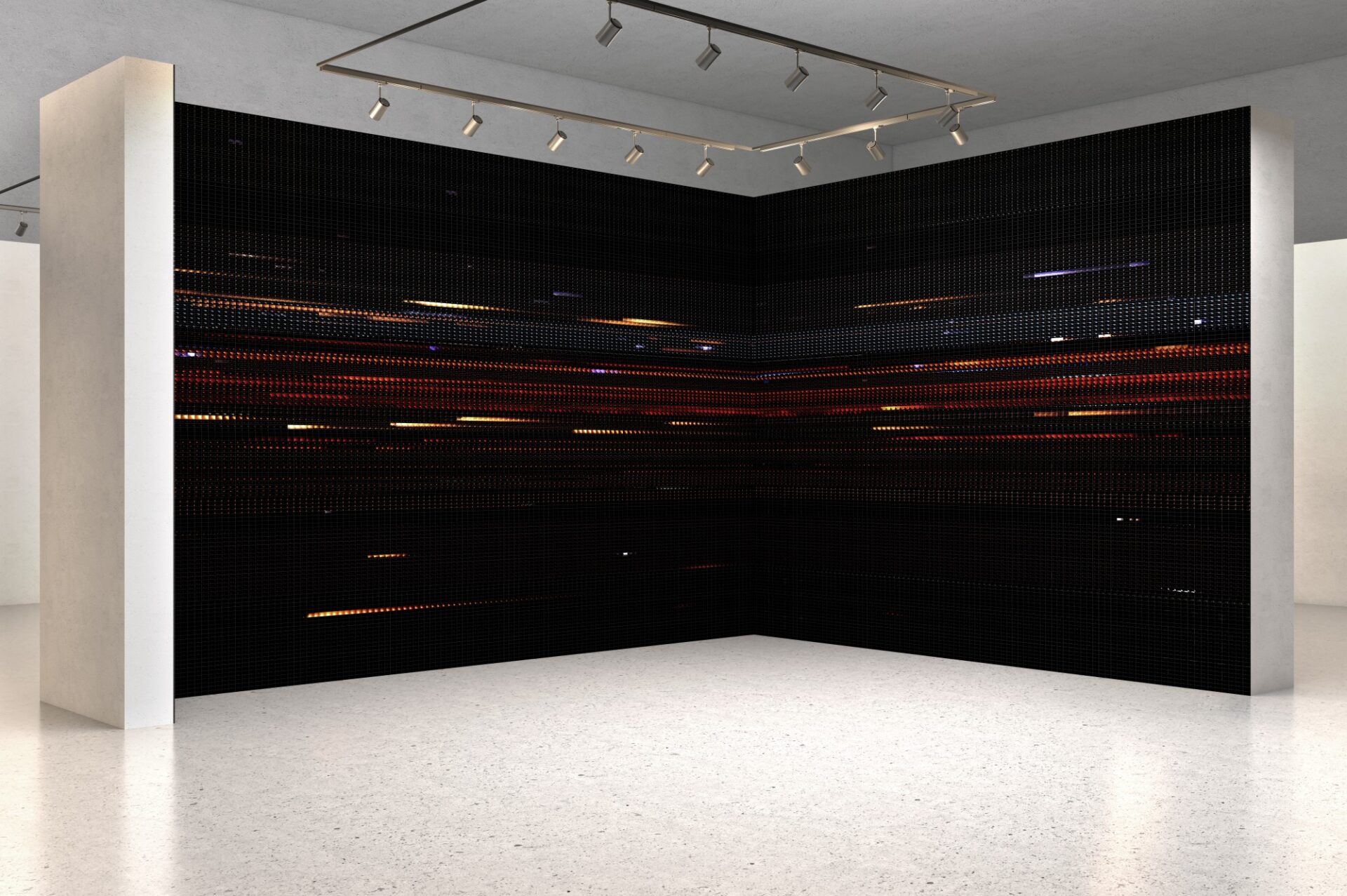
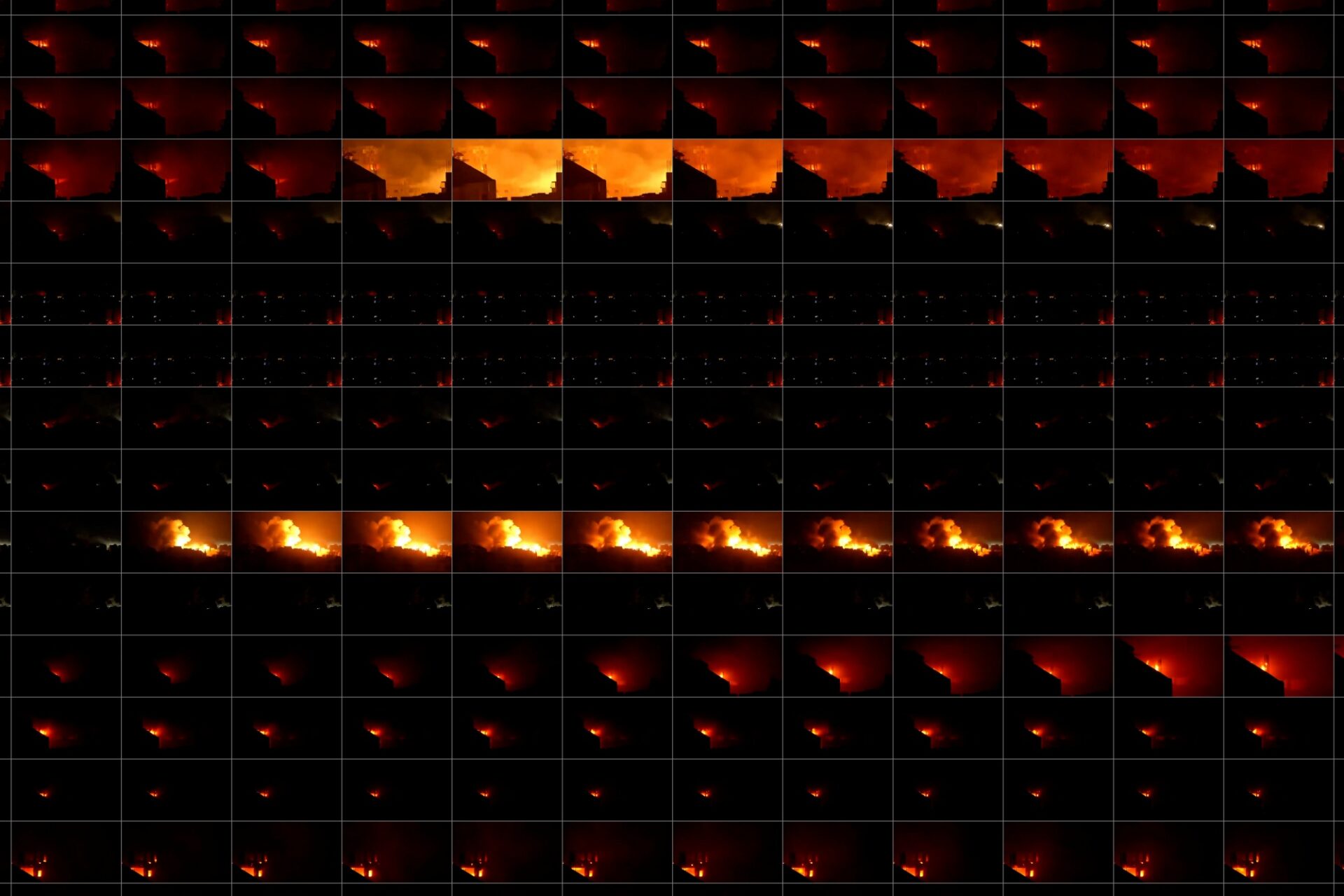
Rana’s work serves up the illusion of a frozen moment drawn from the conflict in Gaza. Created as an archival inkjet print on paper and produced as wallpaper, the installation showcased at Art Basel Qatar presents a sequence of static images drawn from CCTV footage of a night sky in Gaza. The images are mounted on an expansive and immersive scale that engulfs the viewer’s field of vision, almost as if the viewer is standing under the night sky.

Courtesy Rashid Rana, and Chemould, Prescott Road, Mumbai
The images record time precisely as it unfolds: the sombre night sky is lit up by intermittent bursts of air strikes, which leave behind a sea of darkness in their wake. While apparently motionless, the atmosphere is continuously reconfiguring itself as the camera captures each moment.
Courtesy Rashid Rana, and Chemould, Prescott Road, Mumbai
By freezing that moment in his work, he urges us to pause, look beyond the spectacle and ponder the human costs hidden beneath this seemingly artistic montage. By doing so, the work reminds us that for societies pushed to the brink, every moment, like a camera shot, can be a lifetime.