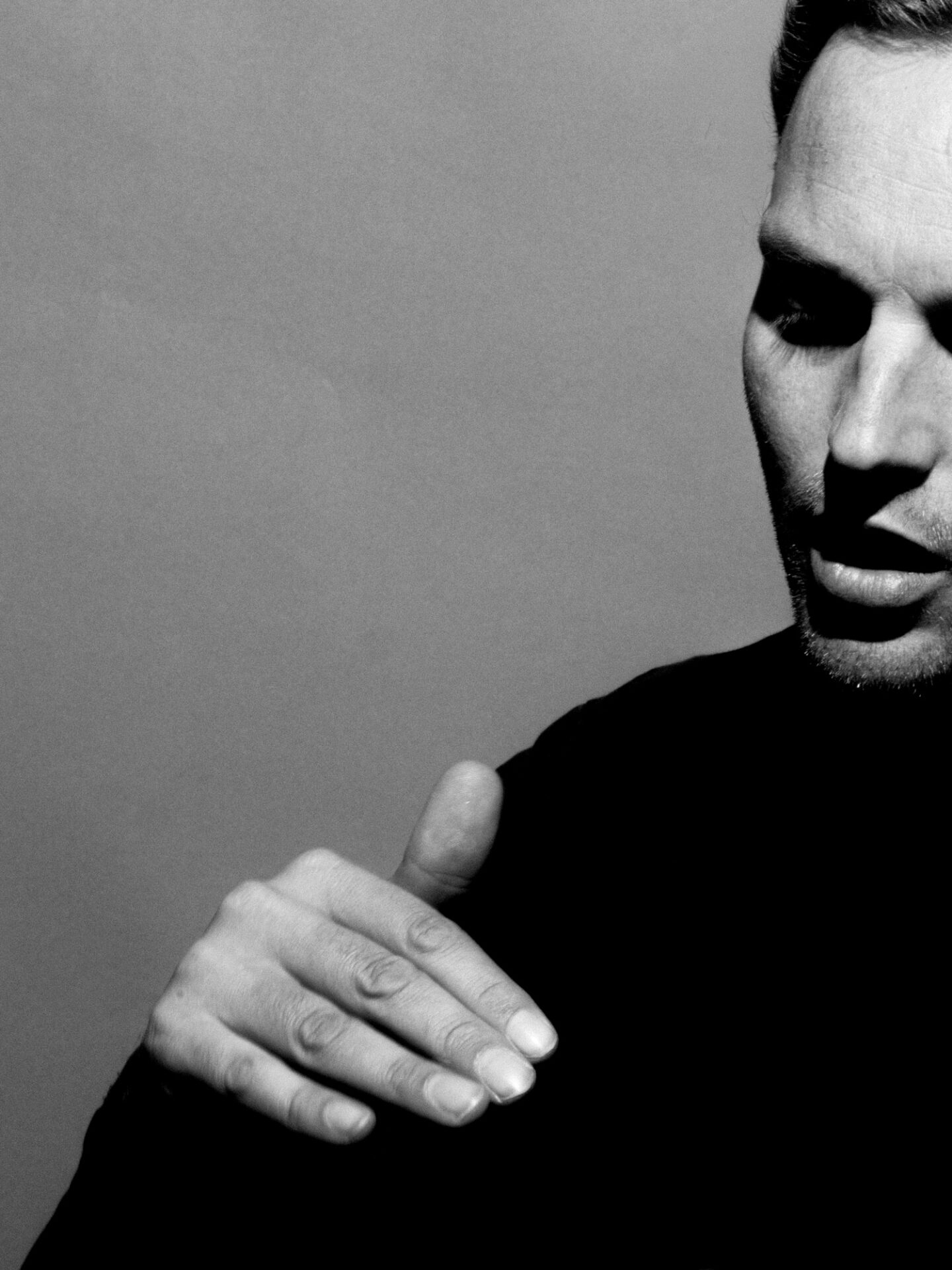
Rick Tegelaar Builds Machines. Then He Designs.
For Dutch designer Rick Tegelaar, every object begins with a question. It is this curiosity that fuels high levels of creativity in his daily quest to create impactful and innovative design by redefining materials. Following OASIS, his first solo show in Milan, SCALE speaks to Rick Tegelaar about chicken-wire chandeliers, custom-built tools, working away from the noise, and why process and product are impossible to separate.
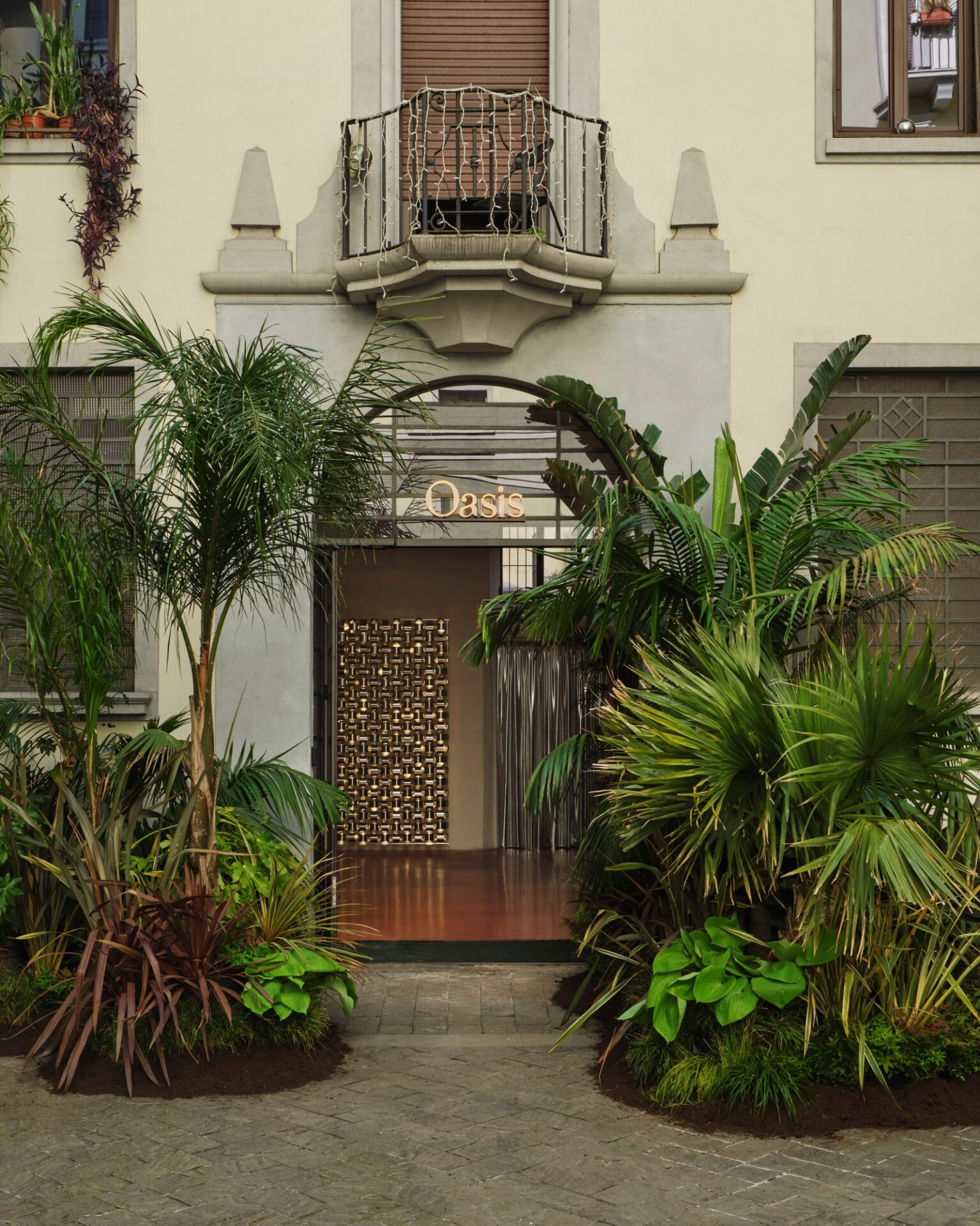
OASIS presented a living environment where objects are animated, breathing, shifting, and responding to the quiet energy embedded in things made by hand.
There is something wonderfully uncomplicated about the way Rick Tegelaar describes what he does in his studio.
“All my work is made by hand, in my studio. Basically, everything we make ourselves uses a custom machine or tool. We sometimes joke that every project is an excuse to build a machine. Our machines and fixtures help us to speed up or eliminate tedious tasks.”
This tells you almost everything you need to know about Rick’s practice. His studio is not simply a place where objects are designed. It is a workshop of experiments, improvised tools, custom machinery and materials pushed into territories for which they were never intended.
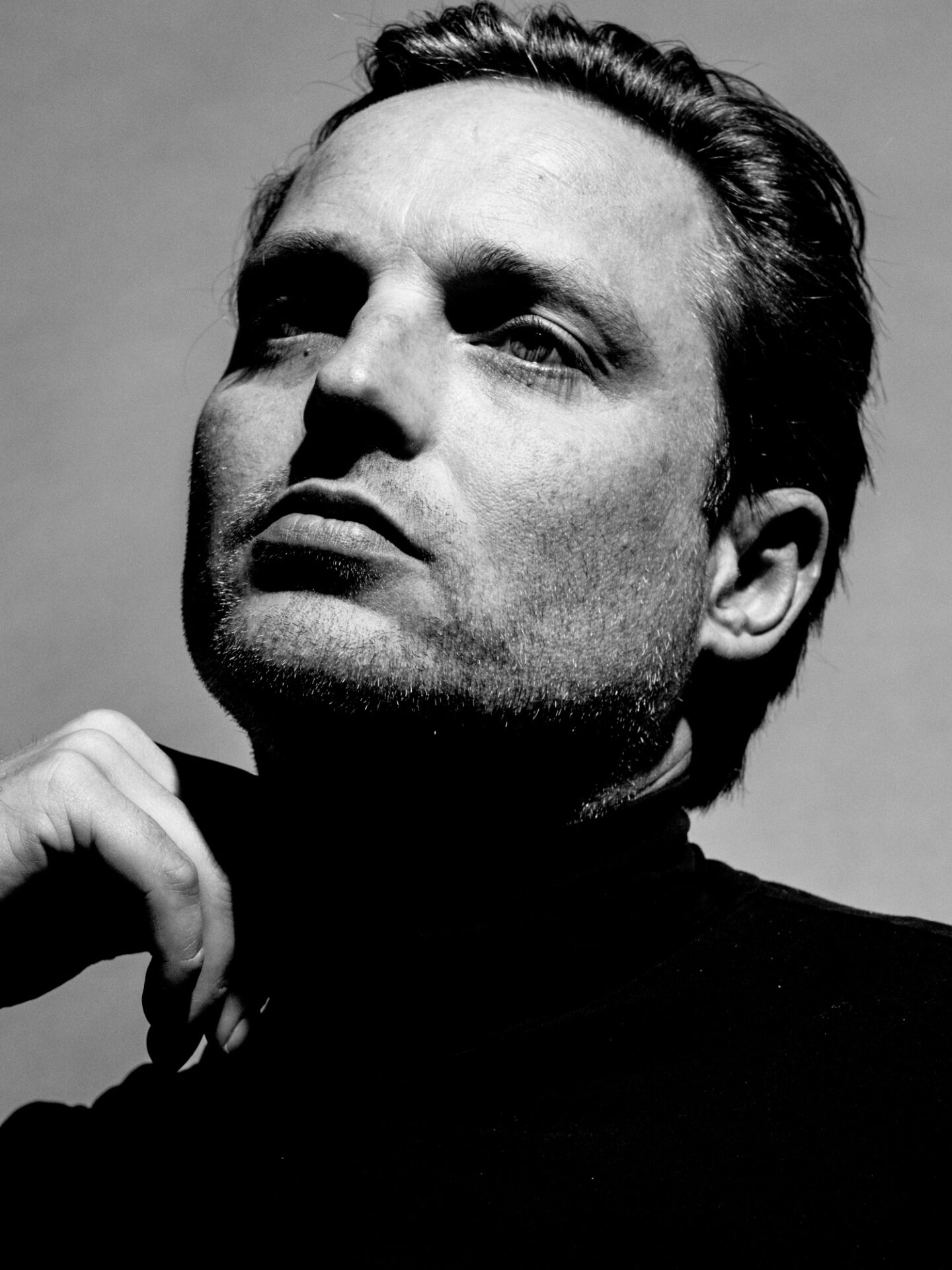
“Curiosity may have killed the cat, but it fuels high levels of creativity in my daily quest to create impact with innovative design by redefining materials and their manufacturing possibilities,” Rick Tegelaar.
Based in Arnhem, Rick founded his studio in 2011 after graduating with honours from the Product Design department at ArtEZ University of the Arts. Since then, his practice has moved between product design, engineering and material research, often beginning with materials that the design world might easily overlook.
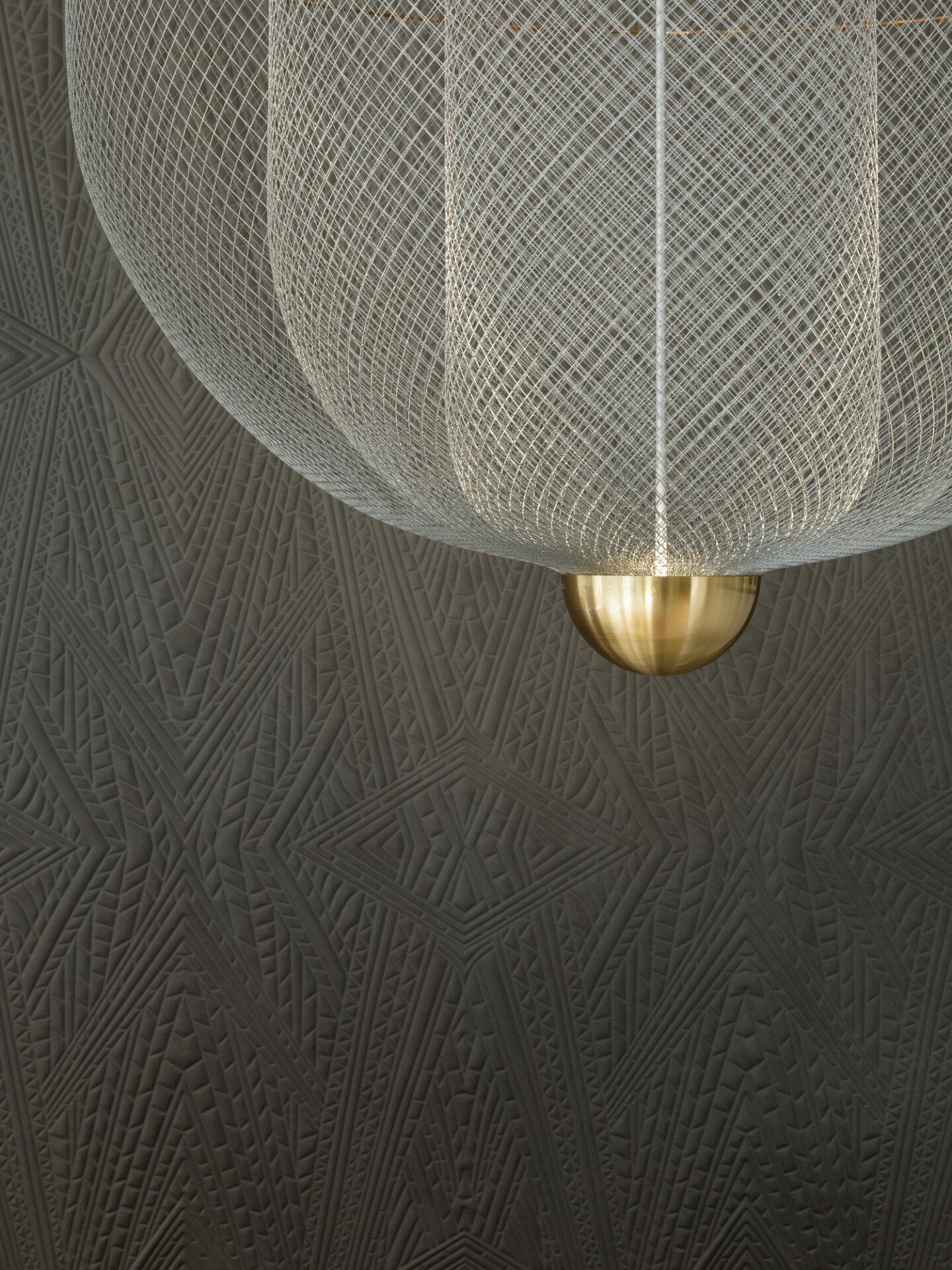
Meshmatics by Rick Tegelaar for Moooi
The most famous example is the Meshmatics Chandelier, born from chicken wire and eventually adopted by Moooi. Rick elevated the nature of humble wire netting by developing a machine and a set of tools to model it with accuracy. The full potential of this thin and flexible material is stretched and captured within three layers of beauty. But the chandelier is only part of a larger story: Rick’s real fascination lies in understanding how something is made, and whether making it differently might completely change what it can become.
In April 2026, during Milan Design Week 2026, Rick brought this world to Milan with OASIS, his first solo exhibition in the city. Spread across 270 square metres, the installation was conceived as part studio, part landscape and part sensory retreat: objects moved and responded, plants became part of the environment, a bespoke scent filled the space, and visitors could encounter not only the finished work but the tools, machines and experiments behind it.
For Rick, showing the process was as important as showing the product.
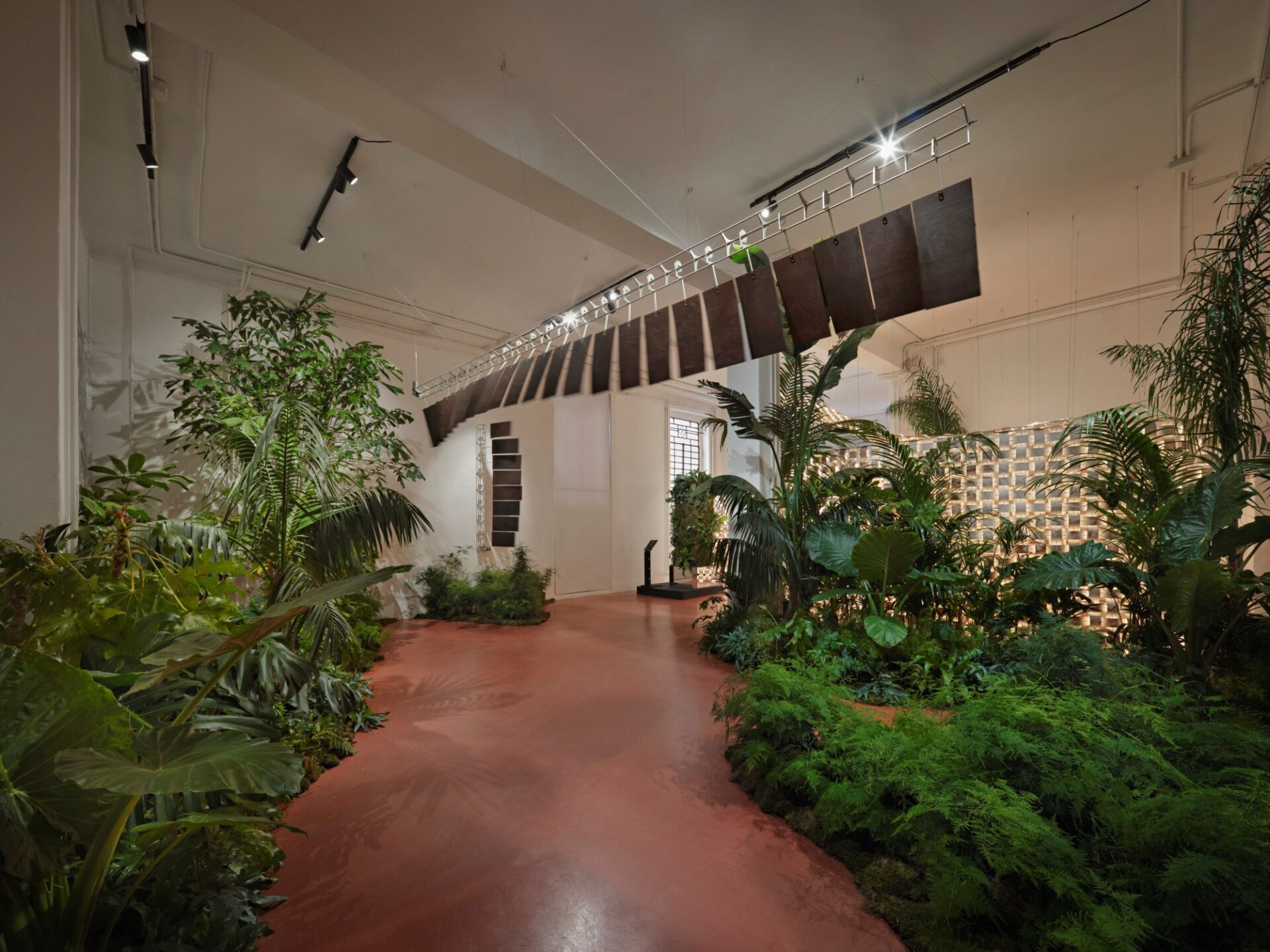
With OASIS, Rick wanted people to explore a vibrant biotope of creativity.
The space unfolded within a living plant installation by Pim Schrier of Plants in Paradise and is completed by a bespoke scent created by SOM Tales of Perfume. Visitors wandered freely through the space, discovered mechanical and moving elements, and observed how Rick builds, experiments, and tinkers using his self-made machines and tools.
“Exploration is a big part of my work. With OASIS, I want to invite people to explore a vibrant biotope of creativity,” he says.
When the Tool Does Not Exist, Build It
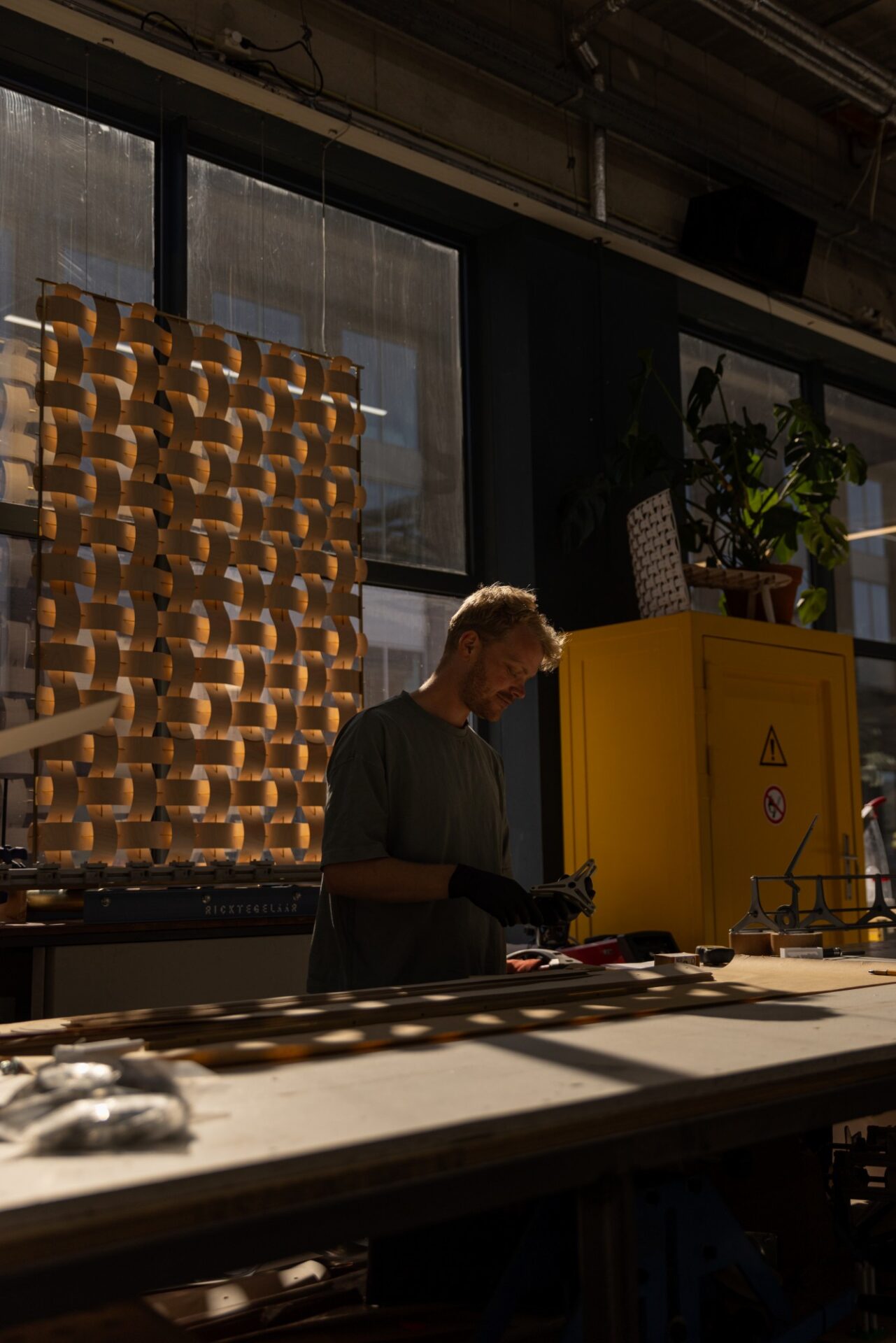
Rick’s first love was machines.
Rick’s fascination with making his own machines developed during his work on Meshmatics.
“One of the first projects where I really started to dive into making my own tools and machines was Meshmatics,” he explains. “I discovered that forming the wire mesh in a controlled way was really the key to developing a new narrative and value for the material.”
Through experimentation, he developed a method of stretching wire mesh over a mould so that it could be formed consistently. The tools and machines emerged from a practical need: control.
“Building my own machines is sometimes necessary because the tools or machines simply do not exist, or are way too expensive to purchase just as an experiment. Next to that, with a background in engineering, building machines yourself is also a lot of fun.”
Today, custom machinery is embedded in almost everything the studio makes.
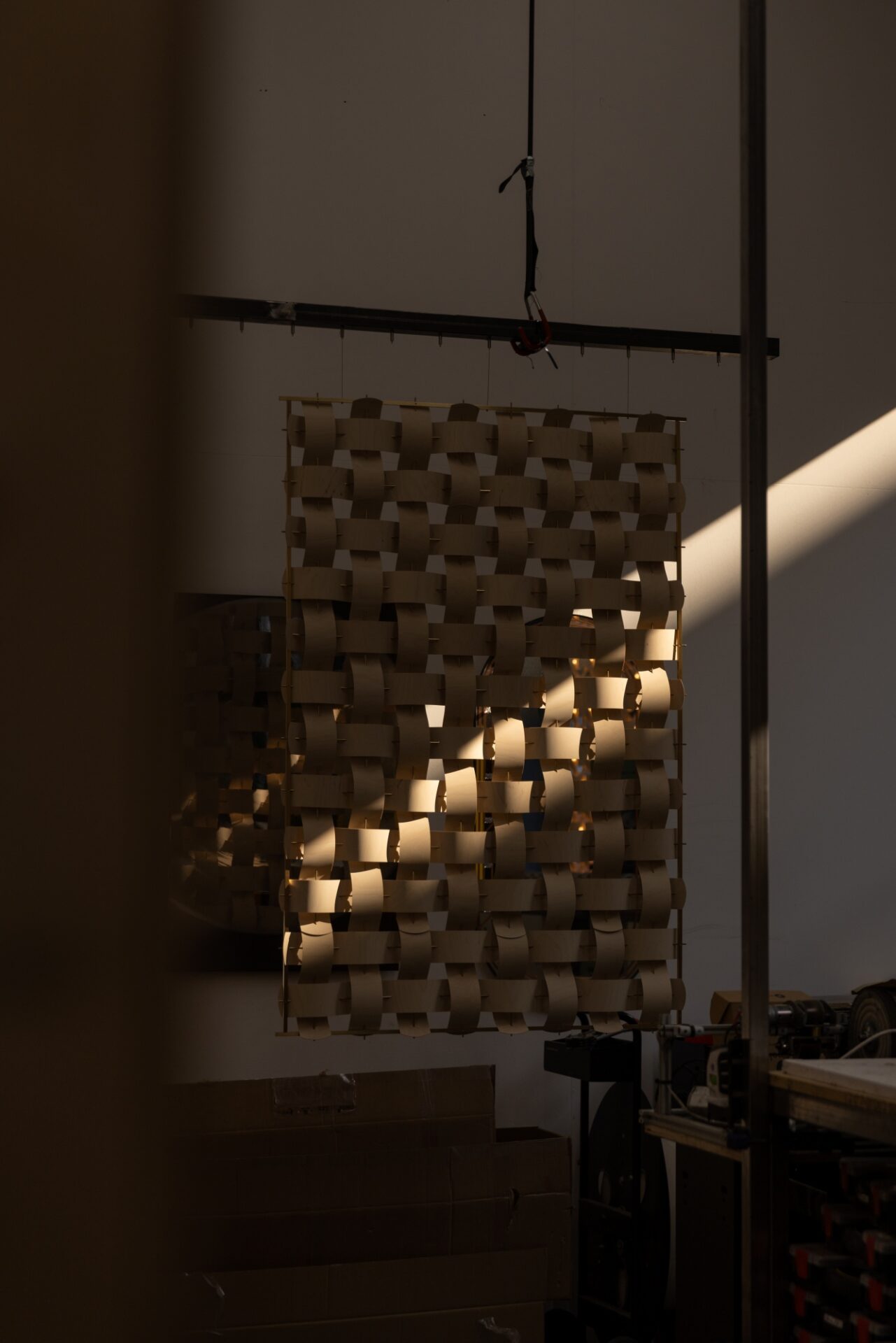
Tabby is an illuminated structure with its name derived from the simplest of weaves; the structure is entirely held together by tension.
“Basically, everything we make ourselves uses a custom machine or tool. Our machines and fixtures help us speed up or eliminate tedious tasks. One big benefit of building your own machines is that it’s very easy to upgrade or fix them when needed.”
There is a useful contradiction here. The machines are built for precision and repetition, yet the results have a distinctly tactile quality. Rick’s work often feels delicate, even when it begins with something industrial.
The Process Is the Design
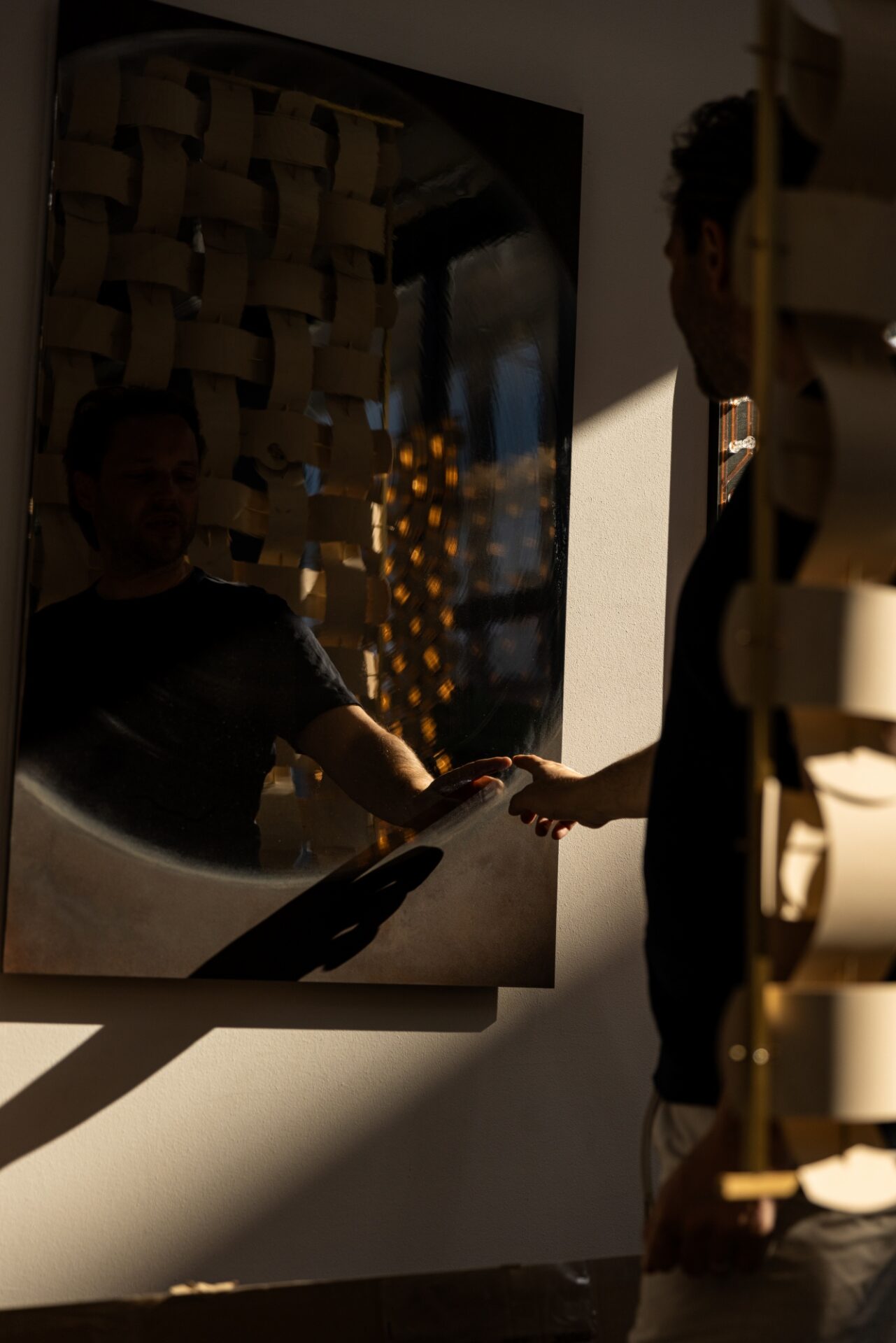
“I typically do not chase a specific shape or style,” Rick Tegelaar
Ask Rick whether the transformation of an ordinary material is the work, or whether the real work happens before that transformation, and he refuses to separate the two.
“To me, the design process, the production process and the design itself are very connected. When designing, I typically do not chase a specific shape or style. The concept and design develop while making and developing.”
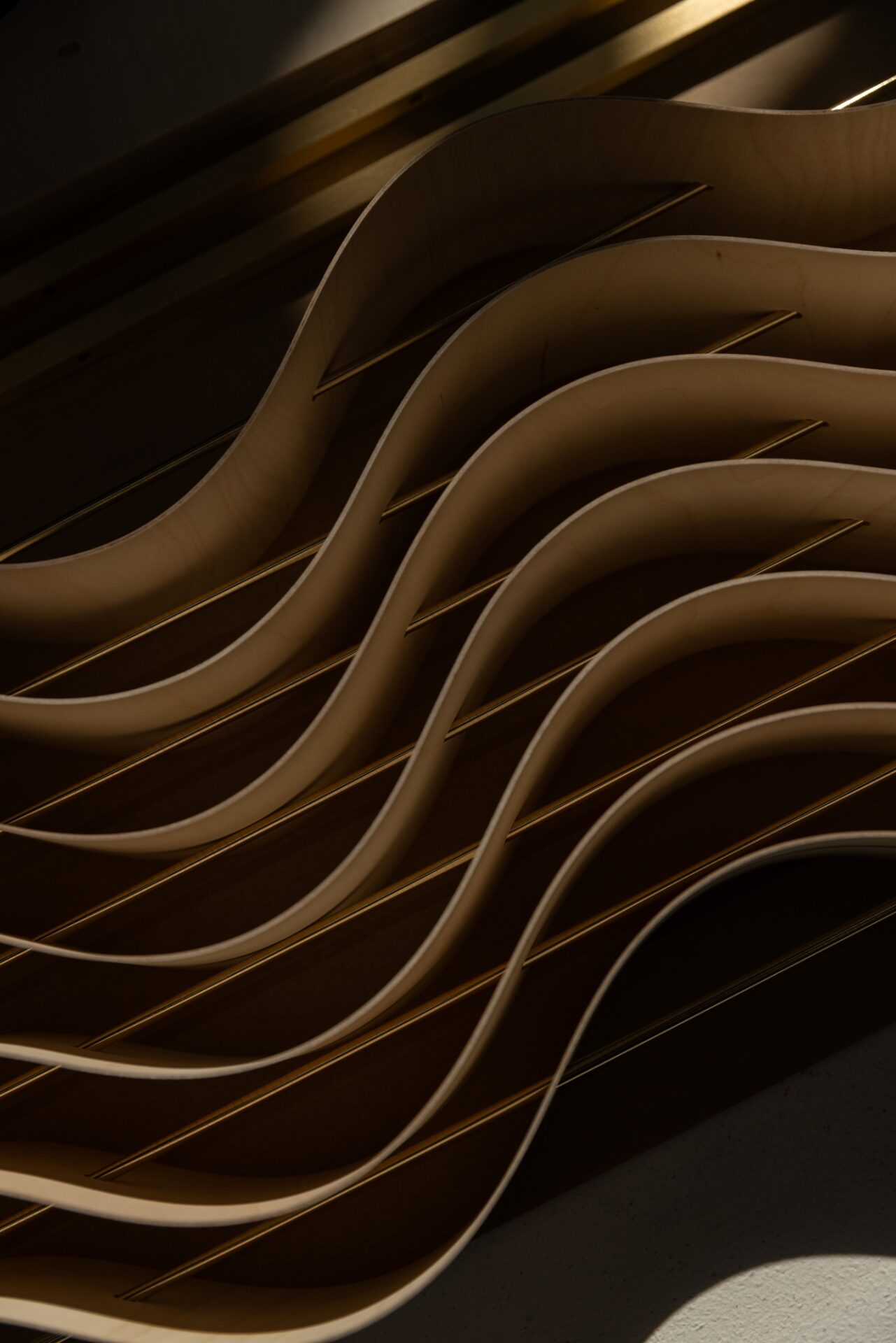
Process is an intergral part of the design of Rick.
This is perhaps the most revealing way to understand his work. There is no predetermined aesthetic waiting to be manufactured. Form emerges through the process of testing, building and understanding.
“I believe that a product that is made interestingly can develop its own unique and innovative aesthetic. So naturally, the process becomes an inseparable part of the design.”
The Meshmatics Chandelier demonstrates that idea particularly clearly. When Rick began working with chicken wire, he saw a material with little perceived value within professional design. Instead of disguising it, he studied it.
“When I started the project, chicken wire was a material with no value or place within a professional design context. But by taking it seriously and researching it and believing in it, it has now grown into an internationally applied fixture people love.”
For him, its adoption by Moooi was “the perfect conclusion of the project.”
OASIS: A Place to Land
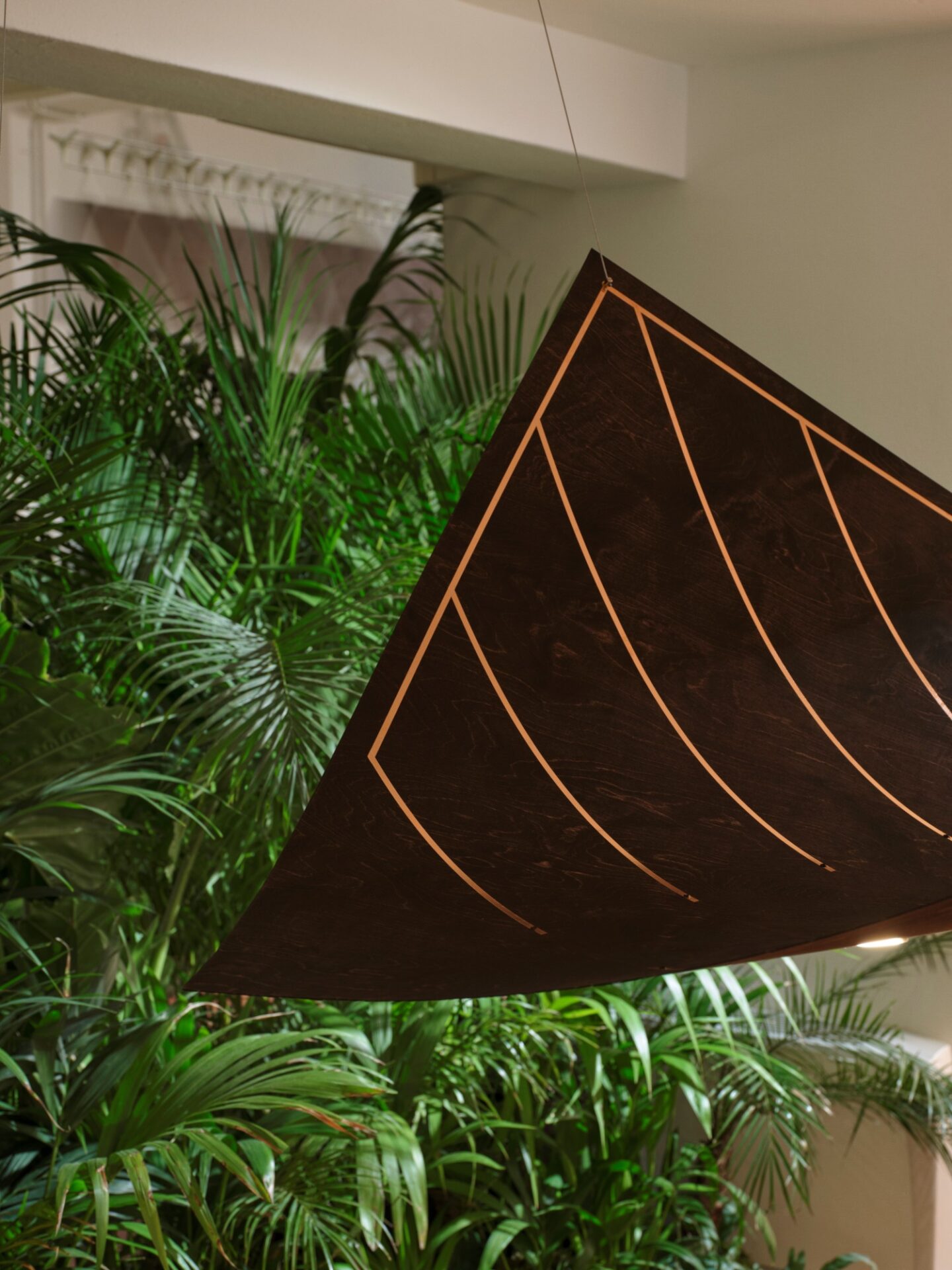
From Oasis during Milan Design Week.
Milan Design Week is rarely associated with slowing down. During one of the busiest weeks in the international design calendar, Rick chose to create the opposite of another high-volume spectacle.
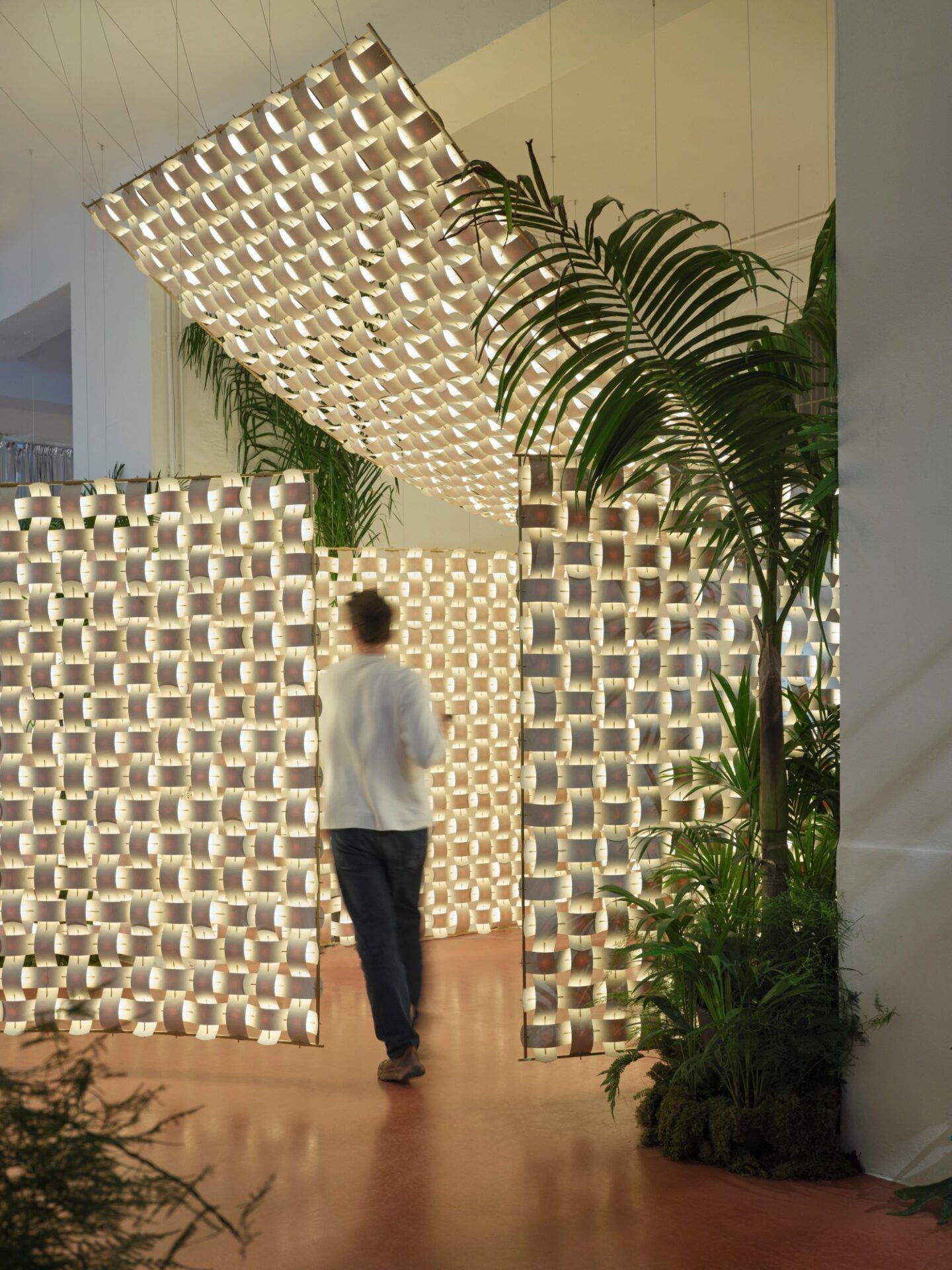
Oasis.
“We really wanted to create a space to land, slow down and zoom in on the objects we create,” he says of OASIS. “A little biotope on the busy Viale Abruzzi field, with custom plant installations that complement our work.”
The exhibition brought together work from across his career alongside pieces developed specifically for Milan and a new lighting collection. A living plant installation was created by Pim Schrier of Plants in Paradise, while SOM Tales of Perfume developed a bespoke scent for the space. Visitors were encouraged to wander, observe moving and mechanical elements, and discover how Rick experiments and works with his self-made machines.
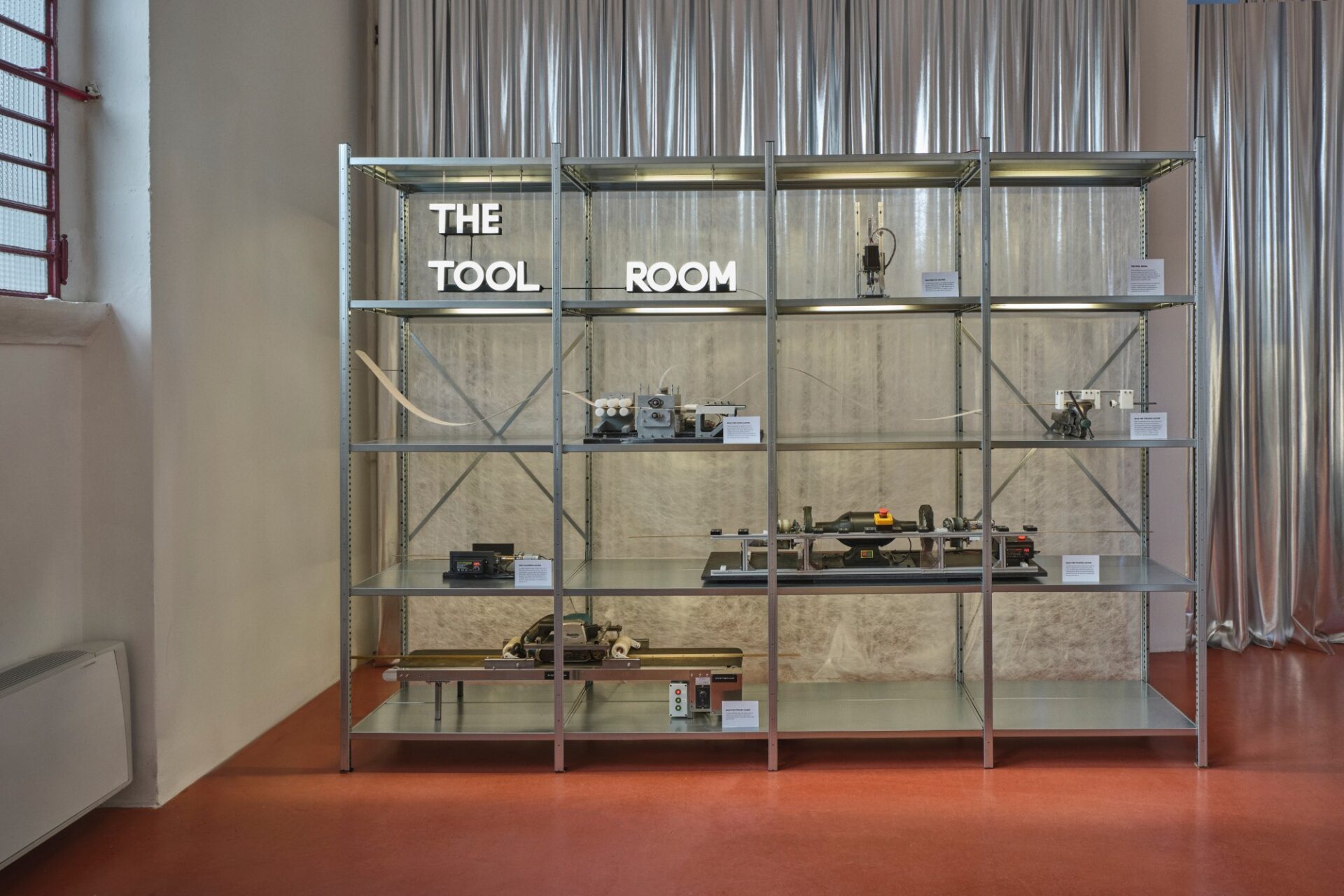
The Tool Room was also in focus during Milan Design Week.
“I wanted the space to feel real and genuinely about design,” Rick says. “People mentioning it as a breath of fresh air from all the inflatables was a nice compliment for me.”
A particularly revealing part of the exhibition was the Tool Room, which shifted attention from the polished object to the work behind it.
“When you create a project for an exhibition, you obviously have complete control over the project, but also the context of its presentation. For OASIS, we created the Tool Room that zooms in on all the development work we do to make projects like Tabby or Traces come to life.”
Fifteen Years of Milan, and Finally a Solo Show
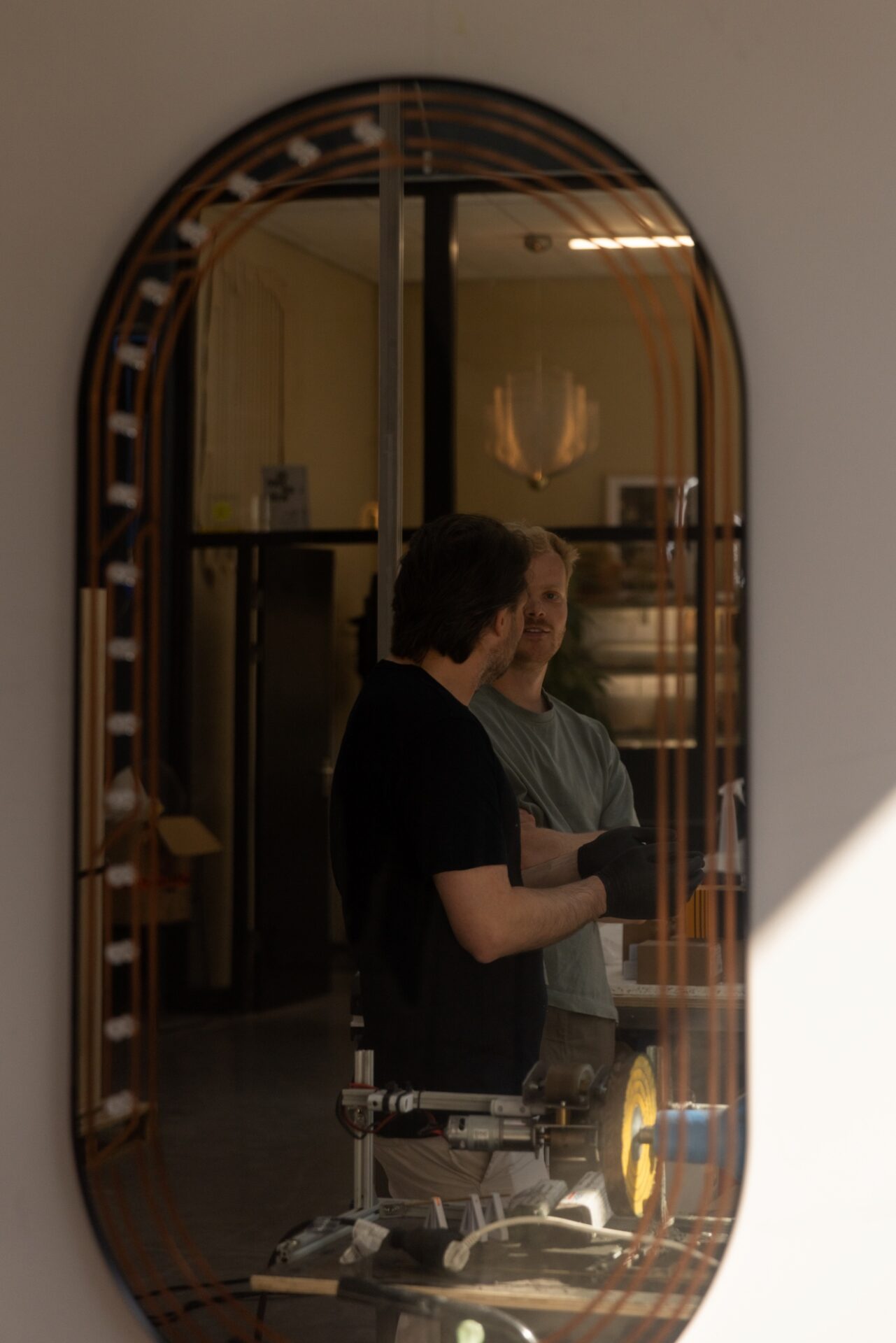 OASIS may have been Rick’s first solo show in Milan, but his relationship with the city goes back much further.
“I’ve been coming to Milan almost every year since the start of the studio 15 years ago, so I know the city a little, and it felt right to kick off this new phase there.”
The timing also reflects a change in the studio itself.
“Over the past few years, the studio has gained more recognition nationally, while starting to work more internationally. So, to further expand our network and community internationally, Milan felt like the right place to start to do so solo.”
His practice now moves across fashion, retail, interiors and product design. Rick is particularly interested in what happens when a designer enters the existing world of a brand.
“What I really enjoy about working for a brand is that you have a lot of heritage or context to relate to and experiment with.”
Rather than seeing a hard divide between fashion and furniture, he is interested in how identities travel across disciplines.
“Quite a few houses have started home goods collections, and some of them are really great. I think it’s very interesting to see how you can translate the fashion heritage of a brand into objects.”
Away from the Noise
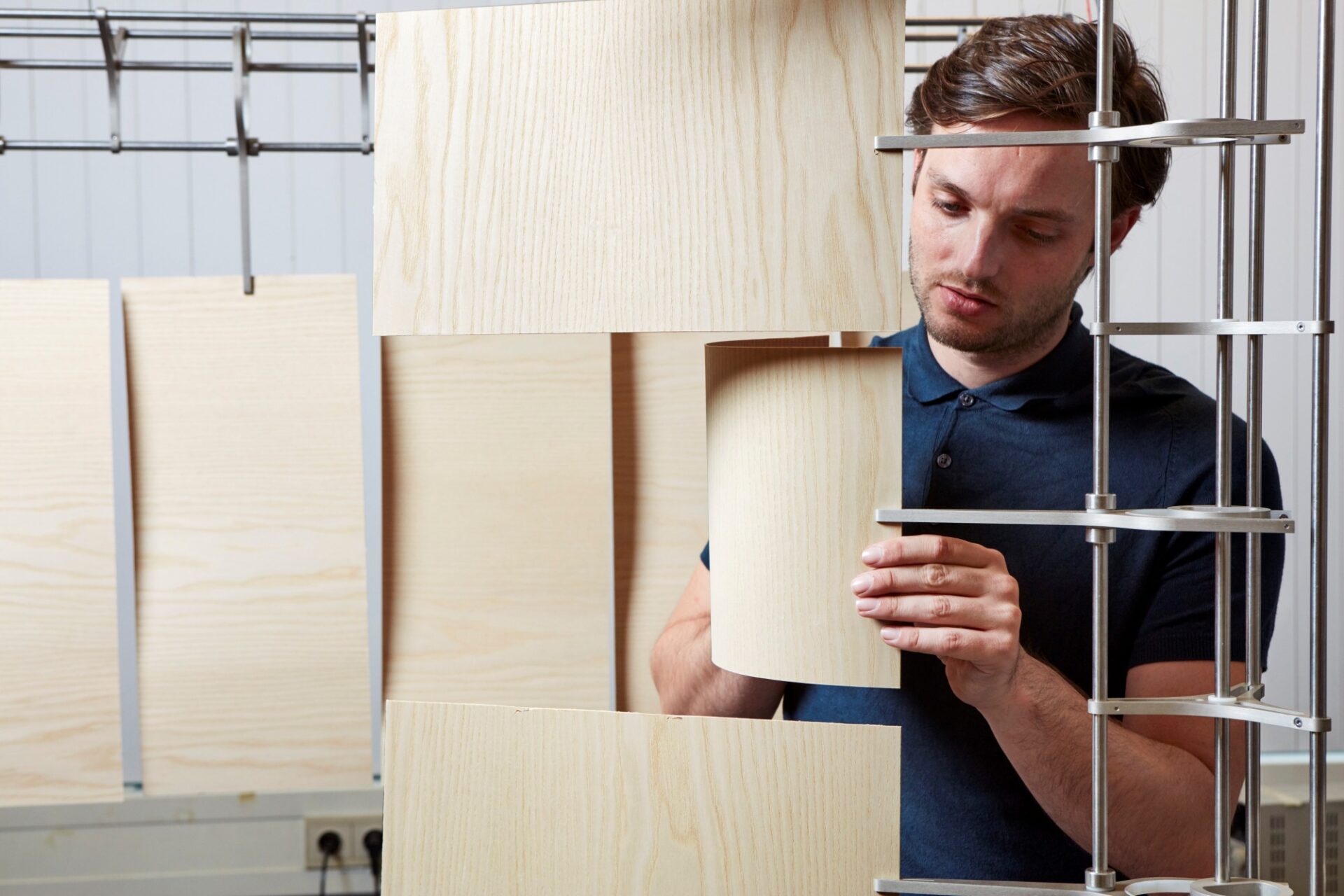 Although Rick was born in Rotterdam, his studio and working life are firmly rooted in Arnhem, a distinction he clearly values.
“Yes, I think it matters a lot. Arnhem is a very green and chill city. We have quite a substantial space here that allows us to own a lot of tools and machines, vital to our work.”
Space matters when your practice involves building not only the object, but also the equipment required to make it.
“I really enjoy going to Amsterdam and Rotterdam too, but I also like the idea of retreating into a quieter part of the Netherlands that lets me focus. And let’s face it, in such a tiny country everything is close.”
It seems an appropriate base for a designer whose work depends on time: time to observe a material, build a machine, test a process and discover what the object wants to become.
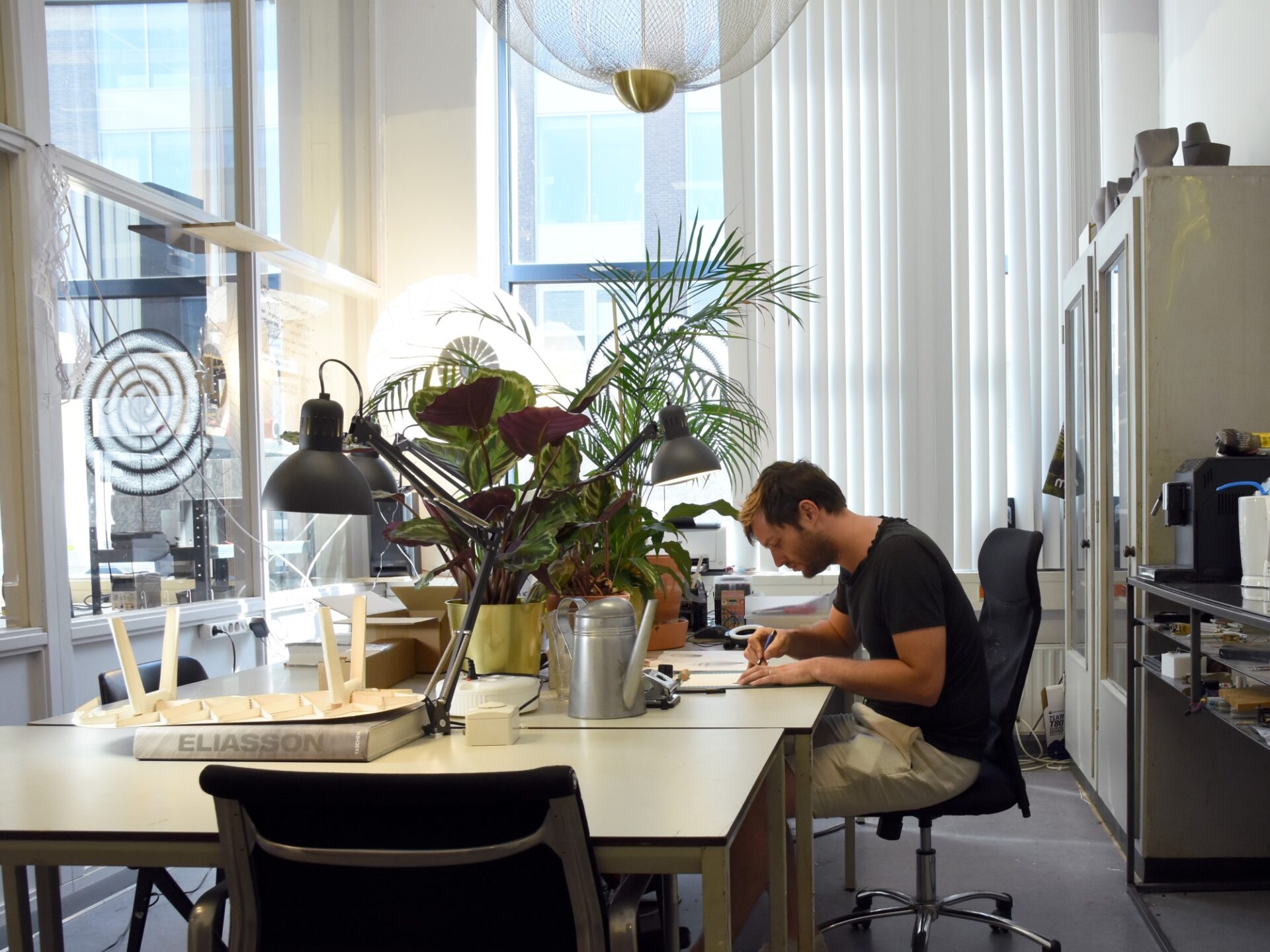 And after the declaration that is a first solo show, what comes next?
Rick is refreshingly unwilling to turn the moment into a grand manifesto.
“I try to not build too much pressure for myself around this. I really enjoyed building my own world together with people I believe in in Milan. I think I will just keep on doing that and see where that road takes me.”
For a designer whose career began by asking what might happen if chicken wire were taken seriously, that openness to the unknown feels entirely consistent.