Iwan Maktabi and the Evolving World of Contemporary Carpets
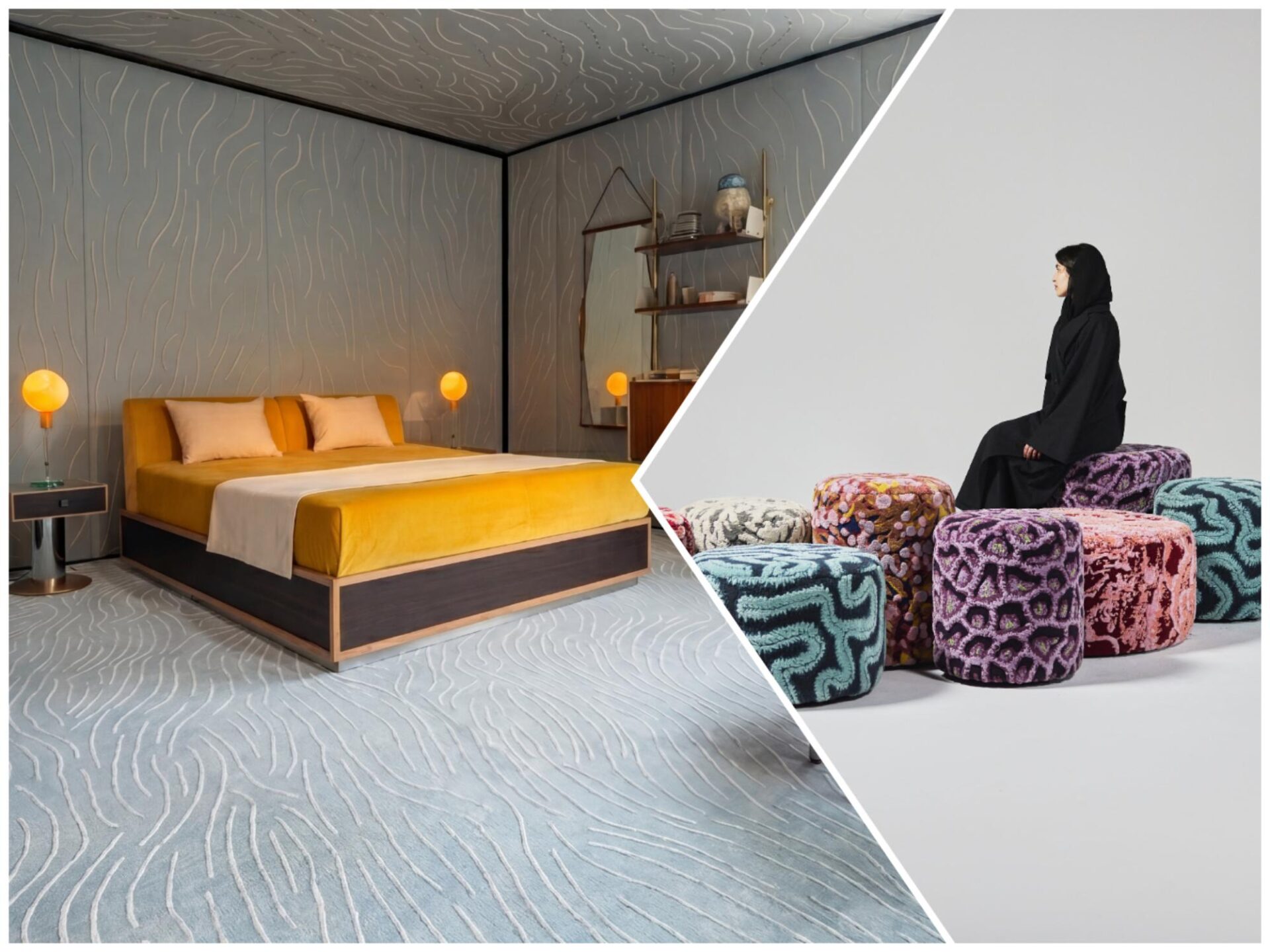
At Milan Design Week 2026, Iwan Maktabi moved beyond presenting carpets as decorative surfaces, instead expanding the conversation about the material’s possibilities. Through two distinct collaborations, “Cadence,” an immersive hotel room installation developed with David/Nicolas and de Gournay, and “CORA,” a sculptural seating collection created with Saudi designers Abeer AlRabiah and Albandari Sulaiman through Jusoor Design Collections, the brand explored carpets as a spatial language. By Aishwarya Kulkarni
Founded in 1995 by H. Abbas Maktabi and rooted in a family legacy that began in 1926 in Isfahan, Iwan Maktabi has long balanced heritage craftsmanship with contemporary experimentation.
Today, led by the third generation, the company works across handmade carpets, bespoke collaborations, and material research, while continuing to champion sustainability and fair trade across its production network in Nepal and beyond.
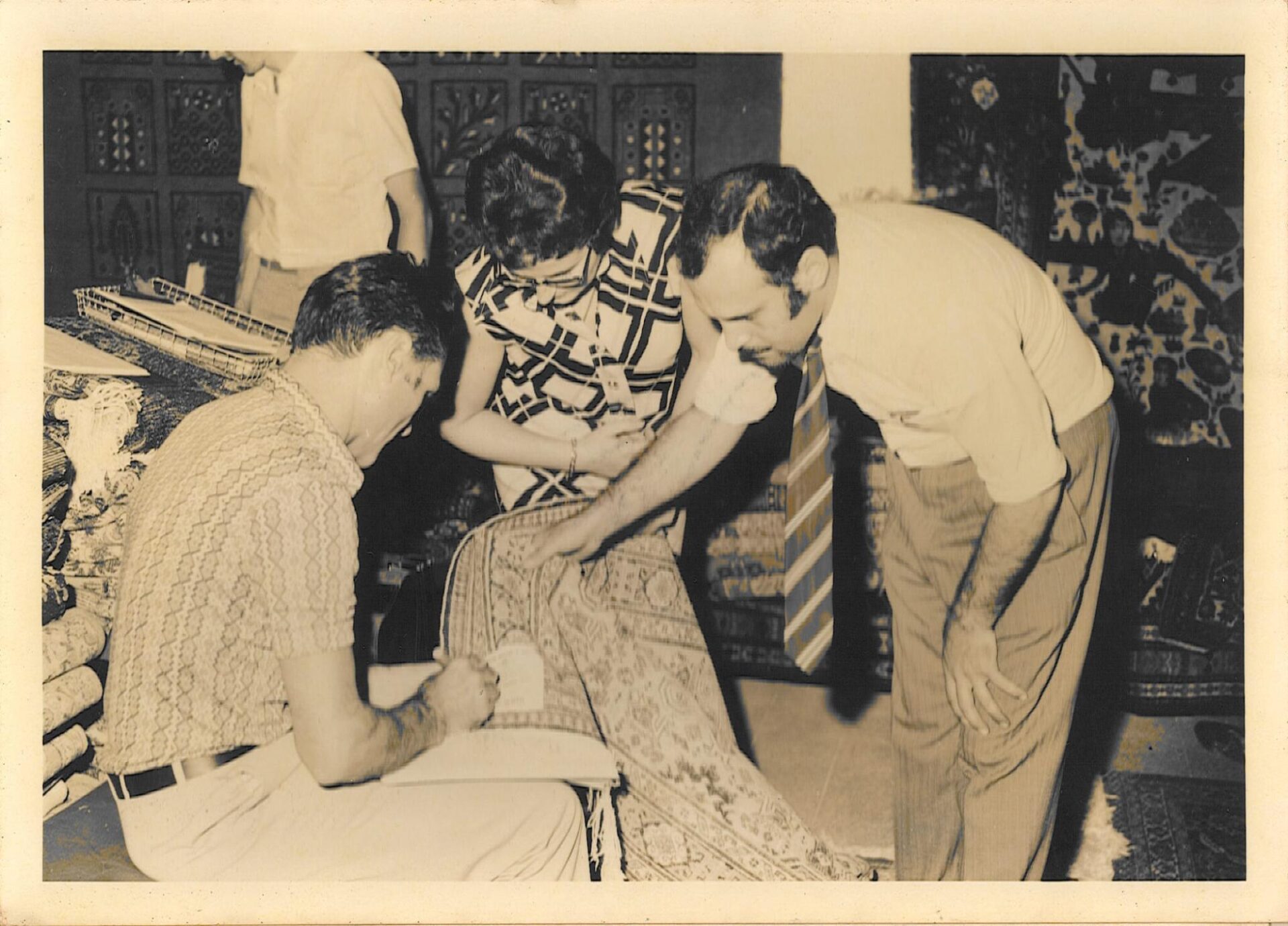
From Iwan Maktabi’s file pictures.
At Milan Design Week 2026, Iwan Maktabi shared two distinct collaborations that pushed the limits of the craft of hand-knotted carpets. The two collaborations showed the versatility of the brand’s approach and craftsmanship to contemporary design.
The first collaboration, “Cadence”, is an immersive hotel room installation imagined by David/Nicolas and de Gournay. And the other is “CORA”, a sculptural seating system developed through Jusoor Design Collections with Saudi designers Abeer AlRabiah and Albandari Sulaiman. Together, they showed a space that extended beyond showcasing carpets as surfaces, but through textiles as spatial language, objects, and even social exchange.
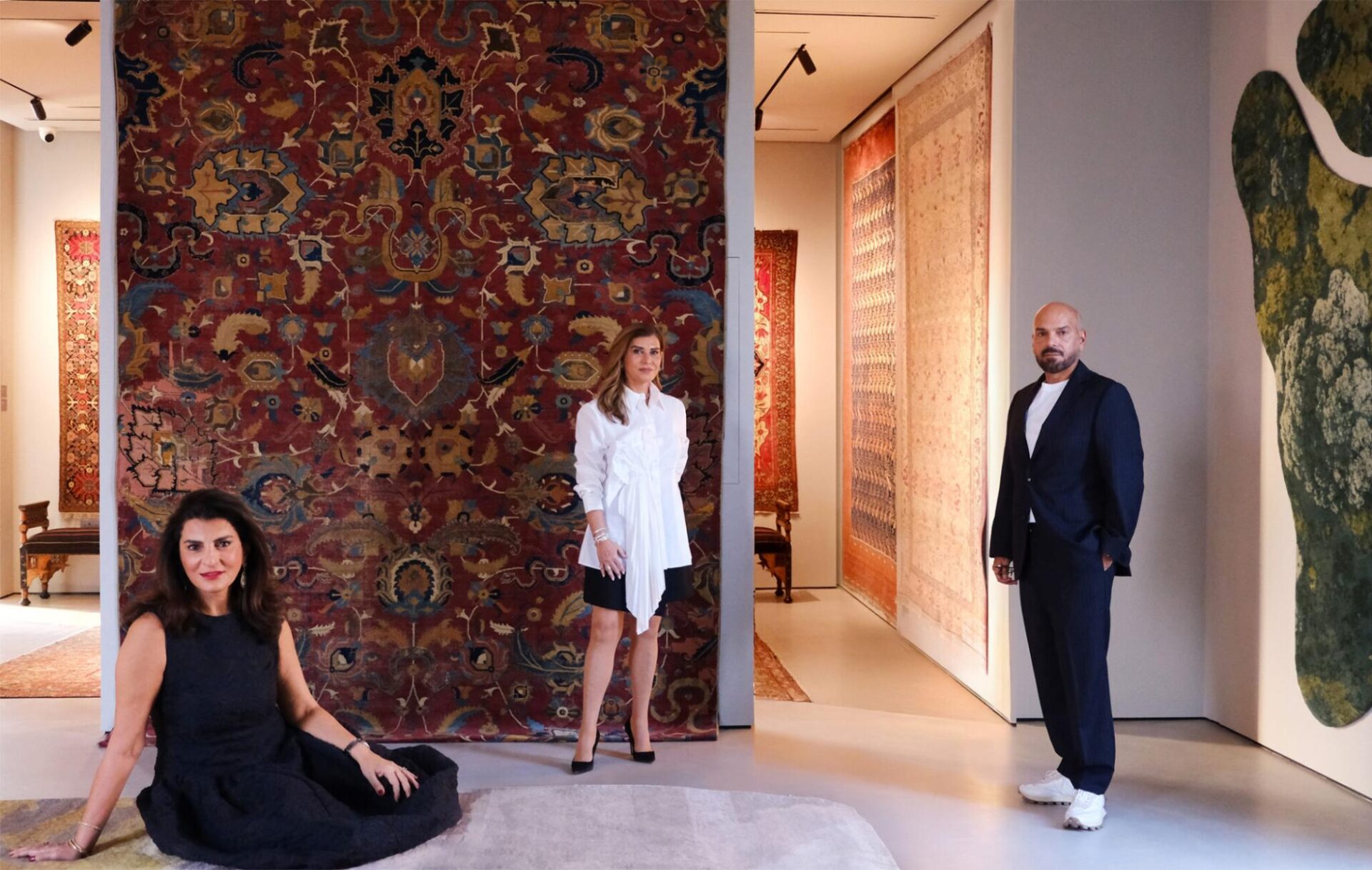
Chirine Maktabi, Mona Maktabi, and Mohamed Maktabi in the Flagship Store Dubai
Following its exhibitions in Milan, SCALE spoke with Mona and Mohamed Maktabi about collaboration, reinvention, and why the hand-knotted carpet continues to hold relevance in contemporary design culture.
SCALE: This is Iwan Maktabi’s first exhibition in Milan. What does it mean for you to be there now with not one, but two launches?
Mohamed Maktabi: These two collaborations feel like they’ve taken time to come together. For years, we kept asking ourselves when Iwan Maktabi would show in Milan, but previously, we were focused on building our presence in the UAE, especially with the opening of our flagship showroom in Dubai. So in a way, it’s interesting how things align. Now, instead of one, we find ourselves presenting two launches at Milan Design Week.
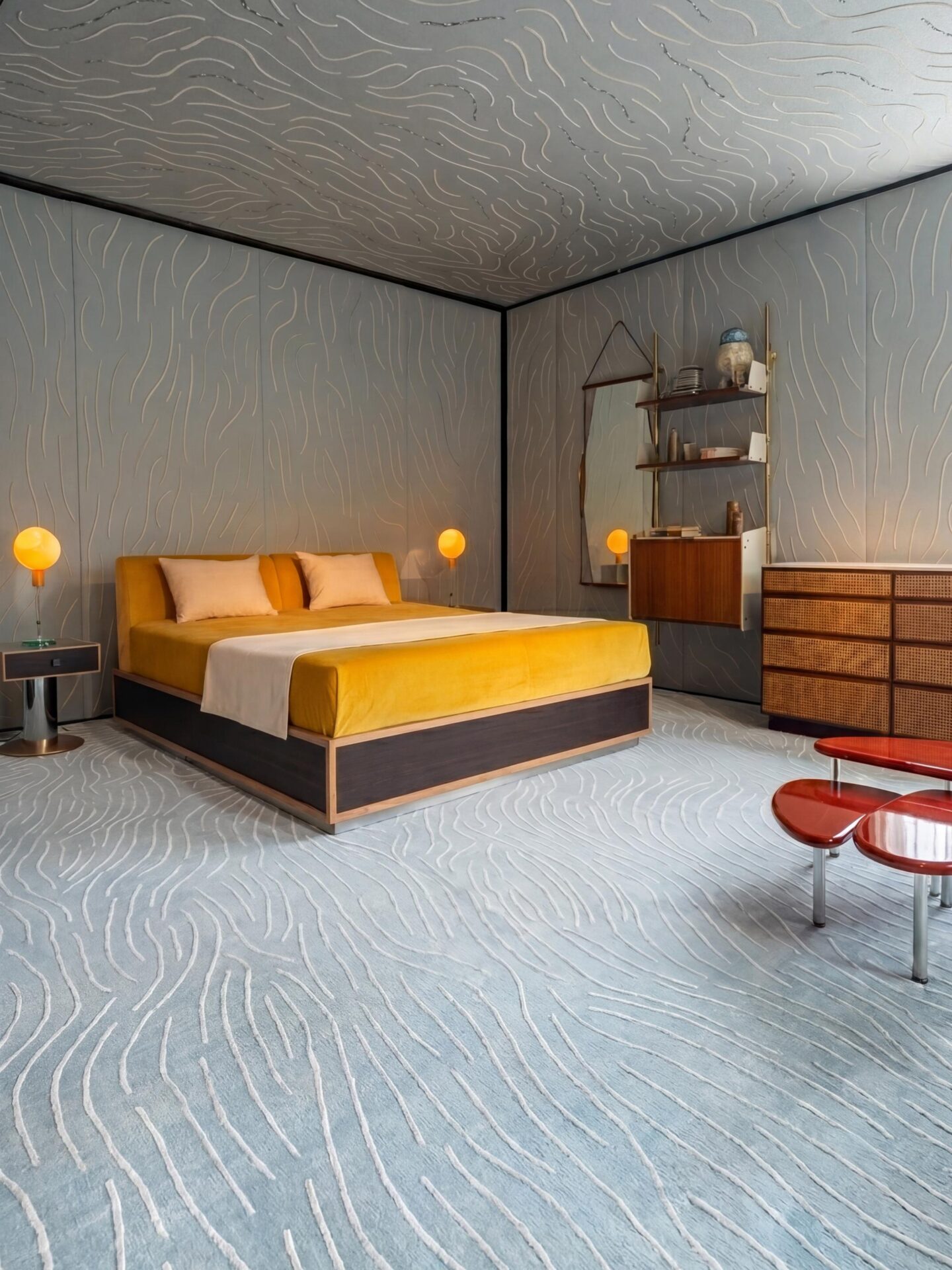
Cadence at Milan Design Week, 2026
The first is Cadence, a hotel room designed by David and Nicolas, the Lebanese designer duo based in Milan. The project is conceived as an immersive environment, bringing together multiple collaborators such as David and Nicolas as the designers, de Gournay for the wallpaper, Iwan Maktabi for the carpet, and Nilufar for the furniture.
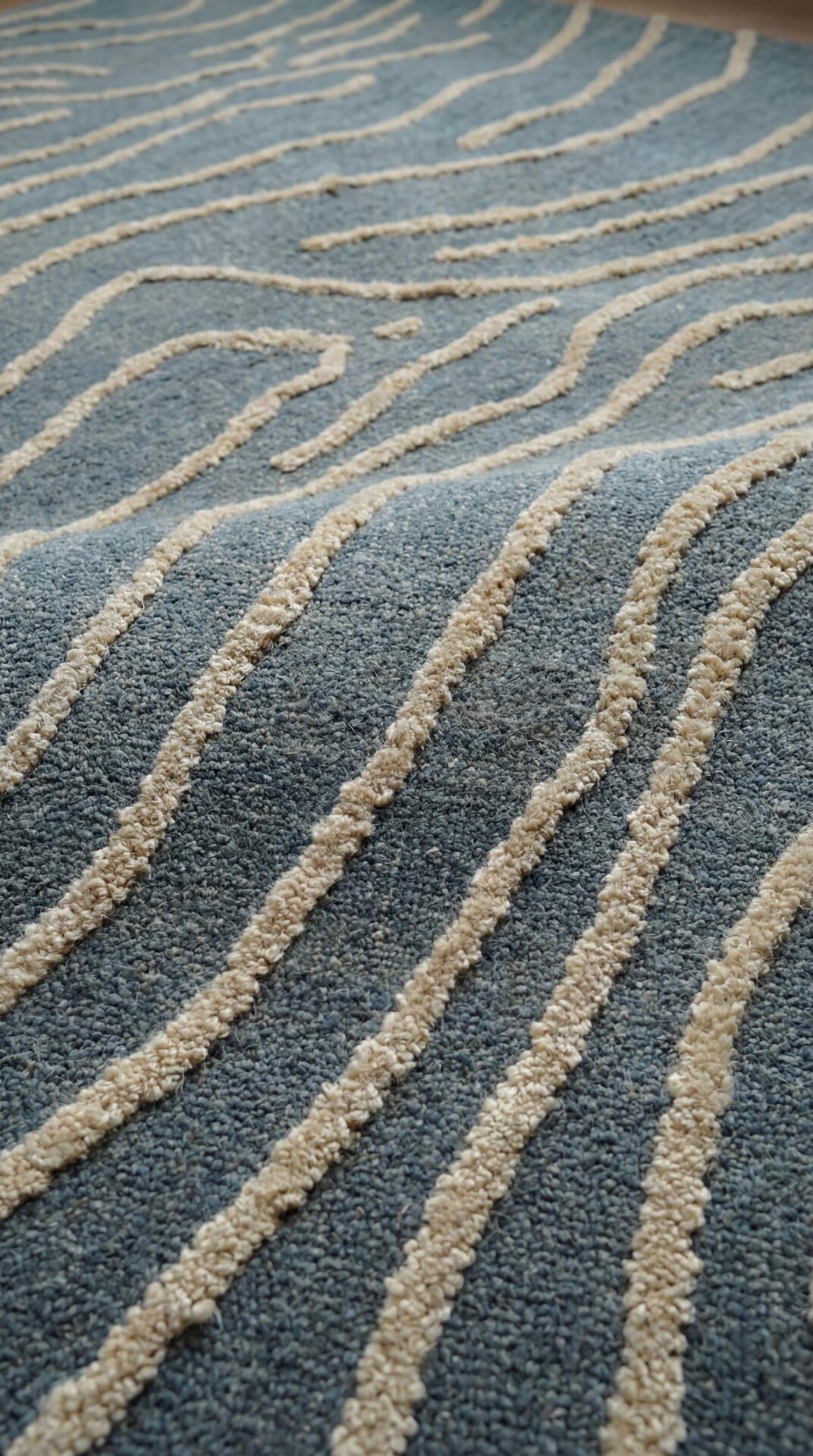
Cadence at Milan Design Week, 2026
The installation was presented at the Nilufar Depot during Milan Design Week. David and Nicolas have designed a hand-embroidered wallpaper for de Gournay, and our collaboration with them has developed over time through previous carpet projects. They approached us with the idea, and since we had already worked together, it felt like a natural progression. After the Milan Design Week, the design by David and Nicolas will also become part of our permanent catalogue.
SCALE: What was the approach when you were designing CORA, the collection inspired by coral ecosystems? How did you move from a flat textile to something sculptural?
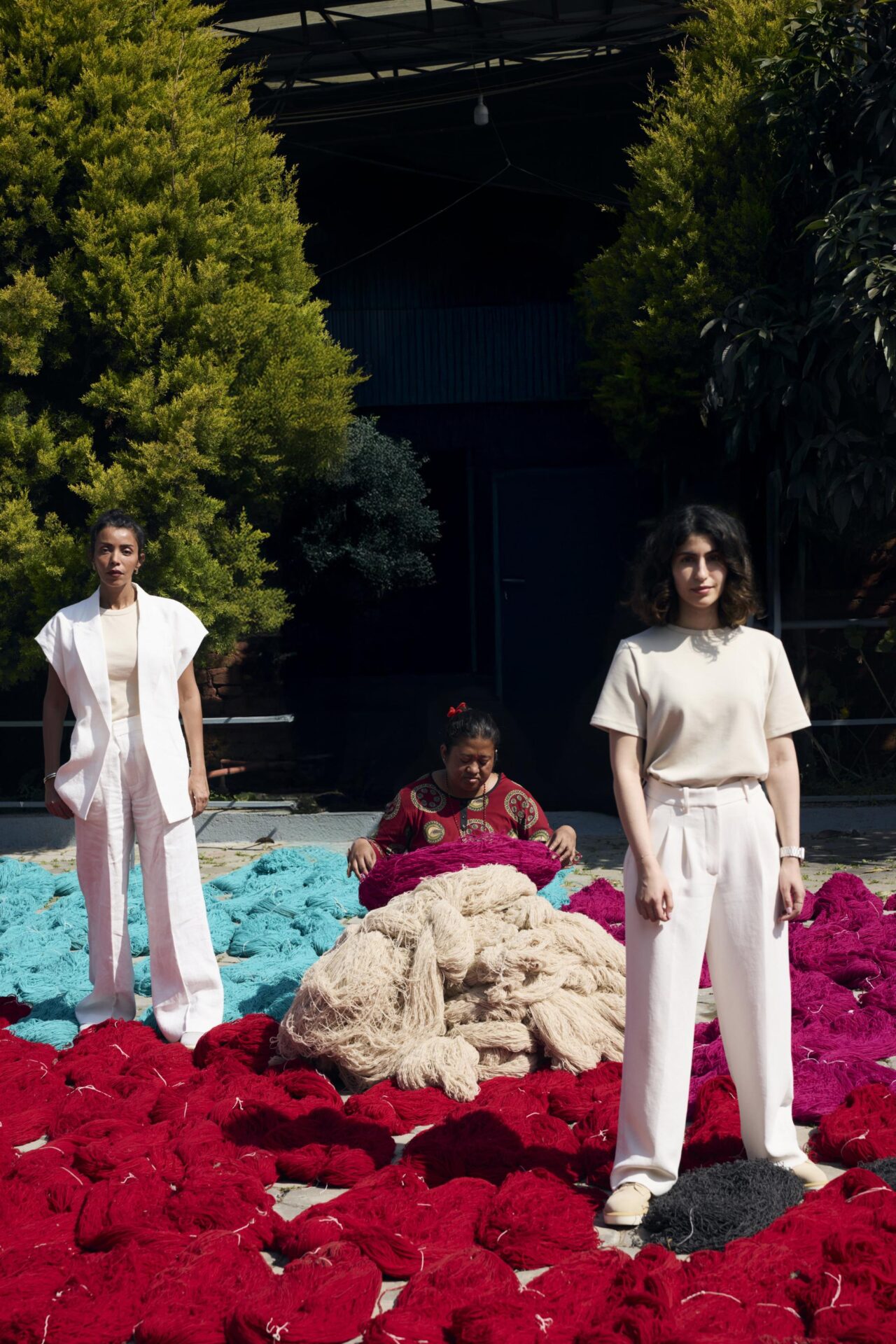
Saudi designers Abeer AlRabiah and Albandari Sulaiman, who worked with Iwan Maktabi on Cora.
The “CORA” Collection at Milan Design Week, 2026
Mohamed Maktabi: The second collaboration, “CORA”, emerges through the Jusoor Design Collection, which is an initiative by the Architecture & Design Commission under Saudi Arabia’s Ministry of Culture. Curated by Samer Yamani and presented at Palazzo Brera during Milan Design Week, the programme is built around the idea of “Jusoor,” meaning bridges, that bring together designers, cultures, and practices across geographies.
For us, this meant collaborating with Saudi designers Abeer AlRabiah and Albandari Sulaiman on a project that pushed the boundaries of what a carpet could become.
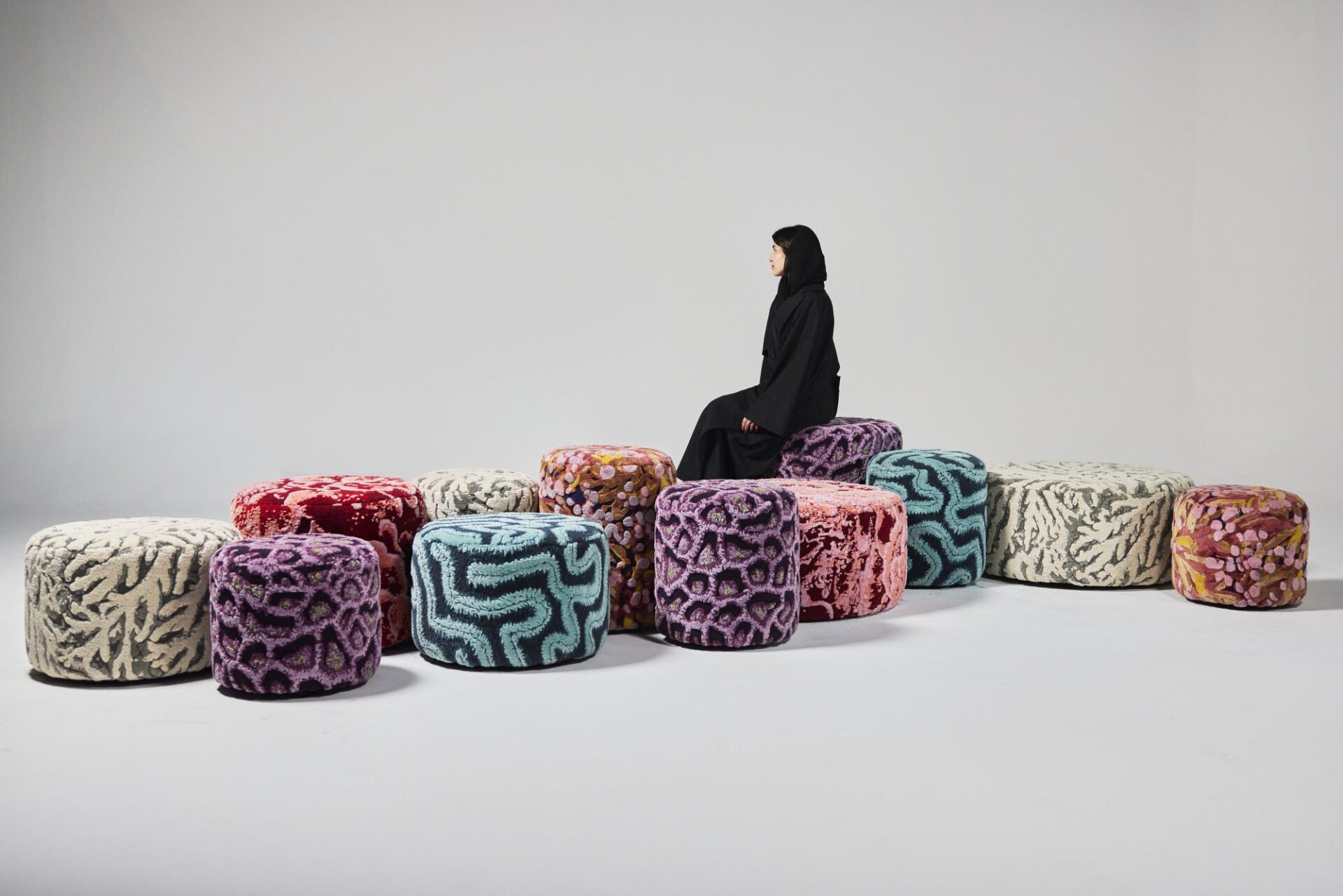
The “CORA” Collection at Milan Design Week, 2026
CORA was a particularly interesting project for us because it moved the carpet into a completely new territory. It is essentially a collection of pouffes, a seating system, but made entirely out of carpets. The designers began with an initial concept, which was then developed further through the Jusoor programme, with Samer Yamani guiding the overall direction as curator.
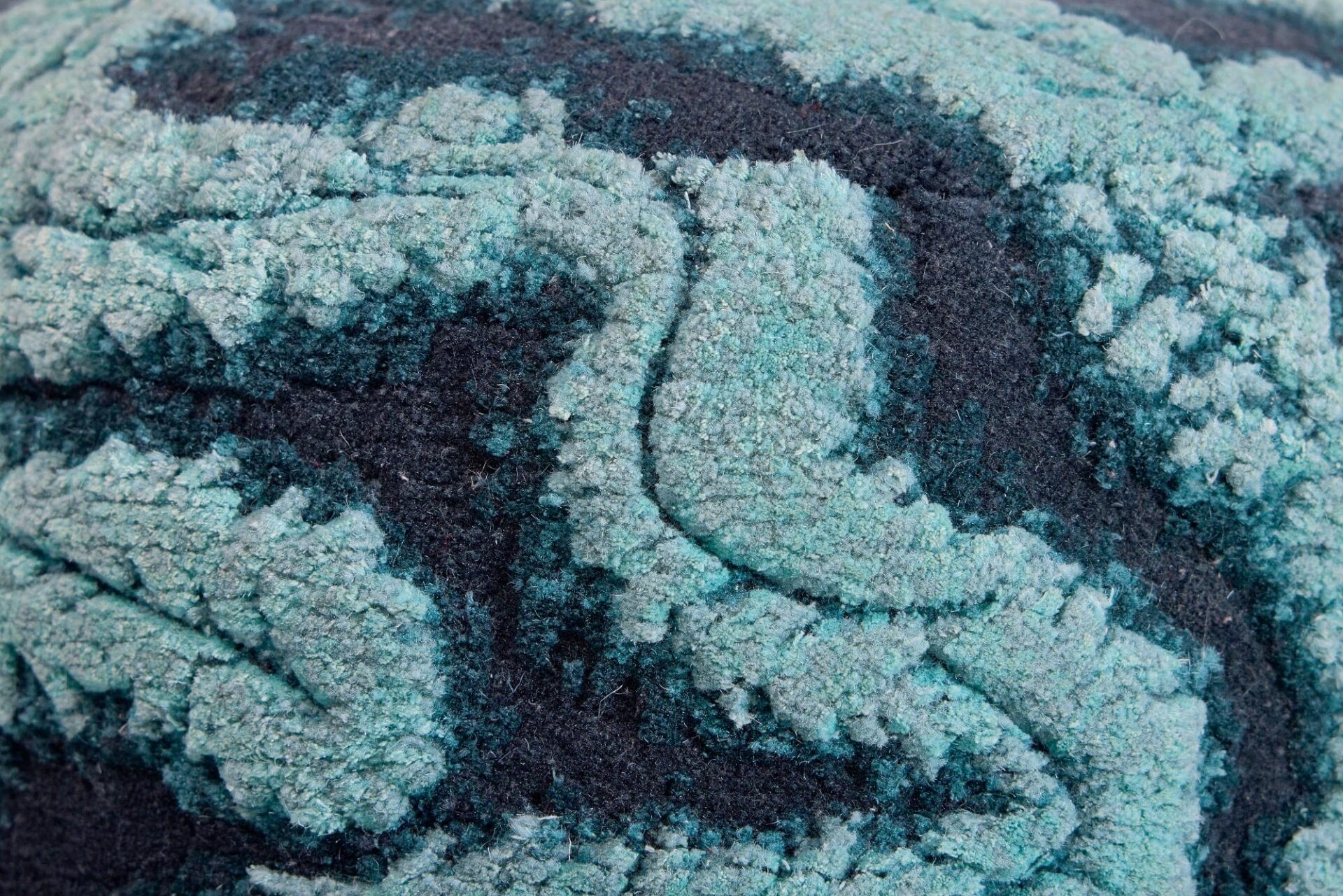
A close view of Cora
The initiative itself is about building connections in many ways, as it became a mentorship process and a genuine exchange of skills and knowledge.
We all came together for workshops, first meeting the designers in Saudi Arabia, and then working more closely with them to explore how carpets are conceived, designed, and produced. When the concept was finalised, the direction was clear; they didn’t want a flat carpet.
They were looking for something tactile, something that could be experienced differently. That was a challenge for us, because we had never approached carpets as seating elements before. At the same time, the designers were learning about the medium, and we were discovering something new about our own practice.
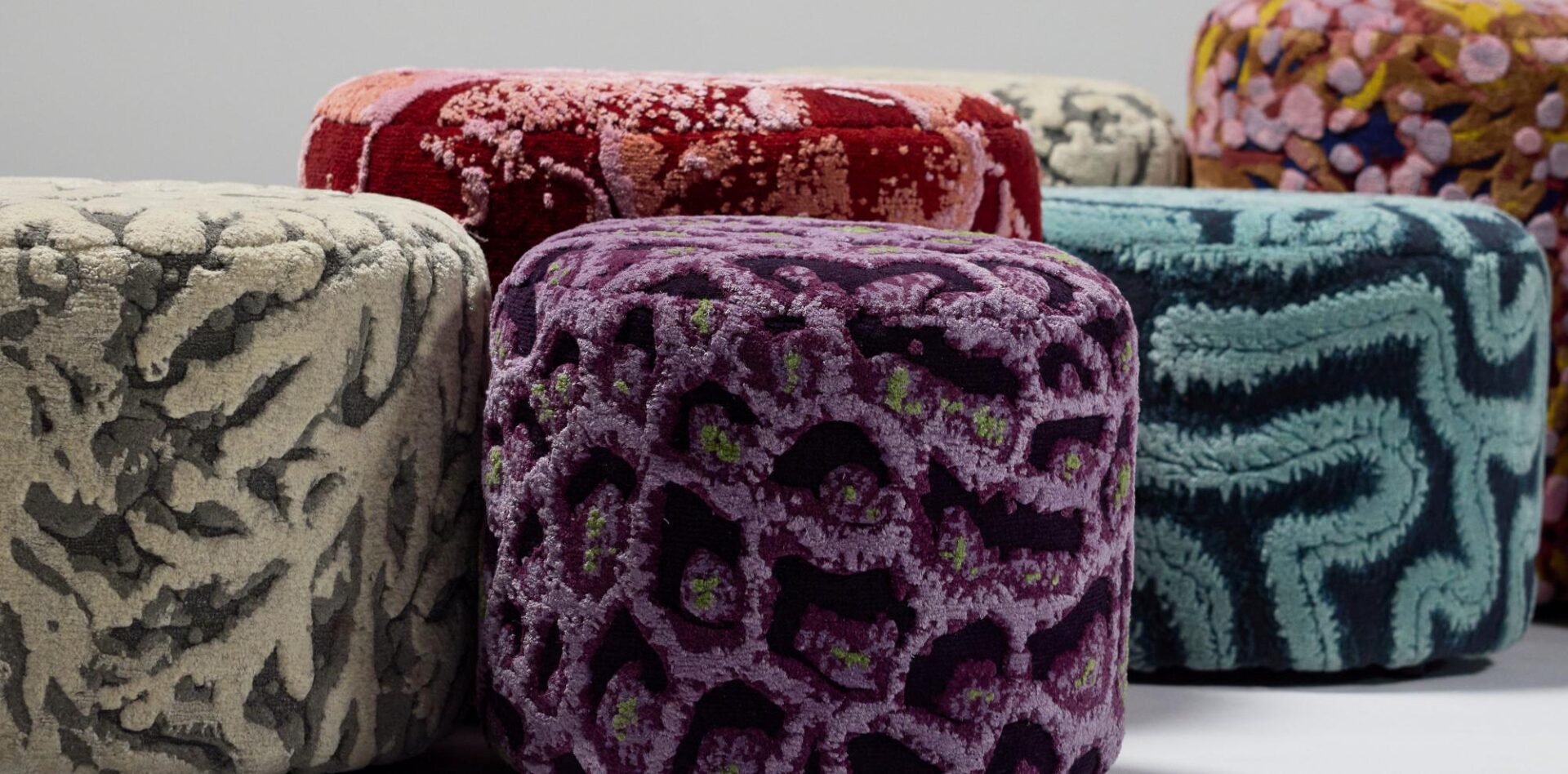
The “CORA” Collection at Milan Design Week, 2026
The outcome is a series of stools in varying sizes, inspired by coral species from the Red Sea, Abyss, Driftline, Velarium, Bloom, and Afterlight. They carry a certain rhythm and texture that references these formations, but also translate them into something functional.
The designers wanted to speak about global warming and pollution, and the bleaching of coral reefs. So while some pieces are in full colour, they dedicated one in bleach to address that idea of loss, and the fragility of these ecosystems. So, beyond the form, there is also an environmental layer to the work.
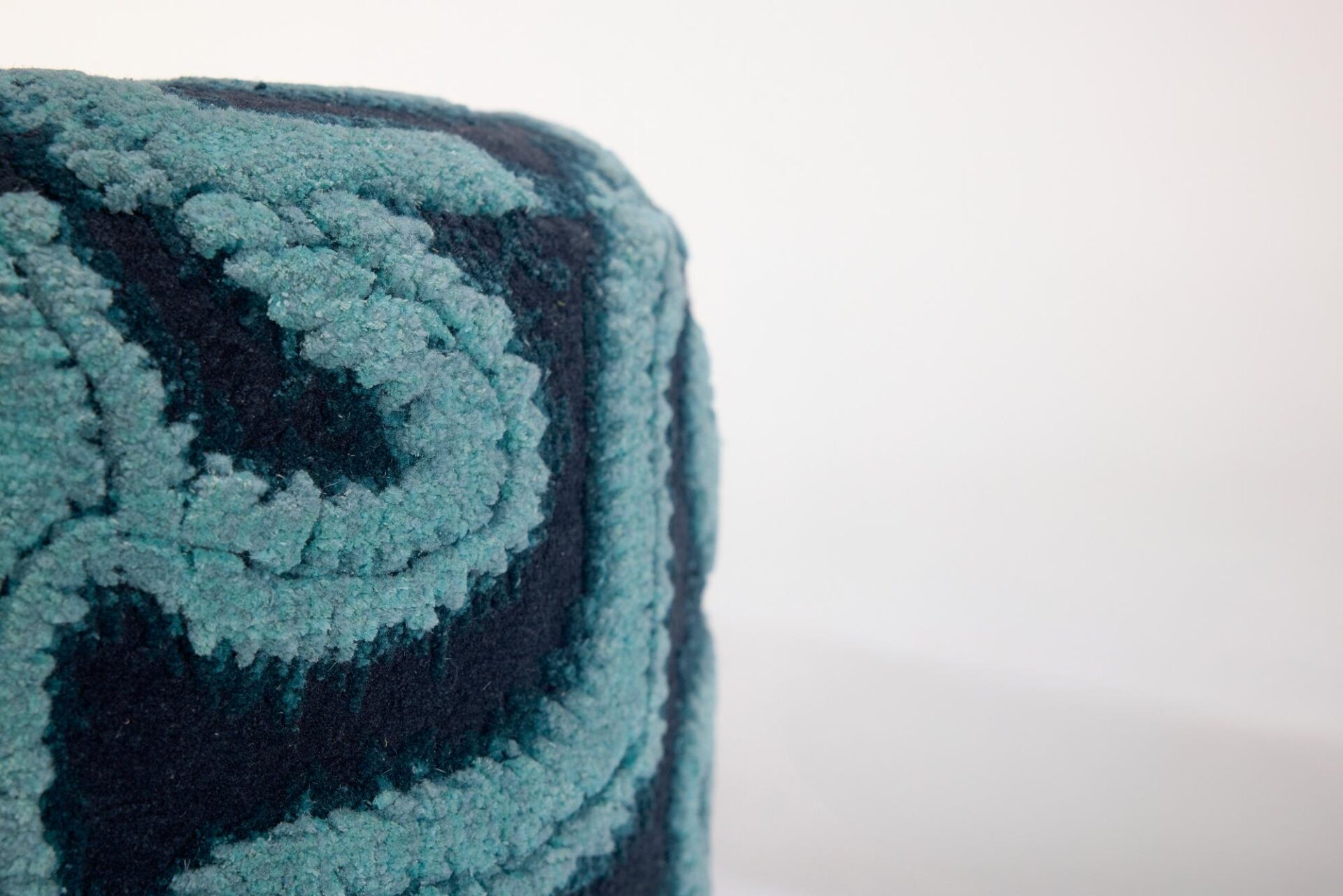
Cora is not a flat carpet; it is a three-dimensional seating arrangement.
You sit or touch them and immediately feel the material, and then it’s no longer just something you look at. It becomes physical, almost immersive in a different way. It was also an introspective journey for us, as when I first heard about the idea of shaping carpets into seating, it felt unexpected. It’s not something you typically associate with this medium. But that’s exactly what made it compelling, as it pushed us to rethink what carpets can do, not just as surfaces, but as objects that people can engage with more directly.
SCALE: What holds these two collaborations together, beyond the material differences?
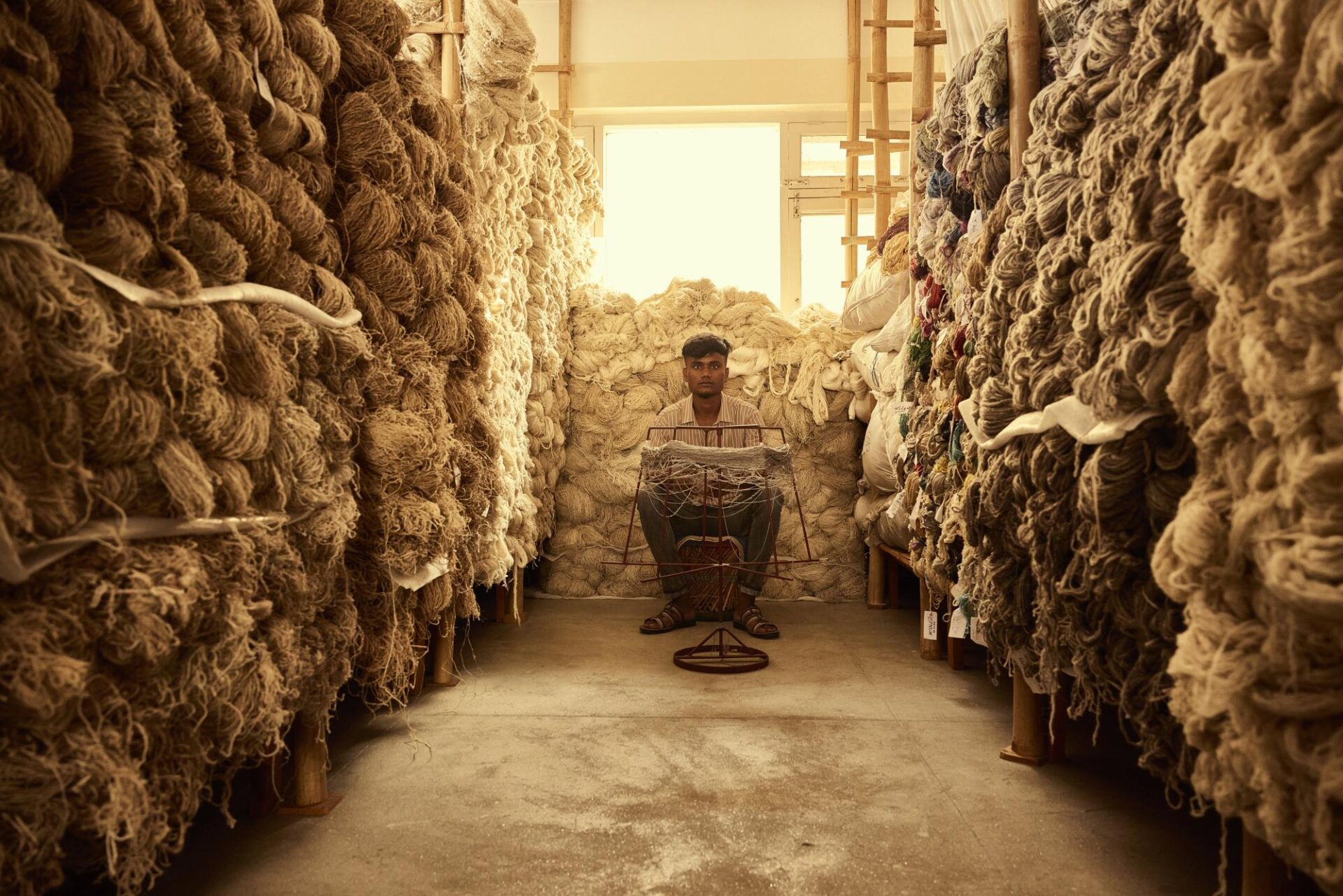
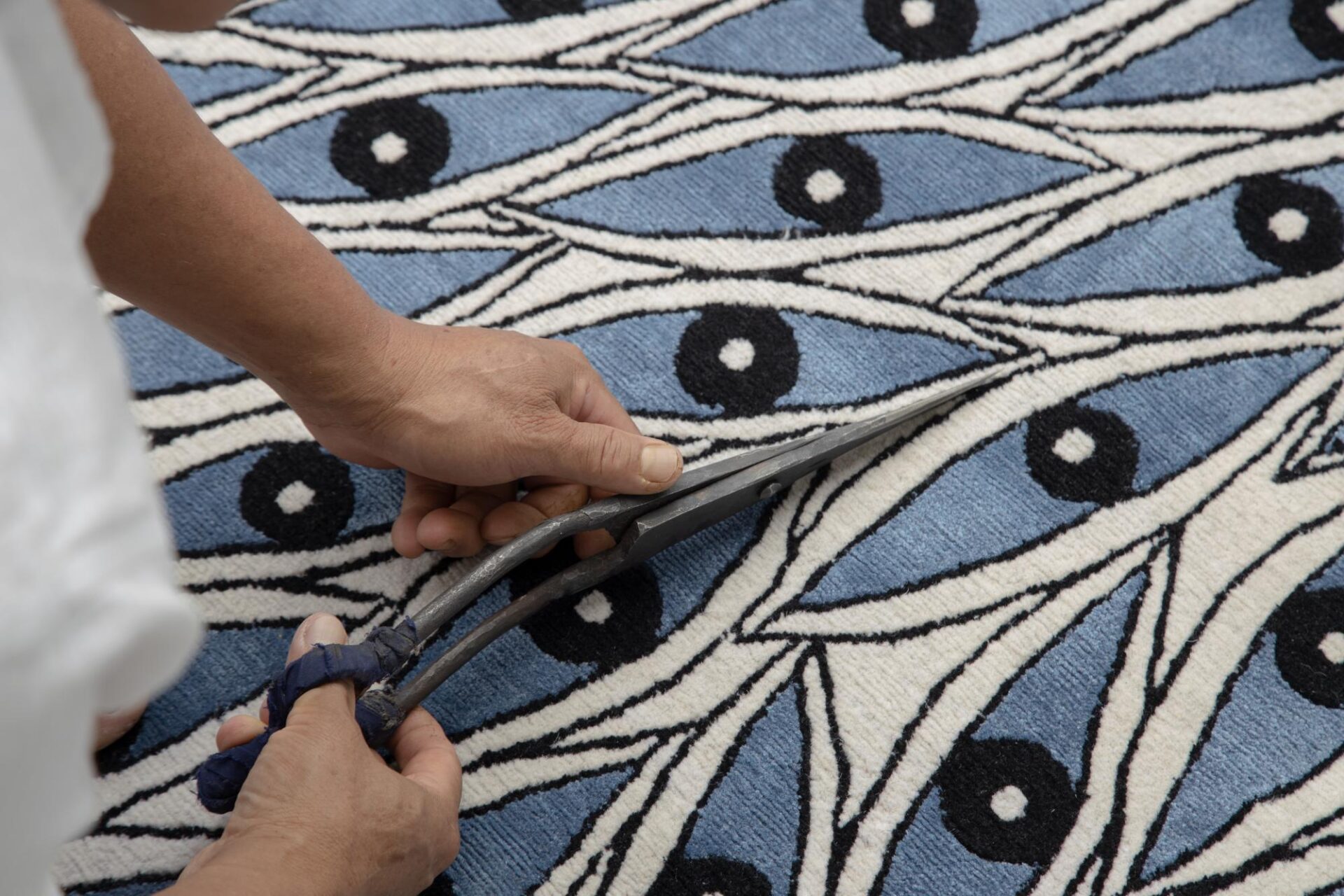
Behind the carpets, a worker in Nepal.
Mohamed Maktabi: They are two extremely different projects, and the approach was very different too. With David and Nicolas, we have been working with them for the past ten years, so we are very familiar with their visual language. The technique for their carpet had already been developed and locked for three previous collections, so it was much easier for us. The collaboration for CORE was much more challenging. We had to do a lot of research and development, a lot of back and forth, and we created new textures for them.
What holds them together is simply our deep knowledge of carpets. After the design is conceptualised, and the weavers see something beautiful and exciting, they embrace it, and enjoy the journey too! The Milan Design Week exhibitions will reflect the way Iwan Maktabi now works – as a house that sees carpets as living forms, capable of moving between interior atmospheres, sculptural objects, and cultural commentary.
SCALE: In your practice, how do you see carpets shaping the atmosphere and rhythm of a room?
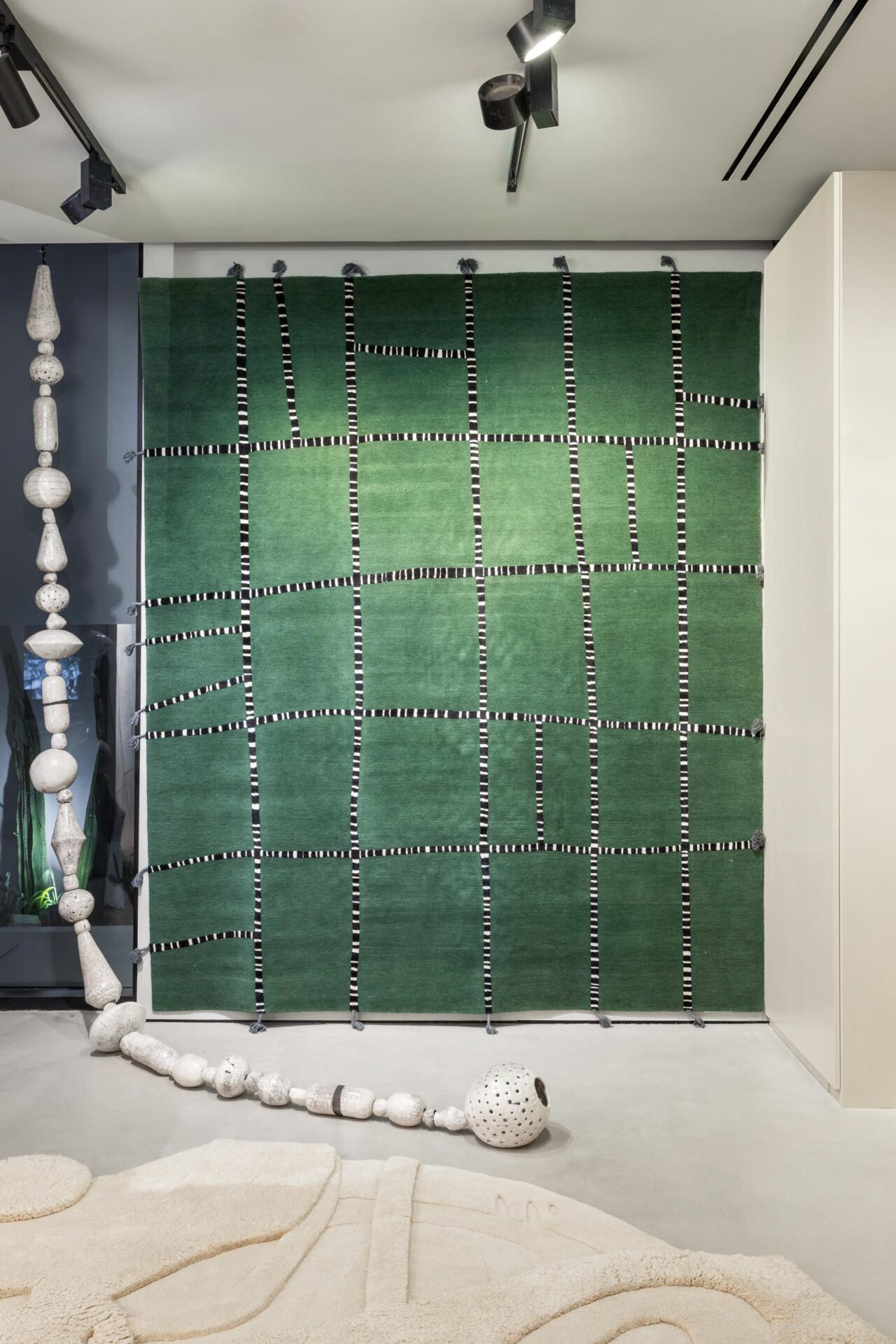
Iwan Maktabi presented new showcases by Jan Kath and Atelier Février at its flagship on Jumeirah Beach Road, Dubai
Mona Maktabi: When we approach a collaboration, we usually give a brief and guide the artist to think within the world of carpets, and we try to help them understand the textures.
The presentation traces the studio’s range from the bold, emerald geometry of Besti to Ceramic, in soft ivory and beige tones that echo the fine lines of kintsugi
A few years ago, we took artists to our production houses in Nepal so they could see the process in place and understand how carpets are made. Then, we choose the colours and go through many processes before the final result comes.
SCALE: What happens when the client already knows exactly what they want? Does that leave any scope for innovation?
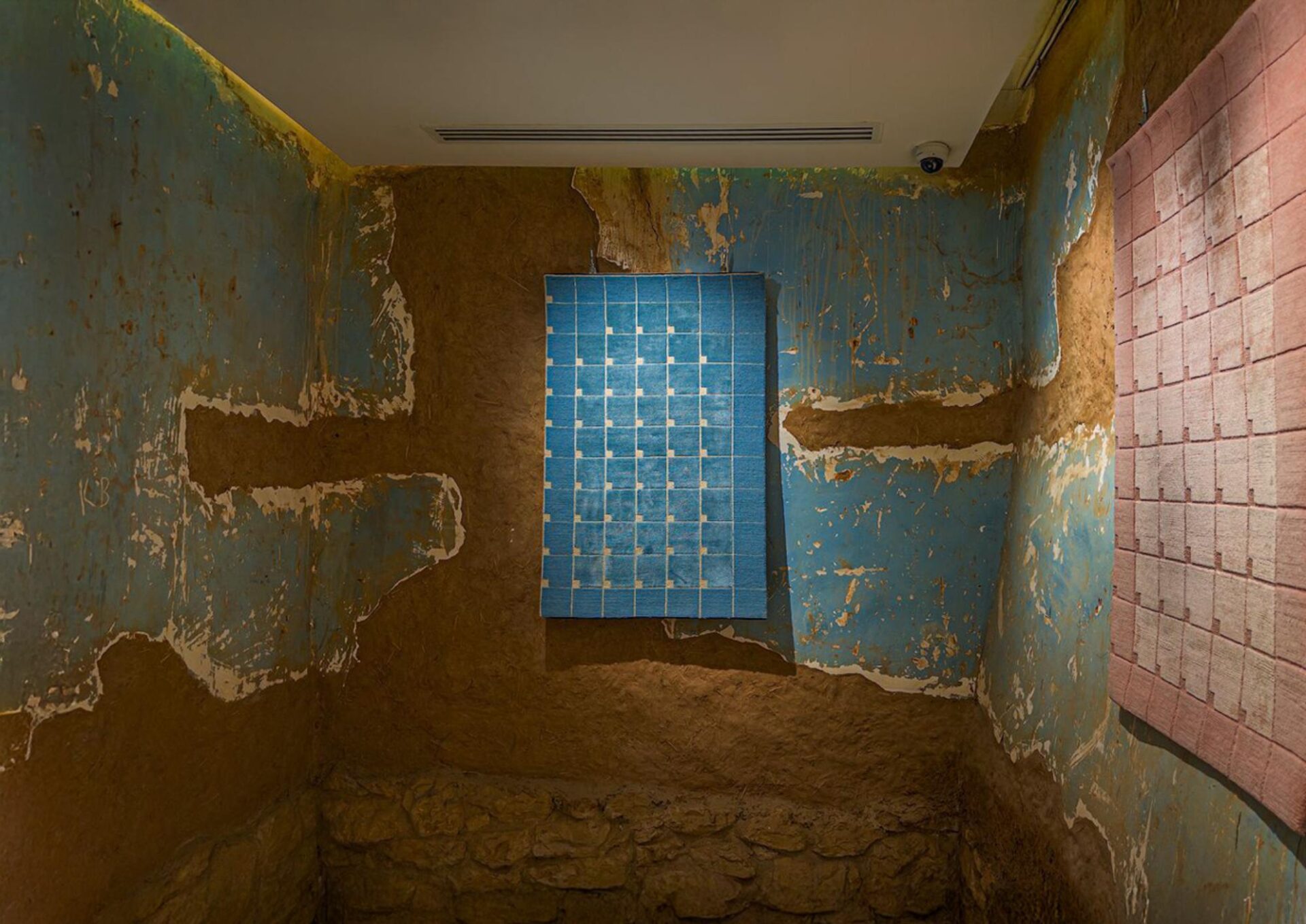
Iwan Maktabi’s “Sokōn”, a new carpet collection developed in collaboration with Syn Architects, at a dedicated presentation in Riyadh.
Mohamed Maktabi: For the professional client, it is easy because we just have to respect the vision and follow it through. It is more interesting when clients are undecided or do not know what the carpet should do in the room. Then we have to help them understand the role it plays.
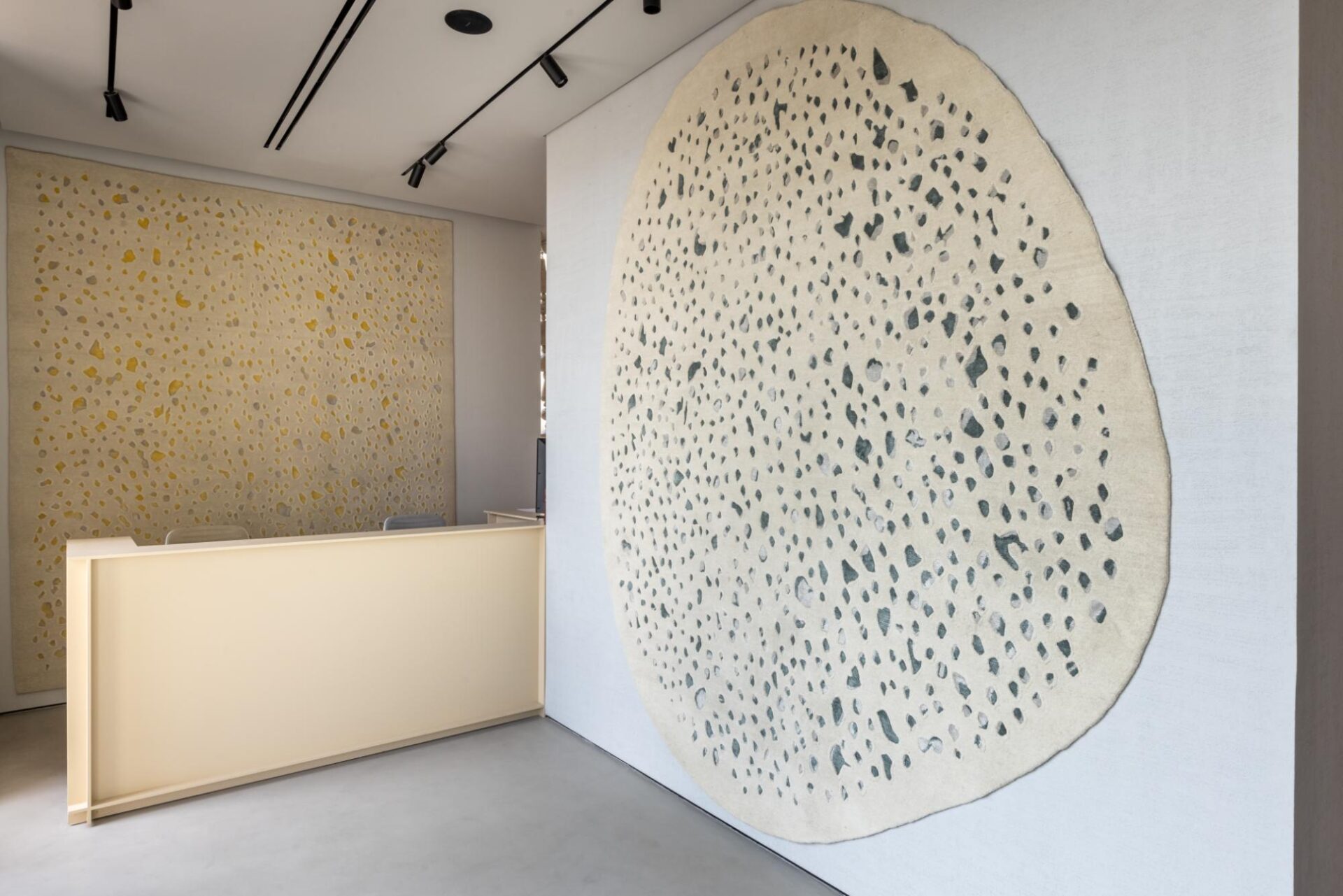
“Trame Di Spazio” by Mohamed Maktabi, produced by Iwan Maktabi LAB
For example, we worked with David and Nicolas on a house where they wanted a carpet that was nine metres long by five metres wide. Their initial design comprised small triangles and squares, but we advised them to enlarge the scale because it would otherwise feel too cluttered and too small for such a large carpet. As the design evolved, it worked very well, and both the architects and the client were happy with the change.
SCALE: How do you balance preservation with reinvention?
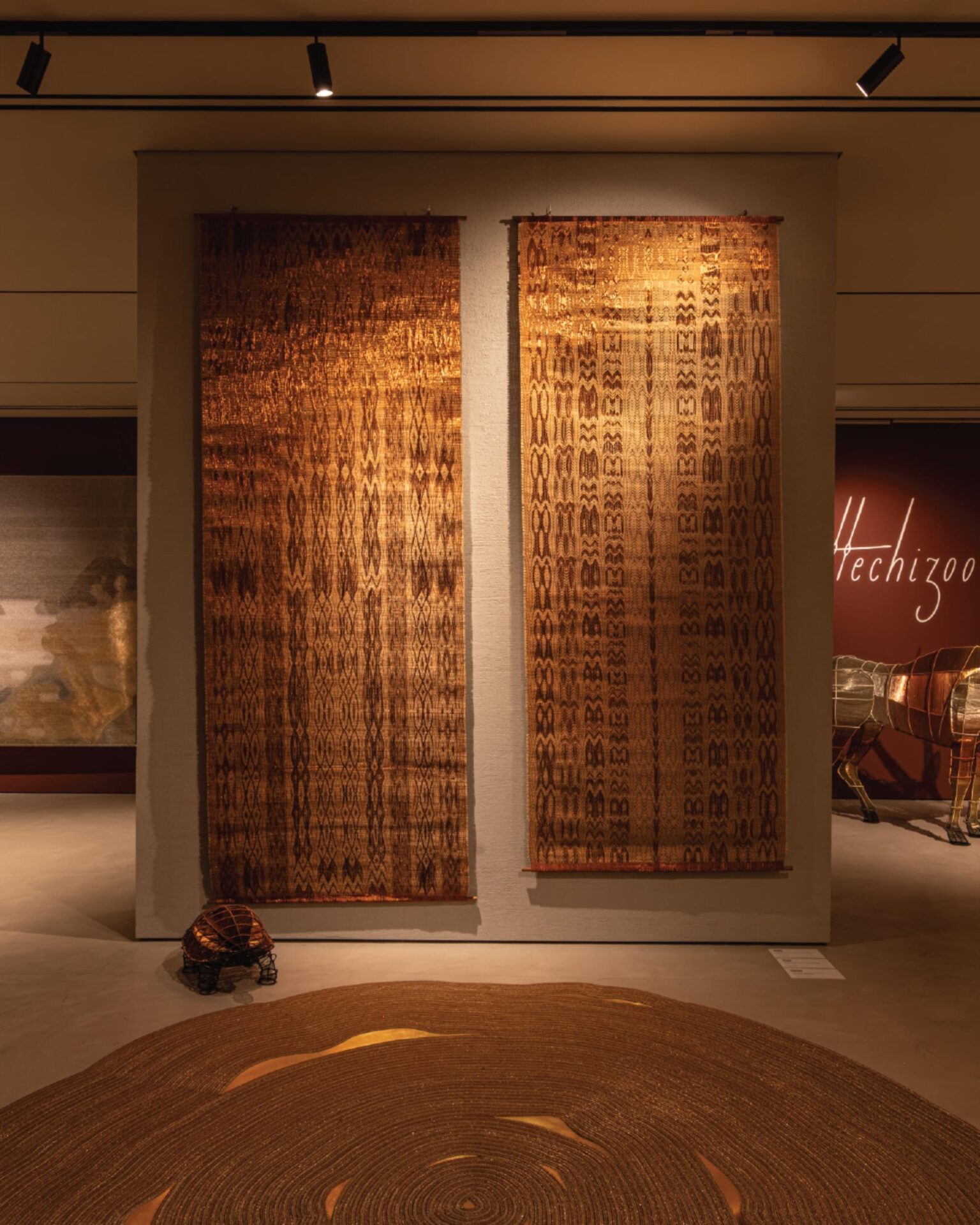
Iwan Maktabi unveiled ‘When Earth Dreamt in Gold’, a special solo exhibition by the acclaimed Colombian studio Hechizoo.
Mohamed Maktabi: Preservation alone does not make sense. Five hundred years ago, craftsmen were weaving carpets in a certain way because of the environment and the limitations around them. Today, if technology can help the weaver make something easier, faster, or less strenuous, then it makes sense to use it. What we definitely maintain is the work of the hand.
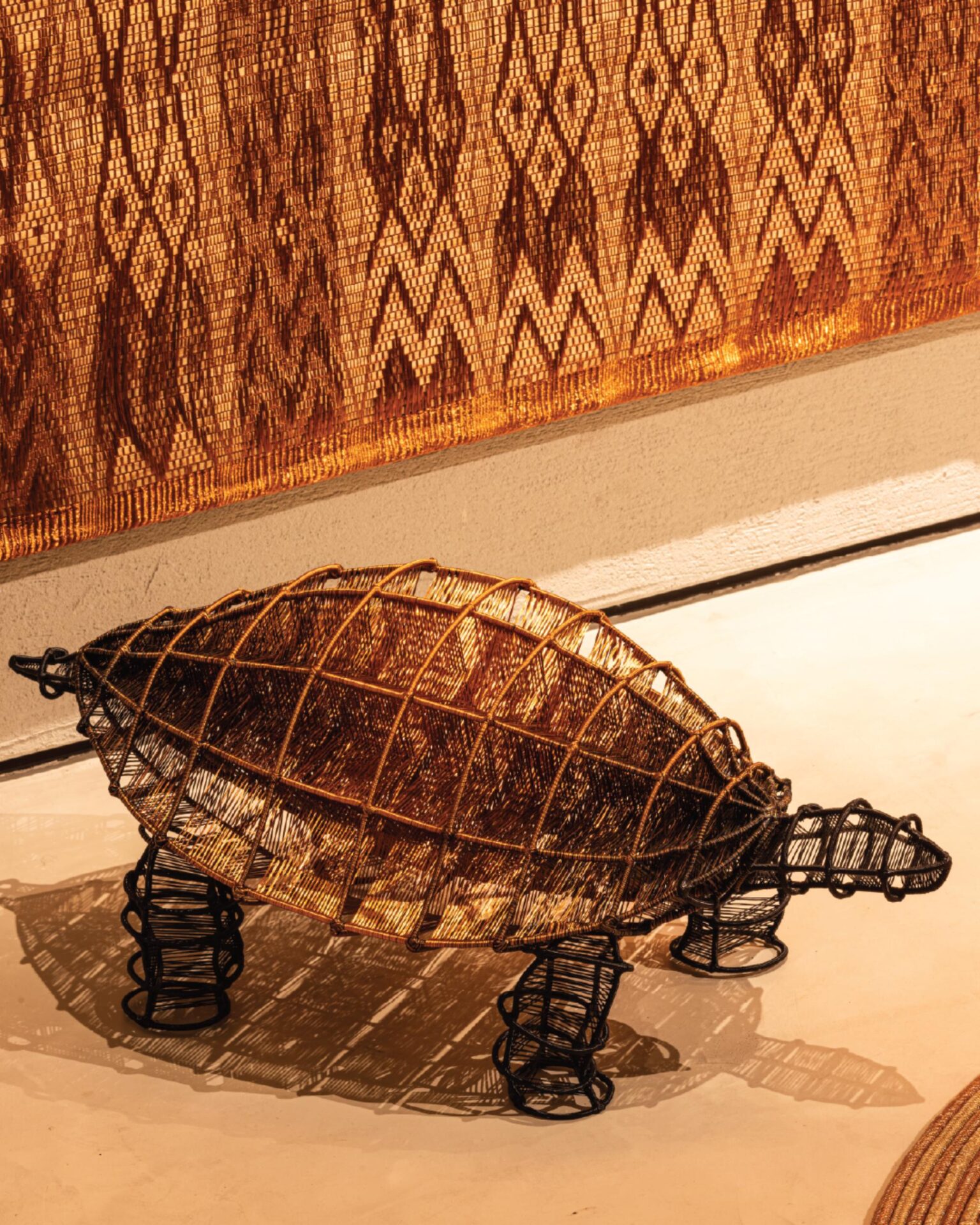
Conceived by artist Jorge Lizarazo, the collection was a poetic reflection on his travels around the world, as a dialogue between nature, material, and light.
For instance, vegetable dyes were once the only dyes used, because there was no other way to extract colour. Later, chemical dyes were introduced, but they were bad at first. In the 1980s, Swiss companies developed better chemical dyes made specifically for carpets, and that gave us a much wider palette. So if you are a purist, you may want to keep everything vegetable-dyed, and I understand that. But if you can still spin and weave by hand while using today’s advances, then you are actually advancing the craft, which is what I believe.
SCALE: Have there been other material innovations?
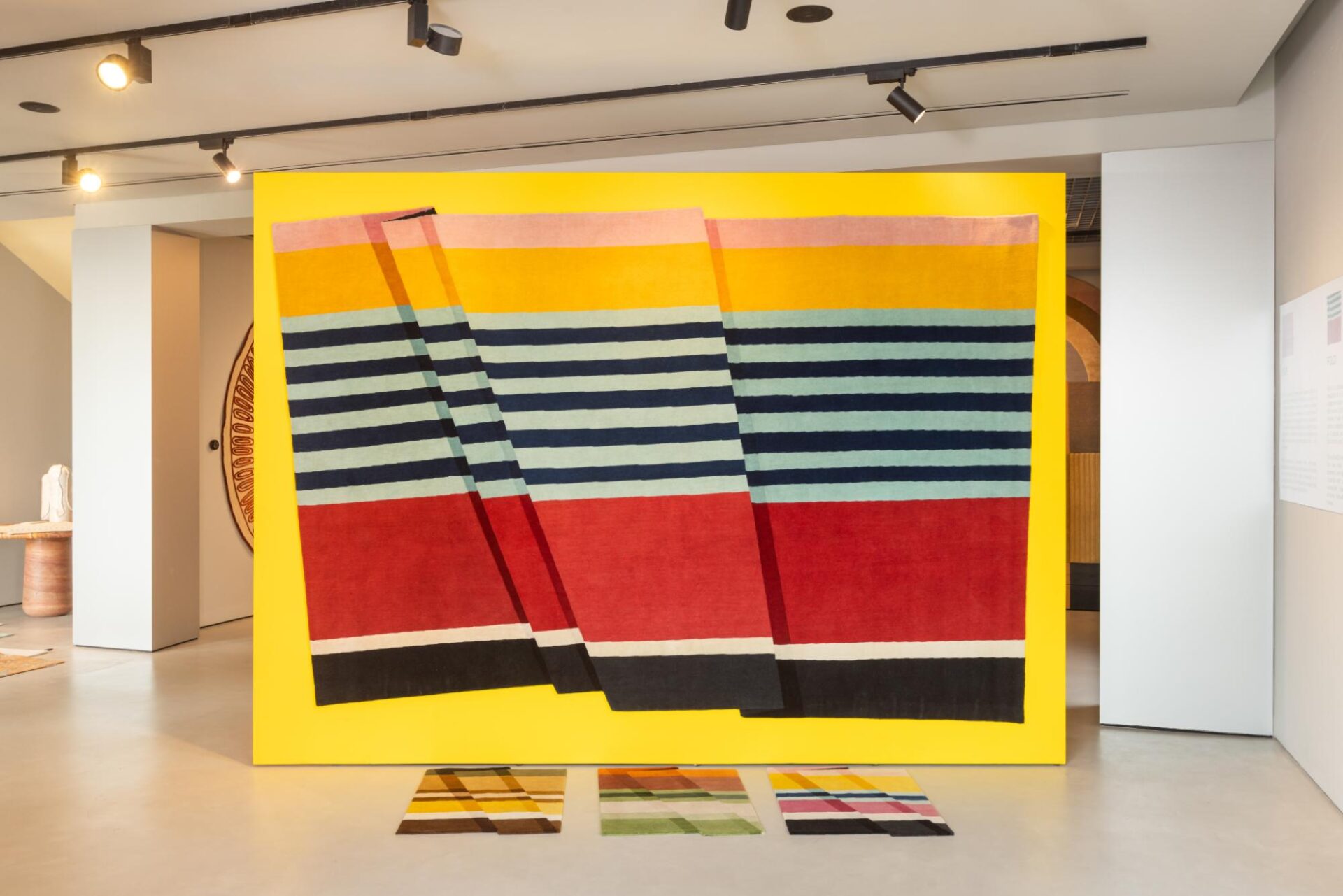
“Blip & Fold” by Rabih Geha Architects, produced by Iwan Maktabi LAB
Mona Maktabi: Yes, we keep evolving and introducing new materials. For instance, we now make carpets entirely in jute. We used to use jute only with wool and silk carpets, but now we can make a carpet that is one hundred per cent jute. And colouring jute was once very difficult, but with the growing demand for natural, plant-based fibres, we kept trying to dye jute in different ways to create more shades. We succeeded recently and have one of these pieces in our showroom.
Another major step was when the Dubai Expo 2020 asked us to make a carpet using a sustainable material. In 2019, we learned about Econyl, a recycled nylon developed in Italy, experimented with it, and produced a carpet that is now in a museum in Abu Dhabi. Econyl is made from fishing nets recovered from the sea and turned into a material suited to carpets. We can proudly say that we were among the first companies to use it for that purpose.
SCALE: Sustainability and fair trade feel central to your ethos. How do those values show up in practice?
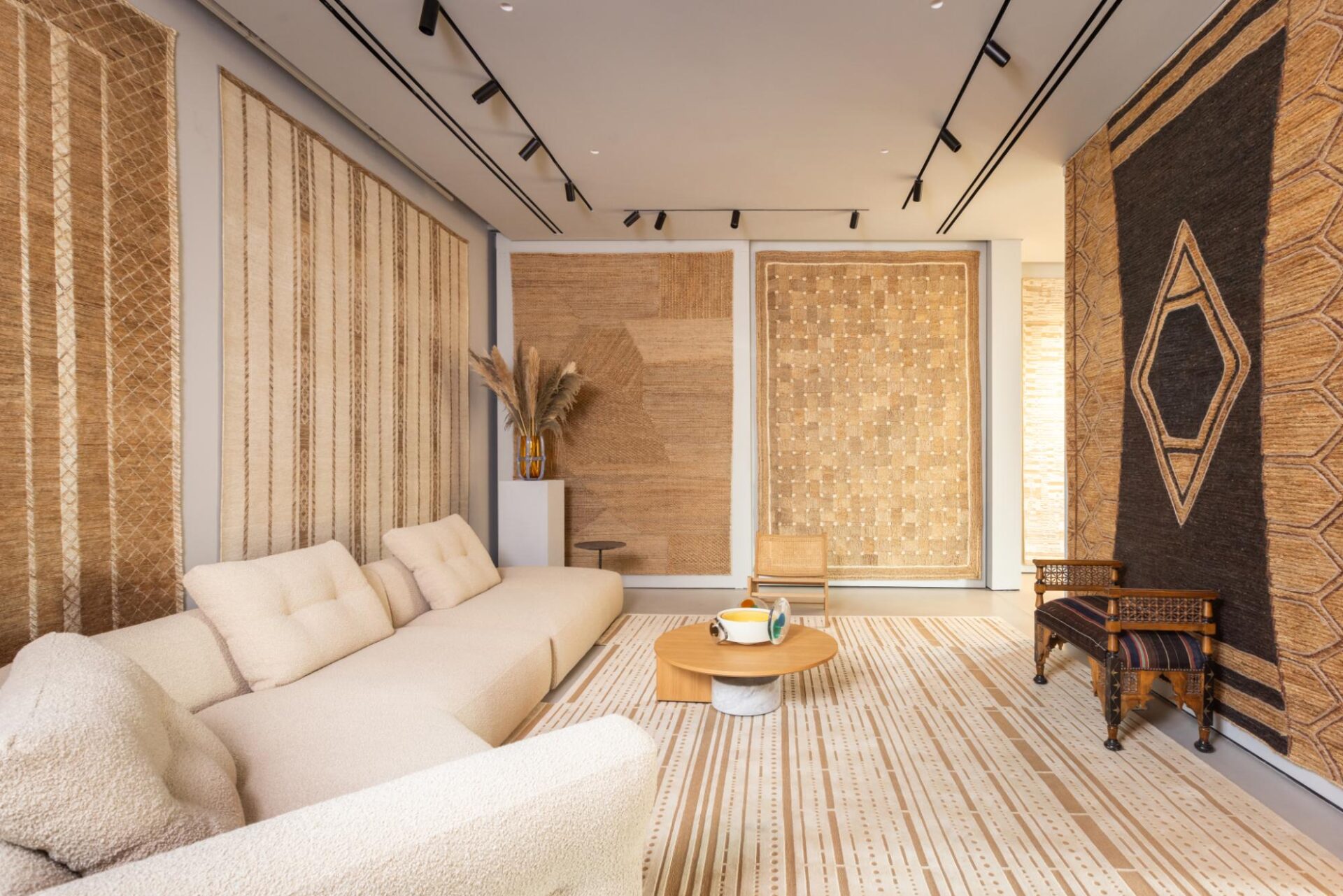
Iwan Maktabi x Rabih Geha x Cassina
Mohamed Maktabi: Carpets made traditionally are sustainable by nature, so by following the traditional techniques, we remain sustainable. And we are proud that we are grounded in fair procedures, and we take care of our weavers. In Nepal last year, we had a group of weavers who preferred not to travel to the workshop. So we went to their village and set up a mini workshop there. The village became a village of weavers, with looms in their homes, and they could work next to their families, and it was a memorable experience for us as well!
SCALE: In a world driven by speed and scale, what does hand-knotted carpet mean today?
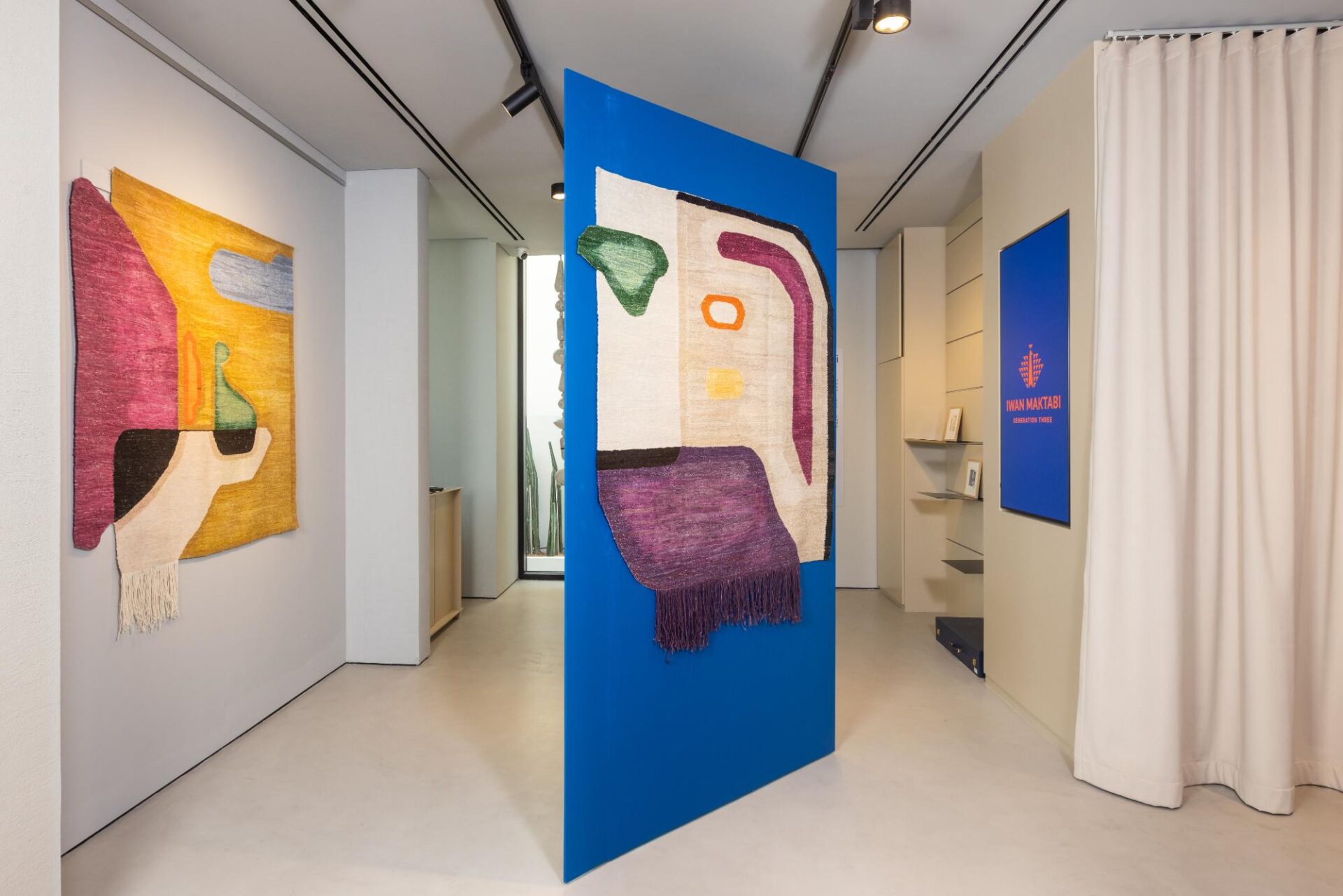
“The Other Side” by Leila Jabre Jureidini, produced by Iwan Maktabi LAB
Mona Maktabi: People are moving more toward contemporary pieces, but the importance of handmade carpets is still there. The people who come to us know they can trust our weaving and our design choices.
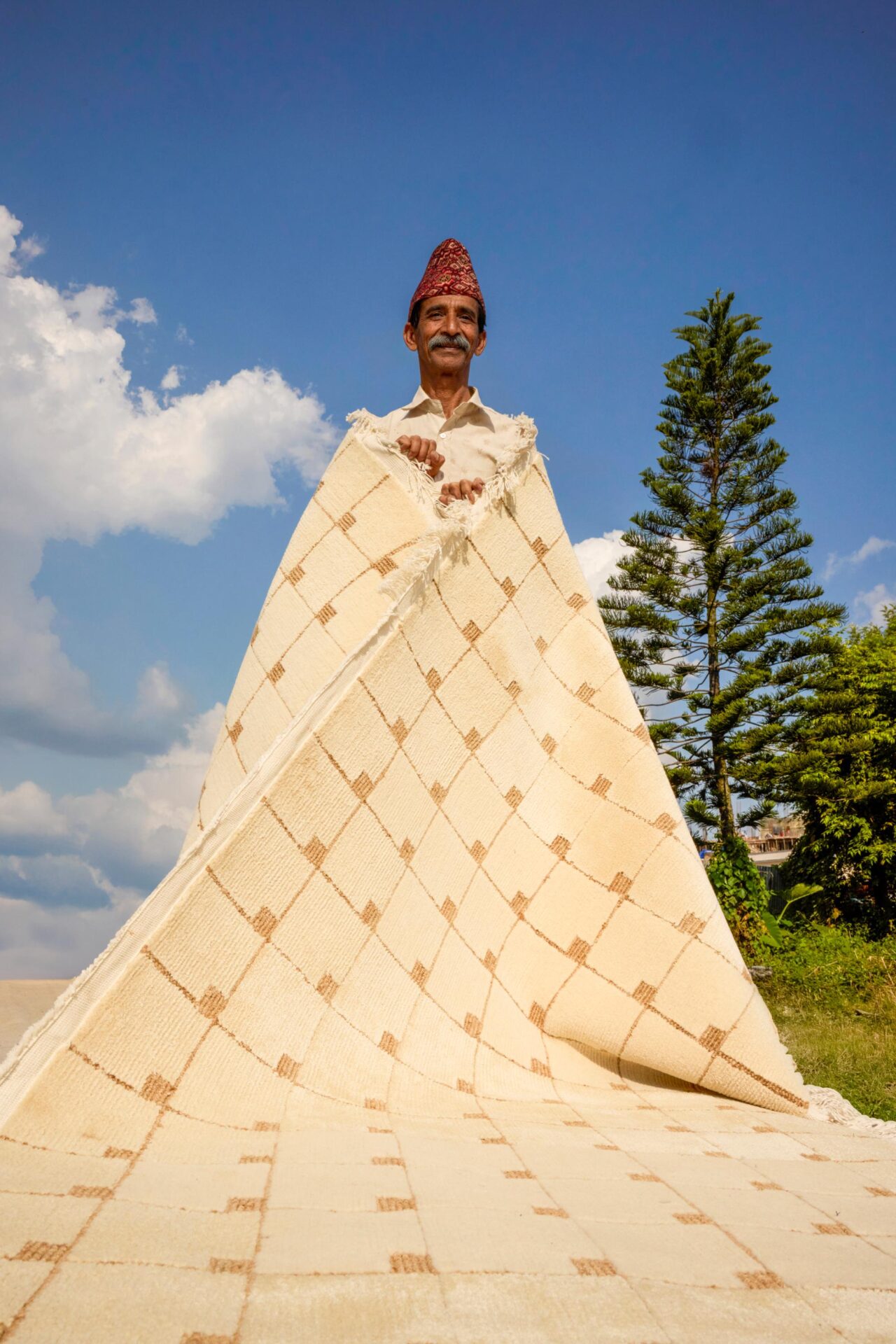 Mohamed Maktabi: Honestly, not all clients understand what we do. But once they are informed, they value a handmade product much more. When we show people how carpets are made, they are often surprised that everything is done by hand, and they cannot believe it takes only five or six months! But that is because we prepare so much in advance, the looms, the colours, the wool, the silk, everything. In the old days, it could take a year or more. Today, controlling the process helps us save time without losing the hand.
And perhaps this quiet sense of luxury is why carpets still matter. They stay and become a family heirloom. People build their homes around it. That is what gives it value.