Morii Design Studio: Slow Stitches in a Fast World
Morii Design Studio, founded by Brinda Dudhat and Kabir, redefines India’s crafts as living, evolving practices. From Gandhinagar to Bengal, their work transforms textiles and installations into contemporary heritage in bold expressions that empower artisans while shaping modern spaces. By Aishwarya Kulkarni
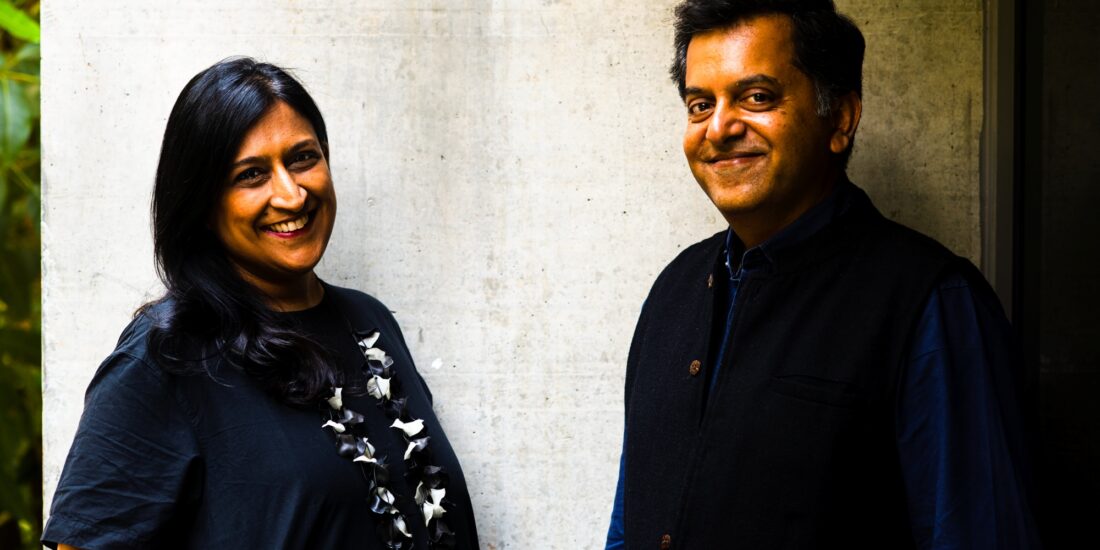
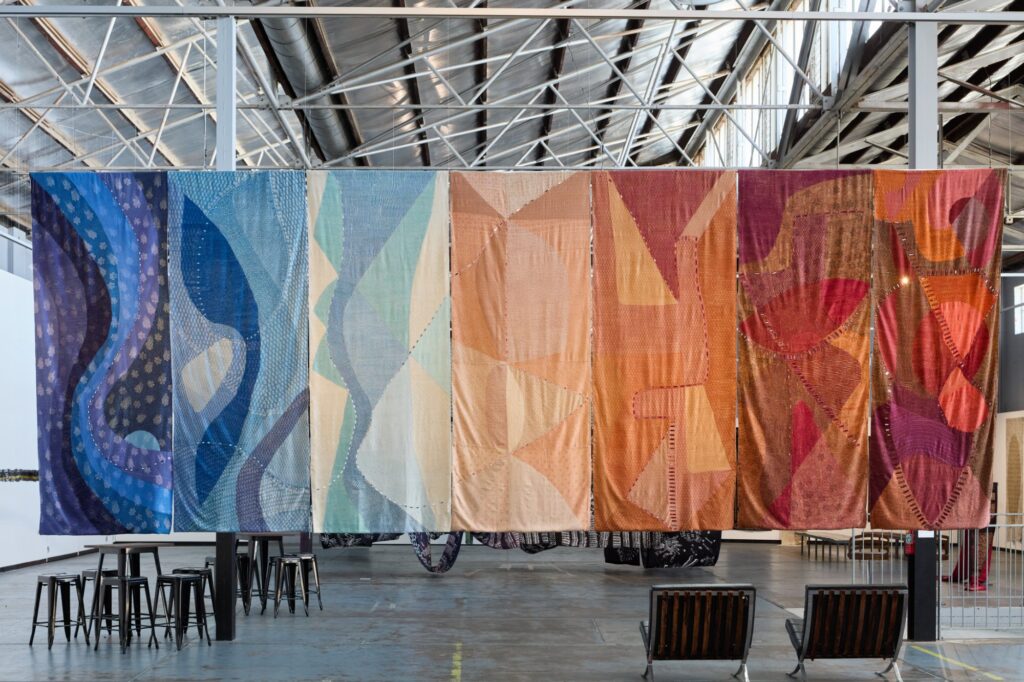
Morii Design Studio began with a simple conviction: that India’s crafts are not relics, but living practices capable of shaping modern spaces and identities. Founded by Brinda Dudhat (Design Lead) and co-founded by Kabir (Graphic Lead), Morii’s work spans textiles, interior installations, and cultural collaborations. Their vision is to reframe India’s living crafts as a form of “contemporary heritage” , works that are both deeply connected to tradition and fully relevant to modern life. Based in Gandhinagar, with strong connections to Kutch, Bihar, and Bengal, Morii’s practice is as much about community empowerment as it is about aesthetics. The studio partners directly with artisans, building fair livelihoods while reinterpreting ancient craft traditions into bold, abstract, and immersive textile artworks.
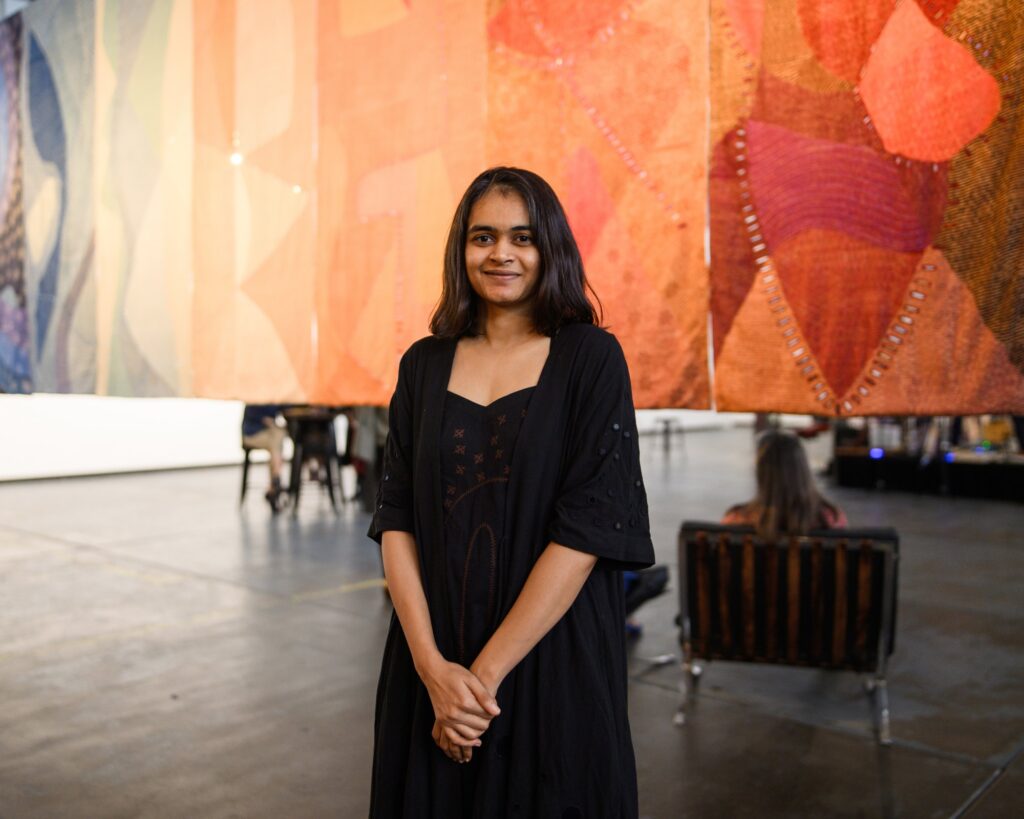
 Aishwarya Kulkarni from SCALE spoke with Brinda, Founder of Morii, about her journey, inspirations, and the evolving role of craft in architecture and design.
 SCALE: Let’s begin with the story of Morii. How did it start, and what was your own journey into this practice?
 Brinda: I was always interested in spaces, which is why I first studied architecture before moving to textile design at NID. At NID, we were deeply exposed to village life, crafts, and environmental perception. Courses like craft documentation taught me to study not just one craft, but also its people, history, and living context, and that exposure stayed with me, guiding my work to date. During my studies, I also spent a semester in Japan, where I witnessed many local crafts, but unlike India, most of them were no longer living traditions. In India, despite challenges, we still have millions of artisans practicing their craft, and that realization shaped my path and my professional purpose.
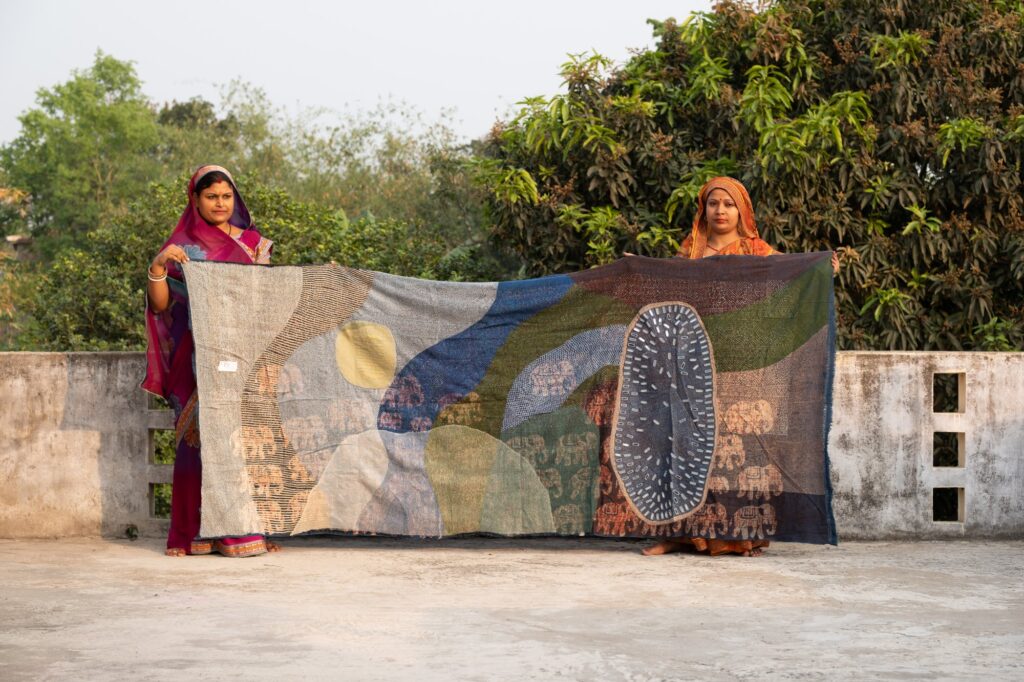 After graduation, I worked on a World Bank-funded project identifying 22 marginalised crafts across India. My fieldwork was in Bihar with women artisans, and I saw firsthand how regular, fair wages transformed lives. But I also witnessed how fragile these initiatives were, when the funding ended, so did the livelihoods! I realized very few designers build entire production ecosystems in villages. That became my motivation.
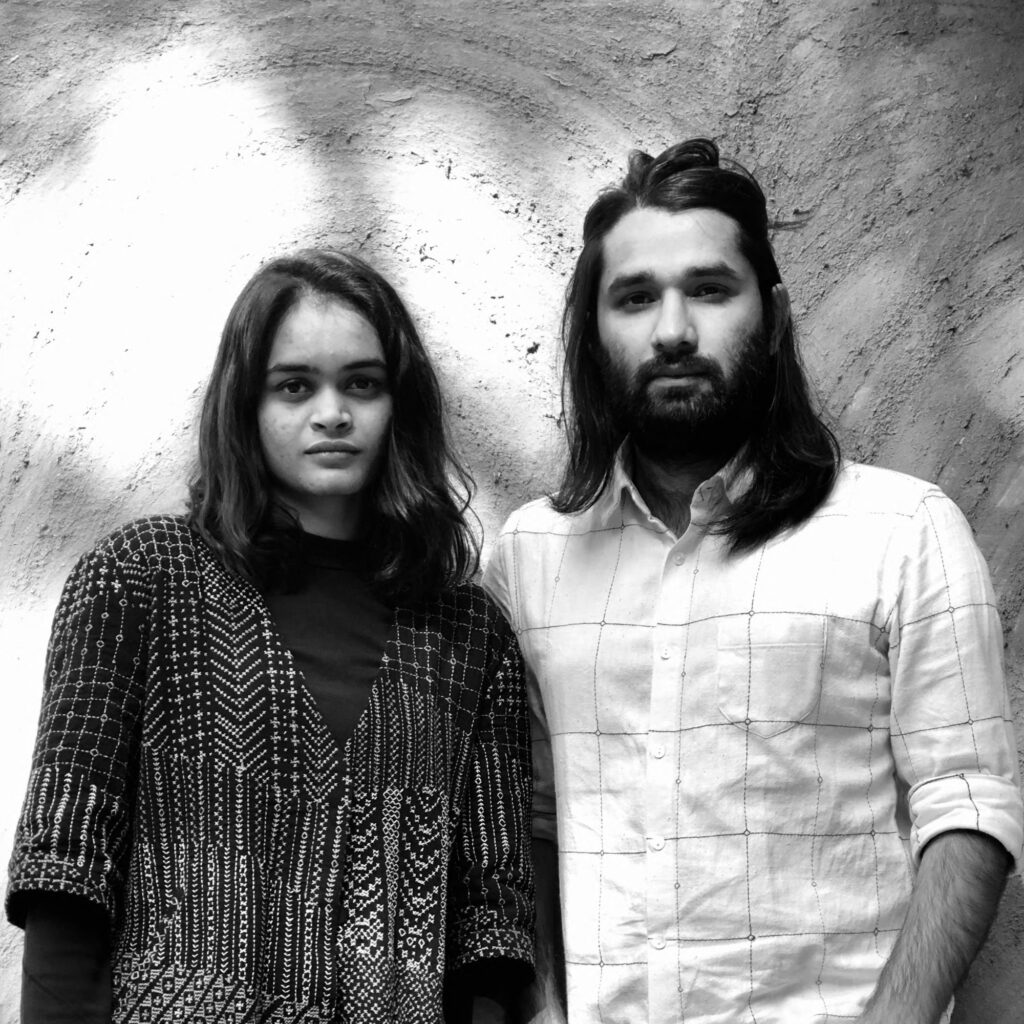 Later, Kabir, now my husband and co-founder, saw potential in what I was trying to build and encouraged me to start something of our own. As a graphic designer, he created the identity for Morii. The name itself resonated with us, inspired partly by a Japanese subculture close to nature, and also by our love for forests and lush embroidery that echoes that abundance. Together, we founded Morii in 2019.
SCALE: You often use the term “contemporary heritage.” Can you explain what it means to you?
 Brinda: I first heard this term in a talk by B.V. Doshi, where he asked: What is our contemporary heritage? We have so much historical heritage, but what are we creating today that will last into the future? For us, “contemporary heritage” means work that is relevant to today, resonates with modern aesthetics, and yet is crafted with such quality that it will endure. We collaborate with artisans who already possess extraordinary skill. Our role is to research, document, and reinterpret the craft so that it retains its essence while finding relevance in contemporary spaces.
The need is urgent. Many traditional embroideries once made for personal use in Kutch have now been replaced with machine-made fabrics and synthetic ribbons. If designers don’t intervene, these living skills risk disappearing. By contemporizing, we make the craft a source of livelihood again.
SCALE: Could you share how you and your team translate traditional crafts into modern artworks?
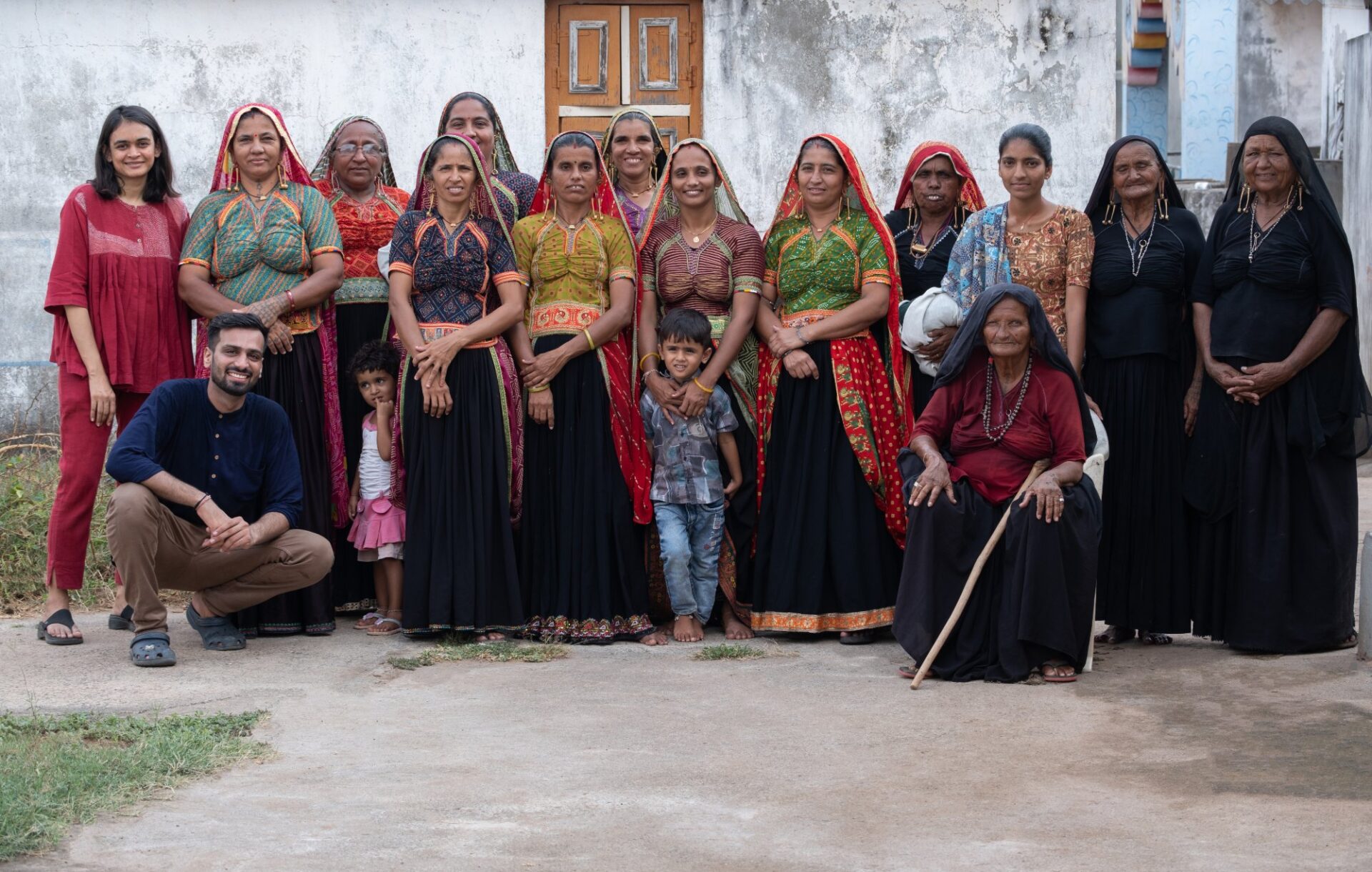
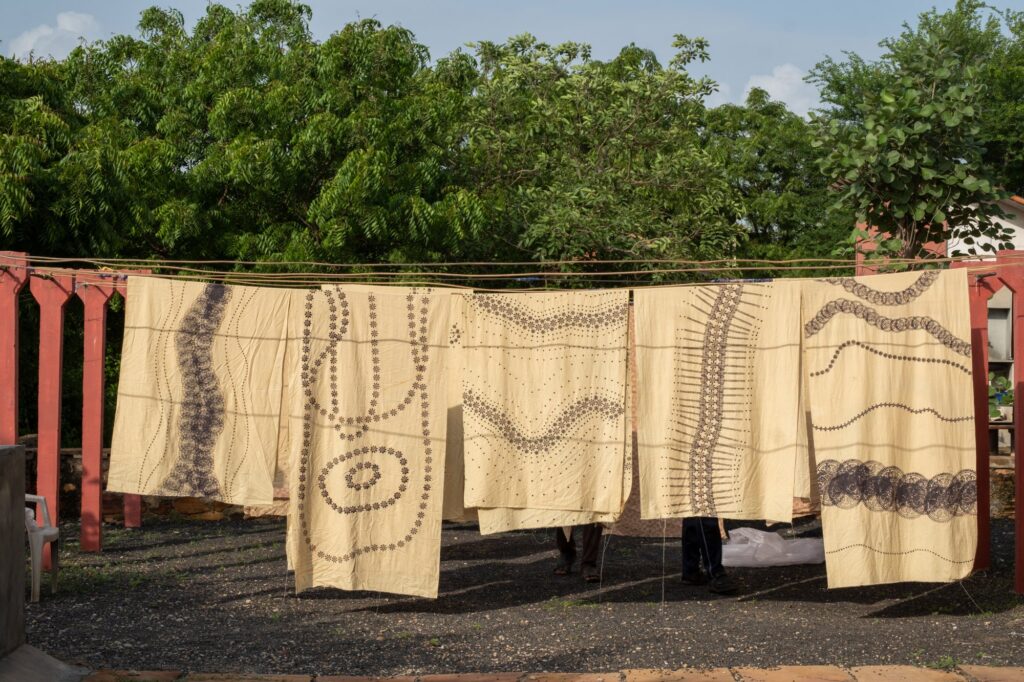
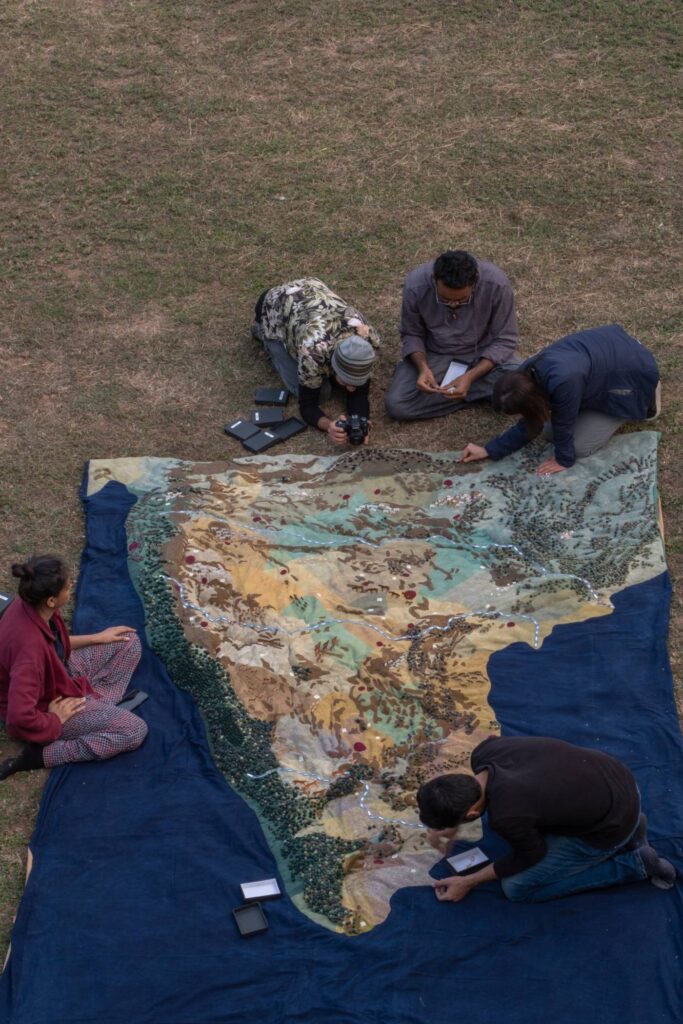
 Brinda: We begin with deep documentation. For example, with the Rabari community’s embroidery in Kutch, or Bengal’s Kantha work, we ask artisans to lay out all the stitches they already know. That forms a vocabulary, which we then digitize. Kabir has even created stitch brushes in softwares like Procreate, so we can “paint with stitches” digitally! This allows us to experiment with combinations before training artisans in new patterns.
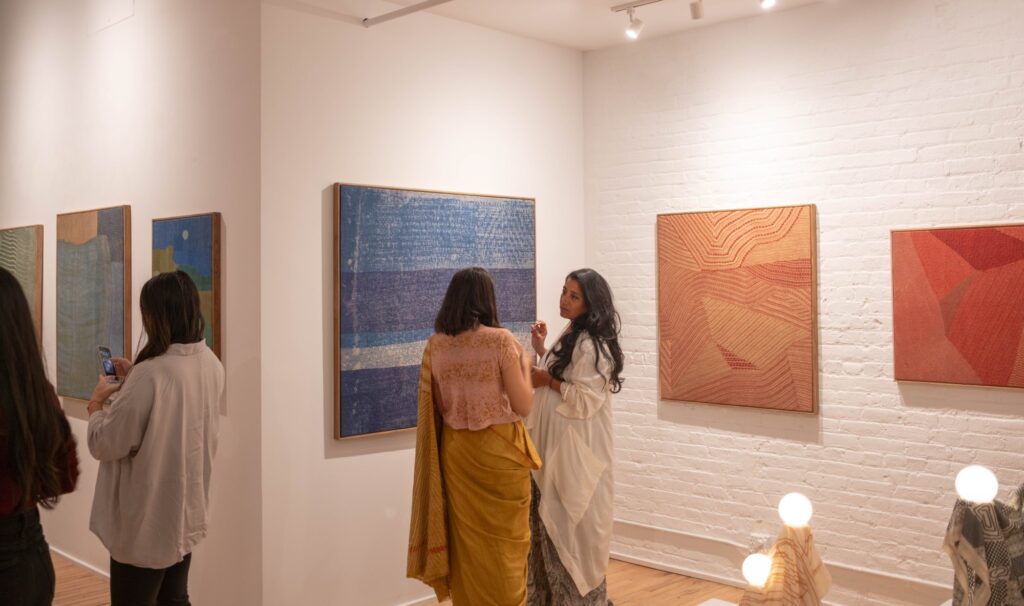 Colour is something we control carefully. Early on, we left it open, but realized our aesthetic and the artisans’ traditional palette differed. Now, we create base artworks, hand-draw the blocks, specify stitches and colors, and then artisans work for months to bring it alive. Our approach ensures that while artisans’ skills remain central, the output aligns with modern tastes of abstract, organic, and architectural.
SCALE: Have there been moments in the villages that particularly shaped your perspective?
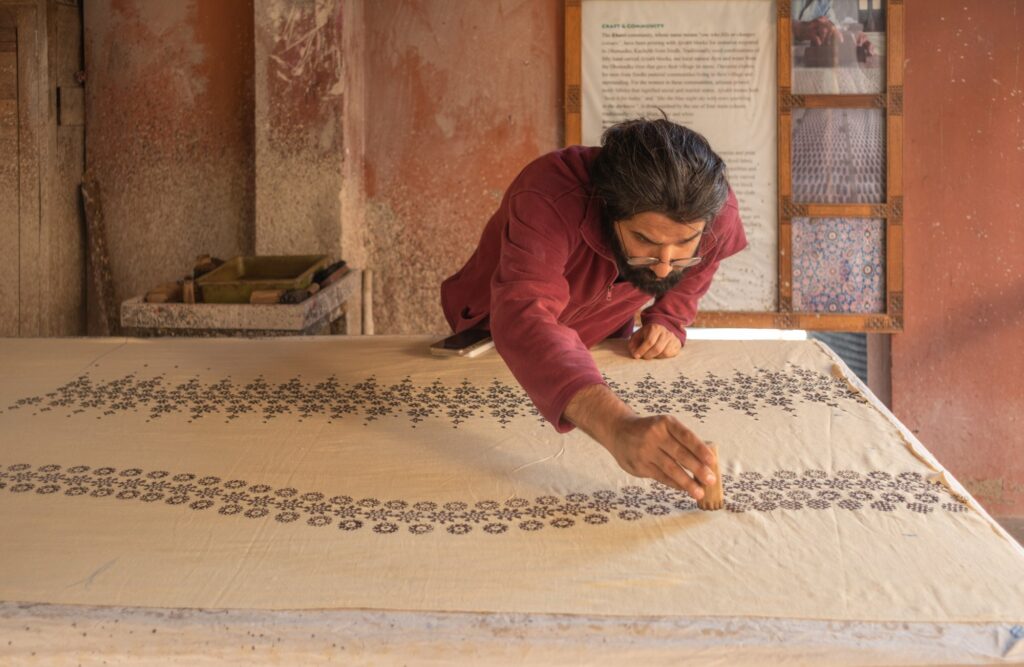 Brinda: Many! One is from our Rabari cluster in Kutch. After years of working together, we saw artisans using our new stitch combinations in their personal wedding garments, and that was a revolutionary moment for us. That meant we had contributed to their living vocabulary, and the craft was evolving naturally.
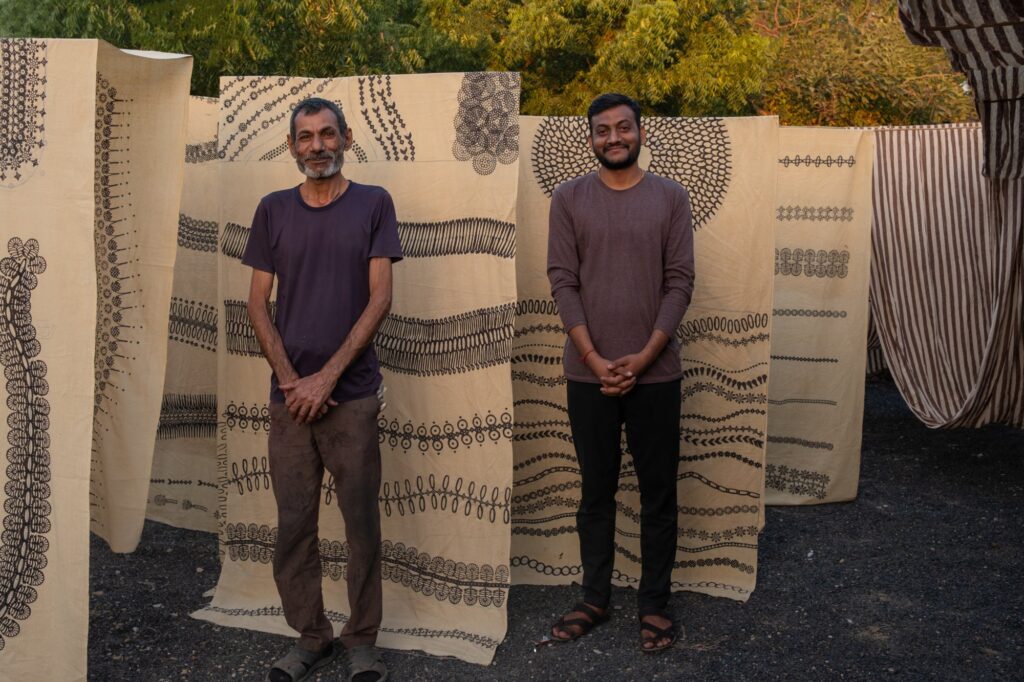 Another moment was when an artisan told me she wanted her daughter to be like me. That shifted something within me. We realized we must incubate young talent, not just empower artisans today, but inspire their future generation. In some clusters, women now earn more than men, and even social dynamics have changed!
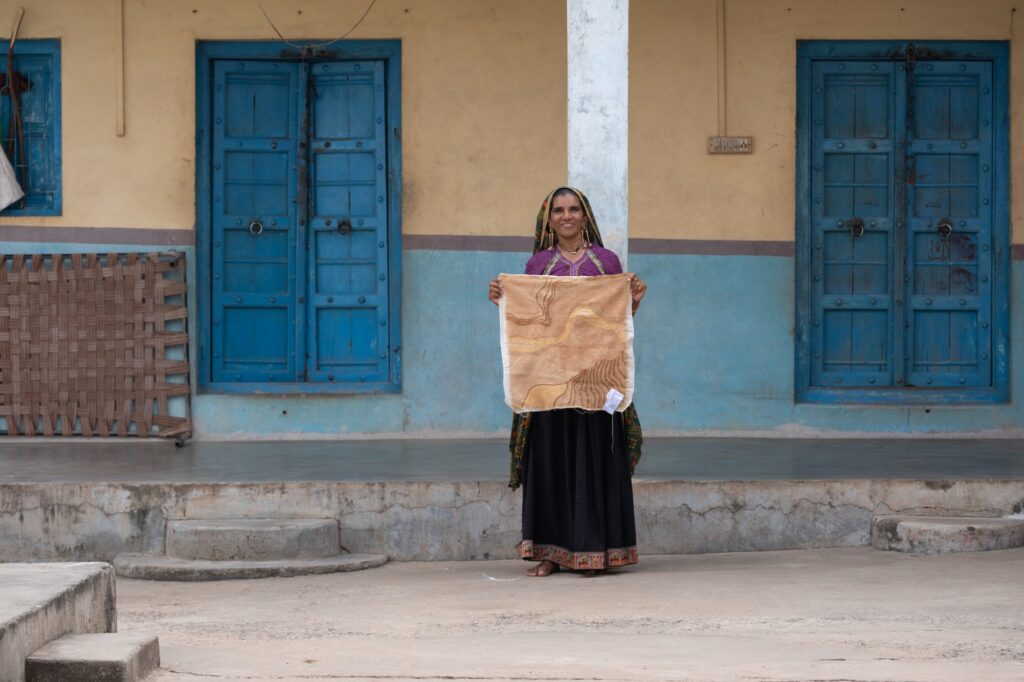 In some villages, the shift is visible in the smallest, yet socially unprecedented gestures, like men serving water to stakeholders while women lead meetings. This quiet reversal of roles speaks louder than statistics about the true power of craft, and what gives us motivation to continue doing what we do at Morii design.
SCALE: What does sustainability mean to Morii in practice?
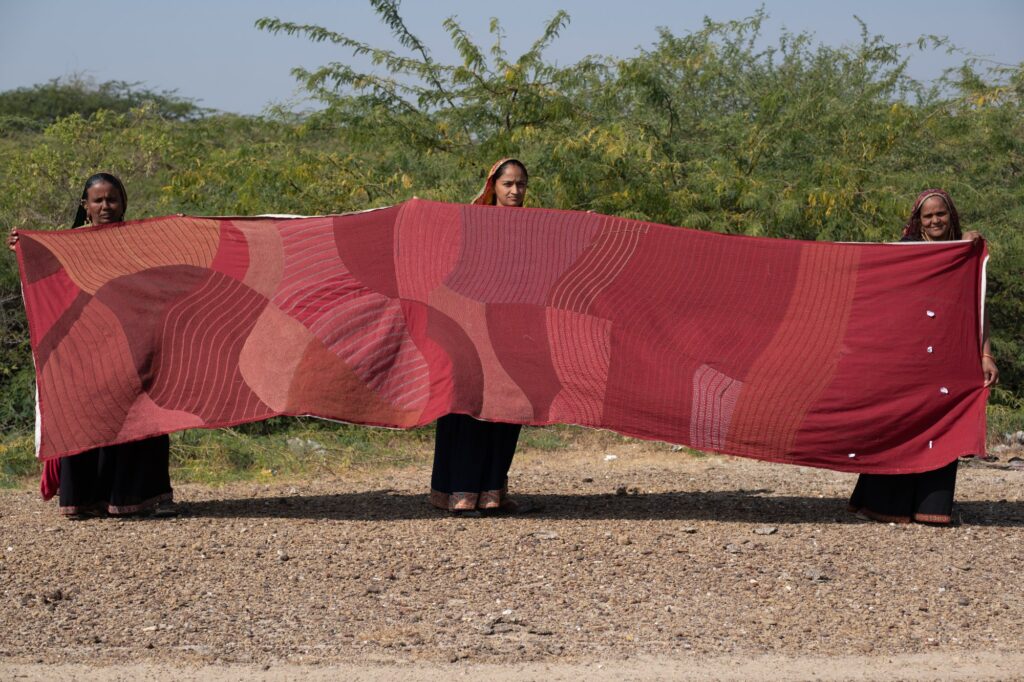 Brinda: Sustainability is complex, and often greenwashing prevails. For instance, block prints are mimicked by screen prints and sold as “handmade.” Even embroidery motifs like Rabari are replicated by machines. For us, sustainability means authenticity and awareness. We constantly educate clients about what goes into a piece. Natural dyes are another issue. But the biggest challenge remains helping people distinguish authentic, slow craft from mass-produced imitations.
SCALE: Morii’s works often appear as large textile installations in architectural spaces. How do you approach site-specific commissions?
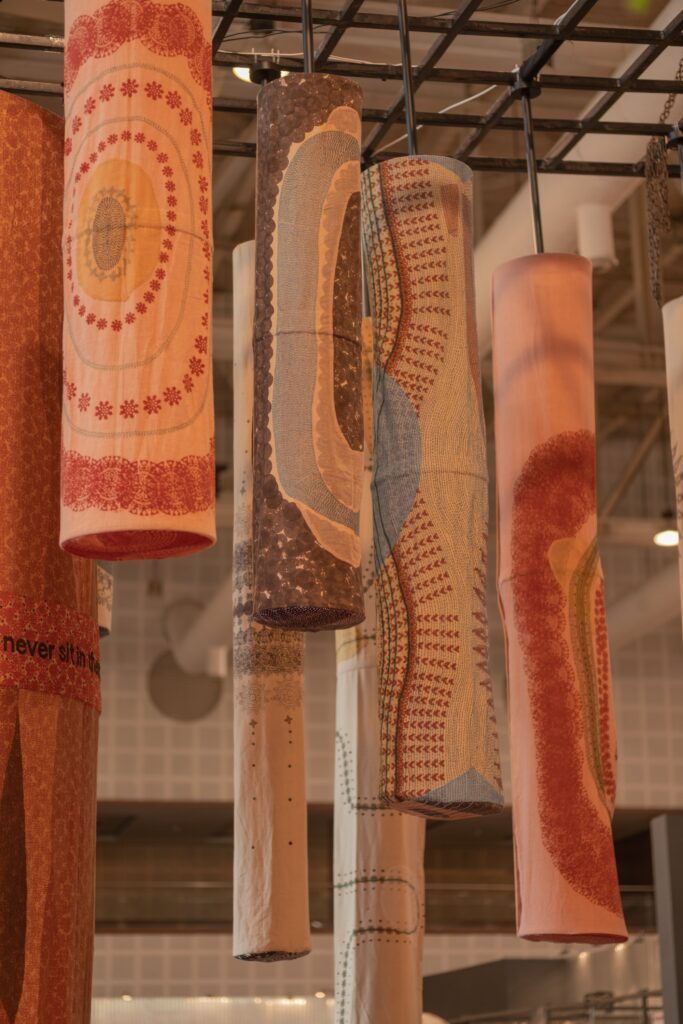
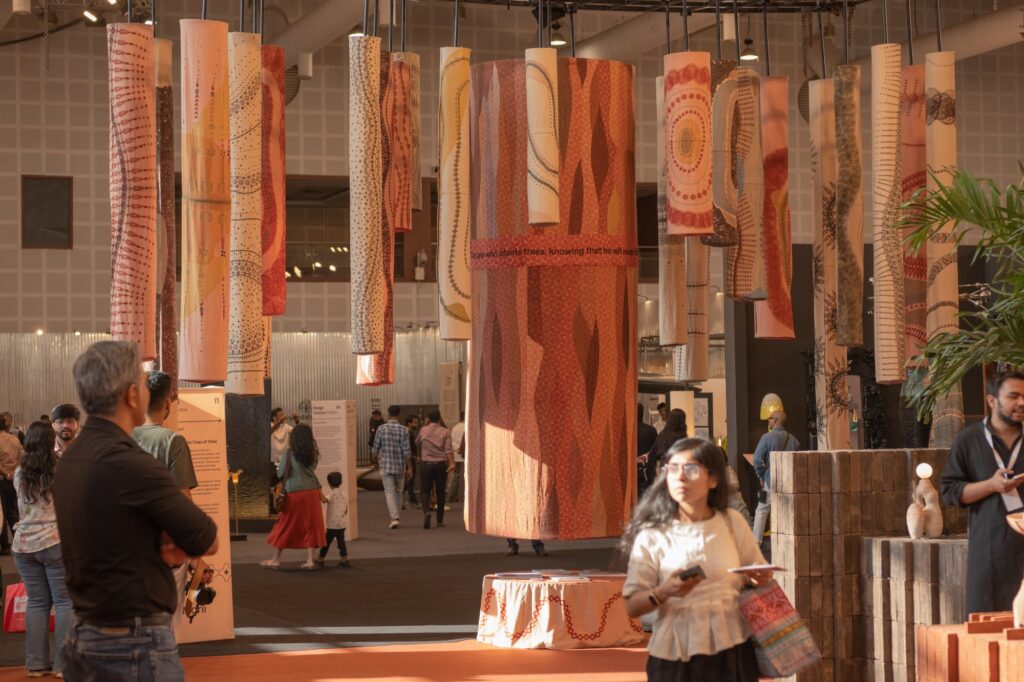 Brinda: We work both ways. We have a catalogue of over 200 pieces for clients who wish for a faster delivery. But for custom commissions, we engage deeply with the site, visiting if possible, or working with images and renderings. We consider light, volume, and scale in their homes, and design accordingly.
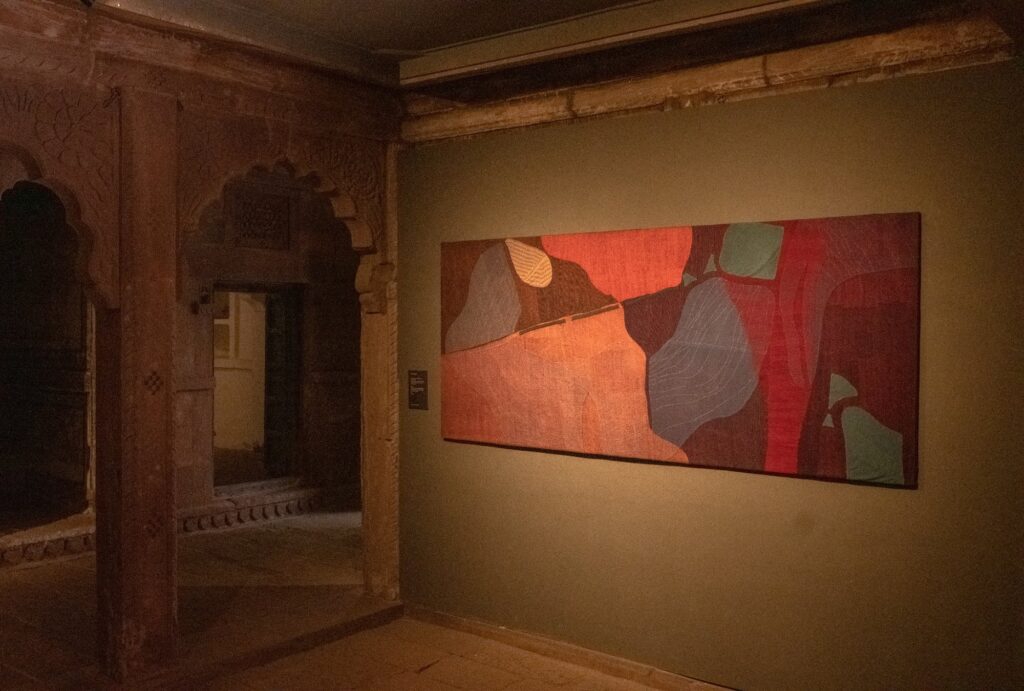 Most briefs focus on colour and size, while our style remains abstract and organic. Figurative requests, like religious imagery, are not our preference. The challenge with custom work is that digital sketches never translate perfectly into textiles, density, texture, and fabric behaviour always vary. We make this clear upfront. Still, many clients value that unpredictability, and it’s part of the handmade!
SCALE: Craft is often positioned separately from fine art. How do you challenge this divide, and where do you see Indian textiles globally?
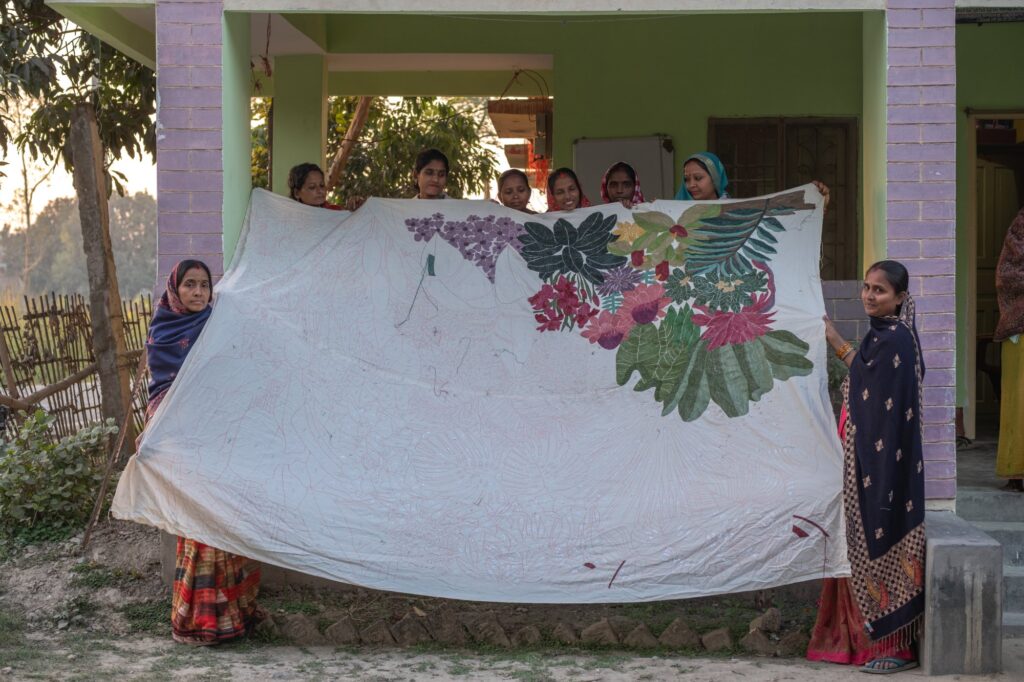 Brinda: Unfortunately, craft is often dismissed as hobby work or a woman’s pastime. Even internationally, in Berlin or New York, we found ourselves explaining what these embroideries are and why they matter. We emphasize quality in the artisan’s work as our way of changing perception. The deteriorating craftsmanship of recent decades has hurt craft’s standing. By insisting on fine, detailed, world-class work, we aim to position it closer to art.
Globally, Indian craft traditions are still under-recognized, but I see growing interest. Our role is to create awareness and show that these practices are not remnants of the past but vibrant, evolving cultural expressions.
SCALE: What’s next for Morii in the coming years?
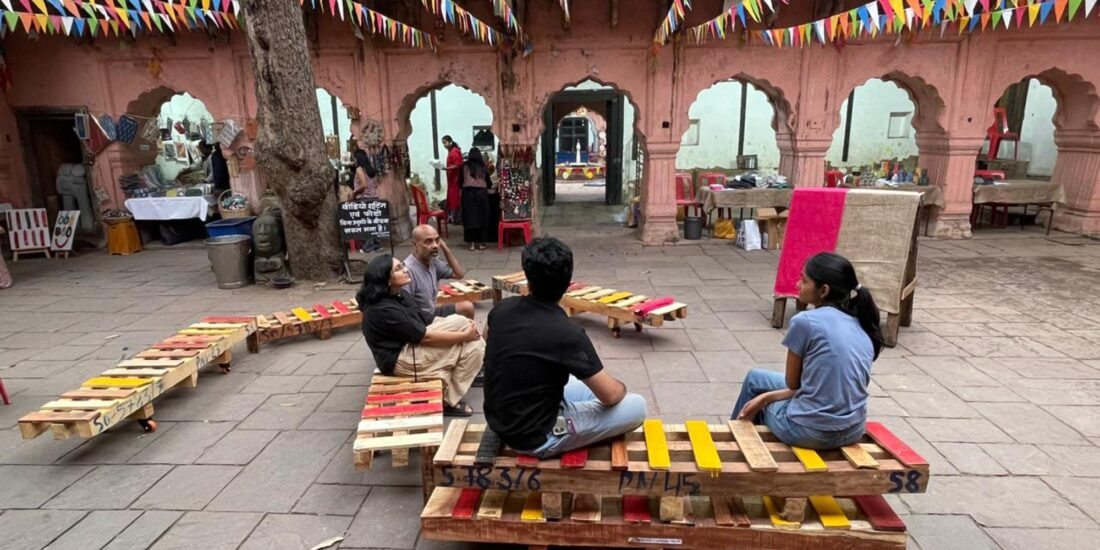
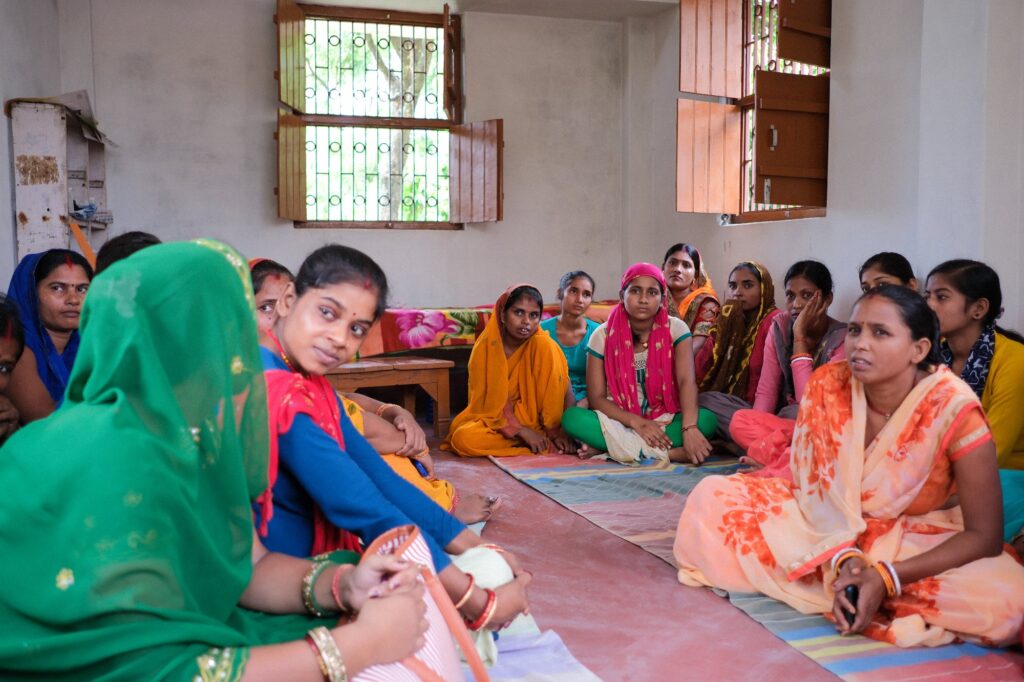 Brinda: We are currently building a new space called Morii Darshan. It will be part workshop, part gallery. Visitors will experience embroidery, dyeing, and block printing firsthand. We believe that once people try the craft, they’ll understand its value.
Morii Darshan will also act as a platform for artisans’ children and young designers passionate about craft. We want to incubate and showcase their work. Having lacked such a platform ourselves, we want to provide it for the next generation.
SCALE: Finally, what’s your mantra for life?
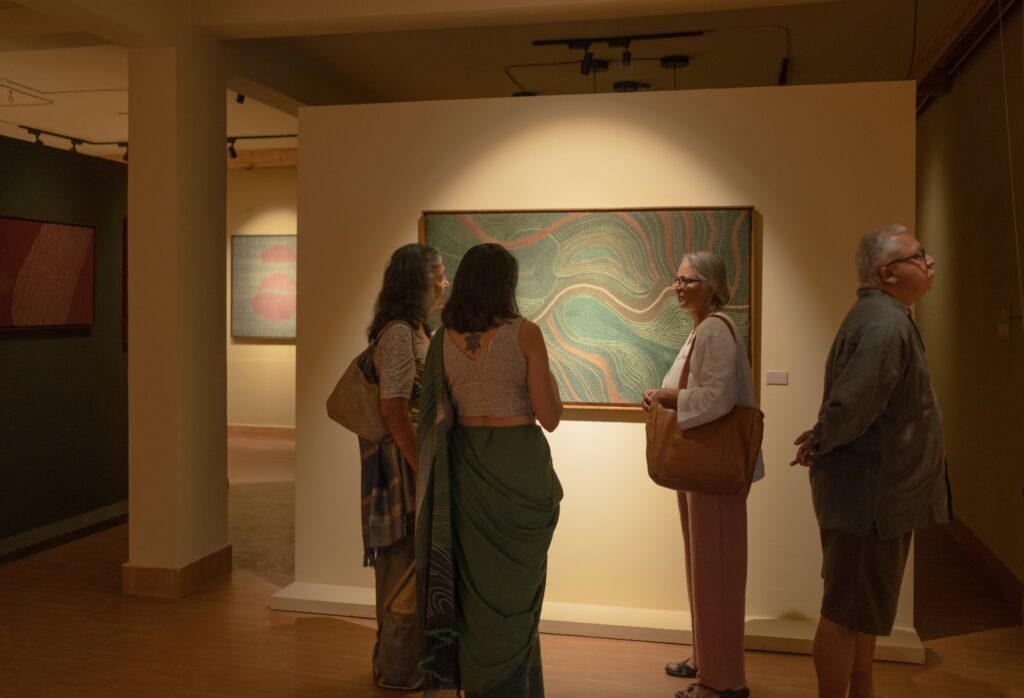 Brinda: Small is Beautiful. It is also the title of a book that deeply influenced me. It talks about Buddhist economics, measuring success not in terms of money but of meaning, and valuing production by the masses instead of mass production. That philosophy gave me the courage to start small, and it continues to guide Morii.
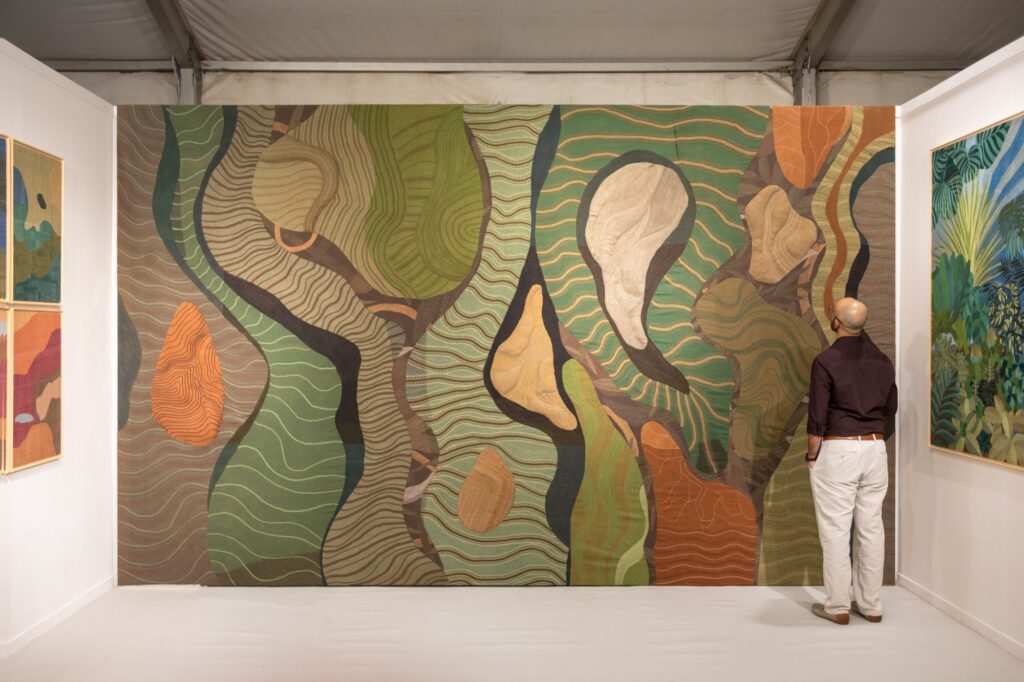 In today’s world, production often chases speed, precision, and scale. Yet embroidery, with its patient rhythm of needle and thread, offers a different kind of value. Each stitch carries memory, imagination, and the quiet strength of human touch. Far from fading, this fragile and intangible art has the power to thrive when nurtured with care.
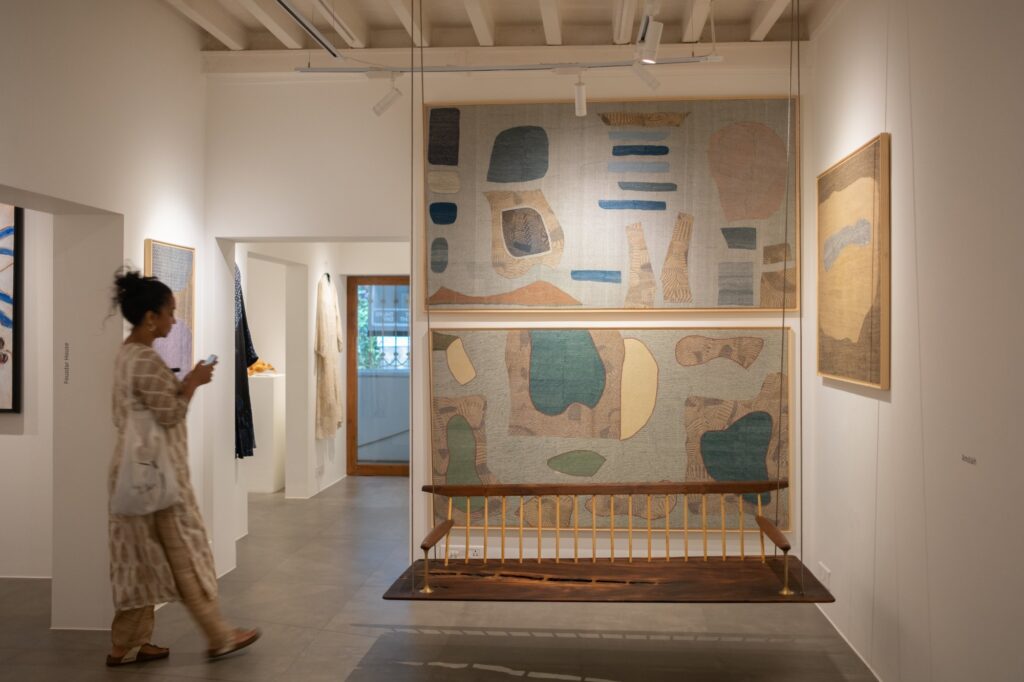 Morii Design Studio has found a cause and an opportunity in this ecosystem, and working shoulder to shoulder with artisans, Brinda and Kabir transform heritage into something vibrant and contemporary, showing that the true worth of craft lies not in efficiency but in its ability to enrich lives across generations.