A Celebration of Togetherness at Gallery Dtale Archist
On a quiet Saturday evening in Bengaluru, Gallery Dtale Archist marked its first anniversary with Oneness in Collective, an exhibition that reflected what the gallery has stood for since its beginning, the meeting of ideas, disciplines, and people. By Arya Nair
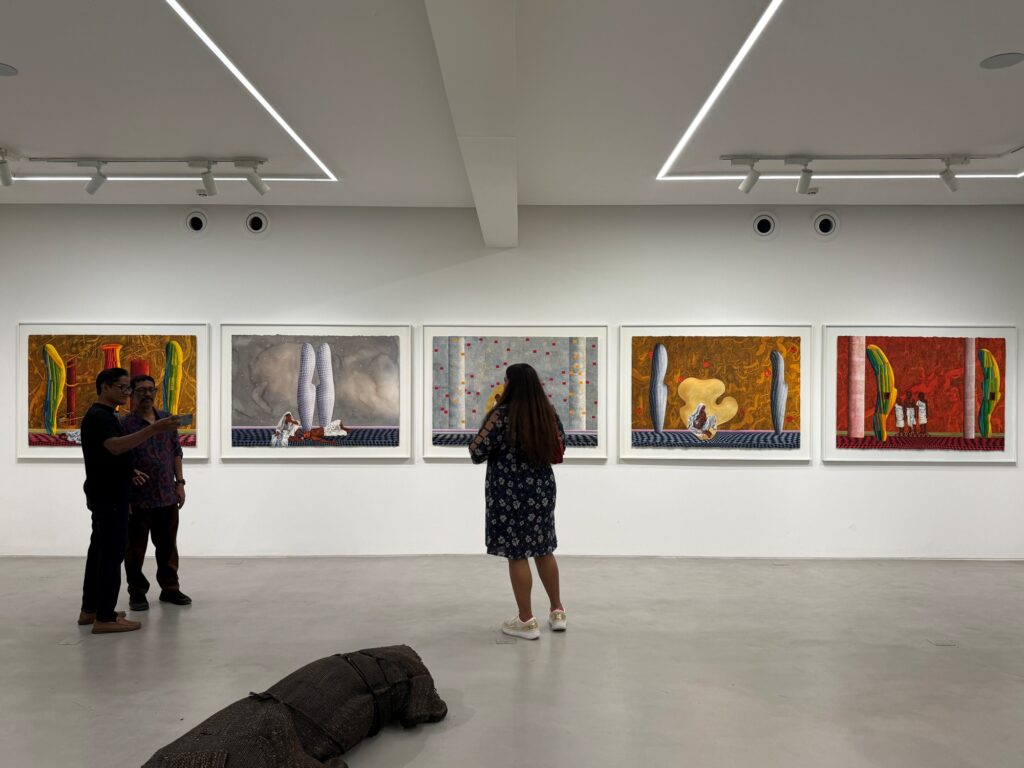 The evening gathered artists, architects, and designers whose works explored different worlds but met in one space. Curated by Bose Krishnamachari, the show was not only a celebration of art but also of learning, sharing, and connection.
The exhibition’s title is a profound philosophy. In a time when our world feels increasingly fractured, the show gently invited guests to consider a timeless truth, one echoed in the ancient Sanskrit saying Vasudhaiva Kutumbakam (the world is one family). It proposed that true unity is not about erasing our differences, but about creating a space large enough to hold them all.
 This beautiful idea was the thread connecting the nine distinct creative voices in the gallery. The walls did not just display art; they echoed with silent conversations between the pieces. Speaking with some of the artists revealed the deep personal currents flowing into this collective ocean.
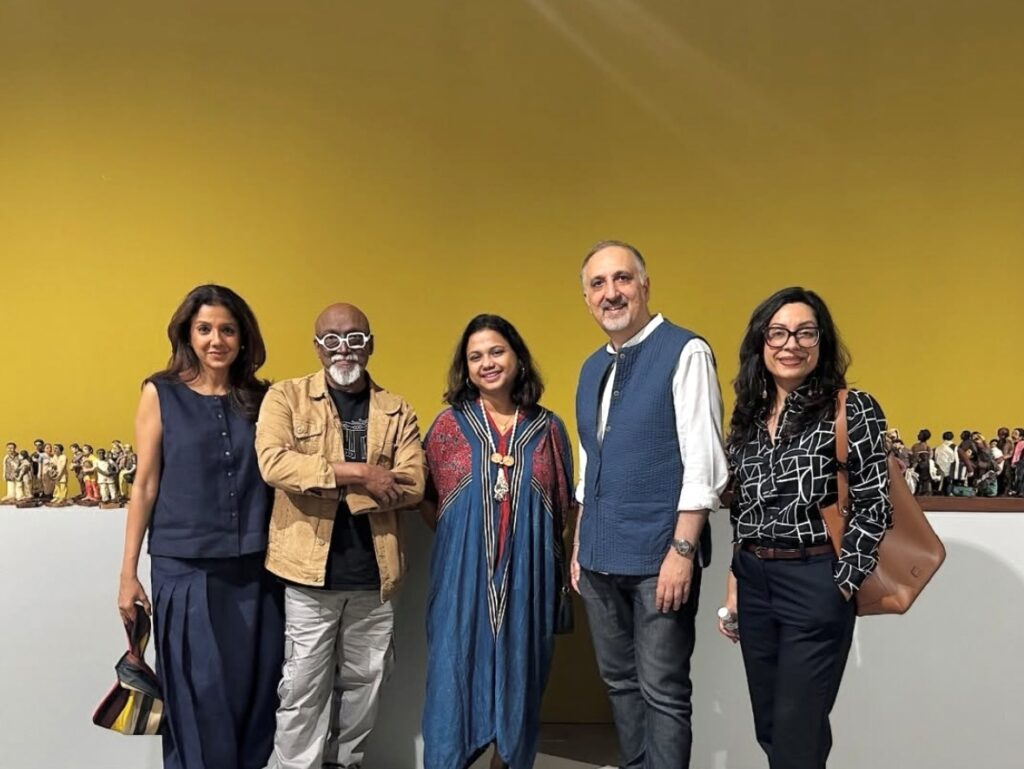
Bose Krishnamachari and the artists.
This principle was vividly brought to life through the works of the nine participating artists. The exhibition was a dynamic constellation of practices, each artist a distinct voice, yet resonating in a harmonious chorus. The lineup of artists at Dtale Archist was a formidable blend of established masters and compelling contemporary practitioners: Bara Bhaskaran, Bhagyanath C, Dilip Chobisa, Nynika Jhaveri, Probir Gupta, Sakshi Gupta, Sojwal Samant, Sonia Mehra Chawla, and Sudipta Das.
Bose Krishnamachari: Learning Through Art and Life
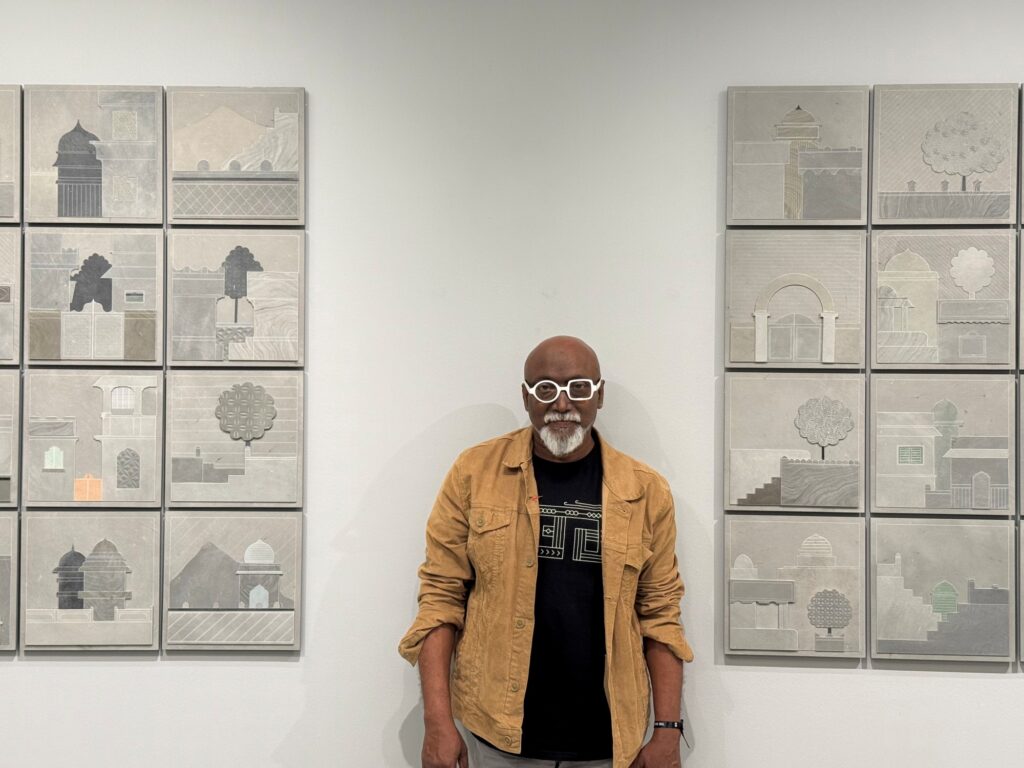
Bose Krishnamachari, the Artistic Director of Gallery Dtale Archist
Bose Krishnamachari, the Artistic Director of Gallery Dtale Archist, spoke with the same warmth and conviction that his space embodies. For him, the gallery’s first anniversary was not just a milestone, but a continuation of a lifelong practice of learning and creating.
“Every show is a celebration,” he said. “I bring new artists to this space because I believe creativity has no boundaries. Painters, architects, designers, all belong here. This gallery is a site for learning, not just for art, but for life.”
He sees art as a living process rather than a product. “I never tell an artist what to make. What matters is the process, the material, the consistency,” he explained. “Art is about how you think and how you live.” His curatorial vision at Dtale Archist reflects this belief, a space where design meets contemporary art, where ideas breathe together.
 When asked about his own creative approach, he smiled and lifted his spectacles. “Even these,” he said, “I picked them up in Venice. I was at the Biennale and found them in a design shop. For me, everything is art, not just paintings or sculptures. It’s about how you look at things. You can find art in a pair of glasses, a chair, or a conversation.”
 Bose’s philosophy is grounded in sharing and openness. “You know, when we leave, we take nothing. So whatever I can share now, I share,” he said. “This gallery is a way of sharing, of creating situations for others to learn and grow.”
For him, Oneness in Collective was not just an exhibition but an idea made visible. “Oneness does not mean we all become the same,” he said. “It means we hold our differences together, like one family, one world.”
Sudipta Das: Fragility and Strength
 Artist Sudipta Das from Baroda brought to the show her delicate installations made from hanji paper and ceramic. Her work spoke about migration and the fragile lives of people who move in search of safety and hope.
“My idea is about displacement, about how people suffer because of change,” she said. “I use paper because it looks soft, but it has strength. I also use ceramics, which look solid but can break. That contradiction is part of life.”
 Using Korean hanji paper and painstakingly layered ceramics, her pieces reveal stories of ordinary people navigating uncertainty. It took six months to realize these works, she shared, emphasising the process oriented nature of her practice and the balance between strength and fragility in her sculptures.
Sonia Mehra Chawla: The Invisible Web of Life
 Sonia Mehra Chawla, a multidisciplinary artist from New Delhi, presented her series Vital to Life. The works showed microscopic images of marine algae and diatoms, organisms that sustain much of life on Earth.
“These small organisms are the base of the food chain,” she explained. “They produce oxygen and are food for larger species. Without them, life would not exist.”
 Her art combined science and imagination. “This work came from two years of research with marine scientists in Scotland. I filmed the organisms under a microscope and then created etchings from those images,” she said. “Art and science can come together to help us understand the world better. Science gives us facts. Art gives us feeling.”
Through her work, Sonia invited viewers to see how life is deeply connected, even in its smallest forms.
Bara Bhaskaran: Stories from the Margins
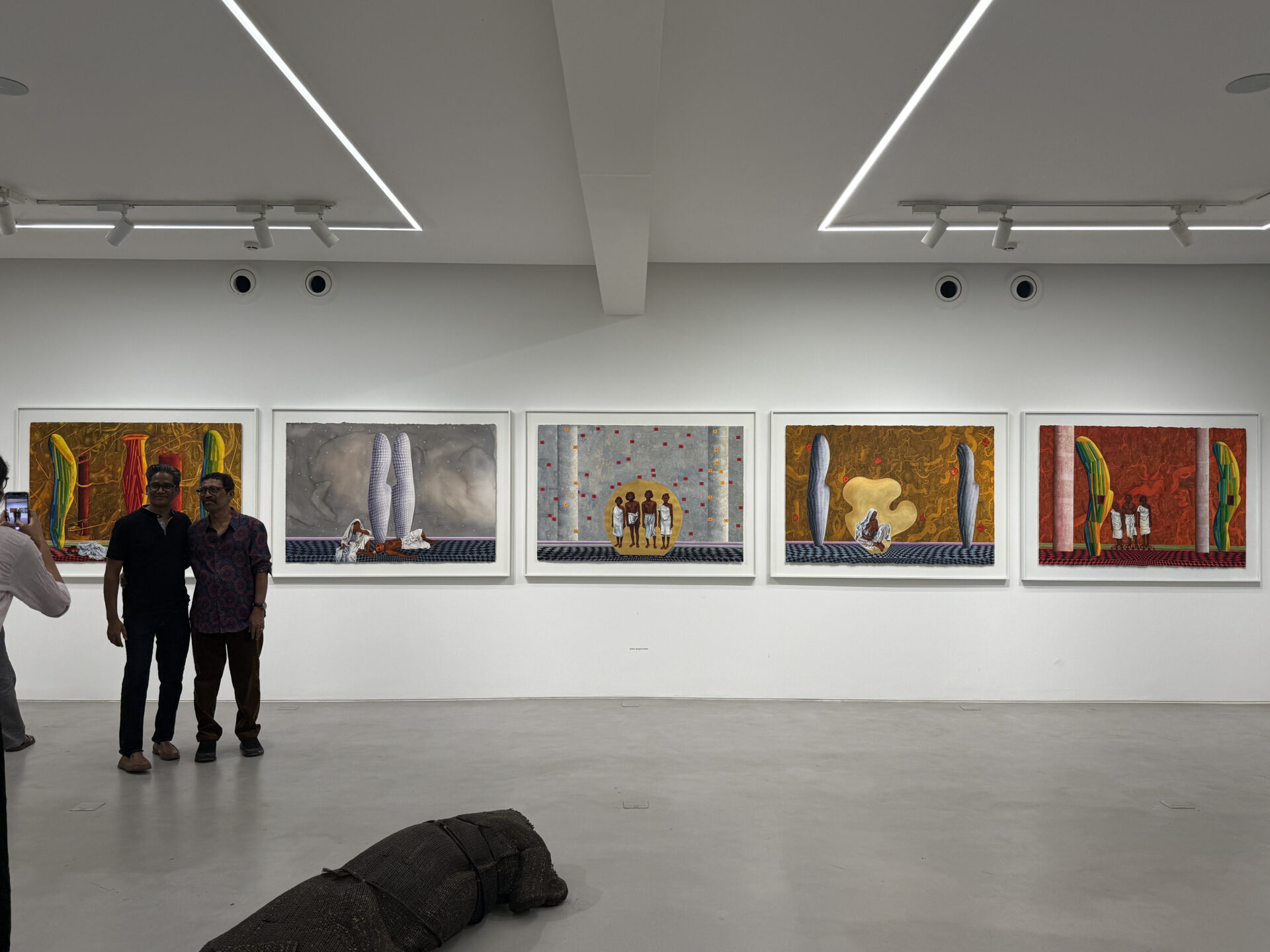
 Bara Bhaskaran’s work stands at the crossroads of history, storytelling, and human experience. For years, he has been developing Amazing Museums, a series that reimagines landscapes as living archives of forgotten lives and layered histories. His art brings together the past and the present, the visible and the hidden, in a way that invites reflection on who is remembered and who is left out.
“I’ve always been interested in creating museums,” he said. “Not physical museums, but spaces within my art that hold stories of people, places, and communities that history often overlooks.” His work draws deeply from his engagement with Kerala’s indigenous communities. “I’ve written about C K Janu, one of Kerala’s prominent tribal leaders,” he shared. “My interest began there, among the people whose lives carry so much meaning, yet are rarely represented.”
Each of his paintings is a narrative, not abstract, but readable, grounded in human emotion. “My visuals must tell a story,” he explained. “There are many brilliant abstract artists, but my language is narrative. I take a subject and tell its story through images.”
 In his recent series Primordial Fungi, Bara explores the earliest traces of life, drawing connections between the ancient and the spiritual. Many of his paintings depict Theyyam, the ritual art form from Kerala, where gods are shown engaging in profoundly human acts such as sleeping. Through these images, Bara reflects on the intimate threshold between the mortal and the divine. “That moment between the human and the divine, that transformation, is what I try to capture,” he said. “Not the God who is worshipped, but the human becoming divine through experience.”
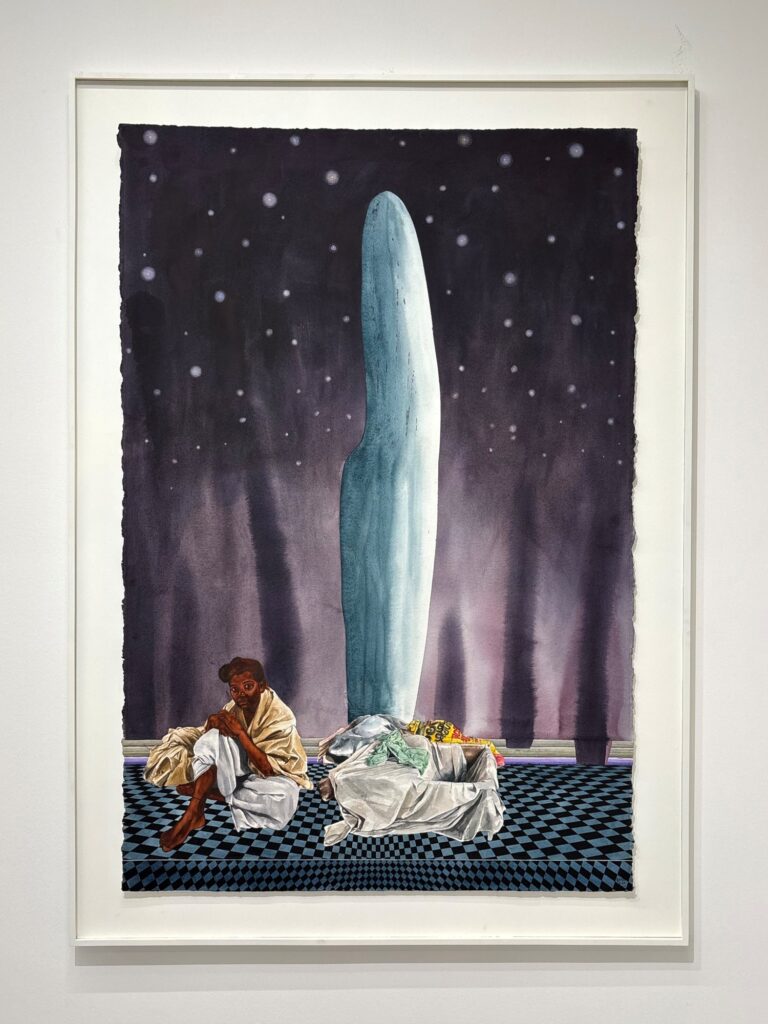 His works feel both theatrical and intimate. The figures he paints, though realistic, hold symbolic meaning, each one carrying a story larger than itself. “When I create, I think of it as building patterns,” he said. “Everything follows a rhythm, like tiles forming a design or a chessboard coming to life.”
Bara Bhaskaran challenges how we view art, history, and power. “Inside the museum halls,” he reflected, “I place the forgotten, the derelict, the dispossessed, on lighted pedestals. I want viewers to see themselves in that reflection, to question their own place in the story.”
The Heart of Dtale Archist
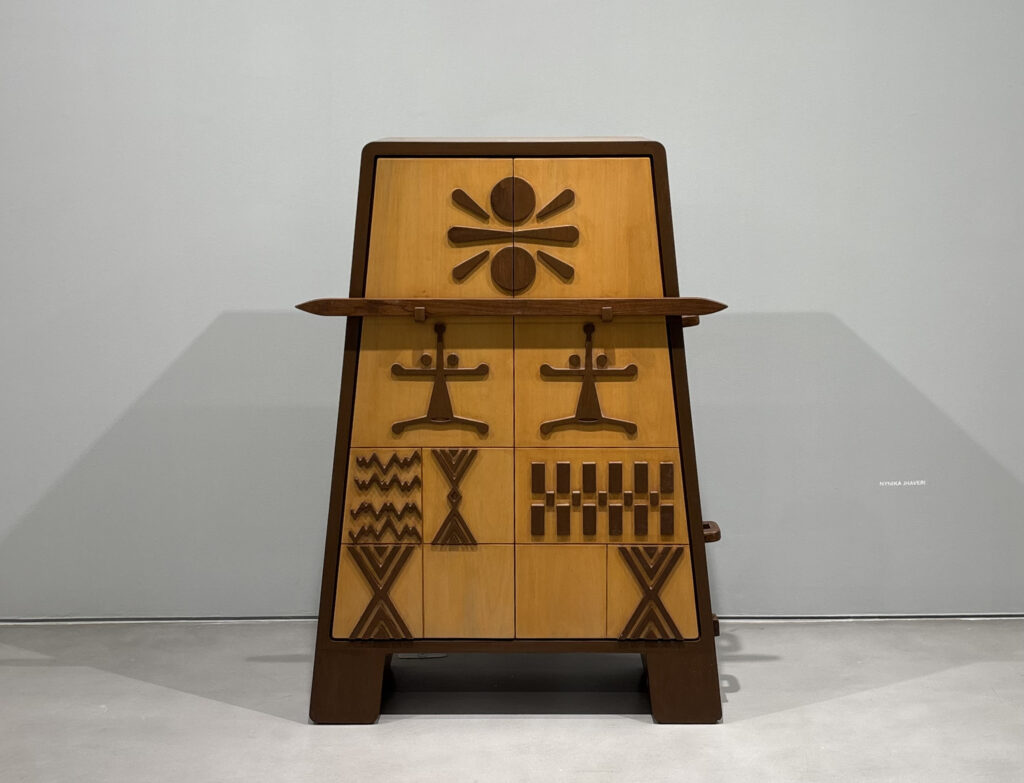 The evening also highlighted the gallery’s commitment to fostering intersections between disciplines. Architect Sandeep Khosla, who has been following the gallery since its inception, remarked, “There is a mixture of art and architecture happening here. It is very exciting that Bose has created a gallery for artists, architects, and designers. We are working at the intersection of art and design. These disciplines feed off each other. This gallery opens our minds to different forms of art and blurs the boundaries that are often imposed.” He added that while this is not strictly a collaboration, it creates a fertile space where art, architecture, and design enrich one another.
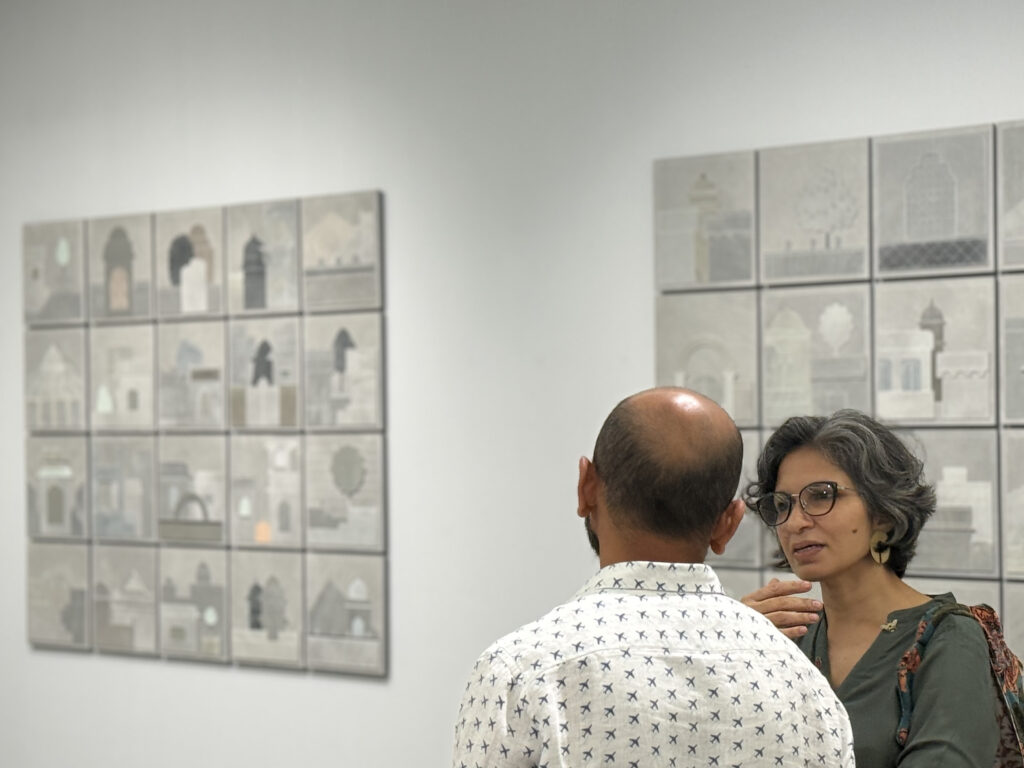 Throughout Dtale Archist, the works engaged in subtle and overt dialogues. The raw industrial forms of Sakshi Gupta’s sculptures conversed with the conceptual minimalism of Dilip Chobisa, while the socio political canvases of Probir Gupta resonated alongside the figurative and intimate explorations of Bhagyanath C. Each artist contributed a unique thread, weaving together a cohesive tapestry of expression and meaning.
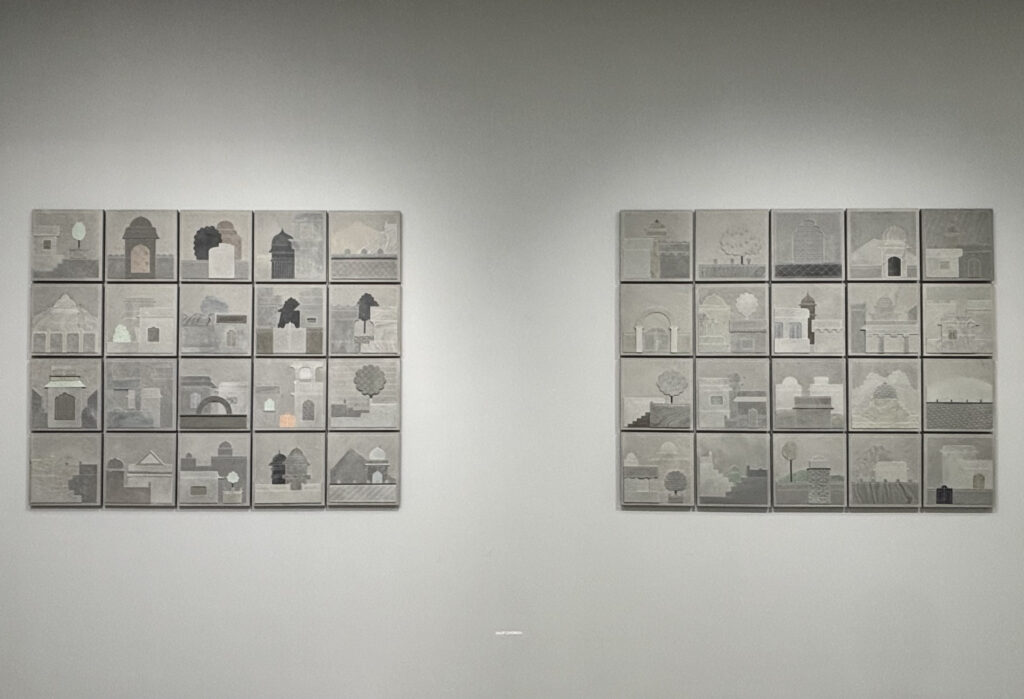 The evening felt like a quiet celebration of what Dtale Archist has built over the past year. Every piece, from sculpture to print to installation, was part of one larger thought, that creativity grows through connection. Bose Krishnamachari’s vision has always been to make Dtale Archist more than a gallery. It is a platform where artists learn from one another, where viewers engage closely with real materials, and where art flows into everyday life.
 “It is about places for learning,” he said. “When you create such places, things can grow. That is how the Kochi Biennale started too. You create the place first, and art follows.”
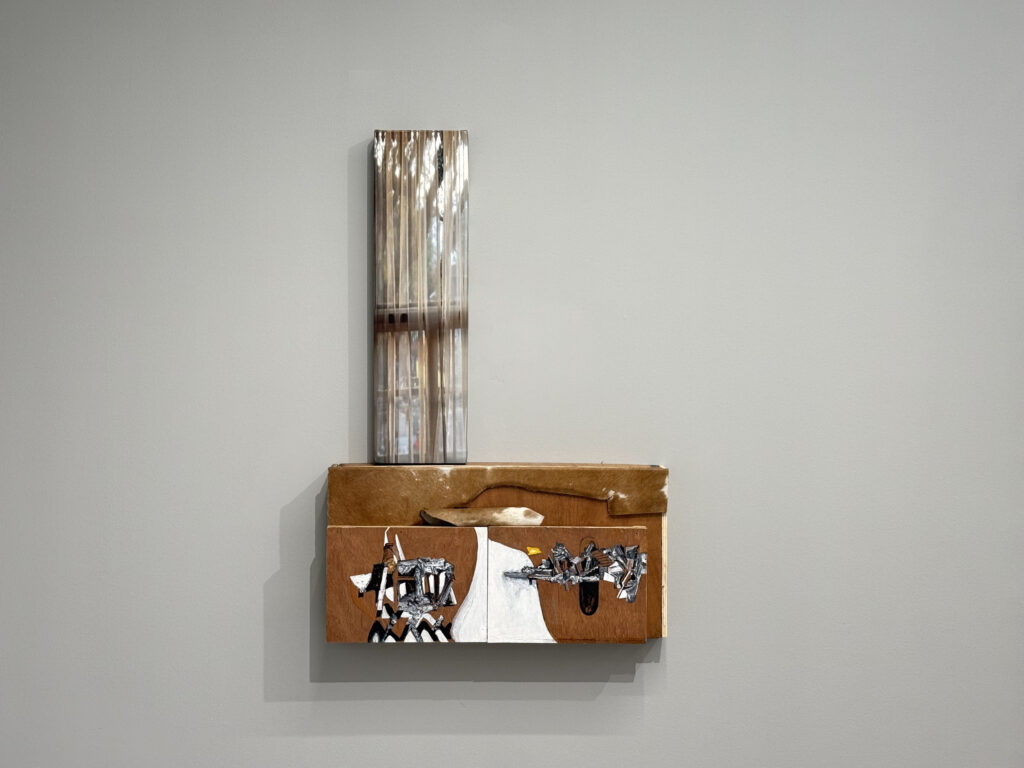 The exhibition Oneness in Collective echoed that belief. It showed that togetherness does not mean losing individuality. Each artist stood apart, yet all were part of one larger rhythm, the rhythm of making, seeing, and sharing.As the evening drew to a close, the space still buzzed with quiet conversation. Visitors lingered over the works, some deep in thought, others smiling in recognition. The message was clear. Art is not about walls or labels. It is about people coming together to see the world a little more closely.
 At Gallery Dtale Archist, art lives with design, thought lives with feeling, and everything is part of one continuous act of creation. In this celebration of the first year, art proved once again to be a profound instrument of connection, learning, and collective imagination.