Hookkapani: The Kinetic World of Vishal Gupta
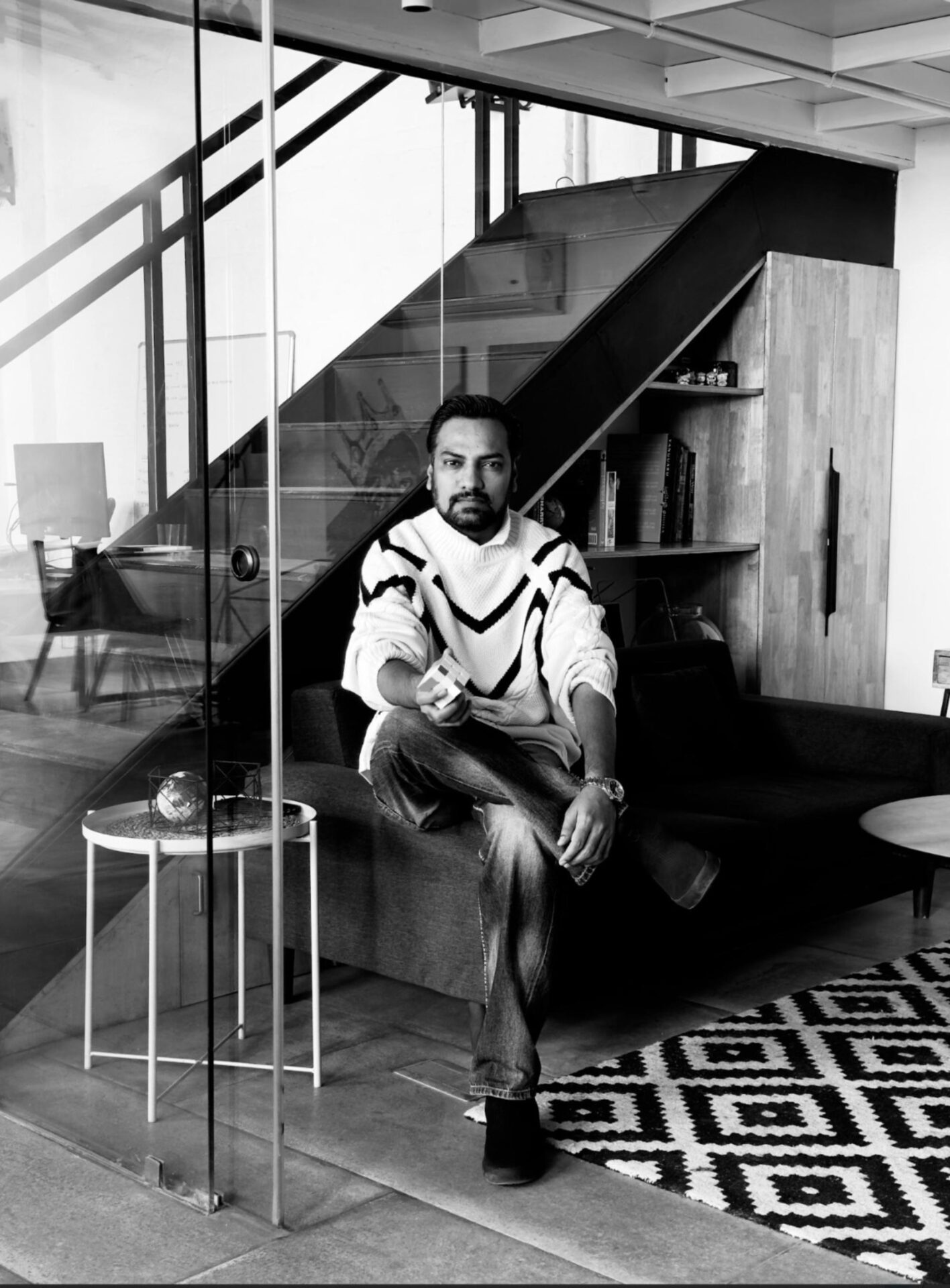
For Vishal Gupta, founder of “Hookkapani”, becoming an artist was never a dramatic decision. It was simply a continuation of who he had always been. Trained formally as a painter, his practice gradually expanded beyond the canvas into space, form, and ultimately motion. Over more than a decade, his work has evolved through trial, obsession, failure, and repetition, shaping a practice rooted in curiosity with a steady urge to understand how materials move, breathe, and come alive within shared spaces. By Aishwarya Kulkarni
For Vishal, art itself is ‘hookka-pani’, as essential to life as food and water. Founded in 2011, the studio reclaims the term from its historical meaning of deprivation to assert art as a necessity, not a luxury. Today, Hookkapani is recognised for its large-scale kinetic sculptures, which can be found in restaurants, museums, hotels, malls, and urban landscapes across India and beyond, where art, engineering, architecture, and design converge.
In this conversation with Aishwarya Kulkarni, Vishal reflects on his journey from being a painter to a sculptor, and then his transformation of sculptures from static metal to complex kinetic systems. Through his words, we get an insight into the ideas, processes, and persistence that continue to shape his work.
 SCALE: The name Hookkapani is unusual and deeply evocative. What does it mean, and how did the studio begin?
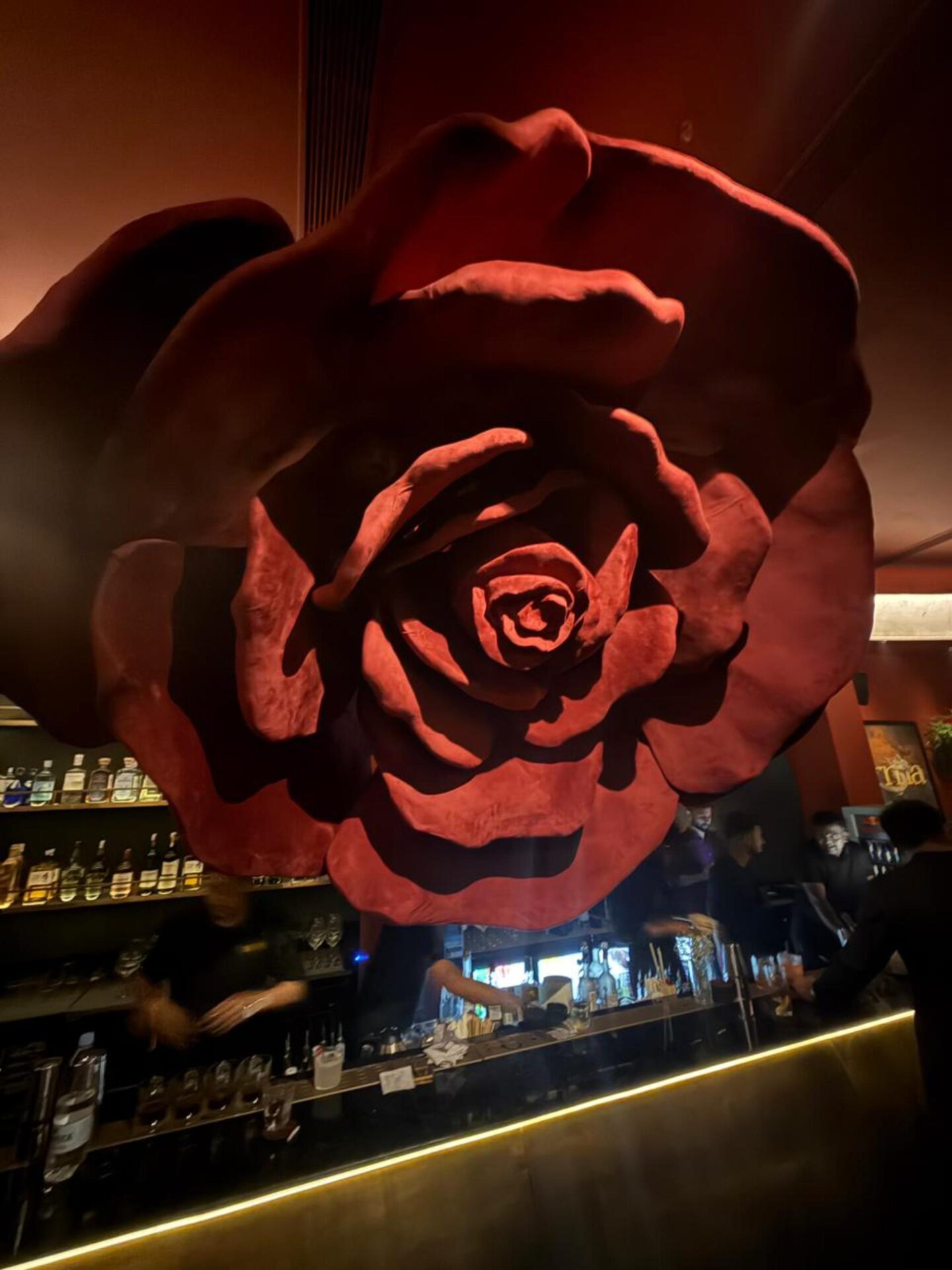
Rose.
Vishal: Hookkapani comes from a very Indian context. ‘Hookkapani’ refers to one’s basic staples like food and water. In older village settings, if someone disobeyed social norms, people would say, “hum tumhaara hukapaani band kara denge”, loosely translating to “we will cut off your essentials.” I chose the name because I believe art is exactly that – something society cannot ignore. It is essential.
While Hookkapani often collaborates closely with architectural practices, including the firm Urban Mistrii, founded by my wife Ritika Rakhiani, it functions independently.
SCALE: Were you always inclined toward sculpture, or did this evolve over time?
Vishal: I am formally trained as an artist. I completed my BFA and MFA in Painting from Delhi College of Art, and from my childhood, painting, especially portraits, was my strength. When I started working professionally, I was painting walls for restaurants and hospitality spaces.
Around 2011, clients began asking for three-dimensional work, and during that time, “3D” meant layered surfaces and reliefs. That curiosity pushed me toward depth, and eventually toward movement – because motion adds life.
One early project that stayed with me was for a café called Vault in Connaught Place, Delhi. I designed a massive entrance door inspired by bank lockers, complete with gears. Due to budget and technical constraints, it remained static, though the original idea was for it to move. That unfinished thought stayed with me. By 2017, after repeated requests, I began actively experimenting with gears and kinetic systems
SCALE: Certain motifs like eyes, animals, and faces recur in your work. Is there a narrative behind this?
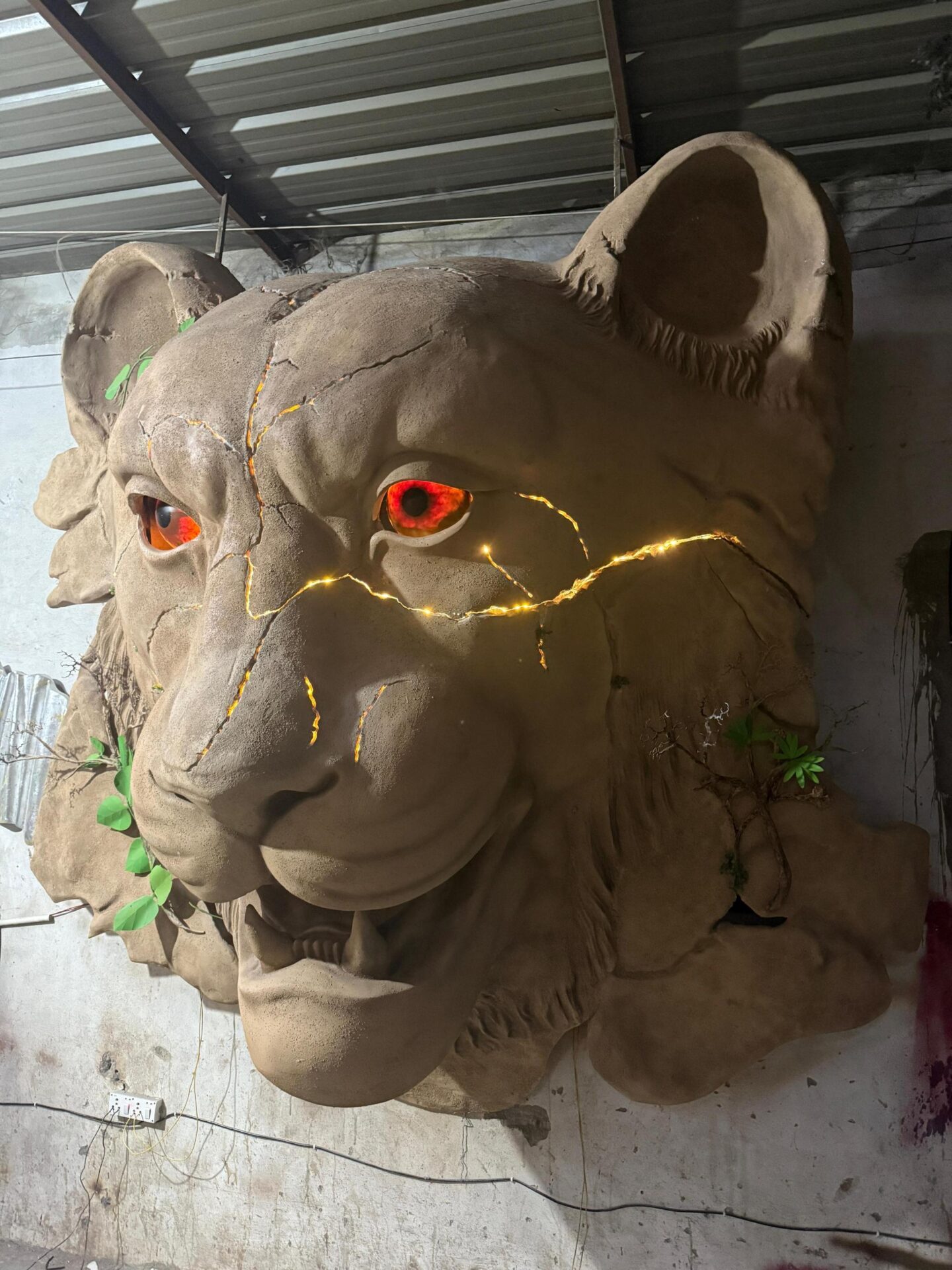
Sarabi
Vishal: Like most artists, I go through phases of focusing on subjects that I try to perfect and experiment with, to their full potential. Each year, certain forms dominate my practice. Recently, it has been moving eyes and kinetic faces, exploring perception, awareness, and consciousness. Earlier, animals were central.
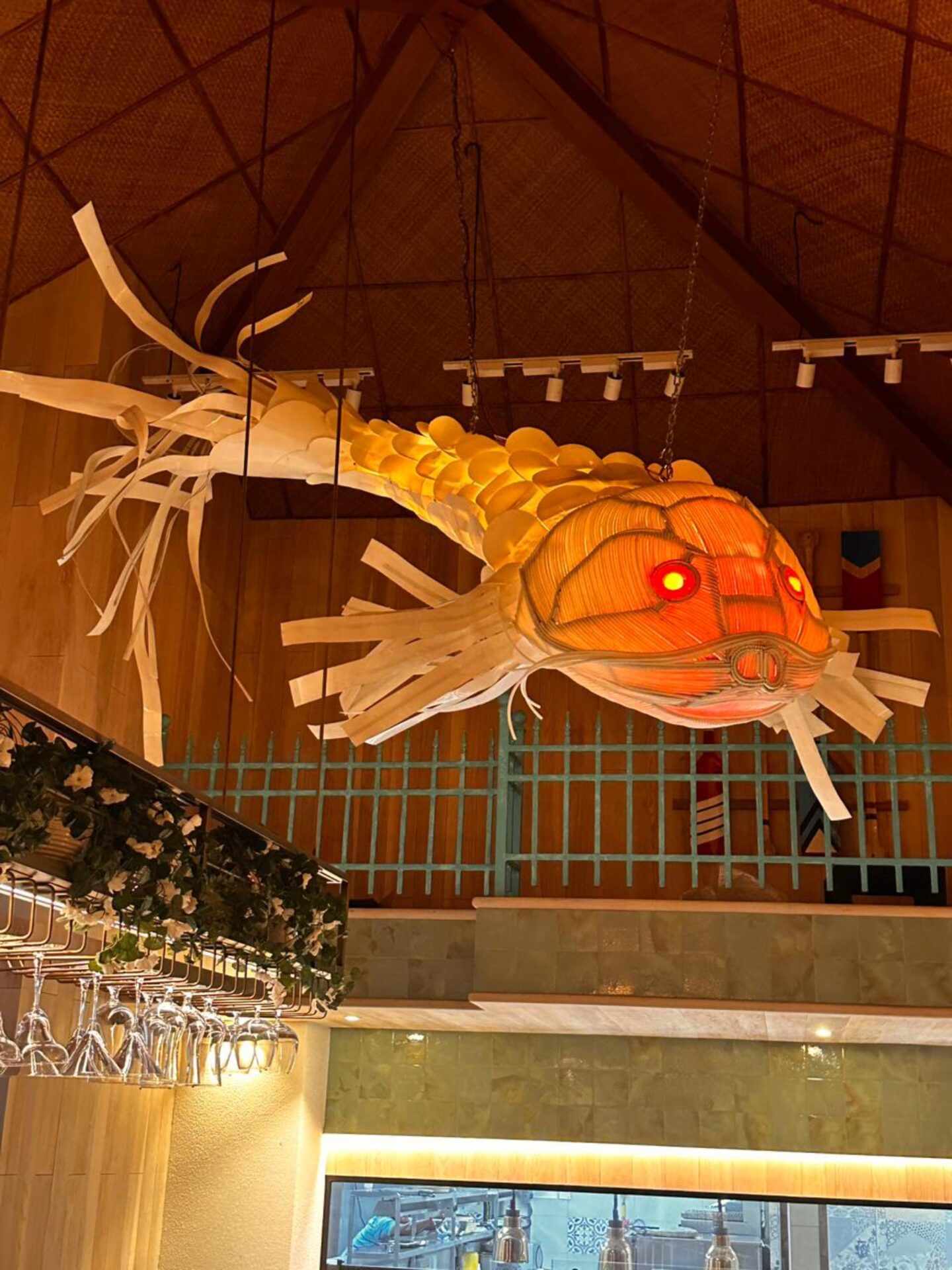
For instance, Sarabi, a kinetic lion sculpture, represents feminine strength and resilience. Its body fractures glow from within, pulsing as if alive. Similarly, Koi, a luminous sculptural form inspired by the koi fish, draws on ideas of prosperity, movement, and transformation, suspended delicately in space. Some repetition also happens organically. India’s hospitality and F&B ecosystem is small and fast-moving, so once a new piece gains visibility, similar commissions follow. But the first impulse always comes from curiosity, not trends.
SCALE: Which works marked turning points in your practice?
Vishal: The first life-scale kinetic horse, completed in 2018, was a breakthrough. Making a horse move, at full scale, was technically and emotionally demanding. Installed at Verbena, a terrace garden restaurant in Mumbai, the sculpture uses layered metal segments that shift rhythmically, giving the illusion of breathing. That project changed how I understood scale, mechanics, and helped me gain immense confidence in the kinetic art forms I was exploring.
Another significant work is The Yearning Heart, created for Select Citywalk, Saket, as a Valentine’s Day installation. Though abstract, it explores longing as an emotion, something irrational and overwhelming. The heart pulses mechanically, turning an intimate feeling into a shared public experience.
At an urban scale, projects like the 25-foot-tall low-poly metal fountain at the entrance of Birch, Goa, pushed the boundary between sculpture and infrastructure. Designed as a landscape element, it functions simultaneously as an artwork and a spatial marker.
SCALE: How do you approach narrative-driven institutional projects?
Cosmic
Vishal: An example is the Gita Museum in Kurukshetra, completed in 2020 as a government project. I conceptualised the museum as a scroll-based spatial narrative. Instead of isolated exhibits, the walls themselves unfold like a manuscript, with layered projections narrating verses and philosophy from the Bhagavad Gita.
The journey culminates in a light-and-sound installation depicting Krishna’s cosmic form, an avatar so vast it encompasses the earth itself. It was about scale, immersion, and surrendering to something larger than the individual.
SCALE: Your work is materially complex. How has that evolved?
Mystic
Vishal: From 2012 to 2019, I worked almost entirely in metal, and static sculptures allowed for that, as once kinetics entered the picture, weight becomes a serious limitation.That pushed me toward experimentation with acrylic, wood, ply, and composite boards, and material choice became inseparable from the kind of motion and balance needed.
The process is such that every design first begins by interpreting the brief, after which small-scale prototypes are designed – either handmade or 3D-printed. Life-scale versions are fabricated in the warehouse, documented, approved, dismantled, and then reassembled on site, while the final joinery and calibration always happen at the location.
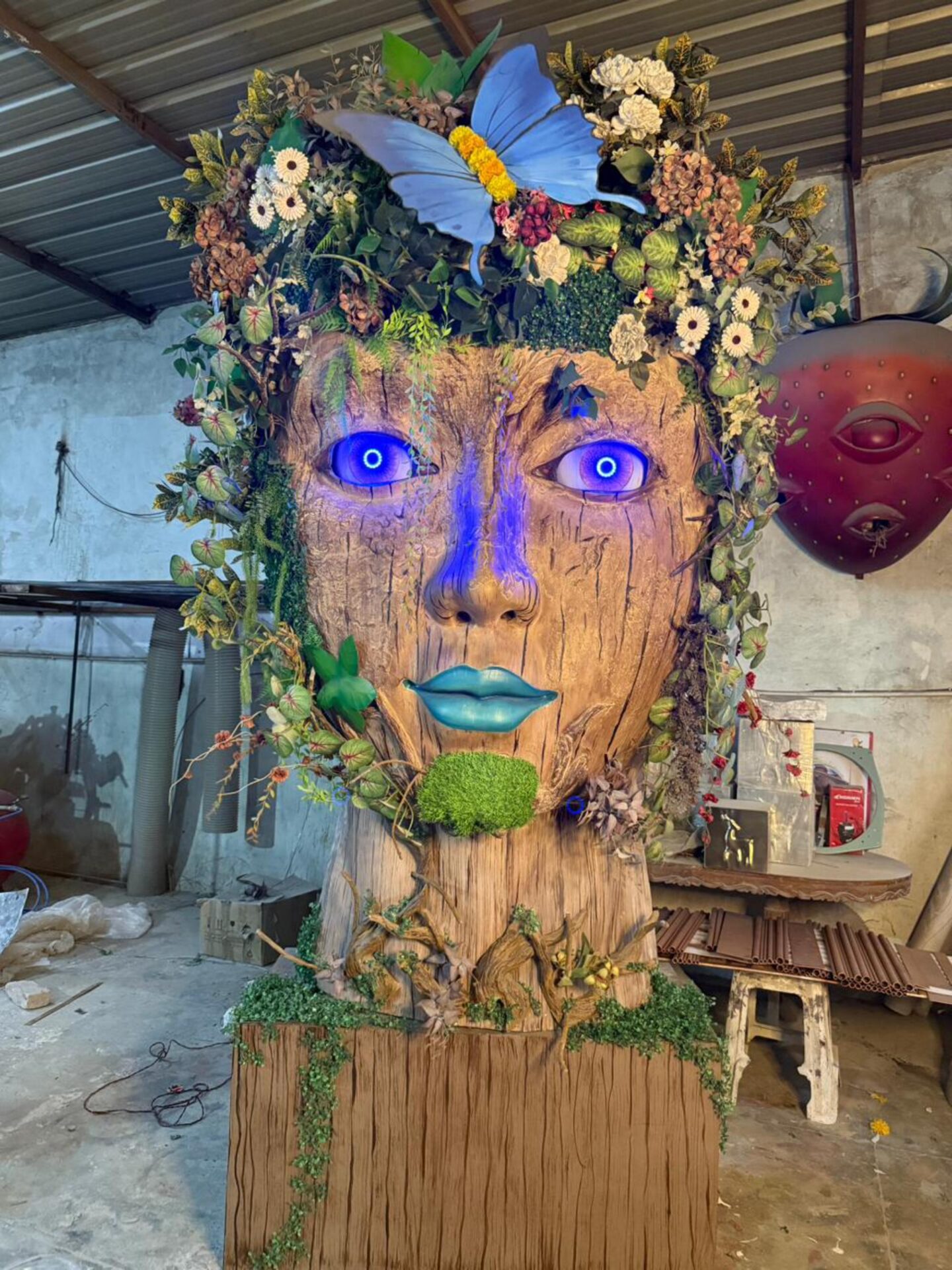
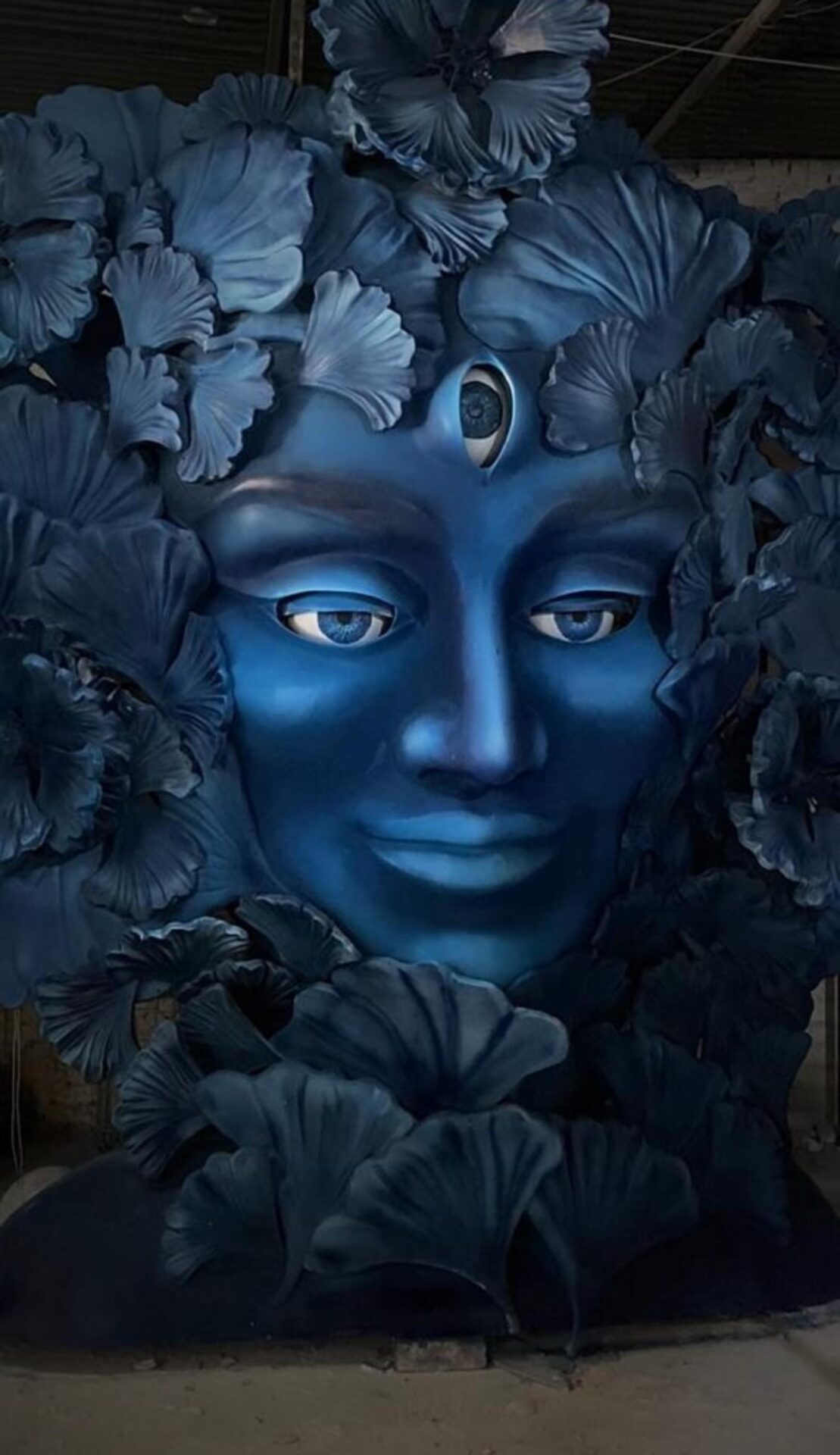
Works like Mystic, a kinetic face with moving eyes and a central third eye, rely on this meticulous calibration to achieve subtle, almost meditative motion rather than spectacle.
SCALE: Where is Hookkapani’s work located today?
 Vishal: The practice is pan-India, spanning Punjab to the Andamans, Ahmedabad to Guwahati. Internationally, works have travelled through clients like Smash, reaching the USA and Qatar.
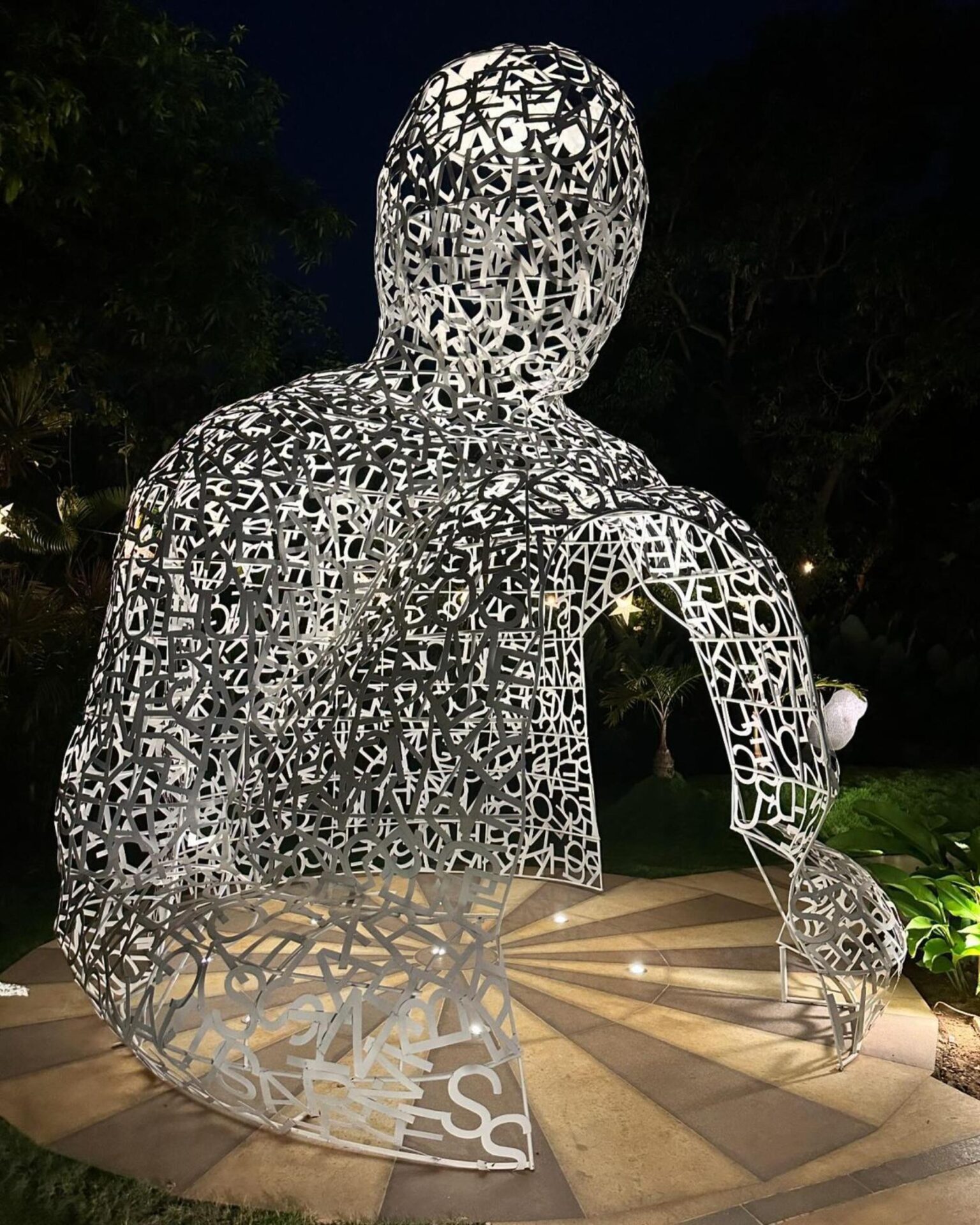
Public-facing works such as Man of Words, a human figure composed of perforated letters, explore identity as language and memory, while Cosmic, a reflective vertical column of spheres, symbolises accumulated human experience over time.
SCALE: Why hasn’t this kind of visually attractive and dynamic kinetic sculptures been widely replicated yet?
 Buddha
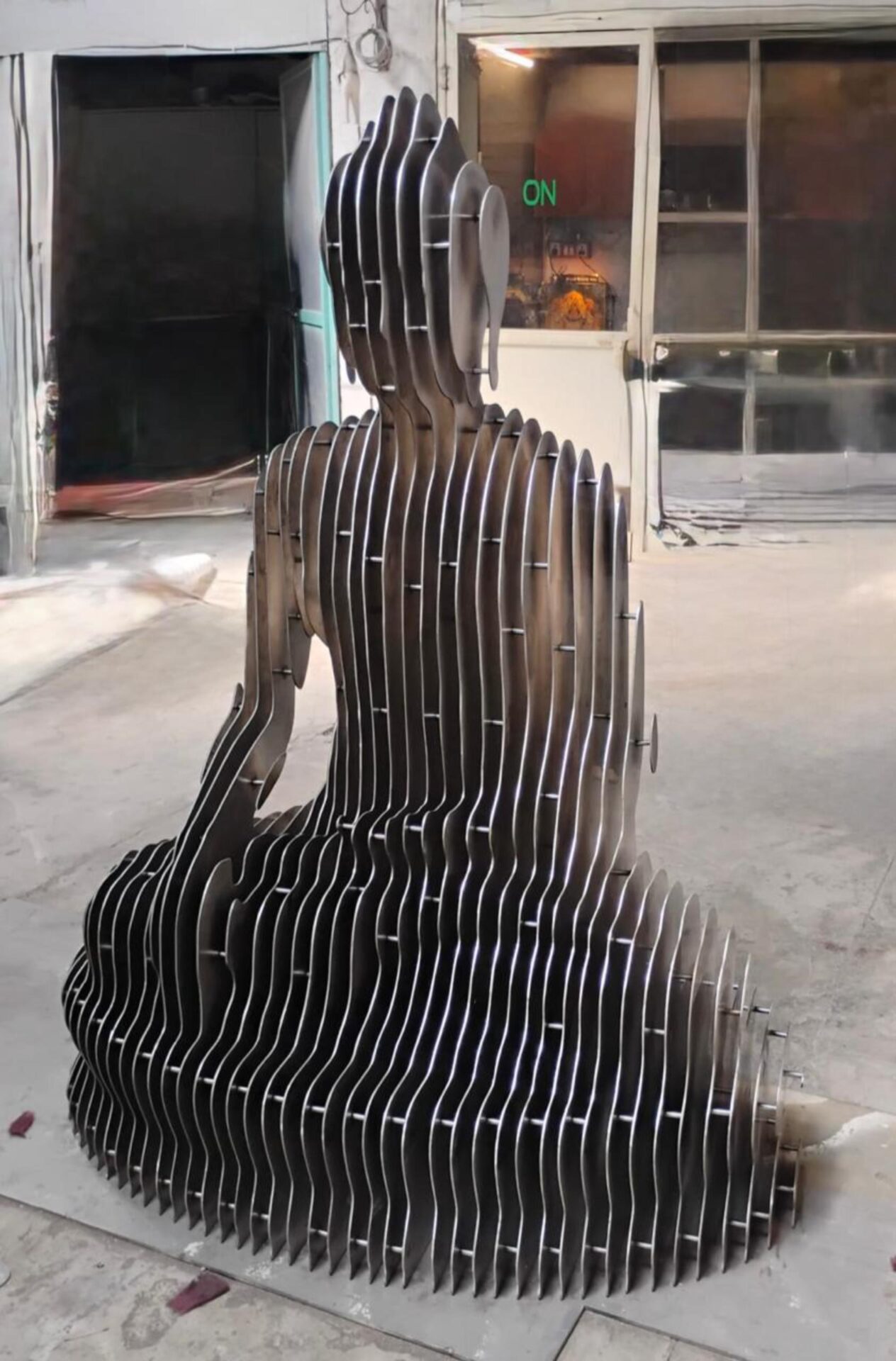
Vishal: For me, It’s not mastery, it’s obsession. I prototype relentlessly. There’s a 3D printer in my home office because ideas don’t follow office hours! Engineers have helped on certain projects, but I always explain the concept myself. Works like Awakening, a fractured Buddha illuminated from within, or Budha, a layered stainless-steel seated form, come from long periods of thinking, not rushing.
SCALE: What lies ahead for Hookkapani?
Pure Velocity
Vishal: I want a global presence and deeper refinement. I don’t believe I’ve mastered kinetic sculpture, only that I am committed to understanding it better. My early exposure to material research came from interning with an architect during the Khalsa Museum project, and that has created a foundation for me, and taught me how materials carry stories. Now I just try to translate my wildest creative forms into kinetic sculptures – and hopefully leave a lasting impact on people!
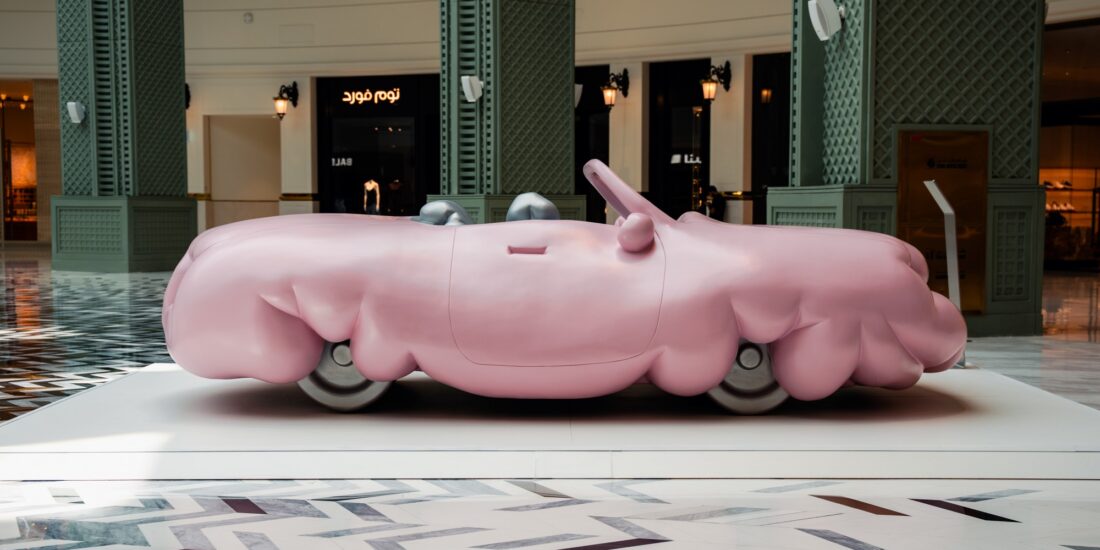
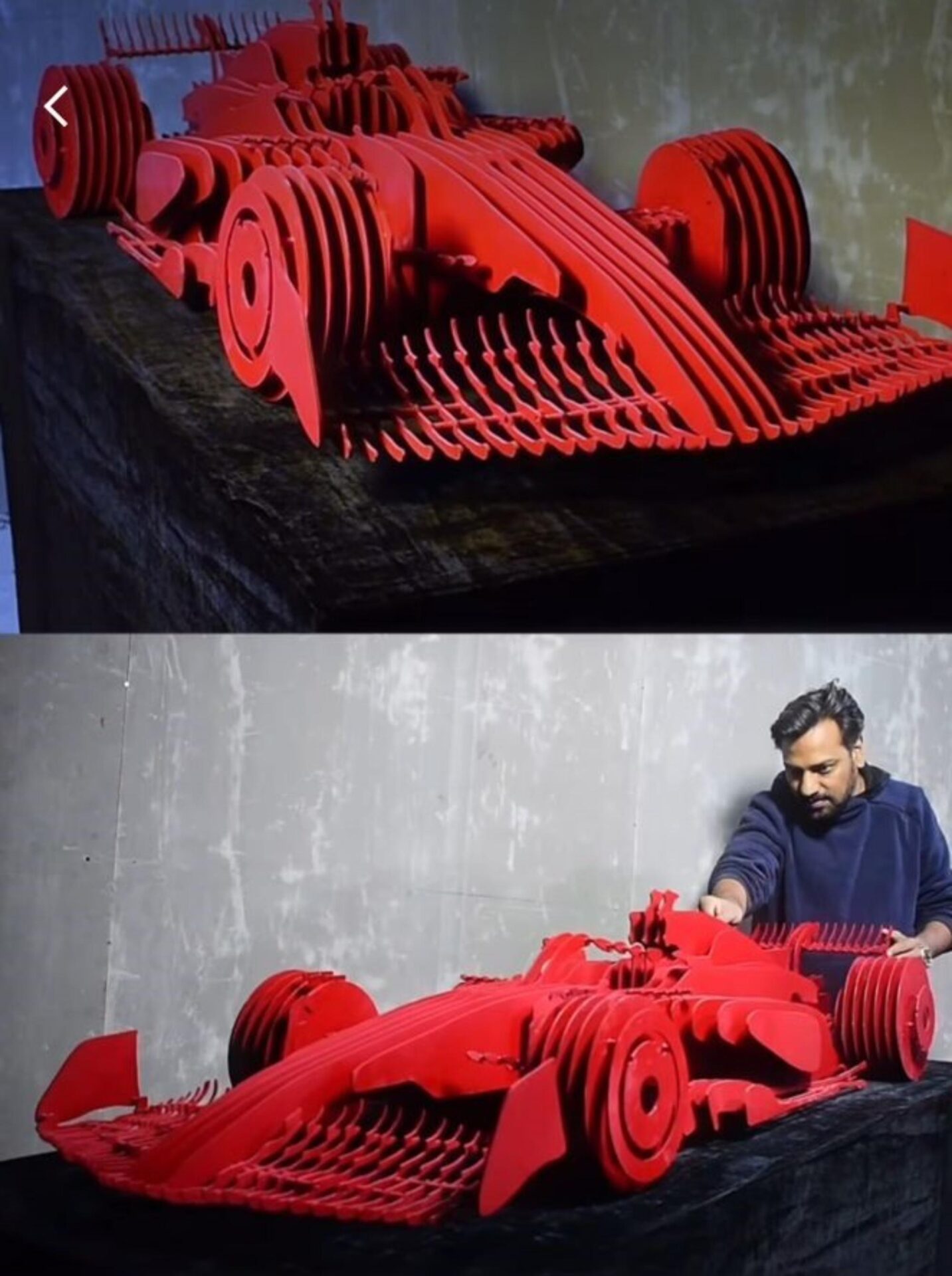
For example, recently commissioned works like Pure Velocity, showcased at Acetech 2025, reflect an interest in speed, engineering, and momentum, capturing movement even when still.
SCALE: Do you have a guiding philosophy?
Vishal: I create for myself, while the payment for it is a perk. When I work, I enter a calm, almost trance-like state, thinking about one piece for weeks. That joy, that quiet obsession, is what keeps the work alive, and that perseverance for achieving excellence is my guiding philosophy.