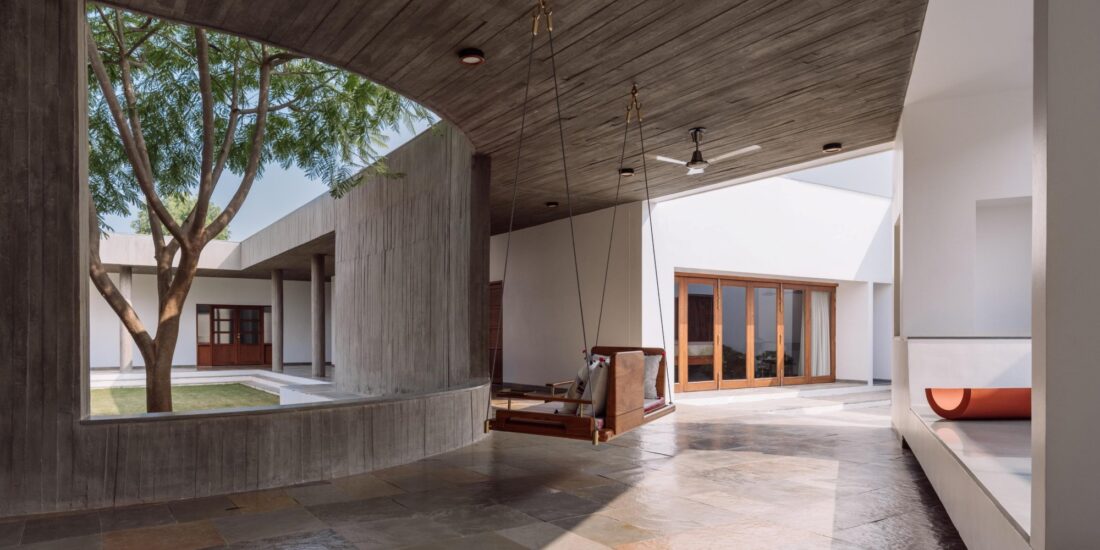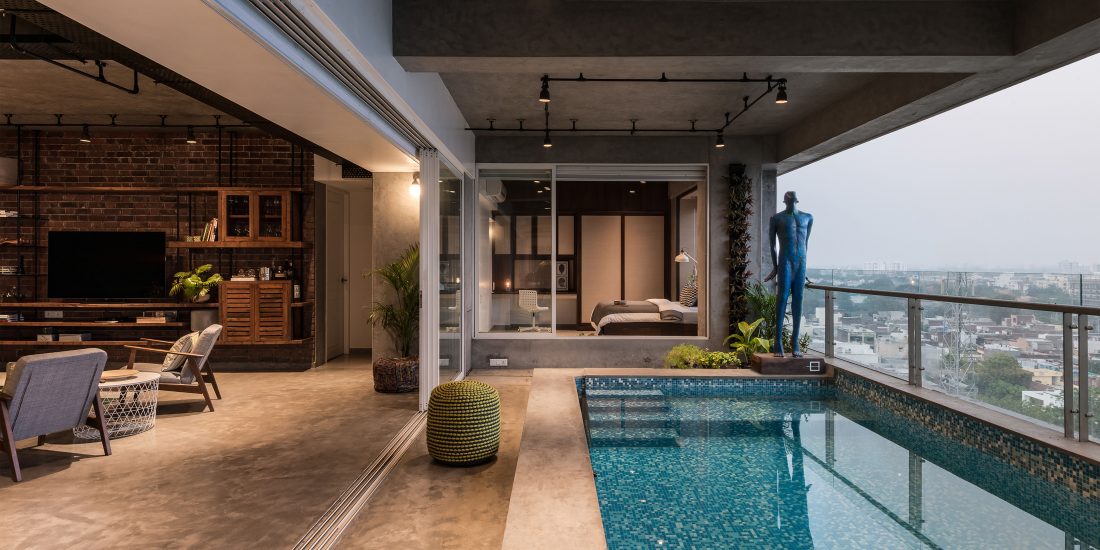
A House Called Amaltash by Design ni Dukaan
In the quiet town of Navsari, near Surat, Gujarat, is “Amaltash”, a 12,000 sq ft G+2 family residence designed by Ahmedabad-based firm Design ni Dukaan. Conceived as a home that grows with its inhabitants, the project brings together spatial clarity, climatic responsiveness, and an innate culture of craft. By Aishwarya Kulkarni
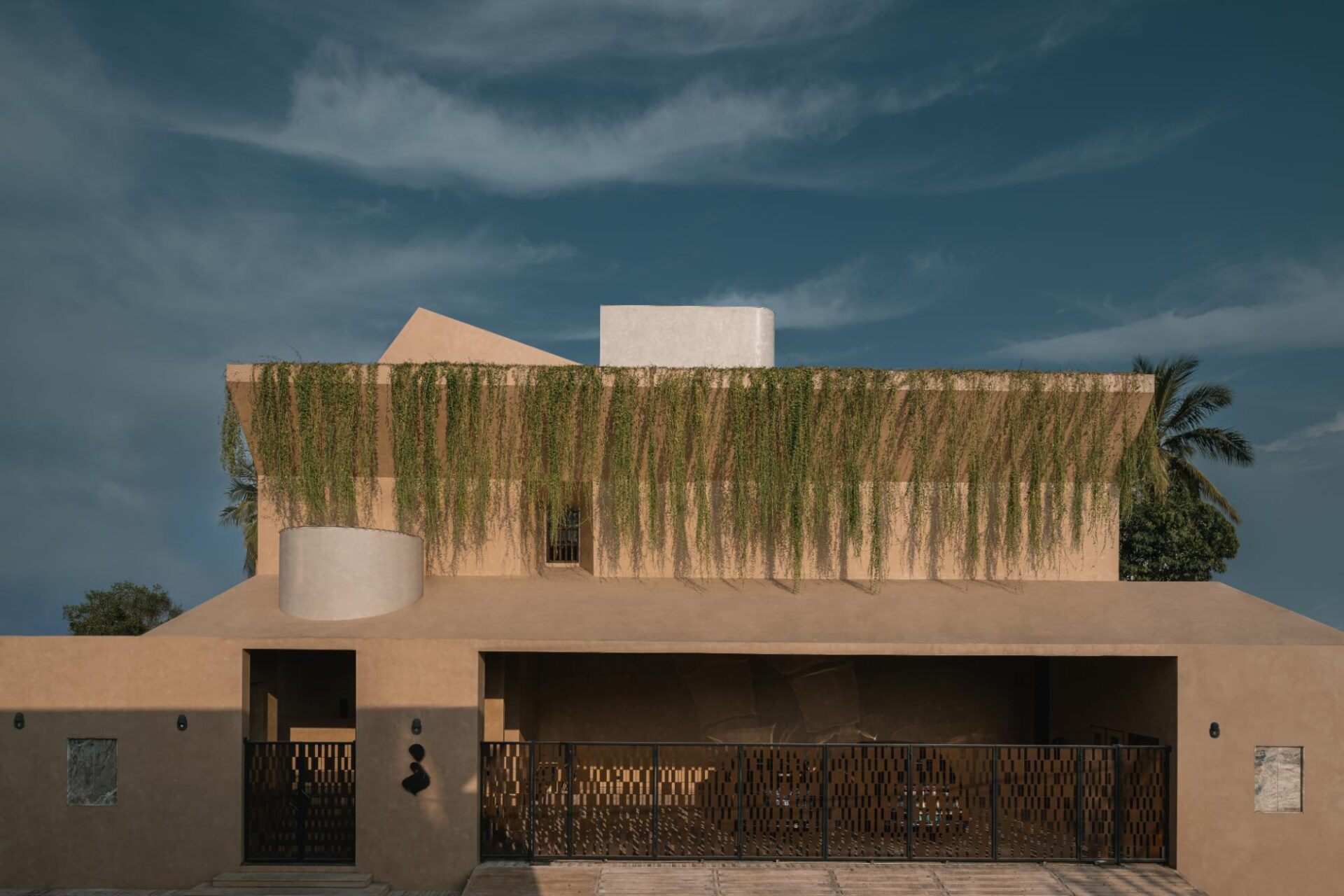
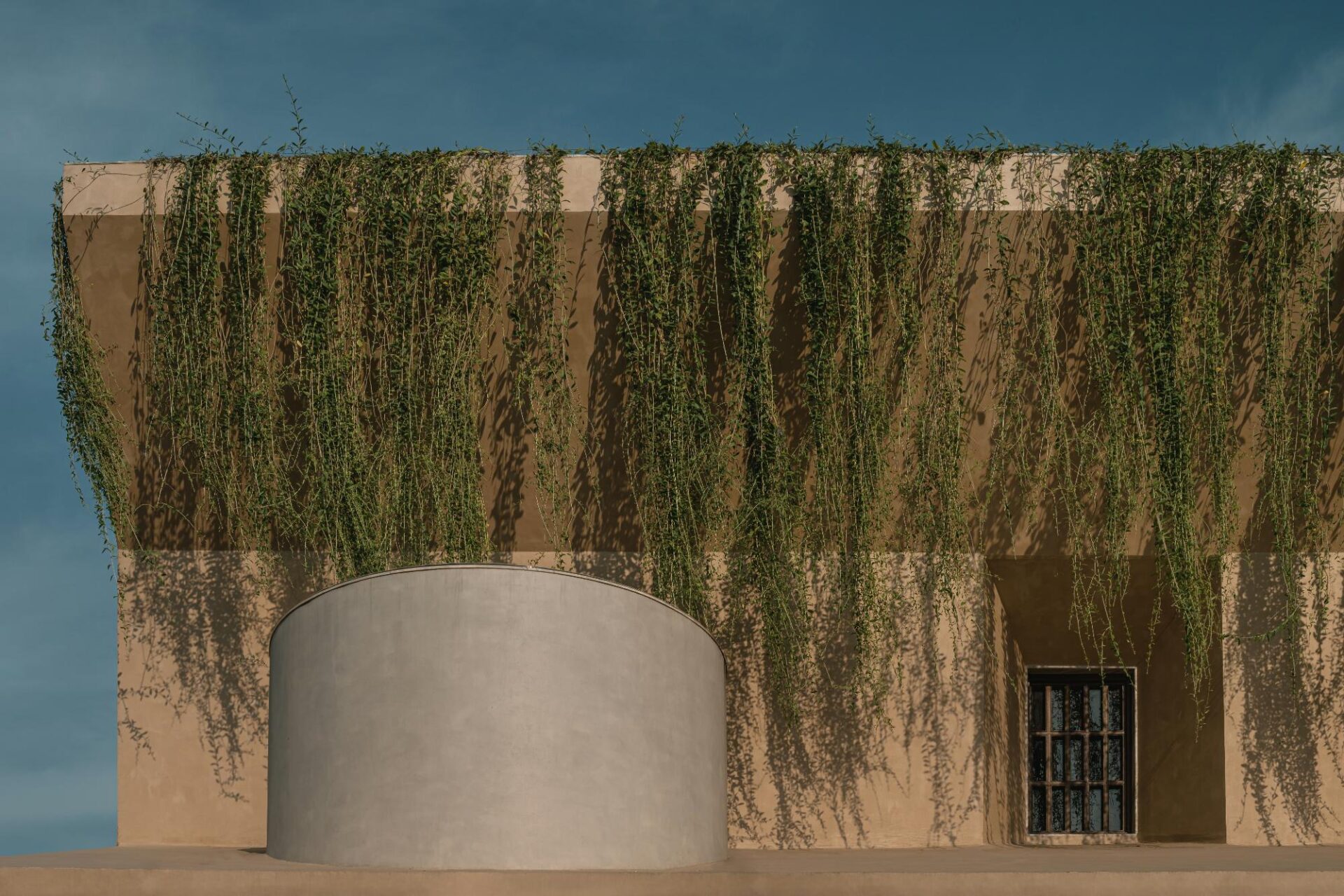
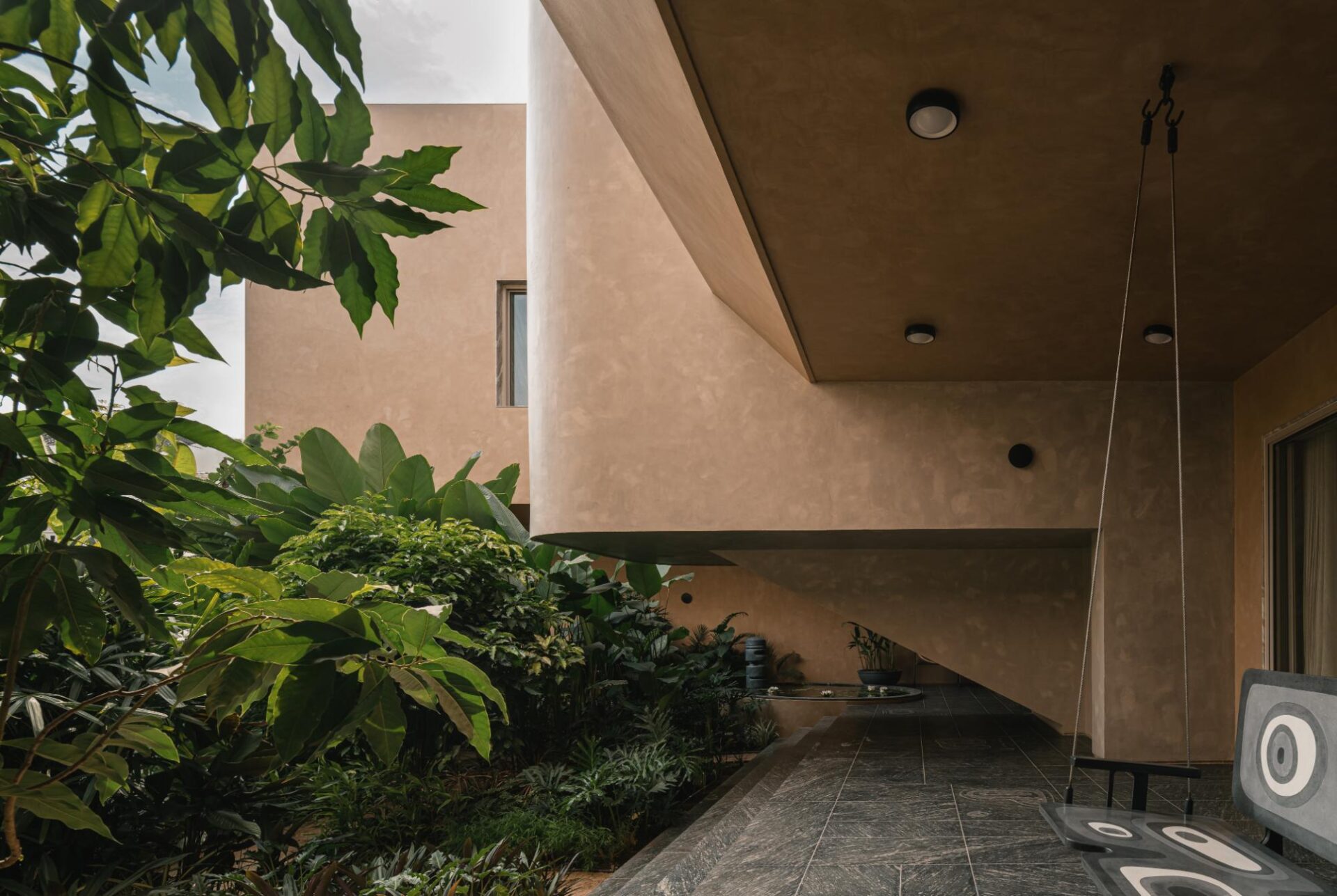 The house derives its name from the Amaltash (Cassia or Golden Shower) tree that stands at its entrance. Much like its blossoms, the home’s light terracotta walls glow golden under the evening sun. This subtle dialogue between nature and architecture defines the identity of the project.
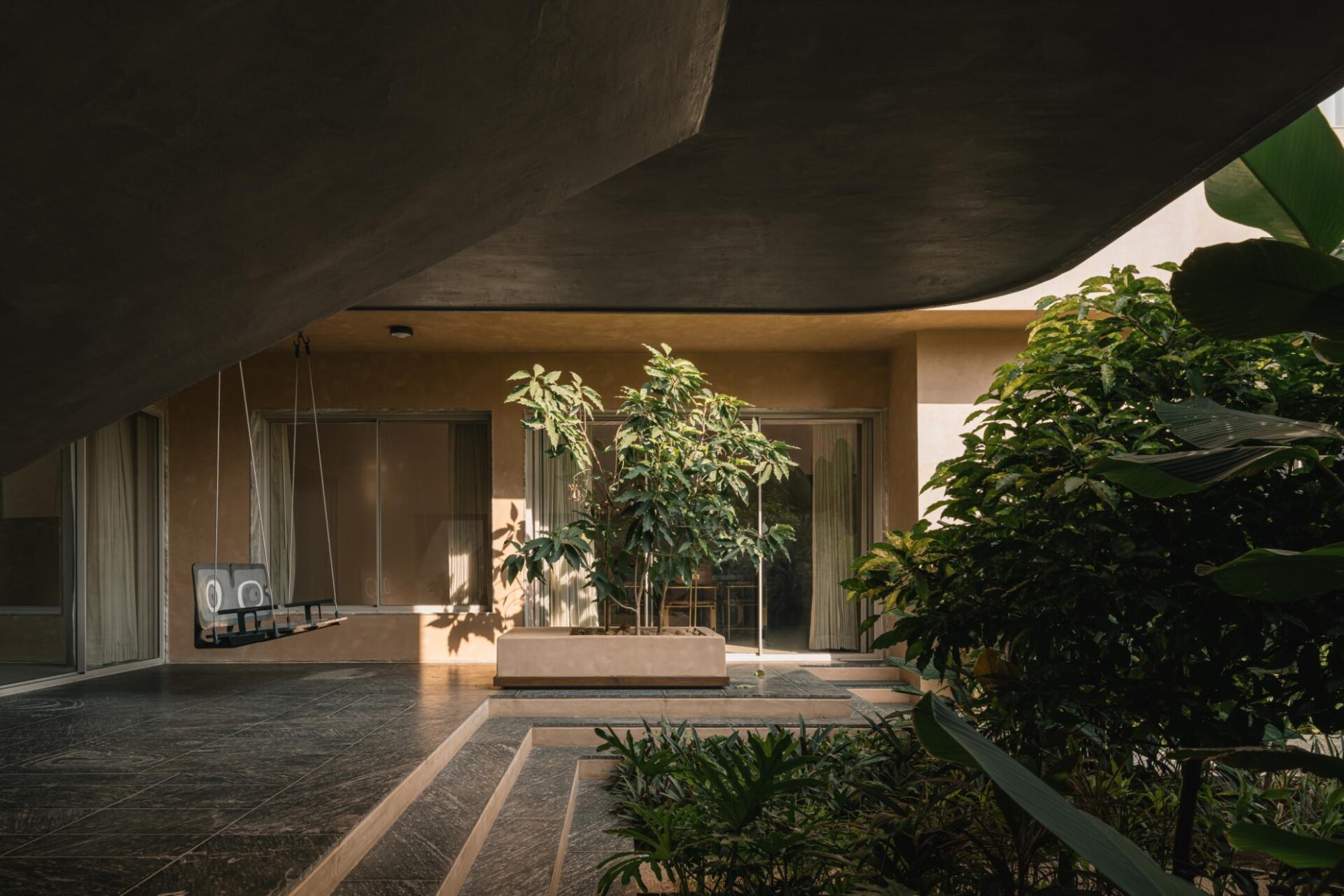 With an interior plan or programme that includes a foyer, vestibule, drawing room, living area, two kitchens, five bedrooms, a multipurpose room, a second-floor lounge, and a courtyard with a patio, the Amaltash residence reflects a layered understanding of both domesticity and design.
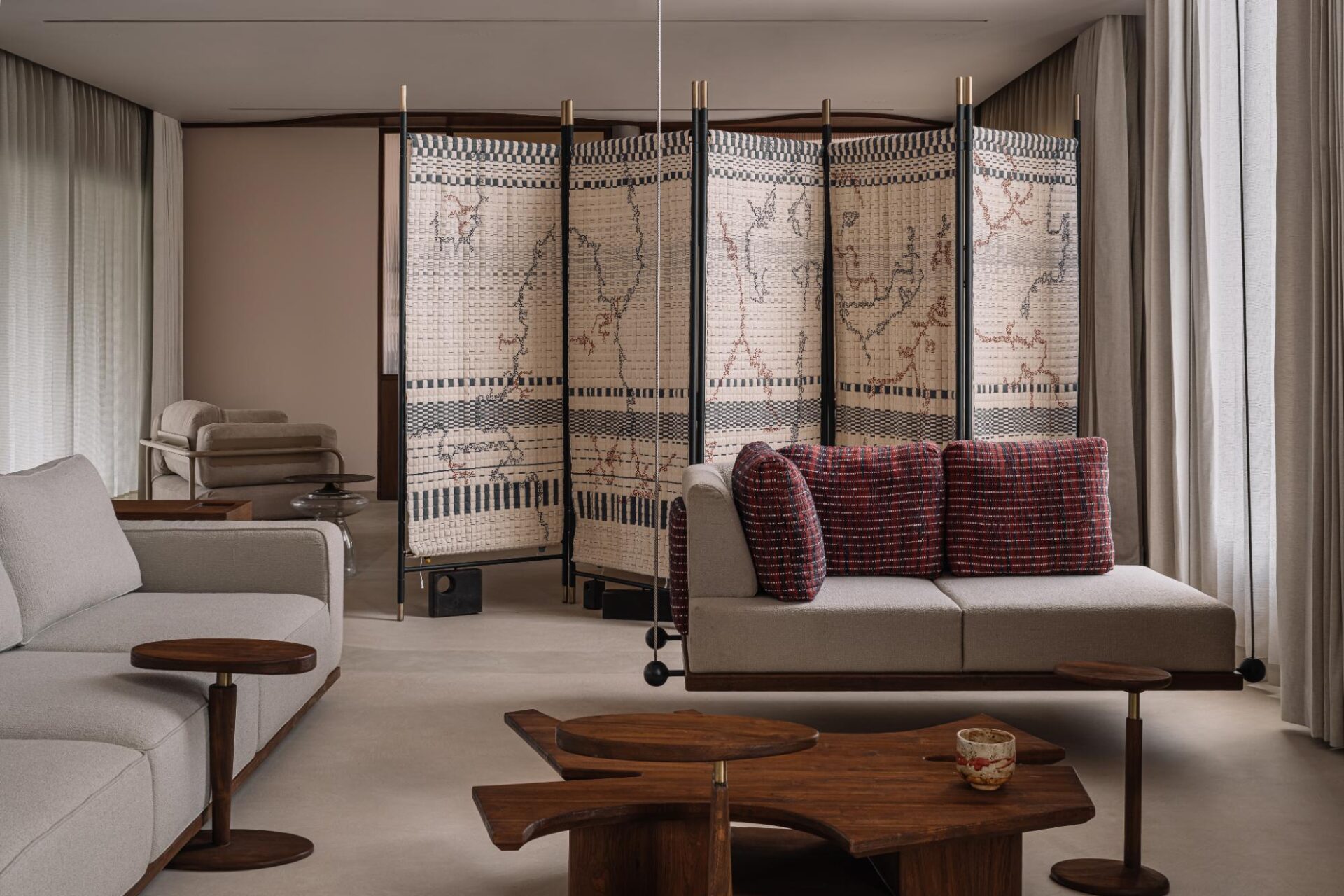 At the core of the project lies a commitment to proportion and balance, an approach that draws from the sensibilities of master architects who understand how even a 25mm variation can alter the character of a space. In an era driven by visual consumption, the design process here extends beyond aesthetics, guiding clients through a deeper engagement with the nuances of space and the life it enables.
A significant challenge in the project was integrating micro-level Vastu compliance while retaining a contemporary architectural language, according to the architect behind Design ni Dukaan, Veeram Shah.
 Even while the practice believed that architecture should emerge from natural elements, light, life, site, and context, cultural frameworks demanded an additional layer of sensitivity.
 The result is a calibrated synthesis, holding to Le Corbusier’s idea that “A house is a myth to be lived in.” Amaltash embraces this duality, shaping spaces that both preserve inherited values and allow for new family traditions to emerge.
Light, Climate and Spatial Intelligence
“Responding to Navsari’s climate was central to the design strategy. The structure is carefully oriented to mitigate harsh southern sunlight, particularly in the living and drawing areas. A south-facing tropical garden is designed to flourish over time, while deep patios shield interiors from glare, creating comfortable transitional zones,” says Veeram Shah of Design ni Dukaan.
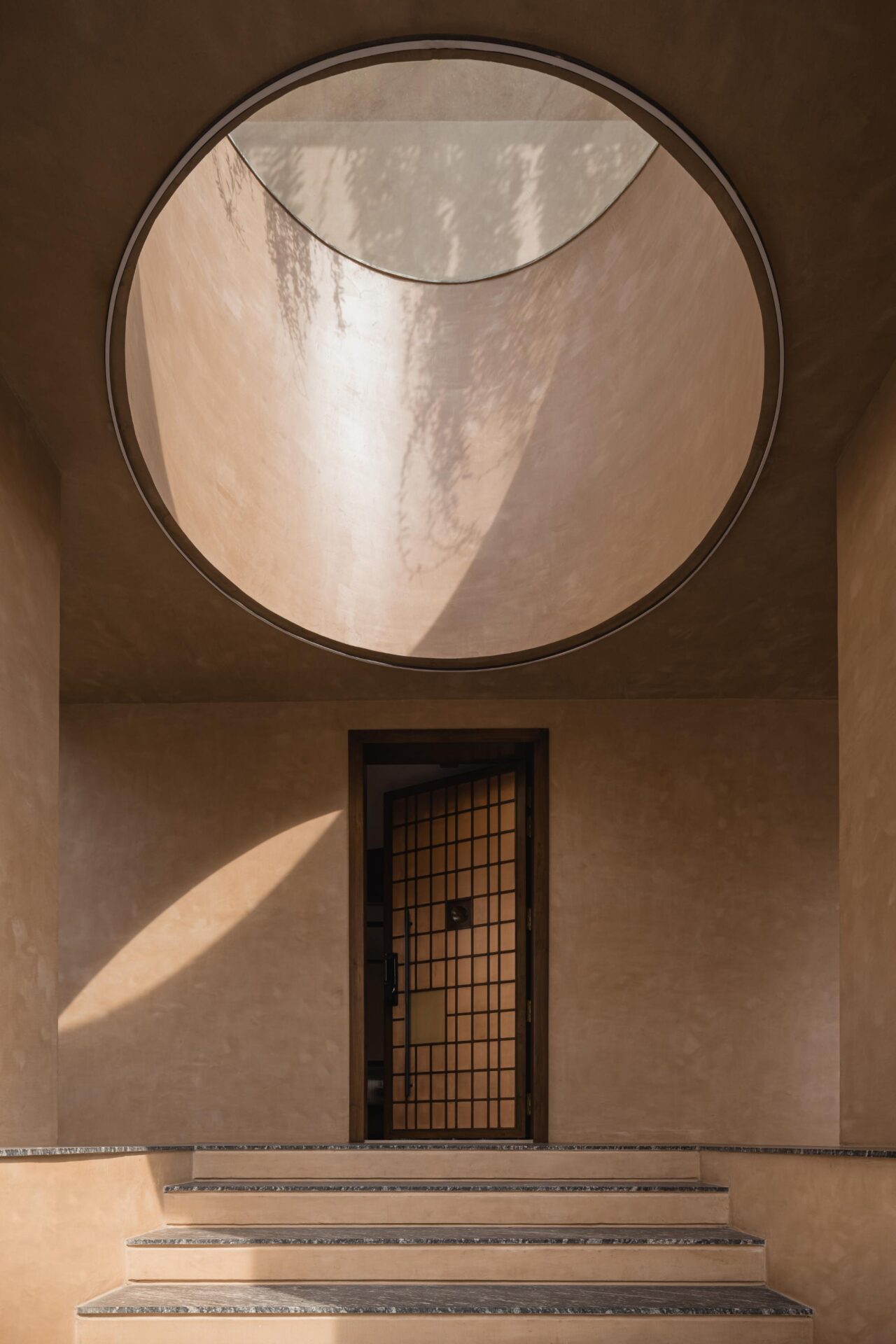 An 18-foot-high window system, equipped with precisely crafted shutters, draws in soft, glare-free northern light, allowing spaces to remain luminous yet controlled. This interplay of light and shade defines the architectural language.
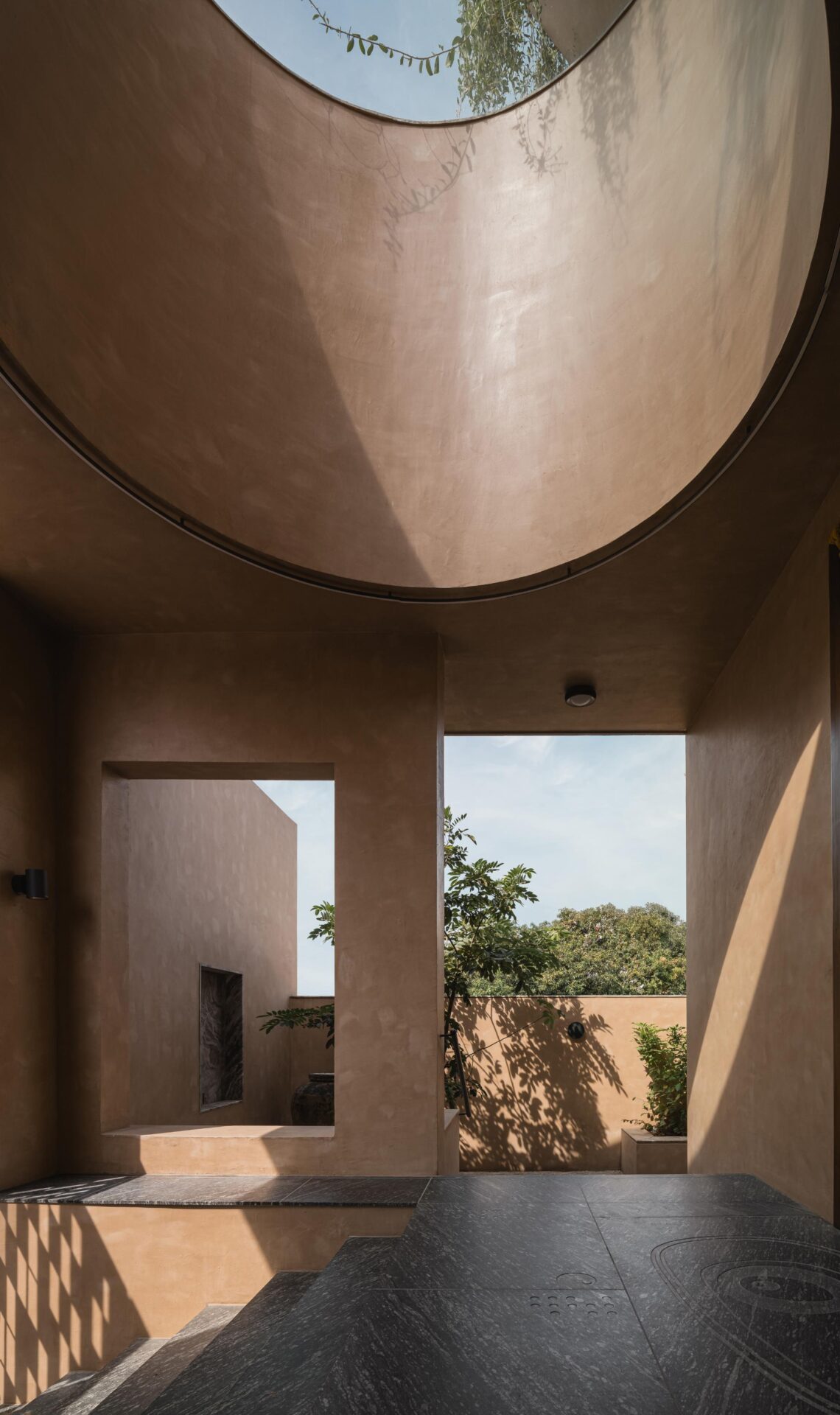 Rainwater harvesting and solar power generation systems enhance energy efficiency, while the calibrated handling of southern and northern light ensures optimal natural ventilation and illumination. Technology is an enabler of performance-driven design.
Material Narrative and Custom Craft
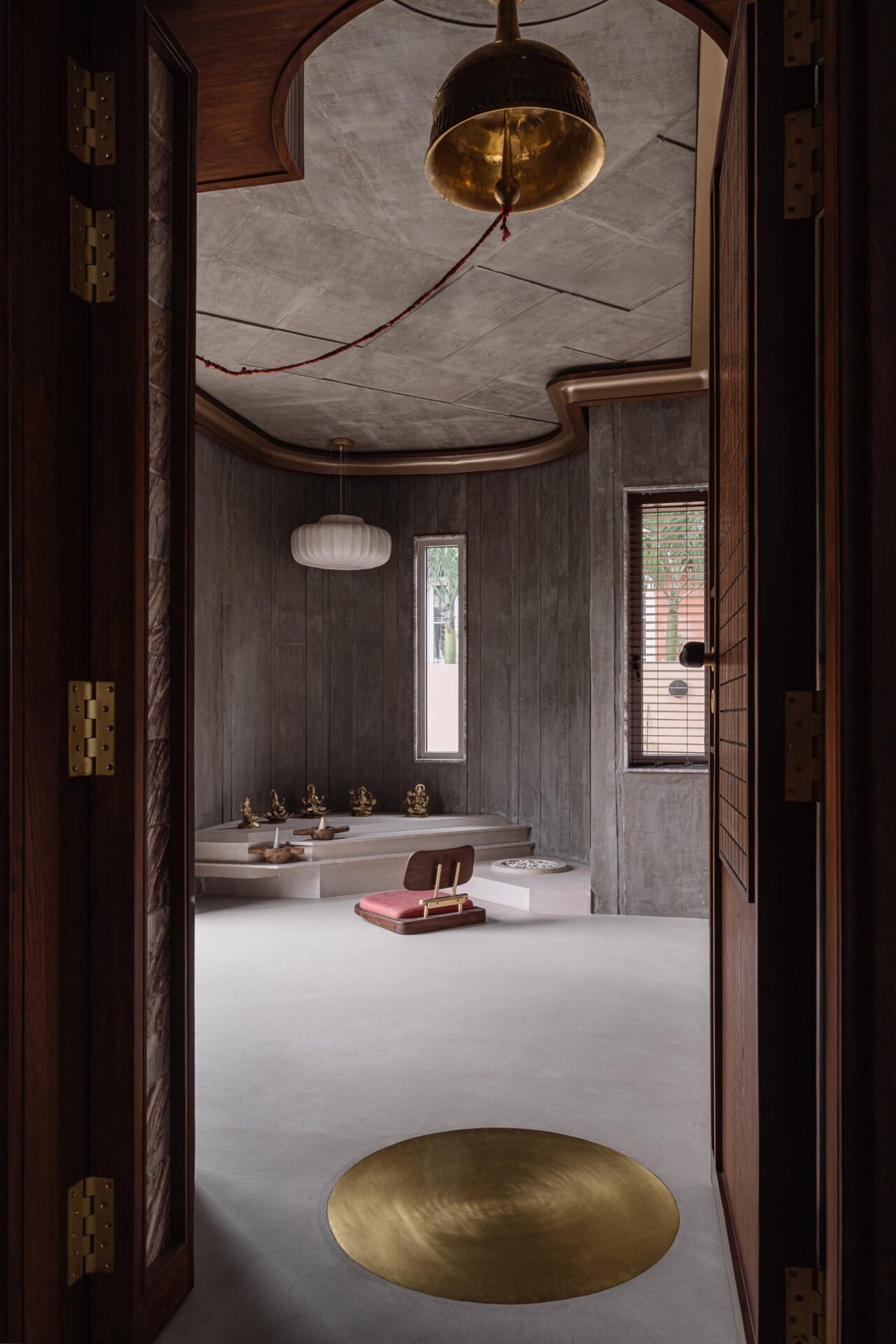 Materiality plays a crucial role in grounding the home within its context. The project foregrounds locally sourced Indian marble, particularly lesser-known varieties that bring depth through their unique hues and textures.
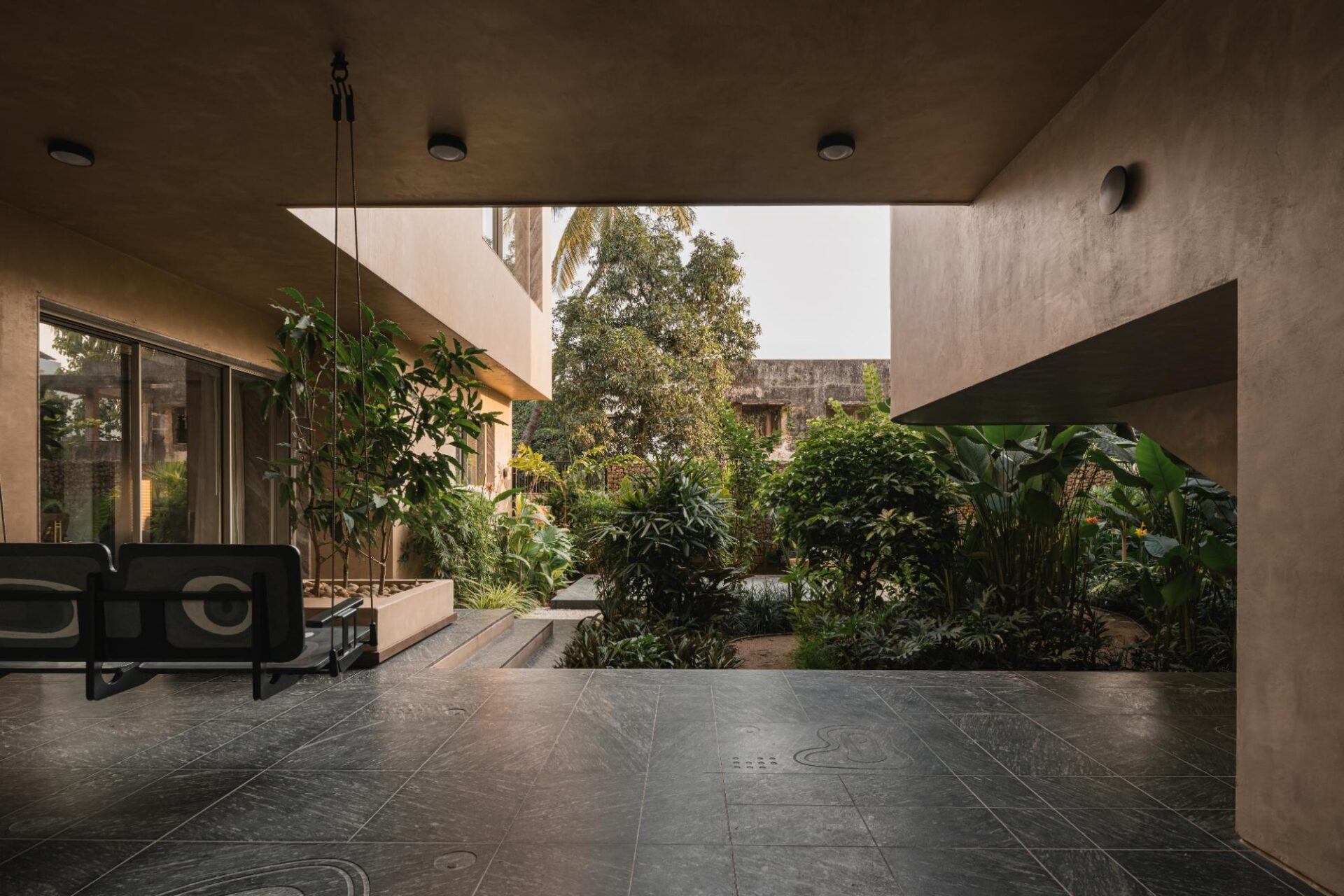
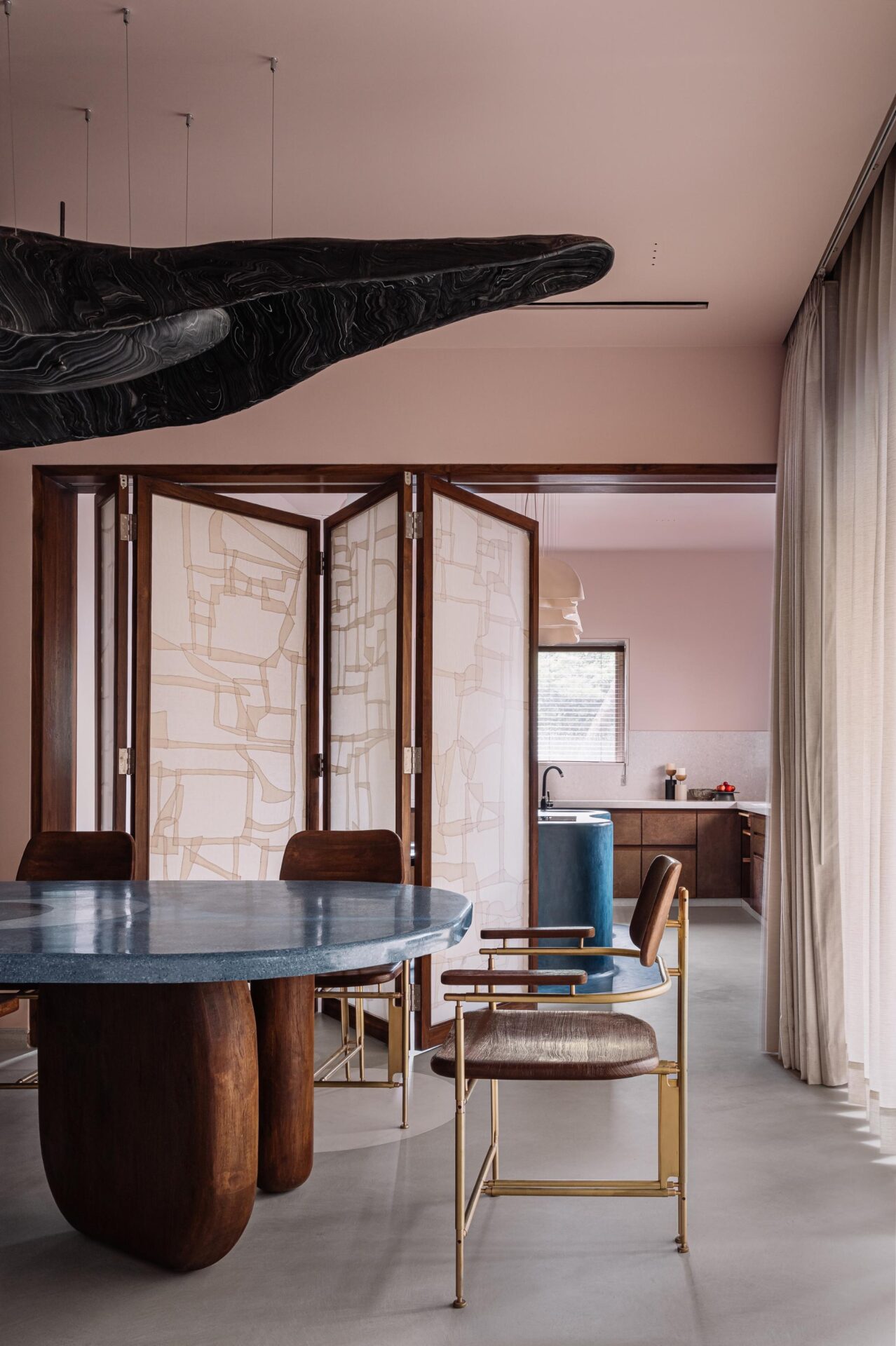 “Indian sandstone pavers and granite are used to create custom patterns in the patio, lending tactile warmth and authenticity to outdoor spaces,” says Shah.
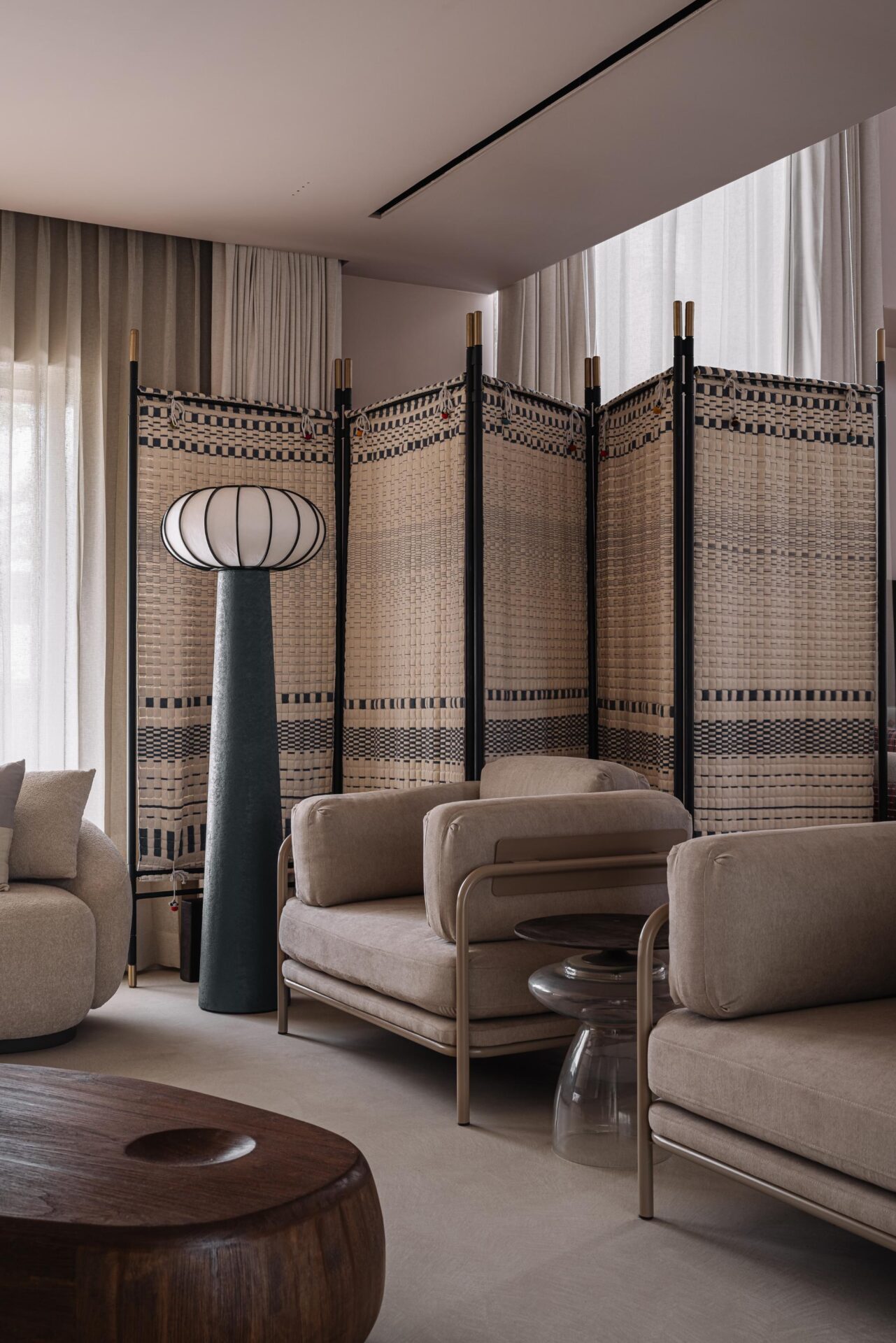 The design extends to furniture scale, with each piece custom-crafted to align with the home’s overall narrative. Overhangs are strategically introduced to reduce heat gain while carving out shaded seating niches, spaces that evoke the intimacy of a baithak while integrating built-in storage to avoid visual clutter.
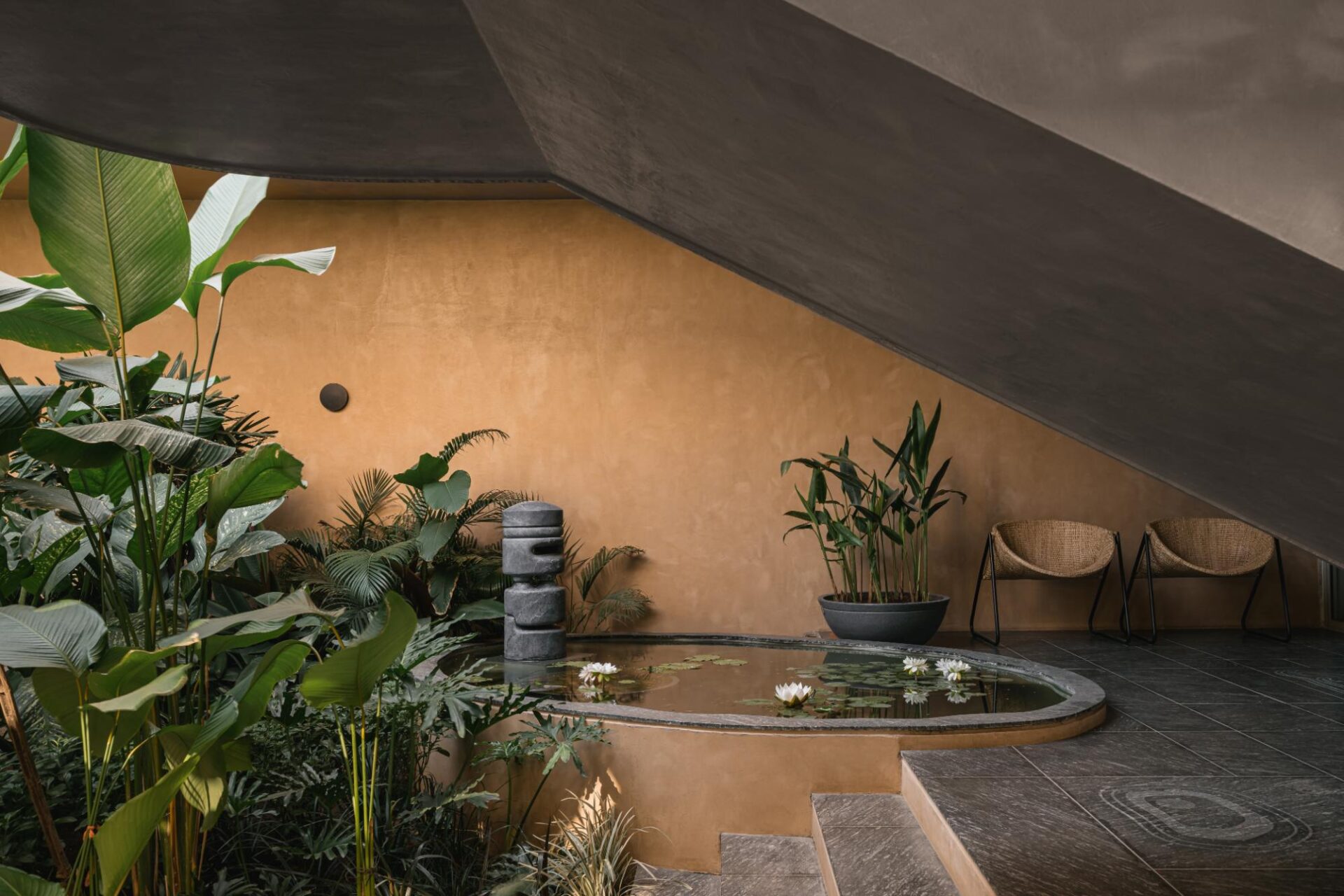
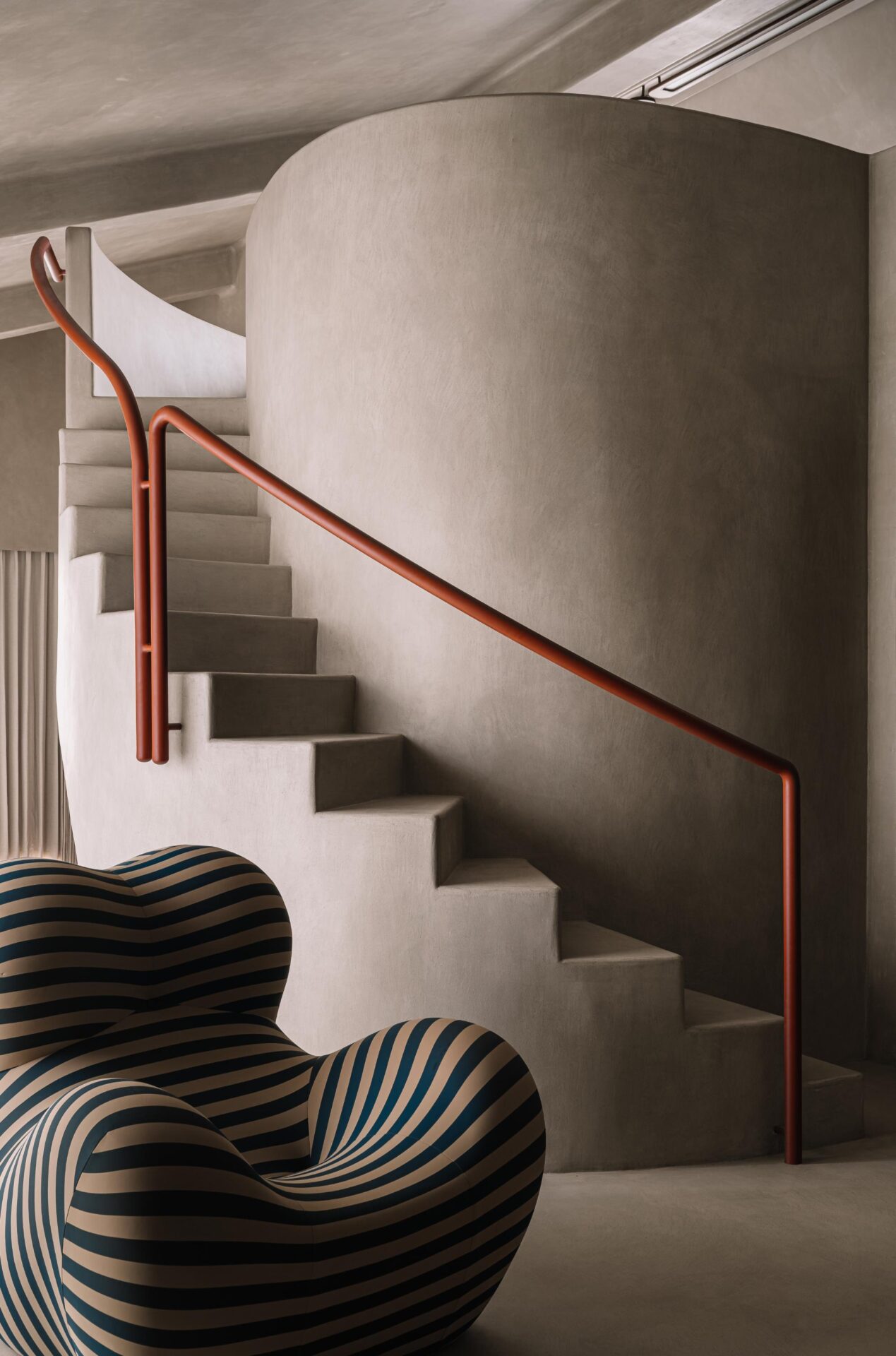 The staircase emerges as a key spatial element.
“Designed as a cantilevered flight, it exemplifies functional beauty while shaping the experience of movement.
 Dividing the patios of the drawing and living areas creates a six-foot-high passage beneath that is an intimate, shaded zone that becomes both connective and inhabitable,” he says.
Unexpected Spatial Possibilities
 One of the project’s most compelling moments emerges from a functional constraint. The integration of solar panels at a 14-degree south-facing angle resulted in a naturally sloping roof above the second floor, which also defines the architecture of the lounge.
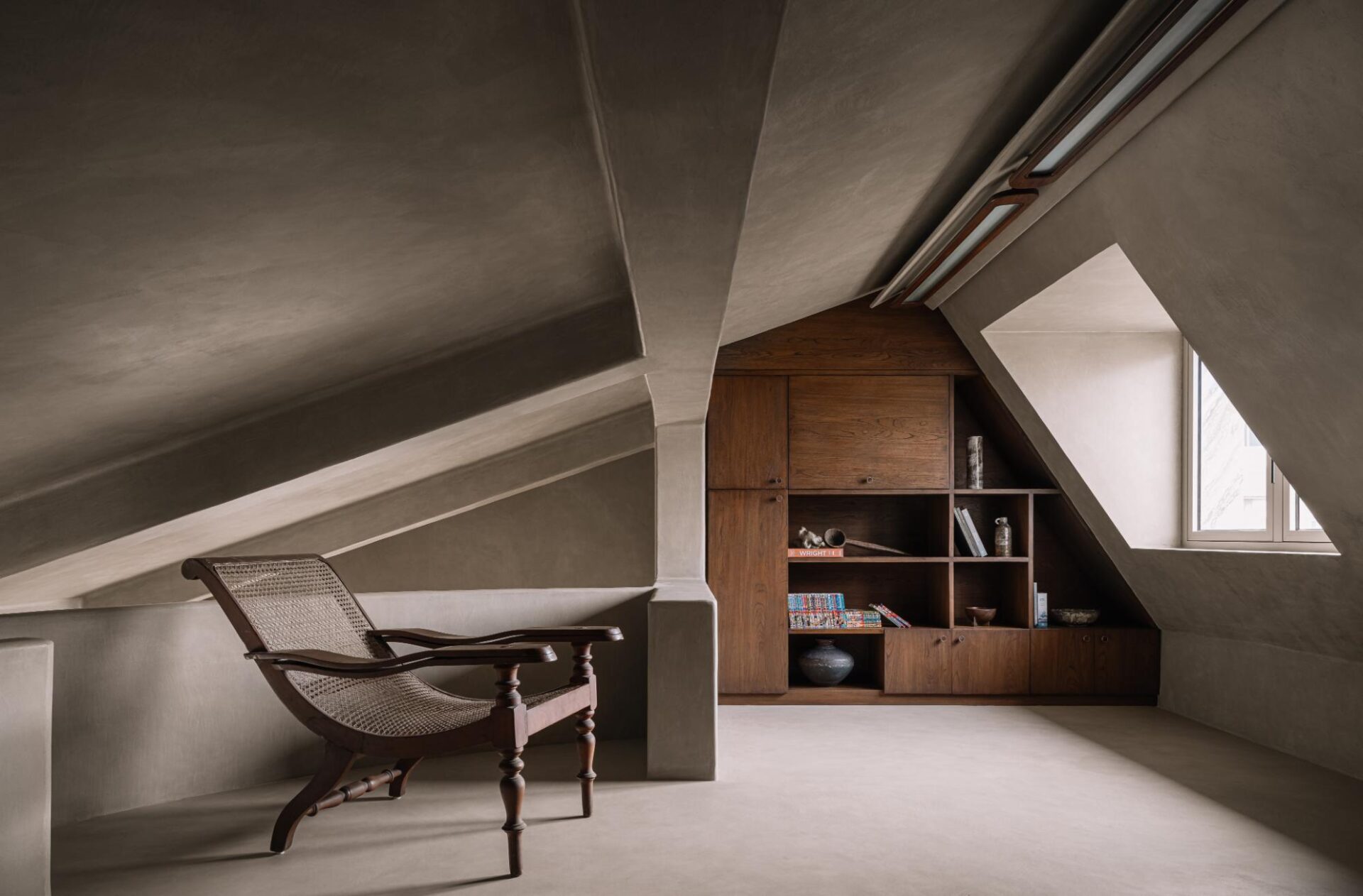 This volume expands vertically, accommodating a mezzanine level that houses a cosy bed, a library, and a small “Rapunzel” window framing the sky. Over time, this upper level evolves into an independent retreat.
Landscape Elements
The landscape is envisioned as a tropical micro-ecosystem, composed of local tree species that offer shade and sunlight. Rejecting water-intensive lawns, the design introduces shaded baithaks that encourage outdoor living while conserving resources.
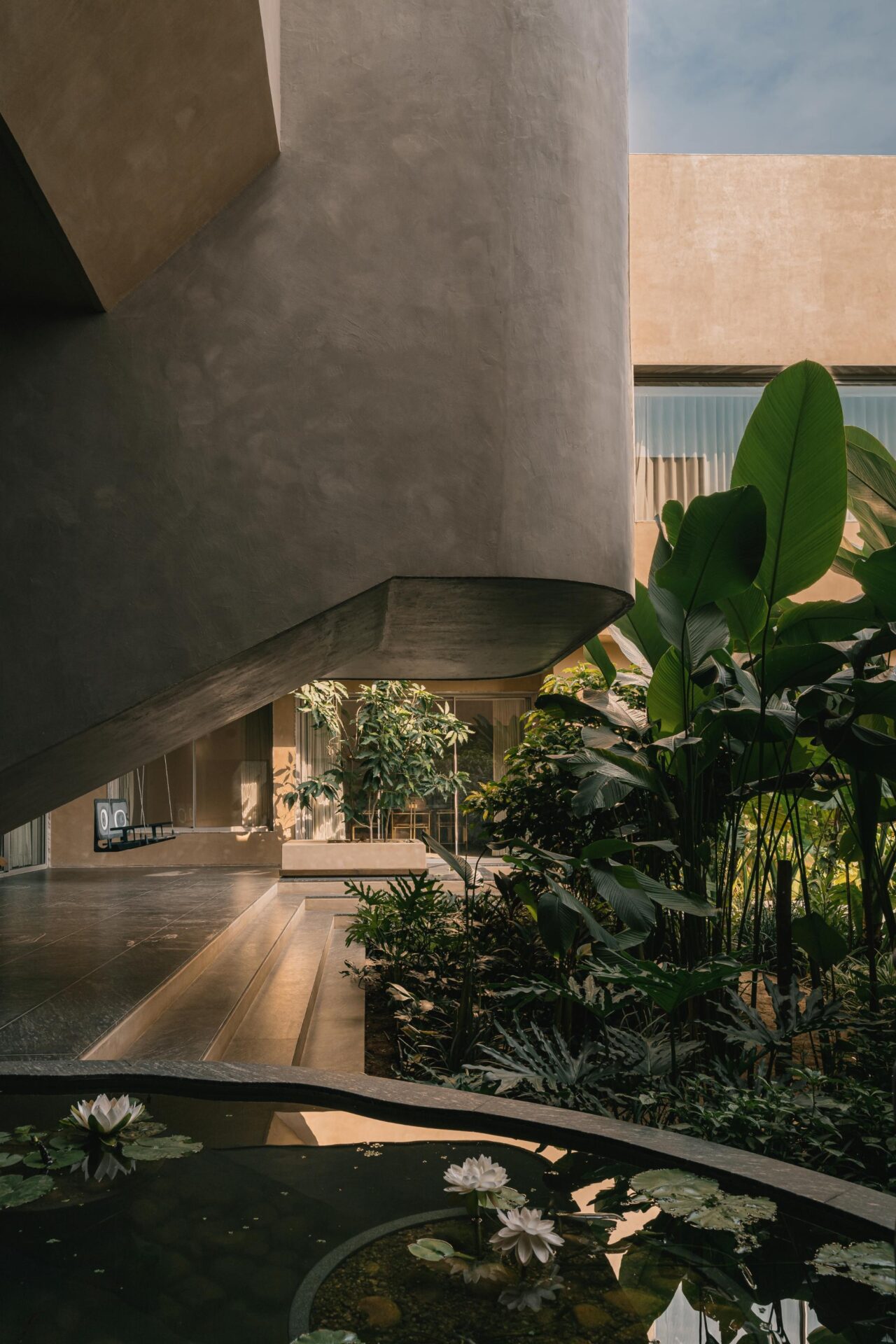 At the centre of this landscape is a rainwater tank that doubles as the only hardscape surface in the courtyard, a functional platform for everyday rituals, from morning tea to evening conversations. Sand-filled pathways reference the textures of Navsari’s Dandi beach, introducing a tactile softness to movement. The south-facing greens evolve through the seasons, while patios frame these views, creating a synergy between the home and its environment.
Craft Details
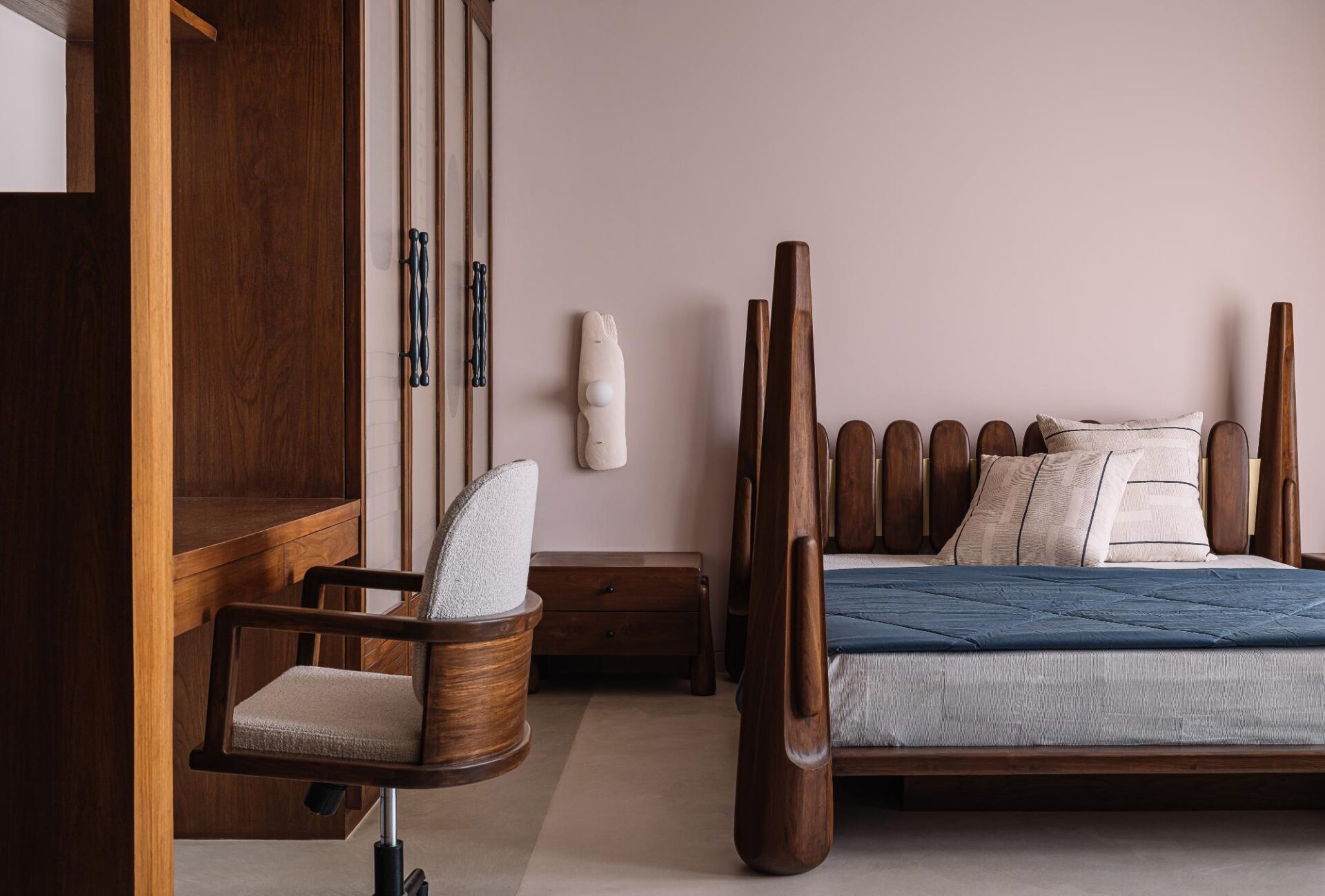 Amaltash is shaped through an ongoing dialogue between design and making. The process remains fluid, allowing forms and experiences to evolve through close collaboration with artisans at every stage.
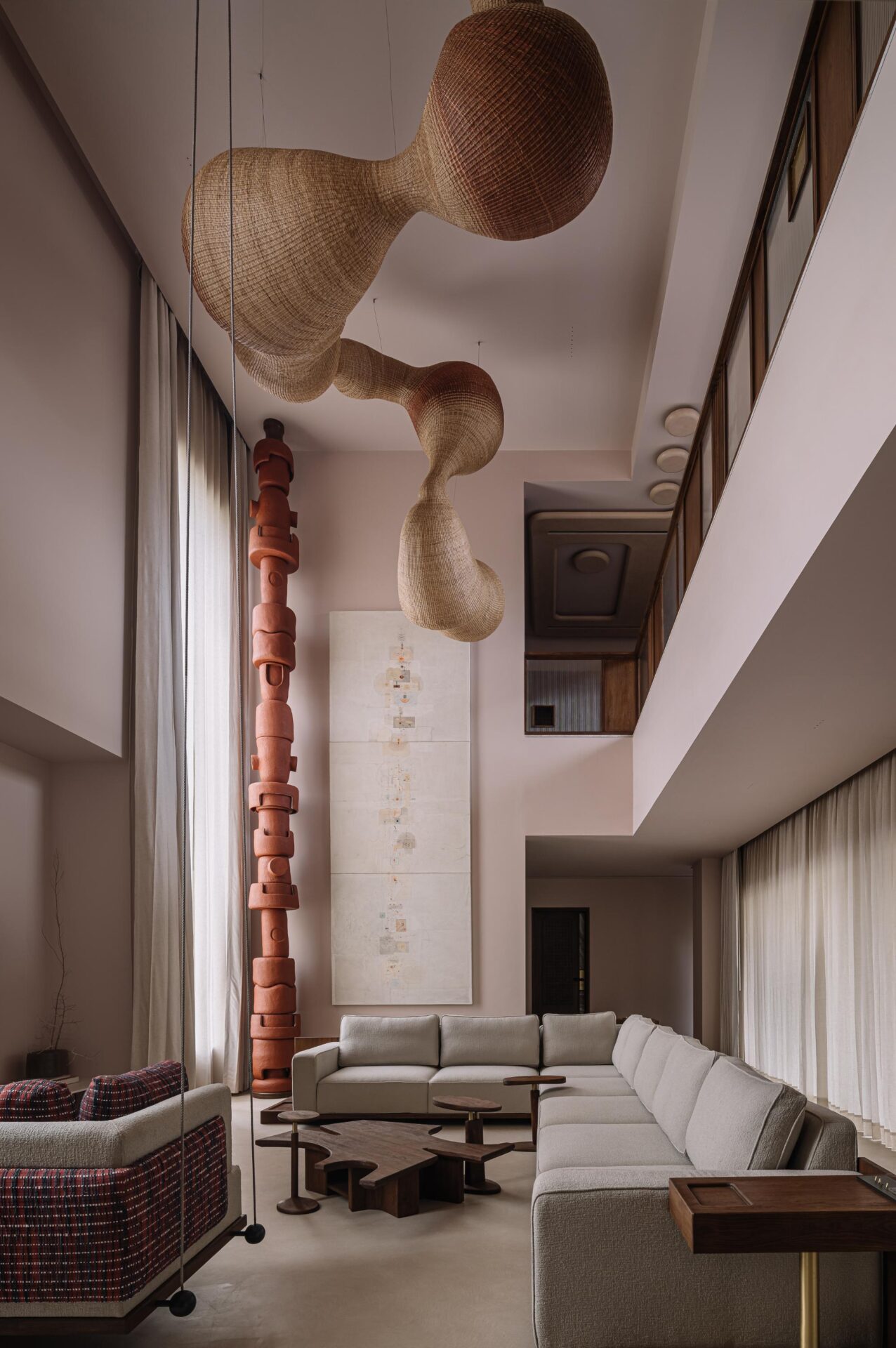
Small details such as the door handles, ceiling treatments, and bathroom elements are designed in context, ensuring that each component contributes to a cohesive whole. Rather than populating the house with curated objects, the design embeds intention into every element. The home becomes a sanctuary where space, function, and inhabitant are in constant conversation.
The project also reflects Design ni Dukaan and its team’s larger commitment to sustaining craft and building creative communities.
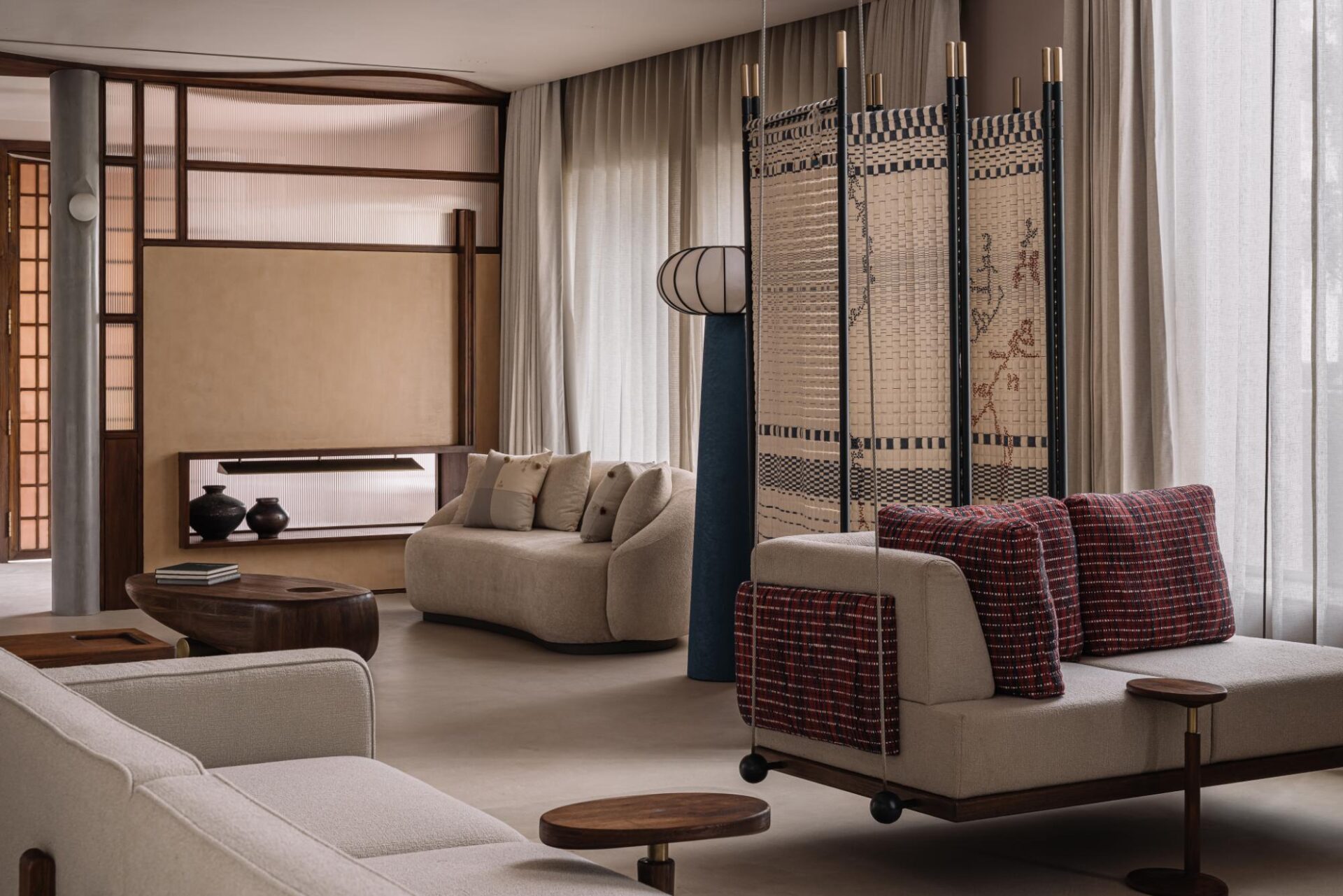 Collaborations span across disciplines and geographies: a ceiling installation by Priyanka of Wicker Story, custom lighting by Harshita Jhamthani and LBH, a 12-foot artwork by Shahenshah Mittal, a folding partition in Sujani textile by Raasleela, Pattamadai cane weaving by Mohana of Majja Design Studio, Jamdani panels by Fatima of Glocal Weaves, stone elements by artisans from Rajasthan, artworks from Morii, ceramic sculptures by Keph Design Studio and House of Soko, a terrazzo swing and dining tabletop by Rohan Shroff, and a light installation by Silvi Panchal.
“These collaborations create a layered narrative of the space beings rooted to the culture we share while being continuously evolving,” says Shah.
Architecture as an Ethical Practice
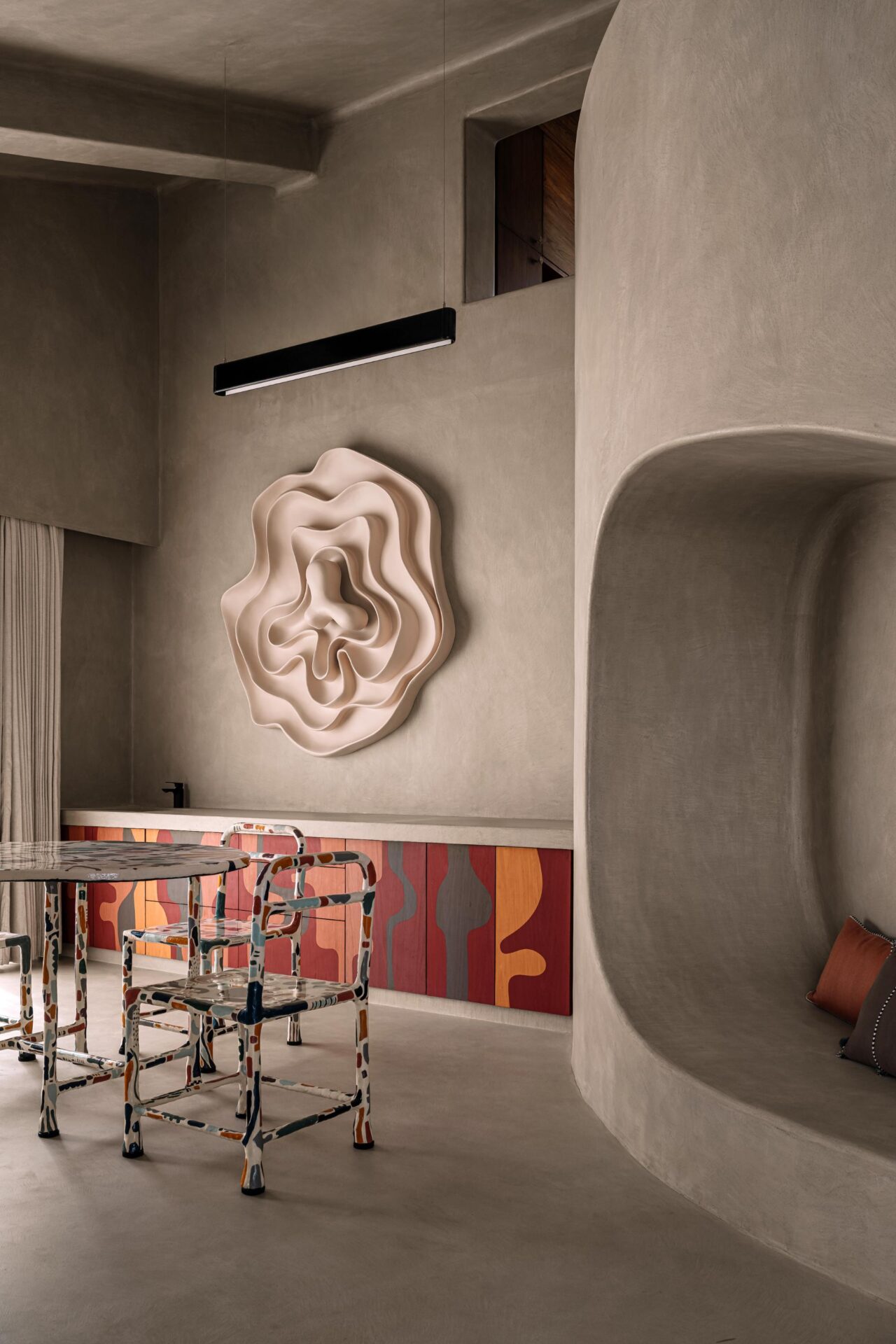 “For designers, architecture extends beyond construction to become a way of life. Each detail is deliberate, each millimetre purposeful. The emphasis is on achieving clarity without excess, spaces that are clean, functional, and quietly expressive,” stresses Shah, reflecting on the ethos of Design ni Dukaan that is encapsulated in the belief: “Craft is generational, design is intentional”.
“Craft carries the weight of generations, evolving through inherited skill, while design responds to the present, constantly adapting,” he says.
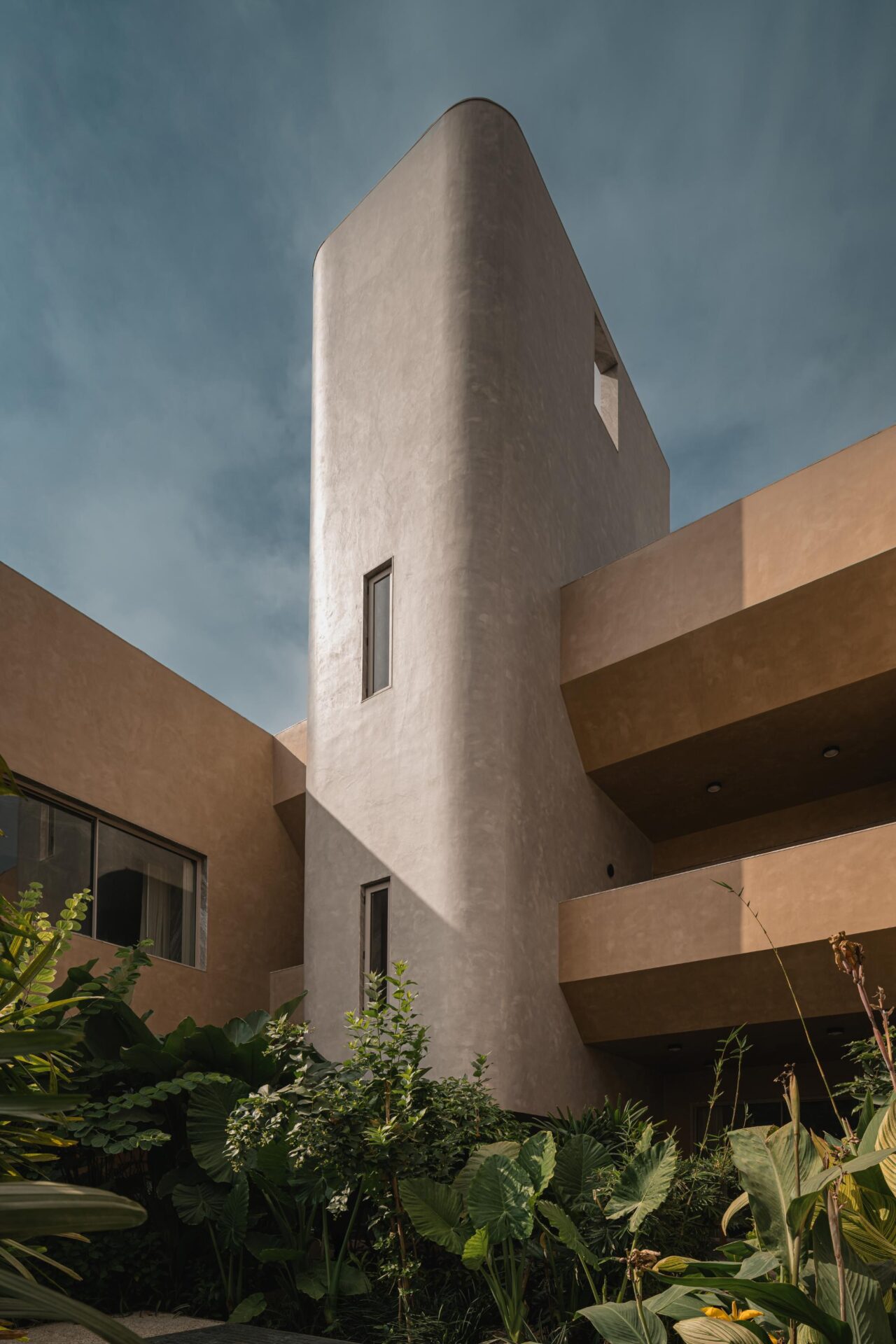 When the craft and design converge, they form a powerful symbiosis that bridges time through knowledge, technique, and intuition.
Project Details:
Location: Navsari, Gujarat
Plot area: 8000 sq.ft
Built-up area: 12000 sq.ft
Month & Year of completion: June, 2025
Photography Credits: Ishita Sitwala, The Fishy Project
Design: Design ni Dukaan, Ahmedabad, India
Principal Architect: Ar. Veeram Shah
HVAC Consultants: Anjaria Associates, Ahmedabad
Structural Consultants: MSquare Architects, Navsari
Plumbing Consultant: Techno Engineers, Ahmedabad
Contractor: Sarjan Construction and Project Management, Navsari
Landscape: Sanyogita Gaikwad and Soham Changediya
Craft Collaborations:
Shailesh Rajput, Vidita Mundada, LBH, Harshita Jhamthani, Spin, Raasleela textiles, The Wicker Story, Shahanshah Mittal, House of Soko, Soko225, Monil Kayda, Hatsu, Piccolo, Rohan Shroff, Keph design studio, Thumbimpressions, Morii, Hemanshi Gandhi, Buttonmasala, Glocal Weaves, Majja Design, Kushal Vaghela and Sanyukta Joglekar, Fazo, Objectry, Muskan Jain, The Bun Studio