Bhoomija: A Pursuit of Architecture that is Rooted and Genuine
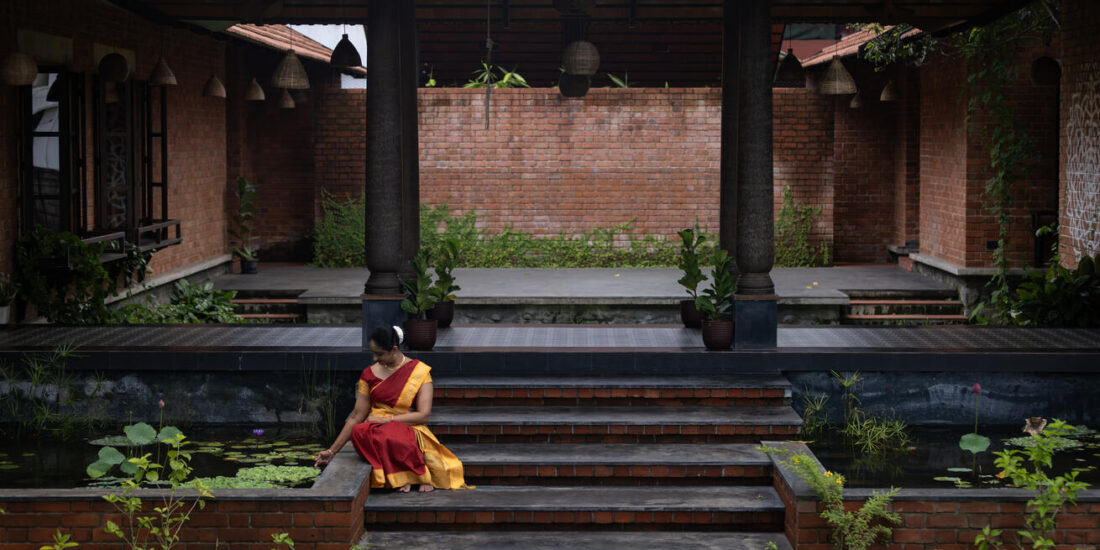
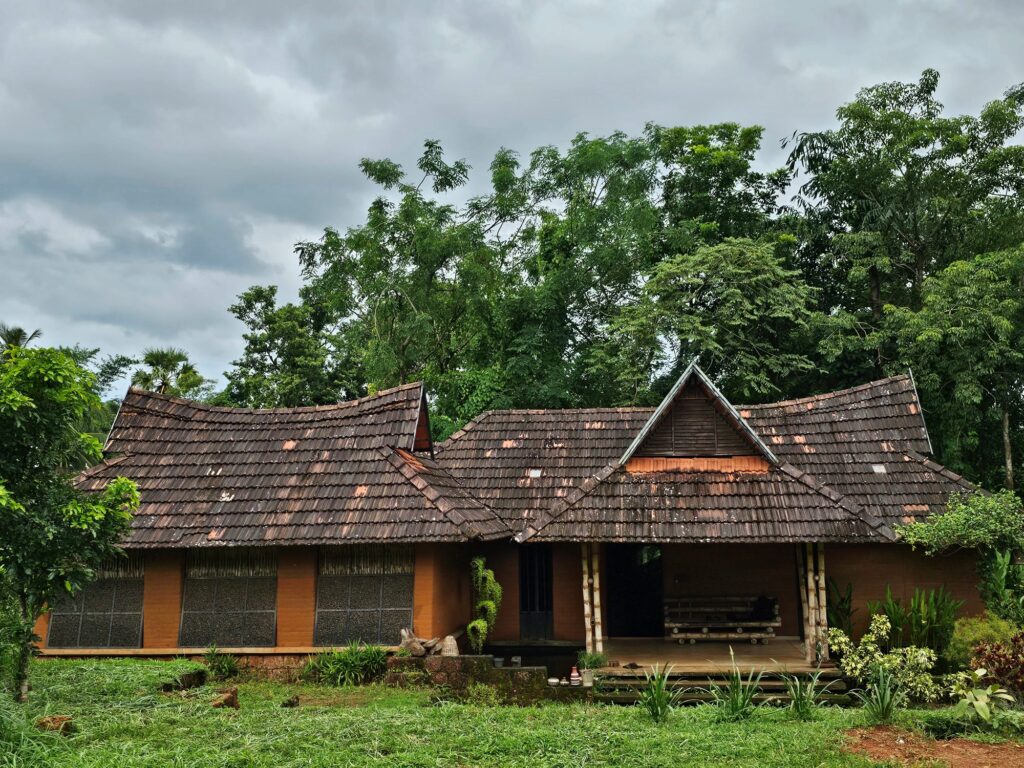
As the car enters the Bhoomija premises, near Paruthur Village in Pattambi, there is a perceptible change. The air seems lighter, birds chirp louder, and a sense of serenity sets in. A winding lane leads to the Bhoomija Creations office quarters, crafted in earth and enveloped by water bodies. Here, within the office, the floor feels cooler, the walls welcoming, and a crisp freshness embraces you. By Sindhu Nair
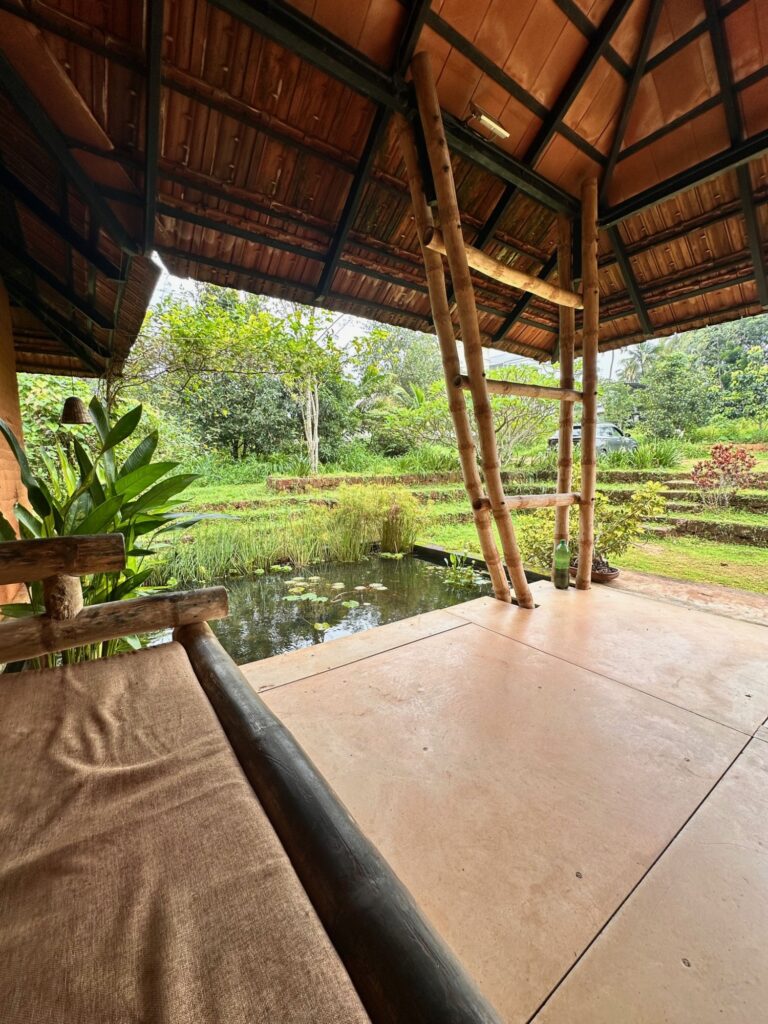
The resort-like setting of Bhoomija Creations.
The water bodies add to the setting: the gentle gurgle of moving water, green creepers falling delicately off a bamboo planter, the swish of fish tails, the slow dripping of rainwater into the pond. One has to remind oneself that this is an architectural practice and not resort property.
Bhoomija’s office setting. Photography @Haswi
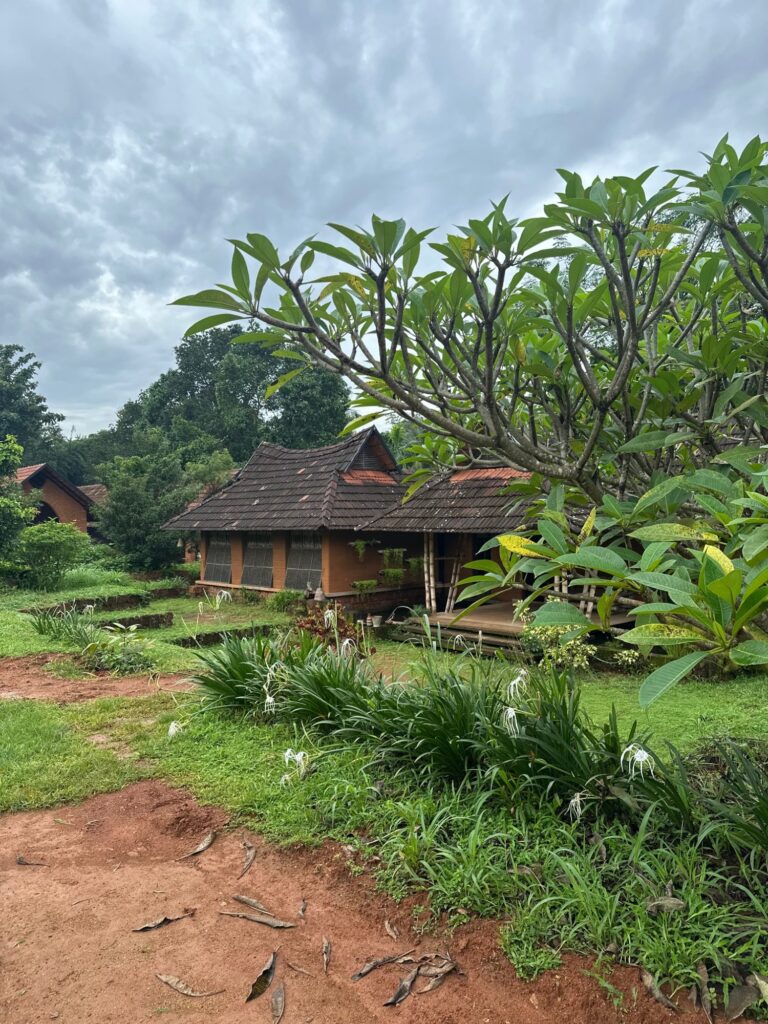
Bhoomija’s picturesque setting.
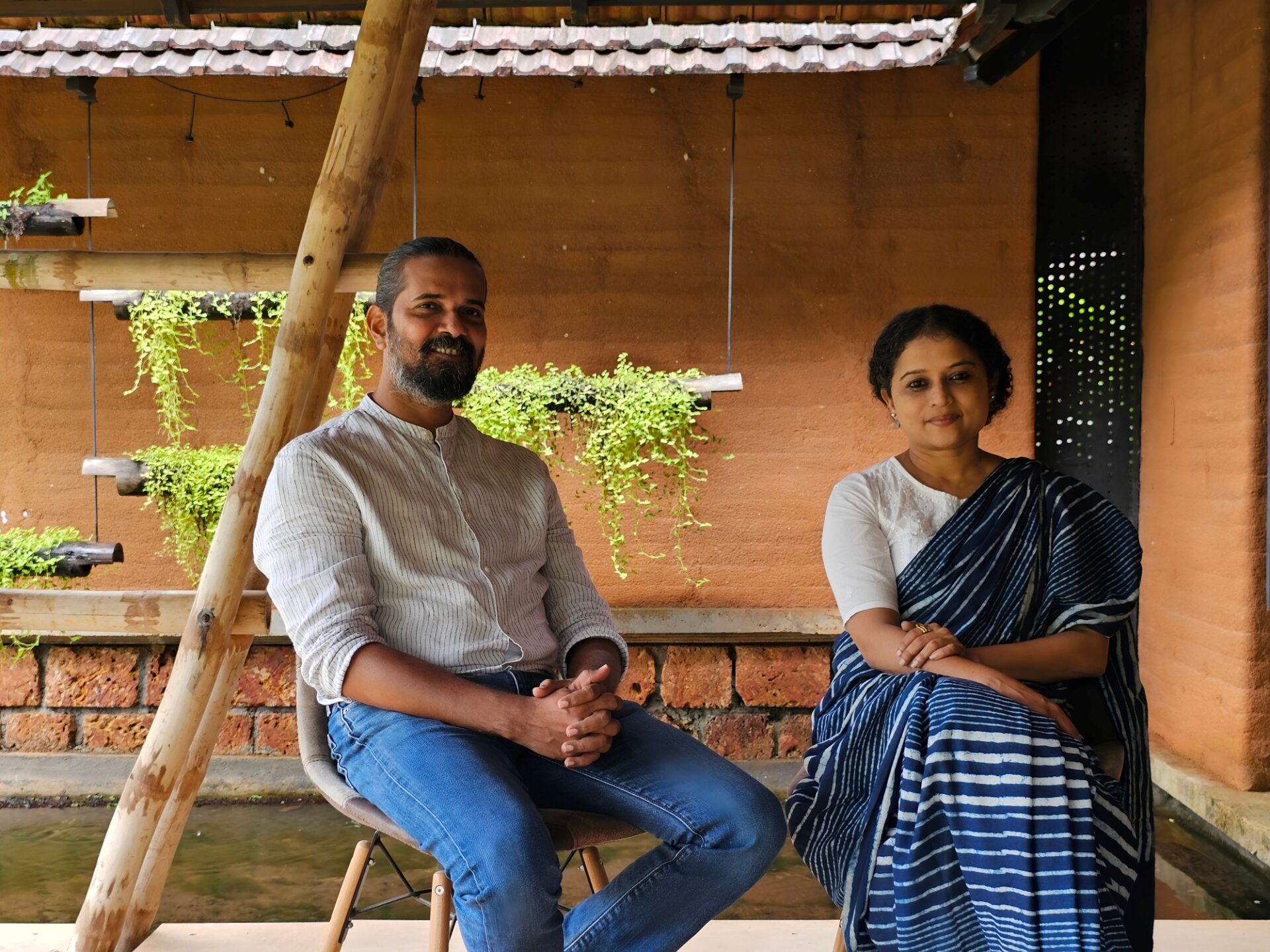
Meet the founders of Bhoomija Creations, architects Guruprasad Rane and Manasi Puliyappatta, and the feeling intensifies. The entire experience is just like the name of the firm: Bhoomija, “from ground up.” As Manasi explains, “Bhoomija, the word itself means to be born of the earth. For us, more than a name, it is a dream. Like everything else that shoots from the ground up, what if we could do the same with buildings? What if architecture could be rooted, authentic, and alive? Bhoomija is our pursuit of that dream, that idea.”
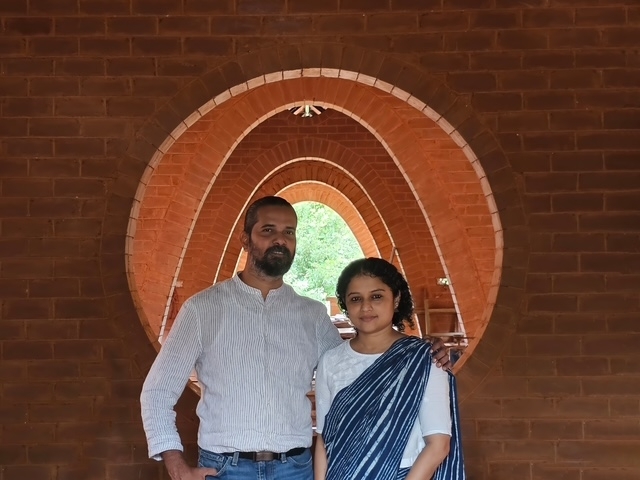
Guruprasad Rane and Manasi Puliyappatta, founders, Bhoomija Creations moulding their dream house.
Guruprasad and Manasi, two architects who first crossed paths while working and interning under Architect G. Shankar at the Habitat Technology Group, Trivandrum, discovered a shared vision, both in life and in architecture. This common ground became the foundation for Bhoomija Creations, their practice that has already carved a place for itself in the architectural landscape. In just a short span, Bhoomija has received international recognition with a UN Habitat-UIA Award 2030 Commendation for the ‘Girls’ Home’designed for the Malankara Orthodox Church, and has also been honoured with various awards at the state and national level, affirming their commitment to architecture that is socially rooted and environmentally conscious.
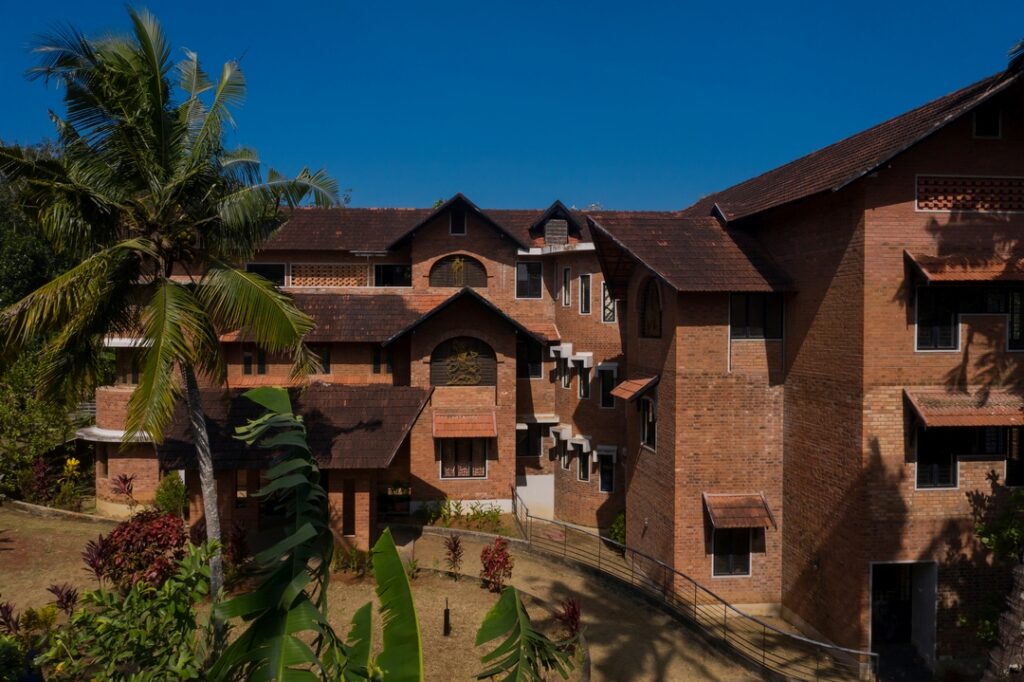
‘Girls’ Home’designed for the Malankara Orthodox Church, one of the award-winning projects of Bhoomija.
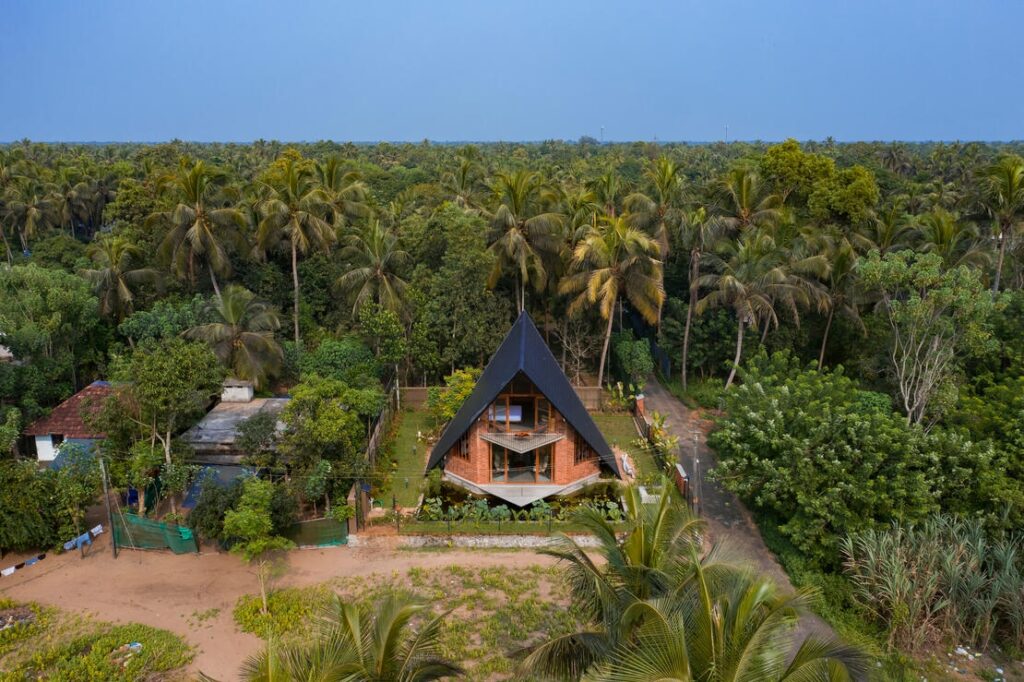
Another award winning project: a holiday cottage-stay, La Casa de Papel located on Pappali beach, Thrissur district, Kerala. Image Courtesy @Bhoomija Creations
Yet, beyond the recognition and accolades, what sets the duo apart is their approach: deeply rooted in responsibility, authenticity, and a commitment that extends not only to their clients but also to the earth and the discipline of architecture itself. In their scenic, mud-crafted office, we sit down with them to listen, learn, and immerse ourselves in their ethos and philosophy.
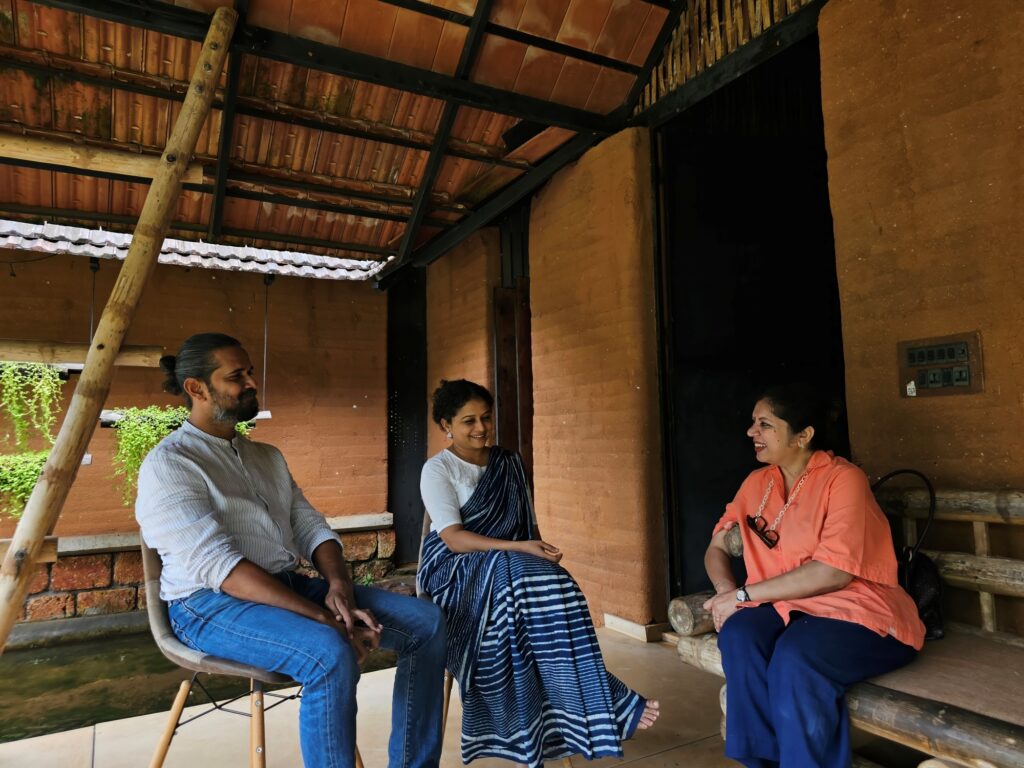
Guruprasad and Manasi with Sindhu Nair, editor, SCALE. Photography @Haswi
SCALE: How did your practice begin and evolve geographically?
Guruprasad: We started out in Trivandrum and stayed there until about 2016. By then, our work had started spreading all over Kerala, and traveling from Trivandrum to sites as far away as Kasaragod was becoming difficult. We thought it would make sense to move to a more central location.
I am originally from Bombay, I didn’t have a strong connection to any one place in Kerala, so location didn’t matter much to me. Thrissur seemed geographically ideal. From Thrissur, we could manage projects towards Munnar or the northern parts much more easily. We shifted there and stayed here for about a year and a half.
Later, certain family situations came up, and we realized Thrissur was just an hour from Manasi’s hometown. We thought, why not move closer and work from Pattambi itself? This property belonged to Mansi’s family, so we started with constructing the office here rather than buying land in Thrissur.
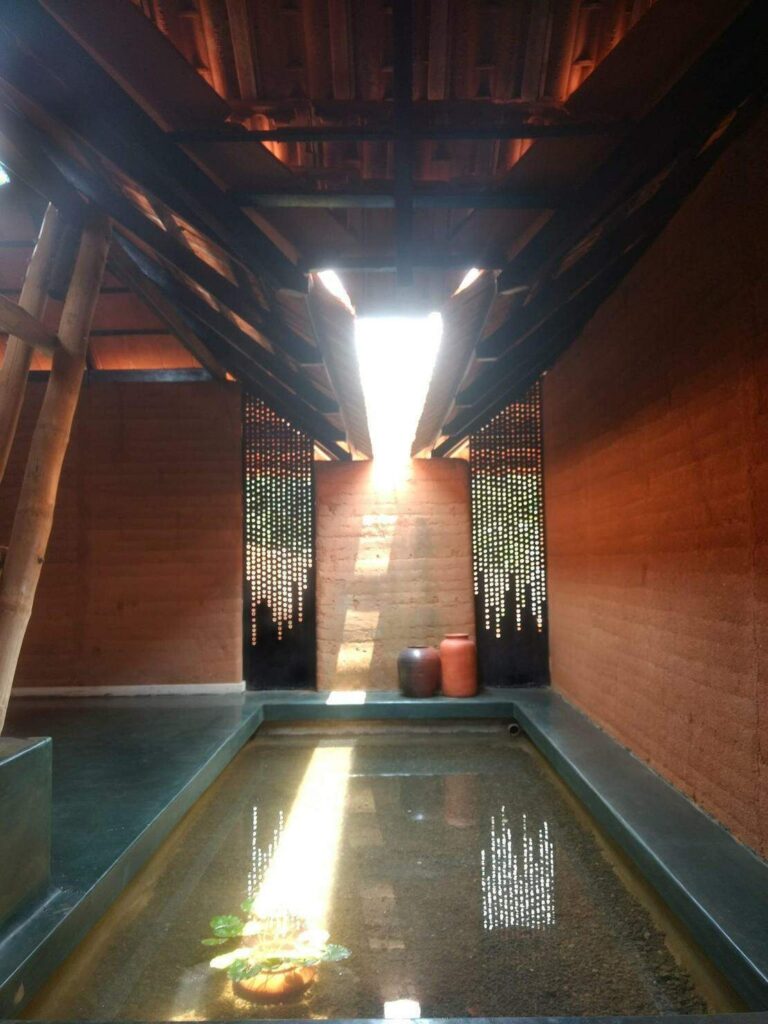
An interior courtyard at the Bhoomija office. Image Courtesy @Bhoomija Creations
SCALE: Did you ever feel that moving away from a city like Trivandrum might reduce opportunities?
Guruprasad: Actually, no. In Trivandrum, we were right in the center of the city and clients would often just drop in unannounced. But when we moved to Thrissur, we realized that clients still came. If someone is investing ₹50 lakhs or more into building a house, they don’t mind taking a day off to meet the architect.
Besides, the first meeting is usually the only one that happens in the office. Most communication is on site or online. In fact, some of our clients have never even visited our office—we have worked entirely over phone and video calls.
Location doesn’t matter anymore. What matters is that we get to work in a calm, quiet environment without disturbances. And that was being achieved in this setting.
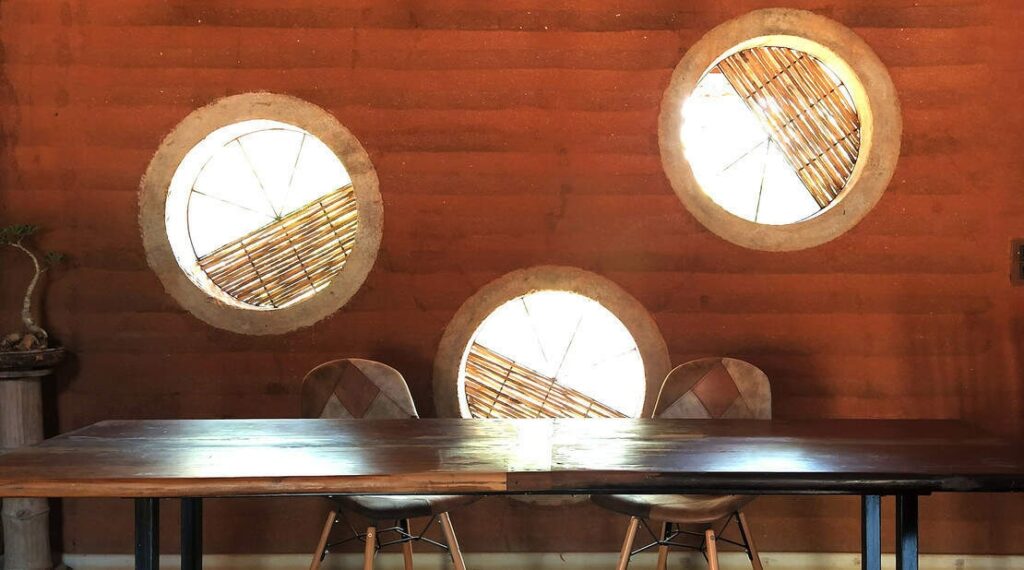
The discussion table, where creativity is kindled. Image Creations @Bhoomija Creations
SCALE: What about your team? Do you keep it small on purpose?
Manasi: Yes, very much so. We’ve chosen to stay small, never more than five people. It’s a conscious decision because we want to focus on doing signature works rather than running a large office. Keeping the team lean also means we can really enjoy the process of working, without the constant pressure of sustaining a large workforce.
Since none of our team members are local, we provide them with accommodation and food. The cooking happens at the office itself, so it feels more like a shared home than just a workplace. We try to keep the environment as comfortable as possible, because that atmosphere matters to the kind of work we want to create.
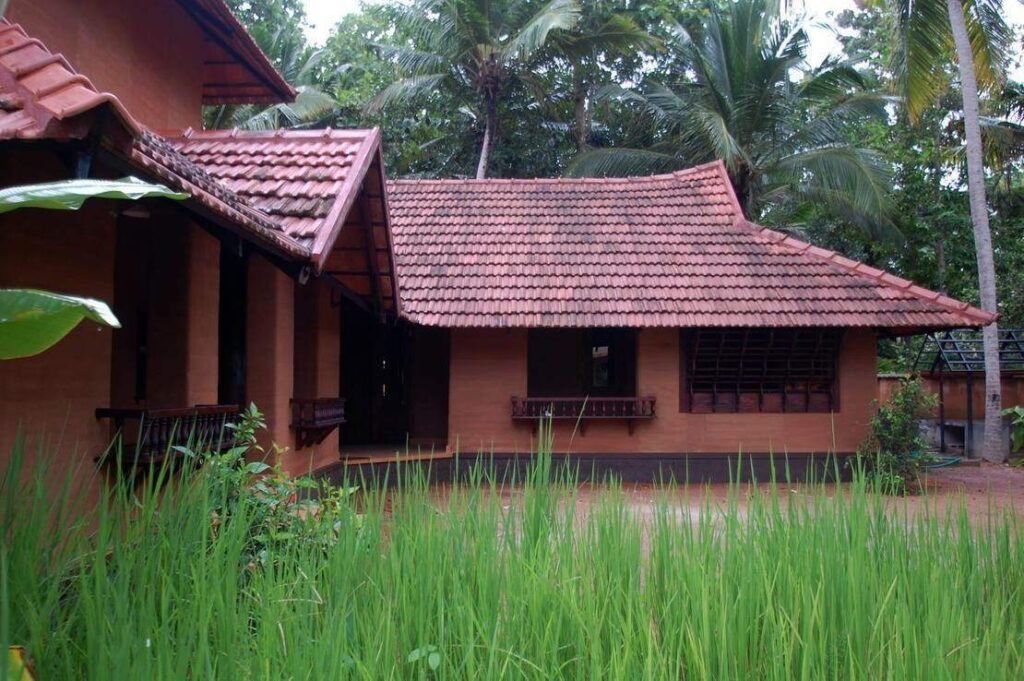
Residence of Dr Achyuth Sankar, the first mud architecture project by Bhoomija. Image Courtesy @Bhoomija Creations
SCALE: Did you ever want to practice in Bombay?
Guruprasad: No, not at all. I actually worked in Bombay for a year, living in Goregaon and working in the city. But I quickly realized that this wasn’t the kind of work that would make me happy.
I quit, travelled across India for a month with just a backpack, and noted down the names of architects working differently in different parts of the country. I applied to all of them at once. Shankar sir was the first to respond, and that’s how I landed up in Kerala. There was no plan, it all happened quite organically.
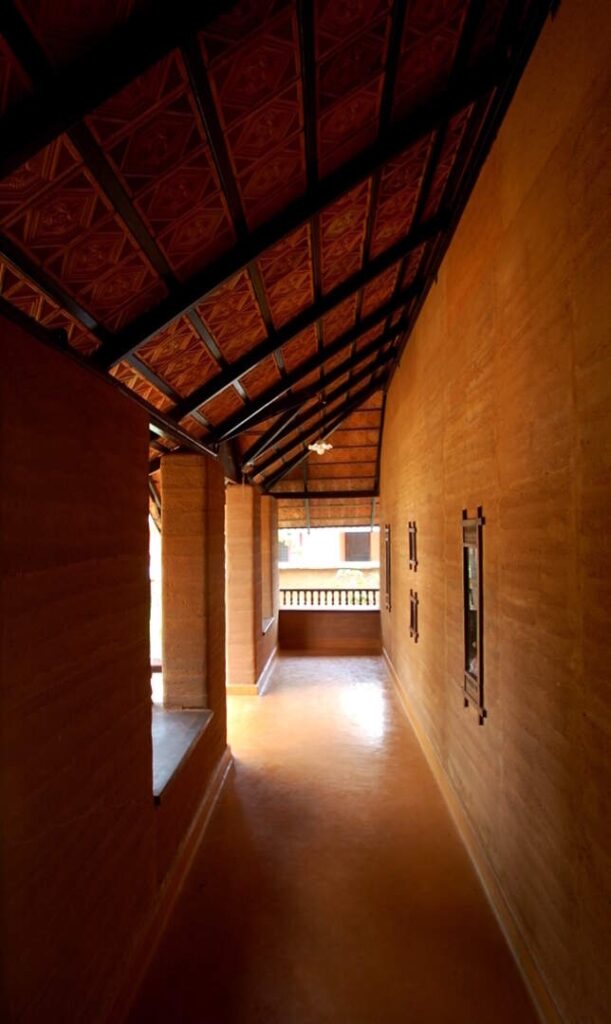
Details of mud house for Dr Achyuth Sankar. Image Courtesy @Bhoomija Creations
SCALE: At that stage, did you know you wanted to work with traditional materials?
Guruprasad: No, not really. What I knew for sure was what I didn’t want to do, I didn’t want to design apartment blocks or work in the city.
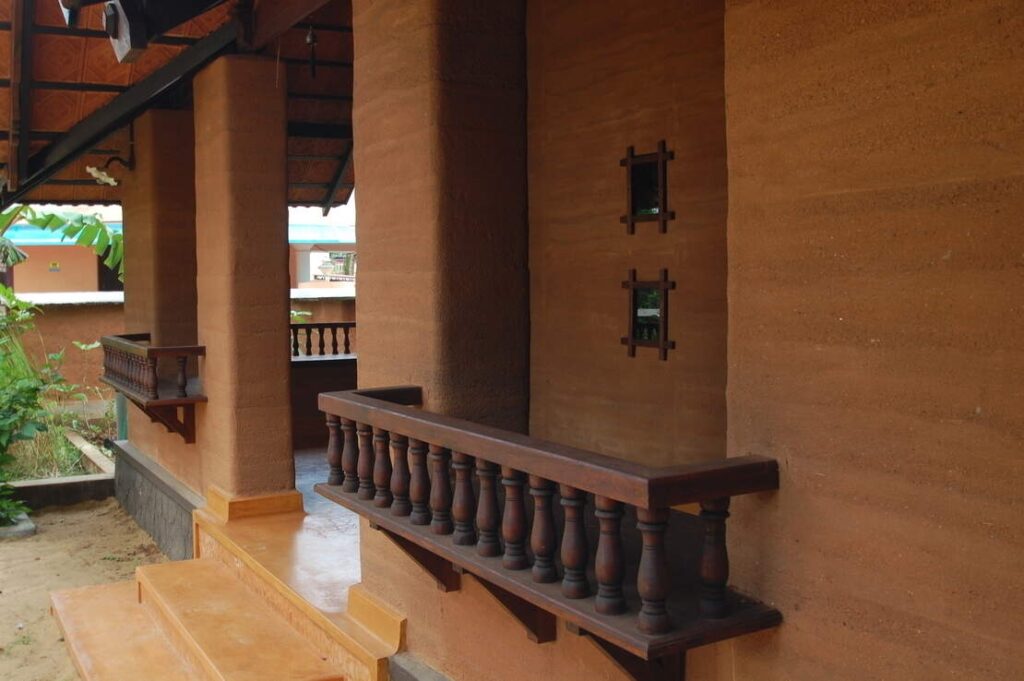
The house that goes back to earth after its lifetime. @Bhoomija Creations
SCALE: Was it difficult starting out on your own?
Guruprasad: Yes and no. We decided around March or April 2010 that we would leave, and set June as our deadline. But Shankar sir kept asking us to extend. Finally, by December, we left.
At that time, we had only a very small project, a 150 sq. ft. bookstore. It was started by six partners, all of whom were in publishing. We designed the interiors using experimental materials like jute, and they gave us a lot of freedom. That little bookstore was our first real break.
Afterwards, each of those six partners gave us more work—organic product stores, interiors, and other small projects. We had no local contacts in Trivandrum, but somehow, through word of mouth, work kept coming. Even now, we are building a residence for one of the same people who gave us that very first project.
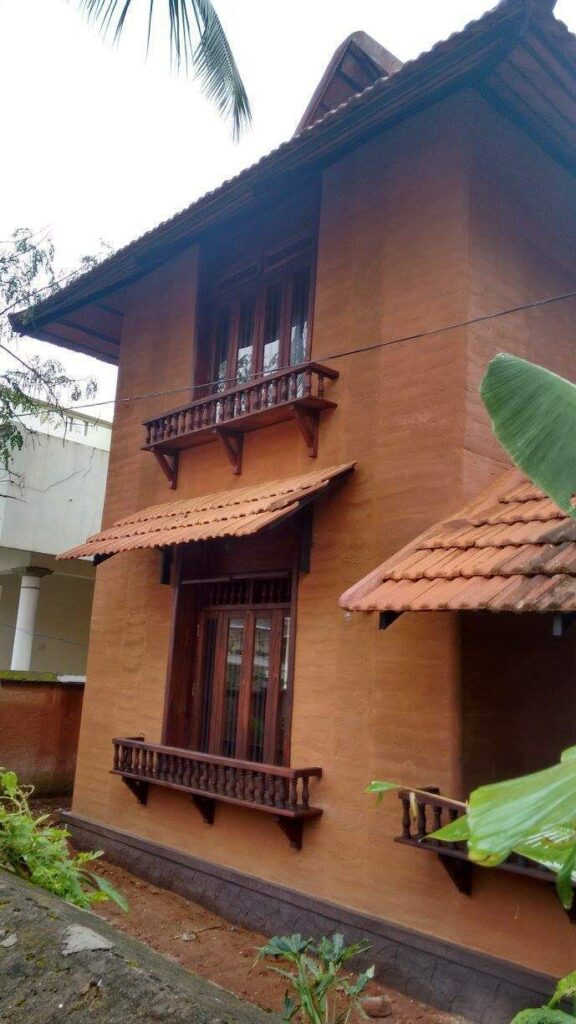
Rammed Earth construction was used to build Dr Achyuth Sankar’s home and it involves compacting a damp mixture of soil that has suitable proportions of sand, gravel, clay, and stabiliser into a formwork to give the required shape. Image Courtesy @Bhoomija Creations
SCALE: When did you start working with rammed earth?
Guruprasad: In 2013, for Dr. Achyut Shankar. But even earlier, during my time at Habitat, there was a proposal for a “1 lakh house” where we explored extremely cost-effective methods. I did the calculations and found rammed earth to be very promising, though it didn’t get implemented then.
That groundwork stayed with me. For Dr. Shankar’s project, he specifically asked if we could build a house that, at the end of its life, would go back to the earth. We had done enough R&D to be confident, so we decided to try.
We discovered problems with the standard shuttering systems available in the market, for example, they failed at corners and junctions. So, we developed our own formwork to solve those issues. Once we figured out how to do corners and T-joints, it became possible to build a proper home, not just a rectangular box.
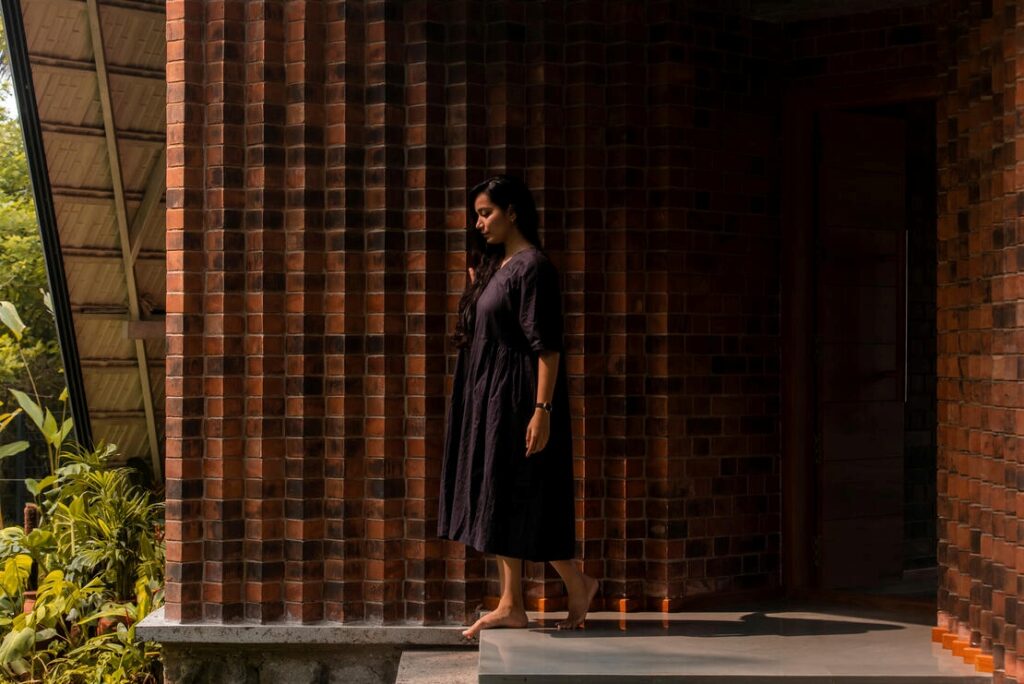
Fluted brick wall at the La Casa de Papel project. Image Courtesy @Bhoomija Creations
SCALE: Did you have to make compromises in that project?
Guruprasad: Yes. Initially, the client wanted everything to be completely natural. We suggested lightweight roofing and slabs, but he insisted on a concrete slab for safety. We were unhappy, but later we realized it was a blessing, people were reassured seeing a concrete slab on a rammed earth structure. It made them believe the walls were strong enough to carry load. Sometimes compromises help in creating acceptance.
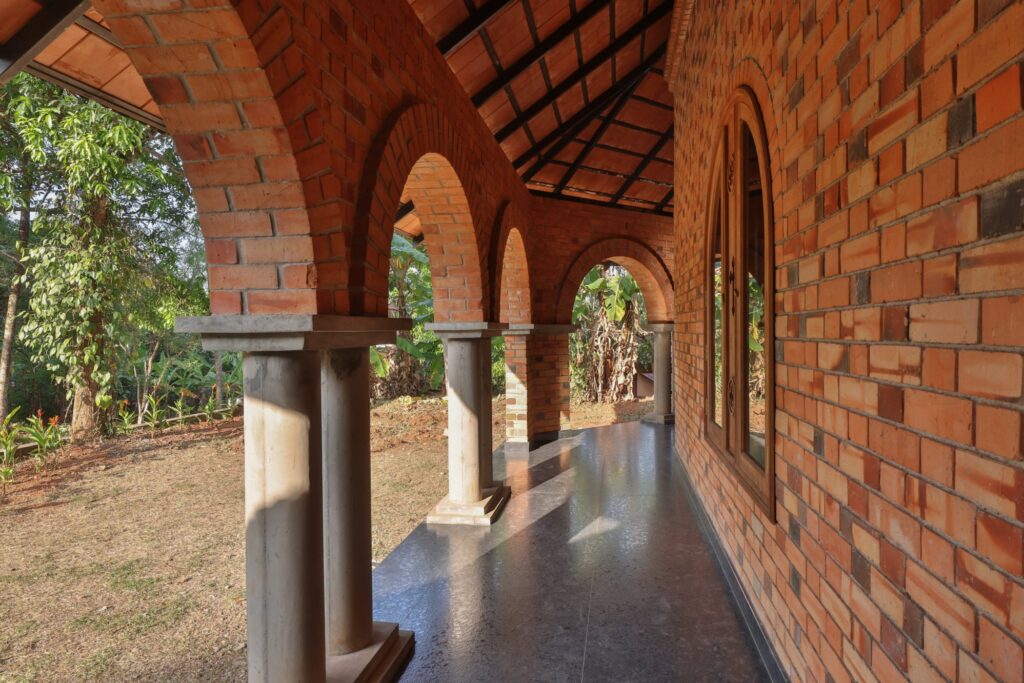
Brick work at the Lord’s House for Mallankara Orthodox church at Chathannoor, Kollam. Image Courtesy @Bhoomija Creations
SCALE: How do you manage construction and workers?
Guruprasad: We don’t take up projects on a contract basis. We remain as designers and provide technical support. The clients arrange the workers locally, and we train them on site.
So far, every project has had a different team. Migrant workers often go back to their villages and don’t return. We realized maintaining a fixed team was not possible. Instead, we train new workers for every project. This actually helps spread the methods and gives clients confidence, because their own workers built the house.
We also conduct workshops almost every year (except this year) where students and even the general public can learn techniques like bamboo construction, cob, CSEB, and so on.
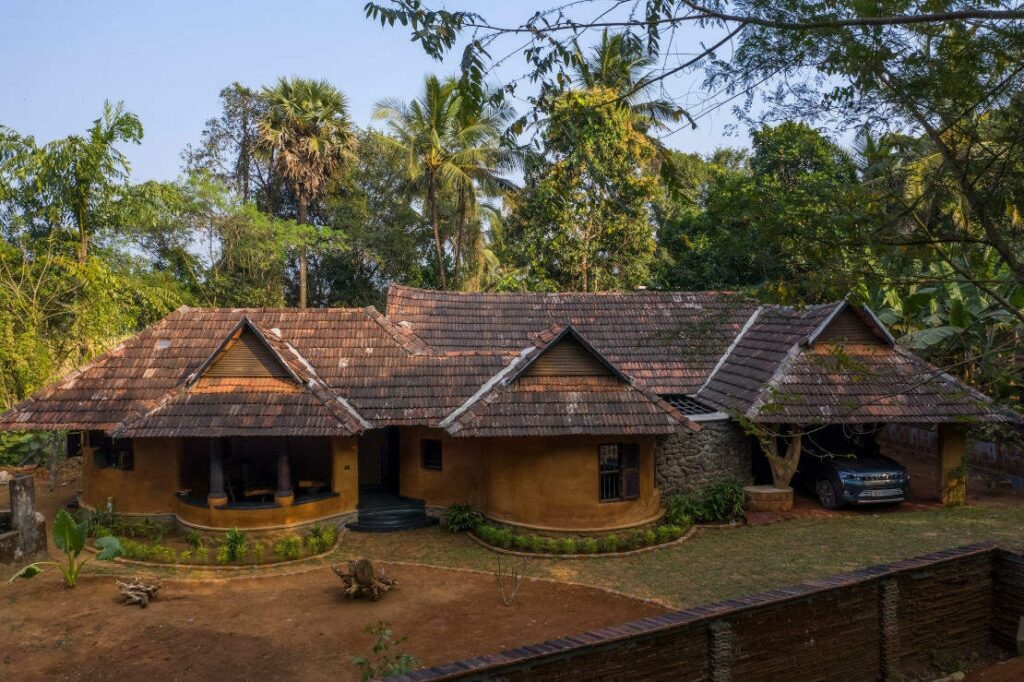
Gaea – A Cobhouse at Perimudiyur, Pattambi. Image Courtesy @Bhoomija Creations
SCALE: Is earth construction really cheaper than conventional?
Guruprasad: Yes, in almost all cases, it has come out 10–15% cheaper. The only exception was one cob house, which became expensive because the project dragged on for six years. With mud, if work stops and restarts repeatedly, costs go up. But generally, rammed earth and cob are both very economical.
SCALE: Do you also take on high-end or resort projects?
Guruprasad: Absolutely. In fact, we see building with earth as a luxury in itself. The comfort it offers, the way it breathes, and the aesthetics we can create with it bring a richness that goes far beyond convention.
People often hesitate, thinking about maintenance. But we always tell clients it’s very simple—most of it can be done with soil from the site itself. If a wall develops a dent, the gardener can patch it up with a handful of mud. Cob, especially, gives smooth, polished finishes that feel refined and timeless.
And honestly, whatever the scale, be it a modest home or a luxury resort, we try to maintain that same sense of refinement in all our buildings. We want people to begin seeing earth construction in that light.
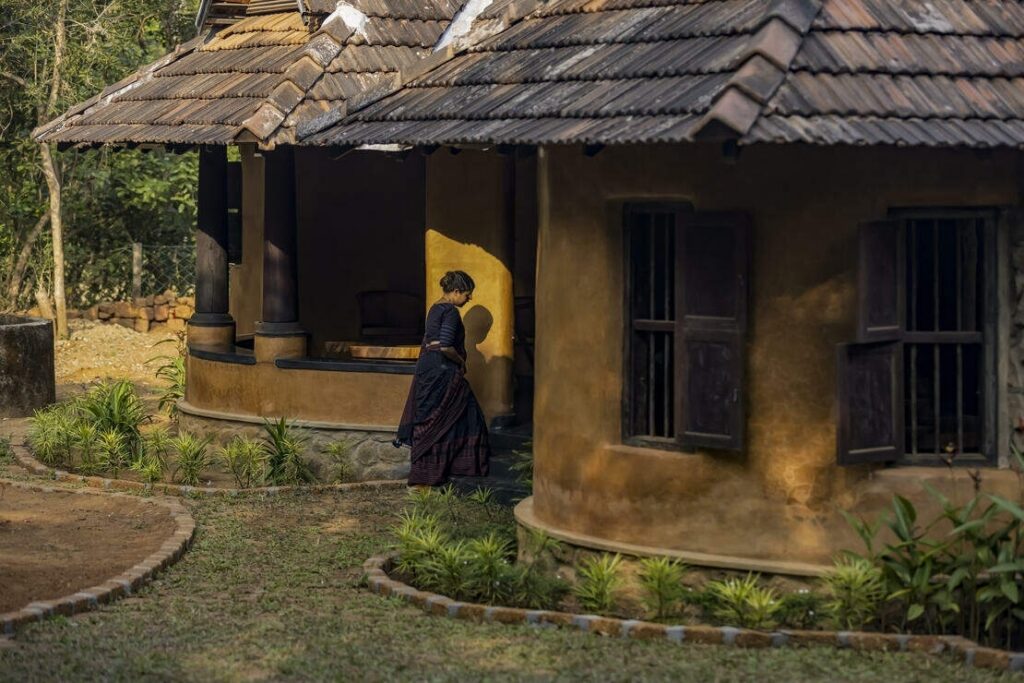
Cob construction, creating spaces that breathe. Image Courtesy @Bhoomija Creations.
SCALE: Can you explain how you choose between rammed earth, CSEB, and cob?Manasi: It depends on the soil. If the soil is sandy, we use rammed earth or CSEB (Compressed Stabilised Earth Blocks). If the soil is clayey, then cob is ideal.
Cob is one of the oldest methods, mixing clayey soil with water until it becomes like dough, then sculpting walls by hand. It doesn’t require shuttering, which means we can create free-flowing, curved forms instead of rigid, modular shapes. That’s why in projects like Gaya, the walls are all curved, it’s actually easier to do in cob than forcing straight lines.
SCALE: What do you see as the biggest challenges in your work today?
Manasi: For us, the biggest challenge is always in achieving good workmanship during construction. We try to work responsibly with all kinds of materials, but no matter what the material is, the way it is put together on site makes all the difference.
Drawings and ideas can only guide the process. The real beauty of a building comes through in the details that are patiently shaped while it is being built—the smoothness of a curve, the way two materials meet, or even how light touches a surface. Reaching that level of care is never easy, but we keep trying, because we believe the beauty of any building really lies in those details.
SCALE: How do you handle perceptions about alternative building methods?
Guruprasad: Every method has its pros and cons. Even concrete buildings leak—they have their own problems. But when there’s a small issue with an alternative method, people make a huge fuss about it. That’s a challenge: to get people to accept that no material or technology is perfect.
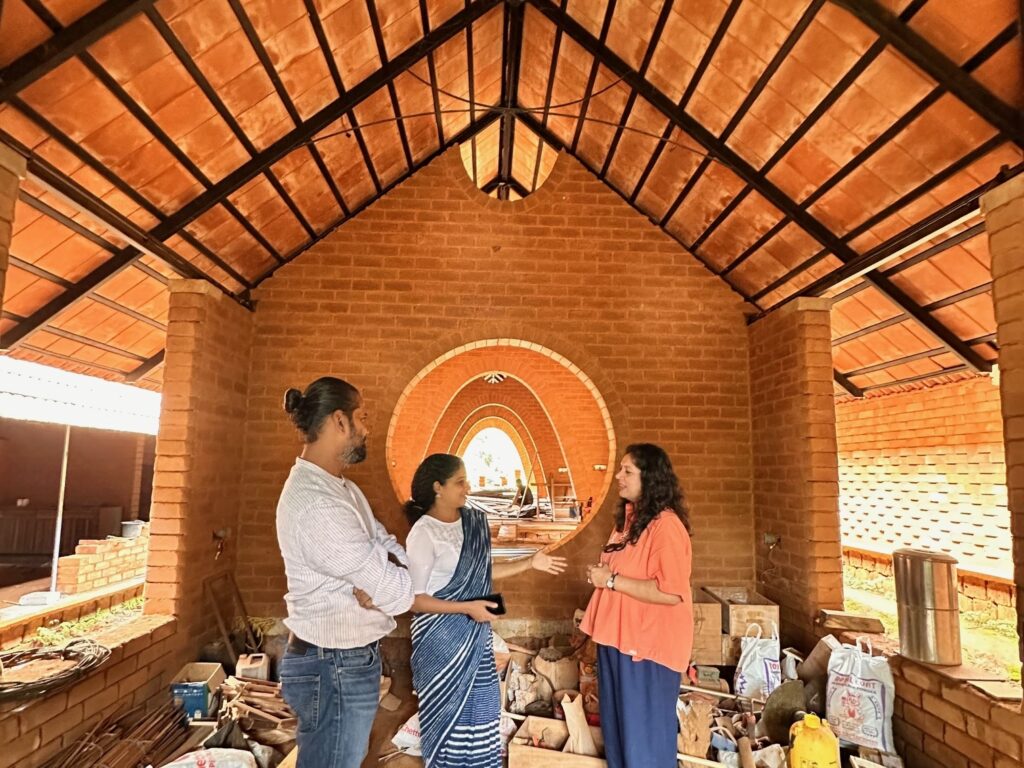
The experimentation zone. Photography Haswi
SCALE: You work together as partners. How do you divide roles and responsibilities?
Manasi: When we started, both of us tried to do everything together. But slowly, we learned to divide responsibilities. Over time, we figured out who is better at what, and we give each other space to lead when necessary.
Our prior experience helped a lot. We didn’t start the practice right after graduation. Both of us worked in offices for six or seven years before starting out on our own. That experience gave us confidence and made it easier to balance roles.
We also respect each other’s skills—that’s the foundation of our collaboration. At times we even switch roles depending on the project. When deadlines are tight, we both step in wherever needed.
SCALE: Do you have an interest in working with heritage and conservation?
Manasi: Yes, our practice naturally connects with heritage because many of our techniques come from vernacular traditions. We have already worked on some smaller-scale conservation projects. We don’t want to put ourselves into a box, but this is definitely a direction we’re open to.
SCALE: How do you approach experimentation?
Manasi: Experimentation has always been part of our practice. But we never try untested methods on a client’s project. We first experiment on our own property or in our backyard—making samples, trying out materials, testing durability. Only when we’re convinced do we take it forward into client work.
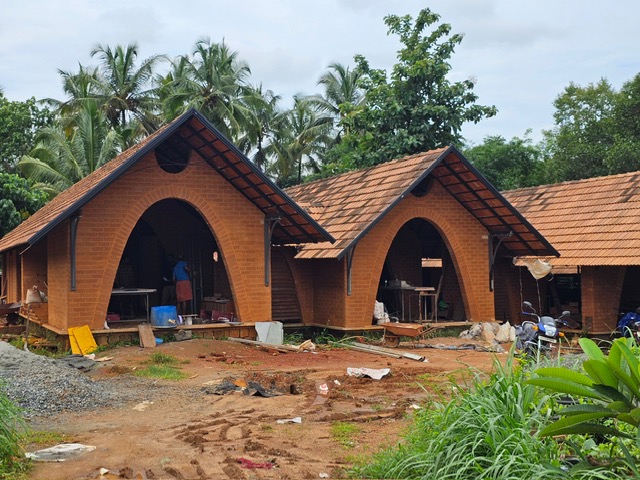
The dream house-under-construction. Photography: Haswi
SCALE: You’re currently working on your own house. Can you tell us about it?
Guruprasad: Yes, this house is very close to our heart. It’s also our laboratory, a place where we can experiment freely.
The site used to be a football ground, so the topsoil is gone and plants don’t grow easily. That made it extremely hot. We wanted to create a comfortable environment despite this challenge. We chose Compressed Stabilized Earth Blocks (CSEB) because they allowed us to make blocks in advance and use them gradually.
But more than the material, what mattered to us was the concept. Traditionally, houses were built to last for generations, evolving with the family. Today, most people build in concrete, with a lifespan of 40–50 years, and then start over. That culture is not sustainable, anyone can see that. Instead, we need homes that are flexible, multi-use, and capable of adapting to changing needs.
Our house is built around that idea. It’s essentially four cottages, internally connected and sharing facilities. This allows it to be remodelled easily: it can function as a single home, be split into two, or even run as a guesthouse or Airbnb.
For us, sustainability is not just about the material, it’s about creating buildings that can continue to serve different purposes over time, and remain meaningful for generations to come.
SCALE: How does designing your own home differ from designing for clients?
Manasi: When it’s our own, it takes longer! There’s no external pressure, so we can experiment, see what works, and learn from it. It’s a space where we can test solutions before suggesting them to clients, but mostly it’s just a place that has to feel comfortable and liveable for us.