
“100 Sarees” by Ankon Mitra: Revival of Craft, Culture & Luxury
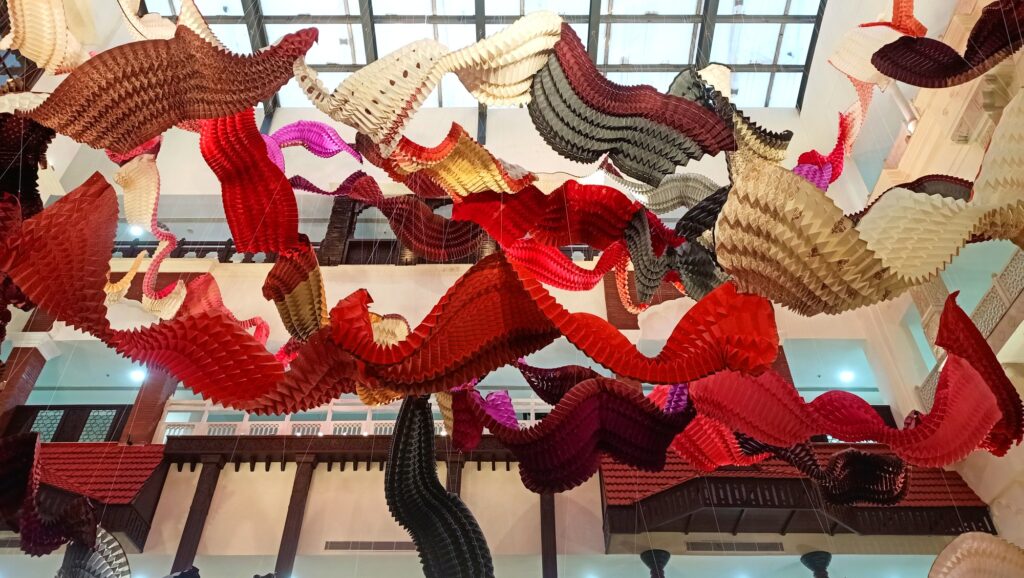
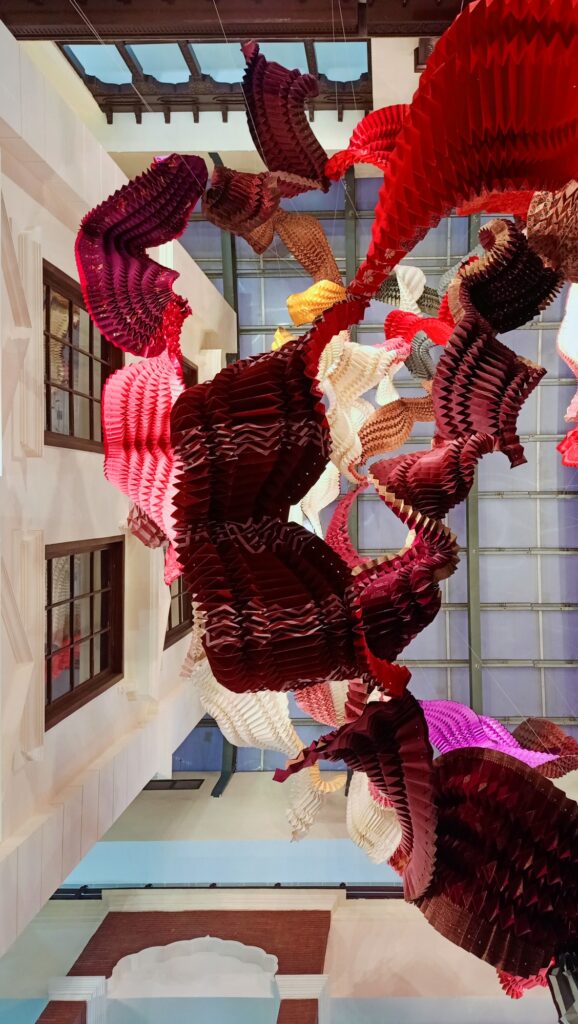
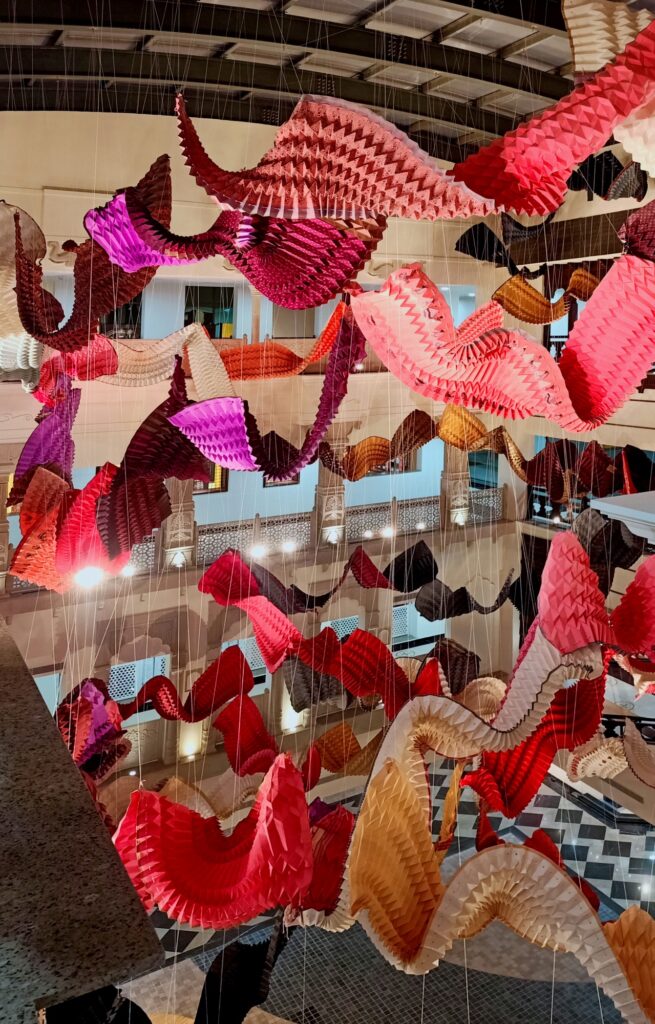
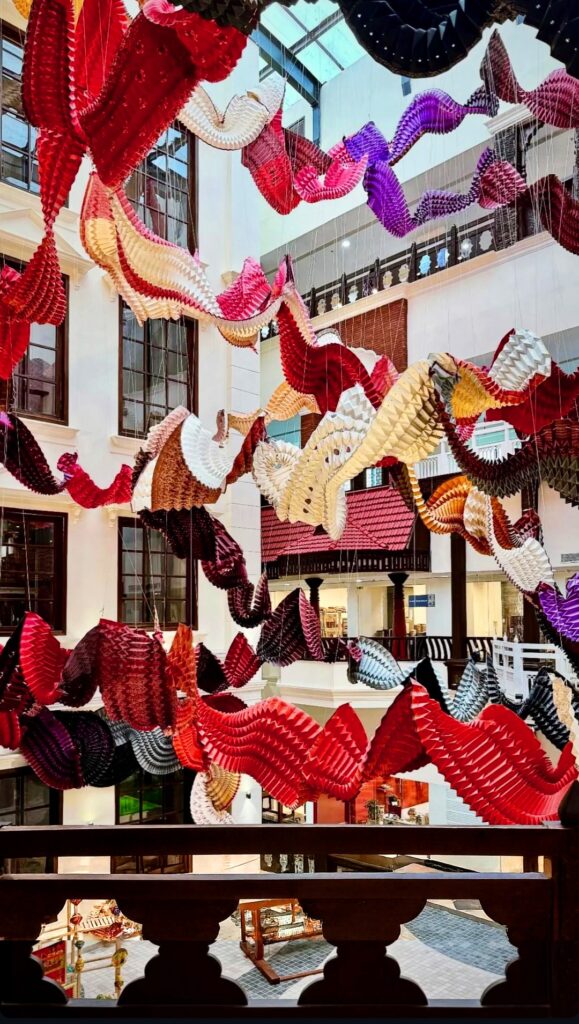
Ankon Mitra, a pioneering artist and architect, crafts “100 Sarees,” a breathtaking installation that blends architectural precision with the organic elegance of traditional Indian garments. In the heart of Delhi, at the revitalised Crafts Center, The Kunj, this work conceptualised by Ankon draws inspiration from a global language of folds while remaining deeply rooted in the context of India’s heritage craftsmanship. We sat down with Ankon Mitra to learn more about this remarkable project. By Arya Nair
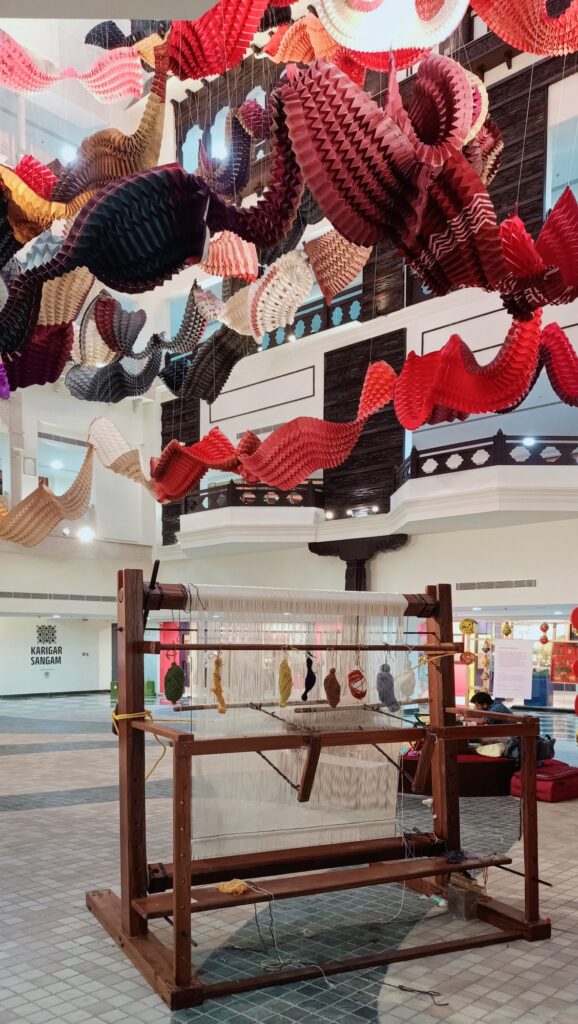 “100 Sarees” is more than an art exhibit; it’s a powerful tribute to India’s heritage. Artist and architect Ankon Mitra used his unique skills to combine the careful planning of design with the creative freedom of art. Now on display at The Kunj in Delhi, this project honours the Indian weavers whose craftsmanship is slowly disappearing. Each fold and every colour in the installation holds a memory, inspiring us to see the saree not just as a piece of clothing, but as a priceless part of our culture.
From Architecture to Art: The Evolution of a Vision
 When asked about his shift from architect to sculptor, Ankon explained that it wasn’t a sudden change but a natural evolution of his architectural practice. His work is driven by a desire to sculpt and transform physical spaces. This led to a fascination with the universal language of folds, which he saw in the underlying science and mathematics of everything from a microscopic DNA strand to a massive mountain range. Ankon realized this natural geometry could be a powerful medium for his artistic expression.
In his initial experiments, Ankon explored the interplay of light and shadow, finding that a simple fold could transform a two-dimensional surface. He discovered that a single-coloured sheet, like white paper, could reveal dozens of different shades simply by being folded, with each nuance shifting in the light. This breakthrough led him to experiment with various materials, including wood veneers, paper, and porcelain. By making the porcelain exceptionally thin, he was able to create new effects as light passed through it.
This ongoing investigation into how light interacts with folded forms laid the groundwork for his future project, “The 100 Sarees.”
From Family Heirloom to Art: The Journey of a Saree
 The inspiration for this project was deeply personal, beginning with a solo exhibition called “Memories of a Warm Embrace.” For this show, Ankon used his late grandmother’s wedding sarees. These beautiful, ornate garments, carefully preserved by his mother, were filled with unspoken memories. To give them a new life, he transformed the sarees into art installations, allowing their physical presence to fill a space with the spiritual weight of his grandmother. The art pieces became more than just fabric; they were a vessel for her memory, sparking conversations and emotions among family members. This intimate project proved that a garment could transcend its purpose to become a living tribute and a source of comfort.
Rescuing a Legacy: The Art of the Artisan
 In a world obsessed with fleeting trends and mass-produced goods, Ankon’s installation stands as a powerful statement on the true meaning of luxury. He passionately believes that luxury is not a modern, Western import, but an ancient Indian idea, one that has existed since the time of the Mahabharata. It was a concept nurtured by the princely states and Maharajas who provided unwavering patronage to artisans, commissioning works of extraordinary skill and beauty. This ecosystem of support, however, has slowly “withered away,” leaving a void that the modern economy has yet to fill. In turn, the very essence of Indian luxury, its hand-woven textiles and intricate craftsmanship, is now taken for granted.
 For Ankon, the hand-woven saree is the peak of luxury. It’s a true work of art, woven with immense skill and dedication. Yet, he finds it’s often undervalued and bought casually. Through his installation, he wants to elevate the saree to its rightful status as an artistic marvel. He hopes to encourage a new kind of support for the artisans, protecting this priceless heritage. By treating these garments with the reverence they deserve, we can rediscover a form of luxury rooted in authentic skill and timeless beauty.
A Tribute to the Craftsmen
 At its heart, “The 100 Sarees” is a passionate tribute to Indian weavers. Ankon is in awe of their talent, calling it “genius.” He finds it incredible that they can create complex designs like the Pochampally’s geometric patterns, a Kerala Kasavu’s lightning bolt, or a Jamdani’s detailed thread work. He’s amazed by how weavers can effortlessly count threads to create intricate patterns that aren’t even necessary for the fabric itself. It’s this kind of skill, he says, that is slowly fading away due to a lack of appreciation.
Ankon sees his installation as a direct response to the plight of these artisans, who are often forced to live “almost hand-to-mouth.” He passionately argues that with the decline of patronage, generations of skills and knowledge are at risk of being lost forever. While India celebrates its technological and industrial revolutions, Ankon believes the next, and most crucial, revolution will be the Craft Revolution. This installation serves as a powerful antidote, not just by bringing the weavers’ creations into the limelight but by reframing the saree as a “treasure of India.” He hopes that by inspiring a sense of awe and respect, the project will lead to tangible support for the artisans and their communities.
 The “100 Sarees” also carries a subtle yet powerful sustainable angle, though Ankon defines it in terms of “human sustainability.” It’s not about recycling in the conventional sense, but about giving new life and purpose to garments that might otherwise be forgotten. By transforming these cherished textiles, the installation addresses a critical human concern: the preservation of cultural memory. In a world saturated with fast fashion and disposable goods, the hand-woven saree stands as a symbol of enduring quality and timeless design. The installation subtly contrasts the fleeting trends of artificial fabrics with the richness and diversity of traditional weaves, highlighting their inherent durability and artistry.
This project offers a potent argument for a more mindful approach to consumption, where a garment is valued not just for its utility but for the story of human ingenuity it holds. By elevating the saree to an art form, Ankon encourages us to buy fewer, more meaningful items and to support the artisans who create them. It’s a silent yet powerful call to action that champions the survival of communities and skills, proving that true sustainability is as much about people and culture as it is about the environment.
A Woven Sarees Tapestry
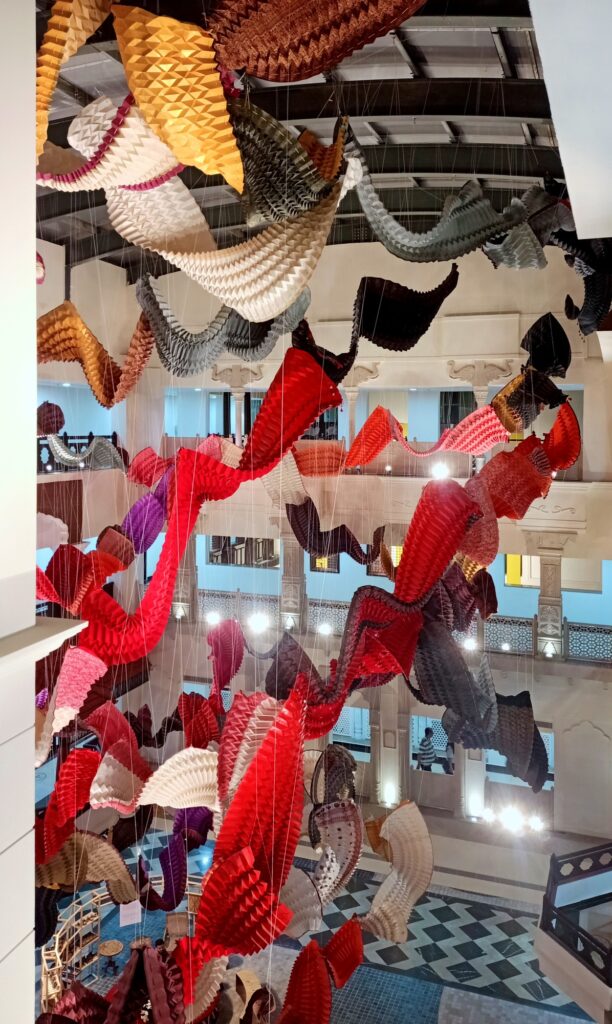
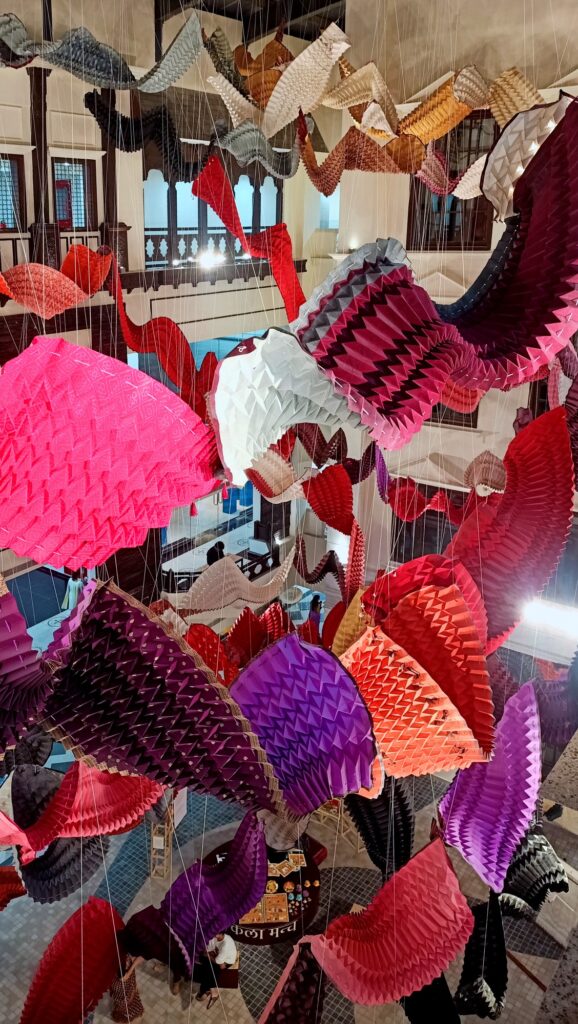 Shovna Patak, Ankon Mitra’s associate, directed the studio and orchestrated the installation of 100 Sarees, which were sourced and selected to create a custom colour story. Working for two weeks from a massive scaffold, her team hung the sarees at heights of 9 to 18 meters. Each saree’s fold and position were meticulously planned to form a unified, flowing “woven tapestry” for visitors. This complex physical installation demonstrates the team’s dedication to realizing a grand vision.
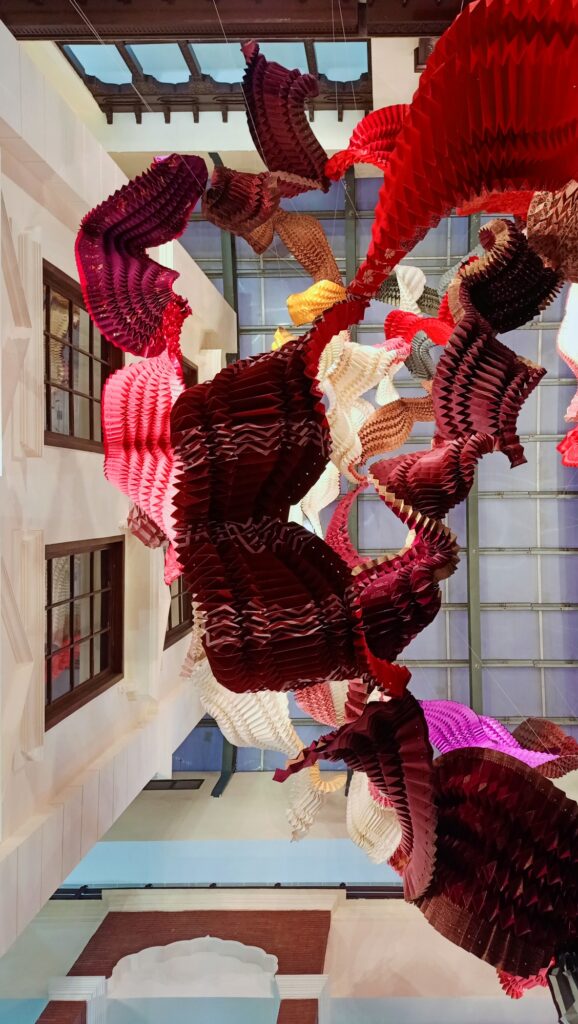 The “100 Sarees” installation is a major step forward for India’s craft community. Ankon Mitra believes that artists have a duty to help and empower traditional artisans, and his project is already doing just that. People are asking for contact information for the weavers, creating a direct link between city buyers and rural creators. The installation is more than a beautiful sculpture; it’s a social and economic project that proves India’s cultural wealth is in the hands of its people. This is the first step toward a revolution, stitch by stitch.