GubGub Studio: An Artist-Led Art Space in Doha
Collaboration, Collectivity, and Crosspollination is the central theme behind GubGub Studios, Qatar’s first artist-led studio space.
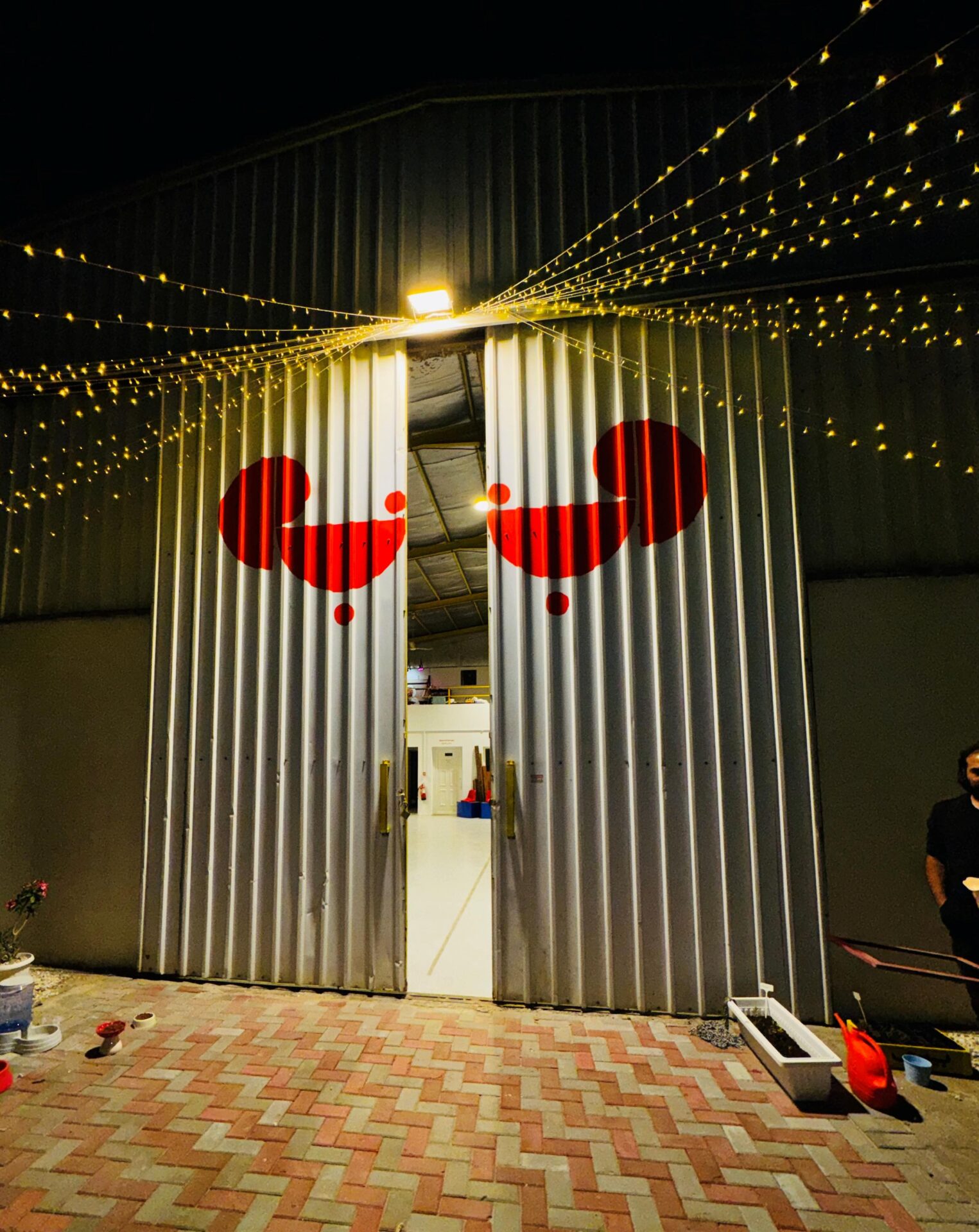
The location is part of the story of GubGub Studio’s formation.
There are numerous reasons why GubGub Studios is unique. Firstly, it is the location. Imagine an art gallery in Qatar and images of the Fire Station Museum, a celebrated Msheireb studio, or the upscale Pearl neighbourhood crowd your mind. Shattering all such notions is GubGub’s location: the remote Industrial Area that’s surrounded by not-so-well-kept buildings inhabited by the often-ignored men of the country. These surroundings, in part, make the studio fairly affordable and thus much more sustainable for an upcoming artist. That makes the new artist-run studio truly different, making it “Qatar’s first artist-run, affordable shared studio space for creatives across disciplines. Not just workspaces, it becomes a living arts hub,” according to Sebastian Betancur-Montoya, co-creator of GubGub, who views himself as the facilitator of collaborations at the studio.
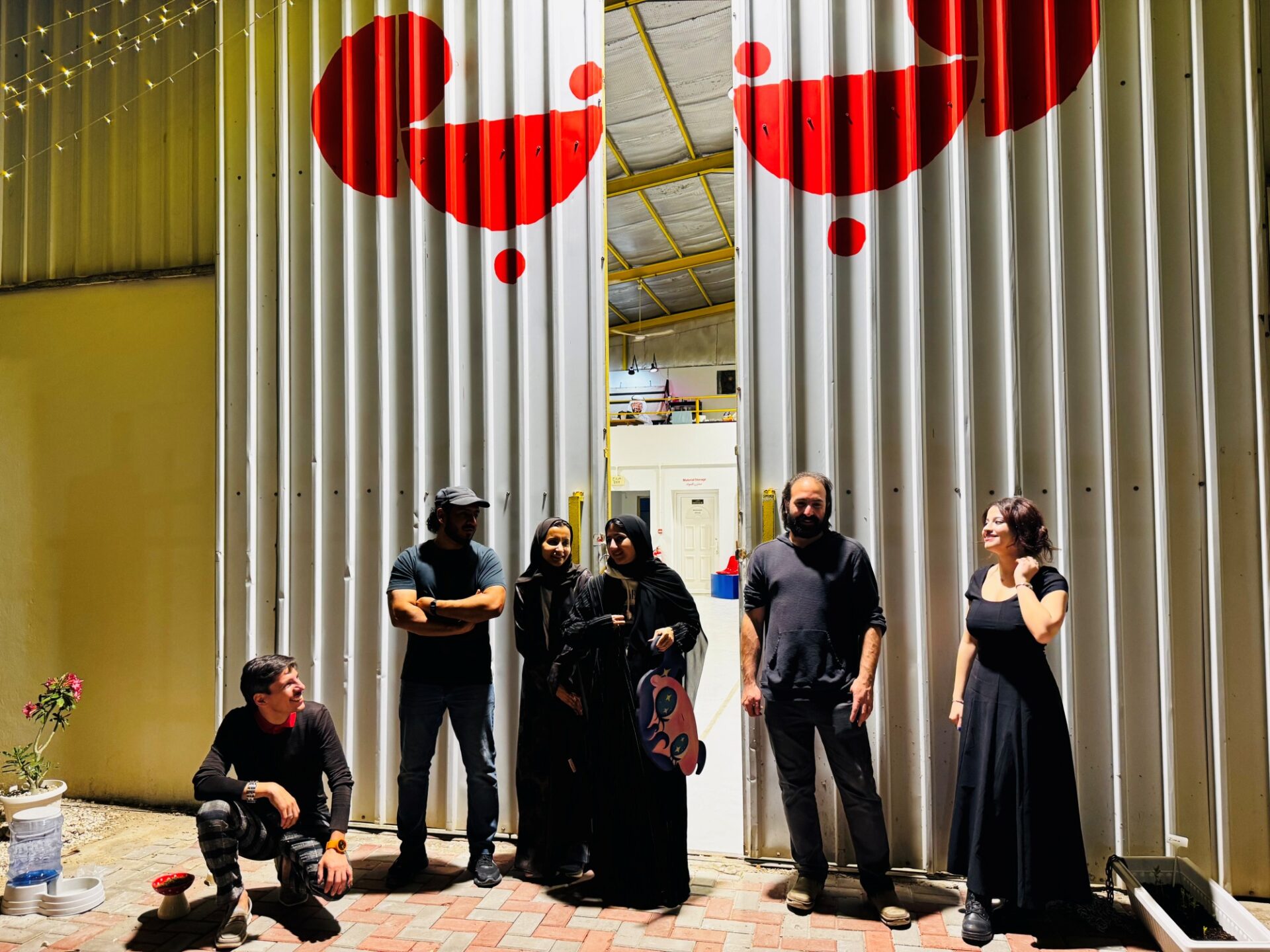
A place to vibe and make art: GubGub Studios
Sebastian also believes that the location has been a total game-changer, with hidden gems discovered every day.
“The Industrial Area is undergoing transformation, and though we have been up and running for roughly two months, it’s too early to speak about shaping an identity yet. But the generous physical space and the availability of all sorts of industrial processes and materials a stone’s throw away allow us to work on larger scales, experiment with unfamiliar mediums, and develop complex projects.
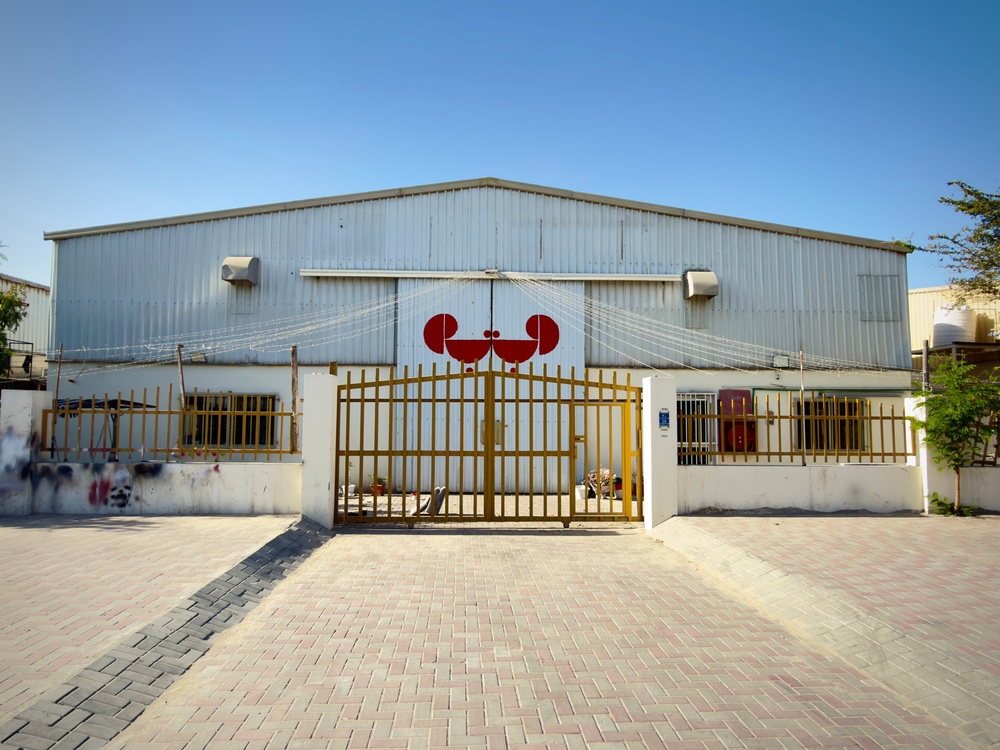
GubGub Studio is located in the Industrial Area in Doha.
“We have been exploring the area, and we keep finding little gems such as the best Chapli Kebabs in town, fascinating finds at the second-hand markets, but the most inspiring thing so far has been the generosity of the longstanding communities who surround us,” he says.
The wider goals of the Studio are to bring artists together through events, mentorships, talks, and collaborations that strengthen both creative practice and professional growth.
“The focus is peer exchange, real relationships, and exposure to regional and international voices,” says Sebastian.
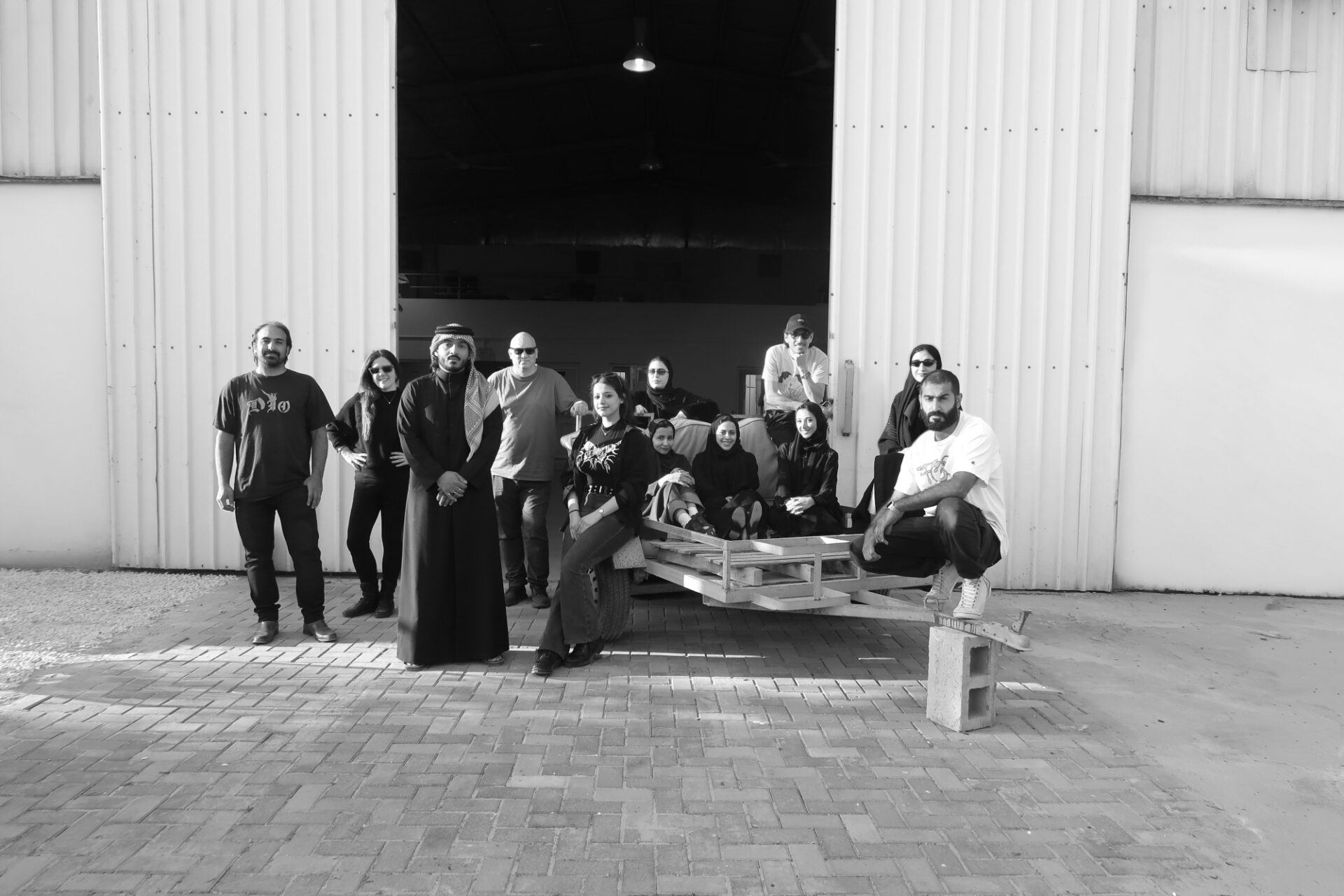
Sebastian teams up with Habeeb M. Abu-Futtaim, Ayaz Rauf, Yousef Bahzad, Guillaume Rouseré, Zainab AlShibani, Aisha Al-Abdulla, Salha Alsubaiei, Ghayda Abduljalil, Hana Al-Saadi, Amna Al-Baker and Rola Khayyat to form GubGub. The fact that many of its members are either alumni of VCUarts Qatar or part of its teaching faculty lends the collective a shared foundation, one shaped by experimentation, critical dialogue, and an ongoing engagement with the region’s evolving art and design landscape.
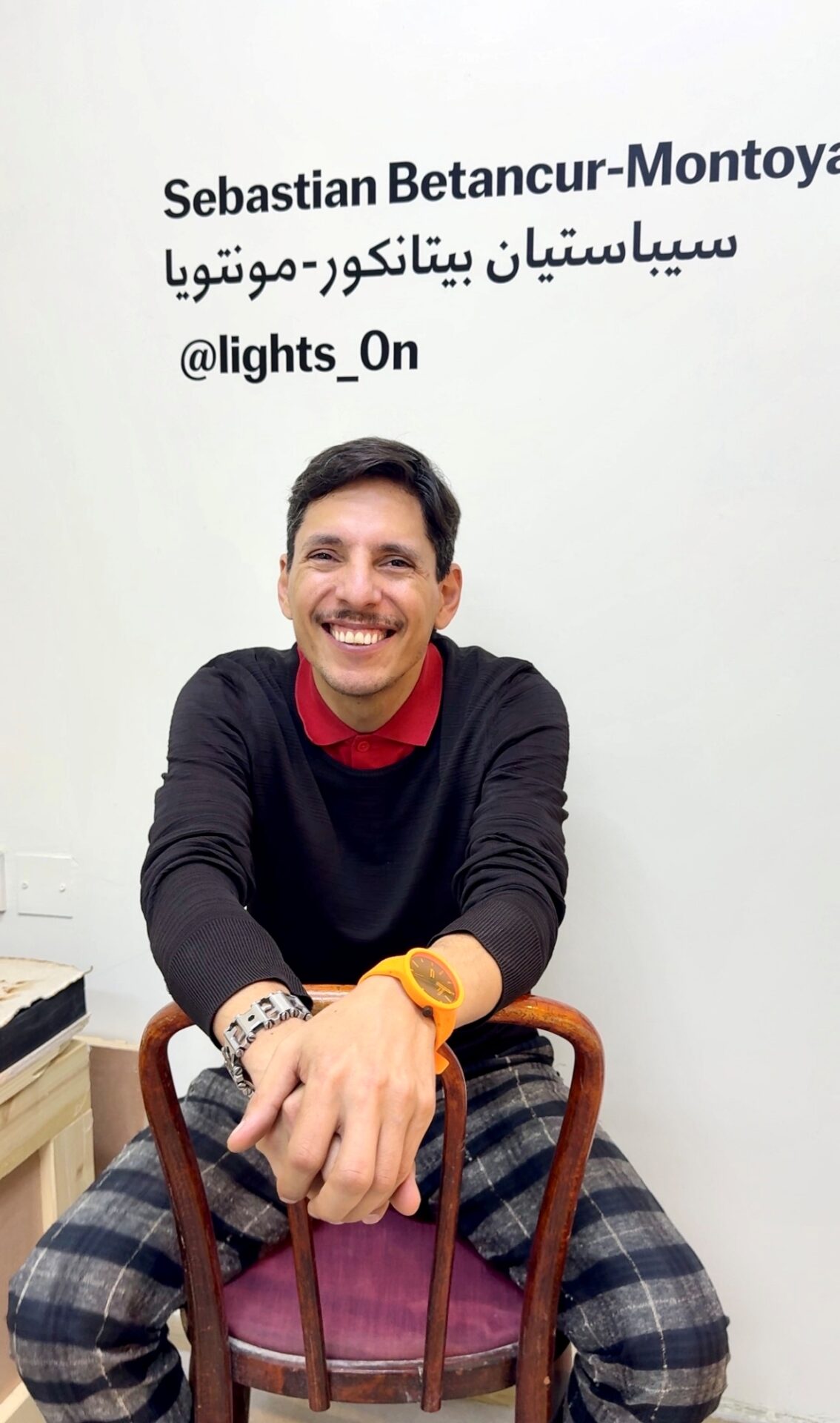
Sebastian is an architect and an urban designer who is currently working at Qatar Museums Public Art Department.
SCALE spends an evening with Sebastian and a few of the artists at the Studio to learn more about this cool space that has an air of having come together from a jumble store.
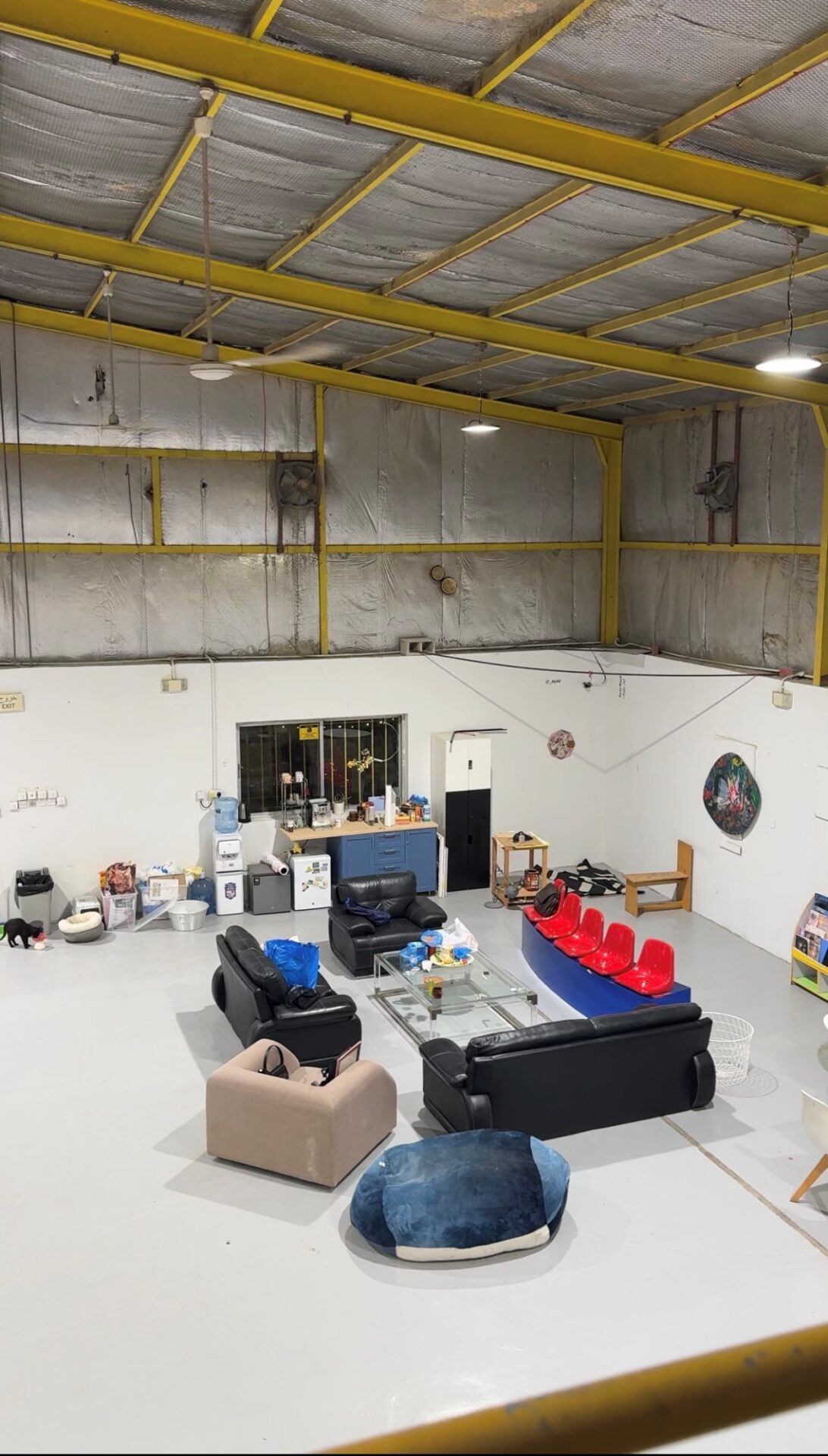
Studio interiors, with furniture that is borrowed or thrifted.
And we are not mistaken; there is a large table with mismatched chairs that are hand-me-downs from VCUarts Qatar studio, another seating in bright red and purple, another hand-me-down from a NUQ exhibition, and other knick-knacks collected from the thrift markets or personal studios. All of the unmatched furniture combines to give the large art space a vibe of unorganised charm and a stamp that is uniquely its own!
Origin and Urgency
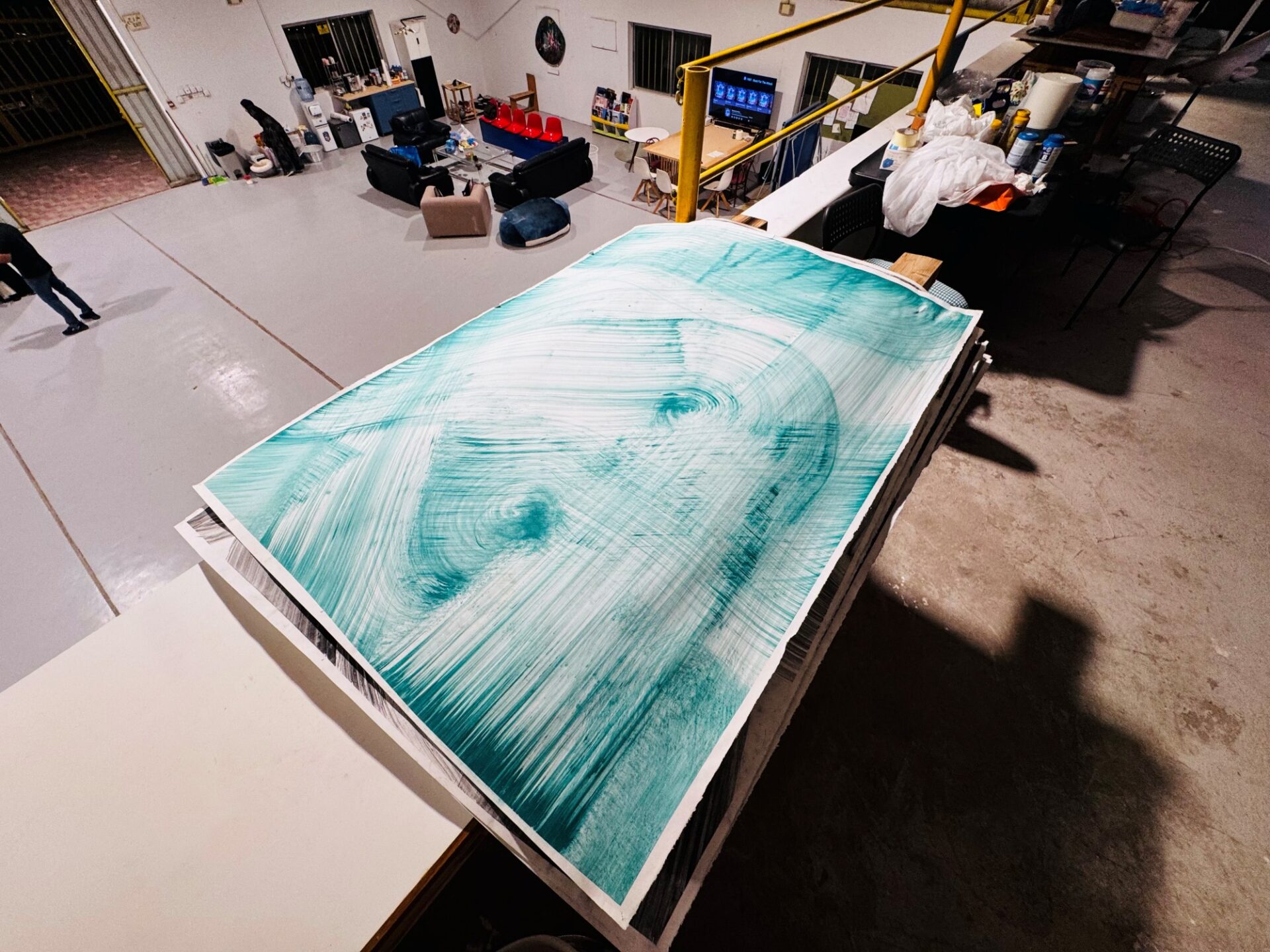
Each of the 12 artists/co-owners has a space allocated for them.
Qatar has an art ecosystem largely funded and nurtured by Qatar Museums. But while large institutions can kickstart a movement, to keep the spark going, private entities and more art galleries need to continue what has been started. This is the premise for the initiation of GubGub.
“Some of us started talking about finding a permanent solution for studio spaces as far back as 10 years ago, after the first cohort of the Fire Station Artist Residency Programme,” Sebastian explains.
What began as a recurring conversation among practitioners eventually turned into practical searches, old villas, commercial storefronts, abandoned buildings, and a steady accumulation of administrative know-how: grant applications, business plans, and learning the commercial normative in Qatar.
When a suitable space presented itself in Sanaiyya (the Industrial Area), the founding group gathered for coffee, messaged one another, and jumped into action. The arrival of Art Basel in town provided an extra push and a deadline to launch.
Sebastian frames GubGub in systemic terms: “We like to think of GubGub in an ecosystematic way, though I wouldn’t say Qatar has an art ecosystem yet, there are let’s say some big farms like Qatar Museums or VCU, and some isolated shrubs as in the galleries and the auction house, yet few little weeds are growing in the cracks or pollinators connecting it all, and that’s what we aspire to become; this is a very exciting moment and place to be at.”
Artist-Run Vs Institution-Led
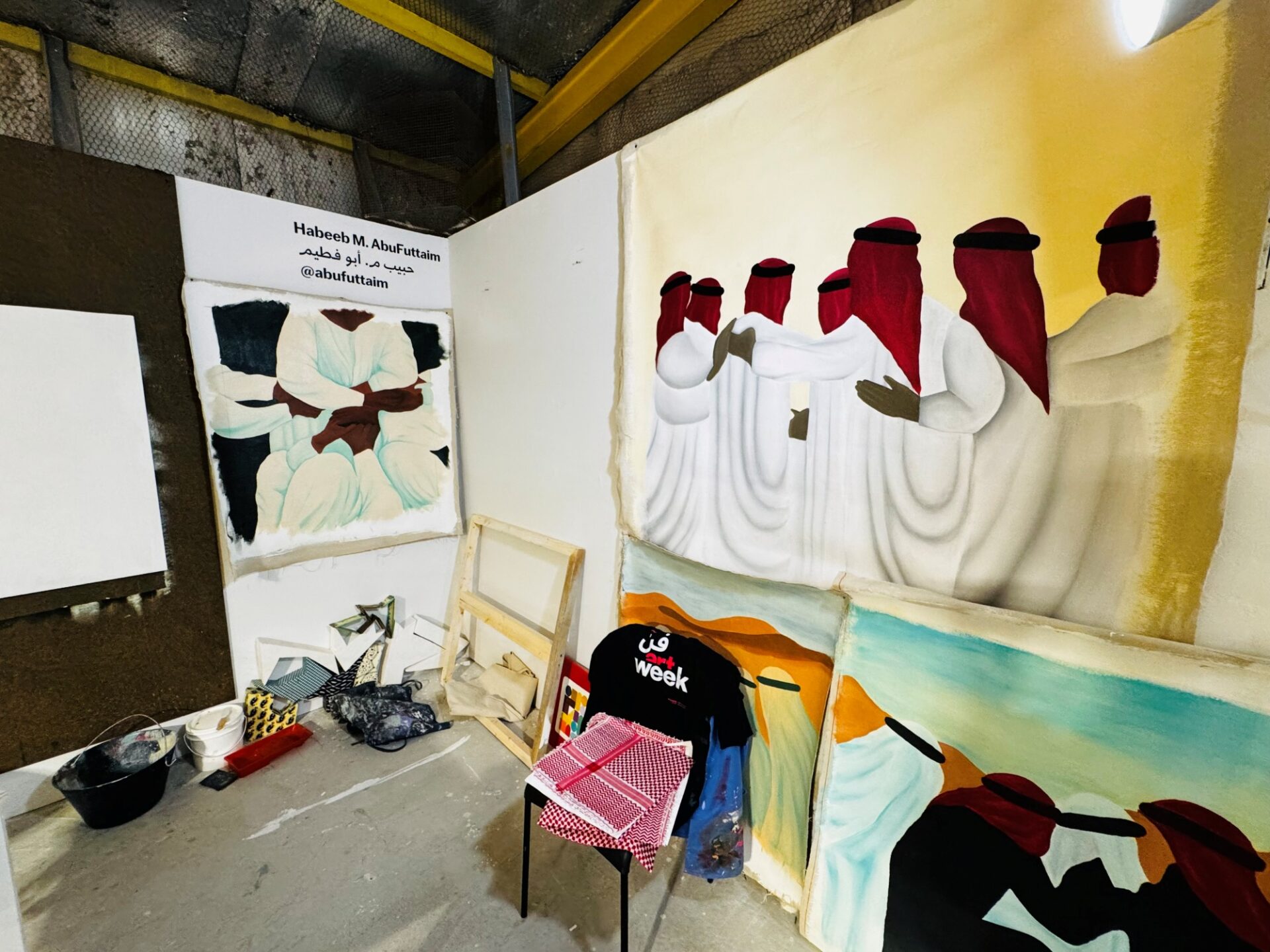
Habeeb’s workspace is already filling with artwork.
GubGub explores other forms of institutionality. Operating as a cooperative, it values horizontality, shared rights, and collective responsibility.
“Collaboration, collectivity, and crosspollination are at the core of our ethos,” Sebastian says.
Practically, it means the members juggle artistic practice with accounting, renovations, legal errands, marketing, cleaning, hiring contractors, and even feeding the studio’s stray cat.
The workload is relentless, updating the website and social media, liaising with institutions, peers and collaborators, hiring AC contractors, and on top of that, all figuring out the funding to keep the space running and developing their own artistic work. But the trade-off is a profound sense of ownership and agency that would be foreign under more hierarchical systems.
“We instead consider ourselves as another building block in the larger arts and culture infrastructure of the country and the region,” says Sebastian, “Though, we do operate under a cooperative model where rights, roles, and responsibilities stem from a place of equity and personal interest, this generates a sense of horizontality, agency, and ownership that is foreign to more hierarchical models.”
Place and Identity: The Industrial Area
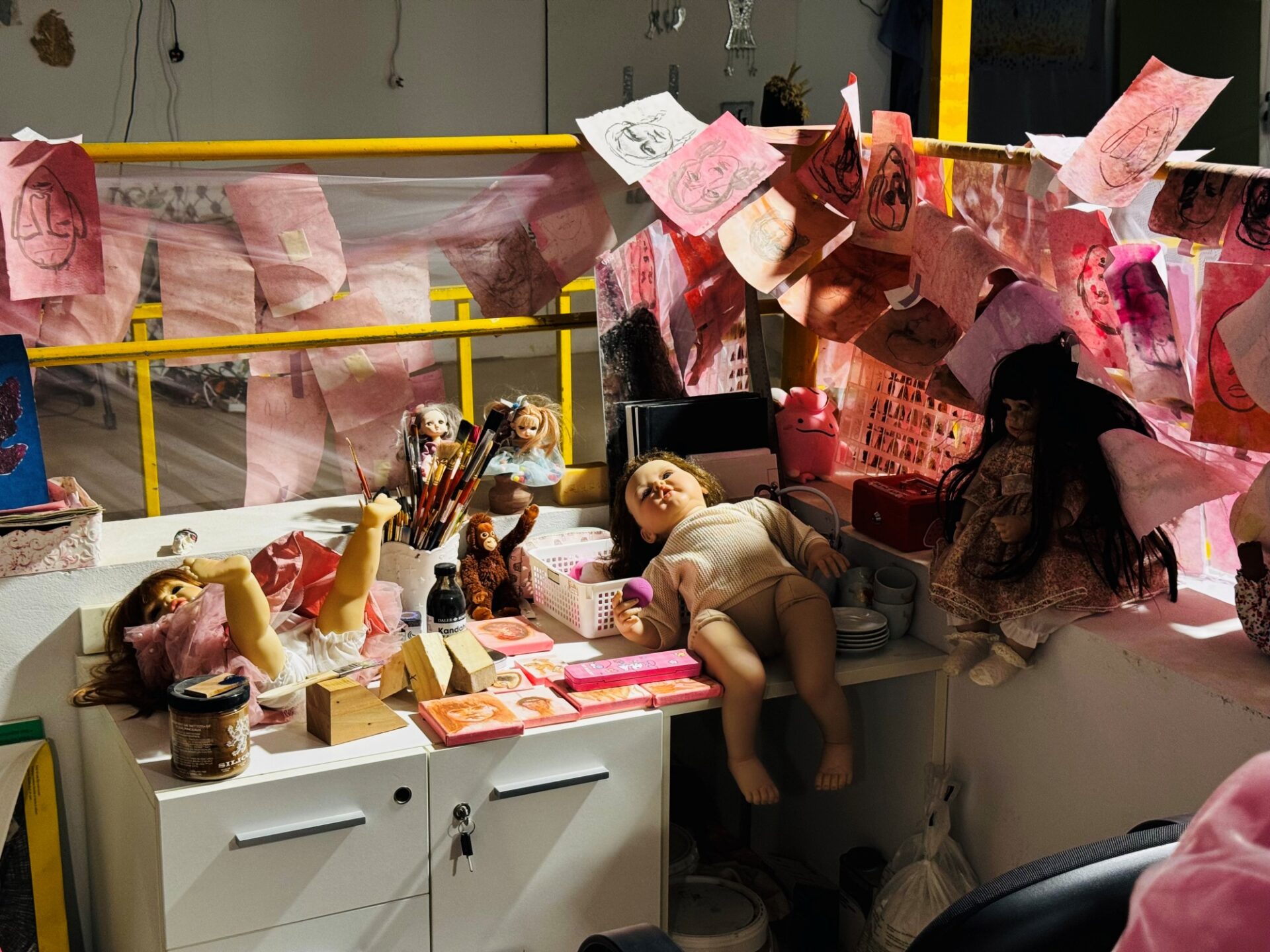
Some parts of the Studios are a working/experimenting area for the artist.
The GubGub team believes that being in the Industrial Area is both practical and catalytic.
The generous physical volumes and immediate access to industrial expertise and materials enable large-scale projects and material experimentation that would be hard to attempt elsewhere.
“The neighbours, long-established tradespeople and second-hand vendors, have proven unexpectedly generous: lending scaffolding, offering tools, and gifting furniture. This hints at a symbiotic future. “
Does GubGub give the Industrial Area a new identity?
“I don’t believe there is a need for ‘regeneration’, yet with the small and medium industries leaving this part of Sanaiyya [Industrial Area], an occupancy void has appeared, and the land-use is certainly changing, but as it is, the place already has a lot to offer,” stresses Sebastian.
“I see ourselves more as a possible lifeline for landlords, technicians, and craftsmen; a path to offer the neighbourhood a transition into different markets, capitalising on their crafts and experience. With the right policies, our area has the potential to develop a strong creative economy. Doha already has an event infrastructure and a viable market for galleries, art and design fabrication, AV production, specialised printing, handling, logistics, etc., is not far-fetched.”
Professional Growth and International Exposure
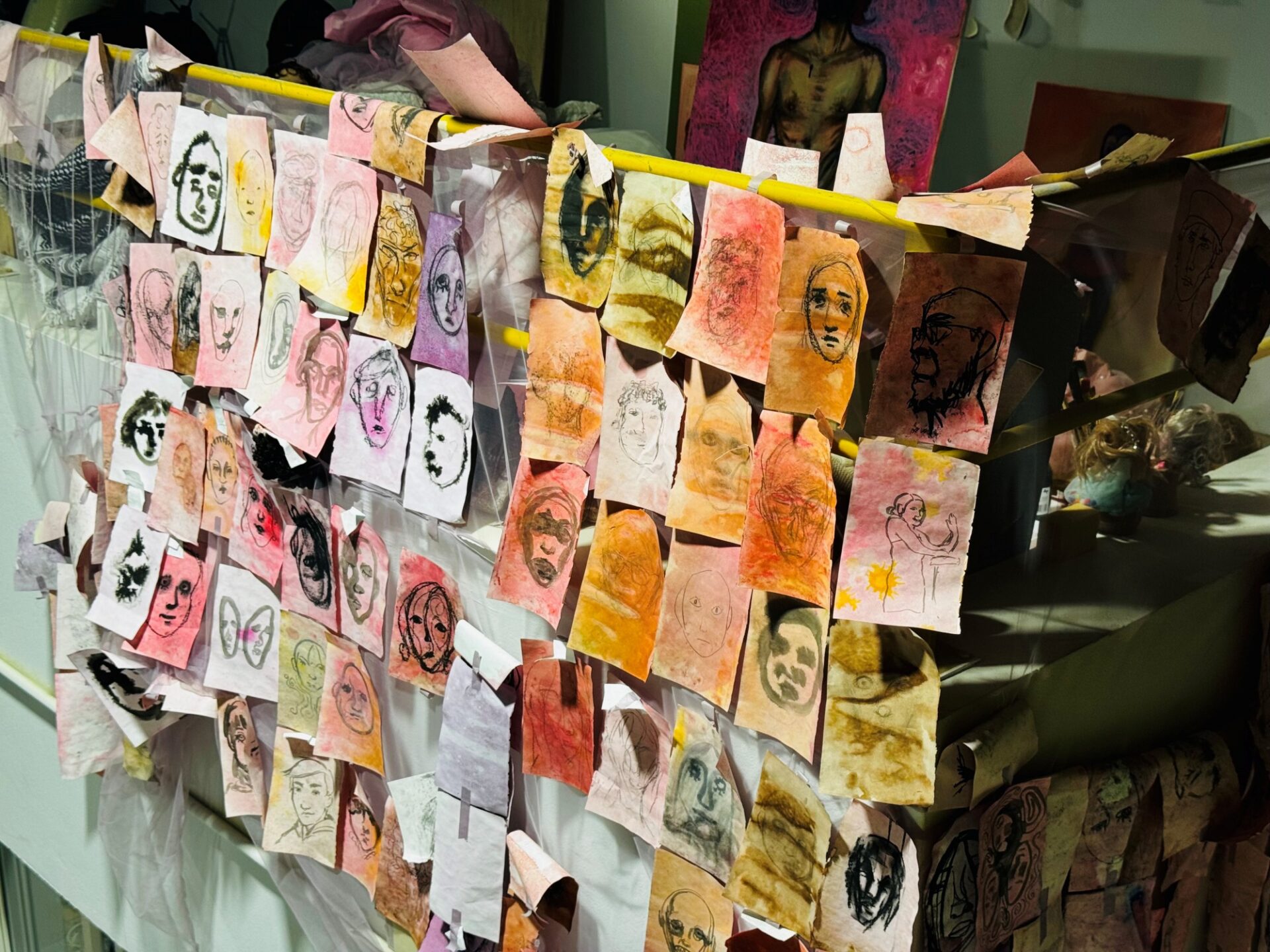
Chaos and artwork in progress.
GubGub’s ambitions extend beyond studio rent. From the outset, the space has acted as a platform to connect artists with international collectors, gallerists, and curators, facilitating first sales, exhibition conversations, and residency opportunities. A roster of mentors and advisors supports members with career guidance, advocacy, and critical feedback. Equally meaningful are the horizontal peer exchanges inside the studio: crit sessions, collaborative projects, and shared experimentation that push members to envision long-term trajectories for their work.
“I doubt developing a career, building community, generating cultural impact, or achieving sustainability are possible in isolation; these enable one another, especially when it comes to creative pursuits. I see such results as by-products of constant practices and a shared experience. GubGub Studios is the result of synergies, dialogue, trial and error, longing for community, and a steadfast belief in art as a tool to imagine and build futures that are our own. As the artist Abraham Cruzvillegas expressed to us during his visit, the mere existence of GubGub Studios is already a huge success.”
The cooperative model has also allowed GubGub to pilot a pragmatic approach to sustainability. For now, members self-fund the space with moderate individual shares, and contingency mechanisms should a member face financial hardship. Plans include diversifying income through international grants, venue rentals, private sponsorship, commercial activities, and programming such as residences, workshops, film screenings, and publications, both impact-generating and revenue-driving.
In short, their model for long-term sustainability is “Stubbornness and poise!”
Culture of Critique and Mentorship
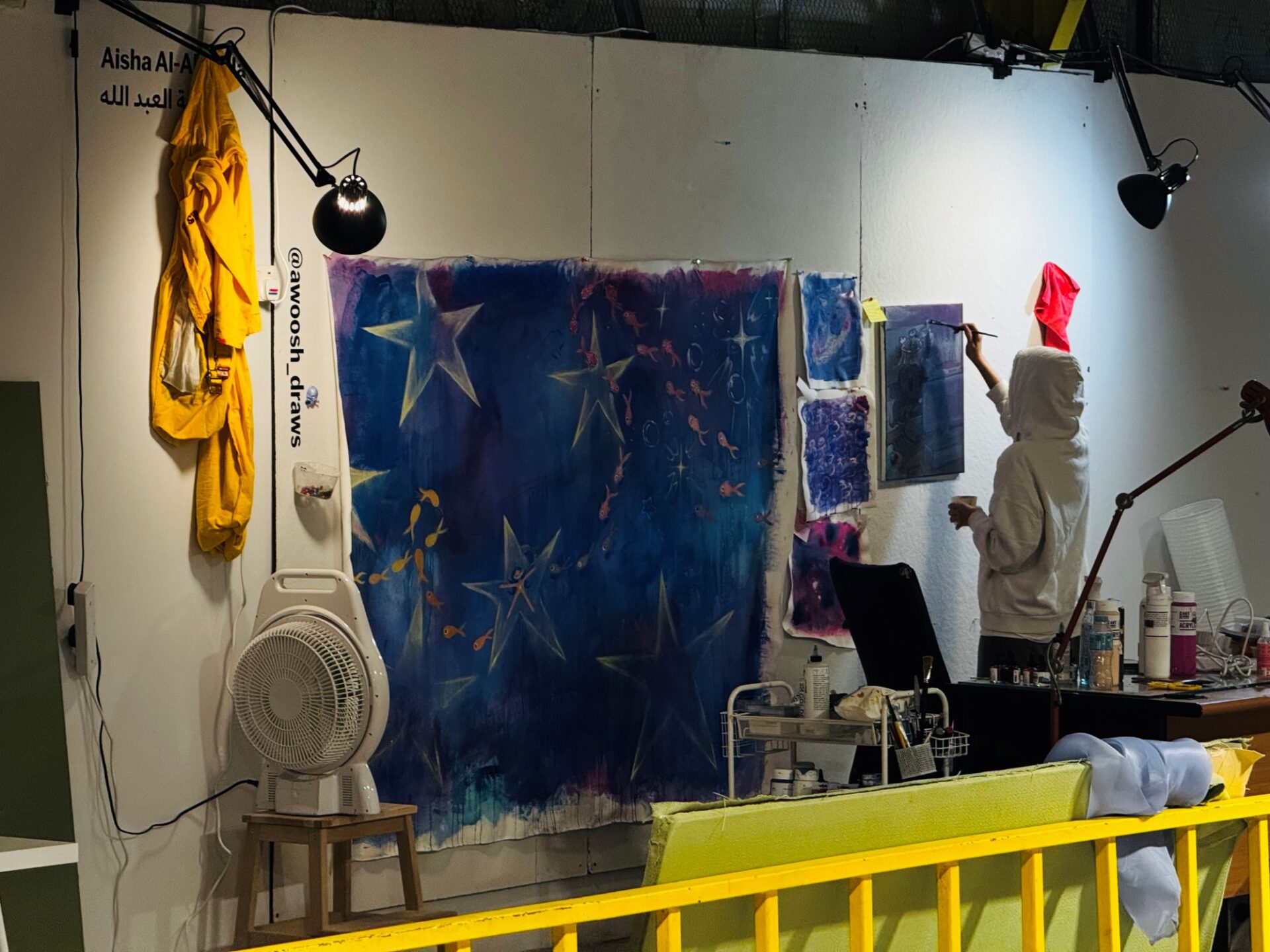
Artist corner in GubGub.
Building a culture of critique and mentorship is a specific priority. In Doha’s relatively nascent scene, structured critique is scarce; GubGub aims to normalise both formal mentorship and casual peer feedback while remaining attentive to power dynamics and the need for safe, exploratory environments. “Artistic development often goes hand in hand with experimentation, exploring dead ends, and risk-taking,” Sebastian says.
Operating an artist-run space brings inevitable frictions. Differences in communication styles, personality clashes, and the intimate pressures of shared space have produced challenging moments and difficult conversations. But there is a steadfast belief in art and a mutual trust that seems to bind the group together.
“There have been frictions when it comes to peer exchange, and we expected it; the differing styles of communication, diverse sensibilities, worldviews and travelled paths, long working sessions, and the overstimulation of sharing a space [for many a first]. These, summed to the deeply personal endeavour of art-making, have led to challenging moments and difficult conversations, but also to building upon the lessons learned. We see GubGub Studios as the result of synergies, dialogue, trial and error, longing for community, and a steadfast belief in art as a tool to imagine and build futures that are our own,” stressed Sebastian.
Not Always Cool
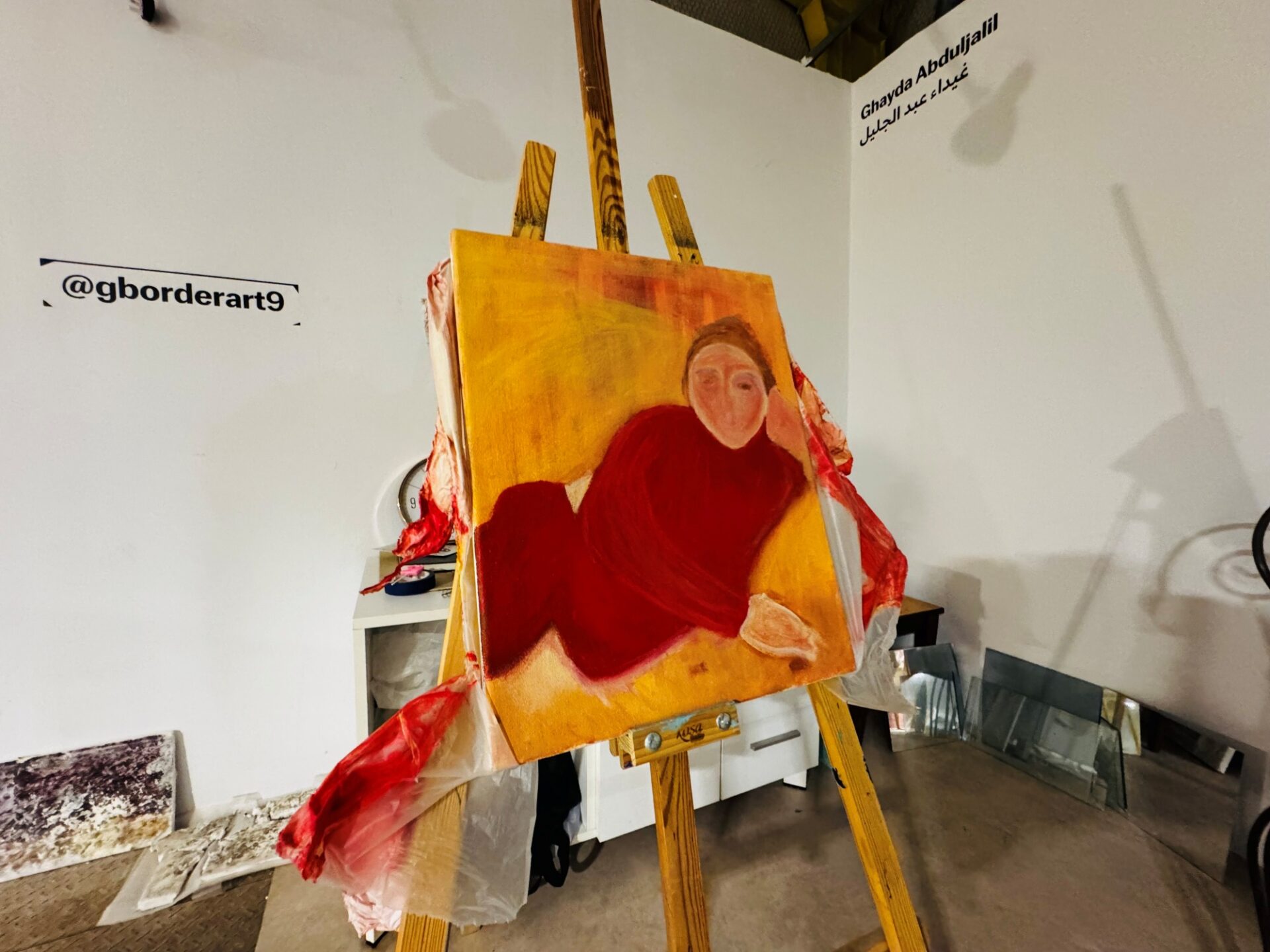
Ghayda’s corner.
Small surprises underscore the studio’s character: contractors become regular tea companions and occasional material advisors; the neighbourhood nut vendor supplies the best snacks; Silver, the studio’s squatter cat, is the most likely overnight guest.
Some unexpected challenges have also kept the group on its feet. “Sharing responsibilities in a way that feels fair and balanced has been a learning curve, though we have understood that it is not about an exact division of tasks but a matter of sharing what each of us is good at, while also maintaining clear communication in a kind and constructive way.”
“Cooling the space has also proven to be unexpectedly expensive. It’s been a lot of researching, brainstorming, and quoting options to keep the space fresh and running over the summer. We are still pondering costs and figuring out a viable strategy, but the clock is ticking. We expect to sort things out in the next month or so; luckily, this year the weather has been rather lovely.”
Even with such persisting practical challenges, the energy inside the studio keeps members optimistic.
Looking Ahead
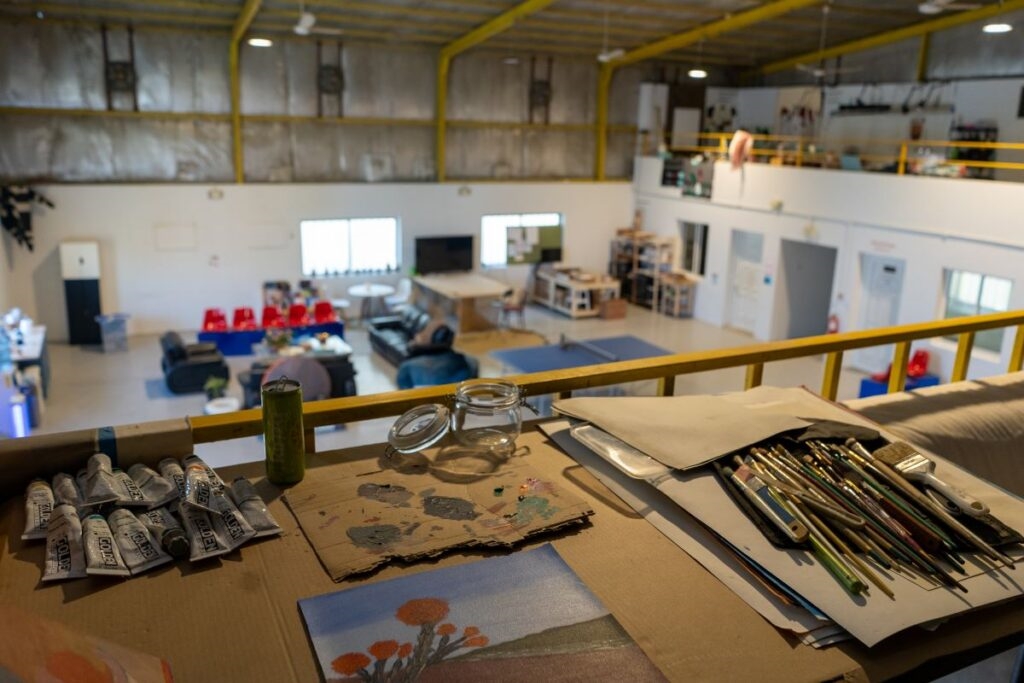 If a young artist steps into GubGub for the first time, the hope is simple and generous: that they feel welcomed and see art as a viable way to make it. In a city where official cultural infrastructures dominate, GubGub offers an alternative blueprint, one that is cooperative and rooted in place. Its founders are already sharing that blueprint with fellow creatives across the Gulf, hoping to seed similar initiatives that respect local contexts and sustain creative futures.
As to where the team sees GubGub in five years, most of them share the same opinion: mostly in the same location but with a load of programs to support the country’s art fraternity, making a bigger impact, while having fine-tuned a model for financial self- sustainability.
CHITCHAT
GubGub in one word? The Gang.
Messiest corners? Aisha’s (cute messy), Salha’s (creepy messy), Hanna’s (mad scientist messy).
Start the day with? Karak.
Unexpected find? Us — here in the Industrial Area.
If the space were an artwork? Between Abstract Expressionism and a Turkish telenovela.
Most likely to stay overnight? Silver the cat, Habeeb, and Yousef.
Best snacks? The neighbourhood nut vendor.
Who’s always late? Most of us (except Guillaume).
Finish this sentence: “Art is…” What we do all day, even if it isn’t.
What keeps you awake: Karak and doom scroll.