A Pavilion Rooted in Ecology: Aranyani
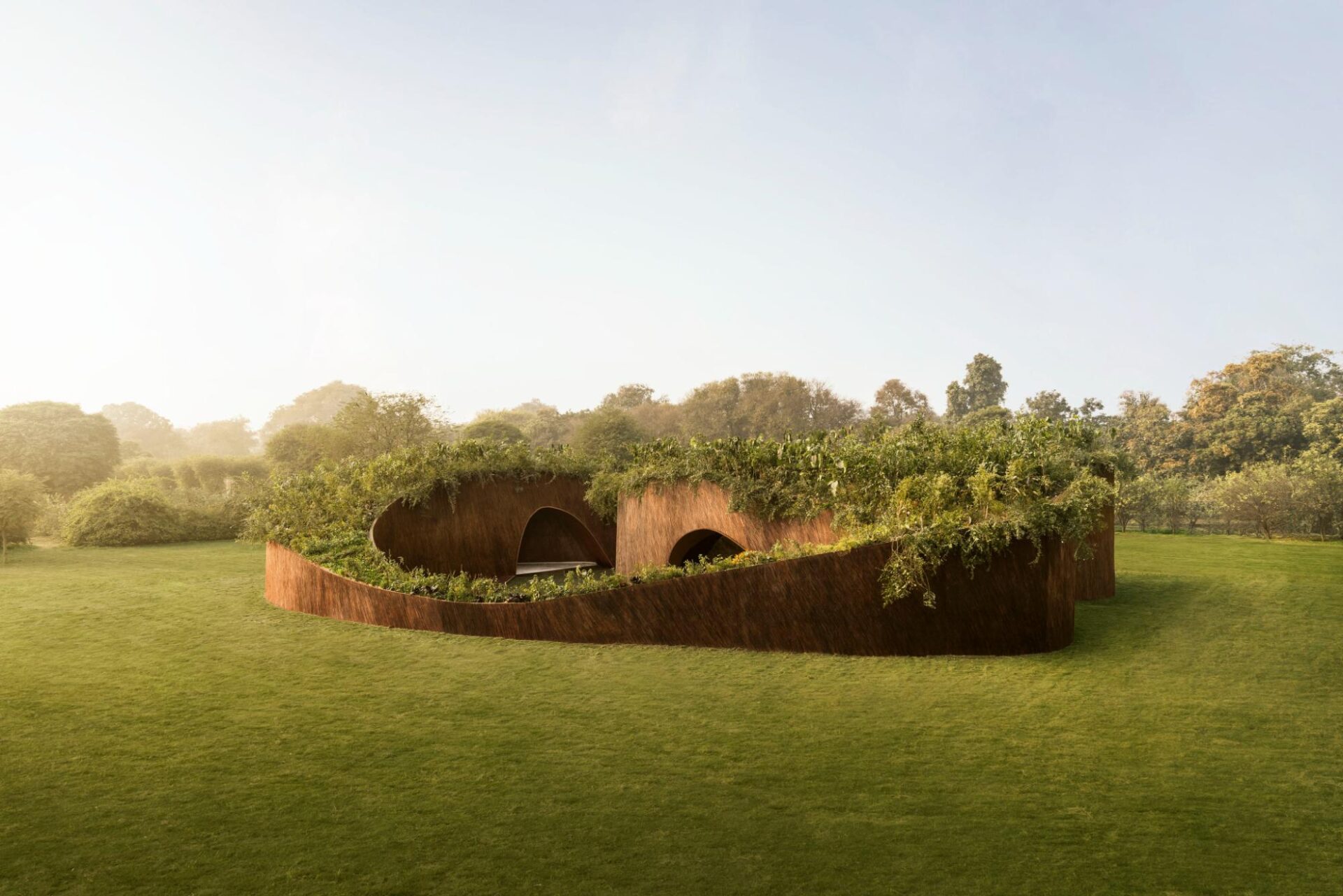
Sacred Nature, the first Aranyani Pavilion in New Delhi, explores ecology, memory and restoration through its design. The pavilion, commissioned by Aranyani and designed by London-based Cypriot-Colombian practice T__M.space, is a structure that occupies a 600-square-metre site within Sunder Nursery, in New Delhi with a built footprint of 200 square metres. By Aishwarya Kulkarni
 The Aranyani Pavilion, completed in February 2026, marks the organisation’s first architectural commission and establishes a platform for ecological research and dialogue within the built environment.
Aranyani, founded by conservation scientist and creative director Tara Lal, works across land and marine restoration, ecological storytelling and sustainable design. Named after the forest deity from the Rigveda, the pavilion draws conceptually from sacred groves, ancient community-protected forest sanctuaries that functioned as biodiversity reserves long before formal conservation laws.
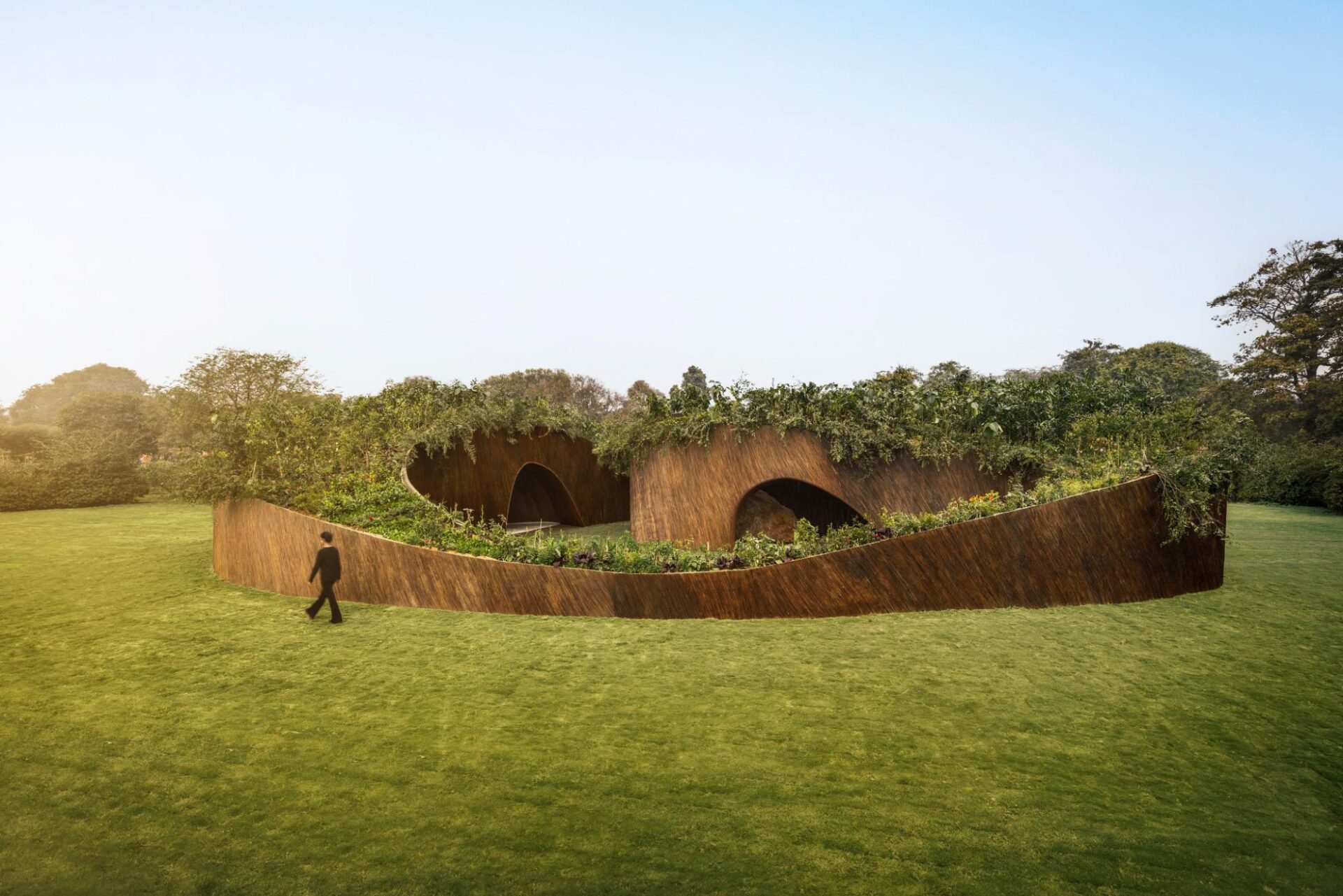 Situated within Sunder Nursery, once known as Azim Bagh or “great garden,” established in the early 20th century for the new Indian capital and restored since 2007 by the Aga Khan Trust for Culture, the pavilion sits within a landscape already layered with ecological and colonial histories. Against this backdrop, Sacred Nature gestures toward renewal of ecosystems, of indigenous knowledge systems and of the human relationship to land.
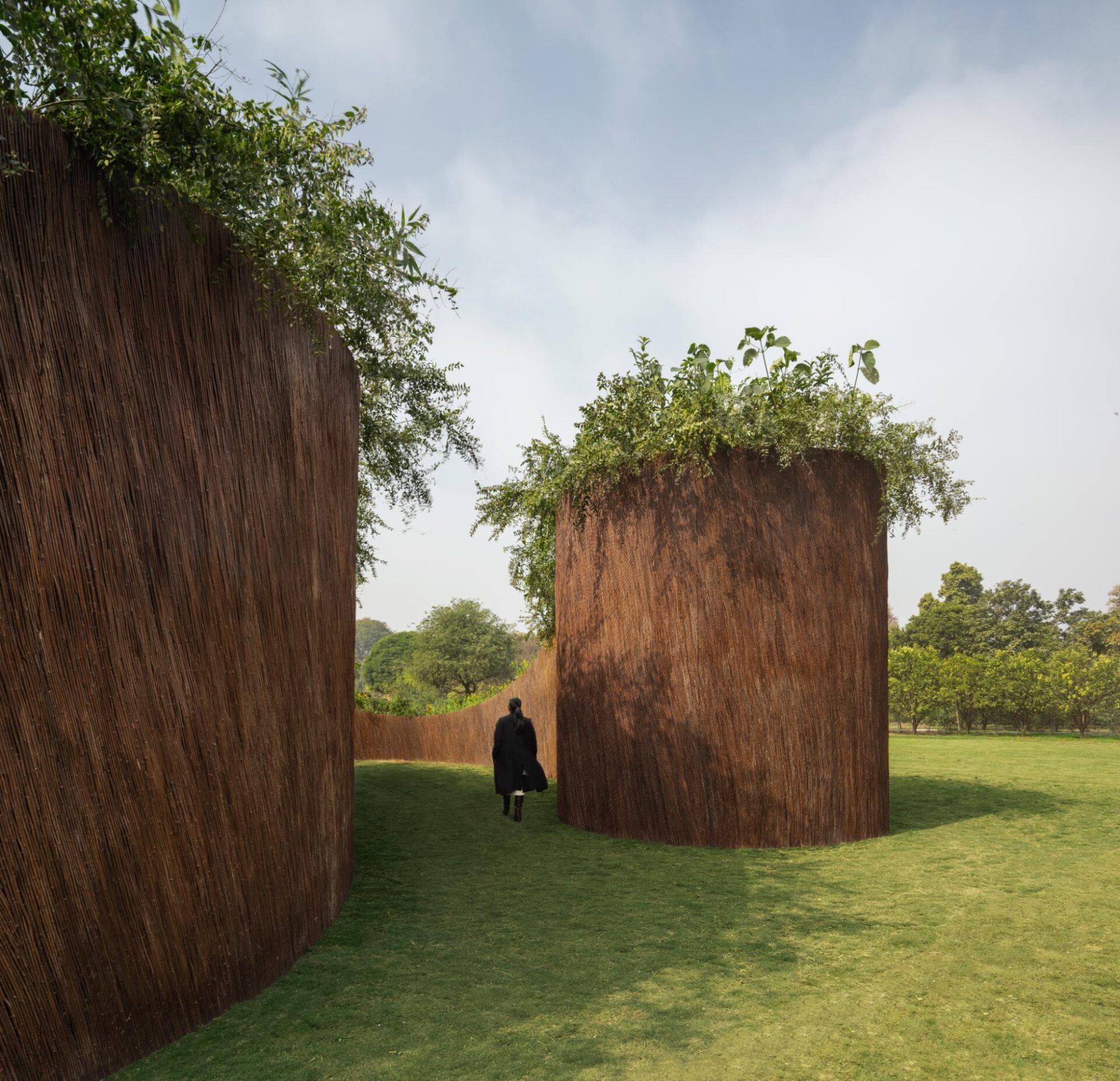 Beyond the architectural authorship of T__M.space, the pavilion’s realisation involved multiple collaborators. Guillaume Lecacheux, director of The Works, oversaw the technical realisation of the structure, ensuring that the complex geometry and material layering were executed with precision. They also had the help of Ekarth Studio for the bamboo structure.
 In a conversation with Aishwarya Kulkarni, architects Tanil Raif and Mario Serrano Puche of T__M.space reflects on the making of the Aranyani pavilion.
SCALE: Sacred Nature draws from the spatial logic of sacred groves. How did this influence the architectural language?
Tanil: We were interested in the idea of sacred groves as community-protected landscapes, spaces that were preserved through belief and collective responsibility rather than regulation. That became a strong spatial reference for us. Instead of designing a pavilion as an object, we approached it as a journey.
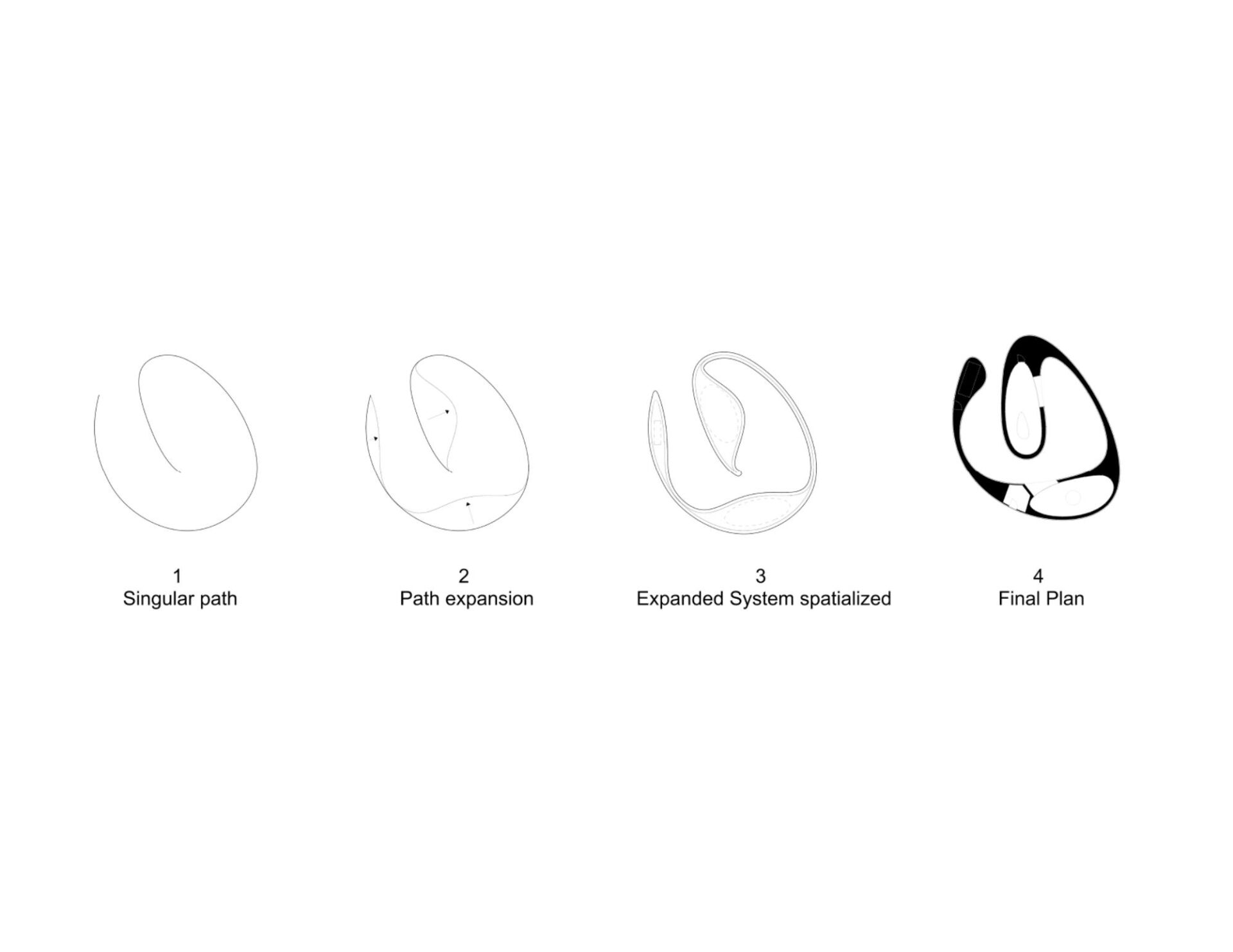
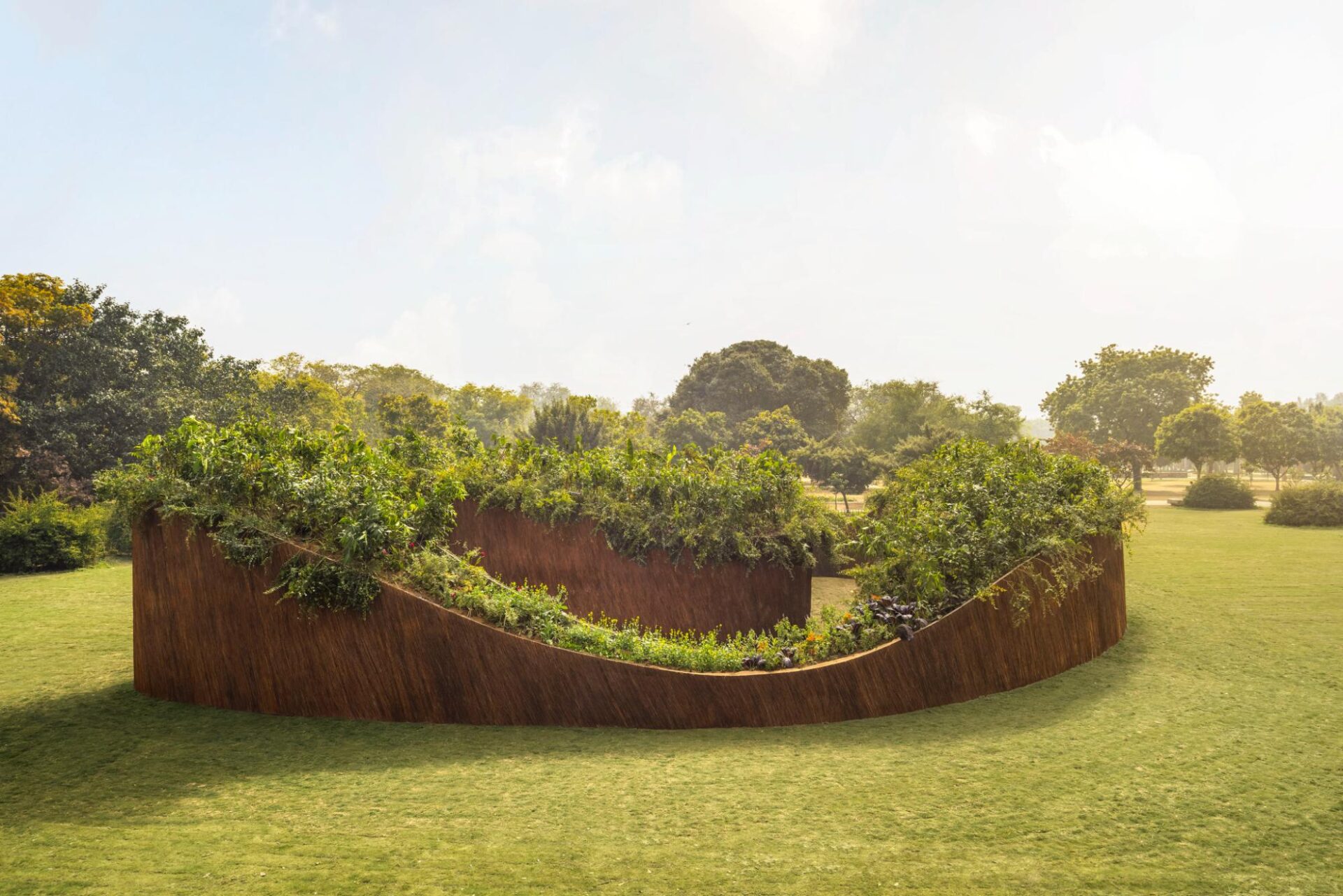
The spiral became the organising principle. It allowed us to create a continuous movement that gradually guides visitors inward. The geometry isn’t arbitrary, but it’s intentional, drawing from principles of sacred geometry and ritual movement. As you walk, the space unfolds slowly. You don’t see everything at once. There’s a choreography of light, shadow and texture that shifts as you move.
 SCALE: The spiral culminates in a central chamber. Could you speak about the stone monolith at its core?
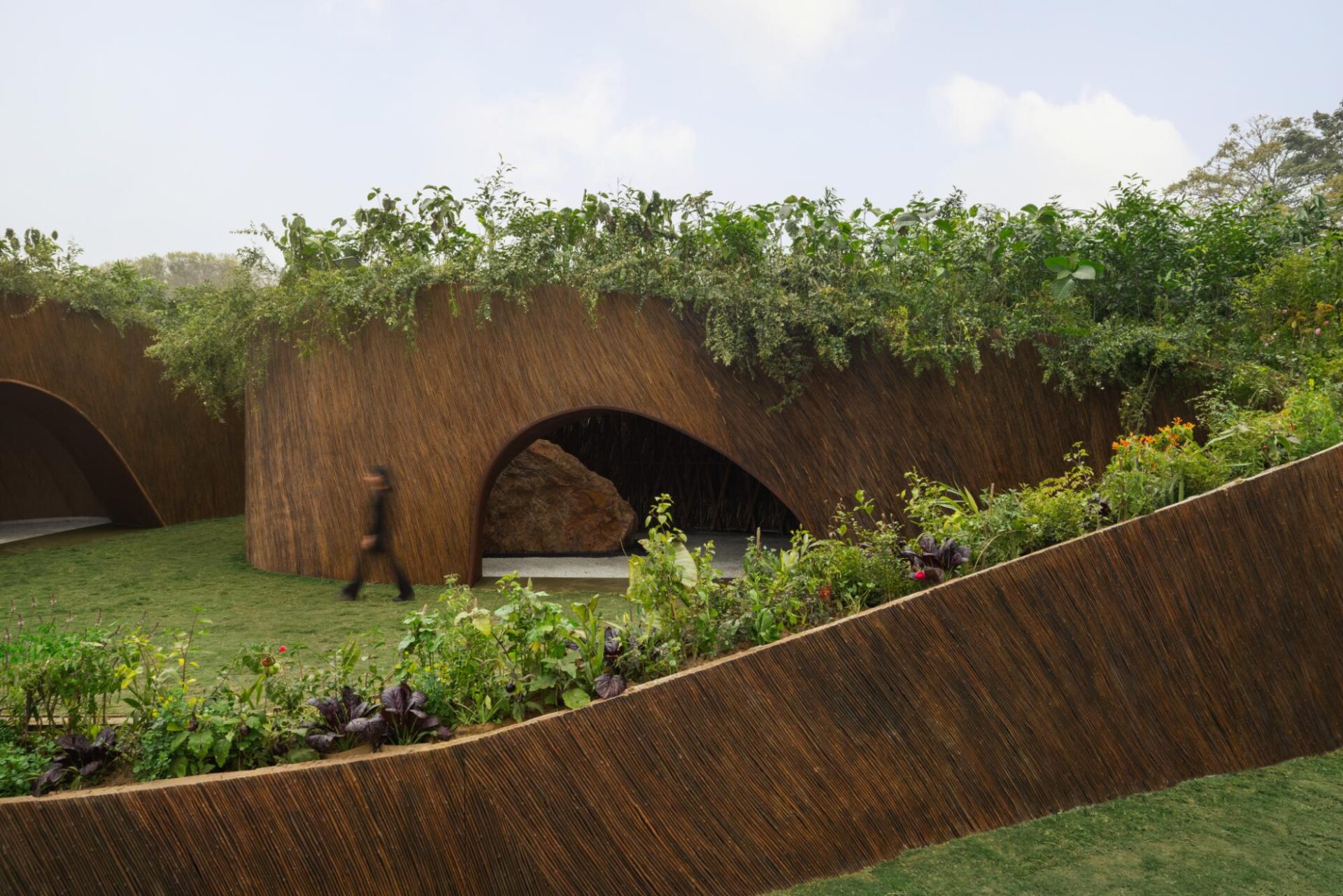
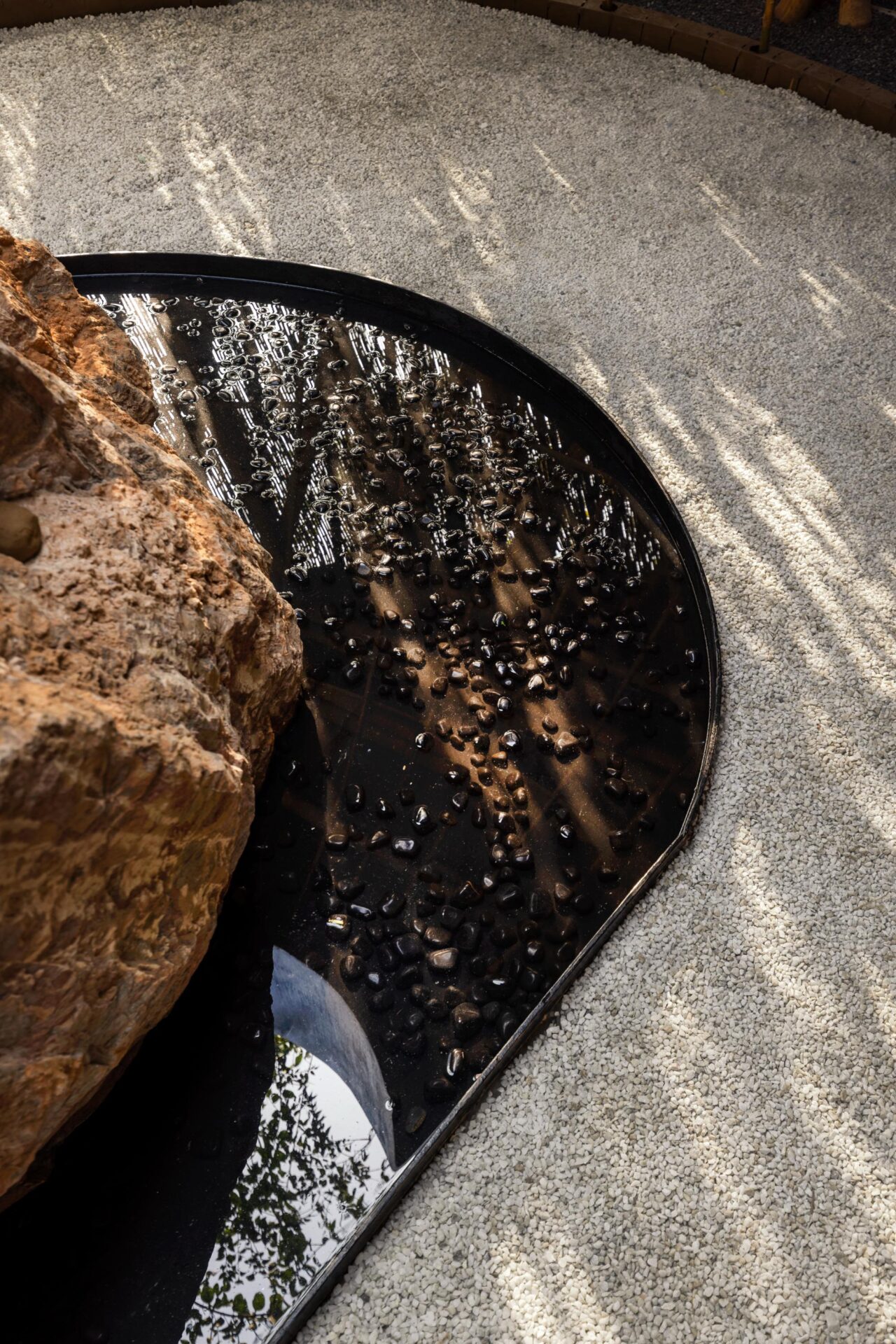
Mario: The monolith is the anchor of the pavilion. It weighs nearly four tonnes and is made from stone offcuts that were sustainably sourced from Rajasthan. Using reclaimed stone was important to us, not only from a sustainability standpoint, but conceptually. It carries history within it.
At the centre of the pavilion, as envisioned by Tara, the stone sits in an oval-shaped room beneath a precisely placed opening in the canopy. That opening creates a vertical connection between earth and sky. A local artisan also engraved markings along the surface of the monolith to reinforce its symbolic presence. It functions almost like a sanctum, a quiet centre that the entire spiral path leads toward.
 SCALE: How did you choreograph the movement to orchestrate that experience?
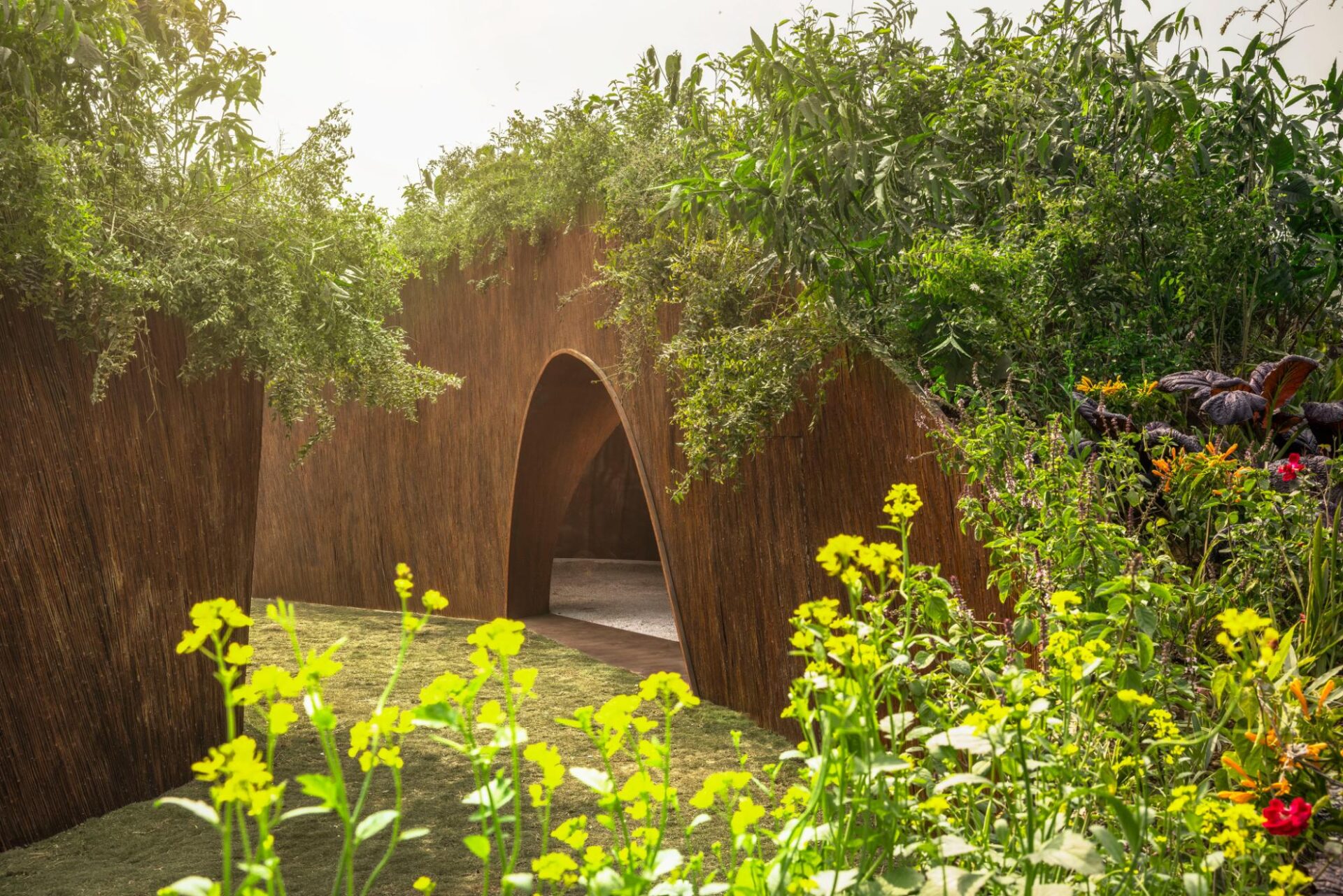
Tanil: We wanted the pavilion to feel fluid, almost like walking through a forest. The path is continuous; there are no abrupt transitions. Instead, you experience a sequence of open and semi-open spaces that evoke canopy conditions and forest clearings. The roofline rises and falls as it spirals, and carefully positioned openings and skylights allow light to filter in.
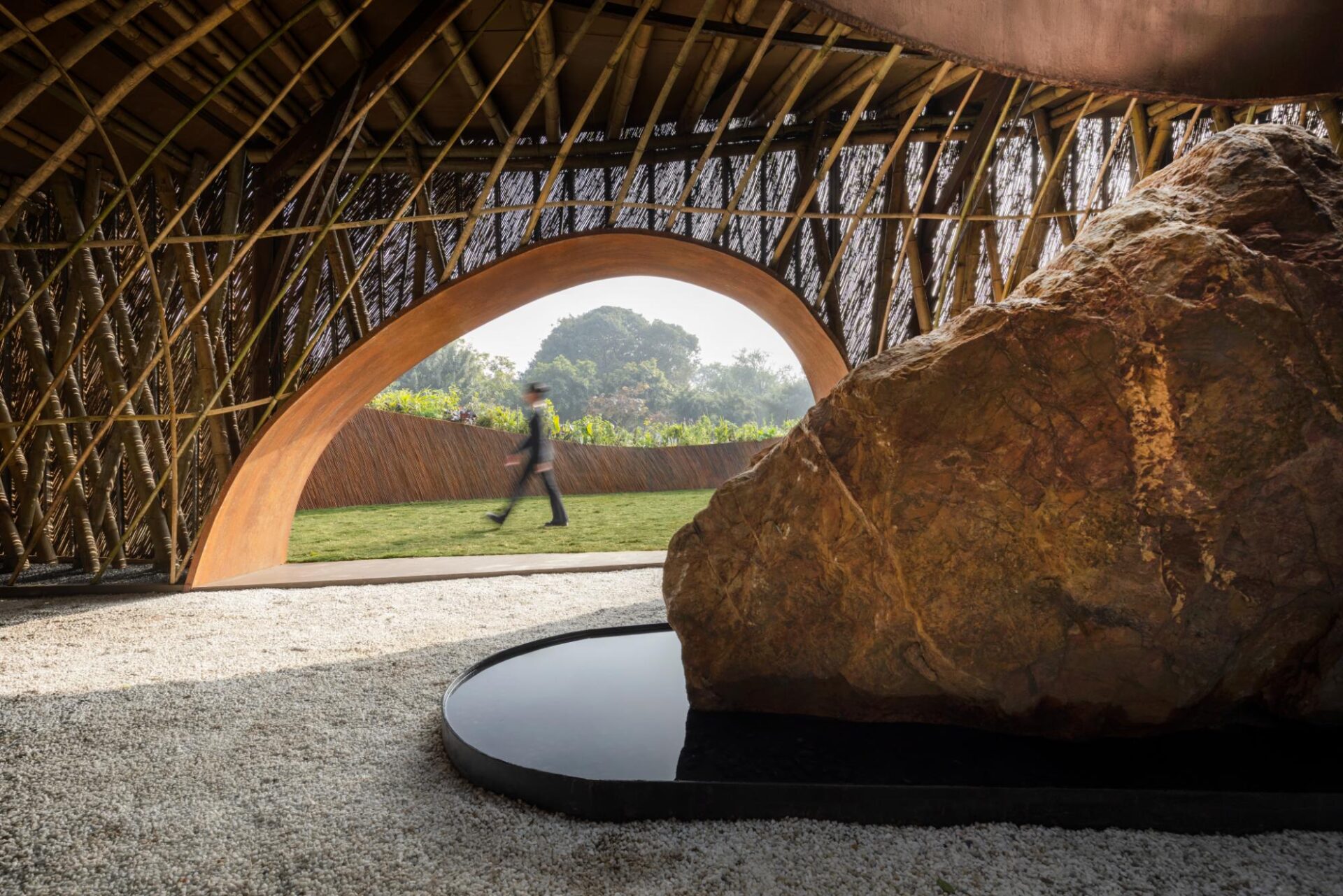 These subtle shifts in height and illumination create a sensory progression. The architecture encourages you to look inward as you move, rather than simply passing through.
SCALE: How did you develop the material palette for Aranyani Pavilion?
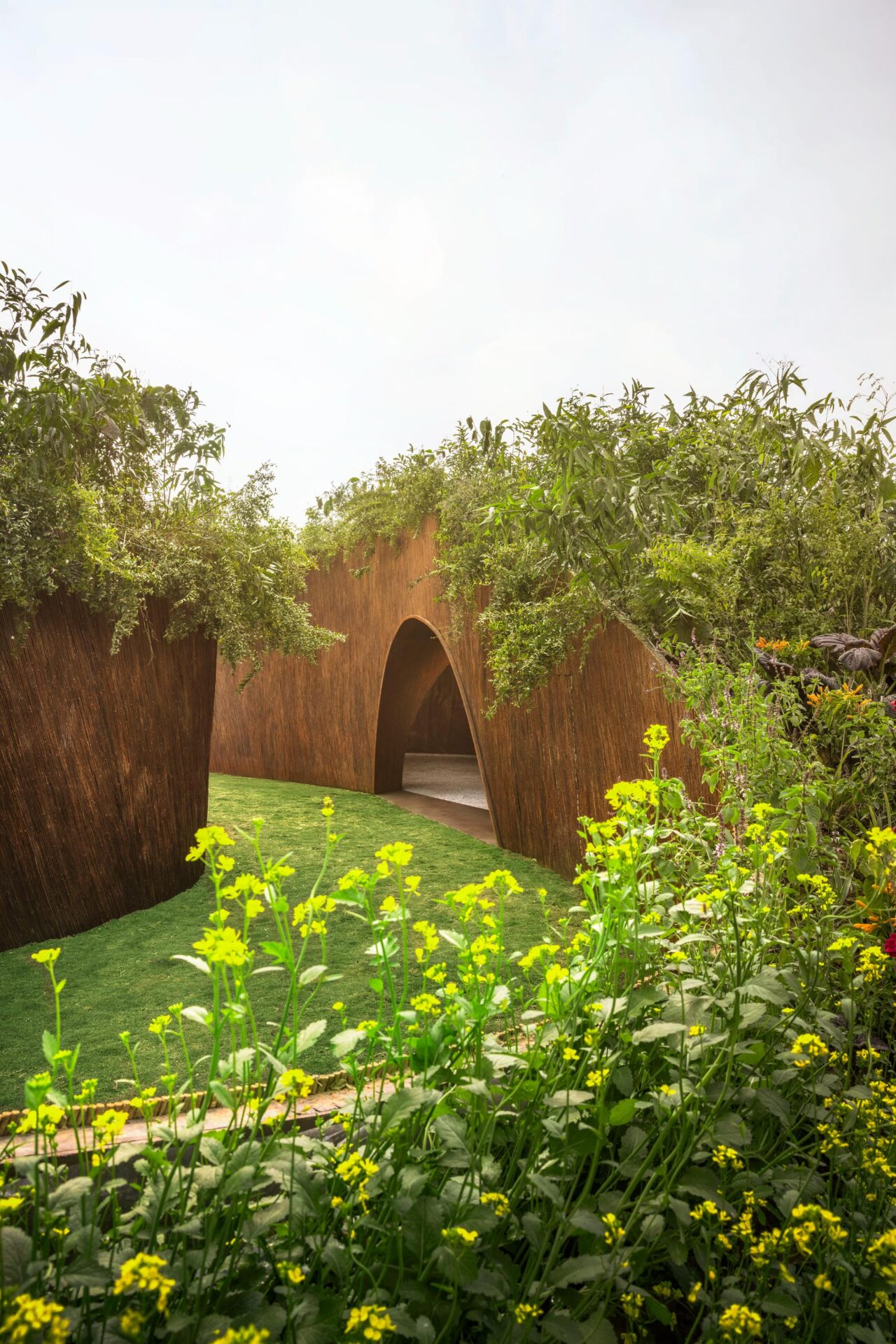 Mario: Materiality was absolutely central. The foundation consists of mild steel frames, providing structural clarity and allowing for precision in assembly. Above that, we constructed a bamboo framework, integrating jute and plywood elements to add warmth and texture.
The outer shell is clad in lantana wood, formed into a lattice. Lantana camara is an invasive shrub introduced to India in the 1800s by colonial powers, and it now threatens a significant portion of the country’s forest ecosystems. By using it as a building material, we wanted to engage directly with that ecological reality, transforming something destructive into something constructive.
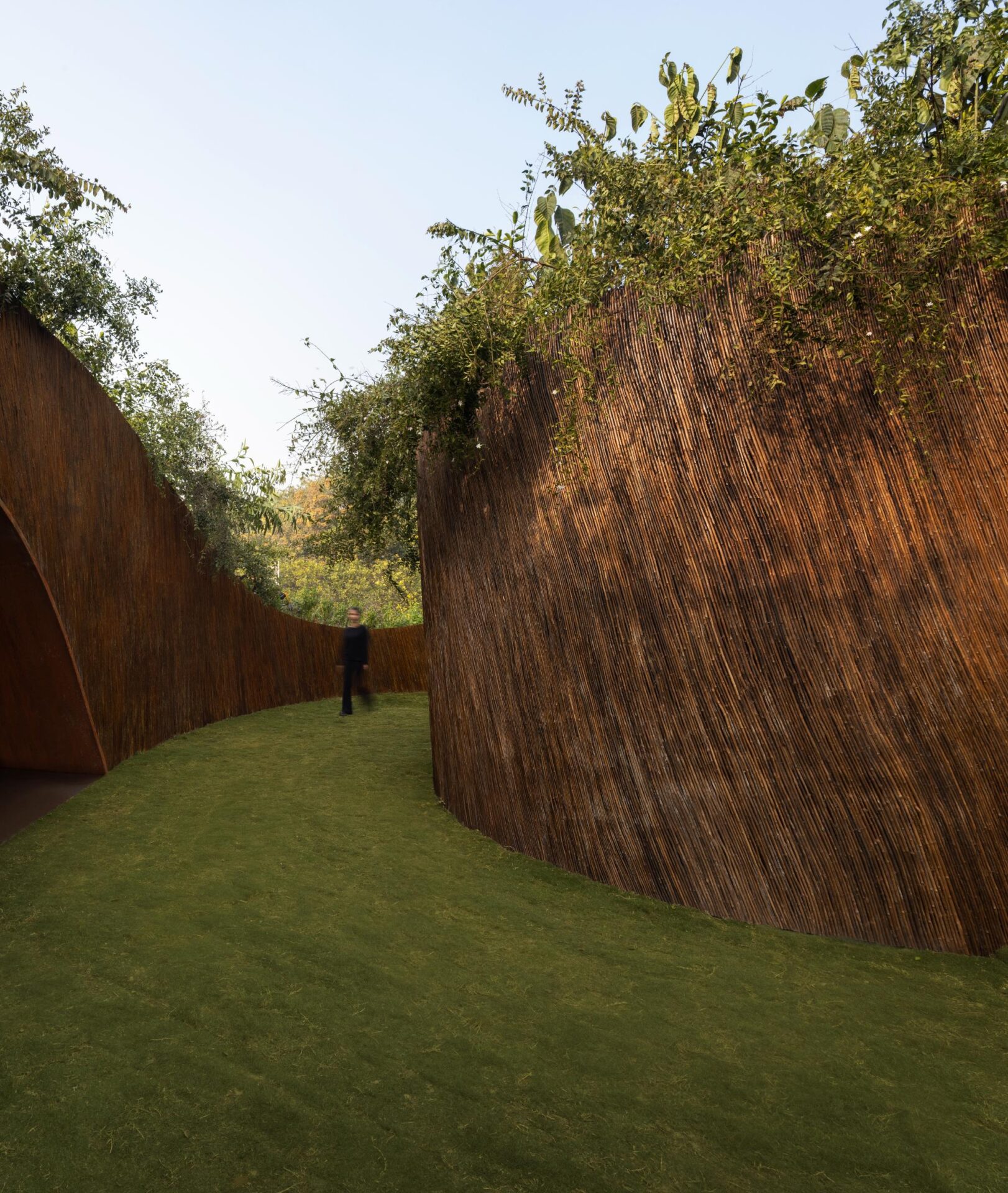 The contrast between the lantana structure and the indigenous plant species on the roof is intentional. It foregrounds the possibility that what has overtaken or damaged a landscape can be reworked into a regenerative narrative.
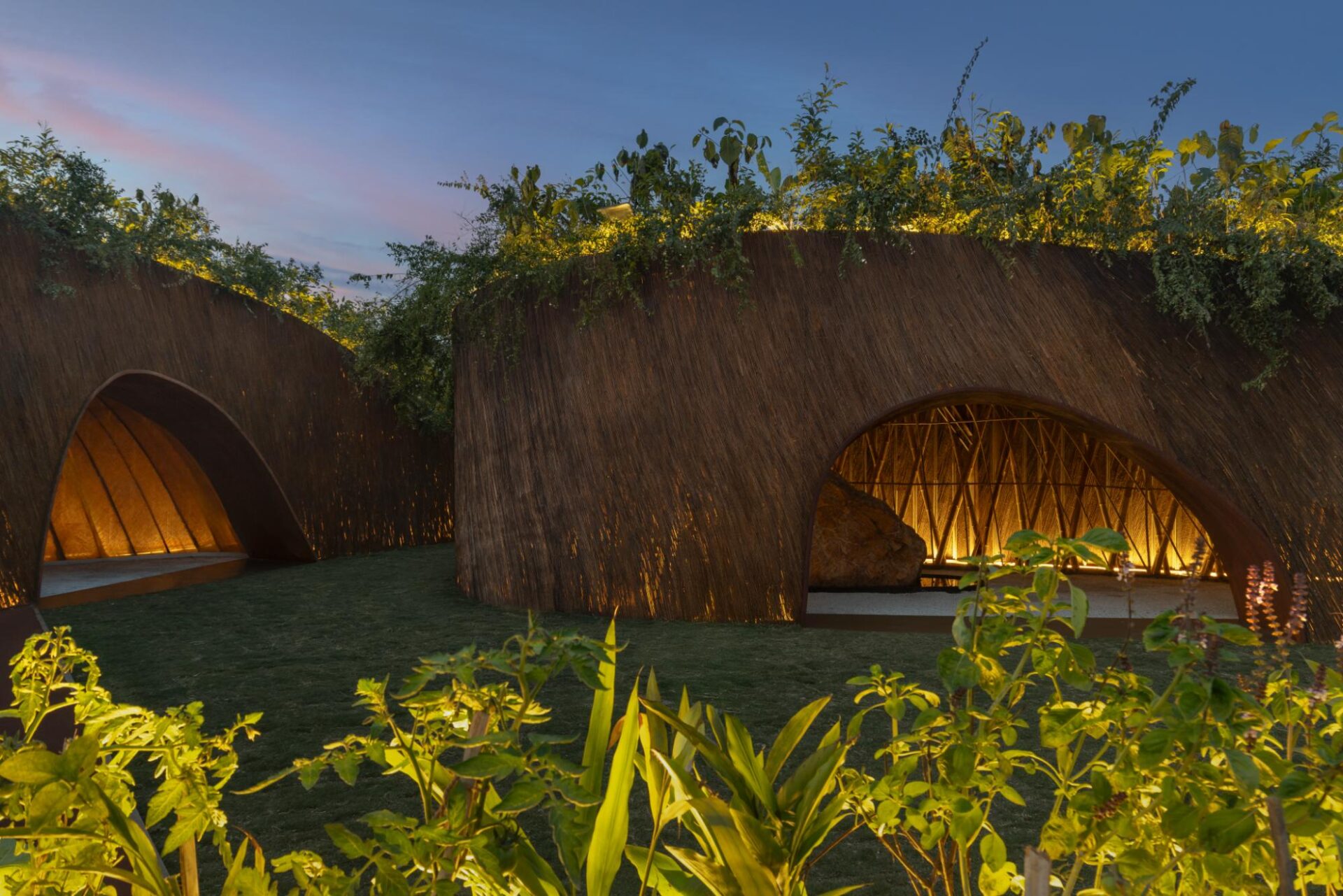 SCALE: How does the planted roof operate within the project?
Tanil: The roof is conceived as a living canopy. It includes over 40 native plant species, edible, medicinal and culturally significant varieties such as jasmine, neem, tulsi, tomatoes and small root vegetables.
The roofline undulates in response to the spiral below, rising and falling to create a dynamic section. It’s not decorative; it’s integrated into the spatial experience. The plants change over time, so the pavilion evolves seasonally. That sense of change and growth was important to us.
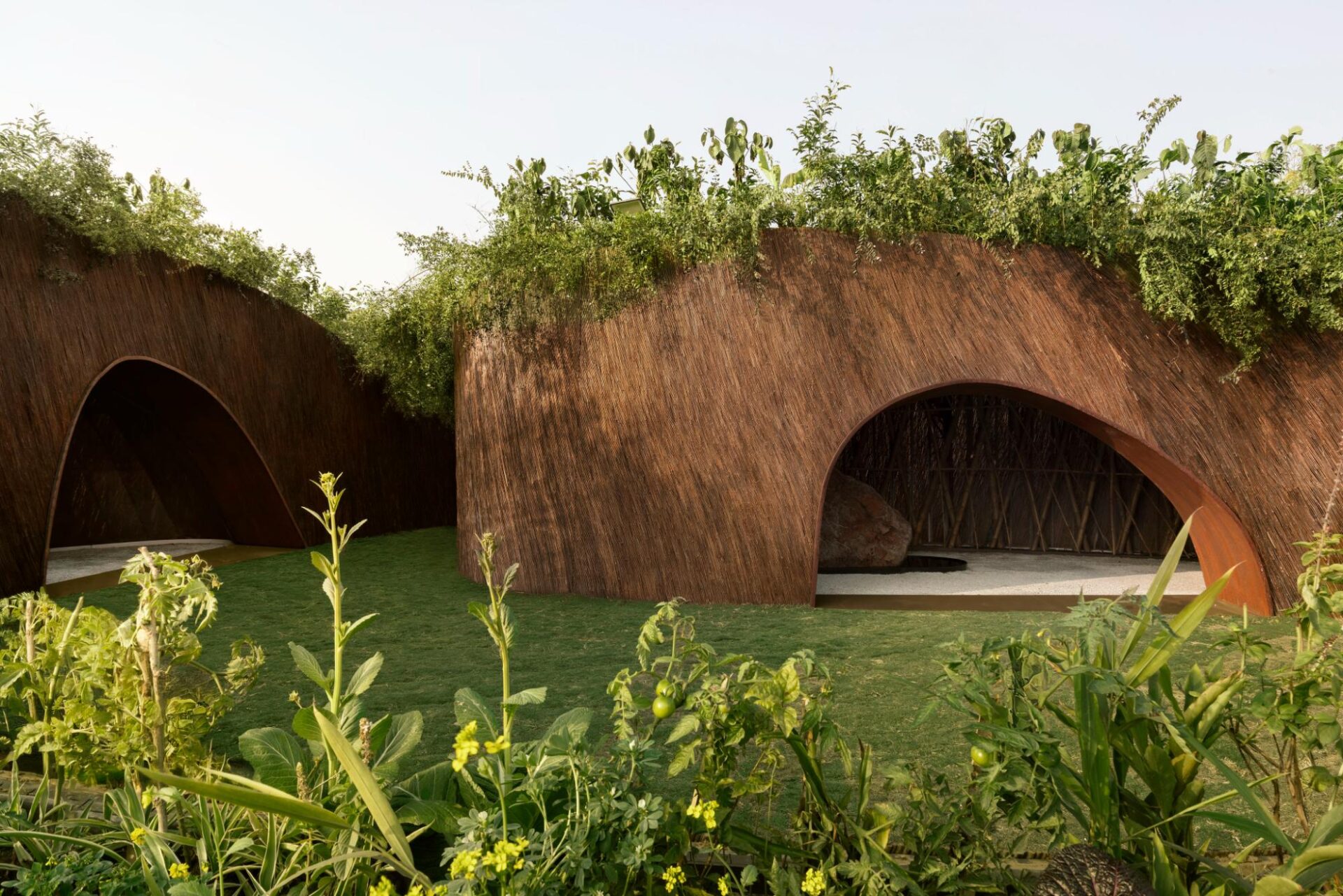 Mild steel provides structural reversibility, bamboo, jute and plywood introduce tactility and warmth, lantana wood reframes an invasive species as a constructive resource, and the roof canopy restores indigenous plant presence within an urban setting. The deliberate juxtaposition between invasive and native species reinforces Aranyani Pavilion’s broader commitment to ecological repair and decolonising landscapes through design.
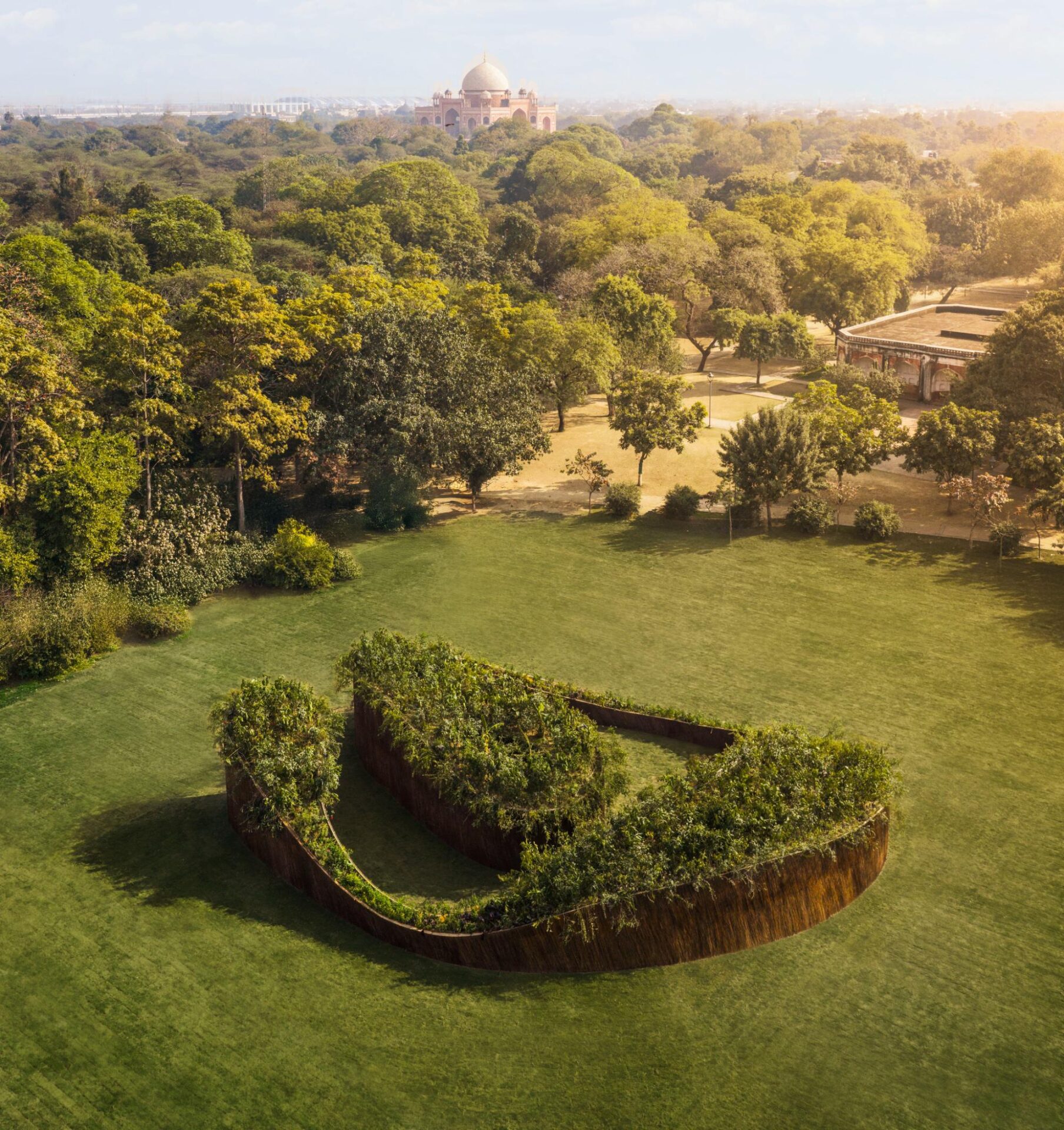 Following its residency in New Delhi in 2026, Sacred Nature is designed for relocation to the Rajkumari Ratnavati Girls’ School in Jaisalmer, Rajasthan, an institution known for its climate-responsive architecture. There, the pavilion will continue its life as a dynamic classroom and gathering space for students and researchers.