KWK Promes Turns Constraints into Architecture with Trim House
In the suburban fringes of Vilnius, Lithuania, where remnants of interwar wooden homes once stood among dense greenery, Robert Konieczny and KWK Promes completed a residence that emerged from a process of adaptation.
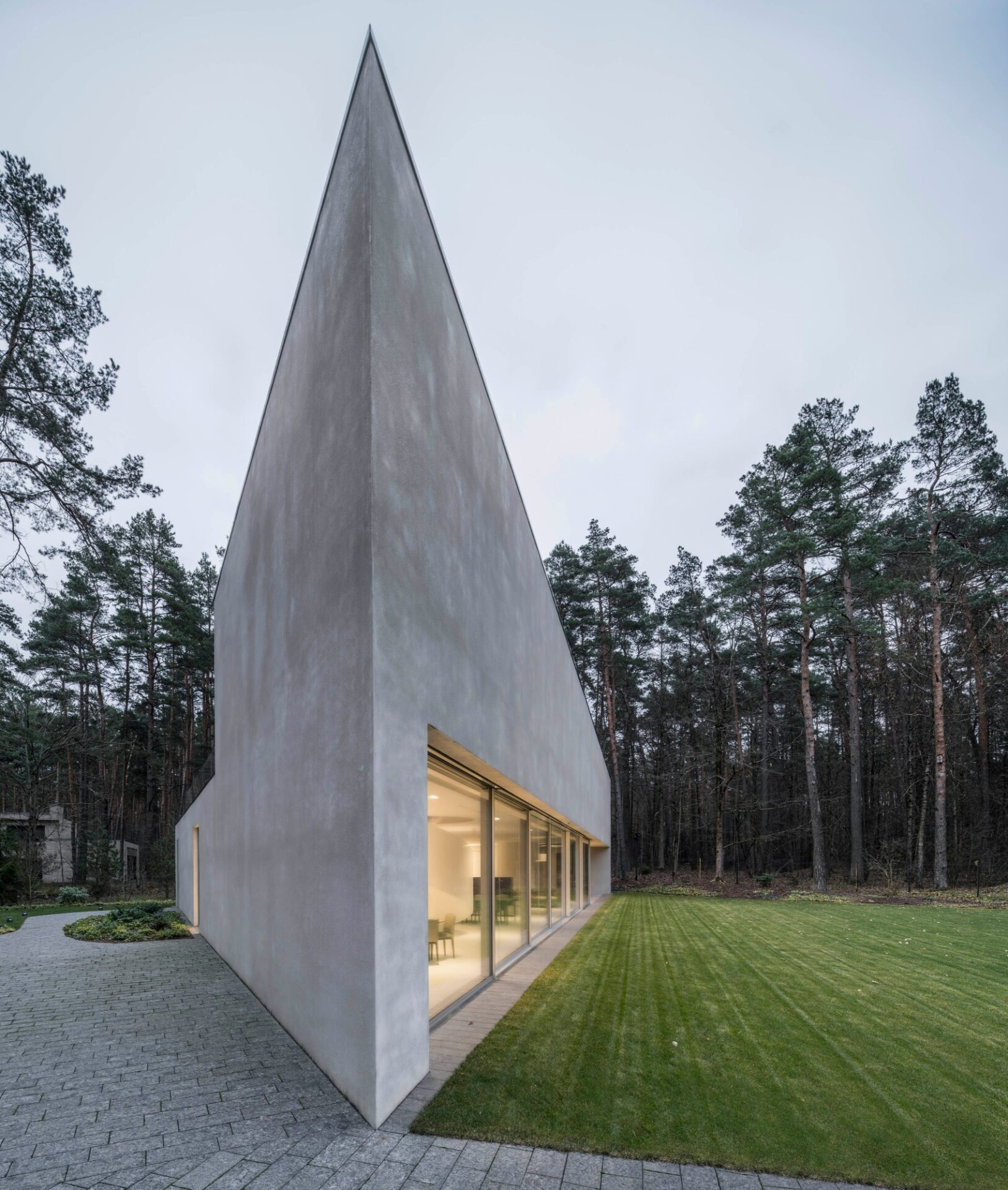
Trim House, Photo Courtesy Jakub CertowiczWhat began as a competition-winning design for a private client evolved significantly over nearly a decade, responding to changing regulations, site limitations, and shifting access conditions. The result is Trim House, a project that demonstrates how architectural ideas can remain intact even as form and scale are radically reconsidered.
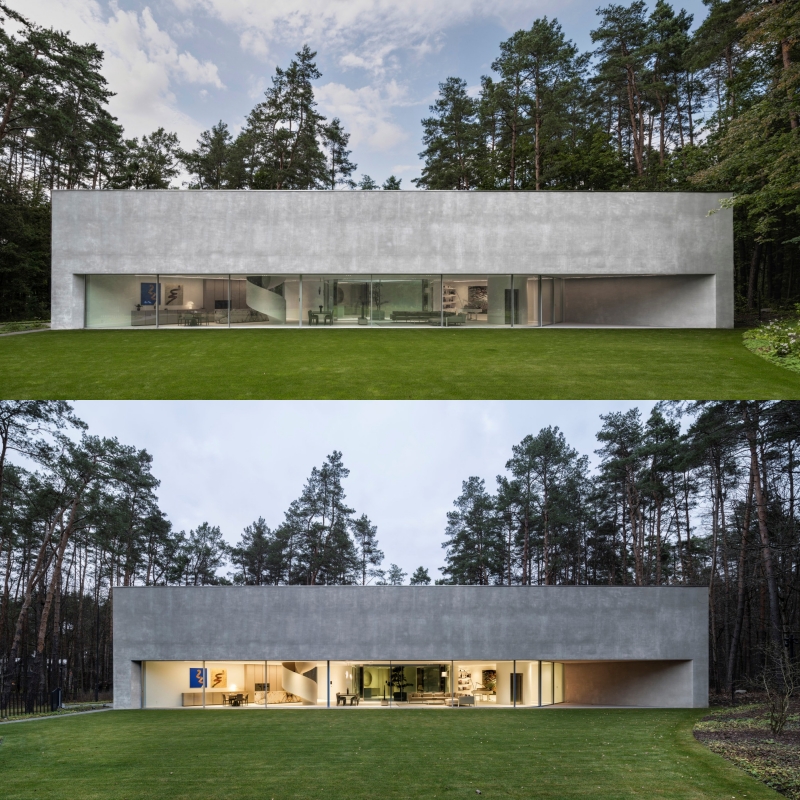
Trim House, Photography credits Juliusz Sokołowski
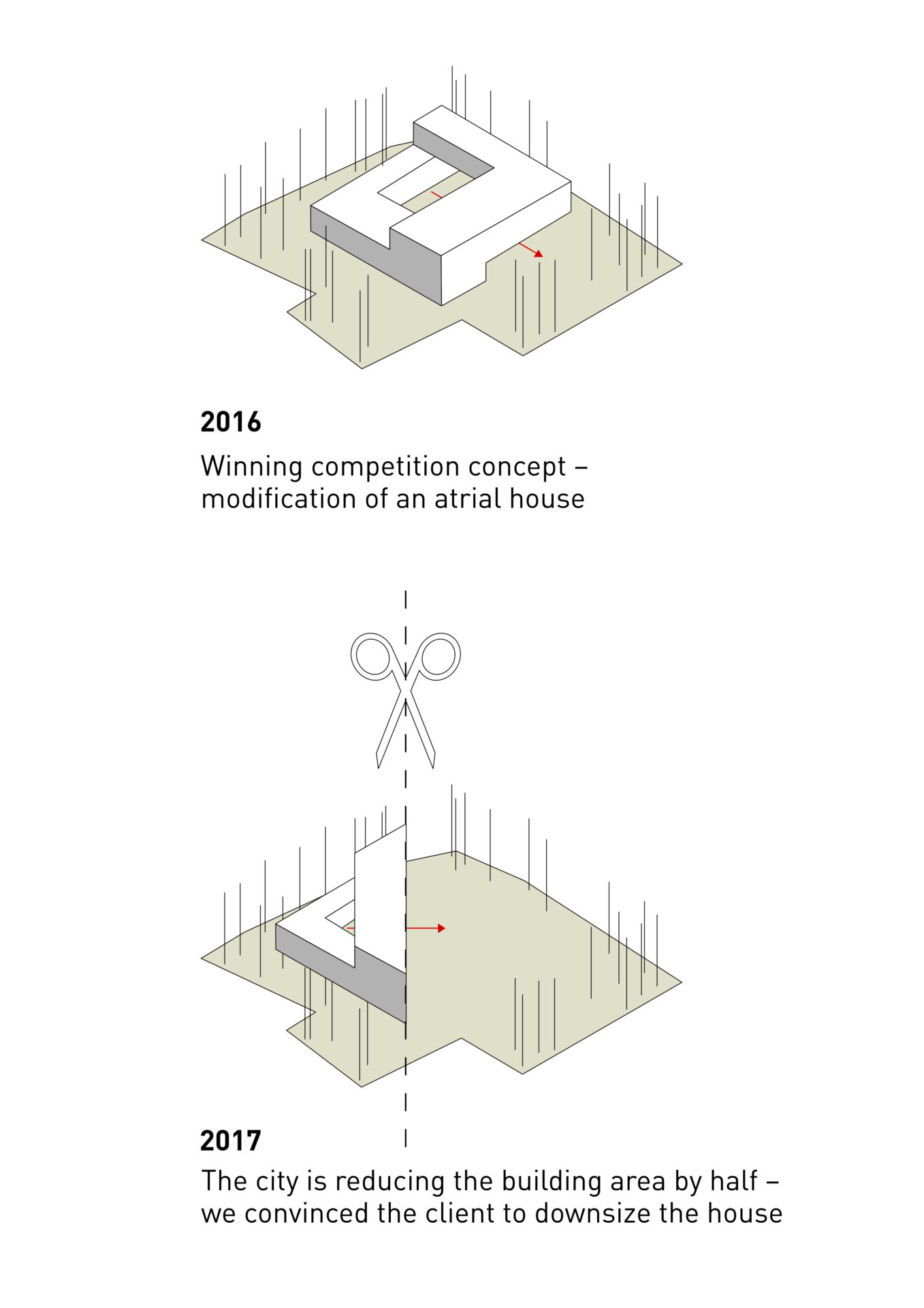
Located in one of Vilnius’ low-density suburban districts, Trim House was originally conceived in 2016 as part of a closed architectural competition that invited several international studios to propose a single-family residence for a private client. The site sat within a landscape defined by mature trees, recreational grounds, and traces of an architectural history that had largely disappeared. While the area had once been populated by wooden houses dating from the interwar period, few of these structures survive today.
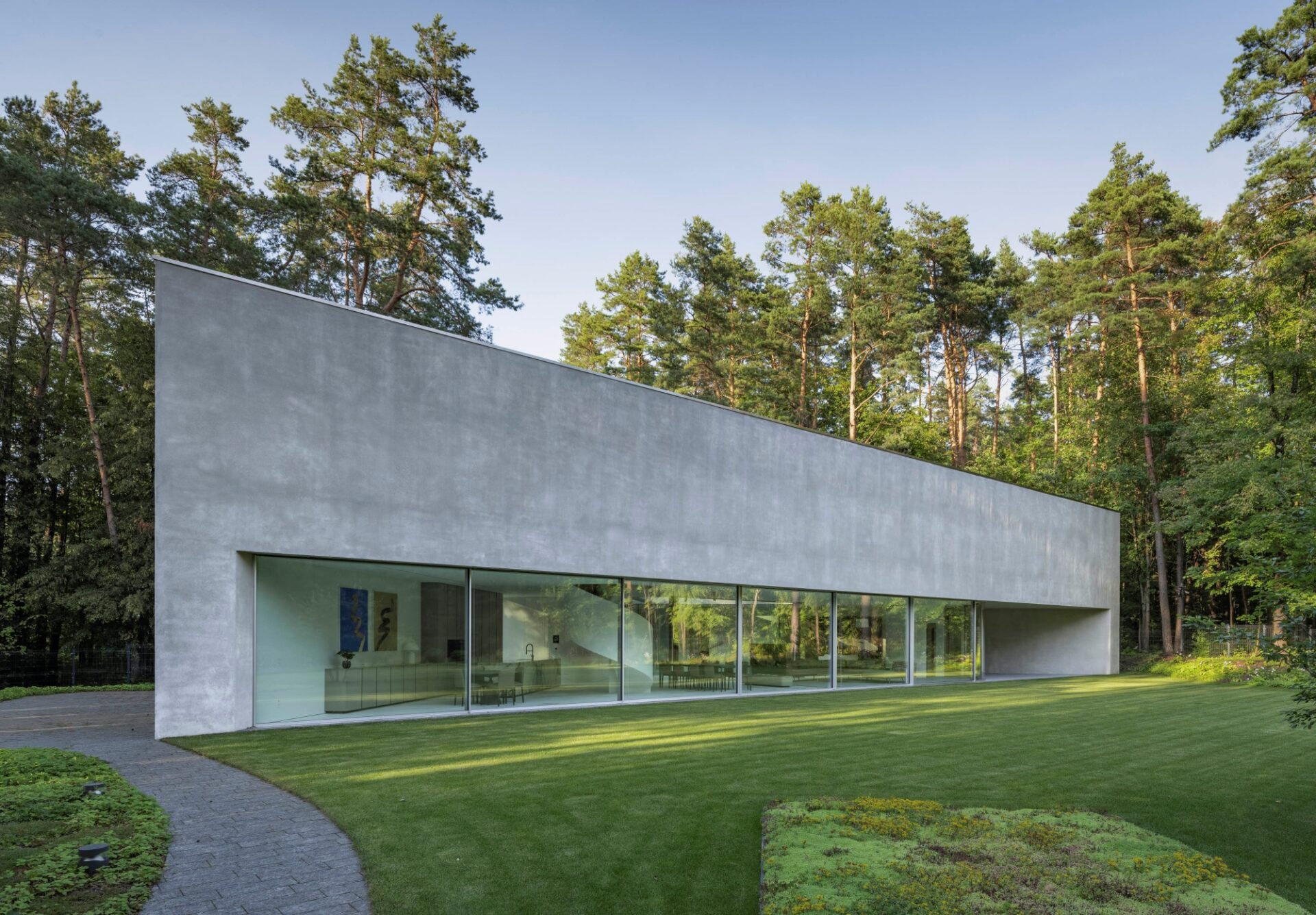
Trim House, Photography credits Juliusz Sokołowski
From the outset, Robert Konieczny and KWK Promes sought to create a house that would engage closely with its natural surroundings. A key element of the original proposal involved elevating a portion of the building, allowing a central patio to introduce additional daylight deep into the interior. This courtyard became an extension of the surrounding garden, blurring the distinction between indoor and outdoor living.
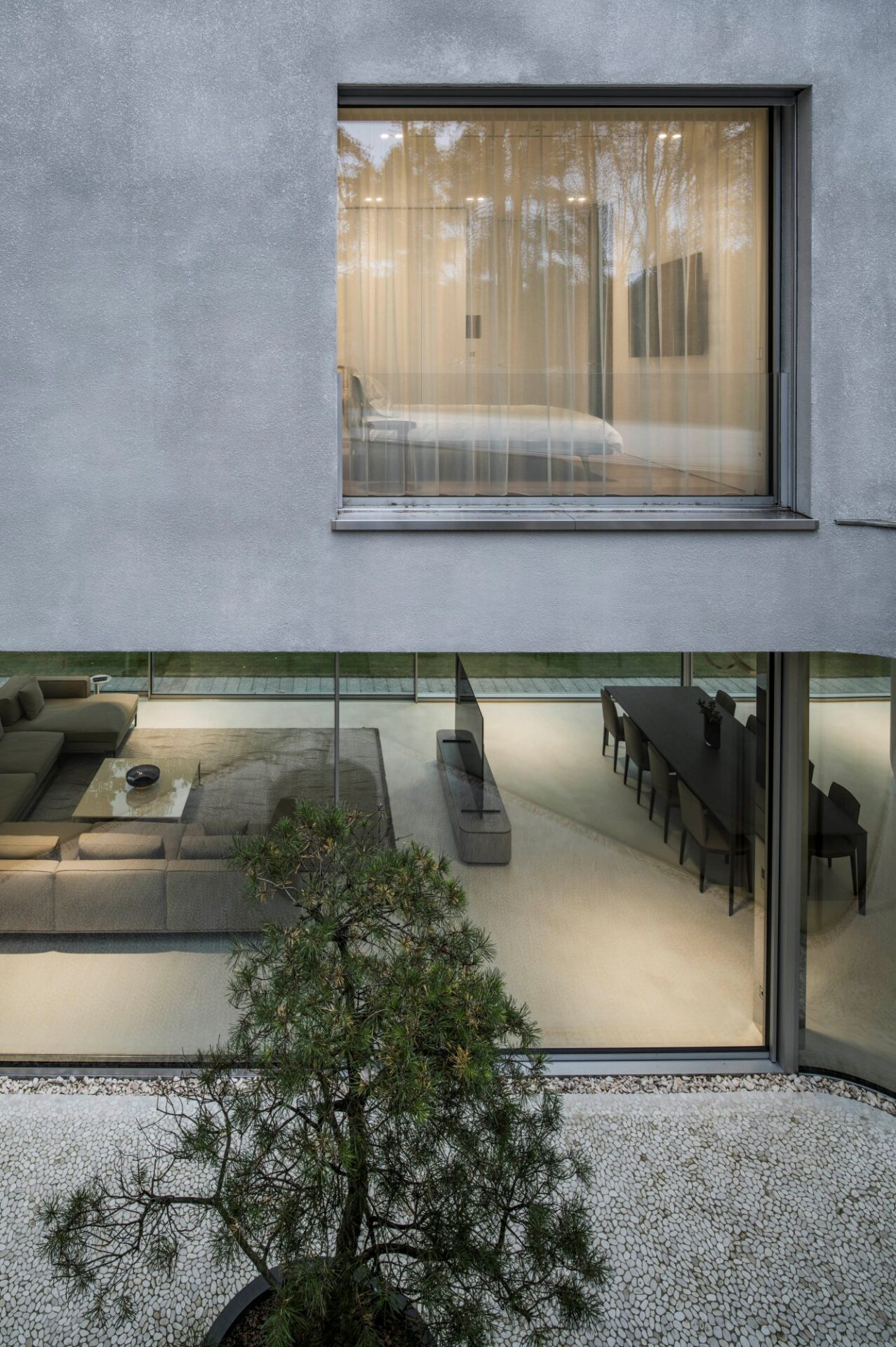
Trim House, Photography credits Jakub Certowicz
The raised first floor accommodated the private areas of the home, with bedrooms opening onto a terrace positioned above the ground-floor volume. This arrangement offered residents direct access to nature while maintaining privacy and a sense of retreat.
The Drastic Trim that became a Design that Worked
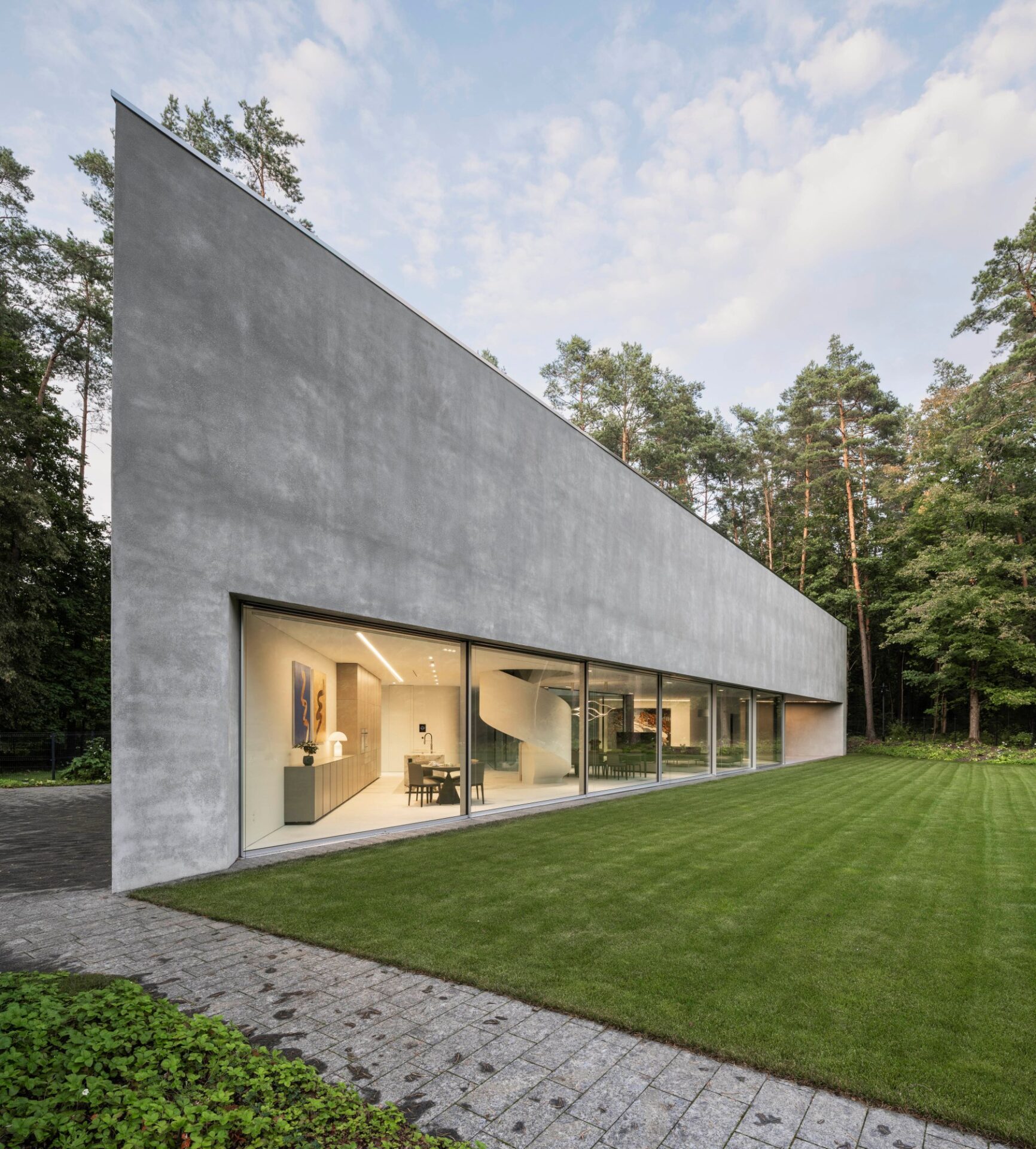
Trim House, Photography credits Juliusz Sokołowski
However, the project’s trajectory changed dramatically during the design phase. In 2017, newly introduced planning regulations reduced the permissible building footprint by 50%. At the same time, the access route to the property was altered, redirecting the driveway through what had originally been intended as garden space.
Trim House, Photography credits Juliusz Sokołowski
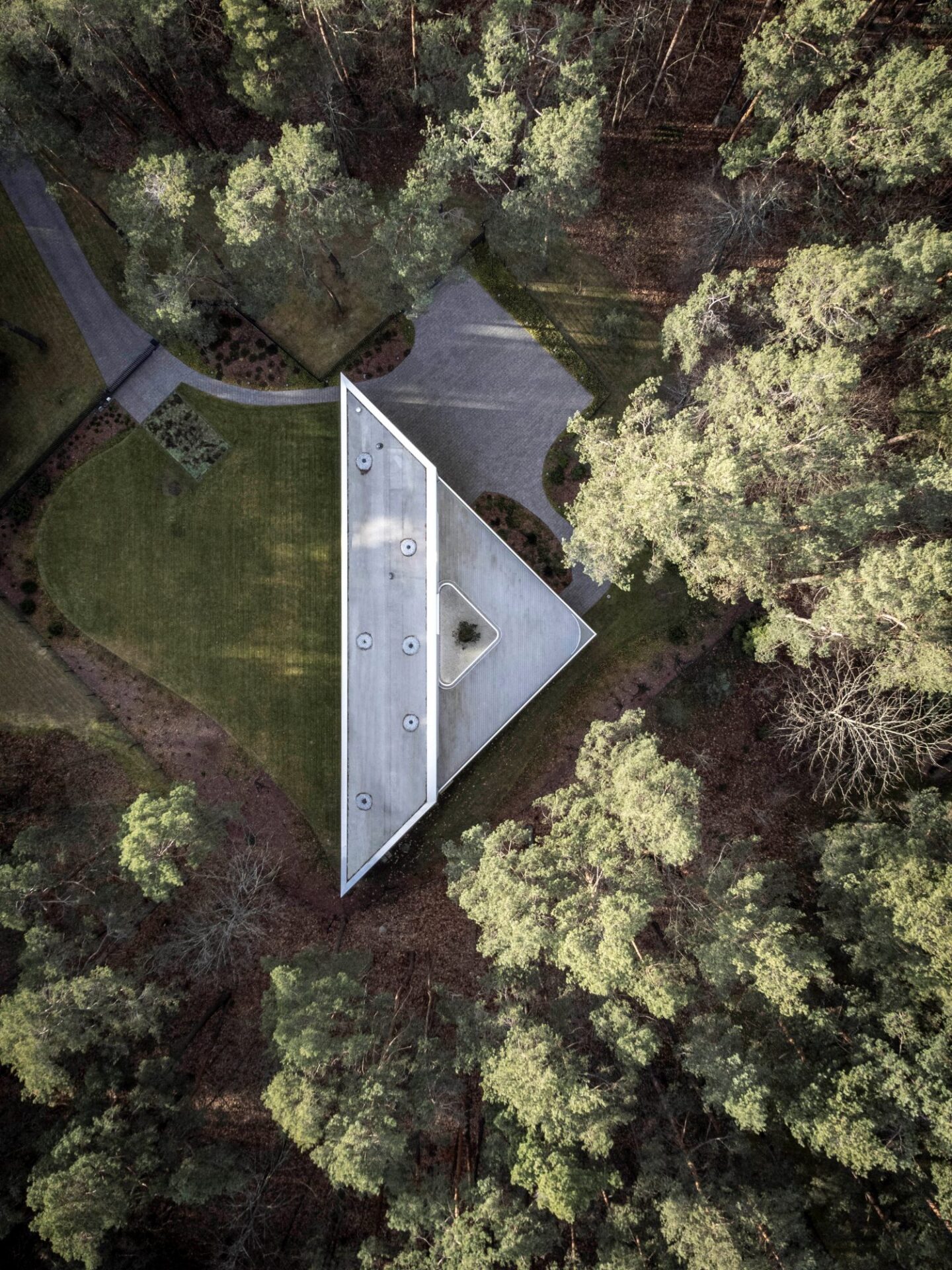
Faced with these changes, the client initially considered relocating the project to another site. Instead, the architects advocated for retaining the original location and reworking the design. The house was reduced in area by approximately 40%, prompting a complete reassessment of its footprint and spatial organisation.
The resulting design took on a triangular plan, an unexpected outcome that transformed a regulatory challenge into an architectural opportunity. By reducing the building’s footprint, a larger portion of the site could be dedicated to landscape, increasing sunlight penetration and enhancing the relationship between the house and its wooded setting. In a northern climate where daylight is a valuable resource, these qualities became significant advantages rather than compromises.
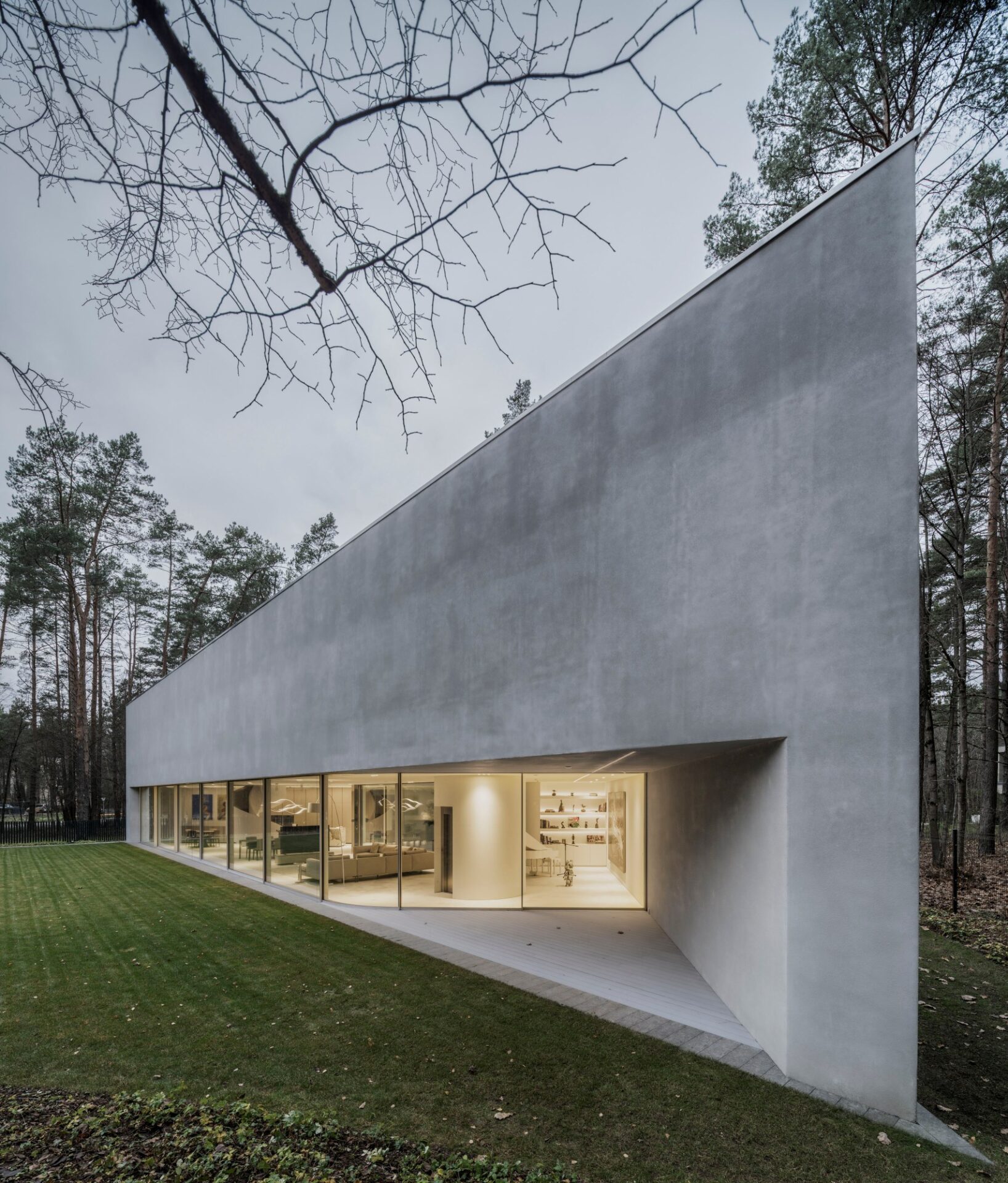
Trim House, Photography credits Jakub Certowicz
While the dimensions of the project changed considerably, the architects maintained the central idea that had defined the competition proposal.
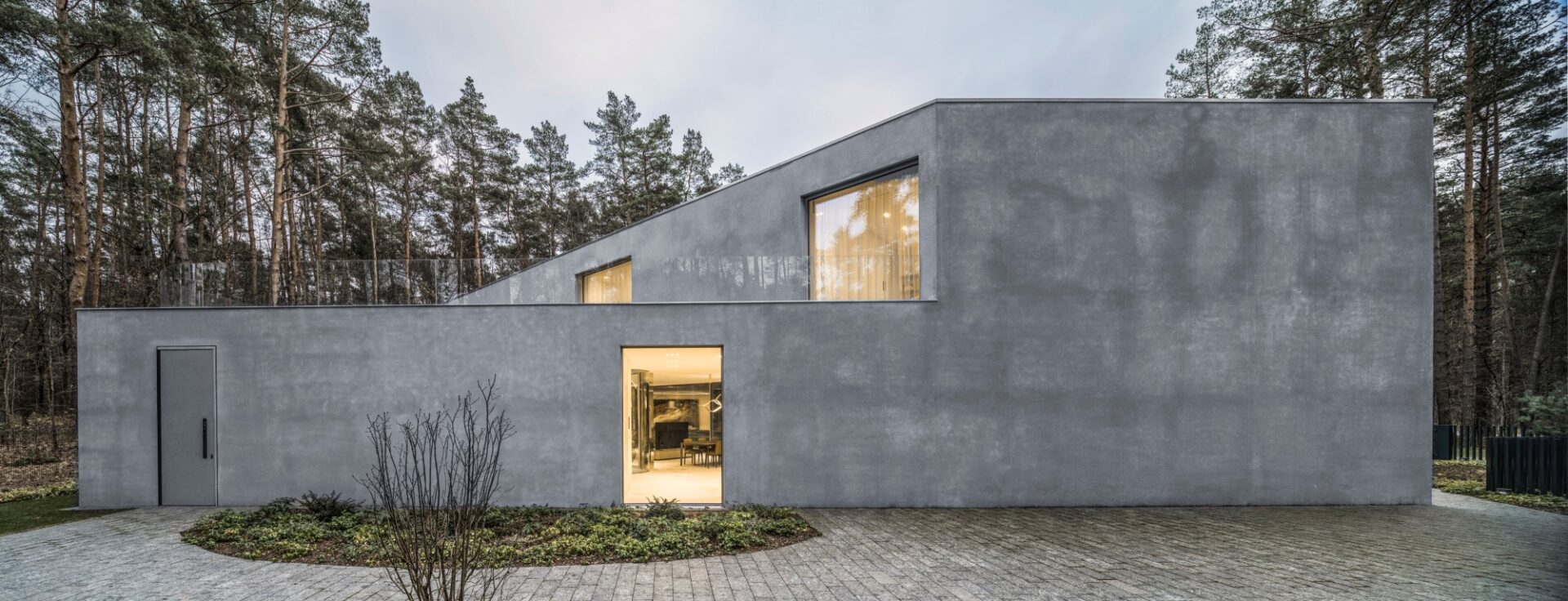
Trim House, Photography credits Jakub Certowicz
The interplay between elevated volumes, outdoor space, and natural light continued to shape the experience of the house. The patio remained a focal point, while terraces and garden connections reinforced the sense of living within the landscape rather than merely occupying it.
The Stamp of Robert Konieczny
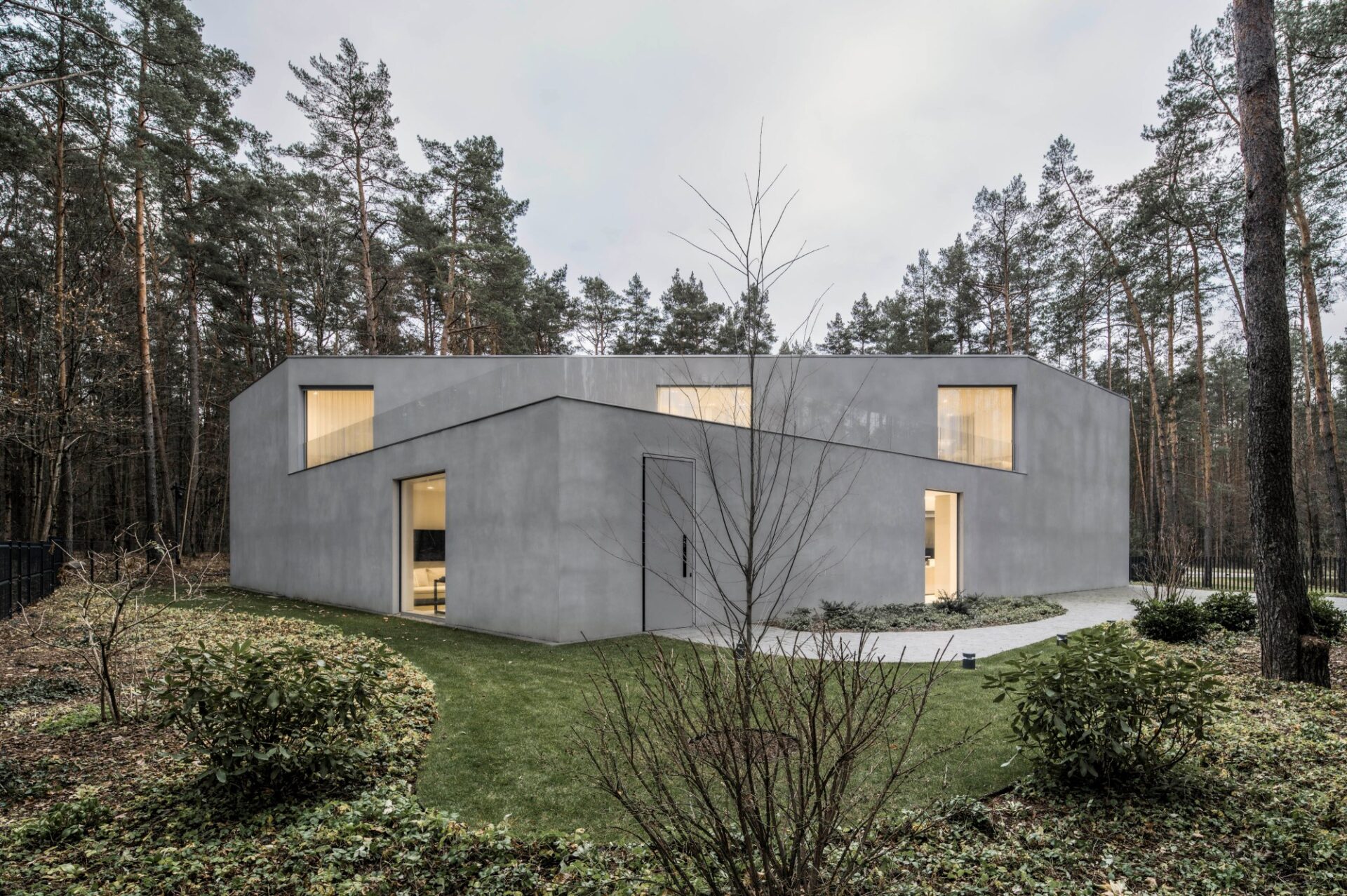
Trim House, Photography credits Jakub Certowicz
Completed between 2019 and 2025, Trim House reflects KWK Promes’ ongoing interest in architecture that responds dynamically to site-specific conditions. Rather than resisting external constraints, the project embraces them, demonstrating how regulation, context, and adaptation can become active contributors to the design process.
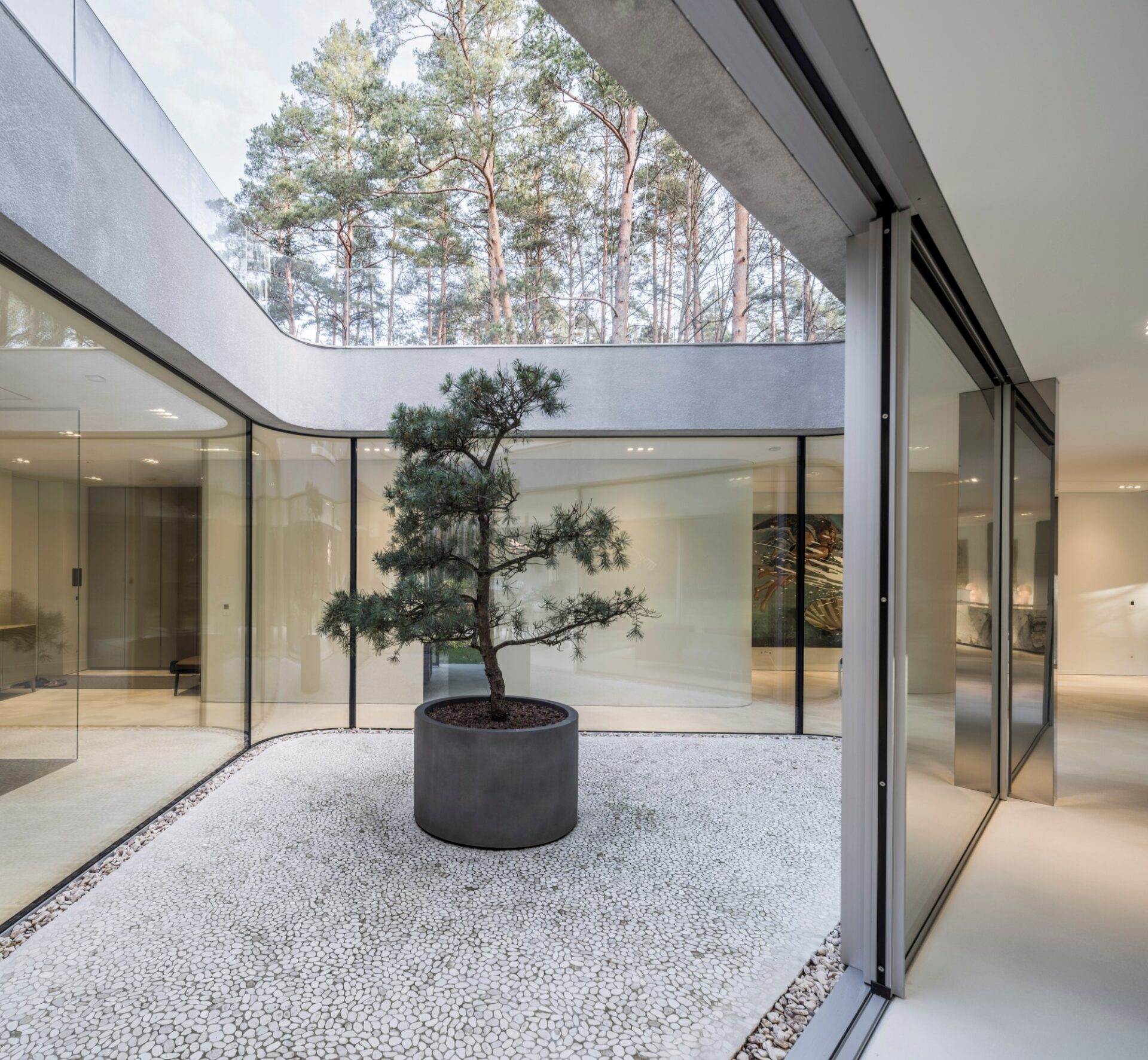
Trim House, Photography credits Jakub Certowicz
In doing so, the house reveals that reduction does not necessarily mean loss; sometimes, trimming back allows the essential qualities of a project to emerge more clearly.
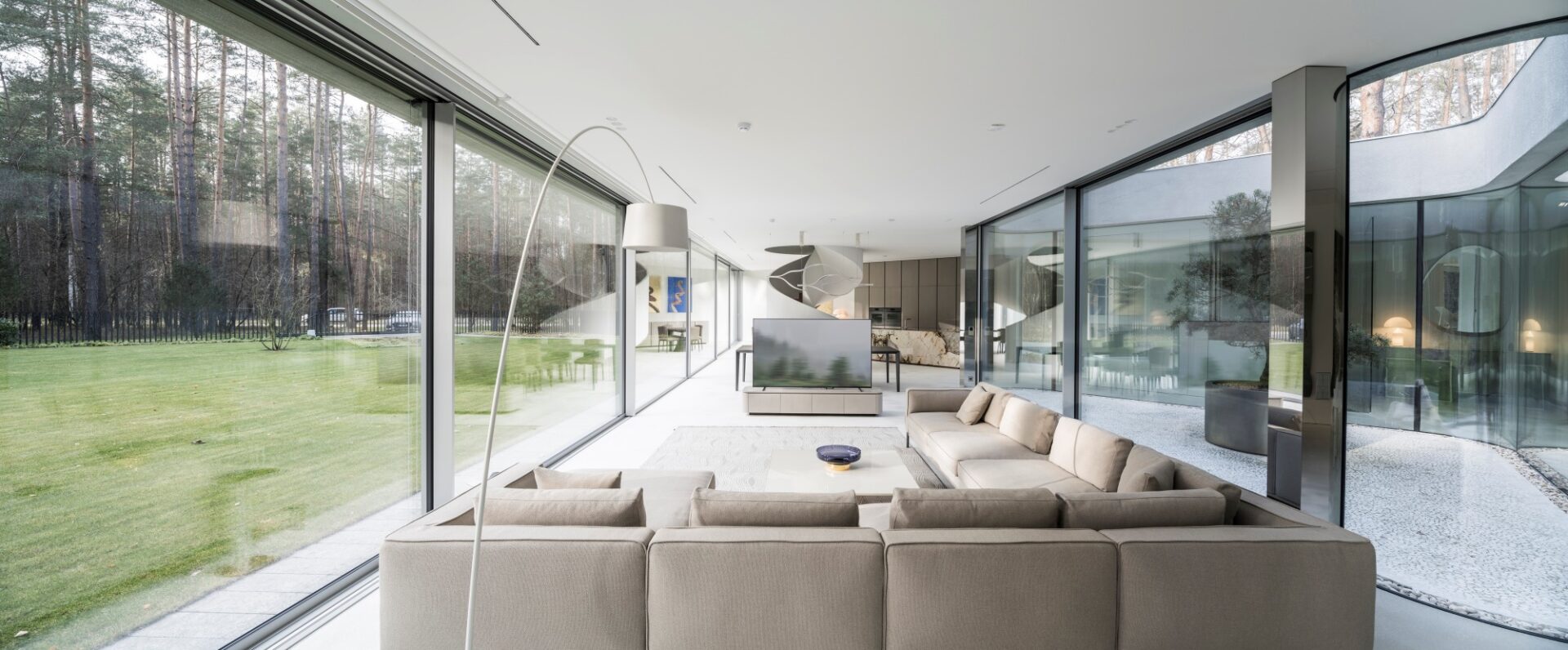
Trim House, Photography credits Jakub Certowicz
The project also bears the unmistakable imprint of Robert Konieczny, one of Europe’s most inventive architects and the founder of KWK Promes. Over the years, Robert Konieczny has built a reputation for creating houses that move, adapt, and respond to their environments in unexpected ways.
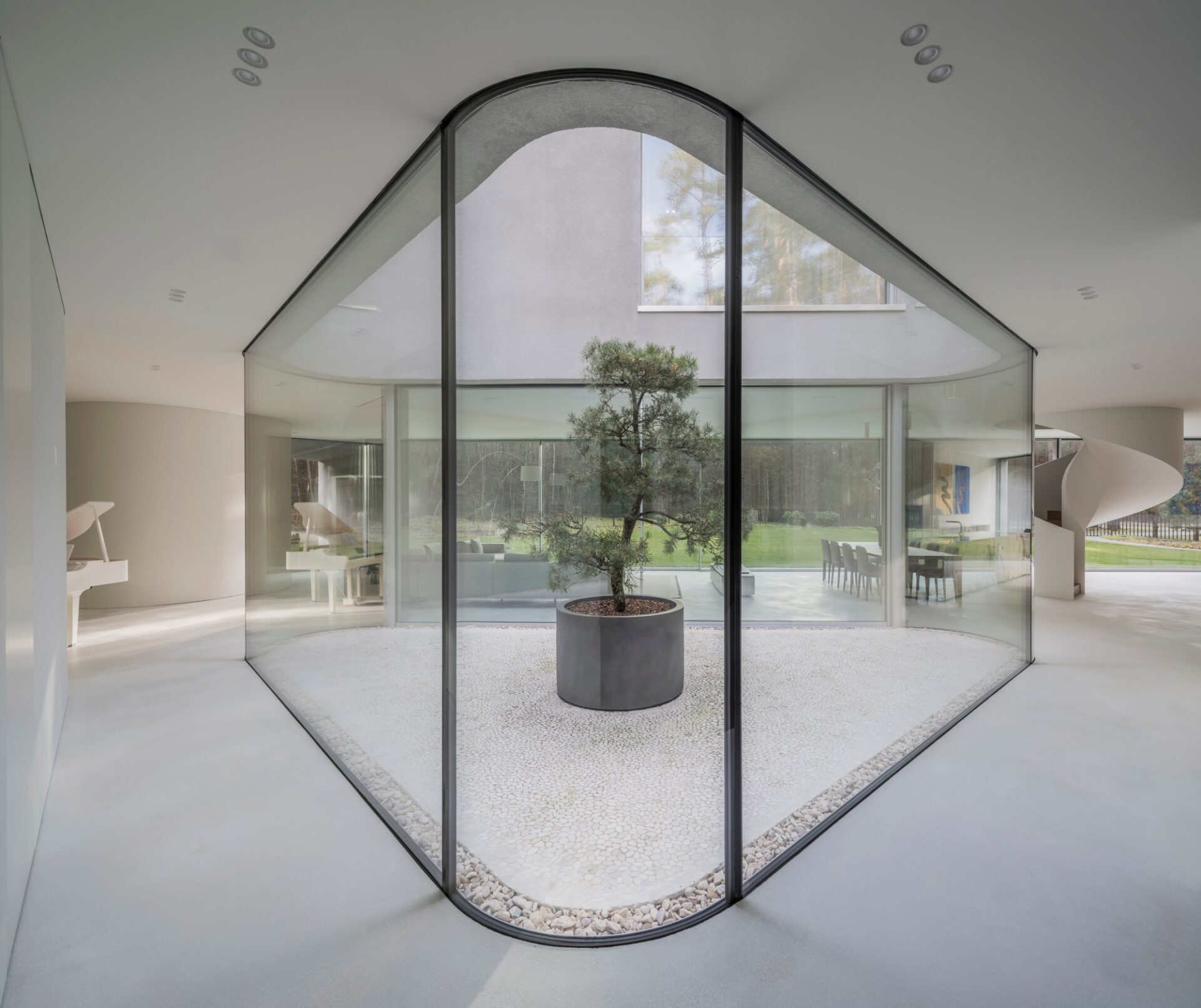
Trim House, Photography credits Jakub Certowicz
From the rotating walls of the Safe House and the shifting terraces of the Quadrant House to the iconic Ark House that hovers above a floodplain, his projects consistently challenge conventional notions of domestic architecture.
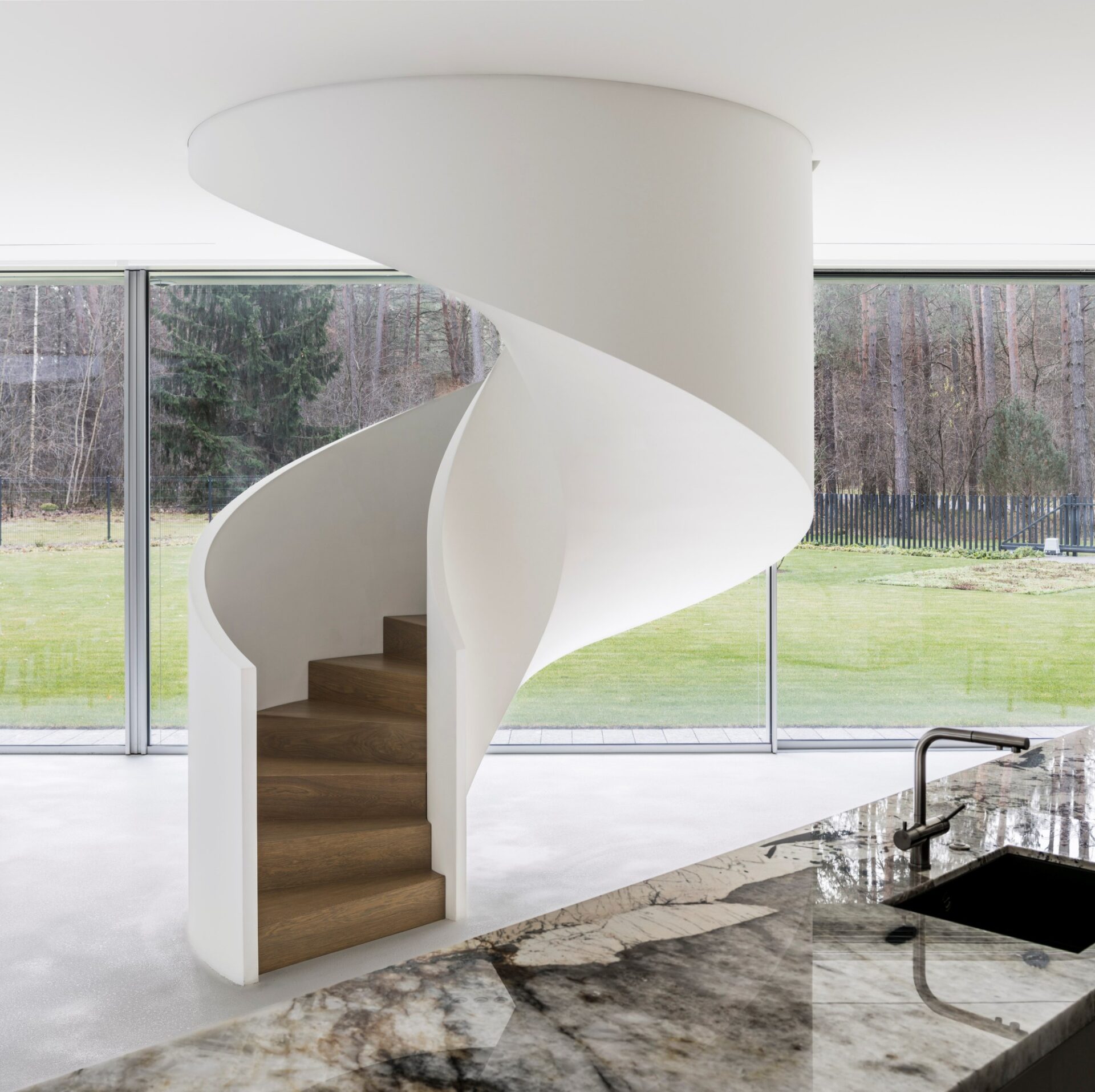
Trim House, Photography credits Jakub Certowicz
Trim House may be quieter in expression, but it belongs to the same lineage of thinking, where constraints become opportunities and architecture is shaped by an almost obsessive attention to context. It is this ability to turn limitations into compelling spatial narratives that makes Robert Konieczny’s work so enduring and, for many admirers of contemporary architecture, deeply fascinating.
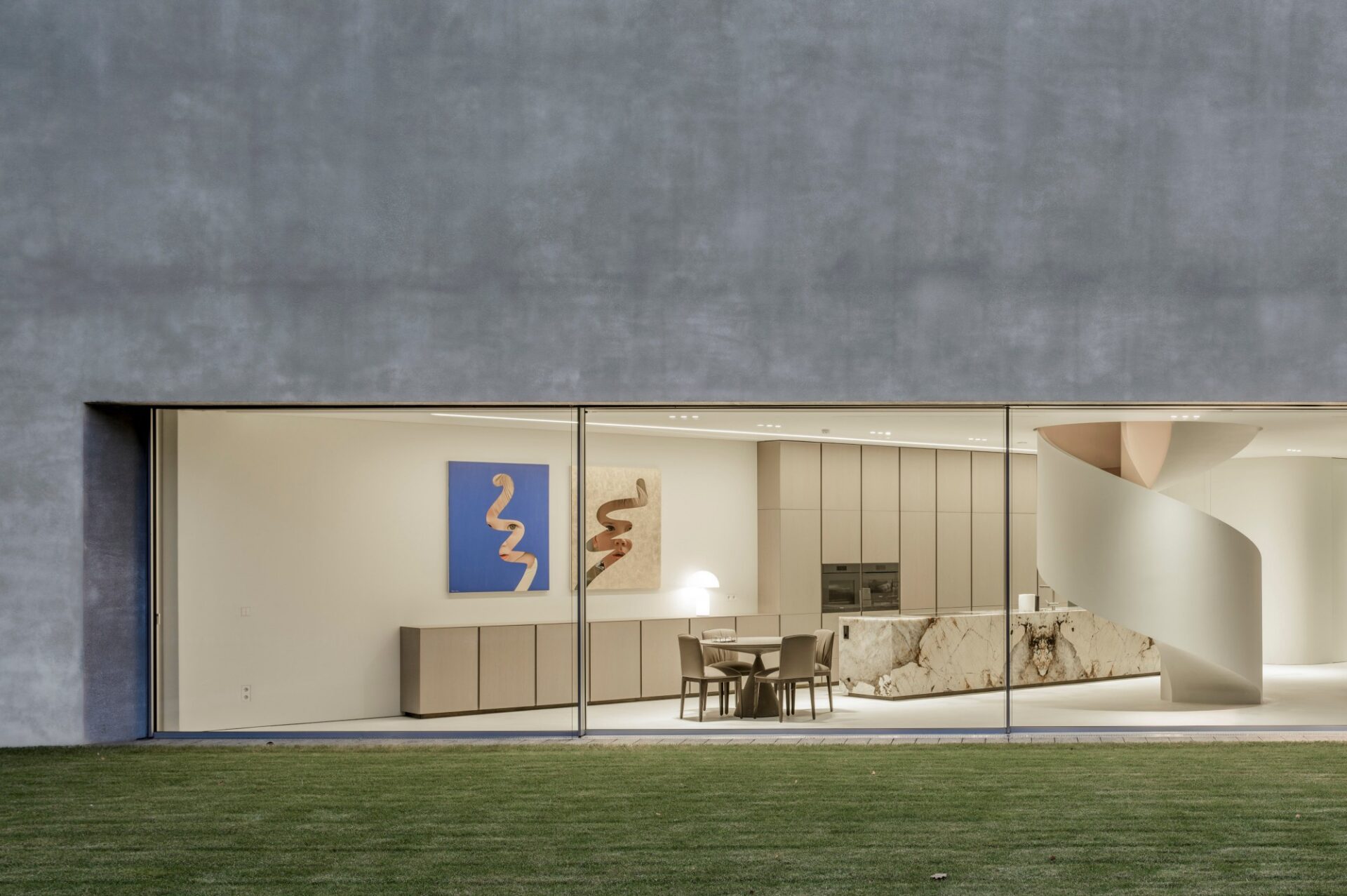
Trim House, Photography credits Jakub Certowicz
There is also an unmistakable material language that runs through Robert Konieczny’s body of work. Many of his projects are characterised by exposed concrete surfaces, often left almost bare, allowing structure, light, and shadow to take precedence over ornamentation.
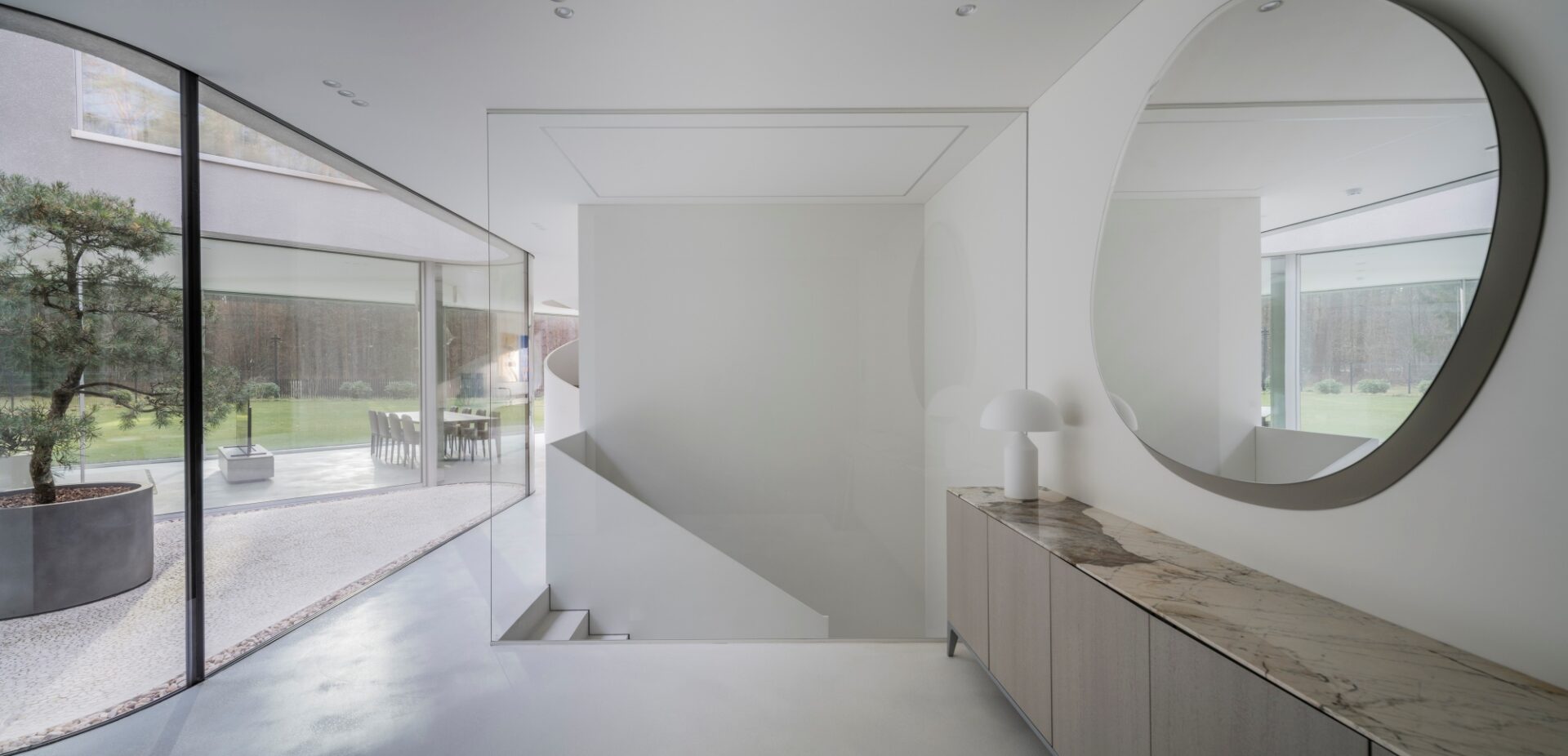
Trim House, Photography credits Jakub Certowicz
The rawness of concrete in his architecture never feels austere; instead, it lends his buildings a sense of permanence and honesty. In projects such as the Ark House, Safe House, and now Trim House, concrete becomes a medium through which Robert Konieczny explores simplicity, resilience, and an architecture stripped down to its essentials.
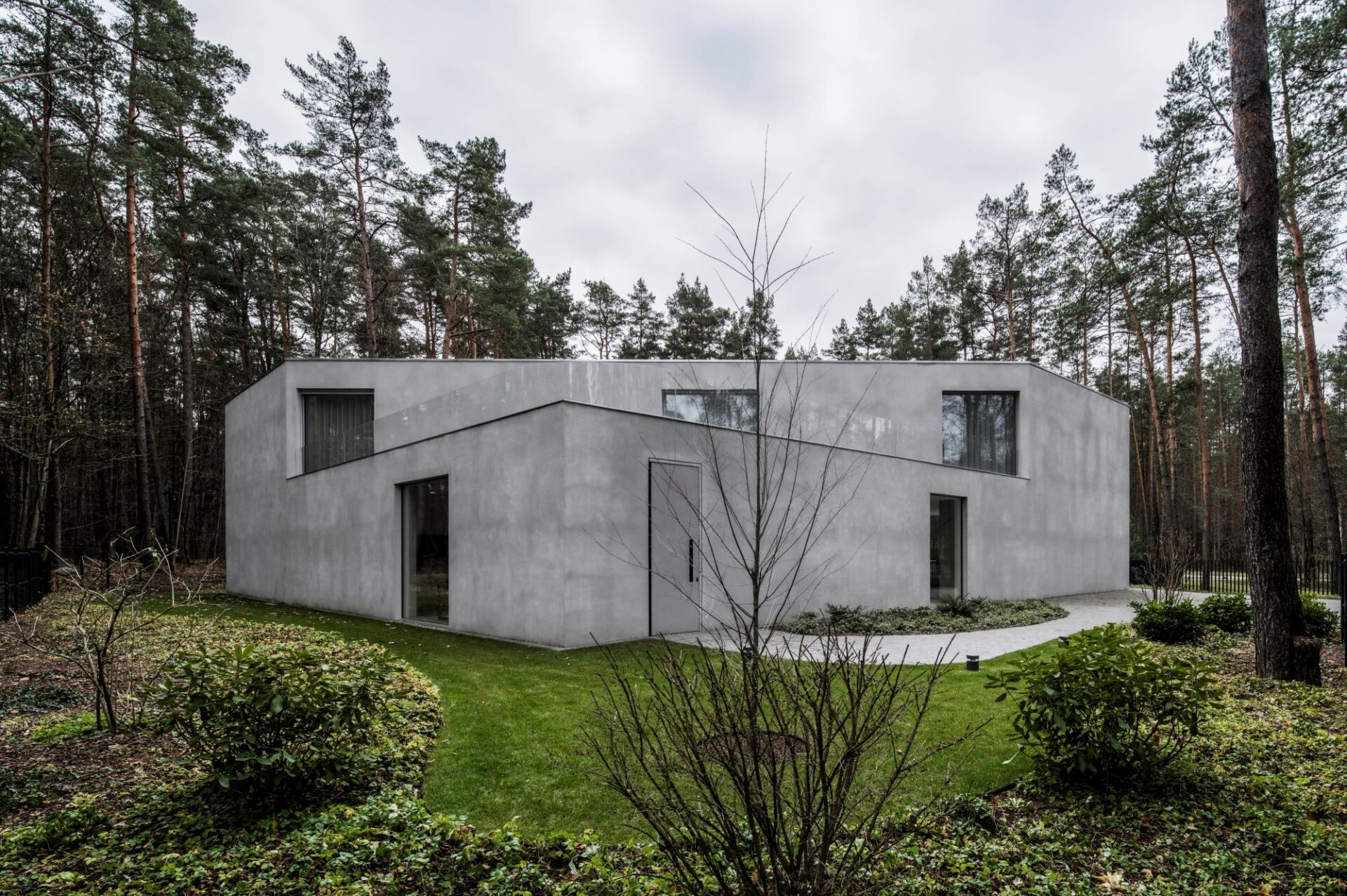
Trim House, Photography credits Jakub Certowicz
Project Details:
Name: Trim House
Location: Vilnius, Lithuania
Office: Robert Konieczny KWK Promes
Author: Robert Konieczny
Collaboration: Dorota Skóra, Michał Lisiński, Krzysztof Kobiela, Łukasz Marciniak, Mateusz Białek, Katarzyna Ficek
Structural design: Firma Inżynierska STATYK
Local partner: 4 PLIUS ARCHITECTS – Donaldas Trainauskas
Home decor: Yes. Design Architecture
Investor: private
Site area: 1 784 m2
Built-up area: 299 m2
Usable floor area: Residential area: 357 m2, warehouse and technical area: 189 m2
Volume: 1 891 m3
Designed: 2016 – 2019
Completed: 2019 – 2025
Photos: Jakub Certowicz, Juliusz Sokołowski
Floor Plans
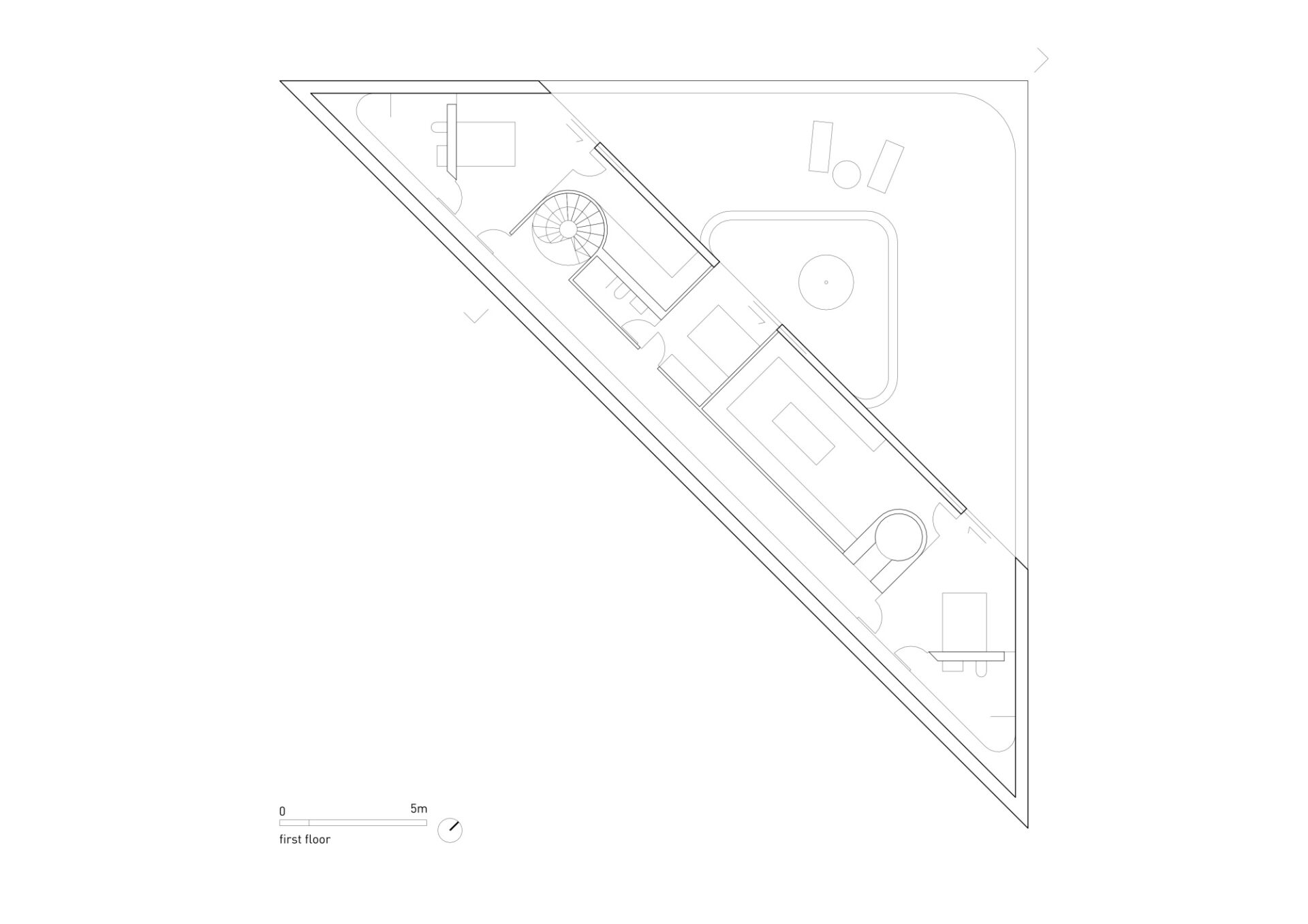
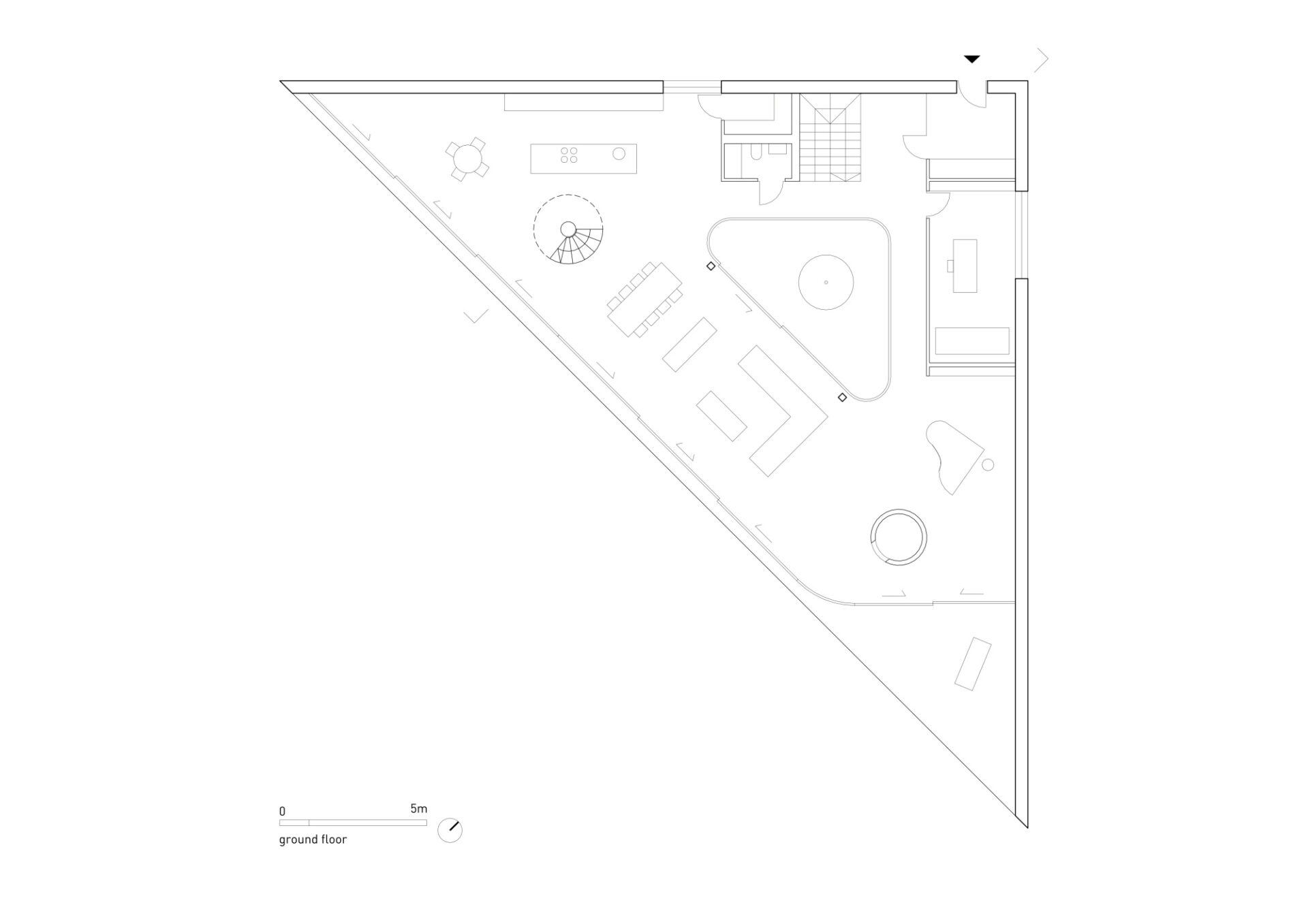
Pictogram of the story of Trim House