
Curators of Tasmeem Doha 2026 on The Ethics of Sharing Knowledge
Tasmeem Doha 2026, the international art and design conference hosted by VCUarts Qatar, returns from February to April with the theme “Transmit” (حوّل).
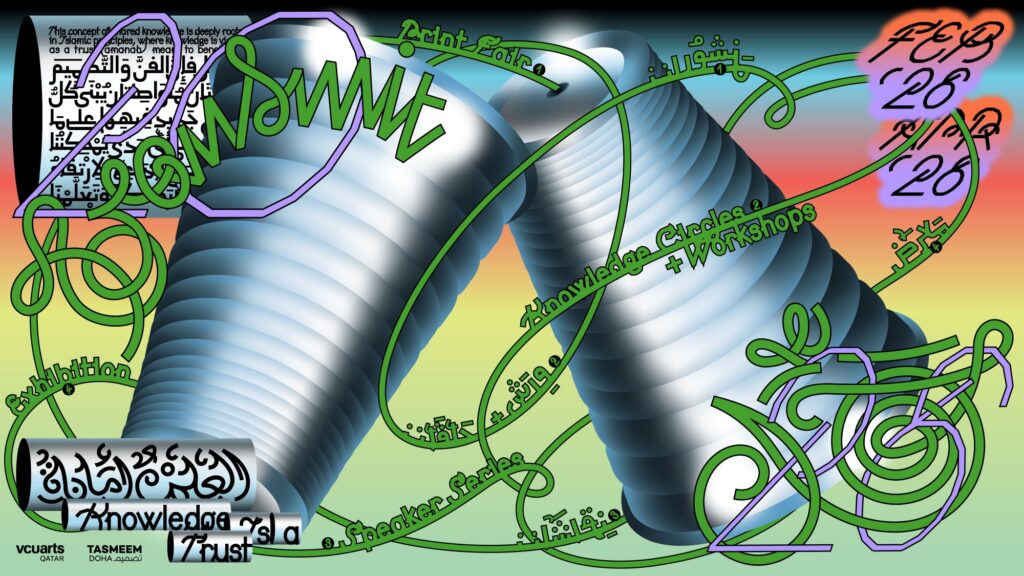 Curated by VCUarts Qatar alumni Sara Al-Afifi, Hind Al-Saad, and Reham Mohamed, this edition of Tasmeem Doha centres on how knowledge is passed on, between people, across disciplines, and from one generation to the next. Through a programme that includes a print fair, workshops, discussions, and lectures, Tasmeem Doha 2026 looks at knowledge not as something to be owned, but as something to be shared and carried forward.
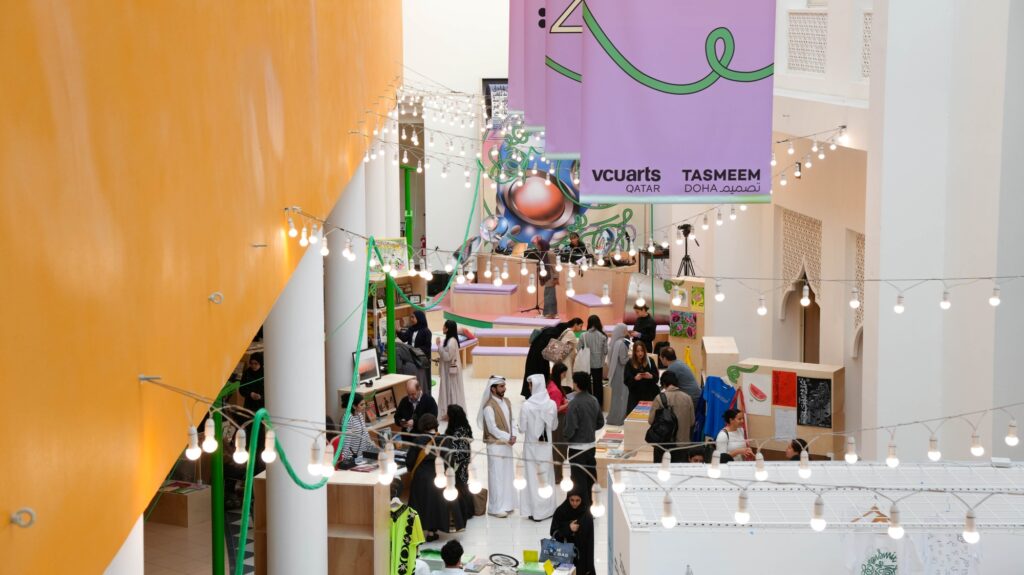 The vibe that the curators of Tasmeem Doha 2026 want to project is “that of a design fair that is ethical, with an invitation for people to share and learn.”
Print Fair: “Manshūrāt”
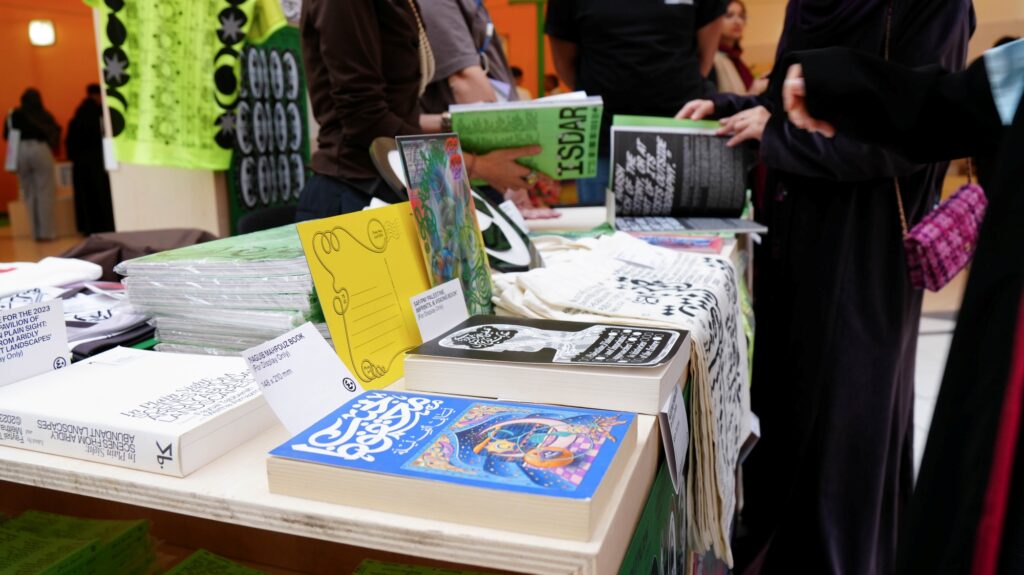
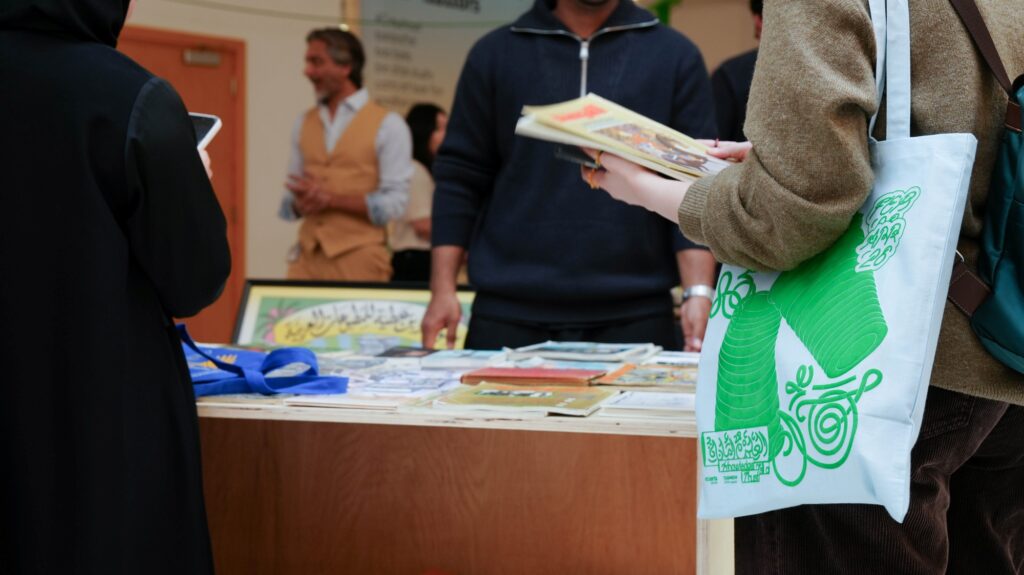
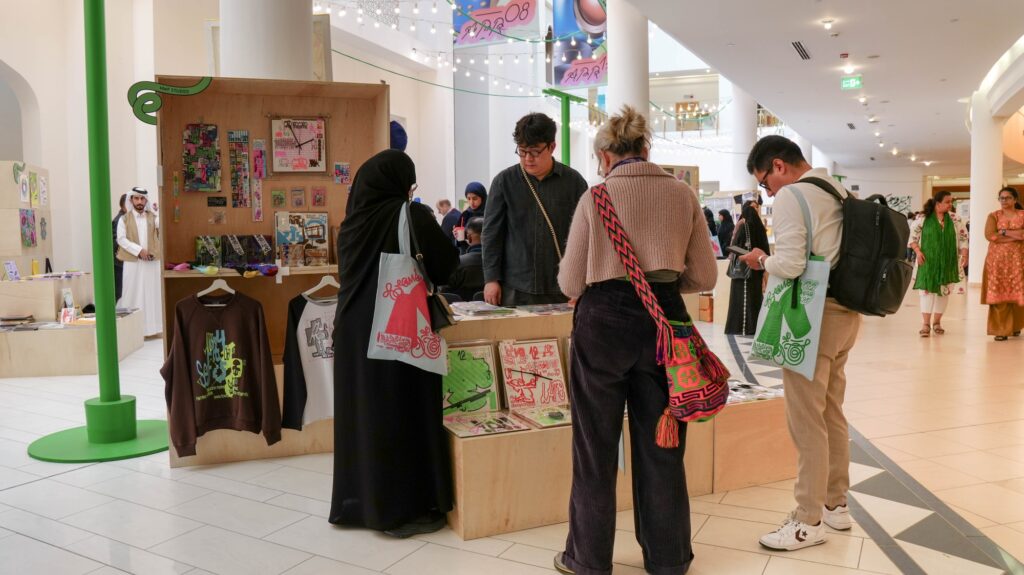
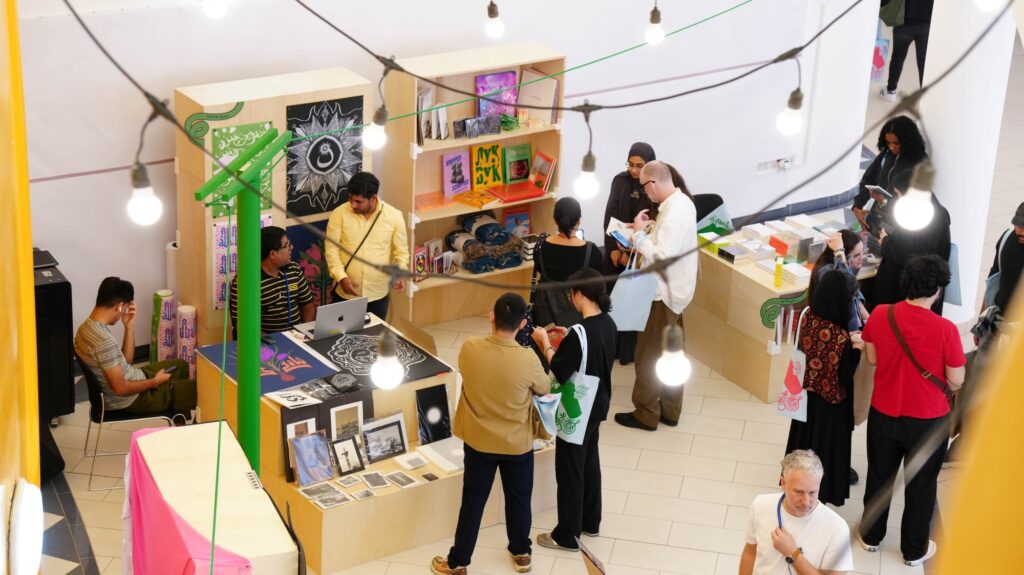 A key component of this year’s Tasmeem Doha programme was the print fair “Manshūrāt,” which brought together independent art publishers from across China, Vietnam, the Netherlands, the United Kingdom, Tunisia, Egypt, Lebanon, Saudi Arabia, and the United States.
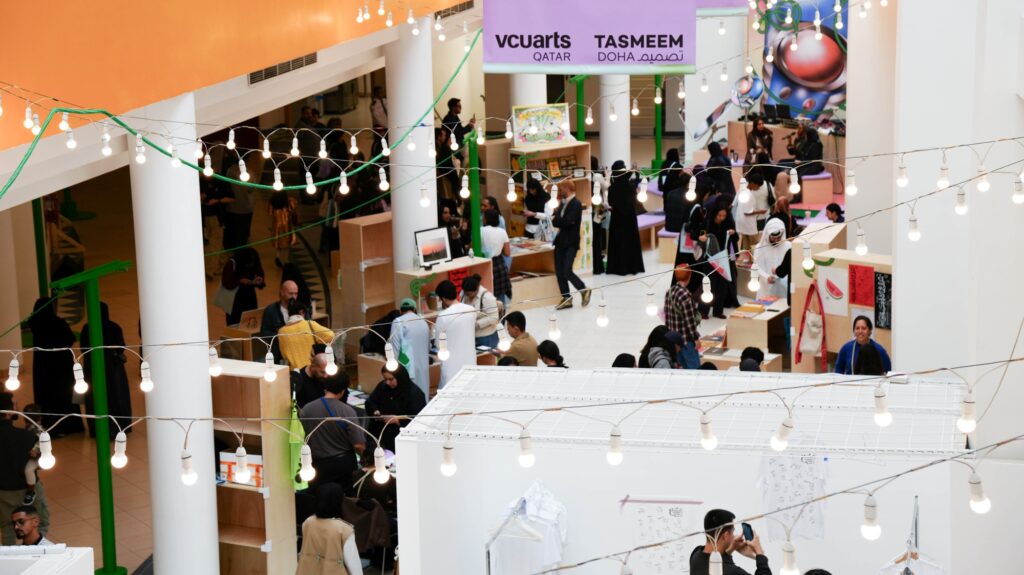 Presented as a celebration of print culture and creative exchange, the exhibition highlighted books, zines, and printed matter as vital tools for sharing ideas across borders and communities. Alongside the international participants, research labs from VCUarts Qatar also presented recent projects, reinforcing the role of publishing as a space for experimentation and dialogue.
We speak to the three curators to understand this year’s focus and intent.
 SCALE: What is the central idea or urgency shaping Tasmeem Doha 2026, and why does it matter now?
Curators: Tasmeem Doha 2026 is shaped by the urgency of knowledge being increasingly patented, enclosed, and locked behind paywalls. At a time when access to information is mediated by legal frameworks, and capitalist interests, we ask what it means to transmit knowledge collectively and ethically through an open-source model.
Framing design as a responsibility rather than a form of individual ownership, this edition responds to the widening gap between knowledge production and access, exploring how design and art can re-establish chains of knowledge through sharing, learning, and exchange.
 SCALE: How does this edition expand or challenge Tasmeem’s legacy as a platform for critical design thinking in the region?
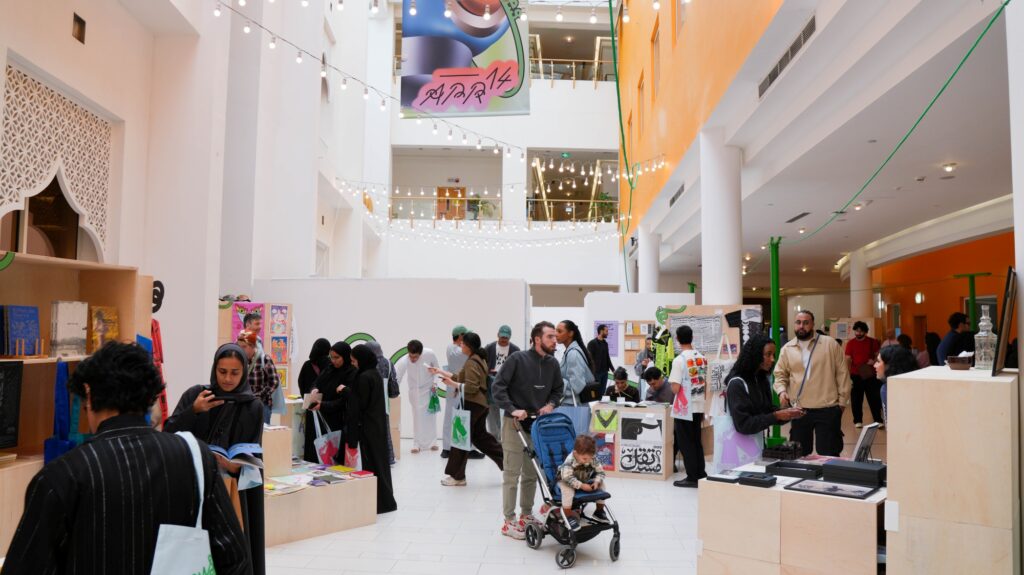
Curators: Tasmeem Doha has long been a space for critical inquiry. In 2026, we expand that legacy by rethinking the format itself. The program unfolds across three distinct periods, beginning with a Print Fair (an event not previously part of Tasmeem), as it encapsulates the essence of the curatorial framework of “knowledge sharing”, and highlights printed matter and publishing as essential mediums for knowledge exchange, particularly practices rooted in slow production,and independent publishing.
We invited exhibitors from across different geographies to bring diverse perspectives into dialogue. This edition also extends beyond the event itself by publishing contributions from invited speakers and workshop leaders, alongside an open call inviting the community to share their own knowledge. These were compiled into a newsprint publication distributed to all, reinforcing knowledge as something collectively produced and shared.
 SCALE: What kinds of practices, voices, or design approaches are you most keen to foreground this year, and why?
Curators: Drawing on the concept of knowledge as a trust (amānah) meant to benefit all, we shaped the lineup of speakers and workshop leaders to echo the polymaths of the Islamic world. Their backgrounds span translation, design, architecture, anthropology, archiving, and more, creating space for dialogue across fields rather than within a single discipline.
SCALE: In what ways does Tasmeem Doha 2026 respond to the social, political, or environmental realities of our time?
Curators: Tasmeem Doha 2026 responds to a moment marked by information inequality, cultural extraction, and restricted access to learning. By addressing knowledge as a public trust rather than a commodity, this edition pushes back against systems that privilege ownership over responsibility. It also reflects broader questions around who gets to produce knowledge, who benefits from it, and who is excluded.
 SCALE: How do you see designers operating beyond authorship, towards collaboration, research, or activism, within this edition?
Curators: By engaging in the dialogues and discussions facilitated through Tasmeem Doha, and by working collectively in workshops to explore new techniques and processes. The emphasis is on shared learning and exchange rather than individual authorship.
 SCALE: What role do education and experimentation play in Tasmeem Doha 2026, particularly for emerging designers and students?
Curators: They are foundational, as Tasmeem Doha 2026 always offers free access to workshops, talks, events, and shared knowledge, and creating an open space for learning through experimentation.
SCALE: How should audiences experience Tasmeem Doha 2026, what do you hope they leave questioning or carrying forward?
Curators: We hope they reflect on how they can share knowledge within their communities and beyond, and consider the responsibility they hold in transmitting what they learn.
SCALE: If you could assign a word that describes the role of each of the co-chairs, what would it be?
Curators: Collectivity: because our role is not framed as individual authorship, but as shaping and curating the conditions for sharing practices and knowledge.
 SCALE: How would you describe the vibe that you wish to create around Tasmeem Doha 2026? Would you call it Speculative, Provocative or Generative?
Curators: Ethical and an invitation for people to share and learn.