
Architecture is a Way of Living at the Sohum Wellness Sanctuary
Sohum Wellness Sanctuary in Dubai is a holistic retreat where architecture, landscape, and ancient healing practices come together to support the stillness of the mind and an inner transformation writes Aishwarya Kulkarni.
Amid Dubai’s relentless pace, stepping into Sohum feels like crossing an invisible threshold, where noise softens, and a different inner world quietly takes over. Designed by Venetian Enrico, a Dubai-based architecture and interior design studio with over 20 years of experience and more than 260 completed projects across hospitality, residential, and commercial sectors, with roots in the Italian design discipline. For Sohum, their vision was to create a calm, grounded environment where architecture supports the wellness journey.
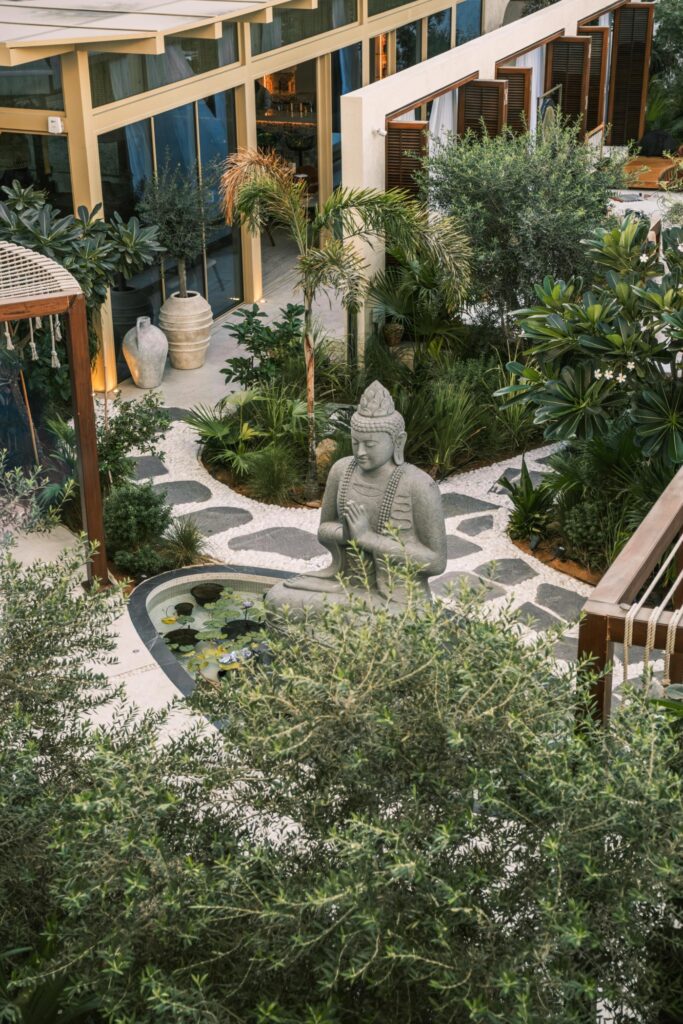
View of the Buddha and the entrance
Founded by Tanya S. Mansotra, the space is inseparable from her life and inner journey. Drawn instinctively to spirituality and holistic healing from a young age, Tanya’s path unfolded gradually and was guided by intuition, deep sensitivity to energy, and a lifelong curiosity about balance between mind, body, and spirit.

Founder of Soohum Wellness Sanctuary, Tanya S. Mansotra
The experience of Sohum begins before one steps inside. At the entrance stands a Buddha sculpted from a single stone, imported from Bali, which immediately evokes a quiet, grounded, and calming energy in visitors. This is followed by a ceremonial greeting area inspired by Greek spatial traditions, conceived as a place of pause rather than passage. At its centre, fire becomes ritual, where the bay leaves are burned for manifestation, marking the transition from external noise to internal awareness.
Landscape as Living System
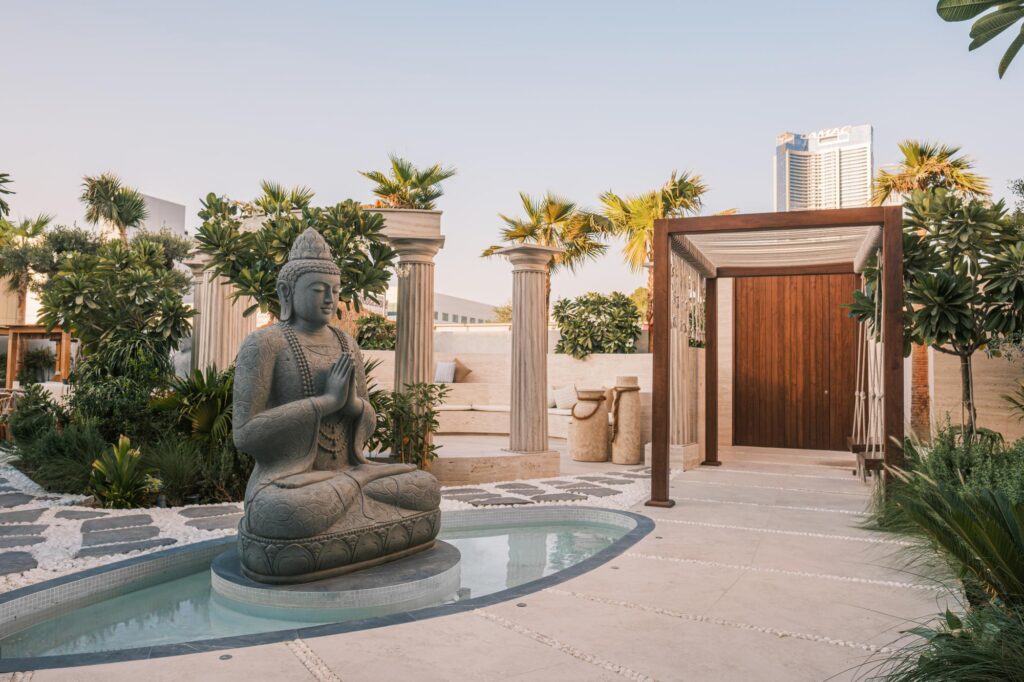
Another view of the imposing Buddha and the entrance of the sanctuary
At the heart of Sohum’s landscape is its most symbolic element – ‘The Tree of Life.’ Nearly a century old and imported from Spain, the tree anchors the sanctuary physically and philosophically, representing longevity and community.
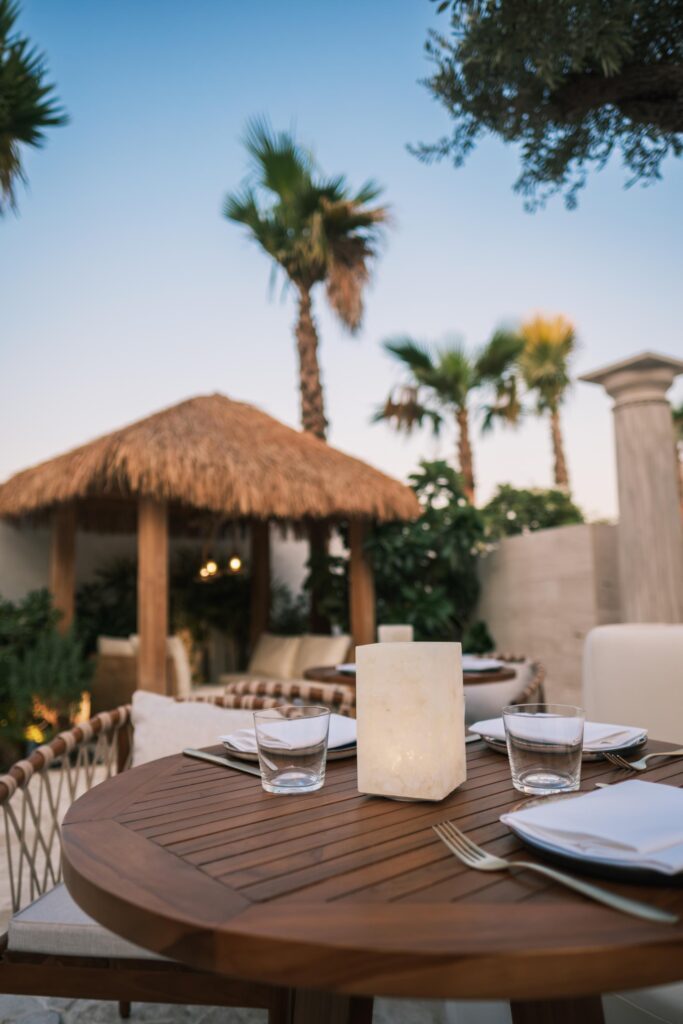
Garden dining area
Around it, the garden unfolds through the five elements – earth, water, fire, air, and space, creating a sensory equilibrium rather than a decorative landscape. Crystals are embedded across the site, reinforcing energetic intentions, while bees move freely throughout the gardens, signalling a thriving natural habitat.
Architecture Between Indoors and Outdoors
Spatially, Sohum flows between enclosed and open environments. Sunken seating areas and cabanas offer places for rest, observation, and quiet conversation, while private cabanas are reserved for more intimate or curated experiences. Seating takes cues from the French Riviera, and is relaxed, human-scaled, and informal.
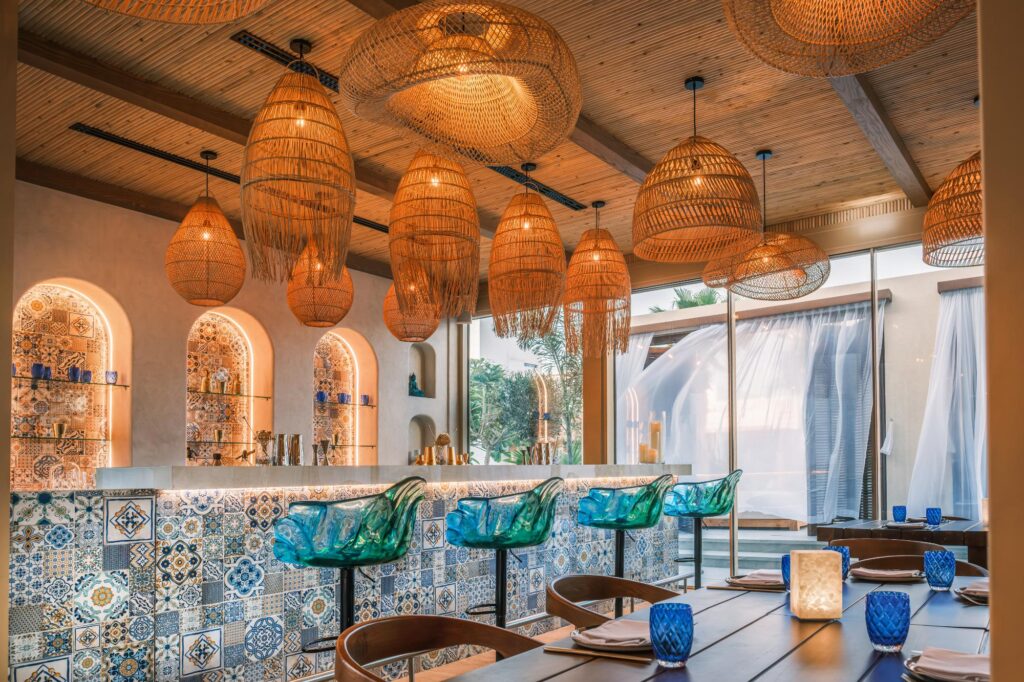
Cafe bar
In the design of space, materiality plays a grounding role. For instance, the stone cladding imported from Egypt gives the architecture a sense of permanence, while a large glass-door zone creates a porous boundary between interior and exterior. This transitional space hosts events, sound healing sessions, private gatherings, and celebrations.
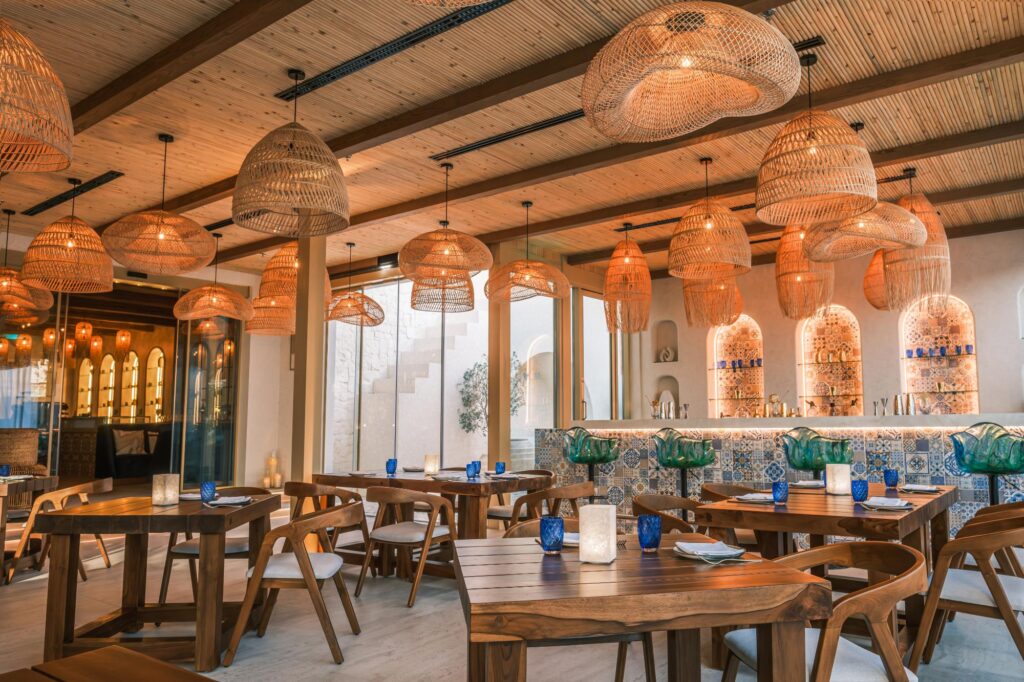
Cafe dining area
An indoor cafeteria continues the sanctuary’s philosophy, supporting nourishment as part of wellness with a sustainable, vegan assortment of dishes.
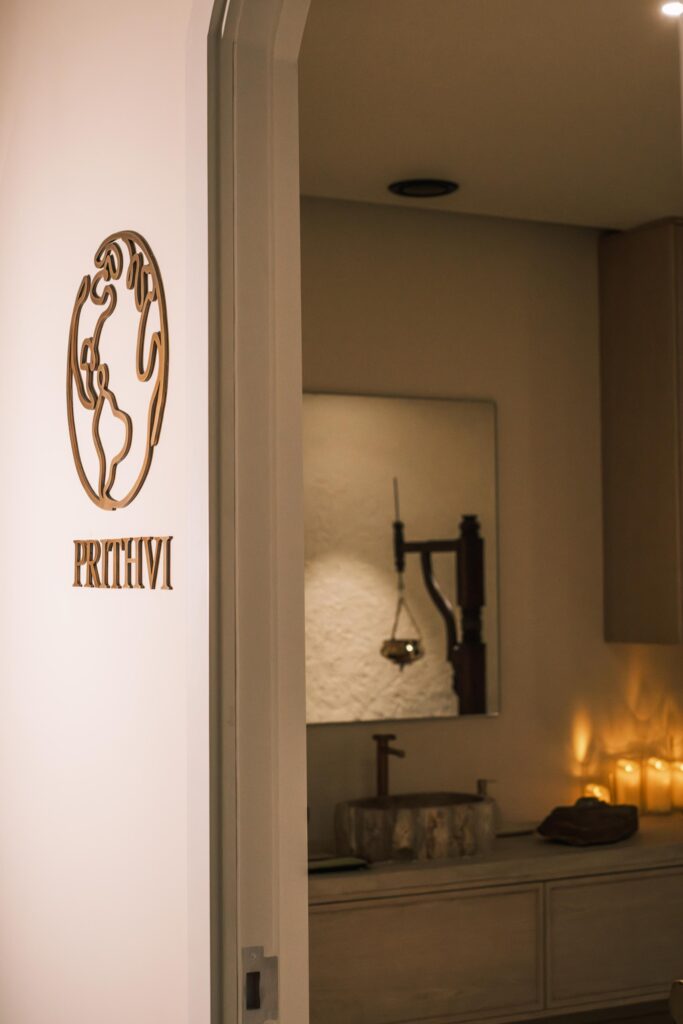
‘Prithvi’ room
Rooms Designed for Inner States
Each interior space at Sohum is designed around a specific mental and energetic state. The room called ‘Samskara’ functions as a quiet, introspective room for yoga, meditation, sound healing, and corporate wellness sessions. The space is acoustically calm and visually restrained, as it supports deep inward focus.
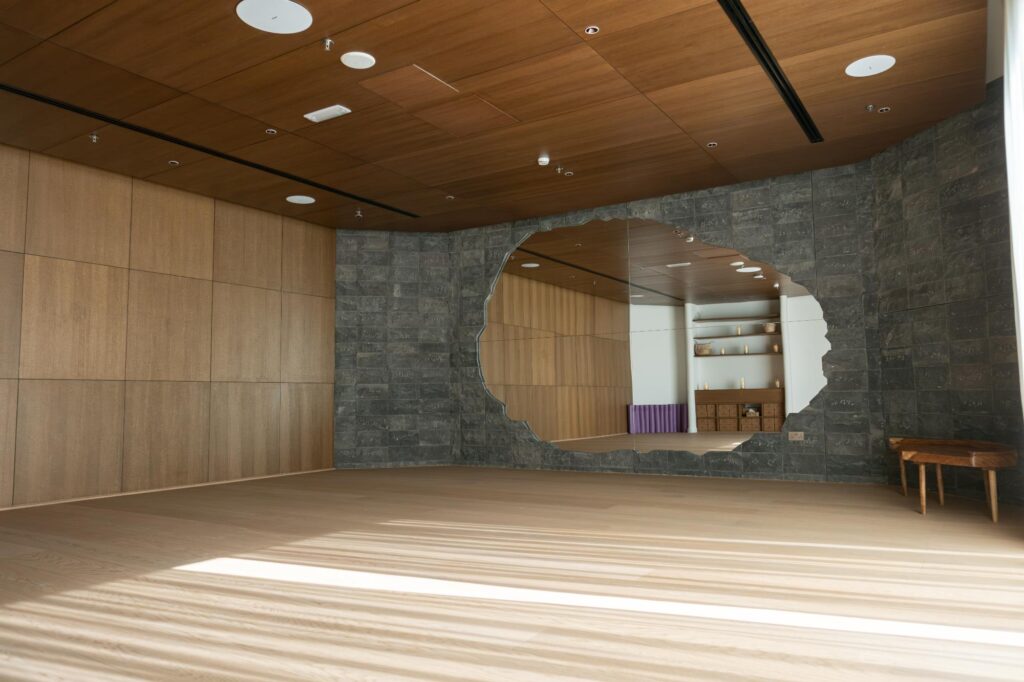
‘Karma’ room
The ‘Moksha’ room is dedicated entirely to meditation and Chi Gong, lined with Himalayan salt bricks that soften light and alter the atmosphere.
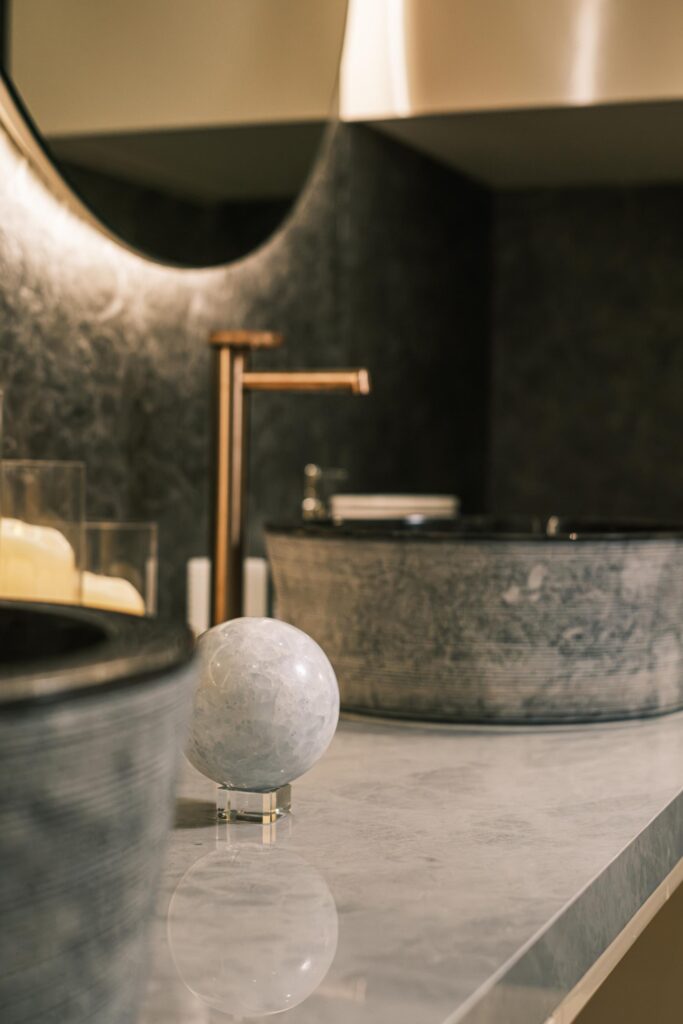
Details in the ‘Chandra’ room
The ‘Karma’ room, accommodating up to 20 people, is equipped with a projector and screen, allowing it to host workshops, presentations, and guided sound meditations.
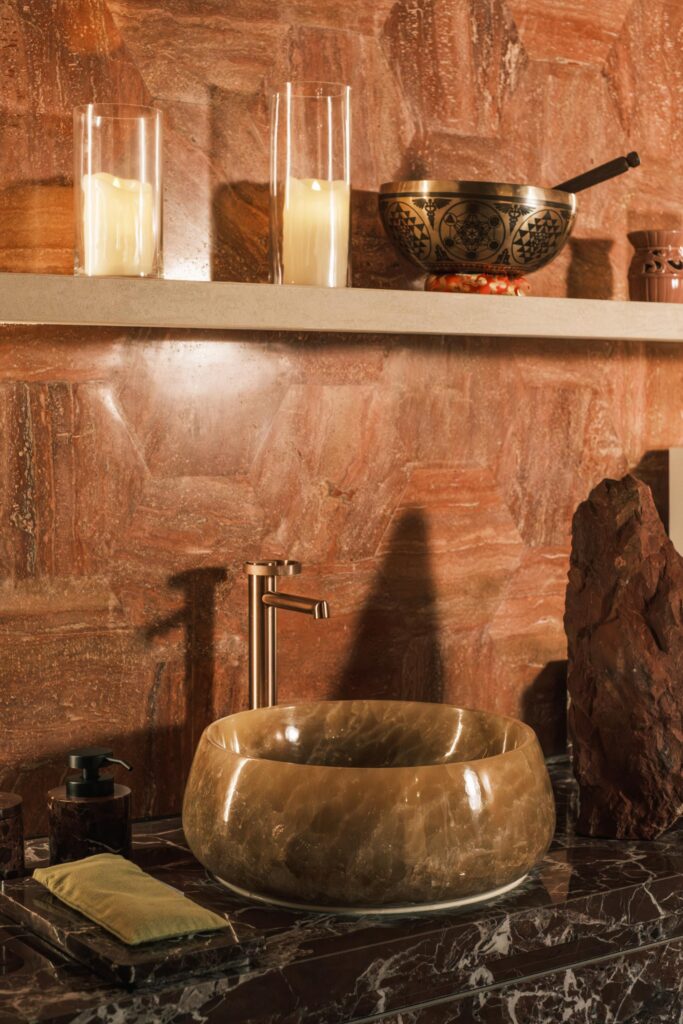
Details in the ‘Agni’ room
Every room at Sohum is fully customised with varying colours and textures like the basins, beds, ceiling and wall design, ensuring no spatial experience is repeated.
The Ayurvedic Philosophy
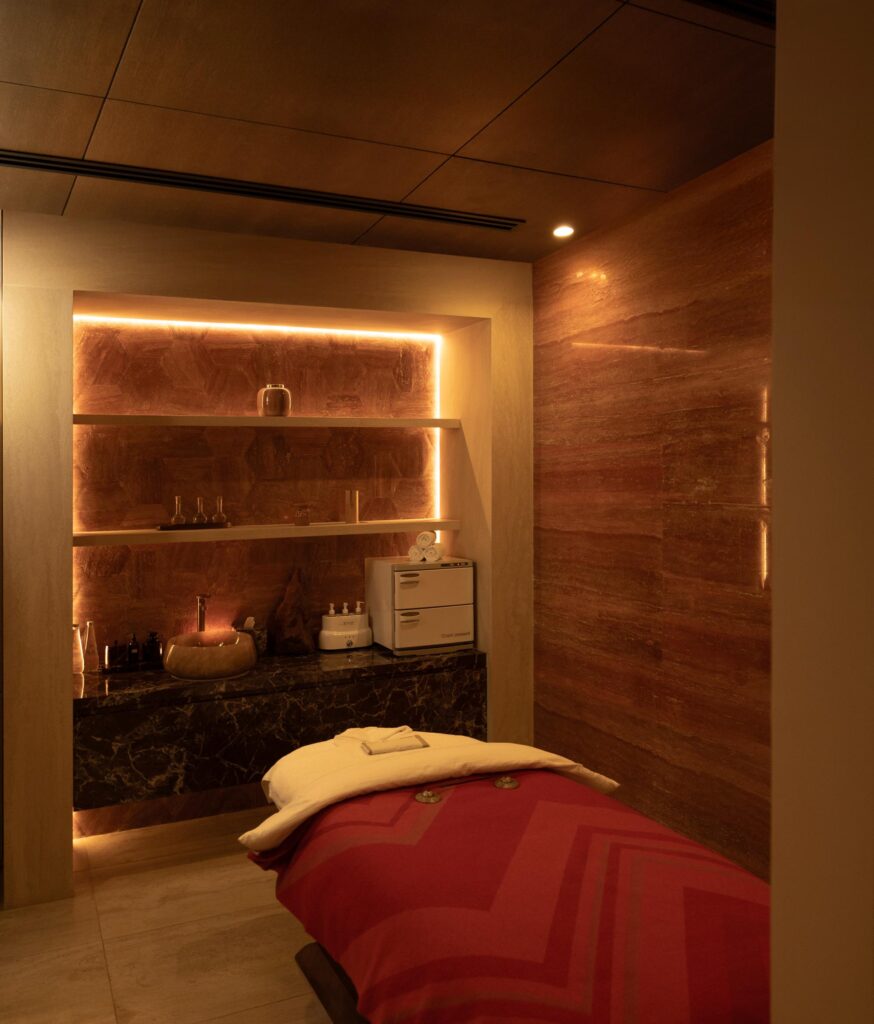
Agni’ room
Sohum’s spa environments deepen the elemental narrative. ‘Prithvi’ (earth), ‘Surya’ (sun), ‘Agni’ (fire) and ‘Vayu’ (air) are single treatment rooms, while ‘Chandra’ (moon) serves as a double spa. Each elemental space carries a distinct scent profile, wall texture, and material palette, reinforcing sensory immersion.
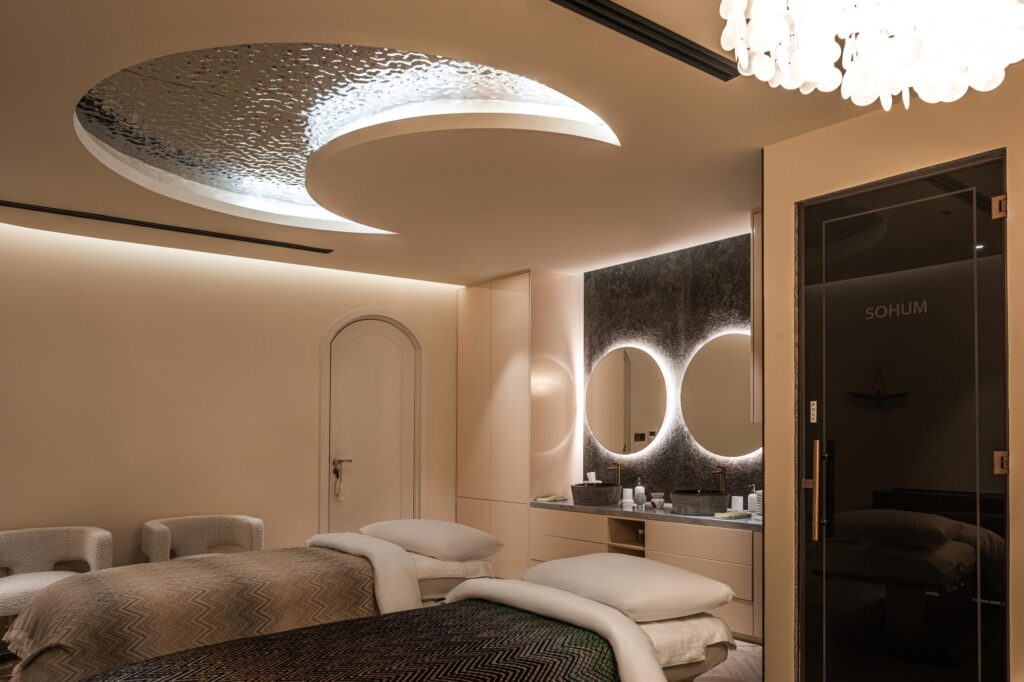
‘Chandra’ room with the ceiling designed to represent the moon
Underpinning these experiences is Ayurveda. Treatments are personalised according to individual doshas such as Vata, Pitta, or Kapha, and designed to enhance circulation, detoxify the body, calm the nervous system, and restore vitality. For Tanya, the founder, Ayurveda is not a trend but a lived philosophy, one that aligns seamlessly with her belief in long-term, nature-led healing.
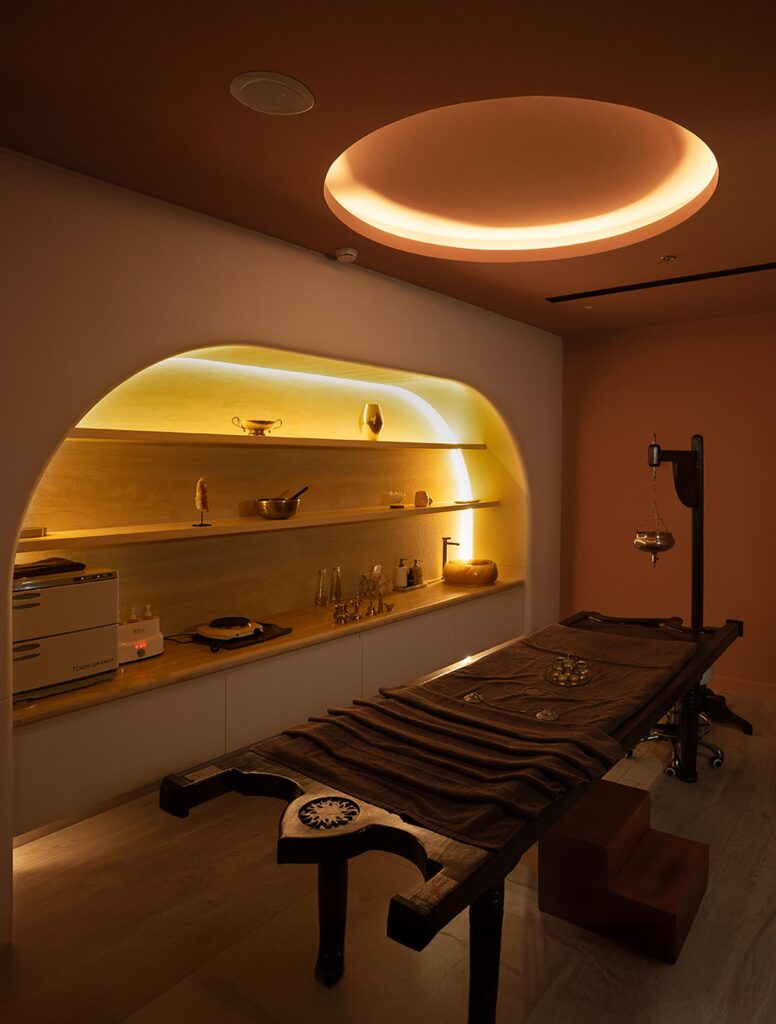
‘Surya’ room
Sohum Wellness Sanctuary is not designed to impress through excess. Instead, it holds space for stillness, for transformation, for balance to emerge naturally. As Tanya believes, when peace is created within the mind, it begins to shape life itself. That is why Sohum offers not escape, but return.