Oman Pavilion presents Zīnah at Venice Biennale 2026
At the 61st International Art Exhibition — La Biennale di Venezia, the Sultanate of Oman presented Zīnah (Adornment), an immersive and participatory installation by Omani artist, architect, and curator Haitham Al Busafi.
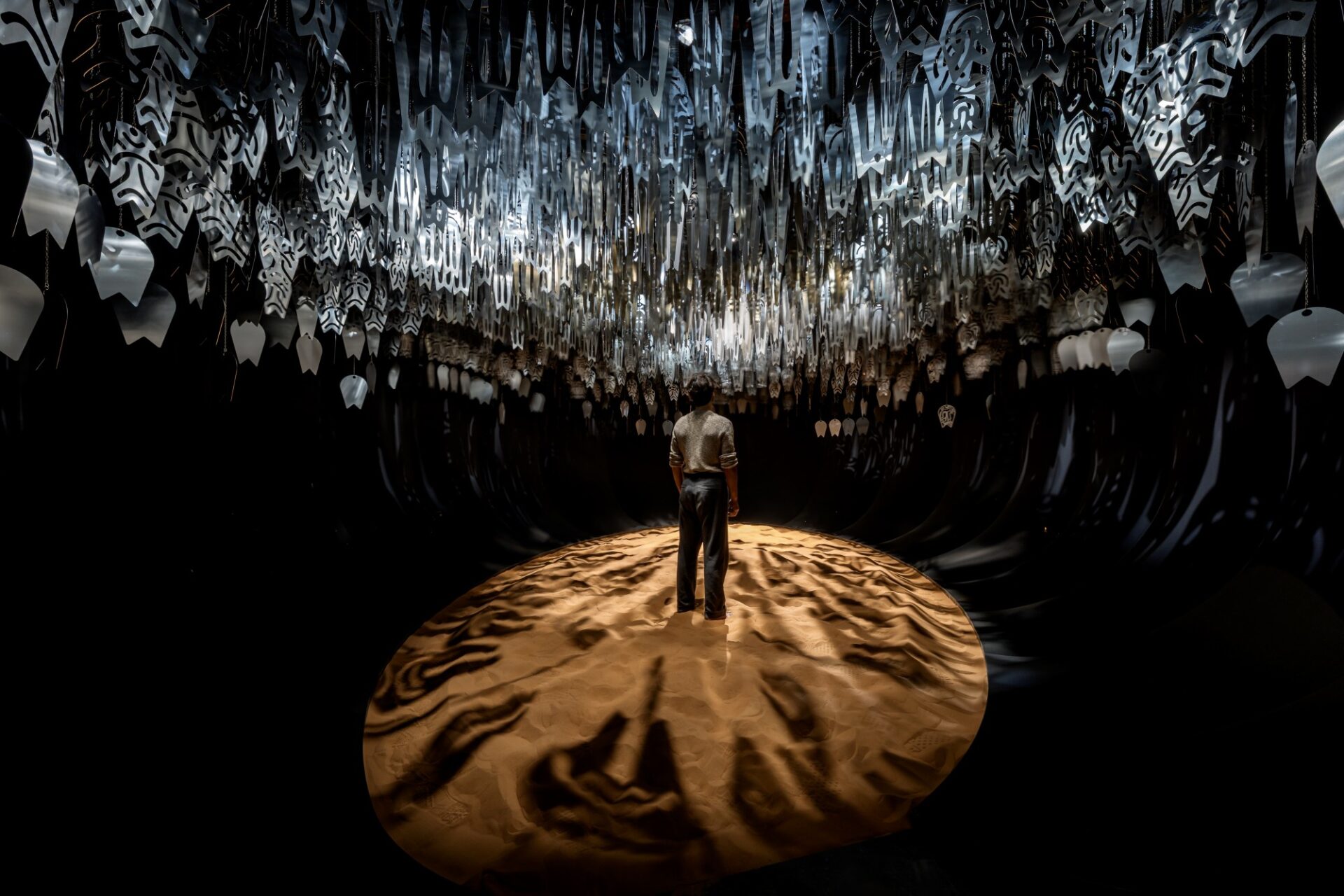
Haitham Al Busafi, Zīnah (Adornment), 2026. Pavilion of the Sultanate of Oman at Biennale Arte 2026. Courtesy_ Ministry of Culture, Sports and Youth, Sultanate of Oman
Commissioned by the Ministry of Culture, Sports and Youth, the pavilion transforms the Omani tradition of “al-zaanah”, the adornment of horses with silver, into a spatial and sonic experience built from sand, suspended metal, and collectively generated sound.
Presented at the Arsenale Artiglierie from 9 May to 22 November 2026, the work unfolds not as a conventional exhibition, but as an environment that visitors move through and activate. The pavilion responds closely to the Biennale’s curatorial framework, In Minor Keys, by privileging atmosphere, resonance, and sensory encounter over spectacle. Yet within this quieter language lies a deeply rooted cultural proposition: one that positions adornment not as decoration, but as recognition, dignity, and care.
A Pavilion Built Through Movement
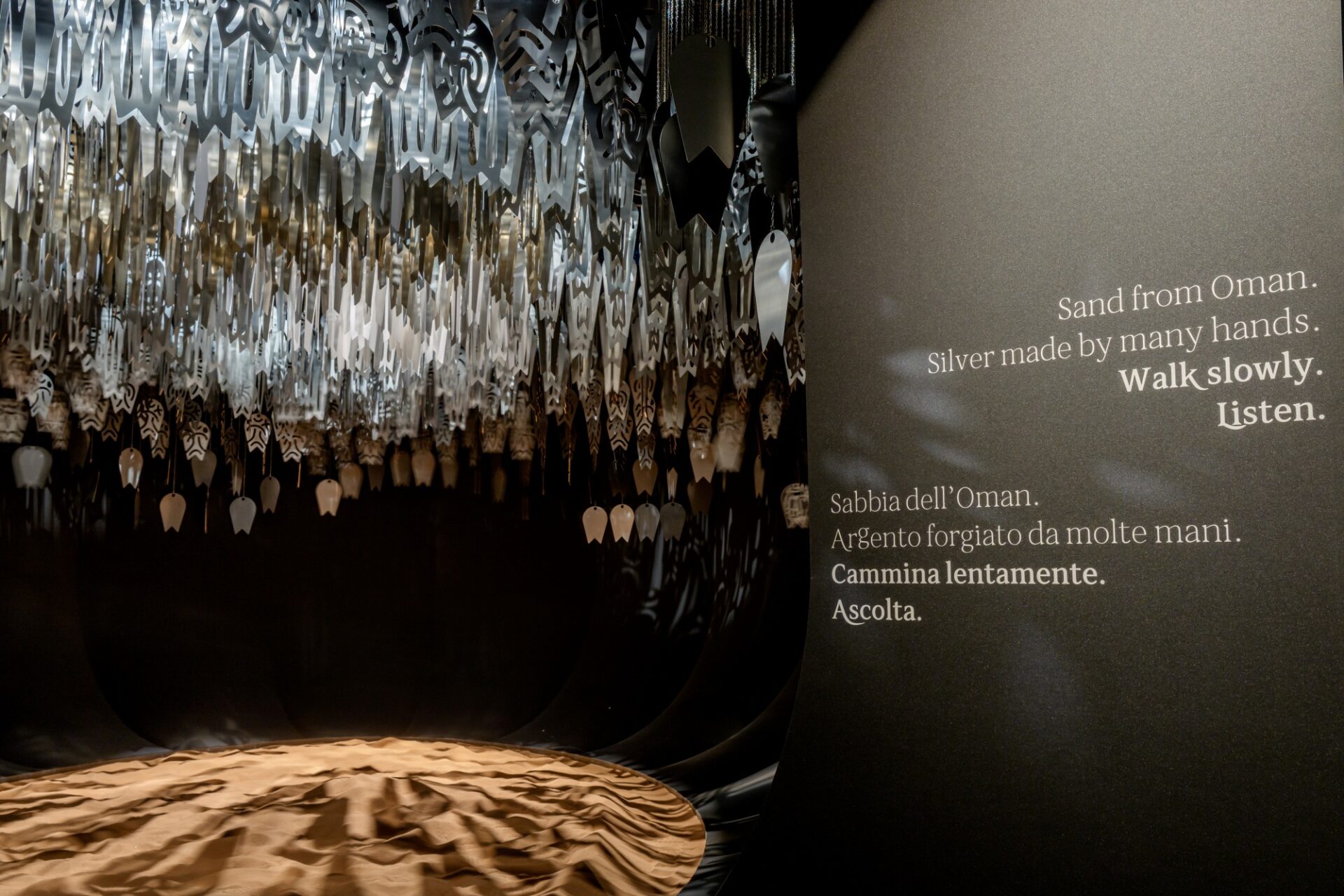
Haitham Al Busafi, Zīnah (Adornment), 2026. Pavilion of the Sultanate of Oman at Biennale Arte 2026. Courtesy_ Ministry of Culture, Sports and Youth, Sultanate of Oman
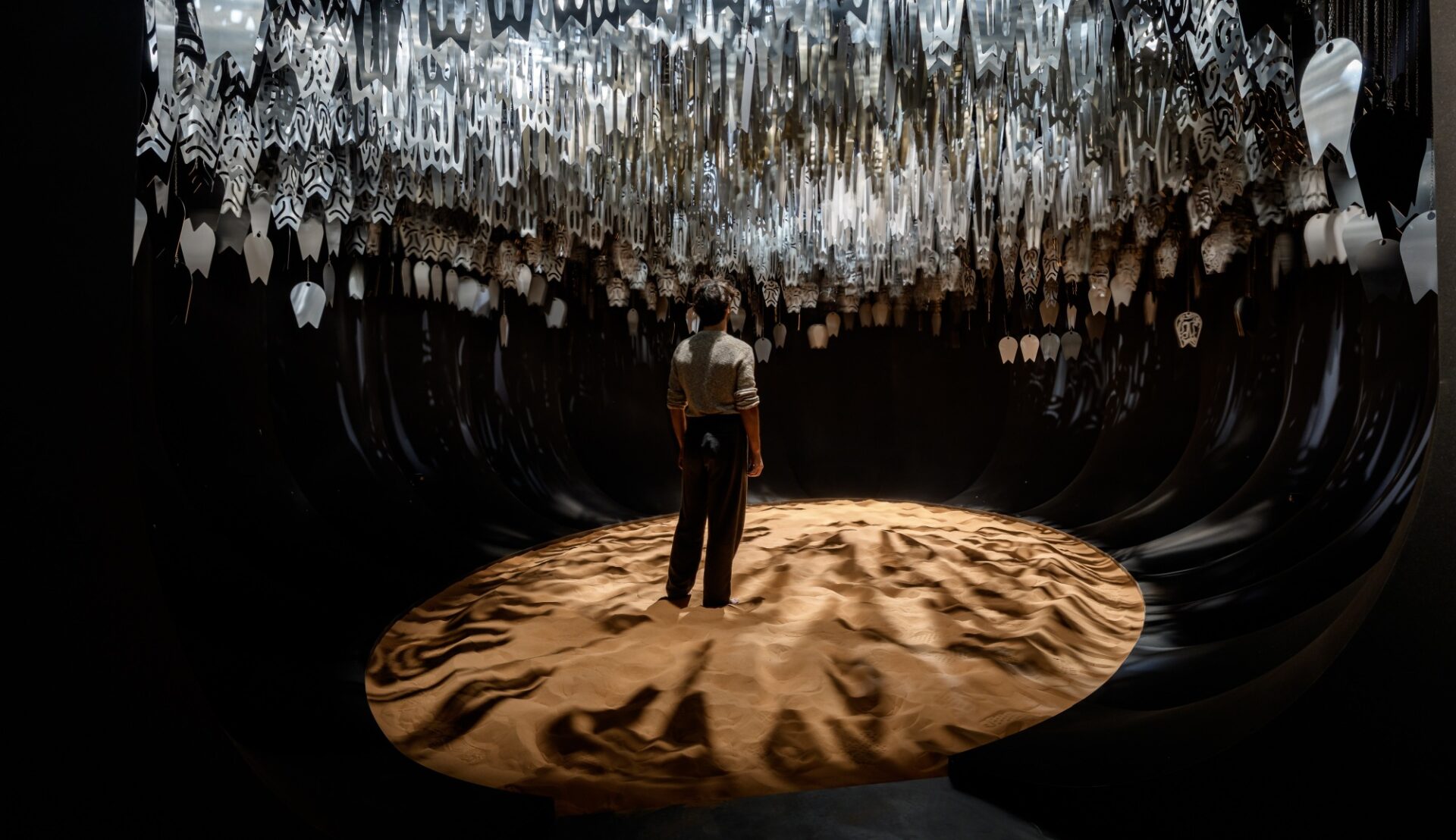
Visitors enter Zīnah through a darkened passage, arriving at a field of Omani desert sand beneath a canopy of suspended silver forms inspired by al-zaanah. As they move through the space, the installation responds. The suspended metal sways and chimes, transforming footsteps into sound and turning the pavilion into a responsive environment.
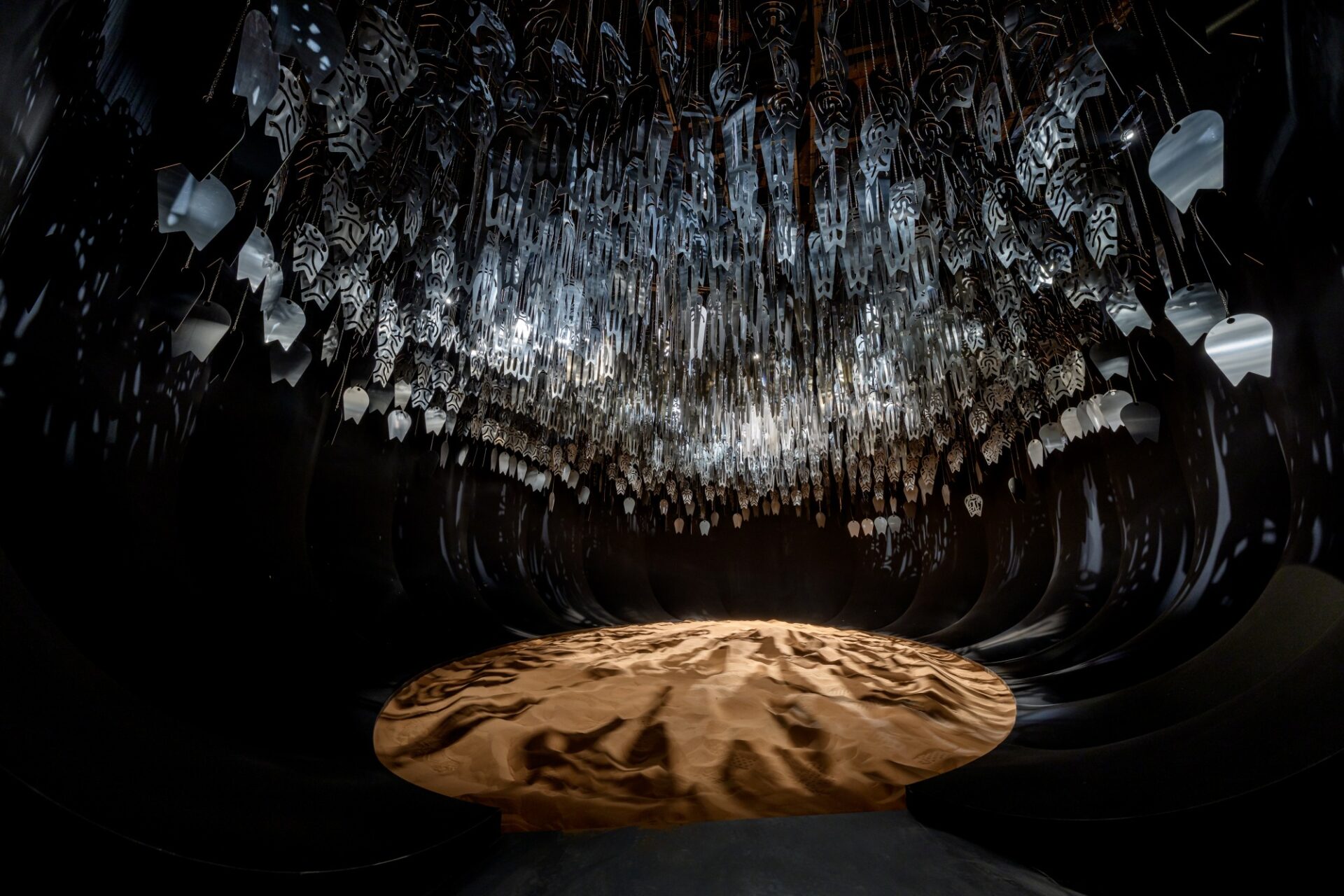
Haitham Al Busafi, Zīnah (Adornment), 2026. Pavilion of the Sultanate of Oman at Biennale Arte 2026. Courtesy_ Ministry of Culture, Sports and Youth, Sultanate of Oman
For Haitham, being both artist and curator shaped the project fundamentally. The conceptual narrative and the physical experience were inseparable.
“As an artist, I was concerned with how the work would be felt in the body: the resistance of sand underfoot, the shimmer of metal above, the sound that emerges through movement,” he explains. “As curator, I had to hold a wider responsibility: how this experience carries Omani memory, how it speaks within the Biennale, and how it avoids reducing heritage into illustration or symbol.”
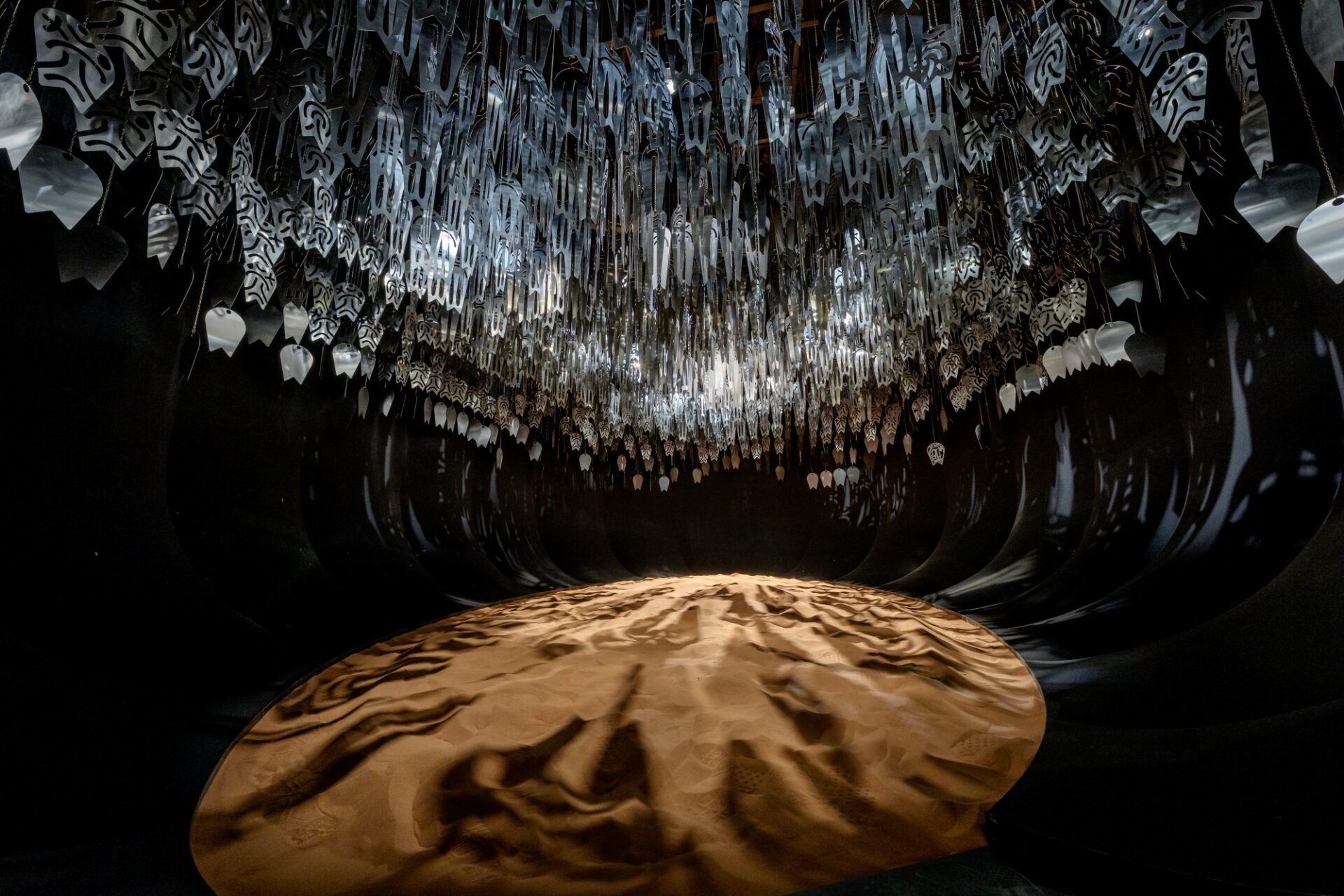
Haitham Al Busafi, Zīnah (Adornment), 2026. Pavilion of the Sultanate of Oman at Biennale Arte 2026. Courtesy_ Ministry of Culture, Sports and Youth, Sultanate of Oman
The work begins with the cultural practice of adorning horses with silver in Oman. But rather than presenting the tradition as an artefact or folkloric motif, Haitham transforms it into an immersive spatial condition.
“In Omani culture, the horse is not simply an instrument of movement or labour; it is a companion in pride and dignity. To adorn the horse is to recognise it as worthy of beauty,” he says.
This idea becomes the conceptual inversion at the heart of the pavilion. Historically, the horse moved through sand carrying silver adornments. In Zīnah, visitors themselves move through sand while the silver hovers and responds above them.
“The artwork is not only something to look at, but it also asks each visitor to experience, however briefly, what it means to be answered by a space, and to be declared worthy of attention,” Haitham reflects.
Reframing Omani Material Culture in Venice
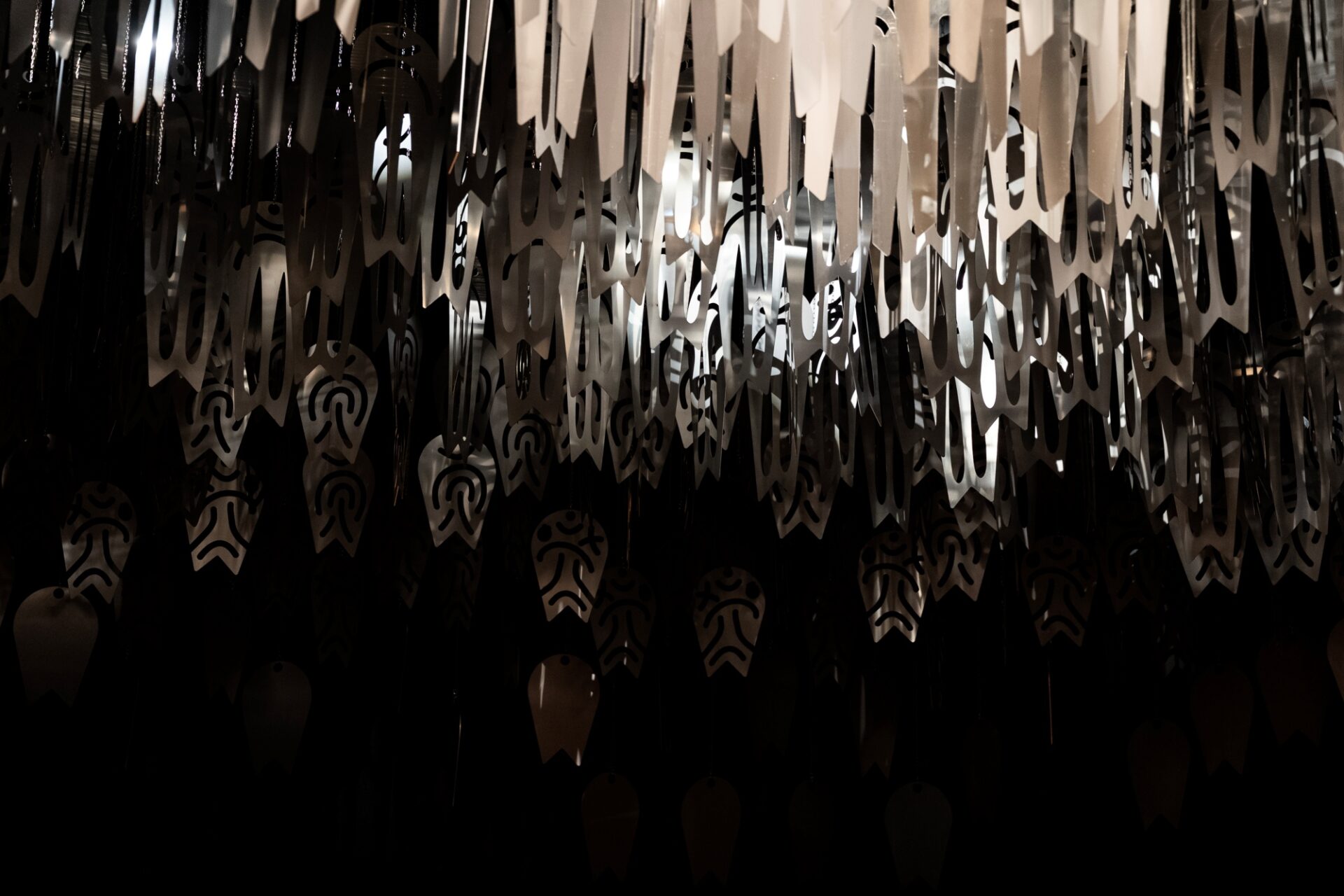
Haitham Al Busafi, Zīnah (Adornment), 2026. Pavilion of the Sultanate of Oman at Biennale Arte 2026. Courtesy_ Ministry of Culture, Sports and Youth, Sultanate of Oman
Rather than softening or abstracting its origins for an international audience, the pavilion insists on the specificity of its materials and references.
“I do not see specificity as a limitation,” Haitham says. “In fact, I think the more precise a work is in its origin, the more deeply it can resonate elsewhere.”

Haitham Al Busafi, Zīnah (Adornment), 2026. Pavilion of the Sultanate of Oman at Biennale Arte 2026. Courtesy_ Ministry of Culture, Sports and Youth, Sultanate of Oman
The sand, sourced from Oman’s desert landscapes, becomes an active element rather than a scenographic backdrop. It alters how visitors move, forcing a slower pace and a heightened bodily awareness.
“The desert is generative. It holds histories of movement, endurance, and horsemanship,” he explains. “When visitors step onto the sand in Venice, their pace changes. They have to slow down. Their body begins to negotiate the work before the mind explains it.”
Similarly, the suspended metal forms are not treated as decorative objects. Enlarged and abstracted from traditional “al-zaanah”, they become architecture, instrument, and atmosphere simultaneously.
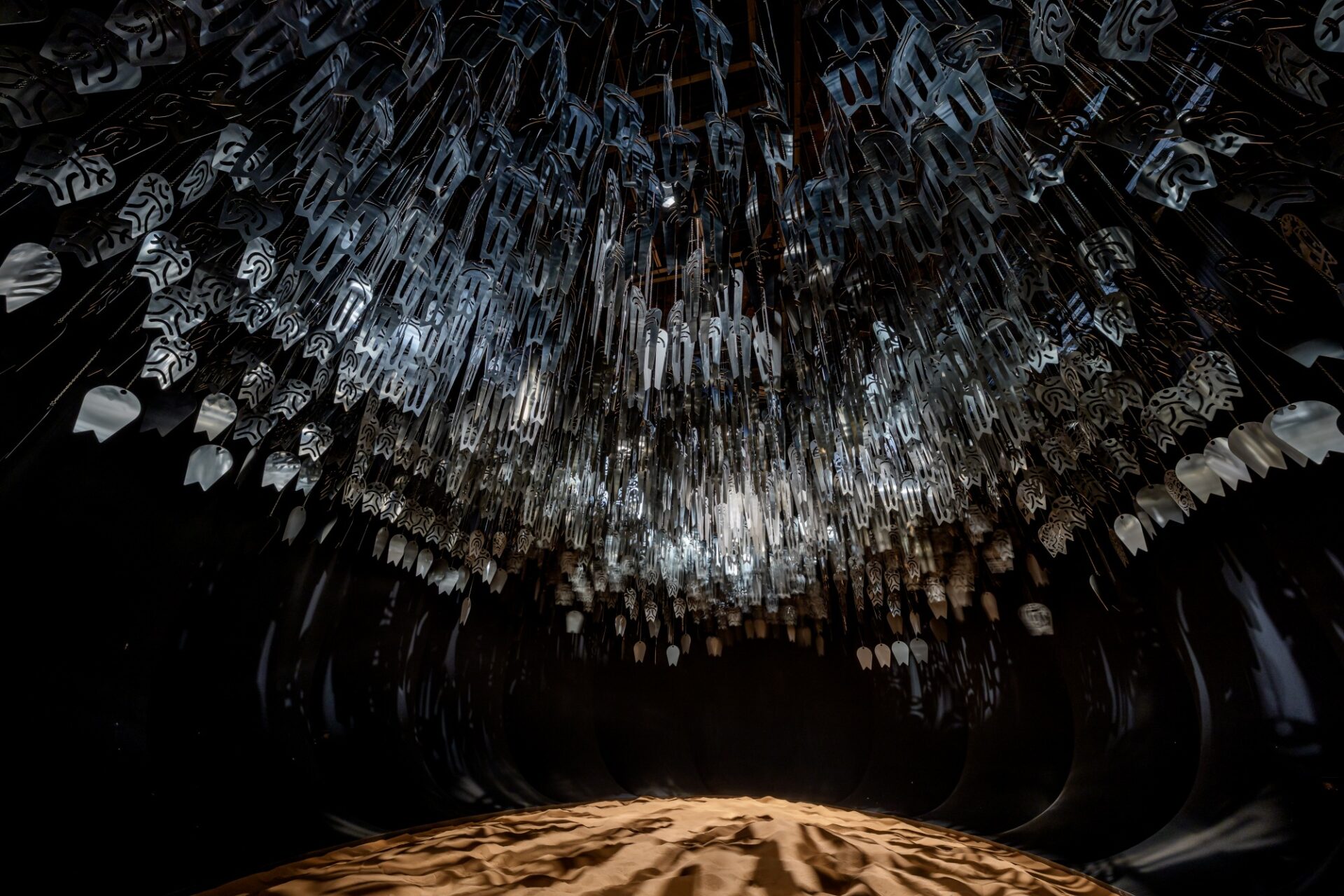
Haitham Al Busafi, Zīnah (Adornment), 2026. Pavilion of the Sultanate of Oman at Biennale Arte 2026. Courtesy_ Ministry of Culture, Sports and Youth, Sultanate of Oman
Sound emerges not through technology imposed onto the installation, but through collective presence itself.
“As people walk, the movement activates the suspended metal. The room answers them,” Haitham says. “In that sense, Venice becomes not a place where Omani heritage is displayed, but a place where it is reactivated.”
Responding to “In Minor Keys”
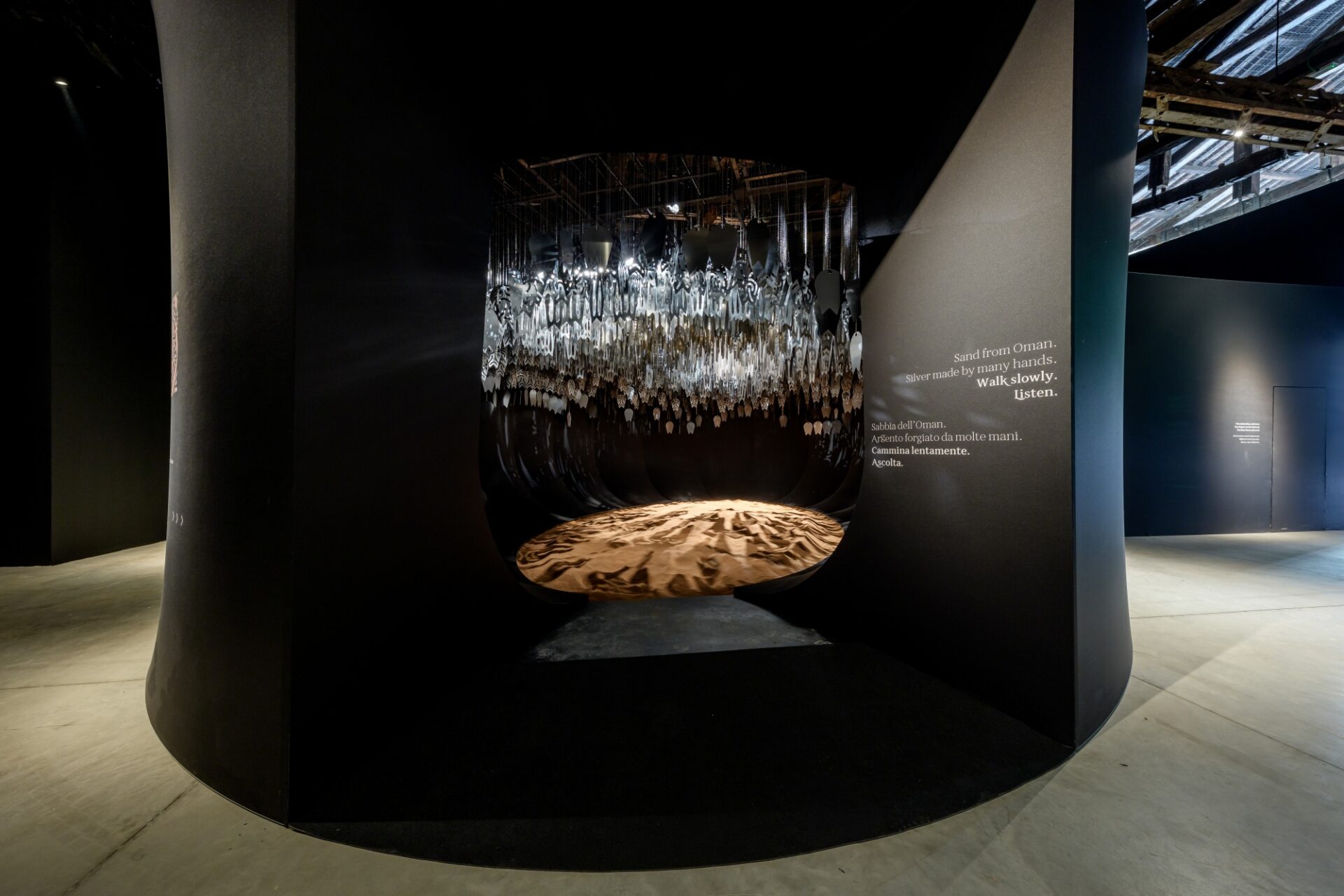
Haitham Al Busafi, Zīnah (Adornment), 2026. Pavilion of the Sultanate of Oman at Biennale Arte 2026. Courtesy_ Ministry of Culture, Sports and Youth, Sultanate of Oman
The pavilion aligns closely with the 2026 Biennale’s curatorial direction, which foregrounds quieter, introspective artistic practices. For Haitham, this offered an opportunity to articulate Oman’s cultural voice through restraint rather than monumentality.
“For me, strength does not always need to be loud,” he says. “Oman’s cultural voice has often carried itself through restraint, precision, hospitality, and depth.”
Rather than overwhelming visitors with information or spectacle, *Zīnah* asks for attentiveness.
“The pavilion is dark, intimate, and responsive. It asks for attention rather than consumption,” he notes.
The installation also resonates strongly with the Biennale’s theme through what the artist describes as “quiet forces”: friction, shimmer, breath, weight, and sound. The project is presented in honour of the late Koyo Kouoh, whose curatorial vision called for art rooted in resonance rather than spectacle.
At the same time, Haitham insists that the pavilion remains unmistakably Omani in its cultural grounding.
“Al-zaanah is not widely known internationally, and even within Oman it carries a quiet, almost hidden knowledge,” he says. “By bringing it to Venice, I am not treating it as folklore.”
Beauty, Care, and Recognition in a Fragmented World
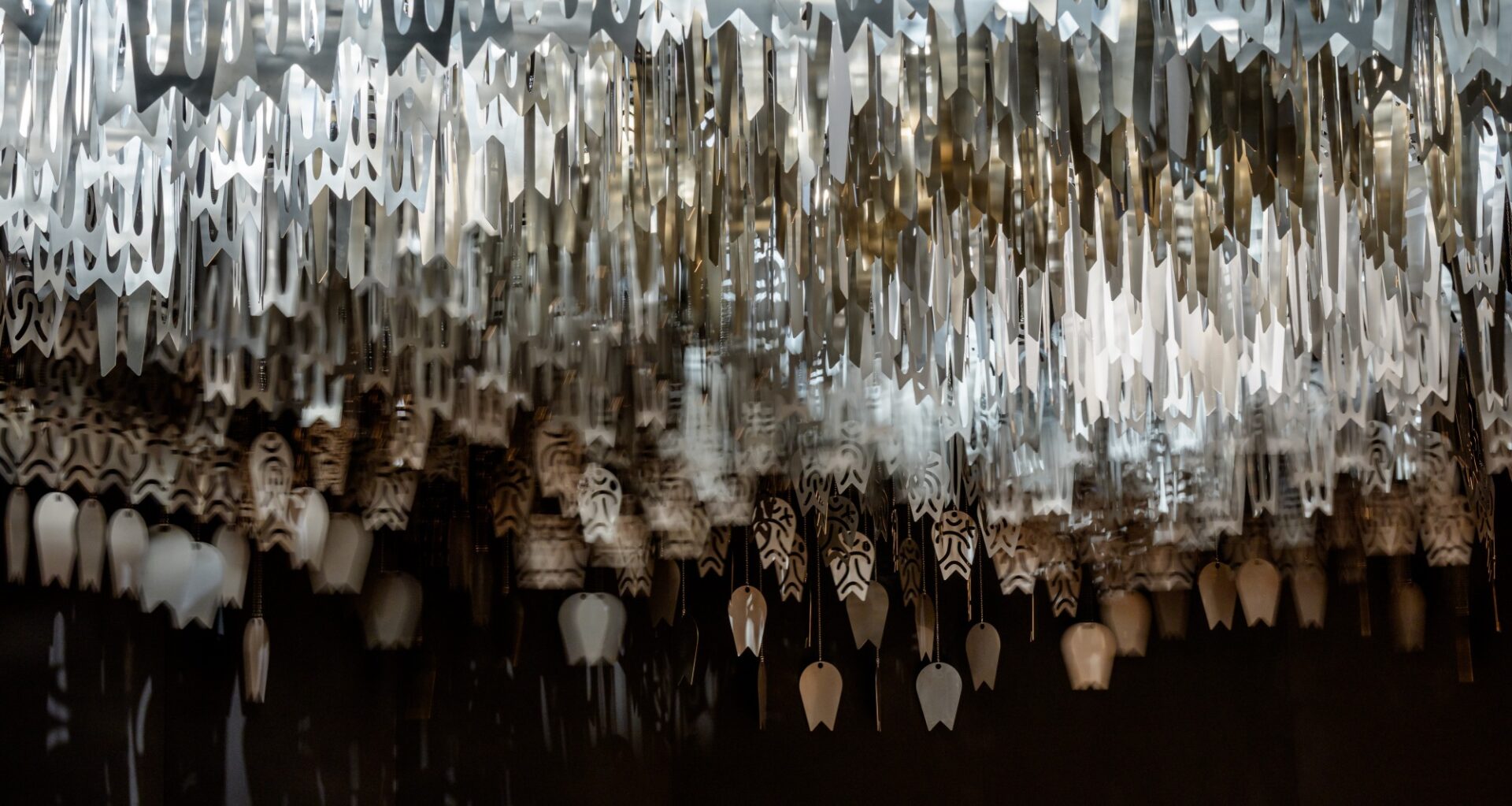
Haitham Al Busafi, Zīnah (Adornment), 2026. Pavilion of the Sultanate of Oman at Biennale Arte 2026. Courtesy_ Ministry of Culture, Sports and Youth, Sultanate of Oman
At a moment when much of the Arab region is marked by instability and conflict, *Zīnah* offers a different kind of proposition, one rooted in relation, continuity, and shared dignity.
“I am cautious about asking art to solve what politics has failed to resolve,” Haitham says. “But art can change the conditions under which something is felt, remembered, or recognised.”
For him, the central gesture of adornment carries an urgent contemporary resonance.
“To adorn another being is to refuse indifference,” he explains. “It is to say: you matter, you are seen, you are worthy of care.”
The pavilion also reflects Oman’s own historical identity, shaped by maritime exchange and cultural movement across East Africa, South Asia, and the Indian Ocean world.
“Oman’s identity has never been closed or static,” he says. “It has been formed through encounter, return, and continuity.”
Importantly, the work treats continuity not as preservation for its own sake, but as transformation.
“A culture remains alive when it can transform its inherited forms into new experiences and new questions,” Haitham reflects.
Over the course of the Biennale, the sand will carry the traces of thousands of footsteps, while the installation’s soundscape will continue to evolve through collective movement and presence.
“By the end of the Biennale, the pavilion will hold a collective record of presence,” he says.
In many ways, this becomes the pavilion’s most powerful proposition. Not identity as enclosure, but identity as relation, one activated through beauty, care, movement, and recognition.
“Beauty, care, and recognition are not minor things,” Haitham concludes. “They may be among the most necessary forms of connection we have.”