House of Eternal Bliss from Thought Parallels
Ananda, a Sanskrit word for ultimate happiness, becomes a home that reaches inward as much as it reaches skyward, set against the dense urban fabric of Kerala. Designed by the power couple Ar. Nikhil Mohan and Shabna Nikhil, the creators of Thought Parallels, an architectural practice based in Calicut, epitomise Ananda through their design and aspirations. Photography: Syam Sreesylam
 A couple living in Dallas approached their homeland with a question that very few ask: not how to build a house, but how to build a feeling. Madhu and Mandy, well-travelled and aesthetically astute, broke from the clichéd script of residential briefs and asked instead for a space that could invoke physical and emotional well-being, a place of rest, tranquillity, and togetherness with family.
 The project, named Ananda by the client himself, a word derived from Sanskrit meaning eternal bliss or a state of ultimate happiness and fulfilment, set the philosophical register for everything that followed.
 Principal Architect Ar. Nikhil Mohan and Creative Director Shabna Nikhil of Thought Parallels Architecture translated this aspiration into a built work that is at once disciplined and deeply intuitive.
 “The architecture tried to resonate with Ananda in its own terms, a space which can invoke a sense of physical and emotional well-being. A place of rest, tranquillity, and togetherness with family,” explains Nikhil Mohan, Principal Architect, Thought Parallels Architecture.
The Roof as a Declaration
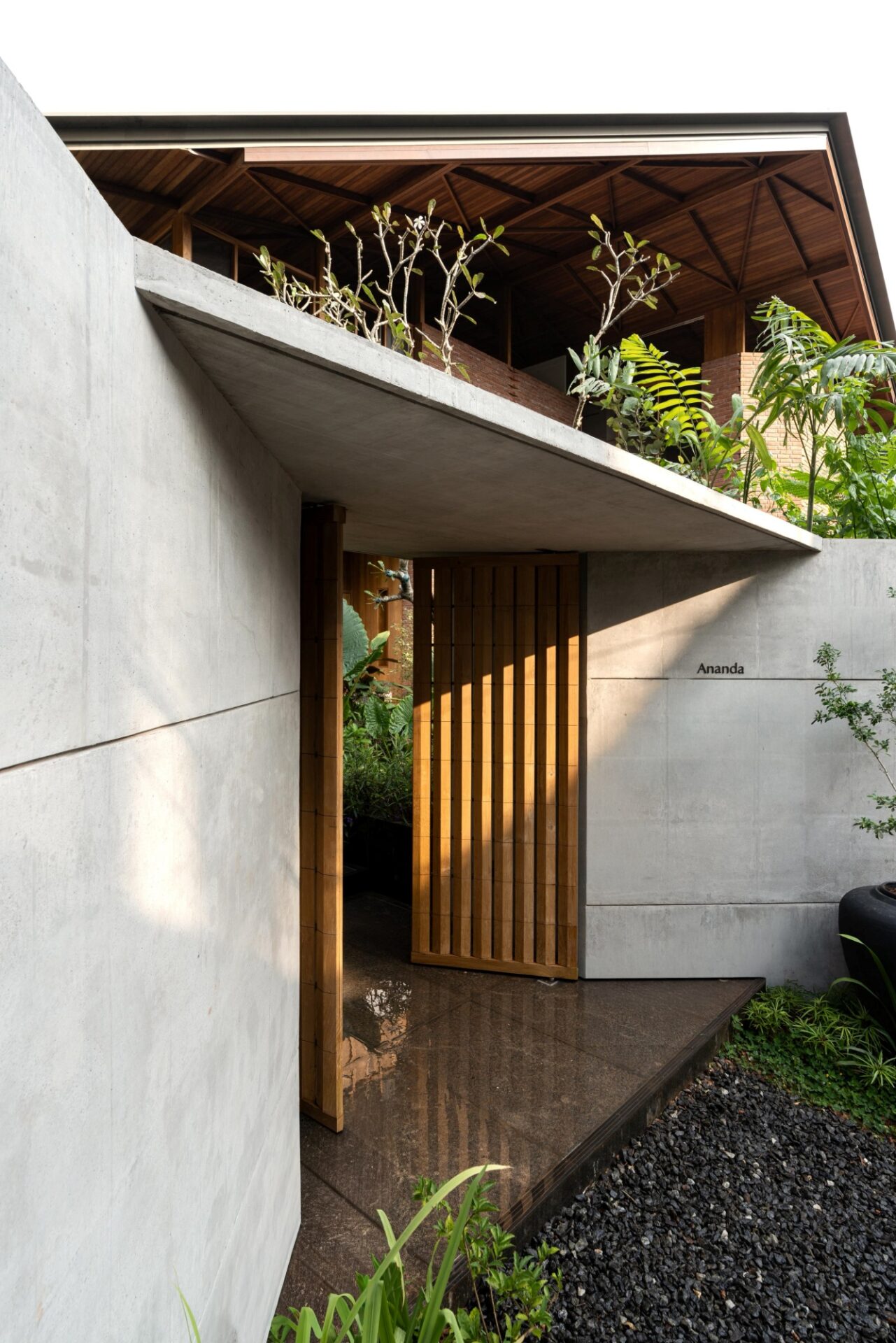
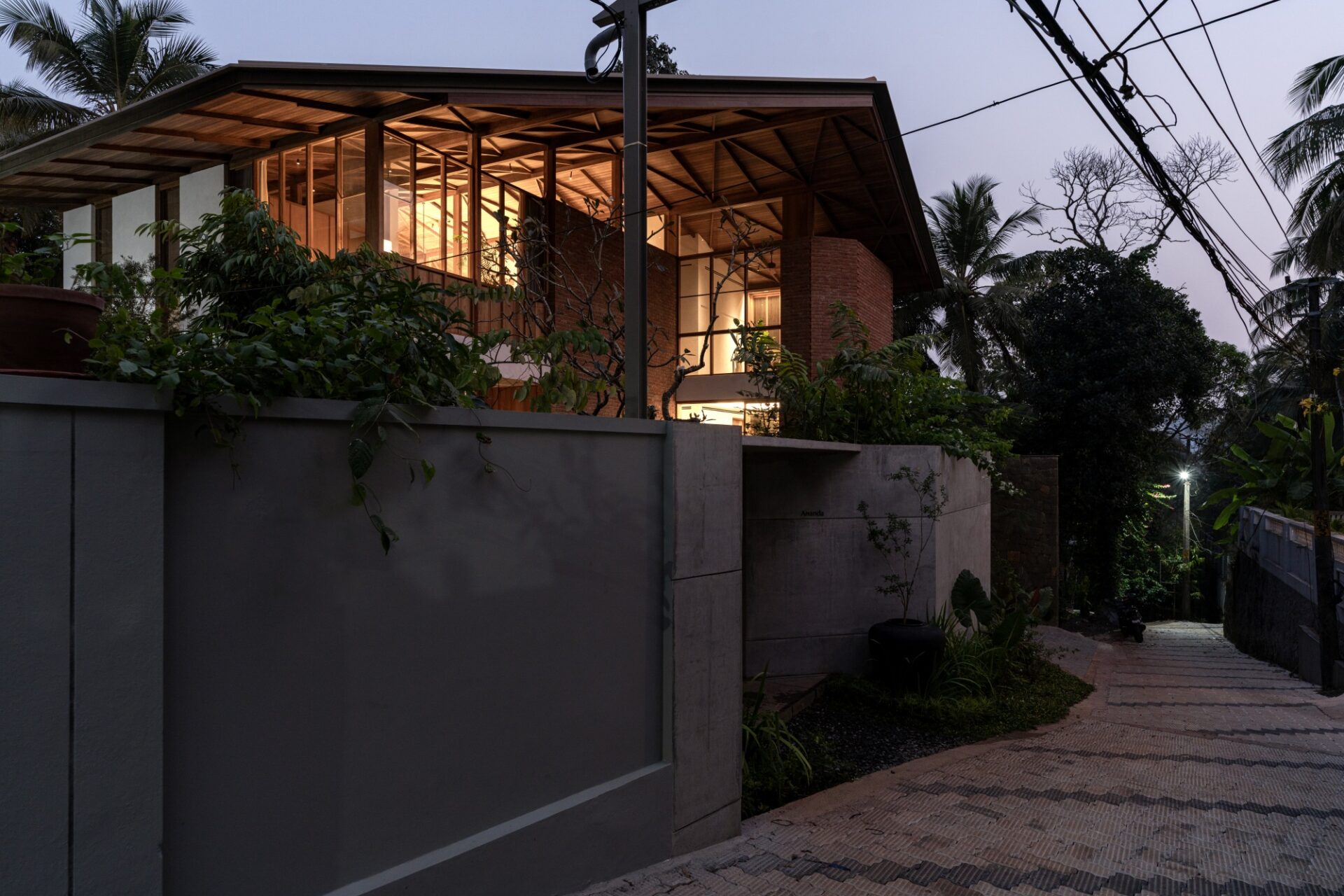 Situated within a dense urban fabric and accessed via a narrow thoroughfare, the site offered almost no opportunity for a conventional street elevation. Rather than fight the constraint, Thought Parallels reframed it entirely, redirecting the eye upward, toward the roof.
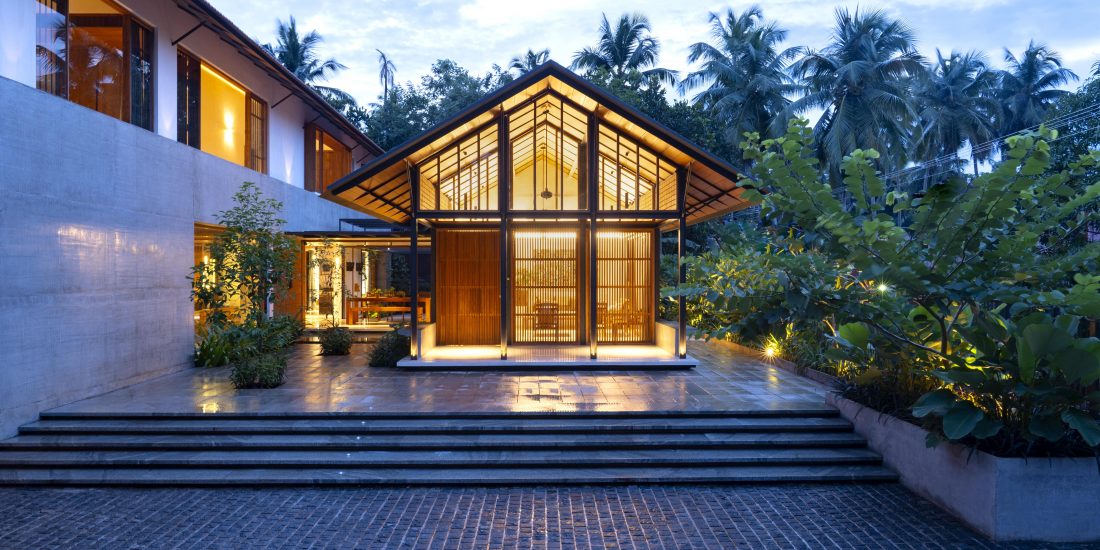
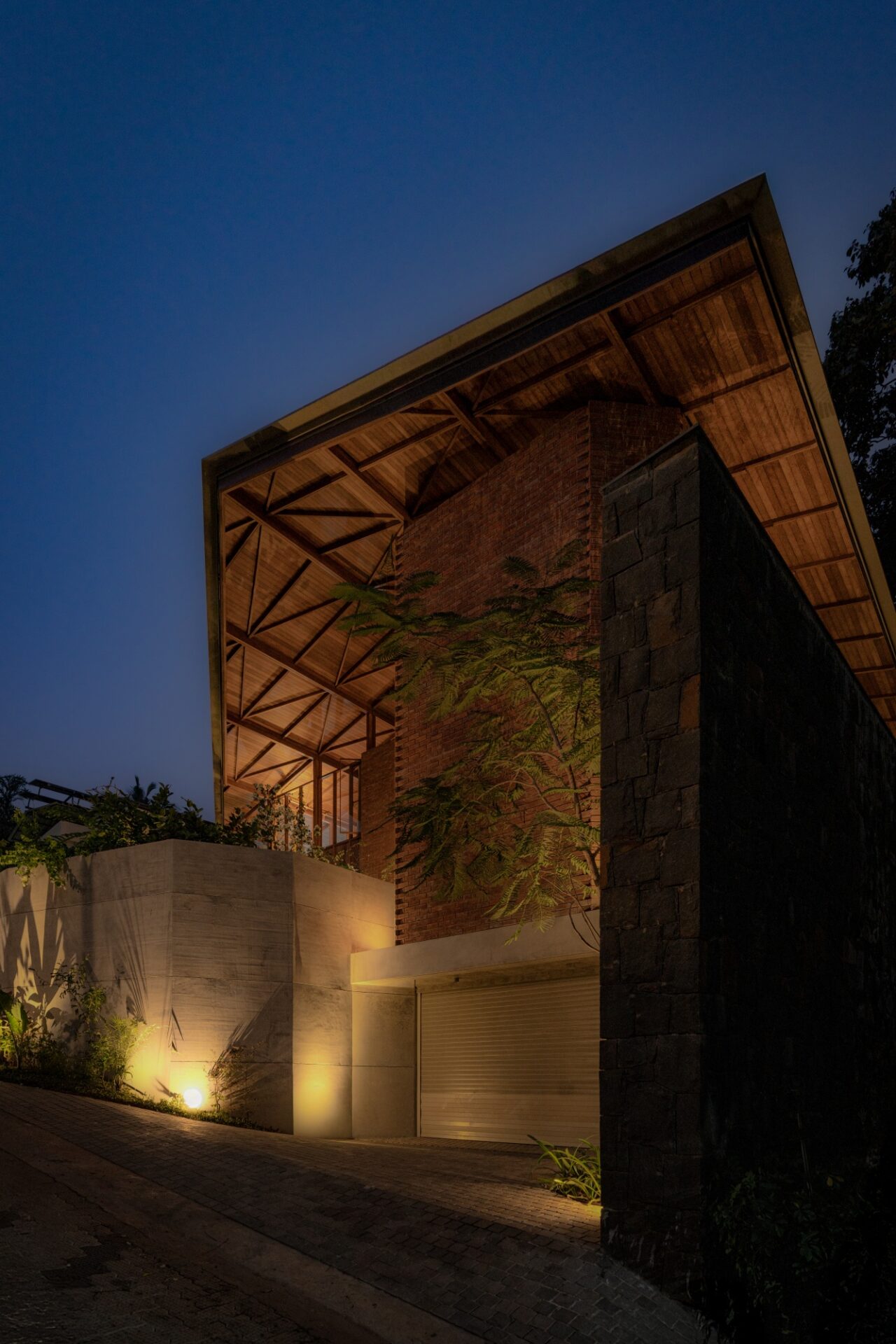
The expansive overhanging roof becomes the primary design anchor of the project: a commanding horizontal plane that is simultaneously functional and emblematic. It shelters, it defines, and it announces, performing the role that a grand façade might have played on a less hemmed-in plot.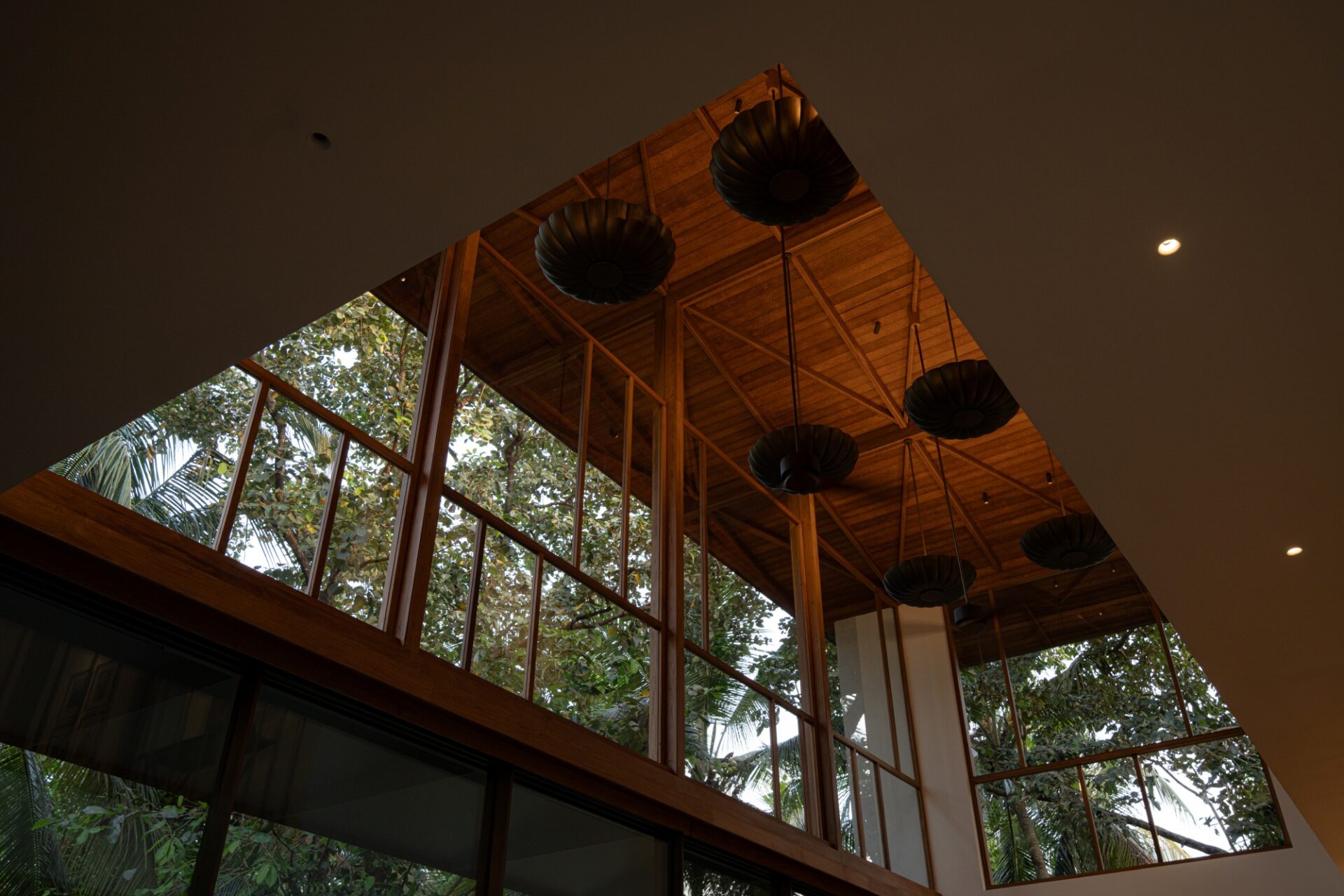 “Devoid of false ceiling, the main roof spans the whole house with large protruding overhangs acting as a protective element for the tropical climate of the region. We drove the eye towards the roof, which became the elevation,” says Nikhil Mohan.
The composite roof structure resolves both thermal performance and waterproofing in a single, elegant move, achieving what the architects describe as a very lightweight structural solution, one that defies the visual mass it implies.
A House Written in Section
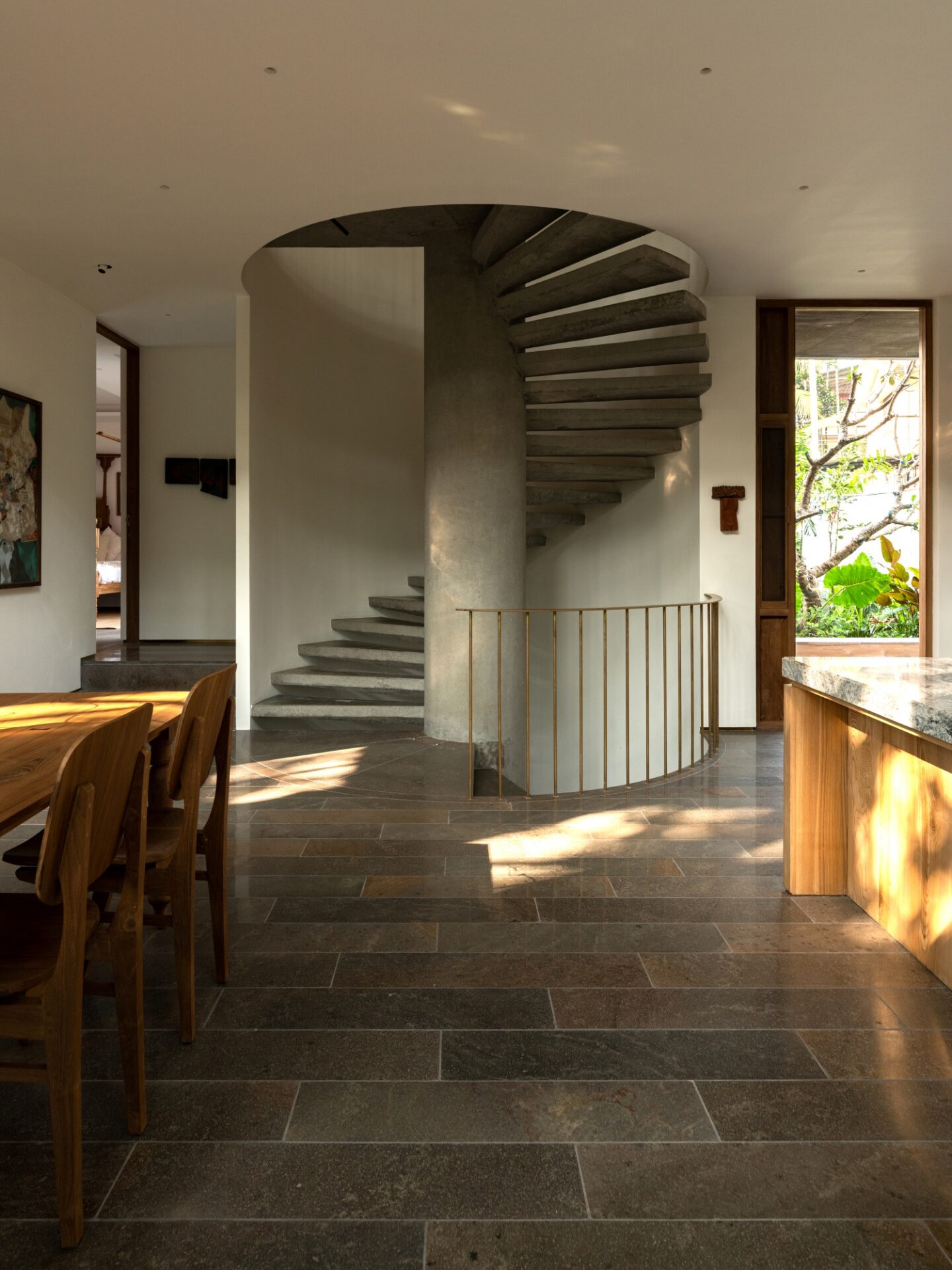 The sloping nature of the plot proved a gift in disguise. Integration of the existing topography allowed Nikhil Mohan to arrange the programme across levels with precision: vehicular entry is restricted to the lowest level, pedestrian entry arrives on the higher side, and all three floors are knitted together by a concrete spiral stair that delineates the plan in a particular, almost choreographic, way.
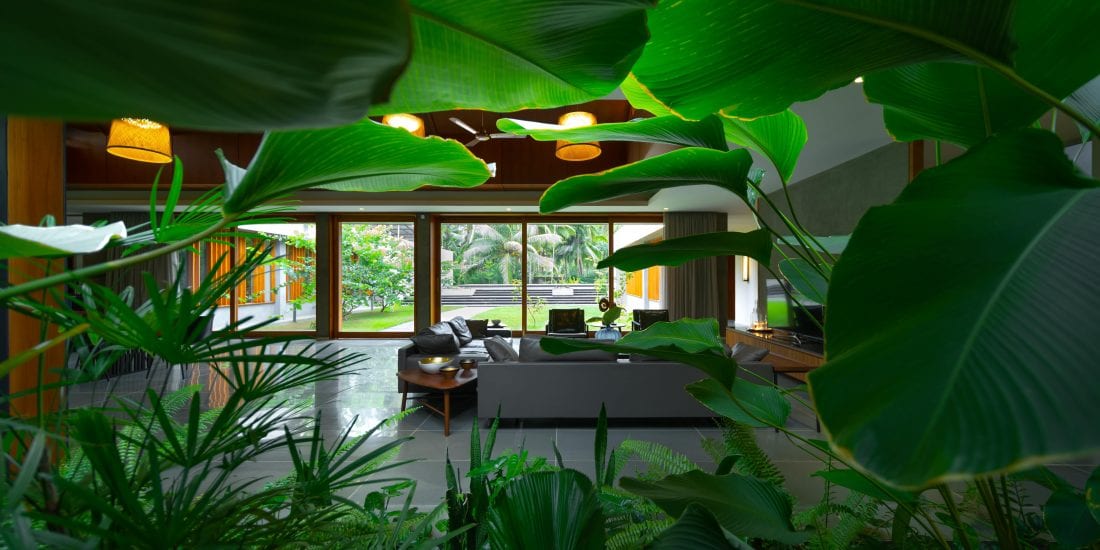
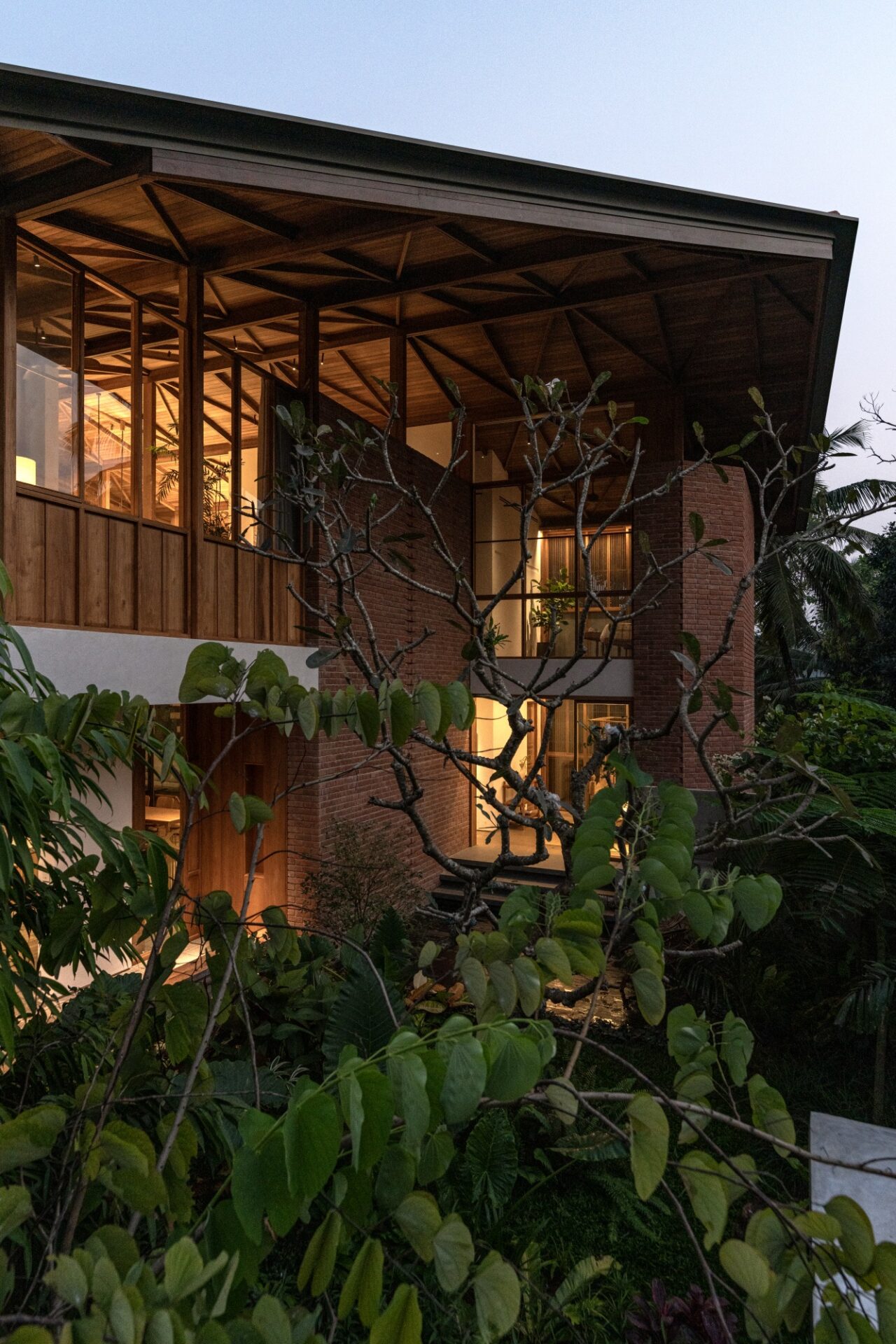
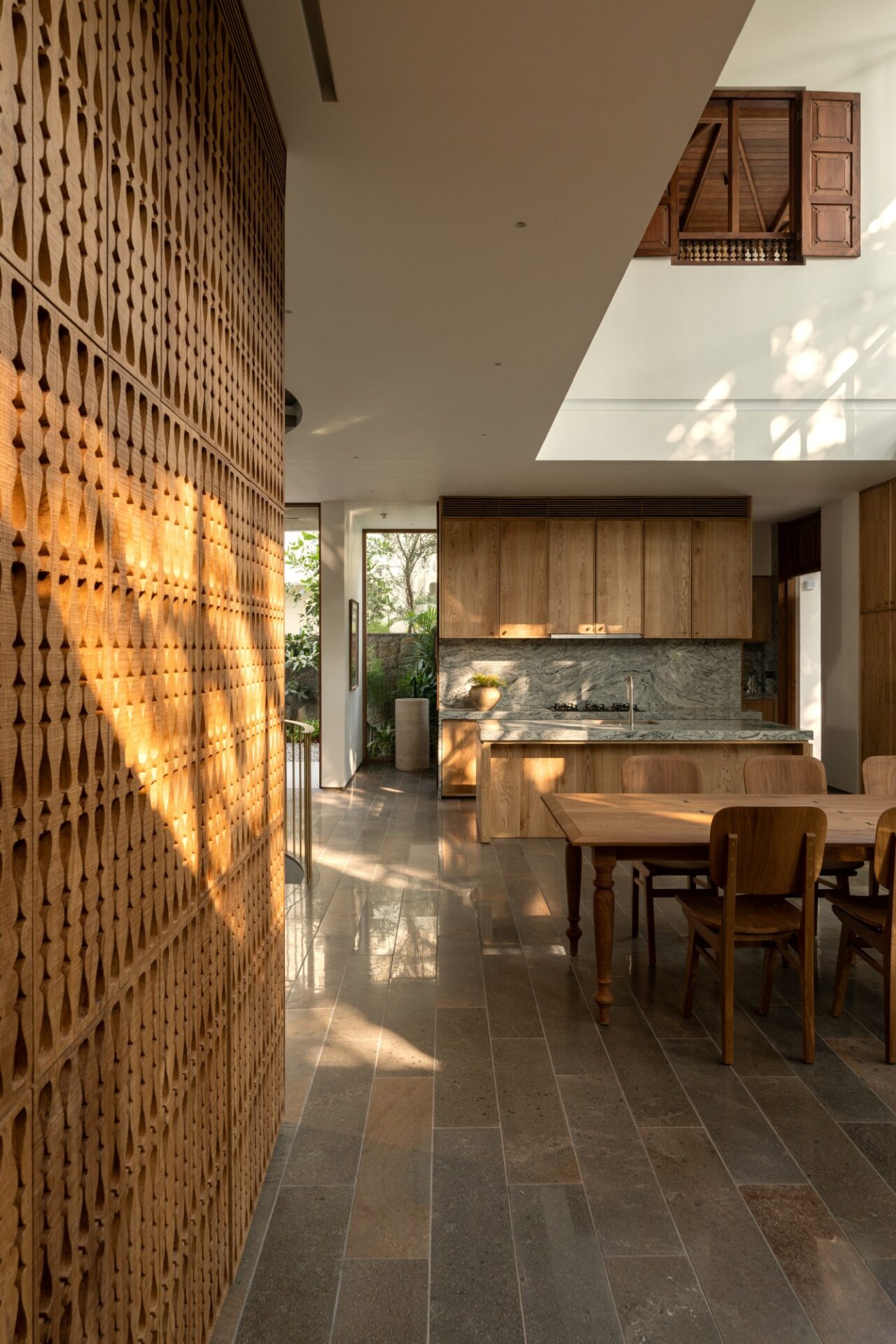
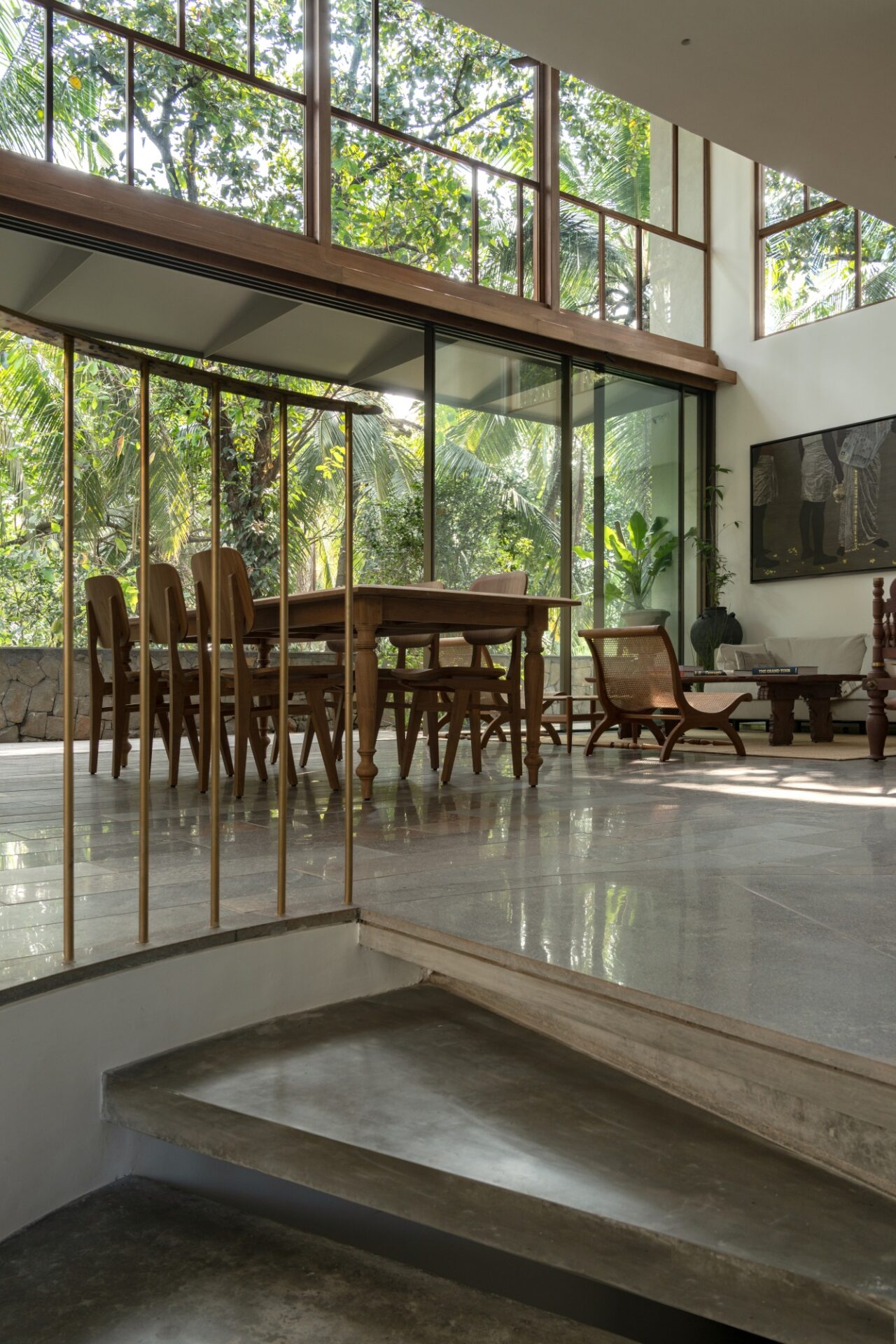 The north-east-facing living and dining areas, set within a double-height volume and framed by expansive glazed openings, overlook dense landscape beyond. The spatial sequence is one of compression and release, the narrow approach giving way to openness and light.
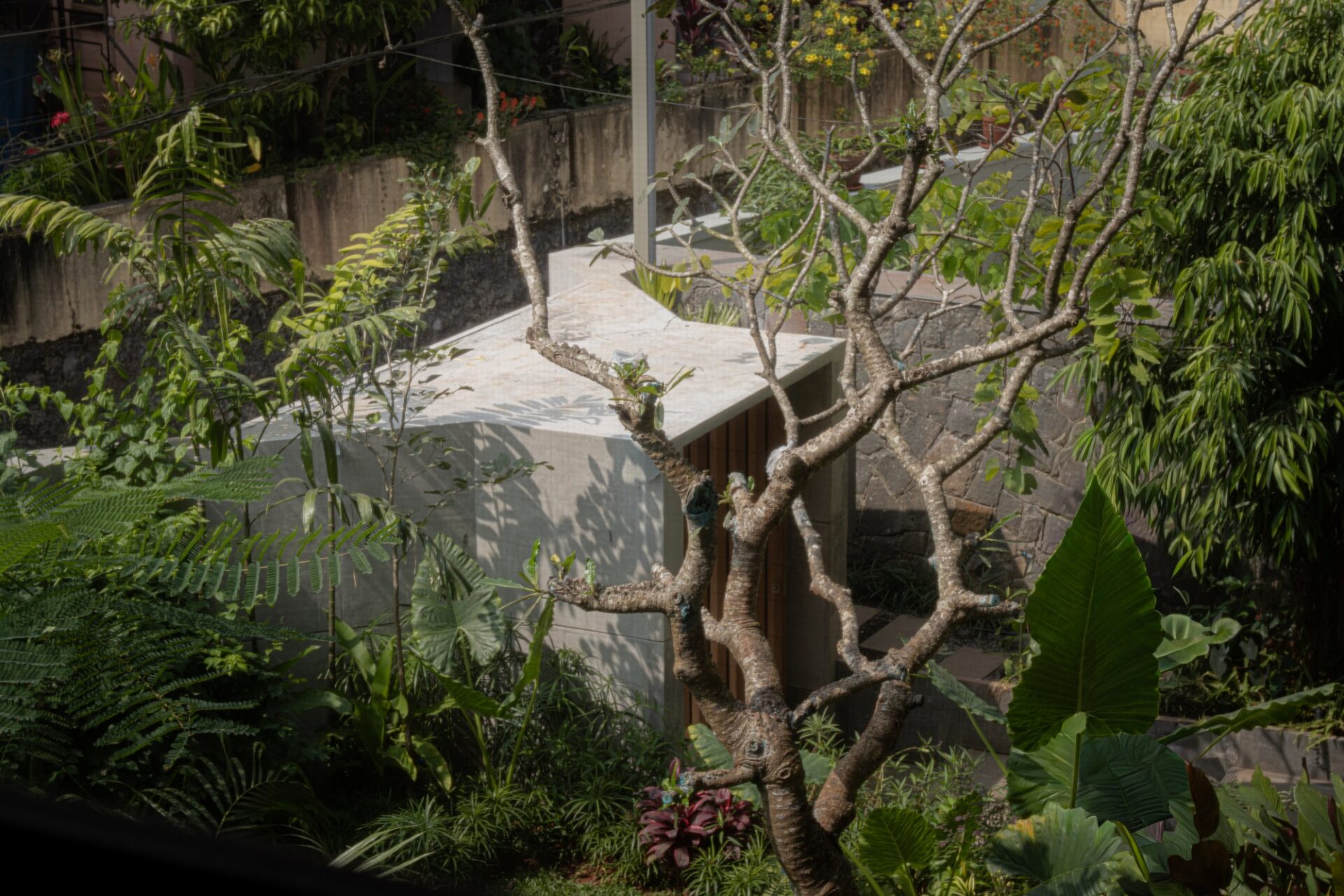 “Integration of the existing topography made it possible to structure the different spaces on each level. The spiral stair delineates the plan in a particular way; it is the spine of the house,” says Shabna Nikhil, Creative Director, Thought Parallels Architecture.
Abundance as an Ethic
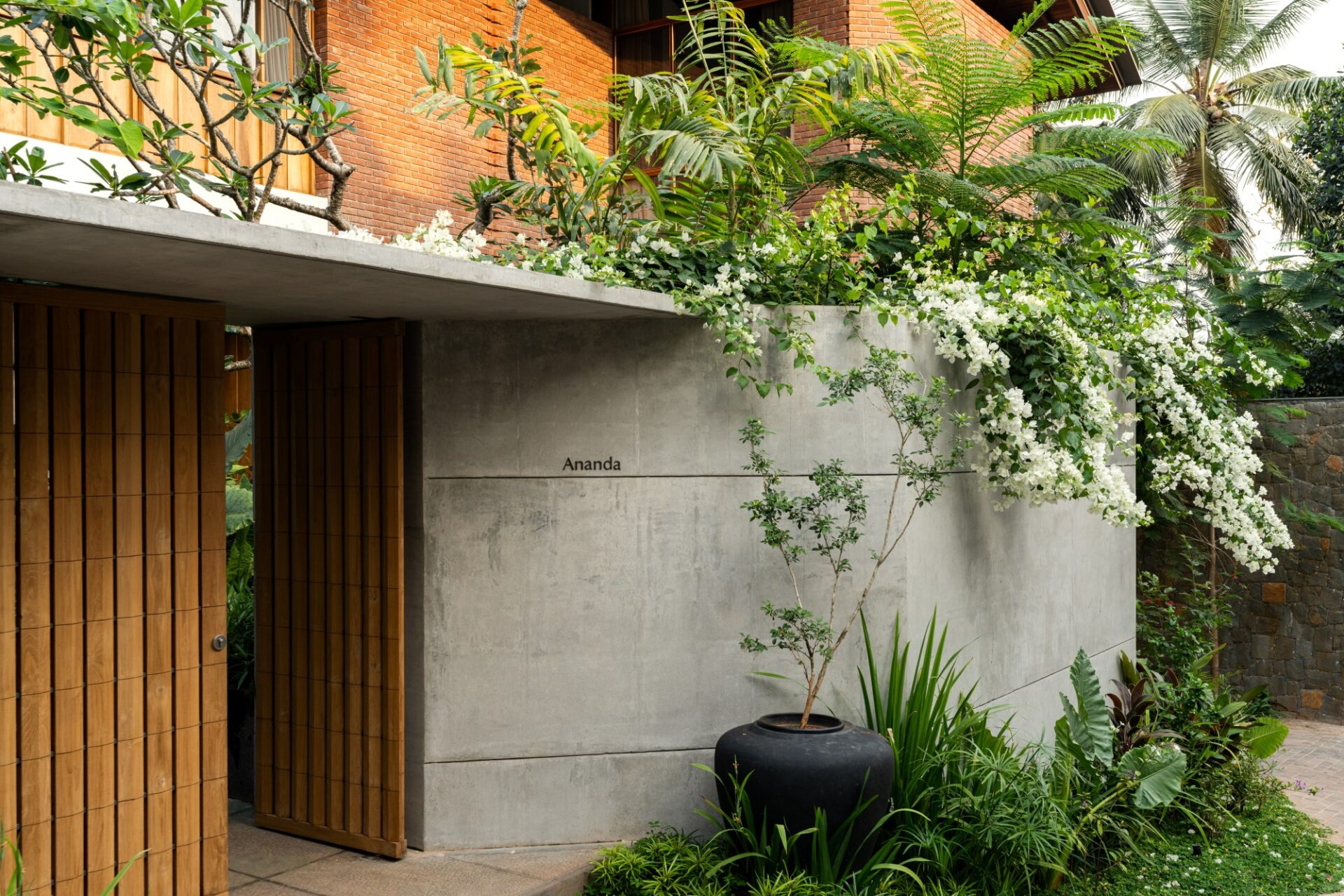
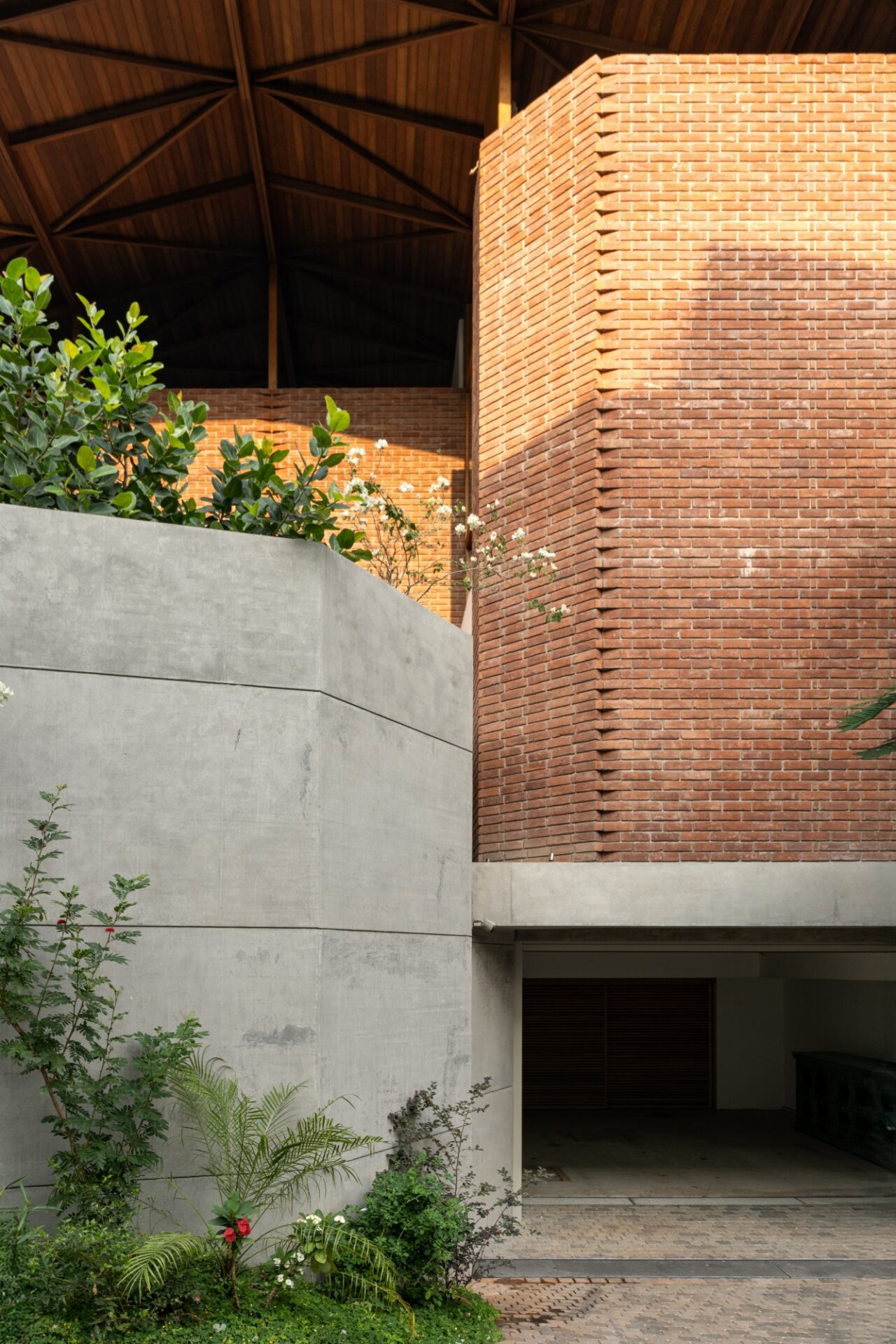
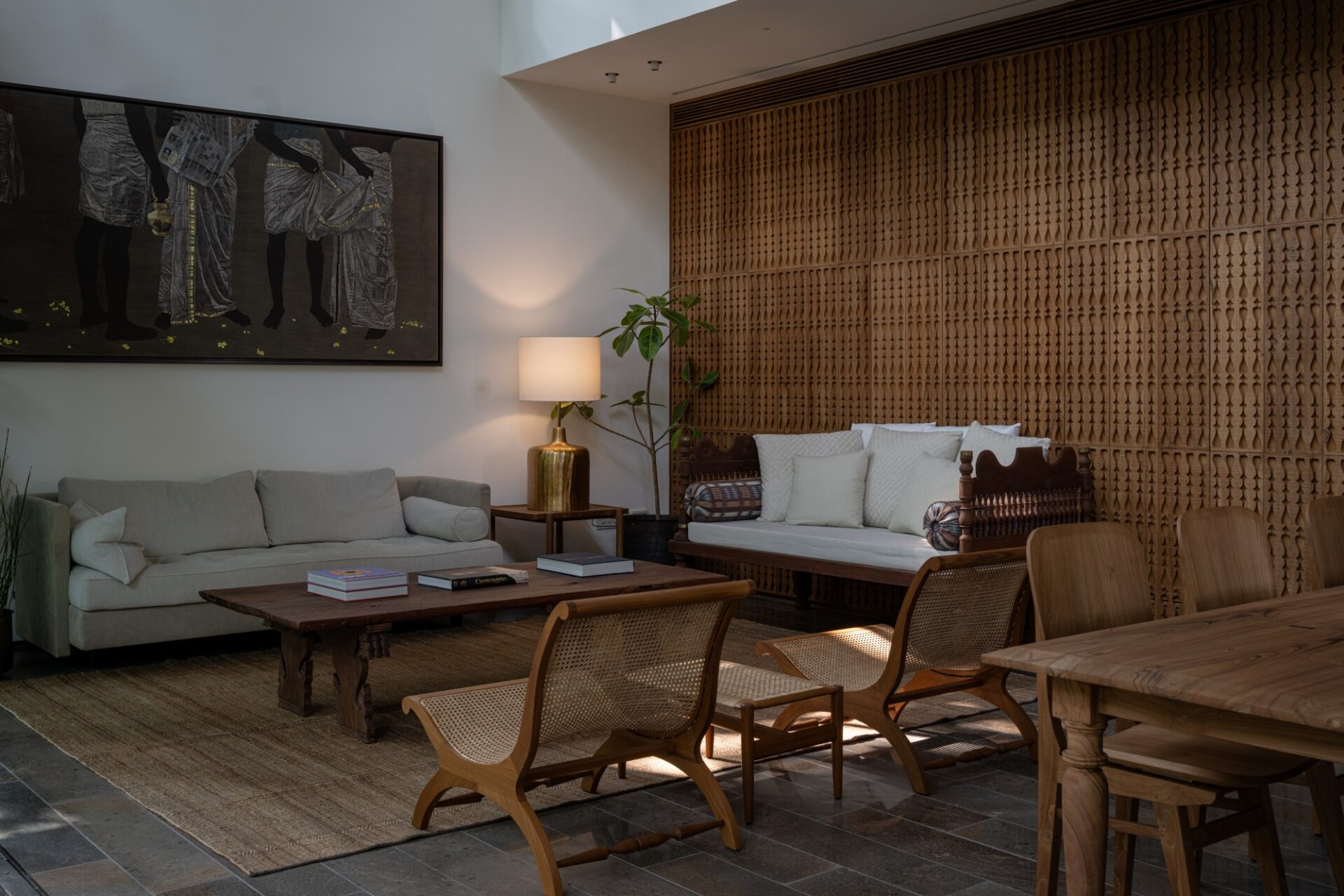 If the massing of Ananda is defined by its roof, its character is defined by its materials. The practice assembled a palette that speaks directly to the land: lime-plaster walls, country bricks, random rubble masonry, exposed concrete, natural stones, and local flora. What reads as richness is in fact a careful act of restraint, every material sourced from and resonant with its place.
 The decision to use coconut wood for roofing deserves particular attention. Structurally and symbolically, it anchors the project in its regional ecology. Only senile palms are felled for the procurement of this timber; the coconut palm, being an agricultural species rather than a forest tree, falls outside the purview of the Forestry Stewardship Council, making it a biologically viable and locally abundant alternative to impervious hardwoods.
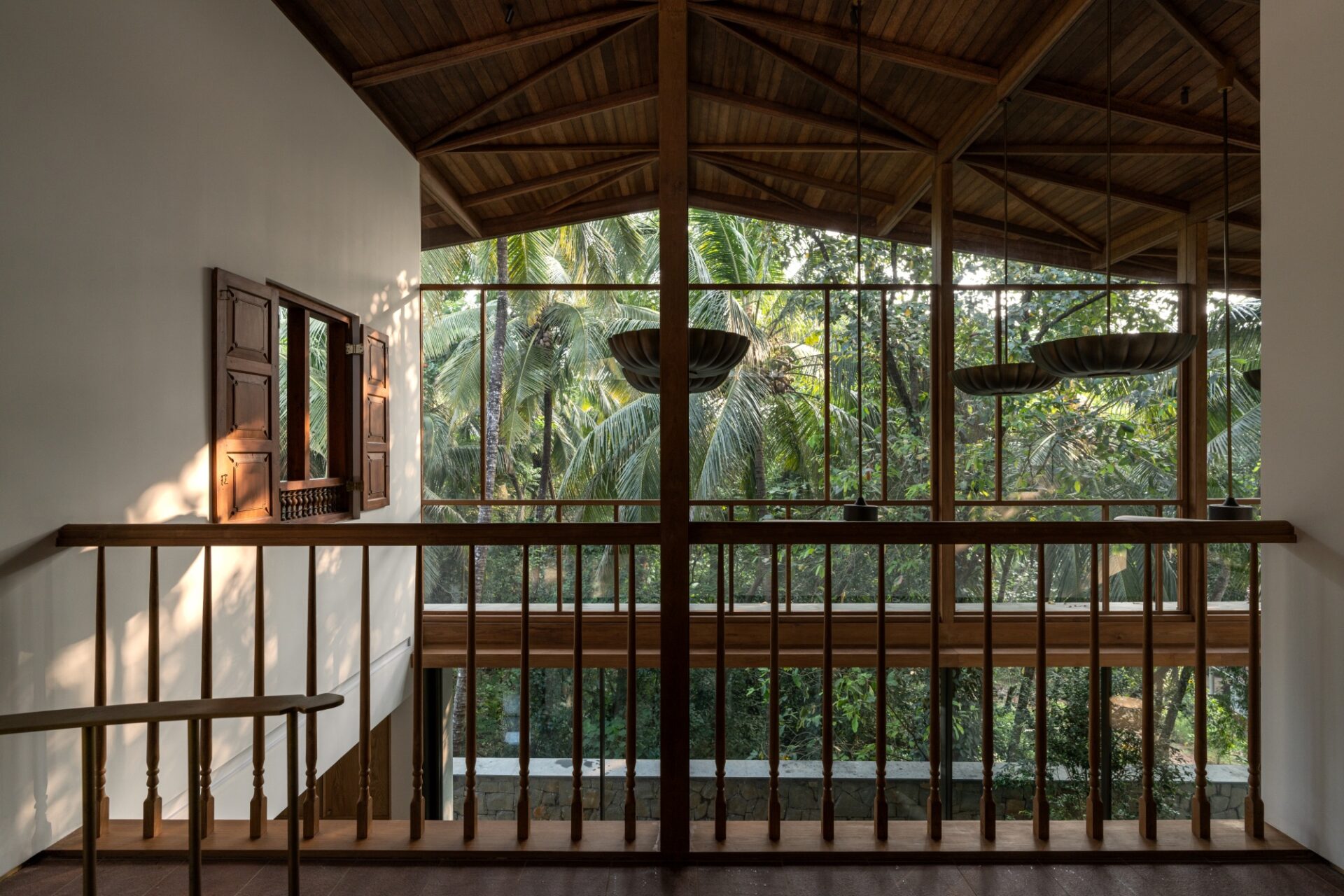 “Coconut wood is a sustainable choice of material due to its abundance locally. Only senile palms are cut for procuring the wood; it is a biologically viable replacement for the more impervious hardwood choices,” states Nikhil.
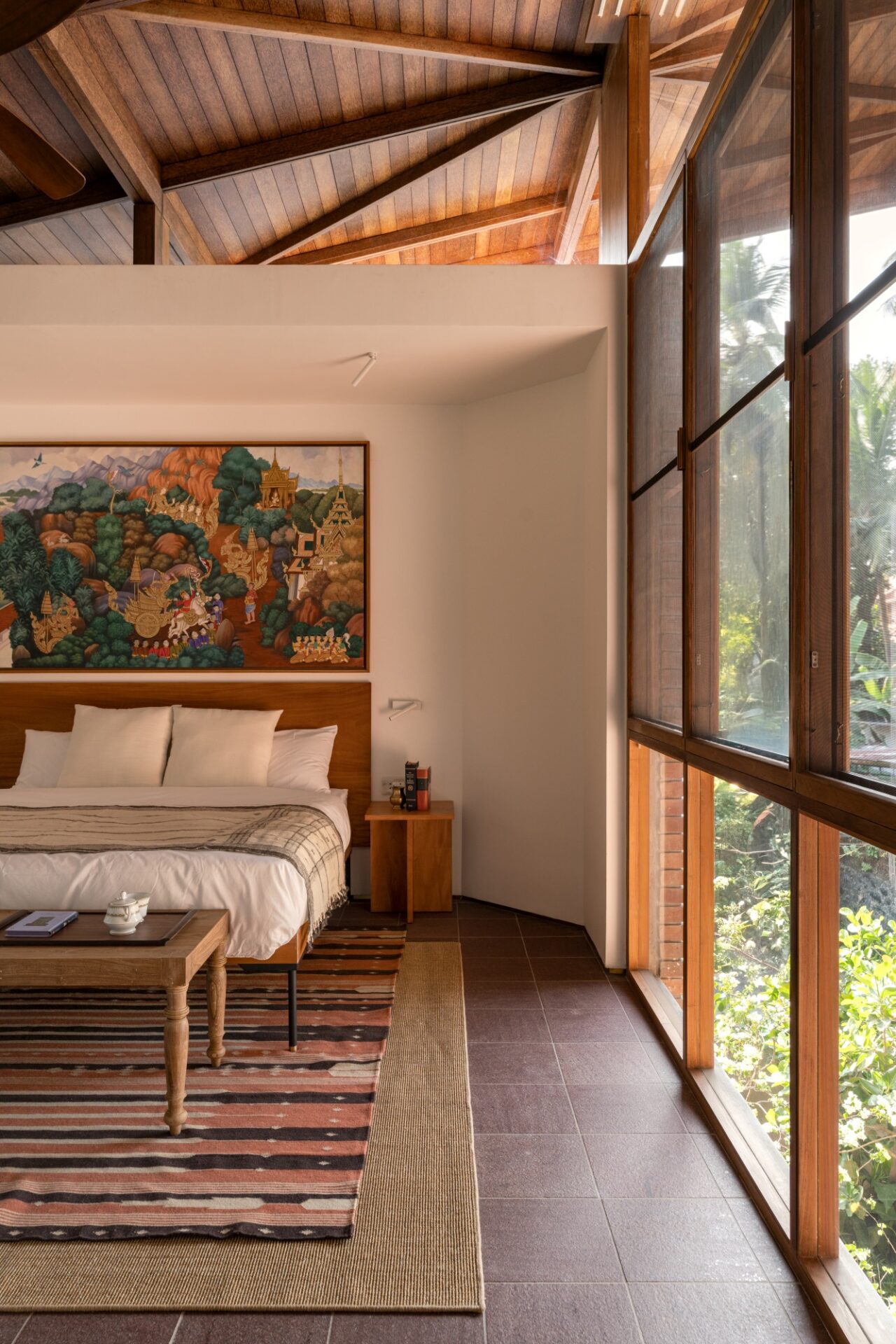 The local craftsmanship in carpentry and construction is woven through the project, not as ornament but as method. In the hands of Thought Parallels, vernacular building culture is a technique.
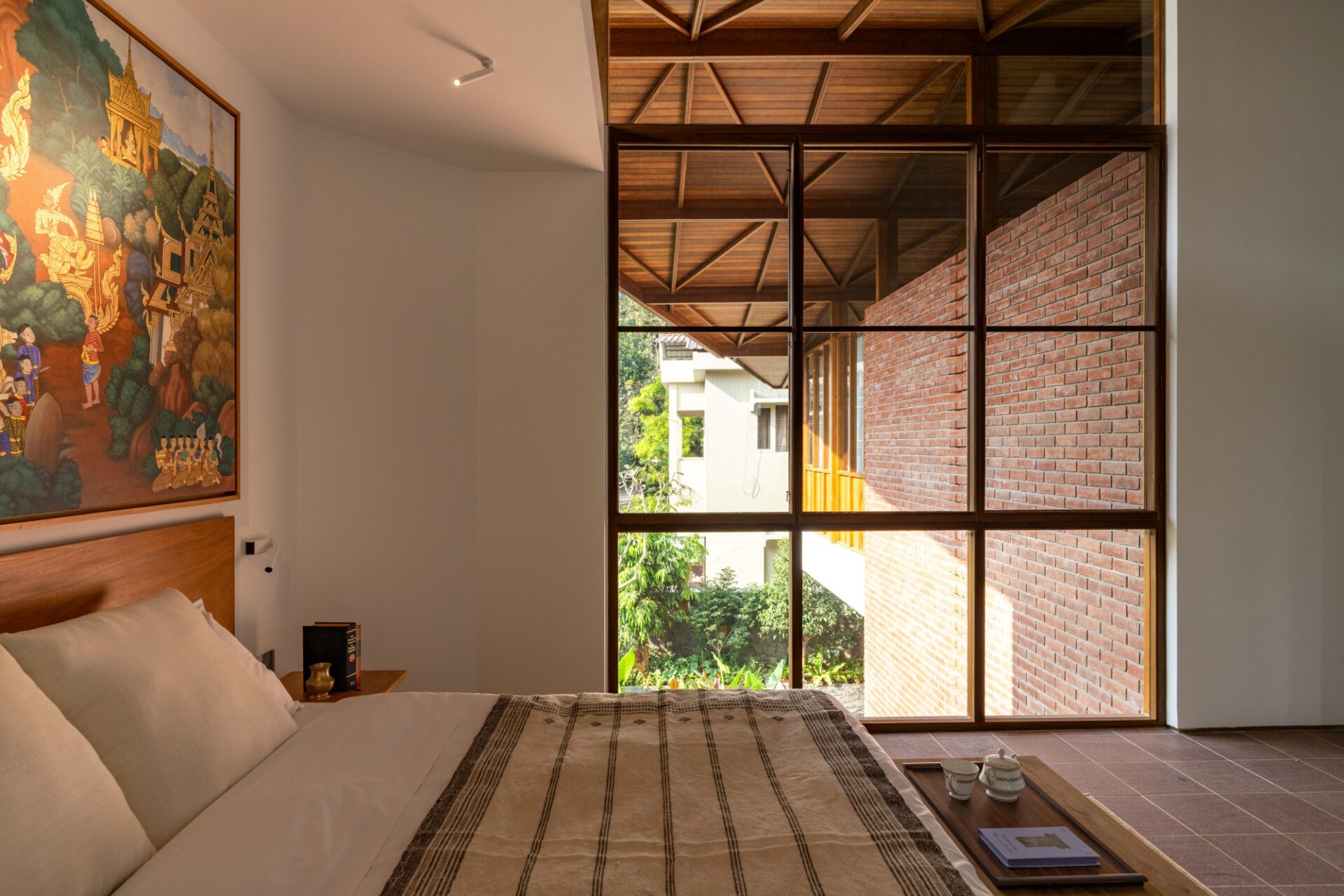 “Local craftsmanship in carpentry and construction was used well. The vernacular isn’t a style here; it’s a knowledge system. We tried to honour it, as best as we could,” stresses Shabna Nikhil.
The Collaborators
Behind every resolved detail of Ananda is a team whose collective discipline made the vision coherent. Engineers Arun, Rachana, Shahma, Abhinav, Athulya, Madhu, and Mandy brought the technical and creative threads together across a complex multi-level project.
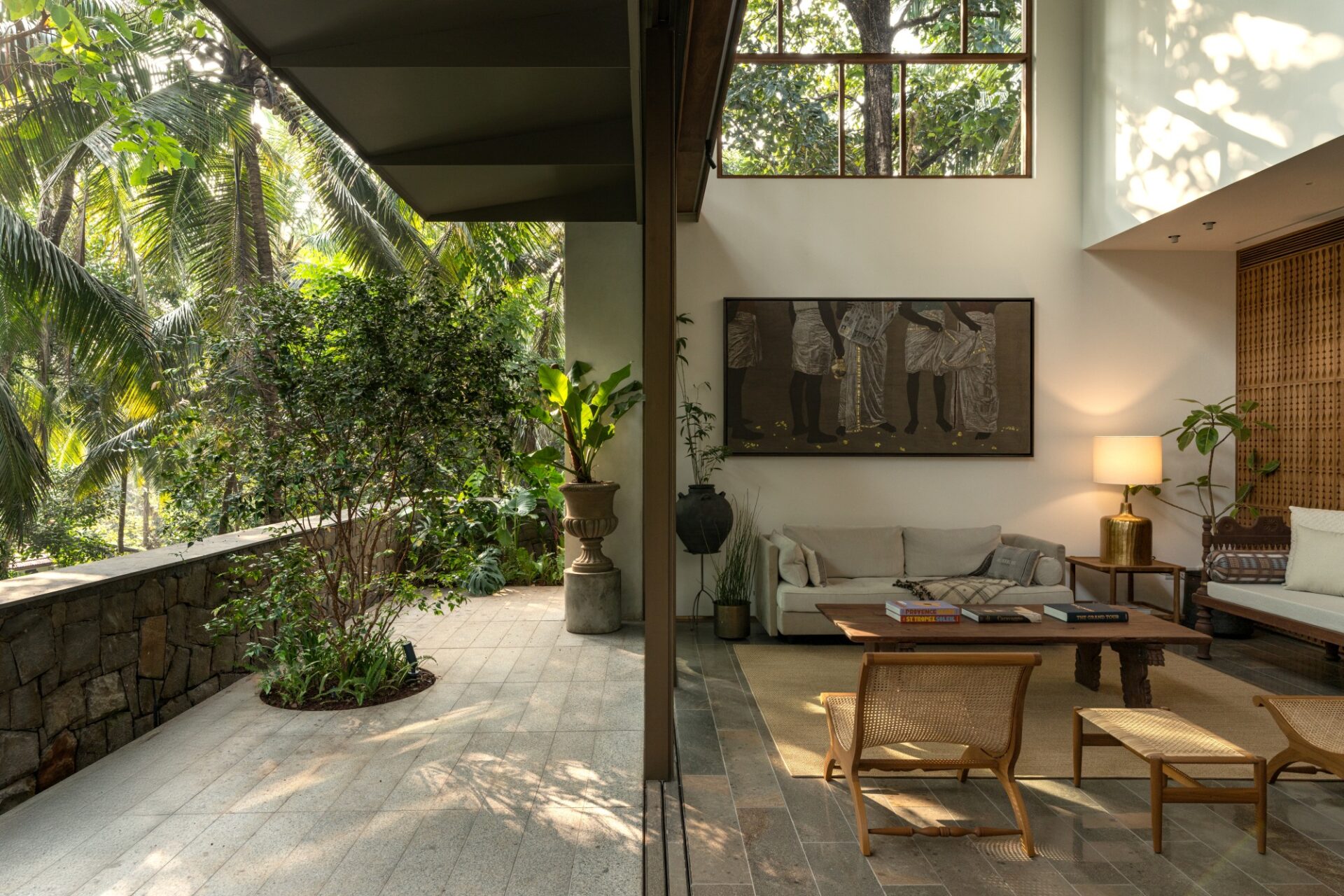 The landscape, integral to the outlook from those double-height north-east openings, was designed in-house by Thought Parallels and executed by Cocora Landscape.
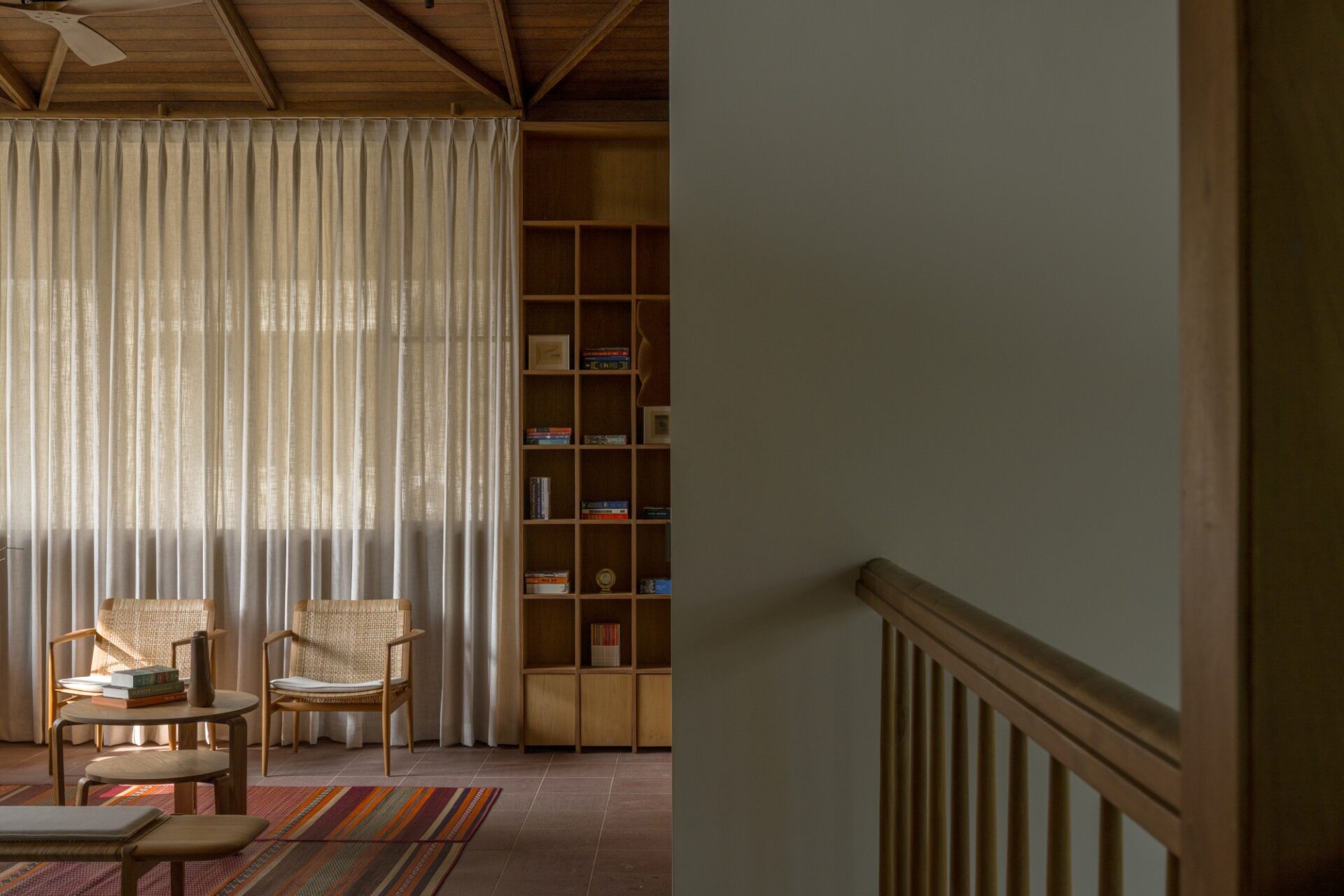 The art programme, curated across four galleries including Tao Art Gallery, Gallery OED, Srishti Art Gallery, and Dhi Artspace, ensured that the interior life of the house matches its architectural ambition.
Project Credits:
Architectural: Thought Parallels Architecture
Structural Engineering Consultant: Sridhar, Simon Peter Engineering
MEP design: Bini
Lighting Consultant: Aasha Levin
Art consulting galleries: Tao Art Gallery, Gallery OED, Srishti Art Gallery, Dhi Artspace
Landscape Design: Thought Parallels Architecture
Landscape Execution team: Cocora landscape
Interior Design: Thought parallels
Project Manager: Bhavesh
Construction contracting team: PMA construction.
Industrial: Mercan.
Photography credits: Syam Sreesylam
Design Team: Ar. Nikhil Mohan, Principal Architect, Shabna Nikhil, Creative Director, Engineer Arun, Rachana, Shahma, Abhinav, Athulya