
How Pallavi Dean Reimagined Jaipur Rugs’ Mumbai Flagship Store
Inside the restored Empire Mills warehouse, in Mumbai, Pallavi Dean, the Founder and Creative Director of Roar, a Dubai-based architecture and interior design studio, transforms a retail store into a living gallery of craft, memory and storytelling.
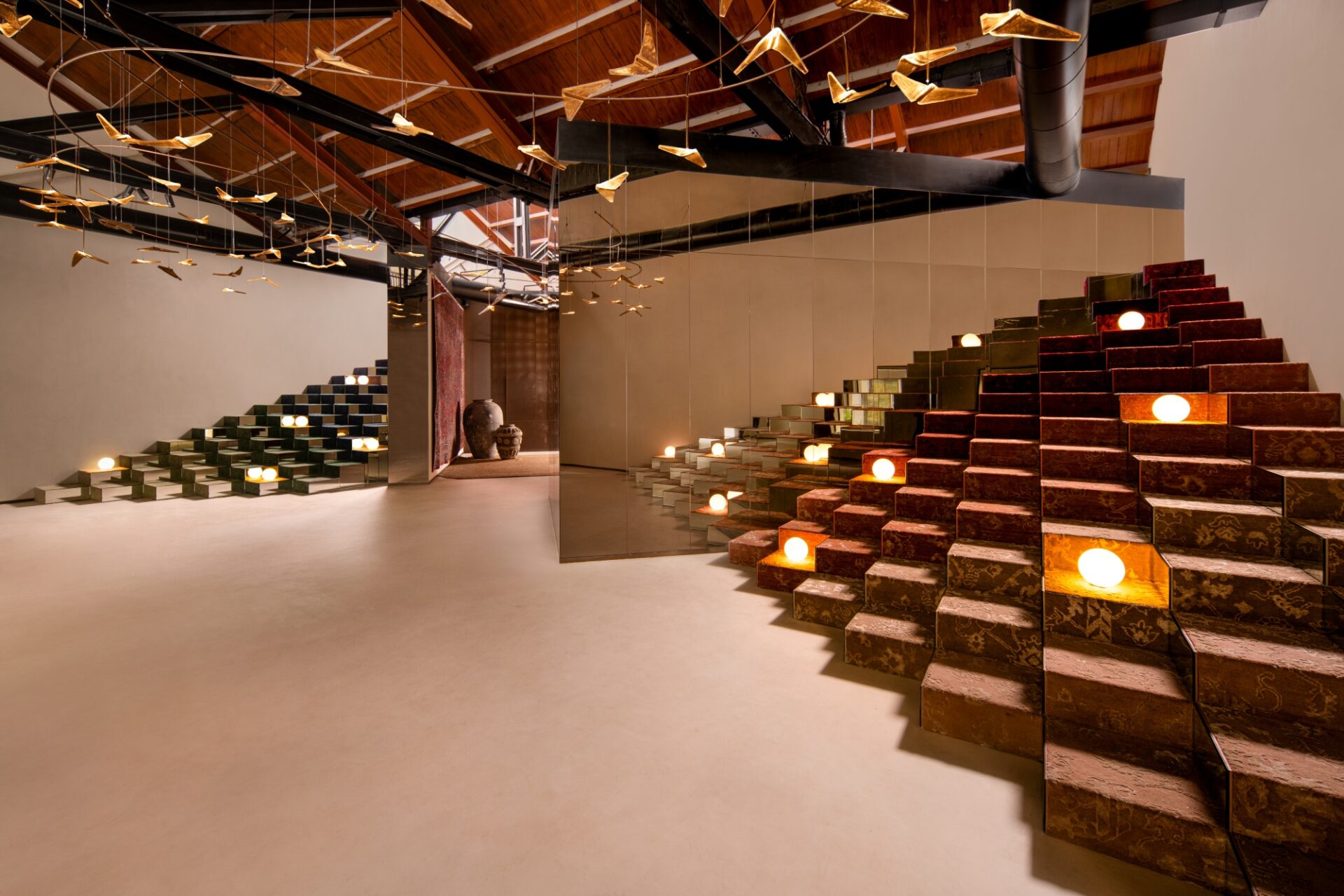
A series of cuboid volumes runs through the interior, turning design challenges into material discovery.
Retail spaces are increasingly expected to do more than sell products. They must tell stories, create emotional connections and leave visitors with experiences that linger long after they leave.
Jaipur Rugs’ newly unveiled Mumbai flagship does precisely that. Designed by Roar, led by acclaimed interior designer Pallavi Dean, the project transforms a former warehouse within the historic Empire Mills compound in Lower Parel into an immersive space where craftsmanship and cultural memory become inseparable.

“The idea was to design a space that behaves a little like a rug,” said Pallavi Dean, founder of Roar.
Occupying one of Mumbai’s historic industrial landmarks, the flagship preserves the warehouse’s character while introducing a contemporary spatial language inspired by the art of weaving.
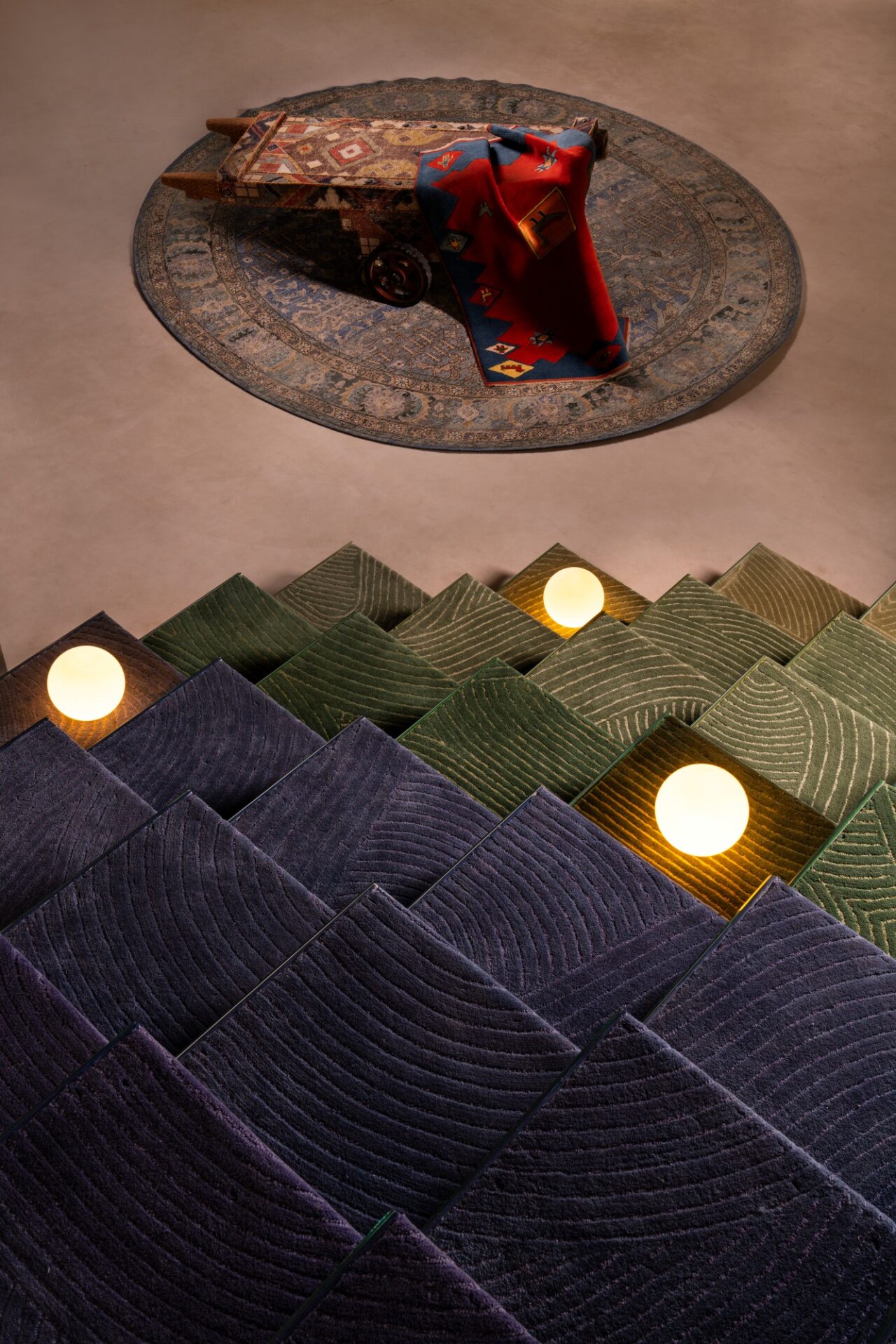
These stepped forms appear at different scales across the space.
Sculptural geometric interventions, archival installations, interactive weaving areas and carefully curated display zones create a journey that is as much about understanding craftsmanship as it is about purchasing a rug.
For Pallavi Dean, the project was never about designing another luxury showroom. It was about creating an experience that reflects the soul of Jaipur Rugs, a company whose identity is deeply rooted in heritage, artisanship and community.
Embracing the Authenticity of an Industrial Setting
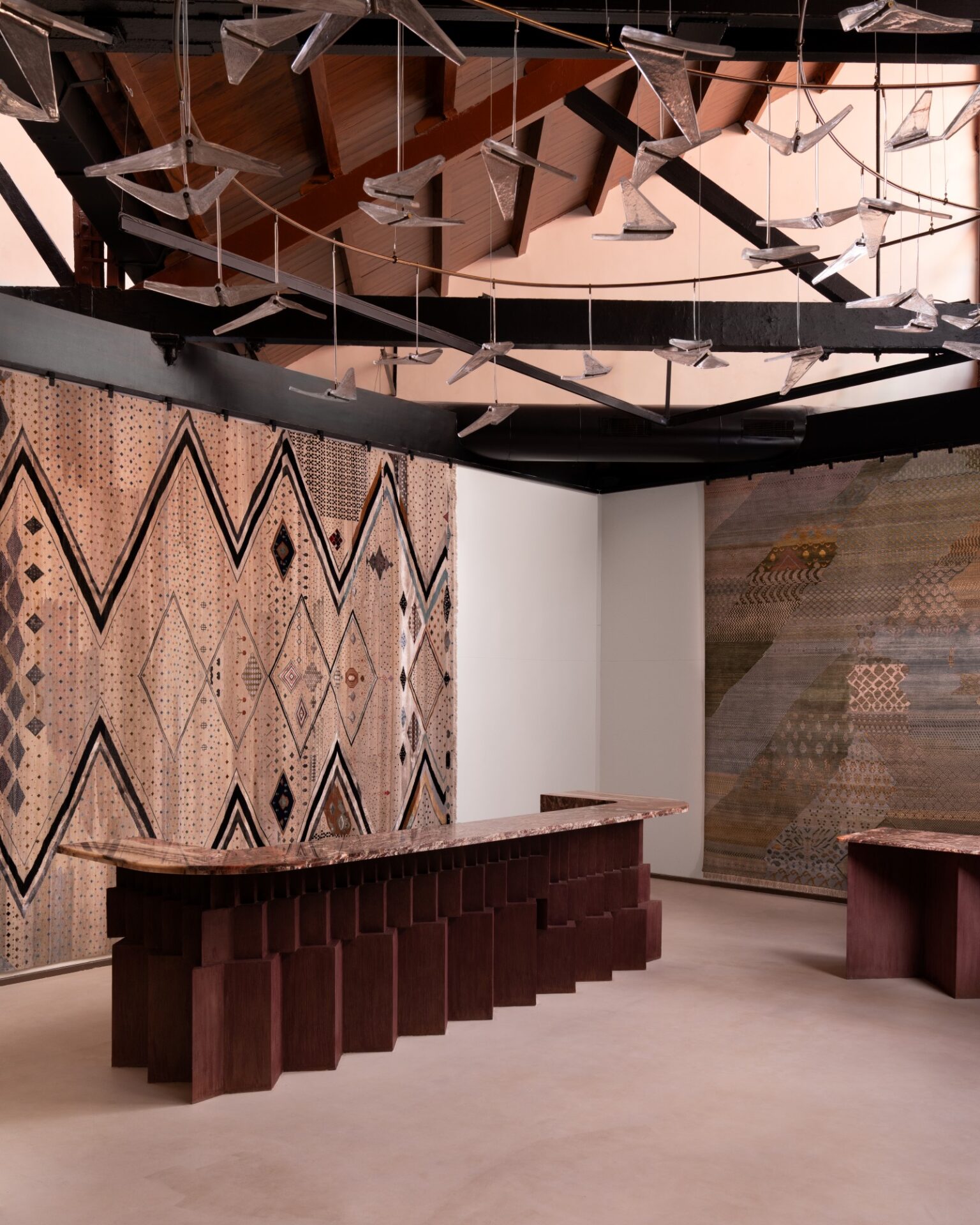
Reception desk and hospitality bar.
“The building gave us our starting point,” she explains. “Empire Mills sits within one of Mumbai’s great industrial legacies, so rather than erase that history, we chose to build upon it. The warehouse’s scale, rawness and sense of discovery inspired us to create a spatial experience that feels less like a store and more like an exploration through layers of craft, history and storytelling.”
The project occupies a former warehouse where the original Victorian steel structure, pitched roof and clerestory glazing have been left largely untouched.
Rather than imposing a polished retail language onto the building, Roar embraced its industrial authenticity. The clerestory windows, exposed structural framework and generous proportions of the warehouse were carefully preserved, becoming an active part of the architectural narrative.
“The existing clerestory windows, structural framework and industrial proportions were all important to preserve,” says Pallavi. “They anchor the project in its history and provide an authentic backdrop for the handcrafted rugs. The contrast between the raw industrial shell and the intricate craftsmanship of the textiles creates a tension that makes both feel even more powerful.”
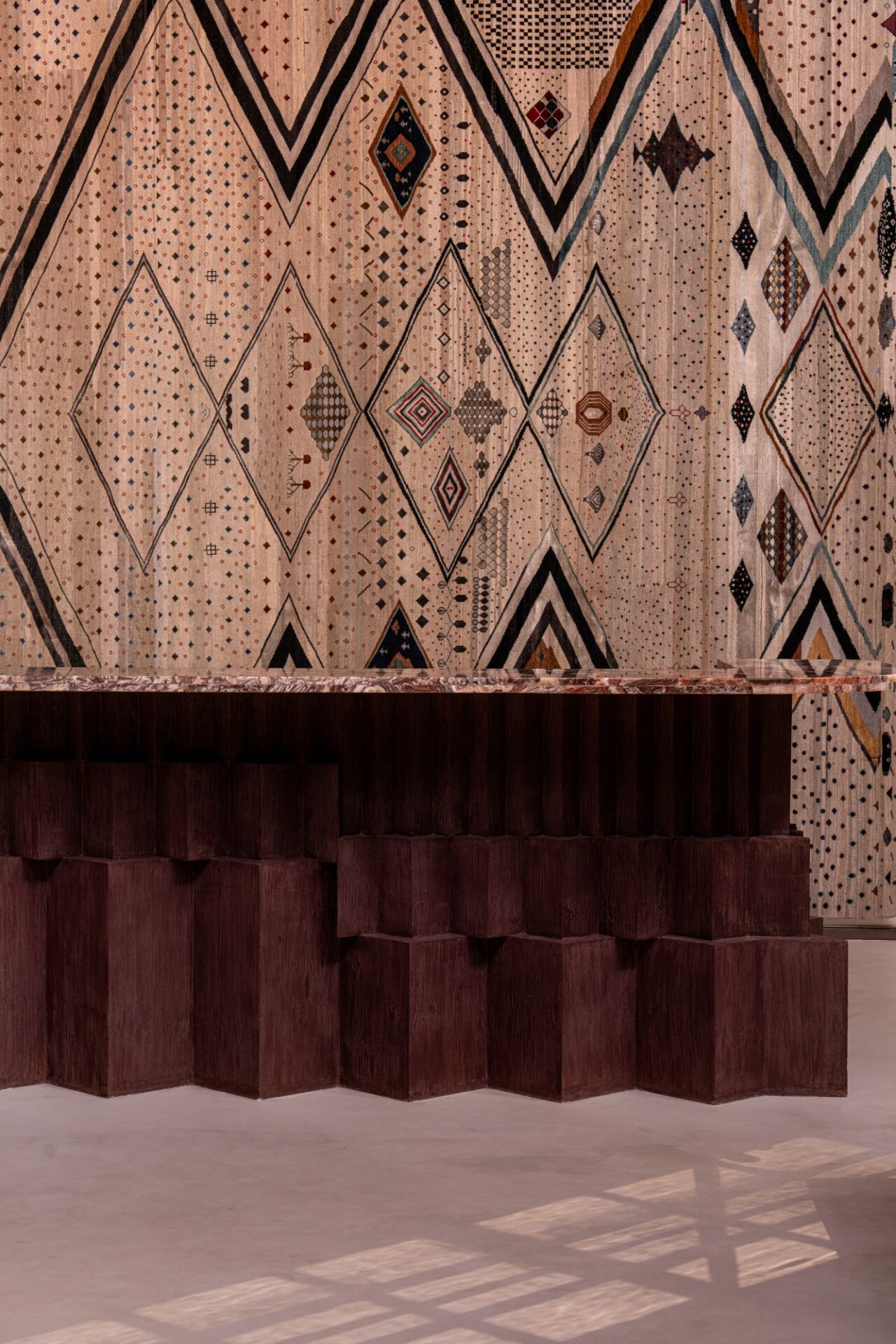
The reception desk, geometry and textures at play.
The decision to move away from the traditional retail model became equally fundamental. Dean believed that a conventional showroom would reduce the rugs to products rather than celebrating them as cultural artefacts.
“Jaipur Rugs is not simply selling products; it’s preserving and advancing a centuries-old craft. A conventional showroom felt too transactional. We wanted visitors to experience the culture, artistry and human stories behind the rugs. The gallery format allowed us to celebrate the rugs as works of art rather than merchandise.”
Weaving as Cultural Storytelling
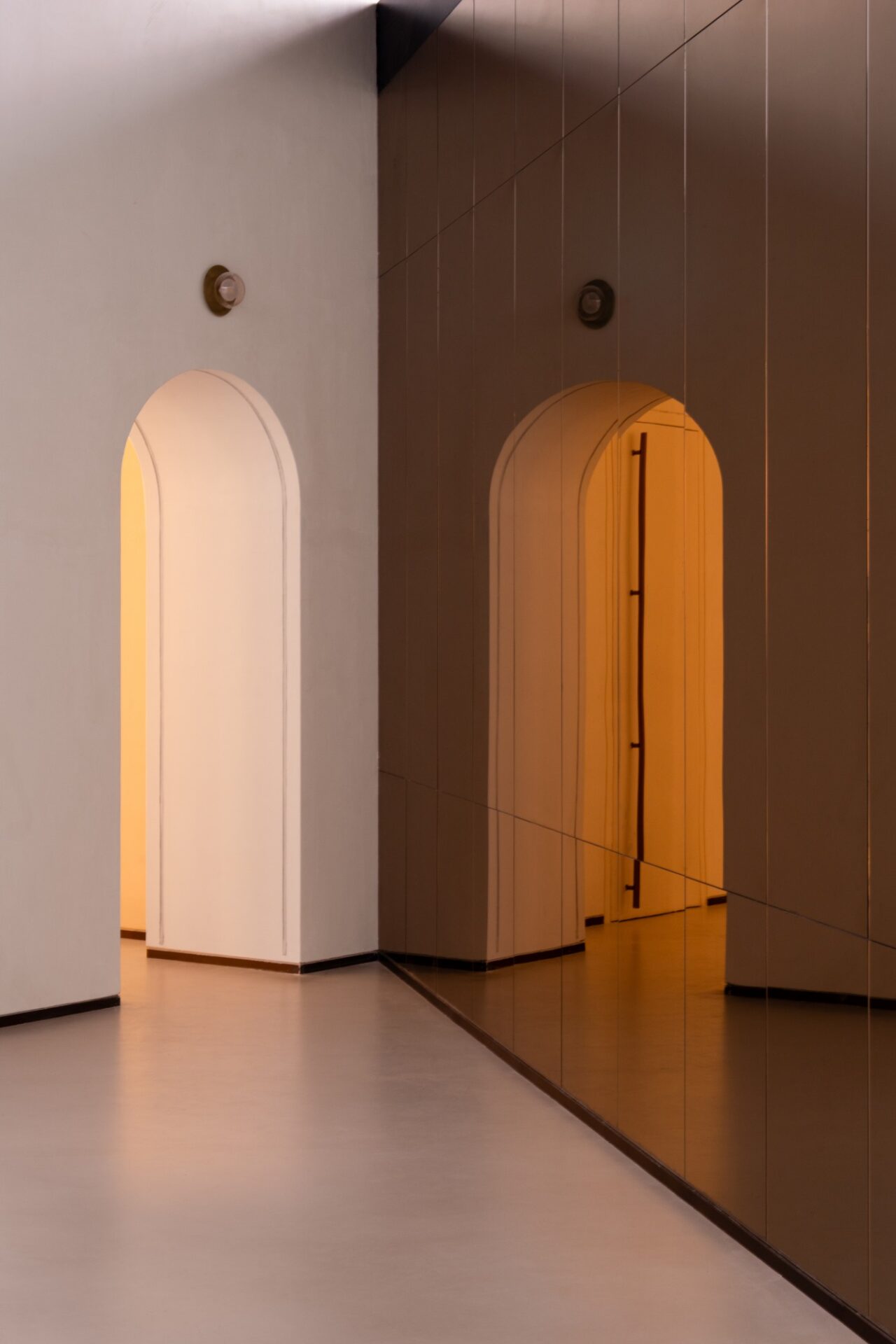
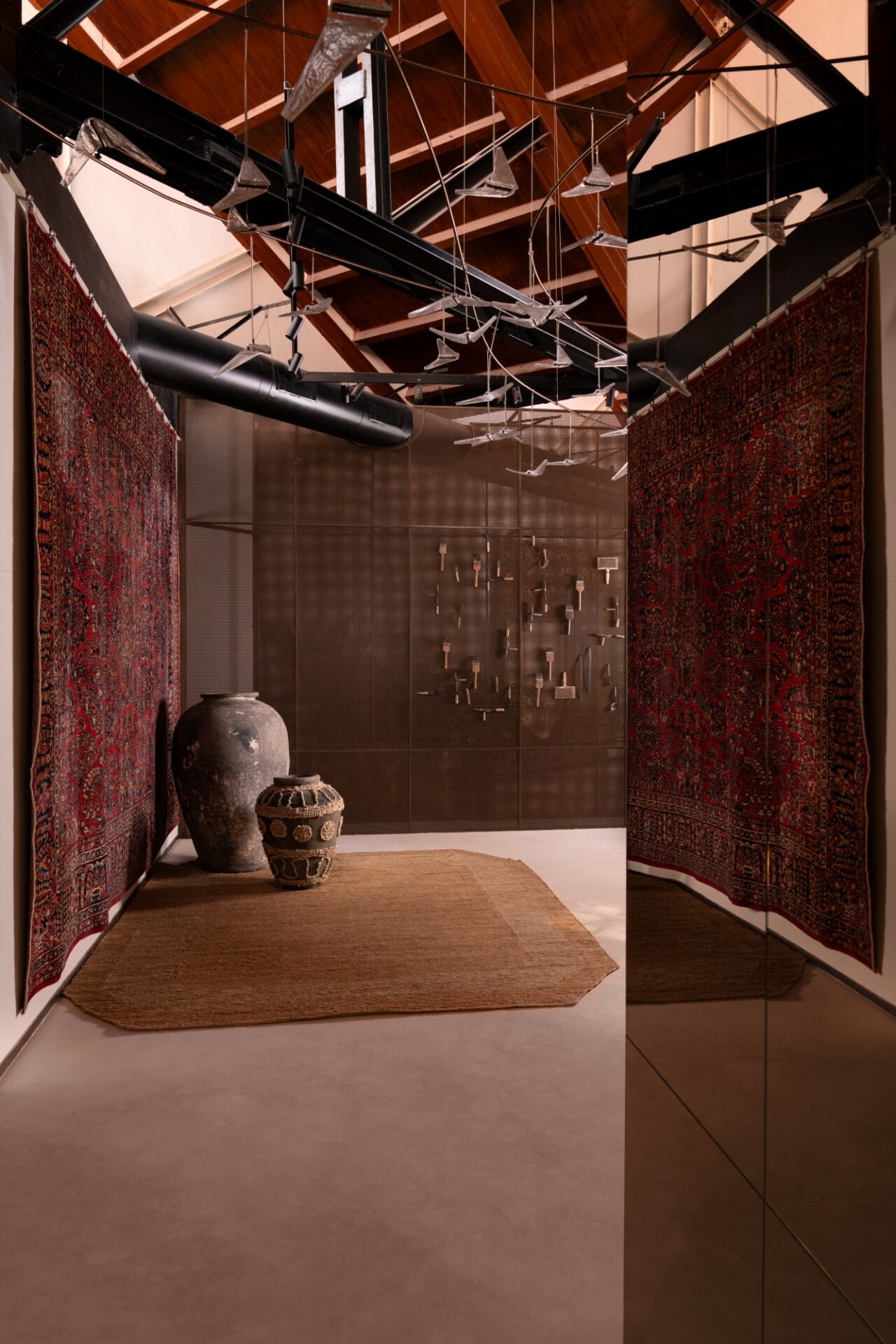
The labyrinth journey presents different experiences.
This gallery-like approach unfolds through a sequence of interconnected spaces inspired by the very act of weaving. Instead of straightforward circulation, visitors navigate a carefully choreographed journey where perspectives constantly shift and reveal themselves gradually.
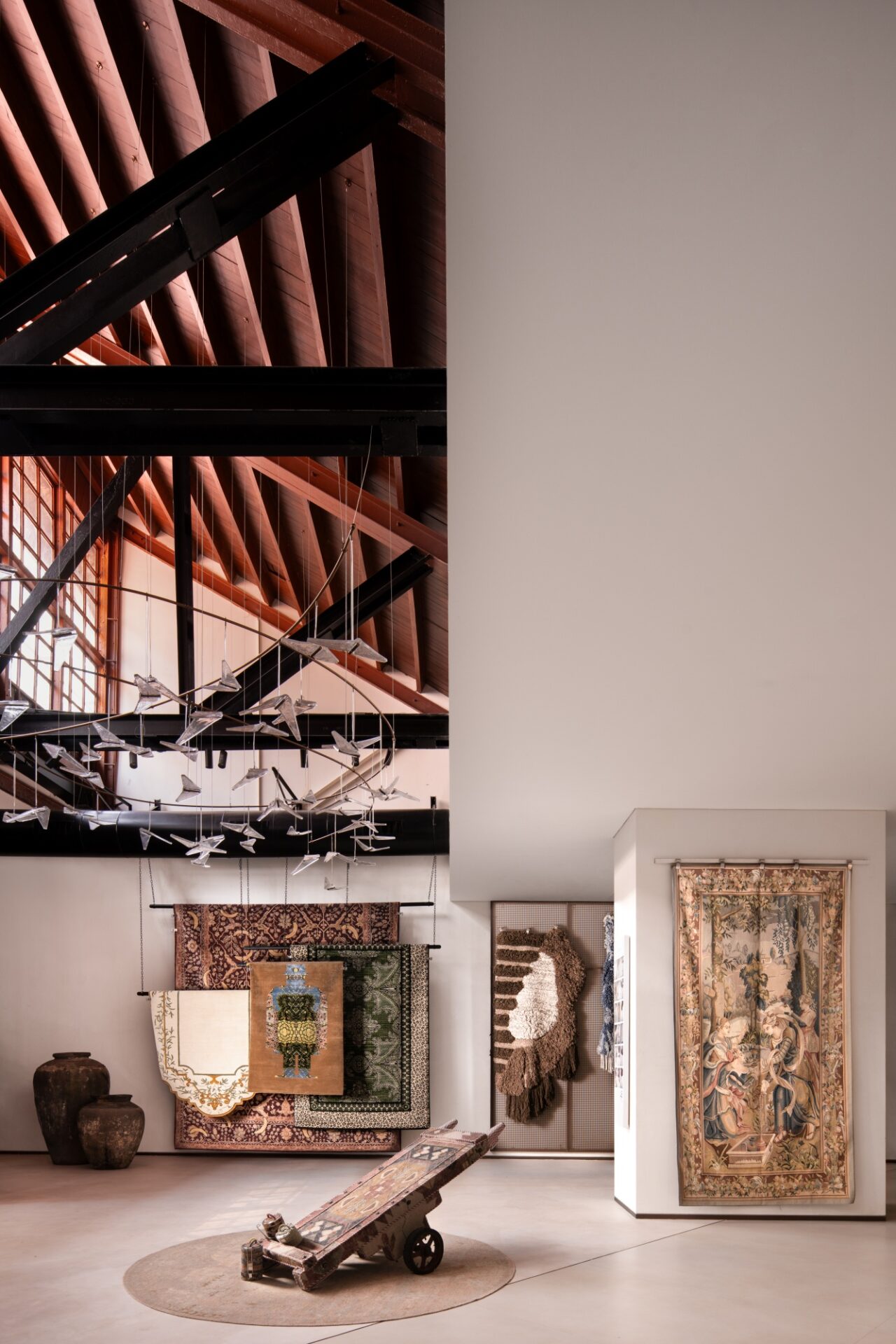
Entrance foyer with a high ceiling, the heritage building retains its character.
“We looked at weaving as both a process and a metaphor,” Pallavi explains. “Threads intersect, overlap and reveal themselves gradually. We translated that into a labyrinthine journey where visitors move through a series of interconnected spaces, constantly discovering new perspectives, materials and stories. Much like a rug, the full picture only emerges over time.”
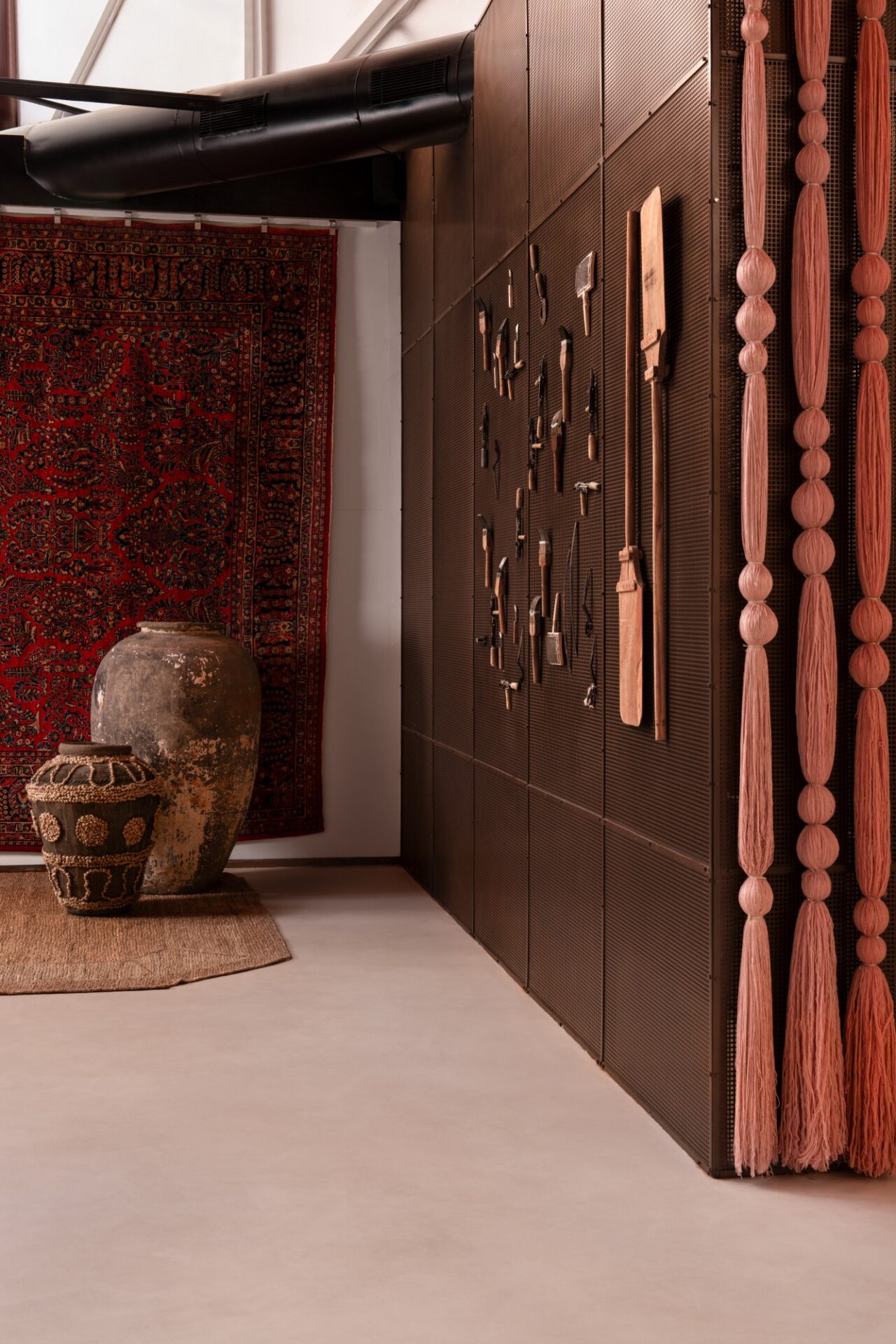
Warm timber structures, raw steel elements and reflective surfaces sit alongside handwoven textiles and traditional weaving tools, creating an interior that feels part showroom, part archive and part exhibition.
The architecture itself mirrors the making of a textile: layer by layer, thread by thread. Visitors are encouraged to slow down, pause and engage, discovering archival displays, installations and demonstrations that reveal the complexity behind every handcrafted piece.
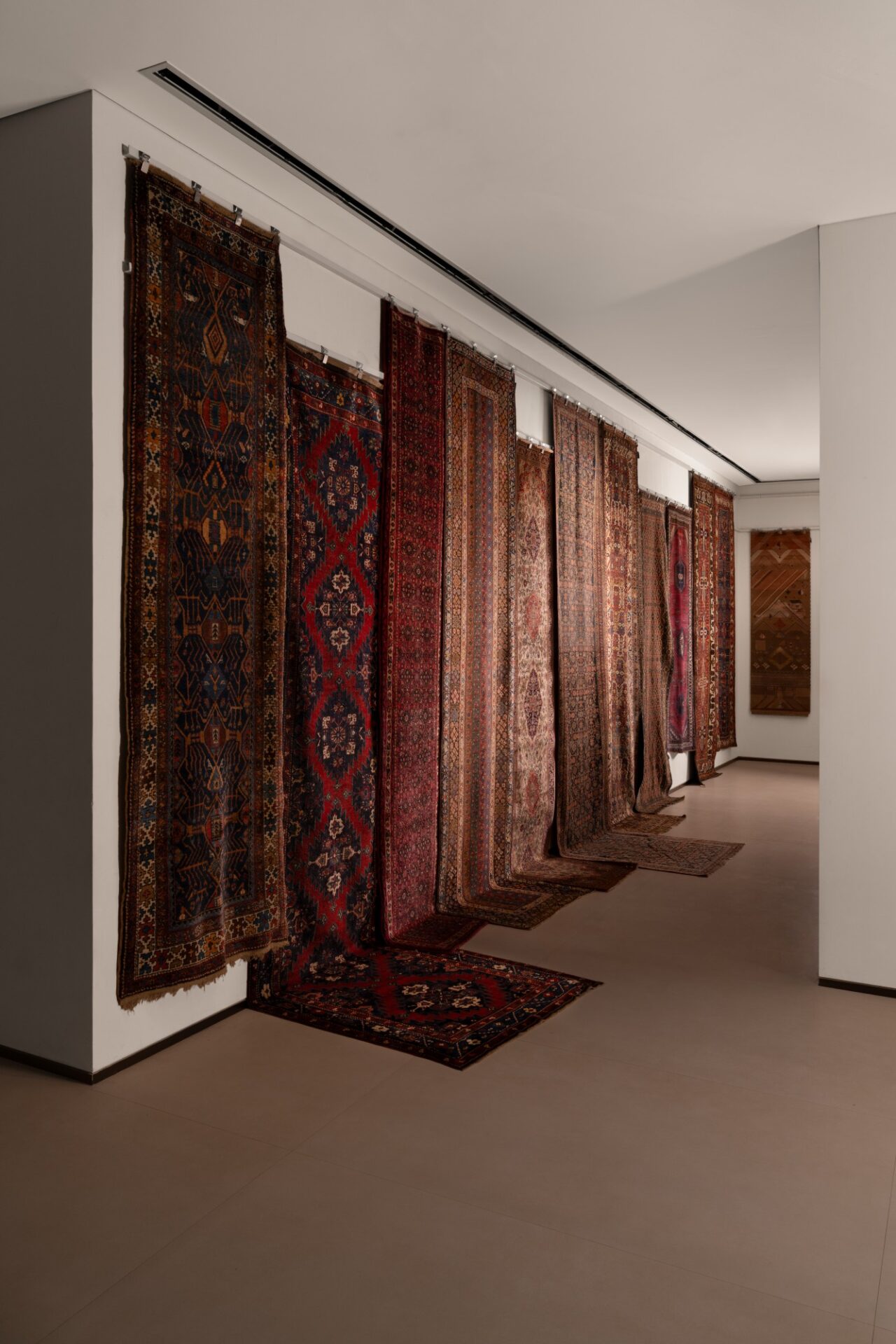
Flat display walls operate almost like gallery surfaces for large-format rugs.
For Pallavi, making the weaving process visible was essential.
“Understanding the process changes how people value the product,” she says. “When visitors see the skill, patience and human stories behind every rug, it transforms the object from something decorative into something meaningful. We wanted people to leave with a deeper appreciation of the craft and the communities that sustain it.”
The Understated Palette
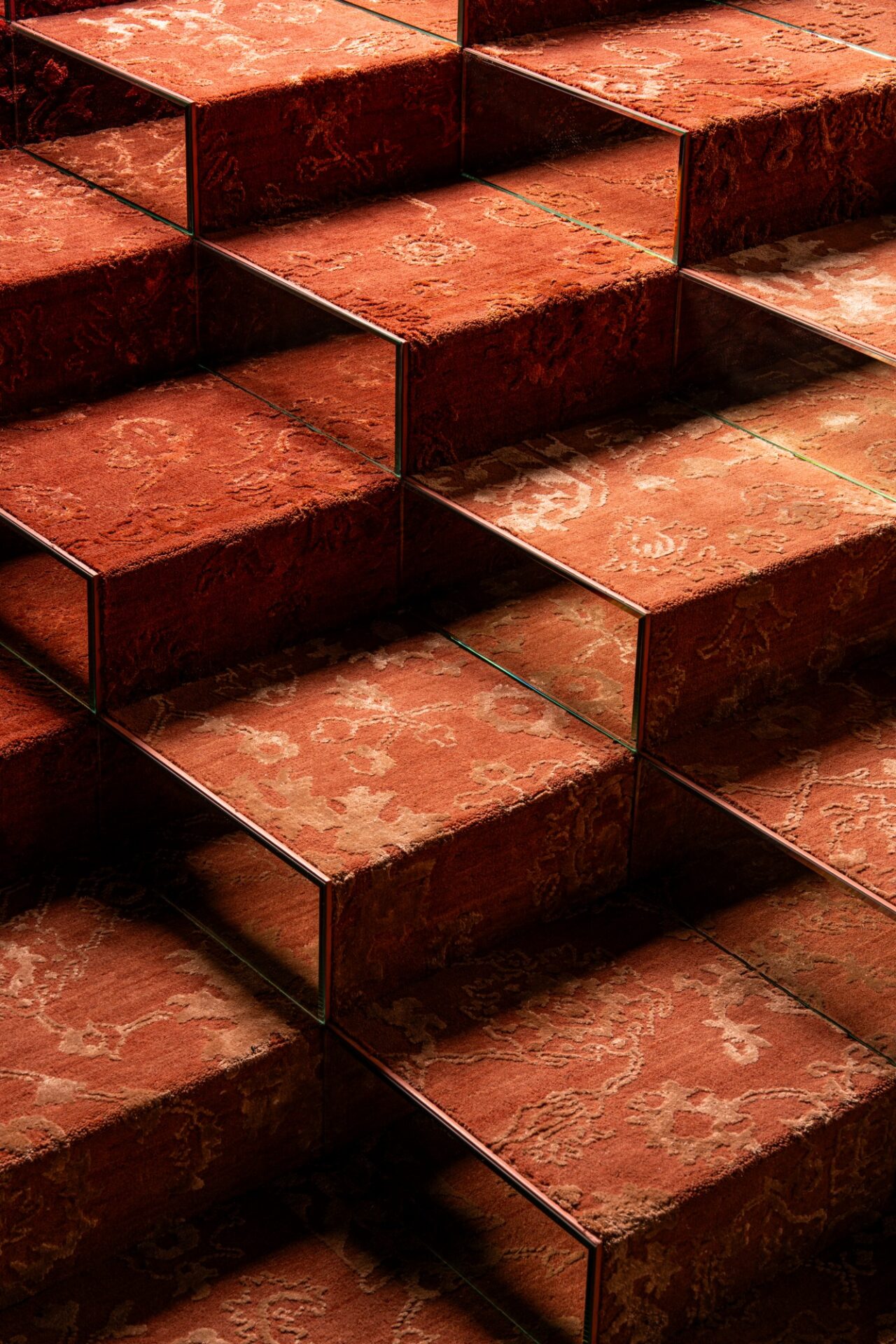
The sculptural platforms, sometimes as gallery walls and sometimes as reflective installations that guide visitors through the showroom.
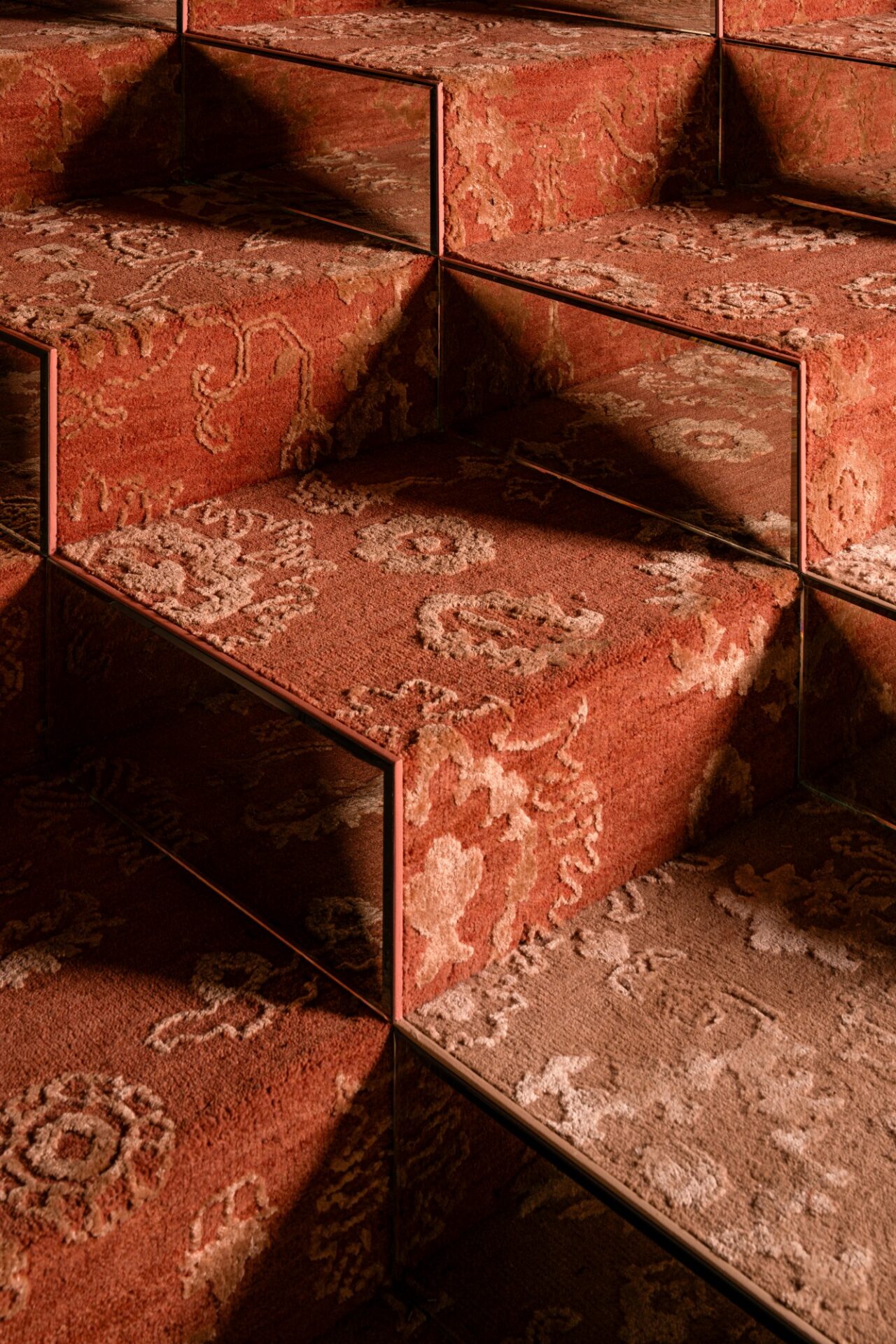 That philosophy extends into the material palette. Instead of competing with Jaipur Rugs’ vibrant textiles, the architecture adopts an understated language of tactile, honest materials that quietly frame the craftsmanship on display.
“The material palette was intentionally honest and tactile. We were inspired by the materials and textures associated with making, weaving and craftsmanship. Rather than compete with the rugs, we created a backdrop of natural finishes, raw textures and carefully considered details that allow the stories of the artisans and the products to take centre stage.”
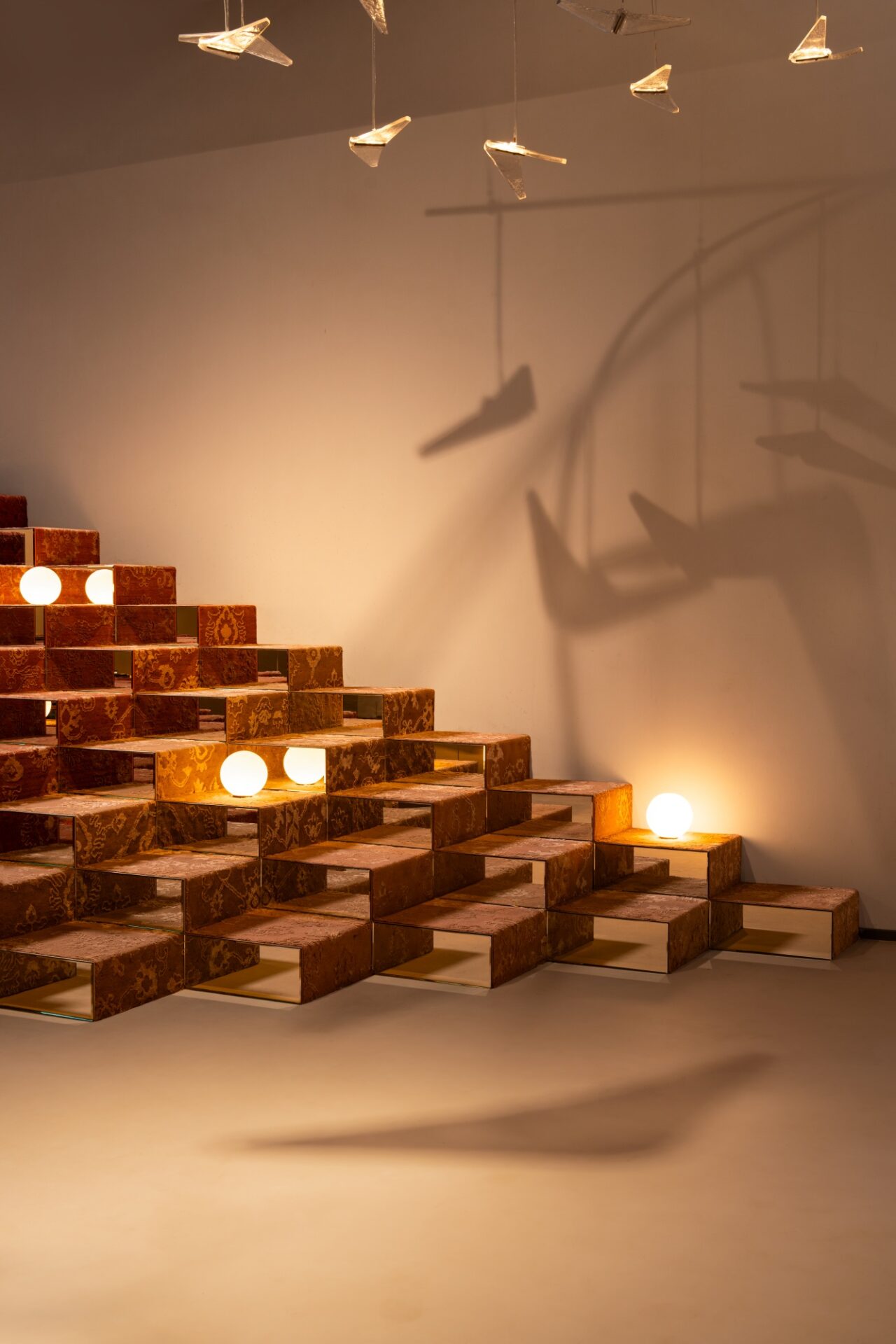
Shadow play, material discovery and geometric interventions shape the experience.
Although deeply rooted in heritage, the project avoids nostalgia. Instead, it positions Jaipur Rugs confidently within a contemporary global design conversation.
“For me, luxury today isn’t about excess; it’s about authenticity,” Pallavi reflects. “We respected Jaipur Rugs’ heritage by making the artisans and the craft visible throughout the experience, while expressing its contemporary vision through a more immersive, curated and gallery-like environment. The result feels rooted in tradition but firmly positioned for a global design audience.”
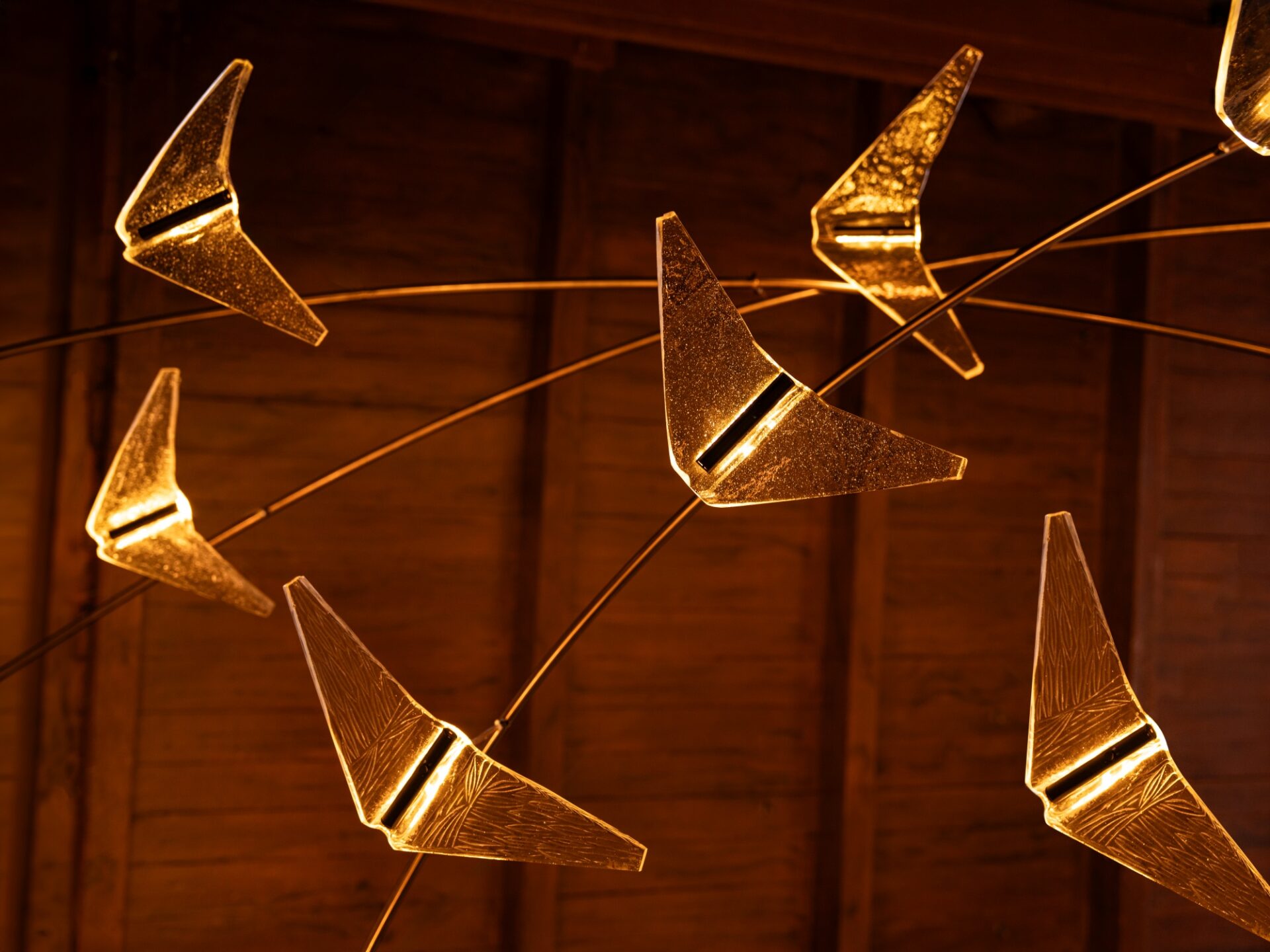
Custom-made origami chandelier. Visitors enter beneath this suspended installation of origami-like metal birds that hover beneath the timber roof structure.
In doing so, the flagship also responds to a broader evolution within retail itself. Increasingly, visitors seek memorable experiences rather than transactional shopping, and architecture plays a critical role in shaping those encounters.
“People don’t remember products, they remember experiences,” Pallavi says. “We wanted visitors to feel curiosity, wonder and discovery. Instead of walking through rows of rugs, they navigate a museum-like environment where they encounter installations, archives, craftsmanship and storytelling. It turns shopping into an experience and transforms the showroom into a cultural destination.”
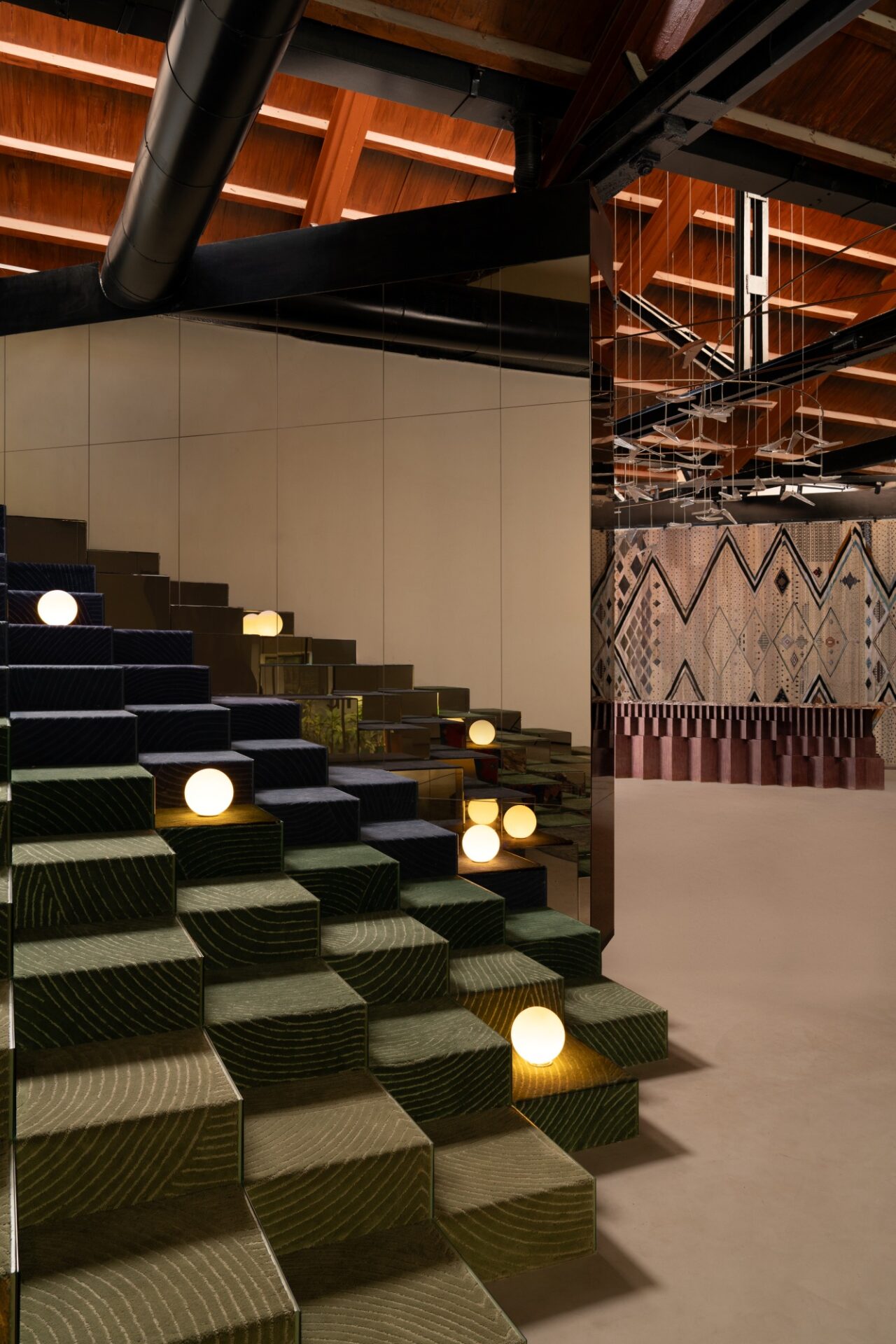
“When you look closely, weaving is all about rhythm and repetition. We translated that logic into the architecture, using simple geometric forms that repeat and scale through the space.”
Perhaps the greatest challenge lay in balancing this carefully choreographed experience with the authenticity of the existing warehouse. Rather than overpowering the building, the design allows its history to remain visible while introducing contemporary interventions with restraint.
“The biggest challenge was creating a highly curated experience within an industrial warehouse while preserving its authenticity,” Pallavi explains. “The lesson I take away is that the most memorable spaces don’t just display products; they reveal process. When you make the makers visible and allow people to engage with the story behind the work, the experience becomes far more meaningful and emotionally resonant.”
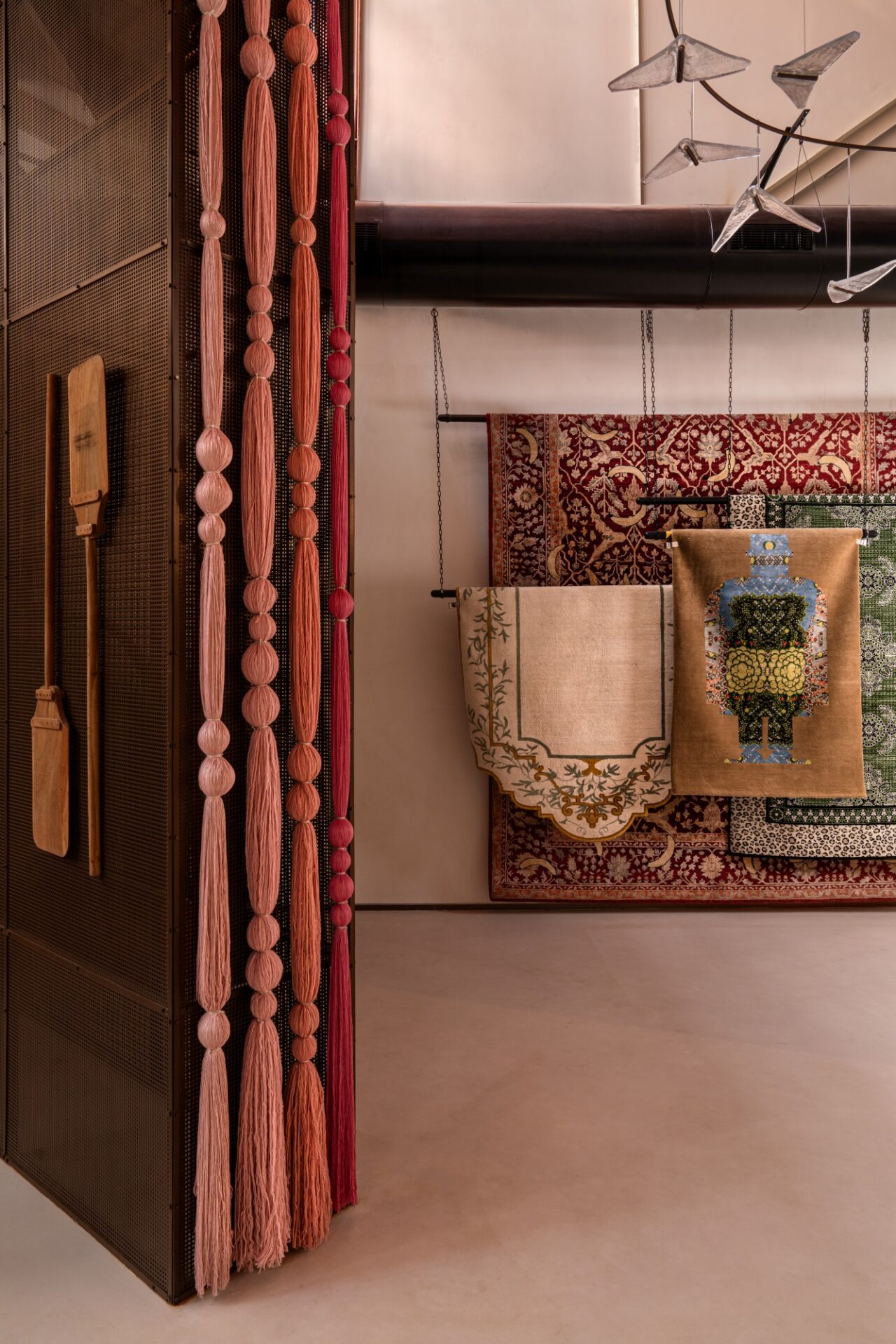
Yarn art created by the weavers.
The Jaipur Rugs flagship ultimately demonstrates how retail architecture can become something richer than commerce. It becomes a place where industrial heritage, artisan knowledge and contemporary design converge, allowing visitors to experience not simply the finished product, but the culture, labour and stories woven into every thread.
In transforming a historic warehouse into a living textile gallery, Roar has designed a space where architecture itself participates in the act of storytelling.