
House of Ageing Stones by Uru Consulting Grows Old with Time
Located on a 13,000 sq ft plot in Malappuram, Kerala, the House of Ageing Stones is a 4,260 sq ft residence completed last year. Designed and executed by Uru Consulting, a Calicut-based design, management, and engineering consultancy led by Principal Designer Safder Machilakath, the project reimagines a partially constructed structure into a home that remains true to materials and climatic intelligence, while reflecting the firm’s philosophy of quiet simplicity and sustainability.
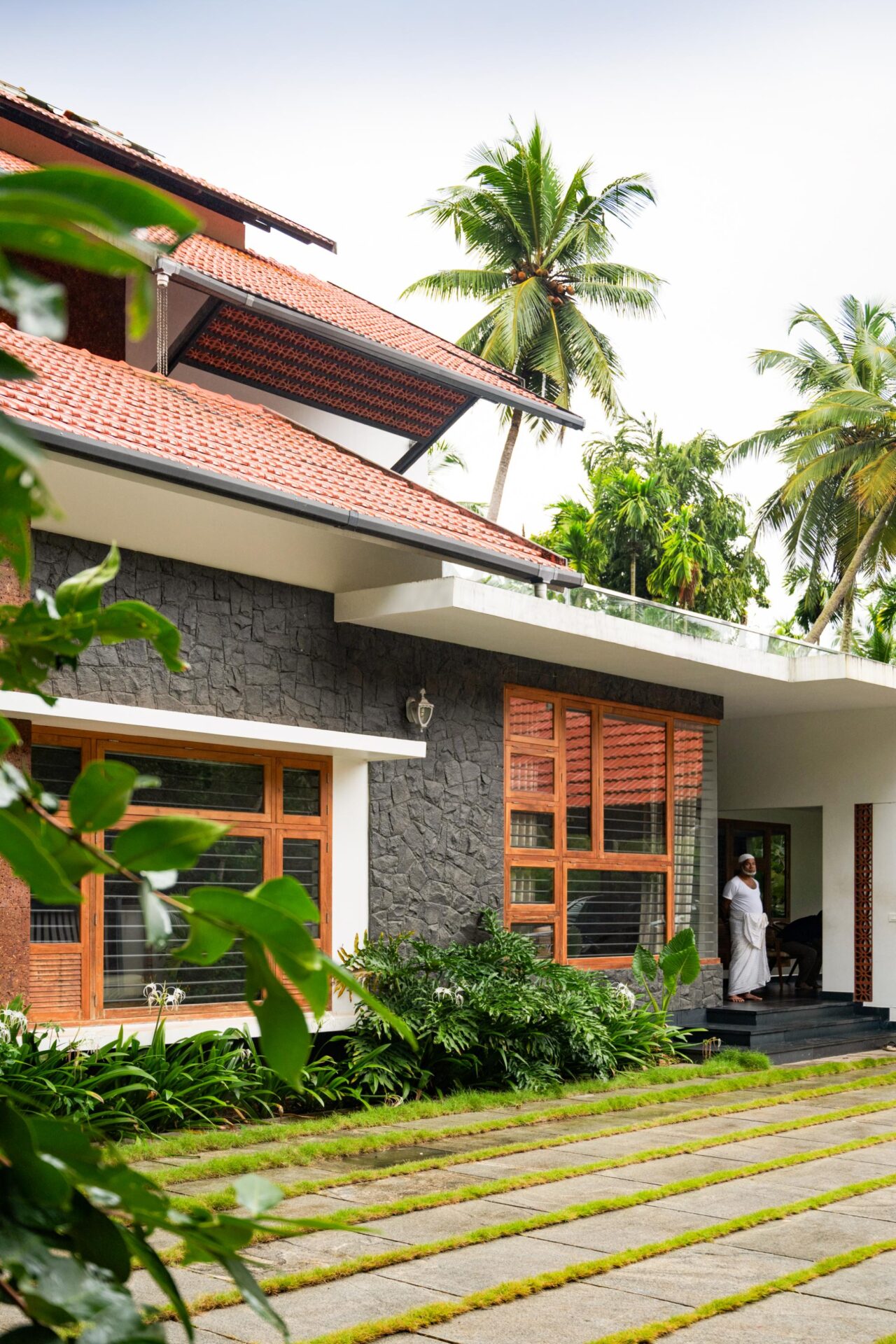 In an era that often equates newness with value, the House of Ageing Stones proposes a quieter architectural argument: that time itself is a collaborator. Conceived as a dwelling that matures with time, the project transforms weathering into a design strategy into material.
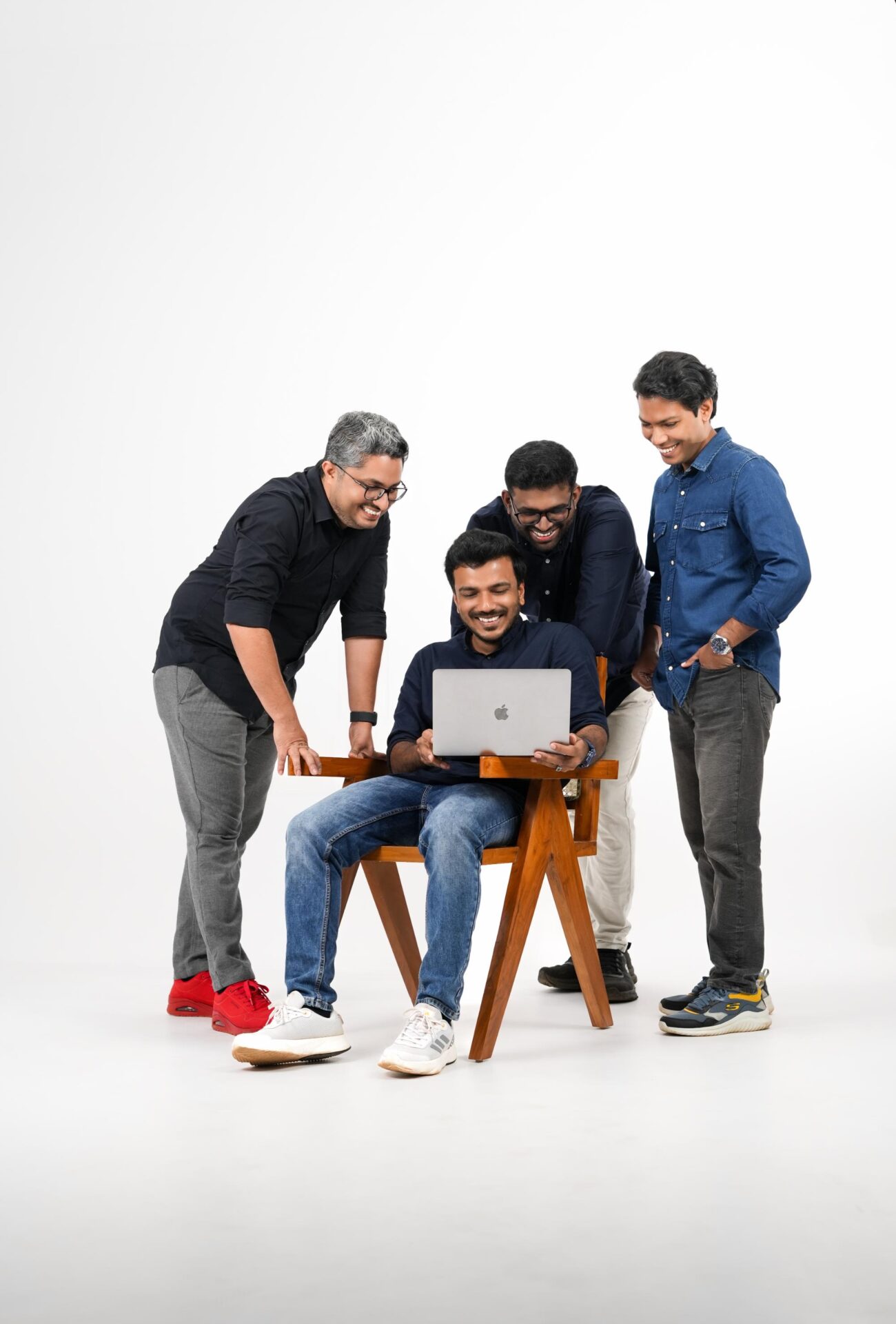
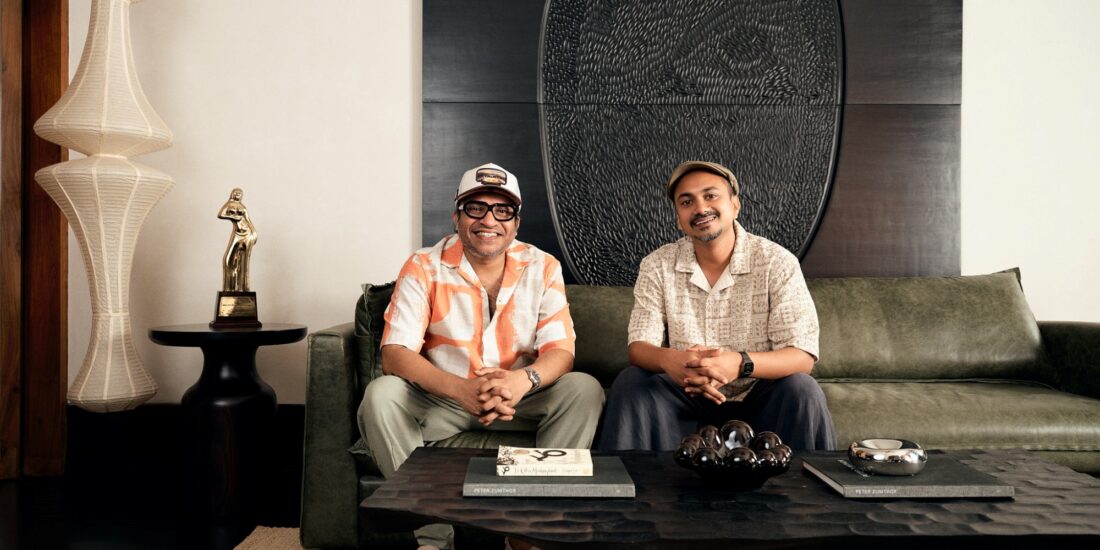
Team Uru
The story began in 2020, when clients Faisal and Shamna approached Uru Consulting with a partially completed ground-floor structure, as the existing design failed to reflect their aspirations for a dream home. When Team Uru visited the site, they encountered a landscape dense with agricultural greenery. Yet the structure stood withdrawn, isolated behind thick foliage.
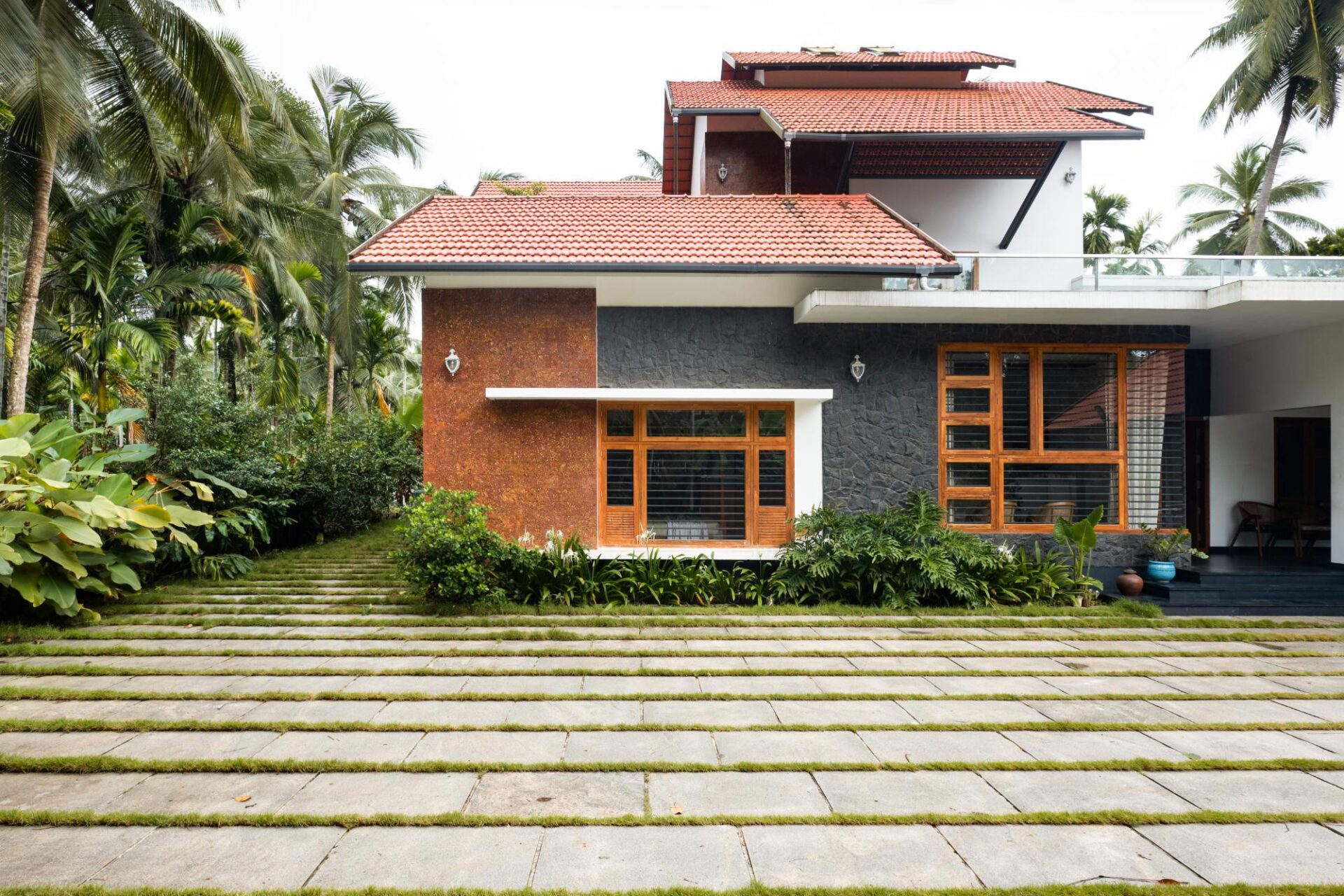 Through detailed conversations with the clients, a shared vision emerged: the house would open itself outward and dissolve into its surroundings. To blend with nature meant building from it, and the clients’ affinity for wood and stone became the project’s conceptual anchor.
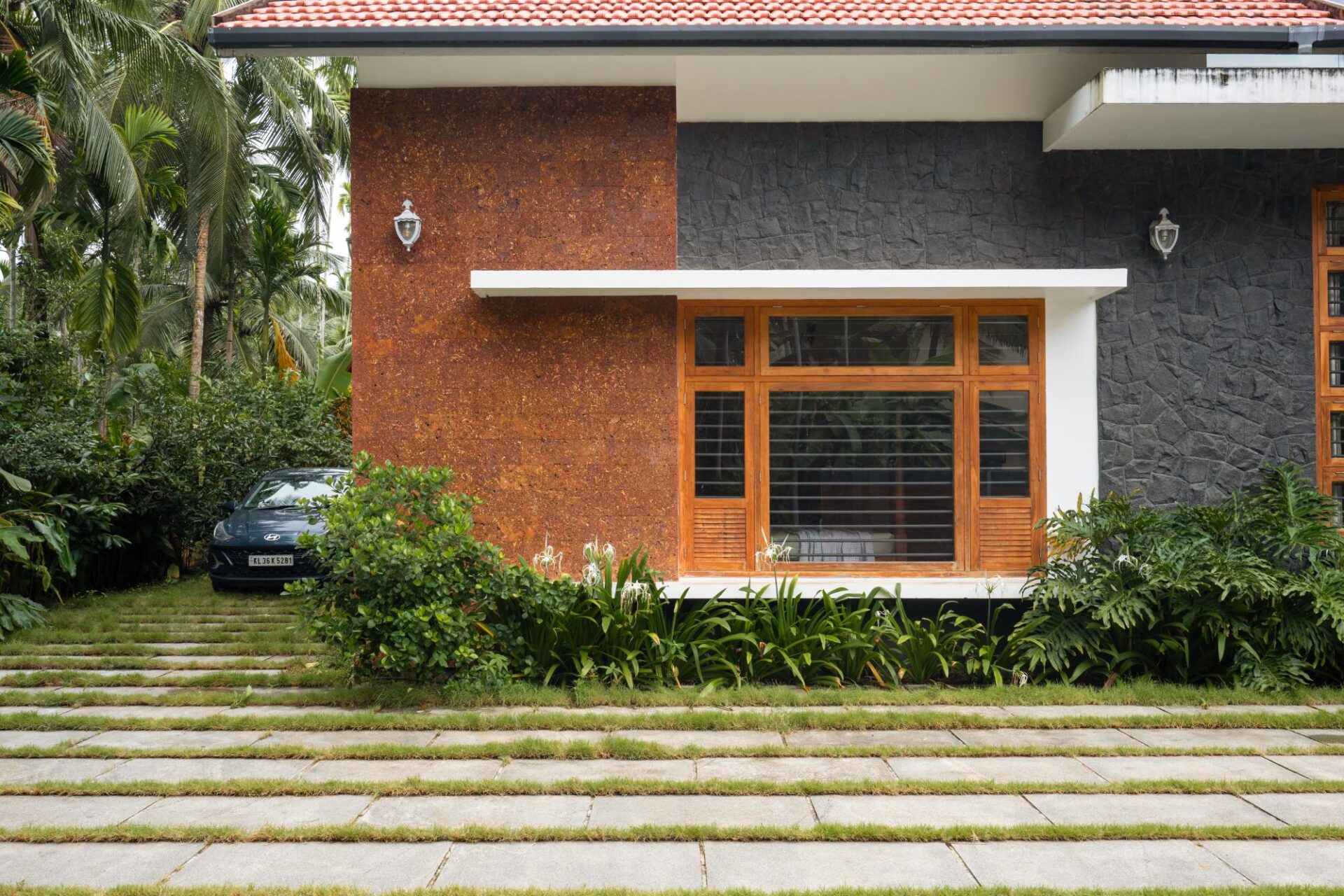 Stone, in particular, shaped the narrative, according to Team Uru. Carefully selected natural stones form the flooring, while laterite stone and granite rock ground the architecture in Kerala’s geological identity. Wooden embellishments carve warmth into the mass, softening edges and reinforcing a rustic character.
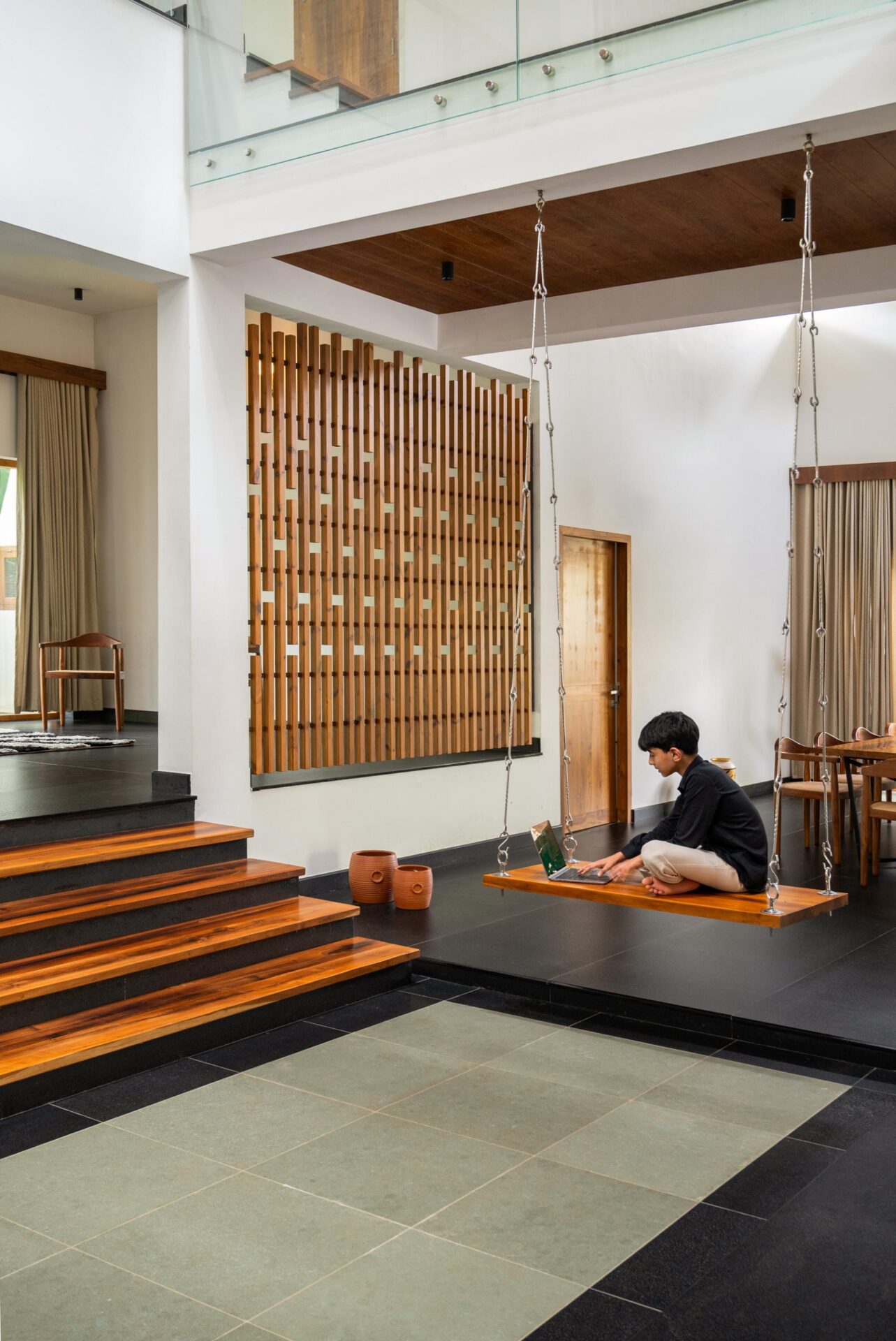 “We wanted the house to feel alive, capable of absorbing time and becoming more meaningful as it ages. Instead of resisting weathering, its architecture accepts it, allowing materials to narrate their own journey,” says Safder Machilakath, the Principal Designer of the project.
Spatial Porosity and Movement
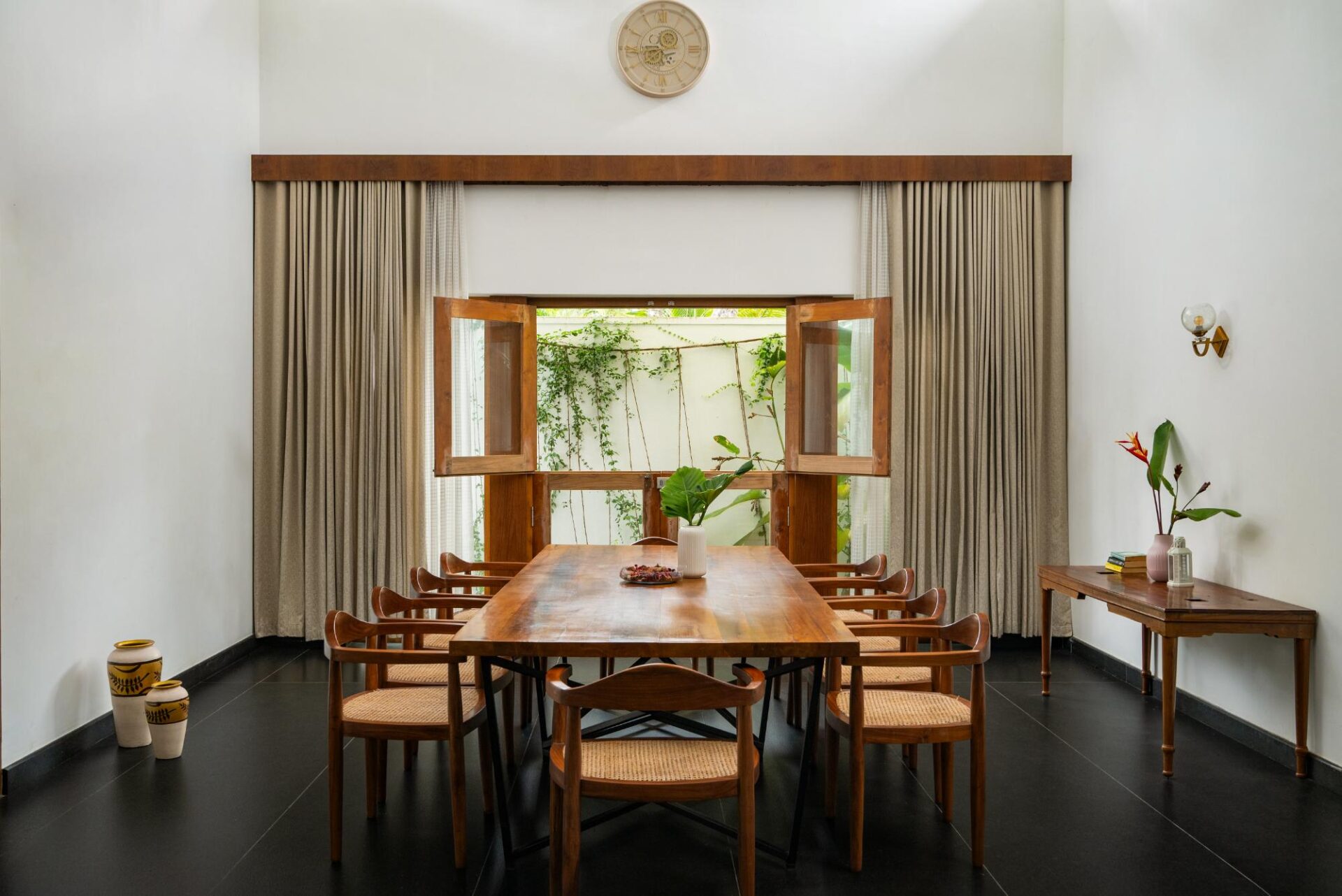 Spatially, the 4,260 sq ft built-up residence reinterprets the typically inward-looking house as one that gradually unfolds toward the landscape, with circulation layered rather than linear.
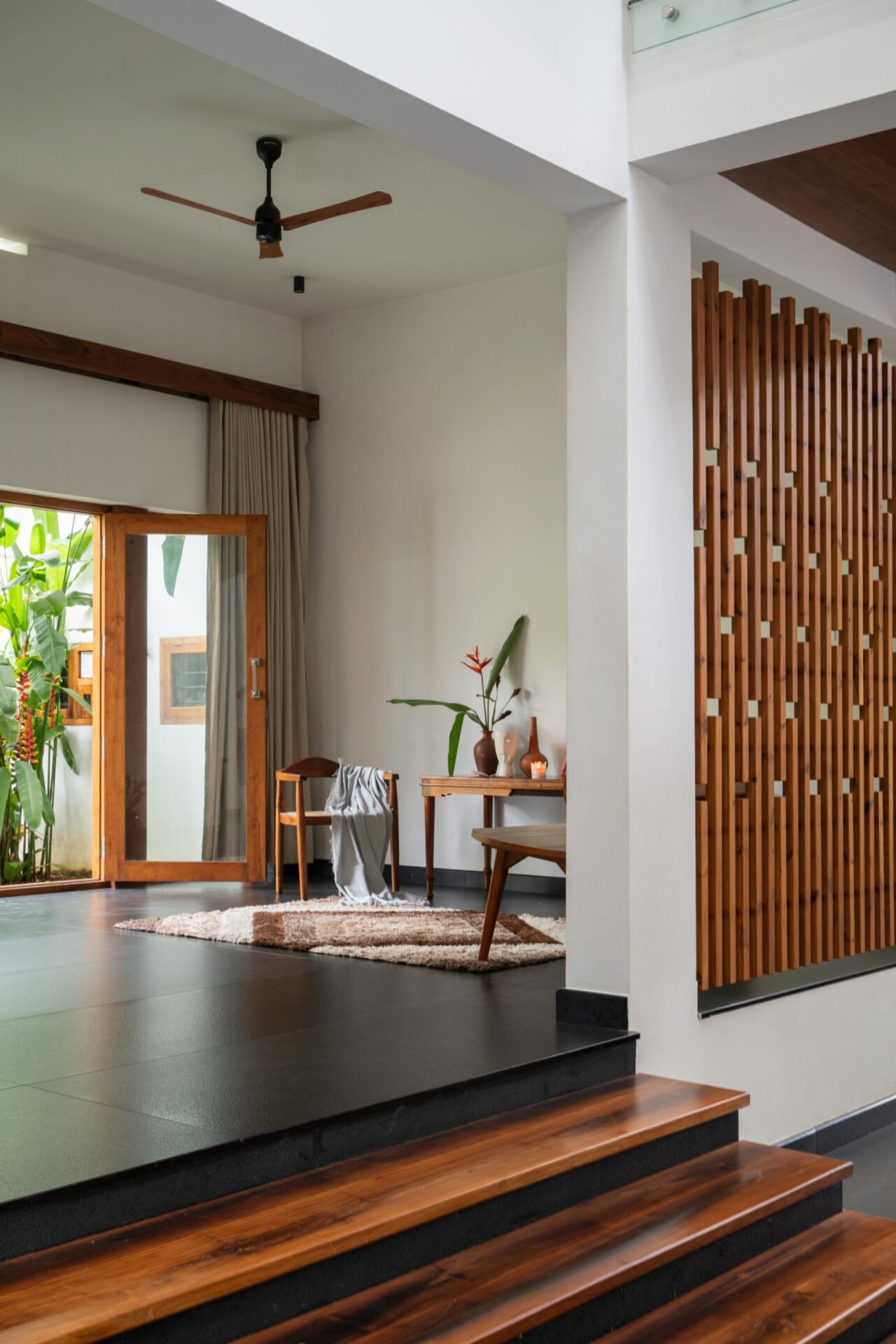 Movement progresses through framed views, shaded patio-like spaces, and semi-open passages that constantly reconnect occupants with greenery, sky and stone surfaces. Visual axes are deliberately aligned to create pauses, moments where the landscape becomes integral rather than incidental.
The plan of the house comprises five bedrooms, a living room, an exclusive family living area, a dining room, and a kitchen. The house operates as a large interactive environment where shared living forms the social heart. Living, dining, and kitchen spaces interconnect fluidly, encouraging participation without excess ornamentation.
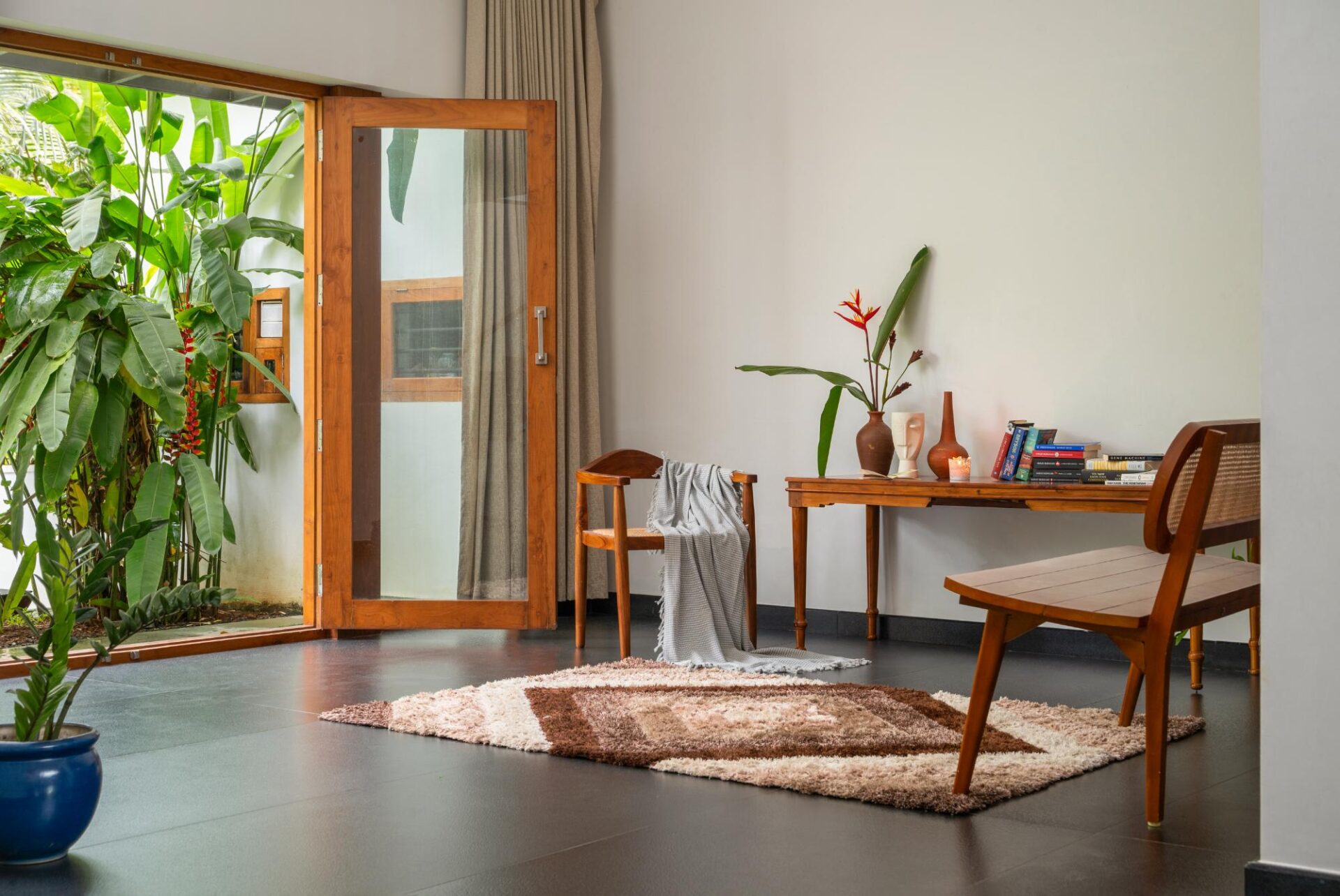 Balancing interaction with privacy, the bedrooms are positioned as quieter retreats along the periphery. Transitional thresholds, subtle level variations, framed openings, and intermediary spill-out spaces maintain visual continuity while ensuring acoustic and functional separation. Pinewood trellis work further modulates privacy without severing the connection. Children can engage in projects, others can read or cook, yet remain visually linked to the home so that the atmosphere is one of togetherness.
Materiality and Regional Craft
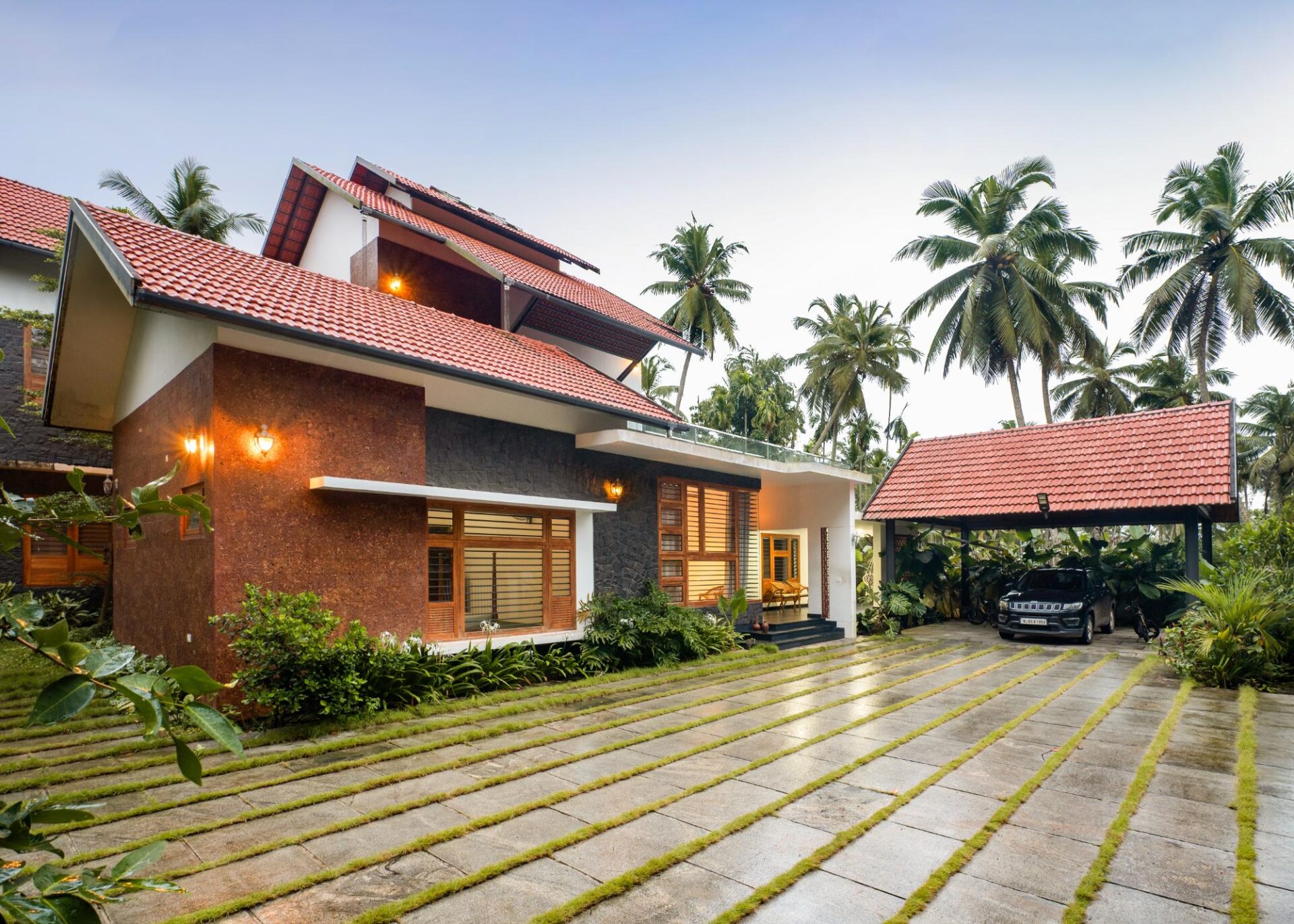 Material selection by Team Uru was planned for climatic responsiveness.
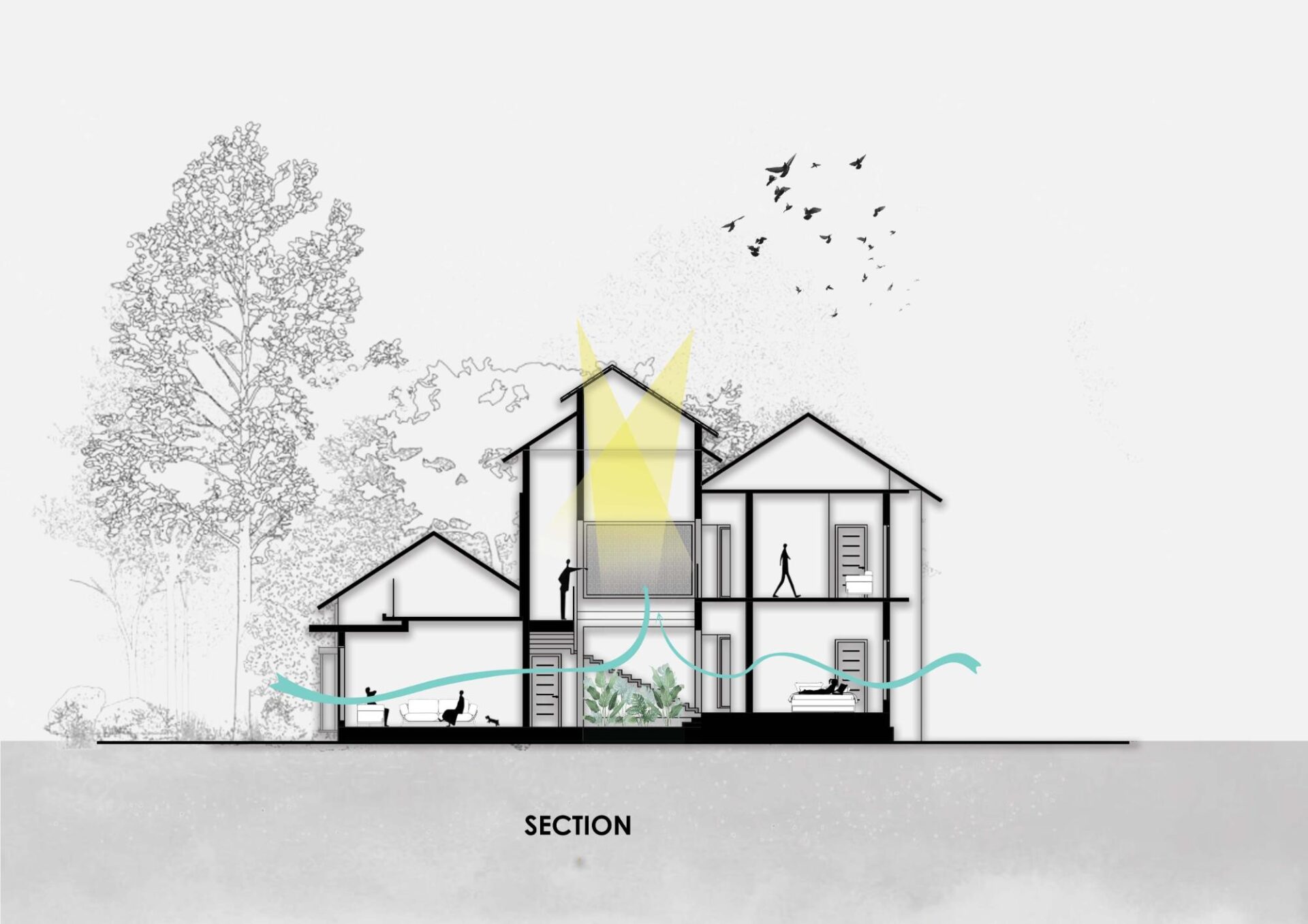
“Malappuram’s warm, humid conditions shaped the architecture from the inception. Cross ventilation is facilitated through aligned openings and internal courts that maintain continuous airflow, and deep roof overhangs and shaded verandahs shield interiors from solar gain and heavy monsoon rains,” says Machilakath.
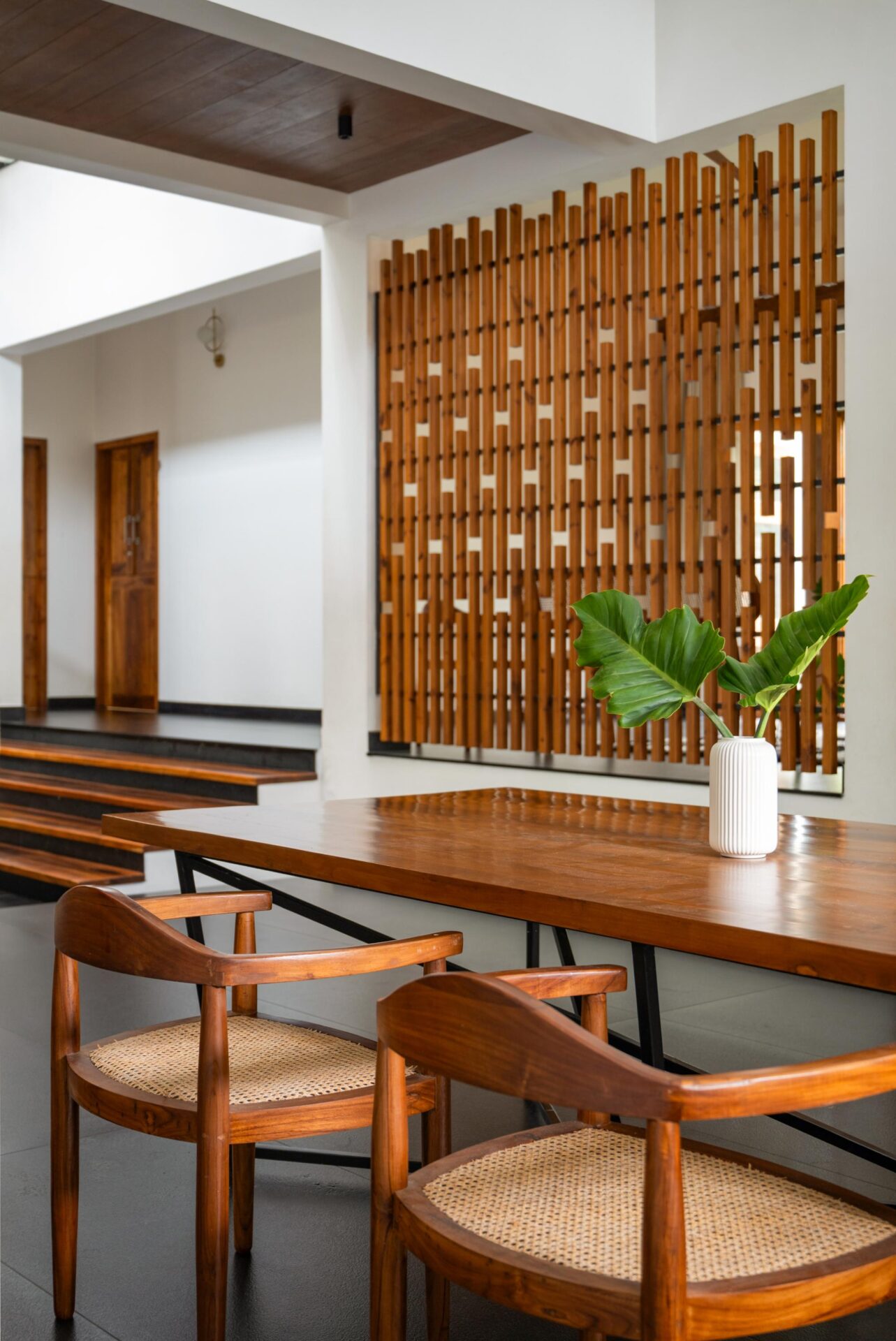 Daylight is filtered and diffused to minimise glare while retaining brightness with breathable finishes that allow humidity to dissipate, ensuring durability while enabling materials to age authentically. Lime-based Kota stone materials with relatively low embodied energy reinforce the sustainability agenda.
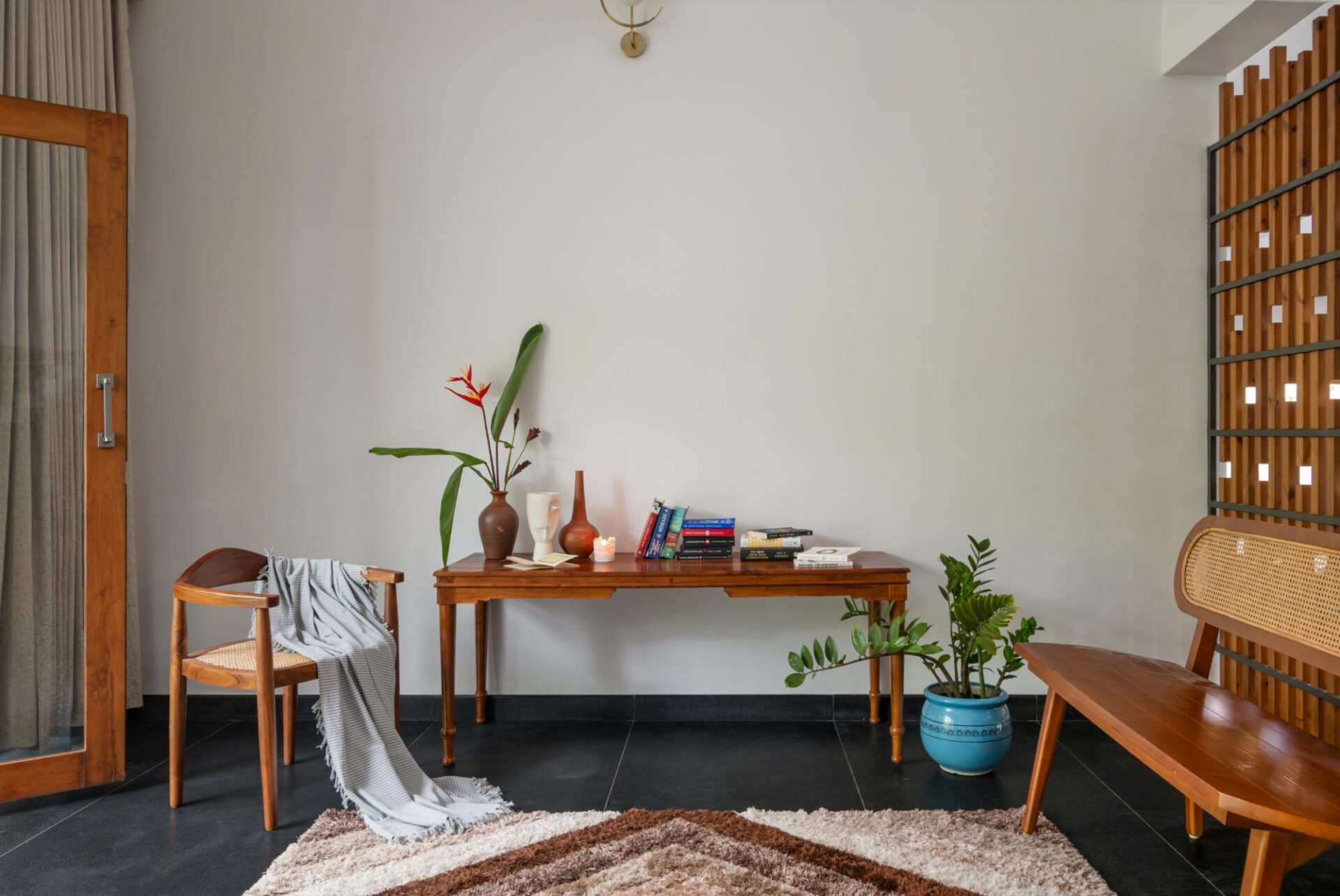 “Complementing the stone are seasoned Nilambur teak and locally sourced hardwoods used for doors, ceilings, and custom furniture. Construction relies on laterite and RCC, ensuring structural integrity with climatic compatibility,” says Machilakath.
River-washed granite and Kota stone, along with other materials, were chosen so that the material ecosystem remains cohesive and regionally grounded, with most resources procured from within Kerala to reduce transportation impact.
Passive Design Strategies
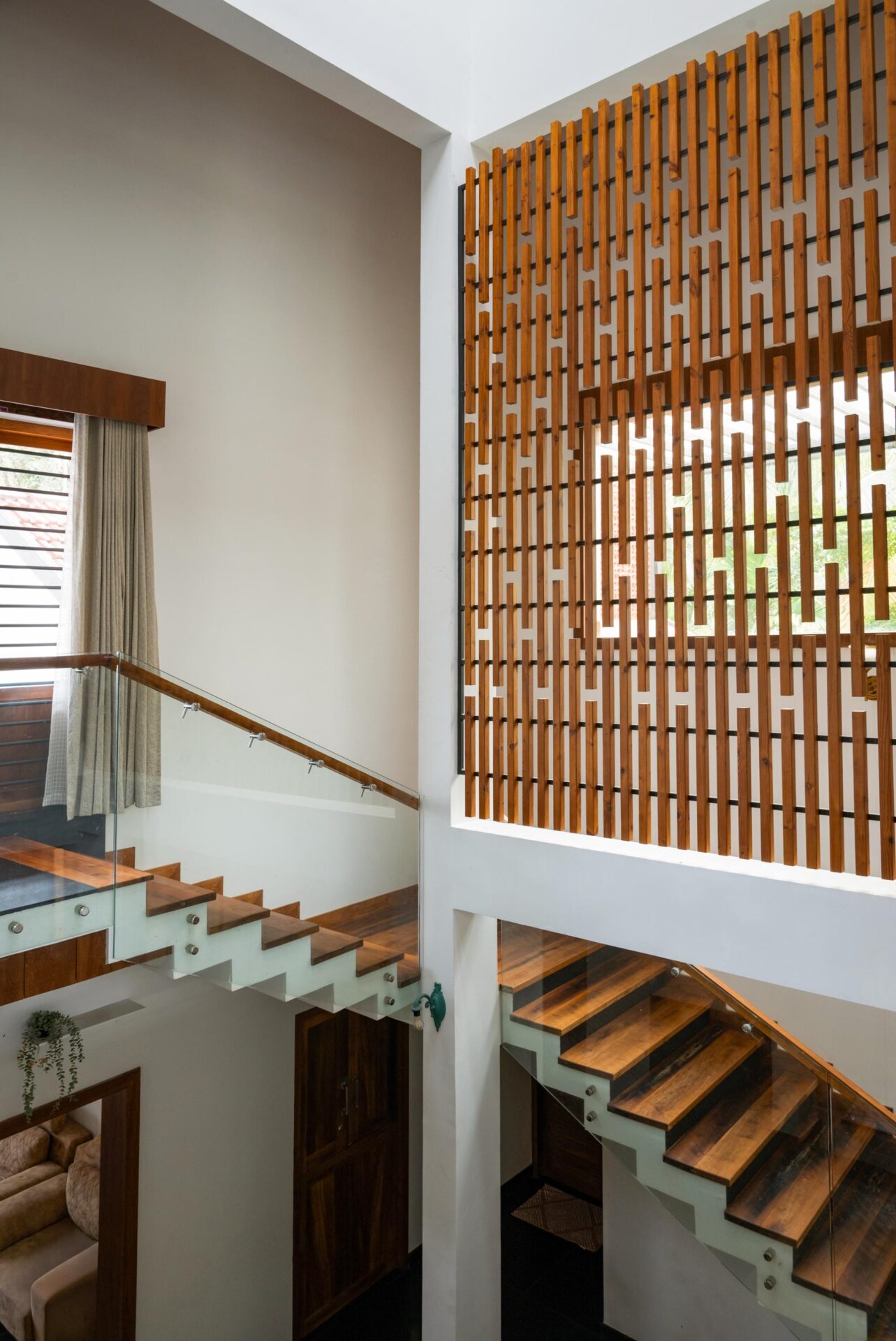 Given the tropical climate, passive strategies were foundational, with the internal courts and aligned openings ensuring constant cross ventilation, according to Team Uru.
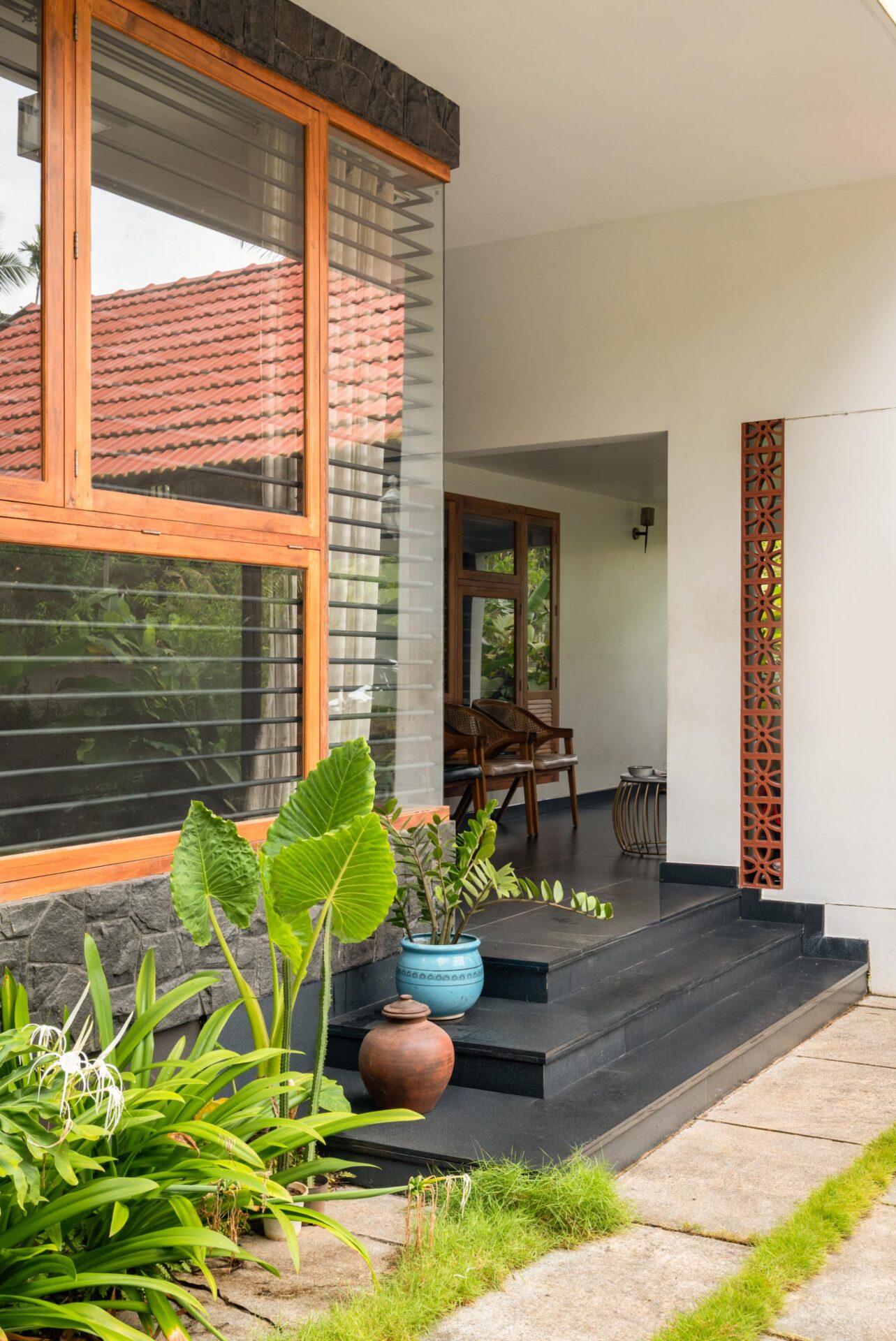 Shaded verandahs and deep overhangs mitigate heat gain and protect against monsoon intensity, and filtered daylight reduces glare while maintaining luminous interiors. The breathable palette – stone, lime-based finishes, hardwood- responds naturally to humidity, allowing surfaces to evolve rather than deteriorate. Sustainability here is not technological excess, but material intelligence and climatic sensitivity.
Ageing as Architectural Philosophy
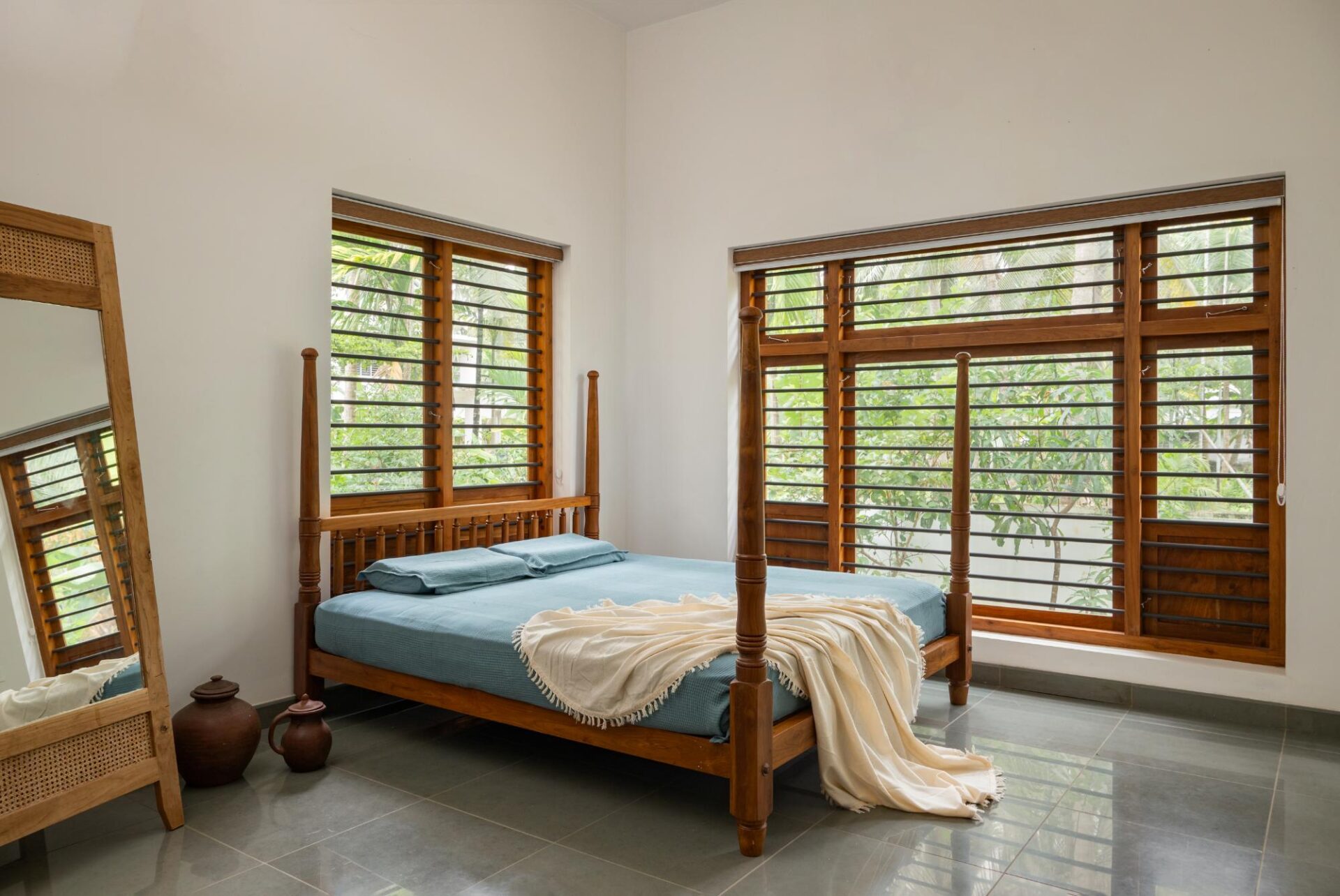 The project timeline reflects a philosophy of patience. Designed in 2020, construction commenced in 2021 and faced repeated interruptions due to the Covid pandemic. Completion was achieved in 2025, with interiors finalised two years later.
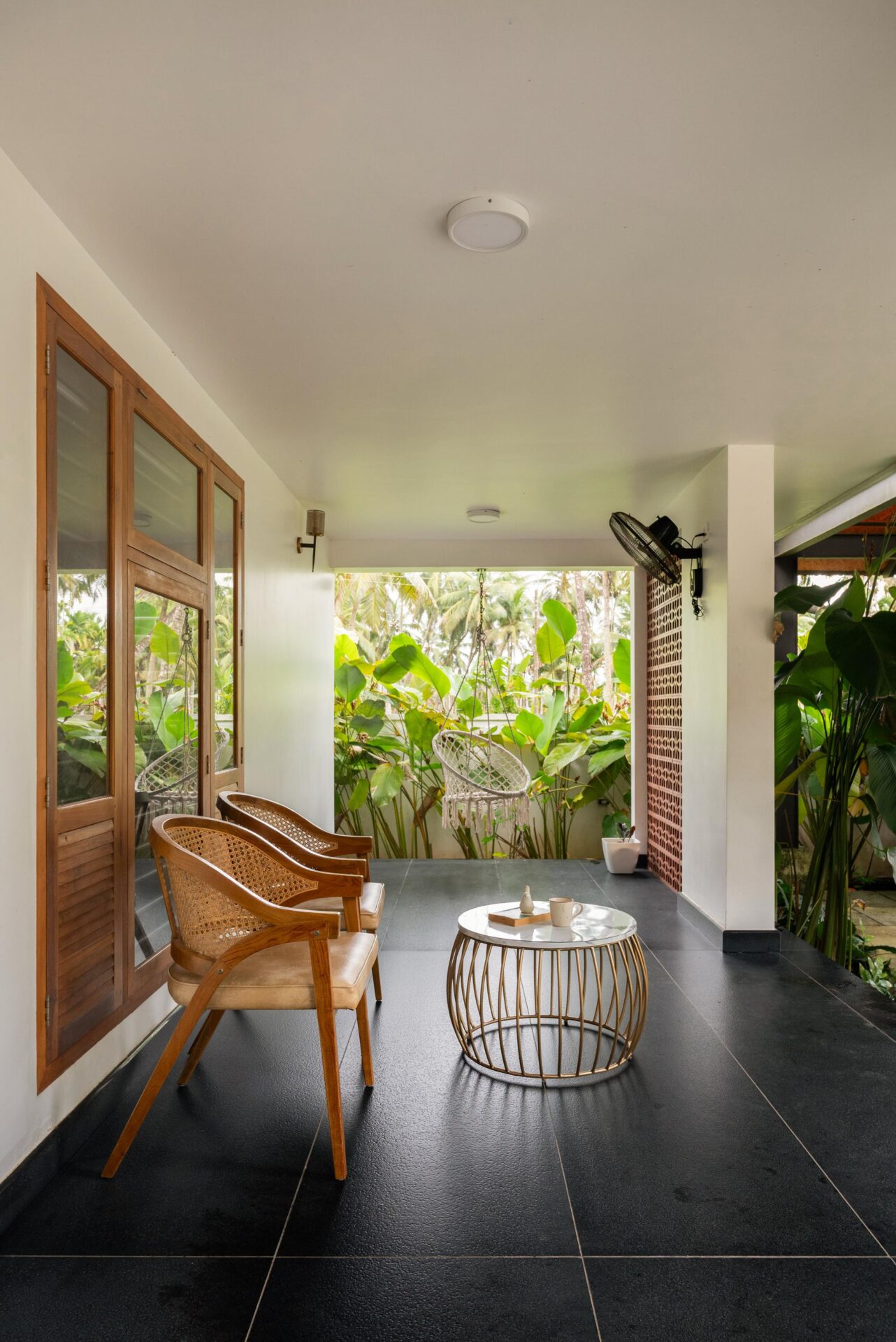 During this period, the natural materials began to mature, wood deepening in tone, stone absorbing monsoon moisture and sunlight. The house acquired a temperament usually achieved only through long habitation.
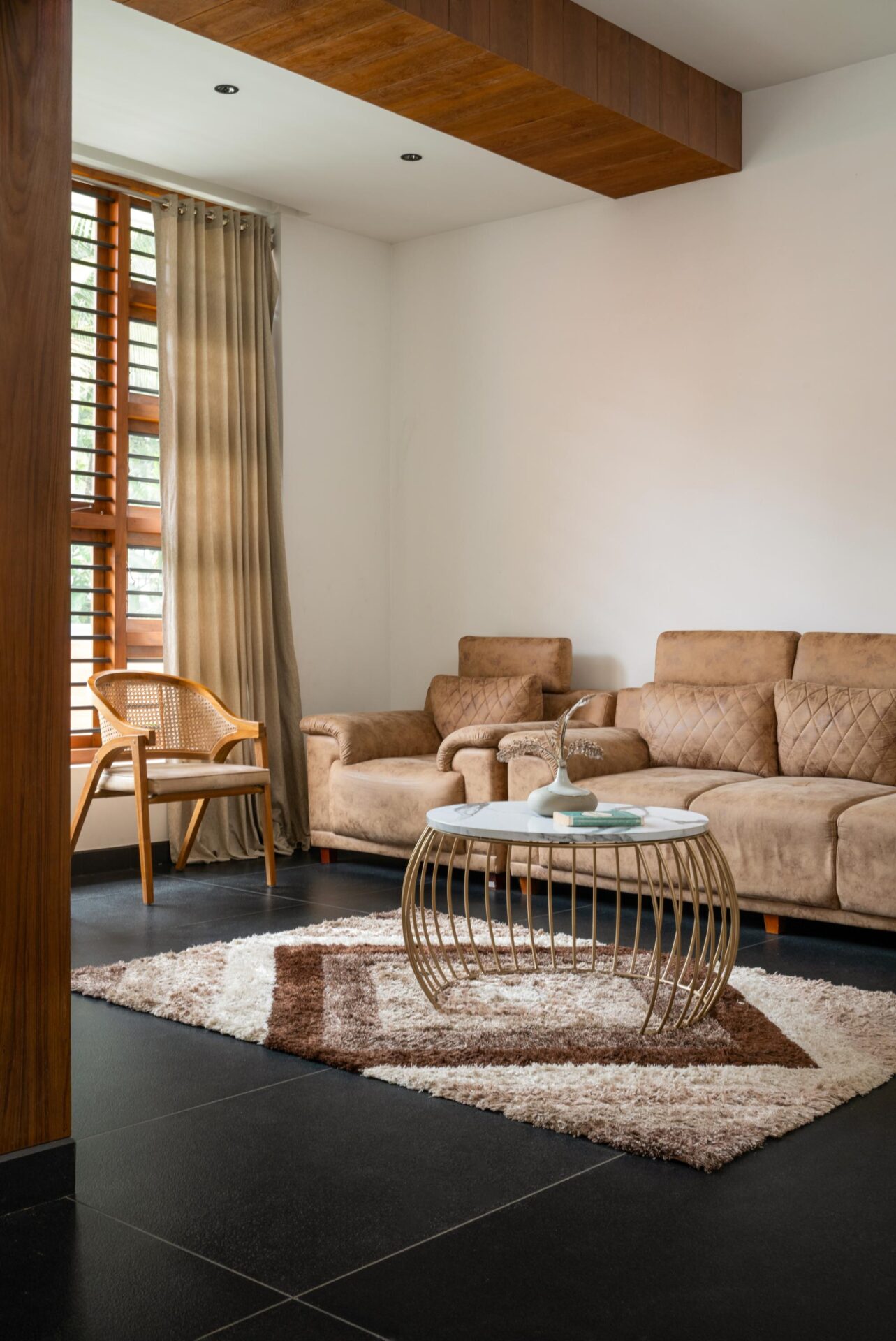 Today, the house stands as an evolving chronicle, one that the family finds true comfort in every journey.
Project Details:
Project Name: House of Ageing Stones
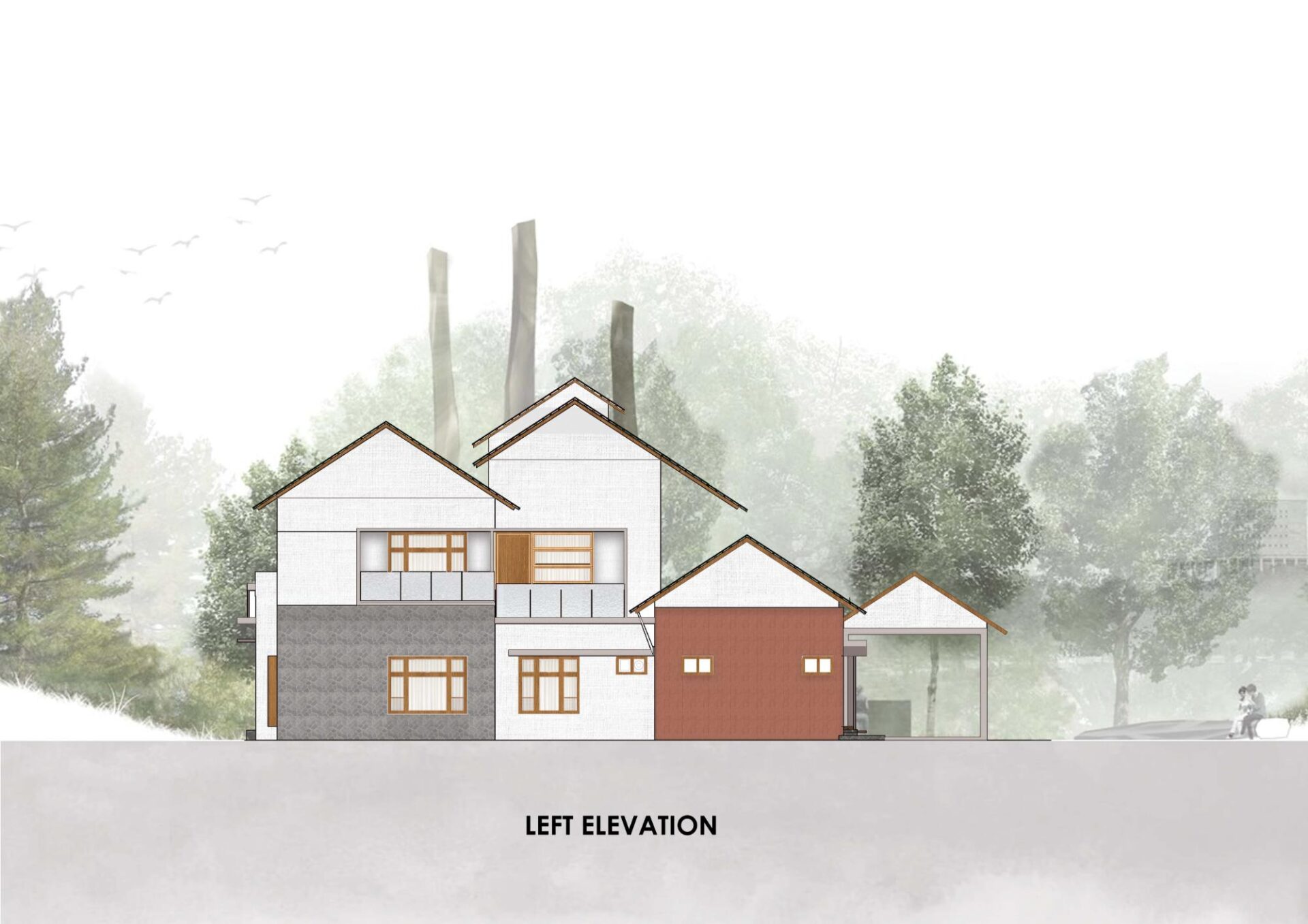 Location: Parappanangadi, Malappuram, Kerala, India
- Plot Area: 13,000 sq ft
- Built-up Area: 4,260 sq ft
- Approximate Cost: ₹1.3 crore
- Completion Year: 2025
- Firm: Uru Consulting
- Principal Designer: Safder Machilakath
- Design Team: Mohammed Siyad MC, Mohamed Shabeeb P, Safwan PM
- Consultant: Design Spectrum
- Photographer: Nathan Photography