
From the Cullinan Mine to Qatar
An installation at Art Basel Qatar shines light on the ongoing impact of colonialism, of history. By Mary Joseph
 “Is that a fuselage?” “No, it looks like a tower.” “But why is it toppled over?”
“It’s completely different from the rest.”
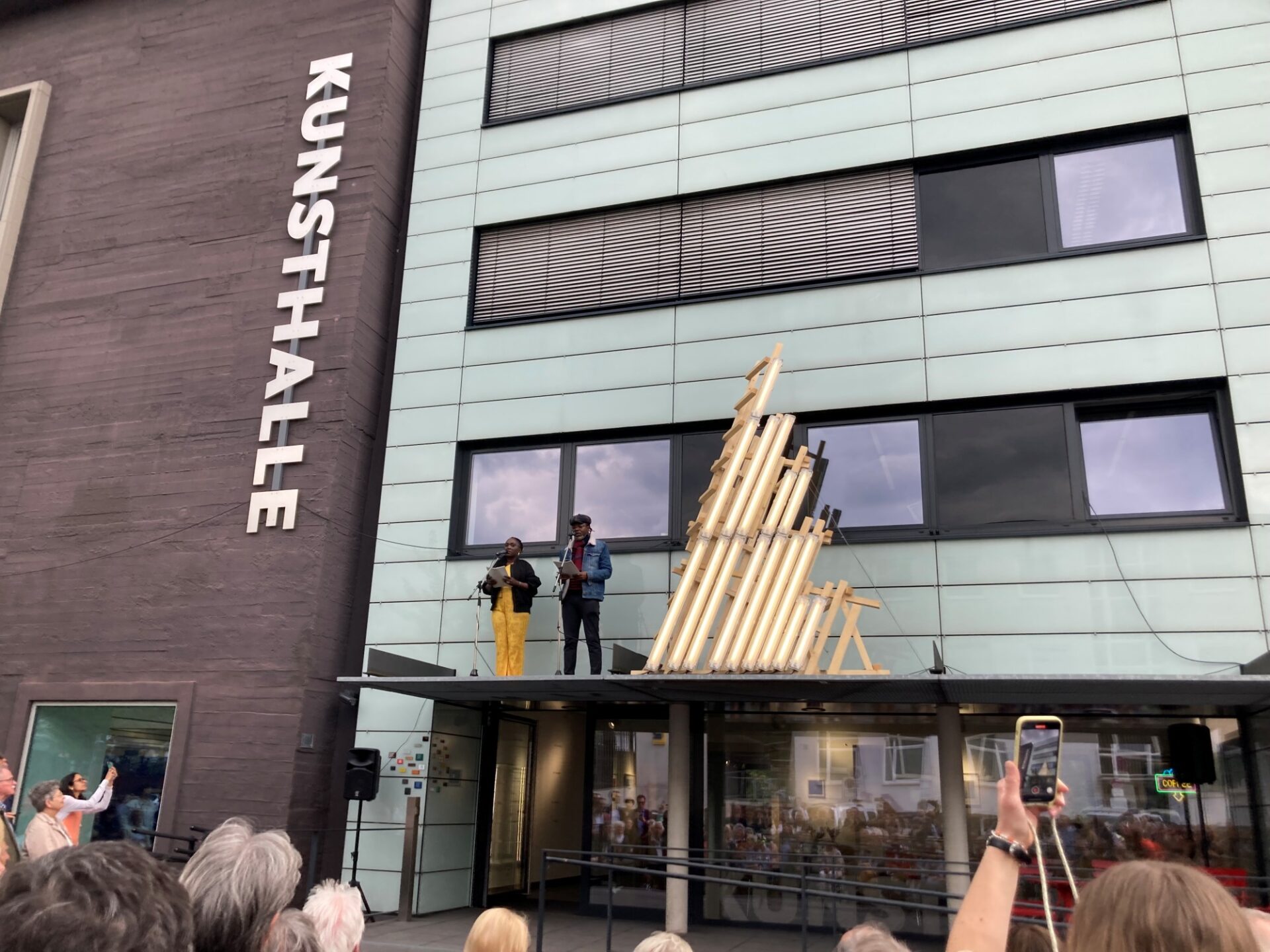
Comments and questions floated around as visitors approached an installation titled “Stone Free” at Art Basel Qatar 2026.
Indeed, “different” was an understatement, while most of the 87 exhibits grabbed one’s attention by virtue of scale, material innovation, or abstract conceptualisation, “Stone Free” was stark, almost skeletal. So much so that walking around the artwork, forehead furrowed, one couldn’t help but wonder: “Surely such an unadulterated and raw exterior must be hiding a story powerful enough to offset its minimalism.” There was only one way to find out.
We went in search of the brains behind the creation, Ângela Ferreira, an Assistant Professor in Sculpture at the University of Lisbon, Portugal. In the conversation that followed, Ferreira, who is also a Honorary Research Fellow at Wits University, Johannesburg, talked about how her life in South Africa and her investigations into the ongoing impact of colonialism and post-colonialism inspired the concept for “Stone Free”, the years of exhaustive, ground-level research that lay behind it, and the story of the “toppled” tower.
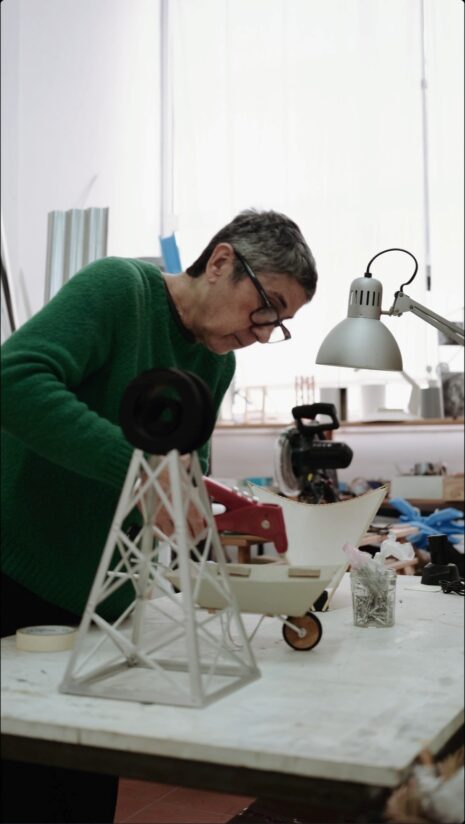
Ângela Ferreira.
Stone Free’s presence at Art Basel Qatar hints at something more: the installation is a case in point of how art fairs have the potential to evolve from being events where works by renowned artists are merely displayed or sold objectively, and even remotely, to being platforms where storytelling, research, and experimentation come together, offering buyers and collectors the chance to be part of conversations that educate, inform and dramatically shift our perspectives on how we view our collective present, and presence.

Ângela Ferreira, artist and an Assistant Professor in Sculpture at the University of Lisbon, Portugal.
SCALE: How did the concept for this installation come about?
Ângela Ferreira: Understanding the context helps in understanding the concept. South Africa is a country with a long history of mining, especially diamond and gold mining. Mining, in fact, has contributed to the social and racial problems in South Africa, and also to the wealth of the country. So, the politics of mining and the history of the country are intertwined. Back in 2010, I was looking at an aerial photograph of the big hole formed by the Cullinan mine. The mine is named after the largest gem-quality rough diamond, the Cullinan diamond, which was extracted from it. It is currently part of the Crown Jewels of the British royal family, including scepter and the crown. What remains of that colonial history is the mining tunnel, a meandering underground labyrinth, around 3 km long and 5 km deep.
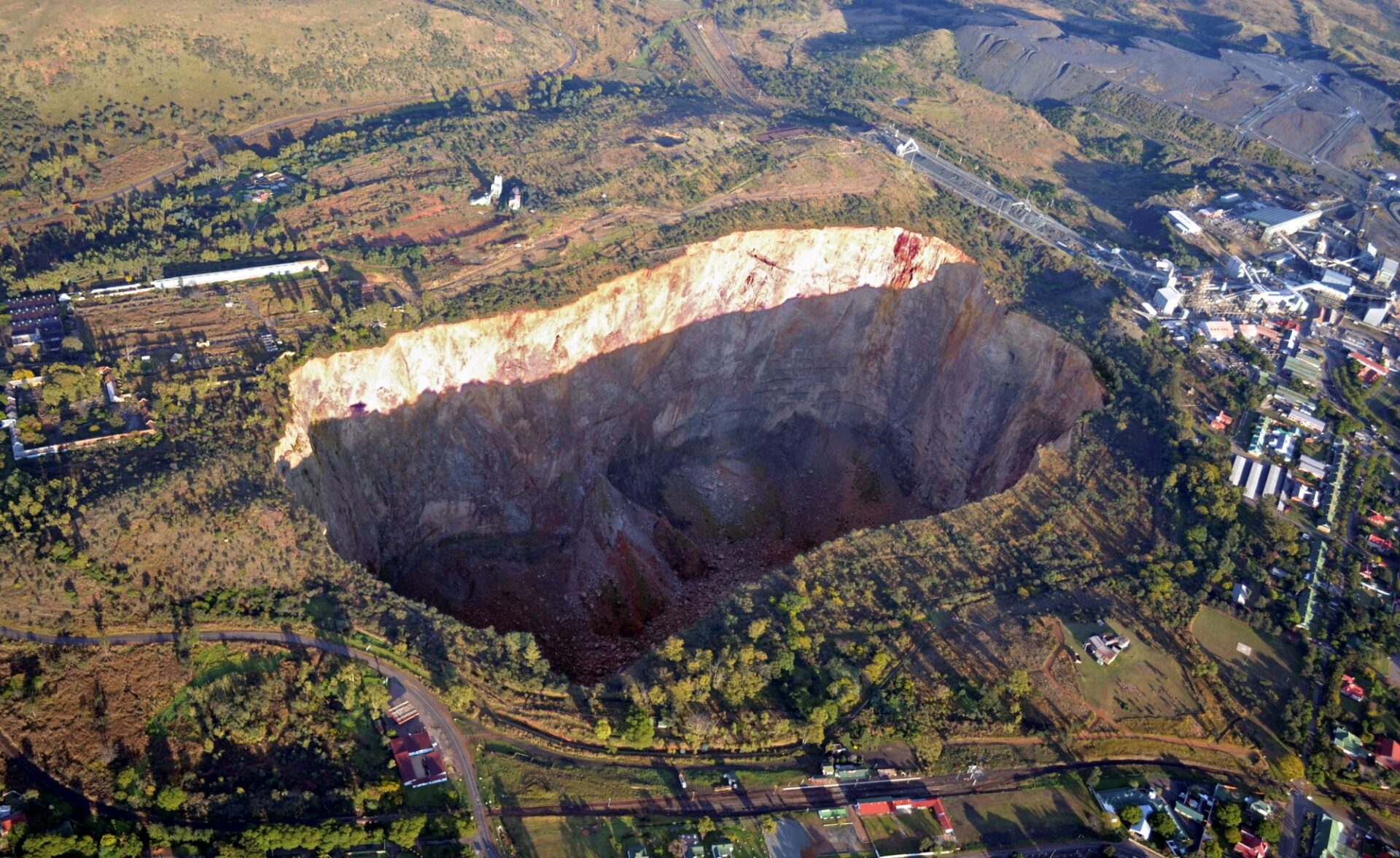
An aerial image of the Cullinan Mine. The mine was named after the largest gem-quality rough diamond, the Cullinan diamond, that was extracted from it. Vast in width and depth, the mine holds stories that hark back to an era where colonialism dictated the outcomes of commerce.
I remember looking at the image and thinking that it resembled a negative sculpture, inverted into the ground. A regular sculpture sits upright with space around it, defining the sculpture’s surface and volume. Here, it’s the opposite; the hole forms a sculptural emptiness thrusting deep into the earth, with the earth around the excavated space defining its form. The hole has not been filled up, and it’s an incredible sight, remaining as a scar in the landscape, almost as a memory of the terrible conditions the miners endured, of pure human greed.
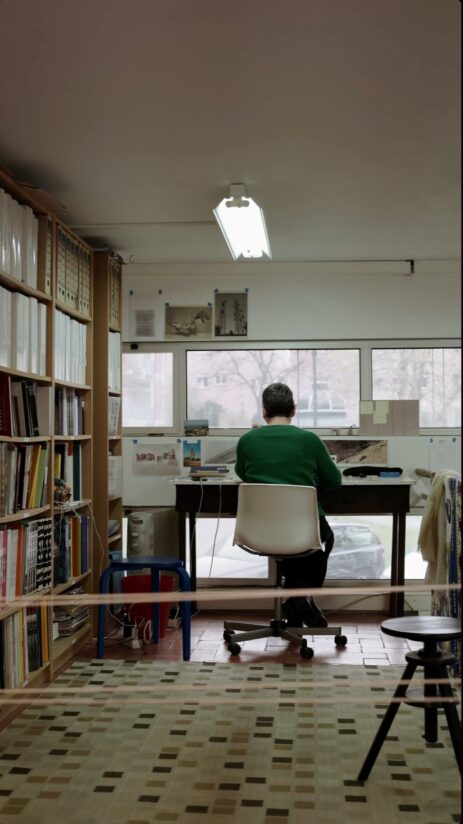
The artist at work.
Fascinated by that image and associated history, I developed a series of sculptures titled “Stone Free”, installations that touched on the political, cultural and societal effects of mining. One of the sculptures was exhibited in Lubumbashi, in the Democratic Republic of Congo, as part of the biennial there, and another in Douchy-les-Mines, in France. Both places have a long history of mining. The installation at Art Basel Qatar was the third in the series and was specially made for this fair.
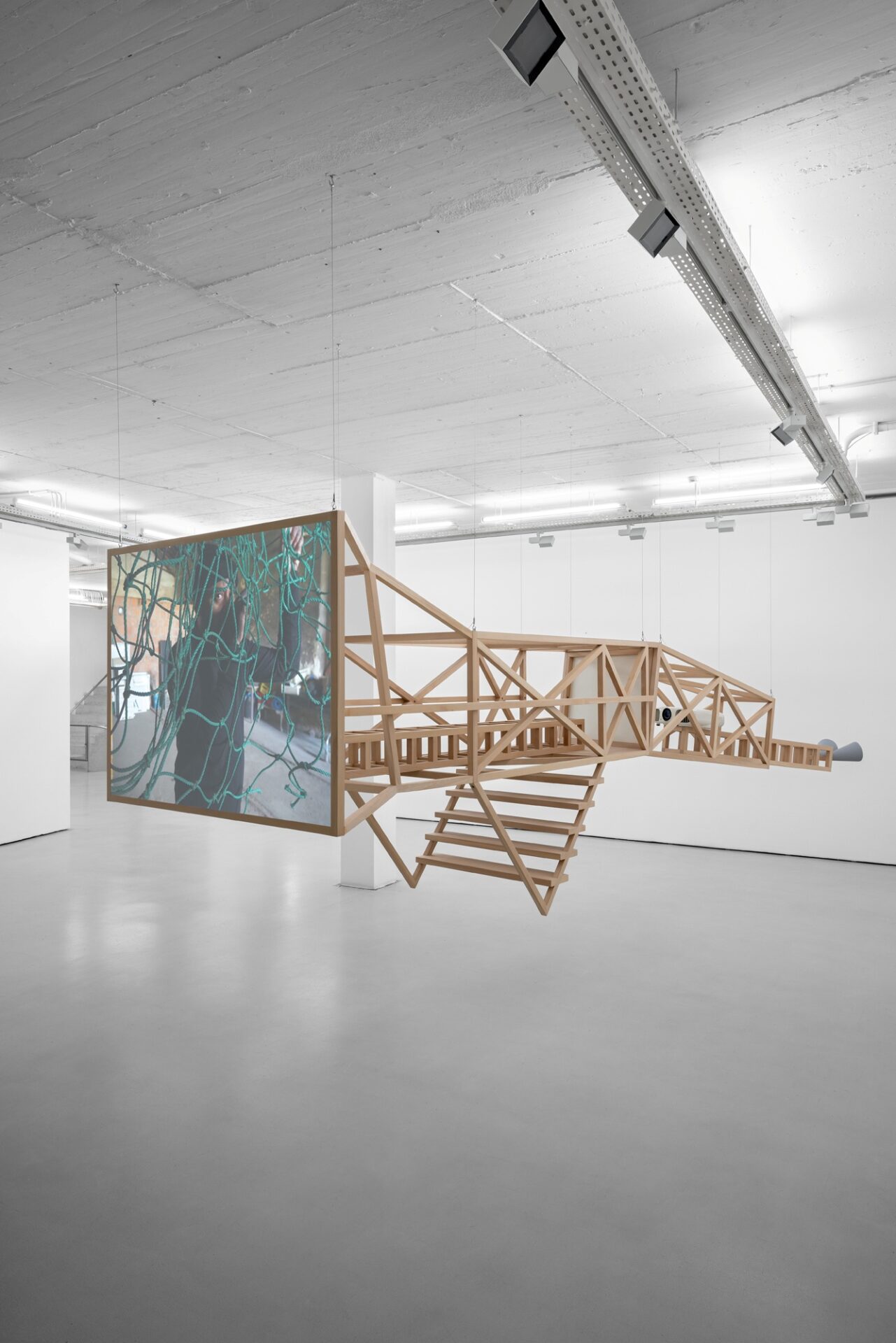
Stone Free
SCALE: Is there a story behind the title “Stone Free”?
Ângela Ferreira: Yes, the title “Stone Free” is inspired by Jimi Hendrix’s song by the same name, released in 1966. Hendrix was an African American rock musician who experienced and experimented with the idea of freedom. His performances were so captivating and his musical skills so novel that he is regarded by many as the very embodiment of the idea of revolution. In a way, the different elements in this installation are symbolic of another kind of revolution: the various activities the miners, natives of countries that were colonised by European powers, used to rebel against, or merely survive, their situations.
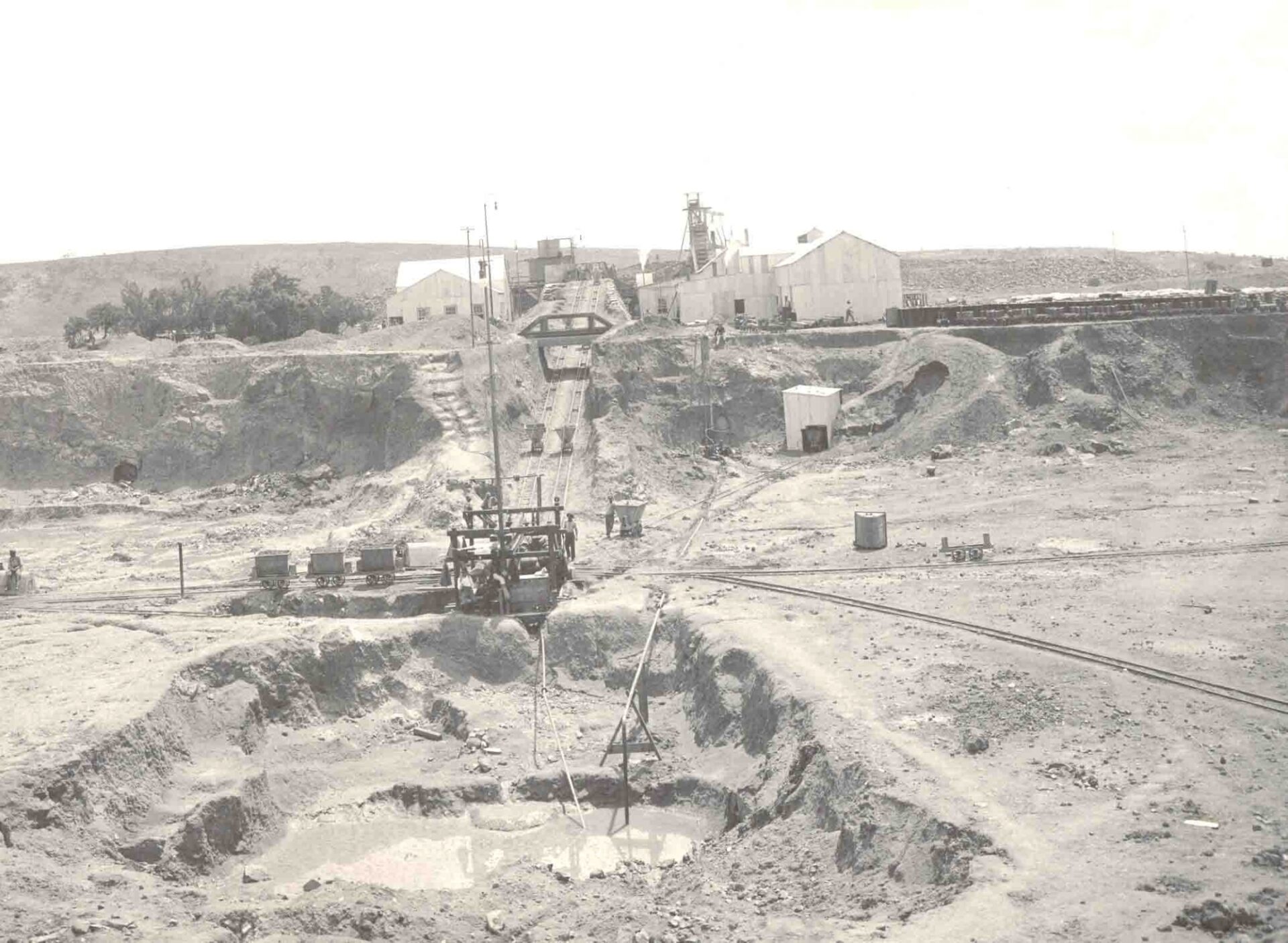
At a time when mechanical equipment wasn’t as advanced or varied as it is now, physical labour, manpower drawn from colonies, played a crucial role not only in the initial process of excavating a mine but also in sustaining operations as well, often in brutal conditions. In a way, these labourers were, in today’s language, the earliest zama zamas.
The title also alludes to the cultural influences these miners had on society. There were hundreds of thousands of miners working in these mines. They developed songs and performances as a means of covertly communicating with one another. For instance, the Makwayela dances and songs were born out of the need for these miners to share messages without attracting the attention of their colonial supervisors.
Incidentally, I later discovered that Hendrix first gave a public performance of the song in a space that was once a mining cave, in the UK.
SCALE: The installation consists of a wooden tower that seems to have fallen over.
Ângela Ferreira: The tower itself is inspired by the radio towers built by people in rural areas, most of whom were drawn from former colonies. They used these towers to transmit programs in their respective mother tongues. Radio was, and often is, a principal medium of communication, a symbol of popular revolutionary methods.
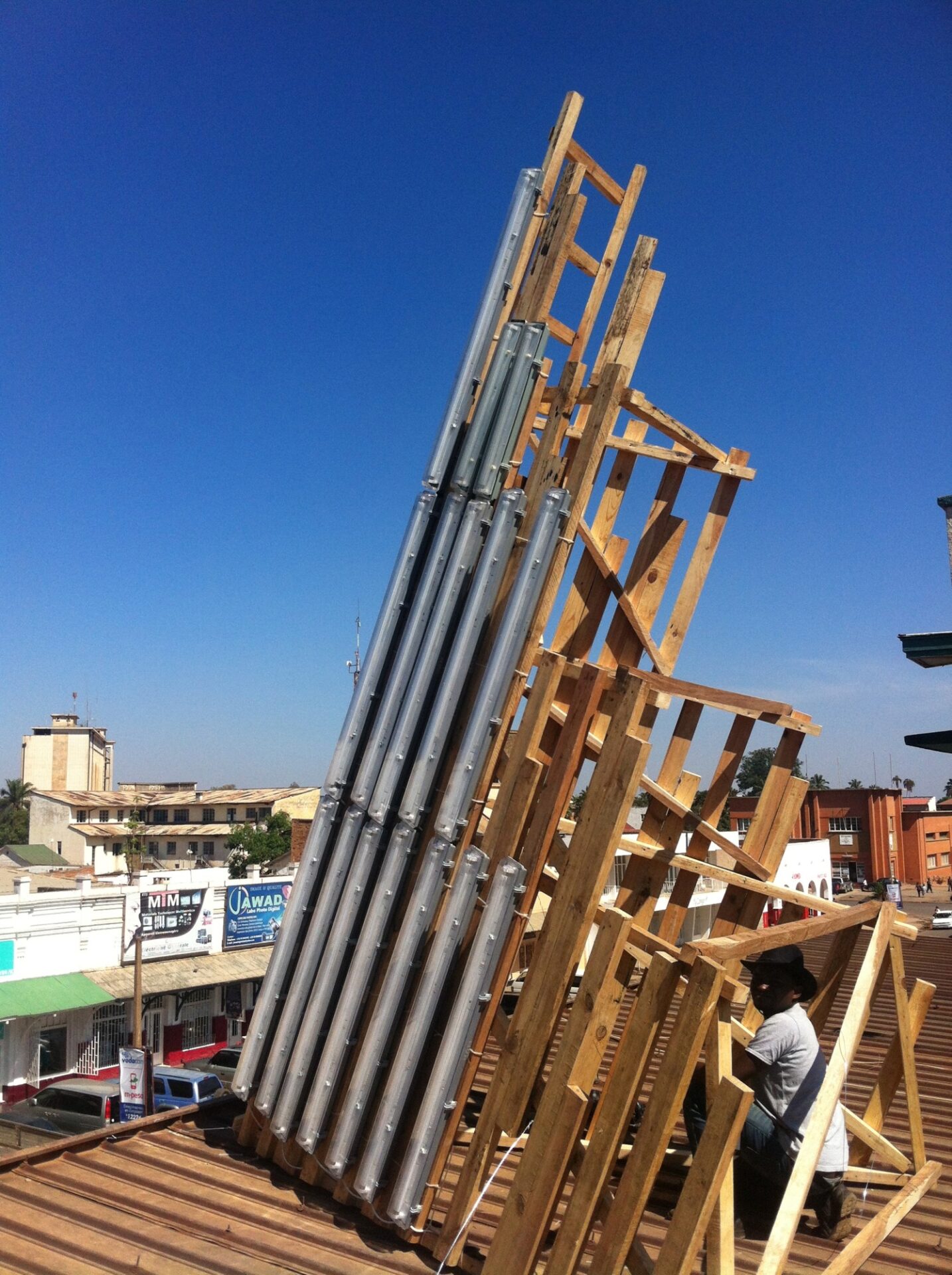
The sculpture at Art Basel Qatar was part of a series titled “Stone Free”, by the artist, with the first one (above, in the process of being installed) displayed at Lubumbashi in the Democratic Republic of Congo.
There is a reason the wooden tower looks as if it is toppled over. It goes back to the research I was conducting for my installation in Douchy-les-Mines, France. Few people know that part of France has a history of mining. The mines are closed now, but the town had an archive of what to me were amazing photographs of the mining era. One of those photos struck me; someone had photographed the mine head tower as it was being toppled. It was, I feel, toppled to remove visual reminders of the toll that mining took on those who were directly involved in it. In this installation, the tower sends a different signal, one that reveals the dark side of mining activities, the precarious conditions under which they took place.
SCALE: There are video and audio components as well. How do they aid storytelling?
Ângela Ferreira: Of the two screens in the installation, one projects a film collage called ‘Zama Zama’ documenting contemporary artisanal mining practices. In South Africa, there are at least six thousand unsealed mine shafts abandoned by large mining companies. They were abandoned because, over time, the operational costs of extracting the remaining mineral resources, mostly gold and diamonds, were not deemed profitable. Currently, independent or artisanal miners, also known as zama zama, risk their lives by descending into the precarious conditions that exist in these mines to make a living. For the most part, these informal operations are considered illegal by the government.
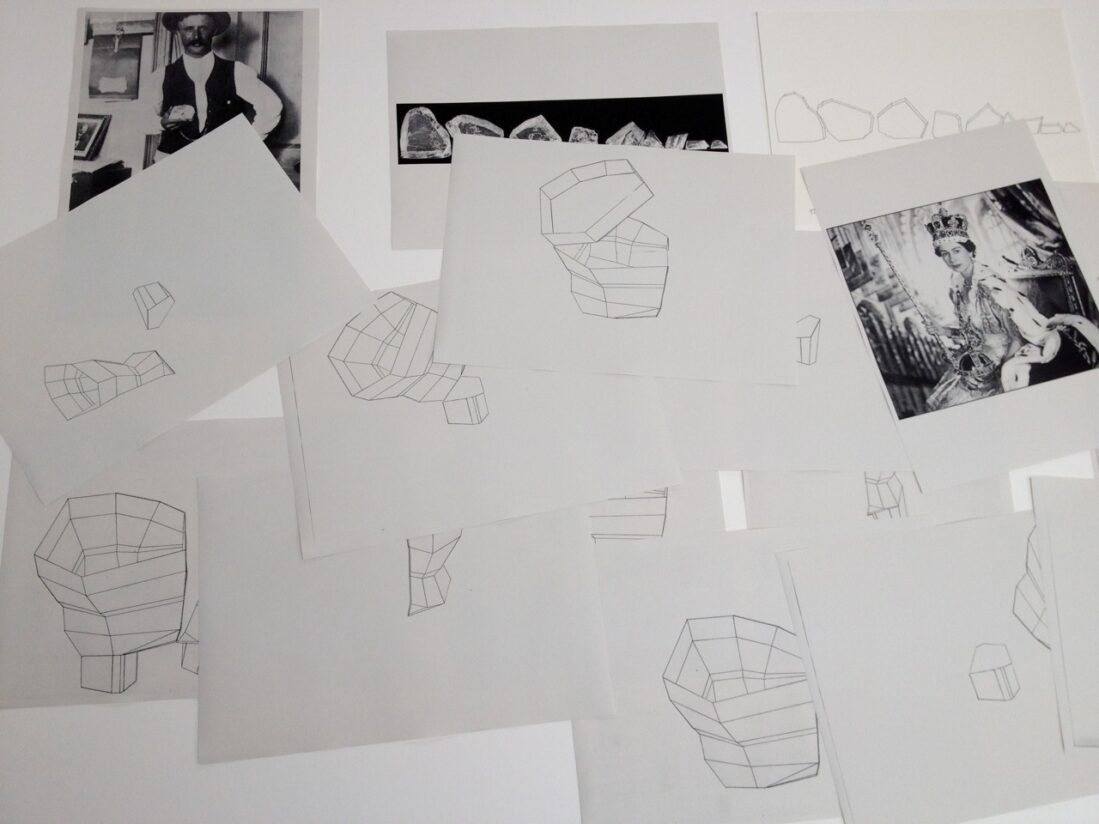
The process behind the artwork.
The video on the other screen is the result of a collaboration with Portuguese musician Scúru Fitchadú. I challenged Fitchádu to respond to the images and issues around the zama zama miners and to create his own music film, a personal and contemporary rendition of Hendrix’s ‘Stone Free’. The words of the song are in Cape Verdean Creole, with Portuguese sound inserts from Mozambican miners and IsiZulu phrases by the South African band ‘Shameless’. The gritty electronic punk sound and accompanying performance evoke the harsh mining conditions portrayed in the video.
SCALE: This installation, though visually light and airy, is heavy and dense with history. Do you feel your experiences in SA informed this outcome?
The concept is closely linked to my life in South Africa and the country’s past as a colony. Though I was born in Mozambique, I grew up and did my schooling and higher education in South Africa. I moved to Portugal in the early 2000s. Growing up in South Africa, as a white woman, I had a privileged university education, and I’m very grateful for it. At the same time, I was very aware and critical of what was going on around me. My on-the-ground observations and lived experiences were transferred into my research on post-colonialism, identity, and intercultural issues. And that research comes to life in the media I use, including this installation: sculpture, video, and photography. A lot of my research and creative output is about the triangulation between South Africa, Mozambique and Europe, particularly Portugal, and its history of being a former colonial power.
 SCALE: On the topic of research, did your investigations reveal anything that still stays with you?
Ângela Ferreira: When you research history, you do have moments that haunt you long after you first heard or read about them. The Cullinan project was no exception. For instance, in 2012, I was searching for information about mining in the Democratic Republic of Congo. From my years in South Africa, I knew that miners sang as they worked. I asked my contacts in Lubumbashi if anyone had recordings of such songs. No one had. But I did find this stunning recording that a priest had made decades ago. It was a popular lullaby that told the story of a boy who had been contracted to work in a mine. In the song, he writes a letter to his mother, telling her that he will be entering the underground mines soon, and that he knows he will die, and hence, could she start the funerary proceedings.
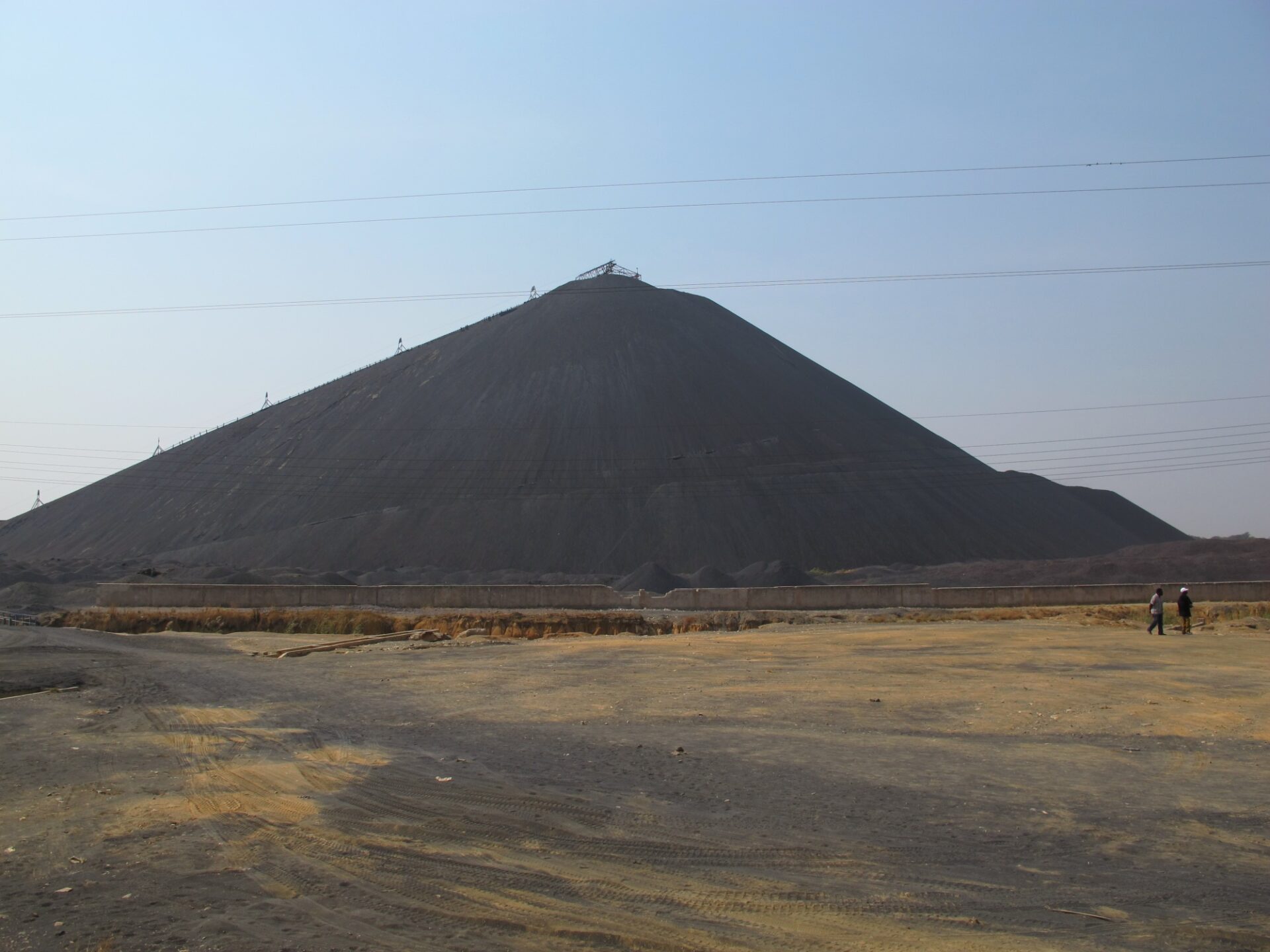
Mounds of earth, such as the one in the image above, dotted the landscape in South Africa, indicating just how deep some of these mines were. And the extent of ambition and human labour involved.
Another instance was during my research in France. One of the elderly residents of Douchy-les-Mines shared a story from the town’s mining past. He said that during summer, when people had their windows open at night, they could hear miners practising on their saxophones. When I heard that, I didn’t quite understand what he was implying until he explained further. Miners were encouraged to play wind instruments as the act of forceful blowing improved lung capacity, which in turn helped the miners withstand the perilous, often suffocating, conditions underground.
All Images Courtesy the artist